Available for the first time at the above shows, Gillian Welch’s long-awaited first record pressing will be 2011’s The Harrow & The Harvest, coming out on Acony Records on July 28th, 2017.
The long awaited first pressing of Gillian Welchs The Harrow & The Harvest was mastered direct from the original tapes through custom Ortofon amplifiers to a Neumann VMS-80 cutting system and plated and pressed on standard-weight audiophile-quality vinyl at Quality Record Pressings. Grammy-nominated for Best Engineered Album (Non Classical) and Best Folk Album, this deluxe package includes new full color cover art by John Dyer Baizley and full lyric insert.
“We have been working and waiting 20 years to bring you our music on phonograph record. It took a while, because we wanted to do it the right way, the absolute best way humanly possible, and I believe that’s what we’ve done. No sonic stone was left unturned, no nuance let fall by the wayside. There is honestly nothing else I can imagine hoping to hear out of the original tapes. It is all there in the groove. As people whose lives were changed by the sound of music coming off turntables, we humbly invite you to include us in your record collection.”
The Allman Brothers Band hit the ground running on their self-titled 1969 debut, and never stopped. That album was a fine blend of southern rock, gritty blues with a little jazz thrown in for good measure. The following year’s Idlewild South was even better, including such immediate classics as “Midnight Rider,” “In Memory ofElizabeth Reed” and “Please Call Home.” The band’s third release, 1971’s Live At Fillmore East, is often regarded as a pinnacle representation of the group’s collective talents, particularly the distinctive guitar interplay between Dicky Betts and Duane Allman.
However, in the summer of 1970, when The Allman’s were still a relatively unknown act outside of Macon Georgia, the band were booked to perform at the Atlanta International Pop Festival, an event which boasted an impressive list of musical luminaries, including BB King, Procol Harum, Johnny Winter and Jimi Hendrix.
Live at the Atlanta International Pop Festival captures two blistering sets recorded 3rd and 5th July 1970 and, if not quite as enthralling as their shows at the Fillmore East, then are certainly almost as good.
For the first time anywhere officially or not two (mostly) complete performances by The Allman Brothers Band at the Atlanta International Pop Festival over the Fourth of July weekend (they were the bookends of the fest) in 1970 have been issued with stellar sound, complete annotation and cool liner notes. The festival took place while The Allmans were in the process of recording their second album, Idlewild South , when they appeared on July 3rd as the hometown openers of the entire festival and proceeded to blow the minds of over 100,000 people — for their last set on July 5th at 3:50 a.m. they performed in front of as many as 500,000. Musically, other than a somewhat stiff version of “Statesboro Blues” the July 3rd set is magical. There is a stunning version of “Dreams” lasting almost ten minutes with beautiful Hammond/guitar interplay between Gregg and Dickey Betts . Long and ferocious versions of “Whipping Post” and “Mountain Jam” are here, but the track on the July 3rd set is Berry Oakley’s feral vocal read of Willie Dixon’s “Hoochie Coochie Man.” A short (5:49) version of this song, it has a rock & roll immediacy that is strained out of the longer versions to gain the improvisational edge. Disc one also restores Gregg Allman’s “Every Hungry Woman,” to its rightful place previously only having been available on an anthology. Harp player Thom Doucette, no stranger to AllmanBrothers fans , is here aplenty, adding his righteous, stinging harp lines to many tracks on both nights. The way Gregg’s organ playing is recorded here offers a new view of just how integral an anchor he was for both guitarists to play off. He is a monster musician and, even at this early date, was showing off his improvisational and rhythmic skills.
Packaged in a deluxe gatefold sleeve, with detailed liner notes, Live at the Atlanta International Pop Festivalis essential listening for fans of the original classic line-up. Live At Fillmore might receive the majority of accolades, yet Atlanta shouldn’t be ignored. 150 minutes of pure, unadulterated blues-rock is never a bad thing.
Taken from “Sandgrown”, the debut solo album from Ultimate Painting’s Jack Cooper. Released August 25th, 2017 via Trouble In Mind Records. “Sandgrown” is Jack Cooper’s first solo record with nine concisely beautiful songs inspired by his hometown of Blackpool and his upbringing on England’s Fylde Coast.
“Everyone’s from somewhere,” says Jack. “I don’t think it’s particularly important people know this album is about Blackpool, but I think everyone can empathize with the themes on the record.” Evoking the delicate but often widescreen musicality of Bill Fay and the abstract lyricism of the late 60s Scott Walker records, as well as the more experimental sounds of John Cale and Robert Wyatt, Sandgrown is a collection of tranquil ballads that evoke feelings of nostalgia and re-evaluation about where you come from, wherever that may be.
Sandgrown is about his formative years and the creation of it – “I’ve been trying to do this record since I was about 18… I bought my first 4-track with the proceeds of a summer working on the promenade and I guess I got sidetracked along the way. I’ve been listening to Terry Allen’s ‘Lubbock (On Everything)’ a lot and I wanted to make something that painted a picture of a place as vividly as that.
Uninhibited by band members for the first time was a freeing experience for Cooper. “Recording on my own liberated me to sing more like I actually sing. I think I‘ve spent a long time in loud bands singing in a way that can be heard through music,” Jack says. “The songs that I wrote for Sandgrown suit my voice more than anything I’ve done before.” Working within the confines of specific 4-track cassette machine (a Teac 144.), Jack has produced his most satisfying work to date. “I love the physicality of working on tape. I’ve always had a 4-track but I sought out a particular machine. I’m not a huge Bruce Springsteen fan but I love the sound of Nebraska… I needed that specific machine.”
In order to survive this long hot season of discontent, it’s vital to chew down on stuff that’s not just all negativity, you know? So if you’re fixin’ to stay positive, throw Ty Segall’sstrong “Fried Shallots” into your brain pan and flame on for a quick snack! “Fried Shallots” is a handful of numbers from different times and places over the past few years that all work together in a weird way. That’s something that we should all be striving for: all working together in a weird way!
But “Fried Shallots” isn’t simply good weird fun: the profits from this release will be donated to the American Civil Liberties Union, whose defense of our rights is badly needed now – especially in the face of the government pigs who are don’t care about the constitution and are determined to thin our herd so that they and their corporate sugar-daddies can grow ever fatter off the deprivations of the common man-clan! Don’t you let ’em do it! Organizations like the ACLU help secure freedoms that allow individuals to stay individual in the face of the choking tides of oppression. Ty Segall‘s is here to help us surf those tides and not be swept under. is available for digital purchase exclusively on Bandcamp, but a physical release will follow on August 25th,
The strength of songwriter Adam Wendler is found in his uncanny ability to jump between genre borders to create something that is both refreshing and innovative. There are many points within “Deep Water” where you think you can describe his sound with terms like “folk” or “indie pop” but then the next verse immediately destroys any label you thought you knew. Adam Wendler is a passionate singer-songwriter from Goderich, Ontario. Blending catchy melodies with soulfelt lyrics and intricate guitar playing, he captures the hearts of listeners around the globe.
He is currently releasing singles off his new album Never Go Unknown and we are intrigued to hear more genre bending hits. Wendler has a firm grasp on how to write a catchy hit, but refuses to settle for only that, his layered sound reveals something of more depth than the expected radio hit.
Recorded at Beach Road Studios
Mastered by Troy Glessner
Piano/Keys/Strings – Zach Havens
Drums – Matt Varey
Bass – Anthony Strome
Banjo on tracks 5, 7 by Mike Reynolds
Backup vocals on track 9, 10 by Dean Reynolds
Additional vocals on ‘Follow Me Down’ by Morgan Landers
In spite of the collective creative dry spell for the Baltimore’sAnimal Collective the various band members have been able to capture magic on their own solo terms. For Avery Tare leader of the group, that magic came in the form of 2010’s swampy, yearning gem “Down There” Seven years later he’s made a welcome return with the haunting Eucalyptus.
The fly in the ointment of Animal Collective’s last two albums has been their lack of focus, and the throw-everything-at-the-wall-and-see-what-sticks approach. Working on his own, Avey Tare has smartly drifted away from this practice. Instead he makes his music endlessly infectious and shed the excess weight. Avey’s strength as a musician and songwriter has always been his ability to find melody in the most broken of frequencies. On Eucalyptus, he in turns found some sounds into tiny earwarm pop songs.
Eucalyptus is an album full of half songs, faint ideas and distant sounds. There is hardly a single track that is recognizable in the form in which we typically identify song. The album’s longest track, and perhaps its most effective, is “Coral Lords.” The entire eight minutes is marked by an underwater sound, torrents of rain rush in and out just as Avey’s voice does.
Fans of Animal Collective’s “Merriweather Post Pavillion” may find Eucalyptus to be too malleable, or to lack in bracing moments. However, anyone who was transfixed by the alchemy of albums such as Sung Tongs or even Animal Collective’s most underrated release, the 2005 EP Prospect Hummer, are in for a treat. AveyTare has conjured up the free-spirited nature of those releases brilliantly with his second solo album.
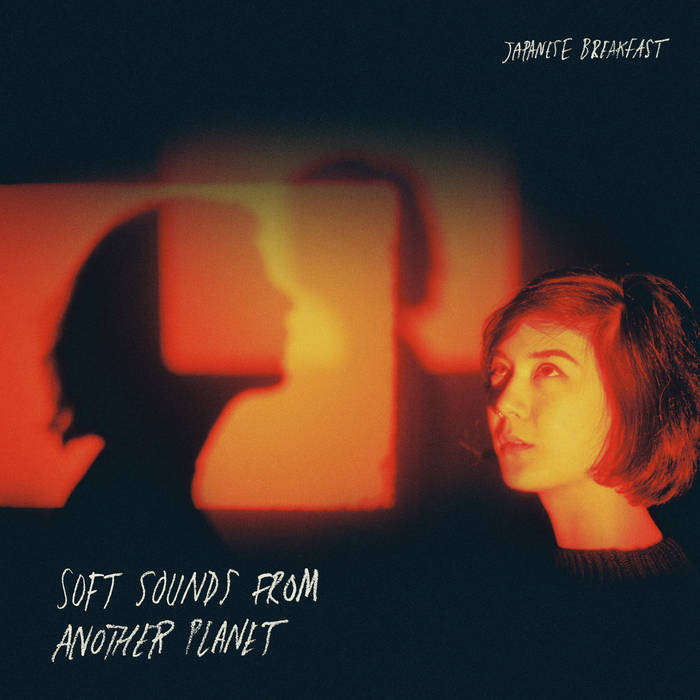
Michelle Zauner introduced the arrival of “Soft Sounds From Another Planet” the new album from Japanese Breakfast, with short video, that hinted at an intergalactic theme. Fittingly, she had initially set out to write a sci-fi concept album about a woman who, after falling in love with a robot and experiencing heartbreak, enlists in the Mars One project.
The plan only carried through to the lead single, “Machinist,” but the theme of exploring the great beyond prevails throughout the album. The concept allowed Zauner to play with new elements that vastly differ from her punk roots in Little Big League throughout the record, autotune and synthesizers create an otherworldly ambience. Even the re-worked version of a Little Big League song, “Boyish,” sounds like something entirely new.
What started as a fantastic theme gradually became a metaphor for the fear of death. Zauner explores that idea in full on “Till Death,” a hauntingly beautiful song that details the aftermath of losing someone dear: “Haunted dreams / Stages of grief / Repressed memories / Anger and bargaining.” On her debut as JapaneseBreakfast, “Psychopomp” Zauner had grappled with losing her mother to cancer. Now, onSoft Sounds, she reflects on the person she’s become, after surviving through the pain.
Japanese Breakfast’s ‘Soft Sounds From Another Planet’ is less of a concept album about space exploration so much as it is a mood board come to life. Over the course of 12 tracks, Michelle Zauner explores a sonic landscape of her own design, one that’s big enough to contain her influences. There are songs on this album that recall the pathos of Roy Orbison’s ballads, while others could soundtrack a cinematic drive down one of Blade Runner’s endless skyways. Zauner’s voice is capacious; one moment she’s serenading the past, the next she’s robotically narrating a love story over sleek monochrome, her lyrics more pointed and personal than ever before. While ‘Psychopomp’ was a genre-spanning introduction to Japanese Breakfast, this visionary sophomore album launches the project to new heights.
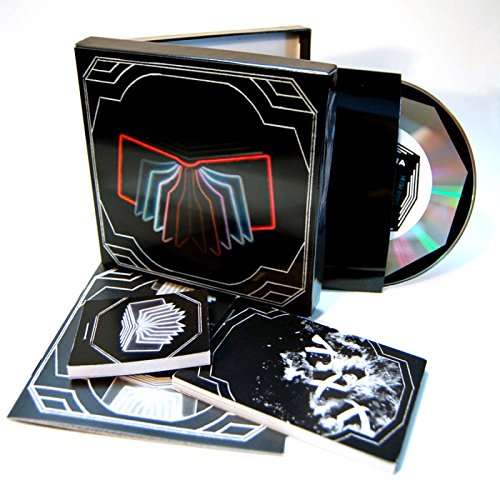
It didn’t happen overnight, but it still came about pretty quickly. After making only one album Funeral in 2004 and doing a whole bunch of touring, Arcade Fire had become one of the most acclaimed bands in the world, anointed as the new flag waving of U2 , Coldplay and David Byrne . Now all the Canadian collective had to do was make a follow up record.
Neon Bible is the second studio album by the Canadian rock band ,released on March 5th, 2007 on MergeRecords. Originally announced on December 16th, 2006 through the band’s website, the majority of the album was recorded at a church the band had bought and renovated in Farnham Quebec. The album is the first to feature drummer Jeremy Gara, and the first to include violinist Sarah Neufeld among the band’s core line-up.
In the process of making the sophomore release Neon Bible, the members of Arcade Fire turned their gaze from the inward grief of Funeral to more worldly matters – religion, violence, television, war, power, greed and fear, personified as “a great black wave in the middle of the sea.” Oceans play a major role in the imagery of the album’s songs.
“If you’ve ever been in a boat when the weather is bad… all of sudden you feel out of control,” frontman and primary songwriter Win Butler said . “Those are the few times when I’m really aware of how out of control of the situation I am. And definitely, if you’ve ever been in the ocean and had a huge wave move over you, you become very aware that you’re not in control.” Butler was able to gain perspective on the “ocean” that is the U.S. via his status as an American expat. On Neon Bible, his birth country became reflected in, to borrow the title of the album’s lead-off track, a “Black Mirror.”
“It was the first time in my life that I felt like I was visiting my own country as some sort of outsider,” Butler said about the effect of touring the U.S. “I had lived in Montreal for a few years at that point, but I didn’t realize that I had really made it my home until that trip.”
He began to look at the U.S. as an alien culture where, Butler said, “Christianity and consumerism are completely compatible, which I think is the great insanity of our times.” Religion became a through line for many of the compositions, reflected in the thoughts of a suicide bomber (“Keep the Car Running”), the aspirations of the father of a reality star (“(Antichrist Television Blues)”) and the devotion of a person “singing hallelujah with the fear in your heart” (“Intervention”). Although the American criticisms of “Windowsill” aren’t explicitly God-obsessed, Butler connects the tune to religion as well.
“In theology there is this idea that it is easier to say what God isn’t than what God is, and in a way that song is my trying to say everything about my country that is not what makes it great or beautiful,” the singer said. “In a way it makes what is great and beautiful and worth fighting to preserve more clear.”
It’s no wonder that most of the album was recorded in a church – a former one, at least, that the members of Arcade Fire purchased in 2005. The bandmates turned the Petite Eglise church in Farnham, Quebec, into a studio over the course of 2006, recording “Neon Bible” as they went. While the building’s past use might have rubbed off on the lyrical content, the big, central space also allowed the seven-member band to have enough real estate to record live all at once.
The big spaces and big themes seemed to demand big sounds. Neon Bible reveled in expansive arrangements and instrumentation. A film orchestra and military men’s choir were recorded in Budapest to add epic heft to “No Cars Go” (a holdover from Arcade Fire’s debut EP). A gargantuan pipe organ led “Intervention.” Butler’s wife (band multi-instrumentalist and vocalist Regine Chassagne) played the enormous instrument on the album’s fourth track, nailing the performance in just one take.
“Normally you think of organ with just a couple of stops open, said ” Butler “It’s like a flute – gentle. But with all the stops pulled it’s got this really aggressive sound. I knew that for ‘Intervention’ it was really going to be about the organ.”
Upon Neon Bible’s release on March 5th, 2007, fans and critics were divided over the new, more substantial Arcade Fire sound. While many praised the ambitious arrangements, pointing to the influence of maybe Springsteen , others felt that the album’s sound could become overblown, pointing to the influence of Bruce Springsteen. In spite of – or because of – this, the album became one of the most-praised releases of the year, included on a bevy of best-of lists at the end of 2007.
Neon Bible also pushed Arcade Fire further into the mainstream. Soon after the album’s release, the band played the TV show “Saturday Night Live” and scored their first No. 1 album in Canada, while hitting No. 2 in both the U.S. and the U.K. “It’s pretty wild,” Butler said “It’s pretty amazing for a band like us to be in that position. It’s funny in kind of a satisfying way.”
For nearly a decade and a half, Arcade Fire have continued to push and challenge themselves, drawing from their own confrontation with personal crisis and giving us access to things we might have been ignoring within our own lives. But always retaining the emotional core, their “us against the world” anthems, and their arena-propelling hooks.
Arcade Fire have now returned properly to give us a real taste of their new music, with a new track ‘Creature Comforts’ from the forthcoming new album. which is out today July 28th via Sony Records.
The track is a ball of dark energy, with low level synths buzzing across the floor as the odd lead line raises the temperature every so often. It is a true testament to the band, that they can be so far removed from their previous incarnations and still have a nuance so noticeable that as soon as the music starts you think “That’s Arcade Fire!”.
As Win and Regine yelp across to each other it is fully confirmed that this is yet another victory for Arcade Fire and the new album Everything Now is likely to be yet another gold-standard record.
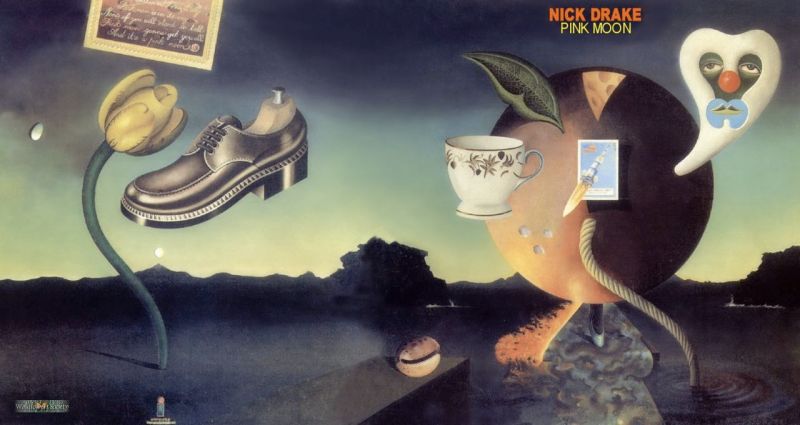
Nick Drake was planning to shear back his songs’ surplus of detail before recording his third and final album—if you could call strings and light electric guitar excessive, that is. Pink Moon was recorded in two successive nights with just Drake and producer John Wood in the room, and nothing but Drake’s acoustic guitar and a couple isolated piano runs behind his unmistakable voice. Pink Moon echoed Drake’s gradual withdrawal from civilization. It’s always been hard to ignore the crawling fragility in Drake’s performances, but on Pink Moon he’s almost aggressively alone. The slight motion of “Know” is undercut by its solitude: The beat moves him, but it’s a tough haul. The title cut, “Road” and “Parasite” are all melodically beautiful, but emotionally impossible to bear. The exhaustion ofPink Moon foretells Drake’s passing almost too well, but its trim power can’t be questioned. Released two years before Nick Drake’s death in November 1974, at the age of twenty-six,
Nick Drake has been saddled with the kind of (death) “cult” reputation that lends itself to fervent fan-kid obsession (I know, I’ve been there) by some, much to the annoyance of others. Unfortunately for the poor bloke, like Jeff Buckley, and more recently Elliott Smith, his premature passing led marketing men and music journalists to focus on his sensitive, dark, quiet “ethereal” side.
Nick Drake delivered the master tapes of Pink Moon to Chris Blackwell at Island Records, In an interview Island’s press officer David Sandison recalled that Drake’s arrival at the record company had certainly not gone unnoticed, although there had been no indication that he was delivering them a new album:
“I saw him in reception after I came back from lunch and I was talking to somebody and I saw a figure in the corner on the bench, and I suddenly realized it was Nick. He had this big, 15 ips [inches per second] master tape box under his arm, and I said ‘Have you had a cup of tea?’ and he said ‘Erm, yes’, and I said ‘Do you want to come upstairs?’ and he said ‘Yes, okay’. So we went upstairs into my office, which was on top of the landing, it was a landing that went into the big office with a huge round table where Chris and everybody else worked and there was a big Revox and sound system there, and he just sat in my office area for about half an hour … After about half an hour he said ‘I’d better be going’, and I said ‘Okay, nice to see you’, and he left. Now, he went down the stairs and he still had the tapes under his arm, and about an hour later the girl who worked behind the front desk called up and said ‘Nick’s left his tapes behind’. So I went down and it was the big sixteen-track master tape and it said NICK DRAKE PINK MOON, and I thought ‘that’s not an album I know’. The first thing to do was get it in the studio to make a seven and a half inch safety copy, because that was the master. So we ran off a safety copy to actually play, and I think twenty four hours later or so, it was put on the Revox in the main room and we heard Pink Moon.”
Pink Moon was recorded over a few days with producer John Wood prior to its February 1972 release date. It’s a brief record (twenty eight minutes), mainly focusing on a mal-tuned acoustic guitar and vocals. With a more lo-fi nature than its older siblings and his continued relative obscurity. Pink Moon does feature the occasional sparse message, (“Know” features only the lines: “Know that I love you / Know I don’t care / Know that I see you / Know I’m not there“), but the album offers so much more than that.
The album’s opening title track is lyrically simplistic and instrumentally nocturnal, but more in a relaxed, family bonfires and pumpkins with funny faces style. The piano almost sends mist through the stereo. It’s an atmosphere that permeates the next two songs before “Which Will” changes tack. The lyrics are so simplistic one can’t possibly quote them in context. It could be about breakups, breakdowns, hope or ambivalence.
“Horn” is a really beautiful, poignant instrumental. “Things Behind the Sun” bends from the franticly sinister to the carefree. The aforementioned “Know” feature’s the four lines above, but over a surreal background juxtaposing Drake’s sighs with an off-kilter guitar line more reminiscent of The Fall’s Rough Trade years than Damien Rice. In all fairness to the publicists, “Parasite” is a rather bleak song. It’s also one of my favorite songs of all time. Whether Drake is “changing a rope for a size too small“, or “lifting the mask from a local clown” and “feeling down like him,” I’m smiling all the way. There’s a touch of surreal cynicism on “Free Ride,” seeing through “all of the pictures that you keep on the wall…all of the people that will come to the ball.” However it seems more indicative of somebody at the back of the room laughing at the people who can’t quite tell why they’re dancing than someone who deserves a carefully written biography. “Harvest Breed” is a fantastic hangover tune, particularly when backed by a color-free sky. “From The Morning” closes things with some renewed vigor, as people “rise from the ground.” I hadn’t listened to Pink Moon in a long time. It’s still my favorite NickDrake album, and one of the best of its era.


 It didn’t happen overnight, but it still came about pretty quickly. After making only one album Funeral in 2004 and doing a whole bunch of touring, Arcade Fire had become one of the most acclaimed bands in the world, anointed as the new flag waving of U2 , Coldplay and David Byrne . Now all the Canadian collective had to do was make a follow up record.