The Super Deluxe Edition of The Who’s 1967 classic The Who Sell Out is now on sale, featuring a whole batch of out-takes and previously unreleased Pete Townshend home demos. In the April 2021 issue of Uncut (Take 287), Pete was asked to talk about 10 of his favourite deep cuts from the box, providing a fascinating insight as to where his head was at in the lead-up to the recording of The Who’s first truly great album.
The Who released their third LP “The Who Sell Out” on December 15th, 1967. It was a concept album, formatted as a collection of unrelated songs interspersed with faux commercials and public service announcements. The album purports to be a broadcast by pirate radio station Radio London. Part of the intended irony of the title was that the Who were making commercials during that period of their career. The album’s release was reportedly followed by lawsuits due to the mention of real-world commercial interests in the faux commercials and on the album covers, and by the makers of the real jingles (Radio London jingles), who claimed the Who used them without permission. (The jingles were produced by PAMS Productions of Dallas, Texas, which created thousands of station ID jingles in the 1960s and ’70s). It was the deodorant company, Odorono, who took offense that Chris Stamp (bands manager) made a request for endorsement dollars.
JAGUAR (demo mix) “I was starting to work on quite ambitious stuff by this time and had a really good little studio, where I’d begun doing tape phasing to get that swirling sound. ‘Jaguar’ was originally just meant to be one of the jingles for The Who Sell Out, but it became something else entirely. It was done very late in the process, properly in the last couple of weeks before the album came out.”
GLOW GIRL (demo mix) “This was written in Las Vegas while on tour with Herman’s Hermits in the summer of 1967. It’s about reincarnation. That would’ve been in the early days of my interest in Meher Baba and realising, ‘Oh fuck, the whole basis for an interest in esoteric, metaphysical Eastern religion is rooted in the idea that the soul never dies.’ And of course the refrain later became part of
MELANCHOLIA “This was one of my first attempts to write about depression and anxiety. Interestingly, in light of Covid, the working title was ‘The Virus’. Once depression sets in, it’s so difficult to escape it. It’s like drowning, in a sense. It was the end of a period just before I properly got to trust that my girlfriend Karen [Astley] really loved me. I thought she was only with me because we’d been on Ready Steady Go!”
CALL ME LIGHTNING “I was still living in Ealing and going to art school when I first demoed this. The Jan & Dean-style backing vocals were probably to get Keith Moon onside. He was a huge fan of theirs. I was really surprised when [co-manager] Kit Lambert popped up one day and said, ‘That song “Call Me Lightning” – let’s do it now!’ It was maybe two years after I’d done the demo.”
FAITH IN SOMETHING BIGGER “I had this period where I was on a bit of a high. Karen and I had this flat in Ebury Street, I’d got my studio sorted and life seemed to be good. And I had a sense that sooner or later we’d get married, which we did. I was also very interested in the early writings of Meher Baba, just getting to grips with it. This song just came from all that.”
DOGS “This was definitely inspired by Small Faces – it was my version of ‘Lazy Sunday’. I loved what the Faces did in the studio, I loved their process. They had so much fun. I must admit I was interested in dog racing at the time, but the song is really about the craft, trying to create that studio sound.”
I CAN SEE FOR MILES (demo mix) “I recorded this when I had a flat in Chelsea in 1966, but kept it quiet for a while. A couple of times, when I came back from touring, there would be these really cool-looking guys around the flat, who were all very interested in Karen. And I became paranoid. So I wrote the song. Quite shallow, unfortunately.”
THINKING OF YOU ALL THE WHILE “This is the third version of this song [better known as “Sunrise”]. It was an attempt to evoke the music I grew up with, show tunes and musicals. The chords are a bit jazzy and it’s a celebration of love being like a sunrise. I recorded it on one of those Philips tape recorders and played it to my mum. She didn’t say it was rubbish, it was more like: ‘That’s very nice, dear. Would you like a cup of tea?’”
RELAX (demo mix) “I was starting to explore other areas of my songwriting at this point in time, starting to become more ambitious. I’d already recorded a version of this song at the Gorham Hotel [New York], but I felt I needed to make it sound harder-edged and a bit more psychedelic, so The Who could record it.”
RAEL (IBC Remake) “Initially, this song had nothing to do with The Who. I was studying opera, learning to write music. KitLambert came in one day and said [adopting a very posh, demanding voice], ‘It’s time for a new Who single, Pete.’ I told him I was working on my opera, but he just went, ‘Jolly good. Let’s have it.’ So I took the four or five strands that I’d managed to deal with and condensed them down into a five-minute pop single.”
The song “I Can See for Miles” was released as a single and peaked at #10 in the UK and #9 in the US.” The Who Sell Out” received widespread acclaim from critics, some of whom viewed it as The Who’s best record and one of the greatest albums of all time.
The Who’s first real album statement from 1967 receives a Super Deluxe Edition that includes five CDs, two 7″ vinyl singles, a hardback book and various memorabilia. In addition to the remastered original album, in mono and stereo mixes, the box features nearly four dozen previously unreleased tracks, including outtakes, alternate versions and Pete Townshend demos. Super Deluxe Editions can often be bloated affairs; “The Who Sell Out” deservedly merits the attention.
Every few years, Dylan Baldi snaps. After the pleasant jangle of Cloud Nothings’ debut LP, he roped in Steve Albini and literally smokebombed the band we once knew a year later with Attack on Memory – which literally opens with a song called ‘No Future/No Past.’ So last year, in the thick of a pandemic with no end in sight, Cloud Nothings released “The Black Hole Understands”,a return to the breezy, off-kilter melodies of their early work like 2011’s self-titled album. It felt both refreshing and slight, demonstrating how reliable frontman/primary songwriter Dylan Baldi has become, but rarely feeling imbued with the frenetic urgency that animates the band’s most anthemic songs. “The Shadow I Remember” continues to refine the cleaner song writing of the band’s last album, wooly and tuneful in equal measures.
For a band that resists repeating itself, picking up lessons from a decade prior is the strange route CloudNothings took to create their most fully-realized album. Their new record, “The Shadow I Remember”, marks eleven years of touring, a return to early song writing practices, and revisiting the studio where they first recorded together. In a way not previously captured, this album expertly combines the group’s pummelling, aggressive approach with singer-songwriter Dylan Baldi’s extraordinary talent for perfect pop. To document this newly realized maturity, the group returned to producer Steve Albini and his Electrical Audio studios in Chicago, where the band famously destroyed its initial reputation as a bedroom solo project with the release of 2012 album “Attack on Memory“.
As such, “Last Building Burning” arrives as an equal and opposite reaction to 2017’s Life Without Sound; a record that, while incredibly catchy, also felt somewhat safe. No such feeling here – every track is volatile, propulsive and relentless in its execution. It’s the hardest Cloud Nothings have gone since … well, since the last time Dylan Baldi snapped. “Leave Him Now” is a song about a troubled straight relationship in which the female party is advised to remove herself from it. The twist is: That’s it. Dylan Baldi is not putting himself forward as the substitute. This isn’t a “drop the zero and get with the hero” scenario. This is about a genuine concern for a woman’s wellbeing and stability. It takes a trope of song writing across multiple genres and decades and subsequently turns it on its head. If that wasn’t enough, it’s also one of the catchiest songs Baldi and co. have ever written. How about that.
Opener “Oslo” is a steady build into carefully controlled chaos—a common song structure in the CloudNothings universe—but it gets in and out in four minutes, instead of the usual six to seven minute sprawl. “The Spirit Of” deals in the effortless hooks of The Black Hole Understands, while “Nara” shows how Baldi can stretch his own format, cradling the central melody as the song ramps up toward a crescendo that never comes. It can come off like Baldi doubling down on what he knows already works, but he’s simply perfecting his craft, burrowing down into the vital centrer of his songs to create the most direct version of his vision.
Released February 26th, 2021
Dylan Baldi – Guitar, Vocals Jayson Gerycz – Drums TJ Duke – Bass Chris Brown – Guitar
Like the rest of The Beatles, Paul McCartney had fallen out of love with the idea of being in a band by the end of the 1960s. But one of the effects of making two excellent, essentially solo albums in the wake of their split in “McCartney” and “Ram” — albeit with the close involvement of his wife Linda — was to remind Paul that there was still much to be said for the collaborative approach.
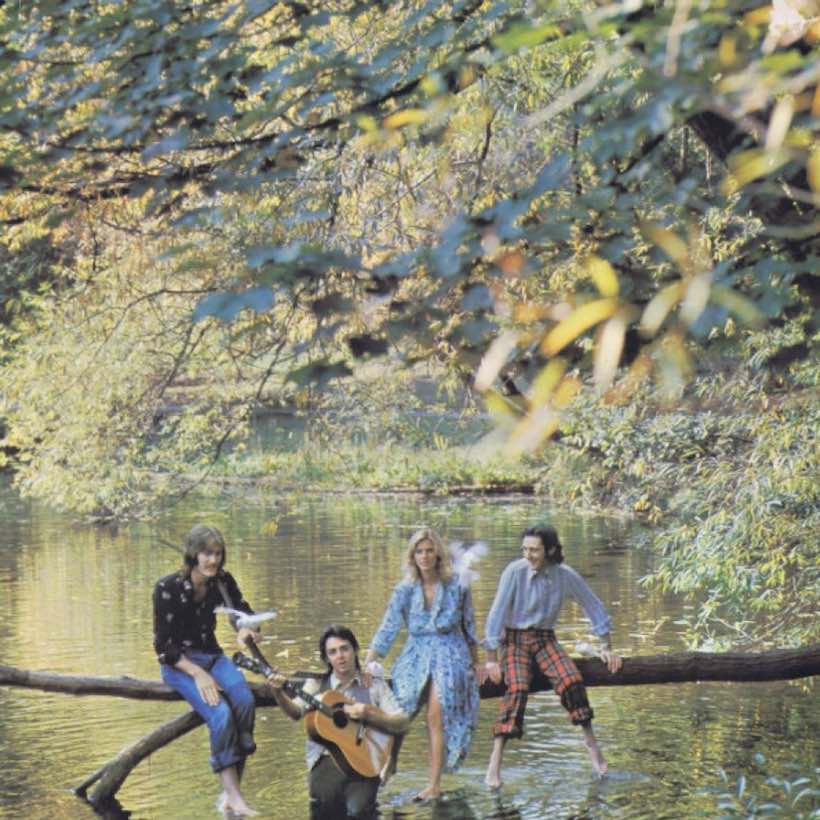
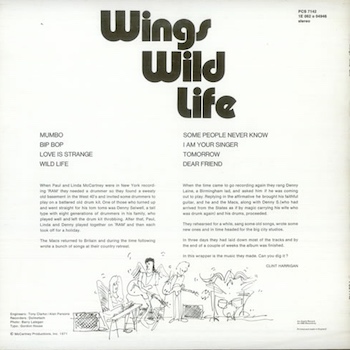
So it was that, less seven months after the release of “Ram”, McCartney was back in a band setting. In their first formation, with Paul and Linda joined by Denny Seiwell (the drummer who had played on Ram) and former Moody BlueDenny Laine, Wings made their UK chart debut on 18th December 1971 with the “Wild Life”album.
The quartet recorded the LP, with its notably live and stripped-down feel, in the summer, in Paul’s old stamping ground of Abbey Road Studios, with engineering by Tony Clark and Alan Parsons. This was a new type of album for the former Beatle, with no UK single releases nor any particular attempt to write for the charts. The name of the band wasn’t even on the front cover, nor was the album title.
Five of the eight tracks were recorded in one take, most of the record in three days, and the whole thing was completed inside a fortnight. There was one cover, a slowed-down version of Mickey & Sylvia’s early 1957 US hit ‘Love Is Strange.’ But, on an album of simple pleasures, there were also such underrated compositions as ‘Tomorrow’ and ‘Some People Never Know.’ and the hauntingly sparse “Dear Friend.”
What was also unusual for any McCartney project was that the relatively low-profile album never made the UK top ten. It peaked at its No.11 debut and was out of the chart, in its initial run, in just six weeks. It went gold and reached No. 10 in an 18-week run in the US, and was comfortably top ten in many European countries, and No. 3 in Australia. But the chart rankings were far less important than the new mood that “Wild Life” created for McCartney’s future.
On November 8th, McCartney launched the new project in light-hearted style with a ball for 800 invited guests at the Empire Ballroom in London’s Leicester Square. There was musical accompaniment by nostalgic dance band Ray McVay & his Band of the Day, and the dance formation outfit Frank & PeggySpencer Formation Team, as well as tracks from Wild Life itself.
“Roxy & Elsewhere” was one of the great albums of the 70s, one of the few jazz rock albums of that era that could match the ex Miles Davis bands of the time ( Mahavishnu, Weather Report, RTF, Mwandishi etc) and only Jeff Beck ( Wired etc) and King Crimson (Great Deceiver etc) were on a par in the rock field.
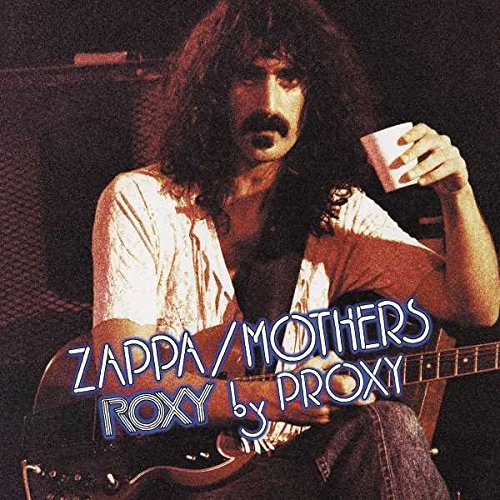
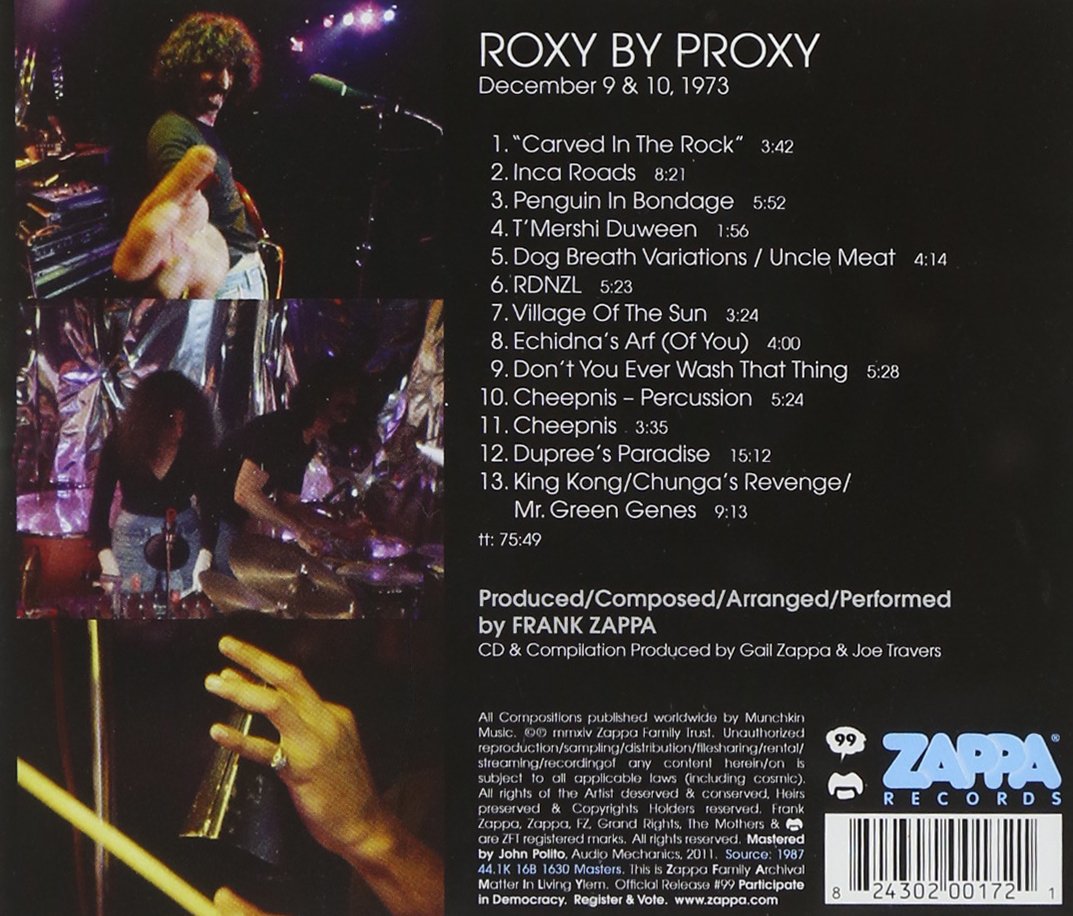
“Roxy by Proxy” is a collection of outtakes produced by Frank Zappa in 1987. As Ruth Underwood makes perfectly clear in the liner notes these are not the finished article and would not have been released by Frank. She was a band member so should know. The sound is very hard & digital as befits 1987 technology.
The 2015 Soundtrack from “Roxy the Movie” is far superior in every way. Mixed by Bruce Botnick of Doors fame this is a better selection of tracks, as good as the original album, but the sound is a serious improvement on previous version.
I approached this album with trepidation. Like many Zappa fans, I particularly like Roxy & Elsewhere, so I was wondering if this would be a rip-off, with Gail Zappa wanting us to buy only slightly tweaked versions of the same old songs. But no, I was blown away by the brilliance of the performance.
Basically the CD gives us one whole gig at the Roxy, from which a few of the tracks on R&E were taken and polished, overdubbed and remixed, so what we get is the performance as Frank would have heard it, centre-stage, through the monitors. And the audience, presumably. As a warts-‘n’-all, fly-by-the-seat-of-yer-pants performance, it’s utterly brilliant, a fabulous and even exciting addition to Frank’s live catalogue.
What makes the listening experience even better is Ruth Underwood’s effusive commentary in the booklet. Many non-musicians won’t get much from it, but for those who know what (for instance) a G2-chord is, it’s a fascinating insight into the wild and nutty life of a Zappa band member. I can see that, when you stepped onstage with Frank, you learned to expect the unexpected, and you had to have the imagination and instrumental chops to go with it, and Ruth had both.
Glad I purchased this disc, different track list to the original “Roxy & Elsewhere” album and those that are repeated from the earlier disc are all different versions. The recording quality is not so good here, but in some ways that makes this more enjoyable as it sounds much more ‘intimate’ if that makes any sense, it feels like you are listening to a recording you may have made yourself at the concert. Having said that, don’t get the impression this is poor quality, far from it, just a little less ‘polished’ than the possibly overly cleaned up “Roxy & Elsewhere”. The band, (in my opinion this is the best line up Zappa ever had), are really tight and obviously very well rehearsed, and most importantly, sound as though they are thoroughly enjoying themselves. There are a few instances of bum notes and bad sections of recording, but it is, as stated by other reviewers, a direct recording with no overdubs or serious studio work afterwards. Maybe not a good choice if you are not familiar with Zappa’s work, but if you already have some Zappa in your collection then I would definitely recommend this disc.
Long considered to be a Holy Grail period by Zappa aficionados, “The Roxy Performances” are the super-duper definitive item (portions of the evenings have previously been available on the albums “Roxy AndElsewhere” (1974) and “Roxy By Proxy” (2014), with special mention also for “Roxy: The Movie” (2015)). Co-producer of the project, Ahmet Zappa, executor of the Zappa Family Trust, describes it perfectly: “This is one of my favorite FZ line-ups ever. This box contains some of the best nights of music Los Angeles has ever seen with their ears at a historic venue. Hold on to your hotdogs people. This box is the be-all-and-end-all. This is it. This is all of it. It’s time to gets your rocks off for The Roxy.”
It was December 9th-10th, 1973 when Frank Zappa and his celebrated cohorts – many of them fresh from the “Over-Nite Sensation” sessions – presented their lengthy new stage show, having rehearsed on December 8th for a film shoot/soundcheck. Not only does The Roxy Performances showcase both nights’ early and late shows, it offers generous behind-closed-doors material: a private, invite-only Bolic Studios Recording Session – held in Ike Turner’s Inglewood set-up – plus an unreleased track called “That Arrogant Dick Nixon” (the hapless Pres features quite a bit on these recordings).
Musically and sonically it’s a mind blast. The five shows feature songs from 1969 to 1973, with many cuts culled from “Uncle Meat, Hot Rats, Waka/Jawaka”, and “Over-Nite Sensation”. There are also stacks of live goodies that capture Frank and his Mothers in their pomp: we’re talking favourites the likes of “Village Of The Sun,” “Pygmy Twylyte,” the music for monster movies “Cheepnis” and “Penguin In Bondage.”
The interplay between Zappa and his players is astonishing. He revels in their virtuosity and gives them free rein. They repay him in full. Keyboardist George Duke, one of Frank’s all-time favourite collaborators, adds so much jazz-funk to the mix that it explodes with – what else? – invention. Bassist Tom Fowler holds it down while brother Bruce Fowler brasses it right up on trombone. Don Preston’s synths are way ahead of the game – and that also goes for percussionist Ruth Underwood. Listening to her keep up with – and ahead of – the pack is astonishing in itself.
With a band that good, it’s no wonder Zappa took off for the stratosphere on the complex instrumentals “Echidna’s Arf (Of You),” “Don’t You Ever Wash That Thing?” and “Be-Bop Tango (Of the Old Jazzmen’s Church),” all of which display Zappa’s fabulous chops as he peels off some ridiculously great solos. Check the intricacy of “Inca Roads” and the associated “RDNZL,” which appear to lampoon the overly serious nature of many progressive rock groups while out-maneuvering them at their own game.
Contemporary press reviews of this hometown LA spectacular included the Los Angeles Times, who praised The Mothers’ sensational performances, while the Los Angeles Herald Examiner fingered Frank as “the counter-culture’s John Cage.”
The illustrious box set is enhanced by a 49-page booklet crammed with relevant photographic material, illuminating liner notes from fellow-producer, and Vaultmeister, Joe Travers, and nostalgic first-hand accounts from family friend, the Australian writer Jen Jewel Brown. The Blasters’ Dave Alvin also contributes, warmly recalling, “The Roxy Mothers were a grand combination of high art, low art, masterful technique and razor-sharp humour with a touch of wild abandon.”
Fair enough. Now it’s surely time to pursue the mysterious towels of destiny, enter “Dupree’s Paradise” and get into full jive mode for a trip through the “Cosmik Debris.”
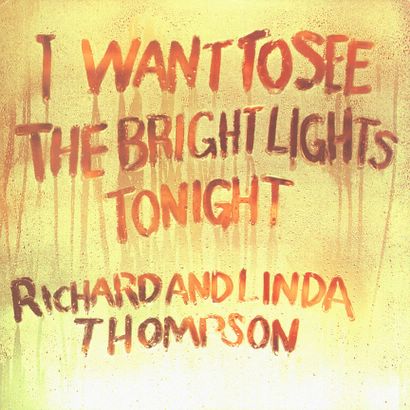
Four decades after Richard and Linda Thompson released 1974’s “I Want to See the Bright LightsTonight”, their beautiful and terrifying first album as a duo—after their music failed to attract significant commercial interest; after the conversion to Sufism, the three kids, the arduous years spent living on a religious commune; after he left her for another woman just as mainstream success seemed within their reach; after she clocked him with a Coke bottle and sped off in a stolen car during their disastrous final tour—after everything, Linda was working on a new song about the foolishness of love. It was a lot like the songs Richard used to write for them in the old days: Despairing, but not hopeless, with a melody that seemed to float forward from some forgotten era, and a narrator who can’t see past the walls of his own fatalism. “Whenever I write something like that I think, ‘Oh, who could play the guitar on that?’” she recalled later. “And then I think, ‘Only Richard, really.’”
On this day (Februart. 6th) in 1971: guitarist RICHARD THOMPSON left critically-acclaimed UK folk-rock band FAIRPORTCONVENTION for a solo career; said Richard, “I left Fairport as a gut reaction & didn’t really know what I was doing, except writing. I was writing stuff & it seemed interesting & I thought it would be fun to make a record”; his 1972 solo debut ‘Henry theHuman Fly’ was not critically well-received at the time, but over the sessions, he worked with singer Linda Peters, whom he then married; the couple would go on to release six highly-regarded albums between 1974-82 as ‘Richard and Linda Thompson,
The Thompsons met in 1969, while Richard was working on “Liege & Lief”, the fourth album by FairportConvention, the pioneering British band he’d co-founded when he was 18. Their reason for starting a musical duo was practical, but also sweetly romantic: They wanted to spend more time together. They began touring the UK’s circuit of folk clubs, humble institutions that mixed socialist idealism with commercial enterprise, often operating in the back rooms of local pubs, where Richard and Linda would share stage time with whatever barflies wanted to belt out “Scarborough Fair” or “John Barleycorn” on any given night. Audiences were receptive, but it was a rugged and unglamorous way to make a career, even compared to the modest success Richard had seen with Fairport Convention. After about a year on the circuit, they were ready to graduate to bigger stages, and to make an album.
These songs feature modern stories and character sketches largely grounded in vernacular and instrumentation of British folk, an approach that gives the listener some comfort by suggesting that the highs and lows of the human experience we experience today are pretty much the same highs and lows experienced by our ancestors. They recorded “I Want to See the Bright Lights Tonight” quickly and cheaply, working from a cache of songs Richard had been assembling since “Henry the Human Fly“. The backing band they recruited combined a rock rhythm section with mustier instruments like hammered dulcimer, accordion, and crumhorn, a Renaissance-era woodwind whose nasal buzz makes bagpipes sound mellow. “I Want to See the Bright Lights Tonight” approaches its instrumentation with eerie holism, sounding neither like a reverent attempt to resurrect bygone traditions, nor a contemporary singer-songwriter album with period flourishes, but something strange and glowing in between.
This orientation is clearly demonstrated on the opening track, “When I Get to the Border.” The first two verses could have been written by an anonymous song-crafter of the 18th Century, but when the narrator reveals the reasons behind his desire to escape to a place beyond the border, there’s no question he’s a 20th Century Man experiencing classic Sunday night dread:
Monday morning, Monday morning Closing in on me I’m packing up and I’m running away To where nobody picks on me
As he describes all the wonderful changes awaiting him once he crosses that border (“My troubles will all turn to sand/When I get to the border”), I hear echoes from the conversations I’ve had recently with friends stuck in the USA, who desperately believe in one of two fairy tales: one, if we get rid of Trump, everything will be all right; and two, if I move to (Europe, Asia, South America, Australia) my life will suddenly become immeasurably better. They forget that running awayfrom a bad situation never works unless you have a place you really, really, really want to run to. Richard Thompson cleverly allows the narrator to feast on this sort of one-sided fantasy for much of the song, a subtle hint that his dreams of reaching the Land of Oz are unlikely to bear fruit. The one thing this gent does have to look forward to is a “Salty girl with yellow hair/Waiting in that rocking chair,” an image that doesn’t give us much hope that she’s the British version of Helen of Troy.
The builds and blends on “When I Come to the Border” are simply fabulous. The song opens with very modest acoustic guitar chords cueing the band to enter with low-key backing. The first verse is voice, acoustic, bass and drums; on the second verse, Richard adds some light electric guitar fills. The first smile on the listener’s face takes place at the start of the bridge, when wham! Linda and Richard harmonize over Richard’s mandolin, suddenly turning black-and-white into full colour. A mandolin-electric guitar duet adds another smile and more colour, creating a new plateau that continues through the end of the verses. The long fade makes the smile permanent as the band takes the piece to an even higher plane, featuring a cornucopia of instruments trading leads and fills—guitar, krummhorn, accordion, concertina, mandolin, tin whistle—that bring to mind the everybody-join-in-the-fun atmosphere of a pub with singing waiters. Rising from its modest beginnings, “When I Get to the Border” turns out to be a welcoming display of the song writing excellence and musical variety that characterize the album.
Many of Linda’s signature songs are candlelit ballads, but she swaggers through the cascading brass lines of the album’s title track like a sailor on shore leave. On the surface, the song’s message is simple: work’s over, time to party. But in Richard’s writing and Linda’s performance, the urge to go out, get hammered, and press up tight against a stranger is nearly feral in its potency. The nihilism and the pleasure of drunkenness and transactional coupling are inseparable. “I Want to See the Bright Lights Tonight” neither moralizes about its subject matter nor attempts to enshrine it, capturing the charge of a messy night out in all its explosive ambiguity. Musically, it has the feeling of a celebration, one that could have been a massive hit had the Thompsons been willing to sacrifice their quixotic musical aspirations for slicker and more streamlined production.
Richard Thompson described “Calvary Cross” as a song “about a muse, or about anything. It’s about a drive that you might not want, but it’s there, and you’re a slave to it.” The woman’s “one green eye” indicates she’s a jealous mistress, seeking nothing less than complete control (“Everything you do/Oh, everything you do/You do for me”). The other half of this fascinating creature exists on a the positive pole, one who will “be your light until doomsday.” The balance is described in the line, “My claw’s in you and my light’s in you,” but she immediately adds, “This is your first day of sorrow.” The artist can never escape the clutches of the muse, and the song’s setting under the calvary cross is meant to convey a life of suffering.
“Down Where the Drunkards Roll” is soft and solemn, refusing to judge its cast of misfits for finding solace at the bar. “Withered and Died” might come across as maudlin with less sympathetic performers, but Linda’s delivery lends quiet nobility to its tale of an abandoned woman at the end of her rope. Richard’s guitar solo arrives like pale sunlight through a tall window, offering a ray of hope out somewhere beyond the desolation of the lyrics.
Most of the buzz about this song has to do with Richard’s guitar work, particularly in the many live versions available on recordings both legitimate and bootleg (you can sample several on YouTube). The primary solo on the studio version album serves as a lengthy introduction to the song, a twisting, tortured barrage of notes that echo bagpipe and sitar. The deluxe version of the album features a version that clocks in at almost ten minutes and in parts feels more like a duet featuring both Richard and drummer Dave Mattacks in roughly equal measure. The live solos vary quite a bit, but most take place in an extended segment following the verses, where Richard goes deep to connect with his muse, depicting the love-hate affair with stunning work that is absolutely entrancing.
Linda takes the lead on “Withered and Died,” and it’s hard for me not to hear this song about crushed dreams through the lens of a present-day inhabitant of the United States:
This cruel country has driven me down Teased me and lied, teased me and lied I’ve only sad stories to tell to this town My dreams have withered and died
Perhaps “Withered and Died” should become the American anti-anthem of our time, as “We Gotta Get Out of This Place” became the anti-anthem for soldiers stuck in the jungles and rice paddies of Vietnam. Great songs often express feelings that listeners transfer to other contexts that have no connection to the songwriter’s intent.
In truth, “Withered and Died” has more to do with the dashed hopes and dreams of a young woman who arrives in a new town full of excitement, and her initial impressions indicate the town threw out the welcome mat for her: “Kind words in my ear, kind faces to see.” Things go sour quickly due to a failed relationship, leaving her with a broken spirit, hungering for freedom from her troubles:
If I was a butterfly, live for a day I could be free just blowing away
While Linda’s vocal is appropriately despairing throughout much of the song, her voice rises to the occasion on that couplet, momentarily floating high above the understated background support to express her one remaining wish. “Withered and Died” is a deeply moving piece, a timeless song about the challenges inherent in the rite of passage from the naive hopes of adolescence to the inevitable disappointments of adulthood.
After two trips to the dark side, something cheerful would be really nice right about now and Linda delivers with her spirited rendition of “I Want to See the Bright Lights Tonight,” receiving suitably brassy support from The CWS (Manchester) Silver Band. The desire to swap regimentation for chaos that drives the working masses to bars and dance floors on weekend nights is vividly depicted in both Linda’s vocal and in the lines given to the character she plays. “I need to spend some money and it just won’t wait,” she explains to her escort, revealing herself as a proud and independent woman of sufficient means to make it through the weekend. In addition to close dancing, she is desperately hungry for the release of manageable madness:
A couple of drunken knights rolling on the floor Is just the kind of mess I’m looking for I’m gonna dream ’till Monday comes in sight I want to see the bright lights tonight
Our heroine obviously doesn’t mind the violent potential of the “big boys . . . spoiling for a fight,” as she views mixing it up as just another form of release unique to the male half of the species. More than just a “let’s party” song, “I Want to See the Bright Lights Tonight” captures the existential motivation that sends millions of people to Vegas every year—the need to let one’s hair down, show some cleavage and do all the naughty things that are socially unacceptable inside the boundaries of nine to five—all within the safe confines of a non-judgmental environment supported by the sacred commandment, “What happens in Vegas stays in Vegas.”
I have a dream . . . that someday the Vegas ethic will become the universal imperative of the human race.
That dream is somewhat tempered by the harsh realities of alcoholism and mental illness described starkly and movingly in “Down Where the Drunkards Roll.” Linda approaches her vocal with sad detachment mellowed by obvious compassion for the victims and a clear sense of the indignity of it all. Accompanied only by Richard’s exquisite work on acoustic guitar and chilling bass-range harmonies, Linda relates stories of the fallen in the first three verses—the young bucks who drink themselves into oblivion, the young man who fails in love and is forced to seek a low-priced hooker, and a woman suffering from unknown trauma who finds some kind of validation in the unreal world of the outcast:
There goes a troubled woman She dreams a troubled dream She lives out on the highway She keeps her money clean Soon she’ll be returning To the place where she’s the queen Down where the drunkards roll (2)
The final verse points out the curious similarities between the non-judgmental ethic of weekend nights and the even looser norms of acceptance among people who have hit rock bottom. Those banished from society for their failures, shortcomings and clinical diagnoses are more likely to find comfort among the fallen:
You can be a gambler Who never drew a hand You can be a sailor Who never left dry land You can be Lord Jesus All the world will understand Down where the drunkards roll (2)
Even at this relatively early stage in his career, Richard Thompson’s insistence on writing songs about those whom society would rather forget is uncompromising, and his gift for language results in songs like this that are searing and unforgettable.
Figuring wisely that we need another break from human inhumanity, Richard offers the very traditional “We Sing Hallelujah.” There are many English folk songs that employ a series of metaphoric riddles to describe the human experience; here Richard adds to the genre with a series of metaphors about men (in the outdated, generic universal use of the word). Unsurprisingly, the metaphors all end in disaster: “a man is like a rusty wheel . . . and then he falls apart,” “a man is like a briar . . . he laughs like a clown when his fortune’s down and his clothes are ragged and torn,” etc. The last riddle paints a particularly gloomy picture of man’s existence:
A man is like his father Wishes he never was born He longs for the time when the clock will chime And he’s dead forevermore
As the music clearly communicates good fun with the return of the krummhorns and a joyous group vocal . . . and the chorus is only partially and ironically dreary . . . I’m going to claim that “We Sing Hallelujah” is about the human tendency to see the worst side of everything in life balanced by the opposing force of the human spirit that picks us up when we’re down. The song certainly accomplishes the mission of restoring listener energy after “Down Where the Drunkards Roll.”
The good fun fades quickly into memory with the heartbreaking “Has He Got a Friend for Me,” a tune about a girl who is “clumsy and shy” who believes she wouldn’t attract notice even if she were “in the gutter, or dangling down from a tree.” The line that breaks my heart with its undeniable truth is “And nobody wants to know anyone lonely like me,” for loneliness is often accompanied by auras of awkwardness or desperation that make potential friends wary of offering their company. Linda navigates the challenging melodic line while maintaining just the right levels of the varying emotions; Richard’s acoustic guitar is tender and empathetic; the tin whistle mirrors the thin fragility of the anti-heroine.
Changing costume in record time, Linda transforms herself from future spinster to saucy sprite in “The Little Beggar Girl.” Marked by a traditional full-throated chorus that bears repeating again and again, the peg-legged little wench balances her dependence on contributions from the elite with a tart tongue, delivering pungent asides as the privileged step down from their lofty perches to make their modest donations:
I’ve been down to London, I’ve been up to Crewe I travel far and wide to do the work that I do ‘Cause I love taking money off a snob like you For I’m only a poor little beggar girl
Linda really gets into the part, varying her tone from sarcastically sweet and accommodating to screw-the-bastards bite. The chorus is an absolute delight, with Richard entering in harmony as a cue for the listener to sing along. It’s almost impossiblenot to join in by the third go-round, and melodic structure gives those participating at home lots of opportunity to contribute harmonies or responsive fills.
You’ll need to save some of the positive energy from “Poor Little Beggar Girl” to get you through the bleakest song of all, “End of the Rainbow.” The song is structured as a dramatic monologue in which a father of a new born leans over the cradle and imparts his wisdom concerning the life journey awaiting his child:
I feel for you, you little horror Safe at your mother’s breast No lucky break for you around the corner ‘Cause your father is a bully And he thinks that you’re a pest And your sister she’s no better than a whore
Life seems so rosy in the cradle But I’ll be a friend I’ll tell you what’s in store There’s nothing at the end of the rainbow There’s nothing to grow up for anymore
The father goes on to tell the kid how capitalists large and small will continually rip him off, how his future adult male companions will put a knife to his throat at the slightest provocation, that everyone competes against everyone else and that most of the people who inhabit the world belong to the walking dead. He offers no hope, no helpful advice and not a single sliver of sunshine. The song has made critics somewhat uneasy, and several have expressed discomfort with the world view Richard Thompson expresses in those unrelentingly dreary lines.
It emerges most clearly on “The Calvary Cross,” whose stately three-chord cycle feels like the album’s centre piece despite being only the second track. After a breath-taking raga-like guitar introduction from Richard, the song unspools as a series of bad omens from a mysterious “pale-faced lady”: a black cat crossing your path, a train that never leaves its station. “The Calvary Cross” is like a shadow that hangs over the rest of the music, suggesting that the characters’ fates are ordained not only by circumstance, but also by forces whose true nature they may never apprehend. The chorus, delivered in the voice of the pale-faced lady, contains the album’s most chilling lines: “Everything you do, you do for me.”
Methinks they’re missing the point here. “End of the Rainbow” has nothing to do with how Richard Thompson views the world. He’s not talking here—the father is. Richard is playing a role, capiche? This is a song about parenting, not how shitty the world is. The question listeners should consider once the song ends is, “How do we allow such losers to become parents?” This is a guy who has already decided that his other kid is a worthless piece of crap, so why have another child? He’s obviously not doing well from a financial perspective, so why add this “little horror” to the balance sheet? And because he’s failed, he views the world through a madly discoloured lens that convinces him that it’s everyone else’s fault but his own. This isn’t about unplannedparenthood, this is about unthinkingparenthood and the traumatic consequences that follow from having a parent who hates a kid from the moment of conception—and the disastrous social consequences that follow.
From a musical perspective, “End of the Rainbow” is a hidden gem without a single superfluous note. The opening passage is an electric-acoustic duet where the acoustic guitar reflects the softly lit environment of a nursery and the electric guitar paints a picture of tense uncertainty with sustained fretboard-initiated vibrato. The chord pattern is relatively straightforward, with all the punctuation found in descending chords that eventually find their way back to the Cm root (adjusted to the Am position with a capo on the third fret).
The chord structure to “The Great Valerio” is more challenging, with the base pattern consisting of altering Bm/Fmdim chords, and an out-of-key shift to C#7 to open the chorus (again, much easier to play with a capo, this time on the second fret). The theme of human fascination with the tightrope walker had been covered a few years before in Jethro Tull’s “For Michael Collins, Jeffrey and Me,” though Ian Anderson focused more on the secret pleasure of “being there” when the tightrope walker slips (“Like the man hung from the trapeze/Whose fall will satisfy”), whereas Richard Thompson uses the opportunity to comment on the nature of life itself and heroic projection. Linda’s vocal is suitably cold and detached, and while Richard’s acoustic guitar is typically excellent, I have a strong preference for June Tabor’s cover that opens her album Aleyn. Not only is June a far more capable singer and a practiced devotee of Richard’s music, but the addition of accordion and strings creates a macabre circus atmosphere in sync with the lyrical content.
And that wraps it up for “I Want to See the Bright Lights Tonight“, a commercial failure dismissed by the critics of the day now considered something of a masterpiece. The album still gets little in the way of tangible respect; according to Richard Thompson’s website, it is “out of print” in the USA. I attribute the lack of public support to the majority’s desire to hear music that makes them happy and avoid music that makes them sad—or, to put it another way, most people want to hear music that validates their fantasies and want nothing to do with music that deals with their unpleasant realities.
Given that unpleasant reality, it turns out that the real hero of the album isn’t “The Great Valerio“, but a courageous artist by the name of Richard Thompson.
Though both Thompsons have made fine albums since the collapse of their romantic and musical relationships in the early 1980s, there is something singular in the blend of her gracefully understated singing and his fiercely expressive playing, a heaven-bound quality that redeems even their heaviest subject matter, which neither can quite reach on their own. As lovers, they could be violently incompatible, but as musicians, they were soul mates. The existence of latter-day collaborations like Linda’s 2013 song “Love’s for Babies and Fools,” one of a handful of recordings they’ve made together since the 2000s, proves the lasting power of a partnership that seemed doomed from the start.
For a guitarist and singer piecing together a living on the folk circuit, music was a holy vocation, but also a grinding job. “I Want to See the Bright Lights Tonight” promoted them from folk clubs to proper venues, but the feeling of success was short-lived. Within a couple of years, according to Richard, “Folk rock was losing ground—not that it had much ground to begin with…we were now playing to an aging audience that consumed less and went out to concerts less.” (It bears repeating that he was in his mid-20s at the time.) Island dropped the Thompsons after Pour Down Like Silver, their third album. They retreated from the music industry and moved into a Sufi commune in London, and then another in rural Norfolk, after having fallen in with a group of worshippers not long after making “Bright Lights“.
Richard devoted himself to Sufism, and quickly quit drinking, hoping to “fill the void in the pit of my stomach, and not with numbness, but with nourishment.” According to Linda, he donated much of their money to fellow members of the London sect. She had her own interest in Sufism, but her experience on the communes—led by “an Englishman who styled himself a sheik,” as a 1985 Rolling Stone profile put it—was more like an intensification of worldly oppression than an escape from it. She gave birth to the Thompsons’ second child there, which she described as “fucking awful: No doctors, no hot water, nothing.” In her telling, the atmosphere was sexist and repressive, with women made to perform domestic tasks like cooking and cleaning, and to avert their eyes when talking to men.
In the late ’70s, they left the commune, released two albums to little fanfare, and got dropped by another label. Then came 1982’s “Shoot Out the Lights“, their biggest critical and commercial success by a wide margin, which happened to be filled with blistering accounts of dissolving relationships. Richard announced he was in love with another woman soon after its release, but Linda decided to accompany him on tour anyway.
Were they doomed from the start? Isn’t everyone? That’s the underlying theme of “I Want to See the BrightLights”. “The End of the Rainbow,” the album’s almost comically morose penultimate song, takes the form of a warning to a new born: “Life seems so rosy in the cradle/But I’ll be a friend, I’ll tell you what’s in store/There’s nothing at the end of rainbow/There’s nothing to grow up for anymore.” In the 1985 Rolling Stone piece, Linda reflected on their honeymoon in Corsica, taken not long before they started work on “Bright Lights“. “It rained the whole time,” she said. “I should have known then.”
But there is a happy ending, for the Thompsons at least, who eventually reconciled as friends, began sporadically collaborating again, even recorded an album together with their children. Judging by their public remarks, they get on pretty well these days. We’re all doomed to hurt each other, and to be hurt in return. The least we can do is forgive.
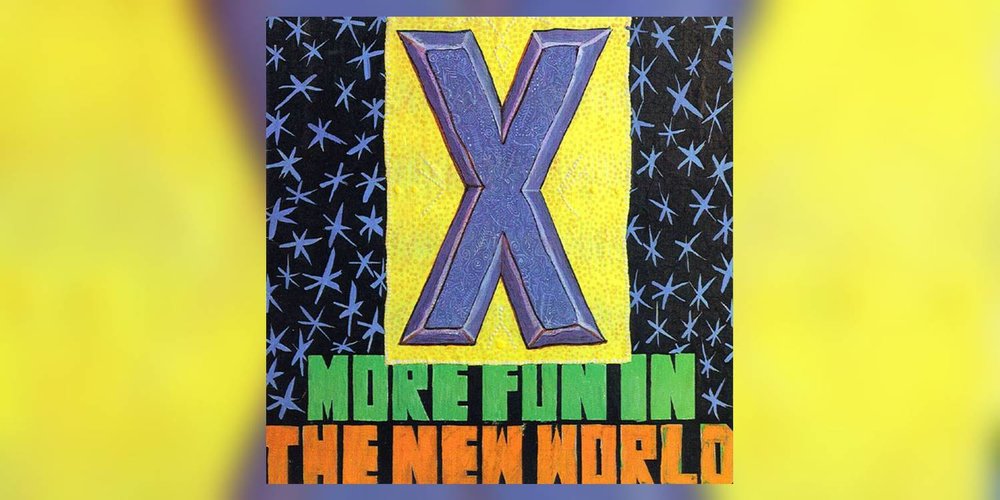
Formed in 1977, X quickly established themselves as one of the best bands in the first wave of LA’s flourishing punk scene; becoming legendary leaders of a punk generation. In 2020 – they released their first new album in 35 years, “Alphabetland”. X’s 1983 release “More Fun in the New World“, their fourth and last record produced by Ray Manzerak.
It was their last LP that would stay true to their punk roots. Their previous three releases (1980’s “Los Angeles” 1981’s “Wild Gift”and 1982’s “Under the Big Black Sun“) gave us tales of a darker side of Los Angeles that was more Tom Waits and less Hollywood.
Along with The Germs, Black Flag and The Circle Jerks, X stood out amongst a sea of Southern California punk bands who had to constantly play gigs to get their music heard. Except for college radio and KROQ, punk had no home on the airwaves. This did not deter X from improving with each album release.
The anthemic album opener “The New World” is still powerful years later, as is the absolutely beautiful ballad “I Must Not Think Bad Thoughts,” which perfectly captures the paranoid feeling of Reagan’s America in the ’80s.
“More Fun in the New World” incorporates a rockabilly sound mixed in with insightful sociopolitical commentary to give X the best album in their catalogue. The album starts off with the folky, brilliant and still relevant “The New World,” a razor-sharp rebuke of Ronald Reagan’s presidency without even mentioning his name. Writer Michael H. Little once called the song “a savage spit in the eye of false promises—the only promises politicians make—and one of punk’s great protest songs.” If you’ve read a newspaper or watched the news at any point in the last couple of years, then you know how important and applicable this song is to today’s America.
It was better before, before they voted for What’s-His-Name / This was supposed to be the new world / It was better before, before they voted for What’s-His-Name / This was supposed to be the new world.
Like “The New World,” “We’re Having Much More Fun” features Exene Cervenka and bassist John Doe sharing lead vocals with excellent guitar work from Billy Zoom. It’s a tale of the seedier side of Los Angeles as only X could tell it. Their delivery is so compelling, you could imagine yourself sweating and boozing it up very late into the evening on a hot summer night.
In the hallways upstairs / Everyone hangs out the doors / And the silhouettes act obscene / Across from where we stay / We’re having much more fun / You don’t know where we’ve gone
X achieved new rough and rocking heights with the vicious “Devil Doll,” “Painting the Town Blue,” and “Make the Music Go Bang,” while returning once again to their retro ’50s roots with “Poor Girl”.
“True Love” and “Poor Little Girl” are tales of the not-so-sweet-and-tender sides of love and romance. Cervenka and Doe, who were married at the time, took turns singing lead, with Cervenka taking on the former. She describes true love as the “the devil’s crowbar,” leading us to believe that she might have been better off not knowing what true love really is.
“Poor Little Girl” is Doe’s take on a relationship in which he can’t seem to do anything right and can’t figure out the source of his partner’s sadness. The guitar work of Zoom and drumming of D.J. Bonebrake is reminiscent of a sound you’d hear in a Bo Diddley song.
“Make the Music Go Bang” and “Breathless” are welcome returns to X’s uptempo sounds, with the latter standing out as one of the album’s highlights. With its cranked-up tempo and spot-on vocals by Cervenka, X’s cover of Jerry Lee Lewis’ “Breathless” is hands down the best version of the song. The song begs to be played as loud as possible.
“I Must Not Think Bad Thoughts” is a personal favourite of mine and maybe the only song I know of that addresses America’s sketchy foreign policy and lack of airplay for punk bands on the radio. Somehow, Doe and Cervenka make it work.
“Devil Doll,” ”Painting the Town Blue,” and “Hot House” bring the album back to a style more reminiscent of their previous releases and show off the underrated songwriting of Cervenka and Doe. Each of these songs is vastly different from each other but convey a sense of pathos without losing their edge. It’s great storytelling without the sappiness of a classic country music song. “Drunk in My Past,” if sung by any other classic rock outfit, would be just another song. The vocal style of Doe and Cervenka makes this song work so well.
“I See Red” is a fun and manic blast of punk rock at its best. It speeds along at a breakneck pace, not quite out of control. As you’re listening, you constantly wonder how it’s going to end and then suddenly you hear the sound of what might be hubcaps falling off of a car.
The LP ends with “True Love (Part 2),” a track that sounds nothing like anything else X had done until this point. It’s a fun, stream of consciousness track that does not take itself too seriously, and neither should you.
If one album summed up the mood of 1971 in 45 minutes, it was Sly & the Family Stone‘s There’s a Riot Goin’ On. Dark, druggy and depressing as hell, the fifth album by the San Francisco group led by multi-instrumentalist Sly Stone was the recorded equivalent of a gut punch to a nation already knocked senseless by war overseas and social unrest at home. Almost exactly a year before “There’s a Riot Goin’ On‘s” release in November 1971, Sly & the Family Stone put out their massively popular “Greatest Hits” record, which collected singles and deep cuts from 1968 and 1969. The dozen tracks wrapped up the brief history of one of R&B’s best crossover bands, chronicling a dizzying couple of years that yielded some of the era’s most enduring songs. But anyone expecting a second sunshine-kissed greatest-hits volume in a few years was most likely side-lined by the despairing tones crawling throughout “There’s a Riot Goin’ On“. Originally titled “Africa Talks to You“, and recorded partly in response to Marvin Gaye‘s sociopolitical “What’s Going On” (another era-defining album released in 1971), the album was a moody, murky indictment of the United States at the turn of the decade.
“There’s a Riot Goin’ On” is a striking example of a pathfinder taking a road, both musically and personally, that tests every relationship to the brink and beyond to a place and time where tumult is inevitable and damage is dealt harshest of all to the protagonist at the centre of it.
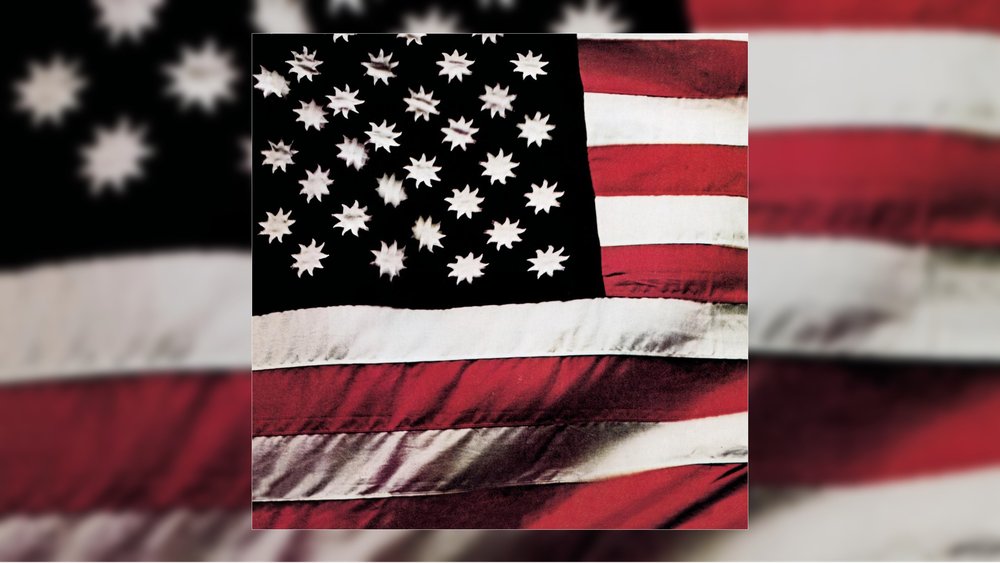
The cover art, featuring an American flag with suns replacing the familiar stars, says it all: Blood-red stripes offset the remaining black and white. It wasn’t an easy record to listen to then, and it’s still tough to get through at times now. But Sly & the Family Stone never made a more significant album. It’s their masterpiece, but it’s also one of music’s most harrowing and desolate works, and one that reflected the turmoil going on within Sly Stone. After Sly & the Family Stone’s rousing Woodstock performance, their leader became unreliable. He missed shows. He missed album deadlines (prompting the release of “Greatest Hits“). He became more and more paranoid. He moved to Los Angeles. He joined the Black Panthers, who urged him to drop the white members of his multi-racial group. And he started to take more and more drugs, which clouded his mind and, to an extent, his creativity. When he was able to get it together, he didn’t like what he saw, particularly the end of civil-rights activism and the dark pall cast on the final years of the ’60s. So he made an album about it, replacing his band’s usual psychedelic pop and funk with a deeper, sleepier version muddled with gut-churning bass rumbles, mumbled lyrics and a sense that there was a violent revolution brewing, but only if its leader didn’t nod off first.
But the groundwork for this new blueprint of soul and funk lies in its predecessor “Stand” and, more importantly perhaps, the success it brought with it. Released in 1969 after three solid, if unspectacularly performing albums, it reached #12 Top 200, whereas none of the previous three albums had broken the top 100. Part of its success can be attributed to a moment that goes down as one of the most important in 20th Century musical history: the Woodstock Festival.
When Sly and the Family Stone took the stage at 3.30am on Sunday August 17th, 1969, their lives and careers changed forever. Almost knee deep in mud and worn low by the ravages of a weekend of intoxicating substances and little sleep, the crowd was revitalized by the surging, infectious performance the band gave—a lengthy, exultant “I Want To Take You Higher” lit the touch paper and the band never looked back. In fact, it was a palpable moment of realization for those involved, as well as those in the crowd. Larry Graham, the slap bass innovator, recounted in later years the fact that the band fully grasped their potential and realized what the awesome power of the fully operational group could attain.
But the savage irony of that realization is that the seeds were sown at that moment for the gradual dissolution of the group. For with success, came money and, somewhat inevitably, distractions. It may be a tale oft-told but it remains true—no one prepares you for success and all the trappings it brings. The distractions that afflicted Sly Stone in particular are well documented—for him it was cocaine and PCP that were his escape. Scanning through the interviews he gave to journalists in the early 1970s (which were few and far between), each and every single one of them makes mention of his cocaine habit.
Sly Stone missed 26 of the 80 planned shows, but things may not have been quite so straightforward. For all that the drugs would inevitably contribute to the problem, there was the idea that some form of scam was being run by those around the group. If Stone was waylaid by someone, resulting in a missed show, it was alleged that that person got a split of the resulting financial payoff Stone was obliged to produce. When he was interviewed by David Letterman in 1983, he addressed the issue head on: “There’s no way to make three gigs in one night, if you only know about one.”
Stone used The Plant Studios in Sausalito and the loft of his Bel-Air mansion but with one added curiosity. Sly also owned a Winnebago that was fitted out (somewhat chaotically) with recording equipment that added to the places Stone could hide himself away and create what would become Riot. It was a solitary endeavor for the most part though, something that was made possible by the advent of the most basic of drum machines.
The Maestro Rhythm King MRK2 had preset patterns that he would use in a new, exciting way as GregErrico (a real human drummer!) grudgingly testifies in Kaliss’ book: “The machine. . . was a lounge instrument that the guy at the bar at the Holiday Inn might have used.
Stone worked on the album, mostly by himself, throughout 1970 and 1971. Many of his vocals were recorded in his bedroom, with a drum machine driving the beat. The other members of the group later overdubbed their parts. And Stone himself overdubbed even more on top of that. The result was a mix so thick and muddy that it perfectly suited the album’s themes of disillusionment and despair.
There were the internal band tensions that had been present since almost day one. Larry Graham and Sly tussled numerous times as the former challenged Stone’s authority. There were also rumours of Graham having affairs with Rose (Sly’s sister) and Sharon (Sly’s brother Freddie’s wife)—hardly a cocktail for healthy relationships and dynamic musical brotherhood. The upshot of all that was that Graham barely appeared on “There’s a Riot Goin’ On“, instead bass parts were played by either Stone himself or Rustee Alan who was more in line with James Jamerson’s luxuriously smooth bass playing than Graham’s newly minted slap bass techniques that had contributed so memorably to “Stand’s”success. From the opening “Luv n’ Haight” — one of the few songs here that doesn’t sound like a 45 played at 33 1/3 — to the closing “Thank You for Talkin’to Me Africa,” a gloomy, seven-minute reworking of Sly & the FamilyStone’s 1969 No. 1 hit “Thank You (Falettinme Be Mice Elf Agin),”There’s a Riot Goin’ On plays out like a drug-induced nightmare that’s a simultaneous end to the ’60s and the start of an equally tumultuous decade. The title track, which closes out Side One, runs 0:00, erasing all time and space from the record.
It’s a fitting summation of the album, because nothing else sounded like it at the time. All these years later, it remains one of the most distinctive records ever made. It confused a lot of people then, and it still does. But the success of the single “Family Affair,” which hit No. 1, drove the LP to the top of the album chart. It would be the group’s last No. 1s, though they did manage to make one more great album, 1973’s Fresh, before Stone couldn’t keep it together anymore. There’s a Riot Goin’ On touched just about everyone who heard it. Jazz got darker and funkier, funk got darker and deeper, R&B got weirder and druggier and rock ‘n’ roll got more adventurous and complicated (the Rolling Stones, for one, were influenced by the murky production enough to bury Exile on Main St. in a similar mix).
It seems almost beyond comprehension that the group’s biggest song would come from this album, but “Family Affair” hit #1 on the charts and stayed there for three weeks. Recorded with Billy Preston on electric piano and Bobby Womack on rhythm guitar, it buried Sly’s guitar in the mix and featured his singing in an entirely different register. Gone were the urgent gospel-like vocals of previous years and in its place came a guttural, underplayed vocal that mirrored the gloomy approach to recording and the overall feel of the album.
The other singles released from the album were “Runnin’ Away” and “(You Caught Me) Smilin’” both of which did pretty well
The music on “Riot” is funky, very funky, but it is of a totally different ilk to the funk others offered. Take James Brown’s work of the time with his new line-up that included Bootsy and Catfish Collins. Their brand of funk was expansive, punchy and dancing to it meant the chance to use huge movements—spins, pirouettes and leaping splits; arms and legs flung as extensively as possible. But it is hard to imagine those same movements in response to the deep, gloopy funk of “Riot“. Here the funk is wearing a strait jacket—the movements it provokes are limited in scope and scale, instead the neck bears the brunt of the groove.
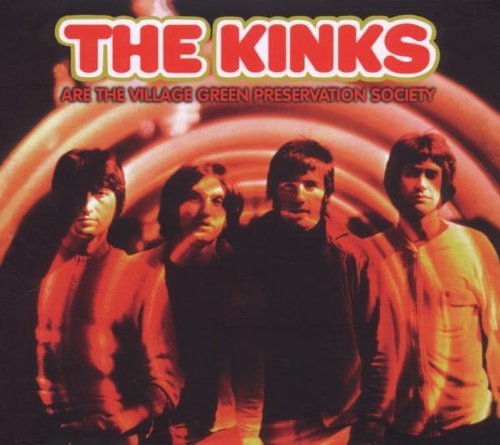
While many other rock artists during the last part of the ’60s dismissed and pushed aside the mores and ideals of their parents and earlier generations, The Kinksembraced them, finding peace and a sense of harmony in the aftermath of the Summer of Love. Frontman Ray Davies invests too much heart and perspective for this song cycle about lost British traditions to be mere satire of the nostalgia and sentiment found in its words and music.
“The Kinks Are the Village Green Preservation Society”, a masterpiece that was completely out of step with Swinging London, while at the same time being utterly timeless. “These were rock/folk tunes,” Ray Davies says now. “But it was unlike anything the Kinks had done before. We were known for ‘You Really Got Me,’ after all.”
Devoid of any obvious singles, or any fancy production techniques, the album is a true pleasure from beginning to end, arguably running circles around the competition in both song writing and cohesiveness, and 45 years later is more influential than ever.
Often cited as one of the most quintessentially English albums of its era, “The Kinks Are The Village Green Preservation Society” was venerated by critics though largely overlooked itself by the buying public at the tme. Released in the same year as The Beatles’ “The White Album“, Pink Floyd’s “A Saucerful of Secrets“, and The Band’s “Music from Big Pink, Ray Davies’ concept LP had little in common with the rest of his contemporaries, many of whom were either looking to America for musical stimulation, or tripping themselves into outer space. Instead, Davies turned to his beloved England for inspiration, writing a collection of tunes full of intriguing characters.
Released (November. 22nd) in 1968: after nearly two months of delays, The Kinks released in the UK one of rock’s most enduring concept albums ‘on Pye Records (in the US three months later on Reprise Records); It was the group’s 6th studio LP was the last by the original quartet (with bassist Pete Quaife leaving in early-’69); a collection of vignettes of English life, the album served as a virtual thematic template for the ‘Britpop‘ movement of the ’90s; although arguably the band’s most important & influential long-form work, it failed to chart upon release, selling about 100,000 copies.
The title track is a tender ode to an England that was ever rapidly changing, especially throughout the 1960’s, where Davies and Co. are determined to conserve what remains of their country’s traditionally conservative culture, preserving “the old ways from being abused/Protecting the new ways for me and for you/What more can we do”.
“It was obscure the week it came out,” Dave Davies jokes of the album. “Something Else” is probably my favourite Kinks album, but “Village Green” was just so good. We put those songs together in our front room, and we drew really heavily on our environment and our family, who had supported us, and I think that’s why it has such a distinctive English flavour and why the songs are so intimate in a way. Ray has such a great way of drawing characters. The song ‘Picture Book’ is like sitting in the front room looking at old photographs with your mum.”
The sentimentalism continues with “Do You Remember Walter” (a far more cynical take on aging than McCartney’s “When I’m Sixty-four”), “Picture Book”, and the deliciously languid “Sitting by the Riverside”. Davies laments the demise of old British Rail on “The Last of the Steam Powered Trains”, while yearning for pastoral sanity on “Animal Farm”.
“Village Green” was made at a time when we were banned from touring in America and we didn’t have much airplay,” Ray Davies says. “But I think the reason it’s become so beloved in retrospect is that it reaches people like folk music. Not many people have the “Village Green” record, but many people know it. I think it’s more to do with the sensibility, because it’s very different to typical rock music. I wasn’t worried about airplay and, whether I designed it that way or not, I reached people rather than record companies and little by little it broke through.”
Davies is right about the folky nature of the music. But it’s that very simplicity that gives the album its distinctive, if utterly straightforward, sound. While other records of the time can sound dated or perhaps too precious, Village Green has always sounded fresh and accessible, a work of an immensely in-sync group at the height of its powers, while still retaining a bit of that garage edge that makes rock ‘n’ roll so exciting.
“Everything about it was a low-achieving record, in every sense,” Ray Davies jokes. “But I intended that. We used a lot of ambient sound in recording the drums and things like that. Some people would say that made it sound like it wasn’t well-produced, but that’s the sound I wanted and it added to the poetic value of the record. It was designed to be that way.”
“That was a sound I was really into at the time,” Dave Davies remembers. “Pete [Quaife, The Kinks‘ bass player] and I were trying to get the excitement of our performances on record and that’s just the way it came out. On songs like ‘Big Sky,’ I’d think of a bass part and give it to him and he’d change it around — play off the melody, like Paul McCartney was starting to do at the time, because they both started as guitar players — and it would create something completely different and also really new-sounding.”
Ray was finding inspiration in unusual places.
“I was at a music industry schmooze fest and I couldn’t cope with all the business talk,” he says of the origin of “Big Sky.” “I conceived and wrote it on the balcony of the Carlton Hotel in Cannes [France]. I know it sounds very grand. But I had to share a room with my publisher, and so out of frustration I knocked over the geranium from our fourth floor balcony and the first line of the song, ‘Big sky looks down on all the people looking up at the big sky,’ came to me while I was looking out from the balcony of the hotel. I was in a situation I was not happy in, so I went into this world of irony and pathos and used my imagination that one day we’ll be free from all this. Because I’m sure there are lots of people like me who feel confused in a world that’s going mad and you try to find a spiritual way through it. It’s quite a spiritual record.”
The neo-psychedelic “Phenomenal Cat”, “All My Friends Were There” (which could have been penned by Syd Barrett), and “Wicked Annabella” (I can imagine a pre-T-Rex Marc Bolan grooving to this one), are all cleverly written and arranged, and slowly etch their way into the memory upon repeat listens.
As Ray Davies says in the liner notes contained within the mammoth 3-disc deluxe edition, “It’s the most successful failure of all time.”. However over the decades appreciation for the album has multiplied, whose whimsical tales of English rural life and quaint eccentrics never seems to date. Many of these tunes have a delicacy as well as poignancy to them, not to mention a sturdy nod to American blues, Psychedelia, and folk-rock, along with a nostalgic measure of old-fashioned Music-Hall.
This is one of those classic LPs that must be absorbed and enjoyed from beginning to end, where throughout Davies paints a picture of a society that was as imaginary as it was genuine. A world invented as much on fact as it was on fiction. That it lacked a “Waterloo Sunset” or “You Really Got Me” was likely the real reason why it failed to reach a wider audience, and due not to any musical deficiency on the part of The Kinks themselves.
Originally issued in mono, “Village Green” can now be enjoyed in stereo (remastered from first generation tapes no less), making for a far superior listen (the mono version has been preserved on disc two for all the purists). However it’s the third disc that will have many a Kinks archivist’s pulse quicken, and is a Kinks fanatic’s dream come true. 55 minutes of outtakes, alternate mixes and other assorted rarities, the majority of which were previously unavailable. Only Ray Davies could have written lines such as “We are the Office Block Persecution Affinity/Gave save little shops, china cups and virginity” .
Tracklist:
01 The village green preservation society 02 Do you remember Walter 02:53 03 Picture book 05:21 04 Johnny Thunder 07:58 05 Last of the steam – powered trains 10:28 06 Big sky 14:40 07 Sitting by the riverside 17:32 08 Animal farm 23:00 09 Village green 25:13 10 Starstruck 27:42 11 Phenomenal cat 30:23 12 All of my friends were there 32:49 13 Wicked Annabella 35:33 14 Monica 37:53 15 People take picture of each other
“In Waiting” is Pillow Queens’ debut album, the result of four years of brotherly love in a sisterly unit from Ireland’s most urgent, yearning, rock band. Crafted from our lives, and honed in a studio in rural Donegal in the northwest of Ireland, this is a record by queens in waiting and kings in the making. It’s an album about love; self-love, queer love, the anxiety- inducing fault lines of romantic love, and the love for a city and a country that simultaneously has your back and is on your back. For fans of early PJ Harvey, Waxahatchee and Hop Along.
‘In Waiting’ couldn’t have come at a better time for the band. The album was mostly finished just before the pandemic hit. They were kept busy over lockdown with the final mastering and admin. Creating their own label meant spending lockdown doing a lot of paperwork to get their “ducks in a row”. I was very excited when the Pillow Queens announced their debut album last year. I think they really embody a message of female power and fun. Tracks from this record are always wiggling their way on to my playlists. Pillow Queens stand loud and proud on the shoulders of so many amazing female artists that have paved the way for women in music and so many artists that I love. Plus I just think they are so bloody cool. I’m psyched to catch them live at the next possible opportunity.
Pillow Queens have truly captured lightning in a bottle. All the magic and energy of their live performances is maintained in this recording, while softer and more intimate moments are spread throughout adding an intense range of emotions while maintaining their distinctive sound. In particular, the transition from “HowDoILook” into “Liffey” took my breath away on my first listen, and continues to give me chills to this day. Cannot recommend this album enough.
A year after same-sex marriage was made legal in Ireland, Sarah Corcoran, Pamela Connolly, Cathy McGuinness, and Rachel Lyons formed Pillow Queens: an all-queer DIY outfit named for a slang term referencing somebody who takes more than they give in bed. Unafraid to tackle thorny subjects like politics and religion, the quartet dropped its debut EP Calm Girls in 2016 and its debut album In Waiting last year. Cloaked in catchy choruses, both works are equally pugnacious and anthemic, as fun to blare with the windows rolled down as they are substantive.
All songs written and performed by Pillow Queens.
Pillow Queens are a 4-piece from Dublin, Ireland. Their debut album ‘In Waiting’ the debut album was released September 25th
A closer look at the next title in the Esoteric RecordingsBe Bop Deluxe reissue series: Modern Music, 4CD/1DVD Deluxe Boxset Edition, released December 6th! . For an artist registered and branded as one of guitar heroism’s most innovative players, Bill Nelson is not one to be stuck in the past or focused on the present. Always inventing, always evolving, and always looking to the next thing (and the thing after that) the Yorkshire, U.K.-based guitarist and songwriter made himself and his legendary first ensemble Be-Bop Deluxe into an anomaly from their first record. With 1974’s glam-era debut Axe Victim,Be BopDeluxe added a progressive complexity and a daring density to the glittery genre, a dynamic previously unheard within Britpop’s most pomp and circumstantial sound. Nelson’s razor-sharp and soaring eletro-induced solos were a large part of that experimental esprit. Then and now, Nelson’s guitar scrawl sounds like no other. Increasingly catchy and chancy as time went on, 1976’s opulent Sunburst Finish and 1978’s Drastic Plastic are very much at one with their titles.
For all of its studio wizardry (produced by Nelson with John Leckie, eventually known for his work with Magazine and PiL), 1977’s Live! In the Air Age is Be-Bop Deluxe’s art-rock masterpiece: an elegant, sprawling mix of then-new, previously unrecorded and past work splayed across the dirtball nihilism of Brit-punk’s origin story. Recorded live on BBD’s 1977 tour just months before its release, “Live!” is fiery and hot wired for freshness. After they pressed their audacious 1977 concert LP, BBD stuck around for one more album (the aforementioned Drastic Plastic) before disappearing with Nelson moving forward and focusing on Cocteau-inspired solo work, another band (Red Noise), collaborations with fellow travellers in experimental electronic music (Yellow Magic Orchestra, David Sylvian, Roger Eno, Cabaret Voltaire), and an ongoing series of homemade ambient albums, previously unreleased epics, and other sonic explorations—all hung on a moon of fierce independence as an artist and as a releasing agent.
Nelson never looked back, until 2018’s four-album exploration of Sunburst Finish. That recently opened the door, thankfully, to a similarly sized four-LP “Axe Victim”, and now a whopping 15-CD/one DVD expansion of “Live! In the Air Age” to include every gig on that 1977 tour, along with freshly remixed and vividly remastered sound. Though an active blogging presence, Nelson doesn’t do many interviews, so our rare opportunity to speak with him is particularly choice.
Recorded in June and July 1976 at Abbey Road Studio Three, ” Modern Music” was the fourth album by Be Bop Deluxe and the second to feature the line-up of Bill Nelson (vocals, guitars, keyboards), Charles Tumahai (bass, vocals) ,Andy Clark (keyboards) and Simon Fox (drums). Following on from the success and critical praise for the band’s previous album Sunburst Finish, the album was once more co-produced by Bill Nelson and John Leckie.
Much of the material appearing on the album was conceived by Bill Nelson whilst Be Bop Deluxe were undertaking their first tour of the USA in March 1976. The wonderful and expansive Modern Music “suite” which dominated the album was inspired by Bill’s experiences of America, the disillusionment with the US music business and a longing for home. Beside the fine achievement of the suite, MODERN MUSIC also featured other fine songs such as Orphans of Babylon, Kiss of Light, The BirdCharmers Destiny and the epic Down on Terminal Street, all of which ensured that the album was a hit in both the UK and the USA.
This expanded reissue has been newly re-mastered from the original master tapes and features an additional 55 bonus tracks drawn from a stunning new 5.1 surround sound & stereo mixes from the original multi-track tapes by award winning engineer Stephen W. Tayler, previously unreleased out-takes from the album sessions, a BBC Radio “In Concert” performance from October 1976, along with a bonus CD of a previously unreleased “official bootleg” of a performance at The Riviera Theater in Chicago in March 1976 recorded for FM Radio on Be Bop Deluxe’s first US tour which features a rare jam entitled Bill’s Blues. The set also includes visual material taken from a session for BBC TV’s “Old Grey Whistle Test” show broadcast in November 1976.
Another highlight of this limited-edition boxed set is the lavishly illustrated 68-page book with many previously unseen photographs and an essay of recollections by Bill Nelson. Additionally, the set includes postcards and a replica poster. This special deluxe limited-edition boxed set of MODERN MUSIC is a fitting tribute to a fine band and the creative vision of Bill Nelson.
Re-mastered from the original master tapes with 55 bonus tracks drawn from stunning new 5.1 surround sound & stereo mixes, previously unreleased out-takes, BBC In Concert sessions, live performances & more!







 The Fat Angel Sings