Bob Seger dropped a lyric video for the title track to “Against the Wind”, which turns over 40 years old. The clip follows the lyric video for “Night Moves,” on his newly launched YouTube channel. Bob Seger had already set a high standard. Early in his career, he had established himself as a no-nonsense heartland rocker, beloved in his native Michigan and already making inroads in other parts of the nation as well. A series of early albums on Reprise, Capitol and Camden Records established a certain tone and tenacity, but it was his first national hit, “Ramblin’ Gamblin’ Man,” that found him elevated to the status of iconic heartland rocker, primed to please multitudes of air guitarists in venues large and small.
The first album recorded with the band in tow, 1976’s “Live Bullet”, provided the big breakthrough, and with two successive efforts, “Night Moves” and “Stranger in Town”, both formally credited to Bob Seger and the Silver Bullet Band,
‘Against the Wind’ is Classic Bob Seger imagery with animated horses, motorcycles, and vast American highways flash across the screen with each line of the track. “It seems like yesterday,” he sings, “But it was long ago/Janey was lovely, she was the queen of my nights/There in the darkness with the radio playing low.”
Released on February 25th, 1980, with his Silver Bullet Band, “Against the Wind” is Seger’s only Number One album. “Knowing the difference between when people are using you and when people truly care about you, that’s what ‘Against the Wind’ is all about,” he said of the track in 1980. “The people in that song have weathered the storm, and it’s made them much better that they’ve been able to do it and maintain whatever relationship. To get through is a real victory.”
Side one was stocked with a pair of songs that some observers perceived to have sexist connotations “The Horizontal Bop,” an obvious reference to the joys of intercourse, and “Her Strut,” said to be inspired by Seger’s admiration for Jane Fonda, but also interpreted as offering some sentiments that were demeaning to women. In retrospect, however, the latter seems quite the opposite, given that it asserts the strength of the woman in question. Seger’s ricochet-like guitar solo brings it all home.
Still, it’s the ballads that best define the album overall. The title track offers an homage to determination and defiance, or as Seger himself told one interviewer at the time, it’s “about trying to move ahead, keeping your sanity and integrity at the same time.” To most listeners, however, it came across like an anthemic ode to maintaining perseverance and commitment despite all the odds.
“Fire Lake,” a song originally intended for the “Beautiful Loser” album but shelved due to the fact it was incomplete at the time. In some ways, it brings close comparison to any number of early efforts by would-be rival Bruce Springsteen, thanks to its aural imagery and description of some simple summer joys. With three of the Eagles Glenn Frey, Timothy B. Schmit and Don Henley providing the harmonies,
Given Seger’s successful streak of multi-platinum albums released from the mid-’70s to the early ’80s, it’s difficult to discern any one album that stands out overall. Yet even now, some 40 years on, “Against the Wind” still ranks as one of Bob’s best.
He finally launched his catalogue on streaming services in 2017, making him one of the last major artists to do so. However, many of his earliest records, like “Smokin’ O.P.’s” and “Back in ’72″, remain unavailable both digitally and in print. “Jack White is always asking me about that,” he explained in 2018. “He wants to remix them all and said he’d do it for free. Maybe when I retire I’ll get serious about it.”
Bob Seger & The Silver Bullet Band – Against The Wind Released on February 25th 1980
Led Zeppelin released their sixth album “Physical Graffiti” in the UK. Recording sessions had been disrupted when bassist and keyboard player John Paul Jones had proposed quitting the band, supposedly to become choirmaster at Winchester Cathedral, England, although in reality he just needed time to rest after Zeppelin’s demanding tour schedule. The group decided on a double album so they could feature songs left over from their previous albums “Led Zeppelin III”, Led Zeppelin IV” and “Houses OfThe Holy”.
Released as a double album in 1975, Physical Graffiti was the band’s longest and most ambitious record to date. While double albums were already considered hit or miss by this point, fans were undoubtedly cautious about what this 83-minute collection had in store for them. Thankfully, they were not just surprised, but stunned at the glorious package of auditory goodness that was coming their way. The Physical Graffiti sleeve design features a photograph of a New York City tenement block, two five-story buildings located at 96 and 98 St. Mark’s Place in New York City. The images on the interchanging windows of the cover included a picture of drummer John Bonham wearing ladies tights (taken during a Roy Harper gig in London) and both Robert Plant and tour manager Richard Cole in drag – along with an array of legendary faces including: astronaut Neil Armstrong, The Virgin Mary, rock & roll singer Jerry Lee Lewis and German actress and singer Marlene Dietrich.
With songs that span between almost every genre, Physical Graffiti consisted of studio tracks and a handful of outtakes, resulting in a collection that serves almost like a retrospective of the group’s recorded output rather than a studio album. Featuring stunning highlights like ‘Trampled Under Foot’ and the exceptional ‘Kashmir’, there’s a reason that many people point towards this record as the moment at which Led Zeppelin’s career peaked.
Released on the 24th February 1975, Led Zeppelin released this their sixth album Physical Graffiti in the UK. Recording sessions had been disrupted when bassist and keyboard player John Paul Jones had proposed quitting the band, supposedly to become choirmaster at Winchester Cathedral, England, although in reality he just needed time to rest after Zeppelin’s demanding tour schedule. The group decided on a double album so they could feature songs left over from their previous albums Led Zeppelin III, Led Zeppelin IV and Houses Of The Holy.
By the time Led Zeppelin released Physical Graffiti in 1975, they no longer needed to prove anything. “All of us knew that it was a monumental piece of work, just because of the various paths that we’d trodden along to get to this,” says the group’s guitarist and producer Jimmy Page, in one of the music rooms at London’s Olympic Studios where the double-LP was originally mixed. “It was like a voyage of discovery, a topographical adventure.”
After refining the band’s blend of heavy-hitting blues-rock and introspective English folk on their five previous records, Led Zeppelin made Physical Graffiti their victory lap. They were now successful enough to operate their own record label, Swan Song, and the album, their first offering on the imprint was their lengthy battle cry. Clocking in at a little over 80 minutes, Physical Graffiti contained some of their hardest-rocking tunes (“The Wanton Song,”“Custard Pie,” “Houses of the Holy”), trippiest epics (“Kashmir,” “In the Light,” “Ten Years Gone”) and sweetest rock & roll diversions (“Black Country Girl,” “Boogie With Stu”). The record showed Led Zeppelin at both their most excessive and most impressive.
Page has given Physical Graffiti an overhaul remastering the original LP and compiling an album-length bonus disc of alternate mixes and early sketches of the songs on the record. Some are subtle, like the understated rough mix of “Houses of the Holy” and overdub-free version of “Trampled Under Foot” (titled “Brandy and Coke”), and others are drastic, such as “Everybody Makes It Through,” a psychedelic draft of what would become the LP’s portal to other worlds, “In the Light.”
When Page recalls the first rumblings of the album, he remembers the excitement he felt about returning to Headley Grange, the 18th century English estate where the group had recorded its landmark fourth LP. “I knew what we could do at Headley Grange after having had such a rewarding and productive experience there before,” he says. “I knew the secrets of what could be done there.” I knew how we did the drums in the main hall for Led Zeppelin’s fourth album “When the Levee Breaks.” And some numbers would come out of thin air, like for example the way “Rock & Roll” did on the fourth album and then on Physical Graffiti, “Trampled Under Foot,” which came out of thin air like that, just starting out of a riff. I was basically musically salivating on the way there. I was just looking forward to the whole process of everybody being there and just having a whole run at basically working out whatever material I had had or anyone else might’ve had.
I had the ideas for the riff on “Kashmir” the cascading part, which is actually electric 12-string and it’s brass on the record, from something that I had been working on before we even went to Headley. It was another piece of music entirely, and right at the very end of it, while I was playing along, I played the acoustic guitar part in reverse, and there was a sort of fanfare, or the cascades, followed by the riff, and I thought, “Whoa.” It just occurs right at the end. I said, “Oh, boy, I can visualize this. It’s going to be built around the drum kit, and I’m going to get in there with John Bonham.” It’s the first thing that I ran through with him, because I just know that he is gonna love it, and he loves it, and we just play the riff over and over and over, because it’s like a child’s riff. Musically, it’s a round, like “Frère Jacques,” where you can lay things on top of it. That was the idea of having this riff that was gonna be really intense, and probably pretty majestic as well, but quite intriguing. But the fact was, it was going to be built around the sound of Headley, and the drums in the hall. That’s how I heard it, and that’s how I saw it, but I also heard it with orchestra in mind.
It was the first track where we actually heard the complement of a full orchestra on top of the brass, and the strings. We’d used strings on “Friends,” on the third album, just a small string session, but this was really something that was meant to be pretty epic and substantial.
Robert Plant attributed the lyrics to “Kashmir” to a trip you two took in Morocco. It had already been taking on a really magnificent and substantial shape, and Robert said, “You know, I’ve got some lyrics that I wrote when we were in Morocco I’d like to try on this,” and that’s what he did. But that was way after the event of actually having the whole of the structure of the song.
There were three tracks that were left off of the fourth album, and that was “Boogie With Stu,” “Night Flight” and “Down by the Seaside.” If you think about it, you couldn’t have substituted anything off the fourth album with any of those tracks, quite rightly so. Each of them had their own individual charm and character.
“Houses of the Holy” was a track that wasn’t included on the album Houses of the Holy, that was four things straight away [to include]. And, you know, given the chance of having a good run at this writing and recording process, I didn’t want it to be a double-album with any padding on it. It would be a double-album with all character pieces, the way that Led Zeppelin did their music with the sort of ethos of it, if you like, that everything sounded different to everything else. It was the first [Led Zeppelin] album that was going to be on the Swan Song record label that Peter Grant had helped put together for the band with Atlantic.
Having a record label was a really cool idea, because it gave us a chance to showcase people that we really liked and respected, so, as an example, Paul Rodgers’ band, Bad Company, which was one of the first releases and also, the Pretty Things, we all did highly of, and I thought what they did on Swan Song was good.
“Boogie With Stu”
Even perfect albums have their weak links, and “Boogie With Stu” — named after Rolling Stones sideman Ian Stewart, who sat in on this tune — is one of Physical Graffiti‘s. The song has its fans, those who champion its melange of ‘50s rock, clack-clack percussion and Stewart’s boogie-woogie piano, but everyone else can hear why the track sat in the vaults since 1971. Ian Stewart the Rolling Stones session pianist and road manager— revs up this low-key jam, a leftover from the “IV” sessions. (He also played, more famously, on that album’s “Rock and Roll”) Given the hassle that ensued upon release of “BoogieWith Stu,” not to mention the middling quality of the music, it probably should have remained a castaway. “Ian Stewart came by and we started to jam,” Page told Guitar World in 1993. “The jam turned into ‘Boogie With Stu,’ which was obviously a variation on ‘Ooh My Head’ by the late Ritchie Valens, which itself was actually a variation of Little Richard‘s “Ooh My Soul.” What we tried to do was give Ritchie’s mother credit because we heard she never received any royalties from any of her [late] son’s hits, and Robert did lean on that lyric a bit. So what happens? They tried to sue us for all of the song! We had to say bugger off. We could not believe it. So anyway, if there is any plagiarism, just blame Robert.”
“Night Flight”
Another leftover from the fourth album’s sessions, “Night Flight” languished in the vaults for almost four years before being unearthed to pad Physical Graffiti’s double-album ambitions, but that doesn’t mean it’s without merit. Composed primarily by John Paul Jones, whose Hammond organ dominates the song, “Night Flight” boasts a memorable lyric by Robert Plantabout a young man trying to avoid the Vietnam draft. Over Page’s twangy, luminescent chords, Jones’ rippling Hammond organ and Bonham’s funky drum groove, Plant recounts the story of a draft dodger fleeing the prospect of war for a train ride into the unknown. The song’s nifty instrumental flourishes (see Jones’ rapid-fire bass notes around 2:39) offer some forward motion, but it’s easy to understand why they shelved it during the sessions for Led Zeppelin IV.The group never played “Night Flight” live, unless you count a sloppy July 1973 soundcheck during the Houses of the Holy tour. At least Jeff Buckley, a noted Zeppelin devotee, dusted it off two decades later for a solo guitar version found on the deluxe Live at Sin-é LP.
“Bron-Yr-Aur”
“Bron-Yr-Aur” returned listeners to the remote cottage nestled deep in the Welsh countryside where Jimmy Page and Robert Plant (whose parents owned it) composed the bulk of 1970’s “Led Zeppelin III”. And just as that landmark album provided a welcome creative departure in the group’s career, this spartan but strikingly beautiful acoustic performance by Page does for the predominantly electrified proceedings on Physical Graffiti. This acoustic guitar instrumental, a moment of calm within the free-for-all of Physical Graffiti, reflects Page’s fascination with the British folk revival. And if it sounds a bit out of step with the rest of album, there’s a reason — the track dates date to the Led ZeppelinIIIsessions, and it’s named after the Welsh cottage where they wrote much of that record. Page plays an open C-style guitar tuning, his dreamy fingerpicking accentuated with huge dollops of reverb. “It’s a C[-type] tuning but not a C tuning,” he noted in 2010’s Led Zeppelin – III Platinum Album Edition: Piano/Vocal/Chords. “I made it up.”“Bron-Yr-Aur” their shortest-ever song at a little more than two minutes — never became a live staple, though Led Zeppelin played it for a brief period during the acoustic set on their sixth American tour in summer 1970. More famously, it appeared on the soundtrack to their experimental 1976 concert film, “The Song Remains the Same”.
“Sick Again”
Tucked way at the very end of Physical Graffiti, “Sick Again” is nevertheless a corker of a band performance, pushed into overdrive by Jimmy Page’s slippery guitar and John Bonham’s merciless drum assault. Like its lyrics, in which Robert Plant takes pity (well, not that much pity) on the hordes of groupies that would nightly sacrifice themselves to their rock gods, the music leaves listeners clamouring for more. Outside of the shifting time signature and Bonham’s cymbal-heavy drumming, “Sick Again” is one of the most straightforward rockers from this period of Zeppelin history. Somehow Plant’s vocal still gets buried in the mix, masking a lyric inspired by encountering very young groupies on tour.”It’s a shame, really — if you listen to ‘Sick Again,’ the words show I feel a bit sorry for them,” Plant said in 1975. “‘Clutching pages from your teenage dream in the lobby of the Hotel Paradise/Through the circus of the L.A. queen, how fast you learn the downhill slide.’ One minute she’s 12 and the next minute she’s 13 and over the top. Such a shame. They haven’t got the style that they had in the old days … way back in ’68.”
“Black Country Woman”
“Black Country Woman”s backstory is arguably more intriguing than the song itself, which was recorded in Mick Jagger’s backyard during the “Houses of the Holy”sessions, where it captured the sound of an airplane overhead, giving new meaning to the concept of field recordings. Lyrically, the song simply transplants a classic cheating-woman blues motif to Plant and Bonham’s origins in England’s “BlackCountry.” This acoustic lark, originally titled “Never Ending Doubting Woman Blues,” opens with production chatter, an airplane passing overhead and Plant requesting that they leave in the noise. No moment better encapsulates Physical Graffiti’s “let’s get weird” aesthetic than that random intro: LedZeppelin, aiming to experiment, recorded the song during the Houses of the Holysessions, hauling their gear into the garden of Mick Jagger‘s country home, Stargroves. “Black Country Woman” is a bottom-tier Zeppelin cut with a generic blues riff, but Bonham’s massive drumming salvages the recording.
“The Wanton Song”
It may not be the brightest light on Physical Graffiti, but with its overdriven guitars and relentless riff, “The Wanton Song” showcases Led Zeppelin working in their fundamental, frill-free heavy rock element. With Jimmy Page as its driving force, the song’s forceful musical bed (including a mildly dissonant counterpoint riff midway through) is perfectly suited to the lusty and uncensored sexual conquest of its lyrics. Before the band began its Headley Grange sessions, Page had already worked out the foundations of several tracks at his home multi-track studio: “Ten Years Gone,” “Sick Again,” the bulk of “Kashmir” and this funky cut. “The Wanton Song” was one of the first riffs they fleshed out as a band, and Bonham’s crunching kick-drum accents elevated the groove to near-classic status.
Looking back decades later, Plant wasn’t satisfied with his vocals on the studio version, calling them “almost unfinished” in Led Zeppelin by Led Zeppelin. Perhaps that’s why the singer revived the song numerous times over the years, both with Page and as a solo artist. (He even used it to open his set at Bonnaroo 2015.)
“Down by the Seaside”
‘Down By The Seaside’ was heavily influenced by Neil Young’s ‘Down By The River’. It was recorded in 1971 and was intended for release on ‘Led Zeppelin IV’ but was held for ‘Physical Graffiti’. At the absolute opposite end of the sonic spectrum from “The Wanton Song” (and thus representative of the turn-on-a-dime song writing fearlessness that made Zeppelin so lovable), “Down by the Seaside” is a wistful fantasy awash in trembling guitars and bluesy electric piano breakdowns. And that’s before it briefly transforms into a completely different tune halfway through; like an instance of song writing Jeckyll and Hyde, the likes of which kept Led Zeppelin fans ever on their toes. Few Led Zeppelin songs qualify as “breezy,” but here’s an exception. Page and Plant first wrote the laid-back “Down By the Seaside” as an acoustic number in 1970, later reworking it as an expanded electric cut during sessions for their fourth LP. It’s obvious why they left it on the cutting-room floor for five years what song could this have possibly knocked off III, IVor Houses of the Holy? But it makes sense within the eclectic stew of Physical Graffiti. Zeppelin never played it live, but Plant did cover “Seaside” with Tori Amos for the 1994 tribute LP, “Encomium”.
“Houses of the Holy”
Another session holdover, this time from the 1973 album that bears this name, “House of the Holy” is a timeless Led Zeppelin number that wouldn’t have sounded out of place on any of their LPs. But we’ll gladly celebrate its inclusion on Physical Graffiti, where it provides a grounding presence to the oft-experimental surroundings with the help of John Bonham’s squeaky drum pedal so perfect the band didn’t even feel the need to “fix” it in the final mix.
Not even Bonham’s annoyingly squeaky kick drum pedal can derail this lightning bolt of a song, a leftover from their previous album of the same name. What an embarrassment of riches only a band at a peak this lofty could shelve one of the catchiest songs in its entire catalogue .Once you dig in Page’s stammering funk riffs and Bonham’s cowbell-heavy groove, you’ll notice the weirdness of Plant’s lyrics — a hybrid of his most juvenile sex metaphors and nerdiest fantasy imagery (“There’s an angel on my shoulder/In my hand a sword of gold/Let me wander in your garden/And the seeds of love I’ll sow“).(Though Bonham’s “Squeak King” pedal, a nickname for his Ludwig SpeedKing, is famously audible throughout, it’s even more noticeable on other songs, including “The Ocean” and “Since I’ve Been LovingYou.”
“Custard Pie”
Leave it to Led Zeppelin to kick off the album many consider their magnum opus with a simple recipe for one of their favourite desserts. Wait, what? Yes, the song is actually about sex (as usual), despite it collecting a clever pastiche of vintage blues lyrics (from Robert Johnson, Blind Boy Fuller, etc.) over JohnBonham’s rock-solid foundation and Jimmy Page and John Paul Jones’ dueling guitar and Clavinet riffs. And did we mention the absolutely massive, continent-sized groove?.
“Custard Pie” Robert Plantcranks up the sexual bravado and bluesy swagger to the max on Physical Graffiti‘s opener, barking out cheap innuendo over Page’s tightly coiled riff, John Bonham’s booming drums and John Paul Jones’ funky Clavinet-and-bass combo. The singer even throws in a harmonica solo, rounding off a classic full-band showcase. But looking back, Plant was never fully satisfied with the track.”
On ‘Wanton Song’ and ‘Custard Pie,’ there are things that I can hear that are almost unfinished,” he admitted in the 2018 book Led Zeppelin by Led Zeppelin. “Hindsight is a cussed bedfellow, but it’s great to fly in the face of it all and meld something tangible, a kind of union between the intent of the much and some sort of vocal release. … Some songs are finished, some songs aren’t.
Even now. Led Zeppelin never played this one live, unless you count the informal, partial reunion — staged one decade after Bonham’s death at the 1990 wedding of the late drummer’s son Jason.
“Trampled Under Foot”
This may prove to be a rather contentious choice this low in the rankings of Physical Graffiti songs, but “Trampled Under Foot” is a singular cut in Zeppelin’s canon, since John Paul Jones’ hypnotic funk-inspired Clavinet riff, rather than Jimmy Page’s guitar, drives it. Nevertheless, the tune has snagged more radio airplay than almost any other Physical Graffiti song, and is apparently one of Robert Plant’s favourites, to boot. Easily the funkiest Led Zeppelin song, “Trampled Under Foot” finds Plant tapping into the same car-metaphor model that Robert Johnson flaunted on 1936’s “Terraplane Blues.” But the groove is king: The song which Plant, Page and Jones developed under the working title “Brandy and Coke” could easily exist as an instrumental, highlighted by the interplay between Bonham’s primal thud, Page’s stabbing licks and Jones’ greasy Clavinet. The track, which developed from a spontaneous jam, is a perfect showcase for Jones’ underrated keyboard work. Many critics have compared it to Stevie Wonder‘s equally infectious pattern on “Superstition.” I suppose you could — I wouldn’t say that it was a sort of Stevie Wonder-like thing, but other people could,” Page has said . “Actually, the more I think about it, I see why other people do say that.”
“The Rover”
A quintessential Led Zeppelin hard rocker, “The Rover” matches a menacing Jimmy Page lick with JohnBonham’s reliable pounding and John Paul Jones’ busy bass work, while Robert Plant muses about life on the road with one of the world’s most powerful touring machines. Seems simple, right? Well, it is, but only the greatest talents can turn simplicity into amazement, and that about sums up the enduring wonder that is Led Zeppelin.
“The Rover” is a fitting title for this bruising blues-rocker, which took time rounding into shape. Page and Plant recorded a hilariously sloppy acoustic demo at Headley Grange in 1973, but they reconstructed the tune into its greasy electric arrangement during the Houses of the Holysessions (alongside “BlackCountry Woman” and “D’yer Maker”). After it didn’t make the final cut of that LP, Led Zeppelin revived “The Rover” for Graffitiwith some remixing and fresh overdubs. (The sleeve credit “Guitar lost courtesy Nevison. Salvaged by the grace of Harwood” is likely a reference to mixing difficulties, using the last names of engineers Ron Nevison and Keith Harwood.) Despite the rough gestation and its absence, in full form, from a live set list
“The Rover” became a favourite for both Page and Plant. Songs like ‘The Rover,’ for example, everything worked,” Plant said. “The marriage between my lyrical intention, the way I sang it and the way those guys played, there were many times like that. I thought it all worked, there couldn’t have been any more that I could have added, or more that I could have taken away to make it work as a consummate finished article.
In 2015, Page praised the song’s defining “whole guitar attitude swagger.” “I’m afraid I’ve got to say it, but it’s the sort of thing that is so apparent when you hear ‘Rumble’ by Link Wray — it’s just total attitude, isn’t it?” . That sort of thing … is sort of probably in my DNA to be honest with you.”
“In the Light”
One of Physical Graffiti’s best-loved epics, “In the Light” features the sort of song writing innovation and clever instrumental gimmicks that set Led Zeppelin apart from every other heavy rock band of the ‘70s and beyond. John Paul Jones’ synthesizer intro is backed by Jimmy Page sliding a violin bow across his guitar to create a droning effect. The ensuing sequence of counterpoint melodies and riffs strung out over John Bonham’s deliberate beats and underneath Robert Plant’s soaring wails comprise a kaleidoscope of sound with few parallels in the classic-rock world.
One of Led Zeppelin’s most prog-leaning tracks, “In the Light” developed from a similar rehearsal piece called “In the Morning” (available in bootleg form) and another, more polished take later issued as “Everybody Makes It Through” on Physical Graffiti‘s deluxe reissue. Jones, Page and Plant all contributed to the writing, and it’s a true full-band effort just take the droning intro: a mingling of Page’s bowed acoustic guitar, Jones’ colourful synthesizer solo and Plant’s stacked vocals, which Page told Rolling Stone remind him of “some choral music that I had heard from the Music of Bulgaria.” But there’s a surprise around every other corner, as a series of winding riffs navigate darkness into light.
In the liner notes for the band’s 1993 box set,The Complete Studio Recordings, Plant ranked the song among the band’s “finest moments,” along with “All My Love” and “Kashmir.” Despite their satisfaction, they never played “In the Light” live.
“In My Time of Dying”
Zeppelin’s greatest epic, all 11 minutes of it, brings the first side of Physical Graffiti to an awe-inspiring blues workout, almost as if the band was daring fans to flip the record over and see what wonders lay beyond. Let’s celebrate Jimmy Page’s extensive slide guitar vamps across “In My Time of Dying” along with John Bonham’s intentionally reverb-drenched drum sound, based on the same effect used on the fourth album’s “When the Levee Breaks.” ‘In My Time of Dying’ is a reworking of Blind Willie Johnson’s‘Jesus, Make Up My Dying Bed’ from 1927. Another variation of the song was recorded by Bob Dylan.
Bob Dylan covered this spooky gospel spiritual on his 1962 debut, moaning about death and ascension over a creaky acoustic guitar pluck. But Led Zeppelin transformed the traditional piece into an epic on par with “Stairway to Heaven” stacking riff upon riff into a staggering monolith. Page took great pride in the song’s vast dynamic range the development from crawling slide-guitar licks to explosive, metallic grooves. Fittingly, it’s one only two tracks on the album (along with the laid-back blues of “Boogie WithStu”) credited to the full quartet. “There were no edits or drop-ins or overdubs to the version you hear,” the guitarist said. “This is Led Zeppelin just going for it for an 11-minute song with all the changes in it and everything and the musical map that you have to remember when it goes 1-2-3-4, tapes rolling.”
There was a hell of a lot to sort of remember along the way, but we were up for all of this,” he told In the Studio With Redbeard, noting how he deliberately avoided listening to much popular music to preserve his sense of curiosity. This song, “so radical relative to any sort of blues that anyone else had done,” defines that originality.
“Ten Years Gone”
With all due respect to “Stairway to Heaven,” Led Zeppelin never crafted a more musically and emotionally satisfying power ballad than “Ten Years Gone”. With its brilliantly arranged contrasts of heavy and light, aching vocal performance by Robert Plant and panoramic sweep leading up to its final crescendo, this is a veritable song writing clinic by the masters of the craft. Everything that should have been put in was, and everything that should have been left out was too. The end result is absolute perfection.
“Ten Years Gone” is a true balance of Page and Plant, weaving the guitarist’s cinematic riffs with the singer’s introspective lyrics. “There’s a number of sections on ‘Ten Years Gone’ and movements, and I’d already sort of constructed all of this before going in,” Page said of the song’s layered arrangement.
Plant tapped into the track’s core wistfulness by drawing on a personal tale of doomed love. “I was working my ass off before joining Zeppelin,” he said “A lady I really dearly loved said, ‘Right. It’s me or your fans.’ Not that I had fans, but I said, ‘I can’t stop, I’ve got to keep going.’ She’s quite content these days, I imagine. She’s got a washing machine that works by itself and a little sports car. We wouldn’t have anything to say anymore. I could probably relate to her, but she couldn’t relate to me. I’d be smiling too much. Ten years gone, I’m afraid.” “Ten Years Gone” become a live favourite, but, like many of Zeppelin’s more elaborate pieces, it proved difficult to replicate. In an effort to flesh out the tune, Jones played a triple-neck instrument with a six-string guitar, 12-string guitar and mandolin, all while playing bass pedals with his feet.
“Kashmir”
When you think ofPhysical Graffiti, “Kashmir” tends to be the first and last song that comes to mind. As colossal as the Zeppelin legacy itself, “Kashmir” captures all four band members at the peak of their talents: You have Jimmy Page’s unconventional DADGAD tuning inspired by similar modal Arabian ones; Robert Plant’s vivid impressions of his travels across Northern Africa; John Bonham’s thunderous but meticulously planned percussion; and John Paul Jones’ orchestral arrangement, both for real strings and his Mellotron. The final achievement is mesmerizing, majestic, mind-blowing. “Kashmir” remains an indestructible cornerstone of classic rock.
It’s the most majestic Led Zeppelin song not named “Stairway to Heaven” and its roots are suitably elaborate. Page developed the track’s symphonic arrangement from the seed of a previous piece dating back before the Graffitisessions, using the cascading guitar fanfare to develop a brand new epic.
“I had a particular idea for a mantric riff with cascading overdubs,” the guitarist recounted inLed Zeppelinby Led Zeppelin. “I started playing the riff with John Bonham and we just locked in played it nonstop. It was so infectious, such a delight and just so us. I overdubbed the electric 12-string to what was later the brass parts; I had visualized this piece as being mighty, orchestral, even threatening. When I heard the playback of myself and drums, I knew this was truly innovative. This is the birth of ‘Kashmir” Page and Bonham built off the vast reverberations of the drum sound captured in the Headley Grange hallway — the drummer’s contribution was so crucial, he wound up with a co-writing credit. Page expanded the stark riffs with brass and strings; Jones added an eerie mellotron; and Page crafted a vivid lyric inspired by a recent drive through south Morocco — not, as the title might imply, the Indian region of Kashmir.
“It’s one of my favourites,” the singer wrote in the liner notes for 1993’s The Complete StudioRecordings box set. “That, ‘All My Love’ and ‘In the Light’ and two or three others really were the finest moments. But ‘Kashmir’ in particular. It was so positive, lyrically.” Page concurred: “There have been several milestones along the way,” he said in 1977. “That’s definitely one of them.
“Physical Graffiti” received glowing reviews, Rolling Stone said the double album was “the band’s Tommy, Beggar’s Banquet and Sgt. Pepper rolled into one: Physical Graffiti is Led Zeppelin’s bid for artistic respectability.” Billboard magazine’s 5-star review stated: “(Physical Graffiti) is a tour de force through a number of musical styles, from straight rock to blues to folky acoustic to orchestral sounds.” In 1998 Q readers voted “Physical Graffiti” the 28th-greatest album of all time.
Certified 16x Platinum in the U.S., the commercial success of Led Zeppelin’s “Physical Graffiti” was equalled by its critical reception. Generally regarded as one of the greatest double albums of all time, the set has been hailed by the likes of Rolling Stone, Mojo and the Rock and Roll Hall of Fame. The band’s first release on its Swan Song label, the collection represents a creative tour de force that explores the group’s dynamic musical range, from the driving rock of “Custard Pie” and acoustic arrangement of “Bron-Y-Aur Stomp” to the Eastern raga of “Kashmir” and funky groove of “Trampled Under Foot.”
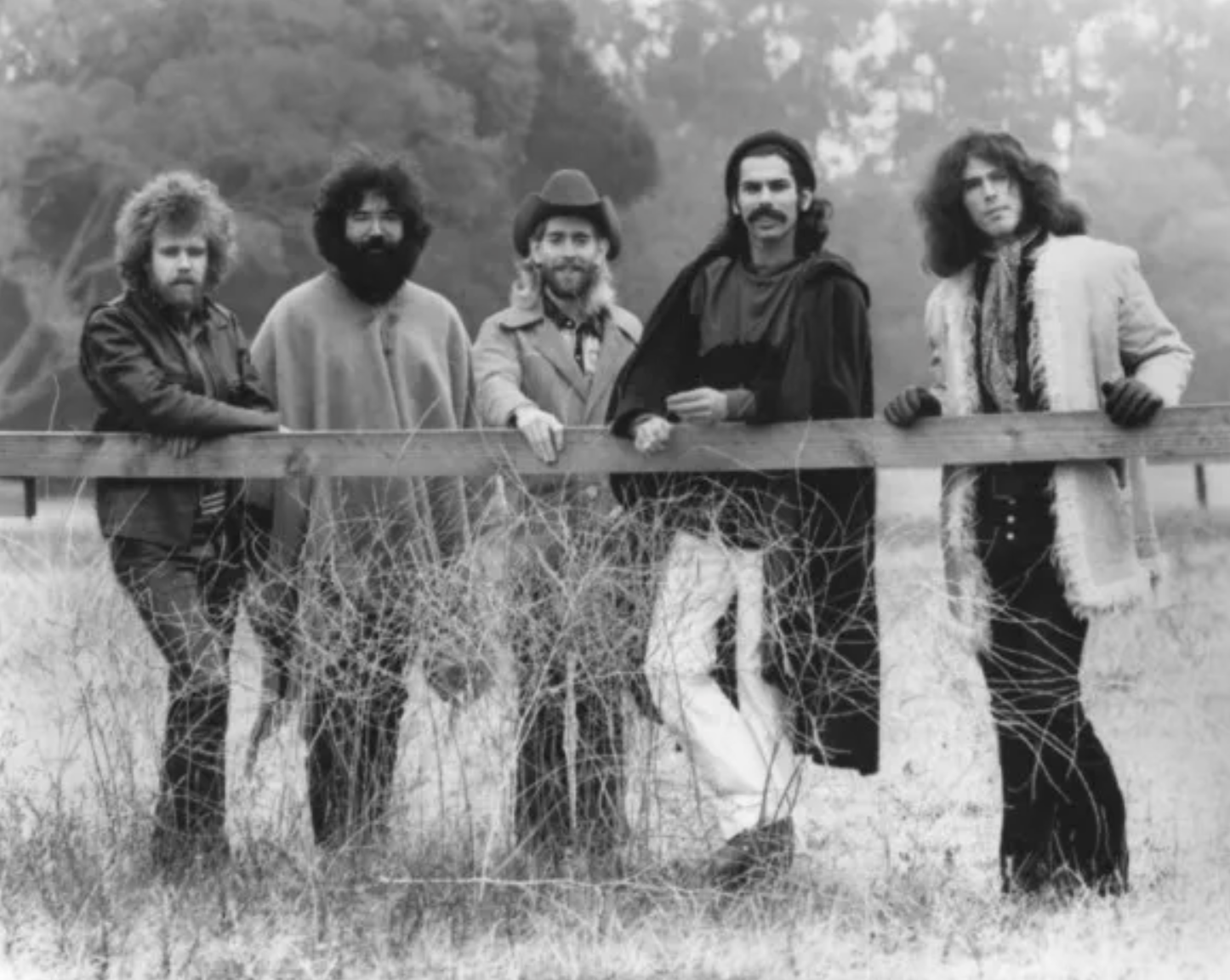
Although the New Riders of the Purple Sage are often grouped among the pioneering country-rock bands of the late ’60s and early ’70s like Poco, the “Flying Burrito Brothers“, the “Sweetheart of the Rodeo ” period Byrds, and even Dylan himself with his John Wesley Harding and “Nashville Skyline” albums but theirs was a different undertaking. While country and rock did indeed reside at the core of their sound, anchored by pedal steel guitar and the twangy fretwork of lead guitarist David Nelson, NRPS as their name has always been abbreviated was born of another sensibility, one that shared much with their friends and mentors the Grateful Dead.
Like the Dead, the origin of the New Riders is traceable directly to the folk music scene centred in the region south of San Francisco encompassing San Mateo and Santa Clara counties, in particular the city of Palo Alto. During the early ’60s, the area was a hotbed for aspiring folkies and bluegrass connoisseurs, many of whom banjoist/guitarist/vocalist Jerry Garcia, singers/songwriters/guitarists David Crosby, Paul Kantner and Jorma Kaukonen and others traded ideas as they worked the local clubs.
By 1965, with the advent of the Beatles, the calling of rock and roll was too tempting to resist: Crosby was going strong with the Byrds, Garcia had co-founded a band initially calling itself the Warlocks (soon to become the Grateful Dead); and Kantner and Kaukonen had just launched (along with singer MartyBalin) a rock outfit they called Jefferson Airplane.
San Francisco itself served as ground zero for the psychedelic culture that began shifting from well-kept secret to international phenomenon during this time, luring thousands of young people to the area these musicians enjoyed while performing at venues like the Fillmore Auditorium and the Carousel Ballroom in the city.
Numerous rock bands, most based either in the Bay Area or the vicinity of Los Angeles, looked to country music as a refuge from the sizzling, cranium-searing electricity of what was being labelled acid-rock or psychedelic music a desire to simplify life seemed to go hand in hand with the lonesome sound of steel guitars, fiddles and songs touting the richness of a rural, less encumbered lifestyle away from the clatter of the city
The ever-restless, hyper-prolific JerryGarcia counted himself among those looking for new outlets. Although the Grateful Dead were arguably at their most experimental and electric at the time, he began learning to play the pedal steel, an instrument inextricably associated with country music. He incorporated it into Dead concerts but that avenue didn’t allow him to fully explore its potential.
He teamed up with his Peninsula friend Nelson, who had been keeping busy with a group called the New Delhi River Band, and singer-songwriter John Dawson, who went by the nickname Marmaduke. Working up songs largely written by Dawson, as well as some choice covers, the trio also had assistance from Dead bassist Phil Lesh and drummer Mickey Hart and morphed into the New Riders of the Purple Sage, taking their name from the 1912 Western novel Riders of the Purple Sage by Zane Grey.
With Dave Torbert (who had been a member of the New Delhi outfit) replacing Lesh on bass, the quintet began gigging around the Bay Area in 1969 and, by the spring of the following year, opening for the Dead on tour. A typical gig of the period might find the Dead beginning a concert with an all-acoustic set, followed by the New Riders and finally the electric Dead: with Garcia participating in all three configurations, he might keep busy onstage for upwards of six or more hours.
As the New Riders gained in popularity in their own right, and with the Dead finding a wider audience via their acoustic-based 1970 albums “Workingman’s Dead” and “American Beauty“, it was not long before record companies began sniffing around. Columbia Records, run by the renowned Clive Davis, signed the group and they went into San Francisco’s Wally Heider Studios toward the end of 1970 to record their debut album, self-producing with the help of engineer Stephen Barncard. They ultimately laid down 10 original Dawson compositions that varied in style and temperament, drawing nearly all of the songs from their live setlists.
The album, self-titled, was the only official NRPS release to feature Garcia on pedal steel, and as such it serves as a shining example of his uncanny ability both to absorb the traditional techniques.
There would be one more personnel change as the album sessions were underway, however: Drummer Mickey Hart was out (he also left the Dead for a period of four years), and Spencer Dryden, who had driven Jefferson Airplane during that band’s prime years of 1966-70, was in. He proved a better fit, a steadier, more rock-solid sticksman than Hart, less prone to tossing in offbeat, sometimes ill-considered percussive accents. Hart appeared on two tunes, “Dirty Business” and “Last Lonely Eagle,” both of which also featured pianist George “Commander Cody” Frayne, the leader of the rising local band Commander Cody and His Lost Planet Airmen.
Dawson was the primary creative force of the New Riders of the Purple Sage. As sole composer and lead vocalist throughout the album, this was his vision. The album’s lead track, “I Don’t Know You,” also served often as the opening number during the group’s concerts. A melodic, uptempo rocker, it tells a simple but mysterious tale of a woman appearing in the protagonist’s life unexpectedly, or maybe not: “I don’t know you, you’ve been lately on my mind,” sings Marmaduke as Nelson and Torbert join in harmony, but soon after he’s telling another story: “Come sit beside me, I’m not sure if you’re still there.
“Whatcha Gonna Do,” which follows, slows the pace, the singer again musing on a woman of no fixed presence: “Where you gonna go on the planet today?” he asks to a springy rhythm, then leaves her appearance to chance: “Take a look around ya now and what do you see?/If you could go somewhere’s else now, where would that be?/When you find a place to hide, come and tell me where it is now/I’ll still be sitting here, singing in the air.”
A long time staple of the band’s live shows, “Portland Woman” is an oft-told but usually not quite as frankly tale of a traveling musician’s yearning for temporary companionship: “If I don’t find someone tonight, I just won’t make it through,” Dawson laments. He heads back out on the road the next day, but this time he’s having second thoughts: “The little girl that I had found, her I left behind/But I haven’t felt too good since I left Portland yesterday/I’m going back to Portland town now, what more can I say?” he sings with longing and firmness in his voice.
Another NRPS perennial, and a guaranteed crowd-pleaser, was “Henry” is an unabashed tribute to a high-volume smuggler of weed heading toward Acapulco, then back to the States through the rugged mountains of Mexico, to the “50 people waiting back at home for Henry’s load.” One of the speedier songs on the album—reflecting Henry’s “fast, fast, fast” driving down the “twisty mountain roads”—it was always a fun romp, packed with crisp country licks from Nelson and a playful, bluegrass-y pulse from the rhythm section, that gave the band’s drug-happy fans an opportunity to celebrate a very different kind of outlaw than those usually found in country tunes.
“Dirty Business” is he album’s most unorthodox tune, a showcase for the extreme sounds that Garcia had already discovered he could get out of his pedal steel. At times taking it so far from country music as to be nearly unrecognizable haunting, eerie, unsettling sounds, just plain nasty his performance here is the epitome of his visionary approach to the instrument. Garcia gives the ballad a sense of foreboding and dread that its lyrics of the “dirty business” perpetrated behind the scenes at a coal mine where frustrated workers and management are at odds.
An age-old country music standby story of the great train robbery is next. “Glendale Train”—which reprises the band’s favoured stepped-up bluegrass tempo and features Garcia returning to the banjo, is one of several tunes on the recording that find the Dawson-Nelson-Torbert trio engaging in harmonies.
In 1971, songs warning of impending environmental cataclysm were few and far between, but in “Garden of Eden,” Dawson was on it. The “cool clear water ain’t quite as cool and clear as it out to be,” he proclaims, and there’s “smoke fillin’ everywhere.” We “live in the Garden of Eden,” he reminds us, “don’t know why we want to tear the whole thing to the ground.” Sad to say, those who could do something about it didn’t—the song, despite its pretty melody, is just as relevant today as in 1971.
“All I Ever Wanted” is a thing of beauty, a tender, sensitive love song which gives Garcia an outlet to display the most tear-jerking sounds that can be coaxed from a pedal steel guitar. Marmaduke’s vocal performance can’t exactly be called a croon, but the soft edges he brings to the lyric how much more to the point does it get than “All I ever wanted was your loving?” define the sound of affection.
It’s followed by “Last Lonely Eagle,” one of the most powerful songs on the album and another that was years ahead of its time. With stellar vocal harmonies driving the appropriately uplifting chorus, and a sense of drama balancing out its discomfiting message, Dawson writes of those who’ve “forgotten their dreams and they’ve cut off their hair” (hello, David Crosby!), while imploring us to “Take a last, flying look at the last lonely eagle/He’s soaring the length of the land/Shed a tear for the fate of the last lonely eagle, for you know that he never will land.”
Finally, there’s the stomping “Louisiana Lady,” in the grand tradition of a road warrior trucker our intrepid traveller has been on the road for a full week, “so beat my vision’s just a yellow haze.” If he pops a little speed and drives faster, he can cut an hour off the time on his way to New Orleans, where “it’s gonna be worthwhile, I’m gonna see my lady smile.” Another crowd-rouser in concert, the song, like several of its predecessors, features stunning harmony and a vibe that’s somewhere between hardcore hippie and good ol’ American traditional music,
Released in August 1971, the album featured, on its cover, the band’s striking red, white and blue, and orange and gold, logo a green cactus standing tall at its centre that would become familiar to all of its fans. the album helped establish the New Riders as an entity apart from the Grateful Dead, although they would continue to open shows for the more successful band for years, even while touring on their own. The 1972 follow up, “Powerglide”, Garcia would bow out of the group, concentrating full-time on the Dead, replaced by Buddy Cage on steel the band had seen him performing with Canadian folkies Ian and Sylvia.
Sadly, all but one of the key members of the 1971 New Riders—Garcia, Dawson, Torbert and Dryden all have passed. Only Nelson still survives, still leading a NRPS group while also performing with his own David Nelson Band. Their debut album remains an invigorating, prescient listen more than 50 years after its release.
Released this day February 15th in 1980: Elvis Costello released his 4th studio album (his third with The Attractions), ‘Get Happy!!’, on F-Beat Records (UK)/Columbia Records (US); heavily influenced by R&B & soul music, it was a dramatic break in tone from his previous trilogy of commercially successful albums; the sleeve came already looking like it had been worn by years of use; produced by Nick Lowe, it reached UK #2 Rolling Stone ranked it No11 on their list of ‘The 100 Greatest Albums of the 1980s’…
“Get Happy!!“, earns its double exclamation points beginning with the sleeve design, which approximates the look of a well-worn vinyl LP produced on a tight art budget. Designer Barney Bubbles (born Colin Fulcher), noticing the projected album would contain a groove-busting 20 tracks, was no doubt thinking of budget-priced K-Tel and Pickwick compilations, which gave consumers music in bulk, promoted with pushy TV and print advertisements, and garish front covers.
Those budget albums did not always contain “the original hits by the original artists”; Costello must have chuckled more than once as they donned a series of musical disguises while recording the original songs on “Get Happy!!“, striving to approximate the sound of their favourite Motown, Stax and Atlantic soul records. “King Horse” nicks the guitar from the Four Tops’ “Reach Out I’ll Be There,” “Love For Tender” employs the rhythm from the Supremes’ “You Can’t Hurry Love,” and “Temptation” steals wholesale from “Time is Tight” by Booker T. and The M.G.’s.
All pretense is dropped for a version of Sam and Dave’s “I Can’t Stand Up For Falling Down,” but theAttractions radically alter the tempo. The U.K. R&B scene is represented by a version of Tony Colton and the Big Boss Band’s 1965 single “I Stand Accused,” which Costello actually lifts from the same year’s more popular version by the Merseybeats. “Get Happy!!” is both an expert homage to the sound of ’60s R&B and a collection of some of the most intense, gut-wrenching, clever and joyfully sad songs Costello ever wrote. As is typical of him, the lyrics are continually surprising, full of puns and reversals of viewpoint: “high fidelity” can refer to the clarity of sound and sexual faithfulness simultaneously. Even the album title is strangely ambiguous, with the overemphatic punctuation.
“Get Happy!!” was mostly recorded in October 1979 at Wisseloord Studios in Hilversum, The Netherlands, where the group, engineer Roger Bechirian and producer Nick Lowe thought there’d be fewer distractions for musicians known for partying. Still, Costello says “a tray of cold Heineken, vodka, and orange juice was delivered to the control room each afternoon.” Alcohol had been a problem for Costello earlier in the year during the highly successful U.S. “Armed Funk Tour”: in April during a stop in Columbus, Ohio, he reportedly went on a drunken, racist rant in a bar that made national headlines. He later wrote that for a time, “I hated just about everything in my world, reserving the greatest disdain for myself.”
Some of the new tunes Costello had in hand for the Hilversum sessions had been tried out on stage and studio before, but were rejected as being too “new wave” sounding (a term never willingly embraced by Costello). Listening to vintage American R&B records by the likes of Al Green, Garnet Mimms and Curtis Mayfield during the tour finally provided the band with a sonic direction, and it rode the concept into an album considered one of Costello’s artistic peaks. Only three of 20 songs are over three minutes long, another reason the album sounds like a stack of rapidly cycling 45s on AM radio of the ’60s. No guitar solos, no bass solos, no drum solos, just great songs with razor-sharp instrumental arrangements.
The peppy Motown-inspired “Love For Tender” kicks it all off, 1:57 of pure power, with a sneering Costello vocal, Steve Nieve’s Farfisa and Bruce Thomas (bass) and Pete Thomas (drums) locked in. The lyrics are an elaborate string of metaphors for love-as-currency: “Are you ready for correction?/’Cause the wages of sin are an expensive infection/I’ll make you bankrupt/Better pay up now, don’t interrupt.” Bruce Thomas’ bouncing bass line is an early highlight of “Opportunity,” along with Nieve’s wandering keyboard lines and the Hi Rhythm Section-style minimal guitar. The melody rises and falls with Costello’s snide observations: “The chairman of this boredom is a compliment collector/I’d like to be his funeral director.”
“Secondary Modern” (a type of trade school for the British lower classes) is a smouldering ballad in a Stax mode that remains lyrically opaque to most Americans but has a great, swampy mood: “This must be the place/Second place in the human race.”
Pete Thomas’ furious snare begins “King Horse,” which has an intriguing arrangement, with eerily placed background vocal echoes, a galloping bass line and majestic grand piano combined with organ. Pete Thomas is in control of the proceedings throughout, showing why he’s widely considered one of the greatest drummers in rock. Especially during the bridge section, it’s like the E Street Band has been crossed with ABBA, harkening back to the group’s previous album Armed Forces. “Possession” varies the opening lyric of Lennon-McCartney’s “From Me to You” (“If there’s anything that you want/ If there’s anything that you need”), and has one of Costello’s best and most spontaneous vocals (at one point his voice cracks) set to a propulsive beat. Once again, the wordplay is stellar: “So I see us lying back to back/My case is closed, my case is packed.”
“Now there’s newsprint all over your face/Well, maybe that’s why I can read you like a book” is the opening couplet from “Man Called Uncle,” a spritely, runaway 2:17 with Nieve’s outstanding piano/organ combo. Costello recorded “Clowntime is Over” in different tempos, and while the glacially slow version released later has more power, “Get Happy!!” has the fast one, which isn’t bad either. (At least a few times during live gigs in subsequent years, Costello used the slow version.
The waltz “New Amsterdam,” one of three songs released as singles from “Get Happy!!”, is the only track on the album actually recorded in London as a demo by EC before decamping to The Netherlands, where it couldn’t be improved upon. One of the greatest of all Costello compositions, “High Fidelity,” ends the first LP side. Released as a single, it continued a run of hits in his native Great Britain but didn’t chart in America. This is where Costello’s pop and soul chops merge seamlessly into the kind of stomper favoured by Britain’s Northern Soul scene. A concert favourite in Costello sets for 40 years now, the opening lyrics, “Some things you never get used to/Even though you’re feeling like another man,” have a direct power matched by the flawless work of the band.
Penned by Homer Banks and Allen Jones, “I Can’t Stand Up For Falling Down” was originally relegated to the B-side of Sam and Dave’s single “Soothe Me,” but the Attractions saw the potential of matching the low-key, heartbreak-soaked lyrics to a faster dance groove. The album has several outliers. “5ive Gears In Reverse” is downright funky. “Motel Matches” is an excellent country song (it even references George Jones’ “Who Shot Sam”) with a series of tricky rhythm changes, but it sticks out like a sore thumb. Vocally, Costello is on fire, spraying out the puns (“In your eyes there is a vacancy/And you know what I’ll do/When the light outside changes from red to blue.” The ska “Human Touch” betrays EC’s recent work with the Specials, rather unsuccessfully.
The album ends with the triple-whammy of “Temptation,” “I Stand Accused” and “Riot Act,” with three different moods, from Booker T. to Merseybeat to nothing-but-net Attractions on the only song Costello says even obliquely refers to his drunken moment of shame in April: “I got your letter, now they say I don’t care for the colour that it paints me…/You can read me the riot act/You can make me a matter of fact/Or a villain in a million/A slip of the tongue is gonna keep me civilian.” “Riot Act” makes for a particularly impassioned ending to the set, with Costello lacerating himself and his critics both.
Prolific as hell in The Netherlands and back home, Costello quickly released various outtakes and alternate versions on singles and EPs that clustered around “Get Happy!!” and its follow-up, “Trust”.
Anyone exploring further should start with the 2003 Rhino double-CD reissue of “Get Happy!!”, which contains 30 bonus tracks, including “Girls Talk,” “Just a Memory,” “Watch Your Step” and other worthies that didn’t make the final LP line-up.
Track Listing Side one “Love for Tender” — “Opportunity” — 1:56 “The Imposter” — 5:08 “Secondary Modern” — 7:08 “King Horse” — 9:07 “Possession” — 12:08 “Men Called Uncle” — 14:12 “Clowntime Is Over” — 16:30 “New Amsterdam” — 19:30 “High Fidelity” — 21:42
Side two “I Can’t Stand Up For Falling Down” (Homer Banks, Allen Jones) — 24:11 “Black & White World” — 26:18 “5ive Gears in Reverse” — 28:14 “B Movie” — 30:52 “Motel Matches” — 32:56 “Human Touch” — 35:28 “Beaten to the Punch” — 37:58 “Temptation” — 39:48 “I Stand Accused” (Tony Colton, Ray Smith) — 42:21 “Riot Act” — 44:42
Released two years after “Country House” that helped them claim victory in the “Battle Of Britpop”, Blur’s self-titled album expanded the group’s scope beyond the UK, as they decamped to Iceland for recording sessions and took in a transatlantic influence which would earn them significant success in the US. With it came a complete rethinking of what Blur could be at the end of the 90s, propelling them far beyond English whimsy and social commentary to ensure their continued relevance as the 20th century came to a close.
With their fame-building trio of mid-90s albums, “Modern Life Is Rubbish”, “Parklife” and “The GreatEscape”, Blur had cemented themselves as heroes of homegrown pop, pin-up cover stars for magazines from NME to Smash Hits, and purveyors of subversive chart hits which took a sardonic look at social mores while also placing the group right at the centre of contemporary British culture. By the time they came to record their fifth album, however, throughout the second half of 1996, they were exhausted by the media attention, bored with their tabloids-fuelled rivalry with Oasis and weighed down by the expectation of having to outdo themselves all over again. The solution: rebuild Blur from the ground up and challenge all assumptions of what the band were capable of.
Before their self-titled album, Blur were brilliant in a way that was also a little hard to look at—for American audiences, anyway, who preferred a slouch or an untucked shirt corner somewhere. But that all changed when Blur hit American shores in 1997, pulling its hair over its eyes and frowning theatrically. It was an audacious bid to reinvent the band as across-the-pond visitors to the then-exploding American indie rock scene, and it is also a gloriously confusing, fractured jumble, more a major-label mixtape than an album.
After the relatively conventional “Beetlebum,” Blur proceeds through a series of cartoon trapdoors, reeling from faux-grunge (“Song 2”) to faux-glam (“M.O.R.”) to ersatz Sebadoh tributes (“You’re So Great”) to high Noel Coward camp (“Death of a Party”). For Americans and Brits alike, the album was both perplexing and fascinating, like watching a movie through a Vaseline-smeared lens and being unable to tell if the actors are laughing or screaming. Blur’s relationship to American alt-rock—mocking it with “Song 2” while simultaneously scoring a bona fide hit—was also their relationship to success, as they scoffed at it and held it at arm’s length while zealously pursuing it. If you are truly going to be the smartest kids in the classroom, it’s not enough to scorn the test—you still have to ace it.
A ‘mid pop life crisis’ and an abrupt change of style gave Graham Coxon free reign to soundscape on one of the most enduring and experimental guitar records of the 90s.
With interband tensions on the rise and the fabled ‘musical differences’ threatening to come to a head, Blur responded by tearing up their deep-rooted Anglo-centric approach for their self-titled 1997 album. Coxon urged Albarn to make music to “scare people again”, urging the band to embrace the looser, ‘lo-fi’ aesthetic of US alt-rockers such as Pavement, Tortoise, Slint and Beck.
Chief songwriter Albarn had gradually submitted to the idea and songs written on the band’s early 1996 US tour, “Song 2” and “Chinese Bombs“, paved the way. Once in the studio, Blur jammed together for the first time in years: “We’ve never really jammed before,” Coxon recalled. “We’ve been quite white-coaty, overall, about recording, like in a laboratory.”
After initial recording in London in June 1996, the band continued sessions in a small studio in Iceland and in January 1997, a fortnight before the album’s release, Blur unveiled lead single “Beetlebum”. With its descending backing vocals in its chorus, dissonant Come Together-esque ‘solo’ and McCartney-esque bassline, it had more in common with The Beatles than Blur, even down to its accidentally punsome title and rather than being mediated through a character, its lyrics even seemed vaguely confessional. It shot to No.1 in the UK – blowing away any record-company fears over its commercial suitability – and set the scene for a radically different Blur album.
Although the band – along with erstwhile producer Stephen Street – had clearly committed to the experimentation as a collective, Blur is often singled out as ‘Graham’s album’. “Maybe I just had strong ideas this time,” Coxon shrugged. “I had an awful lot of sounds and styles in mind, so I collected them together, put them through my sieve and then applied it to Damon’s songs.” Or maybe it’s something to do with the inclusion of “You’re So Great” – the first Blur song the guitarist wrote lyrics for and sang lead on – which is pure Coxon, down to its excellent manic slide solo and its self-effacing Dictaphone-demo production.
The guitarist has said he thought of Albarn as a good ‘enabler’ for him to ‘become noisy’: “He used to write these short, fast things especially for me to go berserk as a reward,” he said, somewhat self-effacingly. Yet while the fuzz fest that is “Song 2” – with its two fuzzy basslines and Shin-ei and Pro Co RAT-drenched chorus – springs instantly to mind, Blur is about much more than that song’s all-out attack.
The album’s opening riff alone is an insight into how Coxon sees guitars and effects as integral to his sound. “Beetlebum’s” massive, chugging offbeat Tele riff with its tight delay (from a Boss unit) couldn’t have been added later: it’s Coxon playing the effect as part of the performance.
“Really, my guitar playing is effects playing,” he’s said, and Blur is full of moments that illustrate what he means. Death Of A Party’s two-chord verses are smeared with rumbling, delayed fuzz and a chorus of unison bends and twin-guitar dissonance; twisted travelogue “On Your Own” sees Coxon mercilessly eradicate any sense of predictability thanks to slanted and enchanted squalls of fuzz, feedback and swipes of the strings with a delay set to superfast. On “M.O.R.”, the opening riff’s frantic harmonics with added tremolo builds up the intensity before the band disintegrates in beautiful chaos, and “Theme FromRetro” is a demented waltz bathed in noise that collapses into a black hole of space echo.
Coxon is just as compelling when he resorts to route one, as on the breakneck powerchord workout of “Chinese Bombs“. You almost feel sorry for “Country Sad Ballad Man“, which starts off as an innocent, gently wonky acoustic song until Coxon bends it out of shape with squawking shards of stoner Tele, then promptly smashes it to pieces with his effects.
There are also moments where the band’s orbit is genuinely perturbed and they’re no longer writing anything approaching a pop song: Strange News From Another Star’s soundscape is bleakly dystopian and “Essex Dogs” is a chopped-up, varisped industrial meditation of looped delays and broken-glass guitar fragments, over which Albarn darkly intones free verses about panic attacks in the terminal pubs of his hometown.
Ironically – given that it appeared on an album with a song about the trials of ‘breaking’ America as a centrepiece, of sorts – “Song 2’s” “Woo-hoo”s were eventually licensed for US TV ads, an episode of The Simpsons, films and games and could even be heard accompanying touchdowns in sports arenas (though notably, not to accompany the launch of the US military’s new stealth bomber). The album itself reached No 61 on the Billboard charts, but finally Blur had arrived and embarked on a world tour with a major US stint.
Given that it’s a hybrid of Blur’s essential British eccentricity and the sensibilities absorbed from a steady diet of experimental US indie, more than two decades on, Blur doesn’t really sound identifiably of a time or place. It’s insular, eclectic and uncompromising and proves that if you give a great guitar player free reign, you end up with a great guitar record – and this is up there with the best of its era.
A band that literally sounded like no other, the Associates shifted from wiry, idiosyncratic post-punk to the sumptuous art-pop of 1982’s peerless “Sulk“, their disparate sound bound together by the late Billy Mackenzie’s astonishing vocals: everyone knows their hit single “Party Fears Two“, but a whole world of remarkable music bears their name
Any appreciation of Scotland’s The Associates is coloured by the knowledge that Billy MacKenzie took his own life at age 39 in January 1997. More than his band’s voice, he personified their unique approach to music. Between 1979 and 1982, with collaborator Alan Rankine, he created a string of vital records which defy genre pigeonholing and define their vehicle The Associates as one of Britain’s most wilful pop acts. Rankine split from MacKenzie in 1982 at the point when they had broken into the charts. MacKenzie, despite continuing to record as TheAssociates, solo and in collaboration, never regained momentum. His death was a tragic full stop which no one could have predicted.
The original MacKenzie/Rankine Associates recorded just two albums proper: “The Affectionate Punch” (1980) and “Sulk” (1982). The compilation “Fourth Drawer Down” (1981) was issued between the two. Each has just been reissued. With respect to their name, they are called The Associates here, but were also known as Associates.
This is not a catalogue which has been repeatedly strip-mined and there has only been one previous single-disc CD reissue of each of the albums which featured bonus tracks. Each new edition is a double with the original album heard in its entirety on disc one, and all the bonuses collected on a second disc so as not the compromise the integrity of what is being supplemented. Most of the bonuses are B-sides, 12-inch versions and alternate takes. Overall, there are six unreleased tracks (it’s hard to imagine anyone buying just one of these: any fan would buy all three). Frustratingly, a separate double set, “The Very Best of“, includes more previously unheard tracks and a 1993 reunion of MacKenzieand Rankin, despite much of the set’s content also being heard on the individual album reissues. As a way of luring buyers, these exclusives seem a rather misguided piece of marketing.
Quibble aside, these are nice packages, with brisk liner notes treading the fine line between balancing a fondness for The Associates and the journalistic need to tell the story. All the releases are approved by Rankine, and band member Michael Dempsey has had hands-on input. The new remasters are attentive to the music itself and reveal more angles than ever: first pressings of “Sulk” sounded mushy, perhaps a result of compression being added during mastering to emphasis a sonic gloss. The new rendering is strikingly clear and immediate, and as such does not rewrite the band’s aural history.
Knowing the story is unnecessary. The music itself is enough. Heard now, their chart peak “Party Fears Two” is still arresting. Vocally, MacKenzie sounds like the unfettered cousin of a-ha’s Morten Harket, with his even more elastic voice swooping and ascending across one word of a line. A voice with no comfort zone. Where “Party FearsTwo” was passionate, album tracks “Nude Spoons” (Sulk) and “Paper House” “(The Affectionate Punch)” were claustrophbically intense. The Associates were defined by jitteriness.
MacKenzie and Rankine’s inspiration was no secret. Their first single (included on “The Affectionate Punch” package) was a version of David Bowie’s then-recent “Boys Keep Swinging” which landed them a contract with Fiction Records. In effect, the duo married Lodger-era and “Wild is the Wind” Bowie, inserted a punk-like urgency and then ran with it. By proxy, the Bowie influence brought Scott Walker on board too, as well as nods to glam-era oddballs like Jobriath and Sparks.
Rankine provided settings which were often as equally in extremis: “The Affectionate Punch’s” “Would I…Bounce Back” is the musical equivalent of a panic attack. Pop pickers picking up “Sulk” after “Party Fears Two” had hit the charts must have wondered what the hell they had brought into their homes. the duo of Mackenzie and Rankine had been joined by bassist Michael Dempsey and drummer John Murphy, though in most promotional material the group were still marketed as a duo.
While “The Affectionate Punch” was instrumentally sparse, “Sulk” was lush and drew inspiration from John Barry and Ennio Morricone. A string of 1981 non-album singles on the label Situation Two were compiled together as “Fourth Drawer Down“, These releases saw the band develop an interest in experimenting with unorthodox instrumentation and recording techniques, including sounds being amplified through the tube of a vacuum cleaner on the track “Kitchen Person”.
Also in 1981, Rankine and Mackenzie released a version of “Kites” under the name 39 Lyon Street, with Christine Beveridge on lead vocals. The B-side, “A Girl Named Property” (a remake of “Mona Property Girl” from the “Boys Keep Swinging” single). “Fourth Drawer Down” charts the evolution from one phase to the other. But where these reissues really demonstrate how fast The Associates were moving and that the right choices were made in this prolific period is a duo of previously unreleased tracks produced by John Leckie on the “Sulk” package (their usual producer was Mike Hedges). The sound here is distant with an ill-fitting rock edge akin to the Echo & the Bunnymen of “A Promise”. As they hurtled forward, The Associates needed their music to breath.
Needless to say, the reissues of “The Affectionate Punch”, “Fourth Drawer Down” and “Sulk” are essential and are probably the last word on these albums. If “The Very Best of” can be found at a decent price it is worth having, although forking out may smart a little.
Vinyl pressings of the three albums are also released, but in the light of the diligent CD editions these seem more about addressing today’s commercial needs than adding to the story of The Associates. Go for the CD versions of each album.
In the short existence of the Nice (first as a quartet, later on as a trio) they released just 3 albums, of which the third, simply called “The Nice”, already consisted of a concert recording at the Fillmore East in 1968 on the second half. Furthermore they recorded a wealth of other material, like the non album “America” and the “Five Bridges Suite”-album, which was released after the band has disbanded, plus a numerous quantity of compilations.
The Nice were an English progressive rock band active in the late 1960s. They blended rock, jazz and classical music and were keyboardist Keith Emerson’s first commercially successful band. The band played its first gig in May 1967, and had its first major break at the 7th National Jazz and Blues Festival in Windsor on 13th August. Now a band in their own right, the Nice expanded their gear, recruiting roadies Bazz Ward and Lemmy, the latter of whom provided Emerson with a Hitler Youth ceremonial dagger to stick into the keys on his Hammond organ.
The group was formed in 1967 by Emerson, Lee Jackson, David O’List and Ian Hague to back soul singer P. P. Arnold. After replacing Hague with Brian Davison, the group set out on their own, quickly developing a strong live following.
The group’s early sound was geared more towards psychedelic rock with only occasional classical influences. Following O’List’s departure, Emerson’s control over the band’s direction became greater, resulting in more complex music. The absence of a guitar in the band and Emerson’s redefining of the role of keyboard instruments in rock set the Nice apart from many of its contemporaries. He used a combination of Marshall Amplification and Leslie speakers in order to project a full sound to compensate for the lack of a guitarist.
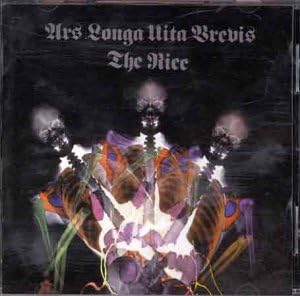
The band released 3 studio albums (i.e. “The Thoughts of Emerlist Davjack”, “Ars Longa Vita Brevis” and the aforementioned “The Nice”) plus a version of “The Five Bridges Suite” . The Nice was one of the forerunners of playing together with an orchestra . Keith Emerson with a more prominent feature of the Hammond organ.
The Thoughts of Emerlist Davjack
The name of Keith Emerson has forever been sullied by the activities of behemoth classical-rock monsters ELP, but as with so many artists of his generation, if you scratch the surface and do a little delving, you come across a very different beast indeed. No one who buys this album will be unaware of Mr Moog-mauler’s pedigree, but for those unschooled in prog history it may come as some surprise to hear that this, his sophomore outfit, started as a support band for sixties soul diva PP Arnold. While performing warm-up sets prior to her arrival onstage, the band discovered a talent for stage craft and theatre which, when married to Emerson’s Jimmy Smith licks and Davy O’List’s psychedelic guitar strangling, resulted in a sound that was very much flavour du jour in early 1967.
The title track and their freaked-out mangling of Dave Brubeck’s “Rondo” (12 minutes plus!) are present and correct as is “Flower King Of Flies”, the psychedelic stomper which demonstrates that The Nice could easily match contemporaries such as the Pink Floyd and Soft Machine for lysergic weirdness.
The group’s first album was recorded throughout the autumn of 1967, and in October of that year they recorded their first session for John Peel’s radio show Top Gear. The album included classical and jazz influences including extracts from Leoš Janáček’s Sinfonietta and a rearrangement of Dave Brubeck’s“Blue Rondo a la Turk” renamed as “Rondo”, changing the time signature from the original 9/8 to 4/4 in the process. The group clashed with producer Oldham in the studio over the length of the track, but eventually won the argument; the full eight-minute piece was included on the album. After the album was released, the group realised that Oldham had a conflict of interest as manager and record company owner, so they recruited sports journalist Tony Stratton-Smith to take over management duties.
For their second single, the Nice created an arrangement of Leonard Bernstein’s “America” which Emerson described as the first ever instrumental protest song. The track used the main theme of the Bernstein piece (from West Side Story) but also included fragments of Dvořák’s New World Symphony. The single concludes with Arnold’s three-year-old son speaking the lines “America is pregnant with promise and anticipation, but is murdered by the hand of the inevitable.” The new arrangement was released under the title “America (Second Amendment)” as a pointed reference to the US Bill of Rights provision for the right to bear arms. In July 1968, Immediate Records publicised the single with a controversial poster picturing the group members with small boys on their knees, with superimposed images of the faces of John F. Kennedy, Robert F. Kennedy and Martin Luther King Jr. on the children’s heads. A spokesman for the band said: “Several record stores have refused to stock our current single …. the Nice feel if the posters are issued in United States they will do considerable harm”. During the tour that followed the release of their second album in July, the group spawned controversy when Emerson burned an American flag onstage during a performance of “America” at a charity event, Come Back Africa in London’s Royal Albert Hall. The group were subsequently banned from ever playing the venue again.
Completists will love the inclusion of three non-originals including the almost mandatory (for the time) Dylan number and a lumpen version of “You Keep Me Hanging On” which may even pre-date Vanilla Fudge’s useless rendition.
The version of “Sombrero Sam”, however, really allows Emerson’s funky keyboard chops to come to the fore. He truly was a precocious master of the Hammond and in a light jazz setting such nimble-fingered wizardry shines out. Overall you sense a band stretching each other to the limit, reaching out to invent a new format which would eventually become their downfall. At this point, however, the quartet was wandering in a perfumed garden of psychedelic modishness,
Ars Longa Vita Brevis
The band’s second LP “Ars Longa Vita Brevis” featured an arrangement of the Intermezzo from the Karelia Suite by Jean Sibelius, which the band’s friend Roy Harper had recommended they cover, and the album’s second side was a suite which included an arrangement of a movement from J.S. Bach’s Brandenburg Concerto No. 3. The group used an orchestra for the first time on some parts of the suite. The band were on the bill at the 1969 Isle of Wight Festival
A transition from the flower power and revolution themes of Thoughts of Emerlist Davjack. This marks the end of one cycle and the start of another, in that Davey O’List makes his last contribution to the band, which becomes a trio plus guests in the studio. This is a very sophisticated, inventive and influential first stab at what would eventually become an important part of the progressive rock genre … the first steps to concept/symphonic rock.
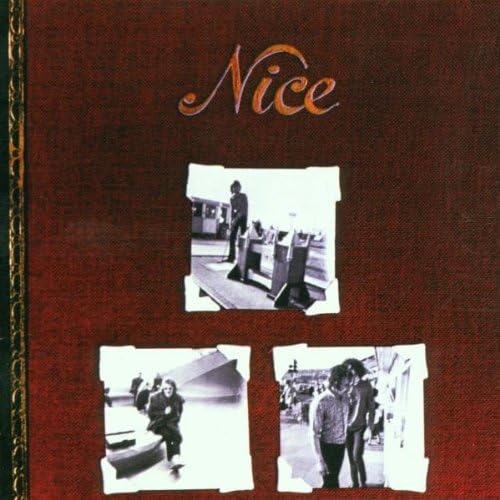
The Nice
The third album, titled “Nice” in the UK and “Everything As Nice As Mother Makes It” in the US, featured one side recorded live on their American tour and one side of studio material. As with previous albums, it included arrangements of classical material, in this case the Third Movement of Tchaikovsky’s SixthSymphony (Pathetique), and rearrangements of Bob Dylan’s “She Belongs to Me” and Tim Hardin’s“Hang on to a Dream”.
This was one of the first ‘progressive rock’ LPs, Those that remember these things will know you had to turn the things over to play the other side.
BUT we never bothered with the first 4 tracks of side 1. The killer and standout track here is the live side 2. The stand out track being “Rondo 69″.
Now I’m not saying the first four tracks are bad it was just that side two was so dam good. We played that side to death. The Nice were like that the single ‘America’ was always an anthem for them. Now some people will read this review thinking that I am saying the first 4 tracks from the original LP are bad- they are not. They are studio tracks which to my ear always sound better played live and as extended live track sets.
The live side of the LP has always contained my favourite Nice track “Rondo ’69” and captures what the Nice were, a really fabulous Live band. That organ sound that Emerson produces drives the trio along. No lead guitars see. ‘She belongs to me,’ a Bob Dylan song, has Lee Jackson barking out the vocals, his bass guitar being the powerhouse backing with able support by Brian ‘Blinky’ Davison on the drums.
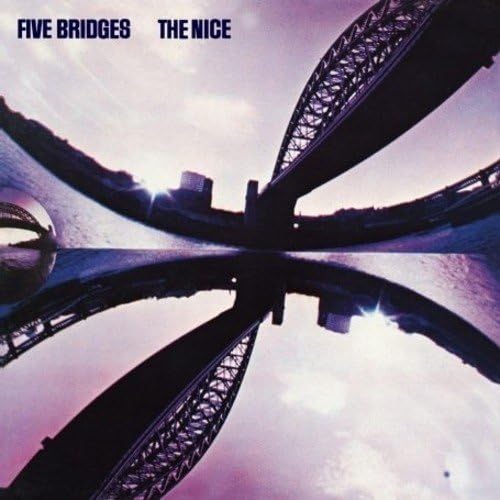
Five Bridges
In 1969, the band found time to contribute to other projects. Emerson performed as a session player for Rod Stewart and the Faces, while the whole group provided instrumental backing for the track “Hell’sAngels” on Harper’s 1970 album “Flat Baroque and Berserk”. Mid-year, tour promoter Michael Emmerson asked the Nice to write some music for the Newcastle upon Tyne Arts Festival. The result was the “Five Bridges” suite. The group premièred the piece on 10th October 1969 at Newcastle City Hall.
A complete version with an orchestra was performed at the Fairfield Hall, Croydon on 17th October, which was recorded for the album of the same name. The title refers to the city’s five bridges spanning the River Tyne, and Jackson’s lyrics refer to his Newcastle childhood and the St James’ Park football ground.
Emerson played the piano on several other tracks, solely and/or in combination with the organ. The band made clear where they stood an amalgam of pop, jazz, blues, rock and classical music. With only three people aboard they could produce a lot of noise. Emerson tried everything to make the organ sound more abrassive, agressive and louder. He played it like an lead guitarist with use of feedback, overdrive and distortion, in an unusual way, by mistreating the hapless instrument and even with the help of army of knives, thus creating before unheard sounds and effects. Lee Jackson added an earthly sounding bass guitar and his gruff vocals, whilst Brian Davidson used everything he could fit to bash on. All in all they were an unique group an could not be easily compared with other contempories. The Nice were one of the best progressive rock groups that ever existed. Some of it was prolonged in ELP but that is another story.
John Peel, was an early champion of the Nice, called ELP “a waste of talent and electricity”
Elegy
In 1971, the posthumous Nice album “Elegy” was released. It included different versions of previously released tracks, two being studio versions and two live from the 1969 US tour. Emerson had no involvement with compiling the album, which was done by Jackson, Davison and Charisma Records
As the name suggests “Elegy” ,a song after mourning, was released after the band had broken up. Immediate their label had been slaughtered causing all sorts of reissue hell for the collectors to fathom.
This was the last official Nice album. released after they split up, it shows a band at the peak of their live performance. the original album consisted of four lengthy tracks which were nice interpretations of other people’s music. “Hang On to a Dream” features some great piano work from Keith and an extended jazz work out in the middle where, at times, he plucks at and hits the strings – a style used to great effect on “Take A Pebble” from the 1st ELP album. some great bass playing throughout this track.
this is followed by a radical interpretation of Dylan’s “My Back Pages” with some excellent hammond work. next up is a romp through “Pathetique” with Lee Jackson showing just how good he was at his best. give it a try yourself and you’ll sees what I mean
Finally, there’s “America”. the best recorded version. The last 5 mins are amazing. don’t forget, this is all pre synth days and the sounds generated from Keith’s trusty hammond are stunning and well complimented by the bass and drum work from Lee and Brian (who plays well and unobtrusively throughout.
Bonus tracks not really needed. the live version of country pie is much better than this one and the “Pathetique” is very similar to the album version although the BBC sound is better.
As a Keith Emerson, ELP and Nice fan (the group not an adjective) I still believe that the Nice never realised their full potential as a group. This CD confirms it.
The original 4 tracks have been enhanced with further tracks. BUT beware there are now two different reissue versions of this CD. At the time of writing in Feb 2012 the one with 2 is the cheaper.
To the actual tracks with bonus later.
Track one is a live version of the Tim Hardin penned `Hang on to a Dream’. Here as with all tracks LeeJackson’s vocals were not top division.
Track 2 is My Back Pages a Bob Dylan song with which the Byrds found success with. The Nice really seemed to go for Bob Dylan at that time but then everyone seemed to be releasing Dylan Tracks at that time from Manfred Mann’s Mighty Quinn to Hendrix’ All Along the Watchtower.
The final and the Stand out track of the original LP and of course the Nice’s only single success is “America”. This is a really stomping version and is worth the price of the CD alone. (But then most Nice fans would say this so I’m not alone.)
On the 2009 reissue. The first enhanced edition includes 2 bonus tracks which I believe have been previously released on a 1968 LP on Charisma called Charisma Perspective. They are much earlier tracks than the one included on the original “Elegy” but really make this a worthwhile investment. (see what I mean about recycling and completists’ hell?) many tracks by the Nice appear and reappear on countless editions in different but all too often the same forms on many not only best of type but as extra tracks on the original LPs.
These two additional tracks are another Bob Dylan written Country Pie and another Pathetique! Both from the BBC live.
This includes two tracks from the final recording session by The Nice for a BBC Radio One Sounds of the ’70s session. The Nice would go down in history as one of the most exciting live acts of their age and as the creators of a series of excellent albums that would fuse the worlds of Rock and classical music, taking in elements of Jazz, Psychedelia and Rhythm & Blues on the way, effectively spawning the genre of Progressive Rock in their wake.
Studio albums
The Thoughts of Emerlist Davjack (Immediate, 1968)
Ars Longa Vita Brevis (Immediate, 1968)
Nice (aka Everything As Nice As Mother Makes It) (Immediate, 1969)
While Roxy Music are generally thought of as being a new wave act, they actually got their start in the early ’70s as an experimental glam outfit that were one of the first rock bands to create a carefully crafted look and style across every aspect of their presentation, from their stage performances and music videos to their album art and promotional materials. Famed solo artist and record producer Brian Eno was part of the group in its early years but after his departure in 1973, singer-songwriter Bryan Ferry took creative control and shaped Roxy Music into one of the most quietly influential rock bands of all time.
Roxy Music very quickly became the epitome of art-rock following their genesis in the early 1970s. The band was originally formed by vocalist Bryan Ferry and bassist Graham Simpson in 1970 after Ferry had failed an audition to join King Crimson as a replacement for Greg Lake. Despite liking Ferry’s voice, Robert Fripp and Pete Sinfield had decided it wasn’t a good fit for their band. They recruited saxophone and oboe player Andy Mackay and synth player Brian Eno (who “treated” the other players instruments through his synth). Paul Thompson was welcomed as the drummer, chosen for his energetic style that would suit their arrangements perfectly. Shortly before recording their debut album, they became complete with the addition of the Latin American classically trained guitarist Phil Manzanera.
Each member bought their individual background to the band; Manzanera grew up in Latin America, Mackay was classically trained, while Mackay, Ferry and Eno all came from art school backgrounds. One common thread for all the members was an appreciation of the avant-garde experimentation of the Velvet Underground, while Eno’s experiments with synths and tape effects were unusual for a song-based rock record. Roxy Music sought to blur the lines between high art and pop art, making postmodern pop music.
Roxy Music went through a succession of bass players, while Brian Eno was replaced by Eddie Jobson after 1973’s “For Your Pleasure“. After touring behind “Siren“, the group disbanded in 1976. They reunited in 1978 to record “Manifesto”, but the core band was reduced to a three-piece of Ferry, Mackay, and Manzanera, after Paul Thompson quit in 1980. The band’s reunion albums were smoother and less experimental than their earlier work.
Roxy Music were phenomenally successful for a band with experimental tendencies – all eight of their studio albums made the UK top ten. Their sole number one single, a lovely take on John Lennon’s ‘Jealous Guy’ released on 1981, isn’t featured on any of their albums.
Flesh and Blood (1980)
The singles from Flesh + Blood are misleadingly strong – the torch song ‘Oh Yeah’ and the funky falsetto of ‘Same Old Scene’ are great songs that promise a great album. Elsewhere, “Flesh + Blood” is disappointingly bland – although that doesn’t apply to the album’s nadir, a bizarre remake of The Byrds’ ‘Eight Miles High’.
As influential as“Avalon” but immediately so, “Flesh + Blood” was the real sales monster: No#1 for three different spells in England. Released at the peak of press fascination with the Blitz kids and New Romantics, the album captured Roxy in an uncomfortable transition: should we luxuriate in sound or should we sway, gently? They don’t answer the question, resulting in an album of gobsmacking highs and bloodless lows.
Playing all the keyboards for the first time on record, Ferry shows impressive range on “Same Old Scene,” the catchiest and weirdest old guard answer to New Wave; “Over You,” a sharper skinny tie Wilson Pickett homage than the “In the Midnight Hour” cover; and the pissed-off title track, in which Ferry, on guitar (!), for once doesn’t mind playing (being?) a creep. But “Rain Rain Rain,” “No Strange Delight,” and “Running Wild” remain.
Manifesto (1979)
In 1975, Roxy Music entered a hiatus as Bryan Ferry and Co. parted ways to work on solo projects and other obligations outside the band. Upon their reunification, a reshuffled incarnation of the group set about recording the first of their more commercially orientated run of albums, “Manifesto“. This new chapter in the band’s path saw them ditch the edginess and creative poetry of their previous work in favour of more predictable dance-friendly material.
Their first studio album in four years, they’d updated their sound for the disco era. They were still weird, but the 1970s art-rock facade was replaced with a dance-pop sound. It mostly works – the singles ‘Angel Eyes’ and ‘Dance Away’ were both successful, while ‘Manifesto’ and ‘Trash’ retained hints of the art-rock of Roxy Music’s earlier phase.
Roxy’s attempt to record an L.A. studio rock album steeped in disco — an anomaly in their catalogue, self-produced, still too underrated. Also their comeback after four years of middling solo careers, so they confused fans on both sides of the Atlantic. After all, who or what were they supposed to sound like during the apogee of punk and the Gibb brothers? The triumph of “Dance Away” we know — their second biggest hit in England and America, as it turns out — so check out “Still Falls the Rain,” “Ain’t That So” (Roxy going Boz Scaggs and liking it), and the pained, modest closer “Spin Me Round.”
Avalon (1982)
Roxy Music’s final album is gorgeously smooth, a refined version of the dance-pop they pursued in mark II. It’s less invigorating than the experimentation of their earlier releases, but it’s often beautiful. The melodic pop of ‘More Than This’ is a lovely opener, while guest vocalist Yanick Étienne adds colour to the languid title track. The closing pair of ‘True To Life’, and the synth and oboe duet on ‘Tara’, is gorgeous.
1979’s Manifesto and 1980’s “Flesh + Blood” were tangibly weaker than Roxy Music’s 1970’s catalogue, but the group rebounded for 1982’s elegant swansong “Avalon”. The sleek ‘More Than This’ is a perfect piece of pop.
You may be wondering where “More Than This” or “Avalon” are? The most commercially fruitful period in Roxy Music’s career came from 1978 to 1982, after an enforced sabbatical. Ferry had only really reformed the band because his patrician image was at such odds with punk and his career needing galvanising with the brand that had once so exemplified cool. The West Sussex manor and the hobnobbing in high society was bound to have some bearing on the Thomas Cromwell of pop and his music, and it was fortuitous that as he was enveloped into the bosom of the aristocracy that he hit on a formula to write the same oleaginous ballad over and over again to handsome remuneration (play “Dance Away” and “Slave toLove” back to back and you’ll see what I mean). They’re still good songs, especially compared with the output of lesser mortals, but they belong to that other Roxy Music, the one owned by the mainstream that has no perception of the abrasive musical insurgency of the past. The first era ends in 1975, and the final trace of the “orchid born on a coal tip” as Ferry described himself once, the last remaining sign of the fuliginous grit of the north-east, can be found in the battle cry of Whirlwind and that opening “Maaaydaaaaaaay!” line that so emboldens.
“There she blows!” he howls a bit later in this nautical adventure perhaps inspired by Moby-Dick, though Ferry would see himself less a Captain Ahab and more a Captain Cook, a derring-do nobleman originally born a commoner. When Roxy Music got together again in 1978, their album “Manifesto” would be a strange mix of new-wave experimentation that didn’t quite work, and sentimental songs that opened up a whole new demographic they’d pursue to the bitter end via the weak “Flesh + Blood” and the cocaine avarice of “Avalon”. “Whirlwind“, then, is the last great Roxy Music rocker, a little bit unloved and under-appreciated, despite having such impressive seafaring legs.
The album holds a bounty of highlights including the lead singles ‘Avalon’ and ‘More Than This’, but also holds so much to be explored in its underbelly with the wonderfully textured ‘True To Life’ always having served as a personal favourite. The fantastic production and mastering on the album make it a must-have for any budding record collectors out there.
Roxy Music (1972)
Roxy Music’s debut album is full of ideas – Andy Mackay later said “we certainly didn’t invent eclecticism but we did say and prove that rock ‘n’ roll could accommodate – well, anything really.” The first side, especially on editions that include the early single ‘Virginia Plain’, is amazing.
What a difference a couple of months can make. The first album unexpectedly climbed as high as No 10 in the UK charts, and then out of nowhere appeared the single “Virginia Plain“, fully formed and swaggering, peacock-like, somehow sounding light years ahead of its nine predecessors. If the first album is a triumph of will and dilettantism, then “Virginia Plain” is a genuine slab of pop alchemy: cool, catchy and cutting-edge as hell, with an undercurrent of exoticism and sexual adventure. With its staccato keys, thrilling stop/start motion and noises from the future, it is suave to the point of decadent, sweeping you off your feet and flying you down to Rio. “We haven’t got any further than this; it’s a disgrace,” Brian Eno commented in reference to the Walker Brothers’ 1978 album Nite Flights, when filmed for the Scott Walker: 30 Century Man documentary in 2006, and it’s hard not to feel similar sentiments about “VirginiaPlain”, released a whole six years earlier. Mine the annals of music history if you will, but you’ll be hard pressed to find another compact three minutes of pop more perfect than Roxy’s first single proper.
Roxy Music deliver twisted country on ‘If There Is Something’ and deconstruct pop music on ‘Remake/Remodel’, quoting Wagner and The Beatles. The production, by King Crimson lyricist Peter Sinfield, is a weakness, and the second side can be a rough listen, but most of the group’s ideas originate here.
Roxy’s Music’s 1972 debut opened with ‘Remake/Remodel’, with the band at their most futuristic. The song featured a brief solo from each of the six member. Aside from steady rhythm powerhouse PaulThompson, it’s fair to say the Roxy of 1972 were musicians finding their way, and Brian Eno on the VCS3 synth notoriously couldn’t really play a note (he still can’t, not that that’s hurt his career any). The gloriously egalitarian nature of pop means ability can come in a variety of different guises, and County Durham’s Bryan Ferry, with his trembling voice, turned apparent shortcomings into strengths. He also approached the serious art of song writing with a dadaist playfulness, in opposition to the prevailing trend in the early 70s of earnest confessional singer/songwriters. Bryan also had a lovely head of hair, and still does. “Re-make/Re-model” is a relentless, pulverising, sonic car crash of a song, and one of the cars in the pile up bears the number plate “CPL 593H” (sung repeatedly as the song’s only chorus), apparently driven by a beautiful woman Ferry noticed in the rear-view mirror on the way to the studio.
The highlight, however, is ‘If There Is Something’ which begins as a modernised pastiche of country music that later melts away into a new, slightly darker and more intense phase of the track thanks to Eno’s work on the synthesiser. All in all, the album is fantastic as a starting point for the band, but by its very nature as a drawing board, it is a tad unbalanced.
Siren (1975)
“Siren“, the last album from Roxy Music’s original tenure, is a divisive record because it blends the band’s art-rock with dance and pop textures. But Roxy Music’s daring creativity is still intact, especially on rockers like ‘Whirlwind’ and ‘Both Ends Burning’, and the lengthy epic ‘Sentimental Fool’. The single ‘Love Is The Drug’ was Roxy Music’s biggest hit to date, and John Gustafson’s bass-line influenced Chic’s ‘Good Times’. The album, after all, holds the band’s greatest dance track, ‘Love is the Drug’, which to this day remains the groups biggest hit.
Roxy Music started dabbling with disco on 1975’s “Siren“, but it didn’t affect the quality of their music, with highlights like ‘Sentimental Fool’. The album’s a great showcase for drummer Paul Thompson. The band broke up after this album, reconvening for 1979’s “Manifesto“.
Devotees of Rolling Stone will recognize “Siren” as the most lauded of Roxy’s career. Ferry doesn’t “oversing.” The band’s affection for R&B (“She Sells” and “Could It Happen to Me?” are Stax songs given a lacquer) is pronounced. But I don’t want restraint from Roxy, even when it produces a twosome as bleak as “Nightingale” and “Just Another High,” in which, on the former, Ferry accepts he’s been for years hearing bird calls instead of women’s voices; and on the latter he admits to playing himself for a sucker. Many American listeners consider these attitudes — consider how the direction in which his career unfurled contexualized these moves — shows of maturity. These people never understood how irony deepens shows of feeling.
Stranded (1973)
Roxy Music’s first album without Brian Eno sacrifices some of their experimental edge, instead focusing on lush textures. “Stranded” also features some of Ferry’s most dramatic vocals – his foray into French on ‘A Song for Europe’ is surprisingly effective. The multi-part ‘Mother of Pearl’ is one of Roxy Music’s best-loved songs, with Ferry’s campy vocals delivering lines like “Thus: even Zarathustra/Another-time-loser/Could believe in you”.
This is the first album to show a lack of experimentalism which can definitely be attributed to the absence of Eno. Fortunately, with the recruitment of Eddie Jobson, the album still oozes with experimental synthesiser elements; for instance, the groovy little number ‘Amazona’ works its way into an interstellar transcendence somewhere in the middle of the track that I personally can’t get enough of.
The Roxy Music song, ‘Mother of Pearl’, is taken from “Stranded”, Roxy Music’s second full length album of 1973. It was the first to be released without Brian Eno, who left after tensions with frontman Bryan Ferry; reportedly Eno was having more success with the ladies.
With the dandyish Eno deposed and Ferry’s concomitant solo career looking ever backwards, it was somewhat inevitable that Roxy Music would plough a more traditional furrow going forward, though the change between “For Your Pleasure” and “Stranded” isn’t as radical as some like to think. Even Eno somewhat magnanimously claimed the latter was the better album (though not many other people think that, and he might not either). It was a severed alliance as significant to the 70s as Morrissey and Marr’s was to the 80s and Anderson and Butler’s was to the 90s, with the latter offering up often spooky parallels: both Roxy Music and Suede were perceived by many to have lost an irreplaceable creative member after the cult favourite second album; both shared a similar creative trajectory over the first five albums, scoring their mightiest commercial success with their third album; both had a song called “Trash” and an album cover designed by Peter Saville. You suspect some of this might have been deliberate on Suede’s part, who also recorded their own Street Life on their underpar A New Morning album. It couldn’t lay a glove on the Ferry song, a swashbuckling paean to walking the mean streets to avoid nuisance phone calls. The rambunctious “Stranded” opener immediately told us three things about Roxy 2.0: first, that they were a band that now cooked (especially guitarist Phil Manzanera); second, that new keyboardist and auxiliary musician Eddie Jobson would be a worthy and capable – if very different – replacement for Brian Eno; and third, that Bryan Ferry had plenty left up his beautifully tailored shirt sleeve yet.
Eno called Roxy’s third album his favourite, and he was right, as he was in most things for the first twenty years of a peripatetic career. Dispensing with experiments like “The Bogus Man” meant a farewell to a certain looseness of approach that benefited Manzanera and Mackay, but “Stranded” compensates with Ferry’s most ludicrous vocalizing and breathless compositions. Roxy found a way to turn a night out into a narcissist’s lament and a devastating valentine in “Mother of Pearl”; such is the band’s artistry that it’s not clear whether the valentine is to the lustrous lady or to Ferry himself. Meanwhile Manzanera plays Guitar Hero on “Amazona” and new kid in town Eddie Jobson plays organ like Sunday morning on “Psalm.” All this, and “Serenade” too: my favourite Roxy song that nobody talks about.
Country Life (1974)
Famous for its titillating cover (I’m a prude, so I’ve shown the censored version here), “Country Life” continued Roxy Music’s classy, textured art-rock. Opener ‘The Thrill Of It All’ is one of the best arranged and produced songs in classic rock – there’s so much going on in the mix, with Eddie Jobson’s violin and Manzanera’s guitar competing for attention. Jobson’s violin is also prominent in the psychedelic ‘Out of the Blue’, while Ferry reportedly played the organ solo on the seething ‘Casanova’.
Whenever I award “Country Life” top honours I remember “Triptych” and “Bitter-Sweet,” a pair of dirges whose hints of lightness rely on a fully committed Ferry but they’re heavy lifts. And “A Really Good Time” leans on the adverb. But “Prairie Rose” is, like “Serenade,” a terrific example of how Ferry could churn happy love songs so long as the band adapted to his mien.
‘The Thrill Of It All’, from 1974’s “Country Life“, is among my favourite production jobs ever. It’s so lush, and there’s so much sonic detail, with Manzanera’s guitars and new recruit Eddie Jobson’s violin.
Can any other band or artist in history lay claim to having as many exhilarating tracks opening their albums? Roxy Music’s first five introductory numbers are surely unassailable, and out of these magnificent starters, there’s a case for The Thrill of It All from Country Life: The Fourth Roxy Music Album, being the most exhilarating of all. The production packs the power of a jet engine. It is enormous in the way so much British rock was in 1974, six-and-a-half minutes long and ripe for the US market. It was no secret Ferry was interested in breaking America – Rod and Elton had just had No 1’s and Bowie and the Bee Gees were making inroads – but it would be a territory where sustained success would ultimately elude him as both singer in Roxy Music and as a solo artist. The song was even released as a single across the Atlantic and nowhere else, and while it failed to chart, “Country Life” did crack the Billboard top 40 for the first time. It was the kind of well-structured, straight-ahead rock leviathan that arch critic Bob Harris (who’d been so sniffy when the band had played “Ladytron” on The Old Grey WhistleTest two years previous) might have found himself tapping his foot along to despite himself. The best thing about the song, though, is Ferry’s debonair delivery: languorous and elastic, playful and cute; he slides in and out of the blue notes and compels you to hang on to his every word.
Written with Roxy oboe/sax stalwart Andy Mackay, “Bitter Sweet” is a startling show tune that finds Ferry remodelling Brechtian cabaret with such panache that one wishes he’d attempted it more often. Delicate vibes and gentle piano strokes at the outset are violently cast aside by a thunderous, portentous bass sound, denoting that there may be trouble ahead. The titular oxymoron is appropriate, with Bryan bitterly berating the hard hearted subject of the song over the sweetest of verses: “Lovers you consume my friend,” he complains, “as others their wine.” Then, just as we’re settling in, the Weimarian oompah of the chorus kicks in, with stabs of disorientating, spiky guitar; when the chorus comes around a second time and we’re prepared for it, Ferry delivers yet another surprise by switching to abrasive German. According to David Buckley, author of The Thrill of It All: The Story of Bryan Ferry & Roxy Music, the “Country Life” tour wasn’t without controversy, with Ferry taking to the stage in “riding breeches and what looked like jackboots”, as well as “raven hair parted to the side”, and all in front of an “RM” logo emblazoned on velvet drapes set into eagle’s wings. While the visuals were almost certainly for aesthetic reasons only, one can only imagine how Twitter might react were a band of Roxy Music’s stature to settle upon such style choices now.
The music within served as a continuity of the effortlessly classy take on glam-rock that they had mastered with the previous two albums. With the first track, they set the bar insurmountably high with likely my favourite on the record.
‘The Thrill Of It All’ is the most technically impressive track on the album thanks to its complex tempo changes, and it’s a fine example of John Punter’s masterful production skills. There really isn’t a weak song on the album and the only reason it’s not in second place is that there are a small number of songs on the next two albums to be revealed that just have more of a catchy quality to them that ranks them among my favourites; those aside, this is the most consistent Roxy release bar one.
For Your Pleasure (1975)
Roxy Music peaked with their second album, “For Your Pleasure“. With more time in the studio, their experimental tendencies are channelled into stronger material. The long tracks are the most memorable – the lengthy groove of ‘The Bogus Man’, while the inflatable doll tale of ‘In Every Dream Home A Heartache’ culminates in a dramatic Manzanera solo. “For Your Pleasure” is more energetic than most Roxy Music albums – the opener ‘Do The Strand’, the frenetic ‘Editions of You’ (with a great Eno VCS3 synth solo), and ‘Grey Lagoons’ are all punchy, while the shimmering ‘Beauty Queen’ is marvellous. When asked by the British music press, Morrissey could ‘only think of one truly great British album: “For Your Pleasure.”
Roxy Music’s second album, “For Your Pleasure“, is at the top of the pile. The album is without a doubt up there with the greatest of the glam rock era. Morrissey, the ex-frontman of The Smiths, once cited the album as the “one truly great British album” – one of the few things he and I almost see eye to eye on. The band had taken all the strengths of the first, self-titled, album and tailored them into something so classy and vibrant that one finds it difficult to find a boring second in the LP. There is a fine balance between energetic and slower moments throughout, all the while complimented by Brian Eno’s synth prowess.
I find it hard to choose a favourite track on the album, but a personal highlight is ‘Beauty Queen’, where Ferry displays a fantastic vocal performance amongst exotic and, somehow, glimmering soundscapes mastered in the instrumentals.
‘In Every Dream Home a Heartache’ was from the group’s sophomore album “For Your Pleasure“, a societal critique centered around a blowup doll. “I blew up your body/But you blew my mind,” Ferry sings before Phil Manzanera launches into an epic guitar solo:
Roxy Music kicked off their masterly “For Your Pleasure” album with the ebullient “Do the Strand“, a song about a made-up dance craze that tipped a chapeau to the fashionable London thoroughfare of the same name. Ferry’s words are daringly dandyish and frivolous, as he throws references aplenty from La Goulue (the French Can-can dancer) to Nijinsky (the Russian ballet dancer), artworks such as Guernica and the Mona Lisa, and even a witty play on words involving King Louis XVI (“Louis Seize he prefer laissez-faire le Strand”). His confidence as a lyricist was exploding as he became ever more tongue-tied and shifty in interviews, a problem compounded by Eno’s charisma and genius gift for the soundbite. There’s little doubt that Ferry was also cheekily referencing the “you’re never alone with a Strand” cigarette slogan. The black-and-white advert featured a companionless chap taking succour from a fag on a wet London street; famously the Lonely Man Theme by Cliff Adams charted, while sales of Strand cigarettes plummeted and the brand was soon taken off the market. Themes of desolation are explored throughout “For Your Pleasure“, as well as companionship of a more risque nature, as we’ll see from our next song.
Roxy’s influence is wide-ranging, It’s been argued that they were second only to The Beatles in terms of shaping the direction of British music in the latter half of the twentieth century. However, outside of the musical acts who looked up to them, Roxy Music are generally forgotten about or at least overlooked in favor of more popular bands of the era.
Finally, I couldn’t end this list without a mention for ‘In Every Dream HomeA Heartache’, the track is a unique art-rock masterclass, the poetic lyrics tell a most obscure and slightly creepy story of an inflatable doll.
Grace Cummings’ guttural vocals captivate from the first line. Moving through the volatility and stillness of her lyrics on her self-produced sophomore album, “Storm Queen”, a follow up to her 2019 debut“Refuge Cover”,the Melbourne-born artist is a conduit for her most personal tales, and all the music playing in her head. Starting out as a drummer in rock bands in high schools, Cummings started writing her own songs, pulling inspiration from Dylan, Australian singer-songwriter Paul Kelly, and a more solemn Irish folk song played by her father. “Irish melodies are some of my favourites,” says Cummings. “They go to such dark and dramatic places.”
Video for The second single from Grace Cummings debut album ‘Refuge Cove’ out November 1st, 2019.
Where L.A. Witch’s self-titled album oozed with vibe and atmosphere, with the whole mix draped in reverb, sonically placing the band in some distant realm, broadcast across some unknown chasm of time, “Play With Fire” comes crashing out of the gate with a bold, brash, in-your-face rocker “Fire Starter”. The authoritative opener is a deliberate mission statement.
“Play With Fire” is a suggestion to make things happen,” says Sanchez. “Don’t fear mistakes or the future. Take a chance. Say and do what you really feel, even if nobody agrees with your ideas. These are feelings that have stopped me in the past. I want to inspire others to be freethinkers even if it causes a little burn.” And by that line of reasoning, “Fire Starter” becomes a call to action, an anthem against apathy. From there, the album segues into the similarly bodacious rocker “Motorcycle Boy” a feisty love song inspired by classic cinema outlaws like Mickey Rourke, Marlon Brando, and Steve McQueen. At track three, we hear L.A. Witch expand into new territories as “Dark Horse” unfurls a mixture of dustbowl folk, psychedelic breakdowns, and fire-and-brimstone organ lines. And from there, the band only gets more adventurous.
“Play With Fire” is a bold new journey that retains L.A. Witch’s siren-song mystique, nostalgic spirit, and contemporary cool. Despite the stylistic breadth of the record, there is a unifying timbre across the album’s nine tracks, as if the trio of young musicians is bound together as a collective of old souls tapping into the sounds of their previous youth.
The songs areEffortlessly cool, there’s elements of punk and surf in there and the vocals make the listening nice and easy, nothing jarring here just feels like a smooth ride in the california sun.
“Los Angeles has always been a home for misplaced souls, and L.A Witch has the sound to go with it, dripping with nostalgia, heavy reverb, and glamour.” – NYLON
“Sanchez sounds like she genuinely might steal your car and your soul, and then drive them both through the darkness to Hell.” – VICE
“As one might expect of a band called L.A. Witch, this West Coast trio plays pitch-black pop-rock wrapped in blankets of reverb.” – Consequence of Sound

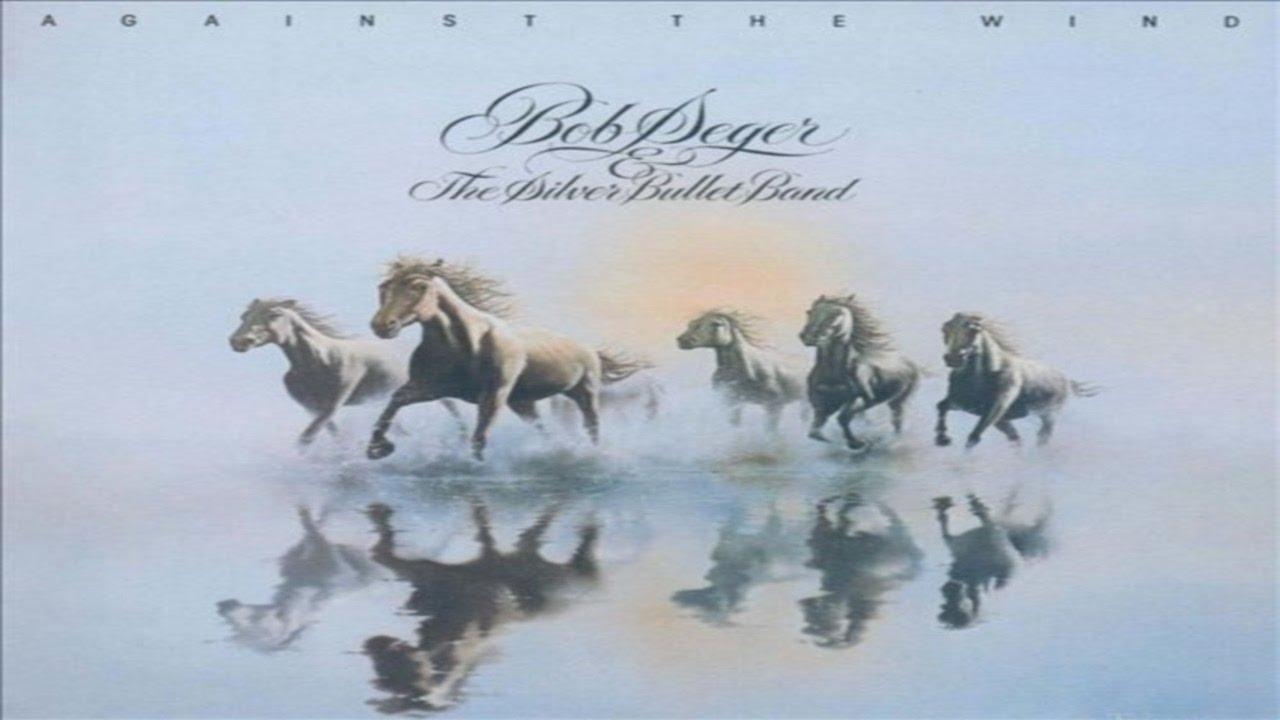

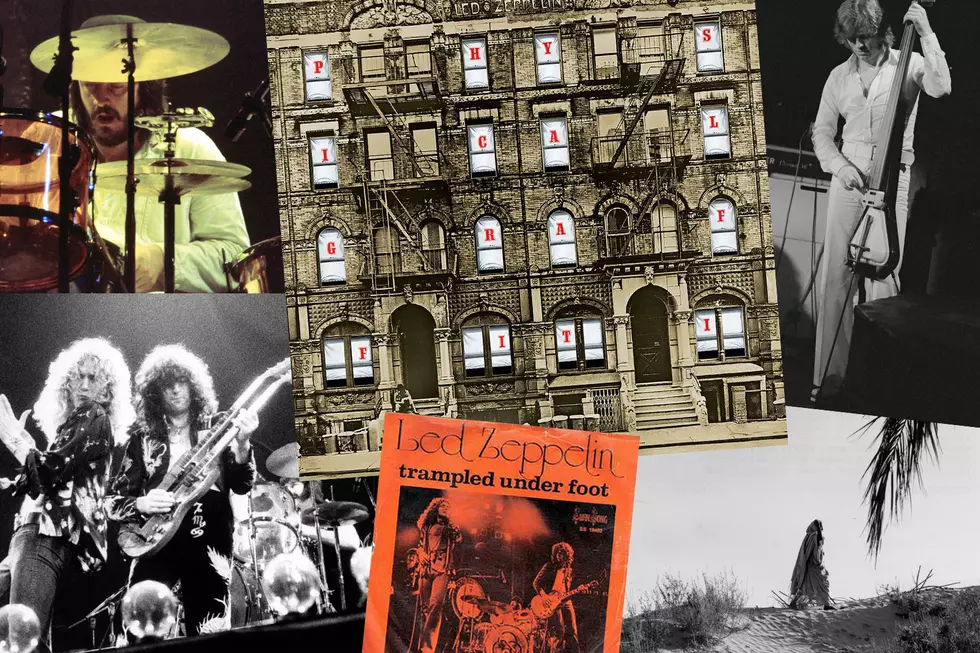
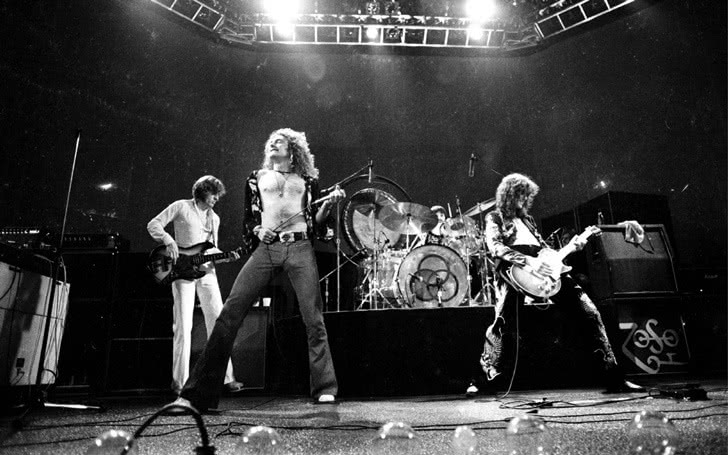
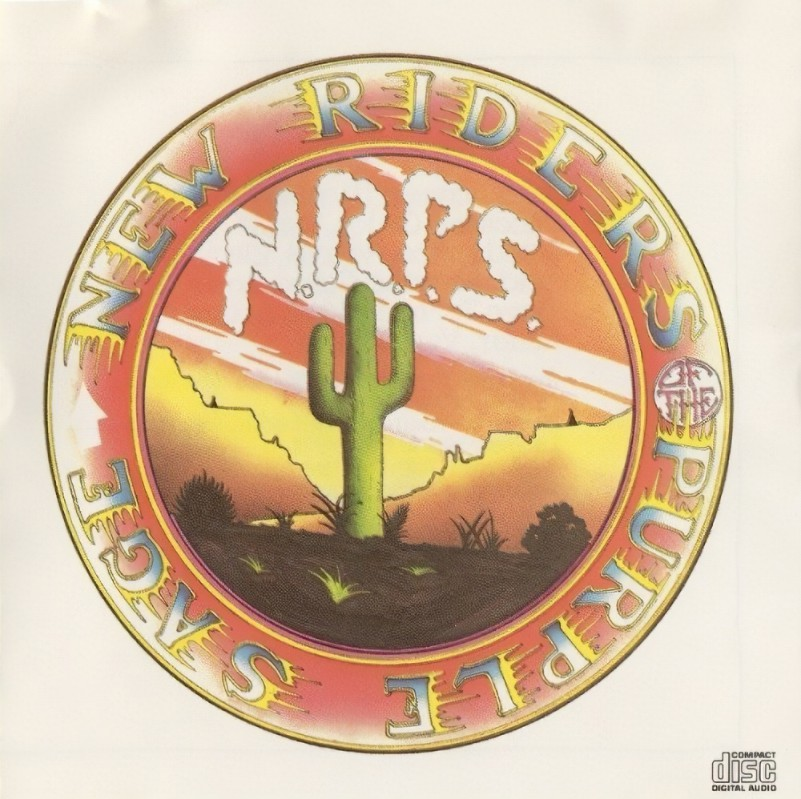
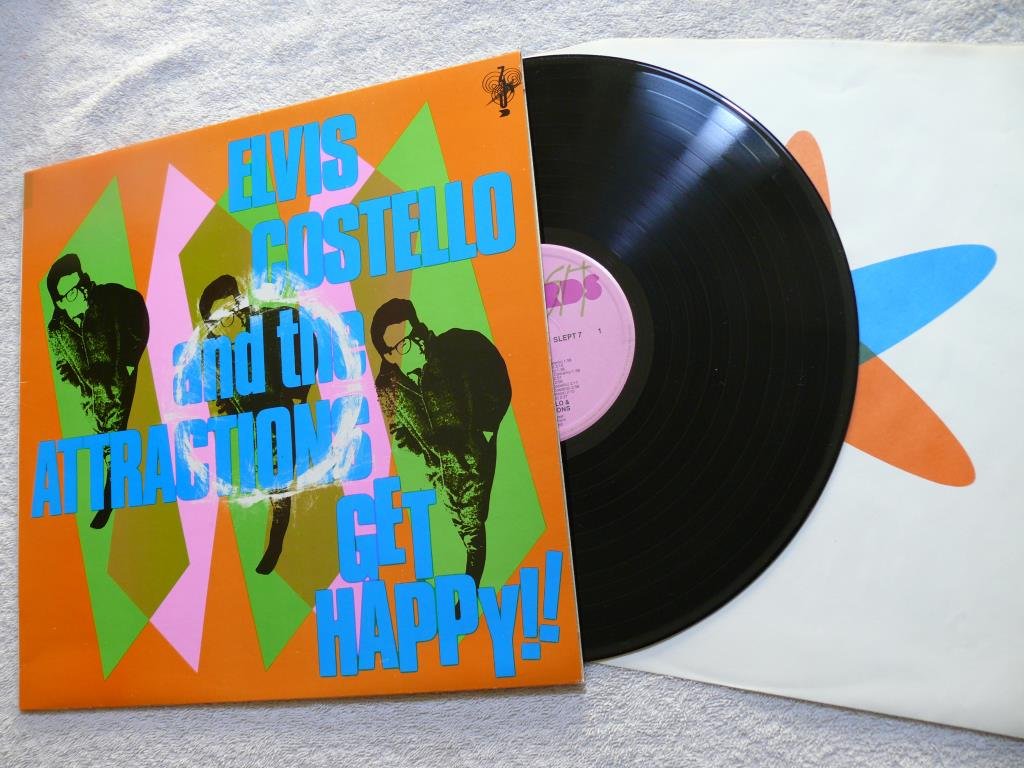
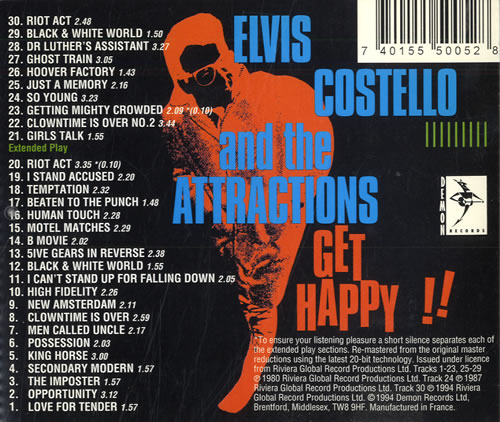
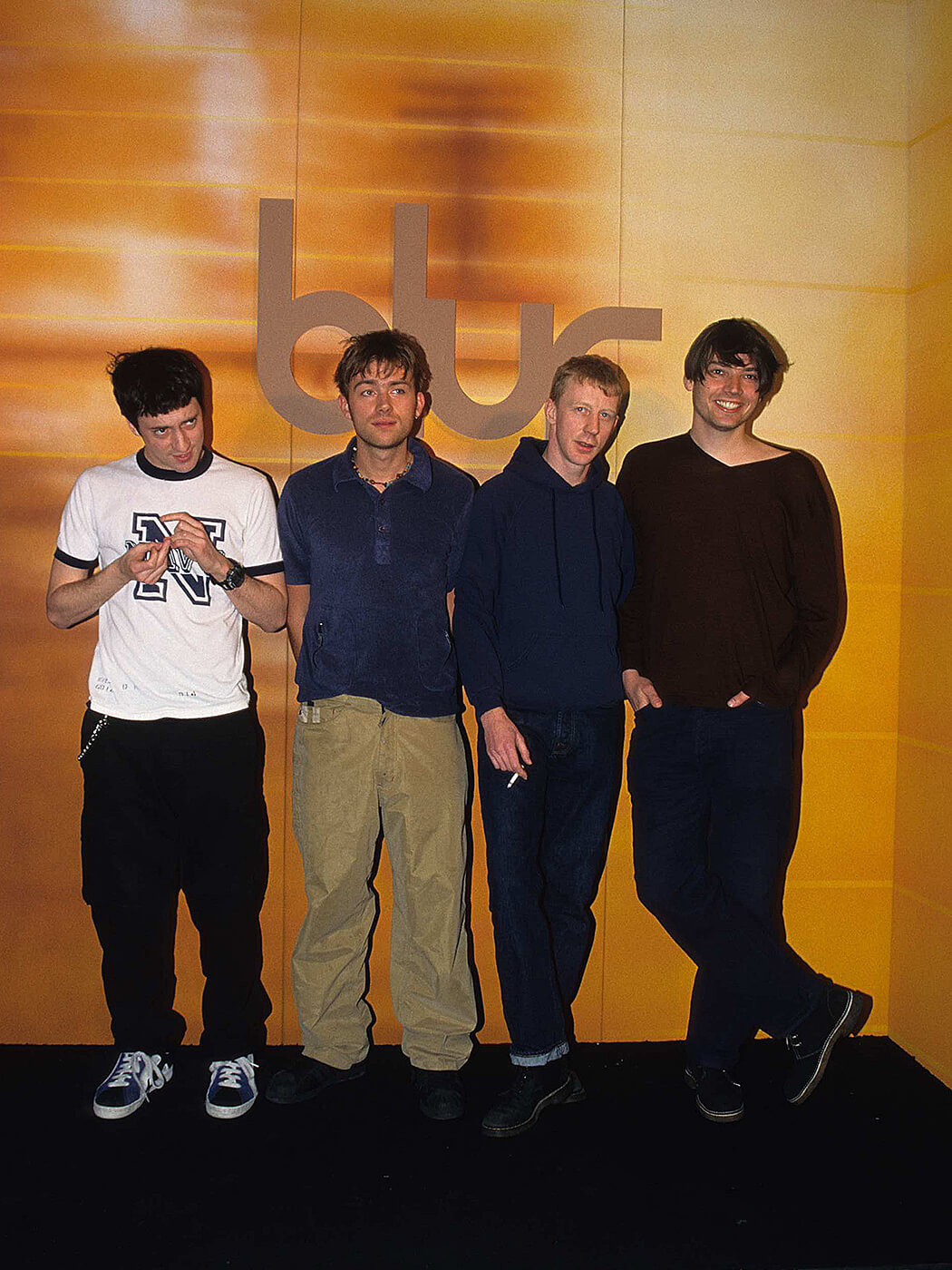


:format(jpeg):mode_rgb():quality(90)/discogs-images/R-7085384-1448661017-3461.jpeg.jpg)