Archive for the ‘CLASSIC ALBUMS’ Category

It’s been 15 years since Scottish duo Arab Strap released an album — 2005’s The Last Romance — but Aidan Moffat and Malcolm Middleton have picked up right where they left off for As Days Get Dark. Quite literally. For a band that traffics in sad, lonely people living mundane lives, it’s almost like you can see the discolored dent in the sofa made by the same characters from their debut single “The First Big Weekend,” who’ve just been sitting there doing nothing for a decade and a half.

Well, almost nothing. Moffat still paints lurid portraits of sex, drugs and rock n’ roll, just ones set in neighbourhood pubs, and shitty apartments (sorry, flats) with florescent lighting and drop-ceilings. “It’s about hopelessness and darkness, ” Moffat says. “But in a fun way.” If you know what he means, As Days Get Dark does not disappoint. The scene is set with opening track “The Turning of Our Bones,” a tale of “resurrection and shagging” that is clearly about the band (and also shagging): “I don’t give a fuck about the past, our glory days gone by / all I care about right now is that wee mole inside your thigh.” Moffat’s voice has dropped an octave in the last 15 years, and his thick accented delivery, somewhere between a growl and a whisper, is in full sex machine mode, set against a sleek, sultry mix of drum machines, synths and dark guitar lines.

Moffat and Middleton, working with regular collaborator Paul Savage, luxuriate in this mode for much of As Days Get Dark, making one of their richest sounding records, and bringing a lush faded glamour to these stories about “what people turn to in times of need, and how they can hide in the night.” Nowhere is this theme more apparent than on “Another Clockwork Day” where a man staves off boredom by masturbating while his partner sleeps — he’s given up on porn, though, and has turned to “folders within folders” of unnamed digital photos from their past. Depressing, yes, as he flips through IMGs, but the song also manages to push complex nostalgia buttons too.

http://

Another vivid highlight is “Kebabylon,” with sweeping strings and soaring saxophones, that makes obvious but effective metaphors out of a late-night street-sweeper crew cleaning the gutters of a bar-crowded neighbourhood: “And you’re already dreaming as I claw up your condom, as your syringe cracks underneath my boot / you’ve crashed on the couch, passed out on the porch, such a lover, such a liar, such a brute.” Also great: “Here Comes Comus!” prowls like peak Sisters of Mercy (big gloomy guitars, bigger drum machines) as Moffat faces “nocturnal excess and my inability to ever refuse him”; and “Fable of the Urban Fox” that shines a light on the racist treatment of immigrants against backing that somehow successfully splits the difference between celtic folk and funky disco.

his is an older, wiser and more weary Arab Strap. There are still rough edges, seedy corners and shocking words, but Moffat and Middleton are more comfortable in their skin and still have something to say. As Days Get Dark is not just a skillful return, it’s also one of their best-ever records.

It’s about hopelessness and darkness,” says Aidan Moffat. “But in a fun way.” Arab Strap are back!
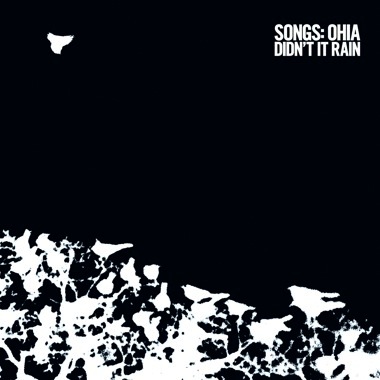
Songs Ohia – Didn’t It Rain (Reissue): In 1996, Chris and Ben Swanson’s upstart label Secretly Canadian issued the One Pronunciation of Glory 7” and made Jason Molina a recording artist. Six years later, the brothers released “Didn’t It Rain”, a masterpiece tour of darkness and despair lit only by the light of Molina’s lantern and that ever-present Blue Chicago Moon. This month’s reissue would be essential in any context, but with the gray having already claimed its space over Molina’s midwest, it almost sounds like Didn’t It Rain was pulled straight from the sky.

Didn’t It Rain is Jason Molina’s first perfect record. Recorded live in a single room, with no overdubs and musicians creating their parts on the fly, the overall approach to the recording was nothing new for Molina. But something in the air and execution of Didn’t It Rain clearly sets it apart from his existing body of work. His albums had always been full of space, but never had Molina sculpted the space as masterfully as he does on Didn’t It Rain.

Never has a Songs: Ohia album’s process been so integral to its overall feel as is the case with “Didn’t It Rain”, the band’s sixth proper full-length. The album, like the working class South Philadelphia neighbourhood in which it was birthed, has a real used goods kinda feel to it. Engineer Edan Cohen employed what some may consider “old-fashioned” recording techniques — the entire album was recorded live with no overdubs, the full band playing in one room with the players always within arms’ reach of one another; singers Jason Molina, Jennie Benford and Jim Krewson (the latter two of Jim & Jennie And The Pinetops) sharing microphones singing live together, sometimes sitting in chairs, sometimes standing. The result is a sound which resembles the warmth and personality of the classic Muscle Shoals Sound recordings of the early- to mid-70s: Willie Nelson’s Phases & Stages, the Rolling Stones’ “Wild Horses”, and others by Aretha Franklin, Boz Scaggs, Bob Seger, Lynyrd Skynyrd and Wilson Pickett.

Inspired by the Mahalia Jackson song of the same name, the title track is a beautiful song about the shifting tides of life and the old cycle of “a lot of shit going down before shit clears up”. It’s a damn fine place to start an album that seems in no hurry whatsoever to make a universal statement, instead perfectly content to walk its own path toward resolution. And damn if Songs: Ohia principal songwriter Jason Molina hasn’t gone and created a record that is even more intensely personal and healing than any of his previous works. Neil Young had his After The Goldrush, this is Molina’sDidn’t It Rain”.

Indeed, this is the album with which Molina really leaves his mark as a serious songwriter and artist. On 1999’s genre-bending Ghost Tropic full-length, Songs: Ohia made it clear that it could make a cohesive album that took its listener on a journey from front to back. Its dislocated feel set a haunting tone, and its largely instrumental and drone-like quality was the process of the Ohia eluding itself and its own tendencies, searching for the underside of its roots freshly yanked. With “Didn’t It Rain”, Molina & Co. return to the beauty of the song form and offer up a startlingly soulful and introspective song cycle in which Molina — accepting a comfortable degree of anonymity amongst the other players — meditates on what it means to feel rooted again (in the city of Chicago, where he’s called home for the past three years), sounding more sturdy at his core than ever.

“It’s where Molina felt the need to contract himself to a pinpoint, gathering all his energy into a lonesome quantum, before unleashing the wholehearted force of Magnolia Electric Co. He couldn’t have known what was to come, including some of his best work and worst times, but it’s obvious this is the sound of Molina standing on the brink of something. He didn’t seem to know quite what yet, and that stark uncertainty imbues Didn’t It Rain with a sickening yet heroic alchemy: the ability to make smallness and helplessness feel somehow brave”
On this day in 2002, Songs: Ohia’s ‘Didn’t It Rain’ was released on Secretly Canadian.
May be an illustration of text that says 'the telescopes third wave u'

Founded in 1987 by Stephen Lawrie, The Telescopes embody transcending expressions, creating intriguing threads connecting the audience to the divine where the listener emerges from the experience uplifted, soul wrung free of impurities. Through unorthodox methods of sonic exploration, the inexpressible becomes expressed with unexpected colours and textures, submersing the psyche and senses into intangible cosmic translucence. Highly influential and experimental, The Telescopes’ discography spans 3 decades of revolutionary inventiveness, making a flow of inspiration possessing timeless depth. Originally released in 2002 on Double Agent Records, “Third Wave” heralded the return of The Telescopes after a 10 year hiatus.

‘Third Wave’ saw The Telescopes return to the studio for the first time in a decade in 2002, and offered an exploratory take on their shoegazing space rock sound. 19 years later in 2021, Weisskalt Records are delighted to present the long awaited and oft requested Third Wave reissue featuring new album art, another testament to its long abiding resonance and relevance. To this day, The Telescopes remain an enigmatic entity, continually pushing the boundaries of sonic possibility.

Downtempo, electronic music, ambient, drone rock, jazz, and experimental rock are just a few genre labels which get thrown around when fans talk about this musical left-turn. It retains the heady psychedelia of ‘The Telescopes’ but flips the instrumentation and tone on its head to offer a unique listen.

http://

With Lawrie’s innovative experimentation of computer technology (contemporary at the time) amongst other influences outside of the formal music studio environment, the consequence is an album exquisitely divergent from its predecessors. 19 years later in 2021, Weisskalt Records is delighted to present the long awaited and oft requested “Third Wave” reissue featuring new album art, another testament to its long abiding resonance and relevance. To this day, The Telescopes remain an enigmatic entity, continually pushing the boundaries of sonic possibility.

Lawrie and co’s latest incarnation is a more brooding affair, mixing up drum machines, vocoders, and cellos in a decidedly 21st century manner. An odd, but by no means unwelcome, return.
david sheppard – Q magazine

a very trippy agenda. george parsons – dream magazine #3

cool, hazy hallucinations – the perfect prescription for too much life. james nelms – sonic space magazine

On limited-edition, ‘ash infused’ colour vinyl.

Released: Friday 5th March 2021

I just felt like sharing a song. I’ve been missing the spontaneity of releasing music on a whim. During these slow winter months and after such a slow (and rough) year for everyone– I thought it would give me (and maybe you) something nice to start 2021 with. It is my offering.  Beautiful and honest, wisely minimal lyrics without trying too hard but also still being confidently vulnerable enough to be honest, definitely uniquely ethereal and with delicate yet quietly powerful and raw vocals. The chorus section is perfectly executed artistic beauty…such delicate and feminine vocals with a really unique twist of sound that more than satisfies the intrigue built up by the rest of the song. Beautiful. Glad to stumble upon this gem.

http://

Released January 12th, 2021
Produced by Gia Margaret

waxahatchee-great.jpg

Katie Crutchfield’s southern roots are undeniable. The name of her solo musical project Waxahatchee comes from a creek not far from her childhood home in Alabama and seems to represent both where she came from and where she’s going.  These are Katie’s 2018 re-recordings of some of her favourite songs by Great Thunder, a previous band of hers that is now dormant.

Katie Crutchfield knows her way around a rock album. In 2009, three years before the first Waxahatchee record, Crutchfield and her twin sister Allison released their first works as P.S. Eliot, a punk outfit they formed in Birmingham, Ala., their hometown. In 2016, they released a collection of other lost P.S. Eliot tunes, a wild, searing conglomeration of 50 rock songs and coinciding demos that sing of fleeing the South and pay homage to Sleater-Kinney.

On the heels of last year’s critically acclaimed Out in the Storm, Crutchfield found herself looking to take a sharp turn away from the more rock-oriented influences of her recent records towards her more folk and country roots. “I would say that it is a complete 180 from the last record: super stripped-down, quiet, and with me performing solo, it’s a throwback to how I started,” writes Crutchfield. “Overall, the EP is a warm, kind of vibey recording.”

http://

Katie would take a softer approach on her first Waxahatchee releases before returning again to rock and punk on her 2017 master work, Out in the Storm. But rather than release Storm b-sides or tarry further down a road to rock ‘n’ roll, Crutchfield slips back into her folk roots on “Great Thunder”, an EP so calculated in its quietness you wouldn’t dare utter a word during its slow-burning 17 minutes. Great Thunder is actually a reimagining of songs Crutchfield wrote while recording with an experimental-rock project of the same name, and while working on those early Waxahatchee releases, Cerulean Salt and Ivy Tripp, which certainly have more in common with this EP than Out in the Storm. On Great Thunder, Crutchfield swaps electric guitar and thundering drums for a single piano and the occasional acoustic guitar, turning all attention to her voice and lyrics.

You sense that following the loud success of Storm, this is really the EP Crutchfield wanted to make. It’s intimate and untarnished by production of any kind. It’s uplifting, spiritual and anti-chaotic, just what the doctor ordered in a year defined by mayhem. Crutchfield probably isn’t shelving her electric guitar forever, but, for now, her piano, voice and soul-bearing words are more than enough to keep us content.

Over the past four years, Juliana Hatfield has kept fans engaged and intrigued as she oscillates between impassioned original releases (Pussycat, Weird) and inspired covers collections (Juliana Hatfield Sings Olivia Newton-John, Juliana Hatfield Sings The Police). This year she returns with her latest album of originals, “Blood”, out May 14th, 2021.

Her 19th solo studio album takes a deep dive into the dark side with a lens on modern human psychology and behaviour. “I think these songs are a reaction to how seriously and negatively a lot of people have been affected by the past four years,” says Juliana. “But it’s fun, musically. There’s a lot of playing around. I didn’t really have a plan when I started this project.”

With the pandemic limiting studio safety and availability, Juliana took the opportunity to learn to record at her Massachusetts home with recent collaborator Jed Davis assisting from Connecticut. “Usually I work in a studio,” explains Juliana. “I did more than half the work in my room—with Jed helping me to troubleshoot the technology, and helping with building and arranging some of the songs–and then I finished up with additional overdubs and mixing with engineer James Bridges at Q Division Studios in Somerville, MA.”

The first single, “Mouthful of Blood”, is gritty and abrasive yet groovy and melodic. That duality is represented throughout “Blood”. It is eminently hummable and thought-provoking. Sophisticated but catchy. Challenging but danceable.

“I always love coming up with melodies and then trying to fit words into them—it’s like doing a puzzle,” says Juliana. “And I always find places to use the Mellotron flutes and strings, on every album, because those sounds are so beautiful to me. They are a nice counterpoint to the damaged lyrical content.” 

Releases May 14th, 2021

May be an image of one or more people, outerwear, tree and text that says 'adult mom driver march 5'

Adult Mom will release their third studio album “Driver” on March 5th via Epitaph Records. In celebration of the announcement, they have shared the new single “Sober.” The track examines how people’s perceptions of each other change and deteriorate over time, especially in the wake of a relationship gone sour. Stevie Knipe’s Adult Mom is back, unveiling their first new record since parting ways with now-defunct label Tiny Engines. The details of Driver arrived in January alongside “Sober,” only the indie-pop project’s second new song since their 2017 sophomore album Soft Spots. Knipe co-produced Driver alongside Kyle Pulley (Shamir, Diet Cig, Kississippi), also collaborating with Olivia Battell and Allegra Eidinger on its 10 tracks.

On “Driver”, co-produced by Stevie Knipe and Kyle Pulley (Shamir, Diet Cig, Kississippi), Knipe delves into the emotional space just beyond a coming-of-age, where the bills start to pile up and memories of college dorms are closer than those of high school parking lots. Ultimately seeking the answer to the age-old question posed by every twenty-something; what now?, the song is called “Breathing.” It’s about being in isolation back in 2018, depressed and lonely, which is kind of 2 relevant for right now.

Adult Mom’s 2015 debut Momentary Lapse of Happily, as well as five EPs they released between 2012 and 2014. Driver is their first full-length release on a label other than Tiny Engines, which collapsed after Adult Mom and a slew of other signees accused them of withholding payments and various other acts of mismanagement. It’s a new day for Adult Mom, and they’re in the Driver’s seat.

Over the course of the 10 tracks, Knipe sets out to soundtrack the queer rom-com they’ve been dreaming of since 2015. Driver incorporates an expert weaving of sonic textures ranging from synths and shakers to ‘00s-inspired guitar tones which convey a loving attention to detail. Lyrically, Knipe radiates an unmistakable honesty mixed with a level of wit and a sense of humour producing intimate yet relatable indie pop songs.

“Checking Up” by Adult Mom from the album ‘Driver’, available March 5th Epitaph Records

Epitaph Records is an artist-first indie label founded in Los Angeles by Bad Religion guitarist, Brett Gurewitz. Early releases from a variety of punk heavyweights helped launch the 90s punk explosion. Along the way, Epitaph has grown and evolved creatively while sticking to its mission of helping real artists make great recordings on their own terms.

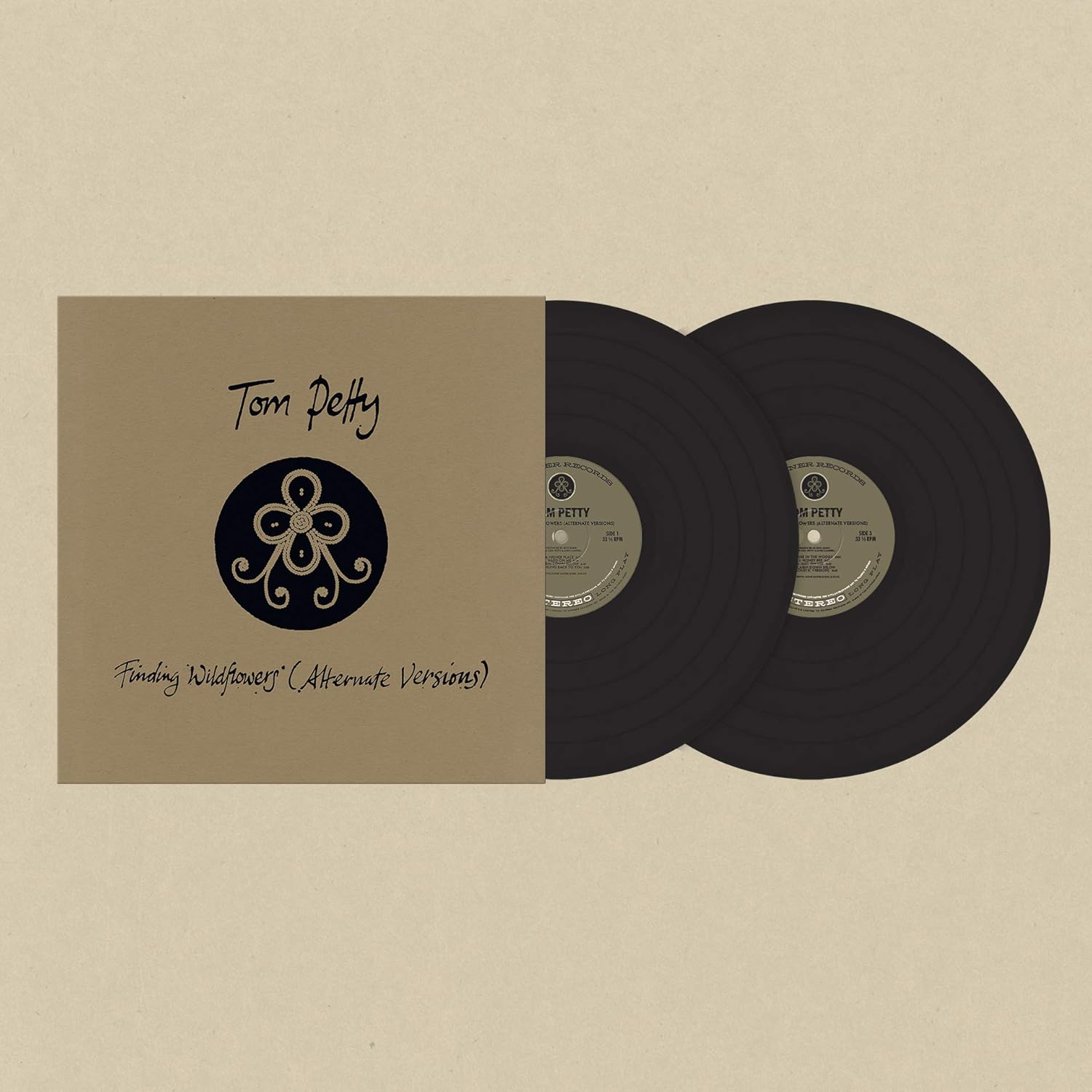
Tom Petty fans had to wait years before the official release of the much-discussed expanded version of his solo masterpiece, Wildflowers, saw the light of day. Wildflowers & All the Rest, featuring numerous home recordings and alternate takes from the original 1994 album was released on October. 16th, 2020, in a variety of editions. Now, “Finding Wildflowers (Alternate Versions)” featuring tracks from the Super Deluxe edition of All the Rest, has been released as its own collection. It arrived April 16th, 2021, via Warner Records; a 2-LP release will follow on May 7th. “You Saw Me Comin’,” a previously unreleased song and recording from 1992 and the final track on the collection, premiered alongside a video directed by Joel Kazuo Knoernschild and Katie Malia. Reflecting upon recording “You Saw Me Comin’” for Wildflowers, the Heartbreakers’ Benmont Tench notes, “There’s this kind of longing in the song, in the way that he wrote the chord structure, the melody and the lyrics. It’s wistful, and it would have been the perfect way to end the disc.” Tom Petty’s ‘Finding Wildflowers (Alternate Versions)’ Limited Edition gold vinyl available at TomPetty.com. “Finding Wildflowers (Alternate Versions)” features 16 studio recordings of alternate takes, long cuts and jam versions of Wildflowers songs as Tom, band members and co-producer Rick Rubin worked to finalize the album in 1994. Check TomPetty.com for more info. The latest offering of Tom Petty curated with help from his loving family, bandmates and collaborators. Finding Wildflowers (Alternate Versions) features 16 studio recordings of alternate takes, long cuts and jam versions of Wildflowers songs as Tom, band members and co-producer Rick Rubin worked to finalize the album in 1994. The release offers fans further deep access into the writing and recording of Wildflowers, as well as realizing the full vision of the project as Tom had always intended. “You Saw Me Comin’,” a previously unreleased song and recording from 1992 and the final track on the collection, is premiering alongside a video directed by Joel Kazuo Knoernschild and Katie Malia. The songs on Finding Wildflowers (Alternate Versions) first initiated the Petty estate’s discovery and curation process for the larger All the Rest project. Reflecting on the recording of “You Saw Me Comin’,” Benmont Tench notes, “There’s this kind of longing in the song, in the way that he wrote the chord structure, the melody and the lyrics. It’s wistful, and it would have been the perfect way to end the disc.” The collection was produced by Petty’s longtime engineer and co-producer Ryan Ulyate who listened to 245 reels of 24-track tape, revealing Petty and his collaborators’ evolutionary process and finding the group willing to do whatever it took to discover the essence and magic in the material.

Throughout The Fleshtones’ forty-plus years of playing a brand of gritty, exuberant, often caffeinated roots music they affectionately dub “super rock,” the scrappy New York City quartet has experienced more ups and downs, and churned through more record labels, than any of their peers. Not surprisingly, there are none left.

That leaves the mighty Fleshtones as the last men standing from New York City’s CBGB based punk explosion of the late 70s. Even though the band wasn’t specifically alligned to that genre like The Ramones, their music never strayed far from punk’s aggressive, DIY roots. Now on album number 22, The Fleshtones have not only found a stable home at the Yep Roc label (since 2003) but have stayed the course musically. No one is expecting the Peter Zaremba/Keith Streng led outfit to reinvent their dependable musical wheel at this late stage but Face of the Screaming Werewolf is another solid offering from the ageing, faithful rockers doing what they have always done best crank out tight, tough garage rawk infused with sly, even wacky, humour.

Whether pushing psychedelic buttons with the spiralling, swampy, sneering Cramps influenced “Violet Crumble, Cherry Pie” or paying tribute to Jeopardy’s “Alex Trebek” on a slice of cool Farfisa inflected Brit Invasion pop or spinning out a Rolling Stones obscurity with “Child of the Moon” (the disc’s sole cover), The Fleshtones sound typically energized and invigorated playing music they love with no concerns of generating new fans to their existing cult.

Zaremba isn’t a great vocalist, but he’s a magnetic front person. He gets by on sheer chutzpah talk/singing the strutting “Manpower Debut” while adding ragged harmonica to the frantic rockabilly of “The Show is Over” and the slower, bluesy closing instrumental “Somerset Morning.” The stomping “Spilling Blood (At the Rock & Roll Show)” would have fit in on the band’s 1982 debut album and the twangy title track is another crunchy horror show gem with maracas and a stinging stun guitar solo from Streng.

Only one of the eleven tunes breaks the three minute mark which makes this animated half hour traipse into Fleshtones-land a little on the short side. But even if there’s nothing here quite as entertainingly flippant as “Rick Wakeman’s Cape” from the band’s previous 2016 set, it’s another impressive notch on their ever enlarging album belt they can display with pride.

Lert’s hope The Fleshtones make it to a 50th anniversary?

St. Vincent has teased her next album with a poster campaign. The new record is reportedly called “Daddy’s Home” and it reportedly drops May 14 via Loma Vista.

Teasers for St. Vincent‘s anticipated follow-up to 2017’s “Masseduction” have begun popping up, and while officially Annie Clark has been mum on the subject, recently tweeting “Nothing to see here,” she’s now discussed the album, which is apparently called Daddy’s Home and features production by Jack Antonoff, more in a new interview on Substack newsletter The New Cue. “I would say it’s the sound of being down and out Downtown in New York, 1973,” she says. “Glamour that hasn’t slept for three days.”

“In hindsight, I realized that the [last album, 2017’s] Masseduction and tour was so incredibly strict,” she continues, “whether it was the outfits I was wearing that literally constricted me, to the show being tight and the music being angular and rigid. When I wrapped that, I was like ‘oh, I just want things that are fluid and wiggly and I want this music to look like a Cassavetes film. I wanted it to be warm tones and not really distorted, to tell these stories of flawed people being flawed and doing the best they can. Which is kind of what my life is.”

Images of the teaser posters have been cropping up across social media platforms. They feature a blond Annie Clark standing in a maroon suit next to what appears to be an album cover. “St. Vincent is back with a record of all-new songs,” a text panel reads. “Warm Wurlitzers and wit, glistening guitars and grit, with sleaze and style for days. Taking you from uptown to downtown with the artist who makes you expect the unexpected.” The poster claims that the record will be available May 14th.

Late last year, Clark said that a new album was “locked and loaded” for 2021. In between producing music for Sleater-Kinney, hosting a podcast from her shower, and putting the finishing touches on Daddy’s Home, St. Vincent may have entered a dirty rabbit hole, exploring more sordid tales.

A song that makes you feel like you need to permission to listen, “Pay Your Way In Pain” oozes the funk of what’s to be expected from Daddy’s Home.

“‘Daddy’s Home’ collects stories of being down and out in downtown NYC,” says Clark. “Last night’s heels on the morning train. Glamour that’s been up for three days straight.”

Asked what she was listening to while making this album, Annie says, “I went back to these records that I probably listened to more in my life than at any other time, music made in New York from 1971-76, typically post-flower child, kick the hippie idealism out of it, America’s in a recession but pre-disco, the sort of gritty, raw, wiggly nihilistic part of that. It’s not a glamorous time, there’s a lot of dirt under the fingernails. It was really about feel and vibe but with song and stories.”

Through a grainier retro screen, Annie Clark (St. Vincent) is summoning her inner 1970s starlet sleaze on Daddy’s Home (Loma Vista), out May 14th, sharing the first single “Pay Your Way in Pain” with a video, directed by Bill Benz—who also worked on Clark and Carrie Brownstein’s upcoming movie The Nowhere Inn—showing St. Vincent entering a vortex of network television variety shows.

“Daddy’s Home” is expected May 14th via Loma Vista, and lead single “Pay Your Way In Pain” is reportedly arriving Friday (March 5th).