Violent Femmes are getting ready to open Hotel Last Resort, their 10th album which is out July 26th via PIAS. The title track features the distinctive guitar-work from Television’s Tom Verlaine. “We didn’t really give him much instruction, but he did exactly what we hoped he’d do,” said VF’s Brian Ritchie. “He clearly has an affinity for the song. He must’ve really clued in on the lyrics, and he really interpreted them with a guitar.” As for those lyrics, Gordon Gano opens the song with this couplet: “I don’t change the chords anymore / The chords change themselves.”
Violent Femmes’ “Hotel Last Resort” (featuring Tom Verlaine from Television) taken from the upcoming new album ‘Hotel Last Resort’ due out July 26th, 2019.
The Mountain Goats new release “In League With Dragons”. Singer-songwriter, author, and podcaster John Darnielle started The Mountain Goats in the ‘90s with just an acoustic guitar and a boombox, but over the years he expanded the band’s sound and lineup, and now — backed by Peter Hughes, Jon Wurster, and Matt Douglas — he’s supporting this new album which is a far cry from his earliest material.
In League With Dragons, a Dungeons & Dragons-inspired record featuring fantasy settings and characters. It’s also an album, according to a conversation on the I Only Listen to the Mountain Goats podcast, about getting older.
The Band:
Jon Wurster – drums & percussion
Peter Hughes – bass
Matt Douglas – woodwinds, guitars, vocals
John Darnielle – guitars, vocals
Thom Gill – guitars
Johnny Spence – organ, Memorymoog, piano, Wurlitzer, synth
Bram Gielen – guitars, piano, synth
Owen Pallett – piano, organ, guitar
Dan Dugmore – pedal steel on “In League with Dragons”
Vocal arrangements on “Younger,” “In League with Dragons,” “Waylon Jennings Live!” and “Cadaver Sniffing Dog” by Robert Bailey, performed by Robert Bailey, Everett Drake, Jason Eskridge, and Michael Mishaw
The National have shared another song and video from their hugely anticipated new album “I Am Easy To Find” due out 17thMay via 4AD Records. The song, “Hairpin Turns,” features Gail Ann Dorsey and Lisa Hannigan, and the video was directed by Mike Mills, who also directed the new album’s accompanying short film. The video splices together performance footage by The National and guest singers Gail Ann Dorsey, Pauline de Lassus (Mina Tindle), and Kate Stables (This Is the Kit) with interpretive dance by Sharon Eyal. “The video is a very simple portrait of the band (and the friends who helped make the song) and the song itself: You see all the instruments that make up the song in isolation, even hear them recorded live on set over the album version, kind of like showing you the tracks that make up the song,” Mills said.
The National have also added an intimate NYC release show happening at iHeartRadio Theater (5/17) the day the album comes out, the whole thing will stream live at iHeartRadio’s YouTube channel on May 17th at 7 PM.
The Rock Machine Turns You On was the first bargain priced sampler album. It was released in the UK, Australia, New Zealand, Canada, South Africa, The Netherlands, Germany and a number of other European countries in 1968 as part of an international marketing campaign by Columbia Records, who were known in Europe, Australia, New Zealand and South Africa as CBS.
A 1969 dated edition ( Number ASF 1356) bought in South Africa had a different sleeve (yellow with cut outs in the Rock Machine boxes) and psychedelic multicoloured vinyl. It also has a completely different track list with such notable tracks as Big Brother and the Holding Company’s ‘Piece of my Heart’ and Leonard Cohen’s ‘Suzanne’.
The Rock Machine marketing campaign was initiated in the US in January 1968, by Columbia Records under its president Clive Davis. The campaign was seen as a means of promoting its expanding roster of rock and folk rock acts, who included Bob Dylan, The Byrds, Simon and Garfunkel, Leonard Cohen, Moby Grape, Spirit, Taj Mahal, and Blood, Sweat and Tears. Early promotional material in Billboard magazine stated:
The Rock Machine...it’s the happening sounds of today. Out of it comes the biggest, hottest rock list that ever started off any month. And with our Columbia Rock Machine, the most exciting and meaningful merchandising campaign we’ve ever devised….. It’s all here – the talent, the product and the big concept to make it all happen. Now, doesn’t that turn you on?”
The design of the “Rock Machine” logo, used in subsequent publicity material, including album covers, was by Milton Glaser
As part of its highly successful campaign, CBS Records released The Rock Machine Turns You On, the first budget sampler LP, in the UK in 1968. The album was priced at 14 shillings and 11 pence (£0.75), less than half the cost of a full priced LP at the time. It entered the UK Albums Chart in June 1969, several months after its first release, rising to no. 18, and was estimated to have sold over 140,000 copies.
Side 1
“I’ll Be Your Baby Tonight” – Bob Dylan – from the LP John Wesley Harding
“Can’t Be So Bad” – Moby Grape – from the LP Wow
“Fresh Garbage” – Spirit – from the LP Spirit
“I Won’t Leave My Wooden Wife For You, Sugar” – The United States of America – from the LP The United States of America
“Time of the Season” – The Zombies – from the LP Odessey and Oracle
“Turn on a Friend” – The Peanut Butter Conspiracy – from the LP The Great Conspiracy
“Sisters of Mercy” – Leonard Cohen – from the LP The Songs of Leonard Cohen
Side 2
“My Days Are Numbered” – Blood, Sweat and Tears – from the LP Child Is Father to the Man
“Dolphins Smile” – The Byrds – from the LP The Notorious Byrd Brothers
“Scarborough Fair / Canticle” – Simon and Garfunkel – from the LP Parsley, Sage, Rosemary and Thyme
“Statesboro Blues” – Taj Mahal – from the LP Taj Mahal
“Killing Floor” – The Electric Flag – from the LP A Long Time Comin’
“Nobody’s Got Any Money In The Summer” – Roy Harper – from the LP Come Out Fighting Ghengis Smith
“Come Away Melinda” – Tim Rose – from the LP Tim Rose
“Flames” – Elmer Gantry’s Velvet Opera – from the LP Elmer Gantry’s Velvet Opera
The Rock Machine Turns You On influenced a generation of music fans , At the time, what was then called “underground music” was starting to achieve some commercial success in Europe, bolstered by new radio and TV programmes such as John Peel’s “Top Gear”. CBS competed actively for this new market against other “progressive” labels such as Elektra, Island, Immediate, and the EMI subsidiary Harvest, who followed with similar samplers of their acts. Although some of the featured artists were already stars, others such as Leonard Cohen and Spirit were only starting to become known in Europe, and the album made a major contribution to their success.
CBS released a second, similar, sampler album in the UK in 1968, Rock Machine I Love You. The company followed up these LPs in 1970 with three double sampler albums – Fill Your Head with Rock, Rockbuster, and Together!.
Some years later, the affiliated company, Epic Records, used a similar format for The Rock Machine Still Turns You On, Vols. 1 and 2, in 1983
The importance of this unassuming album can’t be overstated. It was the first rock sampler album I ever saw or heard, and almost certainly the first such ever released here in the UK. It was in fact the first time I saw the actual term “rock” used to describe the music at all; previously the successive labels “underground” and “progressive” had been coined to cover the diverging (from “pop”) stream of album-based, art-for-art’s-sake music that had started with Dylan and Hendrix. It was the new music’s first budget release; at a time when the standard price of an album was 32/6 (about £1.63), this cost 14/6 (about 73p), just within the average teenager’s weekly pocket-money allocation. And it would spawn a whole new sub-genre of record releases peculiar to, and essential to, progressive rock: the cult of the sampler.
What came over then, and still impresses today, is the sheer quality of this dip into the CBS catalogue of 1969. Each track can be seen to have been carefully cherrypicked from its parent album, no sample being so leftfield as to frighten off the listener, though nobody venturing further into any of the represented albums would have been disappointed. Yet the overall diversity of the collection is astonishing, both in terms of styles and artists, in a way befitting progressive music. Practitioners of jazz-rock, country-rock, folk-rock, blues-rock, psychedelia and simple honest weirdness are all represented, whilst the acts featured include established big-hitters (Dylan, the Byrds, Simon& Garfunkel), contemporary heroes whose days were numbered (the Zombies, Moby Grape, the Peanut Butter Conspiracy, Tim Rose), newcomers who would fall at the first hurdle (the United States Of America, the Electric Flag, Elmer Gantry’s Velvet Opera) and up-and-coming artists who would go on to found dynasties (Leonard Cohen, Spirit, Blood Sweat & Tears, Roy Harper, Taj Mahal).
Two tracks above all left their mark on me. The Electric Flag’s “Killing Floor” induced me to purchase their album straightaway; this powerful number remains my favourite blues-rock AND jazz-rock performance of all time, with Mike Bloomfield on cloud nine and brass work to die for, the standout track from a solid album. By contrast, despite taking a perverse delight in “I Won’t Leave My Wooden Wife For You, Sugar” I somehow didn’t get round to buying the United States Of America’s only album until 2008, when a book review of it re-aroused my interest. This erotically engaging ditty with its homely brass band coda merely hints at the trippy weirdness of its fellow tracks – one to grow into over forty years, now to become a classic .
A steady stream of samplers followed as prog-rock blossomed, including the best of the lot: CBS’s double from 1970, Fill Your Head With Rock. Samplers were considered disposable, and originals are now quite rare and collectable (sadly, I disposed of all mine many years ago when thinning the collection). Whilst retrospectively compiled anthologies covering the whole life of a label are nowadays commonplace, original samplers with their snapshot of a moment in prog-rock’s history are not. The Rock Machine Turns You On is the only sampler ever to be reissued on CD in its original form – and that sadly minus Simon & Garfunkel’s “Scarborough Fair / Canticle”, probably due to some momentary petulance on Paul Simon’s part. It came out in 1996 and is now a rarity in its own right, never having been re-released. Sony could do a lot worse than reissue The Rock Machine Turns You On and Fill Your Head With Rock in their original forms, although licencing problems mean they probably won’t.
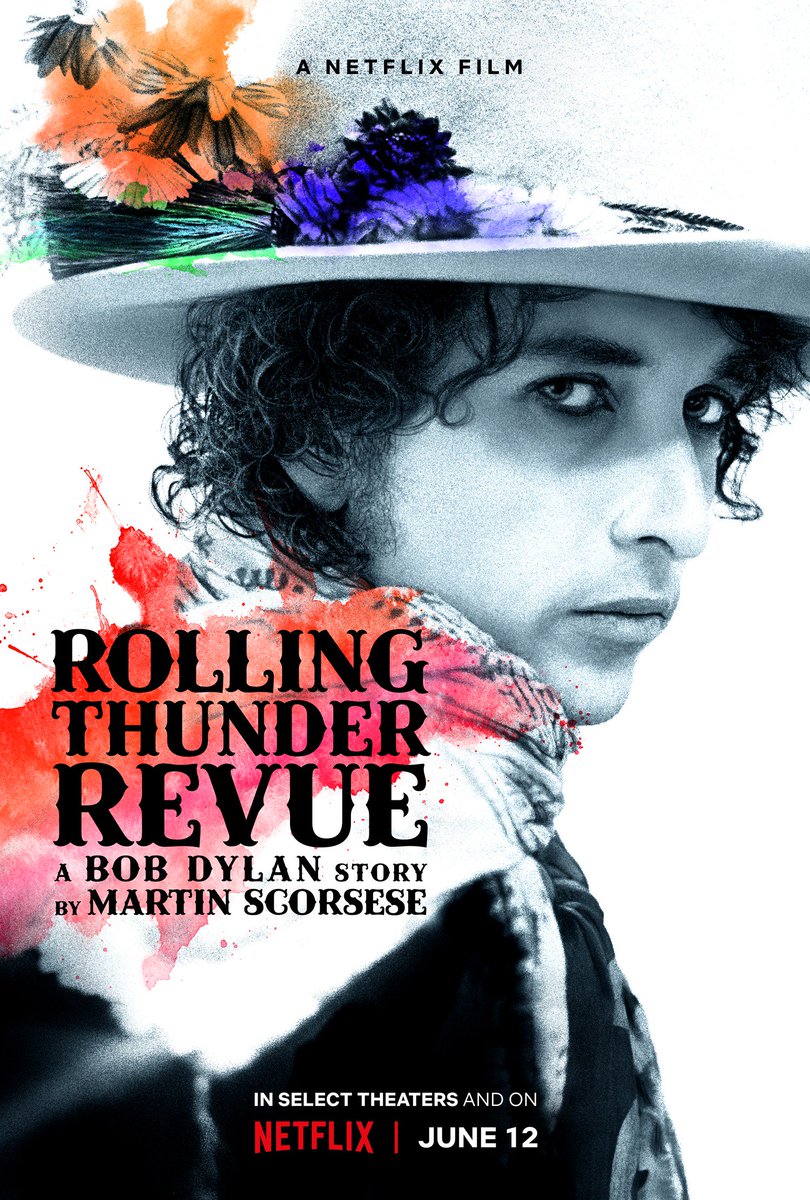
Sony’s Legacy Recordings will issue a massive 14CD box set edition of Bob Dylan‘s 1975 ‘Rolling Thunder Revue’ tour next month
A new boxset chronicling Bob Dylan’s famous Rolling Thunder Revue will be released as a companion piece to Martin Scorsese’s upcoming documentaryabout the 1975 tour, Rolling Thunder Revue: A Bob Dylan Story by Martin Scorsese. The boxset will be released June 7th, while the film hits Netflix and select theaters June 12th.
Rolling Thunder Revue: The 1975 Live Recordings will comprise 14 CDs and 148 tracks, capturing five full Dylan sets from the tour that were professionally recorded. It will also include recently discovered tapes from Dylan’s tour rehearsals, which took place at S.I.R. studios in New York. An exact track list has yet to be announced.
Dylan’s Rolling Thunder Revue tour took place between 1975 and 1976 and found the musician playing theater shows with little advanced notice. The tour famously featured Joan Baez, Roger McGuinn and Ramblin’ Jack Elliott, while one-off special guests included Ringo Starr, Patti Smith and Joni Mitchell.
The Rolling Thunder Revue box set has reportedly been in the works for several years (a selection of songs from the tour were featured on 2002’s The Bootleg Series Vol. 5). In 2017, a source close to Dylan’s camp said “It’s a great period and there’s so much music that was so well-recorded. I think that’ll be a great companion piece to the film. We have incredible, incredible stuff.”
The 14-disc set will include five complete Dylan performances professionally recorded during the 1975 tour, along with previously unheard rehearsal audio. The collection will arrive on June 7th. The comprehensive 14CD box set includes all five of Dylan’s full sets from that tour that were professionally recorded. The collection also delivers recently unearthed rehearsals at New York’s S.I.R. studios and the Seacrest Motel in Falmouth, MA plus a bonus disc showcasing one-of-a-kind performances from the tour.
Dylan’s 1975 Rolling Thunder Revue tour has long been the stuff of legend. The trek saw the rock icon hit the road with many of his closest friends — including Roger McGuinn, Joan Baez, Ramblin’ Jack Elliott, Bob Neuwirth and Allen Ginsberg. Other top musicians, such as Joni Mitchell and Ringo Starr, also took part in some of the shows. The performances earned Dylan some of the best live reviews of his career.
The box features 148 tracks in all, with more than 100 of those never previously released. This box comes with a 52-page booklet featuring rare and never-before-seen Rolling Thunder Revue photos and an essay by novelist/musician Wesley Stace.
Bob Dylan fans have been eagerly awaiting news regarding the Martin Scorsese-helmed documentary about the singer’s 1975 Rolling Thunder Revue tour ever since it was announced in January.
Scorsese’s documentary about the tour was also long-rumored before Netflix confirmed its arrival in January. The film is expected to feature a rare on-camera interview with Dylan, as well as other performers from the tour. The majority of the interviews were reportedly conducted by Dylan’s longtime manager, Jeff Rosen, who also did the interviews for Scorsese’s 2005 Dylan film, No Direction Home.
Shocking and unexpected was the news that Jeff Buckley had passed away. The tragic drowning death in 1997 at the age of 30 instantly propelled him to a legendary status accorded the greats who die young, he was already well on his way to becoming one of the more admired and respected singer-songwriters of his era. He drowned? How?? It was so awful, so unbelievable. Jeff was gifted with a prodigious, supernatural, dazzling talent. He could do so much with his voice and his guitar and the way he wove them together was breathtaking. The gateway to acceptance came with his very first studio album, Grace, released in 1994 (25 years ago this summer). Though not a huge success when it was released, Grace was to become one of those albums that sort of insinuated itself into people’s album collections over time, as friends passed it to friends, discovering one cool song after another that spoke to them for whatever reason. His lyrics were often spare and poetic, delivered in that unmistakable voice that could easily move from a near-whisper to an ethereal wail. Of course, it was his version of Leonard Cohen’s “Halleluljah” on Grace that really put him (and that song) on the map.
He was a fan of so much music, so many kinds of music, and he absorbed it all with a quasi-photographic musical memory, integrating all sorts of disparate elements effortlessly. It must have been overwhelming sometimes to have so many options, hard to narrow down what it was he wanted to present to the world. Grace is filled with exceptional songs, among them “Lover, You Should’ve Come Over,” presented in a striking video performance here.
Sometimes Jeff seemed to be trying genres out, trying to figure out what he wanted to be, dipping a toe into a certain musical style one day, into another the next. Sometimes it seemed that with certain choices he made he was trying to prove his punk rock/indie rock bona fides, like when his band would play a version of “Kick out the Jams” was too self-consciously overwrought. Jeff’s guitar shredding abilities — his real technical skills, and his musical sensitivity and sophistication — were not punk rock at all. With punk rock, the whole idea is that you barely know how to play your instrument. And you do just one thing — the one thing that you can do — over and over again.
Jeff Buckley could do so many things. His music was kind of all over the place. It showed off. It was exploratory. Jeff was category-resistant.
Jeff also had that star power. He would play it up and play it down. He would wear a grubby, once-white, ill-fitting V-neck T-shirt a lot (the one he wore in the “Last Goodbye” video), as if to resist his own glamorization. But then he also had a sparkly gold jacket (the one he wore in the photo on the album cover of Grace), which he put on in New York for a big show at the Roseland Ballroom.
People were discovering Grace’s mysterious, confident charm, falling for it — falling hard. Jeff would sometimes joke about his growing stardom, to lighten the load of it, maybe. But at the same time there was a gravity and a sense that his charismatic power (musically and otherwise) was not something to be squandered or misused — he accepted it and respected it although it must have been a burden, all the passion he inspired, all the projection onto him, people wanting access to him, wanting pieces of him, of his time, and all the expectation and pressure to deliver a second album that was as magical and accomplished and ambitious and weird and wonderful and unique as Grace.Grace was all those things and more. It was serious, playful, puzzling, exotic, traditional, quiet, loud, clean, dirty, pretentious, humble, curious, beautiful, sad, happy, challenging, rewarding— as was Jeff.
Jeff did hilarious, spot-on impressions of other singers. He did a great Chris Cornell; if you closed your eyes you could almost believe that Chris was in the room. Jeff could mimic female singers, too. It was uncanny. And loving, and admiring — all of his vocal impersonations were done in homage and appreciation rather than meanness or mocking.
His gifts, his music, the things he liked, his time. Jeff was a model for savoring it all, being fully in every moment, rather than off to the side, just observing or thinking about it. Each show he did was like a ceremony of sharing, a sacred ritual, an active meditation of mindfulness, but also fun. He was fully immersed in every second of every song, but also fully connected to the audience.
Part of what was so heartbreaking about Jeff Buckley’s early death was that he seemed determined not to end up like his father, Tim Buckley, who had died young (at twenty-eight, of a drug overdose). It wasn’t something Jeff really talked about, but you could sense that there was some recognition or pull that Jeff felt toward some darkness, some dark legacy. And that he was going to shape and drive his fate away from that, to somewhere less tragic and more self-determined. (In fact he did outlive his father by a couple of years, age-wise.) Even though Jeff never knew his dad and met him only once as a boy, when he took his birth father’s last name and went public as an artist it was an acknowledgment of that connection.
Outer Spaces is the name of the current project of Baltimore based songwriter Cara Beth Satalino. Cara had a well received debut album way back in 2016 ,“A Shedding Snake”. This week Outer Spaces have detailed a brand new album titled, “Gazing Globe” due out on Western Vinyl in June, as well as sharing the first single from it, I See Her Face. The track, is in Cara’s own words, “basically about embracing optimism…the ‘her’ referred to in the song is probably a more optimistic, lighter, brighter version of myself hidden somewhere waiting to be found.” Musically, the track also has a certain bright glow to it, albeit it one where you feel there’s a more melancholic edge hiding not far from sight. There’s a winning contrast between the breeziness of the light drums and Cara’s vocal delivery and the more crunchy tones of electric guitar. By the sound of it optimism suits Outer Spaces, so we best get used to seeing a lot of of that face!
The album came after Cara Beth Satalino took a break from a long-term relationship, and she says, “I think I was trying to get back to myself and my identity, separate from my relationship. For this record I was trying to articulate a feeling of disassociation, or something sort of intangible, surreal, and ethereal. I wanted it to be less literal and more of an illustration of a feeling.
Cara Beth Satalino’s Outer Spaces project also recently released another new song“Teapot #1″from their upcoming single for Saddle Creek’s Document Series.
From the album Gazing Globe, available June 21st, 2019 on Western Vinyl Records.
It’s easy to get caught up in an undertow, pulled down into the water, weightless and directionless. The current stirs and you lose your way. But eventually, if you’re lucky and patient, you can float back up to the surface and take a breath. This is my first new music in a while – my gulp of air. Many talented friends joined me, the basic tracks were recorded live together for the first time in my recording career. This felt good. Jason Quever recorded it in Los Angeles, December of 2018. Thanks for listening.
After the success of 2017’s There Are No Saints, things just seem to keep getting more and more exciting for this Scottish songwriter, Siobhan Wilson. Siobhan was recently granted a PRS Momentum Music Fund grant, had her song featured on prime time television, and appeared in session on BBC Scotland. All of which might just seem like a sideshow to the upcoming moment of excitement that will be the May release of her upcoming album, “The Departure”.
Ahead of The Departure’s release, Siobhan has this week shared her, “defiant hymn to female empowerment”, April. The track, perhaps unsurprisingly from the title, focuses on the idea of re-birth, and regeneration, and how that gives us all a chance to decide who we want to be; tough, beautiful, even both, as Siobhan sings, “be a mountain if you want…or a mountain flower”. Of the track, Siobhan suggests, “It’s my way of trying to send a direct message out to do whatever the hell you want with your body, your time, and make your own decisions about your life.” Some of the possibilities Siobhan points out seem quite generic, ideas that could be aimed at anyone and everyone, however others feel deeply personal, there’s a certain sense of the pressure women are under to be mothers, and her own desires, to be loud, to fear failure and to embrace success, “you make your own rules, you break the ones you choose”. Siobhan Wilson is walking her own musical path, and sounding this exciting that’s exactly how it should be.
The Departure is out May 10th via Suffering Fools Records.
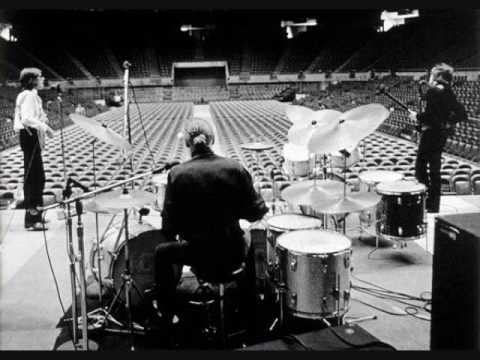
Cream were a 1960s British rock power trio consisting of drummer Ginger Baker, guitarist/singer Eric Clapton and bassist/singer Jack Bruce. The group’s third album, “Wheels of Fire” (1968), was the world’s first platinum-selling double album. In October 1968 Cream were pretty much coming to an end, apart from the remaining tour dates which would end with two final shows at the Royal Albert Hall in London on the 26th November. Mentally they all knew the musical journey they had embarked on in 1966 was coming to an end. Including this show, they would have 20 dates left until the end of Cream as a band.
The band is widely regarded as the world’s first successful super-group. In their career, they sold more than 15 million copies of their albums worldwide. Their music included songs based on traditional blues such as “Crossroads” and “Spoonful”, and modern blues such as “Born Under a Bad Sign”, as well as more current material such as “Strange Brew”, “Tales of Brave Ulysses” and “Toad”. The band’s biggest hits were “I Feel Free” (UK number 11), “Sunshine of Your Love” (US number 5), “White Room” (US number 6), “Crossroads” (US number 28), and “Badge” (UK number 18).
The band made a significant impact on the popular music of the time, and, along with Jimi Hendrix and other notable guitarists and bands, popularised the use of the wah-wah pedal. They provided a heavy yet technically proficient musical theme that foreshadowed and influenced the emergence of British bands such as Led Zeppelin, Deep Purple and Black Sabbath in the late 1960s and the early 1970s. They also had an impact on American southern rock groups the Allman Brothers Band and Lynyrd Skynyrd.
Recorded barely a month before the band’s much ballyhooed “Farewell Performance” at the Royal Albert Hall in November 1968, this October 4th show provides sound documentation of the monumental impact Cream had on the world of rock ‘n’ roll in the late 1960s and early ’70s.
The band opened the set with “White Room” which at this point in time was the standard setlist opener. Before the band launch into the song you can hear the excitement and anticipation in the crowd right up until that opening G minor chord rings out through the coliseum. It’s a good version but you can tell the band are still warming up to begin with, at least until Eric’s roaring solo three quarters of the way through this performance. That wah-wah tone is fantastic, and everything you associate with Cream during 1968. White Room is followed by Politician and Jack is the runaway star here, he really sings like a man possessed.
Crossroads is the third song and this is probably the biggest difference when compared to the famous version recorded at Winterland on the 10th March 1968. What you hear here is a slower version and as a result it lacks any of the fire the Winterland version contains. The song plods along more than it flows, however it does picks up when Clapton takes up his first solo. It doesn’t help that the song started slower than it was meant to and when you jump to the end you can instantly hear that the tempo has increased as the song has gone on, and as a result the song ends better than it started.
When you think of Sunshine Of Your Love as a live song, you think of the length of the song and what the band did in that space of time. It was common for the band to jam on Sunshine for over 10 minutes but during the US Farewell tour of 1968 the song was considerably shorter. This version clocks in at just over 5 minutes but thankfully it contains just as much fire as a 10 or 15 minute version. Eric’s playing on this song was always fantastic during his time in Cream and here is no different, with his unique tone hitting those familiar breathtaking heights. You do feel like the song could have gone on for longer. Spoonful follows and there’s no worrying about this being shorter. Standing at 17 minutes in length, it doesn’t get any better than this. Spoonful is a song that probably best showcases Cream as a band and as a live unit. That riff is infectious and you’re just waiting until the band switch into improvise mode . This was Cream at the top of their game, no-one could do jamming and improvising as well.
Deserted Cities Of The Heart comes next, from the then recently released Wheels Of Fire album. This particular version featured on the Live Cream Vol. 2 album released in 1972 (as does White Room and Politician) and contains an explosive solo from Eric. It’s followed by Passing The Time/Toad but only the music from the former features, not including the basic backing vocals which Jack and Eric sing together. But before Passing The Time gets going the guitar and bass cut out and you’re left with eight and a half minutes of Toad. It is sometimes tough to listen to long versions of Toad drummer Ginger Baker was and will always be and why he deserves to be named up there alongside the best drummers of all time. The audience erupts out of satisfaction when Toad comes to an end. The last song, I’m So Glad, begins after a short comment from Ginger in which he says the following: We must apologise for being a little rusty. We’ve all been on holiday. Thank you very much. We’re now going to do I’m So Glad, thank you.
Ginger’s comments definitely make sense after a fairly scratchy Crossroads and a shorter than usual Sunshine Of Your Love. You get the feeling Eric and Jack take notice though because I’m So Glad is a step up in playing compared to the rest of the show.Overall it’s a great bootleg album, Saying that though this certainly isn’t the best show that Cream played, especially when you compare it to other shows like Winterland from the 10th March 1968 or the unbeatable Grande Ballroom shows the band played in October 1967.
For energy, virtuosity and expressive cohesion, few bands could top Cream in their heyday; and perhaps fewer can today. The group, for all their professional and personal conflicts, were still able to fill any performance space with a richness and a soulfulness that was distinctively their own.
Eric Clapton – guitar, vocals Jack Bruce – bass, vocals Ginger Baker – drums, percussion
Setlist: 1. White Room 2. Politician 3. Crossroads 4. Sunshine of Your Love 5. Spoonful 6. Deserted Cities of the Heart 7. Passing the Time 8. I’m So Glad 9. Crossroads (*) 10. Sunshine of Your Love (*) (*) Recorded at the Forum, Los Angeles, on November 18, 1968