Archive for the ‘CLASSIC ALBUMS’ Category

Neutral Milk Hotel Collected Works box set artwork Merge Records 2023

1996’s “On Avery Island” and 1998’s “In the Aeroplane Over the Sea” give voice to the perennial spirit of youthful epiphany, of beginning to see the world clearly, to process and express it—no matter when you encounter them. For burgeoning Gen Z indie rock fans, a Neutral Milk Hotel phase is a right of passage. I stumbled across “In The Aeroplane Over The Sea” early in my musical journey and quickly went from thinking “this guy’s voice sounds weird” to “there is no other music that matters.” From there, I dove into the underrated debut album “Avery Island”, the admittedly mixed bag “Everything Is” EP, and the wonderfully intimate live set “Live At Jittery Joe’s” .

Neutral Milk Hotel, the indie rock project led by the reclusive Jeff Mangum, have released a new archival box set, titled The Collected Works of Neutral Milk Hotel”, for release on February 24th via Merge Records.

The vinyl compilation includes the group’s two full-length LPs, 1996’s “On Avery Island” and 1998’s “In the Aeroplane Over the Sea”, as well as two 10-inch EPs, three 7-inch singles, and an exclusive 12-inch picture disc of the concert album Live at Jittery Joe’s, which features a 1997 performance by the band originally released in 2001.

“The Collected Works” marks the digital debut of several tracks initially included on a 2011 compilation self-released by Mangum, and expands on the previous offering with a double LP edition of “On Avery Island”, a remastered and extended track list for the 1994 EP “Everything Is”, and previously unreleased recordings for the singles “Little Birds,” “You’ve Passed,” and “Where You’ll Find Me Now.” A 7-inch single for “Holland, 1945” / “Engine” also comes in black vinyl with new artwork.

The elusive rarity “Little Birds” stands as the first preview of the Neutral Milk Hotel box set, with the collection touting a 1998 demo and an unreleased live recording from the band’s 2014 reunion tour. The song was written after Mangum confronted an anti-LGBTQ street preacher, and later gained mythic status in the band’s catalogue thanks to a long-circulated live recording from 1998.

So, I combed the internet for unreleased rarities and live demos; songs like “My Dream Girl Don’t Exist” or “Little Birds” became just as important as “King of Carrot Flowers.” Luckily, for the spoiled future fans of Jeff Mangum’s one-of-a-kind tunes, all of these threads have been brought together for a long-overdue digital and vinyl release.

There are fans of Neutral Milk Hotel who will argue that their 1996 debut, “On Avery Island”, is the better of Jeff Mangum’s two official LPs. It’s certainly less spoiled by exposure. “In the Aeroplane Over the Sea” thematic ambitions can make it feel bigger than any one person: It’s an album about death and loss and evil, and about how human beings keep searching for the good in ourselves despite our long history of being awful to each other. “On Avery Island” scope is narrower. Mangum sings about himself and the people he knows. Instead of mountaintops and oceans, he sets his songs in bedrooms and public parks.

Neutral Milk Hotel Collected Works box set 2023 Merge Jeff Mangum In the aeroplane over the sea on avery island little birds single vinyl record LP

In the mid-’90s, Jeff Mangum had moved into a house in Denver where he had dreams of women in fur coats drinking champagne, yelling at him to get out of their house. During a snowy Colorado winter, the Louisiana-born songwriter and his childhood friend Robert Schneider set about recording what would become Neutral Milk Hotel’s debut album. They worked feverishly, going out to smoke cigarettes when they hit a roadblock, until, in May of 1995, they had a finished record. The North Carolina indie label Merge scooped up the young band and quietly released “On Avery Island” the following March.

The record industry was in the best shape it’s ever been in, and even majors were willing to take chances on messy, ramshackle bands that took cues from the 1972 psych-rock compilation Nuggets. Neutral Milk Hotel didn’t set their sights on breaking through to the mainstream. They subsisted happily as part of the Elephant 6 collective, a group of psychedelic musicians based first in Denver and then in Athens, Georgia, who played unlikely instruments like the singing saw and the accordion in each other’s bands. Alongside Neutral Milk Hotel, the collective included the Apples in Stereo, the Olivia Tremor Control, and Elf Power.

“On Avery Island” earned a handful of positive reviews from music magazines, and after its release, Mangum got a band together and toured steadily. In February 1998, Merge released the band’s second album, “In the Aeroplane Over the Sea”, expecting to move about 7,000 copies. It sold modestly at first, receiving warm reviews in the music press. Mangum kept touring, and the band’s profile grew; fans showed up at NMH gigs knowing every word to his songs, and often sang them louder than the frontman did. Music magazines started asking for interviews, and Mangum found that he hated explaining himself. By the end of 1998, Neutral Milk Hotel turned down the opportunity to open for R.E.M. Disturbed by the unexpected success of his project, Mangum withdrew from music and spent a few years in a state of panic. Neutral Milk Hotel vanished almost as soon as it had arrived. That the band was in stasis and Mangum gone from the public eye only added to the record’s mystique. It was just a few years old, but it felt like an artifact unearthed and shared covertly among those in the know.

“Aeroplane” might be an offbeat record—its unwieldy title, its songs about cum and communism, Mangum’s brassy, abrasive voice—but its songs are simple and tuneful enough to be played at expensive weddings. In 2005, the teen drama “The O.C.” featured a cover of the album’s title track in an episode, causing a mild uproar over possessive fans who didn’t want normies in their midst. But the word was already out, and “Aeroplane” became something of a sensation, a living record of an extinct band.

“On Avery Island” is the better of Mangum’s two official LPs. It’s certainly less spoiled by exposure, and certain songs, like “You’ve Passed” and “Gardenhead / Leave Me Alone,” easily rank among NMH’s best. In “Gardenhead,” Mangum sings about a roller coaster that crashes into the ocean, and there’s a B-side from 1996, a fan favourite, called “Ferris Wheel on Fire.” “On Avery Island” is a theme park plopped down on a city: “On Avery Island” served as a throttle between “Aeroplane’s” broadening pop appeal and the sprawling collection of bootleg concert tapes that could be easily snapped up via file-sharing programs. It offers a glimpse of a pivotal songwriter in transition, moving from making shoddy cassettes for his friends to making art rock that spoke to untold thousands of lonely teens listening to pilfered mp3s late into the night.

The seeds of “Aeroplane” can be heard scattered throughout “On Avery Island”. Mangum already balanced the gross and the transcendent in his lyrics: On “A Baby for Pree,” he imagines a pregnant woman full of bees who spews infants until they fill up her bedroom. Throughout the course of the rambunctious, trombone-heavy opener “Song Against Sex,” the speaker kisses another boy while the apocalypse sets in, complains about the porn he hates and the drugs he won’t take, and then lights himself on fire.

Certain songs hit closer to the bone than anything on “Aeroplane”. “You’ve Passed” envisions a woman’s spirit coursing away from the hospital where she’s just died, while “Three Peaches” articulates an uncanny emotional register between mourning and celebration as Mangum sings to a friend who survived a suicide attempt. It’s one of the hardest NMH songs to endure; Mangum sings from the very bottom of his diaphragm as if dredging up muck from beneath the earth’s crust, dragging out the words “I’m so happy” while sounding like he’s about to keel over with grief.

There are love songs here, too, like the effervescent “Naomi” and “Leave Me Alone,” and there are spooling, chaotic instrumental tracks: “Marching Theme,” which rolls along on a breathing drone, and the 14-minute closer “Pree Sisters Swallowing A Donkey’s Eye,” which rides the album’s final triumphant burst out into a slow-growing silence. The abrupt transitions between perfect pop melodies and gaseous balls of noise lend the album a certain wildfire charm. It has less varnish than “Aeroplane”, and that raw face makes it a little easier to see into the mind of the guy who wrote it.

“Aeroplane’s” thematic ambitions can make it feel bigger than any one person: It’s an album about death and loss and evil, and about how human beings keep searching for the good in ourselves despite our long history of being awful to each other.

Neutral Milk Hotel would become a beacon for a glut of aughties bands who never quite achieved Arcade Fire, Clap Your Hands Say Yeah, Wolf Parade, and Beirut all sprang up on the ground Mangum had cleared, mixing boisterous vocals with antique instrumentation.

Full Contents:

  • In the Aeroplane Over the Sea LP is 11 tracks pressed 33RPM to black vinyl in a gatefold jacket + printed insert for full album download.
  • On Avery Island 2LP is 12 tracks pressed to double black vinyl in a gatefold jacket + 11 x 11 printed insert + printed insert for full album download. Sides A, B and C pressed 45RPM. Side D pressed 33RPM.
  • Live at Jittery Joe’s 12” picture disc is 11 tracks pressed 33RPM to a full color picture disc in a heavyweight poly jacket + printed insert for full album download.
  • Ferris Wheel on Fire 10” is 8 tracks pressed 45RPM to black vinyl in a printed jacket + postcard insert + printed insert for full album download.
  • Everything Is 10” is 7 tracks pressed 45RPM to black vinyl in a printed jacket + postcard insert + printed insert for full album download.
  • “Little Birds” 7” is 2 tracks pressed 45RPM to black vinyl in a printed jacket + printed insert for full album download. 7” housed in a heavyweight poly jacket.
  • “You’ve Passed” 7” is 2 tracks pressed 45RPM to black vinyl in a printed jacket + printed insert for full album download. 7” housed in a heavyweight poly jacket.
  • “Holland” 7” is 2 tracks pressed 45RPM to black vinyl in a printed jacket + printed insert for full album download. 7” housed in a heavyweight poly jacket.
  • 2 folded posters, each printed one side and each 24” x 24” when flat.
  • 1 postcard, printed front and back with box set information and sized 3.75” x 5”
  • All of above assembled in a 12″ two-piece telescoping case-wrapped box.

The box set arrives February 24th,

“The rest is practice, it’s not the real thing” sing Why Bonnie on “Practice”, the centrepiece of their magnificent, “At Water” EP. Like so much the Austin based quintet do, it is a line loaded with emotion, anguish and a just a glimmer of hope. “At Water” was one of two EPs the band released this year, alongside the equally vaunted “Nightgown“, yet it was “At Water” that caught our attention,  drew us into Why Bonnie’s world and refused to let us leave.

Throughout “At Water”, Why Bonnie seem to wring the emotion out of every note, something in the metronomic drums, in the pulse of keys, in the prominent driving bass, it seems to sit in your chest, demanding you listen with your heart as much as your ears. At the front of it all is the presence of vocalist Blair Howerton, at times a soaring howl, at others a perfect, subtle lilt; throughout the vocals seem a little lost, unsure where to turn, unsure what is real, as if battling through a maze of emotions and guitar lines. Despite the brilliance on show elsewhere it’s “Practice” we keep going back to, the steady pounding of drums, the dense layers of guitars, the pained cry of the vocal, so lost, so confused, yet still quietly dedicated to an idea of a reality: “I choose to say here with you”.

http://

released February 16th, 2018

Written & Recorded by Why Bonnie

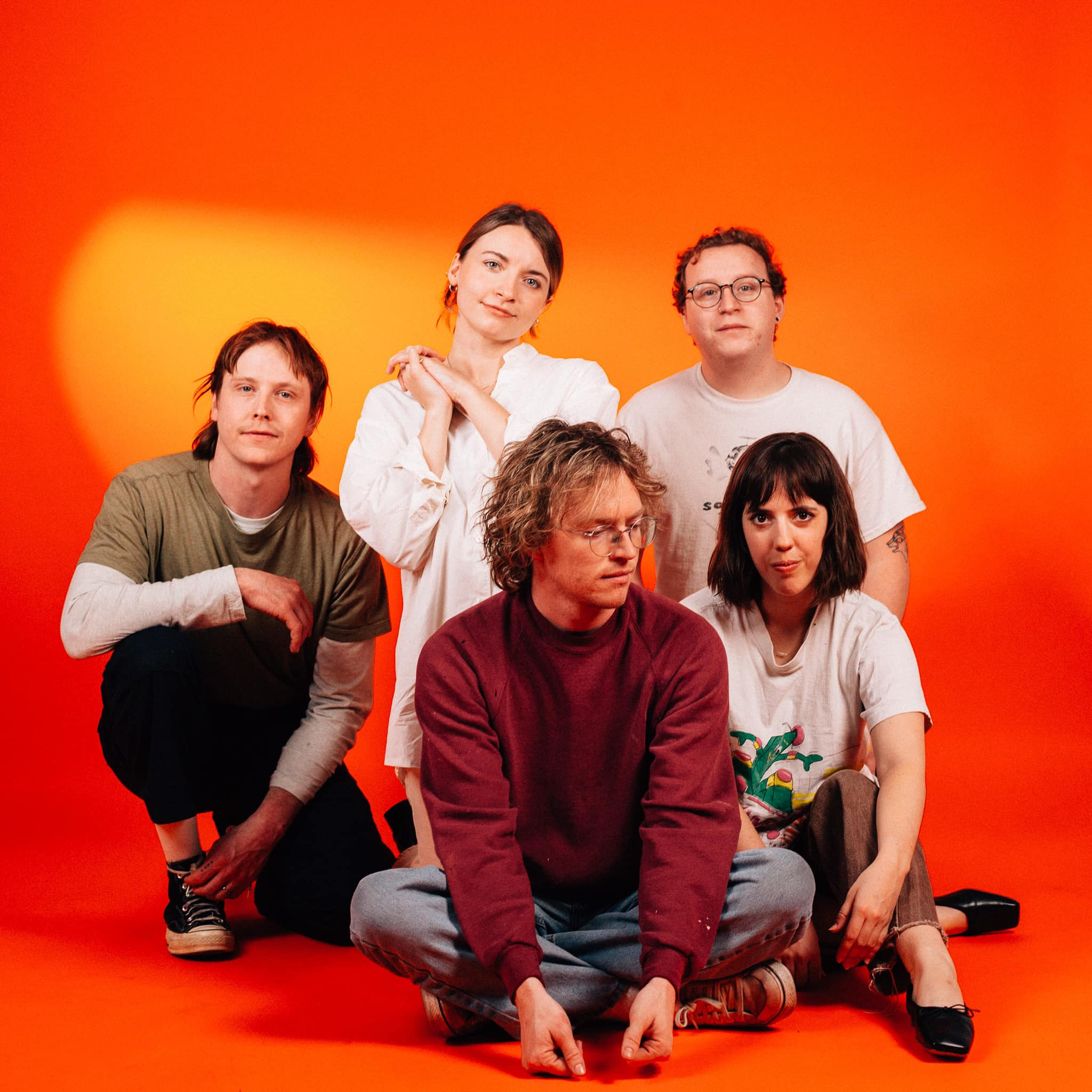
The Soft Boys were an indie rock band primarly led by Robyn Hitchcock primarily during the 1970s, whose initially old-fashioned music style of psychedelic/folk-rock became part of the neo-psychedelia scene with the release of “Underwater Moonlight”. The Soft Boys have turned out to be one of the most influential bands in shaping contemporary alternative music, though few are completely familiar with the quirky group’s legacy. Formed in Cambridge, England in 1976 on the heels of the punk revolution, the Soft Boys eschewed the three-chord nihilism of punk and opted for a crude version of psychedelic/folk-rock that was well on its way out of fashion, but oddly, just on the cusp of a resurgence.

The band began life in 1976 as Dennis and the Experts comprising Robyn Hitchcock (guitar), Rob Lamb (guitar), Andy Metcalfe (bass), and Morris Windsor (drums). Alan Davies replaced Lamb after only four gigs late in 1976, and Kimberley Rew eventually replaced Davies. Matthew Seligman replaced Metcalfe in 1979.

On this day (May 26th 1978): neo-psych rockers The Soft Boys released their second single “(I Want to Be An) Anglepoise Lamp” on Radar Records (backed with “Fat Man’s Son”), both songs written by lead vocalist Robyn Hitchcock;  followed by the “Can of Bees” album in 1979.

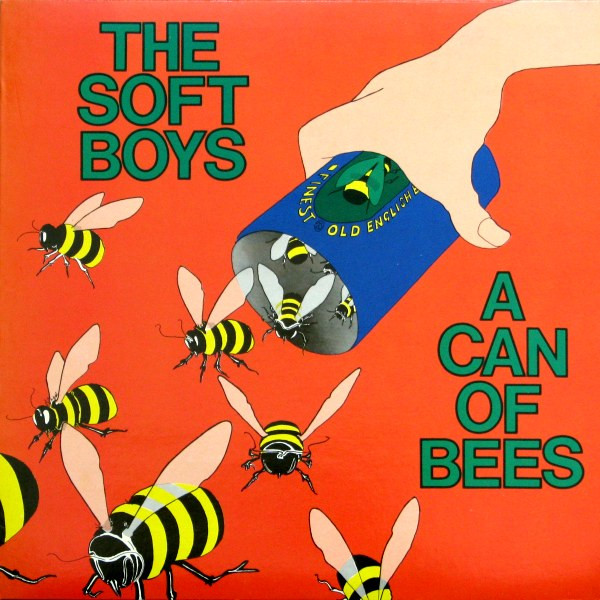
A Can of Bees

The Soft Boys, like so many other underground miscreants in the ’70s, spent their formative years generating enough critical capital to earn much sought-after adjectives like “influential” and “underrated.” The Robyn Hitchcock-led band pseudo-psych rock outfit’s shared love for all things Byrds, Beatles, Dylan, and Syd Barrett was both venerated and blown to smithereens on their 1979 debut long-player, “A Can of Bees”.

More angular and jarring Hitchcock, Kimberly Rew, Morris Windsor, and Andy Metcalfe sounded positively possessed, channeling both ’60s progressive rock and late-’70s punk into an unholy guitar-driven onslaught fueled by Hitchcock’s surreal lyrics: opening a record with a line like “feel like asking a tree for an autograph” is one thing, but backing up those words with an atonal, apocalyptic blues riff is another. It’s an often brutish affair that works more often than it should, with highlights arriving by way of the pounding and addictive “Leppo and the Jooves,” the incendiary “Do the Chisel,” and the impossibly dumb but nearly perfect pop gem “Sandra’s Having Her Brain Out.”

“A Can of Bees” has seen its fair share of iterations over the years, often boasting multiple bonus cuts and conflicting track listings (the impossibly prolific Hitchcock would eventually become notorious for this with his solo releases), but they’re all more or less complete, and the material continues to inspire, even if it’s only a handful of ears at a time.

Underwater Moonlight

After recording the material that would later comprise the bulk of “Invisible Hits”, the Soft Boys recorded their masterpiece, the shimmering neo-psychedelic, one of alternative rock’s greatest albums with their 1980 ‘Underwater Moonlight’…The new line-up started fresh and recorded the album that found them trading psychedelic jams for a more straight-ahead jangle pop-guitar rock sound. The LP has become extremely influential in the guitar rock canon; bands like the Replacements, R.E.M., and the L.A. Paisley Underground scene all claimed it as a prime influence. The album launched a thousand bands, but it turned out to be the Soft Boys’ swan song. Essentially, the band didn’t change their style for the record — they merely perfected it. The Soft Boys don’t hide their influences — whether its the ringing guitars of the Beatles and Byrds or the surreal humour of John Lennon and Syd Barrett  in their lyrics– but they assimilate them, resulting in a fresh, edgy take on ’60s guitar pop. 

Armageddon released “Underwater Moonlight” in June 1980, and it has been released many times since. It was “A Can of Bees”‘ attractive younger sister; the dissatisfaction that many felt with our first album was melted away by the new arrival. 

Robyn Hitchcock’s subject matter tends to be more explicitly weird and absurdist than his influences, as titles like “I Wanna Destroy You,” “Old Pervert,” and “Queen of Eyes” indicate — even “Kingdom of Love” equates romance to bugs crawling under your skin. But the lyrics aren’t the only thing that are edgy — the music is too. The Soft Boys play pop hooks as if they were punk rock. “I Wanna Destroy You” isn’t overtly threatening like their post-punk contemporaries, but with its layered guitar hooks and dissonant harmonies, it is equally menacing.

John Peel hadn’t previously been a fan but he played a lot off “Underwater Moonlight”

Furthermore, the group can twist its songs inside out and then revert them to their original form, as evidenced by “Insanely Jealous.” Although the neo-psychedelic flourishes are fascinating, the key to record’s success is how each song is constructed around rock-solid hooks and melodies that instantly work their way into the subconscious. In fact, that’s the most notable thing about “Underwater Moonlight” — it updates jangling, melodic guitar pop for the post-punk world, which made it a touchstone for much of the underground pop of the mid-’80s, particularly R.E.M.

The band broke up in 1981 after “Underwater Moonlight”. Rew formed the more mainstream pop group Katrina and the Waves, so many things were calling ‘time’ on the Soft Boys. For one, Kimberley had been amassing songs since his old band, the Waves, floundered in late 1977: he had joined the Soft Boys on the understanding that Hitchcock was the singer-songwriter, but his frustration was palpable, nonetheless, at having no outlet for them. while Hitchcock went on to a prolific career with a similar whimsical, surrealistic style, forming Robyn Hitchcock and the Egyptians in 1984 with fellow Soft Boys Morris Windsor and Andy Metcalfe, who went on to tour and record for ten years.

Kimberley rejoined the Waves, added Katrina, and scored an eternal number one with ‘Walking On Sunshine’. He has also done very well with songs supplied to The Bangles. Matthew joined the Thompson Twins and then Thomas Dolby, whom he had long championed, for Thomas’s pop era. He has also played sessions for many from Donovan to Morrissey. 

They were briefly joined by Rew and Seligman in a re-formed Soft Boys for a UK tour in 1994 to mark the release of a box set of their work, and then reformed again in 2001 without Metcalfe for the 20th anniversary of “Underwater Moonlight” and the release of a new album, “Nextdoorland”, in 2002. They disbanded once again in 2003.

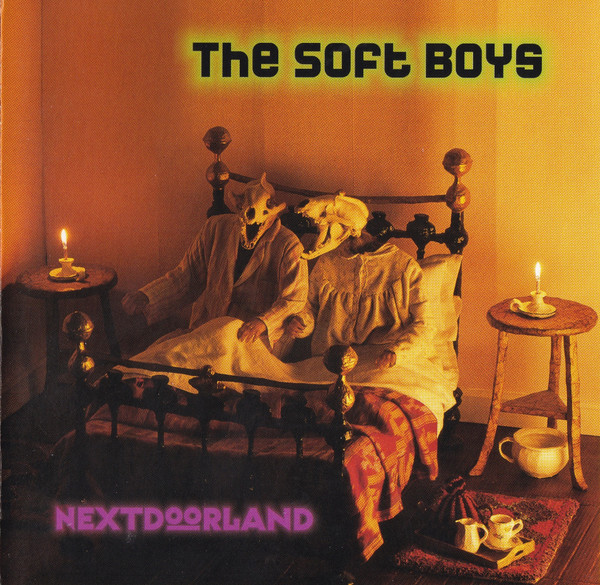
Nextdoorland

If pop music history teaches us anything, it’s that reunions of once-great bands are a dicey prospect at best, and for every act like The Buzzcocks who were able to come back at full strength, there are two or three that never should have bothered,

In 2001, The Soft Boys’ reunion tour (prompted by the augmented re-release of their classic “Underwater Moonlight”) proved to be one of the most pleasant surprises of the year, as Robyn Hitchcock, Kimberley Rew, Morris Windsor, and Matthew Seligman let loose a crackling display of sonic energy and revisited their older material with the enthusiasm of four newcomers tearing into their set for the first time.

All in all, the band performed an exemplary live show, but when The Soft Boys announced they were going into the studio to cut a new album, it was hard not to wonder, “OK, they can still do it onstage, but will it work again on tape?” Judged against The Soft Boys’ small but estimable back catalogue,

Their first album in 22 years, “Nextdoorland“, seems just the slightest bit disappointing — while the songs are fine, there are no immediate masterpieces and the production (by Pat Collier) seems a bit too spare and efficient, not always giving the performances the body and heft they need. But give “Nextdoorland” a few listens, let it sink in, and one reaches the inevitable conclusion this is still a great band, capable of making superb music.

As a guitarist, Robyn Hitchcock has never had a better foil than Kimberley Rew, and their interplay on these songs is simply superb; after several acoustic-based albums, it’s a pleasure to hear Hitchcock play electric guitar again, and his best moments with Rew recall the otherworldly six-string symbiosis of Tom Verlaine and Richard Lloyd. And if Windsor and Seligman rarely call attention to themselves as a rhythm section, that’s one of their greatest virtues; with subtle precision, they support these performances brilliantly, and these four players are a band in the truest and best sense of the word, working fluidly as a unit rather than as four individuals.

Is “Nextdoorland” an instant classic like “Underwater Moonlight” No. The Soft Boys are still a strong and viable band “Nextdoorland” is a more than worthy addition to their catalogue, and proves that two decades apart has not diluted their remarkable chemistry.

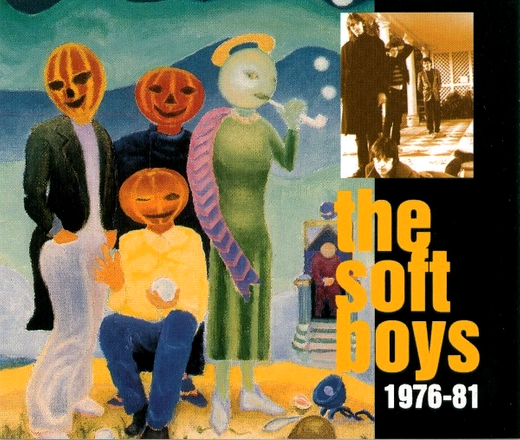
1976-1981 (Cd Only)

Although their five-year career reaped little in terms of commercial reward, the Soft Boys ultimately emerged among the most influential and best-loved of all the early “alternative” acts, as that genre thrust its way out of the twin wombs of punk and new wave. A convoluted back catalogue — as tricky and twisted in its own way as the very best of the band’s songs — has long been one of the Soft Boys‘ attractions for collectors, and “1976-1981″ must first be lauded for so effortlessly making sense of its labyrinthine convolutions.

The Two CDs, arranged in strict chronological order, not only resurrect a pair of early singles that defy the most energetic collector searches (1977’s “Give It to the Soft Boys” EP debut and the following year’s “[I Want to Be An] Anglepoise Lamp 45”), but also haul out a wealth of previously unreleased live and studio cuts, contextual buffers around the often vast steps the band was taking in between its regular releases.

Thus, three demos recorded in Robyn Hitchcock’s living room in early 1977 pave the way not only for the EP, but also for two further songs from the same session; both sides of the “Anglepoise Lamp” single are accompanied by two further songs intended for an accompanying, but ultimately abandoned, album; and a clutch of eight live tracks, also from 1978, depict the band marching through both its own idiosyncratic compositions (“We Like Bananas,” “Return of the Sacred Crab”) and some positively iconic covers — Lou Reed’s “Caroline Says” and the Monotones’ “Book of Love” among them. And that’s just the first disc — move on, and the “Can of Bees” and “Underwater Moonlight” albums, the discs for which the Soft Boys are today most widely acclaimed, are explored in lavish detail, again with material drawn from both sides of the cutting room floor.

There is, of course, considerable duplication between this and the sundry other Soft Boys archive projects out there “Invisible Hits” is especially well represented, but the anthology’s role is not to replace, but to highlight the absolute wealth of genius contained within those five years of striving.

Two more recordings were released posthumously: the “2 Halfs for the Price of One” EP in 1981, and some early sessions compiled on “Invisible Hits” in 1983. Their first EP was re-released in 1984 as “Wading Through a Ventilator”.

Albums:

  • A Can of Bees (1979)
  • Underwater Moonlight (1980)
  • Nextdoorland (2002)

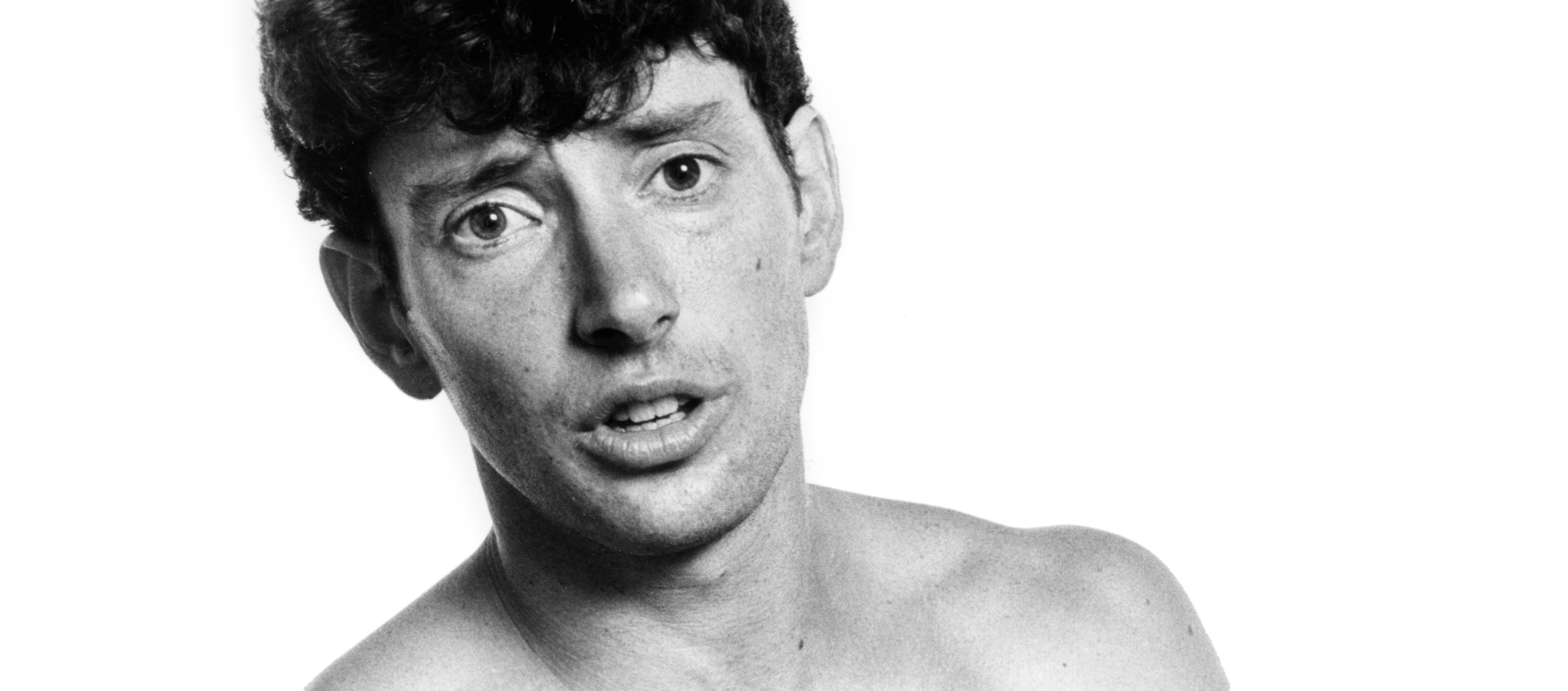
The Modern Lovers were formed in 1970 by teenage singer, songwriter, guitarist Jonathan Richman, augmented with Jerry Harrison (keyboards), Ernie Brooks (bass) and David Robinson (drums), with Richman’s friend and original band member John Felice joining them occasionally.

In 1975, Richman moved to California to record as a solo singer/songwriter with the independent Beserkley Records label. His first released recordings appeared on 1975’s “Beserkley Chartbusters” compilation, where he was backed by members of Earth Quake and the Rubinoos. The four songs on the compilation also appeared on singles released by Beserkley.

Richman’s work with the first incarnation of Modern Lovers is a major influence on punk rock. One critic called him the “Godfather of Punk”. On his second solo album, Brian Eno made mention of Richman’s band in his lyrics, and the Sex Pistols and Joan Jett were among the first artists of note to cover the song “Roadrunner” in the 1970s. A version of “Pablo Picasso” performed by Burning Sensations was included in the 1984 cult film, Repo Man. David Bowie covered “Pablo Picasso” on his album “Reality“. Velvet Underground founding member John Cale has a version of the song on his 1975 album, “Helen of Troy”, and continues to include the song in his live shows. Iggy Pop has performed “Pablo Picasso” live and wrote an extra verse for it. Echo and the Bunnymen covered “She Cracked” in concert in 1984 and 1985 and Siouxsie and the Banshees have a version of the song on “Downside Up”.

Jonathan Richman & The Modern Lovers

In January 1976, Richman put together a new version of the Modern Lovers, which included original Modern Lovers drummer David Robinson, former Rubinoos bassist Greg ‘Curly’ Keranen and Leroy Radcliffe on guitar. The new group, now billed as Jonathan Richman and The Modern Lovers, found Richman turning away from the harder, Velvet Underground-influenced electric rock of the original Modern Lovers, toward a gentler sound mixing pop with 1950s rock and roll, and including a bigger emphasis on harmony vocals. During this period Richman recorded a mix of original songs and material by other writers,

Originally released in 1976, this debut album from Jonathan Richman & The Modern Lovers was released shortly after Richman relocated to California and created a new version of The Modern Lovers, who helped 2 singles from this record bring more visibility to Richman’s inimitable rock formula. In 1972,

“Rockin’ Shopping Center” opens the listen with a bouncy bass line, as Richman’s distinct talk/singing enters the jangly rocker, and “Back In U.S.A.” puts a very fun twist on the Chuck Berry original with crisp drumming, meticulous guitar and plenty of rock’n’roll energy.

Packed in the middle is the cautious and eastern spirit of “Lonely Financial Zone”, that’s heavy on mood, while “Hey There Little Insect” is very much drum focused and recruits backing vocals for the nearly tribal like climate.

Approaching the end, “Springtime” is an acoustic guitar, folk friendly love song, and “Amazing Grace” exits with a very unique version of the classic that moves quicker and even with an upbeat demeanor as Richman and company really do make the tune their own.

Richman is joined by David Robinson (drums, vocals), Leroy Radcliffe (guitar, vocals) and Greg ‘Curly’ Keranen (bass, vocals), and together they dive right into Richman’s vision of more acoustic and harmony fuelled song craft that would quickly gain them a cult following all across the globe.

One of four releases from Richman that Omnivore is reproducing in CD and LP for the first time since their original releases, this one has clearly aged well, much like everything they’ve done.

Screen shot 2019 04 25 at 15.29.33

The Modern Lovers

The band recorded a series of demos with producer John Cale (formerly of the Velvet Underground). Among these songs were the seminal “Roadrunner” and “Pablo Picasso”, which were eventually released on the group’s post-breakup album, “The Modern Lovers” in August 1976.

Originally released on the Beserkley label in 1976 (though most of the material was recorded in 1973), The Modern Lovers is a universally accepted proto-punk classic. It’s an album that bridges the gap between The Velvet Underground, a band whom leader Jonathan Richman was obsessed with, and the first wave of punk rock. While also displaying the goofy wit that would later be Richman’s signature, The Modern Lovers is equal parts geeky, emotional, angst driven, life affirming, and, from start to finish, absolutely brilliant.

Compiled of demos the band recorded with John Cale in 1973, The Modern Lovers is among one of the great proto-punk albums of all time, capturing an angst-ridden adolescent geekiness which is married to a stripped-down, minimalistic rock & roll derived from the art punk of the Velvet Underground. While the sound is in debt to the primal three-chord pounding of early Velvet Underground, the attitude of Jonathan Richman and the Modern Lovers is a million miles away from Lou Reed’s jaded urban nightmares.

As he says in the classic two-chord anthem “Roadrunner,” Richman is in love with the modern world and rock & roll. Bringing in all of Richman’s signature songwriting flourishes, including references to his home and a fondness for youth distilled into one perfect chord progression, ‘Roadrunner’ helped invent and perfect power pop. Excitement has rarely been bottled into such an effective package.

He’s still a teenager at heart, which means he’s not only in love with girls he can’t have, but also radios, suburbs, and fast food, and it also means he’ll crack jokes like “Pablo Picasso was never called an asshole…not like you.” “Pablo Picasso” is the classic sneer, but “She Cracked” and “I’m Straight” are just as nasty, made all the more edgy by the Modern Lovers‘ amateurish, minimalist drive.

But beneath his adolescent posturing, Richman is also nakedly emotional, pleading for a lover on “Someone I Care About” and “Girl Friend,” or romanticizing the future on “Dignified and Old.” That combination of musical simplicity, driving rock & roll, and gawky emotional confessions makes The Modern Lovers one of the most startling proto-punk records — it strips rock & roll to its core and establishes the rock tradition of the geeky, awkward social outcast venting his frustrations. More importantly, the music is just as raw and exciting now as when it was recorded in 1973, or when it was belatedly released in 1976.

From the moment you heard The Modern Lovers, it was clear that Jonathan Richman was an individual. While completely enamoured with old-school rock and roll, Richman was happy to pair those sounds with a fresh look at the themes and messages that pervaded those songs, as he does on ‘Someone I Care About’.

Richman was also unafraid to go against standard lascivious rock star views of relationships and love. Richman puts lust in the back seat on ‘Some I Care About’ wanting something more than just a girl to have fun with. He’s looking for a connection, which is wonderfully wholesome for a rock and roll tune.

I’m Straight’, produced by Kim Fowley in October 1973. This ended up being The Modern Lovers final recording session. The band were plagued with creative differences during the course of recording what would have been their debut LP. They had just signed with Warner Brothers but were dropped almost immediately when they were unable to complete an album.

Inevitably, they band split. Drummer David Robinson went on to find huge success with The Cars (band). Keyboardist Jerry Harrison too was greatly successful, joining Talking Heads (official). Ernie Brookes went on to work for Rounder Records. And Jonathan Richman….well ‘There’s Something About Mary’, of course.

Screen shot 2019 06 10 at 23.48.43

Rock ‘n Roll with the Modern Lovers

Rock ‘n Roll with the Modern Lovers” is the second album released as Jonathan Richman and The Modern Lovers. The band, which is build around singer-songwriter and guitarist Jonathan Richman, almost totally focuses on the sound from the ‘50s. The lo-fi record breathes folky roots music and rock ‘n roll as it would sound ages ago. “Egyptian Reggae” (earning them a UK Top 5 hit) and “Roller Coaster by the Sea” are all superb songs, uncomplicated and wonderful. This is one of the most remarkable projects recorded by Jonathan.

“The Sweeping Wind (Kwa Ti Feng)” opens the listen with intricate eastern influences on guitar in the instrumental climate, and “Ice Cream Man” follows with Richman’s signature raw, distant vocals amid minimal instrumentation.

Elsewhere, the playful strumming of “Afternoon” welcomes well timed, conversational backing vocals, while “South American Folk Song” is full of warm guitar playing that’s quite breezy and packed with culture.

Further along, “The Wheels On The Bus” puts a charming spin on the traditional with call and response vocals, and “Angels Watching Over Me” continues the formula with finger snapping, group vocals and plenty of Richman’s minimal sensibilities.

Richman was shifting towards an acoustic/harmony based formula at this point in his career, and with his new drummer D. Sharpe on board, he hit #5 on the UK charts with “Egyptian Reggae”. An aptly titled affair, there’s certainly plenty of rock’n’roll spirit to be found here, surrounded by Richman’s garage-rock and proto-punk leanings.

The Modern Lovers were formed in 1970 by teenage singer, songwriter, guitarist Jonathan Richman, augmented with Jerry Harrison (keyboards), Ernie Brooks (bass) and David Robinson (drums), with Richman’s friend and original band member John Felice joining them occasionally.

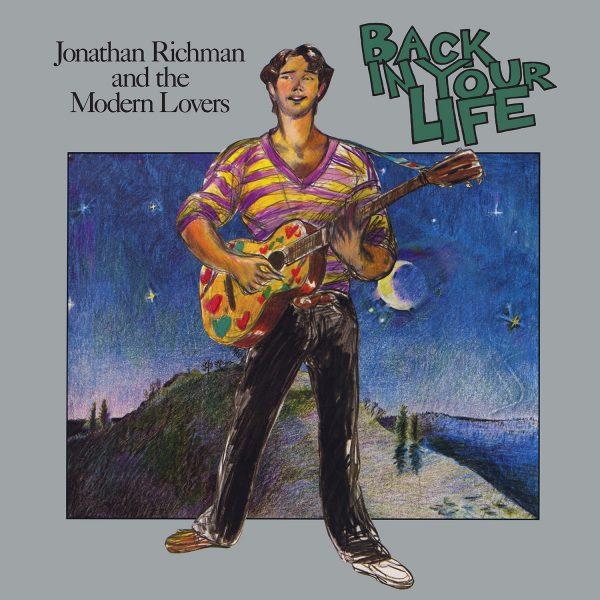
Back in Your Life

Back in Your Life” was released in 1979 under the Jonathan Richman and The Modern Lovers moniker. Half of the album features Jonathan playing solo and the other half The Modern Lovers are supporting him as a backup band. It’s a very pleasant album where Jonathan brings his melancholy mood to the quiet and reflective songs. He’s a very talented and creative musician and that’s exactly what he’s bringing to the rock ‘n roll rhythms and pop. The music will remind you of the late ‘50s, early ‘60s, but still it has stood the test of time very well.

The third studio release from Jonathan Richman & The Modern Lovers features the U.K./European single tracks, “Abdul And Cleopatra,” “Buzz Buzz Buzz” and “Lydia.”

Jonathan Richman’s intended Beserkley catalogue is available again. His true releases, “Jonathan Richman & The Modern Lovers” and “Rock ’n’ Roll With The Modern Lovers” are back among these other reissues, as originally intended, on CD and LP with exclusive coloured variants.

“Back In Your Life”. While credited to Jonathan and the Modern Lovers (which now included Andy Paley—Brian Wilson, Chris Isaak, NRBQ, John Wesley Harding), the release was Jonathan, accompanied on about half of the material by the Lovers. It followed the ‘Live’ record”

Another musician on the record, and co-producer, was Kenny Laguna, whose work with Buddah Records (The Ohio Express, 1910 Fruitgum Company, The Lemon Pipers,) plus Tommy James & The Shondells, Crazy Elephant, Bow Wow Wow, and Joan Jett. Laguna was a perfect person to put Jonathan’s sound where it needed to go.

Featuring the Richman staples, “Abdul And Cleopatra,” “Affection,” and the title track, “Back In Your Life” signals the ending of his Beserkley tenure, but with much more to come…Richman went on sabbatical for a few years, staying in Appleton, Maine, and playing at local bars in Belfast, Maine.

So… you don’t come to Richman for his ear-frazzling sonic experiments. But his rudimentary arrangements are part of what makes him unique. There is almost nothing to his songs but the words and melodies, and there is nothing to his words except his own thoughts and emotions.

There is no filter, no irony, and the nearest he ever gets to adopting a persona is when he is pretending to be a little dinosaur. That’s why so many of his album titles have his own first name in them: I, Jonathan; Surrender to Jonathan; Jonathan Sings. Yes, his songs are crafted, but they are so direct and intimate that he could be confiding in a close friend – and, while you’re listening, you feel as if you’re that friend yourself.

Omnivore label did us a favour and reissued 4 Jonathan Richman & The Modern Lovers albums this year, and here we’re treated to his sophomore record, originally released in 1977.

kristin hersh

Kristin Hersh is the legendary front woman of Throwing Muses and 50FOOTWAVE. However, we think it is her accidental solo career where she really shines. Focusing on her subtle song writing and wryly melancholic lyrics, the work is universal and pretty wonderful. Her latest album, Wyatt at the Coyote Palace, was recently released

The co-founder of Throwing Muses and frontwoman of 50FOOTWAVE, with eight solo albums already to her name too, seems endlessly, tirelessly inventive, whether she s in rock bands or playing every instrument in the studio. So it s no small statement that this ninth release, Wyatt at the Coyote Palace, has the feeling of a masterpiece.

Kristin Hersh is one of music’s best lyricists. She writes incredibly vulnerable, personal songs, but with a pen borne by elusiveness and enigma. Her lyrics are full of allusion, metaphor, and highly specific references to her own life that may escape the listener (her records now come with books of essays and anecdotes, which helps), but above all, they are beautiful poetry. Hersh’s voice has always been gruff and raspy, and is perhaps more so now, and her guitar playing is intricate and fascinating.

She’s been at it since the ’80s, and her songwriting has only gotten sharper and more intriguing as time has gone on.

Songwriter, guitarist and singer, Kristin Hersh has released over 20 records solo, with Throwing Muses and 50FOOTWAVE. She’s also the author of an acclaimed memoir — based on her teenage diary — about a particularly eventful year, titled “Rat Girl” in the USA (published by Penguin), and titled “Paradoxical Undressing” in the UK

The Murlocs fifth studio album, Bittersweet Demons is out now! On the band’s most personal and boldly confident work yet, The Murlocs share a collection of songs reflecting on the people who leave a profound imprint on our lives, the saviours and hell-raisers and assorted other mystifying characters.

On their fifth album ‘Bittersweet Demons’, The Murlocs share a collection of songs reflecting on the people who leave a profound imprint on our lives, the saviors and hellraisers and assorted other mystifying characters. From the 11 infectious tracks emerges a beautifully complex body of work, one that shines a light on the fragilities of human nature while inducing the glorious head rush that accompanies any Murlocs outing.

released June 25th, 2021

May be an image of 6 people, people standing and outdoors

Nation Of Language mine the sounds of ’80s synth-pop and new wave to work through decidedly current feelings of listlessness and discontent, frontman Ian Devaney’s deep, rich baritone splitting the difference between your favorite post-punkers and the National’s chief brooder Matt Berninger. Every interlocking keyboard squiggle, every drum machine rhythm, every bass groove — they all come together perfectly in a mercilessly efficient hook delivery system that sounds like an old classic and feels like a new one.A retro modern classic. Perfect late-night dancing music.

originally released October 4th, 2016
Written by Nation of Language

JOYCE MANOR – ” Cody “

Posted: December 22, 2022 in CLASSIC ALBUMS, MUSIC
Tags:

May be an image of 4 people, people standing and indoor

Every Joyce Manor studio album starts with all the instruments playing at once. (Barring the first two beats on “Never Hungover Again,” but that’s being nitpicky). The California pop-punkers’ fourth, “Cody”, is no different, wasting no time pulling listeners into the powerhouse opener, “Fake I.D.”, a song that has more hooks than every bait shop and coat-check room in the United States combined.

“Cody” has enough of the mosh-pit ready urgency of previous Joyce Manor. They cram a lot of emotion into just 24 minutes. Joyce Manor has that ability to make every album sound like a live set. They perfected the set list, and they do their best to make the most of the time they have. But I don’t want to make it sound like they sound careless or sloppy. “Cody” is arguably the band’s tightest release to date. Case in point is the driving and shimmering “Make Me Dumb.” And despite the short run time, it’s clear they really took their time making this record.

I wouldn’t call Epitaph a major label, but the band is certainly showing glimpses of really hitting the big time more than before. The production quality is up, and there’s even a guest spot from Nate Ruess of The Format and fun. fame. But the fans who’ve been with Joyce Manor since their beginning will still have everything they’re looking for, like shout-along choruses and guitarist/vocalist Barry Johnson’s heart-on-his-blacked-out-sleeve lyrics.

“Last You Heard Of Me” by Joyce Manor from the album ‘Cody,’ available now

This Record Store Day Black Friday, Rhino Records is releasing ten exclusive releases spanning their eclectic roster. Limited edition releases will include selections from Captain Beefheart and the Magic Band, The Cure, The Doors, Duran Duran, Eric Burdon & WAR, Fleetwood Mac, Grateful Dead, Madonna, and Todd Rundgren. These will be available on November 25th.

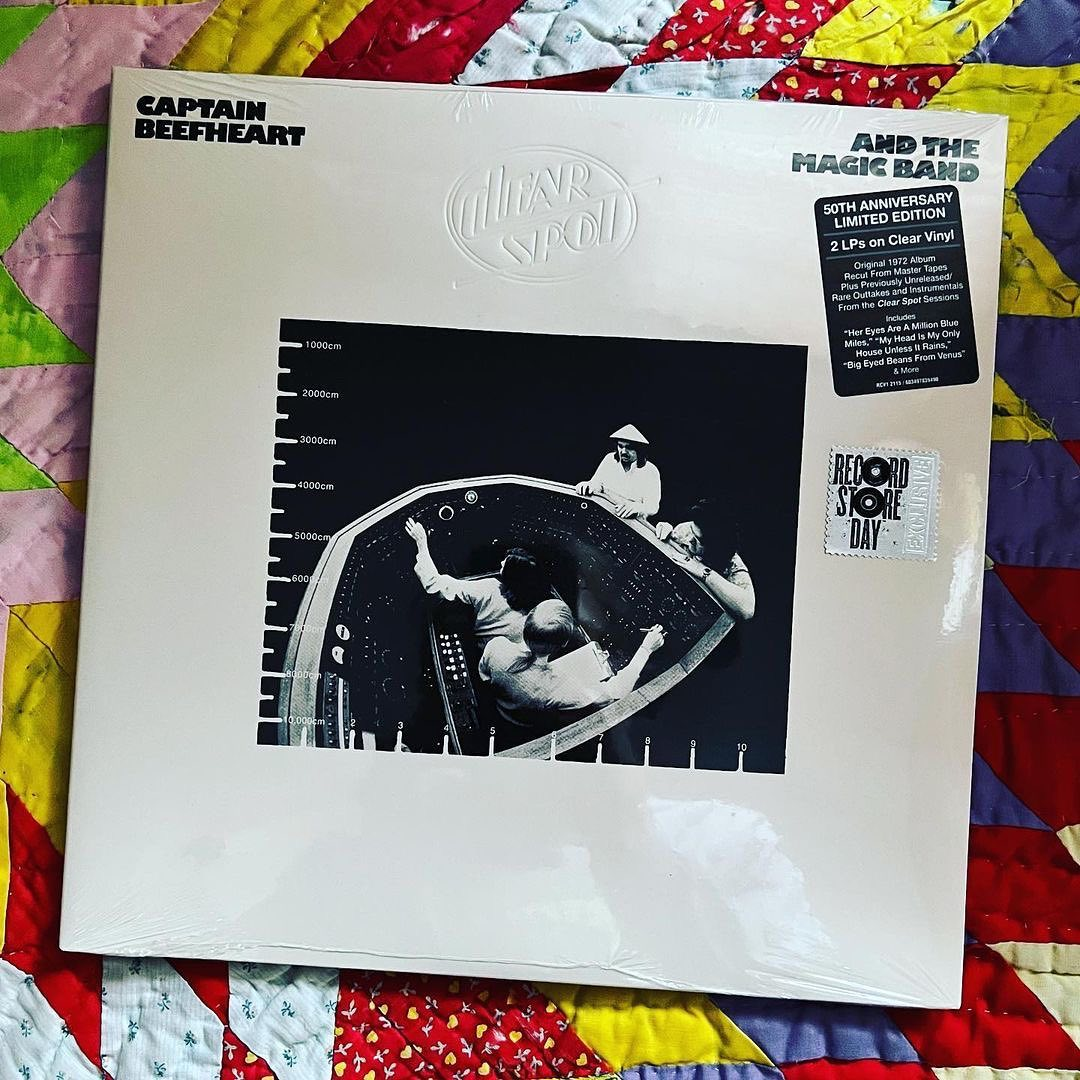
Where does one go after the undefinable “Trout Mask Replica“, the Captain’s avant-mirthful classic? Into the arms of Doobie Bros.’ producer Ted Templeman, one drummer, and a smoother (for Beefheart, that is), bluesy bar fare. Growly but not eerily great, this “Clear Spot” offers a less muddy mix than the original and an additional LP of rare studio outtakes, alternate versions, and previously unreleased instrumental rough mixes. 

This Captain Beefheart set features the original album recut from the original master tapes at Bernie Grundman Mastering, plus an additional LP of rare studio outtakes, alternate versions, and previously unreleased instrumental rough mixes from the “Clear Spot” sessions.

50th anniversary deluxe edition of the classic 1972 album from Captain Beefheart and The Magic Band. This limited edition 2LP crystal clear vinyl set features the original album recut from the original master tapes at Bernie Grundman Mastering plus an additional LP of rare studio outtakes, alternate versions and previously unreleased instrumental rough mixes from the Clear Spot sessions. Featuring “Big Eyed Beans from Venus”, “Her Eyes Are a Blue Million Miles”, “My Head Is My Only House Unless It Rains” and more.

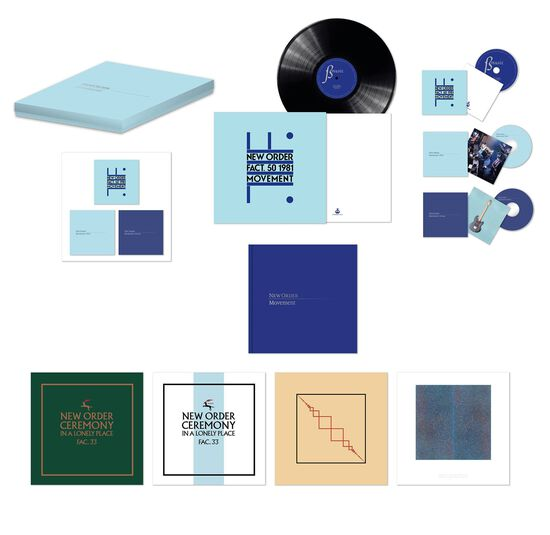
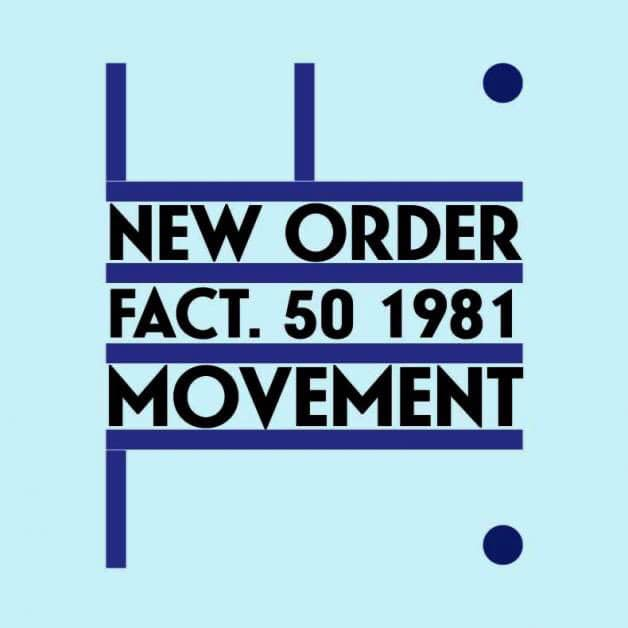
New Order’s debut album is being celebrated with a deluxe box set due in April.  Entitled “Movement (Definitive Edition)”, the box set will include the original LP with its iconic, Peter Saville-designed sleeve, as well as a CD in a vinyl replica sleeve.  Also included are a bonus CD of previously unreleased demos, recording sessions, and alternate mixes, as well as a DVD of live concerts and TV appearances, and a hardbound book-all housed in a loft-off lid box.

New Order originally released their debut album ‘Movement’ on November 13th, 1981.

Where does a band go after Joy Division, with Martin Hannet producing guitarist Bernard Sumner, percussionist Stephen Morris and bassist Peter Hook they took a forward yet somewhat sideways step. With the addition of Gillian Gilbert on synths and programming they almost created and defined a new genre. Unlike the Joy Division recordings they showed a willingness to experiment a little more in the studio, possibly much can be attributed to Hannett. “Movement” is as with JD gloomy and atmospheric but remains shimmering and crisp. Stephen Morris’s blend of drums and drum machines drives “Movement” and the change of vocals throughout makes for an interesting interplay.

Peter Hook said that with “Movement” they were seeking their sound, it’s hard to deny that transition and influence of the trio from Joy Division’s resolute, stark post-punk to the powerhouse outfit of dancefloor classics like “Blue Monday,” “Temptation,” and “Bizarre Love Triangle” can’t be understated.

“Chosen Time” with its infectious bass and guitar riff must rate as a NO obscure classic.

There was a later release with “Everything’s Gone Green”, “Mesh”, “Procession”, “In A Lonely Place” among the rest, they created a masterpiece that would be the career highlight of any other post-punk band.

“Movement” for what is, is only succeeded by New Order’s work in the future.

History and music by New Order and information on the New Wave and Post Punk period can be found at what may not be the biggest but is arguably the best . Where it’s about the music and the history and nothing else matters.

Lift off lid box including the vinyl LP in its original sleeve, original album CD in replica mini album sleeve, a bonus CD of previously unreleased tracks, DVD of live shows and TV appearances plus a 48 page hardbound book.

The spine of the LP sleeve features ‘FACD 50’ as the catalogue number rather than ‘FACT. 50’ (a misprint). Despite CD1’s disc face showing ‘Remaster 2019’ CD-Text reveals ‘2015 Remastered Version’ in brackets next to each track. The white inner CD1 sleeve features ‘FCL PRODUCT Nr.50’ at the bottom on both sides.

CD2 ‘Extras’ recording information:
CD2-1 to CD2-5 recorded at Western Works Studios, Sheffield, September, 1980.
CD2-6 to CD2-14 recorded at Cargo Studios, Rochdale, January, 1981.
CD2-15 recorded at EARS, New Jersey, September 1980 and mixed at Strawberry Studios, Stockport, November 1980.
CD2-16 recorded at Advision Studios, London, January 1982.

DVD phonographic, copyright and other information:
NTSC, Region 0, Aspect ratio 4:3
Audio Stereo & Mono, Dolby Digital DVD-9
Duration 2 hours 57 minutes approx.