Despite having experienced her fair share of relationship and health problems over the last few years, Patty Griffin emerges from a dark period in her life with an album which shows no diminution in the quality of her music – not only this, it is also a testament to her resilience and strength of character. She is joined by musicians who have also contributed to some recent albums – multi-instrumentalist Craig Ross, guitarist David Pulkingham and Conrad Choucroun on drums/percussion; additionally, Robert Plant provides subdued backing vocals on two songs.
Whilst the song-writing on ‘Patty Griffin’ is highly personal, many songs reach out to raise the listener’s awareness of what is taking place in our society including, with some songs, issues which are especially pertinent to the status of women; for example: the stress and anxiety experienced by single mothers (‘Mamas Worried’), vulnerability, exploitation and inequality (‘Coins’), surviving sexual violence (‘What I Remember’) and the forces of good rising up to defeat the forces of evil – a metaphor for our times? (‘Bluebeard’). By contrast, some other songs are contemplative and introspective (‘River’, ‘Where I Come From’, ‘What Now’, ‘ Luminous Places’). Patty’s knack for writing character driven song-stories had almost come to define her song-writing style – but, as with with ‘Servant of Love’, there are only a few examples on ‘Patty Griffin’; instead, the song-writing focuses more upon issues and emotions – and hence, her lyrics are obliquely enigmatic and loaded with symbolism.
The arrangements are acoustic/semi-acoustic lending the album an overall sound and feel similar to Patty’s acoustic masterpiece ‘Living With Ghosts’; however, her vocals are less strident and the mood is somewhat more meditative.
The instrumental accompaniment is fairly sparse and is dominated by various acoustic guitars (rhythm, steel string, baritone, lap steel and bass) – David Pulkingham plays on all but three tracks (make sure you savour the rather tasty classical-flamenco accents of his playing on a few of these). Other instruments played on selected tracks include: piano, cello (both worth a close listen), trombone, marimba, organ, drums/percussion and ‘drones’. Most of the songs are slow tempo – only ‘Where I Come From’ and ‘The Wheel’ are more up tempo (and the latter is the only song that gets close to rocking).
‘Patty Griffin’ is a veritable tour de force from Patty and her musicians.
Patty Griffin’s self-titled album released via PGM / Thirty Tigers. Release Date: March 8th, 2019
Field Mouse are a quintet of singing guitarist Rachel Brown, guitarist Andrew Futral, bass player Saysha Heinemann, drummer Tim McCoy and keys, backing vocalist and general instrumentalist Zoë Browne. They’re joined on “Episodic”, their latest album, by guest appearances from Sadie Dupuis (Speedy Ortiz), Allison Crutchfield (Swearin’, Waxahatchee) and Joseph D’Agostino (Cymbals Eat Guitars).
Field Mouse deal is the sort of guitar-pop that has us reaching for words like glistening, shimmering and jangling. They’re a cool breeze on a hot summer’s evening, the first breath of air when you re-emerge from the ocean, what we imagine driving down a fast road in a convertible feels like, only we can’t drive and we’ve never been in a convertible. It is articulate, melodic alt-rock, with plenty of poppy hooks and in Rachel Brown, a true superstar front woman with a stunning, effortless vocal.
Field Mouse are from Pennsylvania’s largest city, Philadelphia. With a population of 1.5million, Philadelphia is the fifth most populous city in the United States. Famously the city in which the Declaration Of Independence and the American constitution were signed, Philadelphia was briefly the capital of the US whilst Washington DC was under construction. Philadelphia is a famously medical city, being the site of the first specialist children’s hospital and first specialist cancer hospital in the country, and it is estimated that one in six American doctors are trained in the city. Like many large American cities, the diversity of Philadelphia has given it an eclectic and varied musical heritage, a major centre in the growth of hip hop, classical music and rock’n’roll; famous acts from the city are as versatile as Chubby Checker, John Coltrane and Kurt Vile. Field Mouse were originally formed in 2010 by Rachel and Andrew, and they self-released their debut album, You Are Here that year. They then signed to Topshelf Records, who in 2014 released their second album, Hold Still Life. On their new album, Episodic, the band have for the first time written and recorded as a five piece, which came out last week again via Topshelf Records.
It’s almost a bit clichéd to say at this time of year, but they really are a spectacularly good summer band. Bright and breezy, they seem to fall effortlessly into perfect sun-drenched pop-punk and wistful indie-pop. Whether it’s the Jimmy Eat World meets Rilo Kiley alt-rock of The Mirror, the soaring Alvvays like Beacon or the vivid 1980’s pop of Out Of Content, they’re never anything less the perfectly produced and sublimely melodic.
Lyrically, the band have suggested that the songs explore both deteriorating relationships and sudden family illness, but they’re delivered not with any grand emotive gesture, they are more subtle and nuanced. Some tracks have a touched of the bruised romantic about them; Rachel coming across as a wide old head who’s seen all the signs but still can’t quite bring herself to give up on the fading embers of a relationship. The album’s quiet pain is bookended by its contrastingly tough and broken opening and closing lines. Opening track The Mirror begins by snarling, “what a way to say fuck off, through your teeth”, but by the time Out Of Context draws the album to a close, Rachel simply ends it by repeating a heartbreaking, heartbroken refrain, “it hurts, it hurts, it hurts.” It’s a record that feels deeply personal, but also winningly guarded, this is no plea for help, it’s just real life, in all its bruising reality.
There are highlights throughout the record, but the exquisite The Order Of Things leaps out, it’s a perfect single, memorable and affecting. Rachel’s vocal is stunning, it’s just a beautifully controlled performance, she comes across as a very natural singer, and her control and tone are perfectly suited to their alt-pop sound. Lyrically it seems to be a call to arms, a plea for people to not give up on their dreams, “make the sound you hear in your head, even if it puts you in the ground.” Advice we whole heartedly agree with, on an album we can’t help but be thoroughly impressed by.
Occasionally you want them to be less Field Mouse and more, if not as far as roaring lion, then at least angry ferret. You just want a bit more bite and a bit more bark to cut through the beautiful musical landscapes, which by the second half of the album have lost a bit of their charm. On another note militant Los Campesinos! fans (if such a thing exists) might be a bit miffed at how much of their track You! Me! Dancing! has been lifted into Field Mouse’s, A Widow With A Terrible Secret; a complete coincidence we’re sure.
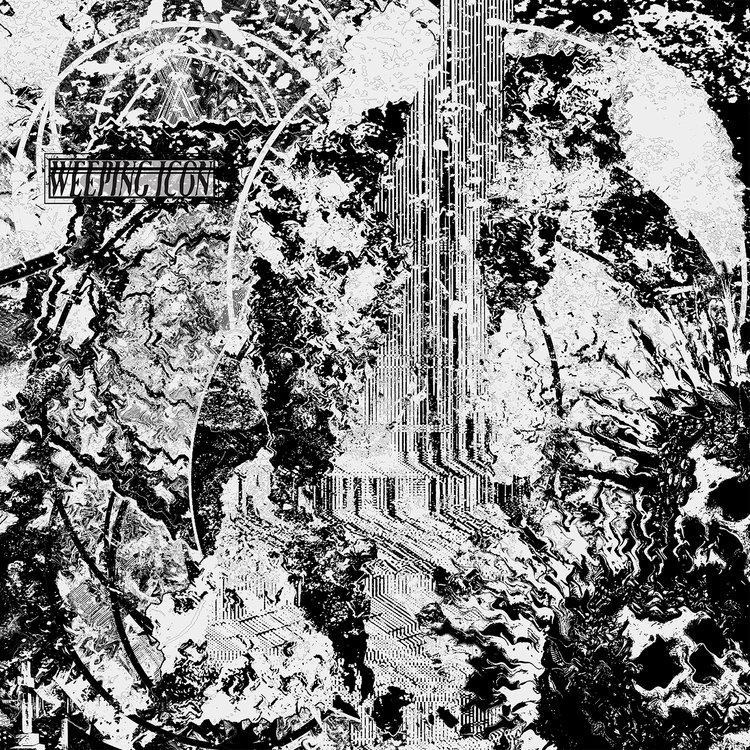
Listening to Weeping Icon’s debut album is too enter a dim catacomb of psychical catharsis. Urgent yet calculated riffs rip through a thunderous pummel of percussion, with a blend of punk and psychedelic drumming which carries the songs with an atmosphere of organized chaos. Lyrically they are both serious and sarcastic, trading off vocalists to confront issues central to a generation, dosing listeners with the controlled sense of horror and humour like flavors in a dish.The band’s debut record “Weeping Icon” is a collection of 7 songs that archive the metamorphosis into heavier and more provocative territories.
In keeping with their live performance’s, a sequence of dystopian sound interludes complete the album, serving as guided meditations between the candid subversive fury of the main tracks. Recorded and mixed by Uniform’s Ben Greenberg and mastered by Jonathan Schenke in New York City.
Weeping Icon’s self-titled debut album, out now on Fire Talk and Kanine Records, is a chilling adrenaline rush. It’s the kind of record that will make you run faster out of fear. Their gothic psych-punk is a noisy, dark tunnel, and the only way you can get out is by riding their wave of pummeling rock ‘n’ roll.
It’s an undeniably underground record, and this trio’s maniacal cacophonies will appeal to those on the fringes, but all the better given that New York City has more than enough outsiders.
Weeping Icon’s debut self titled album on Fire Talk Records.
Brooklyn duo Water From Your Eyes will surprise and delight you in equal measure. Rachel Brown and Nate Amos make up this experimental pop duo, and their strange textures and song structures make pinning them down almost impossible. There’s a harshness and a lightness to almost everything they do. Their latest album, 2019’s “Somebody Else’s Song”, available via Exploding in Sound Records, is an amalgamation of acoustic pop, bombastic ambient freakouts, a capella interludes and robotic dance-pop.
“Adeleine” by Water From Your Eyes from their upcoming release, “Somebody Else’s Song” released last October 25th on Exploding in Sound Records.
For Ian Bernacett and Rose Vastola, the masterminds behind UV-TV, 2018 was spent writing and recording the 9-track LP while simultaneously uprooting from Gainesville and migrating north to New York City, where the album was finally mixed and mastered.
HAPPY unabashedly explores the tropes of letting go of the past with a amicable catharsis that proves they can evolve their sound without losing their edge. Despite the name, the overall tone of the record comes across as a moodier interpretation of their almost jovial punk attitude—with the title track exemplifying that HAPPY is a much more personal and thoughtful album from the band. Right out of the gate, the production is cleaner and more buttoned up, perhaps signifying that this record is more serious in nature.
While Ryan Hopewell’s charged drumming kicks off the first track, “Hide”, giving us the UV-TV energy we’re familiar with from previous records, stylistic nuances quickly prove that the band has been drawing on some deeper influences, including The Pastels, Echo and the Bunnymen, and Slowdive among others.
As the arc of the album brings us to a more vulnerable place like on the track, World, it becomes obvious there’s a new kind of sincerity in their choices compared to the last two releases. By the final track, Falling Down, the entirety of the album has conceptualized the personal and musical growth of UVTV since we last heard them in 2017.
Gainesville-formed, Now Queens-based band UV-TV play classic indie-pop with a punk motor. Their 2019 LP, “Happy”, features Rose Vastola’s sweet and snarled lead vocals—offering tuneful pop pleasure in contrast with their pummeling rhythm section. There are hints of ’90s shoegaze, ’80s dream pop and modern punk, but none of these labels fully characterize their driving euphoria or moody punk-pop appeal.
The Band:
Rose Vastola – Bass, Vocals
Ian Bernacett – Guitar, Vocals
Ryan Hopewell – Drums
UV-TV “HIDE” Official Music Video from the LP “HAPPY” released on Deranged Records July 2019.
Peel Dream Magazine, the project of musician Joe Stevens, combines off-center dream pop with classic shoegaze soundscapes. Both their 2018 debut album Modern Meta Physic and forthcoming LP Agitprop Alterna (out on April 3rd via Slumberland Records) exude a hypnotic quiet-loud dynamic, often aided by blurry synths and serene vocals. Mixing the glaring with the pacifying, Peel Dream Magazine are an exercise in dazzling, retro-meets-modern drone. The band’s 2020 follow-up Agitprop Alterna is much broader, thanks in part to the live members that appear here like vocalists Jo-Anne Hyun and Isabella Mingione and drummer Brian Alvarez, and also due to its emphasis on a more dynamic sound. It’s a caressing record with satisfying moments that are felt long after they pass—take for instance the innocent, fluttering keys that close “Brief Inner Mission,” which transition into the wonderfully filtered vocals and blown-out guitars of “NYC Illuminati.” Agitprop Alterna is a loungey, droning, space-age odyssey that might help even the most anxious among us escape for a bit.
It’s not without good reason that people have been likening Peel Dream Magazine to My Bloody Valentine, Stereolab and Yo La Tengo. Helmed by Joe Stevens, one of New York’s finest contemporary players, the outfit makes music that’s tender but savage, powerful but delicate and packed with beautiful discordance hiding its sumptuous melodies. ‘Agitprop Alterna’ is their second full-length release and it certainly adds fuel to the argument that people need to take this lot very seriously. In addition to the aforementioned, here it nods to Velvet Underground (notice the tripped out, opiate-hazed interludes throughout the album) and krautrock-leaning art pop. The record drones, drives, grooves and perplexes on its course, but most of all it unarguably impresses. Or at least that’s what we’ve got to say on the matter
Agitprop Alterna is out everywhere today Shout to everyone who made this possible, most importantly Slumberland Records and Tough Love Records
After a few years of small tours and an EP, Patio have finally put out their great debut album, “Essentials”. The vocals are deadpan and detached as electric guitar shards contribute to their off-kilter post-punk vibe. Essentials is filled with violent visions as a form of release and repair. Alice Suh weaves intricate drumbeat webs over the vocals of Lindsey Paige-McCloy and Loren DiBlasi. Whether airy and aloof or heavy with a lingering drawl, their voices are both eerie and mesmerizing. All at once, Patio are a poignant, dark, grotesque, and really affecting listen.
Post-punk trio Patio happily do more with less. Their 2019 debut album, Essentials, is marked by cutting riffs and chunky bass lines, and while both can easily hold their own, their vocals are particularly mystifying. They take turns on vocal duties—often joining in for harmonies, speaking with detachment or singing gently.
Each mode helps them illustrate complicated relationship dynamics and insecurities, and they often do so with dry humor. In short, Patio make 21st century punk for stylish, antsy twenty somethings desperately clinging to their last ounce of hope.
Patio’s debut album Essentials out April 5th on Fire Talk.
Following remix work for Björk and Zola Jesus and productions for serpentwithfeet, American experimental musician and producer Katie Gately moves to Houndstooth for her forthcoming album Loom, dedicated to her mother, who passed away in 2018.
Grief is so common a subject in music that to write about it, as harrowing an experience and uniting an emotion as it may be, is to risk treading down paths that other artists have already traveled. On “Loom”, Katie Gately’s haunting follow-up to her playfully chaotic 2016 album Color, the electronic artist avoids this potential trap by taking a completely novel approach to documenting grief. Throughout the LP, Gately (best known for remixing Björk and co-producing serpentwithfeet) processes her mother’s ultimately fatal battle with cancer through not just her own perspective, but through narrators including the disease, its medicine and its victim.
As if the angles Gately takes aren’t unorthodox enough, her bleak soundscapes eschew linear, melodic structures in favor of atmosphere, sound design and samples. Gately says Today I get to share a new song from Loom, “Waltz,” and it comes with a sinuous music video starring one of my absolute heroes: Bobbi Jene Smith
The thing you won’t be able to avoid on Bambara’s latest album “Stray” is death. It’s everywhere and inescapable, abstract and personified ,perhaps the key to the whole record. Death, however, won’t be the first thing that strikes you about the group’s fourth and greatest album to date. That instead will be its pulverising soundscape; by turns, vast, atmospheric, cool, broiling and at times
Stand out tracks like “Sing Me To The Street” and “Serafina” simply overwhelming Bambara are twin brothers Reid and Blaze Bateh, singer/guitarist and drummer respectively, and bassist William Brookshire – have been evolving their midnight-black noise into something more subtle and expansive ever since the release of their 2013 debut Dreamviolence. That process greatly accelerated on 2018’s Shadow On Everything, their first on New York’sWharf Cat Records and a huge stride forward for the band both lyrically and sonically.
The album was rapturously received by the press, listeners and their peers. NPR called it a “mesmerising…western, gothic opus,” Bandcamp called the “horror-house rampage” “one of the year’s most gripping listens,” Shadow also garnered much acclaim on the other side of the Atlantic. Influential British 6Music DJ Steve Lamacq, dubbed them the best band of 2019’s SXSW, and Joe Talbot of the UK band IDLES said, “The best thing I heard last year was easily Bambara and their album Shadow On Everything.”
The question was, though, how to follow it? To start, the band did what they always do: they locked themselves in their windowless Brooklyn basement to write. Decisions were made early on to try and experiment with new instrumentation and song structures, even if the resulting compositions would force the band to adapt their storied live set, known for its tenacity and technical prowess. Throughout the songwriting process, the band pulled from their deep well of creative references, drawing on the likes of Leonard Cohen, Ennio Morricone, Sade, classic French noir L’Ascenseur Pour L’Echafraud, as well as Southern Gothic stalwarts Flannery O’Connor and Harry Crews. Once the building blocks were set in place, they met with producer Drew Vandenberg, who mixed Shadow On Everything, in Athens, GA to record the foundation of Stray.
After recruiting friends Adam Markiewicz (The Dreebs) on violin, Sean Smith (Klavenauts) on trumpet and a crucial blend of backing vocals by Drew Citron (Public Practice) and Anina Ivry-Block (Palberta), Bambara convened in a remote cabin in rural Georgia, where Reid laid down his vocals.
The finished product represents both the band’s most experimental and accessible work to date. The addition of Citron and Ivory-Block’s vocals create a hauntingly beautiful contrast to Bateh’s commanding baritone on tracks like “Sing Me to the Street”, “Death Croons” and “Stay Cruel,” while the Dick Dale inspired guitar riffs on “Serafina” and “Heat Lightning” and the call-and-response choruses throughout the album showcase Bambara’s ability to write songs that immediately demand repeat listens. While the music itself is evocative and propulsive, a fever dream all of its own, the lyrical content pushes the record even further into its own darkly thrilling realm. If the songs on Shadow On Everything were like chapters in a novel, then this time they’re short stories. Short stories connected by death and its effect on the characters in contact with it. “Death is what you make it” runs a lyric in “Sweat,” a line which may very well be the thread that ties these stories together.
But it would be wrong to characterize Stray as simply the sound of the graveyard. Light frequently streams through and, whether refracted through the love and longing found on songs like “Made for Me” or the fantastical nihilism on display in tracks like the anthemic “Serafina,” reveals this album to be the monumental step forward that it is. Here Bambara sound like they’ve locked into what they were always destined to achieve, and the effect is nothing short of electrifying.
Their narrative-based songs may be completely out of step with what’s happening in music right now, but that leaves plenty of room for New York City outfit Bambara to shine. Their gothic rock is gripping and shadowy, and Reid Bateh unfurls lines about characters who are much the same. Their new album, Stray, follows 2018’s Shadow on Everything.
“Heat Lightning” is from the album “Stray” out on 14th February 2020 . Order your LP/CD/Special Edition LP now.
On the 50th anniversary of a legendary gig by The Who, people who were there have been recalling how the band “threw everything into it.” The rock group played at the packed University of Leeds refectory on 14th February 1970 and recorded the gig. The record it spawned, Live at Leeds.
It was 50 years ago today that the Who walked into the University of Leeds Refectory in Leeds, and played what many rock fans consider to be the greatest concert of all time. At the very least, the album they recorded that night “Live at Leeds” is one of the most celebrated live albums in the genre’s history, up there with the Allman Brothers’ At Fillmore East, Nirvana’s Unplugged in New York, the Band’s The Last Waltz, Bob Seger and the Silver Bullet Band’s Live Bullet, and Cheap Trick’s Live at Budokan.
To commemorate the 50th anniversary of Live at Leeds, the Who’s longtime sound engineer Bob Pridden to chat about the momentous gig. He joined their ranks in 1966 and, amazingly, stayed on the road with the Who until 2016 when he decided that half a century traveling around with a rock band was enough. “It was getting hard,” says the 74-year-old. “I wasn’t getting any younger. The pressure each night was getting hard for me.”
Pridden witnessed well over 1,000 gigs during his life with the Who, but he says they reached their peak in the late Sixties and early Seventies. “That’s when they were on fire,” he says. “The were working all the time and just on top of their game. As a unit of just four people, a band couldn’t be any better.”
It was his job to mix the sound every night for the room, but actually recording the shows for posterity wasn’t even a thought for the band in their earliest years. Tragically, that means that the hundreds of gigs they did between 1963 and 1968 have been completely lost to history beyond little bits here and there.
“About two years before Live at Leeds, I thought I’d try recording them with a couple of microphones plugged into a tape recorder,” Pridden says. “I brought an Akai seven-and-a-half–inch reel-to-reel and started taping shows on it. We went from that to a Vortexion where you can take a D.I. [direct input] into it and then put two mics into it and mix them in together.”
The enormous success of 1969’s Tommy forced the band to think more seriously about recording their shows. The rock opera gave them a huge new audience, but it was largely a studio creation that didn’t capture their explosive onstage sound. When they headed to America in the fall, Pridden was instructed to tape 30 shows for a live album that was envisioned as the perfect follow-up to Tommy. (Bootlegs were also becoming big business at this point, and the band wanted to beat the pirates at their own game.)
In Pete Townshend’s memoir “Who I Am”, he recalls speaking to Pridden after the tour and realizing he hadn’t taken any notes about the relative quality of each show. “There wasn’t enough time for us to wade through 30 shows again,” he wrote. “Plus we now had an additional eight that Bob had recorded in England — including the most recent show at the London Coliseum. For me to listen to 38 shows would take five days in a studio. Even with notes I would lose track. The live album was never going to happen if we didn’t do something, and fast.”
This was early in February 1970, and the band had only two gigs coming up before a long break, at Leeds University on February 14th and Hull’s City Hall the following day. “‘Hire an eight-track rig, record the shows, I’ll mix them both at home on my new eight-track machine, and the best of the two nights will have to do,’” Townshend instructed Pridden. “Bob was looking anxious again. ‘What do I do with the live tapes from the tour?’”
In a move he’d later label “one of the stupidest decisions of my life,” Townshend told Pridden to burn the tapes so that they’d never wind up in the hands of bootleggers. Pridden remembers the moment well all these years later. “I burned them in a dustbin in the back of a cottage I had,” he says. “I put them in the bin, dropped a match and that was it. I felt weird, but we were already planning on playing another show. I didn’t think that 20 years on people would be crying out for these things. But it couldn’t have been everything because some of them did eventually surface and they got used.”
Pridden’s bonfire put immense pressure on the Who as they headed to Leeds and Hull. They had just two nights to capture a perfect concert after thinking they could simply pick the best out of 30 in America. Making matters worse, the mobile recording kit that Townshend envisioned the label sending over wound up being “a bunch of bits and pieces in military-grade boxes” that arrived in a van. This equipment was set up in the cafeteria one floor below the general assembly hall where the Who were performing.
“They played in the room where students would get together and the headmaster or the teachers would talk from the stage,” says Pridden. “There were no seats at all and it was really packed. People were hanging off the side of the wall and onto things. It was packed to the gills. I don’t think these days that amount of people would even be let in.”
The set featured the vast majority of Tommy along with earlier hits like “I Can’t Explain,” “Happy Jack,” and “Substitute,” along with covers like “Fortune Teller” and “Summertime Blues,” and a nearly 16-minute version of “My Generation.”
“I played more carefully than usual and tried to avoid the careless bum notes that often occurred because I was trying to play and jump around at the same time,” Townshend wrote. “The next day we played a similar set in City Hall in Hull. This was another venue with good acoustics for loud rock, but it felt less intense than the previous night.”
When Pridden listened to the tapes, he was horrified to discover that John Entwistle’s bass parts somehow weren’t recorded at Hull. “Forget about Hull then,” Pridden recalls Townshend telling him. “Concentrate on Leeds.”
That show had its own problems though. In addition to intermittent clicks, the backing vocals weren’t recorded properly. “I arranged a session at Pye studios,” Townshend wrote, “played the show back, and John and I simply sang along. We covered the backing vocals in one take, preserving the immediacy of the live concert.”
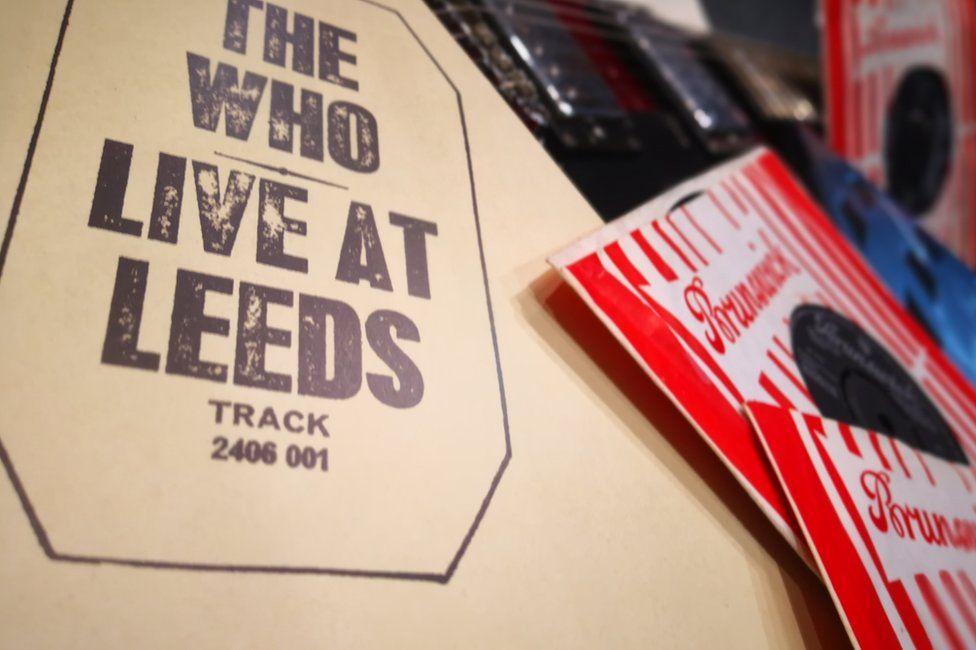
Townshend tried slicing out the clicks with a razor blade and quickly realized it would be impossible to get all of them. But subpar-sounding bootlegs were flooding the market at this time, so the band just added a note to the label saying the clicks were intentional. The cover was a faded stamp reading “The Who: Live at Leeds” on brown paper, mirroring the look of illegal vinyl bootlegs of the era.
The original Live at Leeds, released May 23rd, 1970, featured just six of the 33 songs played at the show, and not a single one of them was from Tommy. It wasn’t until 1995 when a CD version arrived containing 14 of the songs, and the complete gig wouldn’t see the light of day until the release of a deluxe edition in 2001.
All this time, the master tapes for Hull sat in storage. They were presumed to be worthless because of the issues with Entwistle’s bass parts, but when prepping a 40th anniversary of Live at Leeds a decade ago, Pridden listened to the full Hull show for the first time. “That bass wasn’t there for the first five or six numbers,” he says. “Then all of a sudden it kicked in and stayed.”
He went to Townshend with his discovery. “Let’s get someone to overdub a bass on it,” Townshend said. “We can use it.” Horrified at the idea of someone else attempting to replicate John’s bass parts, Pridden came up with a better solution. “I thought to myself, ‘They did exactly the same set both nights,’” says Pridden. “‘Maybe we can lift the bass from the first few numbers on Leeds and drop it in.’ This is when Pro Tools was on the go.”
He tasked an audio engineer, Matt Hay, with the delicate task of lining up the Leeds bass parts to the Hull recordings. “We went in and set up an eight-track machine, which Hull was recorded on, and lifted the bass from Leeds and dropped it onto the track with Pro Tools,” says Pridden. “Poor Matt was running for two days and nights marrying the bass from Live at Leeds. But when we did, it was fantastic.” (Live at Hull was released on the 40th-anniversary edition of Live at Leeds in 2010 and as a standalone disc two years later.)
After the Leeds and Hull shows, the Who slowed down the pace of their touring considerably so they could focus on the creation of complex studio releases like Who’s Next and Quadrophenia. Their tours after 1971 were shorter affairs marked by private planes, drug binges, and sloppier sets, especially when it came to the work of Keith Moon. These were still incredible gigs by the standard of most any other band, but the magic of Live at Leeds — the culmination of seven years of relentless road work was never quite achieved again.
After Moon died in 1978, the group never again played as a four-piece band, despite coming close in 1999 and 2000 when Daltrey, Townshend, and Entwistle were joined only by drummer Zak Starkey and keyboardist John “Rabbit” Bundrick
“They are still fantastic, though,” says Pridden. “I went to the concert at Wembley last year. It was certainly different with the orchestra, but it was magical. Maybe the next thing they’ll do is go back to a four-piece, but I don’t think there’s a chance in hell it’ll happen. It would be amazing, though.”
And looking back at Live at Leeds five decades later, Pridden says he and the band were moving so quickly they didn’t realize what an amazing legacy they were leaving for future generations to discover. It was just another show.
“We were making history,” he says. “But we weren’t history. We never thought about making history. We were just wandering minstrels out there having fun.”
The Who Roger Daltrey – lead vocals, harmonica, tambourine Pete Townshend – guitar, vocals John Entwistle – bass guitar, vocals Keith Moon – drums