Brand new music from the much-praised Vanishing Twin…“This is a band that fearlessly floats in the hazy space between the real world and an imagined one, blurring the line between warmly nostalgic and eerily haunted”
Following their hugely successful second album ‘The Age Of Immunology’ (roundly raved over by The Line Of Best Fit, PopMatters, Pitchfork, Q, MOJO, The Quietus and Uncut) and one of Rough Trade, MOJO and Uncut’s albums of 2019.
Cocktail umbrellas and chlorinated fantasies! It’s time to get cool in the pool with Vanishing Twin. Here are four streams of analogue consciousness to super-soak your deckchair daydreams.
“Fantastical soundscapes that are as welcoming as they are unusual.” All Music
This album is nothing less than transcendently beautiful. The heart and soul of everything that made me fall in love with Cymbals Eat Guitars now lives on in the form of Empty Country with new twists and complexities that make EC it’s own clearly unique entity as well. A great transitional document for Joseph D’Agostino as he moves on from Cymbals Eat Guitars (still sad they are over). This album is great in that it’s not a huge departure , yet it is still distinctly D’Agostino’s own thing. It’s got the great melodies and catchy hooks of Cymbals Eat Guitars with that characteristic melancholy. But with more acoustic guitar, Empty Country sounds more personal.
Up there with Joe’s best work, it feels like it pulls from every record he’s done before while still being completely distinct from any Cymbals record in the way it combines the psychedelia and accessibility with some of the lushest, most ornately arranged music I’ve heard. Plus the guitars still rock, the solos fucking slap, and the ballads somehow slap just as hard. The narrative based lyrics also hit a sweet spot in Joe’s lyricism — direct but inventive, descriptive and endlessly compelling.
Empty Country is the first album from Joseph D’Agostino since the dissolution of his other project, Cymbals Eat Guitars, one of the most perennially underappreciated indie-rock bands in recent memory. The album lets D’Agostino’s unique song writing and raspy voice take center stage: The gorgeous “Marion,” for instance, weaves a multigenerational epic through its spacious, slightly shambling indie rock, while “Ultrasound” finds D’Agostino yelping atop a thick wall of guitars and distortion. One of the most straightforward songs on the album is “Becca,” a seemingly jovial acoustic character sketch that tells the somewhat disturbing story of a woman selling fraudulent eclipse glasses to unsuspecting tourists. Empty Country thrives in its simplicity relative to the last few Cymbals albums, getting back to the heart of what makes D’Agostino such a compelling artist.
released March 20th, 2020
Music and lyrics by Joseph D’Agostino
Released in August 2019, Modern Nature’s debut album – How to Live – crossed the urban and rural into each other. Plaintive cello strains melted into motorik beats. Pastoral field recordings drifted through looping guitar figures. Rising melodies shone with reflective saxophone accents, placing the record somewhere between the subtle mediations of Talk Talk, the stirring folk of Anne Briggs and the atmospheric waves of Harmonia.
The album was met with universal acclaim and featured in a variety of publication’s ‘Best Of 2019’ lists. As the group took the album out on the road, saxophonist Jeff Tobias’ (Sunwatchers) role informed something even more expansive. “It feels like there’s such scope and room to grow. I want the group to feel fluid and that whoever’s playing with us can express themselves and interpret what they think this music is” says bandleader Jack Cooper.
Their new mini album “Annual”, recorded in December 2019 at Gizzard Studio in London, is another step towards something more liberated and a world away from the sound of Jack Cooper’s previous bands. Will Young sits this one out, concentrating on his work with Beak, but ‘How To Live’ collaborator Jeff Tobias takes a more central role, alongside percussionist Jim Wallis.
Jack explains how ‘Annual‘ came about: “Towards the end of 2018, I began filling a new diary with words, observations from walks, descriptions of events, thoughts…free associative streams of just.. stuff. Reading back, as the year progressed from winter to spring, the tone of the diary seemed to change as well… optimism crept in, brightness and then things began to dip as autumn approached… warmth, isolation again and into winter.”
“I split the diary into four seasons and used them as the template for the four main songs. The shorter instrumental songs on the record are meant to signify specific events and transitions from one season to the next. I figured it wouldn’t be a very long record, but to me it stands up next to ‘How To Live’ in every way.”
Annual opens with Dawn which brings to mind the peace and space of Miles Davis’ ‘In A Silent Way’; it rises from nothing like shoots reaching for the light. “I wanted Dawn to feel like the moment you realise spring is coming, when you notice blossom on the trees or nights getting lighter.”
On lead track Flourish, it’s clear Modern Nature have moved on from the first album; as muted percussion and double-bass stirs behind Cooper’s Slint-like ambling guitar; the chorus soars into a collaged crescendo. “Flourish is my part of the world coming to life. I live on the edge of London between Leytonstone and Epping Forest, so the signs of spring are very apparent round here – flowers, light, people talking in their gardens.”
“Mayday started as an outro to Flourish or ‘Spring’ as it was titled originally. The idea was a segueway into the summer section to represent the sort of collective excitement a city gets once it realises summer is here.”
The summer of Jack’s diary inspired ‘Halo’. “The Wanstead Flats where I live, change a lot in the summer; a haze descends on them instead of the spring mist and the city’s proximity is more apparent. Blue bags of empty cans and scorched grass from out of control barbeques.” Arnulf Lindner on double-bass recalls the playing of Danny Thompson’s with Jeff Tobias‘ wonderfully lyrical saxophone referencing Pharoah Sanders. Cooper’s vocals on this record barely rise above a whisper making Halo a perfect addition to the canon of bucolic North London songs of summer, alongside Donovan’s Sunny Goodge Street or Nick Drake’s Hazey Jane II.
On Harvest Jack takes a backseat with Kayla Cohen of Itasca singing. “All these songs are in the same key but the melody was above my range. I’d been playing the new Itasca record most days and just reached out on a whim. Her phrasing and the economy with which she sings is perfect.”
“The intention with the record was for it to feel like a circle, so Wynter reflects the opening. I guess having to get up and flip the record destroys the illusion so it’s a rare circumstance where listening with the ability to just loop the album into another year is closer to our intention.”
Annual then acts both like a companion piece to the band’s ‘How To Live’ debut but also a pointer to the paths ahead. Cooper has already started work on the next album, his speed of output an indication of the excitement and creativity that surrounds the project. Who will be involved and what the touchstones might be are yet to be firmly established but then who would have it any other way with this most fascinatingly free-flowing and mutable of groups?
Snarls spent 2019 quietly blooming. Two songs landed this Columbus, OH four-piece on Stereogum’s Top 100 Songs and Best New Bands to watch this year. With that running start in mind, 2020 is when they’ll surely blossom into a band to watch. Debut LP “Burst” finds the next charming coming-of-age story in shimmering character drama (2019 standout “Walk in the Woods”), woozy indie-pop (“Hair”), and blue-eyed existentialism (“Concrete”). Snarls’ songwriting is as unfiltered and spectral as growing into one’s own should be, but it promises just as an enchanting listen for those outside looking in. It’s no wonder MTV tried to brand Snarls‘ enchanting indie rock as promising “the best of emo and shoegaze” or that the band themselves sees themselves as the fore bearers of “glitter emo alt rock.” Snarls is fresh, frenzied, and worth fawning over. You’ll just have to find out on your own.
This is knock-out indie-pop that looks forward by all the while looking back to the past by taking a more than a passing interest in late 80s and early 90s indie… guitar riffs a go-go, fuzzy bass, a dash of shoegazy soundscapes and a hint of psychedelia all wrap around self-deprecating lyrics and gorgeous vocals… this is one killer of an album which makes you want to trawl the band’s back-catalogue… seriously, what’s not to like here?”
Released March 6th, 2020
Snarls is Chlo White (Vocals, Guitar), Riley Hall (Bass, Vocals), Mick Martinez (Guitar), and Max Martinez (Drums).
All songs written and performed by Snarls. “Burst” is out now on CD/Digital via Take This To Heart Records.
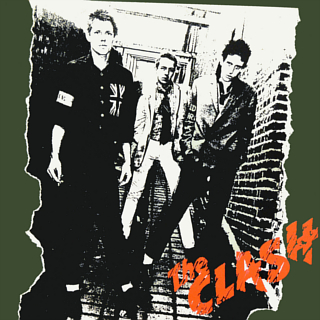
On this day in 1977, The Clash dropped their self-titled debut album on CBS Records, and it still stands up as one of punk’s most essential releases. With their speedy and reckless yet musically adept political punk rock, The Clash arguably became the most influential punk band of their era. On their debut LP, frontman Joe Strummer took on uncomfortable topics like class warfare and imperialism, and their gritty songs exuded a frantic rage and the spirit of alienated youth.
Released on 8th April 1977 .Written and recorded over just three weeks in February 1977 for a paltry £4,000, Most of the album was conceived on the 18th floor of a council high rise on London’s Harrow Road, in a flat that was rented by Mick Jones’s grandmother, who frequently went to see their live concerts, it would go on to reach No. 12 on the UK charts, and has been included on many retrospective rankings as one of the greatest punk albums of all time.
Songs on the album were composed by guitarists Joe Strummer and Mick Jones, with the notable exception of the reggae cover “Police and Thieves”. Several songs from these sessions, including “Janie Jones”, “White Riot”, and “London’s Burning” became classics of the punk genre and were among the first punk songs to see significant presence on singles charts. The album featured Jones and Strummer sharing guitar and vocal duties, with Paul Simonon on bass and Terry Chimes on drums. The subject of the opening track, “Janie Jones”, was a famous brothel keeper in London during the 1970s. “Remote Control” was written by Mick Jones after the Anarchy Tour and contains pointed observations about the civic hall bureaucrats who had cancelled concerts, the police, big business and especially record companies.
“Career Opportunities”, the opening track of the second side of the album, attacks the political and economic situation in England at the time, citing the lack of jobs available, and the dreariness and lack of appeal of those that were available. “Protex Blue”, sung by Mick Jones, is about a 1970s brand of condom. It was inspired by the contraceptive vending machine in the Windsor Castle’s toilets.
The version of “White Riot” featured on the album was not recorded for the album; the original demo (recorded at Beaconsfield Studios before the band signed to CBS) was used instead.
“Police & Thieves” was added to the album when the group realised that the track listing was too short. Another cover the band played at these sessions was The Wailer’s “Dancing Shoes”. “Garageland” was written in response to music critic Charles Shaar Murray’s damning review of the Clash’s early appearance at the Sex Pistols Screen on the Green concert – “The Clash are the kind of garage band who should be returned to the garage immediately, preferably with the engine running”
The Clash’s first official recording was the single for “White Riot”, that was released by CBS Records in March 1977. Then in April, CBS released their self-titled debut album, The Clash, in the United Kingdom, but refused to release it in the United States, saying that the sound was not “radio friendly”. A US version of the album with a modified track listing four songs from the original version were replaced with five non-album singles and B-sides—was released by Epic Records in 1979, after the UK original became the best-selling import album of all time in the United States. Terry Chimes left the band for the second time soon after the recording, so only Joe Strummer, Mick Jones and Paul Simonon were featured on the album’s cover, The album’s front cover photo, shot by Kate Simon, was taken in the alleyway directly opposite the front door of the band’s ‘Rehearsal Rehearsals’ building in Camden Market. Chimes was credited as “Tory Crimes”.
In the same month, the band also released an EP single, Capital Radio, which was given away to NME‘s readers. In May, CBS released the single “Remote Control” without asking them first, and, in September, “Complete Control“, produced by Lee “Scratch” Perry, was Topper Headon’s first recording with the band.
“I’ve been trying to get ‘Heart Of An Animal’ on a Dears album for a very long time, but for whatever reason it just never fit,” says Dears frontman Murray Lightburn. “Now it kicks off and sets the overall tone of Lovers Rock. It was by far the most difficult song to sing for me, as it hits the very top of my range.” If you are a fan of the No Cities Left era of The Dears, this might be for you.
It’s no coincidence that Murray Lightburn and Natalia Yanchak’s eighth album as The Dears echoes the apocalyptic energy of their 2003 breakthrough No Cities Left, as the world post-9/11 was the last time everybody was this on-edge. While the duo couldn’t have possibly predicted the pandemic we’re undergoing while they were writing the record, there was a general, ambiguous sense of doom mounting over the past few years.
Then again, the driving, vaguely psychedelic rock heard on the group’s new single “Heart of an Animal” doesn’t quite feel intentional, but rather manifests as a subtle infiltration upon an alt-rock cut nostalgic for the mid-’00s. Now it kicks off and sets the overall tone of Lovers Rock. It was by far the most difficult song to sing for me as it hits the very very top of my range.”
“It’s a tender, psychedelic runaway train,” Yanchak adds, noting the trance-inducing chorus. “You should be left wondering where this album is going, and let me tell you…it just gets weirder from here.”
“Lovers Rock” is out May 15th via Dangerbird Records
Polyvinyl has just released the Stay Home compilation, which features previously unreleased music, demos, and covers from 16 artists on their roster, with all proceeds going directly to the artists. “What originally began as a way to help support the Polyvinyl artists affected by COVID-19, quickly grew into a project spanning more than half of the label’s active roster,” the label writes. And as you might’ve guessed, “The compilation’s titular theme, Stay Home, doubles as both a social plea – a worldwide effort to help ‘flatten the curve,’ while giving nod to the sprawling classic on American Football’s landmark self-titled debut.”
The covers include American Football frontman Mike Kinsella doing an exceptionally gorgeous cover of The 1975‘s “Me” under his Owen moniker, Palehound doing Karen Dalton‘s “Something On Your Mind,” Squirrel Flower doing Emmylou Harris‘ “Icy Blue Heart,” Hazel English doing The Mamas & The Papas‘ “California Dreamin’,” and Xiu Xiu doing Kim Jung Mi‘s “Haenim,” and there are also demos by The Get Up Kids, of Montreal, Yumi Zouma, and STRFKR, a new Chris Farren song, and tracks by Pedro the Lion, Kero Kero Bonito, and more.
Introducing Stay Home, a Polyvinyl Record Co. compilation featuring 16 tracks including previously unreleased music, demos, and covers.
Available exclusively on Bandcamp for Pay What You Want (starting at $5) with all proceeds going directly to the artists involved.
Our hearts go out to the family of legendary songwriter John Prine, who passed away after being in a critical condition recently with coronovirus. The legendary singer-songwriter John Prine died Tuesday at Vanderbilt University Medical Center in Nashville, Tenn. He was 73 years of age. Part of John Prine’s brilliance was how easy he made it all seem. With some songwriters, you can hear the effort and strain put into every line, and it can become wearisome. But Prine seemed to come about it so humbly and naturally that you could believe, since you had access to the same language and the same chords on an acoustic guitar, that you could be as wise, as funny, as heart-rending as he could.
His road to that point wasn’t the typical one for music stardom. He was a soldier and a mailman before he emerged from Chicago with his debut album in 1971. That self-titled release cemented him as a fully-formed song-writing powerhouse.
Following his service in the army, John Prine seemed to spring forth as a fully formed multi-dimensional singer songwriter at the age of 24. Steve Goodman and Prine were running buddies and staples of Chicago’s hardscrabble folk scene during the late ‘60s and early ‘70s. It was Goodman who led Prine to Kris Kristofferson. An established star, Kristofferson brought the pair to New York, and on their first night in town, Prine sang three songs at The Bitter End in Greenwich Village. Legendary Atlantic Records producer and A&R executive Jerry Wexler was in the audience. Twenty-four hours later, he signed Prine to the famed label.
In 1971, Prine released one of the most impressive debut albums ever, proving himself capable of writing folk balladry, country, and rock songs laced with pathos, sensitivity, and sardonic humor that reflected on the human condition. A critical smash but a commercial disappointment, this remarkable album set the tone for the rest of his career. The next two albums, 1971’s Diamonds In The Rough and Sweet Revenge, released in 1973, proved that the first album was no fluke. His songs continued to have depth, compassion, and an understanding that belied his young age. The first three or four records, I would just write ‘em while walking down the street–just throw ‘em over my shoulder,” Prine says. “The best way to get away from the world was to go write a song.”
This solo acoustic performance, recorded at the Music Inn in Lenox during the summer of 1973, captures Prine performing the material from his first three albums stripped down to their bare essence. In almost every case, these songs are even more compelling with just the man’s voice and guitar. This audience, the vast majority of whom had come to see Bonnie Raitt, is immediately drawn in and responds with great enthusiasm, bringing out a most inspired choice of material from Prine. Taken as a whole, this remarkable set is overwhelming in its diversity and contains a wealth of Prine’s most memorable compositions.
Fans of Prine’s self-titled debut will be delighted to find that album extremely well represented. Early in the set, he delivers the counterculture songs “Spanish Pipe Dream” and “Illegal Smile,” setting an irreverent tone that resonates with the audience. These more humorous numbers are almost immediately balanced out by “Donald and Lydia” an achingly poignant song about a young couple separated by army life and “Sam Stone,” an anguished tale of a drug addicted Vietnam vet. With its disturbing and penetrating lyrics, including a chorus of “there’s a hole in daddy’s arm where all the money goes; Jesus Christ died for nothin’, I suppose,” There are few lyrics as sobering as this one from John Prine’s “Sam Stone” The track taken from his 1971 self-titled debut album, this acoustic song lays bare the horrors of war long after combat has ceased. The protagonist succumbs to a drug addiction after his severe wartime injuries, and his children’s innocent, simplistic view of their father’s darkest demon just hits you like a barreling train. Speaking of which, there’s another powerful, slightly more vivid allusion to locomotives when Prine describes the centre of his main character’s universe, the rush you get from taking heroin: “And the gold rolled through his veins / Like a thousand railroad trains.”
Prine’s insightful anti-war commentaries have a depth and substance that seemed to come from experience. As such, they have far more insight and resonance than most anti-war songs of the Vietnam era. That first album is also represented by the autobiographical “Paradise,” as well as the immeasurably sad songs, “Hello In There” and “Far From Me” Prine’s trademark wit and sense of humour also gets more time to shine on the rollicking anti-war song “Your Flag Decal Won’t Get You into Heaven Anymore” and “Pretty Good,” one of the most outrageously funny songs in Prine’s early cannon.
You won’t find very many 25-year-old male musicians writing from the perspective of an older woman, but John Prine had a gift for storytelling that knew no bounds. Singing with beautifully grizzled vocals over rousing organs, Prine pleads with angels on “Angel From Montgomery” to be saved from a loveless marriage, lost dreams and a life devoid of purpose. Various covers of this song by John Denver, Bonnie Raitt and Tanya Tucker helped popularize the song, and Raitt’s version, in particular, is an absolute knockout
Several tracks from Prine’s second album, Diamonds In The Rough are also performed, including “Rocky Mountain Time,” the hilarious sing-along encore of “Everybody” and a powerfully moving “Clocks and Spoons” However, what is possibly most delightful here is the appearance of the new songs that would be included on Prine’s third album, Sweet Revenge, including his classic “Grandpa Was A Carpenter.” On this album, Prine ventured into increasingly cryptic lyrical terrain. “Please Don’t Bury Me” and “The Accident (Things Could Be Worse)” are both brilliantly written songs that remain open to interpretation, while the overtly comical “Dear Abby” and the doleful holiday carol, “Christmas In Prison,” display Prine’s sharp wit and wry sense of humor.
For anyone interested in contemporary folk music and its history, John Prine is a required course and his first album is absolutely essential listening. This recording is a perfect overview of Prine’s early career containing many of the highlights from those first three albums and most of the songs that cemented his reputation. Prine is hysterically funny here, but he is always just as thought provoking, able to strike a nerve way down deep, often in the same song. Common Sense (1975), Bruised Orange (1978), Pink Cadillac (1979) and Storm Windows (1980) followed, as did more classic songs–“Come Back to Us Barbara Lewis,” “Hare Krishna Beauregard,” “That’s the Way the World Goes ‘Round” and “Crooked Piece of Time” Eventually, Prine discovered that his escape from the world had become a world unto itself.
Maybe you’ve never heard a John Prine song in your life. But if someone spun his 1978 album Bruised Orange for you, unprimed and unprepared, my bet is you’d be smitten within the first few seconds of that record’s first song, the jaunty “Fish and Whistle.” To the tune of one especially chirpy flute, Prine sings, “We’ll forgive each other ‘til we both turn blue.” It doesn’t matter how much beautiful nonsense he crams into his folk songs, John Prine always leaves a nugget of wisdom. Isn’t that a beautiful idea, that we’ll all just keep forgiving each other as long as we live, because that’s part of being a human? End your feuds; do it for John.
He enjoyed the early 90’s comeback album that many of his era who had flailed a bit during the 80s did, thanks to the Heartbreaker-filled The Missing Years in 1991. And he proved one of the world’s most charming duet partners on 1999’s In Spite Of Ourselves, as he and Iris DeMent turned the title track into one of most romantic warts-and-all songs of all time. His live performances constantly reminded everyone both of his incredible songbook and of his boundless charisma; contemporary and younger artists revered him; and awards and honours came in with regularity.
Prine returned with his first original album in 13 years a few years ago. The Tree Of Forgiveness included guests like Jason Isbell, Amanda Shires, Dan Auerbach, and Brandi Carlisle, but Prine still stole the show. The heartbreak of “Summer’s End” and the feistiness of “When I Get To Heaven” proved that he hadn’t lost anything.
After making his way through the first part of a world tour, he had no idea that his Brussels show would be his last for the unforeseeable future. Pre-coronavirus, everything was in place for the release of Cavetown’s first studio album, Sleepyhead, which is out now via Sire Records. Art gallery pop-ups featuring his own paintings, U.S. press visits, and fan events were all locked in.
Despite this sudden halt, the singer is making the most of his down time since Sleepyhead was released on March 27th. “I’ve been looking forward to having some time off,” says Skinner. “It just kind of came earlier than I expected. I’m looking at it as an early break, even though it’s obviously terrible for so many people. But you gotta look for the good things in it—so at the moment, I’m relaxing and just being a person for a second.”
Robbie Skinner, now twenty-one, has connected with more than a million devout YouTube subscribers by performing from his bedroom since forming the experimental musical project Cavetown at the age of fourteen. Learning to play guitar from his father, director of music at Cambridge University, at the age of eight, and having a mother who was a professional flautist, Skinner was born into music. After releasing his self-titled debut in 2015, its follow-up 16/04/16 in 2016, and his 2018 breakthrough Lemon Boy—along with covers, digital mixtapes, and other reworked material—Cavetown’s fourth album is a new chapter in Skinner’s DIY art.
Recorded, produced, mixed, and mastered by Skinner in (where else) his bedroom, Sleepyhead was the result of constantly writing. There’s no structure to his lyrical madness—he just tends to write until there are enough tracks for another album. It’s another chapter in Skinner’s own book of life, something he’s already uncovered in Lemon Boys’ lo-fi tales of social anxieties, unrequited love, and other misanthrope adventures.
Sleepyhead is a continuation of Cavetown’s revelations in sexuality, awkwardness, and self-confidence drawn in by drifty vocals moving along a digi-melodic landscape only Skinner could manufacture, from its Weezer riff and swell on opener “Sweet Tooth” through the more delicate, acoustic-and-pop-steered reminiscences of “Things That Make It Warm” and “Wishing Well.”Sleepyhead reveals less naiveté and more self-assurance gained through life’s perplexities.
According to Skinner, he has no clear songwriting process. He first penned “Feb 14,” a tale of a special Valentine’s Day that he still thinks about, and the remainder of Sleepyhead unraveled from there. “I just write what’s in my head,” he says. “I don’t tend to write with an overarching theme, because I’ll lose interest too quickly. So the album’s kind of all over the place.”
He says that the songs that just fall out of him tend to be the better ones. “There’s an idea, and you just sit down, and before you know it, it’s 2:00 a.m., and I finished a song I’m really stoked about,” he shares. “Sometimes I have so many ideas that I will half start songs and just walk away from it. I get stuck with it and then come back to it later when I forgot how it goes, and then take a fresh stab at it again.”
An ode to his boyfriend, “Sweet Tooth” was written on a tour bus, and felt like an appropriate number to open Sleepyhead with. “Starting with a big song is a bold intro I thought worked,” he says. Sounds of a tape reel opens the more nostalgic closer “Empty Bed,” sending the record off on a more comforting, analog note with abstract beats around a childhood tale of parting ways with his stuffed animal at the age of eight, taking meds at thirteen, and a selfless love refrain of “take care of you for me” before the tape reel ends. “It just sounded like a closing track with some good comforting vibes,” says Skinner.
Sleepyhead is clearly set in place where Cavetown is now. Recently signed to Sire Records, he still retains control of his production and says the enhanced sound quality and added equipment gave Sleepyhead more depth. “I’ve definitely learned a lot,” he says. “I’ve tried to keep my process and my involvement with all of the songs pretty much the same. I’ve always produced and written everything myself and still do that.”
When choosing a label, Skinner wanted a company that would accept his music as is and not push him to do anything differently. “When I met with Sire, they basically just said ‘What you’re doing is working—it’s you,’” says Skinner. “‘You’re doing something right, so why should we change anything about your process?’” Over the years, Skinner has learned to stand up for himself more and has realized he’s lucky that he’s surrounded by people who care for him and continue to encourage him. “I know when to say, ‘This is the way I want to do it,’” he says. “‘You can tell me whatever you think is better, but I want to do it this way.’”
Collaborating with other artists is something he couldn’t tap into before, and when he does, he prefers working with friends. He mentions a friend who’s a filmmaker, who never watches films, and says he’s not much different when it comes to music. “He knows nothing about films,” says Skinner. “I feel like I’m like that with music. I’ll listen to my friends’ music, but I don’t really know anything about any other music, which I think surprises people sometimes.”
Skinner recently co-wrote and produced mxmtoon’s 2019 album The Masquerade, and has been working closely with Chloe Moriondo, who also duets with Skinner on Sleepyhead’s “Snail,” on her upcoming debut. Skinner recently held a recording session with Chicago-based video blogger and singer-songwriter Tessa Violet, who isn’t far behind Cavetown in the bedroom pop popularity realm with 1.5 million followers.
“I’m slowly opening up to working with more acquaintances, or people that I don’t know so well, just to see how that feels,” says Skinner. “As long as I like the music, I really don’t have any goals or specific people I want to work with.”
At the moment, he’s decompressing, self-isolating, and looking forward to finishing up his European dates when the time comes. Now that Sleepyhead is out, he wants to make more videos, have more listening parties and other virtual events on YouTube, and, perhaps most of all, perform the songs.
“I think because they are all such new tracks, I still love them all so much” he says. “I think after a bit of time, I will start to get sick of them. I’m actually starting to get sick of ‘Sweet Tooth,’ unfortunately, because I worked on that one the longest. But I’m going to try not to listen to it so I can forget how it sounds.”
Being confined has also given him time to think about his career and the oft-tumultuous trajectory of the music business. Right now, he’s living and creating in the moment, and not trying to visualize the next few years of Cavetown. “It’s not about an amount of time, because things have been changing so much for me in just a year recently,” says Skinner. “Either I’ll skyrocket, or I’ll just become a nobody again, which is fine. It seems like at this point those are the two paths. It’s good to not dwell on that too much and let it be, so I’m just going with the flow, and I’m fine with it.”
Glen Frey (1948-2016) Hailing from the Motor City, Frey kicked around the Detroit Rock scene from the mid-1960s playing in bands such as the Subterraneans, The Four of Us, the Mushrooms, and the Heavy Metal Kids. He nearly joined Bob Seger’s band, but Frey’s mother objected because she considered Seger a bad influence owing to his marijuana use. However, he did contribute acoustic guitar and backup vocals to Seger’s first hit in 1968 “Ramblin’ Gamblin’ Man.” His association with the Detroit rocker continued with Frey singing harmonies on “Fire Lake,’ and “Against the Wind.” in 1980. Through a girlfriend whose band moved to California, Frey relocated there meeting J. D. Souther and forming a duo named Longbranch Pennywhistle. During this period Frey also met Jackson Browne, a convergence if there ever was one.
Then in 1970, Frey met Don Henley and there was a tour with Linda Ronstadt, which included, for a spell, Randy Meisner and Bernie Leadon. it was during this time that Frey and Henley decided to form a band, and soon the Eagles were hatched with Frey (guitar, keyboards) Meisner (bass), Leadon (guitar, banjo, mandolin, and dobro) and Henley on drums. No one knew at the time that the Eagles would evolve into one of the biggest supergroups of all time. Frey was the front man and lead singer writing or co-writing the lion’s share of the band’s hits including “Take It Easy,” (co-written with Browne), “New Kid in Town,” “Tequila Sunrise,” and “Peaceful Easy Feeling,” among others. When the Eagles disbanded in 1980, Frey launched a successful solo career and was a consistent hit maker throughout the 1980s, scoring two Top 10 hits “The Heat is On,” (1984), and “You Belong to the City,” (1985) as well as “Smuggler’s Blues,’ (1985) and several lesser hits.
The Eagles had vowed that they wouldn’t reunite until “Hell Freezes Over,” which it miraculously did in 1994. The “Hell Freezes Over,” album followed with the hit single “Get over It.”Frey played on the Eagles’ “Long Road out of Eden in 2007 and joined the band on the tour that accompanied the album. Frey recorded five solo albums and one live long player in all, including “After Hours,’ in 2012. With the Eagles, he collected Six Grammy awards, five American Music Awards, and his band was inducted into the Rock and Roll Hall of Fame in 1998. Frey’s final appearance with the band was at the completion of the two-year History of the Eagles World Tour, which ended in Louisiana on July 29, 2015. Sadly, Glen Frey passed away on January 18th, 2016 from complications surrounding rheumatoid arthritis. The music world had lost another icon, but Frey will be remembered for his song writing and as the lead singer of the Eagles, with many classic hit records under his belt.
Universal Music will issue Above The Clouds: The Collection, a new four-disc deluxe box set that focuses on the solo career of Glenn Frey.
The 3CD+DVD set starts with a 15-track ‘best of’ disc which includes singles like The Heat Is On (from Beverly Hills Cop), Smuggler’s Blues and You Belong To The City. The second CD digs deeper into Frey’s back catalogue and includes tracks from his last studio album, 2012’s After Hours, 1985’s Allnighter, new tracks from 1995’s Solo Collection and more.
The one and only album (self-titled) by Frey’s and JD Souther’s Longbranch / Pennywhistle is officially released on CD for the first time on disc three. This was recorded in 1969 in California (after the pair had moved from Detroit to California) and issued on the Amos label. While the country rock/folk outfit were short-lived, JDSouther would go on to co-write loads of great Eagles songs, such as Best of My Love, New Kid in Town and Heartache Tonight.
The fourth and final disc is a DVD of a live show from Dublin in 1992 from the Strange Weather tour.
I would like to congratulate everyone involved in the creation of Above The Clouds, a beautiful and exceptional collection of Glenn Frey’s unique voice in music, here expressed in his solo career. It is an imposing body of work and just as rich and genuine as you would expect. It is also a fitting tribute to the man who flew front seat in that exceptional songwriting and harmony phenomenon called Eagles, the biggest band in American history. Glenn was my first songwriting partner in Los Angeles when we were pups and I’m a far better song writer for knowing him. He brought a spark to every thing he touched, lit up every room he entered, and brought a rock solid integrity to every song he worked on. Check out “Run Boy, Run” from Longbranch/Pennywhistle, our virgin album as singer/songwriters. It’s a good song, rock solid and a first look of what was to follow. I could go on and on about Glenn but there are simply too many good things to say and besides, you could be listening to him sing instead of reading about him. As Linda Ronstadt put it the day after Glenn left us; “What to say? It’s a little bit different world now”. Perfectly said, so here is a big box of his beautiful music to give life after Glenn some more groove, a few more tears, and a whole lot more light. Cheers Glenn, and thank you. JD Souther
Run, Boy, Run…You Gotta Move. The iconic track from Longbranch Pennywhistle is now available to download from Above The Clouds: The Collection. https://glennfrey.lnk.to/ATCTheCollection
Above The Clouds: The Collection was released on 11th May 2018.