Archive for the ‘CLASSIC ALBUMS’ Category

See the source image

Jackson Browne has written and performed some of the most literate and moving songs in popular music and has defined a genre of songwriting charged with honesty, emotion and personal politics. He was inducted into the Rock and Roll Hall of Fame in 2004 and the Songwriter’s Hall of Fame in 2007.

Except for a brief period in NYC in the late 1960s, Jackson has always lived in Southern California. His debut album came out on David Geffen’s Asylum Records in 1972. People may talk about Late For the Sky or Running On Empty, but Jackson Browne’s career starts right here with “Saturate Before Using”. In this, his first album, Browne proves to be a mellow musician, but an imaginitive and thoughtful writer.

It’s not often that a single album is sufficient to place a new performer among the first rank of recording artists. Jackson Browne’s long-awaited debut album chimes in its author with the resounding authority of an Astral Weeks, a Gasoline Alley, or an After the Gold Rush. Its awesome excellence causes one to wonder why, with Browne’s reputation as an important songwriter established as far back as 1968, this album was so long in coming. Perhaps Browne acquired performing abilities worthy of his writing skill only after much hard work. Whatever the reason, Jackson Browne is more than worth the years it took to be hatched.

I mention the possibility that Browne has honed his performing skill mainly because of a vocal style that bears a certain resemblance to Van Morrison’s. Browne may well have used Morrison as a model, because that singer’s dynamic phrasing and syntax — with those mid-phrase halts, work-packing and spreading, and drawn-out syllables — are integral parts of Browne’s style, too. The Morrison influence is most audible in “Rock Me on the Water” and “Under the Falling Sky,” with their lilting, gospel-like movement (these two would make excellent singles) but it comes across in subtler ways in several other songs.

But what might have seemed uncomfortably derivative in other hands becomes merely a sound starting point for Jackson; his artistry takes the Morrison elements to a place completely his own. For one thing, Browne’s voice is uncolored except for a bluegrass-nasality; it’s not a particularly powerful voice, either, but it’s quite flexible. That straight-faced, country-boy sound — somewhat akin to Clarence White’s in tone — lends his vocal style an endearing, innocent earnestness that enables Browne to deal with overtly romantic themes without ever coming across as self-conscious or precious.

The songs themselves reveal Browne as a classic romanticist; they’re possessed of that same earnest intensity found in his voice, and their prevailing moods are so strong that singers as diverse as Tom Rush, Johnny Darrell, Nico, and Clarence White can sing them without significantly altering their tone or substance. Browne’s songs, no matter who sings them, seem to have a life of their own. After hearing this LP, it’s clear to me that no one has done them nearly as well as Jackson himself, and it’s not likely that anyone will.

“Jamaica, Say You Will,” the opening track, is an exquisite love song, and it perfectly embodies Browne’s writing and performing approach. This narrative of the relationship between the singer and Jamaica, the daughter of a long-absent sailor. A full-chorded grand piano gives the song a rolling, even motion and a certain austerity of mood. Browne plays his voice off the piano’s restrained tone, soaring up from his own basically understated vocal in mid-verse and chorus. While the music sets the tone, Browne deftly tells the tale, his imagery charged with vivid suggestion. Jamaica and her lover share an idyllic, youthful romance in the high grass of a coastal village, but the singer feels a twinge of apprehension cut into his bliss: “Her father was a captain on the rolling seas,/She would stare across the water from the trees./The last time he was home, he held her on his knee/Told her next time they would sail together, just where they pleased…”

Inevitably, the time comes; the singer laments that one day they’d been hiding from the world together, and on the next, without warning, “They had brought her things down to the bay./What could I do?” And his callow plea in the first chorus to “Fill my empty hours” becomes a plea of teeth-gritting urgency in the third to “Fill my sails/And we will sail until our waters have run dry.” But there’s no chance of his fulfilling his dream, as he’s known all along.

Much of the dramatic force of “Jamaica” derives from its gorgeous choruses. Each chorus builds tension by offsetting its lyrical meter from the movement of the music, so that the first part of each line is packed tightly and the second part is stretched out, as here, in the second chorus:

Harmonies enter at the “Sayyy” section of each of the first three lines, accenting the rush of words that precedes them. All the tension built up by the struggle for balance between the lyrical and musical structures resolves itself gracefully in the even last line. Naturally, Browne’s single-minded delivery drives the tension to even greater heights, and the song soars. It’s as moving a love song as I’ve ever heard.

What’s astounding about this record is that there are a half dozen tracks of “Jamaica”-beauty (“Song for Adam” and “From Silver Lake” are especially affecting), and none of the ten songs is any less than brilliant and lovely. Each has the immediacy of a touch, due in part to Jackson’s first-person approach.

The music is as direct and fluid as the lyrical content. It’s arranged and played with appropriate restraint by a dozen Los Angeles session favorites, among them Sneeky Pete, Craig Doerge (his piano playing is particularly sensitive), Lee Sklar, and Russ Kunkel. David Crosby’s harmonies haven’t sounded this real since he left the Byrds. And although you’ll hear, aside from the standard acoustic guitar, piano, and bass, the sounds of electric guitar, organ, mouth harp, pedal steel, and viola, these instruments are subdued and spread carefully through the ten songs. No one get’s in Jackson’s way — it’s completely his album.

Jackson Browne’s sensibility is romantic in the best sense of the term: his songs are capable of generating a highly charged, compelling atmosphere throughout, and — just as important — of sustaining that pitch in the listener’s mind long after they’ve ended.

Jackson Browne’s sensibility is romantic in the best sense of the term: his songs are capable of generating a highly charged, compelling atmosphere throughout, and-just as important-of sustaining that pitch in the listener’s mind long after they’ve ended.
Don’t miss it.

One of the reasons that Jackson Browne’s first album is among the most auspicious debuts in pop music history is that it doesn’t sound like a debut. Although only 25, Browne had kicked around the music business for several years, writing and performing as a member of the Nitty Gritty Dirt Band and as Nico’s backup guitarist, among other gigs, while many artists recorded his material. So, if this doesn’t sound like someone’s first batch of songs, it’s not. Browne had developed an unusual use of language, casual yet full of striking imagery, and a post-apocalyptic viewpoint to go with it. He sang with a calm certainty over spare, discretely placed backup — piano, acoustic guitar, bass, drums, congas, violin, harmony vocals — that highlighted the songs and always seemed about to disappear. In song after song, Browne described the world as a desert in need of moisture, and this wet/dry dichotomy carried over into much of the imagery. In “Doctor My Eyes,” the album’s most propulsive song and a Top 10 hit, he sang, “Doctor, my eyes/Cannot see the sky/Is this the prize/For having learned how not to cry?” If Browne’s outlook was cautious, its expression was original. His conditional optimism seemed to reflect hard experience, and in the early ’70s, the aftermath of the ’60s, a lot of his listeners shared that perspective. Like any great artist, Browne articulated the tenor of his times. But the album has long since come to seem a timeless collection of reflective ballads touching on still-difficult subjects — suicide (explicitly), depression and drug use (probably), spiritual uncertainty and desperate hope — all in calm, reasoned tones, and all with an amazingly eloquent sense of language. Jackson Browne greater triumph is that, having perfectly expressed its times, it transcended those times as well. (The album features a cover depicting Browne’s face on a water bag — an appropriate reference to its desert/water imagery — containing the words “Saturate Before Using.” Inevitably, many people began to refer to the self-titled album by that phrase, and when it was released on CD, it became official — both the disc and the jewel box read Saturate Before Using

Image may contain: flower

American blues musician Buddy Guy is an exponent of Chicago blues and influenced many prominent guitarists, including Jimi Hendrix, Jimmy Page (Led Zeppelin), Eric Clapton, and John Mayer. His 1998 album Heavy Love is another one of his fine blues-rock records. Besides two songs of his own material, he’s covering classics from Willie Dixon (“I Just Want to Make Love to You”). Tony Joe White (“Did Somebody Make a Fool Out of You”), ZZ Top (“I need you tonight”), and many more.

It is more heavy compared to many of his other recordings, but he still finds his way back to the blues. Buddy Guy subscribes to the theory “If you can’t beat ’em, join ’em.” Losing commercial ground to the new blues blonde young guns of Johnny Lang and Kenny Wayne Shepherd he hired their producer, and set out to record an album of loud, frenzied blues-rock. Purists will cringe at the unabashed commercial concessions on Heavy Love sure, he covers “Midnight Train,” but it’s a duet with Johnny Lang and it complements the funkified “I Just Wanna Make Love to You,” the psychedelicized licks, Nevertheless, It works well when compared to the modern electric blues of the post Stevie Ray Vaughan era, especially since Guy once again contributes some scorching solos. Granted, his playing may veer too close to rock for some tastes, but anyone wanting an uninhibited, hard rocking Buddy Guy record won’t be disappointed with Heavy Love.

Heavy Love is available on vinyl for the first time. American blues musician Buddy Guy is an exponent of Chicago blues and influenced many prominent guitarists. His 1998 album Heavy Love consist of two originals and covers of classics from Willie Dixon, Tony Joe White and ZZ Top. This title is available on vinyl for the first time.

  • First time on vinyl
  • 1998 album feat. new songs and covers from Tony Joe White, Willie Dixon & ZZ Top
  • Includes “Midnight Train” featuring Jonny Lang

A previously unreleased performance by Eric Clapton and B.B. King was announced for the 20th-anniversary reissue of their “Riding With the King” album.

The duo’s version of the blues standard “Rollin’ and Tumblin” is one of two tracks added to the original LP for its re-release on June 26th.

“Eric Clapton and B.B. King first performed together in NYC in 1967,” a statement said. “Over 30 years later, in 1999, the two long time friends joined forces to create a collection of all-new studio recordings of blues classics and contemporary songs. The resulting album, Riding With the King, would be released in June 2000 and go onto sell over 2 million copies in the U.S. and win the 2000 Grammy Award for Best Traditional Blues Album.” “Of rock ‘n’ roll guitarists, nobody plays better than he does, and he plays blues better than a lot of us,” the late King said of Clapton in a 2000 interview with Rolling Stone.

“It’s been said many times, ‘Why don’t you and Eric do something together?’ Finally, he found the time, and here we are. … I told him to pick all of the tunes and if I disagreed we’d talk about it — and we didn’t. He had such a memory for bringing up old tunes and such a great idea for getting new ones together. So I trust him completely.”

Along with “Rollin’ and Tumblin’” the album also features the unreleased track “Let Me Love You.” Official Audio for “Rollin and Tumblin” previously unreleased, from Eric Clapton and B.B. King’s ‘Riding With The King’ 20th anniversary edition available on June 26th,

Image may contain: 1 person

Sarah Walk released her debut album ‘Little Black Book’ in 2017 via One Little Indian Records. At once aching and artful, her work speaks to every magnitude of love and loss, while also examining identity, sexuality, nostalgia, and homesickness.

Her sophomore album ‘Another Me’ is set to release in 2020, produced by Leo Abrahams (Regina Spektor, Imogen Heap, David Byrne, Brian Eno). I wanted to make a point early on with this record that there is a lot that women feel and experience outside of what exists in their romantic relationships” says singer-songwriter Sarah Walk, who has just announced her stunning sophomore album, ‘Another Me’ on One Little Indian Records.

‘Another Me’ starts as it means to go on, taking a swipe at the patriarchy, and delivering a cold hard look at the institutionalized entitlement of men. Indeed, Walk opens with the line:

“Nothing’s hurt me more than men that grew up with no consequences, why is it my job to fix this mess? You’re always ready to defend, you hear my concern as anger, and no-one wants an angry woman”.

http://

Releases August 28th, 2020

My Feeling For The Blues is a one-of-a-kind blues album by the great Freddie King. One of the top blues albums which was getting harder to find. Do yourself a favour and make sure you grab this one!

Donny Hathaway as arranger, King Curtis as producer, and a rhythm section that included Jerry Jemmott and Cornell Dupree. The groove tempos are not too fast and not too slow; in other words just right. The horn arrangements are sublime and Freddie’s performance is top-notch. My Feeling For The Blues is a one-of-a-kind blues album by the great Freddie King.

The first two songs, “Yonder Wall” and “The Stumble” set the tone for the whole recording. In fact, the album’s opener is a laid back rendition of Elmore James’s “Yonder Wall”. King Curtis lays a great, soulful horn and Freddie’s guitar sounds more upfront than on his previous LP.

From there, My Feeling for the Blues listens as a tribute to the Giants of the Blues genre: King tackles B.B. King’s “I Wonder Why” and “Woke Up This Morning”, T-Bone Walker’s “Stormy Monday”, Jimmy Reed’s “You Don’t Have to Go” and Eddie ‘Guitar Slim’ Jones classic “The Things I Used to Do”, while upping the pace with a frantic, instrumental take on Ray Charles “What’d I Say”.

One of the top blues albums which was getting harder to find, is now available on vinyl again.

  • 180 gram audiophile vinyl
  • Including the tracks “What’d I Say” and “My Feeling For The Blues”

Image may contain: 1 person, on stage, playing a musical instrument, night and guitar

Maxwell Stern has been writing songs and touring internationally for over 15 years now, both solo and in numerous bands. He grew up in Cleveland, OH and currently resides in Philadelphia, PA. He is trying to ride his bike more. He is absolutely not the person writing this.

Maxwell Stern of Signals Midwest collaborated with some notable punks in Ratboys, Modern Baseball, Into it. Over it and more to create a John Prine inspired track called “Tying Airplanes To The Ground”. The track was written by Stern a day after Prine’s death and the collaborative process was conducted while in quarantine.

http://

Released May 21st, 2020

Maxwell Stern (Signals Midwest, Timeshares) – guitar, vocals, composition
Adam Beck (Sincere Engineer, Into It. Over It.) – keys, drums, percussion, engineering
Ian Farmer (Slaughter Beach Dog, Modern Baseball) – bass
Evan Loritsch (Mother Evergreen) – Fender Rhodes piano
Julia Steiner (Ratboys) – vocals
Dave Sagan (Ratboys) – lap steel

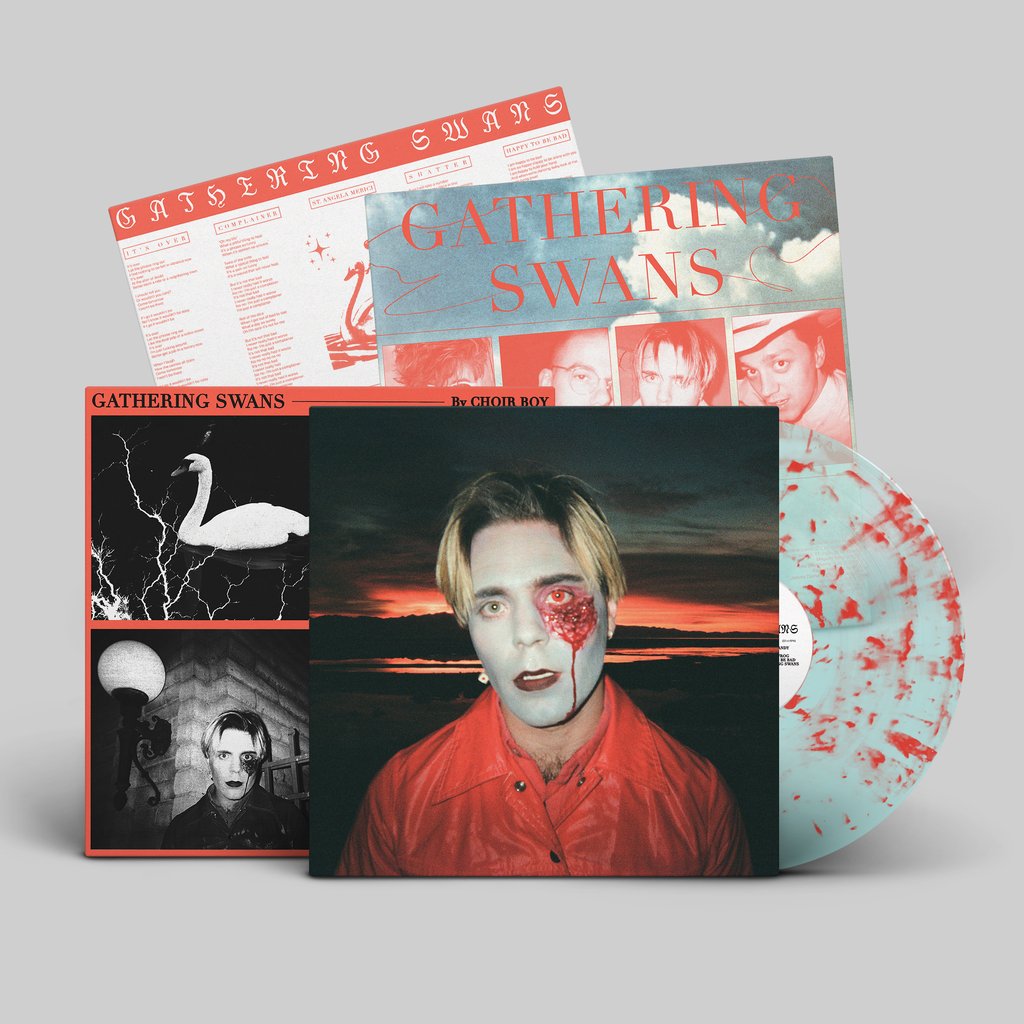
Choir Boy debuted with the warmly received album ‘Passive With Desire’ in 2017. After signing to Dais Records, Choir Boy followed up with the 2018 single, “Sunday Light” and a lovingly packaged reissue of the debut album. Here’s the thing about Choir Boy singer Adam Klopp: his voice is so captivating, so utterly out-of-this-world that it’s easy to forget there’s a proper band co-piloting the project’s ethereal pop songs. In the three years since Choir Boy signed to Dais with their “Sunday Light” EP, the group’s core duo of Klopp and bassist Chaz Costello has grown to include guitarist Michael Paulson and saxophonist/keyboardist Jeff Kleinman.

http://

The quartet’s Gathering Swans LP finds them at the peak of their melancholic powers, bringing Klopp’s acrobatic melodies into full relief alongside serious hooks and synth-laced power chords. . This band is truly bold to weave such a deep and creative sound. Choir Boy has a haunting and mystical nature with deep introspection into the intensity of feelings. What an honest approach to music

Featuring Christine Perfect (better known as the future Christine McVie of Fleetwood Mac) the British ensemble Chicken Shack offers up a solid set of blues-influenced rock on their 1968 LP, fully titled 40 Blue Fingers Freshly Packed And Ready To Serve. This LP was a promising debut, especially noteworthy for Stan Webb’s Freddie King-inspired guitar playing and Christine Perfect’s vocals.

Featuring Christine Perfect (better known as the future Christine McVie of Fleetwood Mac) the British ensemble Chicken Shack offers up a solid set of blues-influenced rock on their 1968 LP, fully titled 40 Blue Fingers Freshly Packed And Ready To Serve. This LP was a promising debut, especially noteworthy for Stan Webb’s Freddie King-inspired guitar playing and Christine Perfect’s vocals. Webb does justice to his mentor with two instrumentals, King’s “San-Ho-Zay” and his own “Webbed Feet,” and Christine proves the ideal counterpart: one of the few pianists paying homage to King’s longtime collaborator Sonny Thompson. It remains their finest work; Perfect left the band in 1969 when she married John McVie of Fleetwood Mac. Pianist Paul Raymond, bassist Andy Silvester, and drummer Dave Bidwell all left in 1971 to join Savoy Brown.

The 50th Anniversary edition of 1.500 individually numbered copies will be available on transparent blue vinyl.

Image may contain: 1 person, closeup and outdoor

Phoebe Bridgers will return with her new album “Punisher”, which will be released on June 19th via Dead Oceans. She’s already shared both “Kyoto” and “Garden Song” from the album and now she’s most recently returned with third single, “I See You.”

Originally entitled “ICU,” the song’s spelling was changed to “I See You” and is actually about her break-up from her drummer Marshall Vore, who she co-wrote the song with. It’s a sprawling take on the sound that Bridgers created on her debut, with a more expansive reach than before, but it doesn’t stray too far from the sound that listeners fell in love with.

Says Bridgers of “I See You”: It’s about my breakup with my drummer. We dated for a few years, made music every day, and were extremely codependent. We became like family to each other, so our breakup was extremely tough. But if this tells you anything about our relationship, we wrote this song together, just like everything else.”
She’s also creatively launched her “Phoebe Bridgers World Tour” which will see her live stream from places in her house, such as her kitchen, bathroom and bed.

Punisher is her sophomore album, the follow-up to her acclaimed debut album, Stranger in the Alps, released in September 2017 via Dead Oceans. For Punisher she reteamed with Stranger in the Alps’ producers/collaborators Tony Berg and Ethan Gruska, although this time Bridgers co-produced the album with them. Mike Mogis mixed the album, as he did with her debut.

Bridgers is releasing a new album, Punisher, on June 19th the next track she has shared “I See You,” via a lyric video featuring hand shadow puppets. She has also announced “Phoebe Bridgers’ World, Tour,” which is really Bridgers doing live streamed concerts from different rooms in her house, each in conjunction with a different media outlet.

“I See You” by Phoebe Bridgers from her upcoming record ‘Punisher,’ out June 19th on Dead Oceans.

Image may contain: one or more people and text

Release classic: Willie Dixon – “I Am The Blues” On this 1970 LP, the quintessential blues songwriter performs his own tunes – each one a classic: “I’m Your Hoochie Coochie Man”, “The Little Red Rooster”, ” Spoonful” and of course “Back Door Man”, to name but a few! Long overdue, the album was inducted into the Blues Hall of Fame in 1986, whereas Willie Dixon was posthumously inducted into the Rock and Roll Hall of Fame in 1994.

Available May 29th as a 50th-anniversary edition of 1500 individually numbered copies on transparent blue vinyl.