Archive for the ‘CLASSIC ALBUMS’ Category

There’s something special about an artist whose music reaches the full potential of a particular genre while also transcending it altogether. That can be said about Nirvana with grunge, Miles Davis with jazz, My Bloody Valentine with shoegaze and so on. One could also add Nation of Language to that list, with respect to new wave music.

The Brooklyn-based band, led by vocalist and songwriter Ian Devaney and featuring his wife Aidan Devaney on keys and Michael Sui-Poi on bass, unleashed their debut album Introduction, Presence last month, and it’s crowned them as the most exciting new synth-pop act in years. The band has been releasing invigorating, ’80s-indebted singles for about five years now—tracks like “I’ve Thought About Chicago” and “Reality” are undoubtedly direct descendents of Pet Shop Boys, A Flock of Seagulls and Orchestral Manoeuvres in the Dark, but there’s also a subtle glow that recalls 21st century anthemic indie rock à la Arcade Fire, The National and The Killers. While their decade-spanning influences can certainly be scavenged, their songs always sound bigger than them—Devaney’s songwriting feels essential and eternal.

It might not be the best time to release a highly-anticipated, highly-danceable album, but “Introduction, Presence” resonates in kitchens and cars just as well as it would in the animated bars of New York City. Ian Devaney is currently sitting by the bedroom window in his Brooklyn apartment, which overlooks an alley full of weeds that have grown far larger than normal. “It’s kind of sad actually,” Devaney says. “Over the last couple weeks, I’ve watched them grow from little tiny weeds into big bushes. It’s my little bit of nature.”

Like most of us, he’s feeling strange about the present circumstances, but his album release date was something to look forward to, and it also happened to be his 30th birthday. During quarantine, he’s been pinging between instruments, recording equipment, video games and books, which are all set up near him so he can simply “follow [his] spirit.”

It’s no secret that 1980s nostalgia has been prevalent in indie rock for years now. From Future Islands and Interpol to The 1975 and TOPS, countless bands from the last two decades have found success filtering their music through distinctly ’80s lenses. Still to this day, you can hardly swing a dead cat without hitting an indie band with one or more of these elements: interstellar synths, bass-driven songs, rich production and melodramatic vocals. To join these ranks is both a blessing and a curse. On one hand, there’s a huge demand for music that sounds like it came from the era of big hair and goths, but on the other hand, it’s hard to stand out in such a saturated market—and even harder to make lasting, impactful songs that transcend its revivalist label. New York City band Nation of Language approach this weighty task with more grace and far better song writing chops than the vast majority of bands who attempt retro pastiches or something close to them. For starters, lead singer and songwriter Ian Devaney (formerly of Static Jacks) has a low-pitched, aching voice that just screams classic new wave, but more crucially, he has an ear for awe-inspiring melodies and synth lines that go above and beyond mere cinematic uplift. Nearly every one of his songs prompts a mental highlight reel of one’s own life, but without the stylish, candy-coated nostalgia that’s fetishized nowadays—it’s the profound kind that allows you to view yourself at your lowest and highest moments and see the beauty in having a finite amount of time to live.

Nation of Language formed in 2014, around the same time Devaney’s previous band, The Static Jacks, dissolved. The Static Jacks toured internationally and released two albums of garage rock-tinted indie-pop, and although Devaney hadn’t yet found his feet, you can hear his knack for song writing and budding interest in 1980s pop (see “Mercy Hallelujah” and “Katie Said”). With Nation of Language, Devaney didn’t start from scratch with hopes of becoming the next big buzz band—the group simply came from a place of musical experimentation.

“I didn’t think of it as ‘I’m starting a new band,’” Devaney says. “It was just an exploration of trying to write a different style song than I had been writing for years. Even after we had played a couple of shows, it wasn’t a very serious thing until Aidan joined the band. She’s a very ambitious person and wants to go out and play, and that made me believe in myself and the music more.”

While Devaney says making the music was quite a deliberate process, their debut album itself just sort of happened.

“‘Indignities’ has been out for a while, but when we recorded it, I didn’t so much think, ‘We’re piecing together an album,’” Devaney explains. “It was just like, ‘We’ve got enough money that we can go do this, so let’s get in there and make a song.’ I had a certain amount of unreleased material that felt like it lived so well with these things that we had released earlier that I was like, ‘Let’s just call this a bundle of our early works.’”

Introduction, Presence is satisfyingly 10-tracks-long, and it’s essentially a greatest hits album—excluding only the stirring early single “I’ve Thought About Chicago,” which was curiously left off the tracklist. Despite its compilation feel, it has mindful sequencing. The first half is exhilarating—almost like they wanted listeners to be fully impressed right from the jump. You can’t hear “Tournament” and “Rush & Fever” without imagining a crowd hanging on its every beat with their bodies intuitively swaying and eyes blissfully shut. Then comes the peak of this record’s poignant nostalgia, “September Again” and “On Division St,” followed by the rhythmic post-punk glory of “Indignities.” The latter half of the album is a bit more spacious and varies more in tempo and style, but it doesn’t conclude without one more life-affirming dancefloor filler, “The Wall & I.” It’s all packaged so thoughtfully, and it leaves you wanting more.

Devaney said he’s always striving to write something as good as LCD Soundsystem’s “All My Friends,” and you can hear nods to Brooklyn’s dance-punk gods and that wide-eyed NYC pulse rushing through nearly every song. However, he pushes back against the idea that Nation of Language are a distinctly New York City band. Yet, it’s still hard not to imagine Introduction, Presence as a soundtrack to the lives of New Yorkers who feel both uplifted and quashed by the mythology of the city.

“I think those are big brushes that I used to make the record—that hopeful melancholia thing,” Devaney says. “I think New York probably amplified that, but I think that’s maybe part of the reason I was drawn to live here in the first place—the hopeless, never-ending struggle aspect.”

Nation of Language sound refreshingly out of step with the gentrified Brooklyn scene’s trendy bedroom pop and tired art-punk acts, but they never felt a part of that world to begin with.

“We’re down south of Crown Heights and Lefferts Gardens, and so there’s this feeling of being in Brooklyn and a part of the action, but also very much separate from it,” Devaney says. “I think that’s probably good for me because if I lived right in the middle of everything, I might not leave myself the time to actually work on the music and just spend all my money hanging out with people. Just being in Brooklyn is a very important thing to me—just something about the fact that when you look around, it feels like people are pursuing something and striving for something. It’s inspirational and makes me want to get back to it.”

Devaney likes the primitive quality of early new wave, when artists were only just scratching the surface of the possibilities of synthesizer-based music. It wasn’t overly technical, but it still transmitted emotions in a way that was quite profound. When Devaney shifted from writing indie-pop tunes to new wave ones, he liked the idea of not fully knowing what he was doing, but he’s not worried about losing that charming novice quality that so many bands struggle to maintain beyond their first few records.

“There are so many different options out there for different ways of creating music using a synthesizer, that I think between that and the fact that I’m not very good at guitar or bass means that there will be that sort of beginners’ touch for quite a long time,” he says.

Pretenders – Live at The Paradise Theatre, Boston 1980. Reissue of promo-only Warner Bros.Music Show featuring new artwork including photos from the show. Forty years ago this month, Chrissie Hynde’s Pretenders played Boston’s Paradise Rock Club — then known as the Paradise Theater  Included for the first time in Pretenders  this will be available on 1-LP Coloured vinyl for RSD 2020. Titled Live! At the Paradise Theater, Boston, 1980, the 11-song set was recorded March 23rd, 1980, and will be pressed on red “colour-in-colour” vinyl and will feature brand new artwork.

Now in its 12th year, Record Store Day falls in late August (delayed by coronavirus) this year. Head over to the recordstoreday.com and recordstoreday.co.uk websites to see full lists of exclusive, limited-run and “RSD First” releases along with participating record stores in the U.S. and the U.K., respectively.

Tracklisting:
Side One: 1.Space Invader, 2.The Wait, 3.Precious, 4.Kid, 5.Private Life, 6.Cuban Slide
Side Two: 1.Talk Of The Town, 2.Tattooed Love Boys, 3.Up The Neck, 4.Mystery Achievement, 5.Stop Your Sobbing.

recordstore day

Image may contain: 3 people, people standing and text

Braids have been taking the time and space necessary for little miracles to occur. Burrowed in their Montreal studio, the band has spent the better part of three years crafting “Shadow Offering”, their 4th album, due out in June 2020 via their new label home, Secret City. On Braids’ fourth album, Shadow Offering, the Montreal art-pop trio is at its cleanest and most refined. They teamed up with producer Chris Walla, who teases out the rockier side of their tunes, turning the group’s taut synth reveries into glistening and forceful songs that tackle topics like abuse and desire and self-hatred. Raphaelle Standell-Preston’s voice is dizzying; she presents her fears not as a persistent dull ache but as something that is going to rip her apart from the inside out.

Unlike previous albums, Braids decided to stay close to home for the recording of Shadow Offering. Taking over a spacious sound recording studio tucked in an old warehouse, the band were able to slow down and creatively rediscover themselves. “With this album, we wanted to give ourselves time to achieve a higher caliber of artistry and collaboration,” Tufts says. No longer riding the novelty of youth, the band deliberately took time to recommit to themselves and their craft, and channel new energy into their music. They wrote 40 songs. They went through their Saturn Returns. They learnt how to support one another better. They drank a lot of La Croix.

The band sketched and re-sketched new material for eighteen months before lucky circumstance found Chris Walla (Death Cab For Cutie) renting out space in their studio. The four began wandering into each others’ rooms, curious about each others’ projects. Typically opting for a private and insular creation process, the friendship between the four saw the band sharing their songs with Walla, and naturally resulted in Walla co-producing and engineering Shadow Offering. Pushing the band out of their comfort zone, he at once broke and unified the band’s dynamic, unearthing individual creative energy long buried over the years. With a new sense of confidence, listeners will find Braids at their most personal, unabashedly flexing through their new music.

Braids are a Montreal-based, three-piece band. Formed in 2007, they have solidified a decade-long reputation for their musical ingenuity and established themselves as one of Canada’s most acclaimed art rock bands. With Standell-Preston’s vocals as the pillar of their sound, Braids weave organic and electronic elements together amidst a lyrical landscape that is intimate and emotionally-immersive

No photo description available.

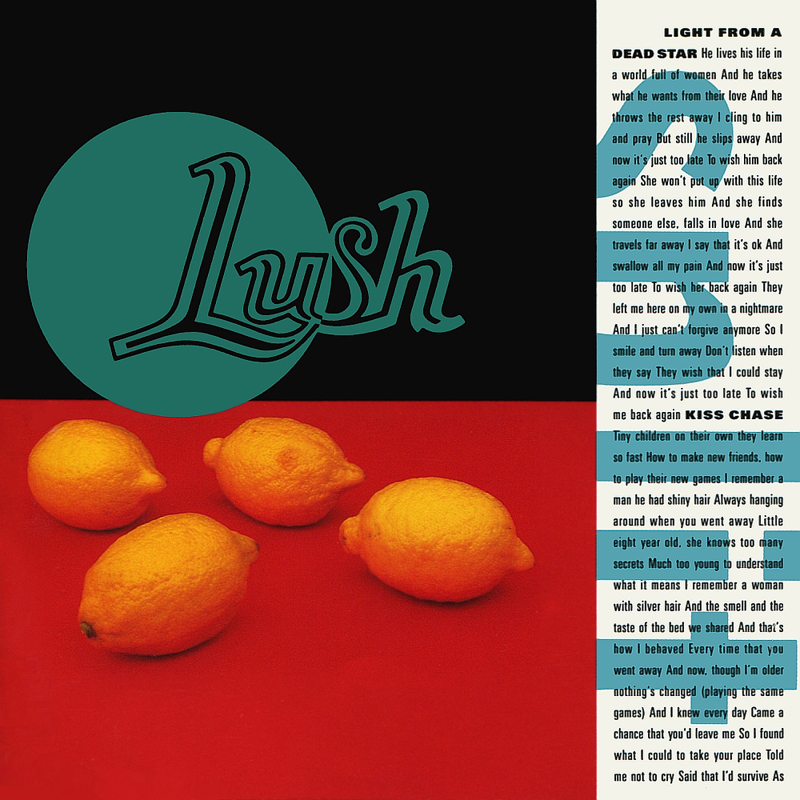
Lush were an English rock band formed in London in 1987. The original line-up consisted of Miki Berenyi (vocals, guitar), Emma Anderson (vocals, guitar), Steve Rippon (bass) and Chris Acland (drums). Phil King replaced Rippon in 1991. They were one of the first bands to have been described with the “shoegazing” label. Following the death of Acland, the group disbanded in 1996.

The group reunited for a short time between 2015 and 2016 with Berenyi, Anderson, King and Justin Welch. They toured and recorded an EP of new material before permanently and amicably disbanding to focus on their own personal lives

The band formed in 1987 in London, initially named the Baby Machines (after a line in the Siouxsie and the Banshees song “Arabian Knights”), with a lineup of Meriel Barham (vocals), Emma Anderson (guitar, vocals), Berenyi (guitar, vocals), Steve Rippon (bass) and Chris Acland (drums). Their influences were diverse; they were inspired by the garage rock scene of the Nuggets series, Cocteau Twins, Siouxsie and the Banshees, the Beach Boys and the Byrds.

Anderson and Berenyi had been school friends, having known each other since the early 1980s, and together published the Alphabet Soup fanzine. In 1986, Anderson joined the Rover Girls as bassist, and Berenyi joined the Bugs, also as a bass player. Neither band lasted long, and in 1987, they joined Barham and Acland in the Baby Machines. Rippon joined shortly thereafter, and the band members decided on a change of name to Lush, making their live debut at the Camden Falcon on 6th March 1988. Barham left the band and later joined Pale Saints. Berenyi then took on lead vocal duties.

Anderson said of the band’s beginnings: “We were kind of punk rock in one way. We did think, ‘Well, if they can do it, why the fuck can’t we?’ Basically, our idea was to have extremely loud guitars with much weaker vocals. And, really, the vocals were weaker due to nervousness – we’d always be going ‘Turn them down! Turn them down!'” Berenyi said, “We started by writing crappy riot grrl anthems… which was probably charming in a juvenile way. But there was a very rapid shift from the minute we started to write for records. The music, the lyrics became much more thoughtful and expressive, more important, really. I remember that change beginning when Emma wrote ‘Thoughtforms,’ it certainly made me think I needed to get my act together.

No photo description available.

Scar, EPs and Spooky (1989–92)
In 1989, the band signed to 4AD Records and released their first recording Scar, a six-track mini-album. Critical praise for Scar and a popular live show quickly established Lush as one of the most written-about groups of the late 1980s/early 1990s UK indie scene. Anderson told Everett True in Melody Maker, “I remember when I couldn’t play, I wasn’t in a band, didn’t know anyone else who could play, and now we’ve got a record out on 4AD. I sometimes find it impossible to come to terms with what’s happening.”

Not long after, the British music press tagged them with the “shoegazing” label. The following year, the EPs Mad Love (produced by Robin Guthrie of Cocteau Twins) and Sweetness and Light (produced by Tim Friese-Greene) were released. All three releases were eventually combined into the Gala compilation album, which was produced mainly for the US and Japanese markets. The band recorded a live session for John Peel’s BBC Radio 1 show in 1990 and contributed a cover version of “Chirpy Chirpy Cheep Cheep” later that year to the anti-poll tax album Alvin Lives (In Leeds).

The band’s profile was raised by extensive touring, including an appearance at the Glastonbury Festival in June 1990 and tours of Japan in late 1990 and the US (with Ride) in the spring of 1991.

Lush - Spooky

Preceded by the Black Spring EP issued in October 1991, Lush’s first full-length album of completely new material, “Spooky”, was released in January 1992. Again produced by Guthrie, Spooky featured a sound very similar to Guthrie’s band Cocteau Twins, with walls of sound and a great deal of guitar effects. Reviews were mixed and critics of the album held that Guthrie’s production brought the sound away from the band’s original creative vision, although it sold well, reaching No. 7 in the UK Albums Chart. The album was preceded by the band’s first UK top 40 single, “For Love”, which was partly re-recorded and remixed by Mark Freegard. He also produced the single’s B-sides: the original recording of “Starlust”, Wire cover “Outdoor Miner” and the only Lush track with lead vocals by Anderson, “Astronaut”. Gil Norton remixed “Superblast!” for the Japanese single release.

Rippon left the band after recording the “For Love” EP to concentrate on writing, though his book Cold Turkey Sandwich—a fictionalised chronicle of his time touring—was rejected by publishers. He was replaced by Phil King. During the summer of 1992, Lush toured America as part of the second edition of the Lollapalooza festival. Lush was added to the roster by Lollapalooza organiser Perry Farrell, the Jane’s Addiction/Porno for Pyros frontman, who personally requested Lush.

Lush - Split

Split, Lovelife and break-up (1993–96)

Lush approached Bob Mould to produce their second album. The band stated that Mould was too busy to produce them, but Mould said in a Spin article that he backed out because “I kept picking the wrong girl’s songs… I had to get out before I broke up the band!” . The band found completing Split frustrating. It was recorded by Mike Hedges at Rockfield Studios in Wales. Then Hedges along with the band went to mix the recordings, first at Abbey Road Studios, and then at Hedges’ studio in Domfront, France. However, neither the band nor Ivo Watts-Russell of their label 4AD were satisfied with the sound; eventually Alan Moulder was hired to remix it. Unusually, the band released two EPs from the album (“Hypocrite” and “Desire Lines”) both on the same day (30th May 1994).[10] Neither single broke into the UK Top 40. Released on 13th June 1994, Split was less successful than Spooky.

One of several names quickly reeled off when talking of shoegaze’s original heyday, Lush developed a more punky and Britpop-oriented sound as the ‘90s progressed. For “Split” this album offers perhaps the best balance between the gazey roots of a scene spearheaded by Loveless, and Lush’s more caustic and angst-ridden direction to come. Released on the same day in 1994 as the ‘Hypocrite’ single, and taken from the Split album,

The band concentrated on the American market, on the advice of their management, but failed to make a breakthrough. A third EP from “Split”, planned for release in the autumn of 1994, was to have featured “Lovelife” as the lead track along with a version of “The Childcatcher” recorded during the “Split” sessions; but the release was shelved by management. This first version of “The Childcatcher” was released three times: on the Secret Tracks 2 free cassette included in the May 1994 issue of Select magazine, on the 4AD compilation All Virgos Are Mad and as part of the double 7″ compilation EP From Greer to Eternity, issued on Fierce Panda Records later that year.

They suffered further setbacks when tours of Japan and the UK were cancelled. They decided to break from their manager, Howard Gough, and begin work on a new album. However, the new management also prioritised achieving success in America.

Lovelife, the band’s third album, was released in March 1996. It was produced by Pete Bartlett, the band’s live engineer. Lovelife represented a change in production, with less reliance on heavy guitar effects. It became the biggest seller of their career, possibly as it was more in step with the contemporary Britpop style. Lovelife included the hit singles “Single Girl”, “Ladykillers” and “500 (Shake Baby Shake)”, and also featured a guest appearance by Jarvis Cocker of Pulp duetting with Berenyi on the song “Ciao!”.

Instead of capitalising on their success in the UK, the band’s management sent them on an ill-conceived American tour with the Gin Blossoms. With the band members feeling pressured and tired, Anderson discussed leaving. She stated she could not make another Lovelife but would rather make a smaller, more personal album. The other band members were amenable to this idea, with Berenyi, in particular, being keen to keep the band together.

In September 1996, the band played their last performance, prior to reuniting, in Japan. A month later, tragedy struck the band when drummer Acland died by hanging himself in his parents’ garden on 17th October. The band effectively went on an extended hiatus, officially announcing their break-up on 23rd February 1998.

Post-breakup (1998–2014)
Berenyi went on to work as a production editor at two major magazine publishers. In 1998, Anderson formed a new group, Sing-Sing, with singer Lisa O’Neill. Sing-Sing released two full-length albums but in January 2008, announced they were disbanding. Anderson lived in Hastings and has held various jobs in the music business in management, PR, accountancy and at a booking agency. King played bass for the Jesus and Mary Chain and also worked for Uncut magazine as a picture researcher.

Reformation and second break-up (2015–2016)
In September 2015, the music press suggested a reunion might be planned after Anderson posted a cryptic “7 day.” message on social media and an official band website appeared.  On 28th September, Lush announced their reunion on their Facebook page. The reunited band consists of Anderson, Berenyi and King with the addition of Justin Welch (Elastica) on drums, an old friend of Chris Acland.

We wish it could have been sooner but, for many years, it was just too painful to contemplate without Chris, and then all kinds of life-changing commitments made it impossible. Now, at last, the three of us are in the right place at the right time to play music together again.

No photo description available.

To celebrate their return, 4AD released a limited red vinyl double LP of their compilation Ciao! Best of Lush on 7th November 2015, followed on 11th December by Chorus, a CD-only, 5-disc box set containing almost all of their released material along with a selection of rarities, radio sessions and demos. The record’s artwork has been reformatted to now become a gatefold LP and includes the original sleeve notes as written by Dominic Wills. First time on vinyl for this classic compilation from Lush. 18 tracks which demonstrate with considerable panache just what was great about Lush. ‘Ciao!’ takes on the band’s legacy in reverse order, showcasing the later pop punches like ‘Single Girl’, ‘Ladykillers’ and ‘500 (Shake Baby Shake) all taken from their amazing swan song ‘Lovelife’, before going onto explore the weighty themes and dense guitar textures of ‘Split’, working back to the Robin Guthrie produced ‘Spooky‘ to the early woozy harmonies of their 1989 mini-album ‘Scar’.

For Record Store Day 2016, 4AD released a limited edition 5-LP colour vinyl box set titled Origami, comprising Gala (clear vinyl), Spooky (silver vinyl), Split (red vinyl), Lovelife (pink vinyl) and the first vinyl release of the Canadian version of Topolino (yellow vinyl), with revised artwork by Chris Bigg. The UK/European version was packaged in a white cardboard “pizza box” emblazoned with three different Lush logos from the years 1990, 1994 and 1996.

Lush also announced a show at the Roundhouse in London on 6th May 2016, and later added a second date, 7th May 2016, after the first show sold out in six hours. They alluded to further dates in North America, their first tour in 20 years was announced.

On 15th April 2016. the band announced the release of the “Blind Spot” EP, the band’s first new material since 1996. It was produced by Jim Abbiss and Ladytron member Daniel Hunt.

On 18th October 2016, the band announced the departure of bassist King on their official website. On 15th November 2016, Lush issued a statement announcing that Michael Conroy of Modern English would play bass for the final show at Manchester Academy, and confirming the band would split after the show.

Lush - Origami

Origami is an LP boxset that contains the three Lush albums Spooky (1992), Split (1994) and Lovelife (1996) and their compilations Gala (1990) and Topolino (1996). All have been out of print since the nineties except Topolino, which has never before been available on vinyl.
Housed in a box designed by long-time associate and former v23 collaborator Chris Bigg, each album is pressed on a different colour of vinyl. Download codes for each album are included. As a surprise, a bonus download of ten of Emma and Miki’s Home Demos was also included.

It’s been a fantastic year for Lush. We received an incredible reception to our “Blind Spot” EP and the three beautiful career-spanning 4AD releases, sold out two Roundhouse shows, toured North America with great success and had a ball at our European festival appearances. It’s been wonderful to revisit our old music and to create new material. However, it is now time for us to return to our families and homes, and bring our time together as a band to a close. We offer heartfelt thanks to all our fans – this reunion would never have happened without your overwhelming support and dedication.

Piroshka (2018)
In September 2018, the formation of new band Piroshka was announced, a quartet including Berenyi, Welch, Conroy and former Moose member K.J. “Moose” McKillop. Their debut album, Brickbat, was released by Bella Union on 15th February 2019

Studio albums
Scar (mini-album) October 1989
Spooky January 1992
Split June 1994
Lovelife March 1996

EPs:
Mad Love February 1990
Sweetness and Light October 1990
“De-Luxe” March 1991
Black Spring October 1991
“Nothing Natural” October 1991
“For Love” December 1991
“Superblast!” February 1992
“Hypocrite” May 1994
“Desire Lines” May 1994
“Single Girl” January 1996
“Ladykillers” February 1996
“500 (Shake Baby Shake)” July 1996
Blind Spot April 2016
Live At KCRW – Morning Becomes Eclectic Cd Only

Band Members:
Miki Berenyi,
Emma Anderson,
Chris Acland,
Meriel Barham,
Steve Rippon,
Phil King,
Justin Welch,


Bright Eyes have been back with a few new songs of late and today we finally get the announcement that we’ve all been waiting for. Conor Oberst and co. are back with their brand new album (their first in 9 years), “Down In The Weeds Where The World Once Was”, which will be released on August 21st via Dead Oceans.

A lone pair of footsteps meanders down a street in Omaha, into the neighborhood bar and then into a near-imperceptible tangle of conversations – about wars, sleepless nights – a surrealist din pushing against the sound of ragtime. Then, as the background quiets, a line rings out clearly: “I think about how much people need – what they need right now is to feel like there’s something to look forward to. We have to hold on. We have to hold on.”Thus we enter the fitting, cacophonic introduction to Bright Eyes’ tenth studio album and first release since 2011. Down in the Weeds, Where the World Once Was is an enormous record caught in the profound in-between of grief and clarity – one arm wrestling its demons, the other gripping the hand of love, in spite of it.The end of Bright Eyes’ unofficial hiatus came naturally. Conor Oberst pitched the idea of getting the band back together during a 2017 Christmas party at Bright Eyes bandmate Nathaniel Walcott’s Los Angeles home. The two huddled in the bathroom and called Mike Mogis, who was Christmas shopping at an Omaha mall. Mogis immediately said yes. There was no specific catalyst for the trio, aside from finding comfort amidst a decade of brutal change. Sure, Why now? is the question, but for a project whose friendship is at the core, it was simply Why not?The resulting Bright Eyes album came together unlike any other of its predecessors. Down in the Weeds is Bright Eyes’ most collaborative, stemming from only one demo and written in stints in Omaha and in bits and pieces in Walcott’s Los Angeles home. Radically altering a writing process 25 years into a project seems daunting, but Oberst said there was no trepidation: “Our history and our friendship, and my trust level with them, is so complete and deep. And I wanted it to feel as much like a three-headed monster as possible.”

Bright Eyes: Down in the Weeds, Where the World Once Was: Limited Edition Transparent Orange + Red Double Vinyl 2LP, CD + Exclusive Signed Print
Along with the album announcement comes the release of the newest single “Mariana Trench,” which is another winning effort from the band who seems rejuvenated with a new lease of life here. The band is tapping into the fully formed songwriting that made us fall in love with them in the full place, while also flexing a new muscle at the very same time.

“Mariana Trench” is the next song by Bright Eyes off ‘Down in the Weeds, Where the World Once Was’ out August 21st on Dead Oceans.

Circles Around The Sun and Billy Strings teamed up for a cover of “All The Luck In The World” by Neal Casal. The collaboration is the first single off of the forthcoming “Highway Butterfly: The Songs of Neal Casal” compilation album in tribute to the late guitarist who died last year.

Highway Butterfly will feature contributions from Phil Lesh, Warren Haynes, Steve Earle, Shooter Jennings, Jimmy Herring, Eric Krasno, and many more, with proceeds from the project to benefit the newly-launched Neal Casal Music Foundation. This non-profit organization gives instruments and music lessons to children in New Jersey and New York, as well as provides mental health services through organizations like Backline and MusiCares in memory of the musician who committed suicide on August 26th, 2019.

Taken from the forthcoming 2021 release, Highway Butterfly: The Songs Of Neal Casal. This double CD/triple album vinyl is being co-produced by Widespread Panic’s Dave Schools and 7-time Grammy-Winner Jim Scott and features almost 30 artists covering Neal’s songs.

“All The Luck In The World” comes from Casal’s 1996 album Rain Speed & Wind, his second of 12 solo records. Though he became more well-known for his instrumental guitar work, “All The Luck In The World” showcases Casal’s thoughtful lyricism and is done justice by Strings’s singing. The performance is given added reverence as Strings begins the video by discussing how he came to know Casal and his music through CATS’ Interludes for the Dead album, which played over the PA’s at the Grateful Dead‘s Fare Thee Well concerts in 2015. The song is set to an in-studio performance video featuring various Casal memorabilia, as well as Widespread Panic bassist Dave Schools, who produced the album. Casal and Schools worked side by side alongside Todd Snider and others in the band Hard Working Americans.

In addition to Highway Butterfly, there will also be a book of Casal’s photography released under as Tomorrow’s Sky: Photographs by Neal Casal in November. Produced by Jay Blakesberg, Tomorrow’s Sky features a selection of the more than 25,000 photographs Casal left behind in a curated collection. The photos chronicle Casal’s time playing with Chris Robinson Brotherhood, Ryan Adams & the Cardinals, Hard Working Americans, Circles Around The Sun, his own successful solo career, and many more musical endeavors. Strings counts photos that Casal took of him performing onstage among his prized possessions.

“‘Tomorrow’s Sky’ is a look at the world seen through the eyes of Neal Casal,” Blakesberg said. “Neal was a stealth photographer who always carried his camera and documented the people, places and scenes as they passed before him. The photos are intimate, beautiful and from the hip. Nothing is set up, it is real life in real time.”

Visit the Neal Casal Music Foundation’s website for more information on the forthcoming projects, or to make a donation.

neal casal, neal casal tribute, billy strings neal casal, billy strings circles aroung the sun, highway butterfly neal casal, highway butterfly, neal casal music

Image may contain: 1 person, text that says 'Joe Pernice Richard'

Joe Pernice strips things down to the bare minimum on this mostly acoustic collection of regret-tinged songs. While The Pernice Brothers have made many excellent lush, highly orchestrated albums over the years, you can tell that most of Joe Pernice‘s songs start with an acoustic guitar. He’s got the kind of honeyed voice — and literate songcraft that doesn’t need much embellishing to get the point across. That’s clear on his new solo album, Richard, which is pretty much just Joe and his guitar.

Maybe it’s the directness of the presentation, but Richard is an especially sad record, with little of Pernice’s dark humor to cut the pain this time. Nearly every song is tinged in regret, whether it’s “wasting away my life with you” on twisted love song “Long Black Shadow,” or album opener “Starry Clown” where “every sorrow’s easy and spurious love survives.” Even the “la-las” on “Sullivan Street,” set against delicate horns, sound like a lament.

http://

Two back-to-back songs are especially crushing.  “Spend This Mountain” finds him trying to put on a brave face against a terrible loss. “When they woke me with the news, man I wish I’d never come to,” he sings, and I have to wonder if this one’s about his close friend David Berman. The other gut-punch is Richard’s title track where Pernice wishes he’d done more to befriend a bullied LGBTQIA kid that, with its refrain of “always alone, always to be alone” and Joe’s slight British-y accent, sounds like it could’ve been an early Smiths b-side.

Joe Pernice is, as always, in baroque pop mode, melody-wise, which is tailor suited to his voice, with a few cowboy ballad touches — nylon string guitar, harmonica — that also fit the songs perfectly. “Solo” has rarely sounded so lonesome and beautiful.

Released June 19th, 2020 >

Written, performed and recorded by Joe Pernice, except You Should of Came, recorded by Liam Jaeger.

Chuck Prophet, San Francisco’s saviour-songwriter, returns with his new album “The Land That Time Forgot”. Varying from the rich heartland rock of songs like Best Shirt On, to the building drum machine of Marathon and all the way back to stripped back words and guitar of Nixonland and Get Off the Stage, Prophet’s work defies classification.

Chuck Prophet is a rock and roll star in a country that has forgotten that it needs rock and roll stars. America turns its popular musicians into celebrities (as if that’s what we need more of). Meanwhile, the true grit, write it like you live it and live it ’til it kills you musical artist exists in obscurity, kicking ass and taking names in small clubs every night while sweating blood over making records. Thankfully, we live in the same timeline as Chuck Prophet.

“The Land That Time Forgot” got off the ground in the Money Belt, only to find its legs in the Borscht Belt. Musically it has deep roots, from the Southern Delta to the discos of Munich. There’s a kind of folkish inevitability to it, lots of acoustic instruments, on top of the each other and side by side. But as much as folk music is the soil all music grows from, it never hurts to have a boiler room. So, there’s always a rhythm section shuffling under your feet here.

Written mostly with longtime co-conspirator klipschutz, this LP steps out of Chuck Prophet’s comfort zone (“two guitars, bass, and drums”). After nailing three tracks in S.F. with Grammy-winning alchemist Matt Winegar, Prophet confesses, “We hit a wall. Schedules. Money. Towed vehicles: a thousand large to get one van out of lockup.”

The Band:
Chuck Prophet – vocal, acoustic guitar, electric guitar Stephanie Finch – vocals, keyboards James DePrato – electric guitar Matt Winegar – bass, keyboard, percussion Rusty Miller – keyboards Vicente Rodriguez – drums

Image may contain: 1 person, text

Lucy And The Rats return with their second album and produce another fine record of summer-infused power-pop garage full of hooks and harmonies.

Two years have passed since their debut album, and, as the summer slowly starts to kick in, London-based four-piece Lucy And The Rats release another record to soundtrack the hazy days and warm nights.

Lucy, originally from Australian group The Spazzys, has a sugary sweet voice, crystal clear and yet, although the melodies float softy over the stripped-back punk-pop choppy chords, she possesses a strength of personality within the lyrics that belies the first impression. Her songs sing of independence, feelings of settling into a happiness within one’s own skin, but always with a bittersweet touch. At times it’s like hearing a young, and perhaps more timid, Debbie Harry and the overall combination, along with her band, comes closest to that of Nikki And The Corvettes.

Those already familiar with the band will find no surprise in songs like the single September, or in the infectious Time To Time. Simple and catchy, the songs are earworms that quickly work their way into your consciousness and are hard to shake loose. However, the songs that jump out more are those where the band leave the sweetness to one side in favour of a more urgent rhythm and drive. Pinch Myself comes close to a Ramones-style attack and, given that the band that back Lucy up also form the backbone of Johnny Throttle, and have also played in the likes of Thee Tumbitas and The Gaggers, it’s logical that, once let off the leash, the band run with greater verve and energy. It’s in those moments that they call to mind some of Lookout! Records highlights in bands like Pansy Division and The Smugglers.

That said, what also marks the album as a step up from their debut is their ability to balance that sound with altogether much gentler songs such as On Fire and TV on which their fragile delicacy shines through. It’s that equilibrium between the pop and punk that results in a record to keep going back to.

Lucy and the Rats – ‘September’ from the album ‘Got Lucky’, out July 3rd on Stardumb Records & Surfin’ Ki (LP) and Dirty Water Records

Image may contain: 1 person, outdoor

The first time I heard this song, I knew immediately it would become one of my favourites of the year. For one thing, one of my other favorite musicians (Sara Watkins, of Nickel Creek, Watkins Family Hour and I’m With Her fame) plays fiddle on this gorgeous, gut-punch-of-a-song, and there’s no shortage of banjo, either (an instrument Bridgers has implemented lightly on songs in the past like “Demi Moore,” but never like this), and Bridgers’ boygenius counterparts Lucy Dacus and Julien Baker provide backing vocals.

This is a bluegrass-emo-banjo banger, and while some of the lyrics could sound, at first listen, like a quote pulled from an Etsy poster with mountains in the background (“She could do anything she wants to), Bridgers owns it so hard—and still manages to convey that sense of wanderlust. There’s mention of southern hallmarks like Elvis and his Memphis habitat, plus eerily descriptive details like “a sleeve of saltines on my floor in my room.” . Phoebe Bridgers doesn’t write love songs as much as songs about the impact love can have on our lives, personalities, and priorities. Punisher, her fourth release and second solo album, is concerned with that subject. To say she writes about heartbreak is to undersell her blue wisdom, to say she writes about pain erases all the strange joy her music emanates. The arrival of Punishercements Phoebe Bridgers as one of the most clever, tender and prolific songwriters of our era.

It has what makes many great songwriter so great: overly personal, descriptive details matched with some prevailing human emotion that could apply to almost anyone. Bridgers is the real deal, and I’m thrilled she dropped her new album, “Punisher”, a day early so I have some extra time with this song.

Recorded Oct. 27th, 2019 at the Moroccan Lounge in Los Angeles. Billed as a “secret guest,” Phoebe performed an opening set for Lucy Dacus.
Bridgers pulls together a formidable crew of guests, including the Julien Baker, Lucy Dacus, Christian Lee Hutson and Conor Oberst as well as Nathaniel Walcott (of Bright Eyes), Nick Zinner (of the Yeah Yeah Yeahs), Jenny Lee Lindberg (of Warpaint), Blake Mills and Jim Keltner as well as her longtime bandmates Marshall Vore (drums), Harrison Whitford (guitar), Emily Retsas (bass) and Nick White (keys). The album was mixed by Mike Mogis, who also mixed Stranger In The Alps.