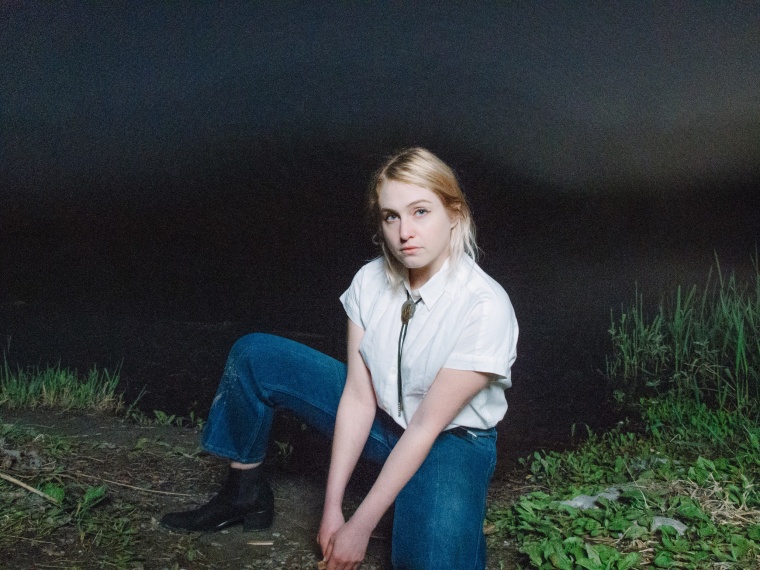
“It’s easy to get down on yourself / When you’re surrounded by people who don’t know what goes on in your head,” Whitney Ballen sings on the title track of her latest LP, You’re A Shooting Star, I’m A Sinking Ship. It’s the irony of existing in a world filtered through social media comparing real life to curated ones, and longing for validation that seems further away with every scroll of the touchscreen.
The album’s twelve tracks are set perfectly in Ballen’s Pacific Northwest, a place collectively pictured in a romantic mist that blots out its everyday banalities. Vocally, the Washingtonian shares space with the likes of Mirah, Laura Stevenson, and Jenny O. Describing her sound, “Imagine Joanna Newsom as a ghost, benevolently haunting a cabin in the woods, and you’ll get an idea… I love it. Her voice is so unique, this whispered sort of knife “It didn’t sound exactly like any one thing I had heard before, but still managed to feel comforting and familiar too. I think it was the many contrasts that drew me in and made me want to share this album with everybody else.”
I’m not from the Pacific Northwest and maybe people rhyme “Mount Rainier” and “wish you were here” all the time, but it knocked me over here, on this beautiful track from Whitney Ballen’s You’re A Shooting Star, I’m A Sinking Ship.
“Mount Rainier tends to show itself on the days we need it most here, at least for me it does,” Whitney, who’s from Washington, says. “It’s a casual reminder of the things that linger in an ever-changing world. Rainier was the view from an ex’s dining room window (before it was sold for condos), where the housemates would sit and drink crafted coffee most mornings. When things go away friends, mothers, fathers, houses, partners — we find and hold onto memories through the most mundane things. Luckily, Rainier is still here.”
Out September 21st, Tell No One is the debut full-length by Washington, D.C.’s Bad Moves, recorded at Philadelphia’s Headroom Studio by Joe Reinhart (Hop Along). Sharpening the themes of the band’s 2016 self-titled EP, Tell No One is a power pop album whose 12 songs balance brashness and vulnerability, volume and tenderness. Collectively, the songs tell a story about self-discovery in childhood: exploring how intense emotional moments often arrive before we’re old enough to understand them, and how those regrets and revelations ripple into adult life.
A Seattle by way of Los Angeles four-piece who drag the sounds of 60s girl bands and classic surf rock into a sun-kissed Californian present.Exuding effortless cool, La Luz take the lazy, endless summer mood of Los Angeles at sunset, and essay on it through driving rhythms, honeycombed vocal harmonies, and breezy surf and garage rock guitar figures straight out of the Takeshi Terauchi playbook. On Floating Features, the four-piece write rich, vivid, and impressionistic studies of life viewed through the surreal, hallucinogenic haze of the city of angels, earning their spot in the Californian sun. La Luz hasn’t made one single weak song- everything they do rips. This new album just continues their unbeaten streak.
With comparisons to Mild High Club, The Shangri-Las, Dum Dum Girls La Luz started in the summer of 2012 by Shana Cleveland (guitar), Marian Li Pino (drums), Alice Sandahl (keyboard) and Lena Simon (bass).
Since the release of their first single three years ago, the Washington D.C.-based three-piece Governess have become a bit more mellow, adding dreamy power pop to the mix. Bassist Kieca Mahoney, drummer Erin McCarley, and guitarist Kim Weeks all contribute vocals, which frequently blend together in beautiful, haunting harmonies à la Grass Widow. But their shoegazey guitar melodies and sweet-sounding voices often betray the stories behind the songs—see the despairing “Decay,” filled with images of hopelessness. If there is a theme to Zero, released via Sister Polygon Records, it is frustration with the inanity and difficulty of life. “This life is panic / We’re sinking in dark water,” McCarley sings on “Gaslit.” On “Space Garbage,” a droney, atmospheric track, the trio contemplate our existence on Earth as the floating trash of the galaxy. Governess may find existence exhausting, but Zero helps sweeten the here and now.
Of all the artists who began the new millennium straddling the alt-country world and indie-rock stardom, none have proved themselves more talented or hardworking than Neko Case. Born in Virginia, she grew up in Tacoma, Washington, where she began her musical career drumming in a handful of bands before moving to Vancouver in 1994. She furthered her musical career playing drums for Canadian twee pop group Cub and singing for the punk band Maow in the mid ‘90s before forming her own band for the recording of 1997’s The Virginian under the name Neko Case & Her Boyfriends. Case would later drop the band name , but always worked closely with collaborators, whether through her tours with Carolyn Mark as The Corn Sisters or her years writing and playing with Toronto band The Sadies.
Her most notable collaboration was her time spent as a full-time member of The New Pornographers, a band which she still participates in actively to this day, finding time in between writing, recording, and touring behind her six studio albums and multiple live records.
Neko Case also released the box set Truckdriver, Gladiator, Mule, a collection of six aforementioned records along with an 2001’s EP, Canadian Amp, and her 2004 live album with The Sadies, The Tigers Have Spoken, notable for its inclusion of Case’s takes on songs not featured on any of her other studio albums.
Throughout Case’s solo discography,It’s one that moves slowly away from her more country-inspired beginnings to her more recent albums, which have positioned her as one of the most acclaimed and respected indie rock artists around.
Part of what makes Case such an intriguing artist is her penchant for storytelling. Early in her career, she was frequently compared to legends like Loretta Lynn and Patsy Cline, crafting hard-luck tales about people living in America’s heartland, lifting the spirit of country music and delivering it to an audience who often avoided the genre. Case wrote all her songs with a lived-in approach, giving her characters agency and sympathy while mentioning places and cities specific enough to make her tales feel real and relatable. Some were about love and loss, but many were focused on anger, with Case drawing influence from artists like The Louvin Brothers to put together her own versions of murder ballads. Case has also been an outspoken and humorous artist, be it during her banter between songs at concerts or through her clever wit fully on display throughout her work. She habitually subverts gender norms and stereotypes about sexuality, always writing songs and forging her path forward on her own terms.
While Case’s music has shifted gradually and notably over the past 15 years, part of what makes her discography so inviting is how consistent it is in terms of the quality. She challenges conventional thinking in her songs, the artists she draws inspiration from, and the friends she works with.
THE VIRGINIAN (1997)
“South Tacoma Way”: Of all her records, The Virginian isn’t steeped too deeply in any specific locale. Of the original compositions, the title track is the only one that references an actual place, and the song itself focuses more on a girl who fell away from the lord and was “free to do what she wanted” as she didn’t ask god to take her back into his graces when she died. For the covers, Case’s take on the Everly Brothers’ “Bowling Green” would be the first of many times she would use specific places in the west or Midwest to set her stories.
“Margaret Vs. Pauline”:“Karoline” is the only character who gets named on The Virginian, the “wild and unashamed” cowgirl who draws Case’s desire. Beyond that, much of the album is from a first-person perspective, whether it’s trying to scare away the “Honky Tonk Hiccups” or dealing with heartbreak on “Thanks a Lot”.
“I’m a Man”: On “Karoline”, originally written and recorded with her former band Maow, Case takes a traditional country melody about pursuing a partner for the night, but switches things up. The narrator wants to be the titular Karoline’s “slave” for the night, and while it initially seems an instance of Case taking on the male role in the story, the line “Cowgirl I’ve got that loving that puts all those men to shame” makes the song seem like an excellent gay country jam.
“Deep Red Bells”:The Virginian isn’t notably violent compared to Case’s other records but does feature its fair share of tragedy. “Lonely Old Lies” finds Case trying to drown her sorrows with “Moon River”, and “Jettison” finds her pleading with the “Sandman” to take her “much further than sleep.” The most combative character here is the character in “The Virginian”, who continues to defy God after death.
“Whip the Blankets”:Case’s first album features some of the more eclectic cover choices of her career, showing how she can fit songs by seemingly disparate artists into her own style. The record sees Case taking on traditional country tunes like Loretta Lynn’s “Somebody Led Me Away” as well as ’60s pop through her takes on The Everly Brothers’ “Bowling Green” and Scott Walker’s “Duchess”, finishing up with her version of Queen’s “Misfire”. None sound out of place on the record, and while her take on the Walker track may be a highlight, each shows Case apt at reinterpreting songs from different genres.
Her Boyfriends: The Virginian was effectively Case’s first solo album and the first of two to be labeled under the band name Neko Case & Her Boyfriends. It marked the first of many collaborations with Carolyn Mark, who Case would play with as The Corn Sisters, and Carl Newman, who she would play with in The New Pornographers. Most notably, “Jettison” features a duet with singer Rose Melberg, the Olympia indie-pop artist who played in Tiger Trap, Go Sailor, and The Softies.
FURNACE ROOM LULLABY (2000)
“South Tacoma Way”: Of all her albums, Furnace Room Lullaby seems to be the most focused on Case’s youth growing up in Tacoma. “South Tacoma Way” finds Case returning to Tacoma and remembering the death of a loved one whose funeral she didn’t make it to, as she “Couldn’t pay my respects to a dead man.” Here, Tacoma is a dark place full of memories where “the cross streets bare your name.” On “Thrice All American,” she remembers how removed her town was from the world, a town where “factories churn,” “buildings are empty like ghettos or ghost towns,” and where “you know that you’re poor.” The places in Furnace Room Lullaby are specific since they come from Case’s memory, and while she points out the faults, she still sings fondly of her hometown throughout.
“Margaret Vs. Pauline”: On “South Tacoma Way”, Case sings about returning to her hometown, wishing she could hold hands with J.P. and Mary-Jo. No one else in the album gets named, but there are plenty of characters throughout these songs. There’s the couple in “Whip the Blankets” that is “bound for damnation,” the scorned ex-lover in “Bought & Sold”, and the haunted killer of the title track. The album is full of rich characters, even if they aren’t as detailed as many in later albums.
“I’m a Man”: While there aren’t many songs that directly take on gender, there are plenty that showcase Case’s disdain for societal expectations. On “Whip the Blankets”, Case remarks how the narrator’s “instinct is dirty and morality’s clean.” On “Mood to Burn Bridges”, she takes on people in her town who won’t mind their business and tell other people how to live their life. She calls out hypocrites who rush to criticize her indiscretions and spend all their time waiting for people to slip up so they can judge them. Case says that her “mood to burn bridges parallels (her) mood to dig ditches,” implying she’s ready to take on her enemies.
“Deep Red Bells”: The title track of the album, Furnace Room Lullaby, was inspired by Case’s desire to write a murder ballad in the spirit of The Louvin Brothers. The song indicates that the lover she burned in the furnace still haunts the house, that “all night, all I hear, all I hear’s your heart.” As she becomes “wrapped up in the depths of these deeds that have made” her, she remains trapped with this ghost. On the other side of the coin, a song like “Twist the Knife” finds Case’s narrator bleeding herself, pleading with a lover to stay, saying that she would “pay with the rest of my life” and “tear out my heart” as the other person walks away.
“Whip the Blankets”:Furnace Room Lullaby is one of the few albums in Case’s discography to not include covers, as Case has a writing credit on each song. While all the songs were original compositions for the record, a couple familiar names did stand out in collaborators.
Her Boyfriends:Furnace Room Lullaby features a wide variety of artists, including frequent guests Kelly Hogan, Brian Connolly, Carl Newman, and Dallas Good. Canadian pop artist Ron Sexmith helped co-write “We’ve Never Met”, and “Twist the Knife” features a writing credit from none other than Ryan Adams.
CANADIAN AMP EP (2001)
“South Tacoma Way” (locations mentioned):True to its name, Canadian Amp is an EP centered entirely around place. Granted, Case isn’t technically a native of the Great White North, but it’s where her career started in proper, and she pays tribute to her musical heritage here by covering four musicians from above the US border. The States themselves get name-dropped in “In California”, and Hank Williams’ “Alone and Forsaken” pops up to show Arkansas (and the American South in general) some love.
“Margaret Vs. Pauline” (characters): Though most of the songs aren’t hers, it’s telling that Case gravitated towards tracks rooted in intensely drawn characters, from the fleeing lover in Mike O’Neill’s “Andy” to the doomed fling in “Poor Ellen Smith”. But the most vivid sketch comes from Neil Young, whose “Dreaming Man”‘s spurned, possibly violent lover (he carries a loaded gun in his Aerostar) undercuts the sweetness of the music.
“I’m a Man” (subversion of gender norms and stereotypes): Lots of gender flipping here, especially in the covers of Williams and Young. Case, badass that she is, never switches the pronouns either. This isn’t to specifically place the song from a woman’s perspective, but to show that perspective doesn’t matter. The songs could be a woman singing from a man’s point of view, a woman who’s in love with a woman, or the viewpoint from another character altogether.
“Deep Red Bells” (violence and murder ballads): There’s a threat of violence in “Dreaming Man” that may not come to fruition, and the two Case originals run thick with a redness that may be real or imagined. Closer “Favorite” finds her dreaming about a dead deer spilling blood onto her dress, and the creepier “Make Your Bed” is told by a drifter who promises to “tuck in” a young girl by throwing her in the river and letting the catfish feast on her skin. Canadian Amp’s centerpiece of death, however, comes in Case’s rendition of the traditional murder ballad “Poor Ellen Smith”, which tells the story of a man who kills his mentally challenged lover (one-night stand, really) after she won’t stop following him around.
“Whip the Blankets” (cover songs): Haven’t you been reading? This whole EP (almost) is made up of covers!
Her Boyfriends (personnel): The Sadies once again guest-star on “Make Your Bed”, and elsewhere, we get more brassy harmonies from Kelly Hogan, Brett Sparks of The Handsome Family, Chris Von Sneidern, and even some mournful violin by future chamber-pop wunderkind Andrew Bird.
BLACKLISTED (2002)
“South Tacoma Way”: Blacklisted finds Case preoccupied with signifiers of American life. On opener “Things That Scare Me”, she remarks about being “haunted by American dreams.” On “Lady Pilot”, the titular character flies above the country, noting how Boulder City “looks like coals in the fire” and that the stars in the sky are losing out to city lights. Case’s ideal of America was never perfect or pretty, going all the way back to the encroaching Wal-Marts on “Furnace Room Lullaby”, and while Case never comes across as a “Back in My Day” kind of person, nostalgia and longing for something that is no longer the same is an inherent part of folk and country that Case does so well.
“Margaret Vs. Pauline”: There aren’t many named characters here, but still plenty of stories, from the pilot watching cities burn to the woman murdered on the interstate. The characters in Blacklisted are often longing to be somewhere else or to have things change, especially on the album’s centerpiece and one of Case’s most popular songs to date “I Wish I Was the Moon”. In the song, the narrator repeats how lonely and tired she is, exclaiming that she wishes she was something else for the night besides what she is, something calming and watchful like the moon. It’s a stark yet beautiful sentiment about wanting to escape your problems and fears and find some kind of peace away from it all.
“I’m a Man”: On “I Wish I Was the Moon”, Case exclaims, “God blessed me, I’m a free man with no place free to go” in a memorable passage. Beyond that, songs about gender pervade the record, from “Lady Pilot” to the women murdered by the Green River Killer. One especially poignant song is “Pretty Girls”, inspired by an experience Case once had at a Planned Parenthood in New York. In a 2010 interview with the New York Times, she recounted the event, saying, “I saw these girls waiting there, and it was just awful. It was cold, they were in gowns that didn’t really close, and their boyfriends and parents weren’t with them, and they were sitting under these bright lights, and the people were mean.” This inspired the lyrics “Your hearts are so tried and so innocent, wind your firmly blue gowns tight around you, around curves so comely and sinister, they blame it on you pretty girls.” Case always has a penchant for crafting sympathetic laments around real-life experiences, and this song serves as her message to the girls she saw in that waiting room one day frightened by protestors. Written almost 15 years ago, the song feels as relevant as ever today.
“Deep Red Bells”:Blacklisted contains one of the most harrowing murder ballads of Case’s career, the tragic “Deep Red Bells”, written from the point of view of one of the victims of the Green River Killer. Gary Ridgway was a serial killer who was convicted of killing 49 women in the Washington State area during the 1980s & 1990s, named after five of his victims were found in Green River. He was arrested in late 2001, right after Case had recorded the song, as she indicated in a 2006 interview with the A.V. Club. “I grew up while he was killing women, and on the news, they never talked about them like they were women,” Case said. “They just called them “prostitutes.” Myself and other little girls in my neighborhood didn’t make that distinction; we thought the Green River Killer was going to kill us.” Case taps into that fear here with the memorable song.
“Whip the Blankets”: After the covers-heavy focus of Canadian Amp, Case went back to just selecting two for this album. The first, “Look for Me, I’ll Be Around”, a classic jazz ballad from the ’50s with popular recordings by singers Sarah Vaughan and Ketty Lester, is kept faithful with Case’s smoky, slow rendition. On the second, Case delivers a thunderous take on Aretha Franklin’s “Running Out of Fools”. Unlike the folk or country covers on earlier records, Case took on soul and jazz here, signaling the transition taking place in her own music at the time.
Her Boyfriends:Blacklisted found Case settling into a groove with her band. Kelly Hogan, Brian Connelly, DallasGood, and Tom Ray all returned from previous recordings. Canadian singer Mary Margaret O’Hara provided background vocals, and the album also marked the first of many collaborations with Joey Burns and John Convertino of Calexico.
THE TIGERS HAVE SPOKEN(2004)
“South Tacoma Way”: On her version of The Shangri-Las’ “The Train from Kansas City”, Case’s narrator tries to lightly let down her lover by telling him she got a letter from an ex in Kansas City and has to take the train there to tell the ex-boyfriend it’s over in person. The wit of the song is emblematic of the clever approach Case often took on her own compositions.
“Margaret Vs. Pauline”: In the songs Case chose to cover for this record, she tells the story of a woman asking her dressmaker to make the sweetest dress imaginable, so she can win back the man who left her (“Soulful Shade of Blue”); the woman who leaves her current lover for her ex back in Kansas City (“The Train from Kansas City”); and Loretta, who hugs sweet and low (“Loretta”). The characters in her original songs on the album include the narrator who pleads with her lover to stay rather than leave for the woman who “spends her daddy’s money and drives her daddy’s car” on “If You Knew”, the lonely tiger trapped in his cage on the title track, and the coyotes that yell to the moon on “Hex”.
“I’m a Man”: As the album is mostly covers-based, Case’s most pointed song here is her cover of Loretta Lynn’s“Rated X”, a fun, up-tempo track that takes the piss out of people who go around slut-shaming. The song focuses on the stigma about divorce, with the narrator telling a woman that “the women all look at you like you’re bad, and the men all hope you are.” Originally written in 1973, the song has become a country staple about divorce and the antiquated notions that surround it. The song has remained continuously relevant, to the point where Miranda Lambert made a statement at the ACMs this past September covering the song as a tribute to Lynn, noting that the song spoke to her experience as a divorced woman in country music.
“Deep Red Bells”: There’s no murder here, but on “Hex”, the “lover’s spell” Case puts on her mark seems particularly harrowing, as she tells him that the night his dying and that his punishment for casting her aside is that her heart beating will be the only sound he will hear ever again.
“Whip the Blankets”: The only live album featured in Case’s upcoming box set reissue, The Tigers Have Spokenfeatures more covers than most of her other releases. The album includes a cover of “Hex”, written by Freakwater singer Catherine Irwin, “Soulful Shade of Blue” by Buffy St. Marie, “The Train from Kansas City” by The Shangri-Las”, “Loretta” by The Nervous Eaters, and “Rated X” by Loretta Lynn. Case even concludes the record with her take on traditional folk songs “This Little Light” and “Wayfaring Stranger”. Tigersfinds Case indulging more in the alt-country material of her earlier days while also hinting at the more straightforward rock approach she would move toward with her subsequent records.
Her Boyfriends: Tigersfeatures a murderer’s row of people Case has worked with before. Carolyn Mark of The CornSisters and Kelly Hogan and Brian Connelly of her normal backing band all make appearances. The Sadies, who helped Case write a few of the original pieces on the album, also serve as the backing band for the live performances that make up the record. Of all her records, Tigers does the best job of capturing both the influences that drove Case’s sound as well as the contemporaries she worked with to help form it.
FOX CONFESSOR BRINGS THE FLOOD(2006)
“South Tacoma Way”:St. Angel Church and Spanaway, Washington (in “A Widow’s Toast” and “John Saw That Number”), are the only properly named locations, but all of Fox Confessor Brings the Flood seems to take place in a distinct world where nature is equally as dangerous as killers, drug dealers, and false prophets. There’s some beauty, sure, but it often gets blackened out by the darker elements in the songwriting. There’s a reason Case dubbed this record as “country-noir” upon its release.
“Margaret Vs. Pauline”: Those two very characters make up the opening track, with each one coming from a different socioeconomic background. By the end, we’re painfully reminded how some folks are born with the cards stacked against them, while others aren’t. Later on, John the Baptist becomes a controversial figure in Case’s reworking of the traditional “John Saw That Number”, where even God himself doubts the preacher’s miracles.
“I’m a Man”: There are some pointedly specific comments on gender throughout Fox Confessor, most notably in “Margaret Vs. Pauline”, which posits that, from a class standpoint, young girls are more predisposed to be pitted against each other than boys. There’s a higher currency on what they wear, how they dress, who they hang out with, etc. But there are also some more umbrella statements to be gleaned from all of the violence and mysticism, mainly the blunt idea that all of us — men, women, children, and animals — are all stuck in a world that don’t owe you shit.
“Deep Red Bells”: Where to begin? Fox Confessoris easily Case’s most violent album. Right after the socioeconomic divide of “Margaret Vs. Pauline”, we’re transported to Chicago’s Humboldt Park neighborhood (where Case lived for a time) to wince at the young woman who sees her lover ruthlessly mowed down. Despite some romantic respites throughout (“That Teenage Feeling” is unabashedly nostalgic and sweet), we get God putting out a hit on John the Baptist in “John Saw That Number” and what may be Case’s most gruesome murder ballad of all, “Dirty Knife”. After getting mortally stabbed in his cabin, a woodsman has to contend with the menagerie of vicious wildlife outside. He sings nursery rhymes to try and soothe the beasts, but it’s useless — a pack of wolves is soon upon him, tearing through his three winter coats to get to the soft, very human skin underneath.
“Whip the Blankets”: Given that the album shirks Case’s more traditional early country influences for something more sweeping, ominous, and in touch with the dangers of both the urban and the natural worlds, it’s no surprise that the only cover to be found on Fox Confessor Brings the Flood is “John Saw That Number”. And even then, it feels disingenuous to call it a cover, considering how much Case reworked it.
Her Boyfriends: The usual suspects (Kelly Hogan, various members of Calexico and The Sadies) are joined by rugged songwriters such as Howe Gelb, rockabilly musicians like Dexter Romweber, and GarthHudson of TheBand, who shows up to further rep Canada and brighten some of the shadows with his honeyed organ and piano playing.
MIDDLE CYCLONE (2009)
“South Tacoma Way”/”Margaret Vs. Pauline”: Aside from Mother Earth, no characters — or specific places for that matter — get mentioned by name. That’s because on Middle Cyclone, Case abandons the country-noir of Fox Confessor Brings the Floodfor something warmer and more optimistic. In her own words, it’s an album that yearns for human connection and her realizing that she needs love, just like anyone else. The songs are still stories, but they’re more internal stories about exploring emotion rather than building a linear narrative.
“I’m a Man”: Using a string of ferocious animal metaphors (an angry elephant, a bear in a cave, a killer whale eating his trainer), Case proudly proclaims herself as a man-eater on “People Got a Whole Lotta Nerve”. This predatory kind of approach to romance is usually reserved for AC/DC and KISS songs, so why shouldn’t she get to play along, too? The video takes the beastly content even further, depicting a young, cardboard cutout version of Case wandering around a mansion full of dangerous wildlife. There’s not a man in sight, however — the only people able to tame these creatures are little girls.
“Deep Red Bells”: The violence is expectedly toned down here in favor of pastoral ambience that comes from the barn where Middle Cyclone was recorded (and stocked with a stage and six pianos). Several songs contain real-life animal noises in the background (owl hoots, cricket chirps, etc.), and the final track, “Marais la Nuit”, consists entirely of a field recordings Case conducted at a nearby pond.
“Whip the Blankets”: After the almost cover-less Fox Confessor, she returns with two knockouts here: a more epic, orchestral version of Harry Nilsson’s “Don’t Forget Me” and a more lulling take on Sparks’ “Never Turn Your Back on Mother Earth”, both of which tie into the record’s comforting connection to nature (a far cry from Fox Confessor’s more anxious one).
Her Boyfriends: It’s mostly the same personnel from last time (even Hudson returns), with some additional guitar work from M. Ward.
THE WORSE THINGS GET, THE HARDER I FIGHT, THE HARDER I FIGHT, THE MORE I LOVE YOU (2013)
“South Tacoma Way”/”Margaret Vs. Pauline”: Same deal as Middle Cyclone. The Worse Things Get eschews specific locations and characters to make room for an exorcism of sorts. After Middle Cyclone, Case plummeted into a deep depression after losing her grandmother, and this is the sound of her getting out of it. “Night Still Comes” appears to document this through geometrical and astrological terminology, and much later on, “Ragtime” sees her coming to peace with death by imagining her departed relatives all in a marbled room together, laughing and encouraging her to enjoy life.
We do get one heart-wrenching character sketch, however. “Nearly Midnight, Honolulu” tells a completely true story of Case witnessing a mother being verbally abusive to her child while waiting for an airplane shuttle. The singer empathizes with the kid, telling him to never lose faith, even as his loved ones let him down. “I still love you, even if I don’t see you again”, she reminds him. That story’s a far cry from her murder ballads of old, but also much more relatable to the average listener.
“I’m a Man”:“Man”, the song that gave this category its name doesn’t view maleness as specific to one gender, but as an emblem of toughness. As a result, Case never has to justify the gender swap or explain that she’s not speaking in literal terms. Anyone who’s had to fight is a man, especially her. Devouring bullies, getting dip-shit drunk, and burrowing a home in the fucking moon are just a few of her accomplishments.
“Deep Red Bells”: There isn’t a lot of physical violence here, and not a single murder as far as I can tell, but the emotional turmoil that Case — and many others on the record, especially the kid in Hawaii — had to endure can be just as damaging.
“Whip the Blankets”:“Afraid”, in which Neko Case gets playful and finally covers Nico. Both versions rely mostly on piano, although Case’s sounds as if it were plucked right from a starry sky, probably because she — in a direct bird-flip to her younger self — ditched the original’s country touches of harmonica and fiddle.
Her Boyfriends: More sonic majesty from the likes of Kelly Hogan, Paul Rigby, and company, with some all-star appearances from M. Ward (again), Jim James, Tom Waits’ axe-man Marc Ribot, and fellow Pornographers (at the time, at least) Kurt Dahle and AC Newman.
Other Neko Case recordngs include:
The Corn Sisters
The Other Women (CA: Mint Records, 2000)
The New Pornographers
Mass Romantic (CA: Mint Records; US & EU: Matador Records, 2000)
Electric Version (CA: Mint Records; US & EU: Matador Records, 2003)
Twin Cinema (CA: Mint Records; US & EU: Matador Records, 2005)
Challengers (CA: Last Gang Records; US & EU: Matador Records, 2007)
Together (US: Matador Records, 2010)
Brill Bruisers (CA: Last Gang Records; US: Matador Records, 2014)
Whiteout Conditions (Concord Music Group, 2017)
The Sadies
Make Your Bed/Gunspeak/Little Sadie (7″) (US: Bloodshot Records, 1998)
Car Songs My ’63 / Highway 145 (by Whiskeytown) (Split 7″) (US: Bloodshot Records BS 037, 1998)
D.C. foursome Priests have followed up 2017’s Nothing Feels Natural with a special treat for superfans: three new versions of “Suck,” a saxophone-laced lament about someone who, well, sucks. “How can you tell that I always mean to be mean when you’re not even listening?” reads one tell-tale line from the song. The band noted on Instagram that they originally wanted this six-and-a-half minute version of the song to close out the record, instead of the four-plus-minute version that ended up there. This extended play is a definitively funkier mix. But the real treat here is basically a wholly new song: “Suck” as remixed by Meg Remy of U.S. Girls. Remy slows down the whole track, giving it a chopped-and-screwed makeover. Katie Alice Greer’s vocals are several pitches lower, accented by a funky horn riff and a repetitive, hypnotic dance beat. It’s a perfect offering for late-night summer dance parties.
Flasher were one of our Best New Bands Of 2016 It’s took a long while but they are finally getting ready to release their debut album after amassing an EP and a 7″ vinyl to their name already. That debut will be out later this year via Domino Records. But to hold us over until then — and to promote their SXSW dates and an upcoming tour, where they’ll support the Breeders and Ought this DC trio are releasing a new song, “Skim Milk,” alongside a video.
The video finds them performing in a gorgeous-looking theater that looks like it could double as a church. The track is urgent and propulsive, with all three members — guitarist Taylor Mulitz, bassist Daniel Saperstein, and drummer Emma Baker — trading off vocals in increasingly frenzied fashion. It’s a towering pummel of riffs and hooks, with all of them locking into a groove and repeating the song’s central mantra — “No future, no fate” — interspersed with secondary phrases, building a wall of harmonies. It’s a wonder to hear just how tightly-knotted and in-sync they are, and the video helps hammer home that feeling of interconnectedness.
Here’s what the band had to say about the release:
The themes in “Skim Milk” and its video might be described as being haunted by your own desire for belonging. We’re not bemoaning “no future, no fate”, we’re advocating for it. From getting a mortgage, to going to college, to crafting public policy, folks are always telling you to think of your future, to make choices in the name of some future. But most folks don’t have the privilege to live outside the present. This kind of future tense, aspirational bullshit means being held hostage by a future that’s already abandoned you. We’d rather escape to something new and unknown than hold out for a good life that hates us and expects us to make lemonade out of miserableness. Instead of holding out and hanging on, we’re here to tell you (and ourselves) – “go.”
Flasher – “Skim Milk” out now on Domino Recording Co.
A Love SleepsDeep’s bones rattle with all the seismic changes of the last five years since the release of The Moondoggies’ Adios I’m a Ghost. While the Washington band got lumped in early on with the woodsy folk-rock/Americana movement that sprung up in the Pacific North- west in the 2000s, the core Moondoggies sound has always been rock in the more classical sense–more groove-based than Woody Guthrie. A Love Sleeps Deep crystalizes that. Perhaps more importantly, A Love Sleeps Deep finds singer/guitarist Kevin Murphy at his most pointed as a songwriter. There’s no lyrical pussyfooting this time around. Lacking the need to prove himself, he opens up and lays bare his feelings.
“Generally, I feel frustrated because there’s a lot of this escapist stuff going on in rock and roll,” says Murphy. “I just didn’t want to not talk about my frustrations with what I was seeing around me. I have two little girls now, and I’m just thinking about where things are going. Love in my life has changed everything.”
While the album on a whole is about love, there’s an unmistakable anger boiling under the surface. Murphy captures the life-altering glory of finding real love on “Sick in Bed” and “Easy Coming,” and speaks to that special unbridled brand of parental love on “Mother.” But the highs exasperate his counterbalancing frustrations. He sings with poetic pointedness about the casual racism his girlfriend has faced on “Cinder” and how we’re all ruining the planet his daughters will inherit on “Underground (A Love Sleeps Deep).” He further lets his political feelings be heard on the distorted (literal) barnburner, “Soviet Barn Fire.”
Cascadian rockers The Moondoggies have offered up another preview of their forthcoming full-length album A Love Sleeps Deep. “Sick in Bed,” it is a pastoral, harmony-rich love song that blossoms into a kaleidoscopic jam-out in the its back half.
“Easy Coming” is the first single from A Love Sleeps Deep, the new album from ,
Recorded in Seattle in the spring of 2017 with production wizard Erik Blood (Shabazz Places, Tacocat, THEE Satisfaciton), A Love Sleeps Deep is also an album of collaboration. The band seemingly threw each tune up in the air to see how it bounced around the room, making sure everyone got their hands on it. From around 30 initial demos, Blood helped select the most jam-heavy numbers. “They had that vibe that made me love the band in the first place, but with a weathered distinction and confidence that moved me,” says Blood.
What has The Moondoggies found inside of themselves in the years they’ve been gone that makes A Love Sleeps Deep stand out? What’s come to the forefront?
“Rawness,” says Blood. “Like a monster singing lullabies.”
With the passage of time, the band feels more comfortable in its own skin. Carl Dahlen’s drums sonically lead the way, crafting a stellar template for everyone else. Dahlen’s rhythm section cohort, bassist Robert Terreberry, further helps lock in the grooves over Caleb Quick’s keys. In addition to lead guitar work, Jon Pontrello taught himself pedal steel since the last record, and it’s intentionally not employed (as a matter of band philosophy) on the more country-leaning tunes, instead adding a more cosmic feel to the heaviest tracks.
A Love Sleeps Deep, the new album from The Moondoggies, out April 13th, 2018
Band Members
Kevin Murphy, Caleb Quick, Bobby Terreberry, Carl Dahlen, Jon Pontrello
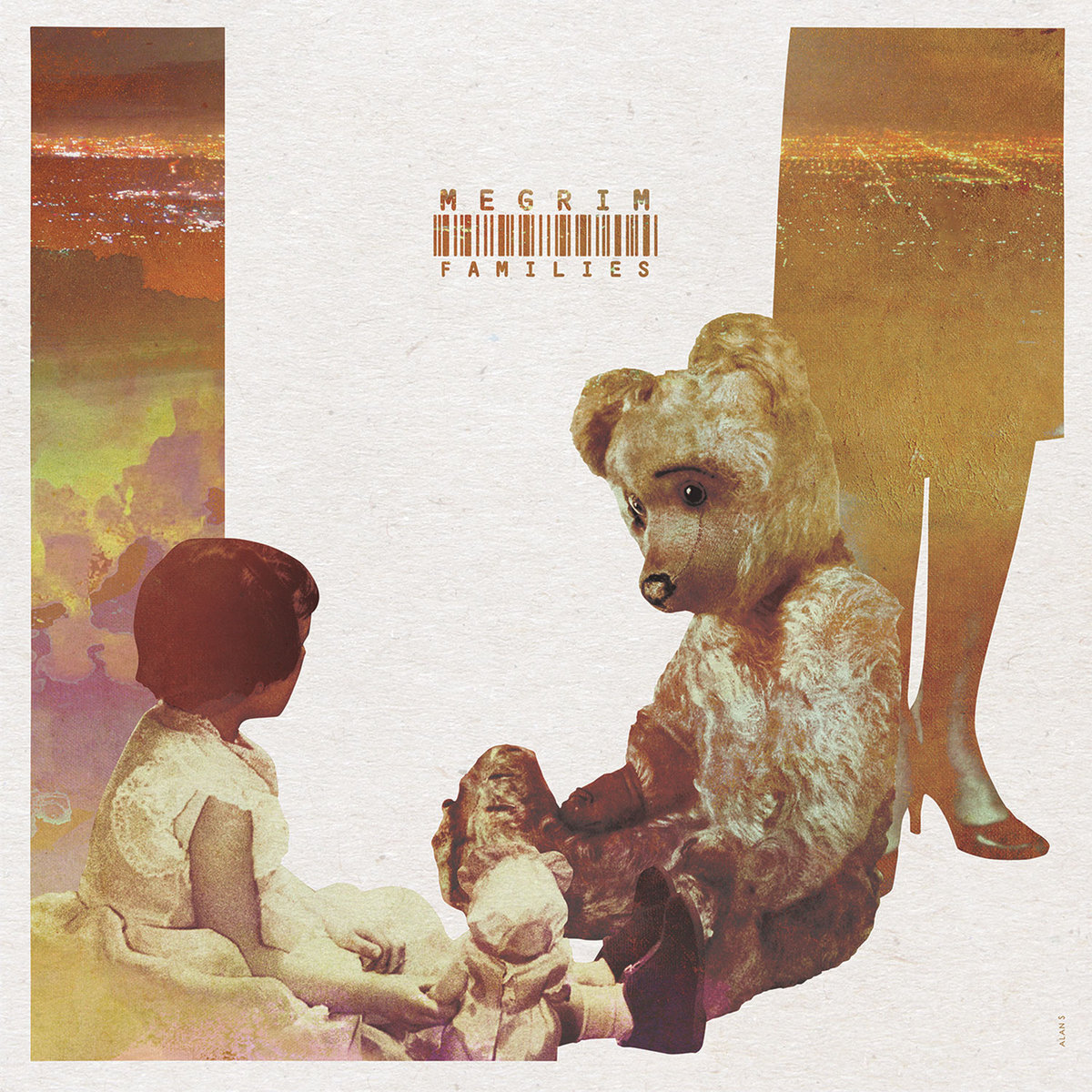
last year we were reintroduced to the world of Les Autres, an excellent French indie rock band from the ’90s, via a compilation entitled “Backwards”. Now, we’re happy to present the debut album (after a couple self-released digital-only EPs) from Megrim, which is the new project of that older band’s guitarist/vocalist, Olivier Doreille. Like Les Autres, comparisons can be drawn to early ’90s contemporaries such as Lorelei and Hood, but Megrim’s sound is a bit more fleshed out, at times reminding me a lot of early Death Cab For Cutie and Nada Surf. Their songs are sometimes driving, other times melancholic, but always interesting, making for a well-rounded and rewarding album to listen to.
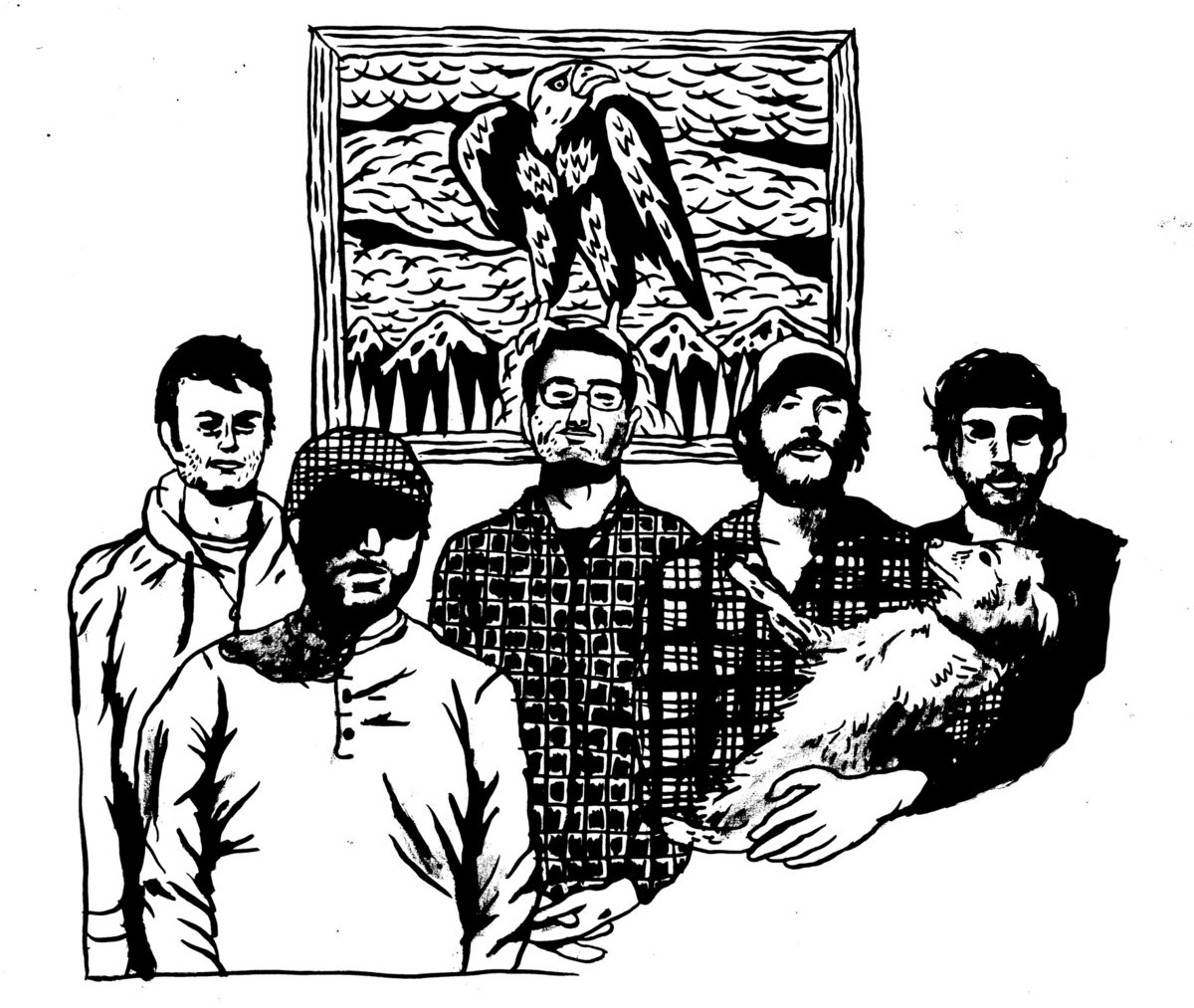
Roaming Herds of Buffalo, Alien Canyons (out now, self-released, roamingherdsofbuffalo.com) With their second record, Roaming Herds of Buffalo has delivered a fresh indie-pop statement that’s equal parts thought-provoking and sonically rewarding. On the whole, the music will inevitably draw comparisons to the school of indie rock (the Shins, the Fruit Bats, Ben Gibbard’s various vehicles), but the album itself actually sounds like it could be two different bands. The record’s first half is marked mostly by vast swathes of sparseness, which allow both the music and the listener breathing room to think and reflect. The large amount of reverb laid across the vocals, especially on the album opener “Wild Oats,” goes a long way to enhance this effect. Canyons’ second half is marked by more bombast—balls-out guitar solos and cacophonous background vocals; the shift is quite dramatic, but also a welcome change. “Neutrinos” is a guitar wah-inflected, overdriven, doo-wop mindbender, while “GlitterMastodon” is catchy, galloping pop perfection with a grunge-era guitar solo that’s more fuzzed-out noise than an executed flurry of notes. Nothing is direct about Canyons; it’s all about the sonic imagery—and the journey, perhaps. Overstuffed with lyrics like “Fill a crater with expensive scotch/Tie on an extinction buzz” and “Explosions reach under chassis and tickle out trucks,” Canyons wants you to see with your ears, and the lyrics go a long way toward helping you visualize that strange landscape.
The band is William Cremin, Jared Fiechtner, Neal Flaherty, Scott Roots and Joe Shultz.
Roaming Herds of Buffalo is the project started by Seattle’s Scott Roots, also of Skeletons with Flesh on Them, who enlisted other Skeleton Neal Flaherty along with William Cremin of the Torn ACLs and JaredFiechtner of Stencil to help realize his vision. But where Skeletons can tend toward frenetic noise rock, Roaming Herds of Buffalo, as you’ll hear from today’s featured song, favors a lighter, catchier, janglier pop. “All of Them” opens with buzzing guitar and earnest vocals, which soon concede to the song’s bright, melodic piano riff. From there on out, the band adds driving snare drums, soaring gang vocals and rhythmic hand-claps one by one to create a fully-formed, beautiful song. However, taking a prompt from the time-tested formula of lyrical and musical dichotomy, the music belies the dark lyrical content, filled with clever laments like “We swim in pools of leaking batteries/New world shaped by old diaries” and “Closer now, to the drowning sun/Than we ever were to the hotter one.” It’s a classic page from the indie-rock playbook that never fails, and combined with Roaming Herds of Buffalo’s encompassing arrangements,”All of Them” is a terrific introduction to a fresh local face.








 The Fat Angel Sings