Posts Tagged ‘Rock’

http://

In less than 20 seconds into opening trackPeasantry Or ‘Light! Inside Of Light’ when the whole shit breaks wide open. After a few heartbeat-style drum thunks, the band rips into a titanic, surging riff, a mystic quasi-eastern stomp that any doom metal band in history would be proud to call its own. It’s a huge sound, and Godspeed work it for everything it’s worth. For 10 solid minutes, they ride that riff, traveling with it through mountains and gorges, rising and falling with it. On “Peasantry,” Godspeed sound more like a rock band than they may have ever sounded. In the past, Godspeed’s triumphant loud moments have pulled a ton of their impact from the vast and sometimes laborious stretches of quiet that come before them. But this is Godspeed saying fuck it and jumping straight to loud, then pretty much staying there for a very long time. And it loses none of its impact in the process. There’s beauty in that stomp, especially when guitars and violins come in to play a new melody on top of it. But they always come back to the riff.

If the members of Godspeed ran their band as a business entity, rather than a flickering and mercurial ghost of a thing, they could’ve been the defining film-score composers of our age. (Instead, they ceded some of that position to Explosions In The Sky, who are great but whose sound is a more approachable version of Godspeed’s earth-rumbles.) Things sound bigger and bolder and more emotionally loaded, for whatever reason, when Godspeed’s music is playing. A lonely pigeon flying past your window can look like an ominous harbinger of doom, or like a symbol for collective hope, depending on what part of the album you’re at. With Asunder, Sweet And Other Distress, they’ve cut out some of the more atmospheric elements of their sound — the scratchy found-sound samples, the faraway ambient crackles. But they haven’t lost any of the primal force that makes them something more than a band.
Led Zeppelin released their 5th album titled “Houses of the Holy” on 28th March 1973. It is their first album composed of entirely original material, and represents a musical turning point for the band, who had begun to record songs with more layering and production techniques.

Containing some of the band’s most famous songs, including “The Song Remains the Same”, “The Rain Song” and “No Quarter”, Houses of the Holy became a huge success.

One interesting fact about this LP is that the title track was recorded for the album, but was delayed until the band’s next release, Physical Graffiti, two years later. Recorded between January–August 1972, Stargroves and Headley Grange with the Rolling Stones Mobile Studio, and Island Studios, London; Mixed at Olympic Studios, London and Electric Lady Studios, New York 

“The Rain Song” is one of Zep’s finest moments, featuring a soaring string arrangement and a gentle, aching melody. “The Ocean” is just as good, starting with a heavy, funky guitar groove before slamming into an a cappella section and ending with a swinging, doo wop-flavored rave-up. With the exception of the rampaging opening number, “The Song Remains the Same,” the rest of Houses of the Holy is fairly straightforward, ranging from the foreboding “No Quarter” and the strutting hard rock of “Dancing Days” to the epic folk/metal fusion “Over the Hills and Far Away.” Throughout the record, the band’s playing is excellent, making the eclecticism of Page and Robert Plant’s songwriting sound coherent and natural.”

Upon its release, the album received some mixed reviews, with much criticism from the music press being directed at the off-beat nature of tracks such as “The Crunge” and “D’yer Mak’er”. However, the album was very successful commercially, entering the UK chart at number one, while in America its 39-week run (2 of them spent at number one) on the Billboard Top 40 was their longest since their third album.

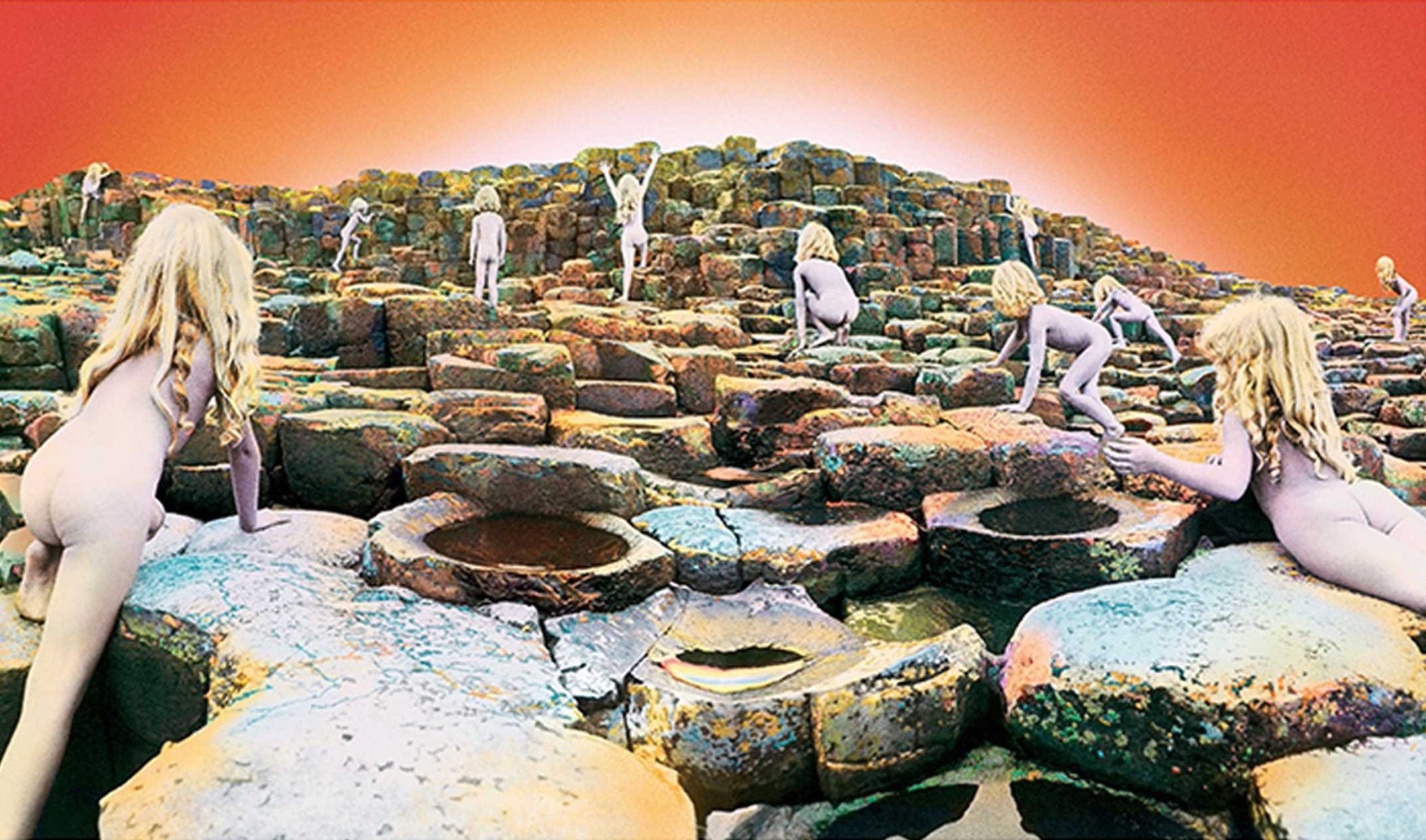
For 1973’s Houses of the Holy, the band and their management turned to the accomplished English design studio, Hipgnosis, for inspiration. Co-founder Aubrey Powell, inspired by Arthur C. Clarke’s 1953 science fiction novel, Childhood’s End, selected the remote area in Northern Ireland called Giant’s Causeway, a natural series of rock and columns which attracts over one million visitors each year, for the location of a photo shoot.

Siblings Stefan Gates—just five at the time—and his slightly older sister, Samantha, were selected for what proved to be a treacherous assignment. The children were pictured on the cover as they ascended the rocky terrain. Both are unclothed.

Houses of the Holy was released on March 28th, 1973. The album, featuring such Led Zeppelin favourites as “Over the Hills and Far Away,” “Dy’er Maker” and “The Song Remains the Same”—but not, ironically, the song “Houses of the Holy”—was another enormous success, reaching #1 in both the U.K. and U.S.

Beach-Boys-Today

‘Beach Boys Today! Turns 50 years old , To call the Beach Boys prolific in their early years hardly does justice to an output of eight studio records in their first two and a half years of making albums. The last in that sequence, the fondly-remembered ‘Beach Boys Today!’ is marking its half-century today, released on March 8, 1965.

https://www.youtube.com/watch?v=pSF2SoNaZSc

Also known simply as Today!,was the eighth studio album by the American group the Beach Boys, and their first of three releases that came out in 1965. It peaked at number four on US  Charts and included the top 10 singles When I Grow Up (To Be a Man)” and Dance, Dance, Dance“, along with “Do You Wanna Dance? which reached number 12 later that year. The album marked a major transition point for the band through Brian Wilson‘s sophisticated, orchestral approach. In December 1964, Wilson suffered a nervous breakdown while on a plane, and was then introduced to marijuana as a stress reliever. He then became a regular user after he realized the profound effect it had on the way he perceived music, subsequently resigning from touring with the group in order to focus solely on songwriting and producing. The tracks on the first half of Today! feature an electric guitar-rock oriented sound that contrasts the second half consisting of ballads, showing an increased mature lyrical depth that would foreshadow the future efforts Pet Sounds. The second side marks Wilson’s continuing maturation as a recording artist; all the songs showcase creatively developed vocal & instrumental arrangements,with a complex Wall of Sound production, and lyrically introspective subject matter.

Beach-Boys-DYWD

The LP hit record stores as the group were climbing the American charts with their latest single, which showed both their feelgood side, on Bobby Freeman’s ‘Do You Wanna Dance’ (with lead vocals by Dennis Wilson) and brother Brian’s increasingly thoughtful and inventive songwriting, on the lovely ‘Please Let Me Wonder.’

Beach Boys When I Grow Up

Both tracks were included in ‘Today!,’ which showcased Brian’s ever more sophisticated production skills. The album also featured the Beach Boys’ two previous hits, the equally reflective ‘When I Grow Up (To Be A Man)’ and the upbeat ‘Dance, Dance, Dance.’

beach-boys-dance-dance-dance

Firmly established as the group’s creative inspiration, Brian Wilson was now making ever more use of the studio as a palette for his imagination. The album featured such exotic instrumentation as harpsichords, oboes, cellos, French horn and all manner of percussion, such as timbales, sleigh bells and even triangle.

‘Today!’ also featured the album version of ‘Help Me, Ronda,’ soon to be released as a single in an alternative recording, spelled ‘Help Me, Rhonda,’ which topped the US charts. Among the other highlights was another gorgeous, introspective Wilson composition, ‘She Knows Me Too Well.’ ‘Beach Boys Today!’ entered Billboard’s Top LPs chart at the end of March at No. 149 and went on to a No. 6 peak, staying on the bestsellers for two weeks short of a year.

The Rolling Stones Say Goodbye To All That

The Rolling Stones’ “Sticky Fingers” album was a long time coming. It started life in Muscle Shoals sound in Alabama in early December 1969 and after marathon recording sessions in London and at Mick’s house in the country during 1970 and mixing in early 1971 it was finally ready for release.

The Stones have always been different and rather than go on the road to support the album’s release after it came out they decided to tour the UK in March 1971, a full month before “Sticky Fingers” went on sale. This was not necessarily as they would have liked it, as for ‘tax reasons’ they had decided to move to France and needed to have left Britain before the new tax year began in the first week of April.

stones71

All this explains why on 4th March the band was in Newcastle City Hall for their opening night. This was the band’s first tour of the UK since the autumn of 1966 and apart from the famous Hyde Park concert in July 1969 they had only played at an NME Poll Winners’ Concert in 1968 – and then just a couple of songs – and so there was a lot of excitement among fans anxious to see the band.

The UK tour was a nine city, sixteen show, and to buy tickets for the first show in Newcastle fans waited overnight, some waiting 16 hours – a long time to wait outside during March in the North of England. The band travelled to Newcastle by train, at least most of them did; Keith missed both trains that took the other Stones north from London and so he was driven to Newcastle with Gram Parsons, arriving only minutes before the show.

Among the songs they played on their first show were ‘Dead Flowers’, ‘Bitch’, ‘Can’t You Hear Me Knockin’, ‘Wild Horses’ and ‘Brown Sugar’, all of which came from Sticky Fingers. However, for the remainder of the tour they dropped ‘Can’t You Hear Me Knockin’ and ‘Wild Horses’. The band were on exceptional form for these shows – Bobby Keys and Jim Price had become the group’s resident horn section, and Nicky Hopkins was playing piano with them onstage for the first time ever on an entire tour, with Stu still doing his boogie piano on numbers that had no minor chords.

stonesticket

Throughout the tour they played two shows each night, except in Brighton and Leeds and the ticket prices were £1, 85p, 75p, 65p, with 50p tickets available in some places. British Blues rock band, The Groundhogs were the principal support band on the tour but Noir, a little remembered band were on the Roundhouse show.

As usual the media had a field day in expressing their views on the band and we have a couple of favourites from the kind of august organs that you may not have expected to be reviewing the Stones back in 1971. According to the Financial Times, “Jagger might be the last of the great white pop entertainers. Those watery eyes stared out at the audience like a fish in an aquarium tank. What we will miss, particularly if the Stones do not tour here again is their showmanship. The Stones are a piece of top social history.”

Meanwhile The Spectator opined, “The band are playing with as much guts and excitement as they ever have done, and all of them with the exception of Mick Taylor are now pushing 30 (though Jagger at 50 is a curiously inconceivable image)”

The Record Mirror, a more likely place for a write up of the tour suggested, “The Rolling Stones proved once again that they are still the best little rock and roll band in the land.”

https://www.youtube.com/watch?v=g6ugTf0QV3A

The Farewell UK Tour in 1971 was in fact a club tour, so the sound and atmosphere of its gigs were very different from the arena tours in 1969 and 1970. Here we have the famous Leeds University gig, in the best audio (mono soundboard) quality available.
1. 0:15 Dead Flowers; 2. 4:40 Stray Cat Blues; 3. 8:35 Love In Vain; 4. 14:50 Midnight Rambler; 5. 27:50Bitch; 6. 32:00 Introduction; 7. 33:00 Honky Tonk Women; 8. 36:15 (I Can’t Get No) Satisfaction; 9.41:25 Little Queenie; 10. 46:05 Brown Sugar; 11. 50:20 Street Fighting Man; 12 54:40 Let It Rock (encore in stereo)

http://

Work it Out is a culmination of our eclectic musical sensibilities, as individuals, and our combined infatuation with indie pop rock, as a band. The song could easily be trimmed to simple, commercial-length soundbites, but it could also accompany you on a cross-country road trip. the album was released 12th August 2014

Fueled by the similar staples within their collective musical taste, the members of Knox Hamilton blend laid back guitar riffs and catchy bass lines with rhythmic drum beats and soaring vocals to produce a sound that’s as likely to make you want to visit the beach as it is to move your feet

Boots: bass, vocals, guitar, Brad: keys, vocals, Cobo: percussion, drums,  Drew: guitar


http://

Doing ramshackle rock n roll and making it sounds effortless, sexy and fun is something ​Spanish outfit Deers have mastered after just a couple of tracks and four live shows.

Their initial track offering “Bamboo” – which now has a clip was followed up by their debut show in London earlier this month. A sell out show, it delivered beyond anything we might have expected at such an early stage. The Madrid four-piece formed by Ana Garcia Perrote and Carlotta Cosials and now fleshed out by bassist Ade Martin and Amber Grimbergenare and their woozy DIY sound might touchpoint C86 and Phil Spector on record but there’s added bolster in performance that comes from wry swagger as much as a latin chutzpah.


 The video for the song “Electric” by Chilean psychedelia band Föllakzoid, lasts a full 12 minutes. For something to hold your undivided attention that long these days is a minor miracle, so let’s figure out how directors Ion Rakhmatulina and Domingo Garcia-Huidobro did it. First, there’s the strobe light. Rakhmatulina, the Santiago-based video artist who shot the film, pairs Föllakzoid’s hypnotic pulse to beams of light that plunge the grainy hand-held footage in and out of complete blackness.

Then there’s the smoke. Disorienting plumes of it surround the camera as the lights turn on, then off, then on, then off. Soon, you see the silhouettes of the band itself — Garcia-Huidobro on guitar, Diego Lorca on drums and Juan Pablo Rodriguez on bass, assembled on a darkened stage, shrouded in the mist. But the thing that takes this whole production to the next level is the ballerinas.

And when Föllakzoid’s organic tribal trance starts to take hold. This is what occult ceremonies are supposed to sound like. Lorca and Rodriguez establish a hypnotic groove, and Garcia-Huidobro uses foreboding reverb to fill the room.

“Electric” was shot in a darkened fine arts theater in the Chilean capital with only the strobes providing light. The opulent architecture of the theater takes on a dilapidated eeriness as Rakhmatulina’s black-and-white camera slips in and out of focus.


‘ Inspired by Ride, The Telescopes and Swervedriver, it’s fitting that Ride‘s Mark Gardener jumped on board to produce the record. For fans of The Black Angels, Sleepy Sun and Brian Jonestown Massacre

http://


We are a Mexican NetZine that work with several indie bands from all over the world! Available now through Bandcamp. featuring Oživit Music compilation (free download), along with Sounds of Sputnik,@ Lights That Change, The Virgance, Adryelle,Soy Chiosan, Union Attempt, Lykanthea, Axons, Hante., Demure For Sure, Hexagrams, Savage Sister & Two Souls. ‪#‎dreampop‬ ‪#‎shoegaze‬‪#‎synthpop‬

screaminfemalesalbum

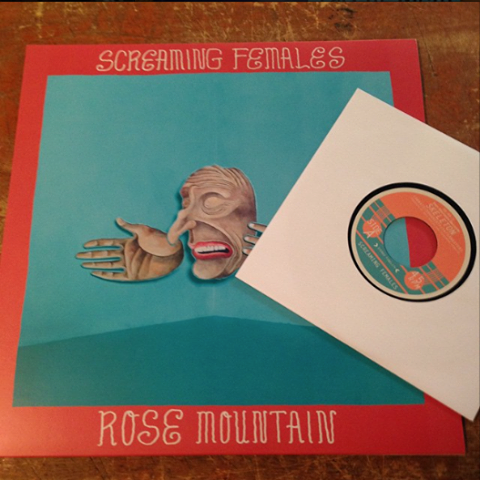
New Jersey trio, Screaming Females return with their new, sixth record “Rose Mountain”out 24th February via Don Giovanni Records and we’re psyched to premiere their video for “Hopeless.” Kicking off with a teetering piano line “Hopeless” hangs on singer/guitarist Marissa Paternoster’s full-bodied vocals. It starts off pared back and pristine before the scuzz-rock kicks in just before the three minute mark, a wave Paternoster rides it till the song’s succinct conclusion.

For filmmaker Lance Bangs (Sonic Youth, Odd Future, Yeah Yeah Yeahs), “Hopeless” was the album’s immediate standout track. The video itself was lit with flashlights and shot over the course of several freezing winter nights out in central New Jersey. Those blood splatters on the pickguard were 100 percent real: Paternoster apparently played in the chilly conditions till her fingers split open. And the setting? Those are definitely decommissioned McDonald’s playground structures in the background.

As for the crazy wiggles and scrawls that vibrate across the screen, Bangs had this to say about the after effect: “We did this bonkers approach of editing everything, then getting it turned into an actual 35mm negative, then we had movie prints made, then Marissa spent days obsessively scratching, bleaching, and hand animating the 5400 individual frames. After that we rescanned it all, and synched it up to the audio. To our knowledge I don’t think anyone has bothered to go through all of that hassle for a video before.”

Talk about dedication to awesome. Bangs has also been on the road with the band so keep your eyes peeled for that tour documentary coming out next week.