On May 18th, Ohio-based band The Sidekicks will release their fifth album, Happiness Hours. Produced, engineered, and mixed by John Agnello (Sonic Youth, Dinosaur Jr., Kurt Vile), Happiness Hours features some of the sunniest, most ebullient songs The Sidekicks have ever recorded—all ringing guitars, charging drums, and soaring vocals.
That dynamic is more than apparent on the infectious lead single “Twin’s Twist.” With its warm harmonies and shining melody, bouncing groove and bittersweet lyrics, “Twin’s Twist” also reveals the more narrative-driven direction that The Sidekicks pursued in creating Happiness Hours. As vocalist/guitarist Steve Ciolek explains, those narratives reach squarely toward a kind of universal experience.
“They are relative to my life, but they aren’t just about me,” says Ciolek, whose bandmates include drummer MattClimer, guitarist/vocalist Toby Reif, and bassist/vocalist Ryan Starinsky. “Unlike when you’re a kid, when every song has to be about falling in love or breaking up—about me, me, me—you get to a point when you really want your art to be inclusive. You want everyone to be able to locate themselves somehow in your songs.”
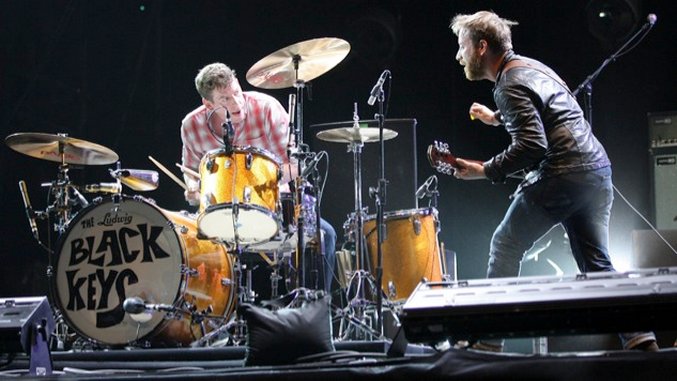
Plenty of bands through the years have altered their core sound, Sometimes more than once to better fit what was popular at the time. It’s the rare band that manages to pull off the reverse and force the mainstream to come to them. But that’s more or less what The Black Keys accomplished in the mid-aughts, when they went from a niche two-piece playing Junior Kimbrough covers to a rock juggernaut that every beer conglomerate and car dealership wanted soundtracking its TV commercials. The duo began as an independent act, recording music in basements and self-producing their records, before they eventually emerged as one of the most popular garage rock artists during a second wave of the genre’s revival in the 2010s. The band’s raw blues rock sound draws heavily from Auerbach’s blues influences, including Junior Kimbrough, Howlin’ Wolf, and Robert Johnson.
Those lucky enough to have caught guitarist/singer Dan Auerbach and drummer Patrick Carney in about 2003 with maybe 60 people in the room couldn’t have guessed that in five years’ time these two would be headlining Madison Square Garden. Friends since childhood, Auerbach and Carney founded the group after dropping out of college. After signing with indie label Alive, they released their debut album, The Big Come Up (2002), which earned them a new deal with Fat Possum Records. Over the next decade, the Black Keys built an underground fanbase through extensive touring of small clubs, frequent album releases and music festival appearances.
Fourteen years on, Auerbach’s has released a second solo album, the “Waiting on a Song”, The list of great bands that have spawned equally great solo acts is a short one. But Auerbach has had good reviews. His voice and guitar-playing have become almost ubiquitous over the course of the Black Keys albums and a 2009 solo debut of his own. Some of those fans who go back with The Black Keys pine for the days when Auerbach stomped around on tiny beer-soaked stages, his shouts matched by bolts of shrieking feedback and Carney’s outright abuse of his drum kit. Not everyone bought what these white guys from Ohio were selling, but if there was any doubt that TheBlack Keys are the genuine article, it was more or less scuttled when Kimbrough’s widow, Mildred, called them to say they were “the only ones that really, really play like Junior played his records.” The Keys were so proud they included Mildred’s voicemail as a track on their 2006 Kimbrough tribute EP, Chulahoma.
Chulahoma EP,
As it happened, Chulahoma, was the Keys’ last recording for Fat Possum Records, but also it was the fulcrum that put them on the path they’ve since ridden to arena shows, Until I bought this mini LP I’d never come across the name Junior Kimbrough who, according to good old Wikipedia, was an accomplished blues guitarist from Mississippi, and someone whose music only really began to appear in the 1990’s, thanks largely to independent labels such as Fat Possum and Capricorn Records (the former being mainly responsible for popularising the likes of a one Mr R. L. Burnside, amongst others). Messrs Dan Auerbach and Pat Carney’s approach to paying tribute to this obscure bluesman is appropriately low-key (no pun intended I promise) and suits their style to a tee. All lo-fi acoustics and electric guitar played through amps that probably date back to the 1950’s – while mixed by some veteran engineer with a hearing problem. But that’s ultimately part of its charm, and something which no doubt would appeal to many a young hirsute hipster, who just can’t get their head around all that digital rubbish masquerading as art nowadays.
The EP opens with the primitive and hypnotic “Keep Your Hands Off Her”, where Auerbach’s vocals and guitar sound delightfully ancient. It’s difficult to make out what he’s actually singing, but that’s OK, because The Black Keys seem more intent on capturing a certain feel and resonance rather than any detail in particular. Likewise “Have Mercy on Me”, which is another short though mesmerising number that just draws the listener in with Auerbach’s distorted notes and Carney’s caveman drumming. Auerbach wails his lines as if he were born in the wrong century, thus adding an additional authenticity to the proceedings.
The passionate yearning continues on “Work Me” and “Meet Me In the City”, especially the latter with its shimmery guitar and pleading vocals. The prehistoric ruminations continue on “Nobody but You” where Auerbach plays in a style not too dissimilar to guitar extraordinaire Gary Clarke Jr., another musician who knows a thing or two about the blues. “My Mind is Ramblin’”, the last track, plods along in faulty microphone fashion, and while the main riff can get a bit repetitive, the performance itself is no less affecting.
The Black Keys made the right decision in making Chulahoma an EP, because choosing to release a full length album of this material would likely have tested the patience of even the group’s most fanatical of followers. Nonetheless what they managed to produce was a refined and tasteful mark of respect toward an artist whom Auerbach, based on his liner notes, quite clearly holds in the highest esteem.
Tagged at the end, interestingly, and strangely, is a brief phone message made by Mildred, Kimbrough’s widow who, after having been played this record (obviously before it had officially been released), declared that Auerbach and Carney were “about the only ones who really, really played like Junior played his records, and I’m very proud, it makes me feel very proud.” Well, I guess endorsements don’t come any better than that.
Turn Blue
The band’s most recent album takes the top spot for their most ironic title, since they’ve never been less blue—at least as far as the music is concerned. If gut-bucket blues was their original foundation, Turn Blue marks the climax of their tear-down renovation, with expensive, gleaming surfaces in place of the trusty old wood panelling, courtesy of frequent collaborator Brian “Danger Mouse” Burton. The album opens with “Weight of Love,” a sprawling psych gem that promises a layered, moody batch of songs to follow. But the next 10 songs don’t quite get there. The pace feels labored on mid-tempo slinkers like “In Time,” “10 Lovers” and “Waiting on Words,” perfectly good songs that lack that familiar spark or intensity. The Keys at this point have cemented a faux-sleaze formula that cribs relentlessly from basically every single kind of American music, and this batch of tunes struggles to hide it.
Magic Potion
Their fifth album and first for Nonesuch took considerable heat for not shaking up the guitar-and-drums-in-a-basement-with-no-heat format, especially after 2006’s high-point “Rubber Factory” had showcased an expanding sound. And it’s true: Auerbach and Carney seemed almost defiant in jumping to a bigger label and promptly burrowing into their scuzziest impulses. But if you loved The Black Keys when they came up, it’s pretty hard not to at least like this album. That electricity between Auerbach and Carney and their seriously overtaxed amplifiers is right there on “Give Your Heart Away,” “Modern Times” and “Black Door.” The two-man swing of “Just Got to Be” and “Your Touch” is primitive but potent. It’s top-shelf caveman blues, songs written on sandpaper, and if you dig it, you dig it. Plus, Auerbach breaks out his blossoming soul-man voice on “The Flame” and “You’re the One” in a tip-off to where the band would go next, so no big loss for the aesthetes out there.
Attack and Release
After making the austere, shrug-inducing Magic Potion in 2006, it looked like the Black Keys’ well was running dry. All it took to refill it was the producer from Gnarls Barkley and Ike Turner dying. Danger Mouse had wrangled Auerbach and Carney for a collaboration with Turner, and when Turner passed away in late 2007 they were left with a bunch of songs and no singer. Turned out for the best. Attack and Release showed that Auerbach could write and play outside his established zone, as on slower, more emotive songs like the teary “Lies,” and the rueful, organ-powered “Things Ain’t Like They Used to Be.” Touches of banjo (“Psychotic Girl”), flute (“Same Old Thing”) and some arpeggios (“So He Won’t Break”) subtly expanded the sound, drawing the Keys closer to folk and psychedelic music. Burton’s touches, like the backing vocals on “Strange Times” and the funhouse-mirror guitars on the heavier “I Got Mine,” lent the music a funereal sheen. Attack and Release was a tentative first step into a huge period for the band, like they were walking around in a brand new suit.
The Big Come Up
In early 2003, there was already a weird two-piece garage-rock combo from the Midwest who spewed chainsaw feedback and worshipped vintage blues idols. In fact, The White Stripes’ “Elephant,” with its soon-to-be-played-in-football-stadiums-worldwide anthem “Seven Nation Army,” came out two months before The Black Keys’ debut, so it was hard not to approach “The Big Come Up” in that context. Suddenly here was a shock contender in the race for the band most likely to sound like The Flat Duo Jets. And sure, these two guys from Akron were not inventing a single thing. But from the first growling, low-fi bars of “Busted,” it was clear they’d found lightning in a basement, playing like two guys who were more amazed than anyone that they were this good. Craggy blues originals “Run Me Down,” “Countdown” and “Heavy Soul” mixed seamlessly with standards (“Leavin’ Trunk”) and covers of favorites (R.L. Burnside’s “Busted,” “Junior Kimbrough’s “Do the Rump”). Auerbach was an instant star, with his rich, raspy voice (the only real explanation being a Crossroads-style body switch) and his dual-action guitar—both completely untamed and yet in lockstep with Carney, holding down the low end while riffing on top. The Black Keys would make better albums than this one, but you can never quite recapture the “holy shit” of hearing The Big Come Up for the first time.
Brothers The Keys’ most critically acclaimed album, Brothers found them fully embracing the Danger Mouse School of Sonic Advancement they’d begun with Attack and Release, even though Mouse returned for just one song here, the bouncy hit single “Tighten Up” On Brothers, they didn’t tear up the playbook so much as update it with more instruments (organs, drum machines, whistling), more minor chords, and a much more controlled vibe on creeping soul songs like “The Only One” and “Too Afraid to Love You,” with its Addams Family harpsichord. “She’s Long Gone” and “Next Girl” sport vintage Auerbach riffs, but where he and Carney used to bash them out fast, here they pulled way back with lurking drums and humid reverb, slathering it on rather than trampling it to death. Auerbach climbs into his highest falsetto for a faithful cover of Jerry Butler’s “Never Gonna Give You Up.” It all sounds solid enough, if a little stuck in mid-tempo and done-me-wrong lyrics. And of course it’s formulaic—something The Black Keys can’t help but be.
El Camino
With a bonafide hit under their belt (2010’s Brothers), The Black Keys struck while the money was hot and made an album that was basically the soundtrack to the unlikely story of an Ohio blues-rock duo that figures out how to write bonafide hits. In the end, they get to play with all the toys—specifically, bubblegum bells and synths and elastic bass guitars. Opener “Lonely Boy” has a clap-along beat with crystalline keys glazed over top and cheesy backup singers on the chorus just for the shit of it. And it works, same as it does on poppier songs like “Dead and Gone” and the T-Rex stampede of “Gold on the Ceiling.” The Keys just seem less stiff than they did on Brothers, totally at ease with making exactly the album they wanted to make. It’s brash and playful (“Money Maker”), tongue-in-cheek glitzy (“Stop Stop”), with big hooks that are almost guilty pleasures. They go for broke on “Little Black Submarines” and just hijack Tom Petty. The anchor is still Carney, who gets his stomp back after the hard turn to moody on Brothers, keeping the show moving along with force and precision.
Thickfreakness The Keys’ second album throws its first punch right away, with Auerbach’s guitar revving up like a coal furnace and erupting into the title song. “Thickfreakness” remains one of their best songs, a prowling blues with a face-melting rock bridge (especially in concert). It also encompassed the general direction at this point: sticking with faithful (and volcanic) blues covers (Richard Berry’s “Have Love Will Travel,” Junior Kimbrough’s “Everywhere I Go”) and leaning to classic rock (“Thickfreakness,” “Hard Row”). At this point, though, the Keys were happy to be riff monsters, with Auerbach tearing off one after the other on lonely-boy tales like “No Trust,” “Hurt Like Mine” and “If You See Me,” all with the prodigious boogie that set these guys apart from the start. Patrick Carney’s drumming leaps a mile from The Big Come Up, adding a harder-rock dimension to songs like “Set You Free.” The album was recorded in a single 14-hour session in Carney’s basement, and there’s no room for extravagance or decor.
Rubber Factory Rubber Factory is where the Black Keys’ songs started catching up with their phenomenal talent. They had to. By 2004, there were too many other skyrocketing bands—Strokes, Stripes, Libertines, Yeah Yeah Yeahs, Walkmen, et al—carving out corners of a revitalized guitar-rock landscape. Without pulling up the roots (cough Kings of Leon), Auerbach and Carney stretched out, building sturdier structures for their riffs and wringing richer flavors from the same basic ingredients—not an easy feat, as several of those aforementioned bands would attest. Opener “When the Lights Go Out” is a droney blues with a scratchy acoustic guitar out front. “Just Couldn’t Tie Me Down” marches with a second-line shuffle that foreshadowed more Southern-fried horizons for the band. On quieter songs like the aching “The Lengths” and a knockout cover of the Kinks’ “Act Nice and Gentle” (better than the original?), Auerbach mixed in folk and country and found a new gear, a certain sway to suit his more restrained vocals and Carney’s expanding drums. “10 A.M. Automatic” is an indie-rock confection with a closing solo that swallows the song whole. All this, and without giving an inch on the garage-blues crackle that fueled their first two albums—”Keep Me,” “Stack Shot Billy” and the psyched-out “Grown So Ugly” are maybe the duo’s three best blues recordings, all of them infused with the spirits of Fred McDowell, R.L. Burnside and T-Model Ford, ducking and weaving on Auerbach’s nimble guitar before delivering knockout blows.
The Black Keys are; Dan Auerbach, guitars, vocals Patrick Carney, drums
Unlike most peers who refuse to outgrow the simplicity of their hooky riffage, Dylan Baldi’s songwriting has continued to bloom without softening a thing. New album “Life Without Sound” is every bit as revelatory as 2012’s more ambitious and abrasive release Attack on Memory, yet he’s flirting with arena-rock territory.
This is not to say the Ohio band doesn’t still love harsh guitar riffs and introspective lyrics, and on their latest single, “Enter Entirely,” Dylan Baldi reflects on what it’s like to watch your life pass you by. Instead of moving forward, Baldi finds himself frozen in time, isolated and contemplating what steps he can take to be the person he wants to be: “There’s someone I would like to be if I could be, but the path is frightening,” Baldi raspily sings. But he also admits to self-sabotaging along the way with “a bottle of wine,” and as the chorus hits, you can feel Baldi settle back into himself (“Moving on but I still feel it, you’re just a light in me now”). He surrounds his rumination with crashing guitars that confidently pay homage to Pavement.
That woozy, lonely, and bitter feeling at the end of every late-night walk home, when you realize there’s nowhere else in the world you’d rather be than yesterday. “Moving on but I still feel it/ You’re just a light in me now”
Dylan Baldi puts things into perspective with another must-squeeze anthem that wraps our love-torn wounds with gauze and distortion. Once more, he throws his weight into repetition, bludgeoning our bruises until they’re blistered and screeching. This one hurts.
Jessica Lea Mayfield is an indie rock singer songwriter from Nashville by way of Kent, Ohio. She has a bit of a storybook background and she has a couple of more recent life chapters that are more like nightmares. Her parents were in a touring bluegrass band, and she grew up on a tour bus. She was home schooled, and obviously learned a lot about music. She started playing with the family band when she was 8, then she started playing rock shows with her brother David. When she was 15, she got a bedroom-recorded EP in the hands of Dan Auerbach out of Black Keys. He loved it, and got it in someone else’s hands, and she had a record deal just like that. In 2008, at the age of 19, she released her first album With Blasphemy, So Heartfelt, and it got rave reviews. The story goes that the album was about an off-and-on boyfriend who resented being her muse. He hated that the songs were about him even though nobody had any way of knowing that. As the story goes, he would break up with her every time she wrote a new song.
Her next album Tell Me was a very autobiographical record that she described as being about her turning the tables. It’s about her being mean to boys and deliberately breaking their hearts instead of vice versa. That album still had a very alt-folk/alt-country feel, but the next record was quite different.
Then in 2014 her album Make My Head Sing took her in a completely different direction. It was much more rock-oriented, with flavours of grunge and punk. It was also, coincidentally, her first album without the production of Auerbach. Instead, she got her now ex-husband to work the knobs and faders. She had undergone a lot of changes and the album was sort of about change.
Jessica Lea Mayfield depends on vocal demeanor to bring out the emotional nuances in her writing. She’s got quite a range: She can sound spacey and serene, or distant and suspicious, or fiercely sure of herself. Her raw fourth album, Sorry Is Gone, has a series of songs about escape from damaging relationships, and each is conveyed through its own weather system. There are outbreaks of snarling bitterness followed by moments of calm, and times when inner turmoil is masked under a coating of honeyed pop exuberance. Mayfield released a long-awaited fourth album–“Sorry is Gone”— on September 29th of this year.
None of those moods quite prepare the listener for the aura Mayfield uses on “Safe 2 Connect 2.” The song begins with a Google-search confession, sung in a numb, defeated, robotic monotone: “Getting tips on how to feel more human,” Mayfield intones solemnly. “Or how to un-dehumanize someone, I’m only asking for a friend.”
It’s just two lines, delivered listlessly, with no passion or pyrotechnic dazzle. And that’s all Mayfield needs to plunge deep into the Dark Forest of Existential Gloom, where disconsolate types wander around asking their digital bots questions like “Is there no one…it’s safe to…connect to anymore?” The song ends with Mayfield sounding more resigned than before (if that’s possible) as she states her sad conclusion, over and over again.
Simply constructed and executed with a haunting sense of detachment, “Safe 2 Connect 2” is one of many signals that Mayfield has evolved since 2014’s Make My Head Sing. Her songs are tighter, their moods more fully developed. She’s using more direct language, yet somehow her songs have more dimension: The title track sounds, from a distance, like a celebration of empowerment, a jangle of buoyant and affirmative pop. Get closer, and you begin to discern scars marking an abusive relationship, and the intensity of feeling that attends the cycles of apology and reconciliation.
That album release, unfortunately, was bookended by some events that physically and emotionally injured her. Before the album came out, she was hospitalized with injuries that stemmed from a series of domestic abuse incidents. She had a broken shoulder, which immobilized her arm, which makes playing music really hard. There were other injuries that she had been dealing with for years, but she said that her abusive husband wouldn’t allow her to go to the doctor. Evidently, he was also stealing her money. I don’t know why she stayed with him after the abuse started, or after it persisted, but she finally got out of that relationship.
Last month, just before the album release, she was involved in an automobile accident that resulted in even more injuries. Another driver fell asleep at the wheel, and rear-ended her causing injuries to her neck, ribs, hips, and knees. It didn’t stop the release of the album, and she hoped that she would be able to recover in time to play the east coast shows that were already scheduled for October/November. Yesterday, she announced that those shows have been canceled and that she will need a few more months to go through physical therapy.
All of those physical injuries and emotional trauma are certainly very heavy, but it’s a great album. Once again, it’s a bit different to her folk/bluegrass roots. Just as she did with Make My Head Sing, she opens Sorry is Gone with a lot of noise. The album-opening “Wish You Could See Me Now” is fuzzy and heavy with tons of delay on the vocals. It’s almost, even, shoegazey. I love that song, but it’s not our song of the day. Our song of the day is a perfect blend of her roots and her new “rock” direction. It’s got a bit of 90s college radio sound, and even a bit of a surf-rock sound . Of course it’s highlighted by her signature rocky/drawly/sweet/sour voice.
Her tour has been canceled for now. While we hope that she’s able to reschedule later, we’re more interested in her full recovery from her myriad injuries. We also hope that she’s able to get and afford the care that she needs both physically and emotionally.
The Breeders are back. You can watch the lyric video to their latest track, “Wait in the Car,” is their first new music since 2009’s Fate to Fatal EP, with their last full-length, Mountain Battles, came out the year before that. However, it’s not, as of now, scheduled for inclusion on an upcoming album
The barely two-minute track opens up with the sounds found on that tweet, some power chords followed by KimDeal shouting, “Good morning!” Its video was directed by Chris Bigg and Martin Andersen, who created the video out of 800 still images.
The song will be released on three separated colored vinyl 7-inch singles. Fans attending their upcoming tour will be able to purchase an orange vinyl copy backed with a cover of Amon Düül II’s “Archangel’s Thunderbird” that they recorded with Steve Albini. Then on October 27th, a yellow vinyl version, with their take on Devo‘s “Gates of Steel” as the b-side, will arrive in select independent record shops. They have yet to announce details for the third single, a red vinyl 45 with a cover of Michael Nesmith’s “Joanne” on the flip side. Pressings of all three will be limited to 1,500 copies.
The Breeders are: Kim Deal (vocals and guitar); Kelley Deal (guitar and vocals); Jim Macpherson (drums); Josephine Wiggs (bass). They are currently recording a new album.
The Breeders will head to Europe for two weeks before returning home to open a pair of shows for Arcade Fire. Then, they’ll begin a headlining tour of the U.S. in November.
” Memory believes before knowing remembers ” . A cryptic quote from Faulkner that bannered The Hiders website and hinted at their own cryptic trajectory and identification with the disenfranchised.
Perhaps a self-fulfilling prophecy of their namesake, The Hiders have slipped through the mainstream cracks but after over a decade of watching bands rise and fall they have persisted and have become a stalwart of the Midwest music scene. Developing a cult fan base, creating a seamless and consistent body of work and garnering ‘off the radar’ success with international record sales and some high-profile licensing. This is the second album from Cincinnati’s The Hiders
Saintseneca writes dark, rivetingly mysterious, painstakingly crafted songs that somehow retain a sense of mischief. Even when the Ohio band incorporates exotic instrumentation into moody ruminations on consciousness, the result can still convey all the pleasures of a three-minute power-pop anthem.
In the case of “Book Of The Dead On Sale” a new one-off single, Saintseneca barely needs two minutes. And yet it’s an intoxicating and fully formed little song, what with the way it rumbles and burbles through Zac Little’s deadpan thoughts on math, ancient texts and footage of kittens.
The accompanying video (directed by Little and Jon Washington) provides a perfect match for the song’s mystery, beauty and undercurrent of deep weirdness, as Saintseneca uses a fisheye lens to offer an appropriately twisted view of the world. “Imagine seeing in all directions all at once — 360-degree vision,” Little writes. “The video for ‘Book Of The Dead On Sale’ is a visual metaphor. We use footage captured in 360 degrees and display it flattened in one circular field of view.
“The visual reminds me of R. Crumb’s psychedelic cartoons,” he continues. “We riff off of that idea, aiming to create a cartoonish dreamscape. The loose story is told from the point of view of an apple — being eaten, then absorbed. The apple becomes the eater. The eater becomes the apple. 360 cameras, like other new technologies, create new possibilities. Perhaps they allow us to see in new ways? We see more at once than was ever before possible, and yet we find ourselves all the more disoriented by the new surreal world we create.”
It’s hard to say just what it is about those noodly little bedroom-pop albums that allows them to get under the skin with such ease and prolificacy. Perhaps it’s the humanity that they exude, the authenticity of showing all the cracks and wears and tears with a searing sense of honesty; the same thing that allows us to treasure out-of-focus photographs with as much vigour as a perfectly-framed counterpoint. In a year full of gems that fit in to the aforementioned mould, Shya’s ‘Trying’ was one that we found ourselves returning to again and again. Initially consumed as something delicate and passive, the record has a number of inspired moments of magic within its frame to charm us back for further exploration.
Similar to Hovvdy’s ‘Taster’, in the way that it seems to hang like a solemn atmosphere in some listless afternoon, there’s an indefinable attraction to these songs, and a number of inspired little moments, that lifts it out of the gloom and into far more potent territory. “I’ve been fucking around for too damn long now” sings the opening track “going outside” and such sentiments are indicative of a record that always feels like it’s trying to shake the shackles that have held it in the shadows for far too long. A little record with a big heart, spend some time with ‘Trying’ and you might just find yourself with a brand new hand to hold in the shadows.
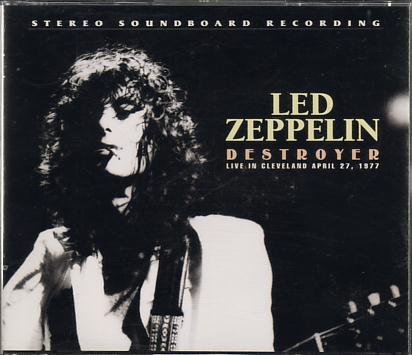
Despite being part of a tour that eventually evolved into violence and heartbreak, Led Zeppelin put it all together during their April 27th, 1977, stop at the Richfield Coliseum near Cleveland .
“Zeppelin-ologists claim this was one of Led Zeppelin’s best shows on the tour, And much like the 10th anniversary Springsteen concert at the Agora , this 1977 Coliseum show was one of the most bootlegged of LedZeppelin’s career.”
The best of those bootlegs remains the three-disc set “Destroyer”, which included the entire 18-song performance from the opening “The Song Remains the Same” through to a two-song encore of “Rock and Roll” and “Trampled Under Foot” that arrived more than three hours later. Better still, unlike lo-fi fare such as the fan-made bootleg Listen to This Eddie from later on during the same tour, “Destroyer” offered remarkably clear audio. The exceptional sound quality throughout the performance is described by some sources as “almost perfect”.] It was the first, and for many years the only, professionally recorded mixing desk tape to escape from the band’s possession
Led Zeppelin ended up running through an impressive setlist of fan favorites that night in Cleveland, including “Since I’ve Been Loving You,” “Stairway to Heaven” and “Kashmir,” while sprinkling in newer fare like “Achilles Last Stand” from their latest album “Presence”. A standout moment arrived courtesy of John Paul Jones . who led an improvisational run through “No Quarter” that stretched to 20 minutes in length.
“Working from both electric and acoustic pianos, John Paul Jones again impressed with his general versatility,” It was one of the best rock jams I’ve ever witnessed.”
The liner notes for “Destroyer”, issued by the Shout to the Top label, actually thank John Bonham for use of the tapes, though initial vinyl pressings incorrectly placed the concert at Seattle. Later, a bootleg of the bootleg appeared; it was edited down to two discs by omitting Led Zeppelin’s lengthy take on “Moby Dick.”
Together, these bootlegs seem to celebrate a band at the top of its game. A show held three days after this Cleveland stop went on to draw more than 76,000 fans to Detroit’s Pontiac Silverdome setting a record for an indoor arena at that time. In actuality, however, Destroyer documented the beginning of the end.
Dates in support of Presence, Led Zeppelin’s seventh studio record, had kicked off on April 1st, 1977, in Dallas, with 51 concerts scheduled. They’d never get there.
When Led Zeppelin reached the Riverfront Coliseum in Cincinnati on April 19th, 1977, more than 2,000 fans without tickets attempted to crash the gates – resulting in around 70 arrests. Later, on June 3rd, a riot broke out in Tampa after an open-air concert was cut short by a thunderstorm, leaving behind scores of injured fans. Moving forward in a tense, drug-fueled environment, Led Zeppelin’s performances were criticized as increasingly overblown and inconsistent.
Then Robert Plant’s son Karac died on July 26th, 1977, after a a severe stomach virus . Already fearful that things were going off the rails, Plant took an extended period of time away to grieve. A tour originally intended to last through August. 13th abruptly ended.
“By 1977, I was 29, just prior to Karac’s passing, and that sort of wild energy that was there in the beginning had come to the point where we were showboating a bit,” Plant told Uncut magazine in 2008. “Unfortunately, we had no choice. We were on tours where places were going ape s—. There was no way of containing the energy in those buildings. It was insane. And we became more and more victims of our own success. And the whole deal about the goldfish bowl and living in it, that kicked in.”
Led Zeppelin eventually rallied to produce 1979’s album “In Through The Out Door” but by September. 24th, 1980, Bonham was dead aged just 32, and Led Zeppelin were no more. Already scheduled North American concerts, including a return to Cleveland on October. 25th-26, 1980, were cancelled.
That left a July 24th, 1977, date in Oakland, less than three months after Led Zeppelin’s heralded stop at the Richfield Coliseum, as their last-ever concert in the U.S.
Led Zeppelin, Cleveland, April 27th, 1977 Set List
“The Song Remains the Same”
“Sick Again”
“Nobody’s Fault but Mine”
“In My Time of Dying”
“Since I’ve Been Loving You”
“No Quarter”
“Ten Years Gone”
“Battle of Evermore”
“Going to California”
“Black Country Woman”
“Bron-Y-Aur Stomp”
“White Summer/Black Mountain Side”
“Kashmir”
“Moby Dick”
[Guitar Solo]
“Achilles Last Stand”
“Stairway to Heaven”
Encore:
“Rock and Roll”
“Trampled Under Foot”
Singer-songwriter Lydia Loveless’ highly anticipated new album, “Real”, was released in August via BloodshotRecords. This record follows the release of Somewhere Else, which Rolling Stone praised as “…an aching, lusty set of twang and sneer wrapped in electric guitar swagger,” while Pitchfork furthered “Somewhere Else [is] both a bracing and a deeply harrowing listen.”
Lydia Loveless has never been catchier, funnier, smarter, or more of an emotional powerhouse than on this album of hearty roots-rock songs that helped her decide to keep living. The dopey “Midwestern Guys” of her Columbus home base share head space with a passionate romance in “Bilbao,” and “your shitty Indianapolis band” adds to mental noise both metaphysical (“Heaven,” where no one goes) and heartrendingly personal (“Longer,” on which Loveless grapples with a close friend’s death). And then there’s “Out On Love,” secretly the greatest ballad of the year and not so secretly the most radical stylistic departure of her career. Hopefully it proves to be a launchpad for many more.








 The Fat Angel Sings