Posts Tagged ‘Los Angeles’

Daily Dose: Cheekface, "Dry Heat/Nice Town"

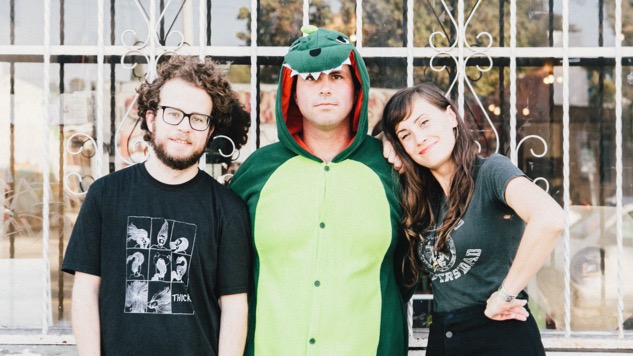
One of the few bands on this list who’ve actually already released their case for being one of 2021’s most intriguing bands, Cheekface released their brand-new album, “Emphatically No”, through New Professor Music. The record finds the Los Angeles-based trio contrasting the mundane nature of everyday living to the background of a world in chaos, it takes a dark-side to find comedy in the face of the void, yet somehow Cheekface seem to manage it, on Best Life they note, “everything is normal”, with the conviction only someone who knows that to be a complete lie can manage.

Cheekface is a catchy band from Los Angeles with clever lyrics like “life is long like a CVS receipt.” Think Parquet Courts meets They Might Be Giants, maybe.

Musically, Cheekface seem to exist in the lineage of American talk-singers, from Jonathan Richman through to Stephen Malkmums, and more contemporary artists like Car Seat Headrest and Savage Mansion. This a record of strutting bass-lines, guitars with the angularity of post-punk, only without all the po-faced seriousness normally associated with the genre. At the centre throughout are the dual vocals of Greg and Amanda, trading comical lyrical barbs as they discuss geopolitics, mental health crises and narcissistic fascists, mentioning no names of course. If that’s all sounding a little self-congratulatory, worry not, like Jeffrey Lewis or Scott Walker, Cheekface aren’t looking down on the world, they’re very much part of the joke, as Greg notes, “no one else is the punchline of these lyrics…if me and Mandy are poking fun at anyone, it’s us”. If the current state of the world needed a soundtrack to poke a little fun at the darkness, then on “Emphatically No”, Cheekface might just have written a perfect contender.

http://

1. “‘Listen to Your Heart.’ ‘No.’”

Greg Katz: This is obviously a song about the negative messages your brain sends to you when you are suffering with a mental illness. It was the last song we wrote before we started recording stuff for this album. We recorded almost the whole album at New Monkey in LA with Greg Cortez recording and mixing, including this one.

I remember when me and Mandy were writing this one, getting the hook was pretty easy, but I was having a really hard time coming up with a melody for the verse. I must have improvised, like, 25 different ideas that didn’t work. Then Mandy was like, “Well, I think it should be this!” And she sang the first four notes of the song. I was like, “Why did you let me torture myself trying to come up with something when you knew what it was supposed to be the whole time?” I’m incredibly grateful to have Mandy as a writing partner, even though she sometimes likes to watch me suffer.

Amanda Tannen: I’m so thankful to have found Greg in Los Angeles after moving from NYC. From when we started the band up until March, almost every weekend we would get together to write songs. Whatever song came out that day normally would reflect how we were feeling that week. I remember while writing this one I was getting more comfortable with saying “no” in general. But also feeling judged by so-called “self help” fads. You can say “no” to anything supposedly good for you, or bad, reminding myself that only I can make that decision for myself. 

2. “Best Life”

GK: This is one of three on the album that we recorded in Brooklyn with Jeff Berner at Studio G. The opening line, “Everything is normal,” had been in my notes for quite a while, and I’d written several songs trying to use that line. But that lyric finally found a home in this one. The guitar lick that plays eight bars in, that was what started the song idea. I think I was trying to channel the slippery lick from “Satan Is My Motor” by Cake. 

AT: We were in Brooklyn in mid-February at the end of traveling to three cities to play. To top it off we recorded with Jeff at Studio G, at the end of the trip. I’m so happy we fit it in! It was so much fun for me to be back recording in Brooklyn. It had been over a decade since I had recorded anything in the city. We even started the day off with some good bagels. Perfect day. 

3. “Call Your Mom”

AT: At the time of writing this one I think we had a handful of mid-tempo songs. For personal reasons, we needed a fast one. Punk songs are good for my mental health. 

GK: The title lyric, “They want your attention 24/7? Resistance is easy, call your mom,” is about how the federal government tries to insert itself into our lives constantly and consume all our attention to consolidate power. Ignoring it is an act of rebellion, in my opinion. This song has a ripping guitar solo from Devin McKnight of Maneka (and ex-Speedy Ortiz) fame, and the laser gun sounds are him on guitar too.

4. “Crying Back”

AT: I consider this one a chill walking-while-wandering song, which I can always use more of in life. I remember my one mixing note was more shaker. Love the shaker in this one, it takes center stage. Echo’s got talent. 

GK: My favorite part of this song is that the pre-chorus is the same chords as “Cruel to Be Kind” by Nick Lowe. That was not intentional. But we had learned the song at band practice once for fun, and Mandy pointed out that we ripped off the changes for this. The lyric “No pockets for your phone in your surgical gown” was written on my phone in a hospital emergency room after I got in a car wreck. 

5. “Wedding Guests”

GK: We wrote this one with our friend Brijesh Pandya, who’s an amazing drummer and songwriter in LA. He was like, “I have this monster riff saved in my phone that I don’t know what to do with,” and it became this song. He also kicked in the lyric about “a man, a plan, a plain bagel, and an omelette” and a couple more of the good punchlines in the verses. I remember when we were recording this song we were listening to “99 Problems” and “Crazy in Love” to see how to give the song some more lift in the chorus, hence the bell loop that you hear there. That’s the Mellotron Hammond sound beaming through at the end. The other keys were a toy Casio.

6. “(I Don’t Want to Go to) Calabasas”

GK: One influence we came back to a lot while writing this album was Minutemen. They don’t get the credit they deserve as both an influential LA band and a thoughtful political band. This one is a pretty direct reference to them, down to the lyric “What makes a man want to be a referee” that references their What Makes a Man Start Fires? album title. This didn’t make it into the final version, but we also recorded some mariachi trumpet overdubs and Greg Cortez on nylon guitar as a nod to Calexico’s version of Minutemen’s “Corona.” Cooler heads prevailed and those ended up on the cutting room floor, i.e. a muted Pro Tools channel. 

AT: While writing this, Greg had to explain to me where Calabasas was. The LA area is still new to me after nine years. I remember starting the lyrics by riffing off of bottled water brands. 

GK: Calabasas is a place, but it’s also, you know, a metaphor.

7. “Original Composition”

GK: This one nods to Minutemen’s “History Lesson Part 2.” I thought the guitar solo should be one note, but Mandy said it should be two notes, and she was right. Echo really knocked the drum groove out of the park on this one, in my humble opinion. I improvised the whistling hook at the beginning and end of the song when I was waiting for the mic to come on to record vocals, but it ended up sticking, even though I don’t like songs with whistling in them.

AT: Another walking song. Whistle while you walk. I love guitar solos, this one needed two notes. Simple.

8. “No Connection”

GK: Another song where the Mellotron gets a look. That’s the Mello plucked strings at the top and the Mello harp glissando. Echo played the toy piano on that nine chord that opens the song. Before writing this one, we’d covered “Bad Liar” by Selena Gomez at a few shows, and it has a sample of “Psycho Killer” by Talking Heads that plays through it. I think that really called our attention to the super simple disco kick drum pattern in “Psycho Killer” that gives it so much power. We used that kick drum pattern in the chorus of this song and in a few other places on the album, including the next song on the album, “Emotional Rent Control.” Also, I want to go on the record saying sorry that the guitar solo in this one is so long.

AT: When asked if the guitar solo was too long, I said no, should it be longer? And yes, up the fuzz pedal. If you can’t tell, I’m a huge Dinosaur Jr. fan. While recording this batch of songs we would take dinner breaks and eat vegan taco salads. Mmm, Cheekface taco night. We try to keep dinner light, combatting the dreaded food coma.

GK: In my old band, we lost a half day to burrito comas in one session. Never again! In my meandering experience, you forget to eat in the studio, then you overeat when you realize you’re starving. Terrible for the blood sugar flow, and it means you play worse as the day goes on. So now I always pull up to the studio with a fresh baguette, a couple bags of baby carrots, roasted almonds and a couple tubs of hummus. I spread them all out in the control room to start the day. Keeping a low-level semi-healthy nosh going throughout the session means that no one is ever tracking during a calorie crash. That’s our tip for the other productivity-conscious bands out there.

9. “Emotional Rent Control”

GK: This one we started writing a few weeks after Ric Ocasek died. We definitely wanted to give a direct nod to The Cars. There’s a lot of Cars-inspired moves in our songs, like the Moog solo in “Dry Heat/Nice Town.” So with this one we wanted to go straight for a “Just What I Needed” vibe to pay respects to the legend. Also I’d been listening to “Highway to Hell” a lot by AC/DC around the time we wrote this, so this one has the tom-tom thumping pre-chorus like that song, and also the bass dropout after the chorus that lets the air in. Last thought: every single one of Mandy’s bass lines is pretty great, but this one is especially nasty.

AT: Sometimes we write songs by looping a riff over and over—bass or guitar. After playing that riff a while, I end up picking what I think beat one is, but a lot of the time it’s not the same one Greg is thinking, it can make the interplay between guitar and bass have a push and pull in places, which I love. 

10. “Big Big Friend”

GK: This was the last one written that went on the album, it was written at the top of 2020, and it was recorded last, in February 2020, and it kept evolving pretty much until we recorded it at Studio G in Brooklyn. The quiet guitar solo with the harmonics was in the original demo, but the loud guitar solo right after was added in the last band practice before we recorded it. It’s a song about how hard it is to thrive in a big bureaucracy like a university.

11. “Loyal Like Me”

GK: This one is the oldest song on this album—we wrote it before we recorded our first album, Therapy Island, but it didn’t make the cut for whatever reason. It was one of several efforts to do something like “Anything Could Happen” by The Clean, which is one of the greatest indie rock songs ever, but it didn’t come out very similar. The song is about how I take other people’s generosity for granted. It’s a sad song to me because I feel guilty about doing that, but I guess everyone else does it too. Echo does some pretty nifty drumming under the second verse.

12. “Do You Work Here?”

AT: We wanted to write a darker-sounding song, with some big distortion. I remember I was listening to a bunch of psych rock at the time—B.R.M.C., The Warlocks, Black Angels, and Autolux, who are one of my favorite LA bands. The effects to Greg’s voice were added at the end and fit so well.

GK: Oh yeah, Greg Cortez killed it with the reverb and delay throws in the mix. I think we were like, “Why don’t you try some delay throws?” And he was like “OK, where?” And we were like, “We don’t know, everywhere?” The stuff you hear was all his first pass.

13. “Don’t Get Hit by a Car”

GK: One day we came into our practice space to write, and I think Mandy had just watched a documentary about A Tribe Called Quest, and she was like, “All their songs have that same groove, can we try something with that feel?” So we started that new-jack drum groove and draped the chords from “Sweet Jane” on it. To me it sounds more like “Jack & Diane” than it sounds like either of the actual inspirations. Not gonna lie, I feel really exposed by the lyrics on this one, hence we buried it at the end of the album. But shouts to Lena Dunham, hope she doesn’t take us on The People’s Court for name-dropping her. It’s all love, Lena!

Originally Released August 12th, 2020
Music and lyrics by Cheekface

Amanda Tannen on bass guitar and backing vocals
Greg Katz on vocals and guitar
Mark Echo Edwards on drums and percussion

thanks to fortherabbitsm

See the source image

Composer and former Oingo Boingo frontman Danny Elfman has shared a new song, “Sorry,” which is another of the songs, like “Happy,” that he’d written especially for his 2020 Coachella performance that ended up not happening due to the pandemic. “‘Sorry’ was the first song I’ve written for myself in a long time,” Elfman says. “It began as an obsessive choral-chant instrumental work, which at the time I called ‘alien orchestral chamber punk’ and evolved slowly into a song. I was surprised by the amount of rage I’d been storing inside myself which came bursting out as soon as I applied my voice.”

The creepy, animated video for the song was made by Jesse Kanda, who has worked with Arca, FKA Twigs, and Bjork, and like the song, it was created for the Coachella performance. 

http://

Released January 11th, 2021

Music & Lyrics by Danny Elfman

Vocals, Guitars & Synths by Danny Elfman
Drums – Josh Freese
Guitars – Robin Finck & Nili Brosh
Bass – Stu Brooks
Percussion and Additional Drums – Sidney Hopson

Image may contain: 2 people

Los Angeles-based quartet SLUGS first appeared back in 2018 with their EP, “Cool World“, a record that caught the attention of many blogs, and saw the band share stages with the likes of Jessica Lea Mayfield, The Districts and Let’s Eat Grandma. Since then things have gone a little quiet, which all changed last month, when they returned with a brand-new single, “Super Sane“.

Citing influences from Linda Perhacs to The Oh Sees, Slugs are not a band easily pigeon-holed, with a sound that flutters from the sweetly melodic to the riotously energetic. Super Sane is probably the band at their most restrained, as washes of burbling electronics and gently meandering guitars create a gorgeous backing for vocalist Marissa Longstreet’s impassioned vocal delivery.

This is a song of sweet juxtapositions, at times it feels intimate and insular, the next fierce and strong-willed, as it seems to muse on ideas of healing and finding a path to acceptance of your lot. While plans for the year ahead remain as yet unconfirmed, there’s enough here to hint that the return of Slugs is a reason to be very excited about whatever is coming next.

Vocals/Guitar – Marissa Longstreet Vocals/Bass – Sarsten Noice Guitar – Josh Beavers Drums – Dash Hutton

“Super Sane” Written by SLUGS

Image may contain: 1 person, shoes

Reciting mantras is a form of teaching — leaning into the repetition, retraining your brain, learning new realities. For Jilian Medford, it was a way to fight through her anxieties. And here, on “Show Me How You Disappear”, through a haze of tangled, inverted pop, her new truths push their way to the surface.

Mesmeric and kaleidoscopic, shimmering with electrified unease, Show Me How You Disappear is both an exercise in self-forgiveness and an eventual understanding of unresolved trauma. Medford’s third record as IAN SWEET unfolds at an acute juncture in her life, charting from a mental health crisis to an intensive healing process and what comes after. How do you control the thoughts that control you? What does it mean to get better? What does it mean to have a relationship with yourself?

The inklings for the record began slowly. In 2018, Medford wrote “Dumb Driver” on an acoustic guitar while living in a “hobbit hole” back house in Los Angeles. Skeletal, stripped-back versions of the undulating, amorphous “My Favorite Cloud” and “Power” emerged next. Mentally she was in a dark place. By January 2020, following increasingly severe panic attacks, Medford began a two-month intensive outpatient program, including six-hour days of therapy. It yielded an unprecedented level of self-reflection for Medford, who already plumbs the depths of her emotions for her song writing. She took a step back from music to completely immerse herself in the program, and once she felt ready to move on at the end of February, the rest of the songs poured out of her.

Recorded with Andrew Sarlo (Big Thief, Empress Of), Andy Seltzer (Maggie Rogers), and Daniel Fox, among others, Medford approached this album as a curator. She handpicked the producers that fit each song, which explains the range and experimentation showcased. Medford then recruited Chris Coady to mix and tie everything together into one cohesive piece.

The resulting record envelops both Medford and the listener like water: its ebb and flow, the ease with which it can switch from nourishing to endangering you. Fully immersive, with guitar lines as quick to sound grungy as they are to ascend to astral distortion, it’s a lush cacophony of experimentation. While writing the record, Medford revisited the discography of her forever favourite band, Coldplay and noted inspiration from Young Thug’s bizarre and magical vocal delivery. With these influences and many more, Medford’s pop melodies are inverted by the freak world she builds around them.

http://

The cyclical nature of obsessive thought patterns shapes Show Me How You Disappear. It’s self-referential, each song in conversation with one another, tracing the same relationship and the desire to be an escape artist from your own life. But there’s also the repetition Medford learned to help herself via Emotional Freedom Technique tapping, which involves tapping pressure points on the body and repeating mantras to curb anxiety.

“Since I learned that method in therapy, it has saved my life and seeped into my music,” she says. “Song writing has always been a tool for me to process my emotions. But this technique has allowed me to apply more intention to that practice.”

For her, the refrain of “Get Better” hits that hardest, a sort of emotional thesis of the album. She explains, “This song came from being stuck in an infinite loop of destructive thoughts and the only way to get out of my head was to repeat my goal over and over. By saying ‘I want to get better, better, better’ out loud, I started to feel something.”

Show Me How You Disappear also offered a certain liberation to Medford. As personal as it is — like preceding albums Shapeshifter and Crush Crusher — here, post-therapy, Medford was able to approach her song writing in a new way. She learned how to distance herself from the immediacy of her work, to put space between her personal identity and her art. There was less concern about fitting every piece of her story into the lyrics. Instead, this time, she held back. “I think there’s something to be said for leaving things out,” Medford says. “This is the first record that I leave that space for myself. I feel a freedom on this one that I haven’t felt with the others. People always say ‘I put all of me into this’, but I actually didn’t this time — I left space.”

Dizzying and enthralling, Show Me How You Disappear is the sound of someone coming apart and putting themselves back together  the moment an old mantra, repeated into the mirror time and time again, finally clicks. To look at your reflection, and finally feel seen. 

Releases March 5th, 2021

Punk legend Alice Bag has announced a new album and shared the lead single, which features Allison Wolfe (of Bratmobile and much more). Alicia Armendariz (aka Alice Bag) is a Los Angeles punk legend, not just for her ground breaking first band the Bags (featured in Penelope Spheeris’s Decline of Western Civilization), but for her outspokenness, activism, writings, and embodying the D.I.Y. ethic instilled in her by her mother.
When L.A. punk legend Alice Bag and I recently talked on the phone, she began the conversation by telling me her dog, Cinnamon, had died three weeks earlier. She said thinking about the Rainbow Bridge—a poem that has been adopted by the pet-loss grief community—has really helped her. Her voice is light and calm, and sounds like many flowers opening, undulating. It is melodic and sweet, like an extract of something very powerful, and philosophical. But when she sings, that extract explodes.

Since the mid-1970s, her voice has exploded on stage and on record with the Bags, which she co-founded as part of the first wave of L.A.’s punk bands. She described her tough childhood in East Los Angeles and her coming of age into the punk music scene in her powerful 2011 memoir .

Alice told me that “Punk rock is my therapy,” and singing has always just come naturally to her. The first money she ever earned was from singing. Miss Yonkers, her fifth-grade teacher in Los Angeles, asked her to sing on an educational bilingual cartoon, and Bag earned $100—more than the monthly rent her parents paid. Said Bag, “I thought, ‘maybe I could be a singer when I grow up’”. She is still singing at 62, having released a solo album, Alice Bag in 2016, Blueprint in 2018, and Sister Dynamite in 2020.

But she didn’t tell her dad about her dream of becoming a singer because he would tell her she should strive to own the record company instead. “I think he treated me the way some men of his generation would’ve treated their firstborn son,” she said. “That’s why he filled my head with dreams.”

In The Red, Bob Baker Marionette Theater and Pancake Mountain present: Breadcrumbs! The first single from the forthcoming record SISTER DYNAMITE out April 24th 2020 on In The Red Records.

Musicians: Alice Bag, David Jones, Rikki Watson, Sharif Dumani Special guest vocalists: Allison Wolfe and Lysa Flores

Glass Beach have covered “Beach Life In Death’ by Car Seat Headrest. All 14 minutes of it. The track is part of their Patreon where fans can vote on which songs the band covers, along with a bunch of other perks including exclusive access to new music and video content.

Genreless and just as disjointed as it is cohesive, the first Glass Beach album was initially self-released by the band in the spring of 2019, but it’s roots actually date back to as early as 2015 when songwriter and band leader “Classic” J McClendon (they/them) started demoing tracks for the album when they first moved to Los Angeles from their hometown of Burleson, Texas.

Bassist Jonas Newhouse and drummer William White heard J’s solo project, casio dad on their college radio station at the University of Minnesota Morris in 2016 and liked it so much they decided to move into an apartment with J (who had spent the last year living on a friend’s couch) in Los Angeles, start a band together, and spend the next three years refining J’s demos into an album. Shortly after the album was finished, Layne Smith joined on lead guitar, playing parts originally performed on the album by J to help flesh out the band’s live sound, and quickly becoming a key piece to the band’s cohesion.

“Beach Life In Death” by Car Seat Headrest covered by Glass Beach out now via Run For Cover Records

a picture of the band runnner

“We start with these honest, bedroom-folksy songs. Then we just start adding like 808s and weird found sounds and pretty soon it’s something totally new and exciting. The Los Angeles based singer/songwriter Noah Weinman leads Runnner, often recruiting close friends including Skullcrusher’s Helen Ballentine and A.O. Gerber to help with vocals. His poetic, melancholic lyrics shine through on his 2020 second EP One of One, which meanders through contemplative, folk-tinged ballads to an almost unrecognisable, anthemic rework of Thundercat’s “Captain Stupido”.

Writing about their debut EP, “Fan On”, we described the music of Los Angeles-based band runnner as “somehow at once low key and blazingly expressive, distinctive and relatable.” If modesty and ambition seem like strange bedfellows then runnner disprove the thought, their “smooth and emotive bedroom pop combined with DIY folk leanings” working to create a sound that’s intimate yet thematically far-reaching, “explor[ing] the bittersweet nostalgia imbued in the minutiae of the day-to-day” to poke at existential questions and fears.

Though formed around Noah Weinman and Nate Lichtenberger, runnner performs live as a seven-piece yet the band are intelligent in their use of their numbers. Rather than throwing everything into the songs in some maximalist frenzy, runnner are frugal even in this sprawling form, maintaining a simple intimacy and fleshing out where necessary—with vocal harmonies, saxophone and trumpet—to further support and underline the emotion of the songs. Hectic crescendos are objectively great, but clever is the artist who can earn them with a careful balance of quiet.

The fact is pertinent because runnner are quickly establishing themselves as experts in balance, finding the sweet spot between loud and quiet, earnest and wry, and forming tracks of genuine emotional resonance. This year sees the band return with a brand new EP, “One of One”, and lead single ‘Heliotrope’ suggests that the development is continuing. Making the release one of our most anticipated of the year to come.

Having come out with an EP earlier this year, which is also fantastic, Kathleen comes back with another four-song EP. There is a lot of dread as the EP was mostly written during quarantine, but then again who wasn’t filled with dread. “August” kicks us off with a song revolving around how love sometimes doesn’t turn out the way you thought it would. Kathleen’s voice roars with emotion that she couldn’t hold back while thinking of her past love. “Dark Side of the Moon” was written at the beginning of the quarantine as Kathleen packed her car and drove through four states, with many of her belongings to her family’s home. There is some hope in the beautiful folk song with learning to take what you can, including watching the birds sing and the grass grow. The song ends as nature takes over the track, giving us all hope.

“Can’t Sleep” is that feeling that everyone has: that everything currently happening is a dream, but if we can wake up it will all be over. There’s so much uncertainty and while it would be nice to just snap awake, we need to figure out how to come together to defeat everything that is happening. It’s the song off the EP that would find the dancehalls, if we could get there right now. “Glass Piano” closes us out with a song that seems like it could have come from Fiona Apple, with some great piano work and layers of vocals on top of each other. It’s a beautiful track showing what Kathleen is capable of and what could be coming next.

http://

Kathleen is one of Warner Records newest signees. Raised in Steamboat Springs, Colorado but now based in Los Angeles, she draws from her poetry and environmentalist background in her conscious spin on the singer/songwriter formula. On her debut EP, Kathleen I, listeners can hear traces of Joni Mitchell’s down-to-earth folk, Fiona Apple’s idiosyncratic art pop, and touches of contemporary pop production, an engaging combination that showcases the depth of Kathleen’s vocals and her song writing potential.

Make sure to listen to both EP’s if you haven’t yet. Released by Warner Records

Cartalk, the project of Los Angeles songwriter and musician Chuck Moore, have been teasing out their debut album, the immaculate “Pass Like Pollen”, for the better part of a year. These singles got some light coverage but steadily built on each other. Every song added another view into their captivating sound. The nine tracks that form Pollen are each vulnerable, exuberant, and gripping in a way that makes their power known mere seconds after pressing play. 

One song dropped far in advance, the closing cut, “Sleep,” exemplifies this. Even before Moore’s voice comes in, the tendrils of guitar reaching out foreshadow the crash we all can feel is coming. The song has urgent, anxious energy, and Moore laments “I can’t write songs about you before I sleep / I won’t be so meticulous.” Its pace shakes you, and you feel the emotional resonance of every word viscerally, perhaps as strongly as Moore themselves. Songs like “Car Window” and “Noonday Devil” tap into relatable ideas like the comfort of sitting on floors, and sticking one’s head out of the car window. Neither act is subversive, but go against what’s expected nonetheless.

Pass Like Pollen in a lot of ways feels like the natural successor of Great Grandpa’s Four of Arrows. That is to say that above all else released this year in rock music, it’s the album that most confidently embraces country music’s influence and proudly wraps each note in that flag. Additionally, Moore’s vocals share a certain tone with Great Grandpa’s own Al Menne. The album’s opener, “Arroyo Tunnels” is reposed and eerie. The vast, developed lyricism on display here is a recurring theme throughout. It depicts a long drive and expresses a love for the world it travels and takes comfort in the long drive. This deep attention to and appreciation of detail is tangible in every note. 

“Wrestling” has some great riffs and a chorus that will surely get a crowd dancing once we can come back to live events again. “Driveway” is a heavy song about being in a relationship but feeling like it’s over already, basically a shell of what it once was, and it feels like you can see through the other person as if they were a ghost. “A Lesson” is a quick beautiful slow song about learning from every relationship and taking that forward as you move on in life. “Sleep” ends the record on a high note both lyrically and musically. While it might be over, the memories are there forever. I’m so excited for what the future holds for Cartalk as this is quite the debut.

“Pollen” shines as an airing of grievances and self-affirming mantras. Moore isn’t just writing songs with big choruses, though there are plenty of those, they’re building out an expanse for their guitar and band to fill. You can hear the space between each riff, and on a song like “Las Manos,” when the vocals and guitar act as a part of each other, the atmosphere they share becomes overwhelming. That song could be considered the highlight, though, with as many excellent songs as there are here, that title can be argued over. Feeling the guitar swing down as Moore sings “did my honesty scare you?” is exhilarating. 

http://

The multi-faceted nature of Cartalk’s melodies that remind you music is supposed to be fun.

All songs written by Cartalk
Cartalk is Chuck Moore

Recorded with Sarah Tudzin at Sunset Sound in Hollywood CA, The Snack Shack in Highland Park CA, and Champ’s House in Highland Park CA

The Band:

Sarah Tudzin – producer, engineer, programming, keyboards, additional guitar, additional vocals
Dean Kiner – bass; Andrew Keller – drums; Jacob Blizard – guitar
Kenny Becker – keyboards
Emily Elkin – cello
Noah Weinman – banjo, trumpet
Chuck Moore – composer, guitar, vocals

Released October 2nd, 2020

It’s not like Exene Cervenka, and her bandmates in the Los Angeles proto-punk quartet X are just sitting around their respective houses, idly twiddling their thumbs this enforced-lockdown December. But they are coming to surreal grips with the fact that for this Yuletide season, at least, they will not be the hardest-working band on the road. Since, of course, no bands are on the road at all and may not be for quite some time. So their annual “X-mas Tour” has been summarily canceled, the singer says, just when they and fans  needed it most.

In April, X released its first new studio album in 27 years, the guns-blazing, Rob Schnapf-produced Alphabetland”, one of its strongest yet. And its eerily-prescient material, like the current raucous single “Goodbye Year, Goodbye” (complemented by a spartan animated stick-figure video conceived by Tiny Concert’s Keith Ross) was all written and recorded pre-COVID-19 — five songs in 2018 and another seven in a session that wrapped on March 10th, just before the quarantine. Otherwise, this would have been a banner year for the group, which also signed a special merchandising deal with designer John Varvatos. “But it’s very hectic playing shows during the holidays because, for everyone else, it’s just part of the seasonal fun,” she admits. “But we’re trying to have holiday fun with our friends while we’re working, and sometimes it isn’t easy. And then you come home in December and think, ‘You know, I really should have gotten a Christmas tree. Oh, well…’ But I do love playing those Christmas shows, and I’m really going to miss it this year. So it’s, er, a little odd.”

Happy New Year Everyone