Richard and Linda Thompson’s early recordings together have attained an almost mythical status and their first three acclaimed Island Records classics will now be available again on vinyl from September 11th through UMC/Island. “I Want To See The Bright Lights Tonight” (1974), “Hokey Pokey” (1975) and “Pour Down Like Silver” (1975) have been pressed on 180 gram vinyl and will come with a Download Code. These seminal works, ground-breaking at the time, have influenced generations of artists and firmly established Richard and Linda Thompson as major figures on the British folk scene.
Recorded in May 1973, but not released until 1974 due to an international oil shortage, I Want To See The Bright Lights Tonight is a dark and eclectic affair. Richard and Linda share vocals and many of the album’s twelve tracks would become firm fan favourites, including: ‘When I Get To The Border’, ‘Calvary Cross’, ‘We Sing Hallelujah’ and ‘The End of The Rainbow’, ‘Down Where The Drunkards Roll’, ‘Has He Got A Friend For Me?’, ‘The Great Valerio’ and the title track. Now considered a classic album, it did little to trouble the charts on its original release but was very well received by the music press. Geoff Brown of Melody Maker proclaimed: “Richard Thompson is… the most accomplished guitarist in this land… He’s written some masterful songs, here and Linda, has performed them as perfectly as we’ve a right to expect”.
Despite now being considered a Classic Album, sales of ‘I Want To See The Bright Lights Tonight’ were modest and did little to trouble chart. It was, however, very well received by the music press: “Richard Thompson is… the most accomplished guitarist in this land… He’s written some masterful songs, here and Linda, has performed them as perfectly as we’ve a right to expect”. Geoff Brown – Melody Maker
“These are songs which are going to be sung, and sung and sung. Not just heard by Richard and Linda, but by you, me, everybody. They have the mark of greatness upon them” Karl Dallas – Folk Review
Richard and Linda’s 2nd LP from 1974 is now pressed on 180gram vinyl and contains a Download Code. Released in 1975, ‘Hokey Pokey’ is a much jollier release than its predecessor, ’I Want To See The Bright Lights Tonight’. Richard always envisaged Hokey Pokey’ as “a music-hall influenced record”. He was a big fan of Harry Lauder and Gracie Fields, and this inspiration can be seen in the Victorian style cover by Shirt Sleeve Studio, and is audible on the title track, “”Hokey Pokey”” and also ‘Georgie On A Spree’.
A mixture of darkly comic songs like “Smiffy’s Glass Eye” and the more world weary nature of ‘I’ll Regret It All In The Morning” and “A Heart Needs A Home”. There are also more sombre songs such as ‘The Egypt Room” which Richard described as “half way between The Coasters ‘Little Egypt’, George Formby, and Dickens by way of Patricia Highsmith”.
Also released in 1975, Richard and Linda’s third LP Pour Down Like Silver became known as ‘The Sufi album’ due to Richard’s recent conversion to Islam. It is a more restrained and spartan album compared to its lusher sounding predecessors and contains some of Richard’s most beautiful songs including ‘For Shame Of Doing Wrong’, ‘Beat The Retreat’ and ‘Dimming Of The Day’, with ‘Hard Luck Stories’ probably the most musically upbeat song on the album.
The record was warmly received with Rolling Stone observing: “Pour Down Like Silver is the kind of album that makes listening to music worthwhile, a record of such rare beauty and scope that one honestly feels privileged to hear it.” And Angus MacKinnon of the NME concluded that: “through its exploration of extreme disillusionment, ‘Pour Down Like Silver’ remains a considerable and deeply moving achievement”.
John Martyn’s best songs had an intensity and raw emotional power that earned him a cult following which remains strong even today. Martyn was a musical maverick, a bitingly honest songwriter, and one of the most brilliant acoustic guitarists of his generation.
One of Martyn’s biggest technological innovations was his use of Echoplex delay, which allowed him to build layers of guitar. The technique was ahead of its time, and has been cited as an inspiration by U2’s The Edge. As well as influencing contemporaries such as Eric Clapton, Martyn’s work has earned him adoration from artists as varied as Beck, Joe Bonamassa, and Beth Orton. Although Martyn never had a hit single, some of his best songs, including the folk anthem “May You Never” and the ethereal “Solid Air,” are modern classics.
His finest work was for Chris Blackwell’s Island Records, who called Martyn “a true one-take man.” Blackwell gave the musician the time and backing to create a very personal sound. Although Martyn was a powerful live performer, dazzling with his guitar work and his extraordinary smoky, sweet-voiced inflections, he instinctively understood what was needed for music to come alive in a recording studio. As a result, he left a series of enduring albums from a volatile four-decade career.
“May You Never,” “Sweet Little Mystery,” “Fine Lines,” “Don’t Want to Know,” “Couldn’t Love You More”
As a youngster, Martyn was a fan of the guitar styles of blues men such as Mississippi John Hurt and Skip James. He developed his own hard plucking, dextrous style to accompany his brooding, introspective lyrics. The combination became a trademark of much of Martyn’s best work in the 1970s. His most enduring song is perhaps the catchy “May You Never,” which appeared on the 1973 album “Solid Air”. Fellow folk guitar maestro Richard Thompson, who played with Martyn in this era, said, “you could put it into a hymn book.” Martyn’s friend and occasional collaborator Clapton covered “May You Never” on his 1977 album Slowhand.
Martyn was born Ian David McGeachy, taking his stage name when he moved from Scotland to London in 1967. He recorded accessible, melodic tunes throughout his career, including “Sweet Little Mystery” from 1980’s Grace and Danger. Martyn oozed ease, something evident on “Fine Lines,” a song which featured his ad-libbed comment that “it felt natural” – an aside retained on 1973’s Inside Out album – as he slid into a tender song about friendship and loneliness. The album was made with “no self-consciousness… probably the purest album I’ve made musically,” said Martyn.
The son of two light opera singers, John Martyn’s best songs often saw him using his voice like an instrument, especially when he was repeating phrases. He sings impressively on “Don’t Want to Know,” also from Solid Air, which was written in Hastings with the help of his first wife Beverley Kutner. Another good introduction to Martyn’s back catalogue is “Couldn’t Love You More,” from 1977’s One World, which featured his long-term collaborator and bass player Danny Thompson. On the surface, it’s a sweet romantic ballad but, in typical Martyn fashion, there is an ambiguous undertow to the tender lyrics, suggesting a lover who has nothing more to give. With Martyn, the darkness usually held back the light.
“Solid Air,” “Go Down Easy,” “Small Hours” Martyn was a musician who brought the intensity of a live performance to studio work. “Solid Air,” the mesmerizing title track to his most popular album, was written for his friend Nick Drake, shortly after the release of Drake’s masterpiece Pink Moon. In the years since Drake’s death in November 1974, the song has turned into a kind of requiem for the talented singer-songwriter, who was just 26 when he passed away.
Martyn once said that he loved jazz saxophone players – he raved in particular about Ben Webster – and the singer’s deftly-phrased delivery gelled magnificently with the tenor saxophone playing of Tony Coe on “Solid Air.” Coe was a sought-after session man who had recorded with jazz greats such as Dizzy Gillespie and Art Farmer. “John Martyn would smooth in his entries like a saxophone. It was almost like an actor’s voice,” John ‘Rabbit’ Bundrick, the keyboard player who performed on the album told Graeme Thomson, author of an excellent biography entitled Small Hours: The Long Night of John Martyn.
“Go Down Easy” is another song from Solid Air that has an atmospheric appeal. It’s worth listening closely to the way Martyn and upright bass player Thompson interact throughout. Thompson once said that playing with Martyn was like “a natural musical conversation.” The arrangement of the song, which was recorded like a live jam session, allowed Thompson’s deft playing to entwine with Martyn’s guitar playing in what is a masterclass of intonation.
John Martyn’s best songs often had a hypnotic, free-form grace, something evident on One World, the triumphant album he recorded at Chris Blackwell’s house Woolwich Green Farm in the summer of 1977. The project started in Jamaica, involving singer and producer Lee ‘Scratch’ Perry, when Blackwell made the rare decision to produce Martyn. He got the best out of the singer. The title track featured a haunting guitar solo, while the epic, soothing “Small Hours,” which is just under nine minutes, is one to let wash over your brain.
(“Bless the Weather,” “One Day Without You,” “Hurt in Your Heart,” “Our Love,” “Angeline”) “Bless the Weather” is a fierce love song and a good example of the way Martyn explored the flaws and frailties of the human heart. As his career went on, Martyn’s compositions grew progressively bleaker. The man who wrote the warm-hearted “One Day Without You” (“One day without you/And I feel just like some lost ship at sea”) in 1974 was a different beast to the man who went into the studio six years later to record Grace and Danger. By that point, Martyn was trying to make sense of “a dark period in my life,” one that included divorce and addiction.
The pain came out in eviscerating confessional songs such as “Hurt in Your Heart” and “Our Love.” Martyn is quoted in Thomson’s book as saying that the songs on Grace and Danger were “probably the most specific piece of autobiography I’ve written. Some people keep diaries, I make records.”
Although Grace and Danger marked the last true high point of Martyn’s album-making, he returned to the theme of lost love with “Angeline,” on 1986’s Piece by Piece. Although “Angeline” is a more melodic offering than “Hurt in Your Heart,” it is full of passion and sorrow. Island released it as a single, but it’s worth seeking out live versions, where Martyn extended the song considerably.
(“Over the Hill,” “Dancing,” “Singin’ in the Rain”)
Although some of John Martyn’s best songs have a mordant, disturbing quality, he was also a witty stage performer, capable of recording exuberant, joyful songs. The acclaimed comedian Billy Connolly, who was a folk singer himself in the mid-1960s in Scotland, remembered Martyn as “a good laugh.”
One of Martyn’s most uplifting songs is “Over the Hill,” from Solid Air, on which Richard Thompson plays mandolin. Martyn’s song, which describes a homecoming, was written about the final part of a journey into Hastings, the train ambling through the countryside before revealing the seaside town.
Island released his 1977 song “Dancing” as a single, and this Afrobeat paean to the joys of the life of a travelling, stay-out musician, is truly infectious. Martyn was never enamored with the old-fashioned image of British folk music – which he scornfully dismissed as “the dingly-dangly-dell of life” – but he was a fan of nostalgic songs that put “a smile on your face.” He frequently performed “Singin’ in the Rain,” both live – where he encouraged singalongs – and in the studio, including his 1971 version on Bless the Weather.
(“Wining Boy Blues,” “The Glory of Love,” “I’d Rather Be the Devil,” “Spencer the Rover”) Martyn was a gifted interpreter. He even cut a whole album of covers – 1998’s The Church with One Bell – which featured songs written by Randy Newman, Lightnin’ Hopkins, Elmore James, and Bobby Charles. Martyn grew up loving Jelly Roll Morton’s “Wining Boy Blues” and he recorded his own version early in his career, along with a touching take on Billy Hill’s “The Glory of Love,” a song first made famous by Benny Goodman in the 1930s.
One of his most spell-binding performances was of Skip James’s “Devil Take My Woman,” which Martyn retitled “I’d Rather Be the Devil” for Solid Air and turned into a passionate six-minute tour-de-force, full of the electronic effects from the tape device known as the Echoplex. Although Martyn had originally played straight acoustic versions of the song – which he’d learned at Les Cousins Folk Club in London in 1969 – his recorded version was the finest example of his experiments with Echoplex, something that started with the 1970 album Stormbringer! By 1973’s Solid Air, it had become a key part of his repertoire, his skill with it even earning praise from Bob Marley. “Bob was totally blown away,” Blackwell is quoted as saying in Thomson’s book.
Although Martyn rarely covered traditional songs, his version of “Spencer the Rover,” a folk song that had origins in the northern English county of Yorkshire, is sublime. Martyn, who named one of his sons Spenser, always enjoyed singing what was, perhaps, a romanticized version of his own wild wanderings.
Martyn’s roving days came to an end in 2003, when he had his right leg amputated below the knee because of a burst cyst. He continued performing until 2008, using a wheelchair. When Martyn received a lifetime achievement award at the 2008 BBC Folk Awards, Clapton was quoted as saying that the innovative Martyn was, “so far ahead of everything, it’s almost inconceivable.”
Britains most well-loved new rising band has announced their biggest shows to date, spanning from Glasgow to London. The 13-date, nationwide run goes on sale to the band’s fervent, and growing, fanbase on Fri 31th July 2020 at 10am.
The emergence of the melodic indie band from Wigan has thrilled those waiting patiently for new heroes of emotive guitar music. An 18-month journey from playing bars to selling out their first headline tour in just one day, signing to Island Records on the way, made for a breathless first chapter.
The Lathums’ beg-for-a-ticket live shows have become legendary amongst those ‘in the know’ fans enjoying the ride as it has gathered pace. Delivering pure joy and tall tales, the four talented friends from the overlooked fringes of Greater Manchester netted streaming figures in their millions with a string of independent releases prior to signing their deal with Island.
Rushing into 2021 with a run of rescheduled support dates in the UK and Europe with Blossoms and domestic engagements with Paul Weller, and a full list of dates for The Lathums Spring Tour 2021. Having sold out previous hometown shows in 60 seconds, all tickets for upcoming dates are set to be snapped up just as quickly. The group are hitting up numerous iconic venues,
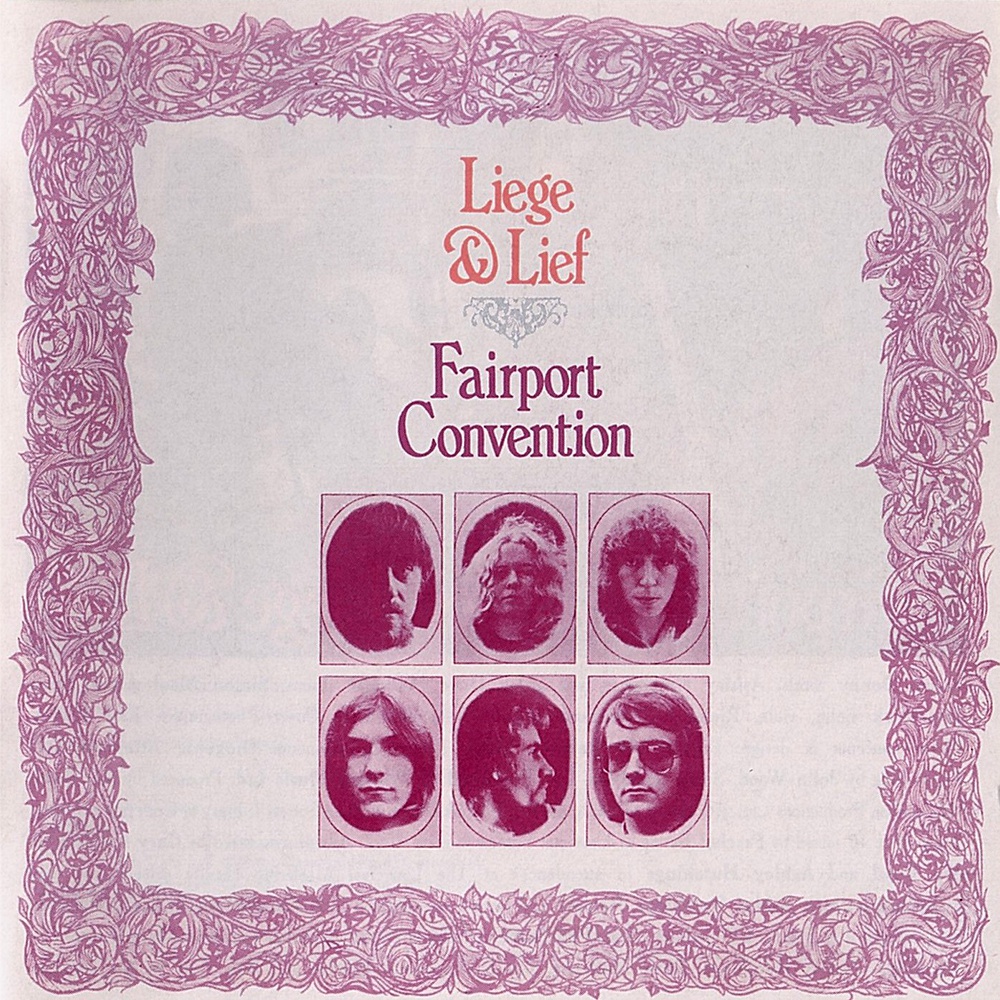
This incarnation of Fairport Convention comprising lead vocalist Sandy Denny and newcomers Dave Swarbrick and Dave Mattacks, together with founder members Richard Thompson on lead guitar and some vocals, Simon Nicol on rhythm guitar and Ashley Hutchings on electric bass, rehearsed and put together the album “Liege & Lief” over the summer of 1969 at a house in Farley Chamberlayne, near Braishfield, Winchester, launching its material with a sold-out concert in London’s Royal Festival Hall on 24th September that year. Liege & Lief was the fourth album by the English folk rock band . It is often credited, though the claim is sometimes disputed, as the first major “British folk rock” album, It is the third album the group released in the UK during 1969, all of which prominently featured Sandy Denny as lead female vocalist (Denny did not appear on the group’s 1968 debut album).
Gone were the covers of songs by Bob Dylan and others, replaced by electrified versions of traditional English folksongs (“Reynardine”, “Matty Groves”, “The Deserter”, “Tam Lin”), new compositions by band members but with a “traditional” feel (“Come All Ye”, “Farewell, Farewell”, “Crazy Man Michael”), and the first of a long line of instrumental medleys of folk dance tunes driven by Dave Swarbrick’s violin playing. The virtuoso fiddle and mandolin player Swarbrick, was a little older than the rest of the band, had already been in a successful duo with guitarist Martin Carthy. After his appearance on Unhalfbricking, he joined Fairport full-time. Much of the traditional material had been found by Hutchings in Cecil Sharp’s collection, maintained by the English Folk Dance and Song Society, although Swarbrick has elsewhere claimed credit as the source of the traditional material used.
Also rehearsed and/or recorded, but omitted from the final album, were versions of The Byrds’ “Ballad of Easy Rider”, the traditional ballad “Sir Patrick Spens” with Sandy Denny on lead vocals, and “The Quiet Joys of Brotherhood”, a Richard Fariña lyric he had set to a traditional Irish melody, the last two of which were to appear in different arrangements on later albums by Fairport Convention and Sandy Denny, respectively.
Liege & Lief is composed of two Middle English words: liege meaning loyal and lief meaning ready. The cover, a gatefold in grey and purple, featured cameo images of the band along with track listing and credits. On the inside of the original gatefold cover, a set of illustrated vignettes told the story of ten different aspects of English traditional music and folklore, including notes on customs such as pace-eggers and the Padstow hobby-horse, as well as collectors such as Francis James Child (of “Child Ballads” fame) and Cecil Sharp.
The band toured the UK for several months, also visiting Denmark, performing the Liege & Lief material before recording it in the studio (also including a performance recorded for BBC radio’s Top Gear). However, in November 1969, even before the album was released on 2nd December, both Hutchings and Denny quit the band: Hutchings to further pursue traditional music in a new band Steeleye Span, and Denny to form her new venture Fotheringay, with more emphasis on her own original compositions.
“Liege and Lief” won the award for Most influential Folk Album of all time.
In 2007 a double album “Liege and Lief Deluxe Edition” was released; the second album consisted mainly of BBC radio live performances and two stylistically uncharacteristic outtakes, the great American songbooks standards “The Lady Is a Tramp” and “Fly Me to the Moon”.
The Band:
Sandy Denny – vocals
Dave Swarbrick – fiddle, viola
Richard Thompson – electric & acoustic guitars, backing vocals
Simon Nicol – electric, 6-string & 12-string acoustic guitars, backing vocals
Ashley Hutchings – bass guitar, backing vocals
Dave Mattacks – drums, percussion
I often found Bob Dylan songs that no-one else had, like “Percy’s Song”, which is a fabulous song. Fairport Convention got a reputation for doing unreleased Dylan songs, but we never knew if Dylan heard about us. The years rolled by – and then, unbeknownst to me, a friend who does some work over here for Bob’s management sent me a quote he’d got for my website from Bob: “Ashley Hutchings is the single most important figure in English folk-rock. Before that, his group Fairport Convention recorded some of the best versions of my unreleased songs.” What I now discover is, he’s known about us right from the beginning! He loved “Liege & Lief”, he thought Sandy Denny was the best singer he’d heard. He turns out to be lovely, very considerate, very funny and very, very knowledgeable about all kinds of things» – Ashley Hutchings, 2022
Believe it or not, Bombay Bicycle Club have been around for quite some time, over 10 years. It’s also been 10 years since the release of their debut album I had the blues but I shook them loose, which set the band off on their musical journey. Since then they have accomplished in releasing five albums, quite the feat wouldn’t you say? So in natural fashion I’ve decided to rank them worst to best (None of them are bad).
I Had the Blues but I Shook them Loose (2009)
This record put Bombay on track and in the minds of future adoring fans. At the time it was released there was a bit of a clamouring for a good indie album for people to take notice of. I Had the Blues but I Shook them Loose hit the spot for a lot of folk, as their unique sound and vocals stood them apart from a lot of the bands. Also the arrangements of the songs were interesting, which driving this point even further home. Songs like ‘Lamplight’, ‘Cancel on me’ and ‘Always like this’ have become pillars in the Bombay setlist, sending the crowd into a frenzy whenever their showcased. Bombay Bicycle Club released their astonishing debut album ‘I Had the Blues But I Shook Them Loose’ (recorded by long-term producer Jim Abbiss) through Island records.
It’s a beautifully literate and ambitious debut. From the dizzying My Bloody Valentine / M83 swoops and morning-after ruefulness of the LP’s opening song to the open-tuned, appalachian folk feel of the record’s closing track, the album thrums with subtle invention and quiet emotional intensity. Fans of Bloc Party, Broken Social Scene and Bon Iver – or any mildly sensitive soul with a fondness for ricocheting guitar chords – will be utterly beguiled. Indie rock rarely gets to enjoy its innocence these days, but Bombay Bicycle Club know that’s exactly what makes it precious. Jamie and Jack formed Bombay Bicycle Club after spending their early teens trying to sneak into 18+ gigs together. they were dissuaded at first by Jamie’s guitar-playing dad, Neill Maccoll (son of Ewan, sister of Kirsty), who once told Jack he should become a plumber rather than a musician if he ever wanted to make a decent living. Then Neill heard the astonishing cache of songs Jack had amassed in his bedroom with garageband and a cheap guitar, and instantly changed his mind, offering to produce Bombay Bicycle Club’s first LP.
Flaws (2010)
Bombay’s acoustic release in flaws is magical. Jack’s gentle voice combined with melodic fingerpicking is something which can only be enjoyed. With an acoustic version of ‘Dust on the Ground’ and title track ‘Flaws’ you get to hear the band at their most calm and mellow. This was an odd release for their second album, with their first being so bold and abrupt. It really took people off the scent of another loud indie band, giving the band some added depth. I always find I need to be in a mood for slow paced acoustic songs which isn’t very often. Flaws’ is the stunningly beautiful, acoustic album by Bombay Bicycle Club. ‘Flaws’ is characterised by a delicate, heart-swelling beauty and lightness of touch throughout. Those that had Bombay Bicycle Club pegged merely as an indie band may need to re-think.
Intricate, finger-picked guitar lines and ethereal melodies pull at the heart strings on new songs such as ‘My God’, the startlingly pretty ‘Leaving Blues’ and title track ‘Flaws’ (a duet with Lucy Rose). On other tracks – ‘Rinse Me Down’ and ‘Many Ways’ – skittering drum rhythms and distant banjo lines drift in, but in the main, it’s a naked intimacy that makes these songs dazzle. the album’s final track, ‘Swansea’, is perhaps the most exciting in terms of where Bombay Bicycle Club will take their sound next.
All the music for ‘Swansea’ was written by Jack, but uses some of the lyrics from a Joanna Newsom track of the same name. A simple folk ballad that opens with plaintive guitar and vocals, swells and morphs into something altogether different, as a synth counter melody slowly floats into reverb-rich vocals and echo chamber drum rhythms.
A Different Kind of Fix (2011)
This album has some of Bombays best work on it without doubt, which is why it deserves to maybe be the album to start with. From the start of the album with the opening to ‘How Can You Swallow So Much Sleep’ you feel as if you’re walking into the clouds as you feel an atmosphere of calm all around you. The duet on ‘Lights Out, Words Gone’ will forever be a favourite of mine on vocals alone, but the simple musicality adds to it. The album doesn’t take on this slow pace as a theme, with Bombay switching it up a few times. Songs like ‘Your Eyes’, ‘Leave It’ and ‘Bad Timing’ are a keen reminder of the bands wilder side.
‘Shuffle’ also features on this album, which will always be among my favourite BBC song. Their joyous sounds built into the track brings an entire audience to life, like putting colour on a blank canvas. A Different Kind of Fix is the bands third album from London’s Bombay Bicycle Club, following the critically acclaimed indie of debut I Had the Blues But I Shook them Loose and the Ivor Novello-nominated sparse folk of Flaws. Recorded in Hamburg, London and Atlanta, A Different Kind of Fix sees the guitars firmly plugged back in for album number three, but added to the mix are synths, sampled loops, layered vocals from all four band members and washes of reverb throughout.
Production-wise, the album reunites BBC with Jim Abbiss–who produced their debut–and also introduces them to Ben Allen (noted for his work with Animal Collective) whilst lead singer, Jack Steadman co-produces throughout. The album Includes first single, “Shuffle”, “How Can You Swallow So Much Sleep” and “Take The Right One”. Towards the end of the song you have the magical call and response of “you gave to me all I know / I will stay here, I will not go’ where Jack lights up the crowd and everything feels perfect. Some may disagree with this choice to make this their best album, but from back to front it’s pretty flawless listen.
So Long, See You Tomorrow (2014)
When this album was released it was 3 years since we heard from the band, so when the release came around it was a major deal. The record saw the band adjust their style slightly, introducing much more musical elements into the songs, operating at one of the highest peaks of their powers. ‘Luna’ was released prior to the record, and I remember it receiving mixed reviews – me included. Yet, when the album was released it was all okay.
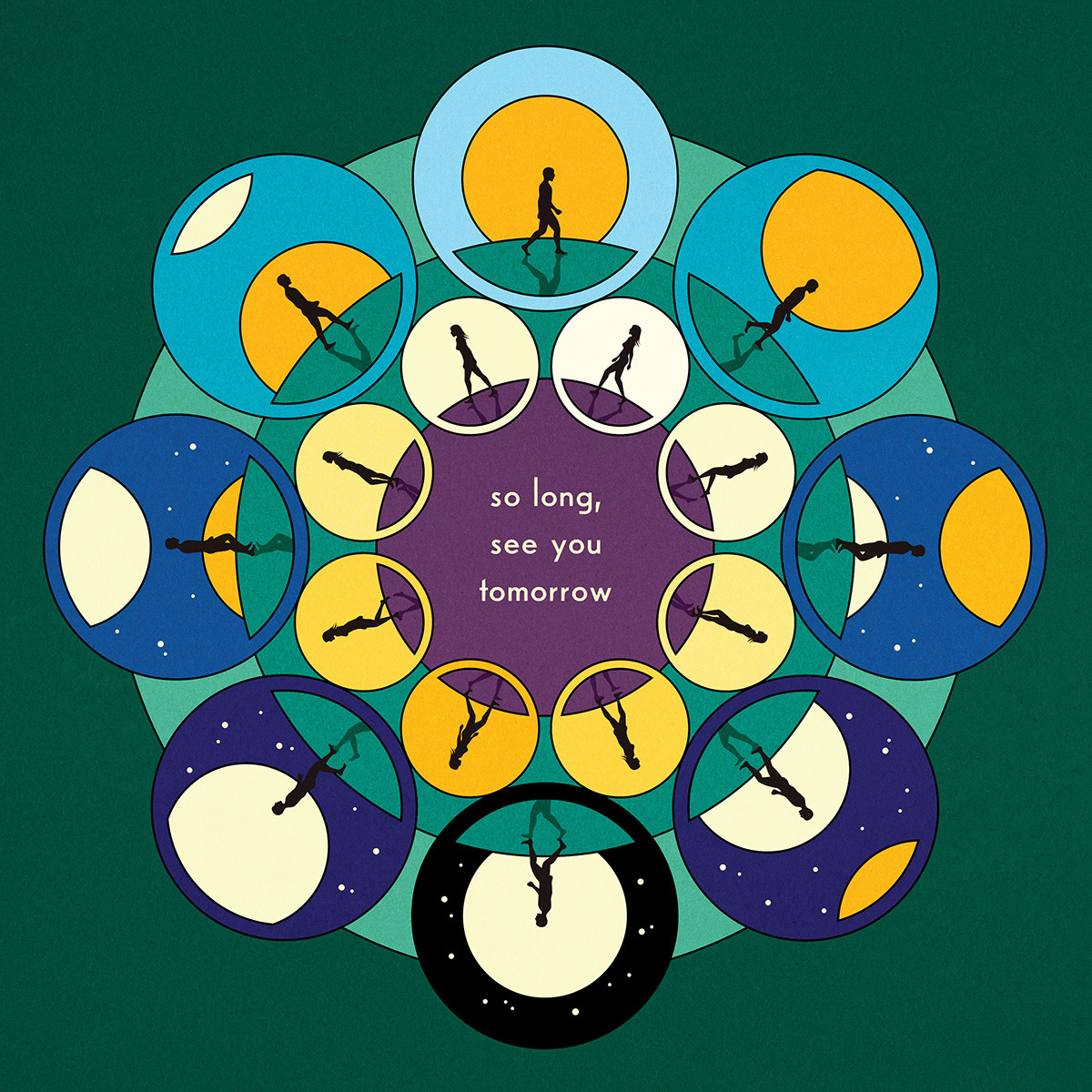
The usage of dual vocals and harmonies were beautiful throughout the album, with some perfect vocal contrasted performances on ‘Home by now’, ‘Luna’ and ‘Eyes Off You’. This was released at great time for me, which is probably why it ranks so high, but from start to finish I can semi-confidently say I know all the words and reflects some very special moments . It might seem odd to describe Bombay Bicycle Club as veterans given that nobody in the band is older than 24, but this is their fourth album, which is something of a landmark achievement in today’s blink-and-you’ll-miss-them climate. The Bombay Bicycle Club story is something that isn’t meant to happen any more – a band given the space by their label, Island, to evolve with each release. The album was produced by Jack in the band’s studio in London, making it their most personal record to date. There was always purpose from the beginning to bring everything together for this album, to tell a story from the first track through to the finale with everything interconnecting as a complete body of work.CD – Limited digipack.180 Gram Gatefold vinyl.Boxset – Digipack version of the album on CD, Heavyweight 12″ vinyl, exclusive box-set only 7″, 12×12″ 24-page song and story book.
Everything Else Has Gone Wrong (2020)
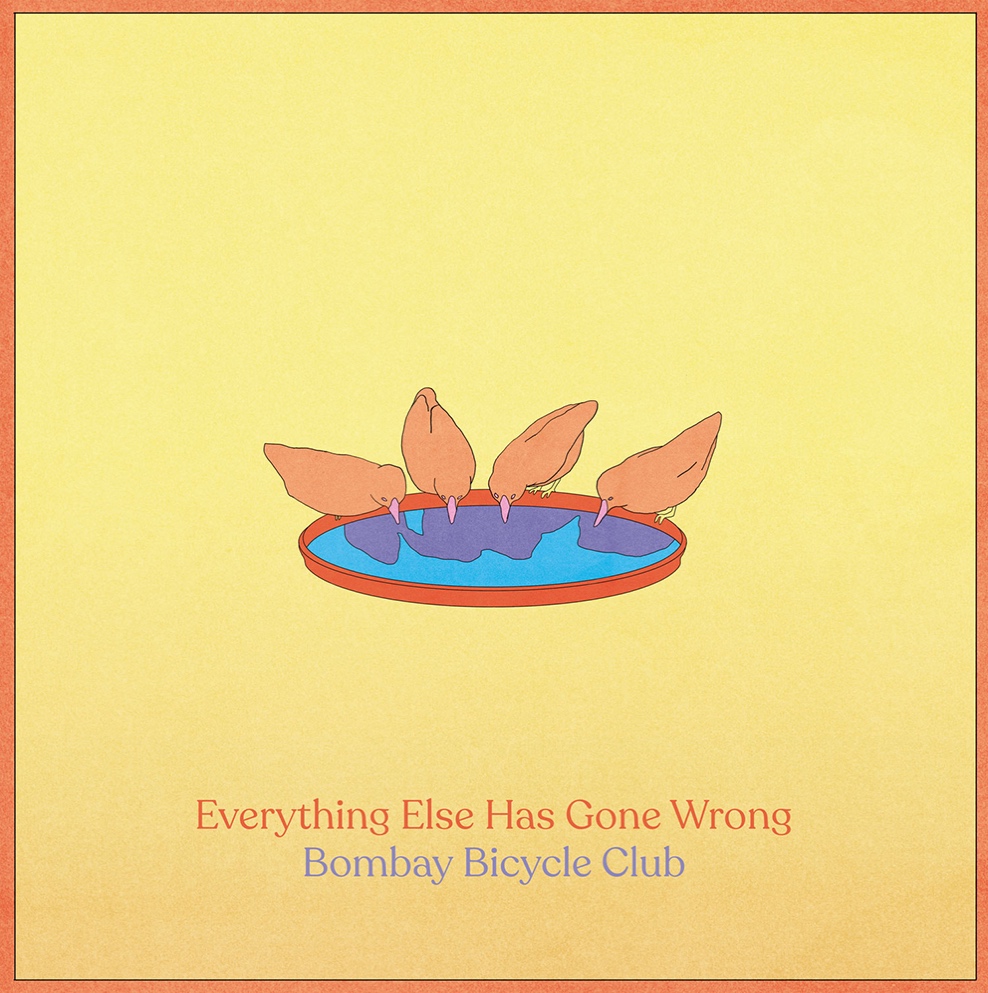
From the announcement of the album in late 2019, I already expected a lot and it delivered on most fronts. With some stand out songs like ‘Eat Sleep Wake (nothing but you)’ and ‘Everything Else Has Gone Wrong’ it really defines the sound of the album, as Bombay deviate slightly from their previous record. Yet, there’s a lack of consistency throughout the tracks with some not really hitting, making it feel a little loose. Perhaps this is due to me not having much time with it, but from an early perspective I get the feeling these tracks won’t grow on me as much as their predecessors did. Everything Else Has Gone Wrong is the eagerly anticipated follow-up to the British band’s acclaimed number 1 charting, Mercury Music Prize nominated fourth album, So Long, See You Tomorrow released back in 2014.
The new album was largely recorded out in the US alongside Grammy Award winning producer John Congleton (St. Vincent / Sharon Van Etten / War on Drugs). It features the band’s euphoric new single, “Eat, Sleep, Wake (Nothing But You)”.
Speaking of the record’s title, vocalist/guitarist Jack Steadman explains: “This is an album for anyone who’s ever turned to music in a time of need. It’s about the solace one can get from listening to music or playing music. For me personally it’s about the frustration of not being able to express myself to others, of leaving conversations feeling dissatisfied and misunderstood. Music’s the way I’m able to truly express myself”.
Bombay Bicycle Club have continued to grow, develop and evolve since the release of their debut album, I Had The Blues But I Shook Them Loose, back in 2009 when they signalled their arrival as young teenagers. Rarely in recent years has there been a British guitar band who have the craft and ability to avoid categorisation whilst uniting hundreds of thousands of fans across the globe. With an innate ear for melody and invention, the four-piece are a very welcome return to the fold just as British guitar music makes a timely renaissance.
Overall BBC’s world is at high standard whichever album you choose to listen to.
I love Flyte why this band are not hugely known and selling loads of records is the understatement of all time. They’re a three-piece band presently with the addition of a occasional Stave sister with my heart in their hands and their hearts on their sleeves. Their debut record “The Loved Ones” felt like a secret between the few, me and the band, Will Taylor and the band continually charmed and surprised. It’s a gorgeous, passionate, musically beautiful album. It’s desperate and haunting. It’s one of those covers that covers your bones. But enough about their album. The band have been touring and demoing a new collection of songs for the last six seven months and “Easy Tiger” is among them .
“Easy Tiger” is a break-up track. It’s a predator with a thorn in its paw. It’s brought low, it’s humble, it’s sad. It’s brilliant for all of that. Will Taylor has a giant vocal register, but he is so subdued on this track, the emotionalism is totally carried by the instrumentation. The music is anxious in “Easy Tiger,” while the melody is steady, rhythmic and calm. It’s the embodiment of trying to keep your cool while you see an ex at a party.
Give Flyte the love they deserve today. I reckon a new record will be dropping soon from them, so listen to The Loved Ones and their 2019 EP White Roses (If you can get a copy… I Can’t for love or money, Will )after you give “Easy Tiger” a listen.
It’s another woozy, moody exhale, “Easy Tiger is an ideal turbulent indulgence to soundtrack our moments of doubt and trouble. I fell in hard for this UK band Flyte, Iv’e seen them maybe eight-ten times and they still astonish me everytime. Please also listen to their White Roses EP and its truly breathtaking title track – one of my all-time favourites tracks for the year – and you couldn’t ask for a more striking, well-executed return than “Easy Tiger.” Soothing yet unsettling all at once, the song was written as a precursor to the emotional overhaul of a breakup, however its message feels all the more universal today. Easy tiger: This is only gonna get worse
Music video by Flyte performing Easy Tiger. under exclusive licence to Island Records, a division of Universal Music Operations Limited
“Easy Tiger” is the group’s first new release since last year’s White Roses EP, and arrives with a video directed by BAFTA-winning director Mark Jenkin.
Vocalist Will Taylor says of the song, “When I wrote “Easy Tiger” I was exorcising shame, heartbreak, jealously; almost impossible emotions to process, I almost regretted writing it. There’s a darkness and an emotional brashness to Mark’s work that suited the song perfectly. It would have been hard to trust anyone else with it.”
Jenkin says of the accompanying visual, “The challenge was to make something that felt amorphous – to create something that has a tactile feel to it, is a single artefact, something that feels like a found film and something that is timeless, abstract and unidentifiable in some ways. For me, what’s exciting is those limitations – this is where my strength is, the great unknown.
Flyte’s “Easy Tiger” single is out now on Island Records.
Band Members: Will Taylor, Nick Hill, Jon Supran, Sam Berridge
When it was released in spring 1974, not even the record company knew that King Crimson’s ‘Starless & Bible Black’ album was essentially a live recording. Such secrecy by the band might have resulted from knowing that record labels paid a reduced royalty rate on live albums. The truth only emerged several years after Crimson had split up.
Bassist/vocalist John Wetton was proud of the results: “For me, it shows us moving into another dimension as far as being a band is concerned. We’d found our feet; we’d been on the road for the best part of a year. We knew what we wanted to do & we were getting creative. Not only is the album chronologically the bridge between Larks’ Tongues In Aspic, & Red, but it’s also a bridge in many more ways..
in 1973 King Crimson weren’t simply touring in order to pursue rutting opportunities. There was the not inconsiderable matter of recording a follow-up to Larks’ Tongues In Aspic. The album had sold well but the band were less than happy with the results of the time they had spent during January and February in Piccadilly’s Command Studios. “Collapse Studios more like – that’s what we used to call it,” shudders Wetton.
Despite the classic nature of the material and many inventive moments peppered throughout LTIA, the Crimson camp felt that whatever magic had touched them as they played in concert during the winter of ’72, the recording of the album in the New Year had quite simply failed to capture any of that power or intensity which had moved not only the band themselves, but also many commentators and fans. Putting a brave face on their combined disappointment, by the time the album hit the shops, the quartet were already on their way around the UK, Europe and, in mid-April, the USA. The Crimson that returned to the UK in July ’73 was not only tired after notching up over 60 gigs, but also in dire need of new material to refresh the setlist and prepare for a new album.
Reconvening after a three-week holiday, spirits and tempers were frayed, rather than rested. What had been a break for some turned out to be a busman’s holiday for RobertFripp, who emerged from his Dorset cottage with Fracture, The Night Watch and Lament. As the group worked on the new tunes, bad tempers flashed. According to Bill Bruford, Crimson’s writing processes were exercises in “excruciating, teeth-pullingly difficult music making. The tunes Robert has written all the way through, such as Fracture, these are good, and had there been greater output from Robert, we’d have got on quicker and faster. Robert’s always done this. He’s started off these bands with one-and-a-half tunes that point the general direction, and Fracture would have been one of them.”
“I was never given the time to write,” counters Fripp. “The band had a three-and-a-half-week holiday. I had three days. I recall on another occasion saying to the band that I needed time to write, rather than just continuing to rehearse. Bill, in a schoolmasterly and rather grudging fashion, would only agree if I really would do the writing, as opposed to what he implied was goofing off.” The gnawing antipathy that became a defining characteristic of Fripp and Bruford’s subsequent professional relationship first surfaced in these rehearsal sessions, sewing the seeds of the band’s demise a year later.
Putting their differences aside, Crimson took to the road with their newly composed repertoire and their near-telepathic ability to create complex and nuanced improvisations off the top of their heads. When they played at Amsterdam’s Concertgebouw, a mobile recording studio captured the band in full aleatoric flight.
Few bands of the era offered as much variety in material from night to night. King Crimson’s propensity for improvisation & fondness for playing its newest material – often unreleased on record at the time of the concerts – is legendary. Fewer bands still, whether by accident or design, recorded so many of their live shows.
Back in the UK in January 1974, and with three new tracks in the can at George Martin’s AIR Studios, the band sifted through the many live multi-tracks from the tour, choosing the best improvisations and scrupulously editing the tapes to remove any hint of audience noise or applause. It was impossible to tell what had been improvised in concert and what had been recorded in the studio.
The only songs recorded entirely in the studio were the first two tracks, “The Great Deceiver” and “Lament”. “We’ll Let You Know” was an entirely improvised piece recorded in Glasgow. “The Mincer” was another improvised piece, originally recorded in concert in Zürich but overdubbed with Wetton’s vocals in the studio ,The track was the edited-out middle section of a longer improvisation, the other parts released on The Great Deceiver as “The Law of Maximum Distress”. “Trio”, “Starless and Bible Black” and “Fracture” (the last of which Robert Fripp has cited as one of the most difficult guitar pieces he has ever played were recorded live at the Concertgebouw in Amsterdam. Also recorded at the Concertgebouw was the introduction to “The Night Watch” (the band’s Mellotron broke down at the start of the next section, meaning that the remainder of the song needed to be recorded in the studio and dubbed in later). In all cases, live applause was removed from the recordings wherever possible (although the remains of it can be heard by an attentive listener). The complete Amsterdam Concertgebouw concert was eventually released by the band in 1997 as The Night Watch.
“Trio” was notable for being a quartet piece with only three active players – John Wetton on bass guitar, David Cross on viola and Robert Fripp on “flute” Mellotron. Bruford spent the entire piece with his drumsticks crossed over his chest, waiting for the right moment to join in but eventually realized that the improvised piece was progressing better without him. His decision not to add any percussion was seen by the rest of the band as a crucial choice, and he received co-writing credit for the piece.
When it was released in that spring, not even the record company knew that “Starless And Bible Black” was essentially a live recording. Such secrecy by the band might have resulted from knowing that record labels paid a reduced royalty rate on live albums. The truth only emerged several years after Crimson had split up.
Starless and Bible Black offers an in depth overview of one of the era’s most significant bands in its most celebrated live line-up. John Wetton is proud of the results: “For me, it shows us moving into another dimension as far as being a band is concerned. We’d found our feet; we’d been on the road for the best part of a year. We knew what we wanted to do and we were getting creative. Not only is the album chronologically the bridge between LTIA and Red, but it’s also a bridge in many more ways. We were getting more experimental, trying different recording techniques, really screwing with the system, removing applause from live tracks so they sound like studio tracks – the exact opposite of what people do today where they add applause to a studio track and pretend it’s live. We’d removed the audience because that was the only way we could get the atmosphere we were after. Before Red, we could never recreate that kind of power in the studio – it just wouldn’t happen. You’re in a sterile environment, whereas on stage you’d got all that air and people and you’d got energy.” The bassist looks back on the period in which the album was made with real affection
Autumn 1973: As King Crimson’s second lengthy US tour of that year was coming to a close, a short series of UK concerts for the end of October, followed by a more extensive European tour in November was already planned. Three of these concerts Glasgow, Zurich & Amsterdam were recorded as full multi-track recordings, with material from the Amsterdam show being used as core material for the January 1974 recording of “Starless & Bible Black”. From mid-March to the start of April, the band was on the road in Europe again, promoting the album with their final European concerts of the decade, prior to undertaking a further US tour. A number of these concerts were recorded on stereo reel to reel machines, fed directly from the signal as sent to the PA system on the night of the performance. These soundboards are often referred to as “The Blue Tapes”, named after the outer colour of the original tape boxes & are especially valued for both the quality of recording & performance.
This boxed set presents eighteen CDs of live concert performances, seven of them mixed from the 1973 multi-track tapes and a further eleven presenting the complete run of “The Blue Tapes” for the first time. CDs of the ORTF Paris TV performance & the 2011 stereo mix of Starless & Bible Black also feature. Two DVD-A discs & two Blu-Ray discs contain concert & studio recordings in stereo, quadraphonic & full 5.1 surround sound – all presented in high-resolution audio.
19 CDs of live performance material.
7 CDs taken from multi-track tape including 4CDs of material from the Glasgow & Zurich shows, freshly assembled & mastered in Hi-Res from the original Great Deceiver mixes by David Singleton at DGM Soundworld in 2014, the Amsterdam show The Nightwatch mixed by Steven Wilson & a previously unheard preparatory of material from the same show prepared by George Chkiantz (engineer of all live KC shows of the era & the Red album).
11 CDs drawn from high quality stereo reel to reel soundboard tapes. 8 making their first appearance on CD with the remaining three re-mastered or drawn from new tape sources.
1 CD presenting the performance from the ORTF Paris TV broadcast
CD 20 features the 2011 stereo mix of Starless & Bible Black by Steven Wilson & Robert Fripp
DVD-A 1 features the Starless & Bible Black album in 5.1 Surround, with new & original stereo album mixes in High Resolution Stereo plus bonus audio material.
DVD-A 2 features material from Mainz (mixed by David Singleton), Amsterdam (mixed by Steven Wilson) & a later show from Pittsburgh (mixed by George Chkiantz) in quadraphonic audio & High-Resolution Stereo.
Both DVD-A discs are region 0 playable in all areas & compatible with all DVD players & DVD Rom players
Blu-Ray Disc 1 features full lossless audio 24/192 transfers of material from the Glasgow & Zurich shows, freshly assembled & mastered from the original Great Deceiver mixes by David Singleton at DGM Soundworld in 2014 in LPCM stereo.
Blu-Ray Disc 1 also features the Amsterdam show The Nightwatch, mixed by Steven Wilson & the George Chkiantz preparatory mix stereo in 24/96 High-resolution stereo & a 24/96 transfer of the original David Singleton/Robert Fripp mix of The Nightwatch.
Blu-Ray Disc 2 features Starless & Bible Black in 5.1 Surround (DTS-HD MAS & LPCM 24/96) alongside new & original stereo masters of the album, a needledrop of an original vinyl pressing + audio extras.
Blu-Ray Disc 2 also features the Quad mixes of material from the Mainz, Amsterdam & Pittsburgh concerts.
Blu-Ray Disc 2 also features the ORTF Paris TV footage in a new hi-res transfer from the original source files.
Discs packaged in 8 individual 3 disc digi-packs within an album sized box
3 additional bonus CDs of audio restored soundboard/bootlegs & audio curios are also included.
1 further concert (bootleg quality audio) is also available via included download ticket.
Album sized booklet with rare/unseen photos, new sleeve notes by Sid Smith, technical notes on the recordings by David Singleton, eye-witness accounts from fans who attended the gigs + memorabilia including an album print, poster, replica concert ticket, press release with folder, photos & more besides.
King Crimson
Robert Fripp – guitar, Mellotron, devices, Hohner pianet, production
John Wetton – bass, vocals, production
Bill Bruford – drums, percussion, production
David Cross – violin, viola, Mellotron, Hohner pianet, production
• A DELUXE 4 DISC CLAMSHELL BOXED SET FEATURING ALL OF JIM CAPALDI’S SOLO RECORDINGS FOR ISLAND RECORDS ISSUED BETWEEN 1972 & 1976
• NEWLY REMASTERED FROM THE ORIGINAL MASTER TAPES
• MATERIAL FEATURES GUEST APPEARANCES BY STEVE WINWOOD, CHRIS WOOD, DAVE MASON, PAUL KOSSOFF & THE MUSCLE SHOALS RHYTHM SECTION
• WITH 6 BONUS TRACKS DRAWN FROM SINGLES & A DVD FEATURING JIM CAPALDI’S APPEARANCES ON BBC TV OLD GREY WHISTLE TEST FROM NOVEMBER 1975 (featuring STEVE WINWOOD) AND A 50 MINUTE OLD GREY WHISTLE TEST TV CONCERT FROM MARCH 1976 – All Previously Unreleased.
Esoteric Recordings is pleased to announce the release of Open Your Heart – The Island Recordings 1972 – 1976, a new re-mastered four-disc clamshell boxed set (comprising 3 CDs and a DVD) by the legendary Jim Capaldi.
Aside from his work as a founder member with the acclaimed band Traffic (a group for which Jim co-wrote most of their classic songs with Steve Winwood), Jim Capaldi was also a successful solo artist, enjoying a series of hit albums and singles in his own right. His solo career began with the album Oh How We Danced, recorded whilst Traffic was on hiatus whilst Steve Winwood was recovering from peritonitis. Mainly recorded at the legendary Muscle Shoals studio in Alabama, the album featured the Muscle Shoals Rhythm Section of Roger Hawkins (drums), David Hood (bass) and Barry Beckett (keyboards), along with a host of guests such as Steve Winwood, Chris Wood, Paul Kossoff, Dave Mason, Ric Grech, Jim Gordon, Mike Kellie (Spooky Tooth) & TrevorBurton (The Move / Steve Gibbons Band). Featuring tracks such as Eve, Don’t Be A Hero and Open Your Heart, Oh How We Danced was a superb debut solo release.
Jim’s second solo album was the 1974 release Whale Meat Again, an album that tackled a variety of lyrical subjects, including environmental issues. Once more he utilised the services of Roger Hawkins, David Hood and Barry Beckett, along with Steve Winwood. Featuring tracks such as It’s Alright, Whale Meat Again and Summer is Fading, the album was another classic.
With the disbanding of Traffic in 1974, following a troubled US tour, Jim embarked on his next solo project (and final album for Island Records of the 1970s), Short Cut Draw Blood. The album would prove to be one of his most successful, featuring the singles It’s All Up to You and Love Hurts (a cover of the Everly Brothers hit), both of which enjoyed chart success. Aside from these tracks the album also featured the emotive Boy with a Problem, featuring Paul Kossoff on guitar, and other classics such as the album title track, Goodbye Love and Seagull. Once again Jim Capaldi assembled a stellar cast of musicians to contribute to the album such as Steve Winwood, Chris Spedding, Roger Hawkins, David Hood and Barry Beckett and Chris Wood.
This boxed set has been newly re-mastered from the original master tapes and features an additional 6 bonus tracks, (four previously unreleased on CD), all drawn from single releases and also includes a bonus DVD (NTSTC / Region Free) featuring previously unreleased live appearances by Jim Capaldi on BBC TV’s “Old Grey Whistle Test”; a session from November 1975 (featuring Steve Winwood on piano) and a 50 minute concert by Jim Capaldi & the Space Cadets at the BBC TV Theatre in March 1976. The boxed set also includes an illustrated booklet with a new essay. Open Your Heart – The Island Recordings 1972 – 1976 is a fitting tribute to a fine and much missed musician.
After 4 strange and bewildering years, I can confidently announce that my new album “Love, Death & Dancing” will be available May 29th. and watch the video for Time
Jack Garratt’s long-awaited return is just as powerful, meaningful, and spectacular as we could have imagined. Released this week, “Time” arrives (alongside “Mara” and “Return Them to the One”) as the first of three tracks taken off Garratt’s forthcoming album “Love, Death & Dancing” (out May 29 via Island Records). “Why is it not enough to be fine?” Garratt asks within the song’s first seconds, his emotive voice aligning with effusive, jumpy keyboards and frenetic guitars. A groove sets in as he begins a rhetorical pondering of big, existential topics for which he will never find a satisfying answer: “You’re overthinking, in a rut and terrified of giving in to who you are and losing your mind,” he continues.
At five and a half minutes in length, “Time” is demanding of its listener in more ways than one. An uptempo, pulsing track, the song encourages us to move and shake while we confront demons of self-doubt and inertia. A very personal, intimate song taken from what promises to be a very personal and intimate album, “Time” is a window into Garratt himself – of the depression he struggled with in the wake of his critically-acclaimed 2016 debut album, of the pressure he put upon himself and felt from others, and of the journey that took him from this dark space, into one that was perhaps a little brighter and healthier for the soul.







 The Fat Angel Sings