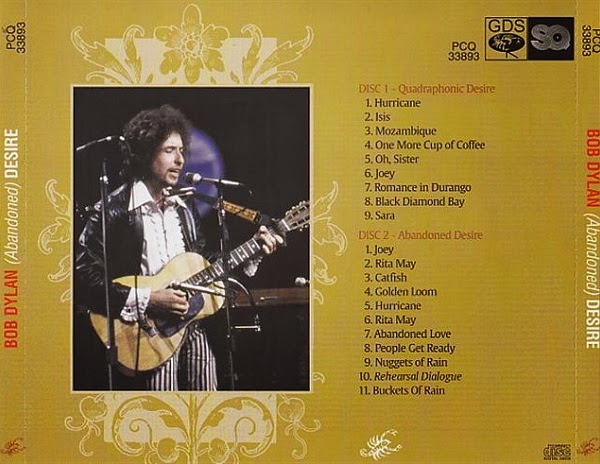
This is a repost of the previous video on the Desire Sessions. The mix was considered copyrighted and had to be edited out with several other songs so that the video could be available again. a new tracklist but for reference purposes, included the description from the previous video so you have an idea of the material in the bootleg.
“Although not as revered as Blood On The Tracks, Desire is still one of Dylan’s strongest album with incredible songs like the protest song Hurricane about Rubin Hurricane Carter, a black boxer wrongfully accused of murder. The song launched the Rolling Thunder Revue across New England to plead for his release from prison, culminating with a concert at Madison Square Garden and another inside Hurricane’s jail. You also have songs like Isis, Romance in Durango, Oh, Sister, and finally Sara. The last song is obviously dedicated to his then wife Sara, when the couple was in a midst of breaking up (which will happen two years later).
Not many outtakes are circulating from that album however, albeit from an alternate version of Hurricane, and alternate takes of Joey and the single Rita May. Other outtakes exist but were released on Bootleg Series Vol. 1-3 (Catfish, Golden Loom) and the magnificent Abandoned Love on Biograph.
On the bootleg, you will find the quadrophonic version of the album (the original intended mix but since the technology didn’t allow a large release, the album was consequently available only on stereo with another mix). You will also have some live recordings of the album through the years, and of course most of the outtakes of Desire.
Another surprise is the session Bob had with Bette Midler for her album Songs From The New Depression with Nuggets of Rain (a spoof of Buckets of Rain from Blood On The Tracks) and the complete rehearsal of that song (with Bob Dylan talking, working, and sometimes flirting with Bette Midler).
Here is the tracklist
Quadraphonic Desire
1. Hurricane
2. Isis
3. Mozambique
4. One More Cup Of Coffee (Valley Bellow)
5. Oh, Sister
6. Joey
7. Romance In Durango
8. Black Diamond Bay
9. Sara
10. Hurricane (Live – Clinton Correctional Institute, Dec 7, 1975)
11. Romance In Durango (Live – Hammersmith Apollo, Nov 24, 2003)
12. Abandoned Love (Live – The Other End, July 3, 1975)
Abandoned Desire
1. Joey (Alternate Take)
2. Rita May (Single Version)
3. Catfish
4. Golden Loom
5. Hurricane (“Libel” Version)
6. Rita May (Alternate Take)
7. Abandoned Love
8. People Get Ready
9. Nuggets Of Rain
10. Rehearsal Dialogue
11. Buckets Of Rain
12. Joey (Alternate Take) [Corrected]
Credits to Dylanstubs.com for the pictures and bjorner.com for the information.”
Bringing It All Back Home is the fifth studio album by American singer-songwriter Bob Dylan, released in March 1965 by Columbia Records. The album is divided into an electric and an acoustic side. On side one of the original LP, Dylan is backed by an electric rock and roll band—a move that further alienated him from some of his former peers in the folk song community. Likewise, on the acoustic second side of the album, he distanced himself from the protest songs with which he had become earlier identified (such as “Blowin’ in the Wind” and “A Hard Rain’s a-Gonna Fall”), as his lyrics continued their trend towards the abstract and personal. although the acoustic side included some tracks in which other instruments were backing up Dylan and his guitar, but no drums were used.
The album reached the top ten of the Billboad Albums chart, the first of Dylan’s LPs to break into the US top 10. It also topped the UK charts later that Spring. The lead-off track, “Subterranean Homesick Blues”, became Dylan’s first single to chart in the US, This is the point where Dylan eclipses any conventional sense of folk and rewrites the rules of rock, making it safe for personal expression and poetry, not only making words mean as much as the music, but making the music an extension of the words. A truly remarkable album.
“She Belongs To Me” extols the bohemian virtues of an artistic lover whose creativity must be constantly fed (“Bow down to her on Sunday / Salute her when her birthday comes. / For Halloween buy her a trumpet / And for Christmas, give her a drum.”)
“Maggies Farm” is Dylan’s declaration of independence from the protest folk movement. Punning on Silas McGee’s Farm, where he had performed “Only A Pawn In Their Game”at a civil rights protest in 1963 (featured in the film Dont Look Back), Maggie’s Farm recasts Dylan as the pawn and the folk music scene as the oppressor. Rejecting the expectations of that scene as he turns towards loud rock’n’roll, self-exploration, and surrealism, Dylan sings: “They say sing while you slave / I just get bored.”
“Love Minus Zero/No Limit” is a low-key love song, a “hallucinatory allegiance, a poetic turn that exposes the paradoxes of love (‘She knows there’s no success like failure / And that failure’s no success at all’)…[it] points toward the dual vulnerabilities that steer ‘Just Like A Woman.’ In both cases, a woman’s susceptibility is linked to the singer’s defenseless infatuation.” Among other things, Bringing It All Back Home had a substantial effect on the language of a generation.
“Outlaw Blues” explores Dylan’s desire to leave behind the pieties of political folk and explore a bohemian, “outlaw” lifestyle. Straining at his identity as a protest singer, Dylan knows he “might look like Robert Ford” (who assassinated Jesse James), but he feels “just like a Jesse James”.
“On The Road Again” catalogs the absurd affectations and degenerate living conditions of bohemia. The song concludes: “Then you ask why I don’t live here / Honey, how come you don’t move?”
“Bob Dylan’s 115th Dream” narrates a surreal experience involving the discovery of America, “Captain Arab” (a clear reference to Captain Ahab Of Moby Dick fame), and numerous bizarre encounters. It is the longest song in the electric section of the album, starting out as an acoustic ballad before being interrupted by laughter, and then starting back up again with an electric blues rhythm. The music is so similar in places to Another Side of Bob Dylan’s “Motorpsycho Nitemare” as to be indistinguishable from it but for the electric instrumentation. The song can be best read as a highly sardonic, non-linear (historically) dreamscape parallel cataloguing of the discovery, creation and merits (or lack thereof) of the United States.
“Gates Of Eden” builds on the developments made with “Chimes of Freedom” and “Mr. Tambourine Man”. “Of all the songs about sixties self-consciousness and generation-bound identity, none forecasts the lost innocence of an entire generation better than ‘Gates of Eden,’” “Sung with ever-forward motion, as though the words were carving their own quixotic phrasings, these images seem to tumble out of Dylan with a will all their own; he often chops off phrases to get to the next line.” (This is the only song on the album that is mono on the stereo release and all subsequent reissues.)
One of Dylan’s most ambitious compositions, “Its AlrightMa (I’m Only Bleeding) is arguably one of Dylan’s finest songs. Heylin wrote that it “opened up a whole new genre of finger-pointing song, not just for Dylan but for the entire panoply of pop”, A fair number of Dylan’s most famous lyrics can be found in this song: “He not busy being born / Is busy dying”; “It’s easy to see without looking too far / That not much is really sacred”; “Even the president of the United States / Sometimes must have to stand naked”; “Money doesn’t talk, it swears”; “If my thought-dreams could be seen / They’d probably put my head in a guillotine.” In the song Dylan is again giving his audience a road map to decode his confounding shift away from politics. Amidst a number of laments about the expectations of his audience (“I got nothing, Ma, to live up to”) and the futility of politics (“There is no sense in trying”; “You feel to moan but unlike before / You discover that you’d just be one more / Person crying”), Dylan tells his audience how to take his new direction: “So don’t fear if you hear / A foreign sound to your ear / It’s alright, Ma, I’m only sighing.”
The album closes with “Its All Over Now Baby Blue” described as “one of those saddened good-bye songs a lover sings when the separation happens long after the relationship is really over, when lovers know each other too well to bother hiding the truth from each other any longer … What shines through “Baby Blue” is a sadness that blots out past fondness, and a frustration at articulating that sadness at the expense of the leftover affection it springs from.” If Paul Clayton is indeed the Baby Blue he had in mind, as has been suggested, Dylan was digging away at the very foundation of Clayton’s self-esteem.” However, the lyric easily fits in with the main theme of the album, Dylan’s rejection of political folk, taking the form of a good-bye to his former, protest-folk self, according to the Rough Guide to Bob Dylan. According to this reading, Dylan sings to himself to “Leave your stepping stones [his political repertoire] behind, something calls for you. Forget the dead you’ve left [folkies], they will not follow you … Strike another match, go start anew.” The only musician besides Dylan to play on the song is Bill Lee on Bass guitar.
In a interview Dylan said, My thoughts, my personal needs have always been expressed through my songs; you can feel them there even in ‘Mr Tambourine Man’. When I write a song, when I make a record, I don’t think about whether it’ll sell millions of copies. I only think about making it, the musical end-product, the sound, and the rhythmic effect of the words. ~Bob Dylan (to Sandra Jones, June 1981)
A surrealist work heavily influenced by Rimbaud (most notably for the “magic swirlin’ ship” evoked in the lyrics), The album was hailed it as a leap “beyond the boundaries of folk song once and for all, with one of [Dylan’s] most inventive and original melodies.
“Mr. Tambourine Man” was “Dylan’s pied-piper anthem of creative living and open-mindedness…a lot of these lines are evocative without holding up to logic, even though they ring worldly.” called “rock’s most feeling paean to psychedelia, all the more compelling in that it’s done acoustically.”
One of Dylan’s most celebrated albums, “Bringing It All Back Home” was soon hailed as one of the greatest albums in rock history.
In a 1986 interview, film director John Hughes cited it as so influential on him as an artist that upon its release, “Thursday I was one person, and Friday I was another.”The album closes with “It’s All Over Now, Baby Blue“, However, the lyric easily fits in with the main theme of the album, Dylan’s rejection of political folk, taking the form of a good-bye to his former, protest-folk self, according to the Rough Guide to Bob Dylan. According to this reading, Dylan sings to himself to “Leave your stepping stones [his political repertoire] behind, something calls for you. Forget the dead you’ve left [folkies], they will not follow you…Strike another match, go start a new.” The only musician besides Dylan to play on the song Bill Lee on bass guitar.
Other songs and sketches recorded at this session: “Love Minus Zero/No Limit”, “It’s All Over Now, Baby Blue”, “She Belongs to Me”, “On the Road Again”, “If You Gotta Go, Go Now”, “You Don’t Have to Do That”, “California,” and “Outlaw Blues”, all of which were original compositions.
….when we recorded Bringing It All Back Home, that was like a break through point, it’s the kind of music I’ve been striving to make and I believe that in time people will see that. It’s hard to explain it, it’s that indefinable thing..
~Bob Dylan
Bob Dylan’s performance on the Letterman Show in 1984 is legendary… at least among fans & commentators. Live debuts of “Jokerman” and “License To Kill”, …..When it came to the performance itself, Letterman waved the cover of Dylan’s newest album “Infidels” in front of the camera, giving it a patronising but enthusiastic introductory spiel. and at the last minute Dylan sprang on them a gloriously grungy version of a 1955 Sonny Boy Williamson II song ‘Don’t Start Me to Talkin’’. Dylan revelled in the punk sound of the band—and was dressed accordingly, not in Latino mode but in the hip thin dark suit and super thin tie of UK punks like the members of, say, the Jam or Elvis Costello a` la 1980. Then came ‘License to Kill’ (not as good as at the TV-studio rehearsal, as it happened) and then a furiously fast, wondrous version of ‘Jokerman’, in the middle of which Dylan spent quite some time searching for a particular harmonica.
No-one else in the world would treat coast-to-coast high-ratings TV that way, and as a sampler of the album it was splendidly misleading.
Filmed at the Rockefeller Center, New York City, New York,22nd March 1984
Late Night with David Letterman.
Don’t Start Me To Talkin’ (Sonny Boy Williamson) is a witty comment on the fact that Dylan had agreed to sing on the show, but was refusing to be interviewed. This is then followed by “License To Kill” & “Jokerman,” both songs transformed, all freshness and immediacy and fire.
In spring 1984 Bob Dylan was invited to the Letterman Show in order to promote his new album “Infidels”, which he did in his very own way by hiring a young punk band from California called “The Plugz” and playing the songs in raw R&B arrangements that hardly resembled the polished versions from the album.
Fittingly for a TV talk show and surprisingly for both the audience and the band (who didn’t really know the setlist until the show started) they had kicked off with the old Chicago Blues classic “Don’t Start Me To Talking”, originally recorded by Sonny Boy Williamson in 1955. The band was clearly under rehearsed, the playing was dirty and loose but so full of energy that Dylan himself seemed to be electrified.
This was followed by a passionate version of “License To Kill” and then a glorious rocked-up “Jokerman”. During the last song Dylan had trouble finding the right harmonica and was wandering off stage for a while waving at the band to just keep on playing without him.
Certainly one of the most chaotic performances ever on national television, but also a milestone in Dylan’s career as a performer. Not until the start of the “Never Ending Tour” in 1988 would he sing and play again with such power and enthusiasm as on this historic late night in march 1984.
In some alternate universe, Bob Dylan hit the road with New Wave band The Plugz during the Reagan era and completely reinvigorated his career; in our universe, however, they simply backed him for three songs on Letterman in 1984. It’s a real tragedy, as this is, far and away, Dylan’s best TV performance to date, as well as one of his single best musical moments of the 1980s. When he went on tour later that year, he let Bill Graham pick the band and he wound up with Mick Taylor, Ian McLagan and other vets. Those guys are obviously great, but they lacked the Plugz’s raw power that night.
Bob Dylan’s first album can hardly be faulted. It is a brilliant debut, a performer’s tour de force on an album called Bob Dylan, he was a somewhat typical-sounding folksinger who revealed little of the originality and revolutionary spirit that would guide further albums like “Highway 61 Revisted, Blonde On Blonde and Blood On The Tracks, making him one of the most significant artists of the past 100 years.
Of the 13 songs found on Dylan’s self-titled debut, only two were written by him. Another handful were traditional tunes on which Dylan gave himself arrangement credit. But seeing that those two originals “Talkin’ New York,” done as a talking blues, a popular form among folksingers of the era, and “Song to Woody,” a tribute to musical hero Woody Guthrie written in Guthrie’s very own style , were far from original, the release of Bob Dylan on March 19th, 1962, which hardly seemed like a monumental event at the time. Seventeen songs were recorded, and five of the album’s chosen tracks were actually cut in single takes (“Baby Let Me Follow You Down,” “In MyTime of Dyin’,” “Gospel Plow,” “Highway 51 Blues,” and “Freight Train Blues”) while the master take of “Song to Woody” was recorded after one false start. The album’s four outtakes were also cut in single takes. During the sessions, Dylan refused requests to do second takes. “I said no. I can’t see myself singing the same song twice in a row. That’s terrible.”
Even now, the record bears few hints that the wobbly-voiced singer backing himself on acoustic guitar and harmonica would, in just a few short years, alter the course of folk music, pop music and rock ‘n’ roll.
The album was recorded over two days in November 1961 in a New York City studio with legendary producer John Hammond, whose long career included pivotal roles in shaping the musical legacies of Benny Goodman, Billie Holiday and Springsteen . He had met Dylan just a couple months earlier, when the young musician was enlisted to play harmonica on a record by folksinger Carolyn Hester. The album was ultimately recorded in three short afternoon sessions on November 20th and 22nd (1961). Hammond later joked that Columbia spent “about $402” to record it, and the figure has entered the Dylan legend as its actual cost. Despite the low cost and short amount of time, Dylan was still difficult to record, according to Hammond. “Bobby popped every p, hissed every s, and habitually wandered off mike,” recalls Hammond. “Even more frustrating, he refused to learn from his mistakes.
Dylan was absorbing an enormous amount of folk material from sitting and listening to contemporaries performing in New York’s clubs and coffeehouses. Many of these individuals were also close friends who performed with Dylan, often inviting him to their apartments where they would introduce him to more folk songs. At the same time, Dylan was borrowing and listening to a large number of folk, blues, and country records,
Hammond immediately signed Dylan, who began to search for songs that would make up his first album. Most of them were pretty familiar numbers to the singers and budding songwriters who hung around the New York City folk clubs Dylan frequented. Traditional favorites like “In My Time of Dyin’,” “Man of Constant Sorrow” and “House of the Rising Sun” were among those laid down in mostly single takes in late 1961.
Bob Dylandidn’t make much of a dent with music fans upon its release. In fact, it didn’t even make the albums chart. But it was a learning experience for the singer-songwriter, who was quickly finding his voice among the bustling folk scene. He was loved by his contemporaries, and soon he had enough confidence to perform his own songs in his own style.
Almost 15 months later, Dylan returned with “The Freewheelin Bob Dylan”, which included mostly original songs like “Blowin’ in the Wind,” “A Hard Rain’s a-Gonna Fall” and “Don’t Think Twice, It’s All Right.” The link to his debut was there, but it was almost like a new artist had emerged over the course of a year. It was a new Dylan this time out, and his legend was just around the corner.
Side one
“You’re No Good” – Jesse Fuller 1:40
“Talkin’ New York” – Bob Dylan 3:20
“In My Time of Dyin’” – trad. arr. Dylan 2:40
“Man of Constant Sorrow” – trad. arr. Dylan 3:10
“Fixin’ to Die” – Bukka White 2:22
“Pretty Peggy-O” – trad. arr. Dylan 3:23
“Highway 51” – Curtis Jones 2:52
Side two
“Gospel Plow” – trad. arr. Dylan 1:47
“Baby, Let Me Follow You Down” – trad. arr. Eric von Schmidt 2:37
“House of the Risin’ Sun” – trad. arr. Dave Van Ronk 5:20
“Freight Train Blues” – trad., Roy Acuff 2:18
“Song to Woody” – Bob Dylan 2:42
“See That My Grave Is Kept Clean” – Blind Lemon Jefferson 2:43
The two-and-a-half minute film clip of “Subterranean Homesick Blues” is often considered the forerunner of music videos. It was filmed at the end of Bob Dylan’s tour of England in 1965 to be used as a trailer announcing that the documentary of the tour was coming to theaters. Dylan also wanted the short film to be played on early video jukeboxes .
But first, just in case you are wondering who’s in the background. That’s the poet Allen Ginsberg (on the right, with the white shawl) the writer of Howl! among other works, and Bob Neuwirth, a musician and, like Ginsberg, a longtime friend of Dylan. It’s Bob Neuwirth holding the camera in back of Dylan on the cover of the album sleeve “Highway 61 Revisited”. Both men were on the Rolling Thunder tour.
The director/producer D. A. Pennebaker filmed two other versions of the card flipping scene: there’s one in the Victoria Embankment Garden behind the Savoy where the finished video was filmed. In 1965, Bob Dylan released his fifth studio album, Bringing it All Back Home – watch the official music video for “Subterranean Homesick Blues” now.
Bob Dylan came up with the idea that he wanted a lot of things written on paper. The cue cards are filled with intentional misspellings and puns. The cue cards were written on the cardboard you get in shirt laundry.
The words and phrases were drawn by Dylan, Joan Baez, Pennebaker, Bob Neuwirth and Donovan.
The song was filmed at the end of the tour that is the basis of the documentary, but Pennebaker moved it to the beginning to set the “stage” for the film. The song “Subterranean Homesick Blues” was released in March 1965 as a single on Columbia Records; it was then the lead track on “Bringing It All Back Home,” released a few weeks later. It is 2 minutes and 20 seconds long. The first showing of the film was in May 1967.
In addition to the Savoy Steps clip, two alternate takes were shot: one just outside the back of the Savoy Hotel in the Victoria Embankment Gardens featuring Bob Neuwirth, Allen Ginsberg, and an unidentified man. And another, on the roof of the Savoy Hotel, featuring Neuwirth and Dylan’s Columbia Records producer TomWilson who is wearing a fez. A montage of the three clips can be seen in the documentary “No Direction Home.”
There isn’t much that Bob Dylan has failed to do during his career. The freewheeling artist has won Grammy Awards, an Oscar, a Pulitzer citation and the Presidential Medal of Freedom, plus, of course, most recently, A Nobel Prize in Literature . He’s released 37 albums in a 54-year career whose course would be plotted with a series of sharp left turns. But, before today , he’s never released a three-disc record.
Triplicate, which drops March 31st via Columbia Records, will be the Minnesota-born songsmith’s follow-up to 2016’s traditional pop covers record “Fallen Angels”, and mines a similar vein to that Sinatra-indebted work. Each disc of Triplicate will feature a thematically arranged 10-track sequence that features efforts from across the Great American Songbook. As has been the case for much of Dylan’s “Never Ending Tour Phase,” the record was self-produced by Dylan (under his Jack Frost moniker).
You can find the tracklist for Triplicate below, along with the wistful and regret-soaked lead single “I Could HaveTold You” (A song which Frank Sinatra once recorded).
The Rolling Thunder Revue started off 40 years ago on October 30th, 1975, and continued into the middle of 1976. Even by Bob Dylan standards, there was a lot of shape shifting in the mid-’70s. His 1975-76 Rolling ThunderRevue cavalcade tour teamed him with such come-and-go fellow travelers as Joan Baez, Allen Ginsberg, Roger McGuinn, Mick Ronson and a young T Bone Burnett, among many others. (See the oddball film ‘Renaldo & Clara,’ preferably the full four-hour version, to get some sense of it.)
Other artists involved in The Rolling Thunder Revue 1975 1976 Bob Dylan Joan Baez Roger McGuinn Ramblin’ Jack Elliott Joni MitchellMick Ronson Allen Ginsberg Gordon Lightfoot Mimi Fariña T-Bone Burnett Rob Stoner Ronee Blakley
The 3 best all time Bob Dylan live officially released concert albums are obviously “Hard Rain”, “Bob Dylan Live1966, The “Royal Albert Hall” Concert” & “Bob Dylan Live 1975, The Rolling Thunder Revue”. They are all brilliant. Today “Hard Rain” is among the best of the lot.
Hard Rain is a live album by American singer-songwriter Bob Dylan, released on September 13th, 1976 by Columbia Records. The album was recorded during the second leg of the Rolling Thunder Revue.
The album was partly recorded on May 23rd, 1976, during a concert at Hughes Stadium in Fort Collins, Colorado; the penultimate show of the tour, the concert was also filmed and later broadcast by NBC as a one-hour television special in September. (Hard Rain’s release coincided with this broadcast). Four tracks from the album (“I Threw It All Away,” “Stuck inside of Mobile with the Memphis Blues Again,” “Oh, Sister,” and “Lay, Lady, Lay”) were recorded on May 16th, 1976 in Fort Worth, Texas. Neither the album nor the television special was well received at the time. It was outdoors, it rained, and when it aired in September of that year, much-hyped, it was not so well received. Though it had its moments, it was kind of glum. But the concurrent album of the same title? What was glum on TV was raging on vinyl.
“Although the band has been playing together longer, the charm has gone out of their exchanges,” writes music critic Tim Riley. “Hard Rain…seemed to come at a time when the Rolling Thunder Revue, so joyful and electrifying in its first performances, had just plain run out of steam,” wrote Janet Maslin, then a music critic for Rolling Stone. In his mixed review for Hard Rain, Robert Christgau criticized the Rolling Thunder Revue as “folkies whose idea of rock and roll is rock and roll clichés.”
The album received an awful lot bad criticism upon its release, and surprisingly still does. To my ears it has always sounded amazing. Listening to other bootlegs from Rolling thunder 2 & watching the Hard Rain movie (and outtakes), one could easily wish that more songs had been included, and he’d put out a double album. But it is what it is, and it’s incredible. it still sounds fresh & wonderful today.
Hindsight shows that this album introduces the ragged, postmodern Bob Dylan, right from the grungy instrumental ground-pawing ahead of the start of the first number. Moreover the running order now seems surprisingly well thought out. It represents, too, the late phase of the historic Rolling Thunder Revue tour and captures the distinctive, bare-wired sound of Dylan’s existential gypsy band. Stand-out track is ‘Idiot Wind’, which, as Dylan grows ever more engaged, bursts open and pours out its brilliant venom.
Some ’60s faves like “Stuck Inside Of Mobile With The Memphis Blues Again” and newer songs “ShelterFrom The Storm” all get some rough treatment—-gaining fierce intensity amid what sounds like some stormy conditions involving not just the weather, but the participants. Think of it as Dylan’s punk album.
Must-hear: The album opens with “Maggies Farm” as if influenced by the New York Dolls, roaring and messy, powered by Mick Ronson’s strutting glam-metal guitar lines. And a 10-plus minute “Idiot Wind” closes it on an even messier note, compellingly so.
The last three songs on the album (“You’re a Big Girl Now,” “I Threw It All Away,” and “Idiot Wind”) are as powerful and exciting as anything Dylan has done (comparable, for instance, to the May 1966 versions of “Ballad of a Thin Man” and “Like a Rolling Stone”). As phenomenal as every aspect of each of these performances is, the unique orchestration of guitars, keyboards, violin, drums and voice on “Big Girl” must be singled out for particular praise. Stoner’s bass-playing while Dylan sings “Down the highway, down the tracks, down the road to ecstacy” on “Idiot Wind” will have a special place in my heart as long as I live.
Track listing
Side one
“Maggie’s Farm” – 5:23
“One Too Many Mornings” – 3:47
“Stuck Inside of Mobile with the Memphis Blues Again” – 6:01
“Oh, Sister” (Dylan, Jacques Levy) – 5:08
“Lay Lady Lay” – 4:47 Side two
“Shelter from the Storm” – 5:29
“You’re a Big Girl Now” – 7:01
“I Threw It All Away” – 3:18
“Idiot Wind” – 10:21 Personnel
Bob Dylan – vocals, guitar, production
Additional musicians
Gary Burke – drums
T-Bone Burnett – guitar, piano
David Mansfield – guitar
Scarlet Rivera – strings
Mick Ronson – guitar
Steven Soles – guitar, background vocals
Rob Stoner – Bass, background vocals
Howard Wyeth – drums, piano
5LP collection coming in Jan 2017
The first in Sony’s long running Bob Dylan ‘Bootleg Series’ releases – 1991’s Volumes 1-3 – is to be reissue on vinyl for the first time in 25 years.
The 58 tracks (when span the period 1961-1991) will be pressed on 180g vinyl and come accompanied by a 36-page booklet.
Most retailers (see below) look to be settling on a mid-£50 price point which isn’t too bad, although Amazon UK seem to be way off the mark at present with their price-tag.
The 5LP vinyl edition of The Bootleg Series Vols 1-3 will be released on 27 January 2017.
Bob Dylan admitted he was stunned and surprised when he was told he had won a Nobel prize because he had never stopped to consider whether his songs were literature.
Dylan, whose speech was read out by the US ambassador to Sweden at the annual awards dinner, said the prize was “something I never could have imagined or seen coming”.
He said from an early age he had read and absorbed the works of past winners and giants of literature such as Kipling, Shaw, Thomas Mann, Pearl Buck, Albert Camus and Hemingway. But said it was “truly beyond words” that he was joining those names on the winners list. “If someone had ever told me that I had the slightest chance of winning the Nobel prize, I would have to think that I’d have about the same odds as standing on the moon,” he wrote.
The announcement that Dylan had won the literature prize caused controversy with critics arguing his lyrics were not literature. On learning he had been awarded the literature prize Dylan said he thought of Shakespeare. “When he was writing Hamlet, I’m sure he was thinking about a lot of different things: ‘Who’re the right actors for these roles? How should this be staged? Do I really want to set this in Denmark?’
“His creative vision and ambitions were no doubt at the forefront of his mind, but there were also more mundane matters to consider and deal with. ‘Is the financing in place? Are there enough good seats for my patrons? Where am I going to get a human skull?’ I would bet that the farthest thing from Shakespeare’s mind was the question: ‘Is this literature?’
“Like Shakespeare, I too am often occupied with the pursuit of my creative endeavours and dealing with all aspects of life’s mundane matters. ‘Who are the best musicians for these songs? Am I recording in the right studio? Is this song in the right key?’ Some things never change, even in 400 years. Not once have I ever had the time to ask myself ‘are my songs literature?’ So, I do thank the Swedish academy, both for taking the time to consider that very question and ultimately, for providing such a wonderful answer.”
Formally presenting the award Horace Engdahl, a Swedish literary critic and member of the Swedish academy behind the prize, responded to international criticism of the choice of a popular lyricist as recipient. In defence of the decision, Engdahl said that when Dylan’s songs were heard first in the 1960s: “All of a sudden, much of the bookish poetry in our world felt anaemic.” The academy’s choice of Dylan, Engdahl added, speaking in Swedish, “seemed daring only beforehand and already seems obvious”.
And it was an unconventional prize-giving night in more ways than one. Dylan’s failure to attend the august gathering in Stockholm meant that Patti Smith, the American singer famous for her 1975 album Horses and the hit song Because the Night, was attending as his proxy. The occasion proved too much for the singer, 69, who faltered after a few verses.
Forgetting the lyric “I saw a black branch with blood that kept drippin’,” she apologised quietly but profusely to the jewel-bedecked audience and asked if she could start that section of the song again. “I am so nervous,” she explained. Smith was encouraged by applause from the gathered dignitaries and members of the Swedish royal family.
Her performance followed Engdahl’s justificatory speech, which opened with the question: “What brings about the great shifts in the world of literature? Often it is when someone seizes upon a simple, overlooked form, discounted as art in the high sense, and makes it mutate.”
In this way, Engdahl argued, the novel had once emerged from anecdote and letters, while drama had eventually derived from games and performance. “In the distant past, all poetry was sung or tunefully recited,” he said. Dylan had dedicated himself to music played for ordinary people and tried to copy it.
“But when he started to write songs, they came out differently,” Engdahl said. “He panned poetry gold, whether on purpose or by accident is irrelevant … He gave back to poetry its elevated style, lost since the romantics.”
When it was announced that Bob Dylan had won the prize and accepted, In his absence, was I qualified for this task? I chose to sing “A Hard Rain’s A-Gonna Fall,” a song I have loved since I was a teen-ager, and a favorite of my late husband.
From that moment, every spare moment was spent practicing it, making certain that I knew and could convey every line. Having my own blue-eyed son, I sang the words to myself, over and over, in the original key, with pleasure and resolve. I had it in my mind to sing the song exactly as it was written and as well as I was capable of doing. I bought a new suit, I trimmed my hair, and felt that I was ready.
On the morning of the Nobel ceremony, I awoke with some anxiety. It was pouring rain and continued to rain heavily. As I dressed, I went over the song confidently. In the hotel lobby, there was a lovely Japanese woman in formal traditional dress—an embroidered cream-colored floor-length kimono and sandals. Her hair was perfectly coiffed. She told me that she was there to honor her boss, who was receiving the Nobel Prize in Medicine, but the weather was not in her favor. You look beautiful, I told her; no amount of wind and rain could alter that. By the time I reached the concert hall, it was snowing. I had a perfect rehearsal with the orchestra. I had my own dressing room with a piano, and I was brought tea and warm soup. I was aware that people were looking forward to the performance.
I thought of my mother, who bought me my first Dylan album when I was barely sixteen. She found it in the bargain bin at the five-and-dime and bought it with her tip money. “He looked like someone you’d like,” she told me. I played the record over and over, my favorite being “A Hard Rain’s A-Gonna Fall.” It occurred to me then that, although I did not live in the time of Arthur Rimbaud, I existed in the time of Bob Dylan. I also thought of my husband and remembered performing the song together, picturing his hands forming the chords.
And then suddenly it was time. The orchestra was arranged on the balcony overlooking the stage, where the King, the royal family, and the laureates were seated. I sat next to the conductor. The evening’s proceedings went as planned. As I sat there, I imagined laureates of the past walking toward the King to accept their medals. Hermann Hesse, Thomas Mann, Albert Camus. Then Bob Dylan was announced as the Nobel Laureate in Literature, and I felt my heart pounding. After a moving speech dedicated to him was read, I heard my name spoken and I rose. As if in a fairy tale, I stood before the Swedish King and Queen and some of the great minds of the world, armed with a song in which every line encoded the experience and resilience of the poet who penned them.
The opening chords of the song were introduced, and I heard myself singing. The first verse was passable, a bit shaky, but I was certain I would settle. But instead I was struck with a plethora of emotions, avalanching with such intensity that I was unable to negotiate them. From the corner of my eye, I could see the the huge boom stand of the television camera, and all the dignitaries upon the stage and the people beyond. Unaccustomed to such an overwhelming case of nerves, I was unable to continue. I hadn’t forgotten the words that were now a part of me. I was simply unable to draw them out.
This strange phenomenon did not diminish or pass but stayed cruelly with me. I was obliged to stop and ask pardon and then attempt again while in this state and sang with all my being, yet still stumbling. It was not lost on me that the narrative of the song begins with the words “I stumbled alongside of twelve misty mountains,” and ends with the line “And I’ll know my song well before I start singing.” As I took my seat, I felt the humiliating sting of failure, but also the strange realization that I had somehow entered and truly lived the world of the lyrics.
Later, at the Nobel banquet, I sat across from the American Ambassador—a beautiful, articulate Iranian-American. She had the task of reading a letter from Dylan before the banquet’s conclusion. She read flawlessly, and I could not help thinking that he had two strong women in his corner. One who faltered and one who did not, yet both had nothing in mind but to serve his work well.
When I arose the next morning, it was snowing. In the breakfast room, I was greeted by many of the Nobel scientists. They showed appreciation for my very public struggle. They told me I did a good job. I wish I would have done better, I said. No, no, they replied, none of us wish that. For us, your performance seemed a metaphor for our own struggles. Words of kindness continued through the day, and in the end I had to come to terms with the truer nature of my duty. Why do we commit our work? Why do we perform? It is above all for the entertainment and transformation of the people. It is all for them. The song asked for nothing. The creator of the song asked for nothing. So why should I ask for anything?
When my husband, Fred, died, my father told me that time does not heal all wounds but gives us the tools to endure them. I have found this to be true in the greatest and smallest of matters. Looking to the future, I am certain that the hard rain will not cease falling, and that we will all need to be vigilant. The year is coming to an end; on December 30th, I will perform “Horses” with my band, and my son and daughter, in the city where I was born. And all the things I have seen and experienced and remember will be within me, and the remorse I had felt so heavily will joyfully meld with all other moments. Seventy years of moments, seventy years of being human.
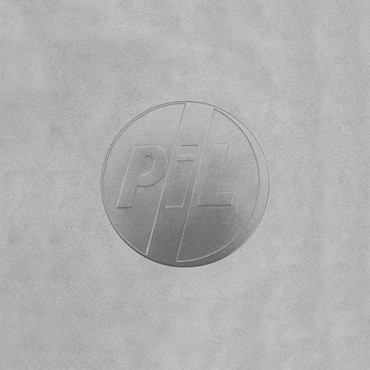
Metal Box was the band’s second album, originally released on 23rd November 1979. Metal Box is issued in a square metal tin (CD and LP) (the 1979 original was issued in a round metal film canister) with an embossed PiL logo. Include a 72 page booklet together with an exclusive poster, art-prints (LP version) and postcards (CD version). With all lyrics written by John Lydon ‘Metal Box’ was recorded with original PiL members Keith Levene and Jah Wobble. Original drummer Jim Walker had left, to be replaced by a succession of drummers. ‘Metal Box’ came out less than a year after PiL’s debut ‘Public Image: First Issue’ yet it was nothing like its predecessor. Things had changed, and so had PiL. While outside pressures mounted PiL channeled their energies (negative and positive) into a record that would set them apart back in 1979, and indeed today in 2016. Whether it be John’s powerful and passionate vocals; Keith’s wailing guitar and melodic synths; Wobble’s sub-disco reggae basslines; or the crashing rhythm that holds it all together, ‘Metal Box’ has many strengths. The album was originally released as 3 x 45rpm 12″ singles, housed in a metal ‘film’ canister. As made by ‘The Metal Box Company’ in London’s East End; hence the name. The deluxe edition includes rare and unreleased mixes from the recording sessions, along with B-sides and BBC sessions, plus a live recording from a now legendary unplanned show at Factory Records Russell Club in Manchester arranged on the day of a Granada TV appearance in 1979.
Limited copies come with a bonus CD of Dan Carey dubs / mixes / re works of album tracks. Toy return with a new 10 track album Clear Shot on Heavenly Recordings. Splitting their time between Tom Dougall and bassist Maxim Barron’s place in New Cross and Dominic O’Dair’s flat in Walthamstow, where they set up a makeshift studio and laid down the early album demos, Clear Shot began to take shape in the first half of 2015. Taking inspiration from an esoteric blend – Radiophonic Workshop, Comus, the scores of Bernard Herrmann, John Barry and Ennio Morricone Fairport, Coum, Acid House, Incredible String Band, The Langley Schools Project, The Wicker Man soundtrack and even the direction behind Electric Eden, Rob Young’s book about the development of folk music in the U.K. – by the time they entered Eve Studios in Stockport in October 2015 with producer David Wrench, the band were clear about the direction the album should take. The result is their most coherent and confident album to date; lushly cinematic, shot through with their most expressive melodies thus far and coated with a ‘sheen’ courtesy of Chris Coady (Beach House, Smith Westerns, Yeah Yeah Yeahs), who mixed the album in LA with some of the reverbs and vocal processors used on Purple Rain, across the 10-tracks strands of ideas appear, sink and re-emerge in an almost modal jazz manner. Clear Shot sees Toy working both in bigger colours and more minutely crafted detail, achieving an altogether higher level of artistry than before
Midlake celebrate the 10th anniversary of ‘The Trials of Van Occupanther’ with a deluxe reissue via BellaUnion on 180 Gram gold vinyl, complete with a B2 pull-out poster, handwritten lyrics and previously unseen photos. The cover artwork has been reimagined in a fittingly flushed, hallucinatory painting by neo-impressionist (and pavement-scorching skateboarder) Brian Lotti. The original album is accompanied by a special bonus 7″ featuring two previously unreleased tracks, the plaintive rolling lament of ‘The Fairest Way’ and the revelatory psychedelic swirl of ‘Festival’, two tracks recorded before original vocalist Tim Smith departed the band. In 2006, Van Occupanther was hailed as an instant classic and over the course of the next year proved to be the band’s commercial breakthrough. While their debut, 2004’s ‘Bamnan and Slivercork’, had drawn acclaim alongside comparisons to Grandaddy and Radiohead, Midlake looked further afield and deeper within for the follow-up. Suffused with a romantic yearning for the simpler life, this was a record pitched between 1871, 1971 and somewhere out of time: between Henry David Thoreau and Neil Young’s ‘After the Gold Rush’, between 1970s Laurel Canyon thinking and a longing for something more mysterious. Rich reserves of wistful melody, dreamy horns, rolling guitars and plaintive pianos reflect its elusive, idiosyncratic narratives: a couple long to be robbed by bandits so they can start anew, an outcast scientist ponders his pariah status, a woman chases a frisky deer, a river leads who knows where yet leaves you little choice but to follow… Famous admirers included Thom Yorke, Beck, The Flaming Lips, Paul Weller, James Dean Bradfield, St Vincent, actor / skateboarder Jason Lee and The Chemical Brothers, and the album went on to secure high placings in the end-of-year polls. Since then, their influence has perhaps been felt in the breakthrough of many a band or singer at one with the stuff of beards, bucolic yearning and blissful West Coast harmonies, from Fleet Foxes to Band of Horses, The Low Anthem, Jonathan Wilson, Matthew E White and beyond. Not that Midlake stood still to lap up the praise: a band acutely attuned to nature’s shifts, they embraced change. In 2010 they ventured into darker psych-folk thickets for The Courage of Others and backed John Grant on his celebrated breakthrough album, ‘Queen of Denmark’. When Tim Smith subsequently departed, guitarist / singer Eric Pulido stepped up to the lead vocal role for 2013’s freshly exploratory ‘Antiphon’. Since then, Pulido and various Midlake members have embarked on a new musical project with a cast of all-stars including members of Grandaddy, Franz Ferdinand, Band of Horses and Travis, for an album due for release next year. All of this serves to reminds us what fertile seeds were sown with ‘The Trials of Van Occupanther’: a modern classic, made of vintage craft and timeless magic.
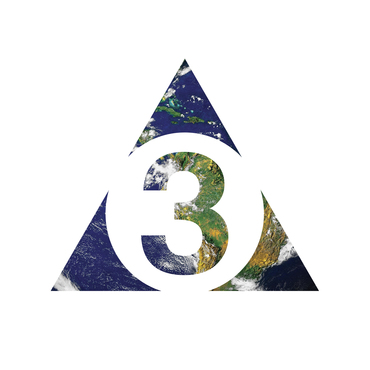
Third World Pyramid is the first album that was fully recorded and produced at Anton’s new Cobra Studio in Berlin . It is the 15th full length release from the Brian Jonestown Massacre recorded from early 2016. Featuring Ricky Maymi, Dan Allaire, Joel Gion, Collin Hegna and Ryan Van Kriedt from the band. Also Emil Nikolaisen from the Norwegian band Serena-Maneesh joins the band on this album, plus vocal performance Tess Parks and Katy Lane.
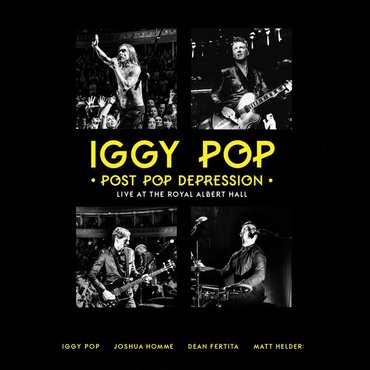
Iggy Pop’s Post Pop Depression album, a collaboration with co-writer and producer Joshua Homme from Queens Of The Stone Age, is his most critically acclaimed and commercially successful album for many years. On 13th May 2016, Iggy Pop brought his Post Pop Depression live show to London’s revered Royal Albert Hall and almost tore the roof off! With a backing band including Joshua Homme and Dean Fertita from Queens Of The Stone Age and Matt Helders from the Arctic Monkeys, Iggy delivered a set focused almost entirely on the new album plus his two classic David Bowie collaboration albums from 1977, The Idiot and Lust For Life. Fans and critics alike raved about the performance and this will definitely be remembered as one of Iggy Pop’s finest concerts.
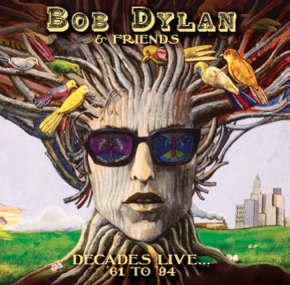
8CDs, Collectors Box Set with 16 Page Full Colour Booklet with Background Liners and Rare Images.
Exhilarating live performances across 4 decades of Bob Dylan masterpieces. Since coming to prominence in 1962, Bob Dylan has never ceased to create and innovate, his remarkable songwriting being matched by the quality and quantity of his live performances. This 8-disc set gathers several historically important sets, all originally recorded for broadcast on various different stations, including WBAI-FM, WNBC-FM and others. They find him playing intimately and in front of huge crowds, with material ranging from protest folk to rock’n’roll, and are accompanied here by background notes and images.
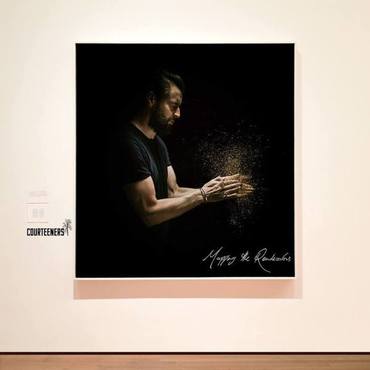
Mapping The Rendezvous is the fifth studio album from Courteeners and follows the spectacular success of 2014’s Concrete Love and the subsequent tour that saw the band sell out venues all across the country before playing a record breaking seven nights at the Manchester Apollo last Christmas
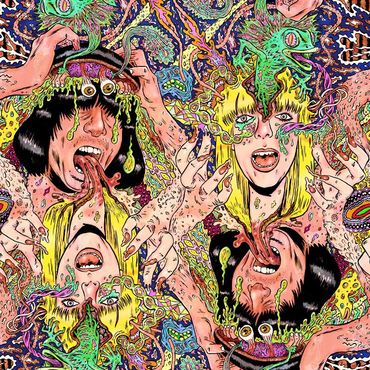
Psych-pop fuzz freaks The Lovely Eggs tell it like it is with their new single Drug Braggin. The Lovely Eggs are back again with another fuccked up, fuzzed out freak single . Released on eye-watering psychedelic swirl vinyl. The limited edition 7” sludge pop mind-melter sees the pair (Holly Ross and David Blackwell) take on their latest pet hate: drug posers. Sick of hearing people crowing about how many drugs they’ve done on a night out or at a festival, The Lovely Eggs retort with a big fuck-you to the pricks with a typically surreal insight in to their crazy world. The B-Side On the Line is another new song, which was recorded with an electronic voice unit with a strange disembodied American accent after Holly was diagnosed with a vocal nodule. This brand new material represents yet another twist and turn in The Lovely Eggs‘ musical odyssey, cementing their reputation as one of the most exciting, innovative and genuine bands on the UK underground scene. In keeping with their other recent releases, Drug Braggin is accompanied by artwork and video by cult underground artist and baboon keeper Casey Raymond. The artwork has been created so that it seems never ending as it is joined at every corner in a self repeating pattern, keeping the viewer trapped inside The Lovely Eggs self contained world. It shows Holly and David having a mental meltdown as a result of too much exposure to drug braggin’.
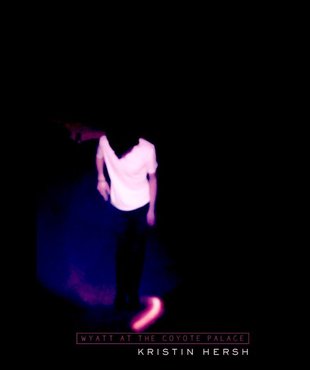
Wyatt At The Coyote Palace is a book of essays and lyrics with two CDs included. It gets its name from an abandoned apartment building behind Kristin’s studio that her son Wyatt spent the majority of this recording session exploring.
With the full studio album on CD, photographs and artwork by Dave Narcizo and Kristin Hersh. Lyrics for each song stories and essays by Kristin Hersh to accompany each track






 The Fat Angel Sings