On December 4th, Atlanta punk rockers The Coathangers acknowledged an upcoming 15 year milestone for their previously out-of-print self-titled debut album by releasing a Deluxe Edition of the collection with Suicide Squeeze Records, featuring remastering of the tracks and bonus material. A timely and punchy music video has also been released for one the tracks, “Nestle in My Boobies”, drawn from footage of a sweaty live performance in 2011. Watching the video now definitely promotes a vicarious thrill, aware that no concert like that one could occur at this time, but that also highlights The Coathangers’ particular magic as a band, always conscious of the value of capturing specific, unique, moments in time in all their glory.
Coathangers singer/guitarist Julia Kugel recently discussed this reflective moment in time for The Coathangers, what life was like for them around the time of recording that first album, how they fit into the musical scene at the time in their hometown of Atlanta, Georgia, Oddly enough, we were planning on taking this year off.But we were so lucky to get to play that Coachella show with Blondie.Our only show of 2020 was the highlight of my fucking life, all of our lives!That’s pretty much 2020 in a nutshell, asking, “What the fuck?”But we hadn’t been home much in 12 or 13 years, so we were going to take some time off anyway.
we never called ourselves Punk, because that’s kind of un-Punk to do that!When people would shout at shows, “They’re not Punk!”, I would shout back, “I never said I was Punk Rock, bitch!”I think we’re Punk in attitude and inspired by it, but there was not a formula of sound that we tried to follow.Punk is fast, though, fast and short, and that shit’s awesome, it pumps you up!The best description we ever got was “Psycho-Pop”, so we called ourselves Psycho-Pop, No-Wave, and a bunch of others.We used to throw things out at people just to confuse them.
Eddie Vedder releases the five-song “Matter Of Time” bundle. Just in time for this Christmas, he expands on the previously released two-track set and collects a series of acoustic songs and covers performed and recorded throughout 2020. He presents all of these tracks together for the first time in one comprehensive collection which also includes an acoustic cover of Bruce Springsteen’s song “Growin’ Up.”
Get “Matter Of Time” available tomorrow at all digital streaming or through Monkeywrench/Republic Records. Among the additions, the project includes a powerful acoustic rendition of “Future Days” from the 2020 Game Awards, which he performed remotely and beamed into the show. The track originally concluded Pearl Jam’s 2013 tenth album Lightning Bolt and also appeared in the blockbuster video game The Last of Us Part II as a tearful and poignant goodbye between main characters Ellie and Joel. Meanwhile, Matter Of Time includes emotionally charged and energetic at-home performances of classics “Porch” and “Just Breathe” captured for Amazon Music.
Vedder initially introduced Matter Of Time with the title track “Matter of Time” and “Say Hi.” Check out the animated music video for “Matter of Time” . Fans may reserve the limited-edition event poster HERE (designed by renowned contemporary illustrator and artist Munk One, with all proceeds benefiting EBRP).
Producer, Performer, Guitar, Vocalist: Eddie Vedder
Steve Winwood’s hugely successful “Arc of a Diver” (released 31st december 1980) was not the first album released under his own name alone or even his first foray into solo work. His eponymous release of 1977 holds the former distinction, while the iconic Traffic album “John Barleycorn Must Die” was initially intended to be an effort apart from that group. Nevertheless, the album released on New Year’s Eve 1980 remains the effort that elevated this singular multi-instrumentalist’s name into widespread recognition beyond the fame he garnered with the aforementioned band or his prior stint with The Spencer Davis Group.
Arc of a Diver is certainly an album of its time, dominated by electric keyboards and synthesizers in lieu of the Hammond organ that had been Winwood’s signature instrument since his early days as a musical prodigy circa “I’m A Man” The sound of the B3 is present, almost as an inner lining of the arrangement of the title song, but the more brittle and antiseptic textures hold sway through most of the record, including, most conspicuously and perhaps not coincidentally, on its best-known number “When You See A Chance.”
Ever so skilled as a guitarist, Winwood might well have ascended to status as a hero of the instrument had he pursued such acclaim. But there’s nevertheless precious little of that sound here. On “Night Train,” Steve does use an electric to alternately counterpoint and amplify the syncopated rhythm at the foundation of that penultimate number, but there’s nothing flashy in his playing (though its biting tone does recall the coda of “Dear Mr. Fantasy”). Brief flashes of acoustic fretboard work also decorate the melancholy closer, “Dust”
But it remains for the vocals to truly distinguish that performance and, in reality, Arc of a Diver as a whole. Virtually unchanged since wailing “Gimme Some Lovin’” in 1966—and remaining so even today—the sound of the man’s voice rings true as the definition of graceful, ageless soul. Steve Winwood’s singing doesn’t exactly imbue warmth all the way into the drum machines of “Spanish Dancer” but it does provide the necessary color for Will Jennings’ lyrics for “Slowdown Sundown.” Winwood played all the instruments on this record, but it is the skill of his phrasing and the very texture of his voice, humanizing each performance, that makes this LP worth coming back to.
Having built upon the foundation Paul McCartney built with his first solo album in 1970, as well as Stephen Stills’ predilection for overdubbing as on display for the eponymous Crosby, Stills and Nash debut, Winwood further refined the one-man-band approach two years later with Talking Back to the Night;there was an even greater sense of a bonafide band playing the music on that LP, which only renders Arc of A Divermore dated. The three bonus cuts on the second CD of the 2012 Deluxe Editionof the latter reaffirm that impression even as the rest of the content on that disc, devoted to a documentary on Steve’s career, spurs the notion that Winwood has never really made a record by himself that fully encapsulates his multi-faceted talent(s).
It’s thus a most understandable irony that the man’s natural gifts stand out in greatest relief in collaboration with others. For instance, 2003’s About Time not only marked the return to his favourite keyboard, but also a rediscovery of a looser, more improvisational approach in which he was sharing camaraderie with other musicians. Meanwhile, the live appearances with old friend Eric Clapton that began in earnest in 2008, captured on Eric Claptonand Steve Winwood: Live From Madison Square Garden, may well have provided the best setting for Winwood’s all-around abilities. Yet, even those vivid demonstrations of versatility in no way invalidate the breakthrough that was/is with Arc of A Diver.
“Somewhere in far West Texas – ”a place where the dead outnumber the living” – the band Ak’chamelThe Giver Of Illness are fourth world post-colonial cultural cannibalists circumcising the foreskin of enlightenment. Throughout years they have designed a unique sound evoking a sort of haunting, deep psychedelic folk music. This is a fascinating journey through funeral folk, mystic, psychedelic rock, and so on, and so forth.”
First vinyl release of Ak’chamel after a prolific cassette discography, “The Totemist” marks a new direction for the mysterious group. Equipped with studio quality recordings and a (somewhat) lighter tone, opposed to the oppressively lo-fi sound the group is known for. Performing in homemade costumes and masks, they have played festivals in various cities around the U.S gaining international attention from Vice, The Wire, Tiny Mix Tapes, Consequence of Sound, and many more. They have amassed over 10 cassette albums and 1 VHS full length film.
This is a deep psychedelic-folk album with hints of mysticism, some of which was written and recorded in a ghost-town in the Chihuahuan Desert in far West Texas – a place where the dead outnumber the living. Various overdubs and field recordings were captured in the historic Terlingua cemetery : an ancient burial ground filled with small grottoes and graves made of sticks and stones. This being the final resting place for miners who succumbed from illnesses derived from the toxic rare-earth element known as mercury.
Ak’chamel, The Giver of Illness are fourth world post-colonial cultural cannibalists circumcising the foreskin of enlightenment. Performing in homemade costumes and masks, they have played festivals in various cities around the U.S gaining international attention from Vice, The Wire, Tiny Mix Tapes, Consequence of Sound, and many more. Enter the fourth world now !.
Barcelona’s Mourn. They’ve just dropped ‘This Feeling Is Disgusting’ and it’s a perfect indie rock banger – two-chord punk guitars, sweet/rageful vocals, jumpabout beat. “Self Worth”, out now via Captured Tracks, is the Barcelona trio’s fourth album, and it follows 2018’s Sopresa Familia, which was characterized by the seething anger Mourn felt after being manipulated by their previous record label. Self Worth is imbued with a similarly intoxicating vigour and celebration of each other, but it also has a cool confidence, and both melodic ease and intrigue. With an approach to rock and post-punk that’s both straightforward and unusual, Mourn remain one of the most underrated bands going.
Adversity does not incite the best feelings: frustration, anger, fear, anxiety – nothing unusual for today’s world. The members of Mourn know quite a bit about these setbacks, but a latent belief persists within: the negative will eventually become positive. It’s the belief of facing and overcoming a problem. To come out reinforced: the wonder of resilience. It’s the belief of what they are worth, whatever people say. It’s the name they chose for their new album: Self Worth.
And it’s precisely self-worth that took Mourn this far. Their journey was premature, with their self-titled debut album – released in 2014 when all the members were still minors – earning them widespread critical acclaim and devoted fans. They followed with two more: Ha, Ha, He (2016) and Sorpresa Familia (2018), and became intercontinental with tours in North America, Europe, and Japan. An indie dream come true for Jazz Rodríguez and Carla Pérez Vas, both born in 1996 in El Maresme, Catalonia, where the two became inseparable in high school. That bond remains today, and when their voices and guitars combine it is pure fire.
Of course, there were obstacles along the way: a local label with mismanaged finances and careless managers, and more recently, a line-up change with Antonio Postius no longer on the drums. The band isn’t the same as when they formed. The world isn’t either. Mourn grew up, and that’s evident in the songs that make up Self Worth. Their melodies – energetic and captivating – venture into less level grounds, and their lyrics show their newfound readiness to tackle issues of a different weight and size.
Self Worth began to take shape in the spring of last year. Back then, things weren’t going so well. “We were in a very bad moment; the group dynamics were no longer working with Antonio. We didn’t feel like we could write a record with him. It didn’t work. So in the end he left,” Jazz recalls. “I think his departure was something that had to happen. We no longer understood each other. And it got to the point where it wasn’t comfortable, either on tour or in rehearsals. So it was a very positive change. It gave us the peace of mind we needed,” Carla adds. In May, once freed from the “bad vibes”, Jazz and Carla took refuge for almost a week in a small house in the mountains, near the Pyrenees in France, to start projecting their next album. No phones, no internet. Just what they needed to write and record demos. New melodies, lyrics and guitar parts appeared, and with these first songs, they returned to Catalonia, where Leia Rodríguez – bassist and sister of Jazz – and Víctor Pelusa – the new drummer – were waiting. “We finished it with the four of us together, at the end of that summer,” Carla says. Jazz: “We’ve been able to enjoy the process of writing an album throughout the summer. In the past that could only happen under pressure.”
The track is from forthcoming album, “Self Worth”, out October 30th via Captured Tracks.
“The song is really about fear of the future, being anxious about what’s going to happen, not knowing if you’re going to be able to earn a living or not. It’s a really happy song, but one that represents being stressed out. The idea of “I don’t know if I’ll be able to afford an apartment any time soon, but hey, let’s dance and have fun!” That’s the concept behind it, and that’s what I was thinking about while writing the lyrics. I also thought about my parents, and everyone’s parents. They often have high expectations for you, or they want a certain lifestyle for you, and you don’t always agree with that. So you try so hard to do life your own way, but you’re super stressed out and you’re scared, and every now and then you think “Is it worth it?” In the end, I think it’s worth it.”
Official video for “This Feeling Is Disgusting”, from Mourn’s new album “Self Worth”
It only takes a few seconds of their single “In / Out” to realize that En Attendant Ana have something special. “Shred” isn’t a word you’d normally associate with jangle pop, but it can definitely be used to describe the chiming, pummeling riff that’s sprinkled throughout the Parisian band’s single. Margaux Bouchaudon’s vocals evoke Stereolab’s Lætitia Sadier and Alvvays’ Molly Rankin—she was practically genetically engineered to sing perfect, hyper-melodic dream pop. It would be unfair to dub them a dream pop outfit—they tap into avant-pop, post-punk and college rock with similar ease.
With their second album Juillet, they subvert listeners’ perception of them on nearly every track. “From My Bruise to an Island” is a soothing, horn-led ambient piece, “Flesh or Blood” is incisive post-punk at its best and “Words” drops a warped synth interlude alongside wailing brass. They approach familiarly blissful indie-pop (“Do You Understand?”) with as much care as they do their more complex, off-kilter moments. It’s rare to find such thoughtfulness in a record so unabashedly tuneful.
Taken from the Paris, FR quintet’s sophomore album “Juillet”, out January 24th, 2020 via Trouble In Mind Records
Nebraska songwriter David Nance returns to Trouble In Mind Records with his fifth (proper) studio album “Staunch Honey”, his follow-up to his acclaimed 2018 album “Peaced and Slightly Pulverized”. Returning to the home-recorded magic of his early albums, “Staunch Honey” was recorded entirely to tape by Nance himself at his Omaha home with the occasional assistance from his long time live bandmates Jim Schroeder & Kevin Donohue.
Guitar man David Nance continues his prodigious output of underground heartland rock with what might be his most accessible album yet. “Staunch Honey” sounds instantly timeless, but also as fresh and unique as any other rock album that came out this year. “My Love, The Dark and I” is probably the best union of Nance’s country-rock influences and his lo-fi aesthetic, without the confrontational squeal of his “Silver Wings” cover, but with just enough of a rough-hewn, homemade feel to please fans of Honey Radar or, well, Nance’s earlier, rougher records. Normally a White Light / White Heat kinda guy, “July Sunrise” and its loping guitar lines is more The Velvet Underground, but with Nance singing like Tony Joe White instead of Lou Reed. “Learn the Curve” is a slinky, bluesy vamp, while “If the Truth Shows Up” finishes the whole thing up with the stoned-out-of-its-mind psych chug of Endless Boogie. If you ever wanted to hear one of Dickey Betts’ almost saccharinely upbeat Allman Brothers songs turned into a smokey, hazy space journey, you’ll probably want to listen to “Gentle Traitor” which starts off with the colourful, chiming guitars of Betts songs like “Blue Sky” and “Jessica,” before drifting off into the cosmos. Nance has been keeping up the good fight for years now and with Staunch Honey, he might finally win over your rock ‘n’ roll uncle.
Many of the tunes on “Staunch Honey” feel like classics, but that’s because in Nance’s hands – they are. Not content to let the album go by without the rumble of guitar, “If The Truth Ever Shows Up” closes out the album. It’s an instrumental jam with Nance wrangling and riffing on a gut-punching guitar solo for 6-plus minutes that feels very much like the end credits to a long-lost midnight movie.
Some psychedelic albums reach a hypnotic end cheaply. But “Shadow Talk”, the second album from Chicago experimental five-piece Cafe Racer, reaches heady emotional and sonic heights, not by leaning on overused effects or sprinkling meaningless, abstract imagery, but by expecting more out of a song and its lyrics. Shadow Talk is all about finesse and dynamics—melodies cascade with subtlety and spark with a euphoric glow. They’re also masters of grooves both meditative and invigorating, and they experiment with foreground and background sounds in mind-numbing ways. It’s an extremely calming album until it isn’t—the guitar and synth fury on “Faces” is life-affirming, the guitar solo in “Exile” is painfully emotive and its subsequent outro track creates blistering, ambient havoc. It’s a moody, empathetic album, bolstered by repetition and the palpable scenes they create, whether that’s an imagined, heavenly gorge or the melancholy urban landscapes you traverse every day.
Cafe Racer continues Chicago’s long tradition of indie-rock / post-punk / whathaveyou, but with splashes of psych. Fluid but not overly studied. The debut album from Chicago five-piece Cafe Racer arrived in 2018 with Famous Dust, which artfully wobbles as much as it confidently struts. Their ability to make keyboard and guitar sounds bend, zigzag and squeal was already well-developed, so by the time they released their 2020 follow-up Shadow Talk, they were firing on all cylinders. With art rock, psych and krautrock as their backbone, they lock into immersive grooves, but even when a groove is dismantled or they’re building up to another one, Cafe Racer have a way of dazzling with subtle, snaking riffs and luscious vocals.
Written and Performed by Cafe Racer: Michael Santana, Adam Schubert, Rob McWilliams, Andrew Harper, and Elise Poirier. Saxophone on ‘Breathing’ performed by Spencer Ouellette.
We got our first glimpse of the forthcoming collaboration between Scottish singer/songwriter James Yorkston and Sweden’s genre-hopping Second Hand Orchestra last month, when they released the single “Struggle.” Now, with the album The Wide, Wide River just a month away, they’ve released a new single and video. “Ella Mary Leather” is an improbable-sounding name, but she was a real person – an English folk song collector of the early 20th century. Yorkston clearly likes the way the name sounds (“Ella Mary Leather I regret ya”), since the actual Leather is not the subject of the song. Instead we get a story of mixed emotions – most clearly, regret and nostalgia – and a tale driven by insistent piano and acoustic guitar, with just the right mix of emotions in the strings. “Ella Mary Leather” was a Herefordshire based folk song collector in the early 20th Century, but James Yorkston and The Second Hand Orchestra (JY and TSHO)’s song is not about her. Yorkston explains: “No, it’s not about Ella Mary Leather. I am just using her lyrical name as a mask, to protect the innocent…” Over a wealth of percussion, violin, nyckelharpa, Yorkston plays buoyant piano as he sings us a story about a friend from many years ago.
The video was shot in Stockholm; the album comes out on January 22nd. Watch for Yorkston and the band doing a remote live set for our Soundcheck series around that time. The Wide, Wide River is a soothing, warm and sublime listen, whilst also highlighting Yorkston’s skills for song writing, collaboration and as a musical conductor. The album takes in past loves, advancing age and friends, now gone, whilst also containing some of the most sanguine songs Yorkston has ever made.
James Yorkston & The Second Hand Orchestra – “Ella Mary Leather,” taken from forthcoming album ‘The Wide, Wide River,’ out 22nd January 2021 on Domino Record Co.
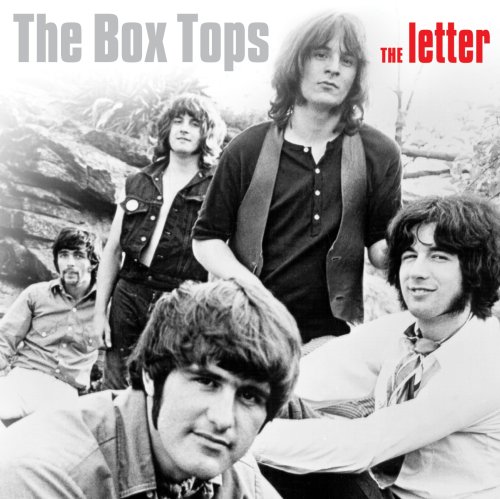
One of our favourite singles of 1967 is The Box Tops‘ “The Letter.” We’ll try to tell its story in about the length of time that the song lasts: which is a super short 1:58.
The song was written by a 23-year-old named Wayne Carson Thompson whose country music-singing father had spoon fed him a lyric which would ultimately become the first line of the song: “Give me a ticket for an aer-o-plane.” The younger Thompson got the completed song to the Memphis-based “Chips” Moman, who though just 29 was already a veteran producer, songwriter, label exec and studio owner.
Moman gave the song to a staff production assistant, Dan Penn, who corralled a local quintet into the studio to record the tune. The lead singer, Alex Chilton, was only just 16 years old – not a typo, born December 28th, 1950 – when the song was recorded. Penn is quoted as saying: I hadn’t even paid any attention to how good he sang because I was busy trying to put the band together… I had a bunch of greenhorns who’d never cut a record, including me… I borrowed everything from Wayne Thompson’s original demo – drums, bass, guitar.”
The band’s other original members included lead guitarist Gary Talley, bassist Bill Cunningham, John Evans on keyboards and drummer Danny Smythe, who died (at 67) in July 2016. No cause of death was announced. Alex Chilton died March 17, 2010.
Our Classic Video is a rather unconvincing lip synch version of the great song. Whoever set up the shoot could’ve at least placed some microphones…That sound you hear at the 1:34 mark? An aer-o-plane taking off via a special effects recording that Penn edited in, against Moman’s wishes. Penn, steadfast, won the argument.
The single was released in the summer of 1967 and on September it was No1 in the U.S., where it would stay for four weeks, selling over one million copies. It ranked as the #2 song on Billboard‘s 1967 singles chart. (Joe Cocker would famously record a version of it in 1970 that would become his first big pop success. Here’s a live version from later that year at New York’s Bitter End where, if they had a liquor license, young Chilton wouldn’t have been allowed to drink.
The Box Tops would have another huge hit in 1968 with “Cry Like a Baby.” The group disbanded a few years later. Chilton went on to form the influential power pop group Big Star. Chilton died at 59 of a heart attack in 2010. And what of songwriter Wayne Carson Thompson? Five years later, in 1972, he wrote “Always on My Mind.”.