The Rolling Stones Got Live If You Want It

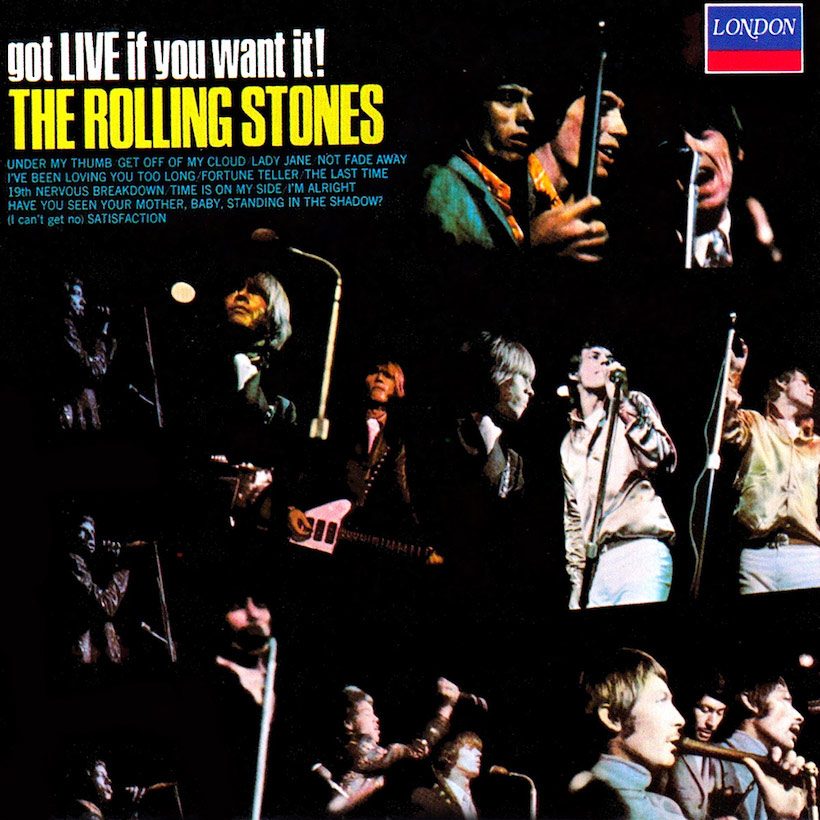
The tale behind the first Rolling Stones’ live album, “Got Live If You Want It!”, released by London Records in the US on December 10th, 1966, is neither simple nor straightforward. It’s a story that has its origins in an EP of the same name released in the UK nearly 18 months earlier.

You can barely hear the band over the audience’s screams, and the sound is the lowest of fidelity. But if there was ever any doubt that the Rolling Stones rivalled the Beatles in popularity in the ’60s, this early live album, the group’s first, proves it. ‘Got Live’ includes a frenzied mix of originals (“Under My Thumb”) and covers (“I’ve Been Loving You Too Long”). A perfect concert document, .

The band sounds hurried, even a bit terrified (there’s a film clip from around then of the band bolting offstage after frenzied fans rushed them), but it leads to frantic tempos that go to the edge of control, and sometimes beyond. Mick Jagger sounds alternately charged and bemused, even as in such more subdued moments as the largely acoustic “Lady Jane”, the screams overwhelm the music entirely. Yeah, Get Yer Ya-Ya’s Out! is the standard favourite Stones live album, but they were already transitioning into a too-controlled arena act by then. This is the one, even if the Stones themselves largely disowned it.

The band was inspired to name this somewhat strange-titled release after a song from one of their favourite bluesmen, Slim Harpo, who recorded “I’ve Got Love If You Want It” back in 1957. The release was recorded in London, Liverpool, and Manchester over three nights in March 1965 by engineer Glyn Johns.

According to the press release that accompanied the record, “The EP, captures on wax the unadulterated in-person excitement of a Stones stage show.” And no better than on “Route 66” which rocks and rolls as it’s driven along by Bill & Charlie. By the time it was released in the US as an LP, rather than an EP, “Route 66” had been dropped and other tracks had been substituted making “Got Live If You Want It!” a 12-track album in total.

On the original Got Live If You Want It! album liner notes it said that it was recorded at the Royal Albert Hall on the Stones’ Autumn tour of England with Ike and Tina Turner and the Yardbirds. In truth, the recording was mainly done in Newcastle and Bristol, not the Royal Albert Hall in London, with a couple of tracks either having been recorded in Liverpool and Manchester. Just to add to the confusion, some tracks were not even live at all. “I’ve Been Loving You Too Long” was recorded in Los Angeles in 1965 and then overdubbed at IBC Studios in London, which was also where “Fortune Teller” was also cut.

Before the first number, “Under My Thumb,” the voice of singer Long John Baldry can be heard introducing the band. On the CD version, it is a different intro and recording of “Under My Thumb” that appears on the original vinyl pressing.

As Keith said at the time, “We all knew that the sound that we were getting live and in the studio was not what we were getting on record – the difference was light years apart.” There is some indication of the difference on this record, but the limitations of the recording techniques are also there to be heard. Nevertheless, “Got Live If You Want It!” is a fascinating glimpse of mid 60s Stones playing live – even so, the band remained unhappy that it was released as an album and always referred to 1969’s “Get Yer Ya-Ya’s Out” as their first live album.

Must-hear: “Have You Seen Your Mother Baby ,Standing In The Shadows” races along in a mad dash, with Bill Wyman’s elastic bass lines sounding like they’re being stretched to the breaking point. And the tease of the “Satisfaction” riff before “The Last Time” is devilish.

The cheat: Yeah, well…. see… the versions of Otis Redding’s “I’ve Been Loving You Too Long” and Allen Toussaint’s “Fortune Teller” aren’t live at all, but studio recordings with crowd screams layered on. Oh, and though the cover claims it was recorded at Royal Albert Hall, it was in fact from two concerts at other England locales.
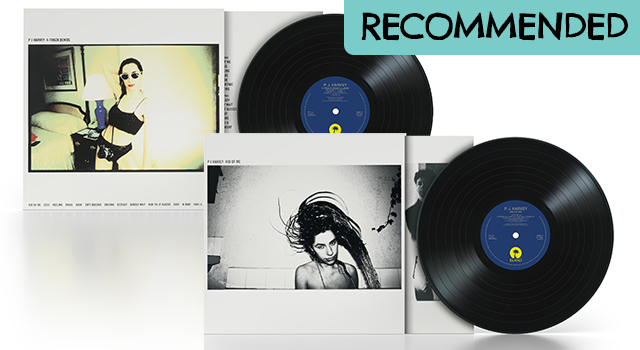
PJ Harvey’s 1993 sophomore “Rid Of Me” is a perfect album, a monumental release that radiated mischief and androgyny. It took apart the perculiarities of performing gender, and began her ascent in becoming one of the most important figures in contemporary music, underground or otherwise. Presented alongside the album demos, “Rid of Me” thunders with the same throaty and menacing intensity it did almost 2 decades ago.

September 24th, 1993, Polly Jean Harvey made her “Tonight Show” debut with a peculiar solo performance of the title track from her second album, “Rid of Me”. Her black hair looked crunchy and wet, so shellacked with product it gleamed. Sloppy streaks of raspberry lip liner ringed her mouth, and thick brows framed eyes that radiated mischief. In a dramatic departure from the androgynous black uniform she’d adopted in advance of her debut, 1992’s “Dry”, she wore a gold, sequined cocktail dress that sparkled in the light. Her self-presentation screamed femininity—but the form that femininity took was so performative, so purposefully imperfect, it confronted you with the arbitrary strangeness of gender itself, the visual equivalent of repeating the word “woman” over and over until it sounded like a foreign utterance.

After the tense summer tour that had followed Rid of Me’s spring release, she had split with her bandmates, drummer Rob Ellis and bassist Steve Vaughan, in the trio they’d called PJ Harvey. So Polly appeared on Jay Leno’s “Tonight Show” accompanied only by her guitar. From a technical standpoint, it wasn’t a stellar performance. On the album and in concert, Ellis had taken over the haunting falsetto backing vocals: “Lick my legs, I’m on fire/Lick my legs of desire.” Even the demo was mixed to layer Harvey’s throaty, menacing leads over her high-pitched chant.

But on Leno’s stage, she played both overlapping parts at once, and the effect was hair-raising. Her falsetto sounded involuntary and unnaturally girlish, a genderless being’s impression of women, as though the song of violent obsession had awakened some histrionic alternate personality within Harvey. She closed by taking her hand off the strings, repeating the “Lick my legs” chant a cappella smiling more to herself than to the audience. Leno pronounced her performance “very nice,” with all the forced enthusiasm of a high-school English teacher who’d asked the quiet girl to read her poem aloud. In the short interview that followed, he raised what must have seemed like an innocuous topic: Harvey’s rural roots on a sheep farm in Dorset. “So you still go back and do the chores?” Leno wanted to know. She responded with a list of tasks that included castrating sheep. “For the male lambs that you don’t want to become rams, you have to ring their testicles with a rubber band,” Harvey explained, as frank as any lifelong farmer would be. “And after about two weeks, they drop off.” The crowd roared as though she’d made a joke. Her Leno appearance feels like a truer representation of who she was at the time than any contemporaneous profile.

The British weeklies lost their minds about every new song her band put out—and more so about every image of Harvey that accompanied them. She had appeared naked from the waist up, her back to the camera, on the cover of NME in 1992, offending the delicate (and hypocritical) sensibilities of Melody Maker. Even the cover of “Rid of Me”, Maria Mochnacz’s photo of the artist in the bath, which exposed only her head, shoulders, and a shock of wet hair in whip-like motion, caused an outcry.

In the burbling bass tones that tie most of the songs together, simmering under the surface of “Rub ’Till It Bleeds,” twitching through the intro to “Yuri-G,” building tension in the hushed interlude a minute before “Dry” launches its final attack. She also imported these sounds from an agricultural region thousands of miles from Dorset: the Mississippi Delta. “Rid of Me” was neither the first nor the last PJ Harvey album that, unlike the punk-derived rock so many of her white contemporaries were making at the time, felt grounded in the blues. 1995’s “To Bring You My Love”, her masterpiece of dark sensuality, drew even more heavily on the structures and tropes of American roots music. But “Rid of Me” is still the PJ Harvey release that succeeds most spectacularly in evoking the unvarnished emotional intensity of the blues without ever resorting to mimicry.

At other moments on the album, it’s the sparseness of the instrumentals that throws Harvey’s words into relief: “I might as well be dead,” she bellows, amid the droning guitars and clanking percussion of “Legs.” Then, suddenly, the song is ending, and only the ghost of a strum accompanies the chilling final line, “But I could kill you instead.” On “Dry,” written for the album of the same name but saved for “Rid of Me”, a similar quiet sets in the first time Harvey utters the defining kiss-off of her early career: “You leave me dry.”

“Man-Size,” which appears in two very different versions, makes for a cathartic shout-along rocker; as a poem recited over a haunted string sextet, it’s unsettling enough to soundtrack a Hitchcock thriller. Amid the campy, sci-fi/rockabilly sprint of fan-favourite single “50 Ft. Queenie” and brutal verbal assaults like “Snake,” “Missed” is the most conventionally pretty song. In a chorus that escalates as she repeats “No, I missed him,” Harvey could be baring her lonely soul.

“Rid Of Me” and 4 Track Demos vinyl reissues, Originally released through Island Records UK in 1993, “Rid Of Me” was produced by Steve Albini and features the singles “50ft Queenie and “Man-Size”. The 4 Track Demos, also released in 1993, is a collection of demos recorded at home between 1991-1992 and presents a number of songs from “Rid Of Me” in their first incarnation. Artwork for both was shot by long-term creative collaborator Maria Mochnacz.

MICHAEL NESMITH – ” 1970-1975 “

Posted: December 12, 2021 in MUSIC
unnamed

R.I.P. On December 10th, 2021 US musician, songwriter, actor, producer, novelist, businessman & philanthropist Michael Nesmith (natural causes, age 78), who came to greatest prominence as a member of The Monkees & co-star of the TV series of the same name (1967 UK & US #1 single “I’m A Believer” plus 10 US & 8 UK Top 40 singles); he was known as the Monkee in the green wool hat with the thick Texas drawl & the writer of enduring songs like “Mary, Mary,” “Circle Sky,” “Listen to the Band” & “The Girl I Knew Somewhere”; Mike’s 1970-’71 trio of solo albums with The First National Band was an important influence on the development of country rock; as a songwriter, he was also notable for “Different Drum”, a hit for Linda Ronstadt with The Stone Poneys; Mike served as executive producer of the cult film ‘Repo Man’; in 1981, he won the first Grammy Award given for ‘Video of the Year’ for his hour-long ‘Elephant Parts’; The Monkees received a star on the Hollywood Walk of Fame in 1989, with all four members present; they reunited in 1995 to record their last studio album, ‘Justus’; between 2012-14 Mike reunited with Mickey Dolenz & Peter Tork to perform concerts throughout the US; 2014 live album ‘Movies of the Mind’ documents Mike’s solo tour from 2013; what was already intended to be The Monkees ‘final farewell’ tour was completed mere weeks before his passing by Mike & now only remaining bandmate Micky Dolenz…

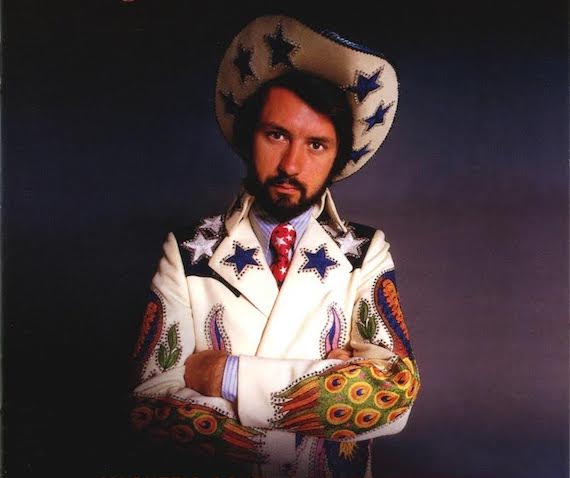
This week Michael Nesmith passed away, here we revive the spirit of the First National Band, the pioneering country-rock outfit he fronted from 1970 to 1971, for a series of shows in Southern California. Though best known for the knit wool beanie he donned during his two-season stint as a member of NBC’s The Monkees, Nesmith has worn many hats in his storied career in the arts, including label head, movie producer, author, VR impresario, and, arguably, inventor of the modern music video. This compilation focuses on the polymathic Nesmith’s Stetson years of 1970 to 1975. During this prolific period “Papa Nez” produced a series of albums for RCA and his own Pacific Arts label that set challenging meditations on subjects such as freedom, acceptance, and the nature of subject-object relationships to a backing track of rollicking country rock.

After departing The Monkees at the start of the decade Nesmith joined forces with Orville “Red” Rhodes, the pedal steel ace, electronics wizard, and LA session journeyman who headed up the house band at the San Fernando Valley’s premiere honky tonk, The Palomino. Their partnership, which stretched across seven albums in various band and duo configurations, took Nesmith back to his Texas roots at the same time as it propelled the emerging genre of country rock to new heights. In Rhodes Nesmith found his perfect musical foil. In addition to being a virtuoso on his instrument the 40-something Rhodes was a legendary stoner who kept a jar of kif-infused peanut butter handy to keep the mood dialled in.

Nesmith, on the other hand, was old before his time, a serious young man predisposed to serious thoughts and weighty topics. Together, Rhodes’ levity and Nesmith’s gravity struck an improbable balance, creating in the process some of the smartest songs ever penned about cows, break-ups, and broken-down Chevys.

Unlike many of his contemporaries in the 70s country rock scene, Nesmith was neither a traditionalist nor a dilettante. Rather, he found in the country music of his youth forms and themes that allowed him to give a more immediate, visceral voice to the heady abstractions he was exploring in his own ongoing studies of religion and philosophy. His recordings from this period made a compelling case that homesickness, whiskey-soaked heartache, and the loneliness one sometimes feels in a crowded bar are really just banal expressions of existential angst. As filtered through Rhodes’ swirling tone, the sounds and imagery of country became a form of vernacular philosophy. As he sings in “Hollywood” (Magnetic South, 1970), for Nesmith the appeal of the idiom was first and foremost intellectual:

It’s not the countryside that appealed to my heart
It’s the spirit and it captured my mind

This compilation collects more than twenty album cuts and live performances from Nesmith’s First and Second National Bands and his stripped-down collaborations with Rhodes. They range from a cosmic cover of Patsy Cline’s classic “I Fall To Pieces” to the koan-like “The Grand Ennui” to the uncharacteristically sentimental “Propinquity (I’ve Just Begun To Care).” Taken together, they put on full display the breadth of Nesmith’s catholic musical interests, the depth of his personal philosophy, and the exaggerated height of his archly raised eyebrow.

words / m dawson

Harrison Whitford is here to create

One more devastingly beautiful one from LA-based Harrison Whitford. Besides being a guitarist for Phoebe Bridgers, Harrison is also a mighty good songwriter. A few years back he knocked me out with a stunning debut album “Afraid of Everything” and now it was time for a gorgeous follow-up. This one’s a bit more evolved and rich, but thankfully without losing that fragile down-to-earth beauty of the debut.

We’re very excited to finally have Harrison Whitford’s ‘Afraid Of Nothing’ out in the world. The album, a thing of “ethereal, soak into your skin beauty” is a scrapbook of 12 incredible songs full of maturity, poise and richness. “Afraid of Nothing” pushes Harrison and his sound to new limits, creating a body of work that exudes his talent and personality. The reviews are trickling in, and lots of nice things are being said already, including…“Wistful and haunting.. a meditative heart-tugging gem that echoes the likes of Elliott Smith” – God Is In The TV Zine.“Pretty damn special” – Clash Magazine To bring this collection of songs to life, Harrison recruited (to name a few) Marshall Vore, Mason Stoops, Ethan Gruska, Phoebe Bridgers, Johanna Smauels, Eva B Ross and Charlie Hickey.

It’s been a while since we heard from Whitford, the solo artist. His debut album, “Afraid of Everything“, was released in 2018 during a break between appearing on Bridgers’ own 2017 debut, “Stranger in the Alps”, and 2020’s critically-adored “Punisher”. Whitford’s second album, “Afraid of Nothing”, set for release on November 12th. What came first, the clever inverse of that title or a genuine progression of mentality, I ask. He hesitates. “I tend to be one of those people who makes an off the cuff decision and then applies analysis after the fact,” he laughs. “I wrote the song that also has that title and I liked the song a lot so I figured it’d be kind of funny to name the record that. But on some level too, as a human being, I definitely do feel dramatically different from the person I was when I made my first record. My perspectives and sense of responsibility have changed from when I was 18 into my late 20s.”

“Afraid Of Nothing” is available to buy digitally now, Screwdriver Records

Released on 2021-11-12

JEREMY SQUIRES – ” Unravel “

Posted: December 12, 2021 in MUSIC

New Bern, North Carolina native Jeremy Squires is a singer-songwriter best known for his haunting melodies and evocative lyrics. Moving across the border to the US, but sticking with long time personal favorites. The Prolific North Carolinian singer-songwriter Jeremy Squires releases a hauntingly beautiful albums pretty much every year and this one is not an exception.

“Dreamy melodic poetry for dark times.Squires does not fit neatly into a genre, folk singer/songwriter falls short. Lyrically sparse as his arrangements are rich and dreamy he conveys mental turmoil that offer a sense of release and even relief.” – Americana UK

“Unravel” by Jeremy Squires is everything that honest song writing should be about. Jeremy Squires has moved out of his usual comfort zone with “Unravel”. He builds on his already impressive lyrical talents but pushes his arrangements of its soundtracks.” – Indie Band Guru

“Squires is nothing if not consistent: he’s perfected a beautiful shoegaze Americana sort of sound, and Unravel continues with his more rock-oriented exploration of this avenue. “ – Adobe and Teardrops

Released July 30th, 2021

Music and lyrics by Jeremy Squires

ASTRAL SWANS – ” Astral Swans “

Posted: December 12, 2021 in MUSIC

Astral Swans is the main project of acclaimed Canadian songwriter and multi-instrumentalist Matthew Swann. After forming in 2012, The music of Astral Swans is a spellbinding portal into the psyche of acclaimed Canadian songwriter Matthew Swann. As the first artist signed to Madic Records (an Arts & Crafts affiliate label helmed by Juno award-winning musician Dan Mangan), Swann’s 2015 debut “All My Favourite Singers Are Willie Nelson” was described by Noisey as “a stark, beautiful project; one that embraces darkness rather than shying away from it.” Astral Swans’ sophomore album, 2018’s “Strange Prison (co-produced by Preoccupations’ Scott Munro) earned even more widespread attention from Paste, Tiny Mix Tapes, and a live performance on which highlighted Swann’s singular talents at “grabbing listeners’ attention and holding onto it.”

Lyrically, Astral Swans’ writing recalls the sly sarcasm of ’90s indie-rock heroes Bill Callahan and Cat Power, the fragile intimacy of ’60s folk singers Nick Drake and Sibylle Baier, and the inner world-building of Syd Barrett and Daniel Johnston. Swann credits the expressionistic sound painting of his songs with an unexpected inspiration from Sly Stone’s early ’70s drug-fueled recordings (There’s a Riot Going On, Fresh), which he calls “masterpieces of weird production where nothing is used properly.” The troubled characters in his songs (arsonists, pilots, prison builders, and Swann himself) may be capable of destructive behaviour, but he believes personal growth can only occur from honest admissions of our scariest inclinations. Challenge yourself but don’t give in to the fear. Rip yourself up and start again.

The past five years have found Swann hitting the road from his hometown of Calgary, Alberta for a series of extensive tours across North America and around the world. Performing at house shows and on festival stages, he has shared bills with a laundry list of artists including Feist, Angel Olsen, Hayden, Colin Stetson, Julie Doiron, and Chad VanGaalen (producer of Swann’s previous project Extra Happy Ghost!!!). In 2019, While touring has now been put on hold by COVID-19, Swann has stayed busy, hunkering down in his home base on a series of recordings planned for an upcoming 2020 release

Astral Swans was previously signed to Madic Records for the 2015 debut release ‘All My Favourite Singers Are Willie Nelson’. Swann is now signed with Saved by Vinyl (Calgary), Moorworks (Japan), and Tiny Room Records (Netherlands). 

Astrals Swans self titled album
All songs written by Astral Swans except Track 7, Cross Bones Style written by Cat Power

Released October 8th, 2021

“The Cherries Are Speaking”—the sixth album released by Brooklyn singer-songwriter Dan Knishkowy as Adeline Hotel—begins and ends with lyrics from his previous two records, respectively. “Holy visions” surfaced first on the mournful acoustic ballad “Ordinary Things,” a rare, stripped-down moment on his folk-rock opus “Solid Love” from last May. “Good timing,” in turn, is the eponymous lyric from the critically acclaimed follow up, released in March of this year—and one of its only lyrics, too, since the record is largely a suite of layered acoustic guitars.

The original context for these phrases hint at the fresh musical and lyrical ground Knishkowy covers on “The Cherries Are Speaking“, an interconnected series of miniature baroque pop songs and, quietly, his most ambitious work to date. In the skeleton of its arrangements, the album expounds upon “Ordinary Things”’ minimalism, eschewing the intricate guitar counterpoint of his previous work in favour of piano lines inspired by the breezy melodies of Ethiopian jazz. The playing is often supported by just bass and drums, before pastoral wind and string orchestrations creep in—a breath-taking leap forward for Knishkowy as an arranger—informed at turns by Judee Sill’s neo-classicism and the mystic woodwinds of ‘80s Van Morrison.

On “Cherries”, Knishkowy creates full mise en scènes within verses, folding autobiographical moments of meditative self-evaluation into imagery from Italo Calvino’s 1957 novel The Baron in the Trees—most importantly, the titular anthropomorphic cherries. The book centers around a boy who makes the decision to live in the trees and engage in a selective relationship with the world around him. Knishkowy found resonances between the character’s self-imposed, imperfect notion of “freedom” and his own unsettled definition of the concept.

“The Cherries Are Speaking’s” recapitulations of and daring shifts away from Knishkowy’s previous work feed into its musical and thematic depth, which speaks far beyond the real-world context of its writing. The album is a bold but unforced gesture from an artist whose creative lifeblood is the sense of constantly pushing forward, creating new links in a daisy chain of a discography which seems to compound upon itself in significance with each new entry.

Released October 22nd, 2021

Represented by the prestigious record label Secretly Canadian, Le Ren (moniker of Montreal-based artist Lauren Spear) was introduced to US audiences last year when she opened for Orville Peck on his national tour. This summer she released her debut EP “Morning & Melancholia”. Lauren has studied folk and bluegrass going back to her early teens, partaking in workshops all over North America. Growing up on Nexwlélexm/Bowen Island, she was raised on the holy trinity of John Prine, Joni Mitchell and Bob Dylan. Their curious, deadpan and cosmic approach to life’s most brutal swipes feed Le Ren’s sensibilities, and her own lyrical couplets are as simply put as they are devastating. 

http://

Released October 12th 2020 Sub Pop Records.

VANESSA PETERS – ” Modern Age “

Posted: December 12, 2021 in MUSIC

Vanessa Peters is an singer/songwriter from Texas. Musician, Italophile, Virgo, coffee nerd, food lover, bossy-pants, big ol’ softie.
I’ve released 10+ albums and played over 1000 shows in 11 countries. I’m not done yet

The songs are great. The production is pristine. And I love the distinctive guitar riffs. Our next station is either Italy or Texas depending where Vanessa Peters is located at the moment. What I do know is that she released tremendous new album “Modern Age” in April and I’ve carried it with me all through this weird year. “The Try” might not be objectively the best song on the album, but somehow it has been my go to anthem.

Released April 23rd, 2021

Words and music by Vanessa Peters (BMI)
except “Valley of Ashes” and “Hood Ornament”
Words by Vanessa Peters and music by Rip Rowan

Vanessa Peters: vocals, acoustic guitar
Federico Ciancabilla: electric guitar
Matteo Patrone: keyboards
Andrea Colicchia: bass guitar
Rip Rowan: drums, keyboards
Joe Reyes: rhythm guitar on “Crazymaker”

QUIVERS – ” Golden Doubt “

Posted: December 12, 2021 in MUSIC

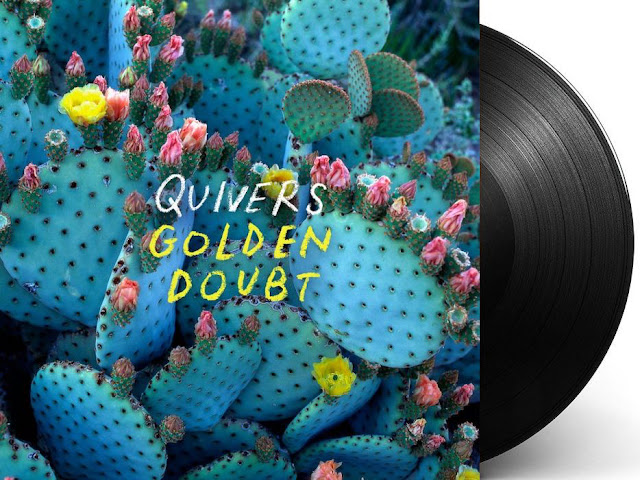
The perfect soundtrack for this Summer Of Love was there by the Australian band Quivers I’ve had an incredible soft spot for the great pop songs of Australian band The Go-Betweens for decades. For this I have to dive deep into the archives, but fortunately there are also followers like Quivers, who delivers an irresistibly tasty album with “Golden Doubt”. It’s an album reminiscent of The Go-Betweens, but a whole list of other big names pop up listening to the band’s Melbourne music. At the same time, Quivers makes carefree doll that sprinkles furiously with sun rays and entertains it in an extraordinarily pleasant way. It’s music to make 40 minutes very happy and after that you just put “Golden Doubt “on again.

“Golden Doubt” is already the second album by the Australian band this year. After all, out of time, which is an integral remake of R.E.M.’s 1991 album of the same name, was released earlier this year. It’s a really great remake, even though “Out Of Time” by R.E.M. is also an album that I think you should stay away from. However, the Australian band’s version did make me curious about other music by Quivers and it appeared this week.

Quivers already debuted in a different composition in 2015 and with an album I’ve never noticed, but the “Golden Doubt” released this week is definitely worth exploring. After all, the two-man, two-woman Melbourne band is grossing in music that is overflowing with the sun’s rays on her new album and therefore perfectly coloured for the current season.
It is music that fits well in the box “jangle pop”, but when listening to “Golden Doubt” I also immediately have fond memories of quite a few memorable albums from my record cabinet, where the albums of the also Australian band The Go-Betweens are at the front, but in which a lot of influences of R.E.M. also appear and influences from a number of memorable bands from the New Zealand stable of Flying Nun Records can be heard.
By mentioning names like this, I immediately set the bar very and perhaps unrealistically high for Quivers, but the Australian band can handle it. Golden Doubt is full of irresistibly tasty pop songs and they are pop songs that firmly embrace summer.
Compared to the aforementioned comparison material, some of Quivers’ songs sound a little more light-hearted. The Melbourne-based band prefer sweet to bittersweet and don’t shy away from an edge of kitsch here and there, but opposite the perhaps just a little too light-footed and sweet songs are some jewels of songs. There is nothing wrong with the light-hearted songs either, because on the summer days of the moment they go in like cake.
Quivers knows perfectly well what a near-perfect pop song should sound like, but the Australian band also has a sound that fits within the jangle pop, with occasional forays into the richly orchestrated pop of a band like Belle &Sebastian. On an album that fits in the jangle pop box, the guitar work is of course delicious, but the keyboards always jump into the ear in a pleasant way.

When the male vocals dominate, you occasionally secretly hear the bittersweetness of The Go-Betweens, but the choruses of the band’s two female members always give Quivers’ music a pleasant and carefree character.
Quivers makes the kind of music that is hardly made in the United States and the United Kingdom anymore, but at the other end of the world they still know what to do with it.
Quivers has made the soundtrack of a beautiful summer with Golden Doubt and it is a soundtrack that remains surprisingly well flavoured. And when I’m ready for something else, I also throw in the version that the band made of R.E.M.’s “Out Of Time“, because it also sounds very tasty. 

Released June 11th, 2021

Sam Nicholson – sings, guitars, piano, farfisa.
Bella Quinlan – sings, bass guitar.
Michael Panton – sings, guitars.
Holly Thomas – sings, drums, percussion.