Tori Amos doesn’t really do ‘bad’ albums, she went through a period 15 or so years ago when they were fairly challenging, with 15, 16, 17-track song-cycles that often felt hermetically sealed to all but her hardcore following. In recent times, a shift has been noticeable, and while she’s unlikely to be troubling the pop charts anytime soon, “Ocean to Ocean” is arguably her most commercial and ‘listenable’ work for some time. It’s a collection of songs in a variety of styles and sounds but it never feels overblown or dragged down by weighty concepts.
She say’s I can’t wait for you to listen to ‘Speaking with Trees’, which is the first song to be released from ‘Ocean to Ocean’. ‘Flowers Burn To Gold’ written for Tori’s late mother. The former boasts a full band arrangement with Tori’s production and arrangement skills brought to the fore, while the latter is the one and only time on the record that she keeps things simple with just voice and piano (to great effect).
Tori Amos released her new album, “Ocean To Ocean”. So far, we’ve heard “Speaking With Trees,” and now Amos has shared the lush, orchestral “Spies.” It’s actually a cheeky peek into the Amos home in Cornwall, England, where “bats and other creepy-crawlies terrorize” the singer’s daughter Tash.
We have all had moments that can knock us down,” Amos has said about “Ocean To Ocean”, which primarily grapples with the singer’s lockdown experience. “This record sits with you where you are, especially if you are in a place of loss. I am fascinated when someone has gone through a tragedy, and how they work through their grief. That is where the gold is. When somebody is actually at that place, thinking ‘I’m done,’ how do you reach that person? Sometimes it’s not about a pill, or a double shot of tequila. It’s about sitting in the muck together. I’m going to meet you in the muck.”
Tori Amos‘ 16th studio album, “Ocean to Ocean”, is out digitally on 10/29 via Decca Records, and she’s shared the latest single, “Spies.” The nearly six minute orchestral pop track, Is when they found their way into their home in Cornwall during COVID lockdown, and it has the same gently mischievous feel of songs like Unrepentant Geraldines’ “Giant’s Rolling Pin.” .
‘Spies’ is fun, frothy and almost lightweight, ‘Devil’s Bane’ is sweaty and swaggering Americana, while ‘Metal Water Wood’ starts ponderously before falling off a cliff into a killer chorus; catchy and hypnotic with wonderful work from Matt Chamberlain on drums.
It’s apparent that “Ocean to Ocean” a very personal work and great though the previous album was (2017’s Native Invader), the songs’ meaning was not always clear. This time around, with no travel available for inspiration, the focus was closer to home and Tori wrote songs specifically for family members past and present, including herself, since ’29 Years’ reflects on her journey from her acclaimed solo debut, “Little Earthquakes“, in 1991.
Never one to shirk a challenge, Amos even casually rewrites ‘Happy Birthday’ as ‘Birthday Baby’ in a dramatic tango-style at the end.
“This is a record about your losses, and how you cope with them,” Tori says. “Thankfully when you’ve lived long enough, you can recognise you’re not feeling like the mom you want to be, the wife you want to be, the artist you want to be. I realised that to shift this, you have to write from the place where you are. I was in my own private hell, so I told myself, then that’s where you write from – you’ve done it before…”
A Decca Records Recording; ℗ 2021 Tori Amos, under exclusive licence to Universal Music Operations Released on: 2021-10-14
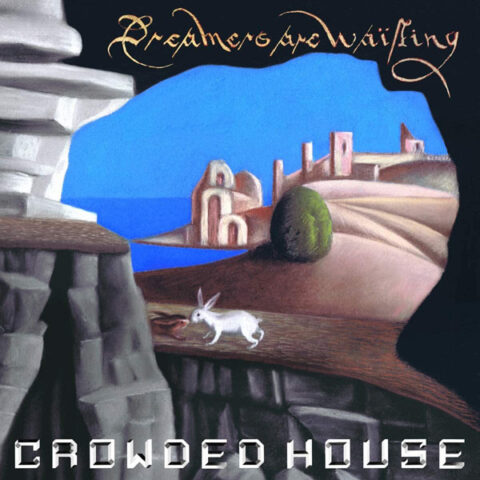
To be honest, and admit that the last two Crowded House outings – 2006’s “Time On Earth” and particularly 2010’s “Intriguer” – had left me with the feeling that I’d never really like another Crowded House studio album again (always a great live band). So when “Dreamers are Waiting” came along this year, I did approach it with a fair degree of trepidation and, at first, thought my worst fears were justified. The album initially felt too low-key, seemingly lacking the trademark big pop hooks and the song writing craft of yore. It rather drifted by, politely, without making its mark.
These first impressions were off the mark and the album revealed itself as a classic ‘grower’. The listeners’ persistence and patience is dutifully rewarded as “Dreamers are Waiting” unfurls its charms and presents its assets in a slow and controlled manner. The band reshuffle felt harsh on the excellent multi-instrumentalist Mark Hart (who found himself surplus to requirements), but the new line-up – Neil Finn; sons Liam & Elroy; original member Nick Seymour and the band’s classic-era producer Mitchell Froom (on keyboards) – works very well. In fact, everyone contributes in a song writing capacity to the excellent ‘Playing With Fire’, which is the second song on the 12-track album. ‘To The Island’ was the single, so you may well know that number, but the nostalgic and melancholic ‘Sweet Tooth’ already sounds like a classic.
But it’s on side two (in vinyl parlance) where the album really stretches its legs and impresses, with a wonderful run of songs, brilliantly arranged and performed. ‘Too Good For This World’ has the lo-fi charm of 1995’s FINN album (which makes sense, since this track is co-written by Neil and brother Tim) and ‘Start of Something’ drips with atmosphere, features some brilliant harmonies and offers a sublime chorus. Neil’s ‘Real Life Woman’ is arguably the best song on the record and rather punches you in the heart as it holds off it’s wonderful and simple chorus line for two long verses and it’s hard not to love the chaotic but charming ‘Love Isn’t Hard At All’.
This album was rather under-promoted in the UK and deserved more than it’s blink-and-you’ll-miss-it appearance on the UK chart (it peaked at #6). A COVID-delayed UK tour didn’t help and this record will possibly get a second wind next year when the band finally perform in Britain. Sublime.
Chris Buck’s new rhythm and blues quartet Cardinal Black arrived to surprise us all earlier this year, but three of the group have previously played together as the Tom Hollister trio. In the ensuing years, Hollister pursued a solo career, and Buck’s reputation evolved worldwide through his growing YouTube presence and his work with Buck And Evans, the group he co-founded with singer/ pianist Sally AnnEvans. That band were coming off a set of dates in early 2020 when the pandemic put the hand brake on the world.
With lockdown to fill, Buck, Hollister and Roberts reconnected over the material still in their locker and, with the crucial addition of talented bassist Sam Williams Cardinal Black was born. A left-turn from Buck’s previous gigs, Cardinal Black sound like the complete package – big songs, in the pocket jams and a fine platform for Buck’s astonishingly soulful lead work.
“This band’s been going four months,” says Cardinal Black’s Chris Buck, “or ten years, depending how you look at it.” Indeed, this hot Welsh quartet seemed to appear out of the blue and fully formed back in May with the single Tell Me How It Feels.
Featuring the rich, powerful voice of Tom Hollister and a kick-ass, all-the-feels solo from modern-day guitar hero Buck, this cool, soul-soaked slice of mid-tempo rock reached the top of the iTunes rock chart. But, as Buck says, this ‘overnight success’ was a decade in the making.
He, Hollister and drummer Adam Roberts were once the Tom Hollister Trio – a hotly tipped band looked after by Guns N’ Roses’ former manager Alan Niven – with label deals on the table back when that meant something. But singer and reluctant bassist Hollister felt stifled by the trio format, the bass hanging heavy on him, compromising his vocal performance.
“Tell Me How It Feels”, the debut single by Cardinal Black Out Now!
Because of their attitude, their sound, and the pure potential for them to break out and connect to the disaffected youth, “Nirvana meets Oasis” is the best way to describe the four teenagers who play in Stereotyped. Coming from Manchester, England, Stereotyped is set to carry on the great musical legacy brought forth from their home city that gave the world The Buzzcocks, Joy Division, The Smiths, The Fall, The Stone Roses, James, Doves, Oasis, and many more. Stereotyped is young, full of angst, and ready to rip rock and roll from the ground up and to take on the world. They have those loud distorted guitars perfectly soaring over aggressive Pop melodies, and catchy songs that you just know are gonna be great live. Stereotyped have signed a multi-album deal with Grunge Pop Records and are currently finishing up their debut album with producer Chris Hope (Echo & The Bunnymen, Travis, Pulp) at Milkshed Studios in Lancashire, England.
Lead-off single “The Only One” from their forthcoming debut drops August 27, 2021.
Just when any music form becomes an antique with a very definite history and trapped in the past then a pesky bunch of teenagers reinvent it! Grunge is now so entwined in the Nirvana narrative and the subject of books and docs that it would feel like dead form but in the hands of teenage Manc band Stereotyped (check out their Instagram) it’s an explosive thing and their debut single “The Only One” is dynamic, intense and thrilling and released by Grungepop Records who have a whole stable of this stuff!
Seb Lowe has burst out of nowhere. (Ok Saddleworth…) with an upcoming 7 track mini-album that is perfect for the moment. Perfect in that this is a young kid with a head full of words that are his weapons and telling his truth and a guitar that is a machine gun of riffing. This is the teenage frontline with poetry and scrubbed acoustic guitar choppy chords and a poetic angry voice full of passion and melody.
The teenage frontline singer songwriter with a headful of poetry political and scrubbed acoustic guitar choppy chords and an angry voice of a generation full of passion and melody.
With brilliant political lyrics sung in a thrilling voice that spits the words out somewhere between a rap attack and the melody of a singer-songwriter there is a voice of a generation anger, pathos, dark humour and a wise wise old head on very young shoulders.
Brilliantly he has broken out on Tik Tok before anyone else heard of him and in a platform where guitars virtually don’t exist he is the shock of the new but then a brilliant talent will shine at any time and these songs capture the underlying anger and confusion of these times and are yet another twist on the never-ending lineage of Weller, Sleaford Mods, Billy Bragg, Ewan MacColl or anyone who ever believed a guitar could change the world.
Another brand of post-punk that we adore, this time hailing from Edinburgh, Scotland. We don’t know a lot about the band but we’re happy they released a single this year and hope to hear more from them in 2022. Garage rock four-piece Cheap Teeth based in Edinburgh have been showing up on various radars like BBC Introducing, Radio X and NME following their debut EP “Give Me More, Show Me Less” released in May 2021. It’s post punk garage that we can’t wait to hear more of in 2022.
Charismatic Brazilian duo, living in Bristol. Fabulous, inventive psych meets art-punk sound. Debut album due in 2022 from the couple who plan a docu-fictional film to accompany the release. White Stripes type potential and a Kleenex vibe.
Ged Babey says: “It’s cool. And it’s a great song. A feminist empowerment anthem – but performed by hetero-norm-couple. Watch Glauco’s face when ‘She doesn’t need a man..’ is sung at him. I have to admit that the way their accents and enunciation affect the vocal is what makes it uber-cool. It brings to mind Nico, Kleenex and the Mo-dettes: artists with vocalists who sang in English, when it wasn’t their mother tongue.”
Official music video for AlterModerns – “She’s Not Yours” on This Could Prove Fatal. (Ananda Kuhn/Glauco Caruso)
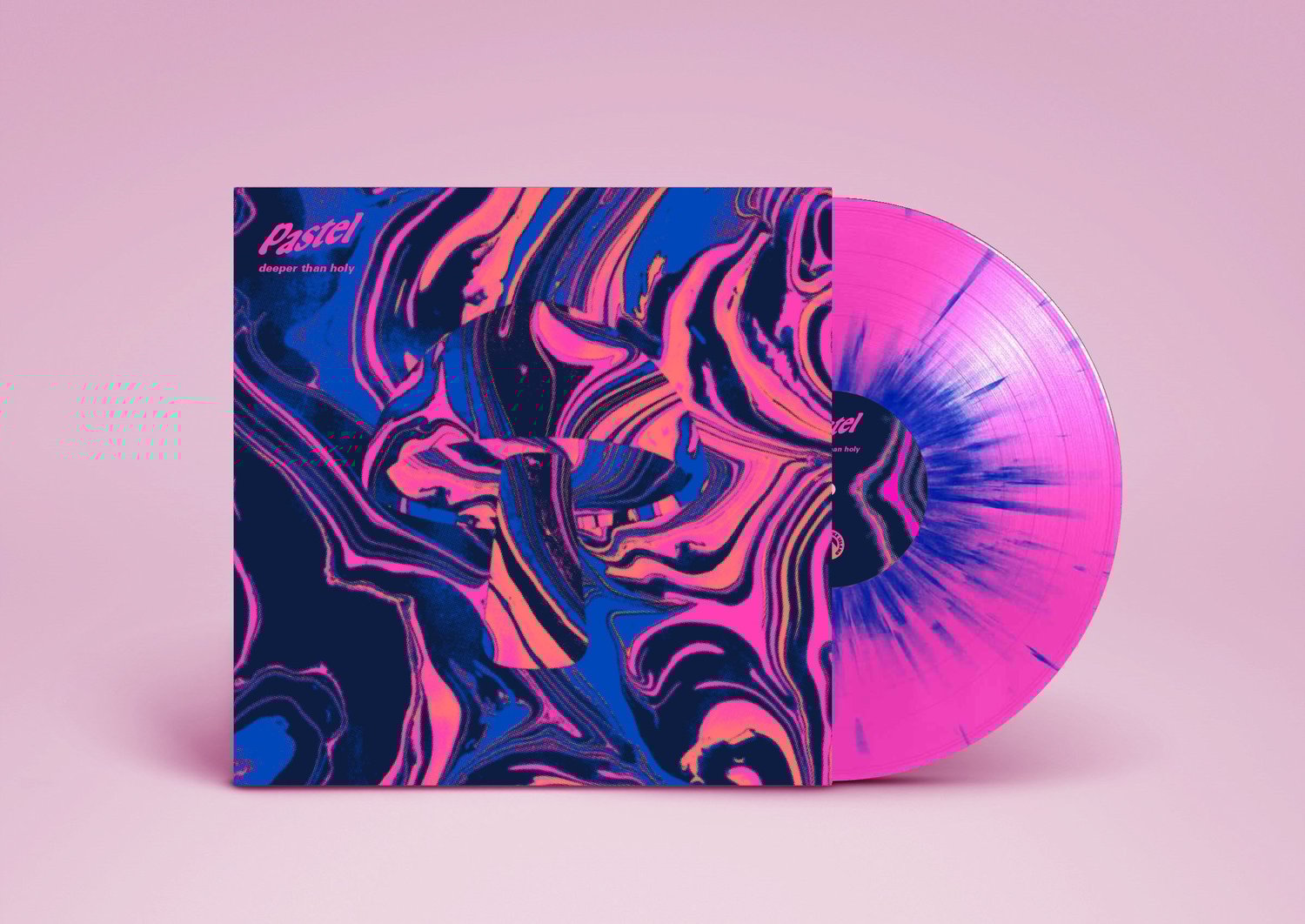
Spirit Of Spike Island Records are single handily relaunching and reinventing the Manchester thing. Their own band, Afflecks Palace took the simmering psychedelic guitars of the Roses debut and reinvented it for the now and took their debut album into the top 20 last week. Not content with that they were relating the tripped out guitar mantras of teenage Manc band who mash the Roses and early The Verve with current gurus like The Brian Jonestown Massacre into an unholy now!. This is the NEON PINK vinyl for “Deeper Than Holy” – the debut 4-track EP from Pastel, the UKs most exciting young guitar band.
“She Waits For Me” the new single from Pastel – released on Manchester indie label – Spirit Of Spike Island recordings.
Pastel will tour the UK in January 2022, Rescue Rooms – Nottingham, Thursday 13th January 2022. The debut Pastel EP – “Deeper Than Holy” which is Out Now.
Art School Girlfriend has delivered a cover of Prince’s “I Would Die 4 U”, which features backing vocals by fellow singer songwriter Marika Hackman.
On Boxing Day (26th December), Art School Girlfriend shared a cover of “one of my favourite Prince tracks” “I Would Die 4 U”.
The cover is Art School Girlfriend’s first outing since releasing her debut album “Is It Light Where You Are” arrived in September, and features Marika Hackman on backing vocals.
Art School Girlfriend, real name Polly Mackey wrote of the cover, “I’ve been tinkering with it for a while and finally finished it a few weeks ago – it’s an amazing song and I wanted to do it some kind of justice!”
A Wolf Tone Records release Released on: 2021-12-26 Producer, Performer, Vocals, Synthesizer Programming, Drum Programmer: Polly Louise Mackey Performer, Background Vocalist: Marika Hackman,
Over the years, Neil Young has gained a reputation for flitting from genre to genre. However during the height of his success and popularity, this reputation was a bit of an exaggeration. Most artists are known for having a singular distinctive sound; Neil Young, by contrast, was known for having two. There is the country-tinged, acoustic-based, singer-songwriter sound frequently recorded with his backing band The Stray Gators on albums like “Harvest”. And there is the proto-grunge, electric-based, sloppy rock & roll sound frequently recorded with his backing band Crazy Horse on albums like “Everybody Knows This Is Nowhere”. Like some of the grunge musicians he went on to inspire, Neil Young has a conflicted relationship with his own success. “”Heart of Gold’ put me in the middle of the road. Traveling there soon became a bore, so I headed for the ditch,” he wrote in the liner notes to 1977’s greatest-hits album, “Decade“. “A rougher ride but I saw more interesting people there.”
For the first ten years of his solo career Neil Young seemed happy and was doing well commercially simply by alternating between these two poles of his musical personality. However, by the early eighties things had started to run out of gas for Neil. His last two albums, 1980’s “Hawks & Doves” (an acoustic album) and 1981’s “Re·ac·tor” (an electric album) had not done so well and Neil left his long time label, Reprise for the untested waters of Geffen Records. That’s where Neil’s reputation for experimentation begins and mostly stays – at Geffen Records.
The three albums Young released after “Heart Of Gold” contain some of the darkest and most visceral songs he ever laid to tape, but the 80s were a rough ride for entirely different reasons, when Young released his string of experimental albums for his new label Geffen Records.
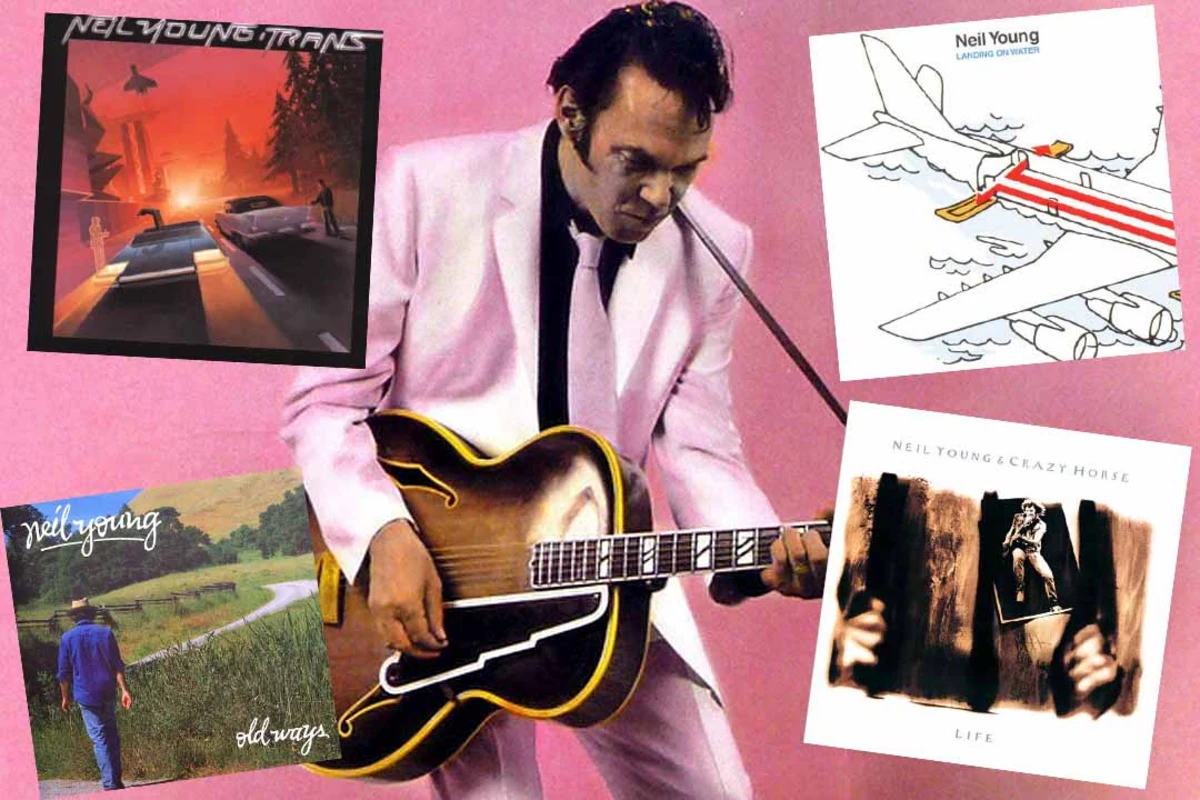
In 1982, Young left his long time label, Reprise, to join his friend David Geffen’s new, eponymous imprint. The five albums he released for Geffen are easily the most experimental in his discography, with Young swerving from one musical lane to the next. Yet there’s a lot to appreciate across on these records, and their best moments serve as a reminder that while Young could always be unpredictable in the studio, he was never uninspired.
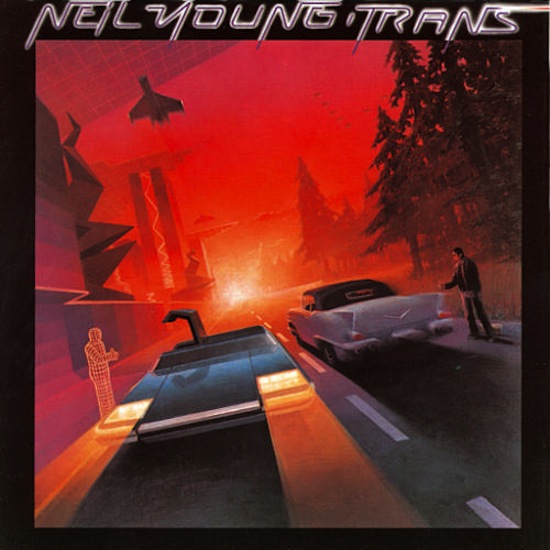
“Trans” (1982)
While he might have seen the new record label as chance to stretch out and experiment with something new, the first album that Young brought to the record company was in fact fairly “characteristic” of Neil Young. It was recorded in Hawaii and entitled “Island In The Sun”. Neil has described this album as “a tropical thing all about sailing, ancient civilizations, islands and water.” No one has been really specific about why Geffen rejected “Island In The Sun”, but I like to think that Geffen encouraged Neil to try something new and different, words that David Geffen would later regret.
So Neil recorded 6 songs in this neo-futuristic mould and mixed with three leftovers from “Island In TheSun” and submitted this record to Geffen.
You could write a short book unpacking “Trans” backstory, but, in brief: Young’s son Ben was born with cerebral palsy, which left him unable to speak (among other things) and required him to spend nearly two years in therapy. Intrigued by the idea that his son could learn to communicate through technology – and inspired by bands like Devo and Kraftwerk – Young threw himself into a synthetic new sound, laying Synclavier overdubs on top of rock instrumentation and singing through a vocoder to symbolise his attempts to communicate with his son. The result is an album that sounds at once glossy and corroded, like a clear topcoat applied to a machine that has already rusted through.
Perhaps part of the problem is that as much as Neil loved this sound, he hadn’t written enough material to record in this style. This would explain why Neil decided to re-record the Buffalo Springfield song “Mr. Soul” in this style. It also seems like Neil was hesitant to record anything in this style that wasn’t specifically written for this new futuristic genre. All of the new songs revolve around computers and robots and other sci-fi nonsense.
Initially seen as a misstep at the time of its release, on 29th December 1982, “Trans” has aged beautifully so much so that it no longer makes sense to call it an “underrated gem”. Its more raucous cuts, like “We R In Control” and “Computer Cowboy (AKA Syscrusher),” offer the same satisfying crunch as any Crazy Horse jam, while another song, “Sample And Hold,” splits the difference between Crazy Horse and Daft Punk. Even through a vocoder, Young’s plaintive tenor loses none of its emotive power, expressing the yearning at the heart of “Transformer Man” and “Mr. Soul.”
On the whole, “Trans” is an album about how technology was going to change – and has changed – the world we live in. But it’s “Little Thing Called Love” and “Hold Onto Your Love,” two of three holdovers from a scrapped project named “Island In The Sun“, that go back to Young’s therapy sessions with his son, as well as a theme he’s been writing about for his entire career: the power of love above all else.
“Everybody’s Rockin” (1983)
While listeners and critics scratched their heads in response to “Trans“, the higher-ups at Geffen wrung their hands. In an attempt to get their musical maverick back on track, they stipulated that Young’s next release be a “rock’n’roll album”. Neil for his part, gave them a record that returned to his old ways for their second album together. He even named the album “Old Ways“. However, much like “Island In TheSun”, Geffen was not happy and rejected this initial version of “Old Ways”. While Geffen had promised Neil artistic control, this was the second record of his that they had rejected, something that had never happened once at his old record label. The original “Old Ways”album had a lot of country on it, and Geffen wanted Neil Young to record a rock & roll album. In a streak of willful stubbornness and perversity, Neil took the three tracks from this album that hewed closer to the old-school rock & roll sound (“Wonderin’”, “Cry, Cry, Cry”, and “Mystery Train”) and recorded an entire record of early rockabilly and doo-wop styled oldies. The original “Old Ways” also included a version of “That’s AlrightMama” so clearly this was a direction that Neil was starting to head in anyway, but once again Geffen was regret what they asked.
The album they got, “Everybody’s Rockin”, was in fact a pure rockabilly album, complete with the rich reverb and backing vocals that characterized the genre in the 50s, and was cut in a little over a month with a group of players Young christened his band The Shocking Pinks.
Taken on its own terms, “Everybody’s Rockin’ is a fun blast from the past. Young faithfully recreates the rockabilly sound, and songs like the title track and “Kinda Fonda Wanda” would sound right at home on a jukebox. Young even went to the trouble of slicking his hair back into a pompadour for the cover photo and convening a genuine rockabilly band in The Shocking Pinks to back him up. While there are ten total tracks on the album, keeping with period’s aesthetic of sub-three minute pop songs, the album ended up being one of the shortest of Neil’s career, coming in at 25 minutes. There were an additional two songs planned for this release, “Get Gone” and “Don’t Take Your Love Away From Me” that were planned for this album, however Geffen got tired of Young’s shenanigans and cancelled the recording sessions. He and The Shocking Pinks also try their hand at a few covers – most notably Junior Parker’s “Mystery Train,” a song made famous by the original king of rock’n’roll, Elvis Presley.
Furthermore relations between Neil and his record company were going to be thorny at best until he was able to fulfill his contract and leave the label.
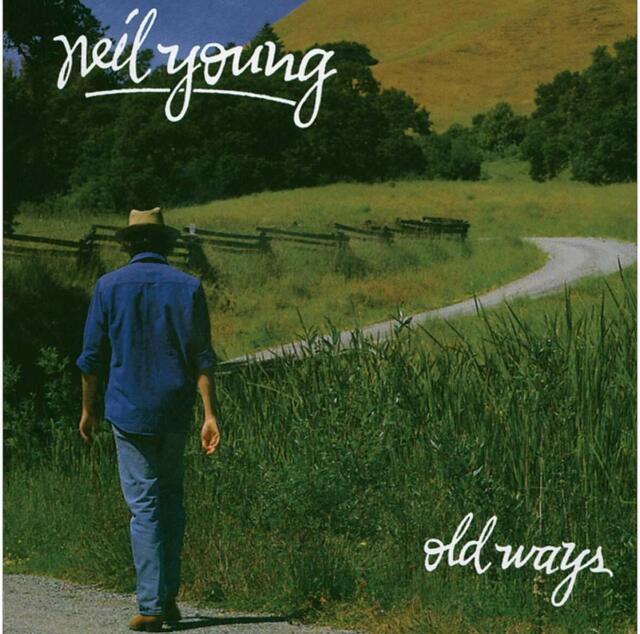
“Old Ways” (1985)
The first thing Neil released on Geffen post-lawsuit was a revamped version of “Old Ways“. Having used the less country sounding tracks for “Everybody’s Rockin” Neil decided to go full-bore into the country thing. While this I’m sure upset the suits at Geffen, unlike the electro-synth of “Trans” or the rockabilly of “Everybody’s Rockin’ this was not nearly as much of a stretch for Neil. Most of Neil’s acoustic albums had a touch of country to them, getting more pronounced over time. 1972’s “Harvest” was more of a straight ahead folk-styled singer-songwriter record, but his 1978 acoustic album “Comes A Time” flirted very heavily with the Nashville sound. In addition the new songs that were recorded in 1977 as “ChromeDreams” mutated into “American Stars ‘n Bars” were also very country-ish. These tracks all ended up on side one of “American Stars ‘n Bars“, while side two of 1980’s “Hawks & Doves” is another half-album of country-tinged acoustic rock. So this was not totally new territory that Neil was venturing into here, even if he was delving farther than before. Young had a version of “Old Ways” ready to go in 1983 but was forced to put it on hold in favour of his “rock’n’roll album”. He returned to the studio to make some adjustments to the record, adding some new songs and bringing in country music legends Waylon Jennings and Willie Nelson to sing along, before finally releasing the album on 12th August 1985.
While Young had recorded several albums in a country-rock style before (“Harvest, Comes A Time, Hawks & Doves”), “Old Ways” was (and remains) his furthest foray into pure country music – and he didn’t do it halfway, embellishing these songs with fiddles and even a Jew’s harp (the bouncy instrument you hear on “Get Back To The Country.”
As with “Everybody’s Rockin’, the most compelling reason to listen to “Old Ways” is to hear Young throw himself headlong into a genre he isn’t known for. There are a few moments where he wanders a bit too far into melodramatic, string-laden territory, but then there are also some truly lovely moments, like “Are There Any More Real Cowboys?,” an ode to “country families” and the working men who support them (“Not the one/That’s snorting cocaine/When the honky-tonks all closed/But the one/That prays for more rain”), and “Bound For Glory,” in which two lonely travellers find love on the road. Let’s put it this way: if you’ve got a friend who loves country music and has never heard Neil Young, this wouldn’t be a bad introduction.
“Landing On Water” (1986)
Released on July 28th 1986, “Landing On Water” sounds a little like Neil returning to the electronic sound of “Trans” only without the vocoder this time. While his previous three records all had very distinct and defined tropes that Neil was striving for, it’s hard to say even what he was trying to do with “Landing OnWater“. On one hand, maybe he was trying to craft a very contemporary and pop sounding album.
But maybe It’s hard to say what exactly Young was trying to accomplish with “Landing On Water“, which came out less than a year after “Old Ways”, on 21st July 1986. On one hand, it’s the most rock-oriented album that he released on Geffen, rocking even harder than his 1987 reunion with Crazy Horse, “Life”. But on the other hand, it sometimes feels more robotic and compressed than “Trans”.
That said, “Landing On Water” has its highlights. “Hippie Dream” is a bitter swipe at – you guessed it – hippie idealism, reserving some of Young’s sharpest barbs for former CSNY bandmate David Crosby (“Another flower child/Goes to seed”). “Touch The Night” is an anthemic, crushing number that ends with a guitar solo so thrilling that even the production does little to dampen it. And on “Pressure,” Young hits the same cold, brittle grooves that Joy Division and Gang Of Four used to build post-punk. It would be fascinating to hear a modern rock band try to bring “Landing On Water’s” retro-futuristic sound into the present.
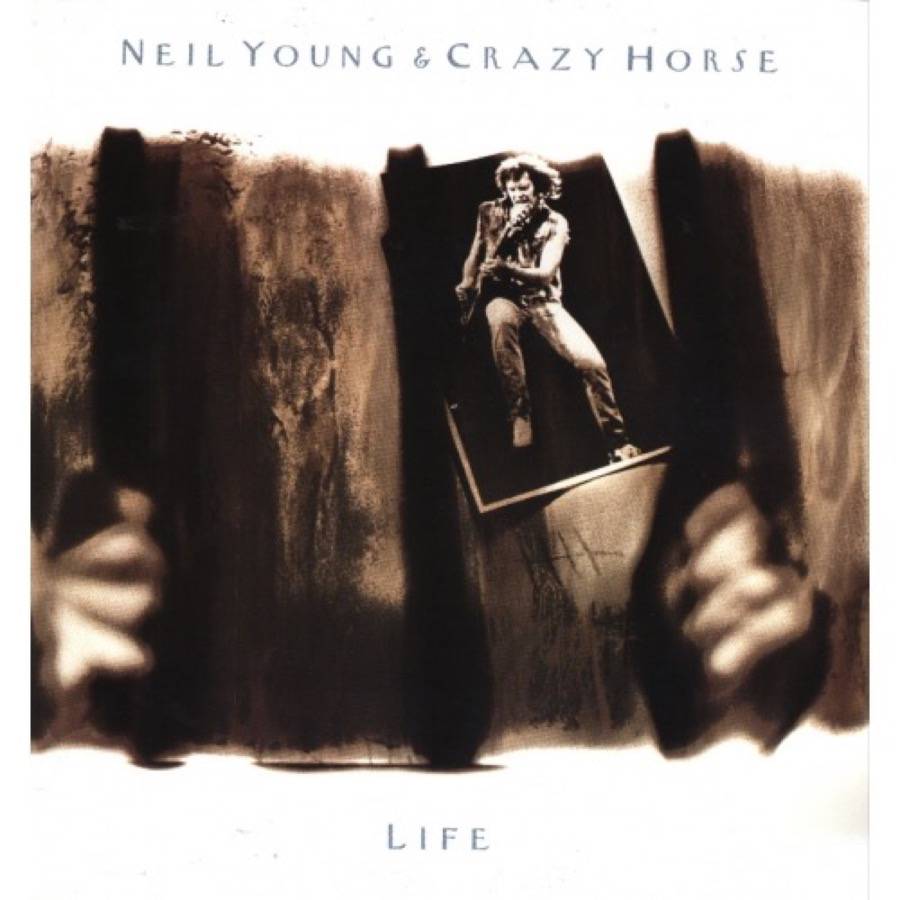
Life (1987)
Neil Young’s final album for Geffen, “Life”, is routinely ignored as one would assume it’s just another failed experiment like the other four Geffen releases. Truth is “Life” is pretty much just “characteristic” Neil Young. While the cover depicts a man in prison with the scrawled five chalk marks on the wall can be seen to represent the five albums that Neil owed Geffen in his contract, this album feels a little like Neil finally giving Geffen what they want: a typical Neil Young record. Neil even reunited with CrazyHorse on this album, recording it the same way they did “Rust Never Sleeps” in 1979. Instead of simply recording the songs in the studio, Neil and Crazy Horse played the new song live in front of an audience and then went back and took the audience noises off of the record to create the illusion of a new studio album. Young had little to do with his trusty backing band, Crazy Horse, in the 80s. They appeared on some parts of “Trans“, while many of the songs that would appear on “Landing On Water” were first attempted, unsuccessfully, with the group in 1984. In late 1986, Young brought the Horse on tour again, during which they performed several new songs live. Those songs would form the bulk of “Life”, released on 6th July 1987 as Young’s final album for Geffen, and his first with Crazy Horse since 1979’s “Rust Never Sleeps“.
After four albums of genre experiments, “Life” marked Young’s return to no-nonsense rock. All but two songs were recorded in an amphitheater, and it sounds like it. The material is stronger, too, starting with “Mideast Vacation” and “Long Walk Home,” two sobering tracks that address America’s hawkish approach to foreign policy as well as its human cost.
“Life” has some majestic slow-burners, such as “Inca Queen” and “When Your Lonely Heart Breaks,” and some fierce barnburners like “Around The World” and the pointed “Prisoners Of Rock’n’Roll,” all of which transcend their 80s production and stand as some of the best songs Young wrote that decade. It’s hard to say if anyone in the audience might recognize these songs if Young were to perform them live today, but it would be thrilling to see him dust them off. “Life” is easily the least memorable or interesting of the Geffen years. However it did accomplish Neil’s goal of fulfilling his contract allowing him to run back to the accepting arms of his old record company, Reprise Records.
Neil Young returned to Reprise Records in late 1987, but he wasn’t quite finished with the genre-hopping experimentation. In 1988, he released “This Note’s For You”, in which he put together a new band, The Bluenotes (complete with a horn section), and tried his hand at blues-rock. He wasn’t finished with being an anti-commercial crank, either. That album’s title track is a vicious takedown of corporate-friendly artists who are all too happy to sign their songs over to advertisers. The song’s music video featured a Michael Jackson lookalike with burning hair, which drove Jackson to threaten legal action.
While it would be difficult to argue that Neil Young’s Geffen years saw him at his artistic peak, one can be certain that he was making exactly the kind of music he wanted to. When the label sued him for making music that was “uncharacteristic of [his] previous recordings”, they had lost sight of what made him a rock legend: his refusal to rest on his artistic laurels, and his willingness to chase his muse down every road it leads him. No doubt NeilYoung would have made it easier on himself if he’d been willing to pursue a more commercially viable path in the interest of selling more records, but he wouldn’t be Neil Young if he did.