Desperate Journalist have just released latest single Resolution, a mix of noir power chords.
Singer Jo Bevan said, “The song was written in a hotel room after a New Year’s Eve party when I was feeling particularly peculiar, unable to drink and on a lot of codeine. New Years Eve is obviously an unusually heightened time to feel completely out of the loop with a group and when that happens to me, like everything else I can’t really cope with, I romanticise it into filmic fragments.
“The countdown to midnight was dramatized massively by the band we were watching (as is standard), and I couldn’t escape fixating on teenage thoughts like: how many cliched repetitive conversations/Fun Times you have with people on Significant Days of the Year, how emotionally awkward the midnight kiss was for so many of us, the people making big pointless romantic gestures, and the general warm frenzy of everyone else from the weird cold bubble of where I was. So broadly speaking, the song is about being detached and overstimulated.”
Glowering indiegoth melody crunchers Desperate Journalist have announced their biggest headline show to date at the Scala in Kings Cross on Thursday April 6th. Their terrific new single called Resolution is out now
Life After Youth is the first Land of Talk album since 2010’s Cloak and Cipher. After taking a few months off after Cloak and Cipher’s touring cycle, frontwoman Elizabeth Powell got back to work on a followup. Instead, a series of mishaps – post-tour fatigue, a crashed hard drive with new demos, and her father’s stroke in 2013 – turned “a few months” into “a few years”.
While caring for her father, Elizabeth fell under the spell of classical, ambient, and Japanese tonkori music, whose meditative quality aided his recovery. Immersing herself in those sounds would change her entire approach to music making; she started writing songs without her trusty guitar, instead building tracks up from synth beds and programmed loops.
Life After Youth’s centerpiece track, “Inner Lover,” presents the most radical results of those experiments. It’s an audio Rorschach test of a song: key in on the incessant synth pulse underpinning Elizabeth’s pleading vocal (“take care of me!”) and the track assumes an ominous intensity. But when you surrender to the relaxed drum counter-rhythm and subliminal harmonies, “Inner Lover” projects a graceful serenity.
Even the songs built atop more traditional rock foundations exist in that liminal space between dreaming and waking life, confidence and doubt, raw feelings and soothing sounds. “Yes You Were” opens the record with a cold-start surge that’s overwhelming in its immediacy, with Elizabeth’s furiously strummed guitar jangle and wistful lyricism bearing all the adrenalized excitement and nervous energy of seeing old friends (or, in her case, fans) for the first time in ages. And as its title suggests, “Heartcore” is a collision of soft-focus sonics and emotional intensity, with Elizabeth’s crystalline vocals hovering above a taut, relentless backbeat and disorienting synth squiggles. Even the turn-a-new-leaf optimism of “This Time” is presented less as a triumphant comeback statement than a warm reassuring embrace—its beautifully dazed ‘n’ confused psych-pop swirl acts as a calming force as you hurtle toward life’s great unknown.
Fitting for a song about reconnecting with the world, “This Time” was the product of another fortuitous reunion—between Elizabeth and her old friend Sharon Van Etten, who lent her songwriting smarts and heavenly harmonies to that track, as well as “Heartcore” and the Fleetwood Mac-worthy “Loving.” And Van Etten is just one member of a veritable indie-rock dream team Elizabeth recruited to complete the album: the moonlit ballad “In Florida” was recorded by producer John Agnello (Dinosaur Jr., Kurt Vile) in his New Jersey studio, with Elizabeth backed by former Sonic Youth drummer Steve Shelley and Roxy Music/Sparks bassist Sal Maida.
From the first moments of Trevor Sensor’s debut EP for Jagjaguwar, Texas Girls and Jesus Christ, the Illinois-born 22-year– old singer/songwriter’s distinctive burr of a voice sounds aged decades beyond his years. The rest of the young talent’s music follows suit, too, with timeless-sounding melodies and a sense of songwriting that exudes maturity while still feeling fresh.
Sensor wrote the music featured on Texas Girls and Jesus Christ on a borrowed acoustic guitar that he has yet to return, composing songs that sound deeply felt and from a place of truth and honesty. “If I’m trying to do anything, it’s to be sincere,” he says about his songwriting approach.”A lot of singer/songwriters today are oriented in irony. It’s cooler to be lackadaisical rather than to try to be compelling.”
Sensor’s music, above all else, is compelling the proclamatory howls that close out the piano-ed “Pacing the Cage,” the dark desolation of “Satan’s Man”, and the dynamic blowout of the EP’s title track grab your attention and refuse to let go. “I think it’s very boring when people choose one dynamic and go with it,” Sensor opines on the full-band jolt that takes place in the thrilling back half of “Texas Girls and Jesus Christ. “It’s more interesting to me when people try to mix things up and treat every song as if it were its own person.”
“Songs are gateways into little worlds, and different worlds do different things,” Sensor states regarding his approach to songwriting…
Trevor Sensor – title track from the ‘Texas Girls and Jesus Christ’ EP out March 25th, 2016.
From the first moments of Trevor Sensor’s debut EP for Jagjaguwar, Texas Girls and Jesus Christ, the Illinois-born 22-year– old singer/songwriter’s distinctive burr of a voice sounds aged decades beyond his years. The rest of the young talent’s music follows suit, too, with timeless-sounding melodies and a sense of songwriting that exudes maturity while still feeling fresh.
Trevor Sensor has to date released two excellent EPs . Since playing those to EPs to death, I’ve been looking forward for his full-length LP. Seems we’re getting close. Check out the video and see what Sensor says about the tune. I really dig this dude.he has an incredible passion in his vocal , So I’m Looking forward to much more.
“The Money Gets Bigger” was produced by Foxygen’s Jonathan Rado at Steve Albini’s Electrical Audio studio in Chicago, IL. The song features Rado on organ and backing vocals with Julien Ehrlich (drums & backing vocals) and Max Kakacek(bass) of Whitney as his rhythm section.
Sensor explains the inspiration behind this song is, “An observation of America – the horrors that occur in a society at large, and behind the closed doors of dysfunctional family homes. It’s a need for something – the yearning to be somebody people admire and adore in a world that seems void of significance. To find meaning in the limelight, and the despair we all feel when we are not the chosen ones to bask in it. In America, this is our brass ring – to be applauded for our supposed efforts and be beloved by strangers.”
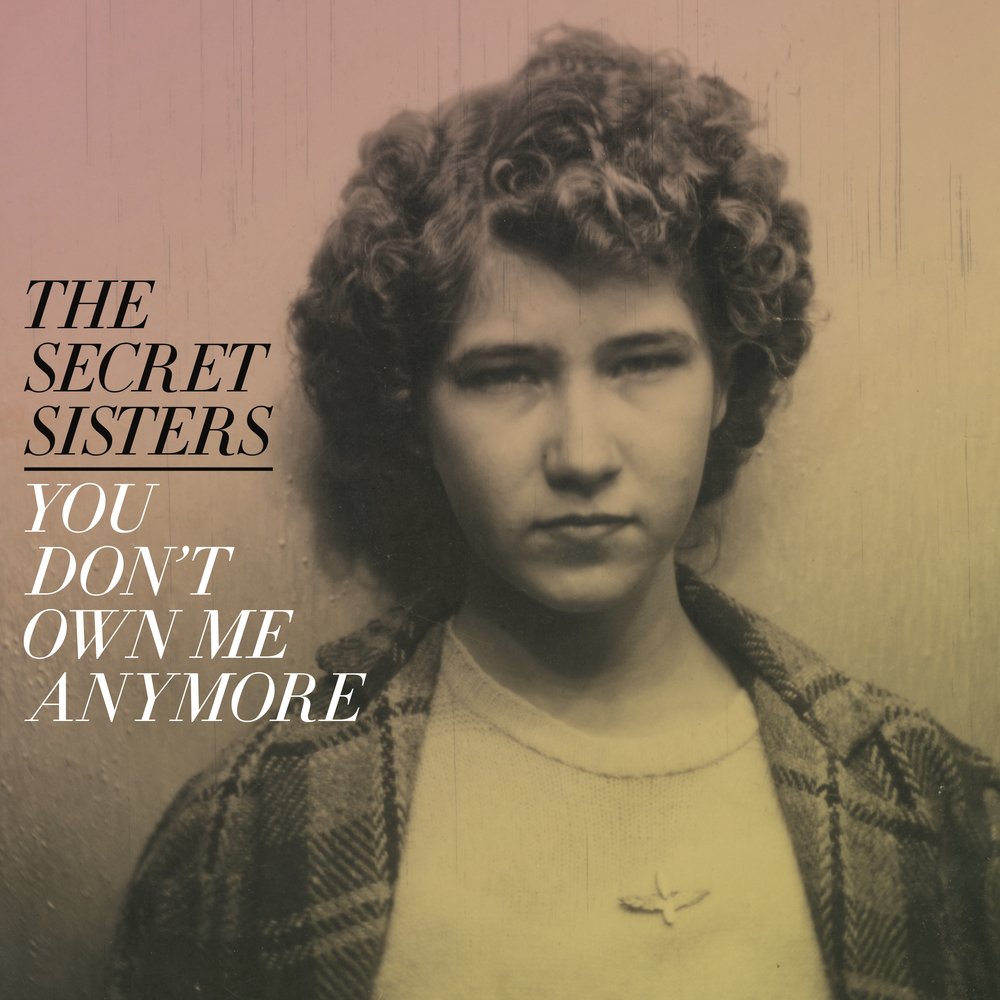
Sisters, Laura and Lydia Rogers, have signed to New West for their third album. After almost succumbing to the nasty music industry, they were thrown a lifeline by Brandi Carlisle, who wound up producing their new LP.
The end product finds the sisters taking their music to new places, with soulful, gospel grooves and stirring vocal performances that never seek perfection over power. It’s a document of hardship and redemption, of pushing forward when it would be so much easier to drown in grief. And it’s a story about how passion and pure artistry can be the strongest sort of salvation. “The only way we could have completely healed was to have written an entire record,” says Laura. “I think we were just in the wrong parts of the machine,” says her sister. “We feel like we have learned where not to be, and where to go.
Filmmaker Andrew Dominik explains how he worked with singer in wake of the death of the Bad Seeds band leader’s son NicK Cave have shared the official video for “Steve McQueen,” a spoken word piece featured in the documentary “One More Time With Feeling” but left off the accompanying LP Skeleton Tree .
The black-and-white clip from the harrowing Andrew Dominik-directed film shows Cave and his Bad Seeds rehearsing the Skeleton Tree track “Girl in Amber” while the singer recites his foreboding poem in voice over.
“I’m a housefly called ‘God,’ and I don’t give a fuck/ Here I come up the elevator, 60 floors, hoping I don’t get stuck/ And everyone out here does mean, and everyone out here does pain/ But someone’s got to sing new stars, and someone’s got to sing the rain,” Cave says. “I’m the atomizer, I’m the vaporizer, I turn everything to crud/ I like it here in your flesh and blood.”
One More Time With Feeling arrived on DVD, Blu-ray and 3-D Blu-ray today. On May 5th, Cave and the BadSeeds will release the box set “Lovely Creatures” , a 3CD/1DVD collection that culls the band’s greatest hits and fan favorites from 1984 to 2014.
One More Time Feeling is a feature film about the making of Nick Cave & The Bad Seeds’ acclaimed SkeletonTree directed by Andrew Dominik (Chopper, The Assassination Of Jesse James By The Coward Robert Ford). Visually unique, One More Time With Feeling is a stark, fragile and raw documentary. Shot in 3D, color and black & white, the film probes the deeply personal circumstances surrounding the making of Skeleton Tree (the band’s 16th studio album) and features interviews and live performances by the band in the studio, along with interjected voice-over commentary by Nick Cave. This double-disc release features three exclusive short films from Andrew Dominik.
Led Zeppelin were enduring a period meant to be spent celebrating their mid-’70s successes that instead had turned into a maze of tax issues, injury and drug use.
The band pushed forward, writing and recording an emotion-packed seventh album that returned the group to its hard-blues roots. This focus on urgency ran counter to the sense of experimentalism that drove their more recent albums, but there didn’t seem to be any other way. In some ways, nothing was going right. They wrote in Malibu and recorded in Germany, since the group had become tax exiles from their native U.K. Robert Plant arrived for the sessions in a wheelchair, while still recovering from a scary automobile crash in Greece. When time grew short, Jimmy Page was forced into a marathon of dubbing and mixing.
“Nobody else really came up with song ideas,” the guitarist said in “Light & Shade: Conversations With Jimmy Page”. “It was really up to me to come up with all the riffs, which is probably why [the songs were] guitar-heavy. But I don’t blame anybody. We were all kind of down.”
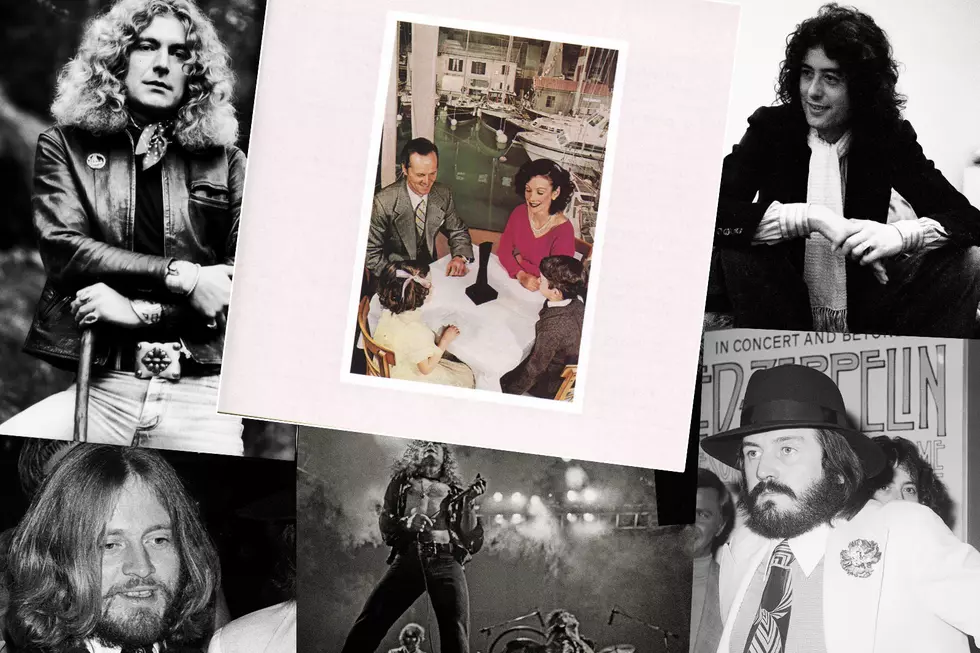
“Presence” was the seventh studio album by the English rock band Led Zeppelin , released by Swan Song Records on 31st March 1976. The album was a commercial success, reaching the top of both the British and American album charts, and achieving a triple-platinum certification in the United States, despite receiving mixed reviews from critics and being the slowest-selling studio album by the band
“It was taken from the balls, you know,” Plant said of Presence. “It was a cry from the depths, the only thing that we could do.” It’s Led Zeppelin’s most tightly focused record: seven tracks, no acoustic songs, no keyboards, just jewel-hard power – from the frantically charging “Achilles Last Stand” to “Nobody’s Fault but Mine,” a variation on a Blind Willie Johnson song where the band turns its firepower on itself.
“Presence was pure anxiety and emotion,” said Page in 2006. “We didn’t know if we’d ever be able to play in the same way again. It might have been a very dramatic change, if the worst had happened to Robert. Presence is our best in terms of uninterrupted emotion. Along the way, however, John Paul Jones receded into the musical background. He was moving toward a breakthrough on the Yamaha GX-1 synth, something that would define the next Zeppelin album, 1979’s In Through the Out Door. But in the meantime, his quieter demeanor served to hardened the album’s edges.
They had reason to be frustrated. After the August 1975 car accident that confined Plant to a wheelchair for months, Led Zeppelin had to cancel an American tour. Unable to return to England for tax reasons, they developed the core of the album “Presence” in rehearsals at Los Angeles’ SIR Studio in October, then headed to chilly Munich, Germany, to record in the hotel-basement studio Musicland. From the start, the group knew they wouldn’t have long (the Rolling Stones had already reserved Musicland to add overdubs to their forthcoming Black and Blue album in early December). So they blasted through the recording process in 18 days, with Plant often singing from his wheelchair.
Page asked the Stones if he could have a little more time to finish guitar overdubs; he reportedly stayed up around the clock for two days to get them done, with “Achilles Last Stand” occupying the first day and everything else the next. Though it didn’t come with any major hits, Page called it Zeppelin’s “most important album”: bleak, bruised and crackling with electric fury.
Like In Through The Out Door, Presence was recorded during a period of time when Robert Plant was recovering from a car accident, with the normally charismatic frontman recording his vocals from the confines of a wheelchair. Despite this, the record still sounds like classic Led Zeppelin, though its sales ended up being some of the worst the group had seen during their career.
Due to the strong presence of Jimmy Page throughout the recording of the record, the record sounds less like a group effort, and more of a bluesy solo record from the guitarist. With John Bonham throwing down some stunning rhythmic answers to Page’s blistering guitar-work on tracks like ‘Achilles’ Last Stand’ and ‘Nobody’s Fault But Mine’, Presence still shows Led Zeppelin as the dominant force they always were.
Here’s a deeper dive into those tracks, as well as the five additional songs that make up “Presence”.
“Achilles Last Stand”
Plant alluded to Zeppelin’s tax-exile status in the song’s opening line, the first hint at how autobiographical Presence would become: “It was an April morning when they told us we should go, and as I turned to you, you smiled at me, how could we say no.”
He and Page had traveled to Morocco in the summer of 1975, drinking in exotic local settings and music that inspired the guitar parts – and some of Plant’s more esoteric musings on this track. But Plant’s working name for it (“The Wheelchair Song”) served as a sad admission. He also ultimately chose a title that winked at his car accident, which severely injured his ankle: Achilles, a hero of the Trojan War, was brought down by an arrow to the heel.
A one-of-a-kind Led Zeppelin studio project was underway. “There won’t be another album like it, put it like that,” Plant told Circus magazine at the time. “It was a cry from the depths, the only thing that we could do.”
Part of Page’s brisk post-production work included piling up no less than six guitars on “Achilles Last Stand.” “It was so focused,” Page said of the sessions in a 2015 talk with the Toronto Sun. “And it was defiant, if you like, to the set of circumstances.”
Jones, in a rare spotlight moment, added a distinctive alembic eight-string bass line. But they were no match for John Bonham, whose eruptive drum work serves as the lead instrument for roughly the first half of “Achilles Last Stand.” It’s a crowning musical achievement that opened the door for the kind of shifting time signatures that would dominate the next wave of British heavy metal.
“For Your Life”
Bonham was still front and center, unleashing monstrous but surprisingly limber polyrhythms on this heavy studio improv. With little unused material in hand, the narrative also dealt in the here and now. In fact, “For Your Life” was mostly arranged at Musicland, though it remained a furious attack on the now-empty excesses of the Los Angeles-era setting where Plant and Page composed the bulk of Presence. Plant darkly references plasticine relationships and rampant drug use that were so widespread in the “city of the damned.” He later described “For Your Life” as “a bitter treaty with rock ‘n’ roll.” Page matches Plant’s venomous attitude strum for angry strum.
“Royal Orleans”
Six of the seven songs on Presence were composed by Plant and Page, while the rumbling stop-start “Royal Orleans” is credited to all four members. In Led Zeppelin: The ‘Tight but Loose’ Files, Page said moments like this “proved to us once and for all that there was no reason for us to split up. I can’t think of many groups who have been going as long as we have, [and] who still have that spontaneity about them.”
Lyrically, Plant returns to raucous times out on the concert trail, with a title that references a signature French Quarter inn and a narrative that recounts a particularly salacious road story. “We rolled a joint or two, and I fell asleep and set fire to the hotel room, as you do,” Jones told Mojo in 2007, with a laugh. “And when I woke up, it was full of firemen!” Still, there’s something almost wistful in the retelling by a hobbled and homebound Plant.
“Nobody’s Fault but Mine”
In the 1928 original, Blind Willie Johnson worried that his sightlessness would draw the wrath of God, since he’d been rendered unable to read the Bible. Plant and Page transformed “Nobody’s Fault but Mine” into the stammering retelling of their own fall from grace.
If all of this sounds rather nostalgic, too, there’s no indication in the music: Plant’s positively vitriolic harmonica solo is anything but introspective. “‘Nobody’s Fault but Mine,'” he admitted in Jon Bream’s Whole Lotta Led Zeppelin, “was very spiky – a lot of clinched teeth.”
Meanwhile, Page seemed to have based this new arrangement on an acoustic version released in the late-’60s by the late John Renbourn. But he took things up a notch – actually several notches – by triple-tracking the intro, using a phaser while playing one guitar an octave higher. A song that can came off at times like a loose jam was actually a carefully constructed bit of choreography.
“Candy Store Rock”
Led Zeppelin had been carrying around the seeds of this song since their Houses of the Holy dates. Back then, they’d dabble in an improvisation during “Over the Hills and Far Away” that now found a home as the middle section of the ’50s-influenced “Candy Store Rock.”
Plant’s echo-heavy rockabilly approach is in tribute to Ral Donner, an unabashed Elvis Presley clone, and a needed moment of levity on such a serrated, brutally honest album. For Plant, it represented another kind of push back against the fates.
“Against the odds, sitting in a fucking chair, pushed everywhere for months and months, we were still able to look the devil in the eye and say: ‘We’re as strong as you and stronger, and we should not only write, we should record,'” Plant told Creem at the time. “I took a very good, close scrutiny of myself and transcended the death vibe – and now I’m here again.”
Though clearly an odd man out, “Candy Store Rock” ultimately points to the throwback sensibility that powered succeeding post-Zeppelin projects like 1984’s The Honeydrippers: Volume One and 2002’s Dreamland.
“Hots On for Nowhere”
One of the most hooky Led Zeppelin moments ever, “Hots On for Nowhere” also developed from an earlier scrap of an idea. Page’s riff appeared on the then-unreleased “Walter’s Walk,” but otherwise the track was the product – both literally and figuratively – of time spent in Malibu.
Plant clearly felt abandoned during his time of convalescence, mentioning friends who “give me their shoulder” or (worse) “who will give me fuck all.” No surprise that he’d subsequently describePresence as “really like a cry of survival.”
Page then quickly crafted a tough, if customary, solo – that is, until he unleashed an eye-popping twang in the middle, courtesy of the tremolo arm on a Lake Placid Stratocaster that was reportedly borrowed from Gene Parsons of the Byrds. The song’s odd time signature was later refashioned for “Pride and Joy,” from 1993’s Coverdale/Page collaboration. Page also returned to “Hots On for Nowhere” during U.S. tour dates with the Black Crowes in 2000.
“Tea for One”
Led Zeppelin’s self-titled debut found Page in firm control, as the band rekindled the purpose and fire of blues without resorting to the genre’s basic structures. Same here, as Led Zeppelin end a hard-charging album in the only way they could: with a harrowing exploration into the depths of alienation while separated from family.
“I was just sitting in that wheelchair and getting morose,” Plant later admitted. “‘Tea for One’ was very personal. I couldn’t get back to the woman and children I loved. It was like, Is this rock ’n’ roll thing really anything at all?”
Loose early tries found Plant quoting Willie Dixon and Cab Calloway, before the band leveled it up into a menacing blues. That meant a return to brutally honest autobiographical themes, while a double-tracked Page amplified every anguished cry.
“All our pent-up energy and passion went into making it,” Page said of Presence in Led Zeppelin: The ‘Tight but Loose’ Files. “That’s why there was no acoustic material there. The mechanism was perfectly oiled. We started screaming in rehearsals and never stopped.” The Band:
48 years ago today, on January. 12th, 1969, music changed for many people. It was on this day that Led Zeppelin released their debut LP . Of course, critics panned the record, but to the record buying public, well they never listened to critics anyway. It only takes the first two seconds of the first song on their first record for Led Zeppelin to make crystal clear exactly what they intend to do – and exactly what they intend to do to you. In the opening to “Good Times Bad Times,” the band drops a two-note attack that falls like a cartoon safe, clearing the air for JohnBonham’s syncopated groove, Jimmy Page’s swift-sword guitar and Robert Plant’s high-end howling about sex so loud it gets the neighbors talking. “It really wasn’t a pretty thing,” Plant later said. “It wasn’t supposed to be a pretty thing. It was just an unleashing of energy.”
just a few weeks before their album’s release — opening for Vanilla Fudge and Spirit. Although booking agent Ron Terry had to beg promoter Barry Fey to add Led Zeppelin to the already-sold out show, the band did not disappoint. “You didn’t have to be a genius to know that Zeppelin was going to be a smash,” he later said. “Oh, my God. People were going crazy!” Rock station KLZ was so jammed with calls the next day that Fey had to run a copy of the unreleased self titled album to them, where it played for an entire day.
We could go on for days on the impact that this record had at the time and still has to this day, but you all know that. Just 3 of the songs “Your Time is Gonna Come”, “Good Times Bad Times” and “Communication Breakdown” were Led Zeppelin originals. When Led Zeppelin debut album was released in January 1969, it went to the Top 10 in the U.S. and the U.K. charts, despite lukewarm reviews. The enormity of Zeppelin’s innovation wasn’t entirely easy to recognize. In an era of spiritual transcendence and tales of brave Ulysses, they’d flipped teenage rock & roll’s sex-zonked mania into something huge and seething and mythic- bestial. Eastern mysticism and Mordor and prom-ruling radio gold would all come later.
Page’s vision for the album was so clear that they recorded the entire thing in just 30 hours. “I financed and completely recorded the first album before going to Atlantic,” he later said . “It wasn’t your typical story where you get an advance to make an album: We arrived at Atlantic with tapes in hand.” The result was a new, uncompromising sound and unabashed rock star lifestyle, paving the way for everything from prog-rock to heavy metal.
Led Zeppelin was born from the ashes of the Yardbirds. They had disintegrated in the summer of 1968, leaving guitarist Jimmy Page with the rights to the name — and a series of shows in Scandinavia he was contractually obligated to complete .So he recruited Robert Plant, John Paul Jones and John Bonham, and the four toured as the New Yardbirds. But by the time they entered Olympic Studios in London in late september 1968 , they had moved their sound away from English folk-rock, into the blues-influenced band Page had always wanted, and soon had a new name, Led Zeppelin, as well.
As with so many great records, when it first came out the critics didn’t care for it. Therefore many people knew it would be good.
On January. 12th, 1969, Led Zeppelin released their self-titled debut LP “Led Zeppelin” in the US. It wouldn’t be released in the UK until March 31st. The LP combined Blues and Rock and was very well received by music fans. A number of the songs were ‘borrowed’ from older Blues musicians who at first were not given any credit.
It was an incredible record that changed the way many looked at Rock music.
Robert Plant (vocals/production); Jimmy Page (guitar); John Paul Jones (bass); John Bonham (drums)
This was show Number 5 in as many days, at the start of a six-week tour that took us in a circle around the US, with a few stints into Canada as well. The trip ended up being about 13,000 miles total. Day 5 and we had already traveled from Durham to Asheville to Nashville to Atlanta to New Orleans to Austin. “Honkin’ down the gosh darn highway,” visiting these cities quickly, almost rushed, stopping long enough to preach the gospel of Heart Like A Levee to those who were hip, those who were ready. Heart Like A Levee hadn’t yet been out in the world for two weeks, so the eagerness to preach was strong. We were anxious for people to hear it.
We were tired, understandably, but excited. Morale was high. We were on an adventure.
I was just happy to be included on the team, a newbie on my first tour, away from my fiance (now wife) for the longest stretch of our entire relationship, forging a new, personal relationship with one of my longtime favorite bands – dudes who, aside from a few shows we’d worked together in previous years and a small handful of email exchanges, existed mostly through speakers & on vinyl records. Lucky me to be in the presence of such talent, such inspiration, such GOODness. I loved every damn second of that tour.
Hiss Golden Messenger turned a corner at The Parish and it was obvious. To me, at least, but I like to think the crowd knew something special was happening too. They were attentive and appreciative. The energy on stage during HGM’s set was gelling very nicely and it was noticeable early in the show, within the first few songs. It felt different than the four previous nights. Looser, but tighter, if that makes any sense. Mike even makes a comment about that during the set. “Finding the rhythm.” Listen to the show and you’ll get it, you’ll hear it.
Scott was celebrating another trip around the sun, so there was a pep in the step because of that. HB brother Scott!
We were brought Torchy’s Tacos for dinner by a friend of the band. We were fueled up!
We had a couple earned days off following this show before the next gig in Phoenix, with fun stops planned in the cosmic West Texas town of Marfa, and the beautiful White Sands National Monument in New Mexico. We were looking forward to visiting these places and to have some down time.
But we were looking forward to the gig that night at The Parish even more and it showed. Goddammit it showed.
Like I said, morale was high, and it stayed that way.
Hiss Golden Messenger Live October 18th, 2016 At The Parish Austin, TX Setlist
01: As The Crow Flies
02: Biloxi
03: Saturday’s Song
04: Mahogany Dread
05: Day O Day (Love So Free)
06: Tell Her I’m Just Dancing
07: Heart Like A Levee
08: Happy Day (Sister My Sister)
09: Like A Mirror Loves A Hammer
10: Drum /// I’ve Got A Name For The Newborn Child
11: Red Rose Nantahala
12: O Little Light
13: Say It Like You Mean It
14: Cracked Windshield
15: Lucia
16: MC Speaks
17: Southern Grammar
18: John The Gun
–ENCORE–
19: Brother, Do You Know The Road?
MC Taylor – vocals, guitar Phil Cook – keys, guitar, vocals Ryan Gustafson – guitar, banjo, mandolin, vocals Scott Hirsch – bass Darren Jessee – drums
Recorded by Luc Suer & Warren Parker
Mixed by BJ Pendleton & Warren Parker
Artwork – Jonas Britt