Radiohead are in full on nostalgia mode around the 20th anniversary of their career-defining “OK Computer”, album release due the end of this month ,  they’ve just dished out a live version of an outtake that has gone largely under-appreciated in the wake of the album’s release.

“Normally, I don’t think we’re the sort of people to look back, but it was interesting when we did…” Thom told the crowd, adding “what a bunch of nutters we were, and probably still are.

“One of the crazy things we did was not release this song, because we didn’t think it was good enough,” he finishes, before easing gently into a track that not many Radiohead fans has heard live for over two decades.

Listening to the track side by side, Thom’s powerful yet delicate voice sounds as if it could have been plucked from 20 years ago, too – or perhaps even a little richer with age. Either way, this is how an anniversary celebration is supposed to be done.

“I Promise” is one of 3 previously unreleased tracks from the album OK Computer OKNOTOK 1997 – 2017 – 20th Anniversary album release.

Image may contain: 3 people, indoor

After an attention-grabbing 2016, Bendigo three-piece Fountaineer have returned with a beautiful new clip for their anthemic track ‘The Cricketers’, hot around their hometown and directed by Melbourne’s Claire Nica.

Steeped in energetic melancholy, ‘The Cricketers’ is a swelling, emotive piece that serves to further the band’s claim as the perfect intersection between the nostalgic charm of a small town outfit, and the sort of sound that can now fill an arena. ‘The Cricketers’ is not really about sport at all. It’s about adolescence, relationships, and mateship. It’s about arriving at a crossroads and trying to find your place in a town amongst people you’ve known your whole life.

Taken from their upcoming debut LP, the track has recently joined the rotation on triple j Radio​, and the former Unearthed winners are celebrating with some special free Sydney and Melbourne shows on July 14th & 15th

‘The Cricketers’ is out now through 1825 Records,

Image may contain: 3 people

Enderby’s Room is fiddle player Dan Mayfield, once from rural Lincolnshire, but he has now found home living in London. His folk tinged songs reflect on his traditional folk upbringing. Mayfield has played violin for many artists including Daniel Johnston, Darren Hayman, The Wave Pictures, Allo Darlin’ and the Belles of London City morris dancers.

Over the past ten years he has gently built up a collection of his own songs, which he performs with his band Enderby’s Room. The name comes from an Anthony Burgess character called Mr Enderby who composed his prose inside the toilet. The band’s make up has been constantly evolving; around 30 different individuals have been a part of Enderby’s Room over the last decade, before settling on the current 5 piece lineup.

Enderby’s Room’s sound features a Victorian pedal harmonium, together with French horn, double bass, ukulele, guitar and percussion.

The artwork for the record was created by Johnny Voss whose style involves using a continuous single pen stroke to create his illustrations.

As well as Enderby’s Room, Mayfield set up School of Noise which encourages young people to be creative with sound, using unusual noise making and sound sculpting machines. This project has seen him take workshops to the Green Man and End of the Road festivals as well as the Southbank Centre, Museum of London, Great Ormond Street Hospital and primary schools around the country.

http://

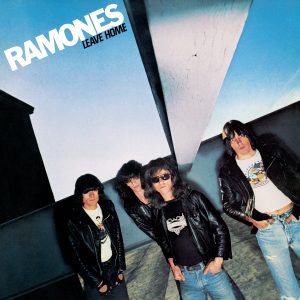
Last Years deluxe box set of the debut self titled album from the Ramones looks to be the first in a series! Rhino Records today announced a rarity packed 3CD/1LP edition of the band’s second album, 1977’s “Leave Home”, for release this summer.

“Leave Home” was a progression for the Forest Hills punk quartet: with more diverse songs written independently by the band instead of devised in the studio, with a budget nearly doubled from the sessions for Ramones (plus a big shot producer, Tony Bongiovi, assisted by drummer Tommy Ramone); and even the first steps toward a consistent design (with the back cover featuring a take on the United States’ Great Seal designed by Arturo Vega, still the go-to logo for the band). Though neither critical nor commercial reception as matched its predecessor, but the band did score its first minor chart hit with non-LP track “Sheena is a Punk Rocker,” later appended to the album after legal issues prevented the use of the track “Carbona Not Glue.” (“Sheena” was later re-recorded for the group’s third album, Rocket to Russia, in 1978.) The album also featured favorites like “Gimme Gimme Shock Treatment” and “Pinhead,” which featured the infamous nonsense lyric “Gabba Gabba Hey,” a rallying call for fans from that point forward.

With the reissue of Ramones in 2016 featuring a considerable amount of previously released bonus material, including the live performance included on Rhino’s expanded edition of Leave Home in 2001, this new box features a wealth of previously unreleased bonus content:

http://

http://

  • Leave Home engineer and longtime band collaborator Ed Stasium has newly mixed the album, adding some of the power they felt was missing from the original mix. This mix will sit alongside the original on the box’s first disc and will also be pressed on an accompanying LP.
  • A dizzying 33-track bonus disc offers a treasure trove of content from the Leave Home sessions, including rough mixes of the entire album from recording location Sundragon Studios, an additional 18 alternate mixes and instrumentals, both sides of the “Sheena is a Punk Rocker” single and the track “Babysitter,” which replaced “Carbona Not Glue” on U.K. pressings of Leave Home.
  • The set concludes with a previously unreleased set recorded at the legendary CBGB’s in April of 1977, three months after the release of Leave Home.

The set, limited to 15,000 copies, will be packed in a 12″ x 12″ box and feature new liner notes that include commentary from Ed Stasium and band manager Danny Fields (as told to rock writer Michael Azerrad). For those who just want the new remaster, it’s also being pressed on a standalone CD. Both packages will be available July 14th.

Leave Home: 40th Anniversary Deluxe Edition (Sire/Rhino, 2017)

3CD/1LP box set.

There’s an interesting mix going on with Los Angeles quartet The Black Watch. On the one hand their new single ‘Way Strange World’ starts out with a indie rock  sound . On the other hand, their vocalist John Andrew Fredrick brings a gravity and intensity to thier sound.

As bouncy as the track gets, it never loses an essential depth that keeps the track on the earnest straight and narrow. This is mirrored in the music video, which with its sepia tone and faux Super 8 appearance creates a nostalgic and emotional counterpoint to the song.

Leading the band is the multi faceted and talented John Andrew Fredrick. Spending his time making music, writing books, working as a university English lecturer, playing tennis and painting, Fredrick is a real paragon of creativity. When I saw he writes books I don’t just mean for the laugh either. His new novel Your Caius Aquilla was released on April 11th and his first non-fiction title Fucking Innocent: The Early Films of Wes Anderson is set to be released on July 11th.

“The response to the new LP has been overwhelming, to say the least, especially considering we had quite modest expectations going in to the studio and a very casual approach to recording it,” notes John Andrew Fredrick. “I imagine its significance has to do with the astonishing guitar work of new lead guitarist Andy Creighton, and my incapability of stopping writing indie pop songs, despite the fact that all last year all I did was listen to classical!”

http://

The second single from Buckingham McVie, “Feel About You,” pleasantly recalls sounds of Fleetwood Mac‘s perfect pop confections on 1987’s “Tango In The Night” . It’s fitting, since that was also the last time Lindsey Buckingham and Christine McVie shared studio space.

Their new song, which follows Buckingham’s “In My World” as we await Buckingham McVie’s first ever recording as just a duo. Lindsey Buckingham/Christine McVie is set for release on June 9th; the album also features Mac bandmates Mick Fleetwood and John McVie .

The music grew out of reunion sessions following Christine McVie’s return from a lengthy retirment. When Stevie Nicks declined to participate, citing her own solo obligations , Buckingham and McVie decided to release their stuff separately from the band.

“We were exploring a creative process, and the identity of the project took on a life organically,” Buckingham said . “The body of work felt like it was meant to be a duet album. We acknowledged that to each other on many occasions, and said to ourselves, ‘What took us so long?!!’”

So, basically, Lindsey Buckingham/Christine McVie is a Fleetwood Mac record minus one key member. Nothing new for the often-splintered group: 1990’s Behind The Mask was made without Buckingham, 1995’s Time without Buckingham and Nicks and 2003’s Say You Will  (which followed the reunited band’s 1997 live comeback, The Dance without Christine McVie. And like the albums made over the past quarter century, there are some good moments, some underwhelming ones and some missed opportunities

Nicks is clearly missed at times, especially her part in the vocal trio’s harmonies. But Buckingham — one of music’s most undervalued guitarists, singers, songwriters and producers — checks in with some of his most engaging songs in years. And McVie, who last released a solo record in 2004, sounds revitalized following her long absence from the studio.
Buckingham and McVie shared vocals on a number of Fleetwood Mac band favorites over the years, including “Don’t Stop” from 1977’s “Rumours” “Think About Me” from 1979’s Tusk and “Hold Me” from 1982’s Mirage album. They also co-wrote three songs from Tango in the Night, as well as “World Turning” from 1975’s “Fleetwood Mac” .

“We’ve always written well together, Lindsey and I,” McVie commented , “and this has just spiraled into something really amazing that we’ve done between us.”

If you only listen to one song tonight, make it “In Undertow” by Alvvays (2017, from the forthcoming album Antisocialites).

Alvvays is a jangle/noise pop band from Toronto. The last we heard from them was their excellent debut album from 2014.

The band formed in 2011 as five members who had been friends for life. Molly Rankin (vocals/guitar) and Kerri MacLellan (keys) were best friends and next door neighbours on Cape Breton Island while Alec O’Hanley (guitar), Brian Murphy (bass) and Phillip MacIsaac (drums) grew up on Prince Edward Island and were friends in a band called The Danks.

Everything that I’ve read about the new record suggests that it’s going to be as good or better than the first. It’s been described as an album “replete with songs about drinking, drugging, and drowning”. It’s also described as “a multipolar period piece fueled by isolation and loss”. The album has a song about getting kicked out of the Louvre and wandering around Paris with vomit on boots. There’s a song called “Lollipop (Ode to Jim)”, which was inspired by Jim Reid out of The Jesus and Mary Chain. There’s a song that’s described as reminiscent of Cocteau Twins.

I love the buzz of what I’m told is a Farfisa. I’m not clever enough to pick one keyboard synth from another without help, but that’s what I’ve read. It’s got the formula that we all loved about “Archie, Marry Me”: fantastic pop sensibilities mixed with a healthy amount of fuzz and feedback. Unlike the first record, though, this one has Rankin’s voice much clearer and front-of-mix.

http://

The new album does not come out until September 8th via Polyvinyl Records. The band will be at the Rescue Rooms in September as pert of a European Tour. Thanks This Is That Song.

Image may contain: sky

In the New York punk scene of the mid-Seventies, it was important to pick a side. “Some people were Max’s people, some were CBGB people,” explains transgender proto-punker Jayne (formerly Wayne) County.

Whereas East Village landmark CBGB famously launched the careers of bands like the Ramones, Talking Heads and Television, Max’s located roughly a mile uptown at 213 Park Avenue South – was home to a freer, often campier strain of punk . There was a distinctive sound that was immortalized on Max’s Kansas City: 1976, a studio compilation showcasing the grit and glitz of the club with a cross section of talent ranging from arty noisemakers like Pere Ubu and Suicide to more theatrical fare from such underrated acts as the Fast and County’s own Backstreet Boys.

England’s Jungle Records has revamped and generously expanded the original album in the form of Max’s Kansas City: 1976 & Beyond. Released this May, the reissue adds 30 bonus tracks onto the initial LP, including rare studio cuts from such Max’s regulars as the New York Dolls, VON LMO, the Terrorists and the Stilettos along with exclusive live material by the likes of Iggy Pop; Nico; Sid Vicious with his short-lived group the Idols; and both of Johnny Thunders‘ post-Dolls outfits, Gang War and the Heartbreakers.

Max’s Kansas City: 1976 was the brainchild of Peter Crowley, a New York punk impresario who booked Max’s during its mid-Seventies heyday. “Originally it was opened as a steakhouse and bar,” Crowley explains of the club, whose sign touted “steak, lobster, chick peas.”

Opened in 1965, the original incarnation of Max’s closed in 1974, but was quickly reopened in 1975 under the ownership of Tommy Dean Mills. Crowley was hired as the music director, and helped usher in a new age for the club as a haven for the growing NYC punk movement. He also convinced the new owner to allow him the expense to produce an album that would serve as an advertisement for the venue – one that would be issued on the in-house RAM imprint and distributed across the region. Their direct competition on the Bowery was quick to retaliate.

“CB’s wound up rushing out a live album, which was that double Live at CBGB’s around the same time,” explains Jimi LaLumia, whose band, the Psychotic Frogs, was a Max’s regular and whose infamous song “Death to Disco” appears on Max’s Kansas City: 1976 & Beyond. “But Peter put out an actual studio documentation, which is why I call Max’s Kansas City: 1976 the first ever studio compilation documenting the scene during its infancy. There was no other.”

What Crowley created with Max’s Kansas City: 1976 was nothing short of a Lenny Kaye’s Nuggets for the early New York City punk scene, and a showcase for the way that movement and glam were intersecting . You can hear the glitter in the dirt on songs like “Cream in My Jeans” and the rowdy, name-dropping title cut, both by County and her Backstreet Boys; the Patti Smith–meets–Bette Midler fire of “Shake Your Ashes” by Cherry Vanilla and Her Staten Island Band; and the confrontational camp of tracks by the John Collins Band and Harry Toledo.

“It was all due to the Dolls,” proclaims Walter Lure who co-led the Heartbreakers with Johnny Thunders and was a regular presence at Max’s as both a performer and a patron – of the signature Max’s sound. “I always consider the Dolls to be the grandmothers of punk, because they looked like glam but played like punk. They also came back to the three-minute song after rock had gotten so crazy with bands like Emerson Lake & Palmer 20-minute songs and shit. Rock had gotten so self-indulgent; it needed bands like the Dolls to bring it back.”

Image result for maxs kansas city

The free mingling of glam and punk that thrived at Max’s wasn’t always so welcome elsewhere. “There was a lot of competition between Max’s and CBGB’s,” County states. “I got along fine with people in both scenes. Though there was definitely a bit of homophobia running through the CB’s crowd. More of the gay community hung out at Max’s, but it wasn’t a gay place: It was a place for artists, and was accepting of all types of people. But CBGB was a place where everybody was trying to prove how tough and rough they were, yet really underneath you could throw a bug at them and they’d scream like little girls.”

The schism reached a violent peak with an onstage altercation between County and Dictators frontman “Handsome” Dick Manitoba during a CBGB performance by County’s Electric Chairs. A heated Handsome Dick jumped onto the stage to confront County, who retaliated by smashing him with her microphone stand, breaking his collarbone in the process.

“Things took a turn after the Manitoba/County thing,” proclaims LaLumia. “At that point, the city had changed. And in addition to the racist undertone, there was also a homophobic undertone as well. Which was funny, because it was a parade of big queens on the scene suddenly turning their backs on Max’s, because Dick picked a fight and he lost and then he tried to sue, just because he got clobbered over the head. They both take the blame for it now, but back then it made Jayne the villain. And for those who hated the LGBT end of the scene, it gave them a target. It gave people who wanted an excuse to hate on Max’s as ‘the gay place’ to keep people away from the club and away from the artists associated with it.”

“It wasn’t a gay place: It was a place for artists, and was accepting of all types of people.” –Jayne County

One act who commanded respect from both scenes was Suicide, featured twice on Max’s Kansas City: 1976 & Beyond. The comp includes both an early demo of the synth-punk duo’s tune “Rocket USA”  found on the original issue of the album – and an embryonic take on “Ghostrider.”

“We had a basement, which was a cooperative art gallery called the Museum of Living Arts,” explains the group’s surviving member Martin Rev. “It was also where Alan [Vega] was at the time living. It was in a small, little storage part he used as a flat for something to sleep on and a place for his stuff. No roof on it or anything, it was just part of the basement. And we would rehearse there, and because he was staying there he said we could keep some of our equipment down there. Somewhere we found this 2-track tape recorder. And we started using these five-inch reels, so every time we’d do a rehearsal in his room we ran the tape recorder. So when Peter asked us to do a track, we just ran down there and cut those two songs and gave him the reel.”

Toward the end of the Seventies, as groups like Television, Blondie (whose singer Debbie Harry was once a waitress at Max’s), the Dead Boys and the Ramones would begin to grow too large for the CBGB stage and move on to larger rooms like the Ritz, the Palladium and Irving Plaza, that club would hit a serious lull in its booking before the local hardcore groups began taking over at the turn of the decade. Yet Max’s, which would remain open until 1981, continued to be a vital conduit for both veteran and emerging punk acts in the New York metro area.

For Crowley, the enduring nature of the scene he caught on wax with Max’s Kansas City: 1976 is a testament to the energy of the artists, famous and otherwise, who made the club a haven for an emerging movement.

Max's Kansas City: 1976 & Beyond


Live in Vancouver [2 CD]

Four months into the band’s 1970 Roadhouse Blues Tour, The Doors lit up Vancouver like the Northern Lights with an incandescent performance ignited by a rollicking set list, and blues legend Albert King, who sat in for four songs. Rhino and Bright Midnight Archives capture every shining moment with ‘The Doors – Live In Vancouver 1970.’

By 1970, the Doors in concert were a blues band. Jim Morrison had turned from psychedelics to beer and the edge in his voice proved that his demons were catching up with him. Many tapes have surfaced of this latter-day period and each performance reveals its own surprises. Blues legend Albert King adds slide guitar to Bo Diddley’s “Who Do You Love,” Barrett Strong’s “Money,” Muddy Waters’ “Rock Me” and Willie Dixon’s “Little Red Rooster” for a blues set that may be the Doors’ finest. Their own “Roadhouse Blues” comes out swinging and “Five to One” never loses its power, with Robby Krieger always finding a few dramatic lead guitar licks. Morrison finds his inner mystic for “When the Music’s Over,” a tune that never loses its anthemic drive. “Light My Fire” expands into nearly eighteen minutes of song and free associations while “The End” fulfills its promise with its slow eighteen-minute build. The recordings were made by the Doors’ tour manager, who placed two microphones on the stage. It’s quite authentic and powerful.

It would have been natural for Big Thief’s second album,“Capacity” to expand on the richness of the previous collection “Masterpiece” by bathing the band’s new songs in lavish production. But if anything, Capacity takes Lenker to quieter and more private places, with an inward-facing sound to match her ever richer, altogether more intimate storytelling.

These are songs lush with detail, dotted with matter-of-factly dispensed places and proper names (Evelyn, Andrew, Mary, Haley), and yet they’re also abstract enough to retain an undercurrent of mystery. “Shark Smile” paints a vivid picture of a doomed drive, but instead of indulging in road-song clichés, Lenker prefers to linger on illuminative details  “the money pile on the dashboard, fluttering”  en route to a trip’s bad end. In “Watering,” “Mythological Beauty” and elsewhere, “Capacity’s” flashes of violence are rendered in bloody poetry, leaving the album’s back half to do the business of healing and adjusting.

There, “Capacity” takes several stunningly warm turns most notably in the song “Mary,” a love song to an enduring friendship. At five and a half minutes, it unfolds deliberately until a dense cluster of evocative words comes spilling out:

“What did you tell me, Mary / When you were there, so sweet and very / Full of field and stars you carried, all of time / Oh, and heavens, when you looked at me / Your eyes were like machinery / Your hands were making artifacts in the corner of my mind.”

Capacity spends a lot of time ruminating on scars — how they’re made, how they fade, how we learn to wear them comfortably. Which in turn makes “Mary,” and by extension the album, all the more cathartic in its soft celebration.

Big Thief – Mary
From the upcoming album “Capacity” – Out June 9th, 2017!