Image result for audioslave images

Zack de la Rocha’s abrupt departure from Rage Against the Machine in October of 2000 was a blow to the remaining core of the band who wanted to continue as a unit. Rather than seek out a replacement for the frontman, guitarist Tom Morello, bassist Tim Commerford and drummer Brad Wilk sought to launch an entirely new musical entity, tapping Chris Cornell, who hadn’t been in a band situation since Soundgarden had called it a day in 1997. The result was Audioslave, and the self-titled record from the bona fide super group landed on shelves November. 19th, 2002. Audioslave’s sound was created by blending styles of 1970s hard rock with 1990s alternative rock. Moreover, Morello incorporated his well-known, unconventional guitar solos into the mix. As with Rage Against the Machine, the band prided themselves on the fact that all sounds on their albums were produced using only guitar, bass, drums, and vocals.

It was announced in late September that the release of the debut album from Audioslave. For many who downloaded the internet-leaked demos of the project that May, the album couldn’t come soon enough as they had been waiting breathlessly for the fully-realized version of the LP. The previous month brought the initial single and lead off track, “Cochise.”

“Cochise was the last great American Indian chief to die free and absolutely unconquered,” Morello said in a statement. “When several members of his family were captured, tortured, and hung by the U.S. Cavalry, Cochise declared war on the entire Southwest and went on an unholy rampage, a warpath to end all warpaths … Cochise the Avenger, fearless and resolute, attacked everything in his path with an unbridled fury. This song kinda sounds like that.”

The song was a dream come true for both Rage and Soundgarden fans; showcasing Cornell’s caterwaul and the potency of the instrumental attack was a boon to starving early ’00s hard rock fans. If that was indicative of the rest of the record, the project was going to take off brilliantly. To a degree, it was; the fury of the melding was expected and delivered on many levels, be it the stomp of “Gasoline,” the rumbling of “Bring ‘Em Back Alive” and the thunder of “Set It Off,” very few admirers of either act could complain there.

The second single, “Like a Stone,” was a game-changer, for better or worse, regarding the union. It was one of the most mellow pieces the Rage guys had ever done together, and not only was a massive FM rock radio hit, it showed the deep and uncharted waters to which the outfit was willing to venture into in the name of separating themselves from their former affiliations. Yet the fourth single, “I Am the Highway,” would truly demonstrate how diverse a road Audioslave were willing to venture.

“We had written a bunch of pretty powerful rock songs,” Morello said on a promo interview compact disc sent to radio stations at the time. “It felt so free in rehearsal and I, kind of the night before, was strumming the chord progression from ‘I Am the Highway,’ because it’s very, very different than anything that’s on a Soundgarden or Rage Against the Machine record. So the end of the next rehearsal, I kinda started timidly strumming those chords, sort of pretending I’m putting my stuff away [laughs] and see if anything happens. Chris goes, ‘What’s that?’ and I go, ‘Oh, I don’t know, just a couple of chords …’ and the next day we worked that one up and it ended up being one of my favorite songs.”

The restraint of that track in particular is what led to the criticism of the album by those who wanted more heavy bluster and less surprising gentleness. That harmonious softness was woven into the sonic fabric of Audioslave though, and not only added to the band’s appeal, but made them stronger than the collective sum of their prior parts. It also drew in an entirely new audience who may not have been attracted to Rage or Soundgarden.

Producer and friend Rick Rubin suggested that they play with Chris Cornell, the ex-frontman of Soundgarden. Rubin was confident that with the right new voice, Rage Against the Machine had the potential to become a better band; he believed “it could turn into a Yardbirds-into-Led Zeppelin scenario.” Commerford later credited Rubin for being the catalyst that brought Audioslave together. He called him “the angel at the crossroads” because “if it wasn’t for him, I wouldn’t be here today.

The chemistry between Cornell and the other three was immediately apparent; as Morello described: “He stepped to the microphone and sang the song and I couldn’t believe it. It didn’t just sound good. It didn’t sound great. It sounded transcendent. And…when there is an irreplaceable chemistry from the first moment, you can’t deny it.” The quartet wrote 21 songs during 19 days of rehearsal, and began working in the studio in late May 2001 with Rubin as producer,

In its six years of existence, Audioslave released three albums, sold more than 8 million records worldwide and became the first American rock band to perform an open-air concert in Cuba. Audioslave disbanded in February 2007 when Cornell issued a statement announcing that he was permanently leaving the band “due to irresolvable personality conflicts as well as musical differences.”

The five-year, three-effort output was way too short in retrospect, and it would’ve been interesting to see where the reconstituted Audioslave might have gone had an oft-speculated reunion gone down before Cornell’s untimely passing.
Audioslave [Explicit]

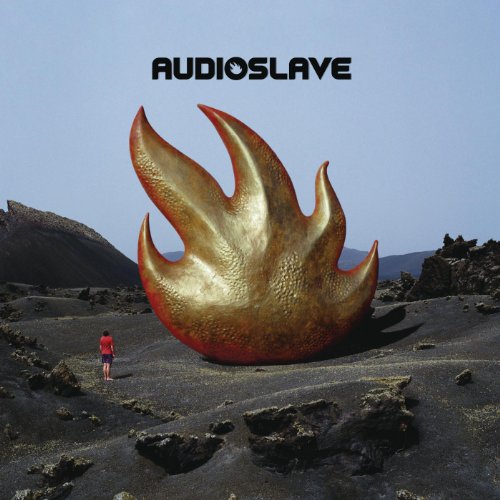
‘Audioslave’ (2002)

Despite receiving a mixed bag of reviews upon its release, the eponymous Audioslave debut, for the most part, delivered precisely what was expected; the wail of Soundgarden’s lead singer backed by the foundation of Rage Against the Machine. “Light My Way,” “Set It Off” and “Cochise” could’ve been Rage songs in another life. But Chris Cornell brought out a more mellowed side to tracks like “I Am the Highway” and “Getaway Car,” and showed that Tom Morello, Brad Wilk and Tim Commerford weren’t one-dimensional when it came to their musical abilities. Overall though, the album skewed toward the heavy end – led by Morello’s from-outer-space guitar histrionics – a boon to fans who were desperate to hear Cornell rock again after his tempered 1999 solo output, ‘Euphoria Morning.’ 

The music video for “Like a Stone” was written and directed by Meiert Avis. It was shot in the Los Angeles house where Jimi Hendrix wrote “Purple Haze”. The video uses negative space to invoke the memory of musicians past.
Image result

 ‘The Civilian Project’ (2002)

Guitarist Tom Morello said that these demos have as much in common with the first Audioslave album as “a hunk of coal has with a diamond.” Still, for music fans salivating at the prospect of a musical collaboration between members of two of the ‘90s most revered hard rock acts, it would do just fine. Recorded in late 2001 and leaked online by an Italian website the following May, it was dubbed “Civilian” after the rumored name of the union. In spite of the sketch arrangements, the power of the music was discernible. Eleven of the tracks were polished up and appeared on the band’s debut. “We Got the Whip” ended up as a B-side on the “Cochise” single while “Turn to Gold” remains to date the sole unreleased song.

 Audioslave made their live debut on November 25, 2002, performing a brief concert on the roof of the Ed Sullivan Theater on Broadway in New York City for the Late Show with David Letterman. This was the first time any band had appeared on Letterman’s marquee

‘Out of Exile’ (2005)

If the first Audioslave endeavor packed the punch of Rage Against the Machine, its follow-up veered more to the speed where Chris Cornell was most comfortable. There’s still the issue of trying to find a common ground, with the pendulum swinging in the direction of Cornell. “Be Yourself,” “Doesn’t Remind Me” and “The Curse” are prime examples where it sounds like he has backing musicians as opposed to being a part of a band. The boundaries get pushed only when Tom Morello cuts loose on guitar, especially when he goes a bit too far, often furiously inserting a bunch of unnecessary notes. ‘Out of Exile’ is a looser outing at its core, relaxed in all the places the debut might have wrapped itself too tight.
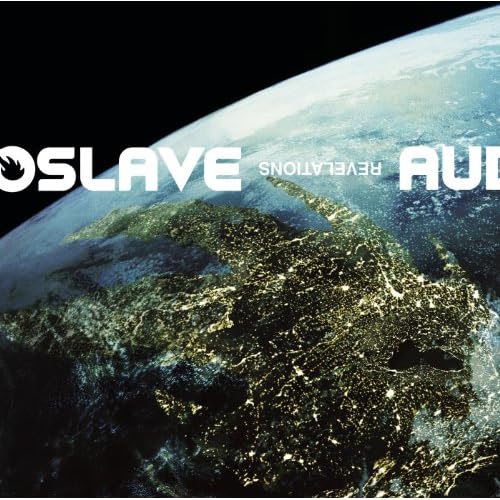
Revelations [Clean]

‘Revelations’ (2006)

Though Chris Cornell was ready to leave Audioslave at this point, as evidenced by his refusal to tour in support of the record and exit from the group five months after its release, he was hardly phoning it in. ‘Revelations’ feels the most like a fully functioning band is at work, less dependent on the member’s respective musical histories and more coming together cohesively as a unit.

The punishing riffs were accounted for — see “Shape of Things to Come” — and dips into introspective balladry like “Until We Fall.” But there was also a sense of adventurous expansion. Lead single “Original Fire” and “One and the Same” are steeped in funk, while “Jewel of the Summertime” sounds like nothing else in the Audioslave catalog, leaning heavily on Tim Commerford’s thick bass groove. Cornell even lyrically invests himself politically for the first time on “Wide Awake,” a scathing commentary on the slow response by the Bush administration to Hurricane Katrina.

Band members

  • Chris Cornell – lead vocals, rhythm guitar
  • Tom Morello – lead guitar
  • Tim Commerford – bass guitar, backing vocals
  • Brad Wilk – drums, percussion


The Jam regrouped and refocused for All Mod Cons, an album that marked a great leap in songwriting maturity and sense of purpose. For the first time, Paul Weller built, rather than fell back, upon his influences, carving a distinct voice all his own; he employed a story-style narrative with invented characters and vivid British imagery à la Ray Davies to make incisive social commentary all in a musically irresistible package. The youthful perspective and impassioned delivery on All Mod Cons first earned Weller the “voice of a generation” tag, and it certainly captures a moment in time, but really, the feelings and sentiments expressed on the album just as easily speak to any future generation of young people. Terms like “classic” are often bandied about, but in the case of All Mod Cons, it is certainly deserved.

All Mod Cons, released to wide acclaim in 1978, firmly cemented the group’s rise to extraordinary heights. Indeed, for many it was the first essential Jam album and listening to it now its impact has not diminished over time.” When I think about English records I think of The Kinks’ The Village Green Preservation Society, The Smiths’ The Queen is Dead, The Who’s Quadrophenia and The Jam’s All Mod Cons. To me all those albums are quintessential English
Recorded between 4th July 1978 to 17th August 197 at 8RAK (Upper London) and Eden Studios
It’s their third full-length LP. It took it’s title from a British idiom one might find in housing advertisements, is short for “all modern conveniences” and is a pun on the band’s association with the mod revival as well. Of Course it is also Paul Weller’s view on the music business as a ‘con’.

Film about the making of “All Mod Cons” by The Jam in 1978 with interviews from all involved including band members Paul Weller, Bruce Foxton and Rick Buckler

The single “Down in the Tube Station at Midnight” was one of the band’s most successful chart hits up to that point, peaking at #15 on the UK charts. In 2000, Q magazine placed All Mod Cons at number 50 in its list of the 100 Greatest British Albums Ever. I think it is The Jams most fully realised album, it is their best album.

British Invasion pop influences run through the album, most obviously in the cover of The Kinks’ David Watts and It’s too bad a song The Who would have been proud of.

To Be Someone (Didn’t we have a nice) time is an early jab at the rock’n roll lifestyle, about the hollow and empty life of a star, supposedly written after a horrible tour pairing in America with Blue Oyster Cult. The Bass line is a cool rip-of of Paul McCartneys bass line to “Taxman”.

All the tracks are really strong, great playing and great singing all around. The Production is unusually complex and sophisticated for a punk/new wave album.
The song “Down in the Tube Station at Midnight” is a first-person narrative of a young man who walks into a tube station on the way home to his wife, and is beaten by far right thugs. The lyrics of the song “All Mod Cons” criticise fickle people who attach themselves to people who enjoy success and leave them once that is over.

Track Listing:
1. All Mod Cons
2. To Be Someone (Didn’t We Have A Nice Time)
3. Mr. Clean
4. David Watts
5. English Rose
6. In The Crowd
7. Billy Hunt
8. It’s Too Bad
9. Fly
10. The Place I Love
11. A Bomb In Wardour Street
12. Down In The Tube Station At Midnight

This deluxe repackaged, remastered edition contains single b-sides, demos and rarities. It also features a new film, The Making Of All Mod Cons, with new interviews, promo clips, and previously unseen live footage.

B.B. King, 'Live at the Regal' (1965)

When he stepped onstage at the storied Regal Theater on Chicago’s Southside in November 1964, B.B. King had 30 R&B hits but had barely creased the pop charts. Recorded that night, It was B.B King’s first live album would become an entry point for many white listeners, and blues aficionados still speak of it with awe — Eric Clapton was rumored to spin Live at the Regal to prep for his shows. Newcomers encountered an urbane but never slick professional, backed by a killer horn section, who belted each number with class and grit, all the better to showcase the jazzy yet terse yet economical solos he coaxed from his beloved black Gibson, “Lucille.” His set here begins, as it did those days, with “Everyday I Have the Blues” — not a lament, but the boast of a touring workhorse who performed more than 300 shows each year.

B.B. King is not only a timeless singer and guitarist, he’s also a natural-born entertainer, and on Live at the Regal the listener is treated to an exhibition of all three of his talents. Over percolating horn hits and rolling shuffles, King treats an enthusiastic audience (at some points, they shriek after he delivers each line) to a collection of some of his greatest hits. The backing band is razor-sharp, picking up the leader’s cues with almost telepathic accuracy. King’s voice is rarely in this fine of form, shifting effortlessly between his falsetto and his regular range, hitting the microphone hard for gritty emphasis and backing off in moments of almost intimate tenderness. Nowhere is this more evident than at the climax of “How Blue Can You Get,” where the Chicago venue threatens to explode at King’s prompting. Of course, the master’s guitar is all over this record, and his playing here is among the best in his long career. Displaying a jazz sensibility, King’s lines are sophisticated without losing their grit. More than anything else, Live at the Regal is a textbook example of how to set up a live performance. Talking to the crowd, setting up the tunes with a vignette, King is the consummate entertainer. Live at the Regal is an absolutely necessary acquisition for fans of B.B. King or the blues music in general. A high point, perhaps even the high point, for uptown blues.

At this point of their career, Tennis can just release music and I’m comfortable knowing that it will be yet another enjoyable release from the duo of Alaina Moore and Patrick Riley. So many of the other artist that arrived during that golden age of music blogging have either lost a step or faded completely. But not Tennis, they have stayed as consistent as ever, a rare steady hand in a game full of flashes in the pan.

They released their solid new album Yours Conditionally March this year via their own label Mutually Detrimental and this month they returned quickly with a new 5-song EP entitled We Can Die Happy.

Below are two very delightful offerings from the EP, the very warm and Tennis-esque cut “Diamond Rings” as well as the sweet and tender “I Miss That Feeling.” Both prove once again that Tennis have no shortage of good tunes, or signs of slowing down anytime soon.

http://

http://

Related image

Grant McLennan Australian alternative singer-songwriter and guitarist. He co-founded the Go-Betweens with Robert Forster in Brisbane in 1977. In addition to his work with the Go-Betweens (1977–89, 2000–06) he released four solo albums, Watershed (1991), Fireboy (1992), Horsebreaker Star (1994) and In Your Bright Ray (1997). He also undertook side-projects and collaborations with other artists. McLennan received a number of accolades recognising his achievements and contributions as songwriter and lyricist.

In 1977 Grant McLennan met Robert Forster at university. Forster encouraged him to learn bass guitar and to form an alternative rock band, Along with Robert Forster, Grant McLennan became one half of the song-writing team behind The Go-Betweens. While The Go-Betweens were on hiatus during the 1990s, Grant McLennan embarked on a solo career, releasing four solo albums, two albums with The Church’s Steve Kilbey, and one album with the Far Out Corporation. McLennan’s songs which evoke the impressions and imagery of the regional background of his childhood include “Cattle and Cane”,“Unkind and Unwise”, “Dusty in Here” (about his father), “Boundary Rider” and “Bye Bye Pride”.

I’m not going to pretend that McLennan’s 1990s work out-shines his songs in the 1980s with The Go-Betweens. It’s certainly not uncommon for pop musicians to do their best writing in their twenties, and there was a sense of McLennan struggling to find his solo identity in the decade. After balancing perfectly with the acerbic, angular Forster in The Go-Betweens, he could be a little overwhelmingly saccharine by himself, and he flirted awkwardly with the mainstream on his first two solo records.

Robert Forster and Grant McLennan play an acoustic version of ‘Cattle & Cane’ and talk about writing a song about growing up in Queensland while living in London. ‘

But 1994’s countrified double album “Horsebreaker Star” is a masterclass of song-writing, even if it tends to blend together, and McLennan is among my favourite song-writers, like a comforting blanket with his warm voice and melodic charm. McLennan didn’t get the chance to add to his solo catalogue after The Go-Betweens’ reunion in the 2000s, dying prematurely from a heart attack in 2006, but here are some of his highlights from his 1990s:

“Providence” (Jack Frost) In 1990 Grant McLennan on lead vocals, bass guitar, lead guitar and keyboards formed a rock band, Jack Frost, in Sydney with the Church’s front man, Steve Kilbey on lead vocals, bass guitar, lead guitar, keyboards and drums. The group released a self-titled album in 1991 and the pair resumed the collaboration in 1995 for a second album, Snow Job.
McLennan’s collaboration with The Church’s Steve Kilbey was recorded in 2 weeks, with the pair playing most of the instruments themselves. McLennan’s work with Kilbey is moodier than his other solo work.

“Surround Me” He released his debut solo album, Watershed, under the name G. W. McLennan in 1991, which was produced by Dave Dobbyn on Mushroom Records’ White Records label. For its United Kingdom version it appeared on Beggars Banquet. It was an “ambitious and highly personalised collection of songs charted McLennan’s emotions in the wake of The Go-Betweens’ break-up. [it] revealed McLennan to be, in turns, the introspective singer/songwriter or the carefree and gregarious performer. McLennan “isn’t the most talented singer; his voice is a bit plain, and his range somewhat limited. He isn’t the most gifted guitarist his playing sometimes amounts to basic acoustic strums. He is, however, a truly exceptional artist who, in the spirit of Lloyd Cole, crafts moments of brilliance to fit his limitations the mainstream sound works for this hooky slice of pop/rock, and its big chorus.

In November 1992 McLennan issued his second album, Fireboy, which was produced by Dobbyn again,  compared to his previous one and found it was “an even more melancholy set of songs that boasted fuller (though never obtrusive) arrangements, it “finds the musician in excellent form, with a baker’s dozen worth of songs that won’t challenge preconceptions, but do make for a great listen all around” with “sweetly sparkling, sometimes barbed, numbers. During 1993 he toured Australia with a backing band comprising Michael Barclay on drums, Pedro Bull on keyboards (both ex-ex-Paul Kelly and the Messengers), Maurice Frawley on guitar (ex-Paul Kelly and the Dots) and Phil Kakulas on bass guitar (ex-Blackeyed Susans) One track “Fingers”
Another song from Fireboy, a moody piano ballad that missed the cut for Intermission, the excellent compilation that McLennan released in tandem with Robert Forster, documenting their respective careers in the 1990s.

McLennan’s third album, Horsebreaker Star, appeared in December 1994 as a double-CD. It was recorded in Athens, Georgia with American session musicians and was produced by John Keane it was McLennan’s most consistently catchy solo album providing 30 snapshots of a resigned romantic while unrolling tune after sweet, simple-seeming tune. its wide-screen outlook, the album shifted from country rock to bright acoustic pop with a great deal of optimism and passion. It was “more of a country/Southern rock bent…his ear for focused, sharp lyrical portraits of life and love, paired with his ever-striking crisp singing style, continues to lead the way. Opener Simone and Perry sets the tone nicely, similar to previous character sketches like The Go-Betweens’ ‘Right Here’.

In September of 1997 McLennan released his fourth solo album, In Your Bright Ray, with Wayne Connolly producing (You Am I, Bluebottle Kiss, Underground Lovers) returns him to his more well-trodden ground, [and] is as warm and soft as a cake out of the oven, a just-washed blanket, and an Eskimo coat. In 1998 he collaborated with Powderfinger’s Ian Haug on guitar in Far Out Corporation. In Your Bright Ray
The title track from McLennan’s final solo album is beautiful and restrained, a sunny, thoughtful piece of pop.

McLennan died of a heart attack at the age of 48 and was survived by his fiancée, Emma Pursey.

'Mr. Tambourine Man'

“Wow, man, you can even dance to that!” said Bob Dylan when he heard the Byrds‘ heavily harmonized, electric twelve-string treatments of his material. The Byrds‘ tender-but-tough debut defined folk rock with Pete Seeger and Dylan covers, Los Angeles studio savvy and punchy, ringing guitars. Its influence on generations of “jangly” rock and roll makes it one of the Sixties most visionary albums and while the Dylan songs got most of the ink, their originals (“I’ll Feel A Whole Lot Better”) were just as great.

Released in 1965, this highly influential folk-rock album was The Byrd’s first LP, and it remains my personal favourite next to the Notorious Byrd Brothers . Though, of course, not every song on it was actually released as a single, every one of them is a hit. This debut album features Jim (Roger) McGuinn, Gene Clark, David Crosby, Chris Hillman and Michael Clarke. The line-up of the Byrds changed regularly but some of these musicians also achieved success with other groups, too numerous to mention here. The style is generally described as folk-rock, but there is more to it than that.
The title track of this album was their first and biggest hit, going all the way to number one on both sides of the Atlantic.

The Byrds heavily covered tracks which were written by Bob Dylan throughout their recording career (in which they were able to bring their own special brand of harmony to one of the greatest song writing talents of all time), and four of them appear on here, including ‘Mr. Tambourine Man’, which both the British and American public took to the top of the charts, and the follow-up single: ‘All I Really Want to Do’, which peaked at no.4. It’s success was made all the more respectable when you consider that it was having to compete against another version by an up and coming girl singer known as Cher.

For me though, the album’s real highlight is an original: ‘I’ll Feel a Whole Lot Better’, written by the band’s founding member Gene Clark, and one of The Byrd’s greatest songs.

4991b1a65f3031f60e7301ba1f0ce8e5.800x800x1

“Where have all sensations gone?” Neko Case asked on this Vancouver band’s debut. A lot of indie-rockers were wondering the same thing during the music’s late-Nineties nadir. The New Porno’s gave the scene a jolt of energy and sorely missed fun. Burt Bacharach fan Carl Newman, Bowie obsessive Dan Bejar and alt-country barnburner Case didn’t have much in common on paper but on songs like “Letter From An Occupant” and the title track they came up with music that surged with electric smarts, roundhouse drum-pump and hooks atop hooks. It’s power pop that never lets up for a minute.

Initially billed as the biggest Vancouver supergroup that no one had heard of, the New Pornographers were burst to life fully formed on Mass Romantic. There’s three different vocalists competing for your attention here – Neko Case, A.C Newman and Dan Bejar all the while the band opts to throw everything into the same blender. What the New Pornographers excel at is making everything sound like a massive sugar rush with their voracious love of synths and guitars and catchy melodies. With Mass Romantic, the band proves themselves studious in their noted appreciation of the pop form and its classics but too hypercharged and frenetic to come across as retro. The highlights are many: The vocal harmonies on “Letter From An Occupant”! The way those brash synths build up and let loose on “Mystery Hours”! How it takes less than thirty seconds for the band to get to the chorus for “The Mary Martin Show”! The New Pornographers would scale greater heights in later albums and make big names out of everyone involved but Mass Romantic was where they thrillingly laid down the blueprint.

Ava Cherry was one of David Bowie’s backing vocalists (not to mention his girlfriend) during his Young Americans soul-obsessed era, and the great man himself produced this album — unfortunately, however, Bowie’s subsequent wranglings with both manager and record company meant it never got a release. Ava Cherry finally released it herself a few years back, and it’s a fascinating document of an fascinating era.

Before Bowie recorded the bulk of Diamond Dogs over three days in January 1974, he had been trying to get a “soul’” vocal trio off the ground. This was the Astronettes, who consisted of Bowie’s new girlfriend Ava Cherry, his longtime friend Geoff MacCormack (aka “Warren Peace”) and the unaffiliated Jason Guess.

Some of the surviving tracks were issued decades later and merit a listen if only out of curiosity, as some of Bowie’s Astronettes compositions are ancestors to his later songs. The promising (rhythmically, at least) “I Am Divine” is the first draft of Young Americans’ “Somebody Up There Likes Me.” “People From Bad Homes,” with a needling keyboard whistle for its main hook, seems bottom-drawer material. Bowie liked the title enough to use it in a later lyric, but seems to have discarded the rest of the song.

Bowie abandoned the project once Diamond Dogs took on steam, though he kept the Astronettes as his backing singers. He scrapped the proposed Astronettes record in part because of management-related shenanigans, but it was also obvious that the patchy material wasn’t commercially viable.

  • Musicians – Aynsley Dunbar, David Bowie, Herbie Flowers, Luis Ramirez , Mark Pritchard, Mike Garson
  • Producer – David Bowie

Analog Planet’s Michael Fremer reviewed our trio of Joe Jackson reissues and came away impressed: “As we’ve come to expect from Intervention, the Tip-on packaging is first rate as is Kevin Gray’s mastering from analog tape, pressed on 180 gram vinyl at RTI.” But wait there’s more!  On “Look Sharp!” .. you’ll love the reissue, which offers sharper, cleaner transients, improved transparency and focus and greater dynamics. It preserves a pulsing energy the original softens and diminishes.” I’m the Man: “ … this Intervention reissue smokes the original in all of the ways that matter on a drum’n’bass’n’guitar driven record: sharper, cleaner transients, greater dynamic slam, and bass that digs all the way down.“Night and Day”… The Intervention reissue again beats the original A&M Records release in every way .

Joe Jackson’s “angry young man” stance came late in the cycle and so at the time was less than fully convincing. Elvis and Graham had already been there and done that. The picture of Jackson on the back cover of his debut Look Sharp (IR-005) just wasn’t convincing.

Image result for joe jackson images

More importantly, the music and especially the lyrics seemed derivative but boy, could the band play and cut those sharp-edged rhythms! Songs like “Sunday Papers” covered familiar territory but the hook on “Is She Really Going Out With Him?” dug in and the songs were generally tightly sprung and well crafted though “Happy Loving Couples” sounded way too much like “Less Than Zero”. On the Reggae rhythmed “Fools in Love” Jackson is a cynical outsider looking at love from a particularly jaundiced and needy point of view. Overall, his social commentary lacked focus and bite, while his relationship songs came across as bitter. Jackson knew how to modulate the dynamics and exhibited a musical sense that indicated he was low-balling his abilities to fit the time’s stripped down ’50’s derived musical fashion.

Look Sharp! was simply but cleanly recorded in what sounds like mono. If you like the original, you’ll love the reissue, which offers sharper, cleaner transients, improved transparency and focus and greater dynamics. It preserves a pulsing energy the original softens and diminishes. Cymbals chime smartly, Graham Maby’s bass lines are tautly drawn, and Dave Haughton’s drum kit produces slam the original blunts. Plus the pressing quality helps produce blacker backgrounds.

Image result for joe jackson images

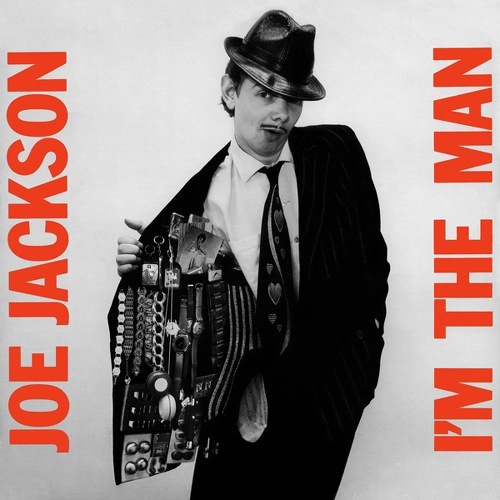
Jackson’s follow-up “I’m The Man” features a cover showing Jackson as consummate flim-flam man and while the title song is about a material goods salesman, it can also be seen as Jackson getting ready to slough off the Get Sharp! “musical hula-hoops” image, though the title tune may be Jackson’s pinnacle as a hard rocker.

The album opens with “On the Radio”, a sweet revenge song that also indicates the production has softened and warmed somewhat the debut album’s hard and bright edges. In “Geraldine and John” Jackson cynically observes a cheater and a break-up. “Kinda Cute” again cuts too close to the bone of an Elvis Costello song. Later on “The Band Wore Blues Shirts”, which has in parenthesis (a true story), Jackson paints an empty picture of being a musician in a nightclub house band. In “Don’t Wanna Be Like That”, Jackson paints a negative picture of the L.A. scene from his particular point of view, again as an outsider. At the end his bitterness sharply pokes through his observational stance as he hints at his own predicament: “And the Playboy centerfold leaves me cold/And that ain’t ’cause I’m a fag”. The album’s final few songs are lyrically unfocused, or rather, inconsequential relationship observations as if Jackson’s attention span on the subject was spent—though “Amateur Hour” features a lovely melody.

Again, this Intervention reissue smokes the original in all of the ways that matter on a drum’n’bass’n’guitar driven record: sharper, cleaner transients, greater dynamic slam, and bass that digs all the way down. The perspective is again nearly if not fully mono, which increases the importance of the instrumental separation and clarity.

I’m the Man came across then and now as a “bridge” album to either more of the same next time, which would have been a career-stall, or something new demonstrating musical and personal growth. Still, probably few fans were prepared for Night and Day, where Jackson basically said “fuck this angry young man shit, here’s who I really am (musically and otherwise).”

Image result for joe jackson night and day

On the front cover Jackson is seen at the piano (where he dared not previously go) in a Hirschfeld-like pen and ink sketch, looking very much like the Cole Porter toward which the album’s title points. The newly liberated Jackson is shown in the gatefold “deal with it” photo standing before a plethora of keyboard and mallet instruments—all percussion—plus a couple of bass guitars. Not an electric guitar in sight but plenty of latin rhythms packed into the grooves.

The album opens with Jackson stepping into a rhythmically sophisticated “Another World” backed by congas and xylophone. Jackson’s liberation continues song by song as he’s moved beyond “boy/girl” to more sophisticated fare. “Stepping Out” presents the newly liberated Jackson in full sophisticated flower but not before the embarrassing Talking Heads rip-off “T.V. Age”, which I bet Jackson wishes he could take back.

“Real Men” gets to the heart of where Jackson’s been heading—the sexual liberation and another dose of tearful bitterness because he’s not one of the pretty boys he’s observing and in any case, liberation is leading to confusion. It’s a powerful song and worlds away from “Is She Really Going Out With Him?”. It’s Jackson being really tough but without shouting and on the final tune you hear Jackson finally singing satisfied about his relationship instead of observing others—though he’s still got a bitch, but it’s about the club D.J..

The Intervention reissue again beats the original A&M in every way as above. I think Mobile Fidelity once issued this years ago and I had it but got rid of it I can’t remember why, but probably because the old Mo-Fi regime laid on the excess bass and muddied the middle.

Fans of these records will want all three but more casual fans looking for one should get Night and Day both for the music and far more sophisticated ‘recorded in New York City’ sound.

As we’ve come to expect from Intervention, the Tip-on packaging is first rate as is Kevin Gray’s mastering from analog tape, pressed on 180 gram vinyl at RTI.

Image may contain: 1 person, on stage

Life out on the lonely road… It’s a tale that many musicians sing about, longing for a day they can actually come home from touring around the world, meeting faceless fans and playing show after show. It can get lonesome on tour, and yet, somehow, they can’t shed their vagabond ways.

But that’s not the case for Courtney Marie Andrews, who had toured in other people’s bands for a decade before taking a break to bartend in a small Washington town these past few years. Pushing pause on non-stop touring allowed her to sit back and re-evaluate, sparking the thesis for the album “Honest Life” via Fat Possum Records, with a pressing of the deluxe edition. At 16, Andrews left her Arizona home to become transient, playing and busking in bars and cafes around the country. She continued on as a session singer and touring musician for nearly 40 artists, from Jimmy Eat World to Damien Jurado.

Her work took her all around the world, but at some point, she realized she’d lost touch with reality.“You can start to just stop calling people or stop keeping up with the people that you know and love,” Andrews said, calling from an unseasonably warm Seattle. “All of a sudden it’s been three years and you haven’t seen them.”In Washington, Andrews made connections again, getting to know people at the bar and laying down tracks for Honest Life with a trusted group of musicians. Together, the band sounds like home. Drums chug away at moderate paces, piano glitters organically over top and the guitars are cozy. In the final track, she even added a somber arrangement of strings, gifted by her friend Andrew Joslyn.
Over the majority of the album, a pedal steel guitar drifts lazily under the melody, tangling with Andrews’ voice. With her Emmylou Harris-like pipes and the pedal steel, the album is what some people have called “country.”“When I went in to make Honest Life, I didn’t think, ‘Oh, I’m making a country record,’” Andrews said. “It’s more about creating a timeless sound. Something that can be released now or in the ’60s or whenever… I take pleasure in being a songwriter and creating a record that’s hard to place where it’s from.”

http://

Honest Life is technically her sixth album, although she’s kept the first three for herself. It’s her first LP on a label. The album has made several best-of-lists, The accolades couldn’t have come at a better time, she said, when she was wiser about the industry and had gotten some time to grow.

Some people get lucky and their first record is just like a masterpiece fully formed, but that was definitely not me,” Andrews said. “I feel like I’ve really come into my own as a songwriter in the past few years. … I’m glad [the recognition] happened now when I’m a good songwriter, rather than when I was young.”To improve her craft, Andrews studied up on the greats—Neil Young, Bob Dylan, etc.—and in turn, she gained notice from other impressive songwriters, like Ryan Adams and Jurado. With practice and careful observation of legends and her contemporaries, she perfected the “tasteful way of revealing things” in her music.“When I was younger, I would write a song and I would reveal things in every single line, and that was the problem,” Andrews said. “We don’t need to know all that. The listener is overwhelmed. It’s like when you’re at a bar and somebody’s telling you their life story and you’re like, ‘Whoa, calm down.’”

https://www.youtube.com/watch?v=_cv0ATLNDJQ

Andrews’ songwriting is more subtle now, but not cryptic. The first track, “Rookie Dreaming,” reflects on her troubadour life and the missteps of what Andrews calls “blind youth.”

“I was moving too fast to see / All the paintings in Paris or sunrise in Barcelona / I was too broke too shallow to dive deep / Too busy carrying the weight of everything,” Andrews sings, her voice rife with mild vibrato, swooping with a twang that’s not Southern, but something unique altogether. She punches syllables that condemn her apathetic lifestyle—“TOO broke, TOO shallow”— while letting other verses flow freely, warm with harmony.

While she criticizes herself in “Rookie Dreaming,” she turns her perspective to address a meek friend in “Irene.” She sings directly to the title character, a pseudonym for the real-life subject, delivering the type of constructive criticism you might not have the guts to give to a friend’s face.

“Gain some confidence, Irene / If you speak let your voice ring out / But keep your grace, Irene / Don’t go falling in love with yourself,” she sings. An organ warbles as Andrews delivers her sermon.

“‘Irene’ was originally written for a friend, but I feel like probably every growing, youthful woman has felt like Irene at one point or the other,” Andrews said. “Every woman who’s amazing but doesn’t really know it yet. We feel like all these magazines and articles that are saying, ‘No, we’re not good enough’ … It’s sort of realizing that that’s total bullshit and you are awesome and you just have to know it.”

Not only did Andrews take care of all the songwriting on Honest Life, but she was the sole producer on the album—essential for keeping control in the studio.

“With this record, I knew so clearly what I wanted that I didn’t want distractions or arguments,” Andrews said. “One person sees it one way, one person sees it another way. Sometimes it makes a great record, but for Honest Life, I just wanted the sort of clear, easy, raw and realness. And that’s what we did.”

As for settling down and slinging drinks, Andrews knew that wouldn’t last forever. She said she’s always going to travel in the name of music. But this time, she’s not going to be singing anyone else’s songs. She’s at center stage now, and she’s ready to brave the lonely road once more.

“A lot of Honest Life was realizing that I didn’t want to tour as a backup singer anymore,” Andrews said. “If was going to be on the road, it was going to be for me, for my songs, for the dreams that I’ve always had as a teenager and as a young adult. Bartending is not my career path. Music is everything.”