Brian and Michael D’Addario are currently putting the finishing touches on The Lemon Twigs’ second album for 4AD Records, which they’re making in their 24-track analog basement home studio. In the meantime, they’ve just released two new songs — “Foolin’ Around” and “Tailor Made” — both of which are in much more of a straight-up rock style than anything on The Lemon Twigs Do Hollywood, pulling from ’70s riffers like Big Star, Cheap Trick and Thin LIzzy. These tracks won’t be on the new album
Foolin’ Around‘, from ‘Foolin’ Around/Tailor Made’ EP. Released on 28th March on 4AD Records.
The next record’s a musical and, naturally, any song that didn’t fit the concept we left off. “Foolin’ Around” was written by Michael. I think that we both wanted to write some songs that didn’t digress at all musically and were clear in meaning. “Tailor Made” was written by both of us when we were playing acoustic guitars together, which isn’t typically the way we write. It’s the first truly co written song that we’ve released
‘Tailor Made’, from ‘Foolin’ Around/Tailor Made’ EP. Released on 28th March on 4AD Records.
Beechwood held an album release for their debut LP,“Songs From the Land of Nod”(Alive/Naturalsound Records), a darkly shimmering rock ’n’ roll record of bruising timelessness. The allure of Beechwood’s powerful onstage rock star insouciance which is only somewhat less pronounced offstage can come across as slightly studied, an assertion the band contests, bolstering the denial with tales of their shambolic misspent youths. But at least they’re studying the right bands. the trio share teen tales of skateboarding over the George Washington Bridge to see bands in Manhattan; then, a few years later, being escorted out of Arlene’s Grocery during one of their own gigs (“We started rolling around, and things got knocked over, broken. We were just younger. Honest aggression.
We’re more composed now”) and various other angst- and substance-fueled shenanigans. The band’s Gordon Lawrence, 24, looking not unlike a young Thurston Moore, hair covered by a plaid cap, Drummer/vocalist Isa Tineo, 25, a dark beanie obscuring his head/face tattoos, perches on a stool. His visual counterpoint is Beechwood’s newest, member Sid Simons, 21. The bassist’s blonde shag hair is straight off a Sweet album cover, and his faint Australian accent and easy demeanor make him an effective foil for his more formidable-seeming Jersey-bred bandmates.
While Beechwood exude an honest cool that can’t be bought, any hipster factor is shattered when Tineo leans into the tape recorder and shouts: “We’re going to take over the fucking world!”
If the heady, garage-y, spooky compositions on Songs From the Land of Nod are any indication, Tineo could be right. Of the provocative title (the song “Land of Nod” closes the record) Lawrence explains, “There are biblical, childhood, and drug references. There was a two-year period that led up to that album. I went through a lot of stuff, physically, emotionally.”
“I put myself through something that I’m through now. But at the time…the biblical reference, East of Eden…” he says haltingly. “I could see what Eden was and where I wanted to be, but I felt I was constantly outside the gate looking in. I felt that way, honestly, my whole life. Outside. Trying to get in and not knowing how. Eden was being happy. Being OK. Not waking up every morning and wanting to die. Or not waking up at all. Not being able to fall asleep.”
The lanky singer, polite and soft-spoken, declines to elaborate on his issues, but the hazy melancholy and changing tempos of “C/F” — referring to the guitar chords — was one written from the depths. (On the lighter side is a more jaunty entry, Beechwood’s most popular song on Spotify, the two-minute pop-dream “Heroin Honey” written and sung by Tineo, which, he clarifies, is “about a girl, not drugs!”).
Beechwood seem to possess the rock ’n’ roll knowledge of their combined ages, . They easily cite Brian Eno, Jim Carroll, and other darkly creative underground icons. Names are not dropped, but leak out. Actor (Last Days, Boardwalk Empire)/musician Michael Pitt insisted on directing the band’s surf-guitar-ish rave-up “I Don’t Wanna Be the One You Love” video after catching a Beechwood soundcheck at a small Brooklyn club. Green Day’s Billie Joe Armstrong met the group at Armstrong’s own party, and he asked to hear some Beechwood music.
Beechwood began, as the best do: in the basement, and for all members, with a strong paternal influence. “My dad was a painter. He hung out, on the outskirts, with Steve Albini and Urge Overkill in Chicago,” begins Lawrence, who named the band after the street he grew up on. “We went to see Elliott Smith, the Stones, when I was a little kid. When I got a guitar, instead of lessons, he gave me the first Ramones record. From there, I found out about the Stooges and bands like that. He introduced me and took a step back and let me figure out shit. I was ten years old and going to see Gang of Four.”
Simons, who has been in the band now about two years and was not on Songs From the Land of Nod, credits his dad (stage name Mike Lezbian), the singer for the Scavengers “the first punk band from New Zealand” — for starting him off on the musical good foot.
Tineo’s father was an influence on his son — and countless others. “My dad (JuJu Gigante aka Jerry Tineo) played a really important part in music, in hip-hop. In the early ’90s he was a drummer in a famous group called Beatnuts. They were iconic. My dad started traveling with that group when he was 19, 20 and hasn’t stopped. He’s played every genre of music, I grew up with it all .
“I just knew what I liked and what I didn’t,” says Tineo. “But rock ’n’ roll specifically was the first genre of music that found me. I’m Dominican. Gordon grew up with rock, but rock found me. The shit hit me like a ten-ton truck. It fit my lifestyle, the way I wanted to live my life.” Tineo’s dad taught him beats, but the drum set “didn’t speak to me until rock. My dad also bought me a guitar, which I didn’t end up learning until years later.”
Beechwood’s founders “learned to play, more or less, with each other,” says Lawrence. “Isa and I met through mutual friends who all skated together. We’d all meet up at some local skatepark for the day and then hang out afterwards, try to find someone over 21 or with a fake ID to buy us some 40-ouncers from the bodega, and then go out looking for some party or whatever at night.” The pair’s first recorded endeavor, Trash Glamour (2014), was cut in Lawrence’s parent’s basement. “In my head, it was Exile on Main Street, but we were in a basement. It sounds awful,” Lawrence confesses.
Tineo says. I should have been born when the Ramones were around. And Beechwood he’d never even seen us You, know, you wouldn’t have been the Ramones, or you wouldn’t be as great as you are now, because there’s only you, only one of you, one of your band. Only you can do what you’re doing now.’ ”
Indeed, their septuagenarian fore-musicians are revered but not imitated. Live, Lawrence and Tineo switch instruments; they all write songs. Rife with prolific creativity, youth, and constant change, a next record, Inside the Flesh Hotel, is in the can and will be out this summer. It aurally showcases a happier headspace for the Lawrence, and marks Simons’s writing and recording debut.
There’s one cover song onSongs From the Land of Nod, and it’s lyrically telling. The Kinks gem “I’m Not Like Everybody Else” resonates as much musically as it does lyrically for the band: “I don’t want to live my life like everybody else / And I won’t say that I feel fine like everybody else / ’Cause I’m not like everybody else.” Production onLand of Nod comes courtesy of Lawrence’s uncle in Chicago, who has a “Brian Jones/Brian Wilson vibe” that’s evident in the album’s intricate, creative layers, and the scary-beautiful intensity of dark, driving songs like “This Time Around.”
Reasonably apt comparisons to bands like Suicide and the Velvet Underground pepper Beechwood’s press kit. Those references, Lawrence points out, often come from older journalists. “When people listen to something, they want to put it in a certain context that makes sense to them. You experience through the filter of your past, a reference point,” he notes. “We’re not doing anything new, not starting some new genre. We’re just playing rock ’n’ roll music the best that we can. The guys writing these articles grew up going to the Ramones. When they listen to us, it’s a compliment, knowing that the same energy they felt as a kid going to see those bands is what they’re feeling when they see us.”
“I think we’re a really great band, and [comparisons are] OK for now. But you know what?” the irrepressible Tineo offers. “I think we’re going to make such a mark on music that other bands, any other great band, will be compared to us at some time.”
Written over the course of 2016 and 2017 and recorded in the summer of the latter year by Frances Quinlan (songwriter/vocalist/rhythm guitar), Tyler Long (bass), Joe Reinhart (guitar), and Mark Quinlan (drums), “Bark Your Head Off, Dog” addresses disappointment, particularly in man’s misuse of power, and relates accounts from the periphery — one’s attempts to retreat from the lengthening shadows of tyrants, both historical and everyday. It considers what it’s like to cast off longheld and misguided perceptions, yet without the assurance of knowing what new ones will replace them. Much like on Hop Along’s first and second records, Get Disowned and Painted Shut, Quinlan seeks in real time to work through these issues.
Throughout the album, one gets the sense that Quinlan is wandering in the thicket of a forest—a state of being that will feel familiar to longtime listeners—and on this outing, she hasn’t left a trail of breadcrumbs behind her. The album’s artwork, which Quinlan painted herself, invites the listener into that forest, as well. “There is a terror in getting lost,” she says, “the woods are at the same time beautiful and horrifying.” This curious wandering gives the album, both lyrically and musically, a heightened dimensionality.
Bark Your Head Off, Dog is, without question, Hop Along’s most dynamic and textured record yet. Self-produced and recorded at The Headroom in Philadelphia by Reinhart and Kyle Pulley, Bark Your Head Off, Dog features the familiar sounds that have always made the band allergic to genre: grunge, folk, punk, and power pop all appear, with inspiration from ELO to Elvis Costello to ‘70s girl group vocal arrangements. This time around, they’ve added strings, more intricate rhythms, lush harmonies (featuring Thin Lips’ Chrissy Tashjian), along with a momentary visit with a vocoder. In more than one place, Mark Quinlan drums like he’s at a disco with Built to Spill.
Most significantly, Bark Your Head Off, Dog shows the band at its strongest and most cohesive. Hop Along (which originally began as Quinlan’s solo project under the moniker Hop Along, Queen Ansleis) has never sounded so deliberate, so balanced. “So strange to be shaped by such strange men” is a line that repeats on more than one song on the album. “I’ve been thinking about that a lot. That I just deferred to men throughout my life,” Quinlan says. “But by thinking you’re powerless, you’re really robbing yourself. I’m at a point in my life where I’m saying instead, ‘Well, what can I do?’”
Last autumn Los Angeles-based musician Miya Folick released a new EP, Give It To Me, which was lauded asamong the best EPs Of 2017. Today, Folick has followed that up with a brand-new song called “Deadbody” which was co-written by her and Justin Raisen. It’s a skeletal track that builds to a towering chorus where Folick gets to show off her capacious voice: “Over my dead body,” she sings, booming drums behind her. It’s a wall of pure power. Here’s what she had to say about the song:
I wrote ‘Deadbody’ after reading article after article about people’s exploitation by people and power structures, and then talking to my friends about our own heavy experiences. I felt defeated by the weight and pervasiveness of the system we are fighting. I needed something to sing that felt hopeful but fierce. I wanted to growl and be demanding and defiant. ‘Deadbody’ was meant for me and you to sing together, to make us feel empowered, strong, and exhilarated by our own resilience.
Deadbody came from a place of frustration. I needed something to sing that felt hopeful but fierce. I wanted to growl and be demanding and defiant. I wanted something clear and stark. I made Deadbody for you and me to sing together, to remind us of our power, our strength, and our resilience. I want you to sing it loud and hold it in your heart. I made it for you
Thank you so much to my producer team @justinraisen @yves_above_so_below @lukeniccoli and to @terriblerecords for making this with me. And thanks to Waverly Mandel for the beautiful artwork.
Performing at Omeara was so incredible! Looking out and seeing so many faces left me speechless, I’m so excited to be able to share it with you all. My new live album ‘Live At Omeara’ is available soon. Very excited that next week I shall be releasing a new 11 track live album “Live At Omeara”
Performing is one of my favourite things, meeting you after the shows, hearing your stories – it makes this so special.
There’s lots of new music that I’m working on now that I can’t wait to share, I wanted to give you something now as a thank you for your support so far.
Freya Ridings delivered a poignant performance at London’s Omeara that was well beyond her 23 years of age.
The singer’s ambient and, at times, ethereal sound, places her somewhere in between London Grammar’s Hannah Reid and Florence Welch in terms of range and vocal power. Brimming with soul, that voice played quite the juxtaposition to her much softer – almost nervous – speaking voice, as she got comfortable with her surroundings, delivering a set which combined her own original material which yo-yoed between the sombre and the upbeat: and her own unique covers of tracks by artists including Hozier and the Yeah Yeah Yeahs.
The London native’s family were also in attendance, Ridings dedicated “You Mean The World To Me” as a heartfelt ode to her mother, and subsequently her father and brother by proxy, to a chorus of laughter at what was ultimately a homecoming of sorts. The feel-good atmosphere clearly spurred Ridings on at the sold-out show: she grew in confidence as the night progressed.
Backed by her band and playing the keyboard, Ridings showcased her ability to keep an audience transfixed as if she were telling a story. Each song and every lyric was delivered impeccably and with heart, demonstrating there was real angst and emotion entwined within those words, nowhere more evident than with her encore performance of her latest single, the stunning “Lost Without You”.
This is a version of one of my favourite Hozier songs ‘Work Song” performed live at Omeara in London. So excited for all my up and coming shows – I can’t wait to see you there. The next few months are going to be really special.
King Tuff’s forthcoming album The Other is little less than a month away, but the one-time garage rocker’s wild, starry-eyed new sound has been the cornerstone of the record’s pre-release singles, from the thoughtful title track to the rambunctious “Psycho Star” to the funk-laden “Raindrop Blue”. New track “Thru the Cracks” gazes upward into the ephemeral, the song serving as a tribute of sorts to an old friend King Tuff’s Kyle Thomas lost to suicide.
Jenny Lewis lends her honeyed contralto to the track, as does Springtime Carnivore’s Greta Morgan, while Ty Segall drummer Charles Moothart offers the rhythm some shambling rhythm.
The Other‘ (Release Day: April 13, 2018)
“About two years ago I lost a good friend to suicide,” Thomas says in a press statement. “He loved the Beatles, Nirvana, Burroughs, bumming smokes, stealing his parents records and selling em to me… he was a complex character, a sweetheart with poor social skills, a musical genius with no outlet. He was pretty damn misunderstood in this world and struggled for a long, long time.
“I had this song laying around for 7 years or so, but sadly it wasn’t until he was gone that it came into focus and I realized what it was all about. It’s one of my favorites I’ve ever written, and one of the truest. And it all comes back again to this thing, the Other. Maybe death is just a passageway to something else. Maybe in death we finally, once and for all, join the Other. I dunno, but I think Jeremiah is probably hanging out on the metaphysical stoop right now with none other than the Other itself.
With every record, Damon McMahon aka Amen Dunes has transformed, and Freedom is the project’s boldest leap yet. The first LP, D.I.A., was a gnarled underground classic, recorded and played completely by McMahon in a trailer in upstate New York over the course of a month and left as is. The fourth and most recent LP Love, a record that enlisted Godspeed! You Black Emperor as both producers and backing band (along with an additional motley crew including Elias Bender Rønnenfelt of Iceage and Colin Stetson), featured songs confidently far removed from the damaged drug pop of Amen Dunes’ trailer-park origins.
Love took two years to make. Freedom took three. The first iteration of the album was recorded in 2016 following a year of writing in Lisbon and NYC, but it was scrapped completely. Uncertain how to move forward, McMahon brought in a powerful set of collaborators and old friends, and began anew. Along with his core band members, including Parker Kindred (Antony & The Johnsons, Jeff Buckley) on drums, came Chris Coady (Beach House) as producer and Delicate Steve on guitars. This is the first Amen Dunes record that looks back to the electronic influences of McMahon’s youth with the aid of revered underground musician Panoram from Rome. McMahondiscovered Panoram’s music in a shop in London and became enamored. Following this the two became friends and here Panoram finds his place as a significant, if subtle, contributor to the record.
The bulk of the songs were recorded at the famed Electric Lady Studios in NYC (home of Jimi Hendrix, AC/DC, D’Angelo), and finished at the similarly legendary Sunset Sound in L.A., where McMahon, Nick Zinner, and session bass player extraordinaire Gus Seyffert (Beck, Bedouine) fleshed out the recordings.
On the surface, Freedom is a reflection on growing up, childhood friends who ended up in prison or worse, male identity, McMahon’s father, and his mother, who was diagnosed with terminal cancer at the beginning of recording.
The characters that populate the musical world of Freedom are a colourful mix of reality and fantasy: father and mother, Amen Dunes, teenage glue addicts and Parisian drug dealers, ghosts above the plains, fallen surf heroes, vampires, thugs from Naples and thugs from Houston, the emperor of Rome, Jews, Jesus, Tashtego, Perseus, even McMahon himself. Each character portrait is a representation of McMahon, of masculinity, and of his past.
Yet, if anything, these 11 songs are a relinquishing of all of them through exposition; a gradual reorientation of being away from the acquired definitions of self we all cling to and towards something closer to what’s stated in the Agnes Martin quote that opens the record, “I don’t have any ideas myself; I have a vacant mind” and in the swirling, pitched down utterances of “That’s all not me” that close it.
The themes are darker than on previous Amen Dunes albums, but it’s a darkness sublimated through grooves. The music, as a response or even a solution to the darkness, is tough and joyous, rhythmic and danceable. The combination of a powerhouse rhythm section, Delicate Steve’s guitar prowess filtered through Amen Dunes heft, and Panoram’s electronic production background, makes for a special and unique NYC street record.
It’s a sound never heard before on an Amen Dunes record, but one that was always asking to emerge. Eleven songs span a range of emotions, from contraction to release and back again. ‘Blue Rose’ and ‘Calling Paul the Suffering’ are pure, ecstatic dance songs. ‘Skipping School’ and ‘Miki Dora’ are incantations of a mythical heroic maleness and its illusions. ‘Freedom’ and ‘Believe’ offer a street tough’s future-gospel exhalation, and the funk-grime grit of ‘L.A.’ closes the album, projecting a musical hint of things to come.
The story of The Flaming Lips are somewhat confused, or rather merge with my own.
Briefly, when we are young, we are crazy, dreamy, rebellious, we have no limits, and The Lips at the beginning were just like us, crazy young people, dreamy, loud and rebellious, but adulthood comes to us all and with it many responsibilities , the priorities change completely, we mature, we grow and we understand that, that time of dreams passed, with The Lips, it happens the same thing.
But one thing is certain, the essence, it will always be stored and will appear from time to time, just let it happen … this is the magic of life, this is the magic of The Flaming Lips´ music.
Thank you my friend Wayne for accompanying me for all these long years.
This is dedicated to you, my brother! And of course, my special thanks to all the wonderful bands that are part of this project.
With love……. Renato Malizia
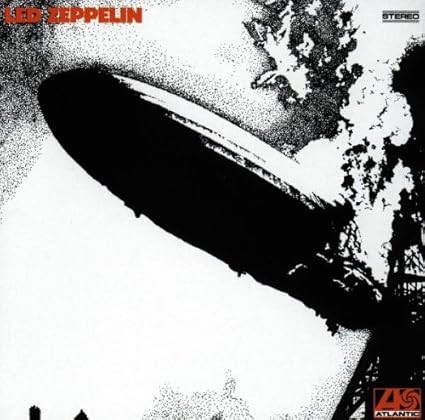
Whether you mark the genesis as the death ofThe Yardbirds, the Scandinavian tour by The New Yardbirds or the band’s first show under the new name, Led Zeppelin’s birth, however gradual, takes place in 1968, on way to its crowning moment, the release of the band’s self-titled debut not two weeks into the new year, January 12th of 1969.
The story arguably begins back in 1966, when Jimmy Page joined The Yardbirds, first on bass as replacement for Paul Samwell-Smith, but then switching to guitar, where he shares those duties with Jeff Beck. Beck was soon to depart, in October that year, Jimmy’s thoughts wandered off to bigger things, a supergroup of sorts, while he bides his time for nearly two more years with an act proving to be somewhat directionless. The Yardbirds would play their final show, a Bedfordshire gig, in July of 1968. At this point Jimmy is already in possession of most of the riffs and song ideas he would need in his next incarnation.
“We were a vehicle for what Jimmy wanted to do when he came in,” explains Yardbirds drummer Jim McCarty. “He had a pretty free rein, as all the guitar players did and he pushed The Yardbirds sound into more of a heavy metal context. He really was the master of the riff.”
Everyone was paying attention to the band’s star axeman. Recalls Steve Lyman, of legendary Michigan rockers SRC, who caught the band just before their demise, “The first British group that I actually saw perform live was TheYardbirds, at a small club in Ann Arbor, Michigan called The Fifth Dimension. I already had two albums by The Yardbirds at that time, so it was a real thrill for me to see this British group performing live. Jimmy Page was the guitar player at the time, because The Yardbirds went through various incarnations. Eric Clapton was their first guitar player, Jeff Beck and then Jimmy Page. I was mesmerized by that Yardbirds show. I was the lead guitar player in a band The Fugitives, which became the SRC, so seeing Jimmy Page play became a real thrill for me because I had been listening to these Yardbirds records on my record player and trying to figure out what they were playing.”
But in the summer of ’68, The Yardbirds, now splitting up, but nonetheless still committed to a Scandinavian tour. A new lineup to fulfill these dates was called for. After Chris Dreja bows out to begin a career as a photographer, session stalwart John Paul Jones is recruited. In the all important vocal slot, Jimmy had wanted on the team Terry Reid, but Reid demurs, suggesting a young Birmingham singer named Robert Plant. Robert is the one who brings along local drummer and hard-hitter John Bonham. Before the new foursome would hit the road, they perform a session for the P.J. Proby album Three Week Hero. A track there called “Jim’s Blues” would live on as the band’s first session together, on the technicality that Robert is present blowing some harmonica.
Original Judas Priest vocalist Al Atkins happened to be there to watch the formation of what would be called The New Yardbirds, the makeshift name the band used to fulfil those Scandinavian dates.
“I used to know Robert,” says Atkins. “We used to go for a beer together, and sometimes he’d borrow my microphone because he couldn’t afford one, if I wasn’t playing. We had one mic between the two of us. I had the best one. And a buddy of mine, ‘Are you playing tonight?’ ‘No, oh go on.’ It was great times. Robert’s roots have always been blues. He’s a very intelligent guy when you’re talking to him about the blues stuff. He knows everything about that. You can’t argue with him about anything on that subject. But I saw him before Zeppelin, when he was playing at Henry’s Blues House and Alexis Korner was playing on his own, a solo gig he got there, like a one-man band thing or something, and Robert got up and played harmonica and sang along with him.
“And then with Jimmy Page, they joined The Yardbirds, went over to Europe, came back, and next thing they were called Led Zeppelin. I went to see them play at Mother’s in Erdington. They were supporting Blodwyn Pig, and I think they got 75 quid or something. But when I saw him with Jimmy onstage that night I was totally blown away. And Bonham was absolutely out of his head. He was drunk, I think. And they did a set, and it was very mixed, including a lot of stuff that was going to be coming on the new album. They were loud, but they were brilliant. Robert’s voice had just changed overnight. I couldn’t believe the difference in his voice. Fantastic vocalist. And yeah, John Bonham, he couldn’t come back onstage. They did the encore and the drummer from Blodwyn Pig came on and played this blues thing with them and they just jammed the encore. The good ol’ days.”
“Jimmy had made his mind up that they were going to blow everyone off the stage,” adds (now deceased) engineer Andy Johns, soon to be working closely with the band. “That’s what my brother told me. This is when Jimmy still had The Yardbirds thing going. Glyn said, ‘I was with Jimmy the other day, and Jimmy said, I’ve got this new lineup now, and we’re going to blow everyone offstage.’ So that was an intentional thing, to be as dramatic and as riff-conscious as possible. And Jimmy was a fabulous writer, and had a lot of great ideas in the studio, and was just wonderful to work with.”
But in August of 1968, even before the band’s dates in Scandinavia, Jimmy’s Yardbirds mate Jeff Beck would release his album Truth, which many a rock historian debate as the blueprint for what Led Zeppelin would become.
“Well, it was right around the same time,” explains Zeppelin bassist John Paul Jones. “I was on that Jeff Beck album and Jimmy was with The Yardbirds at the time, so my influence on the Jeff Beck album would probably be similar to my influence on the Led Zeppelin album, just like Jimmy. I don’t know, I suppose. You can come to the same conclusion with any number of blues-based rock bands. But it soon took off from there. Most of the songs we had done on the first album had been done by Jimmy and The Yardbirds as well. It was only things like “Good Times Bad Times,” which was a riff I brought in, that I wrote in the studio. That’s got John’s famous drum part, of course. John never used double bass. He did in fact bring in a double bass drum for rehearsal, and we played a couple of songs with it, but then we hid it when he went for lunch. When he came back it was gone.”
“We loved Zeppelin,” says Nazareth guitarist Manny Charlton, also there to watch the band being born. “They were just an extension to what was going on with the guitar bands like The Who, on from The Beatles. It went from The Beatles to The Who and then into that blues boom thing, with the Jeff Beck Group. The Yardbirds and Cream, really, initially, we were doing the electric blues thing. The Yardbirds moved from that blues thing to another area, where they kept the same sound but they started writing what you would call riffs, and in some cases, like pop songs. A pop song but played with that power-trio lineup. Because initially when Cream started, they were doing ‘I Feel Free’ and stuff like that, basically writing pop songs to get away from the blues, to get away from ‘You Shook Me.’ But the Jeff Beck Group took it to another level, and then Led Zeppelin obviously did as well. But their first album was basically electric blues songs.”
Into the fall, The New Yardbirds would play their first date, September 7th, 1968, at the Gladsaxe Teen Club in Gladsaxe, Denmark, following up with another 10 days around Scandinavia. Significantly, the band have in their set “Communication Breakdown,” which is recorded as soon as the band get back, in October of that year. It’s a small thing, but one might also call the recording of this bedrock Zeppelin track as the birth of the band. Indeed the song is a step up in intensity, away from other songs in the set at this time such as “Hush,” “The Hunter,” “Somethin’ Else” and “Train Kept A-Rollin’.”
In any event, 1968, as it pertains to the birth of the band, is next marked by the first show on British soil, October 4th at the Mayfair Ballroom, Newcastle upon Tyne. Conducting a brief British tour, the next benchmark is the band’s first show under the new name — Chris Dreja had issued a cease and desist order on the use of The Yardbirds moniker — on October 25th, at the University of Surrey in Battersea. And for the record, as the story goes, the band chose for its new title Led Zeppelin, because John Entwistle had suggested to Jimmy that his new “supergroup” would go down like a lead balloon. Into November, rough and tough manager of the band Peter Grant negotiates a $143,000 advance for his boys from Atlantic Records and the hype machine lurches into operation, never to wane across a full decade of dominance.
“We didn’t move into a style; I think we kind of created it,” muses John Paul Jones, on what the band brought into being over the nine-day burst of creativity in late 1968 that would result in the band’s debut album. “And if you would have asked me in 1969, as people did, what sort of band I was in, I would have said a progressive rock band. But then that became to mean something else. There you go banging up against categories again. That came to mean something else entirely. And then it was just sort of like blues rock, because the band was quite blues-orientated. And it was just the style, the way the members of the band played together. But in terms of actual riffs, well, anything with notes, lots of notes, like ‘Black Dog,’ ‘Good Times Bad Times’… those were my riffs. And anything that was kind of lurchy and chordy were Page’s riffs. That’s how you tell them apart.”
The impact of the band’s first album would be felt far and wide. “Led Zeppelin had just come out,” remembers Blue Cheer’s Randy Holden. “They were doing something entirely different. I went to see them at their gig at the Whisky, which was their first gig in California as far as I know. I liked their album; I thought they got a really heavy sound on the album, but then live they used these Rickenbackers and they’re the most god-awful sounding amps I ever heard, which really surprised me. But the record really came off great.”
Deep Purple bassist Roger Glover, “Led Zeppelin influenced me a lot because I was in a pop group called Episode Six and we were trying to get heavier and weren’t making it because we were just playing the same music but louder. When the album first came out, you could tell it wasn’t the loudness so much as a feeling, what you felt about the music rather than how they played it. Episode Six, as we were, weren’t the right combination of people to be heavy, and I gradually gained the impression that heavy music wasn’t for me because I didn’t like what we were playing — loud pop music. And I decided for a time to go into folk music. I’ve never been so struck by an album as I was by Led Zeppelin. It really left me open-mouthed. What they were playing was very simple stuff, loud and exciting, and it moved me. I suddenly wanted to be in a club playing that music — loud, straightforward, with simple guts. And by pure coincidence, just about that time I was offered a job with Deep Purple! But for Zeppelin, I might never have been in Deep Purple.”
“I remember Jimmy played me the first Led Zeppelin album,” chuckles Yardbirds drummer Jim McCarty. “There was ‘Dazed and Confused’ and there was a Howlin’ Wolf-type thing, ‘How Many More Times” which is very similar to the stuff we’d been playing; it was similar to ‘Smokestack Lightnin’,’ I thought. And then there was another one which was similar. It was very well done, the first Zeppelin album; I thought it was very good. You can see the links, how easy it was to go from us to them.”
And like so many others that were there to bear witness to the birth of this great band, Foreigner guitarist MickJones had also found himself impressed with what Jimmy had put together. “At the time, I was cutting my teeth in France,” explains Jones. “Don’t ask me how, but I’d become sort of the musical director and producer of Johnny Hallyday, who you’ve probably heard of. He was sort of the French Elvis, as it were. And so we would go over to England to record, and we ended up with an engineer named Glyn Johns, who at that time, he worked with SteveMiller Band and later the Eagles. I think he had been working with the Eagles even before their record came out. But he had worked a lot with John Paul and Jimmy when they were session musicians.”
“And they happened to be session musicians on the stuff that I was doing for Johnny Hallyday. And so I was fully aware of who they were. And every time I was playing with Jimmy Page, he blew me away every time we went into the studio. I had so much respect for him as a guitar player. So that’s where our friendship developed. He would even come over to Paris with Glyn Johns and cut tracks over there. In fact, some of the music that we were doing with Johnny Hallyday provided the opportunity for Jimmy to work closely with Glyn Johns in preparing the first Zeppelin album. And I remember the day that Glyn took me into the studio, the back of Olympic Studios in London, and he said, ‘I’m going to play you a couple things on Jimmy’s project.’ And he sat down and played me ‘Communication Breakdown’ and it just blew me away. Just blew my mind. I couldn’t believe it. I had never heard anything as mean and powerful in my life. It just left me staggered.”
Millions across the planet were soon to feel equally staggered, but again, the groundwork and indeed so much more, was set in 1968, and really, much of it packed into the back half of the year. The breakdown in communication that caused the demise of The Yardbirds to the recording of “Communication Breakdown” takes no more than an astonishing four months, and by the end of the year, is a record that will forever change rock ‘n’ roll. Fully 50 years later, the impact of Led Zeppelin is still reverberating.