Anna St. Louis’ First Songs were just that — someone reaching into her favorite sounds to find her own. There was promise in those early experiments, as the John Fahey-inspired fingerstyle guitarist tried her hand at ’60s-style folk songs with a little bit of drone underneath. But like Steve Gunn or Itasca idiosyncratic solo guitarists who’ve found success in full-band, vocal-driven records Anna St. Louis has discovered her own path through lyrical songwriting.
If Only There Was a River is Anna St. Louis‘ proper debut album, backed by drummer Justin Sullivan (Night Shop) and multi-instrumentalist Oliver Hill (Pavo Pavo) and co-produced by Kyle Thomas (King Tuff) and Kevin Morby. The Kansas City-raised, L.A.-based songwriter leans into the pastoral alchemy of her songs, as her crystal-clear cadence sets guide stones over grassy hills.
“Understand,” premiering here with a flower-filled video directed by Christopher Good, lopes along like Loretta Lynn backed by sweeping strings and the loose vibe of Van Morrison’s Moondance band. It’s a familiar sound, yes, and it even channels some of Karen Dalton’s oblong, hiccuping soul. But St. Louis‘ lonesome howl seeks more questions than answers, certain that there’s more truth in uncertainty.
The son of Mexican immigrants, Alejandro Escovedo mines his own backstory for “Sonica USA.” Featuring the MC5’s Wayne Kramer on lead guitar, the punky track finds him looking back on his childhood days as a Chicano punk-rocker in the American Southwest. Escovedo covers similar ground on his upcoming album, The Crossing, a concept record revolving around a pair of migrant musicians
Alejandro Escovedo has one of the most fascinating career paths in music and his upcoming album is another example of his singular vision. The Crossing, due out this September, is a suite of songs that chronicle the stories of two young immigrant rock and rollers, Salvo from Italy and Diego from Mexico, as they meet working in a Texas restaurant while each pursuing their vision of the American Dream.
The albums’s version of that dream is soundtracked by punk pioneers The Stooges and MC5 and populated by people who read both Mexican philosopher-poet Octavio Paz and the beat poets of the 1950’s. In fact, that’s very much the story of Alejandro Escovedo and this song cycle is a return to his punk roots as much as it is an exploration of the themes of cultural identity.
“Sonica USA” is the first single off the upcoming album and the track is a loud and boisterous reflection — featuring Wayne Kramer of MC5 on guitar — on Escovedo’s youth growing up in Austin when he and his brother Javier played in a punk-before-it-was-punk band called The Zeros.
Jason Pierce has spent most of his career damaged. Through Spiritualized’s nearly-bulletproof catalog, he’s been lovelorn, strung-out, recovering from freak medical catastrophes. So to fight back against his music’s more ragged, defeated passages, against the free-jazz nervous breakdowns, he’s often sought salvation. He’s looked for transcendence via pristinely overblown widescreen psychedelia or healing via the eternal promises of gospel.
The new Spiritualized album is called And Nothing Hurt, and the songs we’ve heard so far even while being very much of a piece with the rest of his career may rank as his most consistently gentle. His most consistently peaceful. There might still be demons lingering in “Here It Comes (The Road) Let’s Go,” but the notes are pure beauty. They are pure possibility, taking the proclamation of the track’s title/chorus and rendering them literally: not imagining a space-age escape but locating wonder in the scenes and forms right here on Earth, the ones you’ve always known.
Who knows how Pierce’s inner life is different these days, but in the past a Spiritualized album called And Nothing Hurt would’ve registered as some bleak sarcasm. But when you put on a song like “Here It Comes (The Road) Let’s Go,” those words ring true. The pain washes away.
Spiritualized ‘And Nothing Hurt’ will be released on 7th September 2018 on Bella Union + Fat Possum Records.
It’s been eight years since Mountain Man’s excellent debut Made The Harbor. Today, the Vermont trio — comprising Amelia Meath of Sylvan Esso, Alexandra Sauser-Monnig, and Molly Sarlé — announce the forthcoming follow-up album, Magic Ship, along with three new songs.
The album’s opening track “Window” is 55 seconds of bare-bones, solo a cappella. “Rang Tang Ring Toon” is like a lilting campfire song. “Stella” is rich in its simplicity. “We all have this secret access to each other’s feelings, whether or not we’re singing. That is what creates the alchemy when we are singing together,” Sarlé says in a statement.
Everybody’s favorite source for the hard stuff is back in business, with ten more lethal doses of rare hard rock, heavy psych and proto-metal! Hard to believe we’re seven Trips in and we haven’t lost any steam since the get-go. As usual, we’re laying the heaviness on you in the most legit way possible. These obscure tracks have all been licensed, the bands have been paid, and the sources are all analog. The quality of tracks seems to increase along with the number of Trips and this cohesive collection comes outta the gate with both guns blazing! Pegasus recorded one single in Baltimore in 1972 and they made it count. “The Sorcerer” is a throbbing ripper that prior to this was basically unknown. However, it doesn’t seem too far fetched to speculate that Black Flag lifted the riff for “No Values” from this track eight years later. Unlikely, but possible, especially considering how big a Black Sabbath fan Greg Ginn is. Pegasus was lauded back in the day for “how much they delivered that Black Sabbath feel.”
You may read the track title for the Nobody’s Children 45 and start thinking, “OH NO, the guys behind Brown Acid have given up on bad trips.” Fret not, “Good Times” was originally written as a joke, but when Ron Chapman of the Sump’N Else TV show heard it he passed it along to the folks behind GPC records and they quickly pressed 100 copies. Unfortunately, the evening it was slated to be played on the local Dallas radio station KLIF, Robert Kennedy was murdered and the premiere was pre-empted by a Classical music tribute to JFK’s slain brother. The song has since been bootlegged numerous times and even covered by the Butthole Surfers, but this is the first time it’s ever been fully licensed.
Youngstown, Ohio is the most commonly referenced city of the entire Brown Acid series. This town of just under 150,000 people may’ve had the highest (literally and figuratively) per capita output of heavy 45s. Blue Amber recorded this monster in 1971 at Gary Rhamy’s analog Mecca, Peppermint Recording Studios. This two-riff boneheaded banger sounds like a caveman protest song with an extraordinary amount of delay on the vocals. No wonder this 45 fetches three-figures on the rare occasion it comes up for sale.
Batting clean-up, we have Negative Space, the only LP sourced track on this album. This crunchy jam comes off the band’s 1970 record entitled Hard, Heavy, Mean, & Evil. At over six and a half minutes, “The Calm After the Storm” is the longest track included on this volume, but it never gets dull. Fun fact: before changing the name to Negative Space, Rob Russen called his band Snow and released the “Sunflower” 45 in 1969 — you might recall that groover from the First Trip.
We generally stick with American artists for this series, but every now and again something foreign grabs us and shakes us to the core. One example is this Swedish 45 by Zane.These crazy Swedes did one incredibly damaged (hence the title) record on the MM label in 1976. These proto-punkers relied heavily on synth for this tune and mixed the drums so obnoxiously loud, you might think the kit is in the room with you. This is a weird one that somehow sounds like Zolar X covering Wicked Lady. Brown Acid material all the way!
B must be short for Bangers, ‘cuz this Side is full of ‘em! The flip of this Trip begins with a virtually unknown Oklahoma record from 1973. Blizzard was Rod McClure’s high school band, but you couldn’t possibly guess that teenagers recorded this heavy slab on the Token (should’ve been Toking) label. It’s one of the best we’ve comped and it sounds like a hypothetical MC5/Hendrix collaboration. The “Under the Ice” level drum fills will knock your socks off if the heavy shred doesn’t first.
OOOOk-lahoma, where the wind comes sweepin’ down the plain and apparently where the fuzz goes seepin’ in your brain! Third World is the second Okie inclusion on this Trip and we couldn’t be more stOOOOked to be sharing this very obscure single with y’all. If the heavily distorted two-note riff doesn’t grab ya, the apocalyptic Grand Funk vibes will. Once they get their mitts on ya, Third World will take you back to 1971 and leave ya there. Can we hitch a ride too?
Ever heard of Virginia, Minnesota? We hadn’t either until we got in touch with Calvin Haluptzok and got the back story on his band Sweet Wine. This bitchin’ one-off 45 must’ve melted the snow off the roofs of the households brave enough to play it when it came out in 1970 and it’s still red hot nearly 50 years later. This vino may be sugary, but it packs an incendiary punch! Sadly, Calvin passed before we could get his music re-released, but it was nice to have reached him before it was too late. The Sweet Wine legacy lives on thanks to the Brown Acid archivists. C.T. Pilferhogg wins the award for most puzzling band name in our series. What’s not puzzling is how righteous both sides of their self-released 1973 single are! Featured here is the A-side “You Haul” which is one of the best examples of a poor man’s Deep Heep (Deep Purple meets Uriah Heep) we’ve ever heard and the demonic Echoplex-laden laughs mixed into this track are out of control. The band was touted as “Southwest Virginia’s Finest Boogie Band”, but don’t let that fool ya. They could bang heads with the best of ‘em.
The closer on the Seventh Trip is one we hold very near and dear. Not only is this record the one that’s taken us the longest to secure the rights to, it’s also one of the very best examples of heavy psych you’ll ever hear. The track rings your bell (literally) straight out of the gate and the dank psychedelic vibes kick in immediately. “The Darkness” was recorded in a basement studio in Kansas City in 1969 when the lead guitarist was only 16. The band was from a rural Missouri town, played only one impromptu gig in Clinton, and pressed only 125 copies of this, their only single. It should come as no surprise that it sells for hundreds of dollars when it’s offered. That’s a small price to pay for such greatness.
Since 2014, Zoe Reynolds has been making music under the Kississippi moniker, but the release of her debut full length, Sunset Blush signals a change for the artist.
Following a series of demo releases and EPs, Reynolds believes she has finally found her voice, calling Sunset Blush an honest recognition of the music she always wanted to make.
The album fully immerses listeners in Kississippi’s sincerely heartfelt world, with Reynolds sharing every strength and struggle that fueled her writing.
The album’s namesake comes from a flavor of boxed wine that’s frequently appeared throughout Reynolds’ adulthood; consumed on rooftops reached by ladders or in between sets at house shows.
The album enlivens these moments saturated in nostalgia for listeners, Sunset Blush is more than just a debut, it’s Reynolds’ reassurance to herself and others that even when things are at their worst, brighter days are ahead, and you have the strength needed to get through it.
This is a solid new album. Zoe’s voice sounds more confident and quirkily charming than ever. From the get-go the band feels tighter and more agile than on any previous release.
For some bands, it’s an awesome to try and collate what their best album is. For instance Do you prefer Abbey Road, Revolver, or Sgt. Peppers? Siamese Dream or Mellon Collie?. Some bands have a best album that’s hard to debate against. Despite a vast catalogue of 29 studio albums (plus a few legendary discontinued records) and loads of hit singles, there’s a critical consensus that 1966’s Pet Sounds by The Beach Boys‘ is their greatest record, It’s a highly personal work from Brian Wilson that captures him at the peak of his composing teenage symphonies to God. I’m not going to argue with the consensus, For a window of time, they were one of the few American bands that could legitimately rival The Beatles. It’s hard to remember that now, amidst all the legal battles over rights to the band’s name and the tidal waves of sloppily-curated studio session box sets, but for awhile and, yes, even beyond the release of Pet Sounds—The Beach Boys were making albums that were strange and beautiful in equal measure. The great and storied (and eventually released) Smile was supposed to follow that, but was aborted after Mike Love’s objection to it and the label’s demand for a deadline. Brian’s mental health also got in the way.
Their power was in more than just those two albums though. There are hardly any Beach Boys albums that don’t have at least one worthy song, The Beach Boys have many other worthwhile albums in their catalogue. Here are my favourites from these Californians Brian Wilson, Carl Wilson, Dennis Wilson, Mike Love, Al Jardine, and Bruce Johnston:
Summer Days (And Summer Nights!) ( 1965 )
Often the mark of a good Beach Boys album is how much of it is contributed by the Wilsons, as opposed to the less talented members. There’s plenty of Brian Wilson genius on Summer Days, Of all The Beach Boys’ albums featuring exclamation marks, Summer Days (And Summer Nights!!) is the strongest. Released in 1965, it was then a 23-year-old Brian Wilson’s ninth studio album and provided the platform for the complex harmonies and chord structures of overplayed/underappreciated pop standards like “California Girls” and a superior version of “Help Me, Rhonda” that he’d become famous for. It’s an album of high highs, like Brian’s nod to Phil Spector’s signature powerhouse sound on the gorgeous “Let Him Run Wild” as well as equivalent limbo-champion lows.
Summer Days is a borderline surf-rock album (Capitol Records demanded he return to these themes after The Beach Boys Today! failed to sell as well as past records) with a song dedicated to Salt Lake City. The track “I’m So Bugged At My Ol’ Man” is so laughably bad that Brian cited his vocals as “Too Embarrassed” on the album. Also the Carl Wilson showcase ‘Girl Don’t Tell Me’, but it’s offset by Mike Love’s crassness on cuts like ‘Salt Lake City’ and ‘Amusement Parks U.S.A.’.
People like to say that although Summer Days (And Summer Nights!!) is the technical predecessor to Pet Sounds, Today! is the true predecessor. I actually disagree. Side B of Today! is undeniable in the development of Pet Sounds, but in different ways Summer Days came closer. (It also has the superior version of “Help Me, Rhonda.”) It came out a month before The Beatles’ Help!, and both of those albums feel similar. They’re both the last album by each band to contain any resemblance to their early material, and both followed by what’s largely considered each band’s first 10/10 classic. Summer Days‘ most obvious achievement is “California Girls,” which is sort of the significantly better sequel to “I Get Around.” Like that song, it’s still fair to call it surf pop, but other than Mike Love’s nasally vocals and the lyrics, this is much closer to the heavily-arranged pop of Pet Sounds. Brian conducting The Wrecking Crew on this one was his greatest musical achievement to date (Hal Blaine’s drumming and the song’s intro are major highlights), and the harmonies in the chorus are transcendental. The Brian-sung, Wall of Sound-inspired “Let Him Run Wild” could fit on Pet Sounds without changing it at all. “You’re So Good to Me” is close too and the a cappella closer “And Your Dreams Come True” is the most psychedelic the band’s harmonies had sounded at that point. “Amusement Parks U.S.A.” is a fascinating one because it kind of sounds like Mike Love fighting to make it “Fun, Fun, Fun” over Brian’s increasingly darker arrangements. The one cover here is of a Phil Spector song, which is a fitting tribute to his hero who he’d eclipse on his next album. And then there’s the great “Girl Don’t Tell Me,” which basically predicts The Shins’ first two albums. It doesn’t have the cohesion of Pet Sounds or side B of Today!, but it’s a collection of some the band’s finest material.
Friends (1968)
If there’s a most underrated Beach Boys album, it’s gotta be Friends. It wasn’t popular like their early material, and it wasn’t a critical darling like Pet Sounds either. But it’s really just about as good. If Smile had come out and gained success and competed with Sgt. Pepper’s, maybe Friends would be talked about in the same breath as White Album. But the way things played out, you’ll hardly hear it mentioned in the same breath as The Notorious Byrd Brothers. It’s still up the stripped-down, lo-fi alley of Smiley Smile and Wild Honey, but it’s prettier and less quirky. Brian’s unique vision of pop music and the band’s unparalleled harmonies are as intact here as they are on Pet Sounds and Smile, and there’s truly no skippable track.
The harmonies on “Anna Lee, The Healer” are some of the most gorgeous of the band’s career. They’re so full-sounding that you forget they’re only backed by piano, a bass, and the tiniest bit of hand drumming. Mike Love had just gotten back from a trip to India to study Transcendental Meditation with The Beatles and Donovan, so even he was on board with the ’60s counter-culture stuff this time. The closing track is actually named “Transcendental Meditation,” it’s one of the band’s most outwardly psychedelic songs ever, and Mike Love even helped write it. This is the first one where Dennis was a key songwriter too, and his contributions (“Little Bird” and “Be Still”) are both up there with Brian’s. The one-two of opening tracks “Meant for You” into “Friends” is as good an album introduction as any, and this album’s genre experiments are successful too. “Busy Doin’ Nothin’” toys with bossa nova, while the instrumental “Diamond Head” incorporates Hawaiian music. It’s not an album with Brian in the conductor’s booth, but it’s definitely the one where they clicked most as a band.
The Beach Boys Love You ( 1977 )
Love You was initially intended as a solo debut for Brian Wilson, who provides most of the songs, instrumentation, and lead vocals. It’s an oddity in The Beach Boys’ catalogue – largely played by Wilson on synthesisers, it sounds off the cuff where most Beach Boys records are pristine and lovingly arranged. But it’s a fascinating insight into Wilson’s state of mind in the late 1970s, oscillating between childlike playfulness and devastating insightfulness.
Admittedly, I like Love You more in concept than in actuality, but the story behind it and the weirdness of its existence keep it interesting. After Brian had retreated from much of the band’s writing and recording, he took most of Love You on by himself It hearkened back in spirit to Pet Sounds and “Good Vibrations,” but it was recorded largely with synthesizers before that approach became commonplace. Theoretically, Love You is what Animal Collective and Panda Bear have spent the last nine years doing (though in reality, they’ve bested this album a few times). It’s a total outlier in the band’s catalog, a highly underrated album of the late ’70s, and a rare moment where Brian took control of songwriting during that era. It’s the first must-hear album on this list.
Holland ( 1973 )
After the underwhelming Carl and the Passions, The Beach Boys attempted to focus Brian Wilson by recording in the Netherlands. Wilson was still troubled, listening obsessively to Randy Newman’s Sail Away during the trip, but he was functional enough to contribute the opener ‘Sail On Sailor’. Carl provides the historical epic ‘The Trader’, and even Mike Love contributes the likeable ‘Big Sur’. It was the last really satisfying group effort from The Beach Boys before the success of the Endless Summer compilation turned them into an oldies act.
After Blondie Chaplin struggled to fit in with the band’s sound on Carl and the Passions – “So Tough,” he ends up being the strongest part of Holland. Blondie takes lead vocals on opener “Sail On, Sailor,” a song Brian had written with Smile collaborator Van Dyke Parks that was given to the other band members (and a few co-writers) to finish. It’s the album’s best song, and remains their most memorable ’70s single.
Some of the Wilson/Parks song cycles also must have rubbed off on Mike Love and Al Jardine, who offer the three-part “California Saga,” one of Love’s finest moments in the band. There isn’t much contribution from Brian on this one, but all the members are on their A game and it’s really a progressive record. There are no throwaways or silly covers or needless instrumentals, and no throwbacks to their early days or misguided hard rock songs. but today it sounds like a gem of that era.
Wild Honey ( 1967 )
The Beach Boys recorded the relatively straightforward Wild Honey at the height of psychedelia. It must have made them look anachronistic when The Beatles were making Sgt. Pepper and Magical Mystery Tour, but it holds up well, with the group handling most of the instruments themselves and Carl recording terrific lead vocals on songs like ‘Darlin” and a cover of Stevie Wonder’s ‘I Was Made To Love Her’.
This was a Beach Boys attempt at an Stax-inspired album should have been, for all intents and purposes, a bona fide disaster, as there are very few things whiter than suburban boys in matching pinstripe shirts and ’50s-style crewcuts. Instead, 1967’s Wild Honey marks a return to music created in-house by The Beach Boys themselves instead of the complex instrumentalist backings performed by the Wrecking Crew forPet Sounds and Smile. Even though it’s the last album that features Brian as primary composer, it’s cherub-voiced Carl who took the lead on many songs and in many areas of production on the album. The only actual connection to Smile though is “Mama Says,” which is a reworked part of “Vega-Tables.” Sometimes I actually prefer this weird a cappella version.
What Wild Honey lacks in musical complexity, it makes up for in personality on songs like the title track for the most part, his lead vocals help his songs to resonate through clear pop hooks and infectious lightheartedness in ways that no song on any of Brian’s hyper-controlled albums ever could. Even Brian sounds like he’s having actual fun as lead on the deceptively innocent “I’d Love Just Once to See You” and “Here Comes the Night” .
All Summer Long ( 1964 )
At only 25 minutes long, and containing filler like studio banter and an unremarkable guitar solo on ‘Carl’s Big Chance’, All Summer Long is a remnant of the era before the pop LP as an art-form. But there’s a lot of great material here – ‘I Get Around’ was the deserved hit single, but there are also great album tracks like ‘Girls On The Beach’ and ‘We’ll Run Away’.
“The Warmth of the Sun” may have hinted at the balladry of Pet Sounds, but the first time we hear Brian attempting the multi-layered complex pop is “I Get Around.” It was All Summer Long‘s lead single, opening track, and The Beach Boys’ first U.S. #1 song. The song sounded enough like a fun-in-the-sun pop song to fit in with stuff like “Fun, Fun, Fun” and “Surfin’ USA,” but Brian knew it was so much more. The way he brings in the overlapping vocal harmonies in the intro was some of his most complex work to date. And though he had worked with members of The Wrecking Crew before (the group of session musicians who Phil Spector also worked with), this was the first time he teamed with them to give The Beach Boys his own spin on Spector’s Wall of Sound. If you’re making a list of milestones leading up to Pet Sounds, this song is a major one. The album’s title track, “Wendy,” and “Don’t Back Down” are three more stone cold classics of the early era; and “We’ll Run Away” and “Girls on the Beach” are two more of Brian’s excellent falsetto-led ballads. Both of them show how essential the group’s lush harmonies would be to those types of songs in their psychedelic period.
Adult/Child ( 1977 ) (unreleased)
It might be cheating including an unreleased, but widely bootlegged, album in this list, but Adult/Child is a fascinating part of the Beach Boys story. Brian Wilson launched into recording Adult/Child just five days after completing Love You, but instead of using synthesisers, he often utilised big band arrangements, reminiscent of Sinatra. The record company rejected it for being too strange, but it’s no stranger than Love You, and it feels more like a group effort, with lead vocals from all five Beach Boys.
The Beach Boys
I said in the intro that there are hardly any Beach Boys albums that don’t have at least one worthy song. I’ve mentioned a few highlights on the previous albums, but starting here, every album has a handful of worthwhile tracks. Brian wrote or co-wrote three songs on this one, and horribly dated production aside, you can still hear some of his magic. All three of Brian’s contributions have melodic changes that ever so slightly hint at his better days, and even the songs that aren’t penned by him have those Beach Boys harmonies that still no other band has been able to master. It didn’t produce any real Beach Boys staples and it didn’t break any of the ground that their best releases did, but it’s too straight-up enjoyable to fully hate.
Especially given the sort of ’80s pop revival that goes on today, these songs could be very fashionable right now with a little tweaking. Dev Hynes would probably love to write a song like “Crack At Your Love.”
20/20 (1969)
This one has an uneven and often disappointing side A, but side B is almost flawless. Side A kicks off with “Do It Again,” an obvious throwback to their early days in sound and song title, which felt like a major regression coming right after the band’s most creative period. Brian co-wrote it with Mike Love, and it’s always seemed like the moment Brian finally gave in to Mike’s three-year-long pleas to return to this sound. Side A also has the hard rocking “All I Want to Do,” a sound that’s never suited them well, and Bruce Johnston’s pretty but mostly-unnecessary instrumental “The Nearest Faraway Place.” At least those are balanced out by Dennis’ quality ballad “Be with Me” and a fine Carl-sung version of The Ronettes’ “I Can Hear Music” (honoring the band’s Phil Spector influence once again). Side B begins with a cover of blues legend Lead Belly, and only gets better from there. The psychedelic waltz “I Went to Sleep” is up there with Brian’s best work and “Time to Get Alone” isn’t far behind. (They were also both reportedly written before the 20/20 sessions, which is not surprising.)
Then comes Dennis’ masterful “Never Learn Not to Love,” which was based on a song given to him by his then-friend CharlesManson (despite Manson being a truly horrific person, it is difficult to deny his musical talent). And they’re less necessary in this context now that The Smile Sessions exist, but the album closes with two of the very best songs from the then-abandoned Smile, “Our Prayer” and “Cabinessence.”
Carl and The Passions “So Tough” (1972)
This is the followup to their last truly excellent album, and the first to feature Blondie Chaplin and Ricky Fataar. Blondie’s contributions would improve significantly on the next album, Holland , but here his harder rock tendencies feel out of place and often hold the band back. Brian doesn’t take lead on any songs and only contributes a bit of songwriting (including the highlight “Marcella”), but the real star on this album is Dennis. His ballads “Make It Good” and “Cuddle Up” are as good as most anything he’s written.
“Cuddle Up” was written by The Beach Boys‘ drummer, Dennis Wilson, and Daryl Dragon of The Captain and Tennille. “Cuddle Up” appeared on The Beach Boys‘ 1972 album, Carl and the Passions – “So Tough”. It was also the B-side of the single, “You Need A Mess Of Help To Stand Alone”.
Surf’s Up ( 1971 )
Surf’s Up is a decidedly two paced record. You get divine music from the angels, like the beautiful title track (a Smile leftover), Brian’s ‘Til I Die’, and two of Carl’s best Beach Boys songs, ‘Feel Flows’ and ‘Long Promised Road’, but you also have to sit through atrocities like ‘Take Good Care Of Your Feet’ and Love’s hackneyed ‘Student Demonstration Time’.
The Beach Boys’ released Surf’s Up, and despite the tongue-in-cheek title it was the darkest album the band would ever record. The album cover depicts a nod to “End of the Trail,” a sculpture featuring a broken-down Native American man who, after coming to a sudden halt, is about to plummet over an unseen precipice—given Brian’s all-consuming nervous breakdown within the next two years, the imagery is all too portentous.
Straight from the discordant chords that open the album on “Don’t Go Near the Water,” the album is miles from “Surfin’Safari” as an early pioneer of prog rock. Carl’s alien and ethereal “Feel Flows” finally connected The Beach Boys to the counterculture more than the album’s Kent State shooting protest jam “Student Demonstration Time” ever could, and the organ-laden “A Day in the Life of a Tree” and the haunting “Til I Die” may just be Brian’s last great compositions. But the real standout is the album’s title track, a leftover from Smile. “Surf’s Up” is innovative, enigmatic and sublime evidence of the woulda/coulda/shoulda run for their money The Beach Boys almost gave the Beatles in 1967.
Sunflower (1970 )
1970’s Sunflower takes the group’s penchant for sun-soaked melody and applies it more gently on an album that exudes warmth through skilled, elegant production. The Beach Boys’ efforts on the album “in many respects, it’s their Abbey Road a lush production that signaled an end to the 1960s, the decade that gave them creative flight.” There are points when Sunflower is too decadent for its own good ”Tears in the Morning” oozes schmaltz, including a literal accordion solo when Bruce Johnston laments that his wife has left him for Europe—but the album also contains the the undeniably cool shoegazing precursor “All I Wanna Do” and the aching “Forever,”Dennis Wilson’s finest lead vocal contribution apart from his solo work on Pacific Ocean Blue.
The Beach Boys re-focused at the beginning of the 1970s, after signing to Reprise Records. The album went through a troubled genesis – there were enough leftover songs from the aborted attempts to form a bootleg named Landlocked – but the results were strong, a collaborative album with songs from Brian, Dennis, and Bruce Johnston.
After the 1960s ended, The Beach Boys had another creative boost. They weren’t doing weird lo-fi recordings anymore, and they successfully moved past the indecisive 20/20 to write another classic album. An early highlight is Brian’s “This Whole World” that sounded more spirited that he had in a while, and he and Carl sound great singing it together. “Deirdre,” “All I Wanna Do,” and “Our Sweet Love” have remnants of the psychedelic era, and they’re three of the band’s most gorgeous ’70s songs. They also managed to tack on a Smile leftover that never made it on the eventual Smile tracklist, “Cool, Cool Water.” Dennis’ songwriting contributions were becoming more and more important to the band, and it’s actually he who wrote the album’s best song: “Forever.” He must have hung around his brother enough that he picked up a trick or two, because this is the same kind of intimate beauty Brian perfected on “God Only Knows” and “Caroline, No.” Sometimes “Brian Wilson” and “TheBeach Boys” begin to feel synonymous, but Dennis wrote enough great songs in their career to make up an album of their own. He’s The Beach Boys’ George Harrison in a way. (And actually, he did make an album of his own: 1977’s Pacific Ocean Blue, which may be the best Beach Boys offshoot album.)
The Smile Sessions recorded 1965-1971, released ( 2011 )
Smile was Brian Wilson’s ambitious followup to Pet Sounds, but it was beset with difficulties – Wilson became laden with addiction, superstition, and pressure from band mates, and was unable to complete the project, despite the massive success of single ‘Good Vibrations’. While many of the key songs turned up on later Beach Boys albums, and it was widely bootlegged, it wasn’t until Wilson’s 2004 re-recording of the project that there was a template for an official version, and it’s often spellbinding.
The 2011 release of The Smile Sessions finally gave us the 1967 recordings, assembled mostly according to the BWPS tracklist (with input by Brian), and it’s probably about 90-something percent done compared to the way Brian envisioned it at the time. Considering his perfectionism was hitting insane levels at that time, this is a more-than-acceptable version of the album.
Still, the possibilities did, and in some ways still do, remain endless. If Smile came out in 1967, would “Good Vibrations” have turned into an eight-minute song? Or a 15-minute one? Going by the song getting a full disc of outtakes, that doesn’t sound impossible. And would it really have ended up as the last track on the album? Either way, the album as we know it is as amazing as it was always hyped to be. It took what Brian had achieved on Pet Sounds to wildly new levels, it topped anything The Beatles had done, and it quite possibly would have been the greatest album of the 1960s if it had come out then.
Pet Sounds is a perfect album of pop songs, any of which exist as perfect pop songs on their own. But working with Van Dyke Parks, Brian crafted Smile as a song cycle where countless segments were recorded separately (enough to fill five discs on the box set version of The Smile Sessions), intended to be pieced together as one massive statement. (As you may know, Van Dyke Parks put out his own similarly-minded album that same year, simply titled Song Cycle.) Where songs exist that could be considered covers, like Dennis’ haunting medley of “You Are My Sunshine” and “The Old Master Painter” or the segment of doo wop song “Gee,” they’re working within the storyline of the album. The same is true for the instrumentals and the a cappella songs. A few absolute classic pop songs appear — “Heroes and Villains,” “Cabin Essence,” “Surf’s Up,” and of course “Good Vibrations” but even those take on a larger life within the context of the album. What is “Heroes and Villains” without “Our Prayer” and “Gee” leading into it? Or “Surf’s Up” without “Child Is Father of The Man”? And “Good Vibrations” manages to sound even more epic coming right out of “Love to Say Dada.” (“Good Vibrations” is, by the way, the greatest pop song of all time.
I’ll still take certain Smiley Smile and bootleg versions over the ones here. And Brian’s solo piano version of “Surf’s Up” bests the full-band one. That doesn’t actually take away from the album though. Those versions still exist and they’re still great to listen to, but no bootleg could sequence and transition these songs the way Brian could and eventually did. Even if it wouldn’t have been exactly like this in the ’60s. It’s still tragic that Brian’s internal demons and the album’s external enemies prevented it from being released then. But maybe it needed to be this way. Maybe Smile was truly ahead of its time, and it needed to sit in the vaults, slowly become a legend, and finally get a release over 40 years later. Or maybe I’m just buying too much into good ol’ fashioned rock ‘n’ roll myth-making. Either way, it’s expertly executed ambition from an artist who’s truly a pop genius.
Smiley Smile (1967)
Let’s just get one thing out of the way right now: Smiley Smile isn’t Smile, the much-mythologized magnum opus Brian meant to follow up Pet Sounds with. The album—Brian’s “teenage symphony to God”—was meant to be an auditory journey across America via Van Dyke Parks’ tongue-twisting lyrics and Brian’s soundscape vignettes of American life to, the through-line of classical composition not to replace pop’s intimacy but to reinforce it, linking one personal moment to the next.” After 90 hours of tape and an estimated $50,000 spent on “Good Vibrations” alone, Smile was shelved, and The Beach Boys still owed Capitol a record. Enter Smiley Smile. The Beach Boys cranked out the diminutively-titled album in under two months to meet the record label’s deadline. It was met with critical confusion, and even Carl bemoaned it as “a bunt instead of a grandslam.” And it’s true: Not to mince words, but Smiley Smile is fucking weird, to the point where it’s almost … remarkable? It contains obvious Smile-era standouts like “Good Vibrations” and the poignant Western-themed “Heroes and Villains,” but those are nestled in among the stoner strangeness of lo-fi-produced songs like “Wind Chimes” and “Wonderful.” “Vegetables” features the percussive rhythm of one Paul McCartney chomping celery, and “She’s Going Bald” is a hilarious reminder that The Beach Boys were 100% dudes in their early 20s, Pet Sounds elegance be damned. As far as late ’60s time capsules go, Smiley Smile is a goofy exploration of the new musical freedom The Beach Boys had, even if nobody—including the band themselves—took it too seriously.
Some days Smiley Smile is my favorite Beach Boys album, if Smile would’ve come out in 1967 how the history of pop music would’ve changed because of it. Would it have topped Sgt. Pepper’s? Would that have caused The Beatles to react the way they reacted to Pet Sounds, causing them to write an entirely different album than White Album?. I wish Mike Love wasn’t resisting it’s release, I wish the label wasn’t rushing Brian to put something out, Smile was aborted, it resulted in Smiley Smile, one of the strangest and absolute greatest albums of the strange and absolutely great 1960s. Most of the album was material written for Smile, which would’ve been Brian’s grandest and most ambitious statement to date, instead turned into minimal lo-fi recordings in his home studio. Where “Vega-Tables” had countless musicians on the Smile version, here it was backed by little more than a 2-note bassline. “Little Pad,” one of the songs that wasn’t written for Smile, has the band laughing while they’re singing. “She’s Goin’ Bald,” based on a Smile track that never made it on the eventual tracklist, has the band pitching up their voices until they sound like Alvin and the Chipmunks. It’s obvious why it flopped as a followup to Pet Sounds, but it’s an endlessly fascinating album that we’re lucky exists. It’s easy to draw direct lines from this to the lo-fi indie scene of the ’90s, or like, Pinkerton. If an album was ever ahead of its time, this one is.
While Smile is absolutely the album it was always talked up to be, I prefer some of the Smiley Smile versions of these songs. This quirky version of “Vegetables” has always suited the lyrics better. And I’ll actually take the more minimal, haunting Smiley Smile version of “Wind Chimes” over the way Brian first intended it. Pet SoundsandSmile are no doubt classics of psychedelic pop, but they’ve never actually sounded as druggy as this album does. If you’re trying to convince a newcomer that the Beach Boys had an edge, sometimes you can’t even put on “Good Vibrations” or “God Only Knows” because people know those songs and never thought about them as psych-pop. But put on the Smiley Smile version of “Wonderful” or “Fall Breaks And Back To Winter” and they might say, “That’s The Beach Boys?” It’s amazing that almost 50 years into this album’s existence, it’s still that shocking.
Today! ( 1965 )
If Pet Sounds is famous for being Brian’s “complete statement” to rival the thematic continuity of The Beatles’ Rubber Soul, then the roots of thier efforts lie in The Beach Boys Today!. It came out three months after Beatles for Sale, which was The Beatles’ first album after Bob Dylan had introduced them to pot. The transition that album makes is undeniable, and likewise Today! is Brian’s first album after being introduced to pot and it’s the first one that you can’t call surf pop.
Side One is run-of-the-mill pop fodder laced with the surf guitar riffs familiar to the group’s early albums on songs like “Do You Wanna Dance?” ‘When I Grow Up (To Be A Man)’, and “Help Me, Ronda,” a standout despite the unnecessary fake fadeouts and the brutal recording sessions it look to make it (hear the Wilson brothers’ father drunkenly berate them and sweet, sweet Al for almost 45 minutes as they try to record the song’s tricky harmonies . But Side Two is where The Beach Boys Today! shines, on which Brian creates a suite of cohesive ballads that turn the band’s attention away from cars, girls and surf to focus on more introspective themes. Brian began to experiment with non-traditional pop music instrumentation,but it’s the second side that’s truly spellbinding, a mini-suite that’s like an overlooked younger sibling of Pet Sounds, with great tunes like ‘Kiss Me Baby’, ‘Please Let Me Wonder’, and the doo-wop of ‘I’m So Young’, It’s a stunning statement from a young Brian Wilson. using French horns and additional pianos, basses and saxophones on confessional tracks like “She Knows Me Too Well” and “In the Back of My Mind” for a stunning departure from the band’s previous style.
Pet Sounds’ (1966)
Brian got blown away by the Beatles’ Rubber Soul, and Pet Sounds was his response. He paid the price for ditching their hitmaking formula when Pet Sounds flopped. Now it’s one of the planet’s most beloved albums (ranking Number Two on Rolling Stone‘s list of the 500 greatest albums). Yet it’s still startling to hear, full of alien sonic details. Especially “God Only Knows,” a song everybody wishes they could sing, although only angels or Carl Wilson could reach the high notes.
‘Endless Summer’ (1974)
A whole album of “Fun, Fun, Fun,” stretched out to a double-vinyl portrait of the life and death of the American dream. Endless Summerhas all the early hits – from the joyride of “I Get Around” to the moody gloom of “In My Room.” It cuts off before Pet Sounds, but it still remains their essential anthology – if only because you’re guaranteed not to run into “Kokomo.”
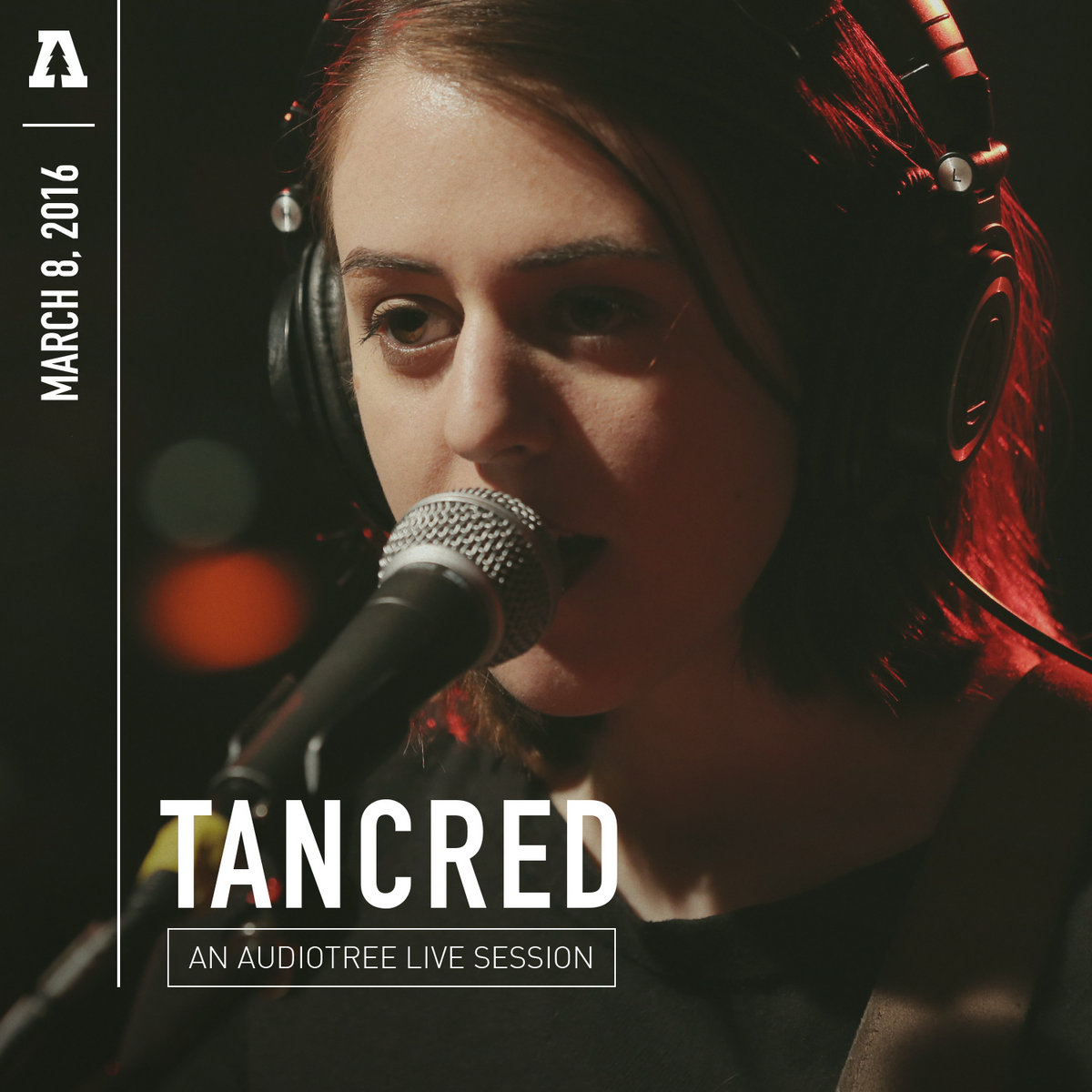
Tancred is the pop-centered, grungy guitar project of Now, Now member Jess Abbott. It’s been Abbott’s solo outlet since 2011 and has slowly separated itself sonically from the indie rock stylings of the Minnesota trio. Abbott herself is a reserved but energetic performer; her expressive face adds distinct emotion to the confessional lyrical content. Watch the band perform a few tracks here on Audiotree Live.
Jess Abbott formerly from Now, Now (Children) possesses one of the more haunting voices in Indie Pop. Tancred is a perfect fit for this amazing talent.
Her Voice is a little reminiscent of Juliana Hatfield. Audiotree gives these tracks the power that sometimes is hard to get on studio albums.
Band Members
Jess Abbott – Vocals and Guitar
Kevin Medina – Drums
Terrence Vitali – Bass
Tancred perform on Audiotree Live, March 8th, 2016.
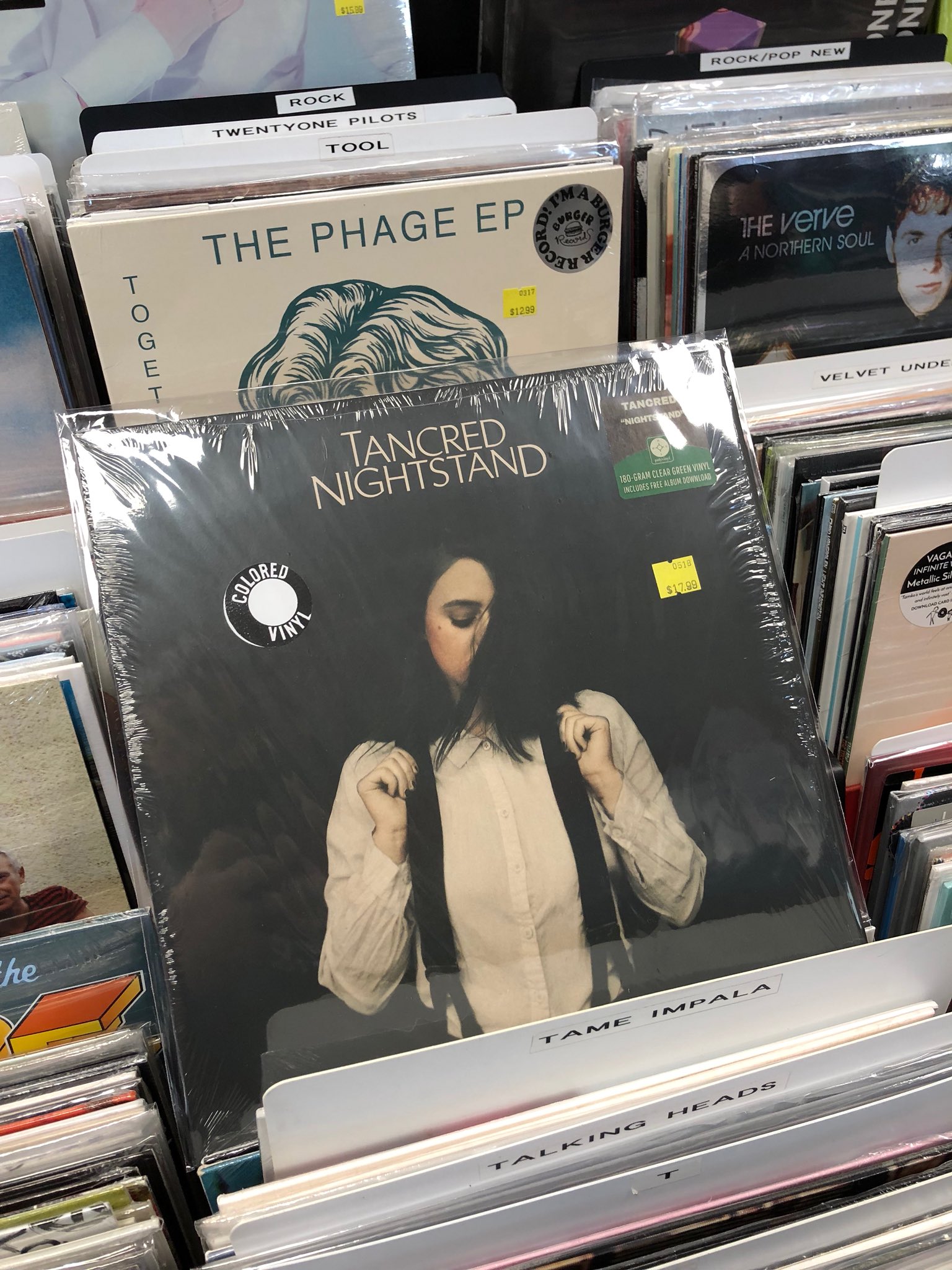
“I’m a loser sometimes / I will lose my mind sometimes,” Jess Abbott sings on “Clipping,” the shimmering, tambourine-inflected centerpiece of Tancred’s new album, Nightstand. After the themes of self-empowerment and self-possession Abbott explored on 2016’s Out of the Garden, these lines can at first seem like a bit of a worrisome relapse. And in a way, they do speak to an unexpected revelation Abbott experienced following her transformation into a more confident person.
“After I became comfortable in this new skin, in truly being myself, I was immediately hit with loneliness,” she reveals. “I realized that human connection is really important to me.” And so Jess Abbott began a new journey of personal exploration, one that involved connecting with other people just as much as connecting with herself. “I was reading a lot of books, learning a lot of new hobbies, meeting so many new people — just taking in as much information as possible to try and figure out what it really meant to me to be alive,” she recalls.
History is replete with such quests for the meaning of life, and with Nightstand, Abbott sought to tell her story in a way that would both connect with the past and resonate in the future. “I wanted the album to have a timeless feel to it, so you could hear my stories of love and loneliness and sense that these are themes that have existed for everyone forever,” she says.
As with her previous work, the writing process for what would become Nightstand consisted of Abbott alone in her room with just a guitar, strumming chords and singing words until gradually songs began to coalesce. As a result, when the recording process began with Lewis Pesacov (Best Coast, Generationals) at his home studio in LA, the focus was less on finishing songs and more on perfecting them. Working with Pesacov offered new approaches – and gear – previously undiscovered by Abbott, affording her avenues of exploration that dialed in the production and tone on each and every song.
The positive effects of this nourishing environment are evident throughout Nightstand, as on propulsive first single “Reviews,” showcasing Abbott’s strong melodic sensibilities balanced with purposeful, well-placed instrumentation. Or “Queen of New York,” which captures the feelings of fleeting lust set against a metropolitan backdrop, all within an effervescent three-minute bop.
Of course, it wouldn’t truly be a Tancred album if the upbeat melodies didn’t also serve to sugarcoat Abbott’s often somber lyrics about the experience of being a woman and being queer in today’s society. But even she is quick to emphasize that there is still comfort to be found during times of isolation or alienation: “Ultimately, we are all feeling these things together, and that can be enough to feel less alone. There’s a hopefulness in the loneliness.”
On Moon 2 Ava Luna’s de facto band leader Carlos Hernandez steps back, leaving space for the rest of the band members to step up and step into roles they hadn’t occupied on previous albums.
Felicia Douglass (now a touring member of Dirty Projectors) worked with percussion and sampler, Julian Fader experimented with synths, nearly every band member ran the computer during recording sessions, and BeccaKauffman (aka performance artist Jennifer Vanilla) composed her first song for the group “On Its Side the Fallen Fire,” a deeply layered orchestral piece of kate bush grandeur meets julia holter reverie. compared with previous Ava Luna albums, Moon 2 has fewer sharp turns into dissonance, fewer celebratory guitar parts, none of Hernandez’s signature screams. nevertheless, the infectious buoyancy of “Deli run” and “Walking with an Enemy,” are warm and bright, and songs like “Centerline” and “Phoebe (set it off)” venture confidently into pop territory. the title track, paint ing the elation and tumult of a crush, is set against a swaggering reggae bassline and warbling kraftwerk synths. “it’s like, every sci-fi movie has a nightclub,” says Kauffman.