The thing you won’t be able to avoid on Bambara’s latest album “Stray” is death. It’s everywhere and inescapable, abstract and personified ,perhaps the key to the whole record. Death, however, won’t be the first thing that strikes you about the group’s fourth and greatest album to date. That instead will be its pulverising soundscape; by turns, vast, atmospheric, cool, broiling and at times
Stand out tracks like “Sing Me To The Street” and “Serafina” simply overwhelming Bambara are twin brothers Reid and Blaze Bateh, singer/guitarist and drummer respectively, and bassist William Brookshire – have been evolving their midnight-black noise into something more subtle and expansive ever since the release of their 2013 debut Dreamviolence. That process greatly accelerated on 2018’s Shadow On Everything, their first on New York’sWharf Cat Records and a huge stride forward for the band both lyrically and sonically.
The album was rapturously received by the press, listeners and their peers. NPR called it a “mesmerising…western, gothic opus,” Bandcamp called the “horror-house rampage” “one of the year’s most gripping listens,” Shadow also garnered much acclaim on the other side of the Atlantic. Influential British 6Music DJ Steve Lamacq, dubbed them the best band of 2019’s SXSW, and Joe Talbot of the UK band IDLES said, “The best thing I heard last year was easily Bambara and their album Shadow On Everything.”
The question was, though, how to follow it? To start, the band did what they always do: they locked themselves in their windowless Brooklyn basement to write. Decisions were made early on to try and experiment with new instrumentation and song structures, even if the resulting compositions would force the band to adapt their storied live set, known for its tenacity and technical prowess. Throughout the songwriting process, the band pulled from their deep well of creative references, drawing on the likes of Leonard Cohen, Ennio Morricone, Sade, classic French noir L’Ascenseur Pour L’Echafraud, as well as Southern Gothic stalwarts Flannery O’Connor and Harry Crews. Once the building blocks were set in place, they met with producer Drew Vandenberg, who mixed Shadow On Everything, in Athens, GA to record the foundation of Stray.
After recruiting friends Adam Markiewicz (The Dreebs) on violin, Sean Smith (Klavenauts) on trumpet and a crucial blend of backing vocals by Drew Citron (Public Practice) and Anina Ivry-Block (Palberta), Bambara convened in a remote cabin in rural Georgia, where Reid laid down his vocals.
The finished product represents both the band’s most experimental and accessible work to date. The addition of Citron and Ivory-Block’s vocals create a hauntingly beautiful contrast to Bateh’s commanding baritone on tracks like “Sing Me to the Street”, “Death Croons” and “Stay Cruel,” while the Dick Dale inspired guitar riffs on “Serafina” and “Heat Lightning” and the call-and-response choruses throughout the album showcase Bambara’s ability to write songs that immediately demand repeat listens. While the music itself is evocative and propulsive, a fever dream all of its own, the lyrical content pushes the record even further into its own darkly thrilling realm. If the songs on Shadow On Everything were like chapters in a novel, then this time they’re short stories. Short stories connected by death and its effect on the characters in contact with it. “Death is what you make it” runs a lyric in “Sweat,” a line which may very well be the thread that ties these stories together.
But it would be wrong to characterize Stray as simply the sound of the graveyard. Light frequently streams through and, whether refracted through the love and longing found on songs like “Made for Me” or the fantastical nihilism on display in tracks like the anthemic “Serafina,” reveals this album to be the monumental step forward that it is. Here Bambara sound like they’ve locked into what they were always destined to achieve, and the effect is nothing short of electrifying.
Their narrative-based songs may be completely out of step with what’s happening in music right now, but that leaves plenty of room for New York City outfit Bambara to shine. Their gothic rock is gripping and shadowy, and Reid Bateh unfurls lines about characters who are much the same. Their new album, Stray, follows 2018’s Shadow on Everything.
“Heat Lightning” is from the album “Stray” out on 14th February 2020 . Order your LP/CD/Special Edition LP now.
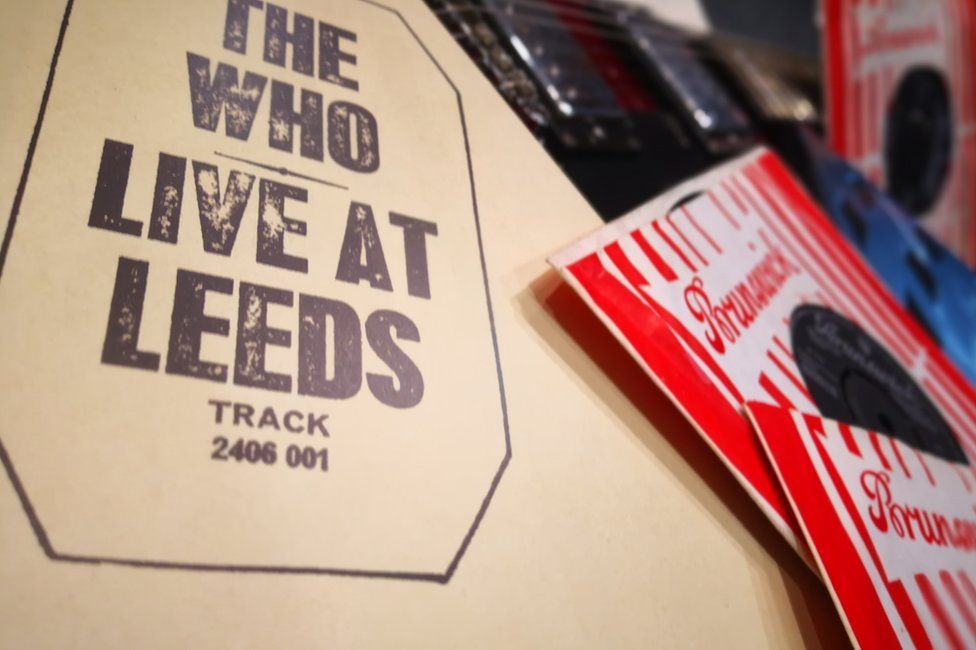
On the 50th anniversary of a legendary gig by The Who, people who were there have been recalling how the band “threw everything into it.” The rock group played at the packed University of Leeds refectory on 14th February 1970 and recorded the gig. The record it spawned, Live at Leeds.
It was 50 years ago today that the Who walked into the University of Leeds Refectory in Leeds, and played what many rock fans consider to be the greatest concert of all time. At the very least, the album they recorded that night “Live at Leeds” is one of the most celebrated live albums in the genre’s history, up there with the Allman Brothers’ At Fillmore East, Nirvana’s Unplugged in New York, the Band’s The Last Waltz, Bob Seger and the Silver Bullet Band’s Live Bullet, and Cheap Trick’s Live at Budokan.
To commemorate the 50th anniversary of Live at Leeds, the Who’s longtime sound engineer Bob Pridden to chat about the momentous gig. He joined their ranks in 1966 and, amazingly, stayed on the road with the Who until 2016 when he decided that half a century traveling around with a rock band was enough. “It was getting hard,” says the 74-year-old. “I wasn’t getting any younger. The pressure each night was getting hard for me.”
Pridden witnessed well over 1,000 gigs during his life with the Who, but he says they reached their peak in the late Sixties and early Seventies. “That’s when they were on fire,” he says. “The were working all the time and just on top of their game. As a unit of just four people, a band couldn’t be any better.”
It was his job to mix the sound every night for the room, but actually recording the shows for posterity wasn’t even a thought for the band in their earliest years. Tragically, that means that the hundreds of gigs they did between 1963 and 1968 have been completely lost to history beyond little bits here and there.
“About two years before Live at Leeds, I thought I’d try recording them with a couple of microphones plugged into a tape recorder,” Pridden says. “I brought an Akai seven-and-a-half–inch reel-to-reel and started taping shows on it. We went from that to a Vortexion where you can take a D.I. [direct input] into it and then put two mics into it and mix them in together.”
The enormous success of 1969’s Tommy forced the band to think more seriously about recording their shows. The rock opera gave them a huge new audience, but it was largely a studio creation that didn’t capture their explosive onstage sound. When they headed to America in the fall, Pridden was instructed to tape 30 shows for a live album that was envisioned as the perfect follow-up to Tommy. (Bootlegs were also becoming big business at this point, and the band wanted to beat the pirates at their own game.)
In Pete Townshend’s memoir “Who I Am”, he recalls speaking to Pridden after the tour and realizing he hadn’t taken any notes about the relative quality of each show. “There wasn’t enough time for us to wade through 30 shows again,” he wrote. “Plus we now had an additional eight that Bob had recorded in England — including the most recent show at the London Coliseum. For me to listen to 38 shows would take five days in a studio. Even with notes I would lose track. The live album was never going to happen if we didn’t do something, and fast.”
This was early in February 1970, and the band had only two gigs coming up before a long break, at Leeds University on February 14th and Hull’s City Hall the following day. “‘Hire an eight-track rig, record the shows, I’ll mix them both at home on my new eight-track machine, and the best of the two nights will have to do,’” Townshend instructed Pridden. “Bob was looking anxious again. ‘What do I do with the live tapes from the tour?’”
In a move he’d later label “one of the stupidest decisions of my life,” Townshend told Pridden to burn the tapes so that they’d never wind up in the hands of bootleggers. Pridden remembers the moment well all these years later. “I burned them in a dustbin in the back of a cottage I had,” he says. “I put them in the bin, dropped a match and that was it. I felt weird, but we were already planning on playing another show. I didn’t think that 20 years on people would be crying out for these things. But it couldn’t have been everything because some of them did eventually surface and they got used.”
Pridden’s bonfire put immense pressure on the Who as they headed to Leeds and Hull. They had just two nights to capture a perfect concert after thinking they could simply pick the best out of 30 in America. Making matters worse, the mobile recording kit that Townshend envisioned the label sending over wound up being “a bunch of bits and pieces in military-grade boxes” that arrived in a van. This equipment was set up in the cafeteria one floor below the general assembly hall where the Who were performing.
“They played in the room where students would get together and the headmaster or the teachers would talk from the stage,” says Pridden. “There were no seats at all and it was really packed. People were hanging off the side of the wall and onto things. It was packed to the gills. I don’t think these days that amount of people would even be let in.”
The set featured the vast majority of Tommy along with earlier hits like “I Can’t Explain,” “Happy Jack,” and “Substitute,” along with covers like “Fortune Teller” and “Summertime Blues,” and a nearly 16-minute version of “My Generation.”
“I played more carefully than usual and tried to avoid the careless bum notes that often occurred because I was trying to play and jump around at the same time,” Townshend wrote. “The next day we played a similar set in City Hall in Hull. This was another venue with good acoustics for loud rock, but it felt less intense than the previous night.”
When Pridden listened to the tapes, he was horrified to discover that John Entwistle’s bass parts somehow weren’t recorded at Hull. “Forget about Hull then,” Pridden recalls Townshend telling him. “Concentrate on Leeds.”
That show had its own problems though. In addition to intermittent clicks, the backing vocals weren’t recorded properly. “I arranged a session at Pye studios,” Townshend wrote, “played the show back, and John and I simply sang along. We covered the backing vocals in one take, preserving the immediacy of the live concert.”
Townshend tried slicing out the clicks with a razor blade and quickly realized it would be impossible to get all of them. But subpar-sounding bootlegs were flooding the market at this time, so the band just added a note to the label saying the clicks were intentional. The cover was a faded stamp reading “The Who: Live at Leeds” on brown paper, mirroring the look of illegal vinyl bootlegs of the era.
The original Live at Leeds, released May 23rd, 1970, featured just six of the 33 songs played at the show, and not a single one of them was from Tommy. It wasn’t until 1995 when a CD version arrived containing 14 of the songs, and the complete gig wouldn’t see the light of day until the release of a deluxe edition in 2001.
All this time, the master tapes for Hull sat in storage. They were presumed to be worthless because of the issues with Entwistle’s bass parts, but when prepping a 40th anniversary of Live at Leeds a decade ago, Pridden listened to the full Hull show for the first time. “That bass wasn’t there for the first five or six numbers,” he says. “Then all of a sudden it kicked in and stayed.”
He went to Townshend with his discovery. “Let’s get someone to overdub a bass on it,” Townshend said. “We can use it.” Horrified at the idea of someone else attempting to replicate John’s bass parts, Pridden came up with a better solution. “I thought to myself, ‘They did exactly the same set both nights,’” says Pridden. “‘Maybe we can lift the bass from the first few numbers on Leeds and drop it in.’ This is when Pro Tools was on the go.”
He tasked an audio engineer, Matt Hay, with the delicate task of lining up the Leeds bass parts to the Hull recordings. “We went in and set up an eight-track machine, which Hull was recorded on, and lifted the bass from Leeds and dropped it onto the track with Pro Tools,” says Pridden. “Poor Matt was running for two days and nights marrying the bass from Live at Leeds. But when we did, it was fantastic.” (Live at Hull was released on the 40th-anniversary edition of Live at Leeds in 2010 and as a standalone disc two years later.)
After the Leeds and Hull shows, the Who slowed down the pace of their touring considerably so they could focus on the creation of complex studio releases like Who’s Next and Quadrophenia. Their tours after 1971 were shorter affairs marked by private planes, drug binges, and sloppier sets, especially when it came to the work of Keith Moon. These were still incredible gigs by the standard of most any other band, but the magic of Live at Leeds — the culmination of seven years of relentless road work was never quite achieved again.
After Moon died in 1978, the group never again played as a four-piece band, despite coming close in 1999 and 2000 when Daltrey, Townshend, and Entwistle were joined only by drummer Zak Starkey and keyboardist John “Rabbit” Bundrick
“They are still fantastic, though,” says Pridden. “I went to the concert at Wembley last year. It was certainly different with the orchestra, but it was magical. Maybe the next thing they’ll do is go back to a four-piece, but I don’t think there’s a chance in hell it’ll happen. It would be amazing, though.”
And looking back at Live at Leeds five decades later, Pridden says he and the band were moving so quickly they didn’t realize what an amazing legacy they were leaving for future generations to discover. It was just another show.
“We were making history,” he says. “But we weren’t history. We never thought about making history. We were just wandering minstrels out there having fun.”
The Who Roger Daltrey – lead vocals, harmonica, tambourine Pete Townshend – guitar, vocals John Entwistle – bass guitar, vocals Keith Moon – drums
“Anyone who follows me or my music knows that I stan Ariana Grande. On my last tour, I thought it would be fun to cover one of her songs and it ended up being my favorite part of the set. It was very freeing for me to dip my toes into a style I’ve always wanted to sing, and I think it was a fun treat for my audience too. I got some requests from sweet people asking me to record the song – so this is dedicated to them.” Molly Burchhttps://www.youtube.com/watch?v=Jv693Qfd1xM
When Poliça’s Channy Leaneagh fell off her roof while clearing ice in early 2018, she smashed her L1 vertebrae and battered her spine, leaving her in a brace with limited mobility for months. Yet Poliça’s fourth album, “When We Stay Alive”, is not about one debilitating accident. It’s about the redemptive power of rewriting your story in order to heal, and reclaiming your identity as a result.
While recovering, Leaneagh’s doctor told her to focus not only on physical healing, but to meditate on the mental act of healing as well – working to erase the anger, regrets, and fear she felt about her fall. To do so, he suggested she rewrite the story she told herself about what happened on February 28th. Left alone with her thoughts and her back fully braced, Leaneagh would visualize herself slipping and falling not onto cement, but instead onto a cloud, landing safely before breaking into a sprint over snow melting to reveal tall blades of green grass. As she felt the positive effects of this mental exercise, she set about doing the same for other injuries and pains that she gripped onto from her past.
Prior to Leaneagh’s accident, she had been setting music aside as she raised her children and worked to make ends meet as a nursing assistant. Now in the still silence of healing, she found that a multitude of feelings were becoming very loud. Leaneagh realized her self-identity had become attached to her experiences of physical and mental trauma, and she began to consider what it would be like to live without the past as a burden. “I felt there were many things I could look at and say, ‘This happened to me but I’m okay now. It’s not happening anymore and I got the care I needed for it. Now it’s time to rewrite the story I tell about myself and to myself,’”
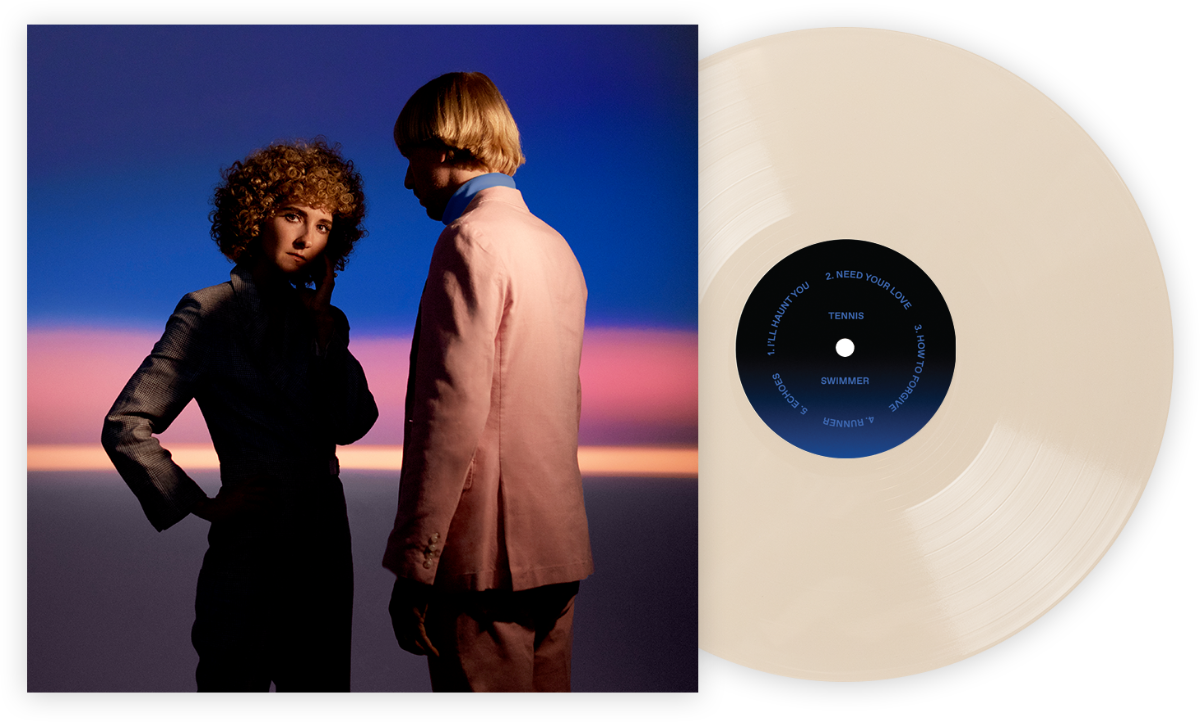
Denver duo Tennis, who released Yours Conditionally, back in March 2017, are back with their fifth LP, Titled “Swimmer”.
Swimmer is a tour of the darkest time in our lives. But it is not a dark record. Named for the feeling of suspension and upendedness that characterized this period, it is the story of deep-rooted companionship strengthened by pain and loss. These songs carried us through our grief. It is us at our most vulnerable, so we kept a small footprint, recording everything ourselves in our home studio. I set out to describe the love I have come to know after ten years of marriage, when you can no longer remember your life before that person, when the spark of early attraction has been replaced by a gravitational pull.
“Swimmer” explores a year marked by grief and loss. During that time, Patrick and I found ourselves turning to each other and our writing to make sense out of senselessness. The result is our most carefully crafted, intimate album yet. There is so much I could say about these songs, but I’d rather you hear them first.
“Swimmer” is available everywhere February 14th, 2020
His third solo album, 2007’s Glitter in the Gutter, saw singer-songwriter Jesse Malin pay tribute to a friend and fellow tunesmith with a song he called “Lucinda.” It took another dozen years, but Malin and that song’s inspiration, Lucinda Williams, have finally found the time to collaborate on a full-length project. Sunset Kids, Malin’s recently released album on Little Steven Van Zandt’s Wicked Cool label, was co-produced by Williams and her husband, Tom Overby, and it’s easily the most potent collection of Malin music since that earlier breakthrough set.
Sunset Kids arrives a full four years after New York Before the War and Outsiders, the pair of albums Malin released during a particularly prolific period in 2015, and three since Nothing Is Anywhere, his 2016 reunion effort with D Generation, the glam-punk band he co-founded in 1991. He hadn’t planned on taking this long to make a follow-up solo recording, but life, as it often does, had other plans for him. One after the other, Malin lost important people in his life, including his father, Paul; his West Coast engineer, David Bianco; former bandmate Todd Youth and others. “When you’re hit with all these heavy things, you either get beaten down or you find a way to jump back,” Malin says. He weathered the losses and chose the latter path.
“When there are hardships, I look to life and I look to music and say, ‘Let’s make the best of it and try to find a way to smile through it a little bit because there’s a lot of dark shit.’ It reminded me of when I made my first solo album and I came out of being in bands,” he adds. “As scary as it was, there was something liberating about it. This batch of songs started to pour out.”
Williams was an obvious choice as producer yet, at the same time, she wasn’t. Malin was born and raised in the New York City borough of Queens and quickly gravitated toward punk and, later, what’s now called Americana. Williams, more than a dozen years his senior, was born in Lake Charles, La., and grew up largely in Arkansas before embarking on a career that has landed her three Grammy wins and another dozen nominations.
Malin recalls first hearing Williams around 20 years ago on a duet she did with Steve Earle, and while neither of them quite remembers where or when they first met—it may have been at a Charlie Watts jazz concert at New York’s Blue Note—at some point, they came into each other’s orbit and a friendship ensued. As Malin began gathering songs for what would eventually become Sunset Kids, the notion of working together popped into his head.
“My manager would come to my house every couple of weeks and say, ‘What do you got?’ and we’d sit around my kitchen table,” he says. “Then, once he felt like we had a good amount of songs, he said, ‘Think about producers.’ That same week, Lucinda Williams had invited me to come out to LA to see her open for what turned out to be Tom Petty’s final concert at the Hollywood Bowl. I said to my manager, ‘What do you think of Lucinda Williams? She’s somebody I really admire and look up to, and it might be an interesting thing.’”
“It just felt real natural,” Williams says. “Tom [Overby] and I had been working in LA with David Bianco, at his studio, and Jesse really liked the sounds we were getting on my albums that I was doing with David. Jesse said, ‘Do you guys want to help me do my next album?’ We said, ‘Yeah, we’d love to.’ But it wasn’t like this out-of-the-blue thing; it happened organically.”
“As people, we’re different,” says Malin about Williams. “We come from such different places. We’ve met up on the road a lot and, if we are in the same town, we’ll go out and listen to music. And Tom is a really great guy. He’s a real fan and a deep listener of music and he had a lot of input in the record.”
Williams’ involvement wasn’t limited to sitting behind the board. She co-wrote two of the album’s key songs, the harmony-rich “Room 13” and the swampy rocker “Dead On,” and contributes vocals to those two as well as “Shane,” the album’s richest ballad. She also offered some sage advice on the lyrical content of the songs, which vary dramatically in style.
“He writes like crazy; he’s so prolific,” Williams says. “He would bring a song to me and have the melody and the structure of the song. He’d have a whole bunch of lyrics and a refrain. He brought ‘Room 13’ to me and said, ‘I’ve got all these lyrics. Can you help me go through and kind of narrow it down?’ So I asked him: ‘What are you trying to say in the song, exactly?’ I wanted to wrap my head around it and get inside of it. We’d go back and forth.”
“She’d be talking about this line or that line,” recalls Malin about the shaping of that same track, “and the next day, she took my six verses and said, ‘These are the three you should use.’ There’s something really open about sitting around with an acoustic guitar and a drink and just going through your stuff. But I was nervous. Even though she’s my friend, I was like, ‘Whoa, the body of work she has.’ But when you have somebody like that it makes you want to do better.”
Once they settled down to actually record, “There were different things going on in different studios,” says Williams. “He was still finishing songs and writing new songs as we were recording.” Most of the music was cut live in the studio, with some overdubbing. Several of Malin’s pals, including Green Day’s Billie Joe Armstrong and singer-songwriter Joseph Arthur, lent a hand with vocal or instrumental parts.
“With her instinct—from being around music or just having that kind of deep soul or some kind of Southern thing—we’d go in and record a song and do three takes,” says Malin. “We’d record to analog tape. Then we would listen and see if we nailed it, and if she was dancing and grooving her hips and moving, then we knew we had a take.” They recorded about 25 songs in all, with 14 finding their way on to the finished album.
“I know I was involved in the album, but Tom and I think this is the best album he’s made,” says Williams.
Jesse Malin’s official music video for “Room 13 (featuring Lucinda Williams)” from his new record “Sunset Kids”, available now on Wicked Cool Records.
Pleased to announce WIDE EYED, a brand new multi stage all dayer at O2 Academy Leicester on Saturday 16th May featuring the awesome Beak and plenty of Handmade alumni.
Rolling Blackouts, Coastal Fever have today released a new single called “Cars In Space”. Following on from last year’s releases ‘In The Capital’ and ‘Read My Mind’, The Aussie five-piece Rolling Blackouts Coastal Fever are back with a brand new slice of gorge guitar-pop, ‘Cars In Space’.
Speaking of the track, the band’s Fran Keaney says, “In my head this song is set inside a car. It’s the swirling words and thoughts before a break-up.” with the first glimpse of new music in 2020, and hopefully an indication that the follow-up to 2018 debut ‘Hope Downs’ could be on the way, the new track is accompanied by some sunshine soaked visuals.
Watch the video, which was co-directed by fellow Australian’s artist Julia Jacklin, No details of a follow-up to 2018’s acclaimed debut album Hope Downs have been revealed as yet, but a press release states: “Watch this space – 2020 is gearing up to be a big one for Rolling Blackouts CF.
Cars In Space is the new single from Rolling Blackouts Coastal Fever
Following last year’s debut solo effort “Your Capricious Soul”, Michael Stipe has now released a second solo single, “Drive To The Ocean”. Proceeds from sales of “Drive to the Ocean”, which is available to download exclusively from Stipe’s website, go to benefit climate-focused campaign Pathway To Paris.
Stipe, who turned 60 years of age on January 4th, also released an accompanying video message,
Visit michaelstipe.com to download this video, the audio and other bonus items, and donate to Pathway to Paris
So in 1972….you may have the album,but what a treasure of delights was released that year. Take 40 mins over the weekend to enjoy this wonderful record.
Waterloo Lily is a 1972 released album by Caravan on the Deram label. The track “The Love in Your Eye” has been featured as a Caravan live track for many years. Waterloo Lily is the only album by Caravan with Steve Miller as the keyboard player. Before the recording of Waterloo Lily, David Sinclair had departed Caravan to join forces with Soft Machine skinsman Robert Wyatt forming Matching Mole. With the subsequent arrival of the former Delivery member Miller had an overwhelming jazz influence, the edgier progressive rock and folk elements that were so prevalent on their previous albums are somewhat repressed.
The band’s performance level did not suffer in the transition. In fact, the addition of Miller only punctuates Caravan’s previously honed improvisational skills. Beginning with Waterloo Lily’s lead off title track, there is a sound more akin to the jazzier efforts of Traffic.
Steve Miller’s “Nothing at All” incorporates the jazz fusion even further as the long instrumental introduction more than hints at Steely Dan circa Katy Lied. The up-tempo staccato bop featuring Miller’s electric piano accents, when juxtaposed with Pye Hastings‘ liquid-toned electric guitar could easily be mistaken for that of Walter Becker and Donald Fagan. The remainder of the album centers on a couple of pieces that evoke the sound and spirit of the previous Caravan outings. Most reminiscent of the classic sound is Hastings‘ epic “The Love in Your Eye” suite. The track recalls the laid-back intensity and phenomenal improvisational synergy of earlier tracks such as “For Richard” and “Where, but for Caravan Would I,” while wisely incorporating Miller’s formidable jazz chops to give the instrumental sections sustained substance throughout.
The remastered CD offers three additional compositions circa the Waterloo Lily sessions. “Pye’s June Thing” and “Ferdinand” are two of Hastings‘ acoustic demos. A considerably more complete “Looking Left, Looking Right” is a treasured recovery from the vaults. Originally vaulted due to the time limitations of vinyl, this track, along with “Pye’s Loop” — which acts as a coda to “Looking Left…”
Miller brought a jazzier feel to the sound of Caravan than had been heard on the previous album through his stylings on the Wurlitzer piano rather than the Hammond organ favored by previous keyboardist Dave Sinclair. Guests Phil Miller and Lol Coxhill from Steve Miller’s previous band Delivery play on “Nothing at all”, an instrumental modeled after Miles Davis’s “Right Off”. Soon after Waterloo Lily, Richard Sinclair and Steve Miller left Caravan to play with Phil Miller and Coxhill in a re-formed Delivery, which led to the formation of the band Hatfield and the North.
Caravan
Pye Hastings – guitars & vocals
Steve Miller – Wurlitzer electric piano, grand piano, Hammond organ, electric harpsichord
Richard Sinclair – bass & vocals
Richard Coughlan – drums
The album cover is detail from “The Tavern Scene” from A Rake’s Progress by William Hogarth.