Led by brothers Mez Sanders-Green (vocals) and Mick Sanders (guitar), UK four-piece LIFE make snarling, gleefully hyper punk with a pop sensibility and a heap of attitude. Their second album, “A Picture of Good Health”, was released last fall and is recommended to fans of McLusky, Fontaines DC and IDLES (with whom they’ll be on tour in the UK in April). Known for their fiery live shows, Music video by Life performing “Bum Hour” . Life are at the crest of the current wave of UK guitar music alongside other scene champions . they channel bands such as The Fall, Blur and Parquet Courts. Their focus on community and witty, off-centre social commentary underscores everything they do. The band hail from Hull in England’s North East. Energetic frontman Mez jumps and dances around the stage with a death glare like Jarvis Cocker making love to Frank Sidebottom and the Sultans of Ping.
Life released their second album – A Picture Of Good Health – in September 2019 in partnership with PIAS and recorded with Luke Smith (Foals, Everything Everything, Depeche Mode) and mixed by Claudius Mittendorfer (Parquet Courts, Yak, Weezer). It was BBC 6 Music’s Album Of The Day, BBC Radio 1’s Album Of The Weekend and was one of BBC 6Music’s Albums of The Year; all four singles from the album were play-listed at 6Music.
New music, out now. We are so proud to give you “Switching On” our latest single taken from “A Picture of Good Health”. Watch our Wes Anderson influenced video created by ourselves
The new album is more personal, about mental health and inner turmoil. I think all of us had a breakdown at some point while making it” – Mez, Life.
Hull’s post-punk absurdist polemics LIFE made quite an impact with their DIY debut album. 2017’s Popular Music was championed by BBC 6Music’s Steve Lamacq and won firm fans (and friends) in fellow post-punkers Idles. Most unexpectedly, Popular Music even ended up in BBC Radio 1 Albums Of The Year list, where Life’s gnarly, Humberside riffs and scattergun wordplay kept unlikely – but deserved – company with the likes of Jay-Z, Skepta, the xx and Wolf Alice. Two years on, their eagerly awaited, dryly-titled second album, A Picture Of Good Health, ups the ante musically and lyrically.
Album available through Afghan Moon the album ‘A Picture Of Good Health’, released on the 20th of September 2019,
Hailing from Mungia, Spain, quartet Belako play very catchy indie rock influenced equally by new wave and punk, and sound like they could’ve come out of the early ’00s new rock renaissance. The band’s new album, Plastic Drama, is due out in May and you can check out first single “Tie Me Up,”
“Tie Me Up” talks about the assembly chain that we make up both human and oppressed or oppressive. Tai Chi is an event of resistance that immediate to time, representing lost balance and its origin millennia, turns its activity into remembrance of fighting an invisible enemy.
Band Members
Josu , Lore , Lander , Cris
Official Music Video for Tie Me Up from upcoming album “Plastic Drama” (Belako Rekords, BMG 2020), out on May 8th.
Marble Arch is, for all intents and purposes, Paris-based musician Yann Le Razavet who has been crafting hazy guitar pop for the last five years or so. His second album, “Children of the Slump”, dropped last year via French label Geographie and it’s a cool, groovy, kinda sexy record, with a focus on melody, keeping things interesting, and not overstaying its welcome. (You can also hear things like My Bloody Valentine, New Order and House of Love in their hazy dreampop sound.) Live, Marble Arch is a full band and they’ll be making their U.S. debut soon.
Named after the London based monument made of white marble and located on Oxford Street, Marble Arch have really though their second record through, having less artistic torments than financial issues – hence the title Children of the Slump. Meanwhile, Yann Le Razavet had some time to think about the musical tone and sounds of his new record. He didn’t want it to be labelled shoegaze nor dream pop. As a matter of fact, we’d be more likely to hear reverberated pop (Reminiscence), saturated pop (the infectious song “I am on My Way”), nostalgic pop (Moonstruck), synthetic pop (Instant Love) or even contemplative pop (Gold). “I think of Children of the Slump as being my real first album as opposed to the former one which was more like a collection of demos” the thirty-years-old artist confessed. The nine songs were mastered with the support of Barthelemy Bouveret (Good Morning TV, Brace! Brace).
We could easily couple Marble Arch and its vaporous and heady repertoire with bands such as The Radio Dept., Slowdive, The Wake (the Sarah Records period) and Deerhunter for they all have a common taste for shady guitars and pop-like melodies.
Two years of writing are summed up in the ending title “Children of The Slump” in which the author goes from laughter to tears. The Lannion born has enriched his leaning towards melancholy much like the roses on the grey Mercedes of the album cover. Children of the Slump by Marble Arch is the first release of the Géographie Label co-founded by Nicolas Jublot (Point Éphémère, Hello Acapulco) and Rémi Laffitte (Atelier Ciseaux). It is already one of the best records of 2019 first quarter.
When it comes to chops and technique on the instrument, Pete Townshend is rarely thought of as a virtuoso, but he may just be the best guitarist in rock’s history. Townshend soloed infrequently during the Who’s glory run especially if we’re talking about studio albums but no player has used the guitar to build up so much of a band’s sonic architecture.
Pete Townshend (born 1945 Peter Dennis Blandford Townshend), lead guitarist and principal songwriter of one of the world’s most successful bands The Who, was also known for his extravagant stage style. The Who’s shows often culminated in him smashing his guitar.
Such on-stage equipment destruction has now become part of rock and roll tradition and while Jerry Lee Lewis may have been the first rock artist to destroy pianos on stage, Pete Townshend was the first guitar-smashing rock artist. Rolling Stone magazine included his guitar smashing at the Railway Hotel, Harrow in September of 1964 in their list of ’50 Moments That Changed the History of Rock & Roll’. The Who are the best known and most brilliant expression of the most influential “youth movement” ever to take Great Britain, the Mods. Their career began in Shepherd’s Bush, a lower-class suburb of London, and took them through such places as Brighton-by-the-sea, scene of the great Mod-Rocker battles several years ago. Their first recording was “My Generation.”.
Townshend’s career with The Who has spanned more than 40 years, during which time the band grew to be considered one of the greatest and most influential rock bands of all time. The author of most of the material, the composer of most of the music and the impetus behind the Who’s stylistic stance. It was he, for example, who is credited with initiating the Union Jack style in clothes.
Townshend was the primary songwriter for the group, writing over 100 songs on the band’s eleven studio albums, including the rock operas Tommy and Quadrophenia, plus dozens of additional songs that appeared as non-album track singles, bonus tracks on re-issues, and tracks on rarities compilations such as Odds and Sods.
A genius for overdubbing, with a sense of scale and shape that bordered on the Bachian, and an underrated acoustic player, Townshend used the guitar as a tool to abet his singular compositions, and as the director within the band’s dynamics and interplay. While there are also stellar moments within Townshend’s solo career as well, here are 10 cuts from the Who’s heyday that work as a primer for his guitar brilliance.
10. “Pictures of Lily” (1967)
One of the best written singles of its decade—it’s essentially a short story in song form about masturbation, a post-Mod bildungsroman—“Lily” is typical of Who songs of this vintage for not having a guitar solo. But listen to the intense, driving chording of the song. Townshend has the firmest of grips on his guitar, his central riff acting as a path for Keith Moon and John Entwistle to follow. There’s bounce in that riff, too, a playfulness that provides congruity with the oh-so-cheeky lyric that turns out to have the warmest of hearts at its core
9. “A Quick One (While He’s Away)” (1968)
The album version is pretty great, too, ditto the Leeds and Hull live renditions from 1970, but this performance from The Rolling Stones Rock and Roll Circus stands as the best live Who cut of all. The band was tighter than a seaman’s knot thanks to working on Tommy in the studio. Townshend’s volume-swelling chords lend scope right from the opening section, which makes Moon’s fills feel all the more epic. Come the coda, as the power chords rain down and the intense hammer-ons come in clusters, it’s evident that here’s an artist who uses every last crayon in the tin.
8. “Anyway, Anyhow, Anywhere” (1965)
A strangely under-discussed early single, this is the Who growing up—fast—in large part thanks to Townshend’s guitar. Displeased with the feel of the preceding “I Can’t Explain”—they thought it wasn’t tough enough—the band boosted the energy quotient and Townshend decided to turn his guitar into a percussive element. Put simply, he bashes holy hell out of the thing on the instrumental blast-out-of-the-galaxy bit. What makes a guitarist think that way? See a rule, detonate a rule. This was a melding of avant-garde bona fides with a populist kick. Thrilling.
7. “My Way” (1968)
Finally receiving an official release in 2018, the Who’s April 1968 Fillmore East gig includes this Eddie Cochran cover, with Townshend’s tone blending rockabilly twang and proto-metal swagger. And lordy, that first guitar solo—distortion, a broad-assed tone, coppery sheen, a curl or two of vibrato. Then the second comes along and redoubles everything before some slashing power chords top us off.
6. “Pinball Wizard” (1969)
It’s a cool notion that one of the most indelible of all guitar tracks should feature both acoustic and electric guitars, and nary a solo in sight: how many other songs can you say that about? The opening riff is both easy to play and something that no one else would have thought of. Orson Welles would talk about the dozen or so ideas that might just come to a genius, like a gift from the gods, without laboring over them, and one has the sense that the song-starting guitar figure fit that bill for Townshend. It’s as central to rock riffology as the Kingsmen’s “Louie Louie,” the Stones’ “Satisfaction” or the Kinks’ “You Really Got Me.” And that’s not even the guitar high point of the song. For that we have to turn to the over-loud—but pleasingly so—crunch that follows the “sure plays a mean pinball” line, especially on the second pass. You can just about feel Townshend’s entire body leaning into his instrument.
5. “5:15” (1973)
There may be no better guitar album in rock than Quadrophenia, the Who’s second double-album rock opera. The guitar textures are tapestries that could hang on a museum’s walls, were it possible to mount sound. This brassy strut of a song, with its angry-young-man lyrics about various boasts that, of course, will never be brought off, bubbles with aggression and ego, which is also to say, the insecurity of the hero of the piece, Jimmy the Mod. Townshend’s solo channels the energy of a Motown horn section, and Roger Daltrey can’t stop himself from vocalizing through it. It just feels good—like Jimmy does as he rides those rails.
4. “My Generation” (1970)
This fourteen-and-a-half-minute rendition of the Who’s unofficial anthem from Live at Leeds is practically an album unto itself. Townshend’s guitar has a lot of responsibility: it triggers the next spate of improvisations from the band, brings them to a stop so as to start something else, solos with gusto, and unleashes enough riffs to stock another guitarist’s career. A Townshend riff is never just a riff: it can double as the basis of a song that will be further fleshed out. Near the end of this performance, he starts playing against his own echo from the back of the hall. No guitarist was better at waiting than Townshend, allowing a sound or an idea to develop. He plays a figure, the echo repeats it, with the effect that it’s in a slightly different, more compressed key, and another cue for invention is taken from that.
3. “Overture” (1969)
The opening number from Tommy has a lot of instrumental high points—Moon’s drumming, for instance—but listen to the acoustic playing in the song’s segue sequence near the end. Arpeggios ripple outwards, delicate figures possessing almost flower-like forms dance, flamenco movements intercede and Townshend gives his guitar a couple of open-palmed whacks that produce echoes to further vibrate the strings.
2. “Won’t Get Fooled Again” (1971)
An anthem in which a synthesizer and a power-chording guitar essentially duet, and drums pop from all directions, “Won’t Get Fooled Again” is like two kinds of concertos in one. Again, no guitar solo, and so much of the guitar you do hear comes in impeccably placed staccato bursts. The tone is crucial to the overall sound design; and where else can you hear a tone that sounds like a tendril of frozen fire being dragged across a radiator grill?
1. “Quadrophenia” (1973)
There are moments in the title track from the Who’s second rock opera album that Townshend’s guitar so seamlessly assumes the characteristics of its surroundings that it doesn’t sound like a guitar at all. The lines are regularly pinched, tamped down, which lends them a greater reverby quality, and a greater sing-song one, too. No player had a more vocal guitar than Townshend, in terms of making the instrument sing. He varies his pacing throughout, so that when the synth goes faster it feels natural that the guitar should immediately start to dance alongside it. And when the cut slows down and the heavens feel as though they’re opening up, it’s the guitar that comes descending down from them.
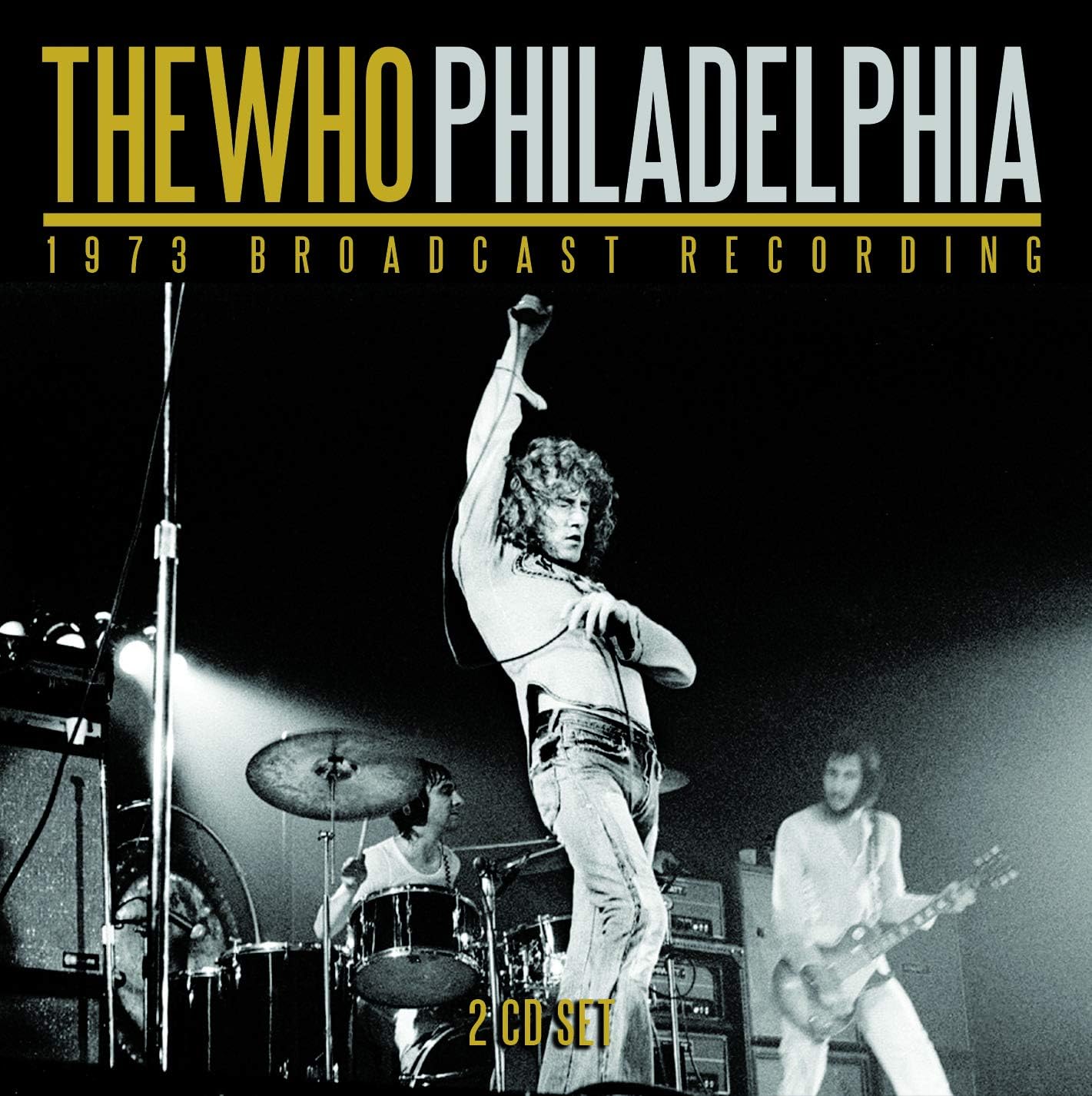
Of all the shows on The Who’s legendary “Quardrophenia” tour in 1973, none stands out more than the penultimate show in Philadelphia on December 4th. Parts of this show were broadcast on the King Biscuit Flower Hour and titles surfaced almost immediately taped directly from the radio broadcast.
The first is the famous “Tales From The Who” (TMOQ) which featured one of William Stout’s most well known covers featuring the band in cages a la a box of animal crackers cookies. Over half of this two-record set is devoted to selections from the then-new Quadrophenia, and there’s an amusing story about this recording. Normally when the King Biscuit producers put out live concerts for commercial broadcasts, they carefully bleeped out any obscenities, but in this case they overlooked some. The New Orleans radio station that aired this program was unaware, like the show’s producers, that “Dr. Jimmy” contained a four-letter word, and it was duly broadcast. However, whichever station provided the broadcast that served as the source material for this bootleg had a station manager or program director familiar with the song, so they duly dubbed the KBFH disc to reel-to-reel tape and spliced out the offending word prior to airing the program (producing the bizarre line “Her fella’s gonna kill me/Aww, f-ill he”), but even they missed another one slipped into “My Generation.” The bootleg label’s claim that this is a quadraphonic release was a bit laughable, because it couldn’t been taped off the radio in quadraphonic, and trying to convert it after the fact would have had all the success of the pseudo-stereo records of the 1960s. According to William Stout, who designed the colorful cover that was a knockoff of classic horror comic book covers, only 120 copies of this two-record set were released, as the operators of TMOQ knew that the FBI was on their trail and, in a fit of panic, they destroyed all other copies of the release (as quoted in Bootleg: The Secret History of the Other Recording Industry by Clinton Heylin).
Like most King Biscuit broadcasts, the sound isn’t quite as good as typical commercial live rock records, but this collectable is far better-sounding than any other bootlegs featuring the Who, and its extreme rarity makes it a very valuable recording to own, superseded only by the original King Biscuit Flower Hour LPs distributed to the network radio stations for the broadcast.
This release was copied on “Who Are You” (Ruthless Rhymes), copy of the TMQ release with five songs from a 1971 audience recording. The Ruthless Rhymes release was copied on the German release “Mods & Rockers”(Ruthless Rhymes) and on another German title called Mods & Rockers (Slipped Disc) in 1974.
The final vinyl release was Decidedly Belated Response (TAKRL). This new release contains the recently surfaced, more complete version of the Spectrum show for the first time ever. “Substitute,” “The Punk And The Godfather,” “5:15,” “Drowned,” “Naked Eye” are new to on this release with only “Love, Reign O’er Me” being the only song missing from the setlist.
The sound quality on this release is nothing short of phenomenal. Given the phenomenal performance, this is simply a fantastic release. The set begins with a few older numbers to warm up the audience. After a moment of audience buzz the band launch into “Substitute” and “I Can’t Explain.”
The Band:
Roger Daltrey: Vocals, Harmonica John Entwistle: Vocals, Bass Keith Moon: Vocals, Drums Pete Townshend: Guitar, Vocals
You may not know Kiwi Jr., but you’re probably more than familiar with the sensations their music brings about. They might sound like all your favorite 1990s and 2010s indie bands, but you really can’t beat guitar-pop if they’ve got the gratifying hooks—and Kiwi Jr. deliver those goods and more. Their debut album, Football Money, is lyrically amusing and melodically euphoric—what more could you want from a band like this?
Just when you think you have heard every catchy hook laden song in pop history and believe there is nothing left in the tank in 2020 songs burn bright and all sparkly on tracks that make the hairs on the top of your ears reverberate like antennas.”.
Toronto’s Kiwi Jr. are probably sick of Pavement comparisons at this point, but it’s hard to listen to their excellent 2019 album, “Football Money”, and not think of Stephen Malkmus’ old band at least a little, given the slacker pop jams and singer/guitarist Jeremy Gaudet attitude-heavy delivery. But Kiwi Jr. bring to the proceedings their own bouncy pop style, more than a little Britpop flair, and style (and hooks) for miles and miles. Having just given Football Money a U.S. release in January.
As frontman of The Charlatans (or The Charlatans UK in the states) for decades, Tim Burgess has become an alternative rock statesman. Arising in the early ’90s during the thriving Madchester and Britpop crazes, The Charlatans have dipped their toes in a lot of styles over the years, but Burgess has remained an interesting figure and compelling songwriter all these years later. Burgess is also an author of several books and an adept solo musician, and his fourth solo album, I Love The New Sky, which was announced with playful lead single “Empathy for the Devil,” is due out May 22nd on Bella Union Records.
Tim Burgess has brought us a lot of joy this past month or two. He’s spoiling us because his brilliant debut for Bella Union Records, “I Love The New Sky” featuring label fave Peter Broderick no less, is imminent.
There’s a very limited edition of the SPLATTER vinyl with signed postcards
While in The Charlatans, Tim’s indefatigable energy has been a consistent fuel for the band across thirteen high-charting albums, his solo adventure has been no less extraordinary, scaling new heights in 2020 with his fifth solo release to date: it features wonderfully connective songs of everyday minutiae and universal experience, of love and anger, of loss and belonging, all united by elaborate yet natural arrangements and an effortless but deceptively expert way with melody.
‘I Love The New Sky’ differs from its predecessors in that all twelve tracks were self-penned. “In the past, I’ve written collaboratively,” says a characteristically, but rightfully excited Burgess. “(2012’s) ‘Oh No I Love You’ was written with Lambchop’s Kurt Wagner in Nashville, and then ‘Same Language, Different Worlds’ was a collaboration with Peter Gordon who had worked extensively with Arthur Russell.”
The twelve tunes of ‘I Love The New Sky’ were authored, he says, “in Norfolk, in the middle of the countryside, with the nearest shop eight miles away. There are no distractions, and I guess that way things happen. I wrote everything on acoustic guitar, and the chords were really considered. The guitar lines would lead the melody, and the melody would inform the lyrics – just dreaming away with music.”
So far, so Laurel Canyon, though ‘I Love The New Sky’ would end up sounding anything but hippie/folkie, thanks to a connection Tim made while living in a warehouse space in gritty Seven Sisters in North London, before heading to Norfolk.
“The Quietus had their office there,” he recalls. “I used to know pretty much all the stuff they were writing about, but then their album of the year for 2013 was ‘Glynnaestra’ by Grumbling Fur, and I really fell in love with it. I started talking to the band about working together. To cut a long story short I recorded a song with Grumbling Fur,
Lyrically, this might almost be a defining collection from Burgess after thirty years honing his craft. There’s plenty of typical lightness of touch of ‘Only Took A Year’s joking reference to the album’s twelve-month gestation period,
Scottish rockers Catholic Action released their debut album, In Memory Of, back in 2017, and had it dropped in the ’00s when bouncy, vaguely garage rock was all the rage, they could’ve made a big splash. Their sound rests on perfectly distorted guitars, distinctly genial and commanding vocals and jumpy bass lines that are almost too good to be true. Their forthcoming second album, Celebrated By Strangers, is due out on March 27th via Texas label Palo Santo Records, and despite its political bent, they can still write the hell out of a pop song.
Holy Wave is an experimental dream-pop band originally from El Paso, Texas. After seeing a life-altering performance by My Bloody Valentine in 2008, the band moved to Austin to pursue their own vision of Texas psych, their sweet melodies dyed in carefully constructed noise.
Over the course of four albums, the band have cemented themselves as a staple force in the international indie scene, with key performances at Levitation, Desert Daze, and nearly every psych gathering on the planet. They’ve toured the world, and shared the stage with heroes such as Slowdive, Spiritualized, Hope Sandoval and The Black Angels. Their body of work has received critical acclaim from Pitchfork, Consequence of Sound, Paste Magazine and countless others, and in 2020 they are prepared to release their latest body of work.
Interloper sees the band adding new layers to their lush and mesmerizing songwriting style. Written about the duality between life at home and life on the road, it sees the band expanding on their most esoteric and thought-provoking themes. “I’m Not Living in the Past Anymore” is a mantra about breaking the cycle of the mundane, “Escapism” is a dream-like meditation. “Interloper” serves as the centerpiece for this self-expanding record, asking, what happens when the world beneath your feet changes so much that you feel like a stranger in your own shoes? The band turns inward, to blissed-out moments on album opener “Schmetterling”, the saccharine haze of “R&B”, and the freak-out catharsis of live favorite “Buddhist Pete”.
With Interloper Holy Wave weaves together a contemplative tapestry that can serve as a road map for the diffident, a soundtrack to self-realization, or simply an invitation to escape.
Interloper sees the band adding new layers to their lush and mesmerizing songwriting style. Written about the duality between life at home and life on the road, it sees the band expanding on their most esoteric and thought-provoking themes. “I’m Not Living in the Past Anymore” is a mantra about breaking the cycle of the mundane.
The Reverberation Appreciation Society is proud to announce Interloper, the new record from Holy Wave, out May 8th, 2020.
Brooklyn post-punk outfit Public Practice built up a wave of buzz with their debut EP, Distance is a Mirror, back in 2018, and for good reason—its New Wave-infused post-punk was as sharp as it was funky. The band, which features members of Wall and Beverly, recently announced their debut album Gentle Grip is out on May 15th via Wharf Cat Records, and the news arrived with one of their best tracks yet, “Compromised”—a motoring punk-pop romp.
Public Practice is band based in New York City
Members include Sam York = Vocals, Vince McClelland = Guitar, Drew Citron = Bass/Synth/Vocals, Scott Rosenthal = Drums
From the debut album Gentle Grip out 5/15 on Wharf Cat Records.