Sylvain Sylvain, best known as the guitarist of the New York Dolls, died Wednesday (13th January) after a long battle with cancer. He was 69 years of age. Bored of their heroes’ increasing indulgences, The Dolls’ mission was simple: to restore rock’n’roll to its rightful place as a flamboyant, dangerous cultural force. And, while David and Johnny would become the figureheads of the band, Sylvain Sylvain was its beating heart and chief strategist.
The news was announced today on Sylvain’s Facebook page. Lenny Kaye, a guitarist in the Patti Smith Group, penned a lengthy tribute to the proto-punk and glam rock pioneer. “Sylvain battled cancer for the past two and a half years,” Kaye wrote. “Though he fought it valiantly, yesterday he passed away from this disease. While we grieve his loss, we know that he is finally at peace and out of pain.
“Please crank up his music, light a candle, say a prayer and let’s send this beautiful doll on his way.” In April 2019, the guitarist revealed that he had been diagnosed with cancer, and set up a GoFundMe page to raise funds for treatment. It is unclear what form of cancer he had.
Sylvain was born Sylvain Mizrahi in Cairo, Egypt in 1951. Not long after his birth, his family fled the country to escape anti-Semitism, eventually settling in New York after a period in Paris.
In 1972, Sylvain befriended New York Dolls drummer Billy Murcia and joined the band, serving as rhythm guitarist until the iconic outfit’s dissolution in 1977. He would also be part of the Dolls’ reunion in the mid-noughties, releasing a trio of records: One Day It Will Please Us To Remember Even This (2006), Cause I Sez So (2009) and Dancing Backward In High Heels (2011).
To call the New York Dolls different is something of an understatement. Formed in 1971, the five-piece of David Johansen (vocals), Johnny Thunders (guitar), Arthur ‘Killer’ Kane (bass), Billy Murcia (drums) and Sylvain slunk out of the Bronx, seemingly having raided their girlfriends’ wardrobes for their clothes and having rifled through their make-up bag for their rouge. Following the band’s split, Sylvain would embark on several other musical projects – working on David Johansen’s solo albums (for which he wrote a number of songs) and a record of his own, as well as playing with several other musicians. He would, however, always remain a Doll.
Fiercely proud of the band’s music and legacy, he was a key instigator in the New York Dolls’ reformation in 2004. He was equally disappointed to find that David – who’d subsequently enjoyed a parallel career using the pseudonym Buster Pointdexter and as an actor – was going through the motions. Despite the fact that the re-constituted Dolls released three new studio albums, Sylvain remained angry with David when the latter refused to commemorate the 40th anniversary of the band’s debut in 2013.
“It’s sad nobody’s doing anything about it. It would’ve helped if everyone had gotten into it, including our frontman, but nobody got into it,” he said at the time.
Two years later Sylvain would leave his adopted hometown of New York for Nashville. He presaged his departure with a tune about that very subject – 2012’s Leaving New York, a track full of the man’s typically romantic spirit.
Sylvain was also a prolific solo musician. He released his debut solo record, Sylvain Sylvain, in 1979, and continued playing in bands such as The Criminals and The Batusis well into the 2010s.
Lande Hekt wouldn’t call herself a role model. That would be weird. But she is someone whose words have become important to a good number of people. Across two albums and a slew of short-form releases with Muncie Girls, she has earned a rep as one of the most interesting, emotionally engaging writers in UK punk.
Her first solo full length, which follows up last year’s “Gigantic Disappointment” EP, relies on the trust found in that relationship between artist and listener. “Going to Hell” details Hekt’s experience of coming out as gay, and ranges from the all-consuming uncertainty of the opener “Whiskey” to golden hue of “Winter Coat”. All the while she attempts to foster a feeling of community for anyone who sees themself reflected back by the songs.
“That was in my head not just when I was writing, but when I was trying to push the theme on the record,” Hekt says. “I didn’t have anywhere near enough queer role models in bands that I listened to, and it had a negative impact in terms of my identity. Trying to put more queer music into the world is important to me, because you never know who might hear it. They don’t have to be young, it could be anyone who’s struggling with coming out or anything like that.”
She adds: “Things have begun to change in the past few years, which has also probably been important for me, to feel comfortable in talking about it in a scene that’s more welcoming. Ten years ago, it would have been a massive thing and would have alienated you as a band. Now, you can exist within multiple different scenes while also being gay, and not be singled out as ‘just a gay band’. I think it has changed, but I was definitely damaged by growing up in a heteronormative scene.”
“Whiskey” is an important moment. Its place at the top of the order isn’t an accident, and it lays the table both thematically and musically, finding Hekt stuck between stations in a personal sense while calling on the indie-rock-literate palette that she utilises throughout. “Is it meeting someone who’s not into bands? Is it weird that they still understand?” she sings during the chorus.
“I wanted to set the scene with that song because it is the truest one on there in terms of the theme of coming out as gay, and the one that grapples with the subject,” Hekt says. “With the last Muncie Girls album I put the song that scared me the most at the beginning. I think it’s a good rule of thumb. If you’re going to do something, commit to it. If I’d have been half-heartedly like, ‘This record’s kinda about coming out as gay but it’s kinda not…’ Then people would be like, ‘Okay…’ It makes more sense to put it at the top as something to be proud of.”
Going to Hell was recorded pre-lockdown in the Adelaide Hills with the Hard Aches’ Ben David following a tour of Australia. It is a solo record in every sense, with Hekt playing almost every note. “It’s Ben’s studio, so we weren’t restricted to times of the day and stuff like that,” she says. “We were able to get a little bit more down than maybe I would have recording in a commercial studio.
“We tracked a guide guitar and vocals and then I played drums along to that, tracked bass over it, then guitar, then vocals. It was pretty intense but also really rewarding because it’s 100 per cent creative control, and fucking around was really fun. It was a super immersive experience and I think we both just got a little bit creative with plugins and effects that we maybe wouldn’t normally have used.”
Chiefly, Hekt and David sought out a sound that felt honest. The record is a treasure trove of nods to her influences – from the Sundays’ gauzy guitar tones to the ringing jangle-pop riffs that light up “December” and “Stranded” – but it’s not artificial or forced. Gear-wise they wanted to maintain a level of unfussiness, generally pairing David’s road-worn Telecaster with a Twin Reverb, and tried to pull out atmospheric threads that had already been woven into the songs.
“We kept it super simple,” Hekt says. “One combo at a time, not going through three amps at the same time. We wanted a true sound for the guitars, with those obvious effects on top. It wasn’t a gear heavy record. We weren’t spending ages working through different heads.” She adds: “When I demo I tend to use a lot of reverb and delay. We did have a conscious decision of using a lot of slapback on the vocals, and we didn’t want any dry guitars on there.”
The Jenga-tower layering of Going to Hell is similarly drawn from Hekt’s increasing interest in intersecting guitar parts. Nominally the bassist in Muncie Girls, she has in recent years begun to play second guitar live to bring out that element of their sound. Here, those melodic feints and counter-punches are pushed front and centre as her vocals cut through the hustle and bustle.
“With Muncie Girls I write the songs on an acoustic and demo a second guitar in,” she says. “We then develop them into the parts they’ll become. I want to eventually play these songs with a full band, having two guitarists. I do like layering. As Muncie Girls have gone along we’ve written more prominent second guitar parts, so that’s in my mind as a typical four piece rock band setup where you can play around with differing melodies. It becomes more of a textural thing, and that’s probably built into me now through Muncie Girls.”
Going to Hell achieves its goals because of Hekt’s honesty and her way with a crunchy indie-punk hook. It just works, and in that balance it has the capacity to reach those who might need to hear it. “It does help to have people making music that’s relatable,” she observes.
Lande Hekt’s “Going to Hell” is out on 22nd January through Get Better Records.
Since their foundation in 2014, this malevolent rogues gallery of luminaries of the UK underground have consistently proven to be capable of projecting vibrations that transcend and usurp any idea of the sum of their component parts. It is true that they’ve clocked up notable experience sparking tinnitus with everyone from Mugstar and Bonnacons Of Doom (bassist Jason Stoll) to Dethscalator (vocalist Dan Chandler and drummer Stuart Bell) and from Earth (guitarist Jodie Cox, who also introduced keyboard player Ollie Knowles to the melee) to a dizzying variety of endeavours from the paint-stripping skronk of Dead Neanderthals to the righteous ire of Idles (all via saxophonist Colin Webster). Yet Sex Swing represents less a group of disparate musicians pooling their resources, and more a peculiar spark of collective chemistry, with all forces gravitating towards the pursuit of the same dissolute and mysterious goal.
There are no flashy guitar moments on this album. Instead, “Type II” is an argument for the guitar as a buttress. From the drop-tuned chugs of Skimmington Ride to the feedback that catapults slow-build squall-stomp closer “Garden of Eden – 2000 AD” to its conclusion, every sound emitted by Jodie Cox’s Fender Squier Vintage Modified Baritone Jazzmaster strengthens the band’s bilious psych-noise screed, forming the critical bed for the screeching sax, monotone vocals and more.
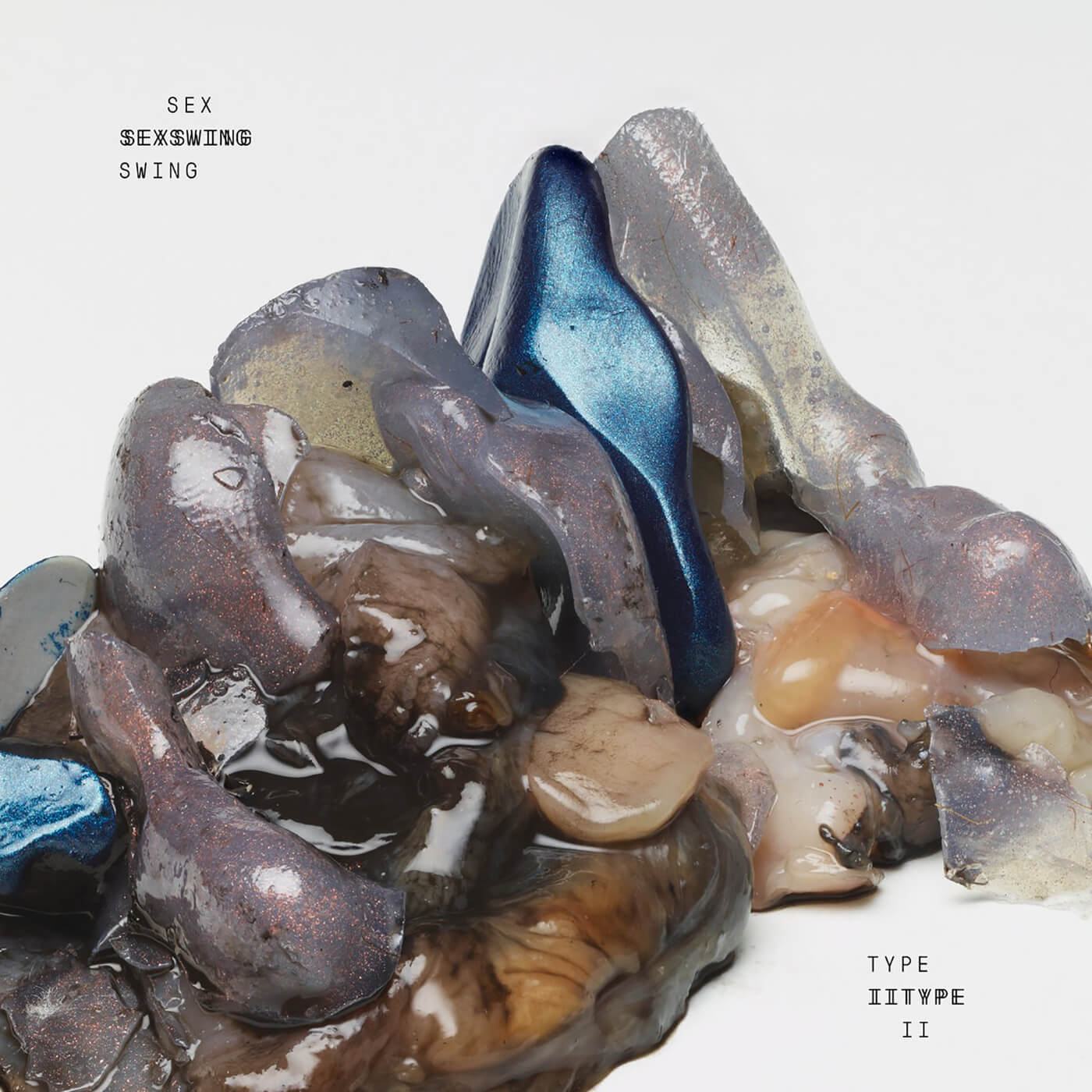
With songs that melt into the best kind of textural melange, Sex Swing seem uniquely equipped to dig their fingers into the fabric of time and stretch it all out of shape. Perfect listening, then, for a punishing year that’s felt as much like a whistle-stop tour of Hell as it has an eternity in Limbo. Type II is that goal reached in effortless style and amplified to intimidating aural vistas. This mighty monument of swagger and malice also sees fit to add a certain amount of glitter to the trademark grit this time around. Just as the artwork from long-term collaborator Alex Bunn boasts a luminous sheen absent from the unsettling abjection of the sleeve of their 2016 debut, so the rolling grooves and mantric hypnosis here boast a new-found structure and a feline sleekness fresh and unusual for this pugilistic outfit. Nonetheless, this remains a band fundamentally obsessed with the expression of decadence and wrongdoing through the mediums of repetition and overloaded frequencies. Type II is more than the mere machinations of a rock band – it’s a howl of malfunction rendered terrifyingly visceral. It’s the lightning flash and unearthly roar of the primeval battle between Godzilla and Mechagodzilla that provokes awe and disquiet in the realm of fantasy, It’s the haunted clangour of the faullty air conditioning unit that lurks in the anonymous office building yet lends it eerie ambience. It’s man vs machine where discord becomes harmony, and it’s a fearsomely invigorating spectacle to behold.
Type II is more than the mere machinations of a rock band – it’s a howl of malfunction rendered terrifyingly visceral. It’s the lightning flash and unearthly roar of the primeval battle between Godzilla and Mechagodzilla that provokes awe and disquiet in the realm of fantasy, It’s the haunted clangour of the faullty air conditioning unit that lurks in the anonymous office building yet lends it eerie ambience. It’s man vs machine where discord becomes harmony, and it’s a fearsomely invigorating spectacle to behold.
“Type II”Rocket Recordings Released on: 2020-05-15
The difficult second album is one of the oldest, hoariest cliches in the music writer’s handbook that is fair weighed down by old, hoary cliches of every stripe. On the other side of the line is the musician’s desire to point out that they have reinvented themselves on their new record, tearing up blueprints and smashing the reset button. You can smell that one from a mile off, too. So, what to make of Shame and their difficult second album Drunk Tank Pink, a record that they say tears up blueprints and smashes the reset button?
Two years on from their cacophonous breakthrough Songs of Praise, a gobby, propulsive missive from the new wave of British post-punk, the London quintet have disassembled their sound and reconstructed it, adding anxious, antic energy and oddball textures to a palette that could skew slightly straightforward on album one. At times, album two is a cacophonous, howling beast, at others it’s a motorik dance party in the vein of David Byrne and his massive suit. Even when it’s in the same ballpark as its predecessor there’s something punchy or off-putting about its delivery. Its finger is always hovering over that reset button.
With a second record there’s always the reserve of the fact that people already have a built up preconception of you as an artist,” guitarist Eddie Green says. “Any deviation from that comes with an element of risk. It wasn’t so much something we were worried about. I saw it as a freedom. It encouraged us to go a little bit more off-piste, starting with deconstructing the writing process and doing things differently. Obviously there’s risk involved because with any change of direction there’s a significant chance that people aren’t going to like it.
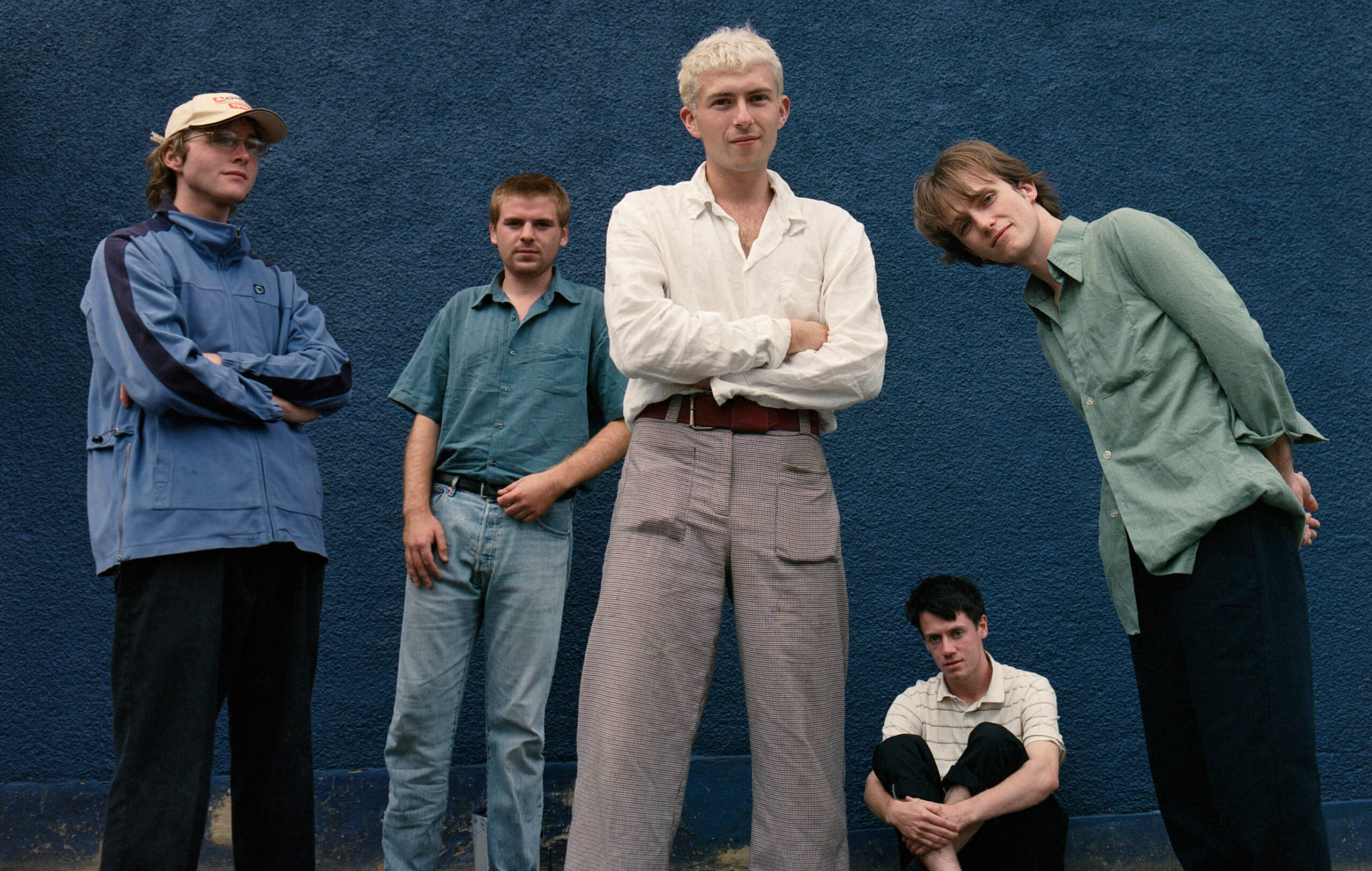
Shame have been doing this for half a decade or so, moving quickly from being old friends and friends of friends to bandmates and scene mainstays orbiting the febrile creativity and visceral south London grot of the Windmill and the Queen’s Head in Brixton. They were young then. They’re still young now. But their odometers are heavy with digits. Following the release of Songs of Praise in 2018, their impulse to play as many shows as possible was indulged at every turn.
The band – completed by two Charlies in vocalist Steen and drummer Forbes, plus guitarist Sean Coyle-Smith and bassist Josh Finerty – left behind their little world and toured a lot. Each mile that they ate up taught them something that informed “Drunk Tank Pink”. “You’re in the van fucking listening to so much new music all the time,” Finerty observes. “Or seeing other bands at festivals,” Green chimes in.
But the main thing these shows illuminated for them was that they had to break out of the rut formed by playing the same songs night after night. Having come to view his guitar as a tool rather than a creative implement, Coyle-Smith went the full Sonic Youth with alternate tunings onDrunk Tank Pink, also taking inspiration from Talking Heads’ punk-adjacent skronk, Talk Talk’s kaleidoscopic pop and the bassy, interlocking six-string workouts of Nigerian highlife. Steen wrote his lyrics in a cupboard at his flat that’s painted Baker-Miller pink, or drunk tank pink – because anecdotally, it’s been observed to calm aggressive behaviour. Kendall Jenner has also pushed it as an appetite suppressant, so there’s that as well. As Shame sought to recalibrate, it worked for Steen.
“It’s definitely a learning process of how to contend with the fact that for x number of months a year your life is this constantly exciting, constantly stimulating thing, and then the other half is the complete opposite,” Green says. “The juxtaposition is something you have to learn to navigate internally. It definitely takes a lot of adjustment and getting used to, to be happy just sitting still in your own company. It feels so alien.”
He adds: “If you spend two years playing the same songs night after night, it makes you hungry for a method of using your instrument differently. For me, I experimented with using the guitar in a more percussive or ambient way, creating noise rather than just playing riffs. Sean went completely down the rabbit hole with tunings. On this record he’s got six, maybe more.”
Finerty bought a handful of microphones and began documenting the songs in real time, beginning to set Shame’s newest hang ups and musical preoccupations in stone. Where they had previously tested every new song live, here their work was lab grown. “We were pretty much recording things as we were writing them,” Steen expands.
“In comparison to how we wrote Songs of Praise, which was a pretty straightforward five of us in a room jamming kind of approach, it gave us a bit more scope to be more thoughtful about what we were writing, and reflect on individual elements of each song while they were being created. I think that naturally lent itself to a more meticulous process.”
The challenge then became how to capture these new compositions without diluting their coiled menace and off-kilter melodic sensibilities. Further complicating things was the fact that Drunk Tank Pink was captured at La Frette, a residential studio near Paris. “Our day to day was pretty idyllic,” Green admits. “We’d all wake up at different times depending on who had what to do, and the setting there was pretty conducive to getting immersed in what you were doing. But by the same token you could also just slip off and have a bath and a glass of wine. We were very well looked after. The food was decadent.”
Finerty picks up on that idea of immersion, describing his long stints in the control room as an accidental exercise in working up a state of cabin fever. “I couldn’t imagine recording an album and not having the process be its own thing,” he says. “It just feels so much more natural to throw yourself into something fully. I couldn’t imagine finishing a day, it getting really late, and then getting on the tube home. It feels like your brain is already so anxious and fucking filled with worries about how you’re going to get this to sound as good as you want it to.”
Providing a guiding hand on this occasion was producer James Ford, whose credits include regular collaborations with Arctic Monkeys, Foals and Florence + the Machine. He quickly tuned in to what Shame had in mind and set aside his own plans in order to help bring the record to life one piece at a time. “On the day we arrived I know James wanted to record it with no click, all together and just fucking wail out on it,” Finerty says. “We played a few songs and we were both not tight enough and also wanted to fuck around with them more than we got the opportunity to, which I think was a good thing in the end.”
When it’s in full flow, Drunk Tank Pink is a twitchy, confrontational affair. It might have been wrought with great care and attention, with particular notice reserved for layer upon layer of percussive bells and whistles, but it has an economical sense of purpose. “We were showing James bands like Girl Band and saying, ‘We just want to sound weird’,” he says. “And he was like, ‘Okay, we should record step by step and see if we can do weird shit along the way.’ We’d done the first album like that as well. The two tracks we played together were Human For a Minute and Station Wagon. Forbes played his drums in this large stone corridor in the basement, next to the control room. Having that massive boom was enough. Even with cans on you could hear the energy.”
Green leaned heavily on a Telecaster, his live pedals and Ford’s Princeton, while Coyle-Smith split his time between myriad options including a 1964 Strat, Teles kitted out with humbuckers and single coil pickups and a vintage Gibson 125. His amps ranged from silver face Fenders to a Supro Black Magick. They prized a clean base from which to overdub whenever the mood struck, with Finerty doubling many of his thunderous basslines with a Squier VI that is also a go-to for Arctic Monkeys.
“We were like, ‘We’re going to fuck off the reverb on this album,’” Finerty says. “Just cut it out and go straight in dry. I think James got us really into using this Princeton he had with him. We wanted it not to be washed out. We wanted the guitars to be at the front, not hiding behind anything, having both parts there with that really fucking driven bass.”
The next step, under normal circumstances, would be to send these songs hammering into packed rooms on the road in a manner the group’s planned socially distanced tour won’t allow. They’re certainly built for it, from the Parquet Courts-style hookiness of Water in the Well to the squalling mayhem of Snow Day and the one-two of Nigel Hitter and Born in Luton, post-punk tracks that split the difference between hip-shaking wonkiness and itchy, eye-bulging terror. “There’s obviously a concern that if we can’t play these songs live they might fall by the wayside,” Green admits. “It’s just the way of the world at the moment.” Moments pass. Songs like these should last.
Shame’s “Drunk Tank Pink” is out now throughDead Oceans Records.
Of all the new music I heard during the height of the initial lockdown. ‘Ultra Mono’ was an album that I was already extremely excited to hear; and the stream of songs released during Lockdown only served to raise that excitement to a fever pitch.
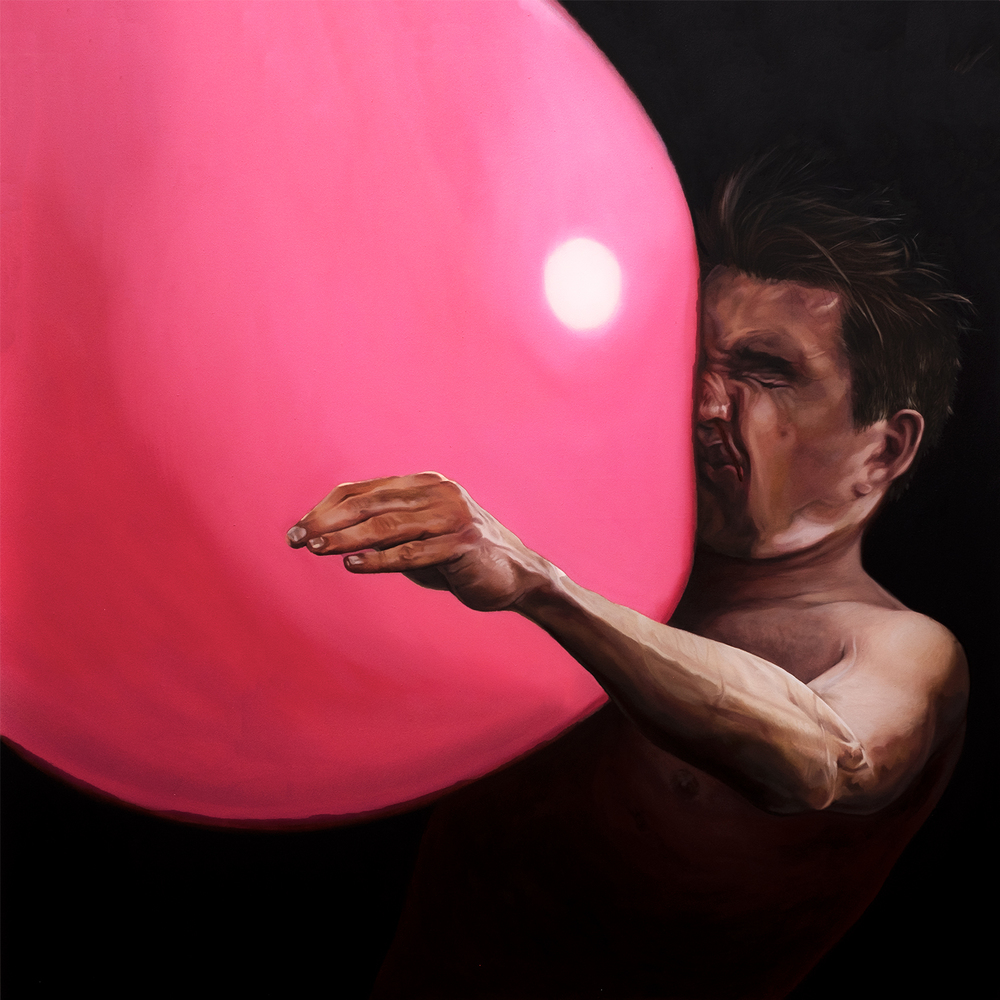
Thankfully IDLES didn’t disappoint and when the album arrived it was a pure masterpiece. It shows a natural progression on the bands first two records and grows the bands sound. It still captures what made us all fall in love with the band but by incorporating new elements into the bands sound the album shows that IDLES are no one trick pony.
Above all other releases this year and those that feature in this list, this was the album that we needed this year. In a year where we have all been knocked down one way or another, IDLES and ‘Ultra Mono’ has been a call to arms, to pick ourselves up, dust ourselves down and keep going.”
IDLES third LP, Ultra Mono, was released earlier this year to critical acclaim. The video for “Kill Them With Kindness” was directed and designed by James Carbutt and animated by Pip Williamson, inspired by the working men’s clubs of Barnsley. Brutal guitar work flips between Bowen and Kiernan on a Travis Bean and Esquire respectively, revealing again why they’re the two most important players in the UK today.
Another single from the Bristolian band’s acclaimed third LP on Partisan Records, it begins with a monstrous bass riff that twists around the snare drum, before bellowing into the chorus with pulsating, glistening guitars and the odd bit of ring-modulator thrown in for good measure.
The Bristol, U.K. punk outfit are releasing their third studio album Ultra Mono this last year. IDLES recorded Ultra Mono in Paris, working with producers Nick Launay (Nick Cave, Yeah Yeah Yeahs, Arcade Fire), Adam “Atom” Greenspan (Anna Calvi, Cut Copy) and Kenny Beats (FKA Twigs, DeBaby, Vince Staples). Per a press release, “‘Ultra Mono’ was sonically constructed to capture the feeling of a hip-hop record.” The album also features guest vocals from Jehnny Beth (Savages), and contributions from Warren Ellis (Nick Cave and the Bad Seeds), David Yow and Jamie Cullum.
In 2020 there were certainties: third IDLES album, third time among the best fifty of the year. On Ultra Mono we hear a sharper and smoother IDLES than before. A band that takes steps to keep developing its sound, which takes a hip-hop producer under its arm, once worked its crown with the cracks and moments later comes across songs like “Grounds” or “Reigns”. The British are going to be wonderfully retamful about this drive for innovation and the ability to remain fully IDLES. (Post)punk has its heyday again, and part of the answer to the question shines on the chest of the Bristol fivesome. Ultra Mono also includes a lot of discs that live on a swirling, roaring mass, while a band has the mob on a raise.
Chicago-based singer-songwriter Gia Margaret released an ambient album, Mia Gargaret, last year, and she’s now followed it with her first new single of 2021, a studio version of a song she’s been known to perform live. “I just felt like sharing a song,” she writes. “I’ve been missing the spontaneity of releasing music on a whim, I suppose. During these slow winter months and after such a slow (and rough) year for everyone– I thought it would give me (and maybe you) something nice to start 2021 with. It is my offering. It also feels like a misfit (production wise) in a body of newer songs and especially with the direction I’m moving into. That’s not to say there might not be another version on a record at some point. I just decided this deserves it’s own celebration.”
I just felt like sharing a song. I’ve been missing the spontaneity of releasing music on a whim. During these slow winter months and after such a slow (and rough) year for everyone– I thought it would give me (and maybe you) something nice to start 2021 with. It is my offering.
Released January 12th, 2021 Produced by Gia Margaret
Carm (aka yMusic co-founder CJ Camerieri) is one week away from releasing his guest-filled self-titled album, and you can read more about this song with Sufjan Stevens. due January 22nd via 37d03d Records, which features appearances by Bon Iver’s Justin Vernon, Sufjan Stevens, My Brightest Diamond’s Shara Nova, Mouse On Mars, and Yo La Tengo’s Georgia Hubley & IraKaplan. CJ already released the songs with YLT, Justin Vernon, and Shara Nova, and today he’s unveiled the song with Sufjan Stevens, album opener “Song Of Trouble.”Sufjan penned the lyrics and sings lead vocals on the song, and it’s a gorgeous song that’s on par with anything Sufjan would release on one of his own albums.
“Sufjan’s use of orchestral instruments helped set the stage for everything I’ve done in my career,” says CJ. The song comes with a video featuring a painting by Nick Weber, and of that CJ says, “I’m struck by how Nick’s work balances a contemplative hopefulness with an intrinsic sadness. It seems super in line with this song and incredibly poignant right now. I’m proud of how Sufjan’s lyrics powerfully begin the record.
Justin Vernon also added on Twitter, “I’m so excited you can hear this song, by Carm, I’ve listened to over and over for years now. These lyrics may actually be the strongest lyrics I’ve ever heard from the master Sufjan. Aaaand maybe just a bit on point for these times.
Laura Stevenson‘s second album with The Cans as her backing band, the modern classic “Sit Resist”, turns 10 this year, and we’ve very excited to be teaming up with her to help celebrate that anniversary with a livestream performance of the album in full. “Sit Resist (At Home)” airs on Saturday, February 13 at 8 PM ET (5 PM PT), and tickets, including merch bundles, are on sale now.
“We had a handful of full-band, full album “Sit Resist” shows planned around the release of the reissue before the pandemic put an end to that,” Laura says. “This is probably the closest we can get to actually pulling it off. This will be the first time I’ve ever played some of these songs for an audience. It feels like we took a lot of pre-pandemic life for granted, one of those things being the ability to freely gather together and experience all that music does for communal connection. Livestreams will never be the same as that experience, but I’m hoping this will fill a couple of the cracks in the meantime.
The thirteen song album has been remastered at the hallowed Abbey Road Studios in London from the original 1/4” analog master tapes, and the vinyl processed with a new half speed lacquer cut to ensure the highest quality audio possible. The bonus LP is a collection of outtakes of nearly every album track, including never before heard pre-production demo recordings, alternate mixes and arrangements, live material, an Archers of Loaf cover, as well as a newly recorded version of the album track “Caretaker” which was recorded in 2019 on the literal last night in the house Stevenson grew up in, ten years after the song was originally written there.
The album features liner note essays written by musicians Julien Baker and Lucy Dacus who drew early inspiration for their own music and song writing from the album. Also contributing liner notes are Pitchfork, NPR and Stereogum writer Nina Corcoran, as well as long time friend and collaborator Jeff Rosenstock who produced and played guitar on some of the bonus demo material contained in the collection.
The packaging also features many never before seen studio photos and tour photography from the era in which the album was written, produced and released, and outtakes from the photo session at which the album’s iconic cover artwork was shot. The limited run double-LP Remastered Deluxe Edition set of “Sit Resist” is now available for pre-order via Don Giovanni Records, and will be released on September 4th, 2020. This is a one-time edition, and the limited collection will not be reissued in this current state after the initial pressing sells out.
The Band:
Laura Stevenson – vocals, acoustic and electric guitars, piano, organ Mike Campbell – bass guitar Alex Billig – accordion, trumpet Peter Naddeo – electric guitar, glockenspiel Chris Parker – drums, percussion
Philadelphia punks Mannequin Pussy’s made their best album yet with 2019’s Patience. They’ve hinted that their fourth is done now, too, tweeting that the new songs include “1 classic MP song. 1 pop song. 1 sad bitch bedroom song. 1 happy slut bad-bitch song. 1 Bear song. These songs make up our collective feelings over this stupid fucking year.” Producer Will Yip calls them “bonkers,” which has us all the more excited.
The cover art of Mannequin Pussy’s third album, “Patience”, is an apt illustration of what you’re about to hear. An old-school globe is aflame, setting the scene for the Philly punk band’s strongest effort to date—as well as one of the best (and most cathartic) punk albums of the year. The artwork springs to life especially on one of the record’s most delicate and simultaneously powerful tracks, “High Horse.” Vocalist/guitarist Marisa Dabice reaches into a crescendo while she belts, “Your world’s on fire, as I watch up from my high horse / Your world’s on fire, and I walk away.” The climactic moment in which Dabice exits an abusive relationship epitomizes the immense strength fueling Patience, and acts as a prelude of sorts to the message that supplies the project’s lifeblood: You are enough. “Who You Are” echoes that same sentiment, exploring how to quiet your inner critic (and how to say “screw you” to the systems that put this critic in your head in the first place). Unlearning harmful thought patterns is a challenge, but can ultimately set you free. Patienceis all about chasing that freedom—and more importantly, being patient with yourself in the process.
“High Horse” by Mannequin Pussy from the album ‘Patience,’ available now
Japanese Breakfast’sMichelle Zauner has informed her Twitter followers to expect her third album some point in 2021. Responding to post on social media relating to a feature by the publication about the most highly anticipated releases in 2021, Zauner quoted the tweet and added, “LP3 coming”. Japanese Breakfast has still yet officially announced the record, but it has been close to four-years since she shared her last full-length effort, 2017’s “Soft Sounds From Another Planet”.
Zauner didn’t release any music under the Japanese Breakfast moniker in 2020, the last time she shared music came in 2019 when she released a glorious cover Tears For Fears ‘Head Over Heels’ and a new track, titled ‘Essentially’. Her creative energy has been primarily spent writing her memoir “Crying in H Mart”. The book is based on Zauner’s 2018 New Yorker essay and is out in April.
In a press release, Zauner said: “My mother passed away almost six years ago and ever since, my life has felt folded in half, divided into a before and after her death, my identity and my family having been fractured in the wake of her loss. I’ve spent the past six years processing grief in the best way I knew how-through creative work. “I wrote two albums worth of material in an attempt to encapsulate all of that heavy darkness, confusion and loneliness, and then I spent another three years writing pages and pages to try and capture my mother’s brilliant character and spirit, what it was like to be raised by a Korean immigrant in a small west coast town with very little diversity, the intense shame I felt towards my mixed-race identity and how my embrace of Korean food and culture helped me come to terms with that upbringing, allowed me to reconnect with her memory.”
Japanese Breakfast’s Michelle Zauner is releasing her first book this year, Crying in H Mart, and after playing new songs on a May livestream, she’s confirmed that Japanese Breakfast’s third album in on the way, too. She said she wrote a lot of it on piano, and we’re eager to hear how that might influence the band’s dream pop sound. is releasing her first book this year, and after playing new songs on a May livestream, she’s confirmed that Japanese Breakfast’s third album in on the way, too. She said she wrote a lot of it on piano, and we’re eager to hear how that might influence the band’s dream pop sound.
2021 is gearing up to potentially be a huge one for Zauner as she expresses herself with these two formats as she releases a new album and her memoir, Crying in H Mart. Anticipation is rife as Zauner plans to make up for the relative silence from Japanese Breakfast over the last couple of years.






 Carm (aka yMusic co-founder CJ Camerieri) is one week away from releasing his guest-filled self-titled album, and you can read more about this song with Sufjan Stevens. due January 22nd via 37d03d Records, which features appearances by Bon Iver’s Justin Vernon, Sufjan Stevens, My Brightest Diamond’s Shara Nova, Mouse On Mars, and Yo La Tengo’s Georgia Hubley & Ira Kaplan. CJ already released the songs with YLT, Justin Vernon, and Shara Nova, and today he’s unveiled the song with Sufjan Stevens, album opener “Song Of Trouble.” Sufjan penned the lyrics and sings lead vocals on the song, and it’s a gorgeous song that’s on par with anything Sufjan would release on one of his own albums.
“Sufjan’s use of orchestral instruments helped set the stage for everything I’ve done in my career,” says CJ. The song comes with a video featuring a painting by Nick Weber, and of that CJ says, “I’m struck by how Nick’s work balances a contemplative hopefulness with an intrinsic sadness. It seems super in line with this song and incredibly poignant right now. I’m proud of how Sufjan’s lyrics powerfully begin the record.
Justin Vernon also added on Twitter, “I’m so excited you can hear this song, by Carm, I’ve listened to over and over for years now. These lyrics may actually be the strongest lyrics I’ve ever heard from the master Sufjan. Aaaand maybe just a bit on point for these times.
Carm (aka yMusic co-founder CJ Camerieri) is one week away from releasing his guest-filled self-titled album, and you can read more about this song with Sufjan Stevens. due January 22nd via 37d03d Records, which features appearances by Bon Iver’s Justin Vernon, Sufjan Stevens, My Brightest Diamond’s Shara Nova, Mouse On Mars, and Yo La Tengo’s Georgia Hubley & Ira Kaplan. CJ already released the songs with YLT, Justin Vernon, and Shara Nova, and today he’s unveiled the song with Sufjan Stevens, album opener “Song Of Trouble.” Sufjan penned the lyrics and sings lead vocals on the song, and it’s a gorgeous song that’s on par with anything Sufjan would release on one of his own albums.
“Sufjan’s use of orchestral instruments helped set the stage for everything I’ve done in my career,” says CJ. The song comes with a video featuring a painting by Nick Weber, and of that CJ says, “I’m struck by how Nick’s work balances a contemplative hopefulness with an intrinsic sadness. It seems super in line with this song and incredibly poignant right now. I’m proud of how Sufjan’s lyrics powerfully begin the record.
Justin Vernon also added on Twitter, “I’m so excited you can hear this song, by Carm, I’ve listened to over and over for years now. These lyrics may actually be the strongest lyrics I’ve ever heard from the master Sufjan. Aaaand maybe just a bit on point for these times.



 The Fat Angel Sings