Paul Jacobs, drummer from the Montreal indie rockers Pottery, is continuing his own musical efforts with new single “Half Rich Loner” off of his first album “Pink Dogs on the Green Grass” which will be out April 30th. With the touring world shutting down, Paul had the chance to put the finishing touches on this new record. The song saunters in with a very cool guitar lick before the drums kick in and we get some rambling psychedelic sounds swirling and tangling with the music. Paul begins to sing and it seems the title character is pretty lost in what they should be doing with their life.
I feel there is going to be many of these types of songs coming in the coming months, but I don’t know if they are going to swing like this does. The song has British Invasion vibes circa 1966 just as old school rock and roll was changing into a bigger sound
There was no one quite like Frank Zappa. He sucked the expected seriousness right out of rock ’n’ roll and triumphantly turned the genre on its head, injecting comedy and fusing other genres to it, like pop, jazz, psychedelia, proto-metal and more. He recorded more than 60 albums throughout his career as a solo artist and with his band, the Mothers of Invention, and he produced nearly all of them. A man who wore many hats, he also directed films, music videos and designed album artwork.
For Frank Zappa fans, his multi-night run at The Palladium in New York City back in October of 1977 is the stuff of legend. It came in the midst of one of the guitarist/composer’s most fertile creative periods, which would yield a dozen live and studio albums over the next five years as well as the feature film Baby Snakes, built from footage captured at one of these vaunted Halloween shows in ‘77. These performances were also a showcase for what is arguably Zappa’s best backing band of his lengthy career, an ensemble that boasted future Talking Heads/King Crimson member Adrian Belew on guitar, percussion master Ed Mann and, most crucially, the outrageously talented drummer Terry Bozzio.
The Zappa Family Trust is unleashing “Halloween ‘77″, the full performances from this small residency at The Palladium via a wonderfully-designed boxed set that includes a kitschy ‘70s-style costume (plastic Frank Zappa mask, plastic pull over top) and all the audio on a USB stick made to look like a candy bar. It’s charming as all get out, aimed directly at the hearts and bank accounts of (are they any other kind?) FZ super fans. There’s also a truncated three CD version for those not wishing to expend that much dough.
For the casual listener, it’s a lot to take in. The complete audio runs to just under 16 hours, and almost all the shows feature the same set list. The music, too, can be plenty imposing. Zappa’s compositions are full of quick time signature shifts, executed with almost rigid yet limber precision by a very well rehearsed band. The songs themselves are dizzying, braiding together jazz, psychedelia, proto-metal and contemporary classical. There are enough pop-style hooks to draw you in, but you’d better be prepared to hold on tight.
Zappa fans are more than familiar with his October 1977 residency at New York’s Palladium Theater. Zappa produced and directed a feature film around these shows called “Baby Snakes”, featuring backstage tomfoolery and stop-motion clay animation, as well as a live album box set, titled Halloween ‘77: The Palladium, NYC.
If you’re unfamiliar with Zappa’s work, it might be a little off-putting to listen to him invite audience members on stage to whip each other or delight in the uncomfortable sexual oddities of “Bobby Brown Goes Down,” the weird gay panic wrapped in “Punky’s Whips” or the tittering reference to mooning people in the title of instrumental “Pound For A Brown”...Luckily, much like the discomforting stage banter within, the music overshadows all of that nonsense. Especially when it is presented with such care and wit as with this set.
There’s also the matter of his conservative outlook, which peppers these performances, particularly the first show of the set, recorded on October 28th. In his intro to the song “Flakes,” he says, “This is a song about people who don’t do what they’re supposed to do. There’s a large concentration of these denizens in the state of California. The problem, simply stated, is that everybody who moves to California, moves there to collect unemployment or welfare or both.” He also makes clear what he thinks of his main character in “Bobby Brown,” calling him a “schmuck” for being “the first guy in town to say ‘Ms.’” Whether Zappa truly believed those things or not or was aiming for provocation, the cheers of the New York crowd in response is off-putting enough.
For those folks acutely familiar with the Zappa canon, this is the kind of treat you want someone to drop in your candy bag. All of the shows sounds spectacular. Working off of some great source material, the remixing and remastering work, overseen by Ahmet Zappa and Joe Travers, shows off each instrument with precision and clarity. There’s added allure here with the inclusion of rarely heard live tracks like the leisurely instrumental version of “Conehead” (a showcase for a particularly effusive solo by Zappa), a premiere of future single “Dancin’ Fool” and the only live performance of “Jewish Princess.” I can also see some fans debating over which epic version of “Wild Love” (each one ranges between 24 and 28 minutes in length) is the best or which Bozzio drum solo reigns supreme (I’m partial to the double kick drum-heavy antics of the first show on October 29th).
This Halloween-themed release comes along at a strange time for the Zappa family. Ahmet and Dweezil continue to fire off furious open letters to one another, and just as they keep reissuing FZ’s work in new formats, including freshly cut vinyl remasters, they’re going to attempt to bring the man himself back on tour via hologram. Those odd turns could tarnish this somewhat for long time supporters or leave a sour taste for someone looking to dive into this expansive body of work for the first time. Luckily, much like the discomforting stage banter within, the music overshadows all of that nonsense. Especially when it is presented with such care and wit as with this set.
Players:
Frank Zappa – Guitar, Vocals
Adrian Belew – Guitar, Vocals
Tommy Mars – Keyboards, Vocals
Peter Wolf – Keyboards
Ed Mann – Percussion
Patrick O’Hearn – Bass, Vocals
Terry Bozzio – Drums, Vocals
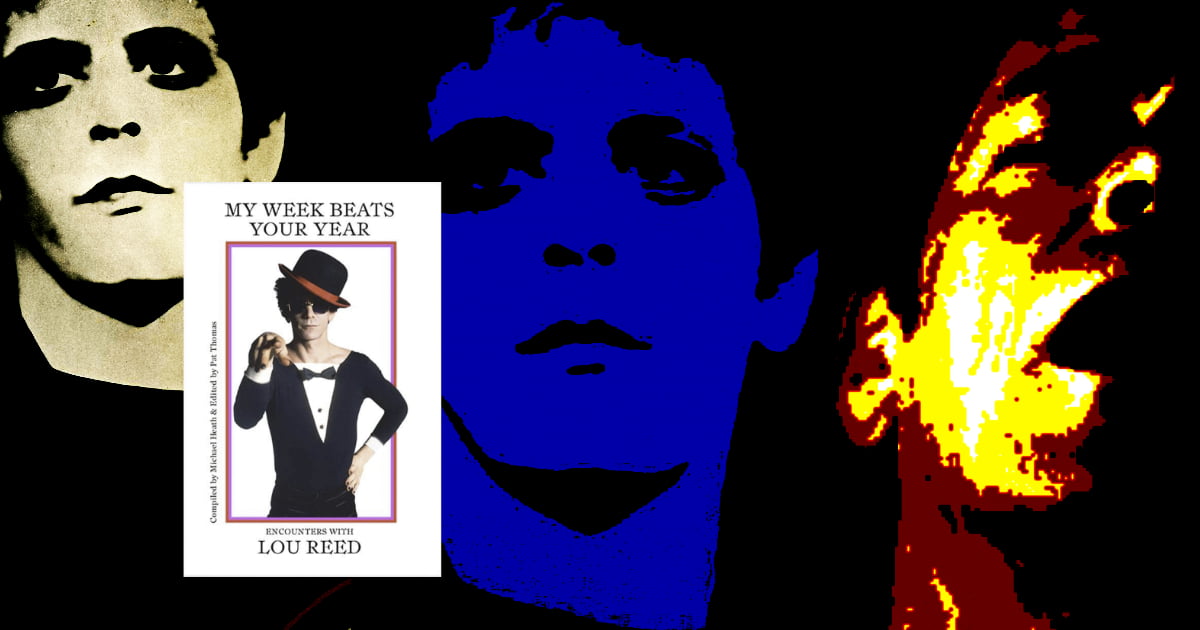
Lately I’ve been reading a book on a favourite artist which is ultimately about music and technology and the quest for a sonic purity in the context of rock and roll. “My Week Beats Your Year” is about Lou Reed. Yes, the Lou Reed of The Velvet Underground (VU), discovered by Andy Warhol and who worked with Bowie. He’s also the Lou Reed who walked away from rock ‘n’ roll’s drug-booze freak show of the 1970s to become a voice of reason and clarity about everything from the power of guitar and amplifier tones to the focused muscle-mind control of Tai Chi martial arts.
In reading My Week Beats Your Year a collection of fascinating interviews, compiled by Michael Heath and edited by Pat Thomas — we get a portrait of an artist discovering his true calling. There you also witness his frustration as a new generation of media seemed mostly focused on sensationalist retro history. From a publicity standpoint I suspect some blame lies with his handlers who I am guessing didn’t grasp what Lou was about and where he was heading. Thus he was put into situations which frequently turned hostile. Lou tries to talk about his music yet the reviewers fall back on insipid questions that had been covered and discussed to death everywhere else.
Across the interviews you start to side with Lou who could get quite aggressive with journalists. I suspect that if his publicists had steered Lou more towards the audiophile leaning press High Fidelity, Stereo Review and Audio rather than the (admittedly influential, marketing wise) rock ‘zines like Creem and Rolling Stone he would’ve been much happier. All he really wanted to do was talk about the music.
As I read “My Week Beats Your Year”, I recognized a compelling arc of artistic flower. Amidst this, an interesting detail emerges: Lou Reed was an audiophile at heart. I kind of knew this, but didn’t fully understand how deep his passion went into his soul.
Right from the start, when the VU was recording its first two albums Lou was searching for distinctive sounds. Frankly, it is remarkable that MGM Records even released that second VU album, White Light White Heat, as it contains perhaps one of the most intentionally distorted recordings ever released. The story goes that the band was playing so loud the engineers walked out in disgust until they were done. An exercise in magnetic tape over-saturation (which creates its own unique sonic texture) when you listen to the song “Sister Ray” it sounds like an eruption. In Spinal Tap terms, their amps “went to 11” but the tape recorder’s VU meters probably sat in the red zone most of it. And it sounds pretty amazing all things considered.
Fast forward through the 70s and we see Lou frustrated by not having complete control over his art. In response to this he created an album that is either considered by some as insane and others as absolutely brilliant. He delivered to RCA a recording that nearly killed his career: Metal Machine Music. Four sides of multi-tracked guitar feedback and distortion — it was even released in quadraphonic! Lou defends its release to the point where you realize it really wasn’t a joke. He was into it. That album was recalled three weeks after its release yet it went on to become the stuff of legend. Eventually it was transcribed and performed live with other musicians, which even surprised Lou! Heck, he even played it live on tour.
In the 1980s Lou exited the fast rock ‘n’ roll life, re-emerging focused, mature and shockingly happy in long term relationships, most notably to performance and recording artist Laurie Anderson. Free of drugs, booze and concern for what anyone thought, he was able to focus his passions for chasing perfect sound and unique guitar / amplifier tones. He had actually begun moving in that direction in the late 1970s with his “Binaural” recordings, Street Hassle and The Bells. The former album became the first commercially released pop record made using this microphone recording technique. It is also one of my all-time favourite Lou Reed records. The title track is particularly stunning, with its intimate, chamber-like cellos and haunting vocal layers (and an uncredited guest vocal appearance by Bruce Springsteen!).
Lou’s later records are often overlooked beyond the New York album. There are some remarkable works worth exploring such as Set The Twilight Reeling from 1996, parts of which were recorded live in his home studio called “The Roof.” Ecstasy (from 2000) is a marvel of pure electric guitar and amplifier tonality (and some great songs to boot!).
A song from that album — “Paranoia, Key of E” to open up a special playlist that I put together to accompany this quasi-review. On this playlist called “LouLou” you’ll hear a bunch of songs which I think are among Reed’s most fascinating accomplishments both sonically and musically. Listen for the interesting recording techniques, the distortion, amplifier tones, guitar sounds. Lou crafted sounds as well as songs. This was a man who understood his instruments and what he needed to do to convey them to you effectively… so when you played them on your home stereos, you would be able to experience that same vibe that he got in the studio.
Reading My Week Beats Your Year you are presented with a portrait of an artist absolutely passionate about the power of sound and the underlying magic of rock and roll. Lou Reed remains a rock ‘n roll hero in that light, influenced by his heroes Little Richard and Bo Diddly and a multitude of Doo Wop groups. He was a keeper of the flame for future generations to discover.
My Week Beats Your Year is a great place to begin appreciating him. Buy the book and read it while listening to his music.
It’s been a long time since we’ve had a great new album by the great guitarist, songwriter and member of no less than two legendary rock bands Neil Young’s Crazy Horse and Bruce Springsteen’s E-Street Band Nils Lofgren. Don’t get me wrong, he’s put out some good albums in the interim but none of them really stuck with me like his 1985 album Flip did. Given that Nils raised the bar pretty high early on in his career with some legendary song writing, such as the then-timely radio friendly hit “Keith Don’t Go” from 1975 some of us older fans have great expectations.
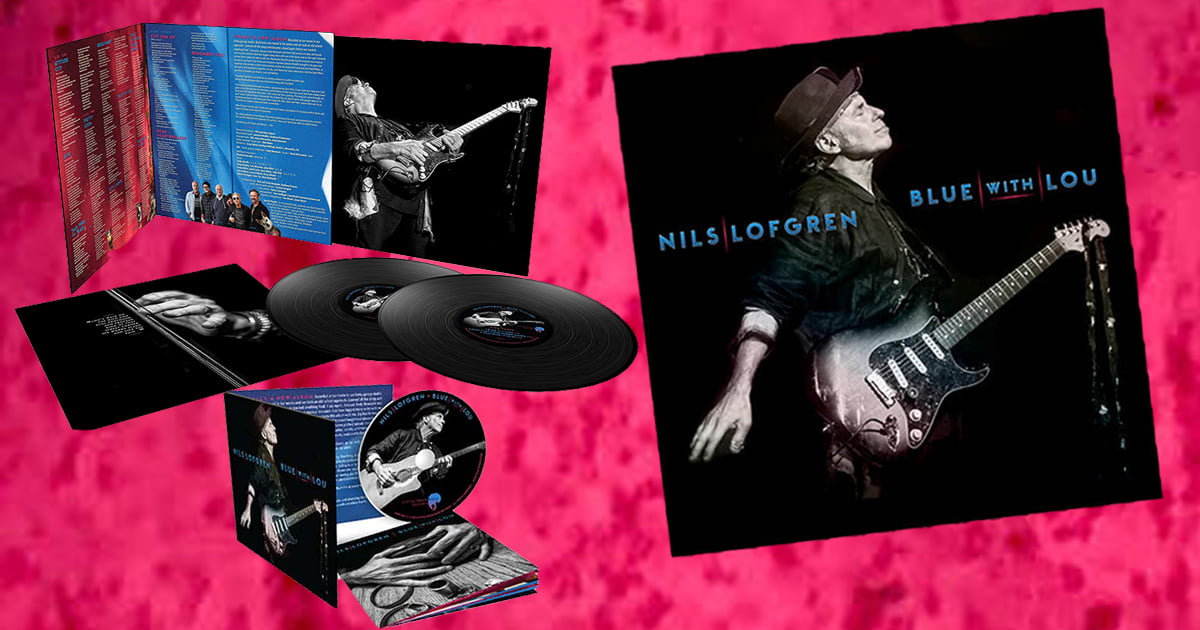
In the late 1970s Nils collaborated with Lou Reed, the results of which were sort of scattered across a number of different recordings of by both artists. So unless you were intimate with LouReed’s album The Bells (1979) and Nils’ self titled album from that same year and 1995’s Damaged Goods, chances are most of you have not heard the songs. As it turns out there were several other additional tracks from that collaboration which never saw the light of day and Nils has finally decided to finish up those songs up, partly the basis of his new album called Blue With Lou. There’s much more to this record than just those collaborations, however.
At the heart of Blue With Lou is a great band that Nils assembled to work up the songs, all record in his garage home studio. In the finest Crazy Horse tradition, these songs rock madly and have that wonderful tight-but-loose feel that can only be generated by a group of musicians who are intimate with one another and the music they’re playing. And intimate they are: Nils has played with drummer Andy Newmark and bassist Kevin McCormack for decades. These guys are kindred spirits and that comes through in the music which rings true as authentic as authentic rock ‘n roll gets. All that great playing would be for naught if the songs were forgettable.
Happily, Nils seems to have found his melodic muse and those melodic hooks ‘n riffs he’s been known for — but not often celebrated — are back! A musician’s musician, the reason Nils is in bands with Bruce Springsteen and Neil Young is because he’s a brilliant guitarist with a distinctive sound and technique. You get that all over “Blue With Lou” but you also get some great songs!
Tracks like “Attitude City” and “Rock or Not” deliver genuine ear-worms you’ll be tapping your toes or steering wheel as you rock along with Nils and his band. This album is a great one for driving on the highway, by the way.
Blue With Lou is not without its soft spots though. There are touching moments including a tribute to Tom Petty (“Dear Heartbreaker”) and seemingly simple references to the great filmmaker Charlie Chaplin. “Talk Thru The Tears” mashes up chord progressions akin to John Lennon’s “Starting Over” and “Isolation” with melodic springboards from Chaplin’s classic “Smile” (which itself is apparently based on melodies from Puccini’s Tosca!).
I don’t know if this is a bit of conceptual continuity but Chaplin comes up in the lyrics to “City Lights” his legendary film from 1930; Lou Reed previously recorded this song for his 1979 album “The Bells” but this new version is much nicer, replete with a refreshingly unusual retro 1950s male choir backing up Nils’ lead vocals.
The kicker for me on this album is the final song which is about Nils’ dog, “Remember You” is a touching sweet memorial that will leave you with a tear in your eye for his “forever friend.” I can so relate to this. If you haven’t listen to Nils in a while, Blue With Lou might be a good album to reacquaint yourself with what he’s been doing.
If you are a fan of long playing records, Blue With Lou is also available as a two disc set! This (probably) 180-gram dark black vinyl pressing is quiet, well centered and complimentary to the music, delivering significantly richer bass and round mid ranges. The guitars and drums sound fuller on the LP version, delivering more of the punch of the band playing together than the CD. Nils’ electric guitar amplifier tone really benefits a lot from this presentation and his vocals are warmer overall.
And if you’re not familiar with his older material I wholeheartedly recommend you seek out the albums “Cry Tough”, “I Came To Dance”, and his self titled debut, “Nils Lofgren”. Also look for the commercially released version of the album known as “Back It Up Live” which was initially a highly coveted and collectible promotional album in the mid 1970s heavily pirated back in the day so beware of counterfeits which eventually saw official commercial release several years ago. It is a wonderful document of the artist on his ascent to rock ‘n’ roll legend.
Nils and his band are often out on tour so you should definitely look for them in your town. And also I remember reading recently that he’ll be playing with Neil Young again soon in Crazy Horse. And… by now many of us now that Bruce Springsteen has a new album, maybe coming next year in 2022 … perhaps an E Street Band tour with Nils on board.
Bob Dylan’s life and career are so encased in myth that it can be hard to untangle the romanticism from the reality. As much a symbol as he is a man, Dylan has spent most of his adulthood resisting being labelled the voice of his generation while slyly welcoming fans’ desire to dissect his every utterance, devoting much of the last couple decades opening up the vaults to release a series of official “bootleg” recordings associated with his most iconic albums and tours. He invites us to look deeper and listen harder, as if the answers can be gleaned from closer study.
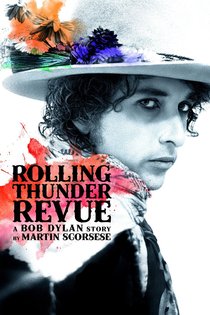
Long before David Bowie, Tom Waits, Madonna or Lady Gaga dabbled in persona play, Robert Zimmerman made us ponder masks in popular music. He’s both there and not there, which can be frustrating and fascinating. Both sensations are on display in Rolling Thunder Revue, the oft-spectacular, sometimes shtick-y chronicle of Dylan’s 1975 Rolling Thunder tour. As is typical when depicting anything in the Dylan universe, this concert film/documentary simultaneously oversells its subject’s genius and provides overwhelming evidence of what a brilliant artist he is.
More layers of myth are applied while trying to present an honest account of a tour and a performer. At nearly two-and-a-half hours, Rolling Thunder Revue is overlong but also overpowering, inconclusive yet undeniably stirring. It left me exhausted, but I kinda want to see it again.
In 1975, in an America defined by both the self-mythologizing pomp of the upcoming bicentennial and ongoing socio-political turmoil, Bob Dylan and a band of troubadours—including luminaries such as Joan Baez, Allen Ginsberg, and Joni Mitchell—embarked on a now-legendary tour known as The Rolling Thunder Revue, a freewheeling variety show that was part traveling counterculture carnival, part spiritual pilgrimage. Director Martin Scorsese blends behind-the-scenes archival footage, interviews, and narrative mischief, with a magician’s sleight of hand, into a zeitgeist-defining cultural record that is as much a concert “documentary” as it is a slippery, chimerical investigation into memory, time, truth, and illusion. At the centre of it all is the magnetic Dylan, a sphinx-like philosopher-poet singing, with electrifying conviction, to the soul of an anxious nation.
BONUS FEATURES: DIRECTOR-APPROVED SPECIAL EDITION FEATURES:
• New 4K digital transfer, approved by director Martin Scorsese, with 5.1 surround DTS-HD Master Audio soundtrack
• New interviews with Scorsese, editor David Tedeschi, and writer Larry “Ratso” Sloman
• Restored footage of never-before-seen Rolling Thunder Revue performances of “Tonight I’ll Be Staying Here with You” and “Romance in Durango,” and of a never-before-seen cut of “Tangled Up in Blue”.
• Trailer
• English subtitles for the deaf and hard of hearing
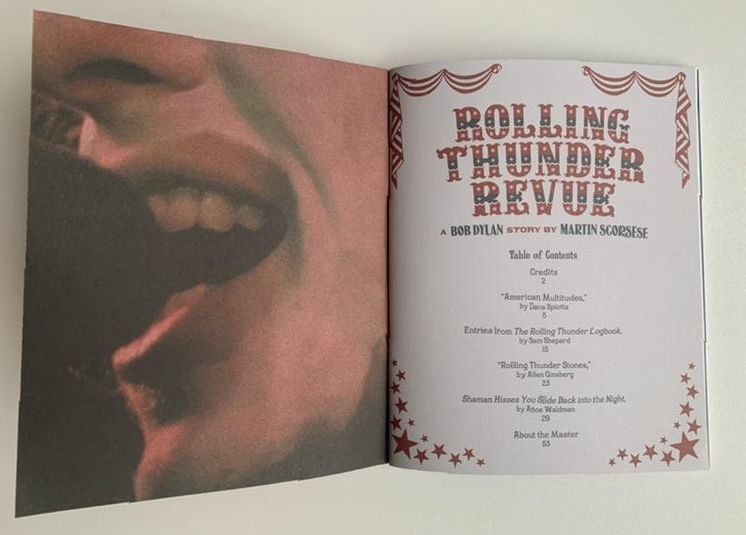
• PLUS: An essay by novelist Dana Spiotta and writing from the Rolling Thunder Revue tour by author Sam Shepard and poets Allen Ginsberg and Anne Waldman
Genre – Documentary
Director – Martin Scorsese
Running Time – 142 minutes
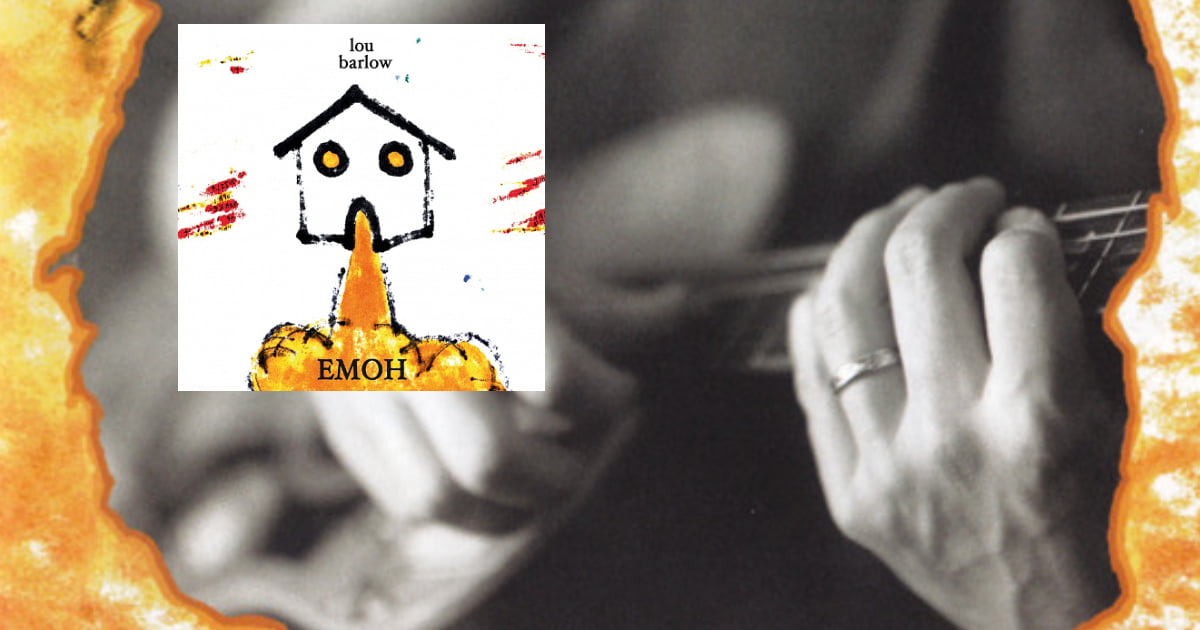
A rich modern acoustic album from the main driver behind alternative rock legends Sebadoh. Lou Barlow is a terrific singer-songwriter who has been crafting innovative tunes under various guises since the mid-1980s. He has released music with Dinosaur Jr., Sebadoh, Sentridoh, The Folk Implosion as well as under his own name. He is in many ways the poster child for all things “Indie Rock,” even before Guided By Voices became a thing.
Before I discuss the first time domestic vinyl reissue of Lou’s 2005 album called “EMOH”, lets talk about the notion of the independently made record and whether it could possibly sound genuinely really good, possibly even “demo-worthy.”
One of the hallmarks of modern home digital recording is that it breaks down the economic barriers of the recording studio so most anyone can make music on the go where they live and play. Before the digital revolution, the Tascam Portastudio cassette multi-track recorders in particular opened the flood gates in the early 1980s for affordable independent music making. Remember, Bruce Springsteen’s Nebraska was recorded on one of those things! But that was something of an anomaly. Fast forward, last year newcomer Billie Eilish swept the Grammy Awards with her debut album that was essentially recorded in her bedroom! Home recording has clearly come a long way…
For many years, however, there were loads of great but pretty rough sounding “indie” and “LoFi” (aka intentionally low fidelity) albums being released, as young artists learned how to become recording engineers as well as performers. Much good came of this period as artists made albums in unusual environments where natural acoustic reverb laden environments might exists such as kitchens and living rooms and bathrooms. Heck, one of my favourite Guided By Voices tracks (“I’ll Replace You With Machines“) sounds like it was recorded to match the rhythms of a washing machine.
In a way, this is getting back to the roots of studio recording as pioneered by no less than a Les Paul who made his own home studios in the 1940s and ’50s. Having a studio at home allowed him to innovate new sounds simply by running microphone cables around the house where he needed them. For example on the 1953 song “Walking and Whistling Blues” you can hear the sound of someone walking around the kitchen in rhythm in time for the music (I think it was his wife and performing partner Mary Ford).
So, back to EMOH, this album is technically Lou Barlow’s first full solo album, released under his own name just before he re-joined Dinosaur Jr. (so he never really got to promote this album properly). It was recorded across a bunch of different scenarios, from a 16-track recording studio in Nashville to four-track Mini-Disc (!) and elements recorded in his home. In some instances the recordings were started in one location and added to in another so all that contributes to the distinct sound on this record.
When EMOH was released in 2005 it was a CD-only release here in the United States. There was a small run of vinyl in the European market but those were next to impossible to find here.
In celebration of the 15th anniversary of EMOH — which coincided with the birth of his first child Merge Records has put out a lovely two LP gatefold version of the album for the first time here in the US. It spreads the full album across four sides so there’s plenty of room for the tracks to breathe and it sounds quite wonderful on thick, well pressed, quiet vinyl.
Largely revolving around Lou’s acoustic guitar sometimes it sounds like a nylon string guitar or even a Ukulele at times this record has a hushed beauty to it even when it has moments of rocking out. Some of the guitars sound like they are recorded very closely so there is at times a wonderful sense and feel of the wood of the instrument and the strings coming through the speakers. One of the first things you’ll hear on EMOH‘s opening track, “Hold Back The Years” is the sound of the room in which Lou is recording. As you can see from pictures included in the album I suspect that we are hearing the natural sound of the room he was in – a bathroom — a great place for natural reverb which makes for a very interesting production texture.
Lou Barlow’s voice and song writing grabbed me from the get-go when I first saw him on a late night program on MTV — an acoustic set with Husker Du’s Bob Mould. His music won me over that night. I soon thereafter picked up an early album by his group Sebadoh and was absolutely blown away by the song “Soul and Fire” a production which in some ways is a loose template for this album – a raw, emotional tale of a failing love.
Lou has explained in materials promoting EMOH that it is basically documenting the break up of his first marriage. Accordingly, there is a lot of baring of the soul going on — love and heartbreak, soul and fire. Some of my favourite songs here include the stunning “Mary” which tells the story of Jesus from the perspective of an imagined secret lover. “Confused” is another great tune which (to my ear) channels at points no less than classic 1972-73 Grateful Dead sounds, mining similar spaces to their classics “Wharf Rat” and “Dark Star”
“Round & Round” has such a strong chorus hook, in a different production it might have been a pop hit but here its a sparse, airy acoustic guitar and piano arrangement that is powerful.
EMOH is a wonderful record and you should check it out. It’s a rich, round and rewarding as the new vinyl edition.
Now I hope that Lou can get his fantastic Folk Implosion album “One Part Lullaby” issued on vinyl.,
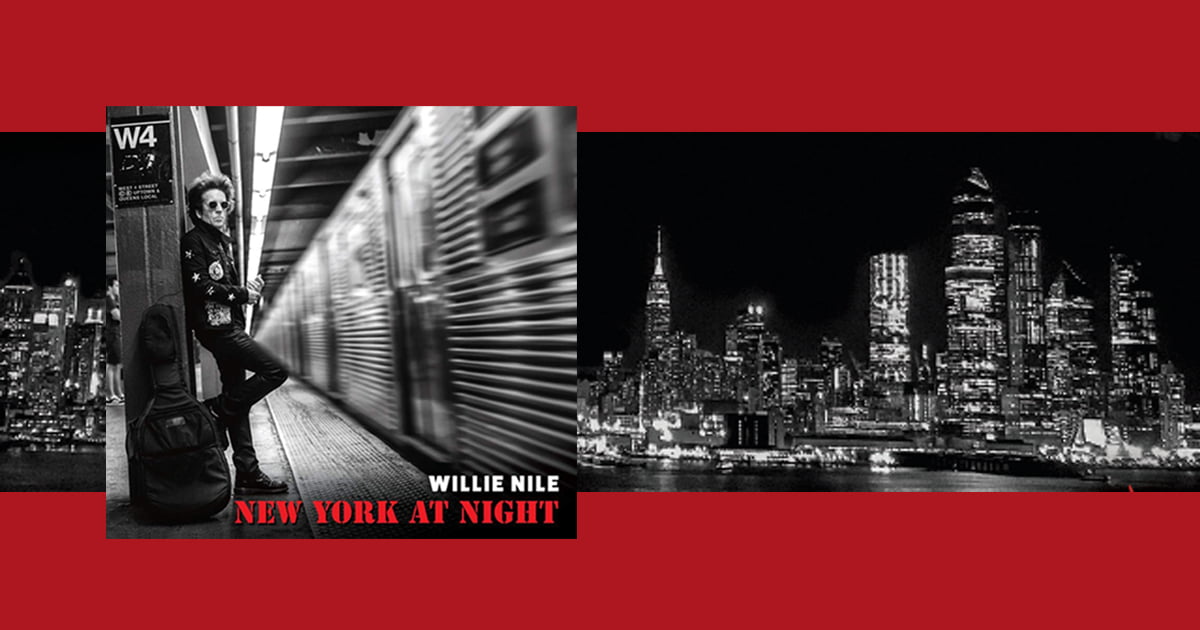
At some point in the future there’s going to be a big party in New York and it may well be revolving around a musician named Willie Nile and his new album “New York At Night”. Written and recorded before the COVID-19 pandemic crisis lockdown happened, here Willie celebrates The Big Apple in all its glory. And that passion is what New Yorkers will to need when all this pandemic madness is under control.
“New York At Night” released in May 2020 and I do hope that people find inspiration in it. I have to say Nile who still proudly holds on to his New Jersey roots even after 30-plus years in California (and several months in locked down isolation!). Willie’s music has a distinctly East Coast vibe which frankly we could use some of out here on the West Coast. How about Willie and his band opening up for Bruce’s next tour? That’d be a great double bill! If you’re not familiar with Willie Nile’s music, you need to get onboard.
That said, on New York At Night Willie Nile continues his home-run-hitting string of great albums that mine that well worn corner of pure Rock and Roll and street-wise soul spirit.
And it is just what the Doctor ordered…True to form, this is a classic Willie Nile sound with twanging electric guitars, hook-filled choruses plus rocking riffs that bridge the gap between the Stones and Springsteen. That was never more evident on “The Fool Who Drank The Ocean” which grabs the essence of The Stones’ “Live With Me” and takes on a rich ride around New York’s dark side. “Lost And Lonely World” is one of those songs based on those classic chords used on a bazillion other rock and pop music hits, yet once again Willie has overlaid a great melody and ear-worm worthy hook chorus to make it his own.
For me, the heart and soul of “New York At Night” is a track I suspect would be at the end of Side One of the vinyl LP version. “A Little Bit Of Love” is one of those epic sing-a-long anthems you can’t help chiming in on at first listen. “The time has come to the land of need, enough of anger, hate and greed… you and I can plant the seed”
“Run Free” feels like what might have happened had U2 come out of New Jersey — where the streets all have names –replete with glorious Gospel-like choral voices taking that song out like a sweet muscle car speeding through the Holland Tunnel into Manhattan.
You can of course look for Willie’s new album out on CD and on vinyl (click on any of the titles here in this review to jump Willie’s page on Amazon ). When I get my hands on the on the latter I’ll be sure update to update this review. But for now it just feels good knowing some strong new rock ‘n’ roll is out there to help us get through these supremely surreal difficult times.
Willie has also written a song just for the Covid-19 crisis which he has posted on his Facebook page: “Occupy Your House” delivering the poignant message” You can have your rock, you can have your roll… you can save your immortal soul.” As Willie says in the video: “keep your chin up, we can do this…”
When we are all safe and ready to party on the streets, Willie Nile’s “New York At Night” will be a big part of that joyous soundtrack. Turn it up!
Singer/songwriter Lael Neale recently signed to Sub Pop Records, and she’ll release her new album “Acquainted With Night” on February 19th via the label. It features recent single “Every Star Shivers in the Dark” and the just-released “Blue Vein.” Like the previous single, it’s an Omnichord-fuelled offering of dream pop/psych folk that fans of Mazzy Star and Beach House should not sleep on. Acquainted With Night features ten tracks, and includes the previously released standouts “Every Star Shivers in the Dark” and “For No One For Now.”
Well…It is my great honour and thrill to announce I have signed with Sub Pop Records !!! In celebration, we are sharing my debut single and video “Every Star Shivers in the Dark” which is available NOW everywhere, directed the video & the song was produced by Guy Blakeslee & was mastered by Chris Coady my excitement is beyond measure immense thanks to the good people of Sub Pop Records, Uncut calls the album, “A thing of shimmering beauty, led by Neale’s otherworldly voice with its shades of Vashti Bunyan and Julia Holter.”
“Blue Vein” is her personal anthem. A Paul Revere piece. Galloping through the town as a strident declamation. She offers this, “I wrote this song pre-Omnichord and it is the only recording I play guitar on. I wrote it around New Year’s Eve and it felt like a resolution.” Indeed, it is an amalgam of thoughts, concerns, and lessons as she nearly speaks the words, unmasked by flourishes, ensuring the meaning cuts through. In the final verse she states that, “some say the truth springs for reservoir seekers, but I think the truth sings to whoever listens” thereby establishing herself as the proverbial carrier pigeon delivering a message.
Lael returned to her family farm back in April 2020 and has taken advantage of the limitations imposed by this period. She re-discovered her Sony Handycam from high school and is using it to make impressionistic companion pieces to the songs she recorded in Los Angeles. She continues, “I am enjoying the strong contrast between the songs I wrote and recorded in California and the videos I am making for them in Virginia. It offers something unexpected.”
The lo-fi quality of the films certainly suits the tone of the album. Guy comments, “an idea that was floating around in our conversations before and during the process was ‘lost tapes’ – and I think these recordings feel like such an artifact – a sonic portrait of a season of a life, a sacred tape made in private by an artist at the peak of creative power and rediscovered by chance for the ages.”
“Blue Vein” by Lael Neale from her album Acquainted with Night (Release Date: 02/19/2021) Sub Pop Records.
This album answers a critical question: What if Robert Pollard wasn’t a heroic drunk, but instead a lovestruck, heart-on-his-sleeve bard? Employing the Guided By Voices’ frontman’s philosophy that every idea is a good one and songs longer than two minutes are bloated messes, this Philadelphia band blows through 24 cuts in a scant 41 minutes on their sophomore album. Fans of Big Star, the Magnetic Fields and Yo La Tengo will appreciate the group’s sensitive song writing approach, which comes in forms of power pop (“Boys in Heat”), alt-country (“100 Hrs”), and lo-fi fuzz rock (“Jazz Chorus”).
For Peter Gill (Friendship, Free Cake For Every Creature), the fearless leader of Philadelphia power-pop group 2nd Grade, being our full, open selves means we can be as sincere as we are sarcastic. New album “Hit To Hit” is about wearing your heart on your sleeve but at arm’s length. It’s about being both earnest and ironic.
Hit To Hit mirrors our multifaceted existence over 24, tiny tracks. Continuing with the fun-size structures of his previous LP, Wish You Were Here Tour (Sleeper Records), the songs act like a collection of short stories. There’s the adolescent, heartbroken tale of “When You Were My Sharona”, the anticipation of making memories on “Summer of Your Dreams”, the first taste of freedom on “My Bike”. While Hit to Hit is absolutely an intricate exploration of the human experience,
Sonically speaking, the songs cover an impressive range of stylistic ground. The sweet, peppy pop-banger “Velodrome” is juxtaposed by the gnarly wailing of “Baby’s First Word” while the sturdy twangs of the Jon-Samuels-sung “100 Hours” bashes against the gentle, ethereally delicate acoustics of “You’re So Cool”. “It almost can’t even hold together because it is so at odds with itself but it does in the end. It’s one group of musicians presenting all these different ideas and directions of songwriting and miraculously, it holds together.” Gill says.









 The Fat Angel Sings