Julien Baker has joined Ohio-based rock band The Ophelias on a new song – watch the video for ‘Neil Young On High’ below.
The track is the first preview of the band’s new album ‘Crocus’, set for release on September 24th via Joyful NoiseRecordings. The Ophelias are: Spencer Peppet (she/her), Andrea Gutmann Fuentes (she/her), Mic Adams (he/him), JoShaffer (they/them).
Explaining the origins of the collaboration, The Ophelias’ singer and guitarist Spencer Peppet said: “We met Julien for the first time in 2019 at a show we played in Nashville. She introduced herself (as if we didn’t already know who she was) and I tried to not show how nervous I was!
“About half a year into 2020 quarantine I worked up the nerve to ask if she wanted to feature on a song from the album we were working on. She said yes, and I was seriously over the moon. She recorded her parts in Tennessee and we talked virtually.
“Her parts reinvigorated the song completely: she added lightness, openness, but also depth and complexity. It’s incredibly cool that she put so much care into those parts.”
“Neil Young on High” featuring Julien Baker by The Ophelias off their album ‘Crocus’ out on Joyful Noise Recordings
“This seventh chapter of The Lords of Altamont’s body of work strikes with an unapologetic conviction built up from 22 years of soul seasoning and nonstop rock action, fine tuning their iconic fuel injected sound. Tune In, Turn On, Electrify! takes a ride through the mental landscape of these four musicians: thrusting raw, aggressive garage punk in your face, then flips the script inviting you on elaborate psychedelic trips. Get kicked in the teeth with We’ll Never Leave (This World Alive), fight the demons in your head with Mud, then come down easy with Soul In Flames.
Formed in 1999, TheLords of Altamont, having gone through multiple line ups over the years, retain loyalty to their garage punk roots while evolving into heavier grooves. Never compromising that unmistakable Lords attitude, Dani, Rob and Barry having earned their colours tenfold, bring a gritty collective of experience and talent to join Jake on this journey of no-nonsense auditory exploits.”
1st video from the album MIDNIGHT TO 666 by The Lords of Altamont. Released on Fargo Records (CD/Vinyl). The 2nd video from the album for the song “Soul for Sale” can be found here
A Note about the filming of this Video…
“Save Me (From Myself)” was filmed over the course of one day (about 7 hours) in a warehouse in Hollywood literally a stones throw away from the Capitol Records Building. Everything you see in the video was done “In Camera”… there was no Post Production FX added whatsoever. All of the Psychedelic Lighting Effects were performed “Live” by Sherry Lee and Blues Williams while we filmed the band playing back to their tune. Sherry used an “old school” Overhead Projector and a couple of clock faces filled with water, mineral oil and candy dyes to achieve the liquid light/psychedelic/Fillmore Era effects. Blues used an Opaque Projector with an assortment of transparencies that we designed a few days before the shoot. A Video Projector and a couple of strobes that the band brought were also used, but other than that there were no other lights. We filmed the band playing together and then separately to get all of the shots. Moana Santana and Julie Faravel were filmed last, Go-Go Dancing in front of The Lords of Altamont’s Tour Film.
The Lords of Altamont are: Jake Cavaliere – Vox/Organ John Saletra – Guitar Shawn Medina – Bass Harry Drumdini – Drums with Moana Santana – Dancer Julie Faravel – Dancer
……
Some Wackiness…
Between each take we had to clean the clock faces and change out the oils as they would get unusable pretty fast. About halfway through the shoot, Sherry tried to clean inside the Overhead Projector and ended up cracking the Lens. If you pay attention to the wall behind the band you can see that crack every once in a while.
The Gretsch Guitars that Shawn and John use in the video were borrowed from True Tone Music in Santa Monica, CA. Just to be on the safe side, the fellas lined the back of the guitars with felt so as not to scratch them up.
We spent about $150 on making this video – $75 for the Overhead Projector (found on Craigslist) and another $75 for all of the Oils and whatnot.
We filmed the video on our Panasonic HVX-200a P2 Camcorder w/ SG Blade 35mm Lens Adapter (Canon lens). We edited the video in Avid Media Composer.
“The Flatlanders are the iconic Texas trio of Butch Hancock, Joe Ely and Jimmie Dale Gilmore. “Treasure Of Love” is their first album of newly recorded music in more than 12 years. Completed during COVID-19 lockdowns with the help of long time friend and collaborator Lloyd Maines, Treasure of Love finds The Flatlanders in classic form, serving up a rollicking collection of twang-fuelled, harmony-laden performances full of wry humour and raw heartbreak. While a few of the songs here are never-before-heard originals, the vast majority of the track list consists of vintage tunes the band picked up during their 50-year career, some stretching as far back as the group’s earliest performances in the honky tonks around Lubbock. “I like to say that this album evolved more than it was recorded,” explains Ely, who hosted the initial recording sessions and worked extensively on the tracks at his Spur Studios in Austin. “We’d been chipping away at these songs for a while without ever really finishing anything, so when lockdown started, it seemed like the perfect time to really focus on it.”
If you’re talking to a musician about the influence of a Springsteen solo record on their sound, the odds are decent that it’s Nebraska. The same goes for Tom Petty, both with and without the Heartbreakers. The smart money says it’s the blockbuster tunes of Damn the Torpedoes or Full Moon Fever that did the damage.
But if you’re talking to Wild Pink’s John Ross, expect things to be more about Tunnel of Love or Into the Great Wide Open or Wildflowers. Expectations be damned. “It’s not just Petty and Springsteen, it’s Paul Simon and Jackson Browne too, those big classic songwriters,” he says. “My favourite records of theirs are from the 80s and 90s, where they have every resource available to them, and they’re still making timeless music. How can you not want that?”
With Wild Pink, Ross has been zeroing in on this goal for the past five years or so. Each of his records has been a refinement, beginning with the gutsy indie-rock of 2017’s self-titled being retrofitted to encompass sweeping heartland rock in time for the following year’s “Yolk In The Fur“. Then an intake of breath, but not a pause. Ross’s new LP, “A Billion Little Lights”, is the result of two years of writing, demoing and recording. It is a meticulously planned, beautifully executed decision to go big or go home.
“That’s something that started on the first record, which was my first time making a record in the studio,” he says. “It got me thinking about recording a lot differently. By the time I did Yolk in the Fur I was able to plan ahead, make things sound bigger, with more and more layers, which was really exciting. When that was done I was like, ‘Oh my God, I just want to keep going with that idea.’ With this record I had a year or two to really drill down into these songs and make them sound as lush as possible.”
Helping Ross to bring the LP to life was producer David Greenbaum, whose experiences of recording with U2 and Jenny Lewis equate to a pretty good Wild Pink Venn diagram. “A Billion Little Lights” is packed with moments of warmth and granular instrumental innovation, alongside sky-scraping melodies and rootsy guitar breaks. It’s hugely ambitious but carried off with a sense of bone-deep confidence. “He totally empowered me to do these things,” Ross says. “I’d have an idea and he’d know how to execute it. I love that so much. It’s such a valuable working relationship.”
The LP’s lead single The Shining But Tropical told us an awful lot about where Ross’s head was at during the planning stages. On first listen it was an objectively beautiful, synth-heavy indie-pop tune. But repeated investigation revealed hooks that hung in the air and disappeared, getting one shot in the limelight, along with washes of harmonizer and a much, much bigger sense of ambition. It’s not content with verse-chorus-verse or beginning-middle-end. It’s a sunlit wander along streets that might lead you where you need to go.
“More and more that’s what I’m interested in doing, making a little world out of each song,” Ross says. “There are multiple ideas, but they flow as seamlessly as possible. A big part of that is just layering textures. It’s way more fun for me to work when it’s like that, coming up with sounds that I haven’t heard before. I really just like to jam ideas, as many ideas as possible, into a song.
“I shy away from conventional song structures, even though I think these songs are deceptively simple – three or four chords, major keys. If you looked at a chord chart, it looks pretty simple. But I like to subtly and sneakily make it kinda fucked up and harder for the guys to play, at least.”
On A Billion Little Lights the cast list has opened up a little bit. Alongside Wild Pink’s usual rhythm section – bassist T.C. Brownell and drummer Dan Keegan – are a raft of session players and collaborators, and these outside voices offer a gentle shock to the system. All of a sudden Ross, who writes and arranges every note of the band’s music, is dragged from a state of creative autocracy into having his ideas reinterpreted and built upon as he nominally watches from the sidelines. “It’s like Christmas morning when someone plays something great on a song,” he admits.
“By the time I get into the studio, and definitely by the time I’m ready for players to come in and do their thing, the songs are done and everything is icing at that point. I should basically be ready to release a song before anybody else plays on it. Everything that they do totally elevates it.”
Among these hired hands, particular mention should be reserved for violinists Libby Weitnauer and Sarah Williams, pedal steel player Mike Brenner, a regular team-mate of the late Jason Molina in both Songs: Ohia and MagnoliaElectric Co, and Julia Steiner, vocalist and guitarist with the Chicago indie-rock band Ratboys.
Whether it’s Brenner’s winding answer to the monolithic synths of The Wind Was Like A Train, the breezy folksiness of Steiner’s harmonies on You Can Have it Backor string arrangements that conjure Springsteen’s palette on The Rising, they add accents and counterpoints to Ross’s melodies, which can skew low-key.
“After the last record our live show featured more singing and guest vocals,” Ross says. “I loved that. I definitely wanted the vocals to not sound boring at any point on this record, which was why I was experimenting with a harmonizer and Julia and Dan, he sang quite a bit, just to freshen it up. As far as Mike goes, I can’t imagine making a record without him at this point. He is wildly talented and creative. Pedal steel is my favourite instrument, gun to my head, and he is amazing.”
Gear-wise, Ross also tends to view a small group of trusted advisors as the way forward rather than spending time getting lost in a crowd of instruments. “I lean pretty heavily on a handful of synthesizers,” he says. “My guitar that I take on tour, my go to electric, is a J.Mascis fender Jazzmaster. I put a Mastery bridge on it and that’s about it. It’s pretty much stock and a total workhorse. I love it. As far as acoustic goes I have a nylon Alhambra, nothing nice but a cool, vibey classical guitar. That’s probably my go to when I’m just sitting down on the couch and zoning out.”
Way back at the start, while touring Yolk in the Fur in 2018, Ross was toying with the idea of making a double album based around the American west, with all of the open skies, empty plains and complex history that entails. That plan eventually fell into disrepair (“Who wants to hear a double album right now?” he recently told Corbin Reiff’s Sonic Breadcrumbs newsletter) but a sense of its scope remains in songs that conjure endless miles of open road, the sun racing towards the horizon, and Laurel Canyon jams on the radio.
“A Billion Little Lights” is wistful and unabashedly pretty in a way that only a New Yorker (or anyone who doesn’t live somewhere else, basically) could assume the west coast to be. “The record is definitely rooted in the west, both in a historical old west kind of way and also in an L.A., breezy, airy kind of vibe,” Ross says. “The through line is not so much a specific time and place but a mood that’s consistent throughout. I’d totally place it as a western, Californian feeling to me, as someone who’s never lived there. We recorded in LA. In more ways than one it is a record in and of the west.”
What will come around the next bend for Wild Pink is a difficult one. This record leaves in its wake the nagging doubt that Ross might have perfected this iteration of the band’s sound, and to try to outdo it might inevitably mean failure. But, equally, it’s easier to imagine him performing from behind a wall of synths in five years’ time than it is to picture him playing coffee house-ready songs on an acoustic, foregoing the bells and whistles. “That’s something I’m thinking about now, where to go next,” he says.
“I feel like I’ve brought this idea to fruition, of making something sound as big as I can with the resources that I have available. The idea of making something sound as pretty and lush versus being deliberately austere with it, which is a way of thinking I totally respect, is something I’ve so leaned into. I’m all about that. I can’t imagine steering too far away from that whatever happens next.”
An upcoming five-piece acoustic live stream to celebrate the release of A Billion Little Lights is set to situate Ross right at the centre of this crossroads. He is keenly aware of the push and pull between how a song is written and how a song is subsequently staged, but tends to view each discipline as equally exciting. “I think it’s really cool when a song starts on a guitar, but it’s not a guitar song,” he says. “You can always go back to picking up an acoustic and playing it, and it sounds great. It sounds like the way it should be too, you know?” Yeah, man, we know.
Wild Pink’s “A Billion Little Lights” is out now through Royal Mountain Records.
March 2021 American singer/songwriters Matt Sweeney and Bonnie Prince Billy (who seems to sleep with his guitar lately. He’s everywhere) joined forces in 2005 for a long player release called “Superwolf” .They got together again to can another LP, titled, “Superwolves” due out 30th April 2021.
Billed not just as a follow-up but a direct sequel to its predecessor. It’s perhaps no surprise that they’ve managed to recapture that same energy – their nearly 25-year-old friendship has only sharpened their ability to play off each other’s strengths, becoming the sole constant character throughout the album’s loose and ambiguous narratives. But Superwolves is also marked by a newfound sense of vitality and purpose: these are crisp, buoyant songs that eschew the introverted, solitary qualities often associated with the singer-songwriter tag without stripping away the unique intimacy that can arise from it. There’s still a lot to unpack, but the ease with which the two artists exchange ideas is accompanied by song writing that, at its core, is stronger and more direct than before, relying on emotional impact rather than ambivalence. “Got no friends, got no home/ There must be a someone I can turn to,” Oldham sings on highlight ‘There Must Be Someone’; Sweeney steps in for a brief solo halfway through, but his playing remains less an answer than a constant, reassuring presence. Read more: The 30 Best Albums of 2021 (So Far) – Our Culture https://ourculturemag.com/2021/06/10/the-30-best-albums-of-2020-so-far
One of the 14 tracks is MY BLUE SUIT. A characteristic troubadour ballad. Smooth, mellow, and romantic.
Track from the Matt Sweeney & Bonnie “Prince” Billy album “Superwolves,” out on Digital & Streaming on April 30th, 2021 and LP/CS/CD on June 18, 2021 from Drag City/Palace Records and Domino Recordings.
On her first two albums as Ian Sweet, 2016’s Shapeshifter and 2018’s Crusher Crusher, Jilian Medford dove into varying indie-pop textures in search of a dynamic that felt honest enough to match both her ambitions and the earnestness of her song writing. Though it’s not hard to trace her artistic growth throughout these records, it wasn’t until her latest release, “Show Me How You Disappear“, that Medford was fully satisfied with the result.
Reciting mantras is a form of teaching — leaning into the repetition, retraining your brain, learning new realities. For Jilian Medford, it was a way to fight through her anxieties. And here, on Show Me How You Disappear, through a haze of tangled, inverted pop, her new truths push their way to the surface.
The inklings for the record began slowly. In 2018, Medford wrote “Dumb Driver” on an acoustic guitar while living in a “hobbit hole” back house in Los Angeles. Skeletal, stripped-back versions of the undulating, amorphous “My Favorite Cloud” and “Power” emerged next. Mentally she was in a dark place. By January 2020, following increasingly severe panic attacks, Medford began a two-month intensive outpatient program, including six-hour days of therapy. It yielded an unprecedented level of self-reflection for Medford, who already plumbs the depths of her emotions for her song writing. She took a step back from music to completely immerse herself in the program, and once she felt ready to move on at the end of February, the rest of the songs poured out of her.
The album grapples with internalized trauma in an attempt to chart a path towards self-acceptance. With help from a number of handpicked producers, including Andrew Sarlo (Big Thief, Empress Of) and Andy Seltzer (Maggie Rogers), she sharpens and amplifies her approach in ways that not only evoke the overwhelming intensity her emotions but are marked by a towering confidence that at times seems to transcend them. That newfound clarity cuts through a haze of synths on the final of the album’s many transformative mantras: “I see it now, I see it/ So much more than before/ I see everything.”
“Nothing ever really disappears,” Cassandra Jenkins says. “It just changes shape.” Over the past few years, she’s seen relationships altered, travelled three continents, wandered through museums and parks, and recorded free-associative guided tours of her New York haunts. Her observations capture the humanity and nature around her, as well as thought patterns, memories, and attempts to be present while dealing with pain and loss. With a singular voice, Jenkins siphons these ideas into the ambient folk of her new album.
“An Overview on Phenomenal Nature” honours flux, detail, and moments of intimacy. Jenkins arrived at engineer Josh Kaufman’s studio with ideas rather than full songs — nevertheless, they finished the album in a week. Jenkins’ voice floats amid sensuous chamber pop arrangements and raw-edged drums, ferrying us through impressionistic portraits of friends and strangers. Her lyrics unfold magical worlds, introducing you to a cast of characters like a local fisherman, a psychic at a birthday party, and driving instructor of a spiritual bent.
On ‘Ambiguous Norway’, a highlight from her magnificent second album “An Overview on Phenomenal Nature“, we find her landing in Oslo, unsure what to do with the now purposeless tour outfit that’s arrived in the mail. Returning to New York after having started work on the album in Norway, she collaborated with producer Josh Kaufman to flesh out its seven songs.
Jenkins’ last record, 2017’s Play Till You Win, confirmed the veteran artist’s talent. Evident of Jenkins’ experience growing up in a family band in New York City, the album showcased her meticulous song writing and musicianship, earning her comparisons to George Harrison and Emmylou Harris. Jenkins has since played in the bands of Eleanor Friedberger, Craig Finn, and Lola Kirke, and rehearsed to tour with Purple Mountains last August before the tour’s cancellation. Her new record departs from her previous work in its openness and flexibility, following her peripatetic lifestyle. “The goal is to be more fluid, to be more like the clouds shifting constantly,” she says. The approach allowed Jenkins to express herself like she never has.
On album opener “Michelangelo,” before the heavy drum beat and fuzz guitars enter, Jenkins sings quietly “I’m a three-legged dog, working with what I’ve got / and part of me will always be looking for what I lost // there’s a fly around my head, waiting for the day I drop dead.” Phenomenal Nature thrives in this dichotomy between ornate sonics and verbal frankness, a calming guided tour to the edge. Later, on “Crosshairs,” amid lush strings, she sings conversationally: “Empty space is my escape / it runs through me like a river / while time spits in my face.”
“Hard Drive,” the third track and album center piece, opens with a voice memo Jenkins recorded at The Met Breuer: a guard muses about Mrinalini Mukherjee’s hybrid textile and sculpture works, which were then on display in a retrospective titled Phenomenal Nature. “When we lose our connection to nature, we lose our spirit, our humanity,” she explains. Stuart Bogie’s saxophone & Josh Kaufman’s glittering guitar make way for Jenkins‘ spoken word which constellates scenes from her life, gradually building and blossoming as she recreates a meditation guided by a friend who incants, “One, two, three.”
“Hard Drive” is a masterpiece. Her speaking voice is so soothing; the poetry is matter-of-fact, funny; and the refrain is mesmerizing.
Sounds of footsteps and bird calls run through the album’s glittering conclusion, “The Ramble.” Meditative and bright, it recalls how Jenkins felt while writing and recording her new material: “Everything else is falling apart, so let’s just enjoy this time,” she said. If Phenomenal Nature has a unifying theme, it’s the power of presence, the joy of walking in a world in constant flux and opening oneself to change.
Cassandra Jenkins– vocals, guitar Josh Kaufman– guitar, voyager, harmonium, banjo, synth, bass, piano, organ ~and~ JT Bates– drums, auxiliary percussion Eric Biondo– drums Michael Coleman– synth Stuart Bogie– flutes, saxophone Oliver Hill– violin, viola, string arrangement Annie Nero– bass Aaron Roche– synth Ben Seretan– drone Will Stratton– guitar
All songs written and performed by Cassandra Jenkins Produced and mostly engineered by Josh Kaufman
Part of the current fecund strain of British art-prog alongside Black Midi and Squid, BCNR married klezmer, garage rock and Tortoise-y jazz in a highly original melange. But it’s the lyricism, and its delivery by Isaac Wood, that really sets them apart: neurotic, proud, hurt, fitfully romantic, and with a great sense of comedy: “Still living with my mother / As I move from one micro-influencer to another.
The English group crafted their SXSW set expertly, starting with “Track X,” lofty on plucked strings but more subdued than their other songs. The sprawling, klezmer-filled “Opus” made for a magnificent closer, building to a frenzy that would have been unreal to experience in the flesh but was nonetheless rewarding as a virtual experience. Seeing the seven-piece perform reinforced not just how young they are and, therefore, how much we have yet to see from them, but also their natural connection as musicians. Throughout the set they made slight improvisations and changes as they played together, like some amorphous aural post-punk organism.
Freeform jazz, post-rock, and the Jewish tradition of klezmer all make up Black Country, New Road’s riveting stylistic blend, but you’re more likely to appreciate the London band’s creative spirit by paying attention to the contributions of each the band’s members, from vocalist Isaac Wood’s often absurd yet impassioned musings to Lewis Evans’ frantic saxophone and Georgia Ellery’s sweeping violin; Charlie Wayne’s agile drumming, Tyler Hyde’s menacing bass, and May Kershaw’s twitchy synths also form the backbone of the unnerving opening track and provide startling dynamics throughout the album. Though there seem to be virtually no limits to the band’s musical instincts, all seven members are perpetually in sync with one another, carrying momentum even when their incendiary crescendos come closer to approximating uncontrollable chaos. For the first time serves as a dazzling display of the heights that music can reach, even if it ultimately leaves you with more questions than answers – and I guess, in some way, that’s part of the magic of a really good first impression.
“Nurture” is an album about hope, overcoming despair, faithfully pursuing a sense of purpose, and trying to prove that it’s worthwhile to try. This album came about during a period of intense creative and emotional struggle. I had structured my life around the expectation that the only thing that made me happy was writing music. But it was exactly that obsession and imbalance that made writing music an impossibility for me for years. I wanted it too much, was highly self-critical, and I was so scared that I wouldn’t ever be able to write music again. And the more desperate I became to write music, the harder it became. Only by accepting that I might never be able to do it again, and by embracing and trying to find happiness in aspects of life outside of music, was I able to slowly claw my way into being able to do it again. And on the other side of all this fear and anxiety, I found this life-giving sort of light and beauty. I felt a gratitude towards real life that I used to only feel towards fiction. I’m really, deeply glad that I wrote this album. It’s my favourite music I’ve ever made, and it made me feel purposeful and happy to write music again. I want to write music that tells people that an earnest and sincere effort to overcome that thing you’re struggling with is the best path forward. There’s no shortage of fuel for despair and nihilism, but I’ve found that those things don’t help. I want the listener to know that even when it seems impossible and insurmountable, it’s worthwhile to do your best, that there’s no shame in hope, and that purpose and meaning are worth pursuing.
“So tell me how it felt/ When you walked on water/ Did you get your wish?/ Floating to the surface/ Quicker than you sank,” Porter Robinson sings on ‘Get Your Wish’, the first in a series of singles leading up to the release of his sophomore album, “Nurture“. Touted as the wunderkind of the EDM scene at age 18, the Atlanta-born EDM producer’s meteoric rise to international stardom was followed by an intense period of depression and creative drought, where he struggled to overcome feelings of self-doubt and questioned whether he’d ever make music again. Nurture doesn’t so much mirror the highs and lows of success as it does the pure rush of experimentation and discovery, like stepping into the outside world for the first time: its infectious choruses and pyrotechnic synths sweep you up in a tide of euphoria, while its ambient, minimalist passages pull you back down, gently floating in a stream of incoherent thoughts and disembodied memories.
Robinson’s vision is so bright and kaleidoscopic, so sincere in its expression of both joy and sadness, that it’s impossible not to immerse yourself in this wonderfully strange, life-affirming journey. Read more: The 30 Best Albums of 2021 (So Far) – Our Culture https://ourculturemag.com/2021/06/10/the-30-best-albums-of-2020-so-far
For a song whose haunting beauty and pensive languor captured the hearts of thousands of hopeless romantics around the world, there’s not much to say about Mazzy Star’s ‘Fade into You’. Not because everything’s already been said, necessarily, but because the dream pop group’s 1993 single is not really the kind of song you talk about. You just sink into its ethereal world, letting those reverb-drenched vocals and hypnotic slide guitar speak directly to your soul. “So much about music is overdetermined by television and what people write and say about it,” co-founder David Roback, who passed away at the age of 61, told The Times back in 1993. “You have to leave something to people’s imagination, so they feel they can participate. Music is music. We don’t want to be part of that over-determination. We feel you should be able to shut your eyes and listen to it.”
This is a good rule of thumb for listening to any number of songs, but ‘Fade into You’ captures that depth of feeling so intimately that it becomes impossible not to just close your eyes and let the music wash over you. And while the irony of writing a piece about a song you’re not really supposed to write about doesn’t escape me, part of the magic of the song is what it makes people want to say; not the kind of people Roback was probably referring to – critics and the media in general – but fans whose own memories are inextricably tied to this song. Scrolling through the YouTube comments on the song’s official video, you’ll find people recounting stories of when they first heard it, or simply what it reminds them of: first loves, dusty afternoons, starry nights. People relating not just to the feeling of the song – to the way it somehow sounds both melancholic and hopeful, languid yet enchanting – but to each other. Which, in itself, is pretty strange – who knew that a song by and about introverts could foster such a meaningful sense of human connection?
‘Fade into You’ is often remembered as a song about falling in love – in fact, it might be one of the greatest songs about falling in love, or rather being consumed by it – but it can also be read as being about longing for that deeper kind of human connection, only to realize others simply don’t experience emotions in the same way. The lines “I look to you and I see nothing/ I look to you to see the truth” might just be about unrequited love, about not seeing those romantic feelings reflected in the other person’s eyes; but coming after the iconic opening couplet “I want to hold the hand inside you/ I want to take a breath that’s true”, it’s possible that this emptiness stems from recognizing the impossibility of being part of someone else’s internal world, of having your own personal urges exist outside yourself. Rhyming “true” with “truth” might appear lazy, but in this case it serves to highlight the disparity between the truth that she yearns for and the truth the world hands her: truth as love, and truth as harsh reality.
And yet, she can’t help but marvel at the other person’s ignorance with a kind of youthful idealism: “I think it’s strange you never knew,” singer Hope Sandoval coos in the chorus. Strange that feelings so immense can go unnoticed. Rendered even stranger, perhaps, by the fact that the person that’s being addressed appears to be similarly reclusive: “You live your life/ You go in shadows”. Sandoval, too, has a reputation for being shy, preferring to perform in near-darkness and sometimes visibly uncomfortable when playing in broad daylight. “Once you’re onstage, you’re expected to perform,” Sandoval once said. “I don’t do that. I always feel awkward about just standing there and not speaking to the audience. It’s difficult for me.” But on ‘Fade into You’, the other person’s tendency to “go in shadows” is less about being reticent than it is about suffering from some form of depression, one that “colours your eyes with what’s not there.” The truth then becomes much less complicated, but just as bitter: she sees nothing when she looks at him because he’s haunted by a kind of emptiness that’s just as all-consuming as her love.
‘Fade into You’ will forever be seen as an achingly romantic song, but there’s a darkness to it that often goes unnoticed – the spiral of losing yourself completely to someone who’s lost in a whole different way. There’s no indication that the nature of the singer’s desire is purely romantic; her pain stems not just from the fact that her love isn’t – or can’t be – reciprocated, but from this inability to reach out to the other person and pull them out of that dark place. On the song’s cryptic second verse, she imagines herself from his perspective, seeing her love as “a stranger’s light” that “comes on slowly”, a “stranger’s heart without a home”. But she quickly realizes her love could never be enough – “You put your hands into your head/ And then its smiles cover your heart”. Much like “true” and “truth”, the “hands into your head” line links back to the first verse, where she sings that she wants to “hold the hand inside you”, to prevent him from further sinking into his depression – only for her to “fade into” some version of what she earlier describes as a “night into your darkness”.
None of that, of course, explains why a song so enigmatic has left a lasting impact on so many. And though, to this day, no one really knows exactly how ‘Fade into You’ became such an unlikely hit – it was the only song by Mazzy Star to make it make to the Billboard Chart, peaking at number 44 – for many, it boiled down to this: it was a great make out song, perhaps one of the best of all time. One Capitol executive put it like this: “All those kids have boyfriends and girlfriends, and they like to neck, and I don’t think they listen to Barry White”. Plenty of films and television shows have capitalized on that, too. But it’s not so much because of the lyrics as the overall vibe of the track, which is ironic, considering it’s one of the few Mazzy Star songs that does more to capture a specific feeling than just a mood. It’s also one of their more polished compositions: compare it to something like ‘Be My Angel’ from 1990’s She Hangs Brightly, a track that uses a near identical chord progression and some of that bluesy slide guitar, but has a rougher, almost improvisational feel to it. Here, that chord progression provides a solid foundation for all the haziness enveloping it – of course, it helps that it’s also one of the most ubiquitous out there, bringing to mind Bob Dylan’s ‘Knocking on Heaven’s Door’.
Perhaps it’s that quality that makes the track so nostalgic – there’s a kind of familiarity to it, but it’s diluted just enough to let your mind wander, in the same way that the lyrics tell a specific story while also being vague enough for the listener to project their own experiences onto them. But as evocative as the song can be, it wasn’t nostalgia that the band was going for: “It was never intended to be a nostalgic song,” Roback once explained. “Unless you were meant to think about nostalgia for the present, because it really was about the present.” Which makes sense, when you think of it: it’s written in the present tense, for one thing, and the intensity of the emotion gives it a certain immediacy. But the production tells a different story – soaked in enough reverb to make it feel like the past is part of the present, unfolding right there in front of you.
And then there’s Sandoval’s singing. There’s a characteristic softness to it that makes it feel strikingly intimate, but what makes it so effective is that it externalises a whole internal world without underselling nor overdramatizing the passion that lies underneath. “Fade into you,” she sings, elongating each syllable, “Strange you never knew”. Unlike many of their contemporaries in the alternative rock scene, Mazzy Star were capable of expressing teenage emotions with a kind of quiet wistfulness that was completely foreign to genres like grunge. Even when Kurt Cobain tapped into a similar kind of introspection during Nirvana’s MTV Unplugged concert, there was barely any sense of hope behind the pain – whereas ‘Fade into You’ offers consolation right from its very first lines, as if Sandoval is singing directly to you. There was a whole lot of music in the 90s that channelled teenage angst like never before, music you could identify with – but that song provides at least some comfort, whether you relate to one who goes in the shadows or the singer chasing down after him. Even if you’re not paying attention to lyrics, the track’s gorgeous instrumental, punctuated by gentle piano embellishments and hushed tambourine, is enough to make you feel like you’re wrapped in a warm embrace.
Despite all the mystique surrounding it, though, ‘Fade into You’ is really a simple song at its core. “We weren’t trying to write a hit song – we were just writing a song,” Roback said in a 2018 interview, explaining that it started as an acoustic song. “I think we had a melody and a feel and we just followed that feel.” Though naturally averse to any kind of mainstream success, Mazzy Star were not the kind of band who grew to hate their most famous single. And yet, they always seemed to highlight that simplicity when talking about their song writing process, as if the song just came together naturally on its own. When asked about it in a 2013 interview, Sandoval simply said: “I think it’s a good song.” But despite their refusal to mythologize themselves or their craft, it was Roback who described it most eloquently: “We’re not so concerned about the outside world,” he told Uncut in 2013. “It’s a very internal process that we’re involved in. The outside world is really not on our minds, in so far as the music is concerned […] It is its own world unto itself.” When you listen to ‘Fade into You’, it’s impossible not to lose yourself in that world; a world, that, as Sandoval wrote in a poem posted a few days after Roback’s passing, is “filled with the comforting sadness that holds us together”.




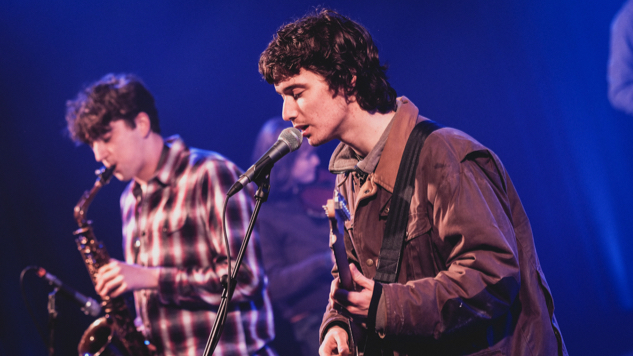


 The Fat Angel Sings