Aussie punk outfit Amyl & the Sniffers have dropped a huge new tune today – leading the first new music for the band’s upcoming album, “Comfort To Me“.
“Guided By Angels” is a frenetic power jam filled with the typical Sniffers affair of loud, loud, and more loud – with vocalist Amy Taylor thrashing out in front.
The new album, conceived while the band were quarantining together, sees a new direction for Taylor and her lyricism. “The nihilistic, live in the moment, positivity and panel beater rock-meets-shed show punk was still there, but it was better,”she says.“The whole thing was less spontaneous and more darkly considered. The amount of time and thought I put into the lyrics for this album is completely different from the EPs, and even the first record.”
Taylor continues, “Half of the lyrics were written during the Australian bushfire season, when we were already wearing masks to protect ourselves from the smoke in the air. And then when the pandemic hit, our options were the same as everyone: go find a day job and work in intense conditions or sit at home and drown in introspection. I fell into the latter category. I had all this energy inside of me and nowhere to put it, because I couldn’t perform, and it had a hectic effect on my brain. My brain evolved and warped and my way of thinking about the world completely changed.”
The video for Guided By Angels sees the band rolling around Melbourne and getting up to all sorts of nonsense.
The new track and album announce come off the heels of the group being confirmed for various festivals, the virtual iteration of the annual Splendour In The Grass festival. They’ll play alongside the likes of The Killers, Chvrches, Denzel Curry and stacks more.
“Comfort To Me” is slated for release 10th September.
All great things take time. And now, three years after Tell Me How You Really Feel, the third studio album from one of the most celebrated Australian singer-songwriters of all time, “Things Take Time, Take Time” is on its way.
Courtney Barnett has delivered with every release, from 2013’s “The Double” EP or one of her full-lengths, 2014’s“Sometimes I Sit and Think, and Sometimes I Just Sit” or 2018’s “Tell Me How You Really Feel”, she uses her observant, witty lyrics to paint us versions of the truth—either one that’s personal to her or reflects reality on a larger scale. She has returned with the track “Rae Street” and news of her third album titled “Things Take Time, Take Time“, which is scheduled to come out November 12th on Mom+Pop Music/Marathon Artists.
Things Take Time, Take Time was worked on over the past couple years and recorded between the end of 2020 and early 2021 with producer/drummer Stella Mozgawa. For the album opener “Rae Street,” Barnett delivers her signature matter-of-fact tone. She observes the mundane events that plague an unextraordinary town—a garbage truck wobbles through the streets, a parent teaches their kid to ride a bike, dogs’ leashes cutely cross paths. “Rae Street” never reaches an unforgettable climax, but leaves a trail of stark wisdom throughout. “All our candles, hopes, and prayers, though well-meaning, they don’t mean a thing,” she sings during the first verse. Later, she sees right through us: “You seem so stable / But you’re just hanging on.”
Out on Milk! Records / Remote Control Records this November 12th, the work apparently ‘signals an exciting new chapter’ for Barnett. The new album was written over the course of two years, recorded with producer/drummer StellaMozgawa (Warpaint, Kurt Vile) and is to be her most intimate to date.
For its accompanying video, we’re thrown into a world of Courtneys, the ones that Barnett observes and concludes are barely getting by.
“A lot of the songs [on the new album] are letters to friends and end up being letters to myself.”
Courtney says the calmness reflected in the album is true to what she herself was searching for the past few years. “I listened to a lot of softer, ambient, instrumental music last year. I tried to create the kind of music that I was craving to listen to.”
Courtney Barnett – Rae Street (Official Video) Taken from the new album ‘Things Take Time, Take Time’ released 12th November 2021
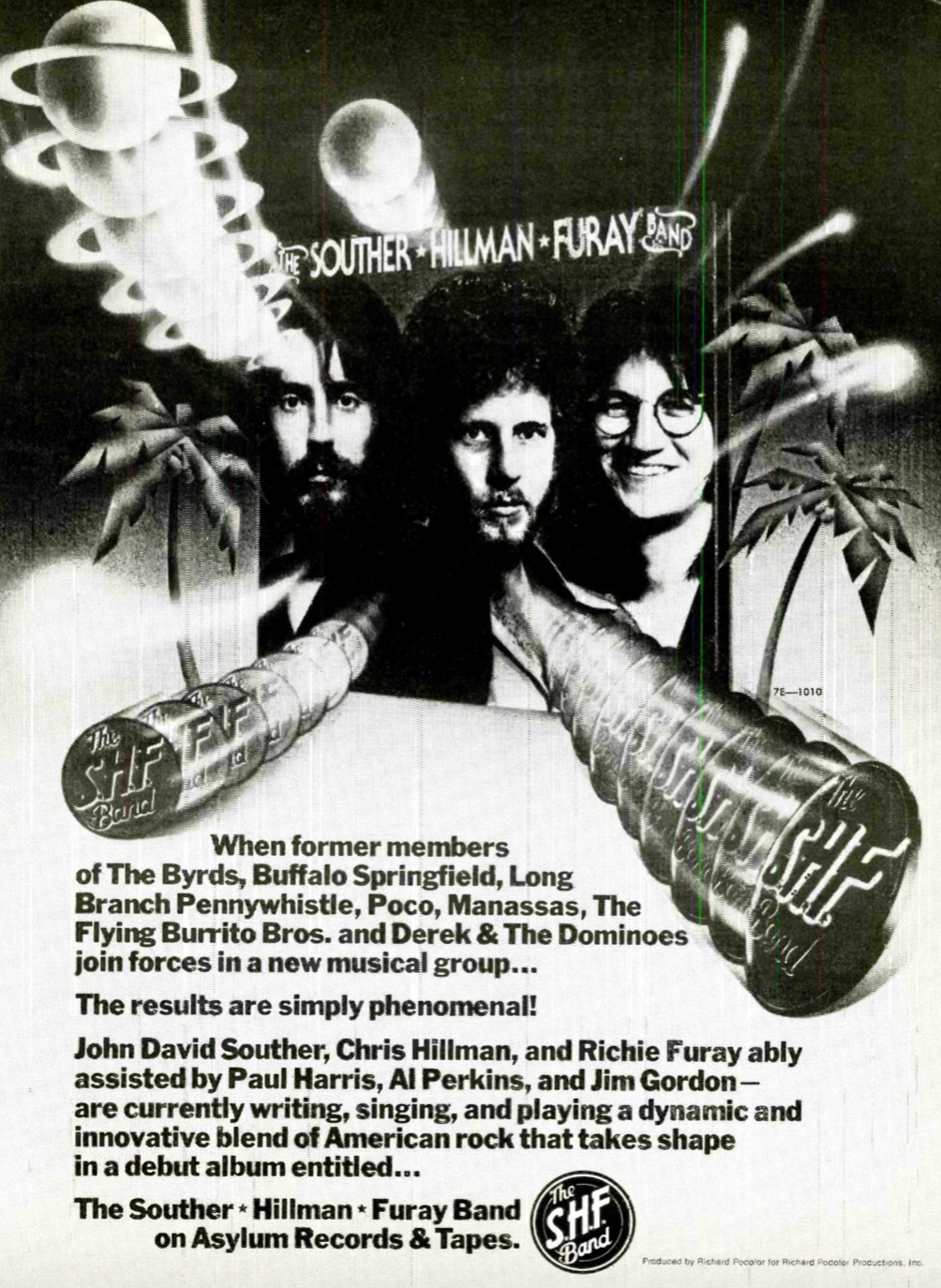
In 1973, artist manager David Geffen was basking in the success of Asylum Records, his boutique label launched two years earlier with the backing of Atlantic Records. Emboldened by the commercial success of the Eagles, Asylum’s first signing, and his earlier triumph managing Crosby, Stills, Nash and Young, Geffen proposed another would-be supergroup by lobbying John David Souther, Chris Hillman and Richie Furay to join forces. With prior bona fides, song writing experience and their own shared affinity for country-rock, the trio seemed poised to cash in on California’s ’70s rock sound.
If Souther, Hillman Furay was pitched as a trio of equals, Geffen’s first consideration was towards Souther, already signed to an Asylum solo deal and writing songs with the Eagles, led by his former Longbranch Pennywhistle partner, Glenn Frey. “Souther Hillman Furay was David Geffen’s attempt to make me mainstream in the wake of the Eagles’ success,” Souther would later tell rock historian Barney Hoskyns. “I think he thought I’d be the Neil [Young] of the group.”
His new bandmates already enjoyed some of the luster Geffen sought for Souther. Chris Hillman been a member of the Byrds, a founding Burrito Brother and Stephen Stills’ partner in Manassas. Richie Furay had followed Buffalo Springfield by co-founded country rock band Poco, one of the most influential L.A. bands. Hillman recruited Manassas comrades Paul Harris on keyboards and Al Perkins on pedal steel and lead guitar, along with Jim Gordon, former Derek and the Dominos drummer and a first-call studio player. Harris, Perkins and Gordon would be accorded co-billing behind the leaders in what was now the Souther Hillman Furay Band.
Prior bonds between Furay and Hillman, a valuable ally during Buffalo Springfield’s formation, and Manassas gave hope for a tight-knit, cohesive band, but Geffen either misread or ignored the chemistry between his three major names. Hillman and Furay were accustomed to collaboration, but Souther was perceived as an arrogant, acerbic maverick.
Tension was most toxic between Souther and Furay, whose friendship with guitarist Perkins catalyzed Furay’s evangelical fervour, prompting Souther and Hillman to forge their own “Heathen Defense League” only partly in jest. “Richie and I were just oil and water,” Souther would later note. “I’m not a great team player under those circumstances.
Chris Hillman more diplomatic. “Rather than collaborating, we each brought our own songs to the table, and everyone’s material had his own personal signature attached,” he recalls in his memoir, Time Between: My Life as a Byrd, Burrito Brother, and Beyond. That assessment would be borne out in the three principals’ musical temperaments. Souther’s worldly cool contrasted sharply with Furay’s earnest intensity, with middleman Hillman laid-back yet less mannered than Souther.
Country-rock was their common denominator, but The Souther Hillman Furay Band leads off with Richie Furay’s “Fallin’ in Love,” a spirited mainstream rocker propelled by Gordon’s muscular drumming, Harris’ surging organ fills and Perkins’ sharp electric lead guitar riffs. A typically jubilant Furay vocal shares the same energy and vaulting melodic shape as “A Good Feelin’ to Know,” his best-known Poco track, which powered “Fallin’ in Love” into the Top 40 .
Country accents do shape Hillman’s first vocal feature, “Heavenly Fire,” an elegy to his Burrito comrade Gram Parsons, who had died in September ’73, remembered here as a fallen comrade “who lived the life you sang about.” Perkins’ mournful pedal steel, Harris’ keyboards, and Hillman’s mandolin honour the country-rock vision for which Parsons was already being canonized, but Hillman’s pensive vocal is nearly swamped by elaborate, lapidary backing harmonies on the final choruses.
J.D. Souther, meanwhile, proves the most prolific contributor, penning four of the album’s 10 tracks. “The Heartbreaker” is a loping, R&B-edged shuffle warning against a romantic predator with “a song and a suitcase, and a rodeo smile—just a picture of style” who seduces his prey with “that magic sound.” The song showcases the Detroit-born Texan’s laconic drawl and a laid-back, jaded sensibility shared with his pals in the Eagles, evoking life in the same fast lane they would map on Hotel California. Its third-person vantage point masks the irony in Souther’s own notoriety as a ladies’ man since his early days hanging at the Troubadour’s bar, with Linda Ronstadt, Judee Sill and Stevie Nicks among his conquests.
On “Border Town,” Souther glamorizes decadence in the first person to survey the perils in a Mexican border town, citing “the dope and the night life…no place you’d really want to hang around,” before admitting, “But…I think I might.” Latin percussion buoys the track as Souther offers a roguish commentary on “good-looking women, most of them easy” and “dudes” that are “pretty greasy.” What may have passed as a cinematic tableau in 1974 now sounds tone-deaf in its casual misogyny and ethnic stereotyping.
Throughout the album, Souther’s worldly cool offers a stark contrast to Furay’s earnest intensity, while Hillman emerges as middleman both musically and temperamentally. Sandwiched between Souther’s two rockers, Furay’s “Believe Me” is a forthright romantic ballad decorated with keening pedal steel and piano arpeggios before flexing more electric firepower courtesy of Perkins’ lead electric guitar. His third SHF contribution, “The Flight of the Dove,” is a minor-keyed, mid-tempo rocker that hints at a crisis of faith that may or may not be merely romantic in origin.
Hillman splits his remaining originals between “Safe at Home,” a strutting mid-tempo rocker enlivened by Perkins’ slashing guitar leads and Gordon’s splashing cymbal crashes, and the lysergic bluegrass of “Rise and Fall.” “Safe at Home” is another cautionary tale of wretched excess from alcohol to cocaine to faithless women, tailored for ’70s rock radio, while “Rise and Fall” points to Hillman’s future embrace of acoustic country and bluegrass.
For his remaining tracks, Souther pivots to his softer side and stronger suit as a writer. “Pretty Goodbyes” is a languid waltz with elegant lyrics and a lush choral arrangement. A better balladeer than a belter, Souther’s tender vocal and the track’s musical bloom cushion the blow in what’s essentially a kiss-off to his lover, admitting he’s been “lonelier with you than I was without.” On the album closer, “Dark, Deep and Dreamless,” Souther scales up to a grandiose ballad that adds an Eagles nest of contrapuntal backing vocals around an ascending melody that reaches for, but doesn’t quite achieve, Roy Orbison’s altitude, leaving a finale that stumbles toward bombast.
True to Geffen’s agenda, The Souther Hillman Furay Band, was released in July 1974, accomplished its commercial mission and displayed the stylistic DNA of the Byrds, Poco and the Eagles, attaining gold status. Yet ultimately the Souther Hillman Furay Band proved to be less than the sum of its parts frayed by internal friction.
The antipathy between Souther and a now devout Furay only intensified, while Gordon’s increasingly volatile behaviour led to his departure, a precursor to mental illness that would lead to his psychotic break in 1983 and the murder of his own mother. They would complete a second album with new drummer Ron Grinel, the aptly titled “Trouble in Paradise”, which met with critical and commercial indifference.
When a mysterious masked collective called Goat first emerged in 2012, armed with an incendiary debut single ‘Goatman’ and a backstory for the ages – the band’s anonymous members claimed to hail from the remote and cursed village of Korpilombo in northern Sweden, where inhabitants had for centuries been devoted to a form of voodoo introduced by a travelling witch doctor – there was no one else on earth quite like them.
Enigmatic Swedish psych rock band Goat haven’t made an album since 2016’s “Requiem”, but they’ve just announced a new rarities compilation, entitled “Headsoup”, which will be out August 2th7 via Rocket Recordings. It includes b-sides, standalone singles and a couple brand new tracks. One of those songs is “Queen of the Underground,” which is heavy, weird, and groovy, full of fuzzed-out guitars, congas, flutes and chanted choruses. Aka, a Goat song.
‘Headsoup’ is a new compilation that deepens Goat’s legend even further. Collecting non-album material from across their career, standalone singles, B-sides, digital edits and never before heard songs, it’s a record that’s even bigger in its scope than their studio LPs. It’s a globetrotting acid trip of a record, one that moves from the magnificent heavy-psych of their earliest work, like ‘Goatman’ B-side ‘The Sun And Moon’, to the serene ‘Requiem’-era alternate take ‘Union Of Mind And Soul’, to the simmering grooves of their latest material, and a myriad of other detours.
Sometimes dark and heavy, at others joyous and beautiful, like Goat themselves ‘Headsoup’ is mysterious and constantly shapeshifting, difficult to properly pin down but constantly enthralling. Jazz-flute solos, pounding Afrobeat rhythms, ferocious desert blues, drifting Ethio-jazz and churning drones are just a fraction of their dazzling mix of influences. This is, as the name of Goat’s first album made clear, ‘World Music’ in its most complete form, a sound unrestrained by genre boundaries, although the band are anything but lazy appropriators. They approach their forebears with upmost reverence, providing a celebratory cultural cross-pollination.
You can watch the animated video for the single edit of “Queen of the Underground” and listen to the full version of the song
“Headsoup’ also includes two brand-new tracks, recorded towards the end of 2020, which show that Goat are far from finished evolving. ‘Fill My Mouth’ is a scuzzy psychedelic funk knockout, the sleaziest thing the band have ever recorded. ‘Queen Of The Underground’, meanwhile, is truly herculean, a swaggering psychedelic powerhouse of the very highest order.
Taken from the album ‘Headsoup’ (Launch234) on Rocket Recordings.
Rhino Records’ Joni Mitchell Archives Series continues with remasters of her first four albums in celebration of her landmark album Blue’s50th anniversary. The Reprise Albums (1968-1971) debuted newly remastered versions of Song to a Seagull, Clouds, Ladies of the Canyon and Blue. The albums were released on 4-CDs and 4-LPs on July 2nd, 2021.
The Reprise Albums (1968-1971) brings together the albums that helped establish Mitchell as one of the most-talented songwriters of her generation. It includes essential tracks like “River,” “Chelsea Morning,” “Both Sides, Now,” “Big Yellow Taxi,” “Woodstock” and “The Circle Game.”
The 2021 remaster for Joni Mitchell – “Both Sides Now” originally from the album ‘Clouds.’
Clouds, her second album, was certified gold and won the 1969 Grammy (her first of nine) for Best Folk Performance. Ladies of the Canyon and Blue were both certified platinum, while the latter was inducted into the Grammy Hall of Fame in 1999. the 2021 remaster for Joni Mitchell – “Big Yellow Taxi” originally from the album ‘Ladies of the Canyon.’ THE REPRISE ALBUMS (1968-1971)
In the case of Song to a Seagull, the original mix has been recently updated by Mitchell and mixer Matt Lee. “The original mix was atrocious,” said Mitchell in a press release. “It sounded like it was recorded under a Jello bowl, so I fixed it!”
The remaster of Joni Mitchell’s “Cactus Tree” originally from the album ‘Songs to a Seagull.’
The cover art for The Reprise Albums (1968-1971) features a previously unseen self-portrait Mitchell sketched during the time period. The collection also includes an essay by Grammy-winning singer-songwriter Brandi Carlile, who’s been influenced greatly by Mitchell. She writes: “In my opinion Blue is the greatest album ever made. Blue didn’t make me a better songwriter. Blue made me a better woman… No matter what we are dealing with in these times we can rejoice and know that of all the ages we could have lived through, we lived in the time of Joni Mitchell.”
Joni Mitchell released Blue, concluding her prolific four album run for Reprise Records with an album considered by many to be one of the greatest of all time. Its stirring, confessional songs have been celebrated by music lovers and critics alike for decades while inspiring a wide variety of artists as diverse as Prince and Taylor Swift. Even today, its stature as a masterpiece continues to grow. Just last year, the album was named #3 on Rolling Stone’s list of the “500 Greatest Albums of All Time.”
The Reprise Albums (1968-1971) will be followed later this year by Joni Mitchell Archives Vol. 2, the second installment in the extensive archival series that began last year. Each one promises a deep dive into unreleased studio and live recordings from different eras of Mitchell’s storied career. Vol. 2 will focus on the timeframe when she recorded the albums included in The Reprise Albums (1968-1971).
Says the April 8th press release, “Mitchell continues to be intimately involved in producing these collections, lending her vision and personal touch to every element of the projects. Future releases in the archive series will arrive in a similar manner, with a boxed set focused on studio albums from a specific era, followed by an official ‘Archives’ release looking at unreleased audio from the same period.”
Had you asked me, towards the end of the year or at any time since, what was the best single of 1978, I would rave at you cheerfully in favour of ‘Teenage Kicks’. But had you asked me that question at any time between, say, the spring of that year and the very end of Autumn, I would have had a different answer. I would have said Magazine, ‘Shot By Both Sides’.
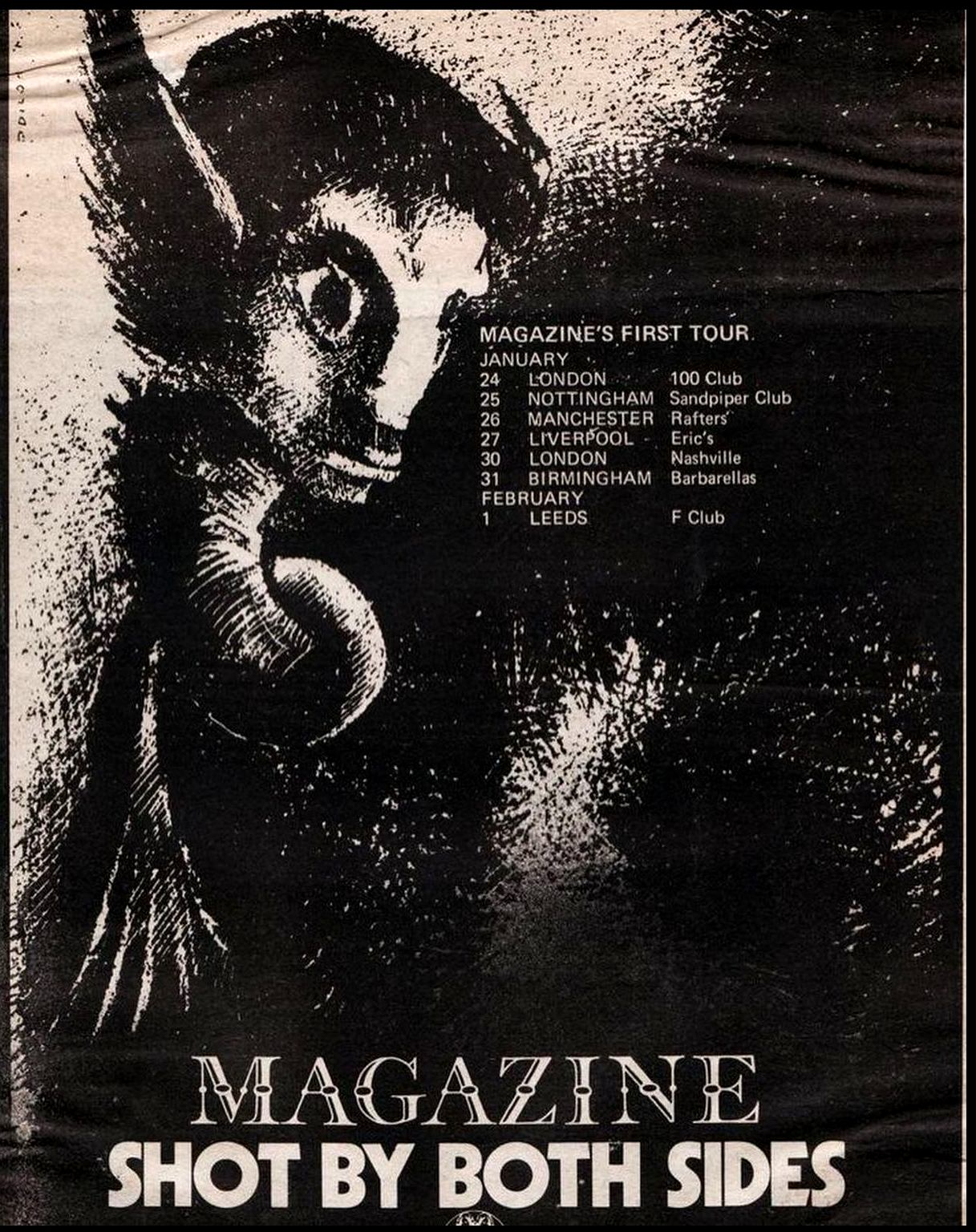
“Shot by Both Sides” is a song written by Ex-Buzzcocks Howard Devoto and Pete Shelley, and performed by the English post-punk band Magazine. It was released in 20th January 1978 as the band’s first single (reaching No. 41 on the UK charts) and appeared a few months later on their debut album, “Real Life”.
The song originated in a riff that Pete Shelley came up with when Devoto was helping him with “some tentative Buzzcocks songs. He played the chord sequence and I was really impressed, said so, and he just gave them to me there and then. An identical guitar riff was used in the song “Lipstick” by Devoto’s former band released as a “B-Side” in November 1978, for which Devoto received a co-writing credit. The single feels like more of a traditional punk recording: raw and to the point, power chords, no keyboards. The version on “Real Life” is more produced (with JohnLeckie twiddling the knobs, as he did years later for Magazine-lovers Radiohead on their album The Bends), the guitars are a bit more layered and jangly, and there are interesting keyboard textures from Dave Formula, who I don’t think was a member of the band at the time of the single recording.
The name of the song came from a political argument between Devoto and his girlfriend, in which his girlfriend said to him, “Oh, you’ll end up shot by both sides”
The song has been cited as a seminal work of the post punk genre. The cover artwork was designed by Malcom Garrett, based on the 1886 work La Chimere regarda avec effroi toutes choses by Symbolist artist Odilon Redon.
The B Side to the single was “My Mind Ain’t So Open” Released on Virgin Records.
Out of the Buzzcocks came singer-songwriter Howard Devoto with Magazine, bringing a bit of prog to punk. In this brilliant opening salvo, the frenzied musical action is ricocheting around him and he’s stuck in the middle thinking he’s been “shot by both sides, they must have come to a secret understanding.” Is he exaggerating the protagonist’s sense of self-importance—that two sides would care enough to conspire to kill him? Is he paranoid? Or truly are there forces at work that want him dead? An anthem for anyone who’s felt just a bit persecuted at times.
‘Shot by Both Sides’ has muscle and energy, but it’s a focussed, targeted energy, as dark and paranoid as Devoto’s lyrics. Barry Adamson and Martin Gorski lay down a solid rhythm over which McGeogh doubles up on riff and lick. Devoto’s voices twists away from the sound, arch and affected, reminiscent of Steve Harley in its refusal to settle on a straight tone. He works his way into the heart of the crowd, shocked to find what is allowed, losing himself in the heart of the crowd whilst the song hurtles towards him.
The song’s confidence momentarily disintegrates, mimicking the sense of Devoto cracking, the rhythm chopping up, its momentum dispersing before Devoto goes full-on batshit paranoid. The middle of the song sees McGeogh go off into a high-speed solo, slashing at the notes in piercing fashion, before retreating to allow Devoto to give full reign to his drama. McGeogh, who was one of the most influential guitarists of his time, would come to the same conclusion, his departure from the band stemming in equal parts from frustration at Magazine’s lack of commercial success and the decreasing amount of space allowed for him and his guitars: he would be both ornament and architecture to Siouxsie and The Banshees’ lush middle period.
Live TV gig on July 2nd 1979 for Belgian TV show Folllies. The footage has been used on YT with the single dubbed on – here’s the real live sound and peformance in HQ.
‘Shot by Both Sides’ was Magazine’s first release. Howard Devoto had left The Buzzcocks because he wanted to do more than the pure punk sound, and in guitarist John McGeogh he found a musical partner more than capable of realising his ambitions to incorporate elements of progressive and avant garde music. Devoto envisaged a keyboard player, and between the single and the album versions of the track, he found one in Dave Formula, but in this moment the band were a four-piece, with McGeogh the dominant player, and ‘Shot by Both Sides’ was both introduction and farewell, looking Janus-like to future and past. It wraps itself in the punk sound of angry guitar, but its immediately a fuller, deeper sound, built upon a charging riff full of menace, and an ascending lick, a rising string of notes, written by Pete Shelley and generously allowed to form the keynote of this song.
Nothing the band did sounded remotely like as good as this. ‘Shot By Both Sides’ was pure, driving, musical ecstasy, power and energy in beautiful balance, taking over your ears until the only thing you wanted to do was to play it again, immediately, and louder! And forty-one years later, like ‘Teenage Kicks’, it hasn’t aged a second. Let the riff pound out and immediately we are trapped, in the middle of the crowd, overwhelmed by fear, “Shot by Both Sides. And still the only response is to play it again.
Minneapolis-based trio Gully Boys, made up of Kathy Callahan (guitar, vocals), Natalie Klemond (bass, vocals) and Nadirah McGill (drums, vocals), shared a ripper on Tuesday to mark their signing to Get Better Records. The band’s stated influences (No Doubt, Hole) shine through on “Russian Doll,” a grungy, relentlessly melodic rock track with a complicated sentiment at its core: “There’s no one coming to make things right.” The trio repeat this declaration in unison, counterbalanced by subtle synth touches, their chants and crashing guitars growing more raucous as the track builds to its explosive conclusion. But don’t let that killer hook distract you from the depth of Gully Boys’ song writing: Depending on your perspective, that refrain can indicate either resignation or empowerment—either “we’re screwed” or “we can do this.”
Take a guess which way Gully Boys are going.
Released June 29th, 2021
Produced and mixed by Jake Luppen, mastered by Caleb Hinz, written by Gully Boys
Torres’ fifth album “Thirstier” pumps the miraculous into the mundane. It is in open revolt against the grey drag of time, a searing and life-affirming eruption of an album that wonders what could happen if we found a way to make our fantasies inexhaustible. What if we got whatever we wanted and still wanted it, endlessly, with no threat of boredom and no danger of depletion? What could we become if we let ourselves grow incandescent with eternally renewing desire?
Recorded in the fall of 2020 at Middle Farm Studios in Devon, UK, Thirstier marks a turn towards a bigger, more bombastic sound for Torres. The anxious hush that fell over much of Scott’s previous music gets turned inside-out in songs tailored for post-plague celebration. Scott co-produced the album with Rob Ellis and Peter Miles, drawing on her experience self-producing the acclaimed 2020 LP Silver Tongue to push her music onto an even broader scale. Guitar-driven walls of sound, surge and dissipate like surf in high winds, carrying Scott’s commanding voice to the fore.
From the sparkling country romp of “Don’t Go Puttin Wishes in My Head” to the sour grunge bite of “Keep the Devil Out” and the unabashed, overflowing devotion of the album’s title track, Thirstierclasps together love songs from all angles. Romantic love, platonic love, familial love, self-love, and freeing spiritual love all commingle, all feeding one another and vaulting toward the horizon.
Indie singer/songwriter Torres (moniker of Mackenzie Scott) is gearing up to release “Thirstier”, a follow-up to 2019’s “Silver Tongue” and Scott’s second album with Merge Records. In addition to the album announcement came its first single, “Don’t Go Puttin Wishes In My Head.” The track is a heart breaking explosion of emotions as Scott reflects on a relationship built on empty promises, yearning for a sign she should keep going. Scott’s bright guitars and vocals that sneak into blissful high notes feel like being on the brink of tears.
The new album marks a stylistic change for Scott, who was inspired by the dynamic sounds of Butch Vig’s work with Nirvana and Garbage. Of this new direction, Scott said in a statement: “I wanted to channel my intensity into something that felt positive and constructive, as opposed to being intense in a destructive or eviscerating way. I love the idea that intensity can actually be something life-saving or something joyous.
“Thirstier” is out July 30th, 2021, on Merge Records.
Midwife’s third full length record, “Luminol”, was written and produced during quarantine. “Luminol” is a chemical used by forensic investigators to reveal trace amounts of blood left at a crime scene. When it reacts with blood, luminol emits a chemiluminescent blue glow that can be seen in a darkened room.
“Heaven metal” multi-instrumentalist Madeline Johnston announced her third album as Midwife and released its opener, “God Is a Cop,” in June, after sharing the album’s closer “Christina’s World” back in April. If “heaven metal” doesn’t compute for you on paper, it will soon after you push play on “God Is a Cop,” a hauntingly minimal experimental-pop track that revolves around “the evil thought” Johnston can’t shake, no matter how hard she tries: “Am I the villain, am I the cop?” Her gentle keys—so soft, it’s as if she’s barely touched them—and thrumming guitars echo over and over again, a dreamlike, yet subtly disturbing reflection of her fixation.
The follow-up to Midwife’s acclaimed 2020 album “Forever”, Luminol has an origin story common among COVID-era albums: Robbed of touring by the pandemic, the New Mexico-via-Colorado artist shifted her focus back to writing and recording her new six-song set. The album takes its title from “a chemical used by forensic investigators to reveal trace amounts of blood left at a crime scene.
Midwife is interested in profound truth—turning trial and tribulation into sources of light,” a press release explains. “Luminol navigates themes of incarceration, locus of control, clarity, self harm, confinement, agency and truth-seeking, all erupting in a bioluminescent Rothko colour-field of blue.
My new album Mythopoetics is out July 9 on Anti Records , I have always loved myths. We mythologize our lives all the time – sometimes we find solace in those stories & sometimes we are bound by them. This album was a way for me to take a look at the patterns that have been handed down to me through my family & through society, the stories I have been telling & have been told, & see how I could transform that into something of my own – a source of power & of healing.
The evocative and existential project of Nandi Rose, aka New York-based artist Half Waif, has never shied away from deep emotional territory, often exploring anguish and catharsis through intricate synth-pop compositions. Mythopoetics, featuring spellbinding single, “Orange Blossoms” and composed in part with multi-instrumentalist and frequent collaborator Zubin Hensler, explores the beauty of self-transformation while on the path towards healing. Creating a diverse sonic universe, Rose describes Mythopoetics as “the album I’ve been trying to make for 10 years.”
“Swimmer” by Half Waif from the album ‘Mythopoetics’, available July 9th
Arranged, produced, and performed by Zubin Hensler & me






 The Fat Angel Sings