Archive for the ‘MUSIC’ Category

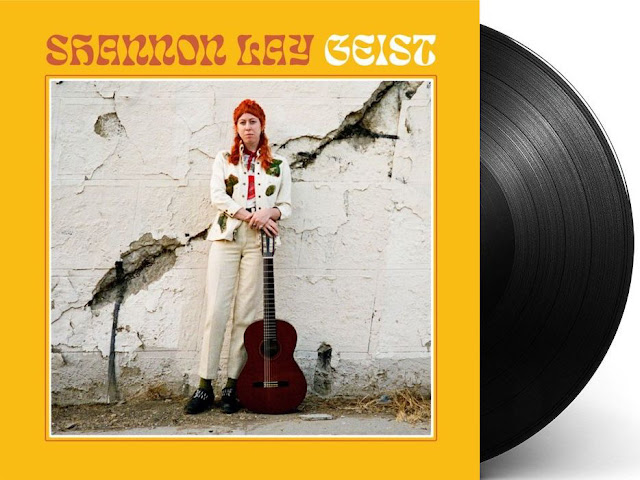
Shannon Lay recorded a sombre folk album during the American lockdown, which was then beautifully
coloured by quite a few musicians and that soon surpasses her great previous albums .The American singer-songwriter Shannon Lay already showed on her previous albums that she is not only a great singer, but also an excellent songwriter. You can hear it even more clearly on the “Geist” released this week. It is an album with a sober acoustic basis, which has been coloured in a very tasteful way by a number of guest musicians. It delivers a warm-blooded and timeless sound, which colours beautifully with the beautiful voice of the American musician. “Geist” builds on the previous two albums of the musician from Los Angeles, but makes a bit more of an impression. Annual lists material for lovers of contemporary folk with here and there a longing for the past.

After “All This Life Goin Down” from 2016, “Living Water” from 2017 and August from 2019, “Geist” is already the fourth album by American musician.

The music on “Living Water” that reminded me of illustrious American folk singers from a distant past like Karen Dalton, Linda Perhacs and Judee Sill, but I also heard something from Joni Mitchell. The great thing about Shannon Lay’s music, however, was that one moment she took you back to the distant past, but the next moment she sounded quirky and contemporary.

It is a line that was extended to the August produced by Ty Segall, which at most sounded a bit fuller than its predecessor. “Geist” released this week is again a logical continuation of that album.
The musician from Los Angeles, California, started her new album on her own due to the lockdown in the studio of Jarvis Tavinere of the band Woods. The recorded basis of acoustic guitar and the voice of the musician is beautiful, but was eventually further coloured by quite a few musicians, including multi-instrumentalists Ben Boye (Bonnie Prince Billy) and Devin Hoff (Sharon Van Etten), who added strings, among other things. Then some keyboards were added and Ty Segall was allowed to play a guitar solo.
Despite all the additions, “Geist” is a pretty sober sounding album, on which the bass played by Shannon Lay still dominates. Also on “Geist”, the music of the American musician still reminds of folk singers from a distant past, but the album sounds a bit more contemporary than its predecessors and occasionally also contains some influences from Celtic music.
The accents that have been applied by the aforementioned musicians are particularly tasteful and also provide the album with a special atmosphere and subcutaneous tension. Just like on her previous album, Shannon Lay draws for beautiful but also adventurous songs, to which she adds an over of Syd Barrett’s Late Night.

The musician from Los Angeles delivered a high-quality album with “August” two years ago, but I personally like “Geist” a little better, especially because the album leans less on the past and sounds completely timeless. Geist is an album that is completely convincing immediately upon first listen, but because of the special accents and twists in the instrumentation and the imaginative songs, it is also an album that becomes even better and more interesting for a long time. It is currently raining five-star reviews for the American musician and there is really nothing to argue with.

Geist” feels like a window – or a mirror – into possibilities of the self and beyond. Shannon Lay’s new album is tender intensity, placeless and ethereal. It exists in the chasms of the present — a world populated by shadow selves, spiritual awakenings, déjà vu, and past lives.

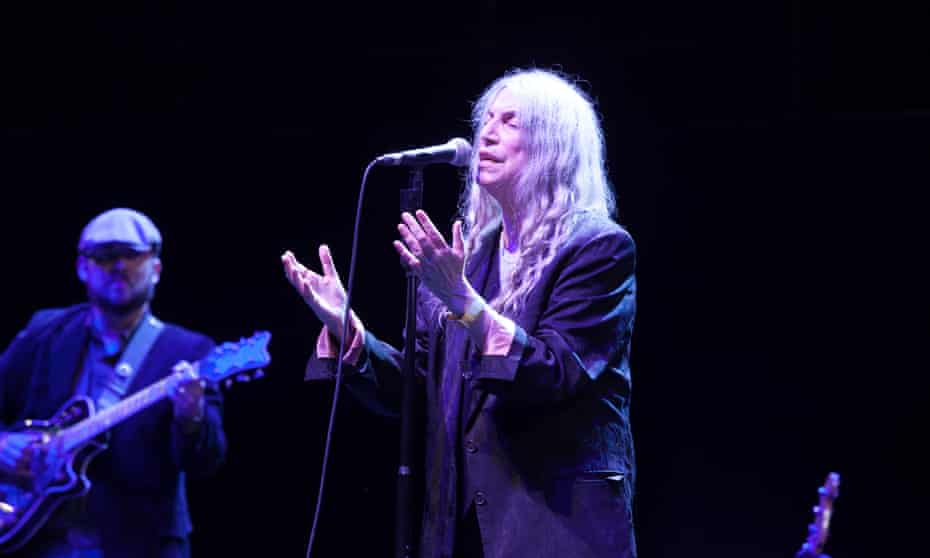
Patti Smith at the Royal Albert Hall, with her son, Jackson, on guitar.

With worn black boot’s on the monitor, her long artist’s hands carving up the air, Patti Smith is a performer who asks for no quarter. Her rakish authority has only been cemented by the passage of time since she started out, her uncompromising poetry accompanied by the lash of proto-punk early 70s electric guitar.

Tonight at the Royal Albert Hall, Smith’s sonorous voice lends itself as easily to a howl on her best-known songs as it does to a tender croon for her cover of Stevie Wonder’s “Blame It on the Sun“. “Free money!” she shouts, both hungry and sneering, channelling the yearning of her mother whose hopes for better hinged on a lottery ticket. “Ain’t It Strange”, a reggae-leaning track from Smith’s 1976 album “Radio Ethiopia”, is intense, foreshadowing Nick Cave with its “hand of God” refrain. “Transcend! Transcend!” she seethes.

Around Smith, a full-strength band rev up to take-off velocity. She often travels with a more pared-down outfit, or as a solo act for poetry readings. But for this first of two gigs at the Albert Hall, her day-one associate Lenny Kaye is on guitar. According to a chapter extracted in Mojo magazine from his forthcoming book, Smith sought out Kaye, then a record store guy compiling a yet-to-be famous garage rock box set, “Nuggets”, at the behest of her friend, the playwright Sam Shepard. Fellow seasoned travellers Jay Dee Daugherty and Tony Shanahan are on drums and keys/bass respectively. Smith’s offspring, Jackson (guitar) and Jesse (keyboards), are players whose roles defy nepotism.

You never quite know which Patti Smith is going to turn up – the poet who collaborated with Soundwalk Collective for a trilogy of spoken-word-with-sound albums across 2019 and 2020 or the author of a series of acclaimed dream-state travelogues – 2019’s Year of the Monkey is her most recent. This, however, is declaiming, seer-mode, rock’n’roll Patti – generous with the Rolling Stones covers (“this one’s for Charlie!”), egging on Kaye’s wiry flurries, prancing and rearing like the horses in the fever dream of Johnny, the protagonist of her 1975 song “Land”. Smith commands the audience to raise their arms and ‘feel your blood’ You get a sense of the road travelled from Smith’s hardscrabble New Jersey beginnings to this imperial cathedral from her riveting rendition of “Piss Factory“, her acclaimed poem about being bullied for doing her industrial piecework too quickly – she quit and sought her artistic fortune in New York City.

After her agent had tried for some time, Smith finally got the go-ahead to play the Albert Hall in 2020, she confides. And then came “an extraordinary time”, when we all made “memories we did not have to have”.

Thankfulness comes in two forms tonight. Smith’s 2000 song “Grateful” soothes the listener: “it will all come out fine”. Mid-set, though, we get the towering achievement from her third decade in the game. The 1996 song “Beneath the Southern Cross” was written after the loss of her husband, Fred “Sonic” Smith of MC5.

The two chiming acoustic guitars set up a simple, recurrent figure, droning and implacable, as Smith’s incantatory words hover in the air. At the track’s peak is a fresh call to life. She commands the audience to raise their arms and “feel your blood”, which has not been “stagnant” but “pulsating” in us throughout 2020. “We are fucking alive,” she bellows at a crowd long since on their feet, baying their agreement and surging towards the foot of the stage, “and we are free!”

During Covid, Smith, also a visual artist and photographer, began documenting her everyday surroundings on Instagram. She also joined the paid-for newsletter provider Substack; her output is called The Melting. She recently told the Los Angeles Times that during lockdown, stir-crazy and struggling to write when not travelling, her local cafe allowed her to move one of its tables and chairs to her apartment.

These rescheduled gigs aren’t pegged to any particular record or publication, but Smith did recently release a seven-track live EP on Spotify as part of its Live at Electric Lady Studios series. Inspired by Jimi Hendrix, who recorded there, Smith laid down her first demos at NYC’s Electric Lady; Kaye reports in his book that Smith’s flatmate, the artist Robert Mapplethorpe, put up the money. Tonight, she plays one of those live tracks, Bob Dylan’s “One Too Many Mornings”, recounting how she used to moon over “the guy that writ it” as a teen.

Naturally, the goosebumps come back out again for “Land” – less a song than an EP in itself that follows Johnny into a fugue state in the aftermath of an assault. Smith has brought Johnny bang up to date. He is “every gender, every race, every persuasion… all things”.

He surveys the world, polluted, full of “debris”, and invokes nature, pledging to sacrifice himself for “every species”. Tonight the song ends with Smith singing singing “Jesus died for somebody’s sins, but not mine”, but it sounds like Johnny is ready to take the hit for all of us.

WET LEG – ” Wet Dream “

Posted: October 9, 2021 in MUSIC
Tags:
Rhian Teasdale, left, and Hester Chambers of Wet Leg

Indie rock is rarely witty or sexy. So Wet Leg, with their singles about sexy furniture “Chaise Longue” and late-night emissions “Wet Dream”, their Mean Girls quotes and single entendres, are sometimes regarded with suspicion. Unfair. They come to bring joy. Rhian Teasdale and Hester Chambers first met at the Isle of Wight College and made some promising if introspective music together and apart over the following decade. Revelation came when the pair decided to take it a little less seriously while careening around a festival.

Teasdale stopped writing “unlistenable” piano pieces and learned guitar, which Chambers already played. They assembled a band with fellow islanders Josh, Henry and Ellis, booked gigs and self-directed some videos, Teasdale using her experience as wardrobe assistant on Ed Sheeran videos to design their distinctive “serious hat-wearing cottage-core lady” look. A record deal arrived after just two songs, then during lockdown the duo sketched out their debut album. “Our first songs were really crass, about getting abducted by aliens,” recalls Teasdale. “We’ve reined in the crass but kept the fun.”

You could pick out splinters of American new wave and British post-punk from their deadpan vocals and sharp-elbowed songs, but the broad range of acts they’ve been compared to proves they have a swagger of their own. Florence, Iggy Pop and Hayley Williams love them – and so must you.

Wet Leg – “Wet Dream” – out now on Domino Recordings

PONDHOPPER – ” Fall Apart “

Posted: October 9, 2021 in MUSIC
Tags:
No photo description available.

Although originally from Northern Wisconsin, Pondhopper’s latest material was both written and recorded in the house the trio share in Los Angeles. After emerging back in the spring with their debut single “Sapling“, the band followed up in August with the excellent “So So”. While we’re all still awaiting details of the band’s first longer format release, today they’re premiering their latest single, “Fall Apart”.

We shot this music vid back in November with our good bud Daniel Tyler on a lengthy road trip back to Wisconsin. This ended up being one of the most low key music video shoots we’ve ever done but it’s honesty our favourite one. Huge thanks to Steve (Erik’s dad) for starring in it and letting us rip around on the Yamaha all weekend! And thanks to everyone else who has helped along the way.

Discussing the inspiration behind the track, Pondhopper suggest “Fall Apart” is, “about how certain things like a song can bring up sad memories and how those things seem to present themselves more frequently when they are unwanted”. The song is littered with memories, emotions triggered by seemingly insignificant moments that make your mind run wild, as they sing, “it’s coming up on shuffle far too frequently for the algorithm to be functioning, every time I hear that track I get teary-eyed and I fall apart”.

Musically, the track is a slice of indie-folk, pitched somewhere between the wistful acoustic explorations of Angelo De Augustine and the luxurious West-Coast pop of Whitney. The track begins with a series of muted, chunky acoustic guitar chords before flourishes of tumbling piano notes and the easy vocal melody take the whole thing towards entirely dreamier territory. It’s very early days for pondhopper, yet there’s enough here to suggest they’re onto something that’s going to be well worth keeping an ear on in the weeks and months to come.

Adam Ostrar is a parent, maybe just like you, that worries about the world his kid is inheriting. He’s anxious about the damaged and ravaged U.S.A. and so are the narrators on his most recent album, “The Worried Coat”. Keeled Scales is proud to bring The Worried Coat back into print on vinyl on October 1st, 2021.  

His beautiful rhythmic guitar-pulse and tumbling, lyrical vocal style, His long sold-out, album, “The Worried Coat“, is getting a thoroughly well-deserved re-release.

The album’s title, The Worried Coat, couldn’t be much more fitting, as throughout Adam is confronting his worries. He’s a parent worried about the world his kids are going to inherit, he’s an American worried about the division and damage he sees in the country he lives in, and he’s a musician putting all those concerns directly to tape. The record opens with Kansas City, the downbeat calm of the vocal reminiscent of Kevin Morby, as the steady rhythmic pulse of bass is adorned with layered flourishes of electric guitar. Elsewhere on the delightfully eclectic album, Adam treats us to the Michael Nau-like Bossa Nova shuffle of Bloody Waves and the down-tuned psych-folk of the atmospheric Morning Said, his sound always evolving without ever forgetting its roots in his stunning guitar-work and rich lyrical portraits.

At its heart The Worried Coat is a record that’s wholly human, there are no black-and-white characters, nobody entirely good or entirely broken, just a host of characters trying their best, or at the very least trying to try their best. Adam Ostrar’s characters are anxious and sometimes ignorant, caught up in a game they can’t win, and in their flaws and their triumphs, you see yourself reflected back. We’re all a character in an Adam Ostrar song, whether we care to admit it or not.

Released October 1st, 2021

May be an image of 1 person and outerwear

Brian Wilson has released his solo, piano instrumental rendition of The Beach Boys‘ hit, “Wouldn’t It Be Nice”. The song release comes just two weeks after he announced “At My Piano”, a collection of 15 Beach Boys classics reimagined as solo piano instrumentals, due out November 19th via Decca Records,

Back in September, along with announcement of the album, Wilson shared the first single, “God Only Knows“. Much like the first single, the newly released “Wouldn’t It Be Nice” stays true to the song’s original structure and feel. While it has a slightly slower tempo, this solo rendition from Wilson captures the many different melodies and vocal tonalities present on the original recording from The Beach Boys’ 1966 album, “Pet Sounds”. Despite the absence of vocals, it’s hard to refrain from singing along with Wilson as he gracefully glides through the first chorus. As Wilson said in a statement alongside the album’s announcement, “We had an upright piano in our living room and from the time I was 12 years old I played it each and every day. I never had a lesson, I was completely self-taught.”

He continued, “I can’t express how much the piano has played such an important part in my life. It has bought me comfort, joy, and security. It has fuelled my creativity as well as my competitive nature. I play it when I’m happy or feeling sad. I love playing for people and I love playing alone when no one is listening. Honestly, the piano and the music I create on it has probably saved my life.”

These sentiments are ever-present on this recording, which allows the listener to tap into each and every emotion Wilson feels when playing.

Below, listen to Wilson’s solo piano rendition of “Wouldn’t It Be Nice”, set to appear on the forthcoming album At My Piano. Tour dates and tickets to Wilson’s ongoing tour, Brian Wilson: Greatest Hits Live!, with Al Jardine and Blondie Chaplin.

A Decca Records recording; ℗ 2021 Brimel, under exclusive licence to Universal Music Operations Released on: 2021-10-01

May be a black-and-white image of 1 person and text that says 'REB FOUNTAIN IRIS'

Reb Fountain is to be counted among our finest songwriters whose imagery is both personal and universal, and her command of a melody and a song transcends genre.

The namesake of her new album, which is out now, Reb Fountain says on the single, “’Iris’ is a love letter to my sisters and my many selves, an embrace that holds all the stories we never shared, a rainbow connection, a feminist arsenal, a space to rest, a prism for the heart. What’s in your heart that you dare not speak? If love be our currency, what stories we would tell?”

The perfect extension of her 2020 self-titled record, “Iris” elevates Reb Fountain’s music to new heights. Reb effortlessly combines pop elements with her trademark noir folk-punk sound; weaving authentic and anthemic tunes that create an instant and indelible impression. Written during lockdown in 202, Reb has said on the album “Writing a song a day to keep myself grounded and productive during lockdown, “Iris” provided me an opportunity to speak my unspoken, to reflect what I have seen and experienced from within and to bear witness.”

Diving into the deeper meaning of the album’s namesake, Reb says “Iris is in many ways an unsung hero, known as the goddess of the rainbow, sea and sky, she acts as bridge between the gods to humanity with little of her own story known. So many stories go unheard, so many aspects of our humanity are unsung; visibility is a contested and inequitable space where what is essential and of beauty is often ‘invisible’. I wanted and needed to give voice to this essential human spirit; to conjure and hold and commune with the very real, valid and invaluable voices within and around me.”

“Beastie” is my way of exploring and disrupting tales and tropes that separate ‘others’ from our ‘selves’. It’s easy to relegate evils to the ‘shameful past’; harder to confront our own current inhumanity, especially if one’s identity comes with benefits or losses. I wanted my eyes open and to speak in solidarity with resistance; to make a conscious choice for equity, justice, community, and love . . . and to give folks a chance to join in chorus . . . the band and I look forward to hearing you sing along in the near future.

The award-winning songwriter, Reb Fountain, is a consummate recording artist and performer; spell-bounding audiences with her music and artistry alike. Throughout 2020, Reb and her all-star band (Dave Khan, Karin Canzek and Earl Robertson) astounded audiences around the country on her sold out album release tour.

Reb was born in San Francisco and immigrated with her family from North America to Lyttelton — the quiet port town out of Christchurch that’s been fundamental to New Zealand’s alt-folk scene, raising artists like Marlon Williams, Aldous Harding, and Delaney Davidson.

IRIS” is out via Flying Nun Records on the 1st of October, 2021 on both black and transparent turquoise vinyl, CD and digitally. 

Released October 1st, 2021

All songs written by Reb Fountain except “Swim to the Star”, written by Peggy Seeger and Calum MacColl

May be an image of 1 person

Featuring classics like “Anything Could Happen” and “Point That Thing Somewhere Else,” The Clean’s “Boodle Boodle Boodle” EP arrived two months after the “Tally Ho!” single, peaking at #5 and staying in the New Zealand Top 20 for nearly six months. Recorded on four-track by The Clean’s childhood friends Chris Knox and Doug Hood, its five hugely influential songs provided a roadmap for the “Dunedin sound” that would soon follow. Boodle Boodle Boodle was awarded the Classic Record distinction by New Zealand’s Taite Music Prize in 2017.

Remastered by Tex Houston from the original tapes held at the Alexander Turnbull Library.

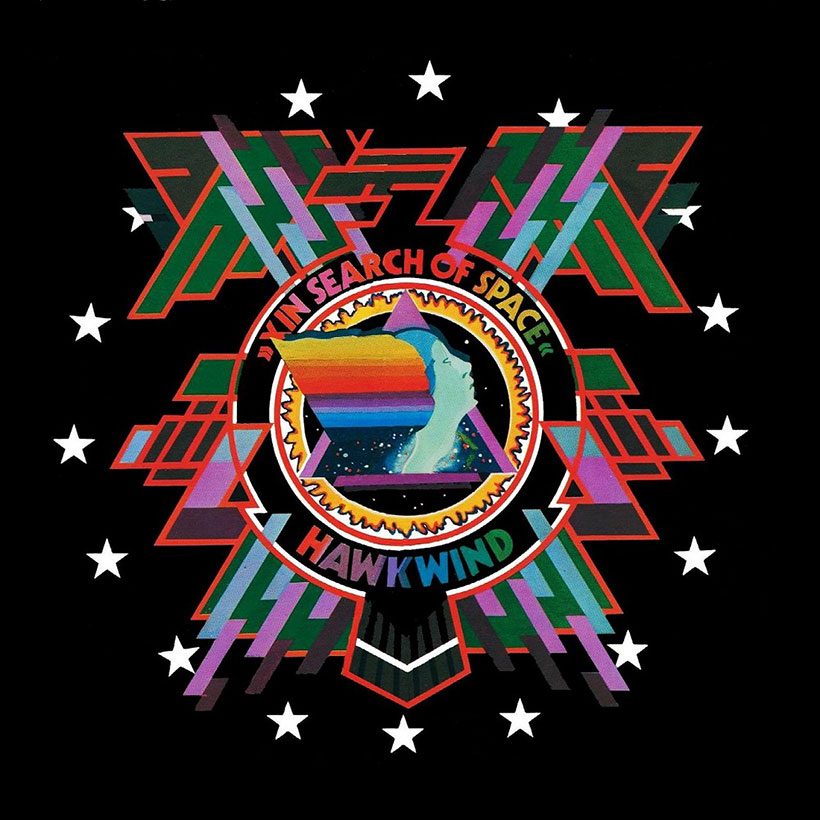
Hawkwind In Search Of Space album cover web optimised 820

Happy 50th anniversary to “In Search of Space”, the first masterpiece of Hawkwind originally released on 8th October 1971. Hawkwind’s debut album is one of the first full length “Space Rock” albums, but they mastered that art by the time of this sophomore album. The band went on to release the classics like Doremi Fasol Latido (1972), Space Ritual (1973), Hall of the Mountain Grill (1974)

A bold step forward for Hawkwind, their second album, ‘In Search Of Space” laid the groundwork for the landmark track ‘Silver Machine.’ It’s hard to imagine the world of rock’n’roll without Hawkwind’s presence. The pioneering London space-rockers have now endured for five decades, and have a string of classic albums under their belt, among them “In Search Of Space” and “Warrior On The Edge Of Time“. While guitarist/vocalist Dave Brock has remained the only constant, legendary figures such as Ginger Baker, sci-fi/fantasy writer Michael Moorcock and Motörhead founder Lemmy have all passed through its ranks.

Even now, the band’s detractors still dismiss them as merely a “hippie” aberration, but while this seemingly invincible outfit will forever be associated with the UK’s free-festival circuit, in reality their music has embraced everything from prog-rock to psychedelia and heavy metal. Later LPs, such as 1992’s Electric Teepee, even flirted with genres as disparate as ambient and techno.

To date, Hawkwind has recorded almost 30 studio LPs for both major labels (Charisma, Bronze, Active/RCA) and independent imprints (Flicknife, EBS). Yet while the band remains a going concern, most long-term supporters would argue that their career-defining discs emerged from their fruitful tenure with their initial sponsors, Liberty/United Artists, between 1970 and 1975.

Released in August 1970 and co-produced by former Pretty Things guitarist Dick Taylor, Hawkwind’s eponymous debut was book-ended by two folk-flavoured tracks, “Hurry On Sundown” and “Hall Of Mirrors,” but it was dominated by a lengthy free-form, psych-prog jam which was edited down, in Can-like fashion, into shorter individual selections.

Hawkwind was a volatile outfit at the best of times and their initial line-up disintegrated soon after their debut. The original nucleus of Brock, sax/flute maestro Nik Turner, drummer Terry Ollis and synth player Dik Mik remained, but guitarist Hugh Lloyd Langton quit; ex-Amon Düül II bassist Dave Anderson replaced Thomas Crimble, and the band’s soundman, Del Dettmar, stepped in as an additional synth/electronics manipulator.

This line-up recorded the band’s celebrated sophomore release, In Search Of Space. First issued in October ’71 and compiled from sessions overseen by former Jimi Hendrix/Small Faces engineer George Chkiantz at London’s Olympic Studios, the album was a bold step forward from Hawkwind’s debut. Arguably,  The album opens with the mind-numbing galactic haze of “You Shouldn’t Do That,” a spooky little 15-minute excursion that warps, throbs, and swirls with Dik Mik’s “audio generator” and the steady drum pace of Terry Ollis. Then comes the ominous whispering of the title, set to the pulsating waves of Dave Brock’s guitar and Turner’s alto sax, with Dettmar’s synth work laying the foundation. Wonderfully setting the tone, “You Shouldn’t Do That” improvisational looseness and rhythmic fusion smoothly open up the album into the realm of Hawkwind. The peculiarity never ceases, as but Brock and Co. also excelled on the intergalactic blues-rock of “You Know You’re Only Dreaming” and “We Took the Wrong Steps Years Ago” delves even deeper into obscurity, sometimes emanating with the familiar jangle of the guitar which then has its acquaintance overshadowed by the waft of the keyboard. Just as laced the succinct, acid-addled “Master Of The Universe’ with Nuggets-esque proto-punk energy, chugs and rolls with a foreboding rhythm, “Adjust Me” retaliates with its moaning verse and tonal fluctuations fading into oblivion. The ground breaking sound which Hawkwind achieved on “In Search of Space” helped to open up a whole new avenue of progressive rock. The track “You Shouldn’t Do That,” wherein the band locked into a super-hypnotic motorik groove.

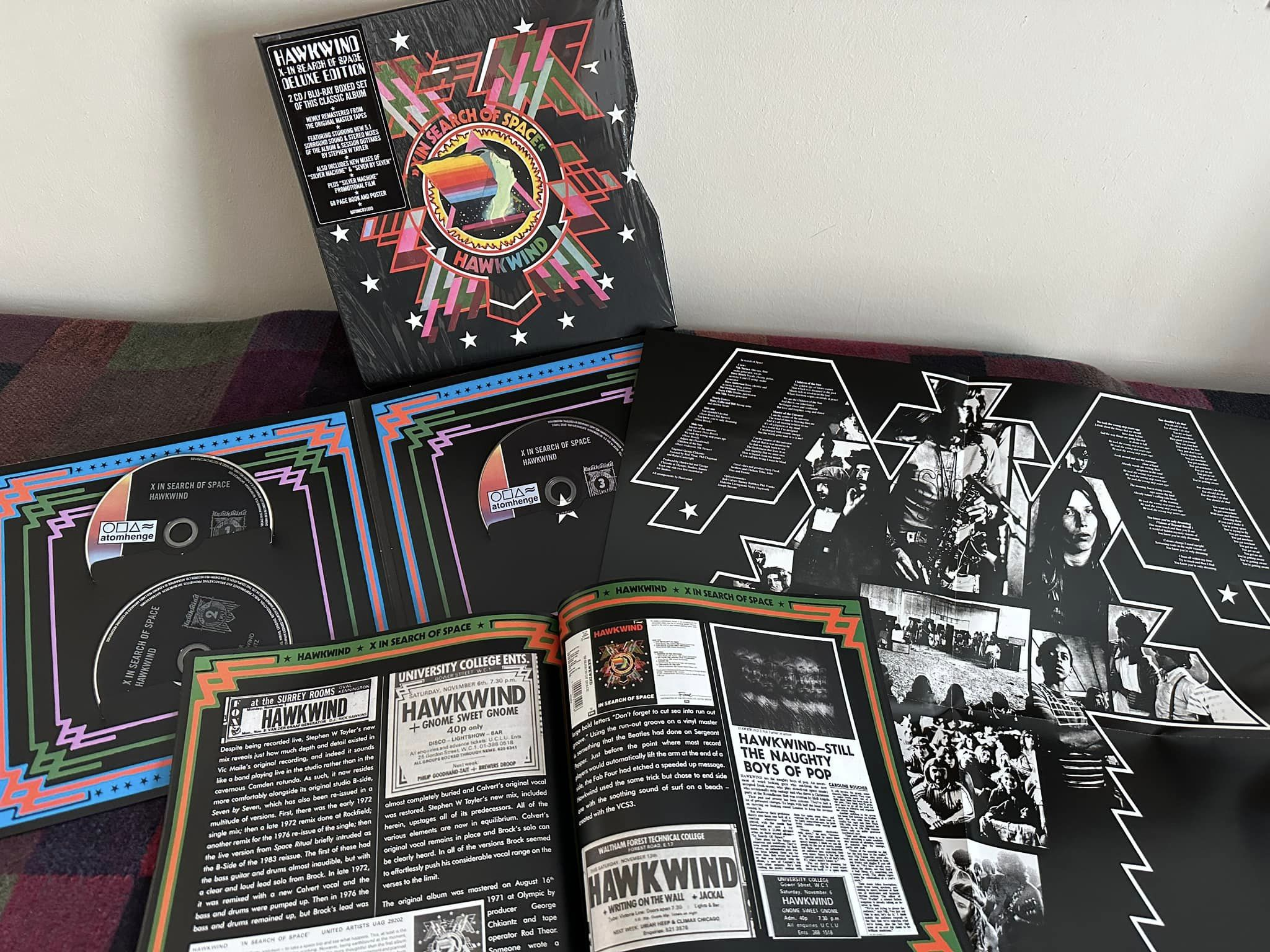
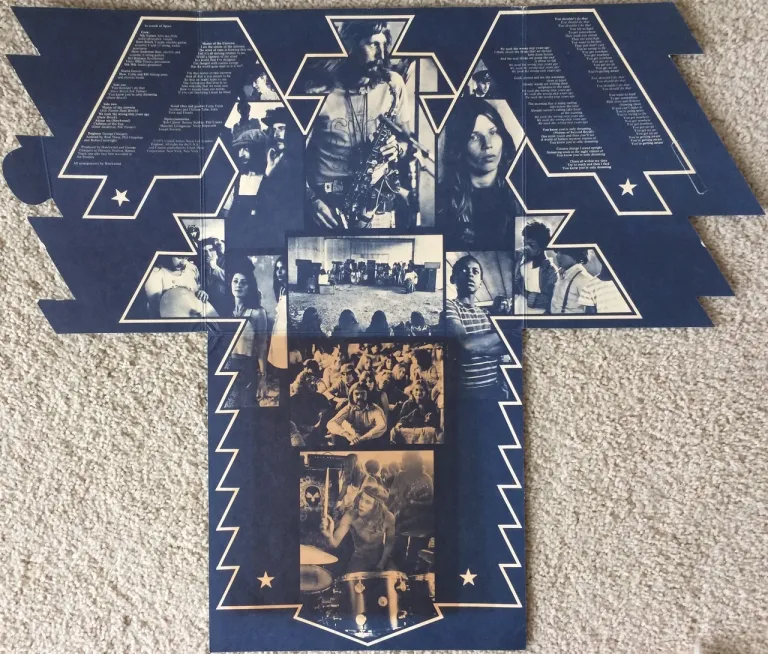
Designed by future Stiff Records/Elvis Costello artist Barney Bubbles, “In Search Of Space” came housed in a spectacular interlocking die-cut sleeve which unfolded into the shape of a hawk, and came accompanied by a 24-page book, the sci-fi-flavored The Hawkwind Log, conceived by the band’s long-term associate, poet Robert Calvert. Successfully feeding the era’s discerning heads, the LP climbed to No.18 in the UK, it won Hawkwind a gold disc, and laid the groundwork for their UK Top 10 hit, June ’72’s “Silver Machine,” which featured a commanding vocal from new recruit Lemmy.

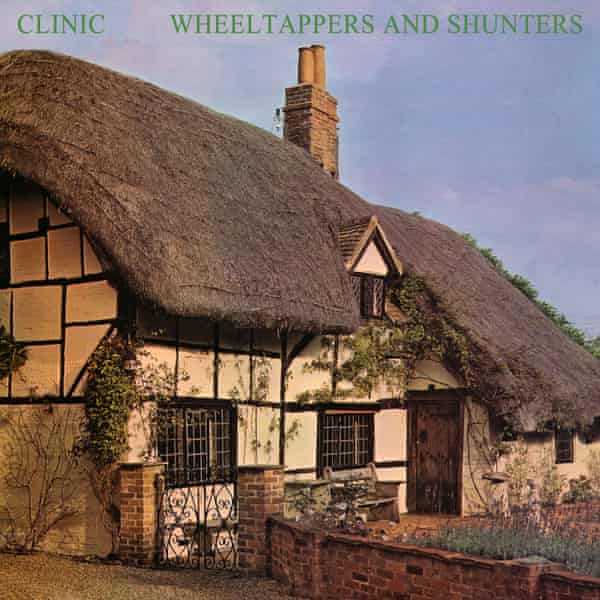
Clinic: Wheeltappers and Shunters album artwork

In 2019, what are the chances of not one, but two new records, released in the same week, referencing mid-1970s variety series The Wheeltappers and Shunters Social Club? The show was one of those dimly remembered phenomena you could pull out in order to underline that the Britain of 45 years ago was barely recognisable as the country we currently live in now.

And yet, nearly half a century on, we find ourselves in an unexpected situation. Days after Noel Gallagher released a video for his new single cut with footage from the show to suggest his band is performing in the titular social club, Liverpool quartet Clinic release an album named after it, on which the first sound you hear is a fuzzy recording of its co-host Colin Crompton.

It’s a rare moment when what Clinic does intersects, albeit accidentally, with something happening in the mainstream. They’ve been nominated for a Grammy – for 2002’s Walking With Thee – and shortly afterwards, the American viewing public was treated to the sight of the band, resplendent in matching collarless Beatle suits and their trademark surgical masks, powering through its title track on the Late Show With David Letterman. But Clinic have spent most of the past 22 years in a world of their own, ploughing a peculiar furrow on the margins, offering up a grimy, very northern English take on psychedelia.

As well as the initial sample from The Wheeltappers and Shunters Social Club, the warped surf-rock guitars and distorted keyboards of opener “Laughing Cavalier” are overlaid with snatches of what sounds like an old advert for a coach trip to Blackpool, conjuring up an infinitely more sinister-sounding mystery tour than that once offered by some fellow Liverpudlians. In fact, Clinic’s most obvious antecedents, at least spiritually, might be the phantasmagorical, psilocybin-fuelled visions of the northwest offered up on the Fall’s early albums, or the work of the Blue Orchids, the band formed by former Fall members who boasted their music was “completed under extraneous influences working on the psyche”. But their sound stirs garage rock, primitive synthesiser experiments, dub and glam, among an array of other influences, into a fizzing, idiosyncratic mix: two tracks on Wheeltappers and Shunters are driven by the kind of antiquated drum machine pattern that powered Blondie’s Heart of Glass, while “Disciple” offers a fair imagining of what Suicide might have sounded like, had they come from Bootle.

Wheeltappers and Shunters arrives seven years after Clinic’s last album, “Free Reign“, on which they collaborated with Oneohtrix Point Never’s Daniel Lopatin (they later reworked the album, included more of Lopatin’s work, and released it as Free Reign II), and stretched their sound into lengthy, droning jams. By contrast, Wheeltappers and Shunters represents something of a return to core values. Its 12 tracks are done and dusted in under half an hour; nothing is allowed to linger much over three minutes.

What’s striking is how much Clinic can cram in to such a tight schedule. Despite their brevity, their songs tend to gradually reveal themselves over repeated listens: there’s a real complexity and depth lurking behind the initial distorted punch of their sound. The brilliant “Flying Fish” is a case in point. At first, it sounds like there’s almost nothing to it beyond a metronomic rhythmic pulse, a simple bass line and an echoing vocal, but on closer inspection, it’s packed with distant sounds subtly shifting in and out of view: whispering voices, ghostly shimmers, something that might be a harpsichord, little accents of guitar and keyboard. The overall effect is eerie and compelling. The closing “New Equations (at the Copacabana)”, meanwhile, shifts from sounding like a hotel lounge band playing underwater – overlaid with the clack of a typewriter – to an insistent garage-rock thud, to a dense, Sister Ray-ish climax.

It’s music that manages to be both taut and immersive. The latter sensation is heightened by the enigmatic weirdness of the album’s lyrics, which conjure up a fragmented vision of Britain’s past, at odds with the cover image of a delightful thatched cottage: grubby fairgrounds and holiday camps rubbing shoulders with town criers – one of whom makes an appearance at the end of the disquieting Be Yourself/Year of the Sadist – and sinister evocations of rural life. “The good old days, the good old ways … flags are flying,” sings frontman Ade Blackburn on “Complex“, as if implying that the glorious, sunlit version of our country’s past regularly evoked in the age of Brexit is a myth and that the fag smoke, racist gags and manmade fibres of The Wheeltappers and Shunters Social Club might tell you more about UK history. But if there’s little to celebrate there, it’s still fascinating to explore: out on the margins, Clinic sound as enthralling as ever.