This podcast is unpaid & survives on donations. You can donate via paypal https://www.stephenmbland.com/olas-kool-kitchen or buy merch https://bit.ly/3ePRH6n I’m a DJ on KCLA 99.3FM In LA, 107.5 Andhow.FM in New Zealand, Maximum Threshold Radio, Rock Radio UK, Sword Radio UK, Jammerstream One, Kor Radio, Bombshell Radio, Pop Radio UK, Radio Wigwam, Rock XS Radio. Radio Candy Radio and Radio Lantau you can hear more shows here https://hearthis.at/olaskoolkitchen/ Show 452
1. The Yeah Yeah Yeahs-Date With the Night 2. Modest Mouse-Leave a Light On 3. Paisley Black-Show You Mine 4. Meatbodies – Reach For The Sunn 5. Deux Visages-Phases 6. Taraka -Pyschocastle 7. Strange Magic-Class of ’98 8. Anika-Change-Change 9. Ty Segall-Feel Good 10. Sarah Vaughan-Smooth Operator-single-Mercury 11. The Cake- Rainbow Wood-single-Decca 12. Melodiesinfonie-Fun-Fragments-Radicalis 13. Clairo-Amoeba- Sling-Fader 14. The Killers-Desperate Things-Pressure Machine-EMI
Soft Cell have shared a new song from their forthcoming record “Happiness Not Included”. It’s called “Bruises on My Illusions.” In a statement, producer/instrumentalist Dave Ball said the new single is “one of [Soft Cell’s] darker cinematic pop moments with a classic Marc Almond lyric.”
Marc Almond added: “Bruises on My Illusions” is a mini film noir Soft Cell story about a disillusioned character with everything against him or her who still has hope for a better future, despite the odds. A darker “Bedsitter.” Dave’s ominous yet punchy defiant chords inspired the song.
With “Bruises on My Illusions,” the duo has also announced that “Happiness Not Included” is out February 25th. It’ll be the first new album from Marc Almond and Dave Ball since 2002’s “Cruelty Without Beauty”. Taking a break for more than a decade after that record, Soft Cell issued the new songs “Northern Lights” and “Guilty (‘Cos I Say You Are’)” in a retrospective compilation in 2018. The release followed a farewell show from the duo in London.
Bruises On My Illusions released through BMG Rights Management (UK) Limited on: 2021-10-07
Electric Guitar, Vocals, Producer: Marc Almond Moog, Producer, Programmer, Background Vocals: David Ball Drum Programmer, Sound Engineer, Synthesizer,
For anybody who thinks that the Motown label was a flawless hit-generating machine that churned out classic after classic, consider the reception that greeted Marvin Gaye’s ‘What’s Going On’ as he presented it to the label’s head Berry Gordy in late 1970. It was “the worst thing I ever heard in my life,” the mogul told his star singer. The music was too loose and languid, the subject matter too political, with the potential for career suicide. Gordy refused to release it as a single. A confrontation ensued, with Gaye countering that the themes of urban poverty and systemic racism were on-point for a hugely divided America at the start of the Seventies. The singer threatened to never record for Motown again. Eventually, Gordy relented. ‘What’s Going On’ was a huge hit, becoming the second-biggest song he had ever made for Motown behind ‘I Heard It Through The Grapevine’, and Gordy was soon encouraging Gaye to make a full studio album.
All of which goes to show: even the most seemingly impeccable of track records is never perfect. It’s an interesting thought exercise, though, to imagine a world in which Gordy had prevailed and the song (and its subsequent parent album) had never been released. Fifty years later, ‘What’s Going On’ is such a universal standard in terms of theme, vibe, what it standsfor, that it’s instantly familiar to everybody on the planet (even if the melody itself might not be). Its concise, simple lyrics bear sentiments we all know and which are woven deep into our collective lexicon – “War is not the answer / only love can conquer hate”, for instance, or the spoken “right on, brother” between the verses and chorus.
This premium vinyl release features direct-to-analogue mastering from the original primary album tape reels by acclaimed engineer Kevin Gray, one of the first times this has been done since 1971, offering an undeniably authentic listening experience. What’s Going On: 50th Anniversary 2LP Edition bonus LP opens up the album’s writing and production palette. Featured are four rare cuts making their vinyl debut, highlighted by a previously unreleased “stripped” version of the title song, plus all six original mono single mixes and their B-sides, with all of those 7” versions on vinyl for the first time since their original releases. With two 180gm records, a tip-on heavy stock jacket, original gatefold with complete lyrics, this formidable release also includes printed sleeves with track details, a rare image from the cover sessions, and a brief essay honouring arranger David Van De Pitte. Highlighted is a main essay by acclaimed author and poet Hanif Abdurraqib who was just named one of the 25 recipients of the 2021 MacArthur “Genius” Grant.
Year-long celebrations of the 50th anniversary of Marvin Gaye’s seminal 1971 album “What’s Going On” continue with today’s announcement of Motown/UMe’s December 3rd release of the premium vinyl 50th Anniversary 2LP Edition.
The release features direct-to-analogue mastering from the original primary album tape reels by the acclaimed engineer Kevin Gray. This is one of the first times that this procedure has been done since 1971, and it offers the listener a unique listening experience.
The bonus LP in the new edition opens up the writing and production palette of the landmark release. Four rare cuts make their vinyl debut on the disc, highlighted by a previously unreleased “stripped” version of the title song. All six original mono single mixes and their B-sides are included, with all of those 7” versions appearing on vinyl for the first time since their original releases. These include alternate versions of “God Is Love” and “Flying High (In The Friendly Sky),” the latter of which was issued on 45 as “Sad Tomorrows.”
A slight alteration of the melody and lyrics of a song that was given to him by Four Tops singer Renaldo Benson when he saw the carnage of police brutality exacted on anti-Vietnam War protestors in California in May 1969, ‘What’s Going On’ is not only a signature song for Marvin Gaye and the soul genre in general, but also an enduring statement of universal brotherhood, one that makes sense as a radiant exhortation of optimism but also as one of frustration and desperation.
It was conceived and written at a crisis point in Gaye’s life, when personal and professional tragedies were beginning to engulf him. By the end of the Sixties, he was in a terrible place. He was in trouble with the taxman, embroiled in creative arguments with Motown, and increasingly addicted to cocaine. His marriage to Anna Gordy (the sister of the aforementioned label’s boss) had fallen apart, and his singing partner Tammi Terrell had died suddenly from a brain tumour. One night around this point, Gaye was stopped from committing suicide by an intervention from his father-in-law.
The turning point seems to have been Gaye’s decision to get back in touch with his faith and embrace spirituality, simultaneously engaging in activities that would bust him out of the intense, constant cycle of recording, releasing and performing that his career had been characterized by in the Sixties. He refused to promote his 1970 album “That’s The Way Love Is“, and at one point seriously considered pursuing a career as an NFL pro. Inspired by the Vietnam War and social upheaval in America, he determined to address more socially conscious themes in his music. “I was very much affected by letters my brother was sending me from Vietnam, as well as the social situation here at home,” he told Rolling Stone. “I realized that I had to put my own fantasies behind me if I wanted to write songs that would reach the souls of people. I wanted them to take a look at what was happening in the world.”
Hiring a mix of Motown house musicians and outside session veterans, Gaye embarked on recording the songs that would make up “What’s Going On” in the summer of 1970. The sessions were laid back and fruitful until, in September that year, Gaye responded to Gordy’s slamming of ‘What’s Going On’ by going on strike, mothballing the sessions and embarking on different work. That was until March 1971, when Gordy was sideswiped by the single’s enormous success, reaching no.2 in the Billboard Hot 100. The Motown head told Gaye that he could do whatever he wanted with the album, as long as he completed it within 30 days, effectively giving the singer a blank cheque for the rest of his career.
What he came up with was an expansion of his formula of short, sweet, love-based soul hits so dramatic that it may as well have been a complete revolution. What’s Going Onis a masterclass in the resolution of moods and themes that, in music, hadn’t been balanced before. The symphonic majesty of Brian Wilson’s vision for the Beach Boys in Pet Sounds had introduced mature themes into popular music five years earlier, but this was something else entirely. Marvin Gaye helped revolutionise soul music, inverting his existing image so that he could look sexy even though he had the weight of the world on his shoulders, to smile through the sorrow.
Setting the tone with the title track, “What’s Going On” unfurls in much the same vein throughout, with Gaye’s soulful and impassioned vocals underpinned by elements of gospel, jazz, funk and classical music orchestration all played out against a shimmering backdrop of multi-tracked backing vocals that stacks up to the heavens. Although he spends the time lyrically analyzing urban decay, environmental woes, military turbulence, police brutality and rising unemployment, there’s an unmistakable sense of optimism shot through the dire warnings – that things, however bad they are and despite the fact they seem to be getting worse, can be better. The answer is not hopelessness, but action.
For every moment like ‘What’s Happening Brother’ that deals with the disillusionment of Vietnam war vets, Gaye tells us that the answer is right in front of us. “War is hell, when will it end? / When will people start gettin’ together again?” he exhorts there. Even with lyrics as bleak as “to save a world that’s destined to die”, the soaring jazz of ‘Save The Children’ becomes utterly radiant as Gaye cries “save the babies!”. These kinds of moments are punctuated by slightly lighter interludes in the form of ‘God Is Love’ and ‘Wholy Holy’, both emotional gospel pleas for unity. The seven-minute jam of ‘Right On’, a serpentine journey influenced by Latin soul and funk, opens the second half of the album in a different mood to the first. With all tracks segueing into each other, “What’s Going On” plays like a jazz experience, like “one long single”, in the words of music writer David Hepworth.
Bringing the suite of the album’s first half to a close is the gorgeous ‘Mercy Mercy Me (The Ecology)’, a poignant song of sorrow for Planet Earth at a point when mass awareness of environmental issues hadn’t yet been achieved. It turned into the album’s second Billboard Top Ten hit, alongside the sultry but hugely bleak album closer ‘Inner City Blues (Make We Wanna Holler)’. Harrowing images of urban decay and economic collapse stalk a dark, minimalist and blues-influenced soundscape, characterized by the sultry bongos and crystalline bass figure. If there was a sense that humankind was, despite all the misgivings that Gaye outlines in the rest of the album, travelling towards some inevitable point of redemption, ‘Inner City Blues’ instructs the listener to think again. You can feel the grime, pressure and tension even underneath the song’s utterly graceful exterior.
It’s hard to think of a more complete LP experience than “What’s Going On“, both in terms of sonic ambition and narrative structure. It starts with a vision of the possibility of utopia through communication, tolerance and enlightenment, and ends with a terrifying gaze into the abyss, a statement of street-level realism defined by struggle and despair. It reflected back America’s collective loss of innocence that the Vietnam War had engendered, as well as serving as a cri-du-coeur of the Black experience. Ever since it was released, when it sold nearly two million copies in its first year and became Gaye’s most successful album by far to that point, the record has regularly been hailed as one of the greatest ever. In the revised 2020 edition of their 500 Greatest Albums of All Time list, compiled by musicians rather than music writers, Rolling Stone named “What’s Going On” at the very top. Quite apart from the massive musical influence it’s had on artists from Curtis Mayfield and Prince to contemporary figures like Kanye West, its legacy is one of political enlightenment and social activism. The album’s themes of police brutality, climate breakdown, inequality and foreign wars are still current today, being opposed by Black Lives Matter and Extinction Rebellion. It’s hard to think of another album-length piece of popular music that’s got the same credentials.
The “What’s Going On” 50th Anniversary 2LP Edition will feature two 180 gram records, a tip-on heavy stock jacket, and the original gatefold with complete lyrics. It also includes printed sleeves with track details, a rare image from the cover sessions, and a brief essay honouring arranger David Van De Pitte.
The main essay in the set is by acclaimed author and poet Hanif Abdurraqib, recently named one of the 25 recipients of the 2021 MacArthur “genius” grant. An e-commerce edition will also include three exclusive lithographs from the “What’s Going On” photo sessions.
On November 19th, Motown/UMe will also release a four-track remix suite from Grammy-nominated producer Salaam Remi, including remixes of tracks from the What’s Going On album and recordings. For example, “No Need” is an unreleased instrumental from the “Sad Tomorrows” sessions, and there is a reinterpretation of the holiday release “I Want To Come Home For Christmas.” This was originally recorded in 1972 and thematically tied to What’s Going On as a tribute to troops in Vietnam who yearned to be with their families for the holidays.
“What’s Going On”: 50th Anniversary 2LP Edition, which is released on December 3rd.
With their 1983 debut, the Violent Femmes got the ball rolling for what would become alternative rock, using acoustic instruments to deliver an unexpectedly raw blend of punk angst and catchy-if-neurotic song writing. The band’s subsequent ’80s albums were a mixed bag, yielding occasional highlights but not quite gelling into anything as consistently powerful as the first album. Released in 1991, fifth album “Why Do Birds Sing?” was something of a return to form, if only in terms of having song after song of the kind of weirdly fractured folk-pop that represented the group at their most accessible. Upbeat and straightforward album opener “American Music” is somewhere between campfire song and pop masterpiece, with subtle production details like sleigh bells and sparingly used organ runs growing along with the song’s steady build.
More blatant stabs at pop come with a snarling cover of Culture Club’s hit “Do You Really Want to Hurt Me,” the inverted girl group appropriation of “Look Like That,” and the driving college rock of “Used to Be.” The band’s penchant for sardonic and juvenile humour remains intact on the faux-blues stomp of “Girl Trouble” (vocalist Gordon Gano returning to the refrain “Have mercy on me, I’ve got girl trouble up the ass!”) and the shadowy clunk of “Make More Money,” a bitter revenge story of the tormented high school nerd becoming a rich rock star.
When Why Do BirdsSing? was first released, the Violent Femmes were already a decade into their career, enjoying cult success but still living mostly in the shadow of their debut. The album would be one of their most commercially successful up until that point, despite some critics finding it disjointed and a little too all over the place stylistically. Removed from the time in which it originally arrived, “Why Do Birds Sing?” feels more solid, with its lesser moments strung together by some of the best songs the band ever penned, and production that makes space for both the Femmes’ anxious demeanor and their not-so-secret love of big, dumb pop songs.
[This 30th Anniversary Edition includes several previously unreleased studio tracks from the same era, as well as a complete 1991 concert performance.]
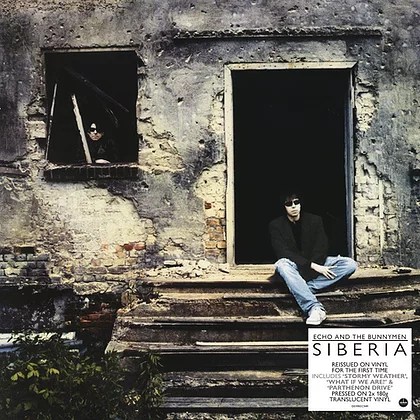
Recorded in 2005 as the follow up to “Flowers”, “Siberia” is the tenth studio album by Liverpudlian post-punk legends Echo and the Bunnymen. • “Siberia” was produced by Hugh Jones (who had previously produced the band’s 1981 classic “Heaven Up Here”) and was written by founding Bunnymen members Ian McCulloch and Will Sergeant. 25 years on from their debut album “Crocodiles”, “Siberia” still retains the classic Bunnymen sound whilst breaking new ground. Their sound is so distinctly their own with Sergeant’s silvery, tight guitar work and McCulloch’s fashionable, sweet-and-sour kind of vocal charm. Siberia, Echo’s tenth studio album (including the sans-McCulloch disaster, Reverberation), is the album the two school friends have been trying to make since getting back together to record Evergreen. This 11-song set has every crass beat of Crocodiles and every sparkling thread of Heaven Up Here while the edgy pop moments of the underrated Porcupine are sprinkled throughout. And of course, OceanRain will not be forgotten. If anything, “Siberia” mirrors the passion of that 1984 classic most of all. Will Sergeant’s playing has never sounded better,
Highlights include stand-out guitar playing by Sergeant on tracks such as “Parthenon Drive” and “Of a Life” and the timeless vocal charms of McCulloch on “Stormy Weather” and “What If We Are?”. Long out of print, Demon Records is proud to present the first vinyl reissue of ‘Siberia’, pressed on two 180g translucent vinyl and house in a gatefold sleeve.
SIDE [a] 1. Stormy Weather 2. All Because Of You Days 3. Parthenon Drive SIDE [b] 4. In The Margins 5. Of A Life 6. Make Us Blind SIDE [c] 7. Everything Kills You 8. Siberia 9. Sideways Eight SIDE [d] 10. Scissors In The Sand 11. What If we Are? Format available Clear 2LP Vinyl Release Date: 1st October 2021
Really, “Siberia” is a beautiful album. All those years ago, Echo & the Bunnymen gave the world some “songs to learn and sing.” With “Siberia”, they do it again.
Echo and The Bunnymen – the album “Siberia” Out now on Cooking Vinyl Records,
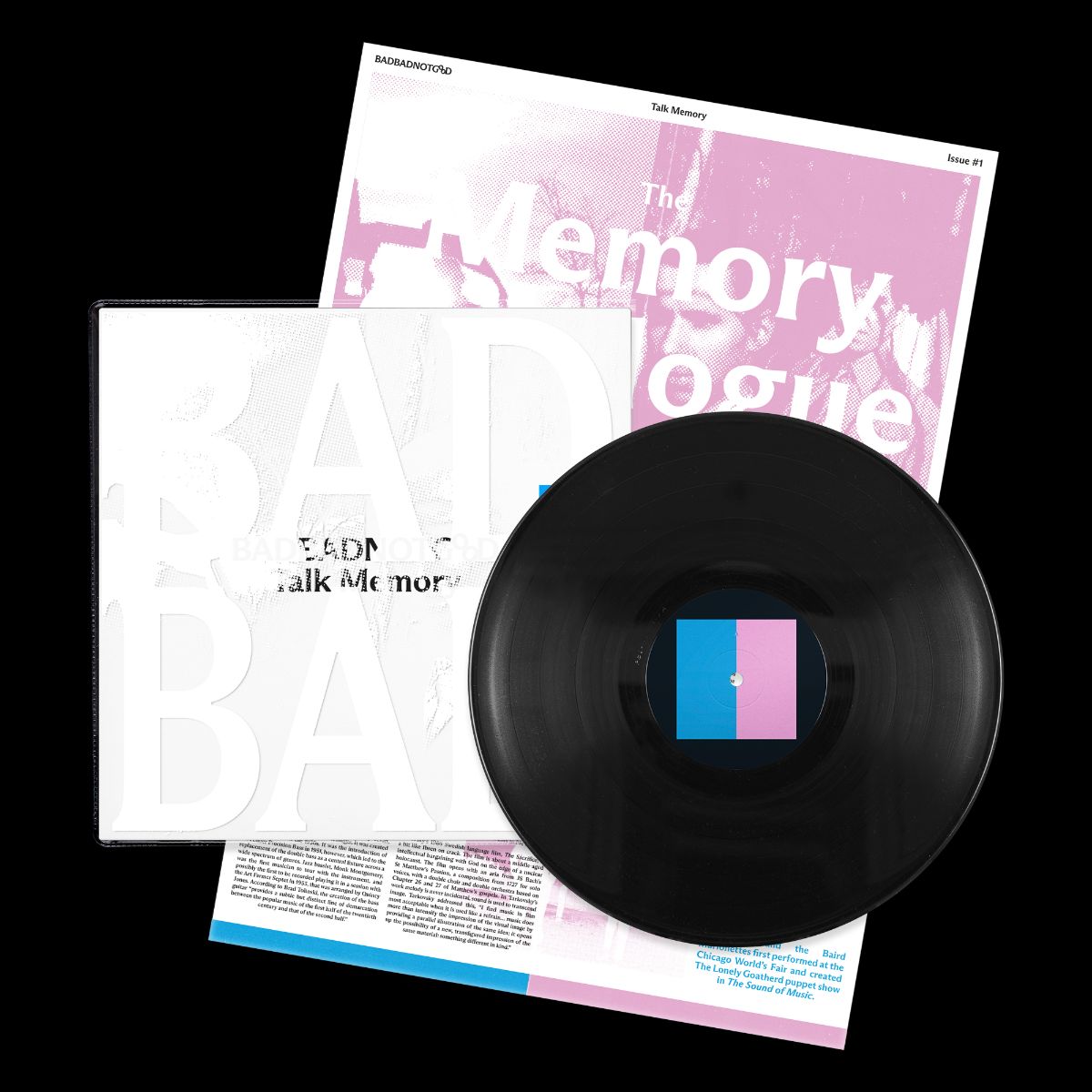
BADBADNOTGOOD have released their highly anticipated psychedelic jazz album “Talk Memory”. Including musical contributions from Arthur Verocai, Karriem Riggins, Terrace Martin, Laraaji and acclaimed harpist Brandee Younger. The album is an evolution focused on collaboration and the magic of improvised live performance.
Virgil Abloh’s design firm Alaska-Alaska created the cover for the LP, CD and cassette, available now. While supplies last, all vinyl orders from the XL store include the first three issues of the Memory Catalogue, a collectible poster-zine documenting the visual, musical, and collaborative world of “TalkMemory“.
The release of the band’s fifth studio album is coupled with an accompanying video for “Love Proceeding,” composed in conjunction with Arthur Verocai. The short film directed by Jamal Burger portrays the bond between two brothers looking after themselves while their mom works late.
“A cacophonous blend of psychedelic jazz, syncopated rhythms, and orchestral bombast.” EntertainmentWeekly “Their most forward-facing jazz record yet, packed with complex, multi-storied compositions you can still dance to.” Mojo
Taken from the album, “Talk Memory”. Out October 8th on XL Recordings and Innovative Leisure.
Fifty years after Jim Morrison’s mysterious death in Paris, enough books on the Doors have been published to fill several shelves at your local bookstore. John Densmore and the late Ray Manzarek wrote their memoirs, numerous biographies are on the market, and a few months ago, a coffee-table volume of Morrison’s lyrics, poetry, and musings arrived. The one band member who’s resisted relaying his version of events is guitarist Robby Krieger, but that silence ends with the publication of “Set the Night on Fire: Living, Dying and Playing Guitar With the Doors”, co-written with Jeff Alulis. The book hits shelves on October 12th.
In the memoir, Krieger unearths his memories on the rise of the band, Morrison’s notorious arrest for public exposure in Miami, the recording of the band’s albums — including the final, “L.A. Woman”Morrison’s death, and how the surviving band members coped. Krieger addresses various myths and legends, including the band’s controversial appearance on The Ed Sullivan Show on September 17th, 1967. At the time, way before MTV and YouTube, Sullivan’s weekly variety show was a major outlet for pop acts looking to reach as many people as possible. But was it the calamitous appearance that legend (and Doors movies) have had it? Read on for an exclusive excerpt from Krieger’s book.
The Ed Sullivan Showwas an American institution — a signpost for entertainers that read, “You Have Arrived.” Or at least that’s what it was when Elvis, the Beatles, and the Rolling Stones made their first appearances. By 1967, Ed seemed corny and out of touch. It was a show your parents watched. But it was still an institution, and still a signpost we wanted to pass.
On the outside, we played it cool, but in the privacy of our dressing room we were giddy. We were in New York City, in the CBS studios, on Broadway, about to be transmitted into millions of living rooms. We had done TV before, but only local channels. This was our first national broadcast. For some reason, I channeled all my pent-up excitement into entertaining my bandmates with my impression of Curly from the Three Stooges. I dropped to the floor and did that thing where Curly makes whooping noises and “runs” in a circle on his side. That’s when Ed Sullivan happened to walk through our dressing room door.
We had done a rehearsal earlier; Ed was stopping by to wish us luck before going on the air. Ed caught the Doors in a rare moment when our guard was down and we were all laughing. Seeing our lighter side inspired him to tell us how good we looked when we smiled, and that we should wear those same big smiles when we went live.
”Live” was what made our Sullivanappearance stand out. Most of our previous TV performances had been lip-synched, which was lame, but it was just how music shows were done back then. And all of them had been recorded ahead of time, which came in handy when Jim didn’t show up to a taping of a short-lived show called Malibu U, hosted by Ricky Nelson. Ray, John, and I were sitting on Leo Carrillo State Beach, surrounded by actors and crew members staring at us and checking their watches. A fire truck had been brought in as a backdrop and all our instruments were set up on it, but we had no lead singer. Being on TV was a big deal for us back. We couldn’t believe Jim had stood us up. After a while we faced the reality that Jim wasn’t coming, so we played “Light My Fire” while my brother Ronny faced away from the camera and did his best impersonation of Jim Morrison’s back. The next day the crew tracked down Jim and filmed him singing while wearing Ronny’s shirt. The whole incident seems more absurd every time I think about it. Can you imagine Mick Jagger not showing up for a TV taping and the Stones filming Keith Richards’s brother from behind instead?
We had also done Dick Clark’s American Bandstand, which, like Sullivan, was struggling to stay hip as the Summer of Love changed the cultural landscape. Dick greeted us in our dressing room before the taping, and he was friendly and welcoming. But he swore like a sailor. He wasn’t angry or bitter; it was his awkward attempt to seem cool. Being on Bandstandwas, overall, a surprisingly forgettable experience. But I’ll always cherish the memory of hearing Dick Clark repeatedly say “fuck.”
Since Clark and Sullivan were the old guard, we were more excited about appearing on The Jonathan Winters Show. Jonathan hadn’t built up a legacy like Sullivanor Bandstand, but we loved his frantic, unpredictable comedic style. Which is maybe why our frantic, unpredictable lead singer launched himself into a piece of scenery and tangled himself in a bunch of rubber webbing at the end of “Light My Fire.” But Jim was out-crazied that night by our host. At the end of the show, Jonathan came out and improvised a monologue for the studio audience. Among other things, he took out a folding carpenter’s ruler and bent it into different shapes like it was a balloon animal, pretending it was a puppy dog or a machine gun. It was cool to see him do some unpolished comedy, but he went on and on, and soon the crowd started to thin out. For over an hour he never let up, even though people kept leaving. We hung out and watched him out of morbid curiosity to see how long he could go. Eventually, the entire audience had disappeared. The cameras were off. He was making jokes to literally no one. I don’t even remember him stopping. As far as I know, he stayed there talking until the next week’s taping.
Our episode of Jonathan Wintersaired later that month when we had a gig at the Winterland Arena in San Francisco. Back then, of course, there was no way to record a show and watch it later. So in the middle of our set, Bill Siddons brought a TV onstage. We stopped playing, put a microphone up to the TV speaker, and sat down to watch ourselves. We thought it would be a treat for the audience, but the screen was only about 19 inches wide. I doubt anyone past the first few rows could see or hear anything, so we just awkwardly watched the show and then awkwardly resumed our set. This was only a couple of weeks after our New Haven show when our fans had learned to expect the unexpected from the Doors. I don’t think any of them expected that!
When we played “Light My Fire” on Sullivan, we didn’t trash the set and we didn’t swear and we didn’t use my brother as a stand-in for Jim, and yet it was the most controversial TV appearance of all. The narrative, according to the supposedly canonical Doors biography No One Here Gets Out Alive,is that a producer told us not to sing the word “higher,” and we all conspired to contravene the order after the producer left the room. According to Oliver Stone’s movie The Doors, Jim mugged for the camera and over-enunciated the word “higher” on-air to protest the attempted censorship. According to Ray’s autobiography, the producer shouted at us after the show and told us we’d never play Sullivan again, and Jim coolly replied, “Hey, man. So what? We just didthe Ed Sullivan Show.”
But in the dressing room, we weren’t offended by the suggestion to change our lyrics: we thought they were joking. “Light My Fire” had been number one for weeks, playing on every major radio station around the country. We had performed it on half a dozen other TV shows. No one cared about the word “higher.” They couldn’t possibly be serious. As for Jim’s delivery, the original footage is out there and you can see for yourself how he hardly moved for most of the song. Jim never moved on TV the way he did at our concerts. The bright lights and the cameras and the artificial atmosphere of a TV studio always made him feel self-conscious. We never conspired about not changing the lyric ahead of time, and we never talked about why he didn’t change it afterward, but my guess is he was just nervous. It was Sullivan. It was national. It was live. He went into autopilot and sang “Light My Fire” the same way he had a million times before. He may not have even been listening when they suggested the change, but if he did do it on purpose, it was probably because he didn’t think it would be a big deal. [Doors Manager] Bill Siddons might’ve gotten scolded by the show’s staff when we weren’t around, but I don’t remember anyone yelling at us or telling us we’d never play Sullivanagain, and I definitely don’t remember Jim’s perfectly scripted badass response to the frazzled, square producer. The way Ray told stories, I’m surprised his version didn’t end with us strutting in slow motion down Broadway while the CBS studios exploded in the background.
The other thing the retelling of the Sullivan Legend always gets wrong is my smirk. After Jim sang “higher,” the camera cut to a shot of me and Ray, and people have since interpreted the look on my face as a sly grin in reaction to Jim’s act of defiance. In truth, I was just the only member of the band who took Ed’s preshow advice to smile. It wasn’t until long after the show aired that I was finally able to see a clip of our performance. Ray, John, and Jim all looked so cool, playing on that historic stage with their serious, stoic faces. And there I was . . . smiling like an idiot.
Plain Mister Smith is often lost, perambulating about in space. He makes music with friends to keep him from wondering off….Why be yourself when you can take on the persona of someone or something else? You can get up in the morning and glance at your face and body in the mirror but instead of the conventional you looking back, your imagination takes over. When creating a new identity if in a fresh environment then the possibilities are endless. A backstory can be formed that dreamily shapes your personality, a fun project suddenly turning into a natural way of living as people take interest. Why be yourself? But then what is a real self?.
“The Rat” is about those times when you are feeling empty and small and you begin to fantasize about having another life,” Plain Mister Smith explains “You begin to live in envy of those who seem to lead lives filled with heroics, love, great deeds, extravagance! But underneath these vicarious fantasies and projections of stars and heroes and ‘beautiful people’, you know it’s kind of a lie, and really you’re just a Dirty Rat living your life in the Rat pack.”
“The Rat,” the latest single by Plain Mister Smith featuring singer-songwriter Jordan Klassen. Plain Mister Smith is the alias of Mark Jowett, a musician from Vancouver who has previously been a part of Moev and Cinderpop.
“The Rat” follows the debut single “Strangers Strangers” released in June, a folkier softer track (also featuring the vocals of Jordan Klassen) which explores the hypnotic possibilities of being a dreamer. Both are taken from the up-coming EP to be released in October, a gathering of uncomplicated songs that, with their lyrically absurdity and experimental approach to instrumentation, transports into the odd university of Plain Mister Smith.
Released September 17th, 2021 Music Recorded and written and produced by Plain Mister Smith Vocals by Jordan Klassen Drums by John Raham.
Canberra based band Moaning Lisa has been steadily releasing EPs and singles and collecting praise and prime live supports since 2017. This new single, along with the album “Something Like This But Not This” due out in October, will undoubtedly add to the ever-growing teams of allegiance.
“Inadequacy” is the band in a somewhat measured mode. It’s a trampling rhythmic pulse thickened with muted fuzz and a drum feel whose restraint gives the verses an amiable sort of tension. The melodic structure from the outset is also controlled, allowing the straight meter to affect an adjoining sense of trickling heat. All the while, textures such as vocal harmonies and snippets of liberated guitar signpost what’s to come.
A post-grunge styled riff underpins a chiming melodic line. Its further sweetened by a suite of buoyant vocals and an overall souped-up energy flow. “Inadequacy” has two distinct sound identities. The verses intone a clear-eyed confession, with lines that reinforce this, such as ‘my greatest mistake is one I get to make’*. It then segues into choruses that don’t merely poke around the emotional centre but transmit directly from it.
The balance works. The shade before the avowing light carries the song right up the conclusion’s high harmonies and cloudburst guitar, wrapping up the exposed perspective with a seemingly impromptu edge. Moaning Lisa is composed of Charlie Versegi (singer/guitarist), Hayley Manwaring (singer/bassist) EllenChan (lead guitarist) and Hayden Fritzlaff (drummer). Renowned for creating an atmosphere entirely of their own, the band deftly combines a garage rock, grunge fantasy with ‘one massive, cosy, accepting love-fest’
While the collection of songs on Philadelphia/Michigan musician Rosali’s electrifying third LP, “No Medium”, explores the often dark territory of loss, death, sexuality, self-sabotage, and addiction, there is a surprising lightness to its sonic being.
Backed by members of the David Nance Group, Rosali (Long Hots, Wandering Shade, Monocot) wades through the emotional mire with infectious, earworm melodies led by her luminous voice. With their rich, raw instrumentation, these rock ballads sound like the resilience discovered in facing one’s darkest moments, the assurance of the calm and clarity that comes after the storm. As she sings on the second track, “Bones,” “Through the darkness of the field / I walk through without yielding / To the rest of the feelings / I’m carrying.” With her confident song craft, Rosali illustrates the ability to push through, moving toward something greater without being destroyed by the weight of trauma.
Engineered by James Shroeder and featuring Kevin Donahue (Simon Joyner), James Shroeder (Simon Joyner, DNG, Connor Oberst), David Nance, Noah Sterba,Colin Duckworth, and Daniel Knapp, the album was recorded in ten days and the raw immediacy of the music is palpable across these ten tracks. Added adornment was contributed by Philadelphia’s Robbie Bennett (War on Drugs) on organ and keys, and Matt Barrick (The Walkmen, Jonathan Fire Eater, Muzz) makes a percussion cameo on “Whisper,” which was tracked at Philly’s Silent Partner Studio, where “No Medium” was mixed by Quentin Stoltzfus (Mazarin, Light Heat). The open creative collaboration elevated the songs, resulting in the exciting, vibrant sound of the album.
Rosali wrote the bulk of these songs in January of 2019 while on a self-imposed two week residency in the hills of South Carolina. Alone in an old farmhouse, she experienced supernatural events and faced her own demons in the deepest darkness. Perhaps as a result, there is a boldness that permeates the album, a daring vulnerability in both the lyrical themes and their musical accompaniment. Rosali says, “I approach guitar playing the same intuitive way I sing, which is profoundly spiritual for me. Where words fail, the guitar becomes the conduit for raw feelings, providing a direct connection to them. I’m constantly working on being fearless in my work, which means showing the rough side, the mistakes along with the triumphs.”
While writing “No Medium”, Rosali was inspired by harmonographs—swinging pendulums that create beautiful illustrations of the mathematics of music—considering how the mind, too, creates images through song. She imagined herself as the swinging pendulum—“a body suspended from a fixed point” (Encyclopedia Britannica), governed by the forces surrounding her. She thought about the pendulum’s relationship to time, movement, and even its use in divination practices. The album’s title, lifted from Charlotte Brontë’s, Jane Eyre, resonated with this vision: “I know no medium: I never in my life have known any medium in my dealings with positive, hard characters, antagonistic to my own, between absolute submission and determined revolt. I have always faithfully observed the one, up to the very moment of bursting, sometimes with volcanic vehemence, into the other.” With the multiple meanings of “medium”—as middle ground, a term for psychics, and as the material of artistic expression—No Medium felt like the appropriate name, describing how the self is shaped by the patterns of life .
The influences for the sound of “No Medium” reflect this pairing of assured vulnerability, in the stylistic coherence of Bob Dylan’s Desire, the tender delivery in Iain Matthews’ Journey From Gospel Oak, the strut and swagger of Bowie’s Hunky Dory, the ambition and beauty of Gene Clark’s No Other, and the playful catharsis of Harry Nilsson’s Nilsson Schmilsson. The Richard and Linda Thompson-esque album opener “Mouth,” places Rosali within both a physical and emotional space. “East of the river I was travelling on / watch me lie, undone / rest me in a forest, overgrown / until I am free of all that I’ve known,” she sings. There is movement, both within a cityscape, and in her outlook on love. Speaking of her thought process when writing the song, she says, “I imagine confidently walking away from the past, toward a new approach to love and intimacy to achieve a closer relationship with myself.”
In “Pour Over Ice,” Rosali explores her relationship with alcohol and her former reliance upon it as a social lubricant to quell her social anxiety, an energizer to keep moving, a means to cope and self-medicate, and most addictively, to lure out her wild side as a free flowing, good time girl. While drinking helped her through some shitty times, it eventually got the upper hand and became an insatiable hole within. She says, “The ‘you’ in the song is really me, talking to that component of myself struggling with drinking and self-sabotage, caught up in the cycle, and all the bad choices I made.” She sings, “Maybe I didn’t care enough / or can’t remember / chasing small pleasures / making fire from embers.” Rosali wanted her lead guitar on this track to simultaneously sound like a slow motion car crash propelling her through the day, and the sound of a gnawing hunger for something more.
Rosali’s alliance with the Omaha musicians that orbit David Nance Group (including Nance himself) came about while on a Long Hots / DNG tour in the summer of 2019. Great friendships formed and one night after playing in Detroit, Dave suggested they be her backing band. The pairing was effortless and natural, and in November of the same year, they were recording No Medium in a basement in Omaha.
The spirit of this heartfelt album, comprised of ten emotionally-wrought tracks, is perhaps best encapsulated by the name of its closing track, ‘Tender Heart’. Exposing a real vulnerability and humanity to its creative voice and proving itself a more-than-competent musical endeavour in the process makes us proud to assert its place among the year’s finest.







 The Fat Angel Sings