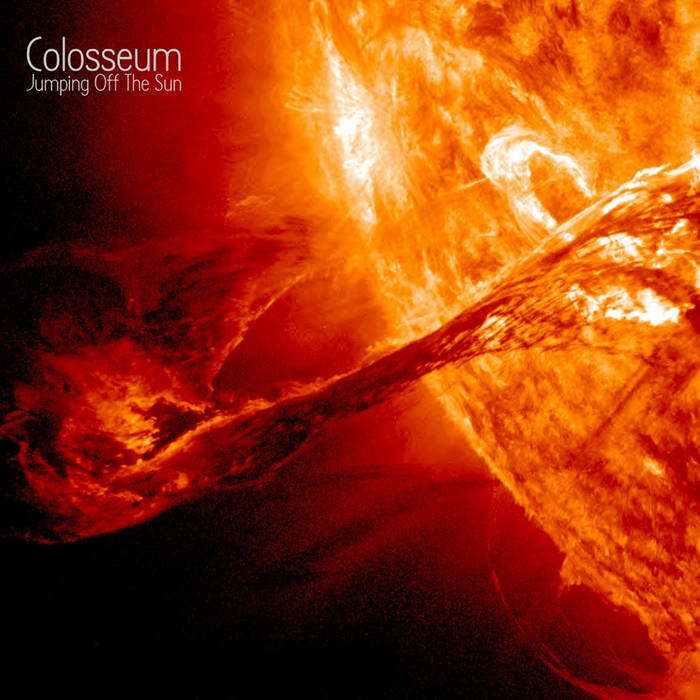
Colosseum was one of the pivotal progressive bands that emerged in the second part of the Sixties. In ’68 the founding members were drummer Jon Hiseman, tenor sax-player Dick Heckstall-Smith and bass player Tony Reeves, later joined by Dave Greenslade (keyboards), Dave Clempson (guitar) and Chris Farlowe (vocals). Their music is a progressive mix of several styles (rock, jazz, blues) with lots of sensational solos and captivating interplay. “Jumping off the Sun” originally recorded late in 1969, with Chris Farlowe’s vocals overdubbed over Dave Clempson’s originals.
This album brings together the best of their radio broadcasts. Comprising both studio and live recordings that have been newly mastered. This album captures the band at the height of its powers with each member providing virtuoso performances throughout.
Originally envisioned as a soundtrack to ‘The Wall’ film, this didactic “band” project became a stand-alone effort when Waters became outraged over England’s involvement in the early-’80s Falkland Islands conflict. By this point, Wright was already out the door, and Gilmour clearly didn’t feel like fighting anymore. He had only one vocal, and a few bursts of guitar brilliance. The rest was Waters, who unleashes a series of searing diatribes on the kind of conflicts that tore his family apart – but without the magisterial musical accompaniment that used to give them flight.
Almost 10 years to the day since the release of The Dark Side Of The Moon, Pink Floyd’s album “The Final Cut” was released. A decade earlier, the material for Dark Side had been worked up thoroughly on the road, and all four band members had writing credits on the record. With The Final Cut, the group – a trio, following the sacking of keyboard player Rick Wright – had become, through default more than by design, a method of carriage for the words and music by de facto leader Roger Waters alone, with session musicians featured heavily throughout its recording.
The album had few discernible hooks, no standout commercial moment, and Floyd never played anything from it live. Initially that didn’t stop the Floyd juggernaut though. Fans worldwide had been waiting three and a half years for a new album, their longest wait to date. And so, on its release in March 1983, The Final Cut became Pink Floyd’s first UK No.1 album since 1975’s Wish You Were Here. Some press gave it the full five stars, and suggested that it might be “art rock’s crowning masterpiece”.
But the juggernaut would soon jackknife. The Final Cut disappeared almost as soon as it arrived, leaving the album, a single and a 19-minute ‘video album’ as its only footprints. There were no promotional appearances, no group publicity photographs, no tour. If the album featured at all in later interviews by both Roger Waters and David Gilmour, it was portrayed as coming from a period of abject misery.
“That’s how it ended up,” Gilmour told David Fricke in 1987. “Very miserable. Even Roger says what a miserable period it was and he was the one who made it entirely miserable, in my opinion.”
“It came and died, really, didn’t it?” says Willie Christie, who shot the album’s cover photo. Christie has great insight into the album and the period. Waters was his brother-in-law, and at the time Christie was living in an outhouse over the garage at Waters’s house in Sheen, “after a relationship had gone south”.
“Because the break-up was on the horizon,” he adds, “I think David was finding it very tough; Roger for different reasons. That was a great shame. David had said publicly that the songs were off-cuts from The Wall. Why regurgitate? I never saw it like that. While it would probably be a perverse fan who would name The Final Cut as their favourite Pink Floyd album, it’s certainly worth a lot more credit than it’s usually given. Yes, the album is the greatest example of high-period megalomaniac that is Roger Waters. However, for all his writing and singing, it needs to be taken as a PinkFloyd release, and not a solo Waters one – it also has some of DaveGilmour’s best guitar solos, and drummer Nick Mason curated some of the best sound effects in Floyd’s career.
‘What have we done to England?’Waters sings on opening track “The Post War Dream”, as a brass band, that most quintessentially British sound, plays out. It locates the album squarely in the post-Falklands-invasion landscape of 1982, while looking back to the World War II beachheads of 1944. As Cliff Jones noted in Echoes: The Stories Behind Every Pink Floyd Song, it was “the most lyrically unequivocal of all Pink Floyd albums”.
Moreover, the album is phenomenally significant in the group’s career. Had it been a far better experience and a bigger seller, it might have allowed PinkFloyd to conclude, or perhaps continue, on a triumphant, cordial high. Instead it left a nagging sense of unfinished business, which led to the split, the commercial triumph of the Gilmour years and the group’s enormous afterlife.
The genesis of The Final Cut is well known. Some of its material dates from five years previously, when Waters came up with the original recording’s of The Wall in the summer of 1978.
He had written around three albums’ worth of material. He was driven in a way that the other band members, who seemed to want to escape Floyd at the time, simply were not.
Pink Floyd as we knew them finished on June 17th, 1981 at London’s Earls Court Arena, when the last of the 31 “The Wall” shows ended. That year’s return to touring was to gather material for the Alan Parker-directed filmed version of The Wall. There was talk of a soundtrack album to the Parker film, but there was hardly a great deal of material: versions of In The Flesh (with and without the question mark) performed by the film’s Pink, Bob Geldof; The Wall out-take When The Tigers Broke Free; and What Shall We Do Now?, which was left off the album.
This project evolved into Spare Bricks, where these tracks were supplemented with additional The Wall off-cuts Your Possible Pasts, One Of The Few, The Hero’s Return and The Final Cut. However, when Argentina invaded the Falklands – the British-ruled islands in the South Atlantic in April 1982 – and UK Prime Minister Margaret Thatcher sent a task force to counteract this, Waters suddenly had his subject matter.
The pointlessness of the ensuing 74-day conflict, resulting in the loss of 907 lives, evoked again the death of Waters’ father Eric in World War II, at Anzio in 1944. Waters relished the merging of the past and the present. He was going to write a modern requiem. And so Spare Bricks became The Final Cut. Its title was a Shakespearean reference to Julius Caesar being stabbed in the back by Brutus: “This was the most unkindest cut of all.”
“The Final Cut in film terminology is the finished article,” Gilmour explained in 1983. “When you stick all the rushes together basically in the right order, you call it the ‘rough cut’, and when you’ve cleaned it up and got it perfect you call it the ‘final cut’. It’s also an expression for a stab in the back, which I think is the way Roger sees the film industry.”
Waters’ had frequent run-ins with director Alan Parker on the making of the film are no secret. It was also clear that the members of Pink Floyd, never the chummiest of groups, were growing ever further apart. The UK premiere of The Wall on July 14th, 1982, at the Empire Theatre in London’s Leicester Square, was the only time the three-man Pink Floyd – no one knew yet that Rick Wright was no longer in the band, with the party line being that he was ‘on holiday’ – were ever seen together in public.
“When The Tigers Broke Free” was issued as a single in July 1982, was full of pathos and huge in its intent. Not since Apples And Oranges, released back in 1967, had so many eyes had been on the chart performance of a Floyd single, Tigers being their first single since Another Brick In The Wall, Part Two in 1979. Tigers, which was fundamentally Waters along with the Pontarddulais Male Voice Choir and an orchestra, was labelled as being from The Final Cut. Ironically, it didn’t make it on to the album until the track listing was re-configured for CD in 2004. Tigers reached only No.39 in the UK chart.
“The relationship was definitely frosty by that stage, So the time that Dave in particular – and Roger were in the studio together, it was frosty. There’s no question about it.” Yet this frostiness made for great art. There was innovation too. Italian-based, Argentine-born (which no doubt would have appealed to Waters’s sense of humour) audio inventor Hugo Zuccarelli had approached the group to try out his new ‘Holophonic’ surround sound that could be recorded on stereo tape. For a group so associated with their audio pioneering, this was a positive boon.
The system used a pair of microphones in the head of a dummy. Zuccarelli played Mason, Gilmour and Waters a demo of a box of matches being shaken that sounded as if it was moving around your head. The group were of one mind to use the system. Mason began to gather the sounds in the Holophonic head (which, as he noted in his Floyd history Inside Out, “answered to the name Ringo”).
He duly recorded Tornado aircraft at RAF Honington, the sounds of cars passing, the wind, and various ticks, tocks, dogs, gulls, steps, shrieks and squawks. On the album, sound effects careened between left and right channels. The missile attack at the start of “Get Your Filthy Hands Off My Desert” is arguably the greatest sound effect on any Pink Floyd record.
Ray Cooper played percussion, Raphael Ravenscroft added saxophone, and on closing track “Two Suns In The Sunset” veteran drummer Andy Newmark took Nick Mason’s place. It took two players to replace Rick Wright: Michael Kamen on piano, and Andy Bown on Hammond organ.
“It was wonderful to work for them in that live situation. It’s rare to meet a rock band that know how to behave,” Bown recalls. “And the Floyd organisation treated the hired guns very well indeed. Recording is different you’re not living with each other in the same way. I remember almost nothing from those sessions. Waters’s exacting attempts at nailing a vocal recording led to the well-reported incident of Kamen doing a Jack Nicholson in The Shining, writing furiously in the control room. When Waters went to investigate what he was doing, he saw that Kamen had written repeatedly: “I must not fuck sheep”. According to Andy Bown, Kamen was “a lovely cuddly bear with a wacky sense of humour”.
“It was obvious Roger was making all the running,” Nick Mason said of a period of recording at Mayfair Studios. “Roger is sometimes credited with enjoying confrontation, but I don’t think that’s the case. I do think Roger is often unaware of just how alarming he can be, and once he sees a confrontation as necessary, he is so grimly committed to winning that he throws everything into the fray – and his everything can be pretty scary… David, on the other hand, may not be so initially alarming, but once decided on a course of action is hard to sway. When his immovable object met Roger’s irresistible force, difficulties were guaranteed to follow.”
“I was in a pretty sorry state,” Waters said. “By the time we had got a quarter of the way into making The Final Cut, I knew I would never make another record with Dave Gilmour or Nick Mason.” Gilmour said in 2000: “There were all sorts of arguments over political issues, and I didn’t share his political views. But I never, never wanted to stand in the way of him expressing the story of The Final Cut. I just didn’t think some of the music was up to it.” After much arguing with Waters, Gilmour surrendered his producer credit on the album – but not his share of producer royalties. He was even to say: “It reached a point that I just had to say: ‘If you need a guitar player, give me a call and I’ll come and do it.’”
In 1983 he said: “I came off the production credits because my ideas of production weren’t the way Roger saw it being.”
“I was just trying to get through it,” Gilmour told me in 2002. “It wasn’t pleasant at all. If it was that unpleasant but the results had been worth it, then I might think about it in a different way. I wouldn’t, actually. I don’t think the results are an awful lot… I mean, a couple of reasonable tracks at best. I did vote for The Fletcher Memorial Home to be on Echoes. I like that. Fletcher, The Gunner’s Dream and the title track are the three reasonable tracks on that.”
Overlaid with Waters’s disgust at the Falklands War, and grieving for the father he never knew, the narrative of The Final Cut focuses on the figure of the teacher from The Wall, who had been a gunner in the war, staring down modern life. The central character of The Wall, Pink, makes an appearance on the title track. Waters is frequently self-referential in his choice of words. For example, ‘quiet desperation’ and ‘dark side’, two most Floydian phrases, are used.
Of the original album’s 12 tracks, The Hero’s Return and The Gunner’s Dream are two of Waters’s finest moments side by side: full-bleed paranoia, with his unlimited capacity for beauty and empathy. The Hero’s Return began life as Teacher, Teacher from The Wall. The band’s demo from January 1979 has a synth drone, with Gilmour on loud slide guitar; here, the hero is haunted by images of the war he can’t discuss with his wife.
On The Gunner’s Dream there’s little guitar but plenty of saxophone, so much a feature of 1973-75 Floyd. Here, as with a lot of the album, Waters’s voice is the lead instrument. The song examines the sudden powerlessness of a situation when confronted by the jackboot. Referencing war poet Rupert Brooke, Waters delivers one of his finest vocal performances. It also introduces the imaginary character Max, an in-joke name for producer Guthrie from the sessions. And the screaming doesn’t stop. A decade and a half after his wails on Careful With That Axe, Eugene, possibly Waters’s career-best bellow is on The Gunner’s Dream, where he howls for a full 20 seconds. Rolling Stone said it contained some of the most “passionate and detailed singing that Waters has ever done”. And it’s certainly there, as he enunciates every vowel as if his life depends on it.
“Not Now John” It’s almost as if, deep into his work on The Final Cut, Waters remembered that satire could be fun (and that music could be exciting). He also seemed to recall that Gilmour was just sitting there on the bench. David makes the most of his game time on the rocking “Not Now John,” ferociously tearing into lyrics that are a head-spinning mix of Waters’ personal and political demons come to life. For those who tut-tut at the song for being boorish, it’s a shame they can’t bask in the pleasures of this buzz bomb, complete with female backing vocalists screaming “fuck all that.”
The Fletcher Memorial Home, where ‘colonial wasters of life and limb’ assemble, delivers another standout moment, with Waters giving tyrants past and present the chance to get together before applying a final solution to them. Gilmour’s solo and Kamen’s beautiful brass arrangement enhance the song’s gravitas.
While the title track is similar to Comfortably Numb in its arrangement, Not Now John is the album’s rocker. It’s a call and response between Gilmour and Waters – one as the jingoistic right winger so celebrated in the early 80s, the other attempting reason. The US, sensing the one song that resembled conventional rock (complete with Gilmour’s ultra-Floyd guitar work), suggested a radio recut, with Gilmour and the backing vocalists singing ‘stuff’ loudly over the song’s obvious use of the word ‘fuck’.
It was issued as a single, accompanied by a Willie Christie-directed video, in May 1983 and scraped into the UK Top 30. Album closer “Two Suns In The Sunset” was inspired by Waters’s recent viewing of the banned docudrama The War Game. In the end the hero drives off and sees a nuclear explosion, a result of someone’s anger spilling over to the point where the button is pushed. He now understands ‘the feelings of the few’. As the explosion comes, Waters suggests: ‘Ashes and diamonds, foe and friend, we were all equal in the end.’
The final track from ‘the original Pink Floyd’ ends with a session sax player, a session drummer, and a producer playing piano. By then it seemed that even Waters had been removed from his own story.
Even designers Hipgnosis, The long-time Pink Floyd collaborators, and cartoonist/illustrator Gerald Scarfe were now surplus to requirements. Scarfe has said he had done a test version of a cover for The Final Cut, but Waters himself oversaw the artwork with graphic design company Artful Dodgers. His brother-in-law, Vogue photographer Willie Christie, was brought in to take the photos for the sleeve. With Christie Waters’s house guest at the time, the pair discussed the concept at length.
“We were talking about it all the time from conception,” Christie says. “Roger asked me to do the stills. They came out of ideas we had talked about – poppies featured a lot because of the theme of it. I did the stills – the poppies and the strip of medals – in November 1982. The field was near Henley. We needed a field of corn, and I’d done a Vogue shoot down there in 1977. A prop company called Asylum made me up some poppies, as real poppies don’t last.”
Asylum also made two uniforms, complete with the knife in the back. Christie’s assistant, Ian Thomas, modelled the outfit, holding a film canister under his arm. “That was the whole idea of the knife in the back and the film canister,” Christie says. “That [Alan] Parker had stabbed him [Waters] in the back.”
In another shot, Thomas is seen lying dead in the poppy field, watched over by Stewart, the Waters’s pet spaniel. In the gatefold, Thomas can be made out in the distance, while the outstretched hand of a child holds poppies. The sleeve also contains an image for Two Suns In The Sunset, and the Japanese welder for Not Now John which was shot in Christie’s London studio.
Christie recalls showing the group his work in progress: “David hadn’t been involved or consulted. I slightly found myself in the middle. It was a little bit awkward, as I’d been talking to Roger. But David’s a really good bloke, a genius. Gilmour looked at the photographs and then told Christie: “Well actually, the knife wouldn’t go in like that, it would go in sideways, as your rib cage wouldn’t allow it to go in straight, vertical.”
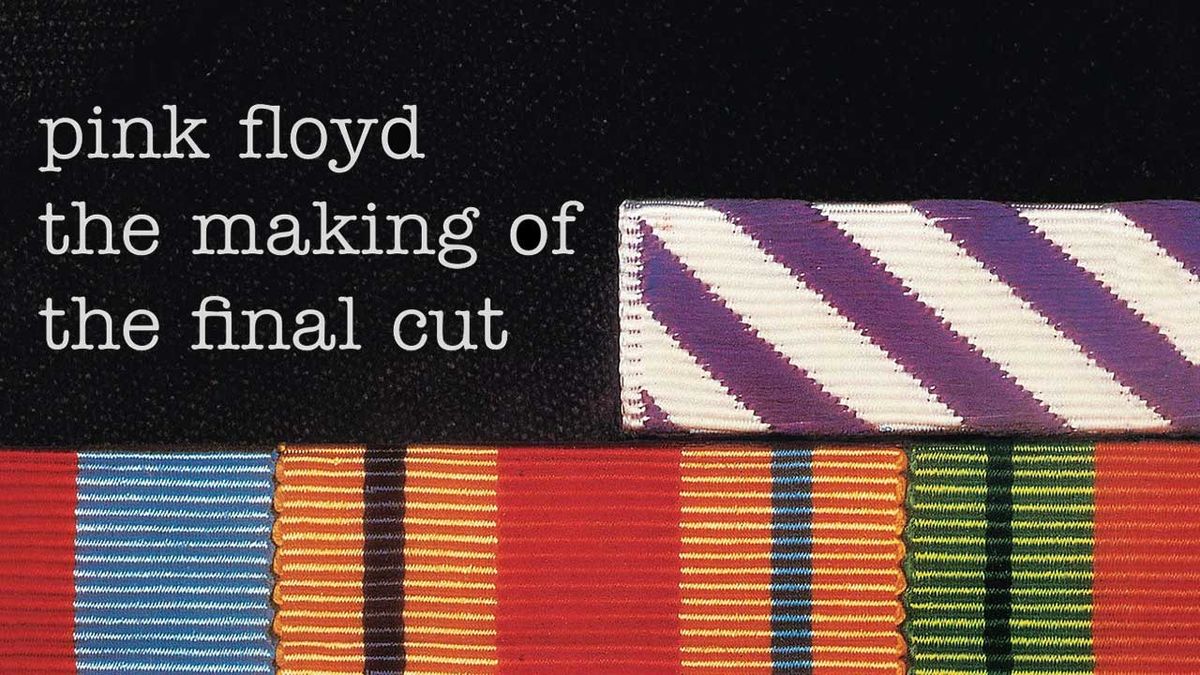
The cover image is a powerful close-up of a serviceman’s lapel, showing a poppy and his medals. The back of the sleeve listed just three members of Pink Floyd. This was the first time the wider world became aware that Rick Wright was no longer a member of the group – and that this was clearly a work ‘by Roger Waters, performed by Pink Floyd’.
It’s difficult now to convey just how exciting the release of The Final Cut was, The critics were, of course, deliciously mixed. Richard Cook wrote in the NME that Waters “picks out the words like a barefoot terminal beachcomber, measuring out a cracked whisper or suddenly bracing itself for a colossal scream… The story is pitched to that exhausting rise and fall: it regales with the obstinacy of an intoxicated, berserk commando.” The review ends with the extremely perceptive comment: “Underneath the whimpering meditation and exasperated cries of rage, it is the old, familiar rock beast: a man who is unhappy in his work.”
A week later, Kurt Loder duly obliged, with a five-star review that included: “This may be art rock’s crowning masterpiece, but it is also something more. With The Final Cut, Pink Floyd caps its career in classic form, and leader Roger Waters – for whom the group has long since become little more than a pseudonym – finally steps out from behind the ‘Wall’ where last we left him.
“The end result is essentially a Roger Waters solo album, and it’s a superlative achievement on several levels. By comparison, in almost every way, The Wall was only a warm-up.”
But not good enough for what Pink Floyd had become in popular perception. As Nick Mason later wrote: “After The Final Cut was finished there were no plans for the future. I have no recollection of any promotion and there was no recollection of any live performances to promote the record.” Had there been a tour to support it, The Final Cut could have been a huge, sustained hit. There’s just something about it, like much art from that strange 1980-83 period in the UK, It could be said that Pink Floyd were the only ones doing what they always did – or at least post-1975 Floyd. But, as said, it wasn’t enough.
The early 80s, unless you lived through them, are very hard to explain. The 60s and 70s seemed clear-cut. When people do think of the 80s, it’s that later flash, brash, wedges-of-money time. We also need to review where Floyd’s 70s peers were by 1983. Led Zeppelin were long gone. Queen were licking their wounds from an ill-advised, all-out assault on disco. Genesis had gone ‘pop’. Yes were, quite by accident, about to reinvent themselves as a techno stadium monster.
Waters his other 1978 concept idea, The Pros And Cons Of Hitch Hiking, done with much of the same team as The Final Cut. (“That was jolly good fun,” Andy Bown recalls. “And terrific musicians to work with. Bloody good album too.”)
In October 1985, Waters issued a High Court application to prevent the Pink Floyd name ever being used again, considering it a ‘spent force’. With that, he finally had the nerve to make the final cut. Gilmour and Mason, however, did not, and the next chapter of Pink Floyd was about to begin, one that would see the band going back to stadiums and making a noise that sounded like the best of Floyd’s albums from 1971-75.
The first single from Jerry Joseph’s forthcoming album “The Beautiful Madness” released back in August 21st, 2020 on Cosmo Sex School/Soundly Music for North America and the rest of the world and décor records for Europe, UK, Australia and New Zealand Single .”One of the greatest live performers I have ever seen and long one of my favourite songwriters, one of the absolute best of our generation.” The Patterson Hood Video features footage of Jerry Joseph and The Stiff Boys (aka Drive-By Truckers) live at the 40 Watt Club in Athens, GA February 15th, 2020.
Jerry takes on the world and does not hold back on it’s state and those running it.
Produced by Patterson Hood and recorded with Drive-By Truckers
Just a few years ago, Canadian rockers and local darlings The Dirty Nil won their first Juno Award for Breakthrough Group. And there was no band more deserving. They exude the essence of a garage band, still writing and making music in a room that is entirely too loud, jamming and seeing what sticks.
The best of both old and new rock and roll, The Dirty Nil sticks to their guns and listens to no one besides each other. It’s a mentality they have stood firm with since their formation and even after accolades like Juno, they aren’t straying from. Their forthcoming album “Fuck Art” out tomorrow, is testament to that, hailing to metal and rock gods like Slayer, Motorhead and Metallica. And though listeners will undoubtedly hear those influences, if looking for it, The Dirty Nil presents a heavier music with a balanced presentation including pop-punk elements and vulnerable lyrics. But they never forget to have a good time and tear it up along the way.
Lead single, “Doom Boy” is their best effort at showing both sides of themselves in one epic song about listening to Slayer with friends in a minivan. And of course, they slipped as many Slayer nuances into the song as humanly possible, with quirky verses, thrashy riffs and percussion. And the group took the thrashy rally song further accompanying it with a video that offered the band their own 80s glam dream of destroying a van.
“We did have a conversation on how many Slayer moves we could throw into one song,” frontman Luke Bentham. But like any great rock band, they have somewhat of a more serious side, because ballads are a must. “Done with Drugs” is less of your traditional “Every Rose Has Its thorn” or “Fade to Black” ballad, but it’s the closest The Dirty Nil could get. The song mulls over important topics both relevant to the guys and society, like social media and drug use in your twenties. The song that screams, ‘I’m done with drugs, I hope they’re done with me,’ renders an equally honest and satirical portrait of an experience Bentham views as rather personal.
Accompanying The Dirty Nil’s anthemic nature on “Doom Boy,” “Done with Drugs” is the thrashiest “Ride or Die.” With lyrics inspired by Bonnie and Clyde, the song is the heaviest offering on Fuck Art. The sound is the most authentic portrayal of what comes from the band’s old-school writing approach. Playing guitar through blaringly loud amps in a tiny room together is the only way the band knows and wants to create music. And it’s almost a dying art, with so many artists stockpiling music for later and writing with a producer, which Bentham argues often leads to less-than music.
Having a producer hold your hand and make your stuff all leads to garbage music that will all be fucking forgotten, in my opinion, Bentham said. “No offense to our peers and friends that conduct their operations in that way. I think that the only way to really be a proper, really good rock and roll band is playing all the time. And that’s the only way where you really find and create moments together.”
The Dirty Nil has of course experienced the same pressure from industry folks to churn out hits and work with producers, but always said no, for a lack of better words. They would rather have complete creative control and do it their way. And jamming in a room together only utilizing a sound engineer was the way to go. But it’s not without disagreement. Happy Nil Year’s Day y’all! The time has finally come, ‘Fuck Art’ has been unleashed into the wild. ‘Fuck Art’ is about dreams, revenge, joy and death and it’s our purest glimpse of truth and beauty. We hope you love it as much as we do, please enjoy at maximum volume, and as always, much luv and hail hail rock n roll!
The first single “Great White Male” from Slow Weather is the new project from renowned producer and Catholic Action front man Chris McCrory and LNFG’s Annie Booth. Annie and Chris first met when Annie was providing feature vocals on a Wojtek the Bear track. Annie Booth is an Edinburgh-based singer, songwriter and instrumentalist. With a keen ear for melody and movingly bittersweet compositions, she is a unique and fiercely emotive voice in the Scottish music scene, her songs woven with a subtle but exciting patchwork of styles and sounds.
A big fan of his recording style, Annie then went into the studio with Chris to work on her “Spectral” EP. The process was extremely fun and organic, leading to talk of writing together for a new project.
After they penned their first song together in four hours, the two knew they’d stumbled across something exciting. The Clean Living EP, due for release in November 2020, was recorded mainly at Hermitage Works Studios in London, with the finishing touches added at Chris‘s home.
Preceded by two digital singles, the EP brings you well-executed, lush song writing from two people whose individual crafts have seamlessly woven together to produce music that is utterly lovely in its sound and has depth in its meaning
The two first worked together on Boothe’s 2018 release Spectrum. Their new project, Slow Weather, offers a proper and satisfying new collaboration. Debut EP Clean Living features five pretty, pastoral indie pop numbers, enhanced by some enjoyable boy/girl vocal interplay. A sunny affair,Clean Living goes great with the hope of morning and a warm cuppa to boot. But we’re really digging the fun, Buffalo Bill referencing “Great White Male,” and its trippy, wrong side of the Rapture video,
Taken from the forthcoming album Clean Living – LNFG39 – Released November 2020.
Following successes fronting Mammoth Penguins and the sorely missed Standard Fare, Emma Kupa releases her first full length solo album “It Will Come Easier” “The hope in the title is important to me – it is something I try to hold onto when things feel difficult”.
It Will Come Easier delves through the trials and tribulations of attempting to navigate the crossroads of your early thirties. Head on and raw, Kupa leads us through her tender reflections on relationship regrets, the torment and pressure to succeed, and the dichotomy of now finding herself inclined to choose logic over impulse – “does her smile light up your heart, or do you just want to get under her shirt?” she asks on Does It Feel New. Her most personal collection of songs to date, they pick up from the intimate family portraits of Kupa’s debut solo EP, Home Cinema:
“The album explores aspects of love, escapism and fidelity, but there’s also a thread about accepting feelings of hopelessness when you don’t quite meet the many pressures of life’s expectations”.
In spite of the harsh directness of its subject matter, It Will Come Easier has an audible freshness and a spring in its step. The optimistic jaunt of Nothing At All defies the futility in being unable to influence a particularly toxic situation. I Keep An Eye out is a follow up to Home Cinema’s Half Sister, written for the eponymous sibling that doesn’t know of Kupa.
Written and recorded over a period of time, Kupa felt she needed to give these 10 tracks some emotional space before making them public. Joined by bandmates from both Mammoth Penguins and Suggested Friends (Mark Boxall and Faith Taylor, respectively), alongside Laura Ankles, Joe Bear, Rory McVicar and Carmela Pietrangelo, the instrumentation is more diverse than in previous Kupa bands. From the sparse, evocative strings of Hey Love and the simple piano backing of unexpected wedding drama in Crying Behind The Marquee, through to the grinding synths of CP Reprise, textural flourishes abound, belying Kupa’s background fronting noisy three-piece indie-pop outfits.
With nods to Dusty Springfield, The Unthanks and The Postal Service, “It Will Come Easier” is a mesmerising journey through early adulthood, poignant and expertly detailed.
Emma Kupa currently fronts Mammoth Penguins, and The Hayman Kupa Band alongside Darren Hayman. She initially made her name with Standard Fare, who called it a day at the peak of their success in 2013. Kupa’s insightful warmth, eye for lyrical detail and powerful, idiosyncratic voice has made her a firm favourite amongst fans and critics alike.
“It Will Come Easier” is released on 18th September on Fika Recordings
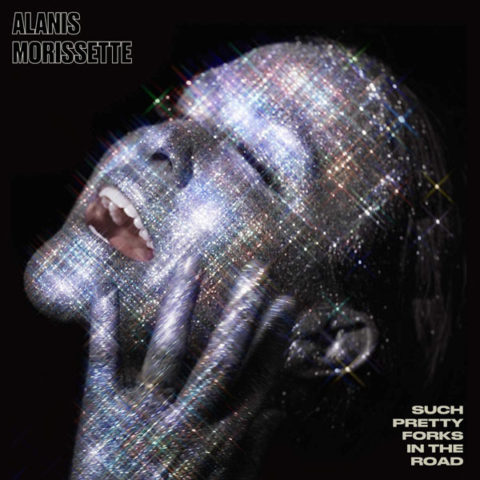
Last year, when Alanis Morissette released “Reasons I Drink,” the first single from her forthcoming ninth album, she couldn’t have known where 2020 would take us. “Such Pretty Forks in the Road”, her follow-up to 2012’s Havoc and Bright Lights, finds the singer-songwriter confronting vices and anxiety over proper ’90s alt-rock guitars. This year also marks the 25th anniversary of the classic “Jagged Little Pill”, her iconic, not-at-all-ironic breakthrough album that was recently revived as a Broadway musical. The album was delayed from its original May release; hopefully it’ll appear soon.
Alanis Morissette has shared another new single from her forthcoming album ‘Such Pretty Forks In The Road’. The track, ‘Reckoning’, follows on the songs ‘Reasons I Drink, Smiling’ and‘Diagnosis’. The latter tackled the challenges and stigma surrounding depression and other forms of mental illness. The new song tackles “predators” and features a string section.
Morrissette was due to hit the road for the 25th anniversary of her ‘Jagged Little Pill’ album this year but was forced to postpone due to the coronavirus pandemic. A digital deluxe edition of ‘Jagged Little Pill’ arrived on June 26th, which featured a new acoustic live recording of Morissette’s performance of ‘Ironic’ at Shepherd’s Bush in March 2020.
Eight years since her last record, Alanis Morissette returned with a wonderful and deeply moving album. No celebrity collaborations, no marketing declarations along the lines of ‘this might be my last’ , just a highly focussed record full of great songs with heartfelt lyrics.
‘Diagnosis’ is as honest and raw as Plastic Ono Band Lennon as it addresses postpartum depression, set to simple piano and strings. It’s all about self pity either, as Alanis recognises how such a situation affects friends and family [“All of you are so frustrated / And everyone around me is trying to help as much as they can”]. In ‘Losing the Plot’ Morissette decrees that she is “grieving the end of superwoman-ing” and the brilliant ‘Reasons I Drink’ adds some big hooks to proceedings.
An album that spends much of its time concerned with mental health issues such as self-loathing, despair, depression and bitterness might sound a bit bleak, but it’s not. These are remain accessible pop songs elevated by lyrics of truth and meaning, not weighed down by them. The melodies and arrangements are all of the highest order and the reliance on piano accompaniment gives Such Pretty Forks in the Road a classic,
The UK dates, celebrating 25 years of the seminal album, will now take place in the autumn of 2021. Supported by Liz Phair, she will stop off at UK venues including London’s O2 Arena, Birmingham’s Utilita Arena, Manchester Arena and the 3Arena in Dublin.
Morrissette’s new album is set to arrive on July 31st, after it was pushed back from its original release date in May this year.
‘I’m learning how to say goodbye / to let you go and face the tide / to wrap my feelings in a song,’ sings Dana Gavanski on the title track of her debut LP, “Yesterday Is Gone”. To wrap her feelings in a song: this is the task Dana has dedicated herself to with this record. It’s a goal common to many songwriters, but few approach it with such aplomb. By turns break-up album, project of curiosity, and, as Dana puts it, ‘a reckoning with myself’, Yesterday Is Gone is her attempt to ‘learn to say what I feel and feel what I say’: an album of longing and devotion to longing, and of the uncertainty that arises from learning about oneself, of pushing boundaries, falling hard, and getting back up.
Born in Vancouver to a Serbian family, Dana has always harboured a desire to sing. In her final year of university in Montreal, she picked up the guitar left by her ex-partner and decided to re-learn. But with a father in film and a painter mother, other art-forms clamoured for her attention. She spent a summer as her producer father’s assistant in the Laurentians, in a derelict hotel-turned-office that looked like something out of The Shining. The long days behind a computer cemented her desire to make music, ‘because it was so impossible to play that I needed to, in order to feel like it was real.’ The income she saved that summer funded a year of writing religiously, leading to EP Spring Demos in September 2017, which Dana describes as ‘whatever was coming out of me. A flood.’
Following Spring Demos, Yesterday Is Gone reflects Dana’s aim ‘to make something bigger, more thought through’. Steeped in determination and uncertainty in equal measure – ‘I just wanted to write a good song’ – the album took shape after she returned from a writing residency in Banff, Alberta. She left the residency resolved not to worry about her songs being ‘too obvious’. She’d begun to learn the art of empty time, of being alone with her emotions, losing herself in a landscape. She thought of Vashti Bunyan, riding for hours and writing, writing, writing. She considered how she might use writing to make sense of her life after the tumults of a break-up and a new city. Adrift in Toronto, Dana struggled to feel at home and connected to people, but the solitude also allowed her to ground herself in writing. She kept office-style hours at her bedroom desk every day until she started to understand the writing process, to see that ‘transforming a burning desire into something clear and tangible is a vulnerable and delicate act. You have to be able to let things happen, to accept losing control.’
The record is a co-production between Dana, Toronto-based musician Sam Gleason, and Mike Lindsay of Tunng and LUMP. While Sam helped Dana bring out the tunes, Mike’s input marked ‘the beginning of developing a sound that was closer to what I had in my head’. Though excited by the other elements of a song introduced during production, Dana and Mike were keen on ‘finding essential things, not overblowing, keeping things bare and letting the elements speak for themselves’. Not that the sheer variety of sounds and instruments didn’t overwhelm. ‘But you have that feeling,’ Dana says, ‘then you just pick up an instrument. At the base, you do know what you want. It’s about how to chip away at what you don’t want.’
The album shapeshifted as it passed through the hands of Dana, Sam, and Mike, taking on different tastes, feelings, and visions. When Dana performed the songs with a band, they found new form again. She was intrigued by performers like David Bowie and Aldous Harding, who inhabit different personalities on stage, physically tuning themselves to their music. ‘Watching these kinds of performances,’ Dana says, ‘I feel my body longing to express myself in exaggerations … to leave behind self-consciousness and become this energy.’
But a three-month trip to Serbia in autumn 2018 really pushed performance to the forefront of Dana’s mind. She took singing lessons to learn how to sing with the resonance that defines traditional Serbian song. Stirred by the bombast of fifties, sixties, and seventies music, including the high-energy kafana, or café music, as rooted in expressive pouts as it is vocal resonance, the trip incited a yearning to completely inhabit herself on stage. ‘I often feel we’re all just these controlled bodies,’ she says. ‘Sometimes I just want to make a snarl with my lip and keep it there.’
Stood on a crowded train last spring, Dana sang the Macedonian song Jano Mome to an audience of cheery Scottish ladies. The moment, brief but beautiful, lays bare Dana’s craving for live spontaneity. But it also reflects her injection of stylish drama and vivid emotion into the folk landscape that inspires her, from contemporary singers H Hawkline and Julia Holter, to stalwarts Fairport Convention, Anne Briggs, Connie Converse, and Judee Sill. Expressive urges run all through Yesterday Is Gone. Moments of beguilement splinter a backdrop of tenderly picked guitar, bass, synth, and poppier elements, which commune to produce her own kind of wall of sound. Each component is meticulously placed, yielding a deeply sincere response to the chaos of human emotion.
‘Often we have to go a little far in one direction to learn something about ourselves,’ Dana says. The months of solitary writing and self-doubt testify to this, but they’ve led to Yesterday Is Gone: an optimistic, steely-eyed gaze into the future.
Released March 27th, 2020, on Full Time Hobby Records , Music & lyrics written by Dana Gavanski Dana’s debut album “Yesterday Is Gone” is out now!.
“Failures”, is Katie Malco’s debut album, The songs keep changing lanes on the listener. It can pull you in with the immediacy of a churning, addictive rocker like “Animal,” only to pull back to the slow-burn beauty of “Brooklyn,” before leaning in close to deliver stately folk like “Fractures.” But what unites all the music is an emotional and musical catharsis that erupts on nearly every track, quiet and loud numbers alike building to a payoff that electrifies the listener every time—especially when she embraces her rock-anthem tendencies, as on instant classic “Creatures.” “Night Avenger,” with its minimalist restraint, is the lovely exception that proves the rule.
It’s thrilling to hear a new voice come right out of the gate with such a masterful command of songcraft; it’s even more exciting to realize she’s just getting started, The first proper full length from critically acclaimed UK singer/songwriterKatie Malco and her first new music in nearly seven years. ‘Failures’ finds Malco at her all-time best, taking all she’s learned in recent years, both personally and musically, and combining both with an unmatched song writing prowess. She’s both vulnerable and intense, pouring herself into each song with an uncanny relatability. Malco has recently toured alongside the likes of Julien Baker, Dawes, The Joy Formidable, and ST Manville, as well as supported We Were Promised Jetpacks, Jenny Lewis, etc.
Official music video Katie Malco, taken from the album ‘Failures’ out June 5th, 2020 via 6131 Records.
Jessica Dobson started her music career early as she was signed to Atlantic Records at just 19. She recorded two solo albums, but both her and the label did not like the end result, so they were ultimately shelved. Some would see this one-two punch of disappointment a crippling blow, but she took it in stride focusing on her more indie-orientated jams. This led her to a string of supporting guitar roles with other artists Beck, the Shins, Yeah Yeah Yeahs, Spoon, and Conor Oberst. Each of these stops gave her the stripes and positive energy to revisit a solo career that was earlier stifled.
In 2009, the hired gun transformed into a bandleader under the Deep Sea Diver moniker and alongside husband Peter Mansen (drums), she released the New Caves EP. Garrett Gue (bass), and Elliot Jackson (guitar/synth) joined them and quartet self-released their full-length debut, “History Speaks”, in 2012 (while she was still in the Shins). 2014 was the year for DSD’s “Always Waiting” EP that was succeeded by 2016’s “Secrets”. Just ahead of Deep Sea Diver’s third full-length release, ‘Impossible Weight’, Dobson virtually welcomed PG’s Chris Kies into her friend’s Seattle-based studio. The Deep Sea Diver captain opens up about aligning her offset guitar choices to indie icons Elvis Costello, Johnny Marr, and Jonny Greenwood, crediting Nels Cline for introducing her to a must-have pedal, and twisting her band’s sound from “strangled cats to glassy Johnny Greenwood” and everywhere in between.
Deep Sea Diver’s new album ‘Impossible Weight’ out now. Filmed during the recording of Impossible Weight at Hall of Justice in Seattle WA.






 The Fat Angel Sings