Tommy Keene has died at the age of 59. He “passed unexpectedly and peacefully in his sleep” last night, according to a post on his official website. The Bethesda, Maryland-born power-pop and new wave songwriter released twelve albums over the course of his career, a run which started with his 1984 debut EP Places That Are Gone and extended to his most recent album, 2015’s Laugh In The Dark. Keene first drew attention as guitarist with Washington, DC band Razz, and went on to work with Paul Westerberg of the Replacements, Robert Pollard of Guided by Voices, Velvet Crush, the Goo Goo Dolls and regular collaborator Matthew Sweet, among others. While his mid-1980s work, like Songs From The Film and ‘Places That Are Gone’, is perhaps his best known,
He gathered a cult following in that time and admiration from his fellow musicians. In 2006 he released a collaborative album with Pollard under the name the Keene Brothers. Most recently, he opened for Matthew Sweet on a tour that wrapped up this past September. In 2010, Keene’s career was memorialized in the compilation Tommy Keene You Hear Me: A Retrospective 1983-2009.
Asked about the relative lack of success experienced by power pop artists, Keene said in 2016: “I do think this particular genre is almost too highbrow for a lot of people. There’s nothing really gimmicky about it. It’s not dumbed down. A lot of popular music, there’s always some element of it that’s dumbed down…
“[Power pop] tends to be a little more – probably to its own detriment – just a little purer, and it’s sort of respecting the roots of modern, ‘60s-influenced rock ‘n’ roll. I think that’s why it attracts a lot of geeky fans. People that have worn out their copy of Pet Sounds. But Elvis Costello is power-pop. Cheap Trick is power-pop. Once you get beyond a certain level and sell a certain amount of records, you’ve escaped that world.”
He observed that although he wasn’t “making a lot of money,” he was “making the records for me,” adding: “And if people like it, that’s great. That’s the bottom line.”
The brief message on his website stated: “Tommy passed unexpectedly and peacefully in his sleep. Thank you to all his fans, friend and family who he loved very much.” His discography includes 12 albums, starting with 1982’s Strange Alliance and ending with 2015’s Laugh in the Dark.
This week in 1974: The Rolling Stones scored their 5th US chart topping album with their 12th British & 14th American studio release, ‘It’s Only Rock ‘N Roll’, released on Rolling Stones Records (it peaked at #2 in the UK); the LP’s success was fueled largely by its two main singles the title track & a cover of the 1966 Motown hit for The Temptations, “Ain’t Too Proud to Beg” it was the first album that Keith Richards & Mick Jagger produced together for the band, under their adopted moniker of ‘The Glimmer Twins’…
Recorded in the 1970s, ‘It’s Only Rock ‘n Roll (But I Like It)’ is as iconic a Rolling Stones song as any that the band cut in the 1960s. It is a song with a tangled web of a history having first been recorded on 24th July 1973, not in a traditional studio but at The Wick, Ronnie Wood’s home in Richmond. According to Bill Wyman, who admittedly wasn’t there, “On Tuesday 24th July, Mick and Keith went to Ronnie Wood’s house, the Wick in Richmond, and recorded a version of ‘It’s Only Rock and Roll’, with Ronnie, Kenney Jones, and IanMcLagan.” Ronnie, Jones and McLagan were all in The Faces along with Ronnie Lane and Rod Stewart. Other reports have David Bowie at Ronnie’s house, but that Keith was not there.
Whatever the truth that has been long forgotten, as to who was there and who wasn’t, this was the genesis of the song. Sometime later in the year Willie Weeks, an American session musician who worked with both GeorgeHarrison and David Bowie around this time, added bass to the song. In April 1974 the basic track that was recorded at Ronnie’s house was used to finish the song, at this time Ian Stewart added his distinctive piano to the track.
According to Mick, “The idea of the song has to do with our public persona at the time. I was getting a bit tired of people having a go, all that, ‘oh, it’s not as good as their last one’ business. The single sleeve had a picture of me with a pen digging into me as if it were a sword. It was a light hearted, anti-journalistic sort of thing.”
The song became the title track for their 1974 album and was released as a single on 26th July 1974, three months before the LP came out. But the record company at the time were not sure it was a single, According to Keith there was opposition to it, but as he said at the time, “That song is a classic. The title alone is a classic and that’s the whole thing about it.”
The Rolling Stones‘ official promo video for ‘It’s Only Rock ‘N’ Roll (But I Like It)’. The track is the title single from the album It’s Only Rock and Roll (1974). Written by Mick Jagger and Keith Richards, and produced by the Glimmer Twins, the song went straight to number one in the US charts when it was released.
The video features Mick Jagger, Keith Richards, Charlie Watts, Bill Wyman and Mick Taylor dressed in sailor suits performing in a circus tent that fills with bubbles that features the band in sailor suits, playing in a tent which gradually filled with bubbles. The froth was detergent and the reason they wore the sailor suits was because none of them wanted to ruin their own clothes. According to Keith, “Poor old Charlie nearly drowned… because we forgot he was sitting down.”
The video was directed by filmmaker Michael Lindsay-Hogg, who also directed the promo videos “Neighbours”,“Jumping Jack Flash” and “Child Of The Moon”. Lindsay-Hogg also directed promos for the Beatles and the Who.
It went top 20 in both America and the UK and has been played at just about every live show ever since.
Sufjan Stevens has shared a self-directed video for ‘The Greatest Gift’, a new track taken from his forthcoming mixtape of the same name, coming tomorrow via Asthmatic Kitty. The Greatest Gift is a mixtape of outtakes, demos and remixes from Stevens‘ acclaimed 2015 album “Carrie &Lowell”. As well as demos and alternate versions of songs from the original album, the mixtape features four previously unreleased new songs, official outtakes from Carrie & Lowell.
The mixtape also includes a few alternate or demo versions of songs from the original album, including a ‘fingerpicking’ version of ‘Drawn to the Blood’ and a guitar demo version of ‘John My Beloved’, which Stevens recorded on his phone. The digital release also contains an iPhone demo of the song ‘Carrie & Lowell’.
Randy Bewley and Michael Lachowski’s simple lines display untoward rhythm and melody, respectively. Curtis Crowe bangs away so obdurately it’s hard to understand why he didn’t become rich. Vanessa Briscoe Hay barks and brays whatever incantatory phrases seem called for. Timeless. Cool.” Robert Christgau, Dean of American Rock Critics
“[Pylon] stands as shockingly modern and unparalleled these many years later.” Michael Stipe, R.E.M.
1983 was a banner year for Pylon. The Athens quartet released their second album, Chomp, on Atlanta-based DB Records, toured the country extensively, and played several opening slots for then-up-and-comers U2. And then, without a hint of explanation, they quit.
Their final show at the Mad Hatter in Athens, Georgia, was, as was always the case, a frenzy of minimal disco thud, post-punk guitar scree, and deliriously inspired howl. Oh, and dancing — always dancing — both in the crowd and on stage. The gig was recorded (both audio and video) for a failed PBS pilot called Athens Shows, and the tapes were put away and forgotten. That is, until now.
Around three years ago, after Pylon’s DFA reissues hit the street, Chunklet CEO (and card-carrying member of the Pylon Fan Club) Henry Owings emailed the band bemoaning the lack of bonus material on the CDs, which sparked a larger conversation. “My favorite Pylon is live Pylon,” said bassist Michael Lachowski, with which Henry wholeheartedly agreed. Following a cordial sit-down at Michael’s apartment over the New Year’s holiday of 2015, an exhaustive search began for live recordings by Pylon. More specifically, live recordings from Athens in the early ’80s. Oh, and that sounded as good, if not better, than their proper full-length albums.
Numerous dead ends followed, but finally, and somewhat fittingly, the multitrack recordings of Pylon’s final performance at the Mad Hatter in 1983 were unearthed. Once the tapes were transferred and subsequently mixed, the explosive and compelling sounds raised one very significant question: Why in the world did Pylon quit?
For a band whose legacy, in their original incarnation at least, was two full-length albums and a handful of singles, Pylon were first and foremost a live band who weren’t as interested in working in a studio. Pylon’s raison d’être was performing for a crowd, and now there’s conclusive validation.
Pylon Live is a double vinyl album recorded on the band’s home turf at the culmination of their powers, and the results could not be more stellar. An all killer, no filler set with nothing left on the cutting room floor, Pylon Live includes powerful versions of the Pylon canon from their first and second LPs and even the hard-to-find song “Party Zone” (previously available only on a DB Rec comp) and their never-before-released rendition of the “Batman Theme.”
When compared to the band’s prior body of work, Pylon Live bookends all of it; some might even say it’s a better representation of this Athens quartet, who thrived on bouncing around on stage infinitely more than sitting in a studio.
There’s little arguing that the Athens powerhouse trifecta of R.E.M., the B-52’s, and Pylon is peerless. And while all three bands have achieved great critical acclaim, only the first two had the commercial acclaim they deserved. Pylon Live intends to correct that.
Pylon Live was released on July 25th, 2016, the birthday of deceased Pylon guitarist Randy Bewley, for sale at chunklet.com, chunklet.bandcamp.com, iTunes, Amazon, and wherever digital music is sold.
It’s a mystery why Holly Beth Vincent’s hilariously titled “Tell That Girl to Shut Up” — a song that is, indeed, about telling some girl to shut up — was never as big a hit as anything Pat Benetar came up with, consigning The Italians’ one and only album to the dollar vinyl bins of history. Dig in here and you’ll find not only tough-girl new wave, but also the kind of backward-looking girl-group pop that paints Vincent as a sort of Betty Rizzo for the 1980s. I saw them open for the Ramones in 1982. they were also opening act for fellow Americans Blondie. Went right out and got the album. Loved this band.
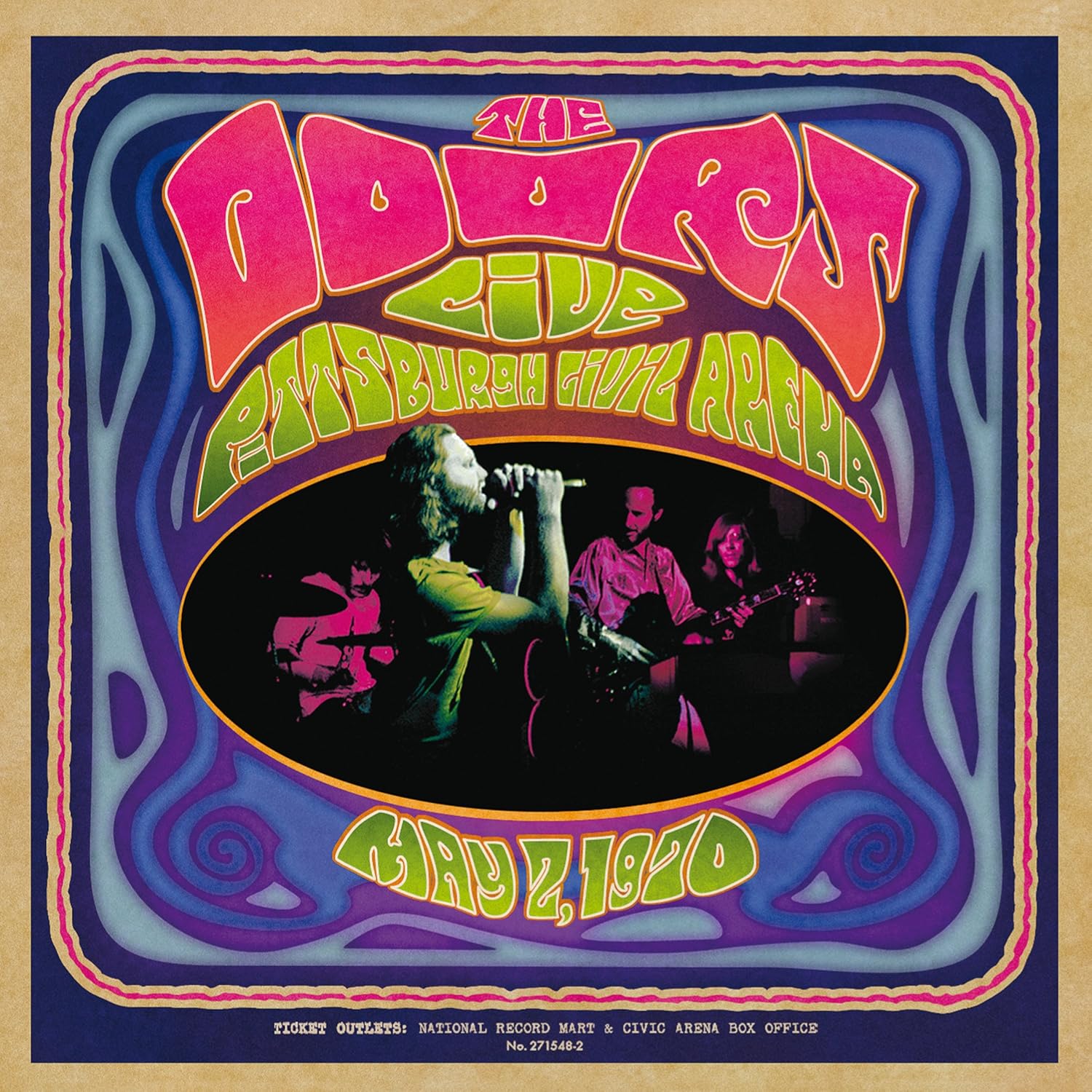
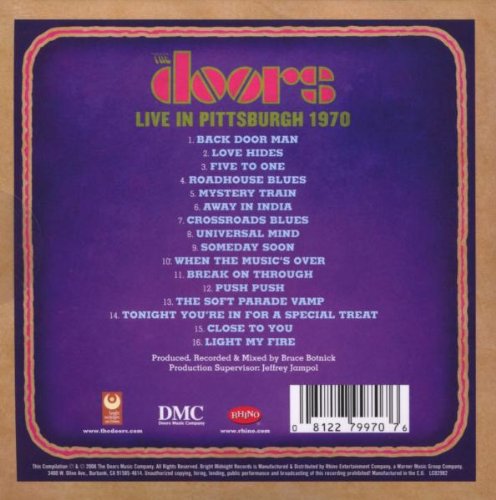
Apart from 1970’s “Absolutely Live”, Live Pittsburgh Civic Arena 1970 is the sixth (and almost) complete live archive release on The Doors’ Bright Midnight label and, it could be argued, one of the best. At just under 80 minutes, this is the full set as recorded 2nd May 1970 (despite a few missing bits of audio here and there), and finds the group in extremely fine form, especially Jim Morrison, who could be electrifying one night, then a complete train wreck the next. But unpredictability was The Doors middle name, where often virtuosic interplay between Ray Manzarek (keyboards, vocals), Robby Krieger (guitar) and John Densmore (drums) would combine and complement Morrison’s own capricious on-stage tendencies.
The show starts off with a cover of Willie Dixon’s “Back Door Man,” a song the group was no stranger to (having appeared on their 1967 debut), followed by a brief recital by Morrison titled “Love Hides,” before launching into a fierce “Five To One,” with Morrison rallying the troops (i.e. crowd) against a corrupt establishment. “Roadhouse Blues,” the sole track performed this night from their latest LP Morrison Hotel, was regularly played during what would turn out to be their final tour, and the band’s rendition here is as combustible as it gets.
A lengthy medley beginning with Junior Parker’s classic “Mystery Train” follows, including Morrison’s “AwayIn India” and an enthusiastic interpretation of Robert Johnson’s “Crossroads Blues,” proving that in spite of all their psychedelic tendencies, The Doors were always a blues band at heart. Throughout Morrison guides the other members into previously charted, as well as plenty of uncharted waters, although Manzarek, Krieger and Densmore never miss a trick, keeping up with the singer in what could be described as a form of collective ESP.
The spacey, moody “Universal Mind” inexplicably never made it onto LP, likewise the ominous “Someday Soon,” so their inclusion alongside more widely known material is most welcome. A version of “Universal Mind” was included as part of Absolutely Live, but that recording originates from The Aquarius Theatre, LA on 21st July, 1969.
The highlight of the evening might well be an epic “When The Music’s Over,” where The Doors powerful ability to improvise behind Morrison’s near-stream-of-consciousness outpourings has rarely been matched in the annals of Rock. For some 16 minutes, the listener is taken on a musical-theatre roller coaster that never once seems pretentious or boring. In between they throw in epigrammatic outbursts of “Break On Through” and “Push Push” (a Soft Parade outtake), along with a heavily improvised version of The Soft Paradeitself, titled as “The Soft Parade Vamp” (but you’d be lucky to discern any similarity with the original).
After a little stage banter courtesy of Jim (he humorously refers to his infamous Miami incident from the year before), the audience is treated to another Willie Dixon tune, in the form of “Close To You,” with a rare lead vocal by Manzarek, as if to re-establish their blues roots even further.
Appropriately, the show concludes with a spirited 11 minute “Light My Fire.” The very fact that Morrison was prepared to sing it indicates the sort of mood he must have been in that day. According to the booklet, the first 16 bars of the recording were missing, hence the necessity to splice a section from another recording in order to include it as part of the concert. Not that the average listener would be capable of noticing.
For the last 20 years or so, the surviving Doors and their associates have done a outstanding job in excavating and preserving the band’s legacy in a way never before thought possible in the ‘70s and ‘80s. Thanks to digital technology, and ever growing interest in all things Doors, releases such as this have been made available for all to enjoy. Live In Pittsburgh 1970 serves as another vital piece in the historic puzzle of one of Rock’s most unique and enduring musical combos.
As Bruce Botnick says in the liner notes: “Thirty-seven years and six months later. Man, it was just yesterday, wasn’t it?”
Crying began as a chiptune/power pop band who embraced their love for stadium rock to write infectiously melodic tunes on a massive scale. The new incarnation retains Elaiza Santos‘ personal, conversational vocal delivery put over progressive guitar riffs, spaced out synths and gargantuan, energizing production. Put your fear of change aside and enter into the new era of Crying.
a bouncing energy; every single song just… ascends to pieces of lyrics or instrumentals that stick with you
Bully is putting out pretty much the only new rock album I care about this year. The Nashville band is fronted by Alicia Bognanno, a girl who is just as fearless when she’s screaming about her period over seething guitars as when she’s producing the group’s entire album new album “Feels Like”. There’s just something about the women that orchestrate their music to that level of detail, and with this amount of ferocity, that is completely exhilarating where so much of modern rock falters. “Too Tough” is a blood-curdling evisceration of male weakness. It flips the myth of masculinity’s tough-as-nails exterior over and exposes the toxic, cowardly underbelly. But you could never accuse Bognanno of sounding mad per se as she wails “You’re trying to wear me down.” Instead, she sounds like the rest of the incredibly tough women I know: tired of it. So she took up her guitar and wrote a song about that exhaustion. It courses with enough crackling power to buoy the rest of us. Later this month, Nashville rock group Bully will release one of the most accomplished debut albums of the year with “Feels Like”, a collection of alt-rock angst and thrillingly aggressive lyrics. “Too Tough” is one of the album’s most intense pleasures — and Billboard is giving it to you first. Listen to “Too Tough” below: Like the previously released track “Trying,” “Too Tough” finds Bully leader Alicia Bognanno oscillating between defeated warbles and enraged cries over a collection of chugging guitars. Bognanno also serves as Bully’s producer and engineer, and has given Feels Like a gritty sound to match her gleefully unhinged vocal performances.
“‘Too Tough’ was recorded at Electrical Audio,” says Bognanno of the Chicago studio owned by Steve Albini, “and is about people who don’t have the nerve to live up to mistakes they’ve made.”
“Feels Like” is due out June 23rd on Startime International/Columbia, and Bully has been on the road supporting Best Coast‘s latest tour,
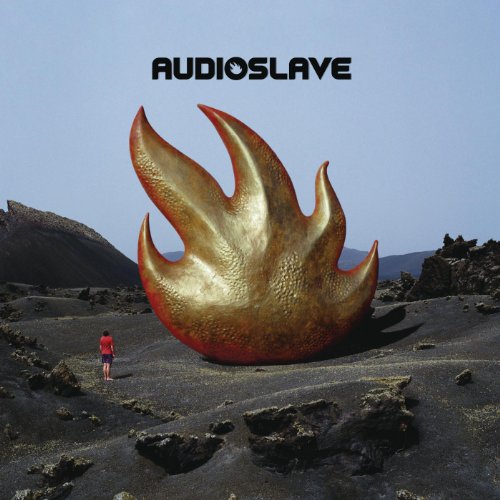
Zack de la Rocha’s abrupt departure from Rage Against the Machine in October of 2000 was a blow to the remaining core of the band who wanted to continue as a unit. Rather than seek out a replacement for the frontman, guitarist Tom Morello, bassist Tim Commerford and drummer Brad Wilk sought to launch an entirely new musical entity, tapping Chris Cornell, who hadn’t been in a band situation since Soundgarden had called it a day in 1997. The result was Audioslave, and the self-titled record from the bona fide super group landed on shelves November. 19th, 2002. Audioslave’s sound was created by blending styles of 1970s hard rock with 1990s alternative rock. Moreover, Morello incorporated his well-known, unconventional guitar solos into the mix. As with Rage Against the Machine, the band prided themselves on the fact that all sounds on their albums were produced using only guitar, bass, drums, and vocals.
It was announced in late September that the release of the debut album from Audioslave. For many who downloaded the internet-leaked demos of the project that May, the album couldn’t come soon enough as they had been waiting breathlessly for the fully-realized version of the LP. The previous month brought the initial single and lead off track, “Cochise.”
“Cochise was the last great American Indian chief to die free and absolutely unconquered,” Morello said in a statement. “When several members of his family were captured, tortured, and hung by the U.S. Cavalry, Cochise declared war on the entire Southwest and went on an unholy rampage, a warpath to end all warpaths … Cochise the Avenger, fearless and resolute, attacked everything in his path with an unbridled fury. This song kinda sounds like that.”
The song was a dream come true for both Rage and Soundgarden fans; showcasing Cornell’s caterwaul and the potency of the instrumental attack was a boon to starving early ’00s hard rock fans. If that was indicative of the rest of the record, the project was going to take off brilliantly. To a degree, it was; the fury of the melding was expected and delivered on many levels, be it the stomp of “Gasoline,” the rumbling of “Bring ‘Em Back Alive” and the thunder of “Set It Off,” very few admirers of either act could complain there.
The second single, “Like a Stone,” was a game-changer, for better or worse, regarding the union. It was one of the most mellow pieces the Rage guys had ever done together, and not only was a massive FM rock radio hit, it showed the deep and uncharted waters to which the outfit was willing to venture into in the name of separating themselves from their former affiliations. Yet the fourth single, “I Am the Highway,” would truly demonstrate how diverse a road Audioslave were willing to venture.
“We had written a bunch of pretty powerful rock songs,” Morello said on a promo interview compact disc sent to radio stations at the time. “It felt so free in rehearsal and I, kind of the night before, was strumming the chord progression from ‘I Am the Highway,’ because it’s very, very different than anything that’s on a Soundgarden or Rage Against the Machine record. So the end of the next rehearsal, I kinda started timidly strumming those chords, sort of pretending I’m putting my stuff away [laughs] and see if anything happens. Chris goes, ‘What’s that?’ and I go, ‘Oh, I don’t know, just a couple of chords …’ and the next day we worked that one up and it ended up being one of my favorite songs.”
The restraint of that track in particular is what led to the criticism of the album by those who wanted more heavy bluster and less surprising gentleness. That harmonious softness was woven into the sonic fabric of Audioslave though, and not only added to the band’s appeal, but made them stronger than the collective sum of their prior parts. It also drew in an entirely new audience who may not have been attracted to Rage or Soundgarden.
Producer and friend Rick Rubin suggested that they play with Chris Cornell, the ex-frontman of Soundgarden.Rubin was confident that with the right new voice, Rage Against the Machine had the potential to become a better band; he believed “it could turn into a Yardbirds-into-Led Zeppelin scenario.”Commerford later credited Rubin for being the catalyst that brought Audioslave together. He called him “the angel at the crossroads” because “if it wasn’t for him, I wouldn’t be here today.
The chemistry between Cornell and the other three was immediately apparent; as Morello described: “He stepped to the microphone and sang the song and I couldn’t believe it. It didn’t just sound good. It didn’t sound great. It sounded transcendent. And…when there is an irreplaceable chemistry from the first moment, you can’t deny it.” The quartet wrote 21 songs during 19 days of rehearsal, and began working in the studio in late May 2001 with Rubin as producer,
In its six years of existence, Audioslave released three albums, sold more than 8 million records worldwide and became the first American rock band to perform an open-air concert in Cuba. Audioslave disbanded in February 2007 when Cornell issued a statement announcing that he was permanently leaving the band “due to irresolvable personality conflicts as well as musical differences.”
The five-year, three-effort output was way too short in retrospect, and it would’ve been interesting to see where the reconstituted Audioslave might have gone had an oft-speculated reunion gone down before Cornell’s untimely passing.
‘Audioslave’ (2002)
Despite receiving a mixed bag of reviews upon its release, the eponymous Audioslave debut, for the most part, delivered precisely what was expected; the wail of Soundgarden’s lead singer backed by the foundation of RageAgainst the Machine. “Light My Way,” “Set It Off” and “Cochise” could’ve been Rage songs in another life. But Chris Cornell brought out a more mellowed side to tracks like “I Am the Highway” and “Getaway Car,” and showed that Tom Morello, Brad Wilk and Tim Commerford weren’t one-dimensional when it came to their musical abilities. Overall though, the album skewed toward the heavy end – led by Morello’s from-outer-space guitar histrionics – a boon to fans who were desperate to hear Cornell rock again after his tempered 1999 solo output, ‘Euphoria Morning.’
The music video for “Like a Stone” was written and directed by Meiert Avis. It was shot in the Los Angeles house where Jimi Hendrix wrote “Purple Haze”. The video uses negative space to invoke the memory of musicians past.
‘The Civilian Project’ (2002)
Guitarist Tom Morello said that these demos have as much in common with the first Audioslave album as “a hunk of coal has with a diamond.” Still, for music fans salivating at the prospect of a musical collaboration between members of two of the ‘90s most revered hard rock acts, it would do just fine. Recorded in late 2001 and leaked online by an Italian website the following May, it was dubbed “Civilian” after the rumored name of the union. In spite of the sketch arrangements, the power of the music was discernible. Eleven of the tracks were polished up and appeared on the band’s debut. “We Got the Whip” ended up as a B-side on the “Cochise” single while “Turn to Gold” remains to date the sole unreleased song.
Audioslave made their live debut on November 25, 2002, performing a brief concert on the roof of the Ed SullivanTheater on Broadway in New York City for the Late Show with David Letterman. This was the first time any band had appeared on Letterman’s marquee
‘Out of Exile’ (2005)
If the first Audioslave endeavor packed the punch of Rage Against the Machine, its follow-up veered more to the speed where Chris Cornell was most comfortable. There’s still the issue of trying to find a common ground, with the pendulum swinging in the direction of Cornell. “Be Yourself,” “Doesn’t Remind Me” and “The Curse” are prime examples where it sounds like he has backing musicians as opposed to being a part of a band. The boundaries get pushed only when Tom Morello cuts loose on guitar, especially when he goes a bit too far, often furiously inserting a bunch of unnecessary notes. ‘Out of Exile’ is a looser outing at its core, relaxed in all the places the debut might have wrapped itself too tight.
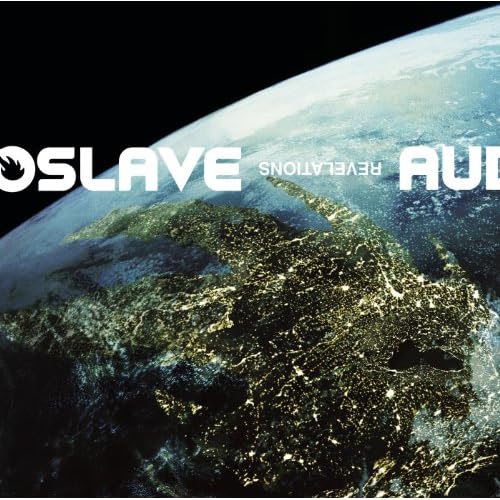
‘Revelations’ (2006)
Though Chris Cornell was ready to leave Audioslave at this point, as evidenced by his refusal to tour in support of the record and exit from the group five months after its release, he was hardly phoning it in. ‘Revelations’ feels the most like a fully functioning band is at work, less dependent on the member’s respective musical histories and more coming together cohesively as a unit.
The punishing riffs were accounted for — see “Shape of Things to Come” — and dips into introspective balladry like “Until We Fall.” But there was also a sense of adventurous expansion. Lead single “Original Fire” and “One and the Same” are steeped in funk, while “Jewel of the Summertime” sounds like nothing else in the Audioslave catalog, leaning heavily on Tim Commerford’s thick bass groove. Cornell even lyrically invests himself politically for the first time on “Wide Awake,” a scathing commentary on the slow response by the Bush administration to Hurricane Katrina.
The Jam regrouped and refocused for All Mod Cons, an album that marked a great leap in songwriting maturity and sense of purpose. For the first time, Paul Weller built, rather than fell back, upon his influences, carving a distinct voice all his own; he employed a story-style narrative with invented characters and vivid British imagery à la Ray Davies to make incisive social commentary all in a musically irresistible package. The youthful perspective and impassioned delivery on All Mod Cons first earned Weller the “voice of a generation” tag, and it certainly captures a moment in time, but really, the feelings and sentiments expressed on the album just as easily speak to any future generation of young people. Terms like “classic” are often bandied about, but in the case of All Mod Cons, it is certainly deserved.
All Mod Cons, released to wide acclaim in 1978, firmly cemented the group’s rise to extraordinary heights. Indeed, for many it was the first essential Jam album and listening to it now its impact has not diminished over time.” When I think about English records I think of The Kinks’ The Village Green Preservation Society, The Smiths’ The Queen is Dead, The Who’s Quadrophenia and The Jam’s All Mod Cons. To me all those albums are quintessential English
Recorded between 4th July 1978 to 17th August 197 at 8RAK (Upper London) and Eden Studios
It’s their third full-length LP. It took it’s title from a British idiom one might find in housing advertisements, is short for “all modern conveniences” and is a pun on the band’s association with the mod revival as well. Of Course it is also Paul Weller’s view on the music business as a ‘con’.
Film about the making of “All Mod Cons” by The Jam in 1978 with interviews from all involved including band members Paul Weller, Bruce Foxton and Rick Buckler
The single “Down in the Tube Station at Midnight” was one of the band’s most successful chart hits up to that point, peaking at #15 on the UK charts. In 2000, Q magazine placed All Mod Cons at number 50 in its list of the 100 Greatest British Albums Ever. I think it is The Jams most fully realised album, it is their best album.
British Invasion pop influences run through the album, most obviously in the cover of The Kinks’ David Watts and It’s too bad a song The Who would have been proud of.
To Be Someone (Didn’t we have a nice) time is an early jab at the rock’n roll lifestyle, about the hollow and empty life of a star, supposedly written after a horrible tour pairing in America with Blue Oyster Cult. The Bass line is a cool rip-of of Paul McCartneys bass line to “Taxman”.
All the tracks are really strong, great playing and great singing all around. The Production is unusually complex and sophisticated for a punk/new wave album.
The song “Down in the Tube Station at Midnight” is a first-person narrative of a young man who walks into a tube station on the way home to his wife, and is beaten by far right thugs. The lyrics of the song “All Mod Cons” criticise fickle people who attach themselves to people who enjoy success and leave them once that is over.
Track Listing:
1. All Mod Cons
2. To Be Someone (Didn’t We Have A Nice Time)
3. Mr. Clean
4. David Watts
5. English Rose
6. In The Crowd
7. Billy Hunt
8. It’s Too Bad
9. Fly
10. The Place I Love
11. A Bomb In Wardour Street
12. Down In The Tube Station At Midnight
This deluxe repackaged, remastered edition contains single b-sides, demos and rarities. It also features a new film, The Making Of All Mod Cons, with new interviews, promo clips, and previously unseen live footage.