Archive for the ‘CLASSIC ALBUMS’ Category

May be an image of ball and text that says 'Galdre Visions'

Galdre Visions is a Leaving Records supergroup comprised of Olive Ardizoni (Green-House); South Asian-American sitarist, vocalist, and composer/producer Ami Dang; Diva Dompé (Yialmelic Frequencies, Diva & The Pearly Gates); and harpist/composer Nailah Hunter. These four artists were drawn together during 2020’s pandemic to remotely create collaborative music reflecting this unique and uncertain moment in history. Hunter describes the group’s dynamic: “Each member of the group provides a unique sonic lens with which to view the realms beyond this world. Each member’s music recalls the sound of organic life in a different way.” Collectively inspired by Celtic mysticism, outer space, and New Age both classical and modern, Galdre Visions have crafted a powerful and timely document of the exploratory, healing power of music.

Ardizoni states, “Well, we are going through some extremely difficult times so there is no way that this project has not been influenced by that. I find that with writing music during difficult times you don’t really become aware, sonically, of the impact of that time until you listen to it way down the road. Writing this kind of music has always been a means of transmuting my pain into joy so that the listener can experience that by proxy.” Album-opener “Living Space Station (Bad Dream)” conjures an ominous atmosphere of strife, its lyrics alluding to unusual, unsettling, and nightmare-like events unfolding seemingly every day. Dang reflects, “Even though we’re all stuck at home, the world is ripping itself apart right now, and all of this chaotic activity makes me feel like I’m slowly making my way through a thorny thicket, but I’m only moving in circles. The trees and animals look more menacing at every turn. But the music keeps me going, and it reminds me that there will be a clearing, that the darkness will turn to light, that a crystalline waterfall lies somewhere beyond this cycle of madness. We will only reach this place through continuous movement, change, and protection.” Stunning album-closer “The Sun Will Rise Again” ends on a positively ebullient note of optimism, a transcendent vision of hope and things to come. According to Ardizoni, “It acknowledges and validates this feeling of melancholy that comes from experiencing this seemingly never ending suffering while being able to maintain the awareness that it will be better again some day. We will be together again, building the communities that we need to build with a new sense of purpose.”

The transition from negativity to positivity serves as a central theme of the album. Hunter states, “To me, ‘New Age’ art often illustrates human reconnection to the earth and the ancestors as the portal to a bright new world.” Dompé adds, “I look around and see that the dysfunction and unsustainability of our society is being put under immense pressure and its flaws becoming undeniable. But with this project I have been experiencing collaboration through an awareness of mutual support … I think we have the potential to function more like this on a larger scale in our society if we could heal the issue of worth being tied to productivity.” Ardizoni writes, “For me, another theme of this project is pride. I’m proud to say that I have had the chance to collaborate with these amazing musicians. I’m proud to say that we are a group of people who are oftentimes underrepresented voices in the music industry, and here we are doing an awesome project together.”
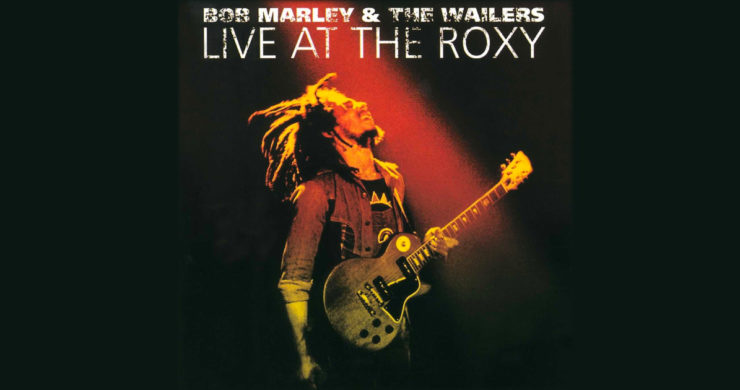
bob marley live roxy, bob marley roxy, bob marley live album, bob marley assassination attempt, bob marley one love peace concert, bob marley smile jamaica concert, bob marley live

When Bob Marley and the Wailers made their way to the United States in the spring of 1976 to tour behind their eighth studio album, Rastaman Vibration, they were well on their way to becoming one of the world’s biggest bands.

While Robert Nesta Marley was already becoming known as a visionary artist in Jamaican and U.K. music circles, Rastaman Vibration marked the turning point in Bob’s public perception as he went from reggae favourite to global pop sensation, bringing the sounds of Jamaica into the mainstream along with him. It became the first Marley release to crack the top ten of the charts, peaking at number eight.

As Rolling Stone‘s Robert Palmer wrote in his initial review of Rastaman Vibration, “The sensitive, careful listener will learn from Rastaman Vibration something of the pain, rage and determination of Shantytown, Jamaica, and perhaps something of the community’s political and cultural fragmentation as well. Those who don’t care to listen carefully will still get the celebratory, life-affirming message of the sound and the beat. Perhaps that sound and beat are the ‘positive vibration’ Marley talks about at the beginning of the album, and his apparently inconsistent stand halfway between revolution and the Hot 100 masks an underlying unity of feeling and purpose which only the music can express. In any event, as a pop record Rastaman Vibration makes perfect sense.”

Marley took his surging, new-look Wailers (Bunny Wailer and Peter Tosh had split from the group in 1974) on tour that spring for a run that would help catapult him to superstar status and bring his unique mix of positive vibrations and rebel laments to a global, mainstream audience.

One performance from the Rastaman Vibration tour, at Hollywood, CA’s The Roxy on May 26th, 1976, was broadcast live on KMET Los Angeles and subsequently made the rounds in growing fan circles by way of bootlegs. The majority of the show was released officially as part of the Rastaman Vibration: Deluxe Edition in 2002, but the full performance—including its remarkable, twenty-eight-minute encore medley of “Positive Vibration” and “Get Up, Stand Up”/”No More Trouble”/”War”—was not officially issued until June of 2003, when Tuff Gong released Live At The Roxy.

Perhaps due to its anachronous release, Live at the Roxy often does not receive the same attention in hindsight as Marley live records like Live!(from London’s Lyceum Theatre, 1975) and Babylon by Bus (recorded over three nights in 1978 and released soon after). When viewed with historical perspective, however, Bob Marley Live at the Roxy captures a pivotal moment for both the man and his music—and the success of the tour it spotlights emerges as the proverbial bridge to Marley’s final act.

Later that same year, Bob Marley planned to perform at a concert in his native Jamaica in an attempt to quell recent political violence in the island country. While Marley officially maintained a neutral stance and agreed to play a single song for the December 5th show so long as it remained unpolitical, public opinion had him pegged as supporting sitting prime minister Michael Manley and his democratic socialist People’s National Party.

Two days before the planned concert, the violence came to his front door, instead. On December 3rd, 1976, seven armed men raided Bob Marley’s home. Marley was shot in the chest and the arm, with three others also sustaining gunshot wounds. Miraculously, none of the shooting victims were killed, and the shooters were later tried and executed. Prior to his execution, one of the shooters even claimed that they had been hired to kill Marley by the CIA in exchange for guns and cocaine.

On December 5th, just two days later, a defiant Bob Marley hit the stage at the Smile Jamaica Concert as planned, performing a full set instead of his planned single song despite the wounds he had sustained in the assassination attempt. More than just a living musical legend, Marley had now become a living political martyr, as well.

Following the attempt on his life, Marley moved away from Jamaica and resettled in London. He went on to release Exodus and Kaya while living in England, but as his political clout and commercial musical success continued to rise, his health began to unravel. In 1977, he was diagnosed with a malignant melanoma under one of his toenails. Citing his Rastafarian belief in keeping the body whole, Bob Marley declined medical advice to have the toe amputated.

The final albums he released during his life, 1979’s Survival and 1980’s Uprising, leaned even further into his increasingly prominent religious and activist beliefs, continuing to elevate him from famous musician to cultural hero. In 1978, Marley returned to Jamaica for the One Love Peace Concert. In a momentous moment of reconciliation, at Marley’s request, Manley and his political rival, Edward Seaga, came onstage to shake hands during Bob’s performance.

By 1980, the cancer had spread throughout his body, prompting him to step away from touring amid a U.S. arena run. By May 1981, five years after the Live at the Roxy show, Bob Marley had died at the age of 36. When he passed, the world mourned a legend, a leader, a revolutionary—and rightly so.

The Live at the Roxy performance serves as a time capsule for a more innocent time—a snapshot of the peak of Bob Marley’s rise to global musical stardom. In the time between that tour and his death five years later, Marley would be thrust into the heart of the conflicts he referenced in his music, shifting his classification in the cultural pantheon from musician to social icon, his image and his words becoming synonymously intertwined with the fight against persecution and the spirit of his homeland.

On Live at the Roxy, we hear the creative, exuberant seeds from which his cultural legend grew—Bob Marley, the observer, the leader, the rebel, the artist, eyes on the future but still largely untarnished by the very unrest and persecution he decried.

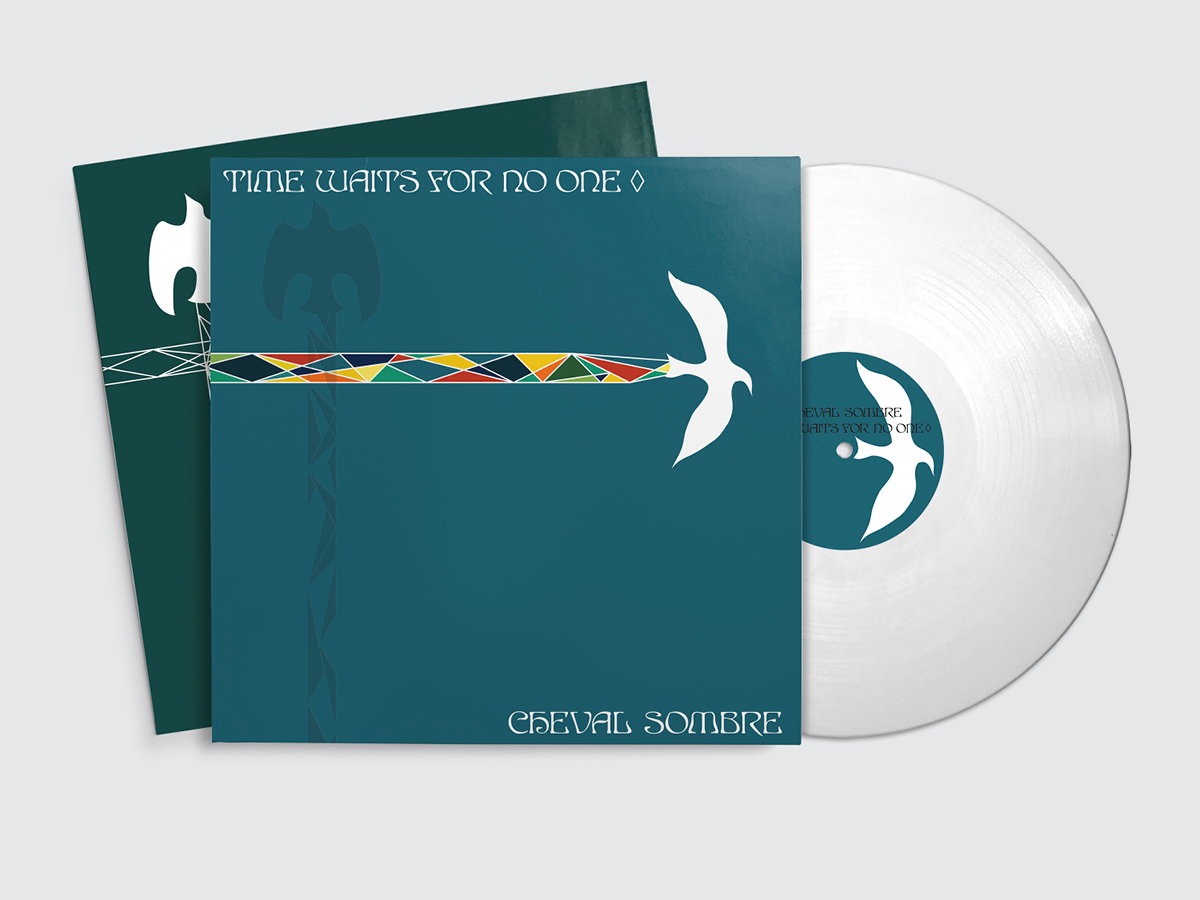
Cheval Sombre’s new single ‘Curtain Grove’ is out today on all digital platforms. The incredible video by Chris Tomsett (Innerstrings) It is taken from Cheval Sombre’s third album, “Time Waits for No One”, which is released on February 26th. Produced and mixed by Sonic Boom and featuring backing vocals by Britta Phillips and strings by Gillian Rivers, it’s a majestic few minutes; a folk melodrama in miniature at the mid-point between Mickey Newbury and Spiritualized.

‘Curtain Grove’ grew out of a strangely productive, fragile month,” says Cheval Sombre, aka Chris Porpora, about how the song came about. “I was down with pneumonia but there was a piano in the house  on which all kinds of melodies came to me  during those silent afternoons, when everything was still. I then had to translate all to guitar, which took some patience and learning. But after this, it was astonishing – Gillian Rivers brought sweeping, orchestral strings, Pete [Kember] got hold and laced it with elegant melody, Britta whispered these elusive, lovely backing vocals.

‘Curtain Grove’ reminds me that much beauty can still come together despite difficult days. Innerstrings’ stirring video gracefully handles the play between darkness and light that we each of us inevitably encounter in which wonder ultimately prevails.”

“Time Waits for No One is Cheval Sombre’s first solo release for over eight years, following 2018’s critically acclaimed collaboration with Galaxie 500 and Luna frontman Dean Wareham, and the first of two new albums he has scheduled for 2021. It ushers in his most prolific period, and serendipitously the world has finally slowed down to his pace. This is no lockdown record, but Cheval Sombre’s reclusive, reflective music is its perfect soundtrack.

The new single from Cheval Sombre, produced by Sonic Boom. Backing vocals by Britta Phillips. It’s taken from the new album ‘Time Waits for No One’, which is released on February 26th.

May be an image of one or more people, hair and outerwear

They recently clocked up over half a million streams on their breakthrough single “Fuck You Heather,” and today, Boyish are returning with “Superstar.” “You’re a superstar/I might drown in the way that I feel/But I guess I’m just a fan,” sighs India Shore on the ode to obsession, her vocals reflecting back at us like staring into a melancholic puddle.

Released February 5th via Invertebrate, “Superstar” arrives as Boyish’s first single of 2021 and the follow-up to last February’s spectacular sophomore album, Garden Spider. The duo of India Shore and Claire Altendahl, Boyish was formed “after feeling the need to start over, graduating college, and having no idea what is going on.” Their music is hypnotically contemplative – full of space, lush guitars, and vivid lyricism. Shore’s gorgeous, aching vocals help make every song an enchanting listening experience, but it’s Shore and Altendahl’s stunning chemistry that ultimately makes Boyish’s music so special: They dress their songs in just enough timbres and tonalities to evoke what they want us to feel, and nothing more. Unassuming yet limitless in its expression, Garden Spider truly is a work of art.

A sweetly seductive indie pop enchantment, Boyish’s new single “Superstar” is just the kind of dreamy indulgence we need to reignite our passions in in 2021.

Official Video for “Superstar” by Boyish

Mush: Lines Redacted: Signed Clear Vinyl

The Leeds-based art-rock trio, Mush, release their feverish second LP, “Lines Redacted”. The new release, which finds the group recruiting Lee Smith (The Cribs, Pulled Apart By Horses) on mixing duties, arrives just under a year after their debut LP, 3D Routine, capping off what has been an obviously tumultuous, but remarkably prolific year for the band. With any prospect of live shows decimated, the group, led by songwriter, Dan Hyndman, has found the time to release two EPs (‘Great Artisanal Formats’ and ‘Yellow Sticker Hour’) and now a duo of full-length albums.

Mush, comprised of Hyndman (guitar/vox), Nick Grant (bass/vox) and Phil Porter (drums), present their own sonic idiosyncrasy. It’s a sound that blurs the lines of abstract surrealism, existentialism and social commentary; utilising guitars as tools in 2020 to stave off malaise whilst simultaneously commenting on the nation’s ability to fall into such dire straits. It’s a sensory overload of wiry tones that zig-zag between punk, prog and sardonic-funk with a relentless ability to reflect society’s faults and apathy in a unique and acerbic manner. Whereas the band’s debut was very much a product of its time, something part-inspired by the political atmosphere of mid-2019 and a genuine moment of optimism when the prospect of a socialist government in the UK was on the cards, this new record uses tongue-in-cheek cynicism as a coping mechanism for the environment that we now find ourselves in.

From one song to the next, Lines Redacted introduces a string of different narrators with each providing a different reflection on the Armageddon scenario that we are slowly entering, whether that’s bemoaning it or gleefully willing it along. 3D Routine presented a bed of scathing political jibes latching onto themes and decisions of the time. Lines Redacted mutates these ideas into something slightly more sinister whilst maintaining all of Hyndman’s razor-sharp wit that permeates the album.

The Leeds-based art-rock trio, Mush, are set to release their feverish second LP, Lines Redacted via Memphis Industries on February 12th, 2021. 

Minor Moon, the Chicago-based cosmic Americana group led by multi-instrumentalist Sam Cantor, have an upcoming third full length album “Tethers”, out March 26th via Ruination Record Co. & Whatever’s Clever. On his newest song as Minor Moon, Chicago multi-instrumentalist Sam Cantor takes on a feeling that has become all-too-familiar over the past year: a nebulous sense of confusion and loss, most debilitating because of how difficult it is to even recognize, let alone put into words—or music, for that matter. Cantor manages that last bit admirably on “Under an Ocean of Holes,” the second single from—and the creative key to, as he explains—his cosmic country project’s forthcoming third album “Tethers”, out March 26th on Ruination Record Co. and Whatever’s Clever.

Chicago-based multi-instrumentalist Sam Cantor has released the third full-length from his cosmic Americana project Minor Moon, Tethers, via Ruination Record Co. and Whatever’s Clever. Lead single “No Lightning Fix,” which features a pair of Cantor’s Windy City peers in V.V. Lightbody and Ohmme’s Macie Stewart, arrived alongside the album’s announcement in January, while second single “Under an Ocean of Holes” in February and “Hey, Dark Ones” arrived earlier this month. Cantor drew inspiration for Tethers’ 10 tracks from an intense period of personal discovery that began with him being thrown for a loop by the end of a long-term relationship, using his music as an outlet for the powerful feelings entangled with his experiences. “Minor Moon songs have always had this arc of discovery and I’ve always used them as a way to dive into really personal, philosophical, or emotional problems,” says Cantor. “It’s about finding some truth looking inward.” We’ve praised Cantor and his collaborators for making a “sprawling and complexly arranged” album that “imbues warm Americana with an otherworldly hum” while managing to find a deep-seated joy in life’s lack of easy answers.

Having previously shared the unhurried No Lightning Fix, the band have now offered up a second taste from the album in the shape of the simmering Under An Ocean Of Holes.

So, if a healthy amount of Midwestern twang, some engaging Neil Young style grooves, eye-opening atmospherics, and warm psychedelia are up your street you should check out both asap.

http://

Releases March 26th, 2021, All songs written and produced by Sam Cantor 

Sam Cantor – vocals, electric and acoustic guitar (all), synth (3, 5) and upright piano (5)
Nathan Bojko – drum kit (all except track 5)
Michael Downing – electric bass guitar and vocals (all except track 5)
Colin Drozdoff – Wurlitzer electric piano, organ, grand piano and Prophet (all but track 5), additional synths (1, 6)
Konstantine Stebliy – lap steel guitar (all but track 5)

Additional musicians:
V.V. Lightbody – vocals (1, 2, 3, 9), flute (2, 3, 4), piano noise (5)
Macie Stewart – violin (2, 3, 4, 6, 10), vocals (3)
Nora Barton – cello (2, 3, 4, 6, 10)
Sean Mullins – percussion (all except track 8)
Alex Blomarz – tenor and baritone saxophone (2, 3, 4, 6, 9, 10)
Nick Broste – trombone (3, 6)
Dorian Gehring – pedal steel guitar (5)

May be an image of 1 person and outerwear

The songwriter plays two tracks from his recently released album “Tasjan! Tasjan! Tasjan!” outside East Nashville’s Basement East. He was back at the Basement East recently, where the talented songwriter and guitarist delivered acoustic renditions of two new originals that appeared on his recently-released Tasjan! Tasjan! Tasjan! studio album outside the East Nashville venue.

The outdoor acoustic performances of “Computer of Love” and “Now You Know” were filmed for FLOOD Magazine‘s Neighborhoods series. Throughout the solo performance, Tasjan added his own makeshift percussion sounds with his mouth in addition to handling vocal duties.

The Basement East was severely damaged by the tornadoes that swept through East Nashville in early March 2020, when at least 40 buildings located around the city reportedly collapsed and at least two people were killed.

Watch Tasjan’s acoustic performances of “Computer of Love” and “Now You Know” 

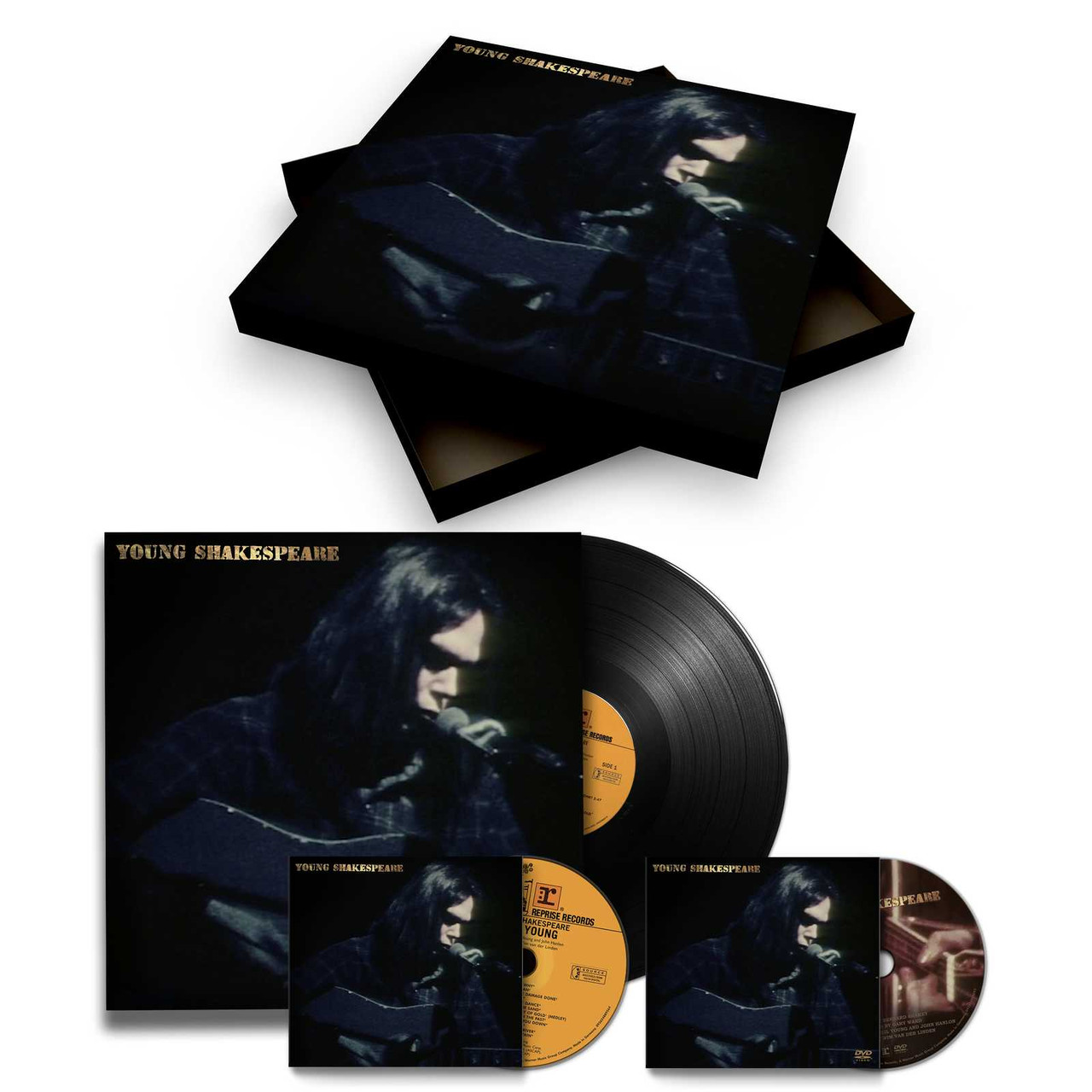
Just two months after the release of his seminal album “After The Gold Rush”, Neil Young played a solo show at The Shakespeare Theatre, Stratford, CT on January 22nd 1971. The show was filmed and recorded, and the concert shown on German TV later in 1971.

In 2020, while Neil and his team were reviewing his Archive for future projects, Neil re-visited the 16mm film and audio recording of this show that had been preserved in the Archive for almost 50 years. Piecing together the tapes and footage, Neil realized that he had the full concert – the film of which is the earliest live footage of Neil Young performing that is known to exist.

Neil has written on NYA that this show is “superior to our beloved “Massey Hall”. A more calm performance, without the celebratory atmosphere of Massey Hall, captured live on 16mm. “Young Shakespeare” is a very special event. To my fans, I say this is the best ever.”

As an insight into Neil’s prolific song writing at the time, the concert features two songs from the recently released After The Gold Rush but four songs from the classic Harvest album that was still over a year away from being released. The wonderful set list also includes acoustic renditions of favourites such as “Ohio”, “Cowgirl In the Sand”, “Helpless”, “Down By The River” and “Sugar Mountain”.

The ancient analogue tapes have been lovingly restored – resulting in (as Neil says on NYA) “one of the most pure sounding acoustic performances we have in the Archive”.

Young Shakespeare” is being released almost exactly 50 years after the original performance.


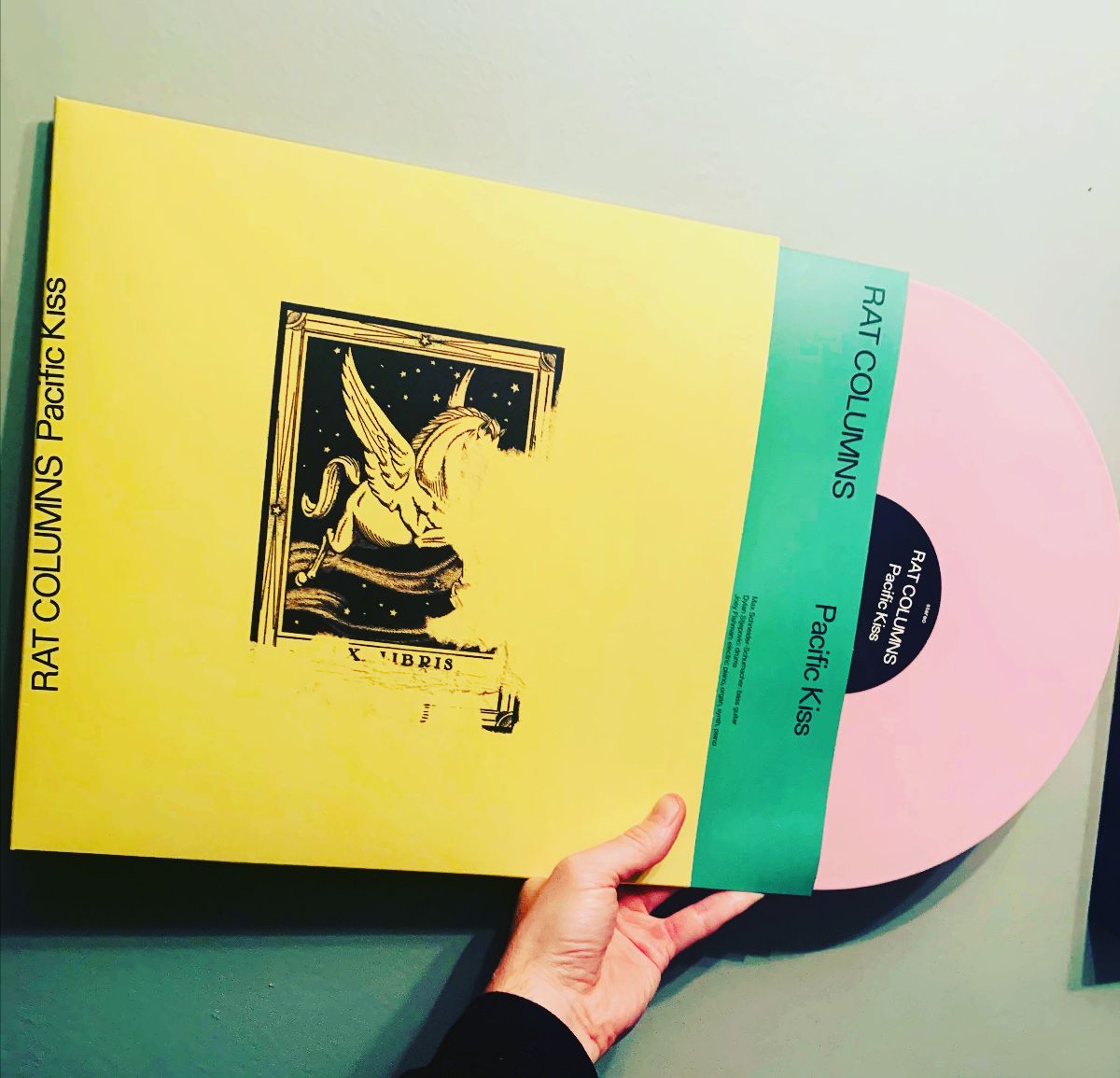
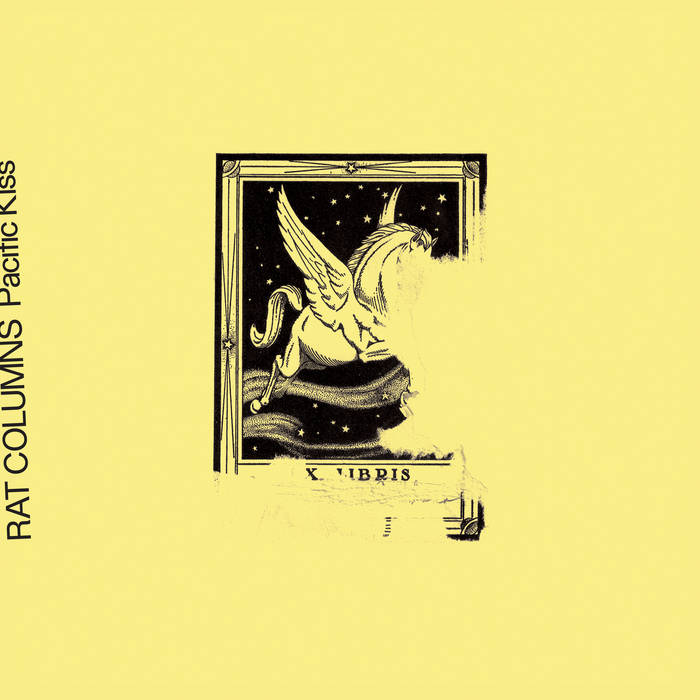
“Pacific Kiss”, the fourth album from Australian musician David West’s underground pop band, Rat Columns, is out today. Alongside the usual formats, two different vinyl pressings of Pacific Kiss are available – classic black and ‘pastel pink’, both of which are limited to 250 copies.

Pacific Kiss was primarily recorded in a dingy but comfortable practice space in East Williamsburg, Brooklyn. The core of the record is DW, bassist Max Schneider-Schumacher, drummer Dylan Stjepovic and keyboard wiz Joey Fishman. Additional fairy dust was sprinkled by Amber Gempton and Raven Mahon (vocals), Jef Brown (saxophone) and Mikey Young, who found time to contribute some off the wall guitar solos during the mixing process. Pacific Kiss is a record for those astral voyages into the spheres conducted from bedrooms, kitchens, grassy fields and open car windows.

We’re only just announcing this now, but it’s out tomorrow, in stock and shipping. The new record from the Western Australian post-punks adds a layer of jangle hypnotism rarely heard in this context. Pacific Kiss plunges headfirst into an azure sea of upbeat and meditative jams.

Taken from the album, Pacific Kiss, out 12th Feb ’21 on Tough Love.

 
May be an image of 4 people
 
Irish alt-rock trio Bitch Falcon had their debut album “Staring At Clocks” released last year – and it’s one of the strongest debuts of 2020. We have a brand new, limited tape a which features live versions of 5 tracks from Staring At Clocks.
Small Pond have released our studio sessions on Spotify and all major online platforms. The release features an exclusive performance of “Gaslight” and oldie but a goodie “Of Heart”. Combining the shimmering melody lines of 80s indie-pop enigmas Cocteau Twins, post-punk’s urgency, the raw edges of Seattle grunge and lush, claustrophobic shoegaze, the Irish trio have created a heavenly yet spiky squall.

Bitch Falcon; a name you won’t forget and a band who won’t let you forget them. This trio from the vibrant, much-hyped music scene of Dublin was formed by front-woman Lizzie Fitzpatrick with her friends in a small kitchen in the city in 2014. Since these freshman days, the line up has galvanised around the rhythm section of Barry O’Sullivan on Bass and Nigel Kenny on Drums.

http://

Bitch Falcon have been around since 2014, but it feels like the pan is now coming to the boil. Formed by force of nature guitarist and vocalist Lizzie Fitzpatrick, the band have worked through several personnel changes before landing on the current lineup of Lizzie, Nigel and bassist Barry O’Sullivan

Released February 11th, 2021