By 1972, Lowell George and his Little Feat cohorts had an acclaimed debut album under their belts but with their second album “Salin’ Shoes” the band reached another level entirely – something obvious from the opening notes of “Easy To Slip,” which stands among the great lost singles of the decade. Produced by Ted Templeman, the Warner Bros. collection features some of George’s best-loved songs, including “Cold, Cold, Cold,” “Tripe Faced Boogie,”“Teenage Nervous Breakdown”
Highlighted by a reworked group version of “Willin'”, the track that had led to Frank Zappa sacking the guitarist and vocalist Lowell George from The Mothers of Invention, it also featured such enduring tracks as “A Apolitical Blues,” Little Feat’s second quartet album, didn’t sell any better than their eponymous debut. But it offered gems a-plenty. This one showcases how George’s deep blues roots are morphing into his fluidly idiomatic slide guitar; his vocals have absorbed influences like Wolf but are becoming his own. The lyrics brandish classic Little Feat attitude: a flip-the-bird blues. It was suited to this moment, when the country was nearly exhausted by the strife between Nixon’s “silent majority” and the ongoing civil rights and antiwar movements. And the music rocks: Bill Payne,George’s primary creative alter-ego and jousting partner, unleashes his always adroit piano.
“Easy to Slip” and the title track, all by guitarist and lead vocalist Lowell George, the second co-written with Martin Kibbee, credited as “Fred Martin”, a former bandmate from The Factory, and the first appearance of the “George/Martin” credit on a Little Feat record.
Lowell George and Bill Payne don’t stop at being the writers of virile, touching songs–they’re also masterful musicians. Payne plays a cool, elegant piano and a hot, whirring organ. George makes his slide guitar howl and roar like a tractor trailer in the midst of a steep, mountainous descent. George illustrates the muscular mating of men and their machines, while Payne celebrates it. Together with former Mother Roy Estrada on bass and Richard Hayward on drums, they compose one super rock ‘n’ roll band. Little Feat can play steaming hot, iron-ore heavy, over-easy light, or non-stop speedy, as the occasion demands. They never sound pretty, but there’s an unmissable beauty about their rough-around-the-edges designs.
As seasoned L.A. music veterans, the foursome deliver performances that are pretty near immaculate and, more importantly, soulful; the roots-informed rock of these 11 tracks goes down mighty easy. If Neon Park’s cover art isn’t sufficient inspiration to kick up your heels, just give a listen to SAILIN’ SHOES It’s a true classic album. Little Feat is involved with–and living folklore. Sailin’ Shoes,interweaving its big trucks, seedy hotels, and greasy spoons with songs about rock & roll, seeks to incorporate this special music into the raw, vibrant, and vast setting of mythic America.
It was the last full Little Feat record to be produced by an outsider until 1977’s Time Loves a Hero, with each of the three interim albums being produced almost entirely by Lowell George.
Personnel:
Lowell George – guitar, lead (all but 10) and backing vocals, harmonica, baritone saxophone, drum machine
Bill Payne – Hammond organ, backing and lead vocals (10), Wurlitzer electric piano, piano, accordion
Kikagaku Moyo. are a psychedelic project of the highest order, Masana Temples is released on Amsterdam’s Guruguru Brain label and represents the most complete collection of the journey that the five-piece band has been on since their first release in 2013. As the group begins to scatter around the world, their music represents the spiritual results of these treks through ruminations led by standout guitar, sitar and drum work. Look no further than lead single “Gatherings” for a representation of the mind-boggling, transcendental music that this band is creating.
Kikagaku Moyo started in the summer of 2012 busking on the streets of Tokyo. Though the band started as a free music collective, it quickly evolved into a tight group of multi-instrumentalists. Kikagaku Moyo call their sound psychedelic because it encompasses a broad spectrum of influence. Their music incorporates elements of classical Indian music, Krautrock, Traditional Folk, and 70s Rock. Most importantly their music is about freedom of the mind and body and building a bridge between the supernatural and the present. Improvisation is a key element to their sound. The shifting dimensions of Masana Temples, fourth album from psychedelic explorers Kikagaku Moyo, are informed by various experiences the band had with traveling through life together, ranging from the months spent on tour to making a pilgrimage to Lisbon to record the album with jazz musician BrunoPernadas.
The band sought out Pernadas both out of admiration for his music and in an intentional move to work with a producer who came from a wildly different background. With Masana Temples, the band wanted to challenge their own concepts of what psychedelic music could be. Elements of both the attentive folk and wild-eyed rocking sides of the band are still intact throughout, but they’re sharper and more defined. More than the literal interpretation of being on a journey, the album’s always changing sonic panorama reflects the spiritual connection of the band moving through this all together. Life for a traveling band is a series of constant metamorphoses, with languages, cultures, climates and vibes changing with each new town. The only constant for Kikagaku Moyo throughout their travels were the five band members always together moving through it all, but each of them taking everything in from very different perspectives. Inspecting the harmonies and disparities between these perspectives, the group reflects the emotional impact of their nomadic paths. The music is the product of time spent in motion and all of the bending mindsets that come with it.
Los Angeles based Flat Worms – which includes members of Oh Sees, Kevin Morby’s band and Wet Illustrated are releasing a new 7″ vinyl single, that has been produced by Ty Segall and finds them getting darker and weirder than on their excellent 2017 debut. We’ve got the premiere of the A-side, “The Apparition,” which gets into Fall/Protomartyr territory with sung/spoken vocals and a hard-hitting riff. The video paints a dystopian view of America though damaged black and white found footage.
The “Apparition” 7″ is out October 12th on Famous Class Records.
The new Flat Worms 7” comes out in just over a week and today The new video for The Apparition to help tide you over until that sweet sweet vinyl arrives. don’t forget to snag a copy of the green vinyl if you haven’t yet. Orders start shipping this week!
Husband-and-wife duo Alan Sparhawk and Mimi Parker have never been satisfied with just being slowcore trailblazers. Over the past decades, their minimal, melancholic sound has taken on nearly a liquid quality, thanks not just to their ever-changing choices of collaborators but their willingness to always push their songwriting to new places. On their last album, 2015’s Ones and Sixes, they began to introduce electronic elements; here, on the absolutely magnificent Double Negative, they use those beats and synths to spin their work into darker and more discordant territory, to incredible effect.
At the beginning of the album, hiss and burble warp the delicate vocals into some kind of alien transmission; by the end, processing buoys those same vocals into the sublime, setting them against choppy textures that evoke a passing train. Movement—glacial, but steady—has always been key to Low’s work, and that’s never been more evident.
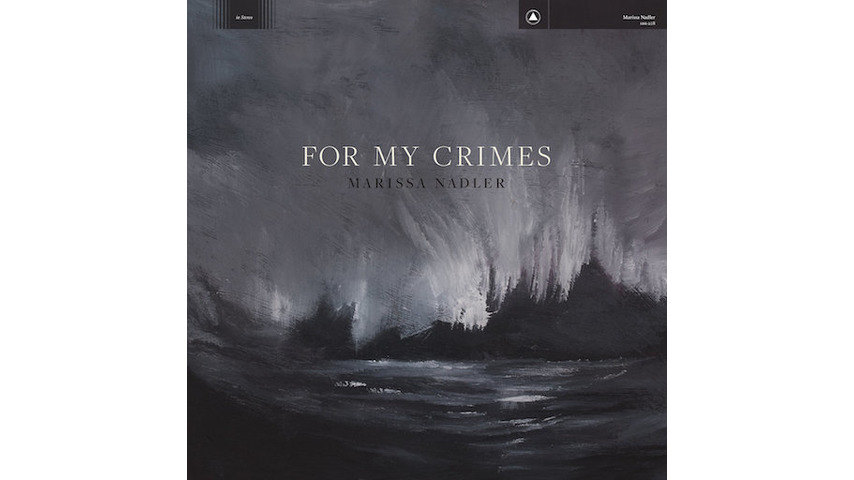
Marissa Nadler is comfortably the most consistent folk artist plucking an acoustic guitar right now. With eight studio albums in 14 years—not a dud among them—plus a number of self-released records, EPs, guest spots, and compilation appearances, she boasts the super prolific output of studio-loitering rappers, productive paperback writers, or Samuel L. Jackson. But For My Crimes might well be the best record in her saintly catalog. After the heavier, post-rock atmospherics of her fine 2016 release Strangers, Nadler opts for a more stripped-down ethos.
Maybe this is a wild misreading, but Marissa Nadler doesn’t get nearly enough credit—or any at all, really—for having a sense of humour. Her wit is as dry as it as subtle on her eighth album, a collection of songs that are also disconsolate and foreboding. Those traits are how the Boston singer is more generally known, and for good enough reason: Nadler favors a harrowing folk sound that she calls “slow music,” full of spectral, minor-key musical arrangements that emphasize guitars, piano and strings. She rarely uses drums, which sometimes gives the impression that her songs are untethered to anything more than her voice.
Nadler’s vocals are at once soft and steely on lyrics with a poetic, sometimes gothic streak. It’s a very intentional, stylized approach, which makes her flashes of wit all the more startling. Yet there’s a droll undertone to parts of For My Crimes. On “All Out of Catastrophes,” Nadler ratchets up the melodrama to teetering heights, and when her lover mumbles another woman’s name in his sleep, she breaks the tension by observing, “It was the nicest thing you said.” She mentions someone wanting to fake his death “again” on the quietly poppy “Flamethrower,” and offers a skeptical rebuke in the title of “Are You Really Gonna Move to the South?” It’s sensual and melancholy, and Nadler’s voice floats atop finger picked acoustic guitar and an aching high harmony part.
There are darker themes on For My Crimes. Nadler sings the title track from the perspective of a death row inmate pleading to not be remembered for his transgressions. Her vocals are calm and matter-of-fact, and AngelOlsen contributes a harmony part mixed far enough back that it hovers like a shadow. “I Can’t Listen to Gene Clark Anymore” captures the feeling of swearing off a favorite singer whose music dredges up once-fond memories, with trebly electric guitar strumming, sad, spiraling violins and plus vocals from Sharon Van Etten. Album closer “Say Goodbye to That Car” is unexpectedly poignant as Nadler thinks back on her associations with the old beater, and turns the odometer reading into a hypnotic refrain over a spare guitar part. The riff on “Blue Vapor” strains against the limits of the song, injecting a sense of urgency, while Nadler and guest Kristin Kontrol of Dum Dum Girls send their voices spiraling upward, alternately intertwining and tangling. It’s perhaps the most forceful moment on an album built on understated power, evocative lyrics and Nadler’s lithe voice—and, just maybe, a hint or two of sly humor.
The 1970-72 “Lifehouse”-era of post-“Tommy” and pre-“Quadrophenia” Who yielded a prolific amount of single-only tracks, but the one that stands out every time is the B-side to “Join Together” called “Baby Don’t You Do It.” It was the sole live recording of the series as well as being far and away the most abandoned, passionate and reckless of the bunch in terms of high energy Rock. ‘Letting one go,’ kicking out the jams, going for broke, fucking rockin’ out, call it whatever but remember it’s Rock’n’Roll. For here, The Who did it, baby and did it all over this six minute blast of unleashed whirlwind thrash from their collective outgrown Mod past. “Baby Don’t You Do It” and several other tempestuous highpoints and flashpoints (i.e.: “Sparks,” “Underture,” etc.) continued throughout both sides of the dividing line twixt the sixties and seventies when The Who’s tour schedule was as severe and intense as the band themselves.
“Baby Don’t You Do It” was first born in 1964 as a pleading ballad by Marvin Gaye and quickly thereafter became one of The Who’s earliest covers. Giving it seven years of rough handling in the studio and on the road, it mutated into an apocalyptic beast of heavy Rock. Their live rendition doesn’t sound remotely Tamla nor Motown: it sounds like “Live At Leeds” and the songwriting credits should’ve read Holland-Iommi-Holland instead. It’s a raging soul plea shot with a Benzedrine dart to its heart. It’s a flippin’ template for their forthcoming “The RealMe.” It’s heavy, it fucking moves and it’s got it all: Townshend’s SG guitar power chords roar through dominant HIWATT loudspeakers; pretzel-shaped bomb-bass-tic Entwistlian 4-string runs are tautly performed with the greatest of ease; Daltrey’s throat-tearing vox and the outbreak of Mooning drum frenzy that continues unabated throughout. There are several sections where Townshend’s guitar cuts out and stays that way to leave Moon’s unaccompanied ferocious riding of cymbals and rapid double bass drumming to briefly hiccough then regain their lunatic balance on its rhythmic tightrope. After ending the song with several synchronised band crescendos, Daltrey places the microphone gingerly on the stage floor and instead of clinking it sounds like an explosive-filled projectile going off. Luckily, he didn’t sneeze into it or the walls of the venue would’ve probably collapsed or at very least: rendered them structurally unsound.
“Baby Don’t You Do It” is quite possibly one of The Who’s most unknown B-sides. It hasn’t been available on CD unless if there happened to be a minor European reissue of one of the “Rarities” compilations. Dammit: it even missed the clarion call for the “Thirty Years of Maximum R&B” box set while the version on the over-amended CD version of “Odds & Sods” contains an earlier studio version and as for the double expanded “Who’sNext”? There’s a version of it, but it’s yet another studio take — with Leslie West on lead guitar, no less. Luckily, second-hand copies of this single have always been relatively available and trade for about the price of a new CD and it’s so worth it so jump on it NOW — before it gets remixed like the rest of their back catalogue has and all the dirt gets spot cleaned into far less demanding digi-perfection (Crackling Noises Rule OK — DO NOT CORRECT.)
Speaking of the digital domain, all the other non-LP sides from the first four years of the 1970’s (including this here A-side, “Join Together”) are available all over the place on CD: “The Seeker,” “Here For More,” “Heaven And Hell,” “I Don’t Even Know Myself,” “Let’s See Action,” “When I Was A Boy,” “Relay,” “Waspman,” and “Water.” ALL of them except for…yup, you got it: “Baby Don’t You Do It.” Since it’s a 45 B-side, it would logically wind up either on a compilation or as a bonus track tacked on to “Who’s Next” along with lots of the above-named tracks. So why is it missing? Is it because it was such a storming, sweaty and sloppy set-ending afterburner that it would make all tracks fore and aft seem like CSN&Y in comparison? I dunno, but I love it not because it represents everything The Who were about as they operated on a far wider scale than just putting the boot in. But I love it because it’s everything they were about that I always loved: an undiluted channelling of aggression, passion and no-bullshit energy. Period.
I wasn’t alone in this sentiment except (weirdly enough) in situations surrounded by Who fans. I first heard the track on a New York City radio station show in 1985 hosted by Bill Wyman. He did an admirable job in hitting a lot of his own fave raves, which turned out to be obscuroes like “Dogs Part 2” and so on. But when the first few power chords of the B-side of “Join Together” called “Baby Don’t You Do It” rippled out from across the airwaves, it flattened me. It sounded like a “Live At Leeds” outtake. THIS was a killer, yet none of my half-assed Mod revival pals who’d seen the “Quadrophenia” movie umpteen times who wore green parkas had any clue about it. They didn’t want to either, for these were the new mod cons who’d stifle a yawn and get up to leave with the onset of the live ‘69 “Young Man Blues” during late night videotape viewings of “Kids Are Alright.” “Hey, this is the best part!” I’d exclaim to no acknowledgement and the place would soon empty out to the front door for extended goodbyes and leaving yours truly alone to suck it all in within the confines of a darkened room littered with empty beer cans and only the flickering red and white from the images of Townshend’s SG, the highlights of Daltrey’s shaggy mane and Moon’s cymbals the only light. What gives: They were apparently big fans of The Who and they all had “Live At Leeds.” Only thing was that upon close inspection the discs within were always in pristine shape with all signs of wear upon the front cover (and THAT was only from repeated removal and reinsertion of the adjacent copy of “Who’s Next” on and off the shelf when they should’ve just filed it next to “White Light/White Heat” for all the walks around the block — side one AND two — their copies of THAT sick puppy got when it was just glue factory compost to their “Face Dances”-era sensibilities.)
While listening to this song, look at the Spanish picture sleeve of the single or Jeff Stein’s Who photo book for visuals of Townshend going airborne, windmilling his heart out and casting off all inhibitions. Not that the music needs any help, but you probably will after repeated plays of this gale force classic. Just try not to break anything, as I sometimes do when jolted into a higher level of sensation by The Who and therefore put the boot in everywhere to everything. Sticking your fork in the socket was never half as entertaining or painless as this, and probably a few volts short.
This and three other tracks were recorded live at the same gig in San Francisco at the Civic Auditorium on December 13th, 1971. The other trio of “My Wife,” “Bargain” and “Goin’ Down” have turned up on various Who compilations throughout the years and instead of being powerful fragments from a late night sortie upon the heads and hearts of teenage wasteland USA, perhaps it’s time to release the whole gig, master it loud as fuck and we’ll all be happy as clams…before we get much older.
The Quicksilver Messenger Service were a wild quartet of jamming longhairs whose finest hour would come on the album released in 1969 Happy Trails. With an evocative cover designed by the Charlatans’ George Hunter, that live album caught the intense and almost dangerous quality of San Francisco’s late Sixties sound. Grounded in the primitive stomping of drummer Greg Elmore, the interplay between Gary Duncan’s chugging rhythm guitar and John Cipollina’s quivering lead lines was thrilling and hypnotic.
From the seeds of the Byrds and the Buffalo Springfield – the hipper LA representatives at Monterey – came a new scene in Southern California, one that would dominate the sound of the LA canyons for several years.
They put off signing with a label for years to avoid the pressures of touring and consequently getting rushed by record companies into making albums not up to their own standards. Living on a ranch north of San Francisco in high style with their ladies, grass, guns and living out their space cowboy trips, QMS also benefited greatly from an abundance of local gigs they picked up in the absence of The Airplane or The Dead, whose unavailability was due to national tours and out of town engagements. And it was through this constant stream of live performances that afforded them the opportunity to tighten up every loose end in their repertoire while stretching out musically and evolving their sound beyond any reasonable set of expectations.
One of the most revered psychedelic bands from the 1960s and 1970s the great Quicksilver Messenger Service bossed the Bay Area as a live act in the hazy daze of acid rock. Alongside their friends and rivals the GratefulDead, Quicksilver epitomised the free form sound of a heady era with the twin guitar attack of Gary Duncan and John Cippolina mixing up vibrato, reverb, finger picking and some of the most influential experimental passages in Californian rock – both men being West Coasters through and through. Co-founding member Dino Valenti (from Connecticut) brought in his own unique folk bag style, learnt in the coffee houses of Berkeley and New York City, and he introduced a blend of gothic traditional and beatnik poetry that made the group unique. With the added bonus of a dynamic rhythm section – David Freiberg’s sonorous bass welded to Greg Elmore’s metronomic punchy tom tombackbeat, this bunch of sharp looking hombres became regulars in Bill Graham’s Fillmore Scene as well as the Carousel and Avalon and slayed crowds at every major club and ballroom and outdoor festival they graced. They also left behind a quite splendid body of recorded work and also used the studio to mix live and pieces into their sound – especially on the classic Happy Trails – which gave them a wraparound sonic groove that has never dated.
Their career spans 1965 to this very day since Freiberg and Duncan still go out to thrill crowds as QMS. Always an outfit for the West Coast aficionado they have never really received the appropriate accolades, bells, gongs and whistles of others but that doesn’t matter because their music reigns supreme.
The original Quicksilver Messenger Service was a project dreamt up by Dino Valenti (aka Chester Powers among many alter egos). He wanted them to perform with then revolutionary wireless guitars and all manner of gizmos and female backing singers. Unfortunately Dino was busted in 1965 and the other members kicked their heels and rehearsed awaiting his release from Uncle Sam’s clutches. The original band included guitarist JimMurray who can be heard on various unofficial and posthumously released live discs but our story should start with the self-titled debut (1968) which follows hard on the heels of their contributions to the movie soundtrack for Revolution. Boasting the classic quartet line-up Quicksilver Messenger Service consists of some gorgeously elegiac acoustic and electric pieces like the opener ‘Pride of Man’ (penned by London born Buddhist folkie Hamilton Camp) and ‘Light Your Windows’ as well as brilliantly conceived jam work outs, ‘Gold and Silver’ and ‘The Fool’ where the Duncan/Cippolina axis swap and trade lead lines with a jazzy fluidity.
Firmly entrenched in the San Francisco counter culture – they rarely strayed over the State line in fact – Quicksilver won a reputation as hard living rascals with a penchant for firing off rifles at their nearby neighbours the Dead’s ranch squat. This rough image readily translates to the amazing Happy Trails (1969) and its deliciously kitsch cowboy artwork for Globe Propaganda by George Hunter (a member of The Charlatans he) which references Dale Evans out on the range tune penned for Roy Rogers TV show. Side one of Trails consists of Bo Diddley’s ‘Who Do You Love?’ taken down so many avenues that it threatens to explode. Divided in to ‘Who’, ‘When’ Where’ ‘How’ and ‘Which Do You Love’ with a mind-boggling return to the main theme, the band involve walking bass lines, Fillmore West audience participation and avant garde passages that are expertly cut up and edited to Dada effect – not to mention lung busting guitar lines like nothing else on earth.
Side 2 is more measured but equally inventive. Diddley’s ‘Mona’ kicks things off now and white boy blues doesn’t come any sharper. Duncan’s ‘Maiden of the Cancer Moon’ and ‘Calvary’ are atmospherically charged and comparable to Ennio Morricone. All manner of percussive devices are employed and the vocals are damn fine to boot. Long considered a must have classic of the era we see or hear nothing wrong with that judgement. Fact, we love this album so much we’ve just stuck it on again!
Shady Grove finds Britain’s very own keyboards legend Nicky Hopkins involved in proceedings while Just For Love heralds the overdue return of Mr Valenti. There is also the fine reunion period of Solid Silver to consider. We can offer a brace of terrific compilations. The introductory Classic Masters is a 24-bit remastered 12-track set that will have you hankering for the period of the Human Be-In and the lysergic fresh air of those sizzling sixties. Masters of Rock: Quicksilver Messenger Service (2003) is another fine way to discover these fleet-footed acid rock pioneers with well known gems fixed next to epics like ‘California State Correctional Facility Blues’ and the hipster head anthem ‘Joseph’s Coat’.
As the 1970s signalled changes in personnel and a new mood in the air Quicksilver took stock and branched out with both Duncan and Cippolina embracing solo projects like the magnificent offshoot band Copperhead and Freiberg throwing in his lot with his old pals in Jefferson Airplane and then Jefferson Starship, although they all continued to play impromptu shows with their kindred soul brothers in the Dead. Often described as hippies with rifles this lot knew about image but their music flowed organically. They still sound like Messengers from the gods.
The late 1960s and early ‘70s were golden years in the history of San Francisco rock band Quicksilver Messenger Service. 45 years later, they were following up the album that would, much later, be certified as their one gold disc in America, ‘Happy Trails.’ They did so with a record that would continue their run of four US top 30 placings in a row with a US chart debut on January 24, 1970, ‘Shady Grove.’
It’s an album that’s also of interest to Rolling Stones fans, because from this third studio release onwards, the band’s personnel was enhanced by the arrival of one of the most in-demand keyboard players of his generation, the late Nicky Hopkins. His presence, which also included work on harpsichord, cello and celeste, was an admirable addition to the band’s existing sound, based on the guitar and vocals of John Cipollina and the viola, bass, guitar and joint vocals of David Freiberg. Greg Elmore added percussive inspiration.
QMS had debuted with a self-titled album in 1968 that complemented the experimental rock milieu of the day, and made some chart inroads, peaking at No. 63. Their first top 30 showing came with that ‘Happy Trails’ follow-up at No. 27. ‘Shady Grove’ went a little higher, at No. 25, after which ‘Just For Love’ peaked at No. 27 and ‘What About Me’ No. 26. It was a remarkably consistent run, all achieved by four releases inside a two-year span.
‘Shady Grove’ was, again, the work of a band confident that their audience would make an adventurous sonic journey with them, even if they were in the process of moving from their psychedelic beginnings into a more pop-oriented sound.
A key influence on QMS (along with countless others) at this time was Bo Diddley, whose amplified cigar box and ever-shifting shuffle beat lent itself easily to interpretations of extended electric guitar-based improvisations with its simplicity, buoyant consistency and hard, sawn-off jagged primitivism that allowed itself to be employed as if it were some new aural material which was highly conductive to electricity and malleable enough to stretch out into spaced-out plasticity. And in the hands, heads and hearts of QMS, two of his numbers would turn into sprawling epics. A cover of his “Who Do You Love” (credited on the original album as “Who Do You Love Suite” and comprised of six separate ‘movements’) spanned the entire first side of “Happy Trails.” The entire album was recorded live at The Fillmore East and West in 1968, and the sparks just flew all over the place.
Cipollina and Duncan exchange solo and rhythm duties on “Happy Trails” so effortlessly that despite the production’s extreme stereo separation (Duncan on the left channel, Cipollina on the right) it’s never anything but a seamless series of intuitively placed fits of opposing forces with an undying attraction to each other. At times Duncan’s rhythm is a fat, toned-down punk buzzsaw working as a wash against Cipollina’s agile counterpointing and sometimes Cipollina’s solos are the smallest of strategic rhythmic strokes while Duncan’s rhythm playing at times appears more like solos rendered in shorthand. These free-flowing qualities were accented with carefully controlled, soaring feedback and stinging arpeggios of the purest tones. These numerous and spectacular displays of twin guitar exchanges are supported by the impeccably synchronised rhythm section composed of David Freiberg on bass (and accompanying brusque vocals) and the perfectly restrained drumming of Greg Elmore. This backing was uncluttered and tough enough to allow the group’s paces to ebb or flow at a single moment’s notice: as gracefully evident in the manner in which “Who Do You Love” constantly shifts, unfolds and turns into passages both reflective and active. By the time they reach the middle passage (subtitled “Where You Love”) they’ve brought it all the way down to so the guitars are now more a cross-stitching of muted, across the bridge picking approximating the tinkling of mechanical chimes. Volume control knobs on guitars are tweaked to neatly stagger the otherwise feedbacking sound signals into blocks of zapping noise. A wafting current of slight feedback tilts into the near-quietude as the appreciative Fillmore audience starts clapping along in time with the bass drum, and soon it’s all panning from speaker to speaker: yelps and cries from the stage and audience until what was once Bo Diddley has now been reduced to the simplest elements of communal grooving and joy AND the group are in no hurry to fall back into the song until the last grunt, handclap and cry has been squeezed out. But they do when Cipollina tears a single, screaming note outta his SG with a twist of Bigsby whammy bar to signal the lurch into the breakneck pace of “How You Love”: a showcase of his quickly incisive and multi-directional arpeggio’d notes that scatter and flee to all four corners of the Fillmore but always regroup back into the ever-ascending main riff. After they cool off during Freiberg’s bass solo spot, they’re quietly circling back over “Who Do You Love” proper. All is simmering until they finally decide to go for broke one final time. Before they hit a final cluster of building crescendos, Freiberg and at least two other members have been vocally going for it by yelling bits of the lyrics over the tumult of guitar riffs and Elmore’s now constant swish of cymbals. But after a series of short solos and heat-generating noise and whining feedback, it elegantly drops off…to roars of applause.
The announcement “This here next one’s rock’n’roll” begins side two with the other Bo Diddley interpretation, “Mona.” Thudding tom-toms and Freiberg’s throb/pulse bass line propels the track as ringing feedback trails off from Cipollina’s amp and juxtaposed against Duncan’s rhythm riffing grind-outs. Eventually dropping down in volume so that an amp hissing like a street sweeper in the distance is audible, Cipollina switches to wah-wah and adjusts his loose guitar cord and the energy is crackling just as sharply. The tom-tom heavy main refrain returns and the band jumps in, only to see things halt and head immediately into “Maiden Of The Cancer Moon.” The two solos that erupt on this track are nothing short of volcanic and although this was a Duncan composition, it appears that the solos are pure Cipollina in full flight/total heat complete with hallmark whammy bar, distortion and howling feedback. It continually returns to a shaded riverbank at dusk where cool respite is found — but the calm is soon interrupted by an irritable scratching guitar pick run up against the grain and full length of a guitar neck with accompanying swooping, sonorous feedback. There’s a final low throttling of guitar that’s about the nastiest sound on the entire album, falling into the quiet whistling down the desert winds of the live in the studio instrumental, “Calvary.” For years I always misinterpreted it as “Cavalry” because its near-Morricone spaghetti western instrumental feel creates instant vistas of adobe villages, Spanish tiled rooftops and horse charges under the burning desert sun (But a cry of “Call it anything you want!” towards the end was probably an auto-suggestive incentive.) But the scope and depth of its impressionism of “Calvary” does intimate a musical interpretation of SOME vast human struggle in the desert. This epic sweeps across the deserts as much as the howling winds and droning dust/freakstorms of dark conflict that build and rage throughout with ever-reoccurring dark squalling of feedback as vibrato’d, piercing feedback like teams of whinnying, ghostly steeds. Some eons later, the dense clouds finally subsist and dissipate and guitar playing from an indefinite past age emerges as gentle scratchings of acoustic guitar, wood and flints are picked up from the scattered debris, before the final gusts blow it all away…
The lazy western campfire of “Happy Trails” ends the album on a heartwarming note as clip-clop percussion, piano and drawling vocals from Greg Elmore bids the listener farewell. Whistling takes us down the dusty trail, as jingling spurs head into the distance of a brightly setting sun on the plains, closing a unique album that was like no other.
On their self-titled full-length, Richmond’s Young Scum use gentle, infectious indie pop to sketch out the contours of the quarter-life crisis: the first time in a youthful life when it becomes apparent that both action and inaction do, in fact, have consequences beyond the immediate moment. More concisely, Young Scum is a record about the dawning awareness that one’s life doesn’t just have a future, but a past that will only grow longer with each passing day. The band sets the tone with opening track “Wasting Time,” which features a mess of jangly guitars and wistful lyrics lamenting: “Can I sleep knowing there’s another missed chance?/ No I can’t.”
This is a lovely, empathetic record that treats ennui, idealism and disillusionment with a light touch, hewing close to indie pop’s core qualities of intimacy and vulnerability while offering a self-aware maturity and sympathy for its subject matter that feels right for the current moment. Yet despite its overall softness, there’s a determination and velocity to Young Scum’s music that peaks on “Itchy Sweater,” a track that’s as close to “shambling” as the band gets on the record, and showcases their talent for lyrically navigating the porous borderlands of the interior and exterior worlds, the past and the present, optimism and disappointment: “Itchy from my sweater/ I hope this gets better/ I spoke to remember/ You spoke to forget.”
Getting old is inevitable. And in the latter half of your 20s, it begins to finally set in. things that you once enjoyed now seem like a waste of time, a reminder of how little time you have. Sharing the same power poppy jangle of their previous EP ‘Zona’, this 8 track album further showcases Young Scum’s ability to craft pop songs that have you dancing along and then maybe shedding a tear afterward. Songs about losing friends, having shitty jobs, freaking out about your future, and of course wasting time.
released July 6th, 2018
Young Scum is:
Chris Smith: vocals, guitar
Ben Medcalf: guitar
Brian Dove: bass
Caleb Knight: drums
Additional vocals: Ali Mislowsky
Taylor Haag plays drums on this record thoughout!
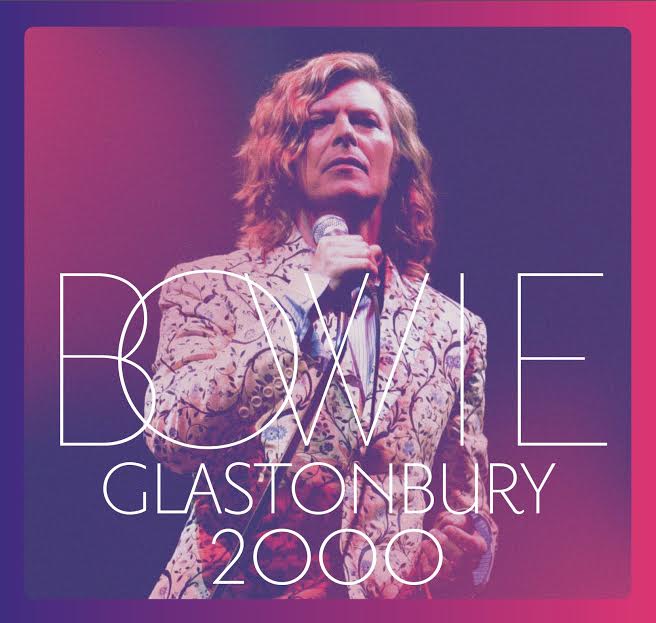
David Bowie ‘Glastonbury 2000′3x vinyl LP set, Released Friday 30th November
DAVID BOWIE ‘Glastonbury 2000’ documents Bowie’s legendary Sunday night headline performance on 25th June at the most famous festival on earth. The legendary full performance is released for the first time including many of David’s greatest hits. While often regarded as one of the greatest sets in Glasto history, the Sunday night closing show has never been released on video or audio in its entirety.
The package includes the full 21 song greatest hits set including the Glastonbury performance of ‘Heroes’, a highlight of the record breaking ‘David Bowie Is…’ exhibition and the only track that has been previously released.
This 3LP set also features David’s diary, originally written for Time Out magazine, which documents him preparing for the show in his own inimitable manner. In addition to newly mastered audio, David Bowie ‘Glastonbury 2000′ features new artwork from Jonathan Barnbrook (who worked with Bowie on the sleeves for Heathen, The Next Day & ★) and notes from the renowned author and Bowie fan Caitlin Moran who reviewed the show for The Times.
The Glastonbury box set will also include a reproduction of a diary Bowie kept for Time Out, in which he documented his preparations for the headlining gig. A snippet of the diary reads, “As of 1990 I got through the rest of the 20th century without having to do a big hits show. Yes, yes, I know I did four or five hits on the later shows but I held out pretty well I thought… big, well known songs will litter the field at Glastonbury this year. Well, with a couple of quirks of course.”
The package features photos of Bowie resplendently dressed in a 3/4 length one-of-a-kind Alexander McQueen frock coat, the pattern of which was made to echo the hat (the famous ‘bipperty-bopperty hat’ mentioned in the song Queen Bitch) and worn by David at his Glastonbury Fayre debut in 1971.
“I often get asked what the best set I’ve seen here at Glastonbury is, and Bowie’s 2000 performance is always one which I think of first,” said Glastonbury organiser Emily Eavis. “It was spellbinding; he had an absolutely enormous crowd transfixed. I think Bowie had a very deep relationship with Worthy Farm and he told some wonderful stories about his first time at the Festival in 1971, when he stayed at the farmhouse and performed at 6am as the sun was rising. And he just played the perfect headline set.
Don’t forget to watch the DAVID BOWIE ‘GLASTONBURY 2000’ hour-long special on BBC4, Friday 19th October!
The Oscillation have shared the stunning video for the title track of their sixth album, Wasted Space, which is out today (21 September) . Having proved themselves as one of the UK’s most durable and adventurous psychedelic outifts, The Oscillation have avoided falling into a slough of kaleidoscopic predictability with an album of muscle-flexing grooves and sounds that sets them aside from so many of their peers. This is psychedelia for troubled times and is brown acid for the 21st century.
Not that this is to suggest a bad trip. This is music that confronts the trevails of the here and now. Conceived and directed by Antonio Curcetti, who has previously made videos for UUUU and Tomaga among others, the video for ‘Wasted Life’ is an incisive look at the overload of today’s technology.
“The concept behind the video is about the idea of losing yourself in technology and merging with it,” The Oscillation’s Demian Castellanos sats. “It definitely pursues my previous themes of alienation and feeds them through Antonio’s vision and third eye.”
“‘Wasted Space’ comes from a technological journey, the same each of us go through since technology has changed our daily lives,” adds Antonio Curcetti. ”As in David Cronenberg’s Videodrome, where the main character becomes part of the interface and machinery he is investigating, in ‘Wasted Space’ Demian discovers his multi-self through the monitors.”
The Oscillation are taking to the road in the autumn and winter. They play NOVEMBER29th – Nottingham, Metronome ‘Wasted Space’ is the title-track from The Oscillations sixth LP which is out now on Fuzz Club.