Son Volt’s highly topical new album “Union” includes four songs that Jay Farrar recorded while sitting next to Woody Guthrie’s handwritten lyrics to “This Land Is Your Land.”
It’s a fitting juxtaposition: Just as “This Land Is Your Land” was among Guthrie’s more pointed songs, Union is Son Volt’s most overtly political album in nearly 15 years. On a dozen new tunes and a cover, Farrar casts a skeptical eye on late capitalism, addresses the widening gulf of income inequality, imagines and offers a prescription for unity at a fraught moment in a divided nation.
After dabbling in a stylized electric blues sound on Notes of Blue in 2017, and exploring Bakersfield-style country on Honky Tonk in 2013, Union returns to the rootsy rock ’n’ roll of early Son Volt with a blend of acoustic and electric guitars, organ and harmony vocals sweetening Farrar’s worn-in, authoritative voice. Farrar began writing songs for Union in December 2016, and the sting of the previous month’s presidential election was still fresh. “I was just trying to make sense of things, and turning to pen and paper and music just seemed the natural way to go,” Farrar says. “It was sort of the tradition of the bard: the only thing I could do to feel like I was participating in anything that might help would be to write these songs. Whether or not they helped is anybody’s guess, but they helped me.”
Lest the album become a grim political screed, Farrar included a handful of non-topical songs with a different inspiration: his kids. With a son in college and a daughter in high school, the singer was thinking about sending them off into the world when he wrote “The Reason” and “Holding Your Own.” They’re tender songs, from a quietly proud father who is “seeing them go into adulthood and just thinking about the trials they will face, and hoping they don’t fall and press onward,” Farrar says.
He and recording engineer Jacob Detering took seven songs on the road, recording basic guitar and vocal tracks for four of them at the Woody Guthrie Center in Tulsa, Oklahoma, and the other three at the Mother Jones Museum in Mount Olive, Illinois. (Mary Harris “Mother” Jones, once denounced in the U.S. Senate as the “grandmother of all agitators,” was a community activist and labor organizer in the late 1800s and early 1900s, most prominently involved with the United Mine Workers.)
Farrar and Detering arrived at the Woody Guthrie Center in the morning on a Monday, when the museum is closed to the public.
It’s not the first time: Guthrie has long been an inspiration to Farrar. The Son Volt leader collaborated on music for a batch of Guthrie’s previously unrecorded lyrics on 2012’s New Multitudes, with Jim James (billed as “Yim Yames”), Anders Parker and ex-Centro-matic singer Will Johnson. Farrar named Son Volt’s 2005 album, Okemah and the Melody of Riot, after the Oklahoma town where Guthrie was born. And like Guthrie, Farrar has consistently written topical songs throughout his career, though in so low-key a way that it often escapes notice.
“It’s always been there to some degree,” Farrar says. “With Uncle Tupelo, it would find its way into some songs, though not in as focused or comprehensive a way as it later sort of evolved into.”
Farrar sang on Uncle Tupelo’s first two albums about the dead ends of life in the post-industrial Midwest on songs with names like “Graveyard Shift,” “Factory Belt” and “Looking for a Way Out.” On the band’s acoustic third album, the song “Criminals” took direct aim at class divides: “Those that bleed the blood and those who work to will it.”
“His songs, they’re not simple, but they’re elemental, and that’s a hard thing to do,” says Anders Parker, who also collaborates with Farrar in the duo Gob Iron (which reissues its out-of-print 2006 LP Death Songs for the Living on Record Store Day). “It’s not like listening to Pete Seeger or something like that, or even Woody. It may come from the same place, but it is a little more abstract and a little more impressionistic type of approach.”
When Farrar reactivated the band in 2004 after a hiatus, Son Volt the following year released Okemah and the Melody of Riot, which included songs addressing the George W. Bush administration in fairly direct terms. Nearly a decade and a half later, Farrar had no second thoughts about another politically minded album. “I think in some ways I’m probably more willing to dive headfirst into topical songwriting, maybe even more so than with Okemah and the Melody of Riot,” he says.
On Union, he sounds disgusted on “The 99” at the growing gap between rich and poor, growling electric guitars buzzing beneath his voice; and he’s ready to cast aside distracting frivolities on “While Rome Burns.” Farrar takes on the role of storyteller in the classic folk-balladeer sense on “Reality Winner” and album closer “The Symbol.” The former, a mournful, sympathetic tune named for the intelligence specialist sent to prison for leaking classified information about Russian election interference, mixes guitars and piano as Farrar describes the circumstances around her actions and asks on the refrain, “What have you done?” On “The Symbol,” a dusty, aching acoustic tune, he sings from the perspective of an undocumented immigrant facing the prospect of ejection from the land of immigrants where he—and his American-born children—have made a home.
Son Volt’s ‘Union’ will be released on Friday, March 29th. Visit your local indie record store to pickup a limited edition copy of the album pressed on opaque mixed maroon vinyl. These copies include an 11 x 11 screen print signed by Jay.
The latest album from English songwriter Lucy Rose is beautiful but intense. Her tendency towards contemplation could very well explain the complexity and depth of No Words Left, an album that Rose herself confirms as “the different one”, and it is – with its lyrically tense, transfixing melodies and intriguing instrumentation, it’s a distinct shift in sound at nearly a decade into her career of making powerful yet approachable folk/indie-rock gems.
“I don’t know, I feel like after every record you’re like, ‘Yeah this is me, I’ve really found myself on this one,’” Rose laughs. “And then six months later you’re like, ‘Oh God, it was all a lie.’ You’re always excited about a new record and you somehow want to think it’s more authentically you. I guess I don’t know where it’s come from. It’s just the nature of things and curiosity for trying something else.
“I think this one has turned out the way it has is for a multitude of reasons. Touring without a drummer because I can’t afford to take a band with me, having freedom to play outside of rhythm, has been liberating. Doing more stuff on the guitar has led me to being the master of my own pace on this record. I’ve just been able to reach that point where I’m like, ‘Fuck it, if they don’t like it, I don’t care.’”
The sonic shift has seen Rose incorporate some sax and strings with her sighing but forceful vocal, making for a beautiful and often unsettling listen. Musically, it’s diverse. Lyrically, it’s intense. Lead single Solo(w) laments, “But I can’t help it when I am so low/Pretending like I have a purpose/Well, now that’s long gone/Something’s missing/When I am solo, so low, solo, so low.”
“The content of the songs, I don’t know why I wrote about what I did – it just sort of happened,” Rose explains. “I spend every waking minute of my day analysing every feeling that I have, which isn’t necessarily a good thing but I think it’s led to the album having an introspective view on everyday feelings. The whole thing has been a bit of a surprise, really.
“I would presume that I should know how to talk about my emotions by now. And because of my music I give myself the impression that I do. And I can’t; I can somehow do it in a few lyrics, but if you sat down and tried to talk to me about it, I wouldn’t be able to make much sense of it.
“It’s an intense thing, the album. You could put it on the list of things that you don’t like at first but you grow to love. Like beer, wine and olives.”
These songs have allowed me to get to know myself in a way I haven’t before and I’m sure after you listen to it you’ll end up knowing me better as well. There’s so much I could say about the record but at the moment I just want you to have it.
As you will have seen, a huge part of telling the story of the album and how it’s been made has been through my husband, Will Morris’s photos. They were the catalyst which inspired me to make the visual film to accompany the album, directed by Chris McGill.
For the first time ever I feel like I’ve made an album as one piece of music. It’s not a collection of songs but an album which describes a certain time in my life and the feelings that went with it. I’ve always thought an album needed light and shade but I decided it was time for me to embrace all the shade and I knew the light would come when the time was right.
As always thank you so much for being here and sticking with me. It’s album number four and making it has been a monumental journey for me but I feel so much stronger for it. Hope you are all well and I’m sure to see some of you on the road these next 9 months.
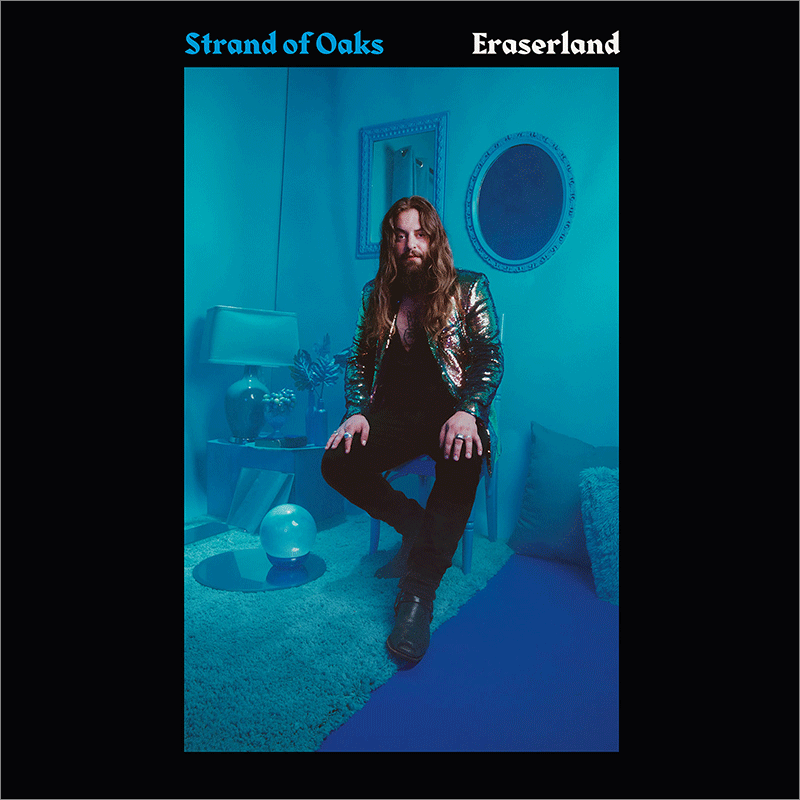
“Eraserland” is Strand of Oaks’ most lasting, accessible album yet, one that’s not as concerned with its own internal drama and more interested in communicating the power in dreaming up a better life.
Tim Showalter returns with Eraserland, his sixth album as Strand Of Oaks. It almost didn’t happen. As the touring behind 2017’s Hard Love was coming to a close, Showalter found himself defeated. After the wild journey from his 2014 breakthrough Heal to its follow-up, something didn’t click. Unsatisfied with his band, with the project overall, with himself, he entered into in a bout of deep depression.
Then he got a call from an old friend and a musician he’d looked up to: My Morning Jacket guitarist Carl Broemel. The other members of the group besides singer Jim James — keyboardist Bo Koster, bassist Tom Blankenship, and drummer Patrick Hallahan — wanted to offer their services as backing band for a new Oaks album. The only problem was Showalter didn’t have any songs.
He embarked on a writing retreat, secluding himself on the beaches of Wildwood, New Jersey in the dead of winter. In a few weeks, he emerged with the songs that would become Eraserland. He met the band in Louisville and they recorded the material in a matter of weeks as well.
Tim comments,
I know a lot has already been said about this record. So I guess I will just dig right to the core. Eraserland will forever hold such a special place in my heart, I’ve never been more proud of a group of songs, and in many ways I feel like this is my first record. But more importantly when I listen to or think about Eraserland, I’m filled with the love of all those around me and the special people that guided me back from being so lost, to make this record a reality. Whereas most Strand of Oaks records were made in such a solitary creative space, Eraserland was created by a community of friends and people I love so dearly. This community also includes all of you, who are a part of this family. I would like to thank (we can tag them here))) Carl, Bo, Tom, Patrick, Kevin, Ryan M., Jason Isbell, Emma,Lacey Guthrie, Anne (insta annegthr), Alysee, Dead Oceans, and most importantly my wife and partner Sue. When you listen to Eraserland and if you find some connection, please know that this would not have been possible without these wonderful people in my life. Eraserland means whatever you want it to, but for me its a place where you can be anyone you want to be, and hopefully find some peace. I love you all very much and now we get to share these songs together. The last line on the album is my hope for all of us, “If you believe you can be loved, you’ll outlive you’re past”.
Thank you- Tim
several of its songs are more rewarding and evocative each time you listen. And below, Showalter’s stories may provide a sort of first listen companion.
1. “Weird Ways”
As a mission statement and lead single, “Weird Ways” feels like such a perfect re-entry point. Like opening up the album with sort of a rebirth moment. Tim: In my time at the beach, which was basically a writing retreat, that was the last song I wrote. It was towards the end of my time there, before my wife and her family came, and I was breaking down my gear , then I just wrote one more song. I felt like I was in this rush to write it because I needed to get the apartment clean before her parents came. But I had one thing left I needed to say, after three weeks and many more songs than are on the record.
I wrote it so fast. It was just another song, I had no idea about its impact on my catalouge. We got to the studio, and it was kinda far down on the list. I always have my marquee songs I really like, hence my past mistakes like “Passing Out” not being on Hard Love. But then “Weird Ways” was the first song we tracked. It had this weird life, it was the underdog. The original, it was like two minutes and the refrain at the end was a four-bar “There are colors.” Since it was the last song I wrote, I think it actually encapsulated the entire experience of the album. I think I was summarizing the record, and then it’s the first song on the album. It’s like I’m calling my shot before the album happens.
“Weird Ways,” from the demo, is the least familiar on the album. Kevin Ratterman, my producer, he and I didn’t talk about it, but how we developed the arrangement on the album was like the curtain coming up. And the curtain comes up for everybody pretty much individually. You initially hear Carl’s ethereal little slide, then Bo comes in with the keyboards, Patrick comes in with the snare, and finally Tommy comes in when everyone kicks in.
It’s beautiful in a way, because yes it’s introducing their instruments, but it’s also introducing how each member individually — and this is the theme of the whole recording process — was there for me and embracing me. It starts out extremely alone, it’s just me with an acoustic sounding extremely lonely. With them and Lacey Guthrie from Twin Limb, by the end it feels like there’s 500 people in the room around me.
This was the first time [My Morning Jacket] members and I recorded together. In the midst of the tracking, I really messed up a take. And I was the worst one to mess up a take because I had very little responsibility — I was just tracking ghost vocals and rhythm guitar. So whenever I messed up when we’re tracking a six and a half minute song live, I felt really bad. Just like, “Who is the amateur in this room!? It’s your song!” But I did, I messed up.
It was my first and only deep crisis of conscience, where I had the inevitable, “What am I doing here? This is where Jim should be and … I cannot sing like Jim …” I didn’t express it to anyone else as it was happening but luckily I got over it fast. I saw things within the studio. I was communicating with one of my favorite bands in that way.
A key moment arrangement-wise in that song was the “There are colors” refrain. Originally it was a falsetto and a low part. On demo, it just wasn’t there. The song really didn’t take off until I was doing the vocals and I told Kevin “I wanna do a Liam Gallagher part.” He was like, “What does that mean!?” There was this high part and low part and then I did this middle part like “That’s what Liam Gallagher would’ve done there!” It added a heft that wasn’t there. The story that came with Eraserland’s initial announcement was that you were feeling pretty defeated, then got a call from Carl.
SHOWALTER: The worst I felt is when Carl originally contacted me. That was at the end of the Hard Love tour. I was done. I was very depressed. Unbeknownst to me, I was equating it to my music because I’d become so tied to that identity as that’s who I was. I was thinking, “It’s the band, I don’t want the band to go on anymore.” But I think I didn’t want to go on anymore. I think I was done, in a lot of ways.
So the beach happened because they all booked studio time and Bo had two weeks off from the Roger Waters tour to be with us. All of that happened, and I legitimately didn’t have songs. I love Wildwood, New Jersey, and I love it in the winter.
2. “Hyperspace Blues”
Eraserland has these towering, emotional tracks that kind of trace this journey. But, on our way, right from “WeirdWays,” we go to “Hyperspace Blues.” this song definitely seems like it’s about drugs. I love “Hyperspace Blues” because it served such a functional purpose in my daily process at the beach. My favorite thing to do on the beach, I would take my bike, and the beach is frozen in the winter, and I’d just ride my bike forever at night.
It’s the most freeing experience, because the Jersey Shore is so wide, and you can just ride your bike forever and I felt like a kid. I felt like I was absolutely alone in the universe. I had music on, it was pitch black, and I had no consequences — if I fell off my bike it was sand, I wasn’t going to get hit by a car. It was like hyperspace. I think that played into it a lot. That’s the song I’m most excited to play live.
How do I say it … there’s a bit of trolling on Eraserland. I’m trolling Hard Love a little bit on Eraserland. It’s deeply referential but the idea of like, “Somebody put me back together!” It’s kind of like me responding to that whole situation.
3. “Keys”
The way I hear albums is often informed by the artwork. So I hear Eraserland as taking place in this glossier place than the other albums, but also blue and nocturnal, a little bit surrealist. So it took me a bit to hear “Keys” this way, But there’s also something so poignant and universal about this sentiment, just being with your partner and saying “We’re done, let’s just get out of here together.” I think “Keys” might be the best love song I ever wrote for Sue. I’ve written a lot of love songs for her but this truly sums it up.
I really like that song because it’s chords I’ve used before, and I really didn’t want to write that song when I was playing the chords. I had a melody that was a really atypical Strand Of Oaks melody. Then I put it away and I was actually trying to hum an organ part I was going to put on, but that became that wandering melody in the verse.
We tracked vocals after the band left, in another session. It was just Kevin and I in the studio. You can hear it on the last chorus, where I say “I’ll buy us a trailer down in the Keys,” which to me is so bittersweet. I was just zooming through the vocal takes and I got to that part and I started crying. It got me, completely.
When I got to that second verse, and I choked up, and I go “Ah, sorry Kevin.” And I couldn’t see him so I go “Kevin, are you there?” I said it three times, and it turns out he was crying, too. We weren’t in the same room, couldn’t see each other, but it hit us equally as hard. Then we went to the second take, and I do break up a little bit again, and we kept it. I was happy that Kevin didn’t push me to do a more refined take in that moment.
4. “Visions”
“Visions” is one of the heavier, more harrowing songs on the album. “Visions” is a crazy song because I wrote that chorus melody before Heal. That melody has existed for like six years, and I’ve spent hundreds of hours trying to find that chorus a home. It wasn’t until I did the verse, and a two-chord for the pre-chorus … I think the song feels heroic in a way, simply because I felt so happy I finally found a place for this chorus to live.
It’s one of the few songs on the record that touches on the depression I was in. It’s interesting. I think back to a lot of the songs I wrote and “Visions” introduces something I never had before, and that’s hopelessness. For me, there’s a few lines that nail it home, to the truth. “2017 tried its best to take the magic from me.” “Magic,” that’s self-referential that’s what I say in “Goshen ’97,” “The magic began.” That’s a code word for music, and how music has saved me. I felt like the year, and all that was wrapped up in 2017 — my career, my band, the world — it was gone. The whole song is hopeless at that moment but what’s cool is the music is heroic, and I think the music saves the lyrics. The arrangement is trying to save the person who’s singing.
I was so into that arrangement. If this would’ve been Hard Love me or Heal me I would’ve added a thousand more things to that fucking song. Harmonies on the chorus. That song is begging for a guitar solo! It’s begging for a Slash to show up and step off the train tracks! .
5. “Final Fires”
Track order is so essential on Eraserland, more so than on any other record I’ve done. “Visions” … it’s a commitment to get to track 4 and end “Visions.” Then moving to “Final Fires,”. What’s cool about this song is it captures the aesthetic of the album pretty well. You think it’s going to be kinda new wave-y in the beginning with that intro, then it’s like this rollicking, breezy rock song. I’m excited for people to hear the whole record, because there are moments that are fun. This feels fun in a way that not even “Goshen ’97” did. More awareness I may have earned in my life, and understanding that every year you live you realize everyone’s as completely as fucking lost as you are and everyone has problems and there’s an enormous amount of confusion in everyone’s life. In the past, I would’ve written a whole record like, “I think I’m crazy!” And now I can sum it up in one kinda funny line in the beginning of “Final Fires,”.
6. “Moon Landing”
“Moon Landing” feels like it would’ve sat here on the album regardless, a kind of mid-album funk freakout. And you have Jason Isbell playing on it. Jason and I go way, way back. He’s a wonderful person. I think Jason knew I was having a tough time. He reached out and was like, “If you need anything on this record let me know. I’d love to be a part of it.”
We always had that in the back of our mind, like I have Carl Broemel and then I also have the opportunity to have Jason Isbell. We were thinking of where to put him. My God, Jason plays slide guitar amazing, he could’ve done something amazing on “Keys.” We had this absolute groove song so we sent it to Jason. I kept telling Kevin, “You have no idea what he can do on a guitar. It’s more indebted to Hendrix’s “Machine Gun” than an Allman Brothers song. It’s fucking crazy. I felt so pleased in such a tiny, tiny way, that if anyone didn’t know the depth of Jason’s playing,
Since Heal, I’ve had songs that are sort of the gravitational center of the record. “JM” was that, and “On The Hill” was that for Hard Love … and “Moon Landing,” in a different way, feels like it’s gluing things together. Especially lyrically. There’s a lot of lyrics to unravel.
I started the song with Malcolm Young, as a fan … in life, there are certain moments that are perfect. I think Malcolm Young was perfect in what he did. It’s something that cannot be emulated, it’s something about the way he played, and that’s the impact of him being gone now. No one will ever play rock ‘n’ roll rhythm guitar as flawlessly as Malcolm Young did. It’s book-ended with the last verse, with Chris Cornell. I always took a lot of pride in [having the same birthday] as him. Another monumental perfect thing, Chris Cornell’s voice.
Another Rosetta Stone moment is when I say “Bobby’s singing ‘Prophet’ with the futuristic eyes,” it’s Bob Weir singing “Estimated Prophet.” The lyrics in “Estimated Prophet” had a huge impact on the lyrics for “Moon Landing.” Chris Swanson, who started Secretly Canadian, told me the best thing ever: “Some songs are for the people, some songs are for the heads.” This is one of those for the heads, I think.
7. “Ruby”
I don’t think you’ve ever written something as effortlessly catchy and warm as “Ruby.” I loved what you said when this came out as a single. There has been nostalgia, especially on the last couple Oaks albums, but there was a pang with it. And “Ruby” is this more contented remembrance. And then there’s that refrain at the end where, like “Weird Ways,” it really strikes me as the exact sound of Strand Of Oaks playing with My Morning Jacket.
Musically, “Ruby” is probably my proudest moment, because there’s a lot of strange key-shifting. The chorus is in a different key than the verse, the refrain is in a completely different key, and it all fits together.
What really nailed it is it for a long time existed as just the chorus and verse and it was last minute when I shifted into that “Ruby, won’t you slow it down.” That, to me, along with “Keys,” is one of the prettiest moments in my career. Then the waltzy piano outro was just another idea that was on the demo, that had no connection. That was Bo — I don’t think he knew, I didn’t intend for that outro to be on the song. So we finished and he just went into it and I was like, “Whoa, whoa the song’s over!” And Bo was like, “Oh, I thought this was part of it,” so I said, “Well, now it is!” So it ends in this 6/8 time signature. Man, it was fun to put together. In four minutes there’s like five different themes put together.
8. “Wild And Willing”
After “Ruby” the album definitely goes into a sad and ruminative place for the final stretch. It begins with “Wild And Willing.” Now, you write self-referentially a lot, you write autobiographically a lot. On this particular album, I feel like there are more lyrical references to being in a band and being on tour. Is that something — compared to say, “Keys” — that you worry people aren’t going to connect with as much.
With Eraserland, there are references to band and musician and it does seem like a closed society in some ways. I kind of feel the opposite. In “Wild And Willing,” I think it does feel a lot more inviting and welcoming because, yeah, I’m referencing being in a band but the way I’m presenting the lyrics is, hopefully, a lot more universal. “Wild And Willing,” that is the one song that should not be on this record. We had this other great song we made in the studio, that’ll probably come out at some point. But I got to this point where we had recorded that song and I was doing vocals and I asked Kevin, “Can I do something just for posterity?” We had the vocal mic set up, I grabbed what turned out to be Jim’s guitar — which is beautiful, because it’s like he’s on the record in a way, this was his main acoustic at the beginning of Jacket. “Wild And Willing” is the first and only take.
9. “Eraserland”
This final one-two is the most powerful way you’ve ever ended an album, in my opinion. And this title track is a weird song. It has this synth-gospel thing going on almost, and these big breaks and this dramatic outro. It’s one of the most interesting Oaks songs, I think. “Eraserland” the song is, for anyone that knows — that’s Pope Killdragon, who’s come back after 10 years. He’s speaking to the Virgin Mary, who was the heroine of Pope Killdragon. In my head, on the beach, I thought about the world and myself and what happened in the 10 years since I wrote Pope Killdragon and I brought him back. I never thought I would. If “Visions” was hopeless, this is… It’s a dark song.
I think the song itself is like four vignettes. Some are global, some are extremely personal. It was the self-assessment moment: What would I say if this angel or patron saint came back and talked to me? And she was like, “The last time I hung out with you, you were trying to write Pope Killdragon, and then you made an anthem record, As opposed to something like “Wild And Willing,” where I just forgot about it, I was pretty adamant about not putting “Eraserland” on the record. It wasn’t called “Eraserland,” it was just this song. That should be the end of the record. “Eraserland” should be the last song, and in a way it is. The one thing that was beautiful about the song “Eraserland” is I didn’t have the name of the album until one time Sue visited us in Louisville and I told her, “I think I’m going to call it Land Of The Dead.” And she was like “…You can’t do that.” .
I do strangely say “erase” like five times on the record. We came up with “Eraserland,” and this song didn’t have a name, so I made it the title track. And with that we had that outro without any vocals. Kevin said, “You need to say one more thing in this song.” That’s when that refrain [happened], and we were very specific about how to put those words together, because it’s “I am the Eraserland,” not “I’m in the Eraserland.” It feels more powerful, it’s a declaration. I think that’s an extremely different statement.
It’s also a reference to “Goshen ’97,” “I don’t want to start all over again.” This is me saying to that, “I can start again.” I can do whatever I want. the song is strikingly beautiful and has this effect coming after all these other tracks. Then you have Emma Ruth Rundle come in, and her voice is just totally otherworldly.
When I was doing the vocals, Kevin was like, “I wanna have Emma sing on this song.” We called it the Eraserland Vibe. Emma’s around my age, and I realized maybe she was having a lot of the same feelings. I saw so much of myself in her. Those that know Emma know she can sing huge. And I love that both of us were singing in our lower register.
10. “Forever Chords”
“Forever Chords” is this gigantic epilogue. Sonically speaking, it brings in the MMJ element one more time because it reminds me of “Dondante” a bit, this spectral and sprawling thing, big but not loose, with like an orchestrated build. It’s just two chords, C to E minor. Those are forever chords. Music is my language. Forever chords, that means more than C to E minor. I say it in the song. “Major to minor in a slow beating pulse.” That should be on my gravestone, that’s my mission statement in life. There’s so much to unravel with that song. I think the song explains it. I don’t want it to end. I think I’ve felt that way my whole life,
I think another gravestone lyric is “If you believe you can be loved/ You’ll outlive your past.” If I never write a lyric again… There is a lot of finality to “Forever Chords,” which is scary as a songwriter. Did I just do it at 36? Is that it for me? Because I just summed up what I thought for 36 years.
For many young bands, the release of their debut album is more than just making music. It’s a coming of age which documents that special time a group of friends have found the ability to define who they are and express it to the world. ‘Nothing Happens’ is the first LP from San Franciscan trio Wallows who are Cole Preston (drums), Braeden Lemasters (vocals/guitar) and Dylan Minnette (vocals/guitar). Where some may stumble at the first step, Wallows have already excelled themselves on this debut album and set the bar very high for what else is to come in the future.
Having first formed when they were aged only eleven years old, the childhood friends have poured a lifetime of experiences complete with all those important first heartbreaks, initial uncertainties and bursts of excitement into 11 tracks of gorgeous sun-kissed indie pop. Over the years, the trio has had a number of names, from the Feaver to The Narwhals. Now they’re taking a big step to help people remember the band: A full-length album.
“It feels really great. The album is something that we’ve been looking forward to for a decade and it’s really trippy that it’s happening so soon. It’s been like the longest build up of all time.” – Cole Preston
Combing everything from break beats to neo-classical influences, woodwind instrumentation and post rock; it’s fair to say that These New Puritans are one of the most innovative British bands for a generation. Formed in 2006 by twin brothers Jack and George Barnett, the Southend-on-Sea have steadily built their cult following amongst discerning listeners and now they are back with their accomplished fourth album ‘Inside The Rose’.
Recorded in Berlin, a city long known for its creative freedom and pioneering forays into the many forms of electronica, the Barnett boys have created an intriguing and lush 40-minute listening containing just nine tracks which unfold in the most wonderfully unexpected way. ‘Beyond Black Suns’ starts with oppressive beats to rise with operatic vocal accompaniment, ‘Where the Trees Are On Fire’ is perhaps Jack’s most natural singing performance and feels like an actor breaking the fourth wall in some haunting musical and ‘Anti-Gravity’ draws on oriental influences for its spacious dark wave synth sound like a lost scrap of soundtrack from Bladerunner.
“My favourite kind of music is very clear but also mysterious at the same time. If you have a strange idea always present it in the clearest possible way. Don’t mess about with pretentious abstract rubbish, that’s the kind of thing we don’t relate to. A lot of the time George takes what I’ve come up with and nudges me in a certain way. Many of the vocals were completely different. The usual thing that would happen was I would play him a vocal that I had recorded, then he would listen to it for ten seconds then press stop and not say anything. And that’s when I knew that it wasn’t quite right and I would go back and do something else. Being brothers and working in music means there are no niceties. We can be absolutely brutal to each other, but in a way. It’s okay because you can’t be sensitive about it, you can’t be precious. You get past all the niceties and you get to the heart of things.” – Jack Barnett
From the new album “INSIDE THE ROSE” Infectious Music . A BMG Company.
London’s Crows are the latest signing to Balley Records (Idles, Heavy Lungs, Lice) and deliver their long-awaited debut album Silver Tongues. Upon emerging in 2015, they quickly solidified their reputation as one of the most exciting new live bands in the UK, putting on a series of wild-eyed, chaotic gigs that left you bruised but, ultimately, bewitched. A single and two EPs reinforced their power, but then there was nothing but a concerning break in service.
The north Londoners’ longawaited debut album ‘Silver Tongues’ reintroduces the four-piece, reminding us why Crows were so exciting when they first bludgeoned their way into our lives. The album’s thrilling first single Chain Of Being is a real statement: a widescreen slice of post-punk that combines heaviness and brooding melody in equal measures.
Their knack for writing lurching, dark, and frenetic pit-openers such as ‘Hang Me High’ and ‘Crawling’. But it’s the second half of the record that shows how they’ve grown in the interim, bringing surprising shifts and dynamic dives into enthralling new territory. Chain Of Being’, a song about relying on religion as a crutch, is bright and expansive; dizzying, soaring, sky-blue atmospherics woven into its uncluttered core. ‘First Light // False Face’ clocks in at nearly eight minutes long and morphs from quiet, vulnerable soundscape punctuated by heaving sighs and frontman James Cox dropping his voice sinisterly low. This segues seamlessly into album closer ‘Dysphoria’, which draws out Steve Goddard’s droning guitar wall of noise, reinforces it with bassist Jith Amarasinghe and drummer Sam Lister’s precise, crunching rhythm section, and moulds it into something emotional and glowing.
Lyrically, the band set themselves apart from others, too, taking you on a journey through the curious crevices of Cox’s mind. Much of the album was inspired by research wormholes he found himself down, exploring things such as Dante’s Divine Comedy the grinding ‘Empyrean’ and the snakeskin trade, as told from the perspective of a snake ‘Hang Me High’. ‘Crawling’ focuses on Margaret Thatcher’s funeral, building itself into a tightly wound coil that springs apart with the singer’s wails of “Leave her in the ground”
‘Silver Tongues ‘ from our debut album ‘Silver Tongues’ out now on Balley Records
If you told us even as recently as six weeks ago that we’d be working on a Redux version of Black Sabbath’s “Volume 4“ and, before the end of March, artists including The Obsessed, Whores, Zakk Wylde, and Matt Pike would have all committed to be part of the project, we would’ve probably answered, “Wow.”
And if you’d then said, “Oh yeah, you’ll also assemble a Best of Black Sabbath companion LP featuring Earthless, Elephant Tree, Year of the Cobra, and tons of other great artists including a whole crop of brand-new MagneticEye roster bands, who by the way you’ll find time to sign during all the madness of your Vol. 4 Kickstarter,” we’d have most likely said, “piss off.” And yet, here we are, and all of the above has come to pass.
We are indeed reduxing Volume 4 and offering up a Best of Sabbath companion record, we do have some of the greatest heavy artists in the world committed to be part of this project, and we did somehow find time to sign three new bands during all of this, each of whom we’ll have a new record coming from later this year, and all of whom we’re inviting to be part of the project.
The San Jose trio known for crafting droning lo-fi rock tunes with undeniable melodies are poised for a comeback this year after breaking up way back in 2000. It begins with Capsule Losing Contact, a 51-track monster that compiles the material from Duster’s two full-length albums, 1998’s Stratosphere and 2000’s Contemporary Movement, as well as their three EPs and a handful of previously unreleased tracks, including “What You’re Doing to Me” and “Faint.”
San Jose’s sonic cure-all for the Y2K hangover that never materialized, Duster emerged from a cloud of lonely bong rips to take indie rock to the moon, and beyond. Scotch-taped guitars toggle between a chorus of brittle winter trees and a blanket of distorted fuzz. The low rumble of a cardboard box being kicked in a dead mall keeps pace in the background, as muffled, sung-spoken vocals ponder the great mysteries of modern mundanity. Three years of home recording accidents and blown-out 2AM studio experiments are spread across four LPs, gathering the short-lived trio’s Stratosphere and Contemporary Movement albums, 1975 EP, singles, demos, and other miscellaneous debris into one escape pod, now free to drift in the endless void of space.
Jenny Lewis has released an infectious new single titled “Wasted Youth” from her forthcoming album “On The Line”, due out Friday, March 22nd. Jenny Lewis releases her fourth solo album, On The Line – the follow up to 2014’s critically acclaimed The Voyager on Warner Bros. Records.
The 11 all new original songs were written by Lewis and recorded at Capitol Records’ Studio B, and feature a backing band of legendary talent including Beck, Benmont Tench, Don Was, Jim Keltner, Ringo Starr and Ryan Adams. The track, which sounds like vintage memorabilia in new packaging, was previously debuted during Lewis’ live-streamed hangout session/listening party for On The Line.
Other advance tracks from the album include “Heads Gonna Roll” and “Red Bull & Hennessy.” Utilize the present and listen to “Wasted Youth” below,
‘Wasted Youth,’ ‘Heads Gonna Roll’ and ‘Red Bull & Hennessy’ comes from Jenny Lewis’ new album ‘On The Line’ – available March 22nd!
Indie idol and former Rilo Kiley frontwoman Jenny Lewis has released her third solo album, titled On the Line. It’s a masterful and sprawling record, sometimes devastating and other times soaring to great emotional heights. Lewis manages to convey a complete portrait of herself as an artist who has been through the gauntlet of rock stardom and made it to the other side vibrantly, loudly alive.
These three British songwriters and frontmen who became famous on the heels of the punk explosion, Joe Jackson, Elvis Costello and Graham Parker although these fellows created music as unfettered as the Sex Pistols and the Damned, they seemed to channel the movement’s angry through gritted-teeth rage with their lyrics more than their music.
Jackson, Costello and Parker not only shared the “angry young man” banner, they also shared a complete hatred for the label and its limitations. It’s no wonder that all three would rebel against their ties to punk, especially Costello and Jackson who would dive heedlessly into excursions into country, jazz, R&B and classical works later in their careers.
But even with his second album, Joe Jackson was already resisting the label stamped on him. I’m the Man was released in October 1979 – only 10 months after his debut LP, Look Sharp! – with Jackson looking anything but sharp on the cover. Sporting a thin mustache and wearing a suit jacket loaded with stolen jewelry, Joe looked like the kind of petty criminal known as a spiv in the U.K. His tongue firmly planted in cheek, he said, “I think people always want to put a label on what you do, so I thought I’d be one step ahead of them and invent one myself – spiv rock.”
Regardless of what you filed it under, I’m the Man packed a wallop of great tunes, edgy vocal performances and cutting lyrics. The album was received by critics almost as positively as Jackson’s debut and performed well on the charts. As with Look Sharp!, the album was recorded with the four-piece Joe Jackson Band featuring Jackson on vocals and piano, Gary Sanford on guitar, Graham Maby on bass and David Houghton on drums – a lineup that initially held for just one more album, because of Jackson’s musical meanderings. (They reunited in the 2000s to record and tour.)
Back then, this foursome was as tight a musical outfit as existed anywhere and I’m the Man provides great evidence of this, perhaps most notably on the title track, the punkiest performance in Jackson’s entire discography. Over pounding drums, charging guitar and an acrobatic bassline, Joe impersonates a salesman who specializes in fads and offers his own commentary on the disposable nature of pop music in the process. He sneers: “I got the trash and you got the cash / So baby we should get along fine.” Maybe he wasn’t kidding about “spiv rock,” after all.
The album also featured Jackson’s biggest-charting hit in his native U.K., “It’s Different for Girls.” Joe said the song came about after he overheard someone use the cliched phrase in a conversation. He then invented his own conversation in the lyrics, turning the cliche on its ear where the female is seeking mere sexual gratification (“She said just give me something, anything / Give me all you got but not love”) and the male pines for something more. It’s a clever piece of work and Jackson’s bellowing vocals gives each line the appropriate amount of acid, but it’s the musical accompaniment (which does not include Jackson’s piano) that creates the tense atmosphere. The throbbing bass line and those stringing strains of guitar set the table for a lovers’ quarrel to explode, as it does in the chorus, and then fade into dismissive dissatisfaction on both sides.
I’m the Man rocks throughout, but it’s also dotted with moments of nuance, from the jazzy bits of piano that spar with jagged guitar riffs on “The Band Wore Blue Shirts” to the reggae feel of “Geraldine and John.” Together, they make I’m the Man the perfect delivery method for Jackson’s witty, and only occasionally angry, songwriting.
Astonishingly released within months of each other, Jackson’s 1979 debut album “Look Sharp!” and “I’m the Man” are tight and inspired sets of power-pop that feature some of Jackson’s best and most timeless tunes. Radio classics from these two albums include, “Is She Really Going Out With Him?,” “Sunday Papers,” “On Your Radio,” “KindaKute,” and “It’s Different For Girls.” Remarkably, this was the last album Jackson would make in this new-wave vein for over 20 years.
Joe Jackson went to New York looking for new inspirations and sounds, and found his greatest commercial and critical success with “Night and Day”, an album redolent of the glitz and glamour of the city. These superbly crafted and arranged pop songs are inspired by the grandeur of Cole Porter and George Gershwin, and confidently infused with elements of jazz, swing and salsa. A genre-jumping crossover hit that virtually no one who heard the edgy power-pop of Jackson’s first 1979 efforts- Look Sharp! and I’m the Man– could ever claim to have seen coming. Perhaps the fearless Jackson’s finest hour in the studio.
“Summer in the City’s” repertoire is an amazing bridge that spans the greatest hits of Jackson’s early canon with stunning new arrangements and covers of other great songwriters. Jackson classics like “Fools in Love,” “You Can’t Get What You Want” and “It’s Different for Girls” meet with covers as diverse as Duke Ellington’s “Mood Indigo,”The Beatles’ “Eleanor Rigby” and Steely Dan’s “King of the World.”
Look Sharp!, I’m the Man and Night and Day are sourced from the best-sounding analog tapes currently available, beautifully preserved ½” “safety copies” of the original stereo masters. We were able to maintain the grungy “New Wave” edge of the original LPs, but also restore the driving bass lines and bottom-end foundation on these tapes. The result is the best-sounding versions of Look Sharp! and I’m the Man anyone’s ever heard, with all the drive and pop of the original UK releases, but with superb tonal balance, imaging and clarity. The definitive issues of these iconic New Wave classics! Summer in the City was mastered to vinyl by Kevin Gray at CoHEARent Audio from newly-compiled high-res master files. Summer in the City was recorded live in New York City in August of 1999 by Steve Remote and Co-Producer Sheldon Steiger. Sony’s archivists and Battery Studios’ Mike Piacentini compiled new high-res digital master files from the original DATs with the final mixes, and IR consulted with Remote and Steiger on key aspects of the recording to ensure the best possible source files were used. The result is an absolute sonic stunner, brought to new life on this double LP set!