Beach Bunny is the project and stage name of Lili Trifilio, with tunes reminiscent of alt-pop and “sad girl” music, beginning in 2015. Adding backing musicians Matt Henkels (guitar), Jon Alvarado (drums) and Anthony Vaccaro (bass) to her live performances, Beach Bunny is a Chicago act you don’t want to miss. “Prom Queen” exploded on Tik-Tok and has since amassed 65MM+ global streams while the official video has 4.2M+ streams.
From people falling head over heels for Lili’s sweet voice and catchy composition style, her latest release took Chicago by storm. Drawing inspiration from heartache, her brother fighting cancer, struggles of being a female in the scene, and everyday obstacles – you can listen to Beach Bunny on almost every streaming platform.
Frazey Ford, recently announced her third album U kin B the Sun, will come out on February 7th, via Arts & Crafts. Ford made a point of preserving many of the lightning-in-a-bottle moments captured during those first sessions for U kin B the Sun. As a result, the album embodies the same untamed and ineffable energy that guided its creation. “There’s certain songs that just appear and there’s no art to it,” says Ford. “To me those songs have some kind of spiritual quality—sometimes I feel like they’re these different voices that you’re able to channel. There really was something magical about the improvisational aspect and how that shaped the album, and such a joy in the experience of really reveling in what we were all creating together.”
I’m excited to tell you that my new album, “U Kin B the Sun”, will be out on February 7th.
A new single, “Azad”, is out today, For those asking, the track Azad is named after my older sister pictured here. The song is partly about survival and a wild wolf child. She was born with a third eye birthmark and hence my hippy parents gave her a Sanskrit name. Azad Lotus Blythe Ford is the wildest human I’ve known.
Lead album single “Azad” reveals the rich emotional texture of U kin B the Sun, embedding Ford’s lyrical storytelling with sharply rendered memories of early childhood (a time she spent living on a commune in Canada as the daughter of American draft dodgers). With its brightly shuffling beats and soaring vocal work, “Azad” offers a poignant message of courage. “There’s something to that song that’s about survival, and about the love that my siblings and I have for each other in coming through an intense situation together,” says Ford.
Frazey Ford, founding member of The Be Good Tanyas, adds her soulful solo work to the show, and our achievement award winner shares the story of their up-cycling organization where victims of floods and those in need can obtain essential supplies.
Recorded at John Raham’s Afterlife Studios in Vancouver, British Columbia, featuring her Vancouver musicians, Darren Parris, Leon Power, Craig McCaul and Caroline Ballhorn along with Phil Cook on keys, U kin B the Sun follows Ford’s 2014 release Indian Ocean, an album made with members of legendary Memphis soul band The Hi Rhythm Section. U kin B the Sun partly draws inspiration from several instances of serendipity that transpired during her international touring in support of Indian Ocean.
Six years on from 2014’s ‘So Long, See You Tomorrow’, with a brief hiatus (and a solo Jack Steadman album under the moniker Mr. Jukes) in between, Bombay Bicycle Club kick off 2020 with a collection of songs “for anyone who’s ever turned to music in a time of need.”
In a statement, Steadman adds of ‘Everything Else Has Gone Wrong’: “For me personally it’s about the frustration of not being able to express myself to others, of leaving conversations feeling dissatisfied and misunderstood. Music’s the way I’m able to truly express myself.” Lead single ‘Eat, Sleep, Wake (Nothing But You)’ is a lushly-produced hint of what’s to come, delivered with the same delicate, reassuring touch that defines the best of Bombay’s work.
Bombay Bicycle Club are back after a three-year official hiatus. Everything Else Has Gone Wrong will be their first release as a group since 2014. Along with the album and tour announcements, the band released a playful music video for lead single “Eat, Sleep, Wake (Nothing But You).” The song might sound like frontman Jack Steadman can’t get an ex off his mind, but it’s really thoughts of playing with the band that are haunting him and giving him no peace. The new video by their former touring keyboardist, Louis Bhose, who is now a sought-out director, begins with a lament for the troubled times of Bombay Bicycle Club’s hiatus. “Without their music,” it reads, “British society crumbled,” and it seems the band’s members didn’t fare too well, either. A pining Steadman, utterly isolated in drab industrial settings or abandoned countryside, tries desperately to hack making music on his own—only to find that his former bandmates are suffering, too. They’re all gazing at their creepy, candlelit shrines to their bandmates in their prime and tenderly stroking one another’s faces on their Bombay Bicycle Club wall posters. Lucky for us, because “Eat, Sleep, Wake” is a welcome return from a group that’s been greatly missed.
their new album “Everything Else Has Gone Wrong”, out 17th January 2020
Manchester’s Purple Heart Parade release their third EP through premiere post-rock ambassadors Club AC30. Following from last years lauded Lonestar EP, Desolation Angel takes the band’s expansive and textured sound to new heights.
It opens with lead single Petrichor with its deftly dreamlike delivery that showcases the bands distance from previous influences and confidence in their own sound. Waves of engulfing, storm-like guitars crash across this entire EP but there are moments of extreme clarity within tracks like Petrichor and Red Rose Country, utilizing the full force of their loud / quiet shoegaze dynamics. Elsewhere tracks like Starwheel and title track Desolation Angel harness more of the infectious harmonies and chorus hooks that put them alongside some of their own cities finest.
Once again the band recorded at Perry Vale Studios with Pat Collier (The Jesus and Mary Chain, X-Ray Spex). Moving on from their last record which was largely emotional and cathartic, Desolation Angel is optimistic, romantic and mature. “Life’s a roller-coaster through the heavens. You’ll hit some soul destroying lows, but just up the track you know you’re going to hit some heavenly highs.
The EP is also about being true to yourself, standing up for your beliefs, doing your own thing, even though it’s not considered cool. It’s also about freeing yourself from negative situations in all aspects of life and cleansing yourself of them.”
Few artists are storytellers as deft and disarmingly observational as Andy Shauf. The Toronto-based, Saskatchewan-raised musician’s songs unfold like short fiction: they’re densely layered with colorful characters and a rich emotional depth. On his new album The Neon Skyline(out January 24th via ANTI-Records), he sets a familiar scene of inviting a friend for beers on the opening title track: “I said, ‘Come to the Skyline, I’ll be washing my sins away.’ He just laughed, said ‘I’ll be late, you know how I can be.'” The LP’s 11 interconnected tracks follow a simple plot: the narrator goes to his neighborhood dive, finds out his ex is back in town, and she eventually shows up. While its overarching narrative is riveting, the real thrill of the album comes from how Shauf finds the humanity and humor in a typical night out and the ashes of a past relationship.
His last full-length 2016’s The Party was an impressive collection of ornate and affecting songs that followed different attendees of a house party. Shauf’s attention-to-detail in his writing evoked Randy Newman and his unorthodox, flowing lyrical phrasing recalled Joni Mitchell. Though that album was his breakthrough, his undeniable songwriting talent has been long evident. Raised in Bienfait, Saskatchewan, he cut his teeth in the nearby Regina music community. His 2012 LP The Bearer of Bad News documented his already-formed musical ambition and showcased Shauf’s burgeoning voice as a narrative songwriter with songs like “Hometown Hero,” “Wendell Walker,” and “My Dear Helen” feeling like standalone, self-contained worlds. In 2018, his band Foxwarren, formed over 10 years ago with childhood friends, released a self-titled album where Pitchfork recognized how “Shauf has diligently refined his storytelling during the last decade.”
The Party earned a spot on the Polaris Music Prize 2016 shortlist and launched Shauf to an appearance on The Late Late Show with James Corden as well as glowing accolades from NPR, The Washington Post, The Guardian,and more. “That LP was a concept record and it really made me want to do a better album. I wanted to have a more cohesive story,” says Shauf. Where the concept of The Party revealed itself midway through the writing process, he knew the story he wanted to tell on The Neon Skyline from the start. “I kept coming back to the same situation of one guy going to a bar, which was basically exactly what I was doing at the time. These songs are fictional but it’s not too far off from where my life was,” Shauf explains.
For The Neon Skyline, Shauf chose to start each composition on guitar instead of his usual piano. He says, “I wanted to be able to sit down and play each song with just a guitar without having to rely on some sort of a clever arrangement to make it whole.” The resulting album finds its immediacy in simplicity. While the arrangements on folksy “The Moon” are unfussy and song-centered like the best Gordon Lightfoot offerings, his drive to experiment is still obvious. This is especially so on the unmoored relationship autopsy “Thirteen Hours,” which boasts an arrangement that’s both jazzy and adventurous.
Like he’s done throughout his career, Shauf wrote, performed, arranged, and produced every song on The Neon Skyline, this timeat his new studio space in the west end of Toronto. Happy accidents like Shauf testing out a new spring reverb pedal led to album cuts like the woozy closer “Changer” and experimenting with tape machines forced him to simplify how he’d arrange the tracks. Over the course of a year-and-a-half, Shauf ended up with almost 50 songs all about the same night at the bar. Though paring down his massive body of work to a single album’s worth of material was a challenge for Shauf, the final tracklist is seamless and fully-formed.
As much as The Neon Skyline is about a normal night at a bar with friends and a bartender who knows exactly what you’ll order before you sit down, the album is also about the painful processing of a lost love. Lead single “Things I Do” examines the dissolution of the narrator’s past relationship. Over tense and jazz-minded instrumentation, Shauf sings, “Seems like I should have known better than to turn my head like it didn’t matter. Why do I do the things I do when I know I am losing you?” He explains, “a lot of this record is a breakup record. I haven’t had a breakup in a long time, but a lot of relationships have had one of those nights where one person shows up somewhere when they weren’t supposed to and then picks a fight with their partner.” Elsewhere, songs like “Clove Cigarette” explore the better times, honing in on a memory that “takes me back to your summer dress.”
With any album about a lost love, the key ingredient is a generosity and kindness that can only come from a writer as empathic as Shauf. On the standout personality-filled single “Try Again,” the narrator, his friends, and his ex find themselves at a new bar. The former lovers’ reunion is awkwardly funny and even sweet, as he sings, “Somewhere between drunkenness and charity, she puts her hand on the sleeve of my coat. She says ‘I’ve missed this.’ I say “I know, I’ve missed you too.” She says, ‘I was actually talking about your coat.'” It’s a charming moment on a record filled with them. Shauf’s characters are all sympathetic here, people who share countless inside jokes, shots, and life-or-death musings on things like reincarnation when the night gets hazy.
On top of heartbreak, friendship, and the mundane moments of humanity that define his songwriting, Shauf makes music that explores how easy it is to find yourself in familiar patterns and repeat the same mistakes of your past. His characters wonder, “Did this relationship end too soon? Would going to another bar cheer my friend up?” Or in the case of the foreboding “Living Room,” where a character asks herself, “How hard is it to give a shit?” the songs on The Neon Skyline ultimately take solace in accepting that life goes on and things will be okay. Shauf says, “there’s moments on the album where the characters are thinking ‘this is the end of the world.’ But there are also moments with some clarity and perspective: Nothing is the end of the world.”
The British gang arrived like a breath of fresh air with their Mercury Prize nominated debut album Love In The 4th Dimension back in April 2017. Fronted by Juliette Jackson, The Big Moon unleashed song after song fizzing with melody and charm.
Now theBig Moon return with “Walking Like We Do” which which was recorded in Atlanta alongside Grammy Award winning US Producer Ben H. Allen III (M.I.A./ Deerhunter / Bombay Bicycle Club). It’s a massive leap forward in production and songwriting. It’s a big pop album and the natural next step forward for the Big Moon.
As a record, Walking Like We Do finds The Big Moon at a thematic crossroads, swapping the more straightforward love songs of their debut album for thornier topics. Juliette’s lyrics throughout the album find the band trying to make sense of the world we live in, riding through instability and never quite shaking the feeling that anything could happen. The band firmly harnessed these fears, moulding them into a positive force, losing none of the excitement and joy that first brought them together and sees them creating the boldest and brightest music of their career.
Ever since lead singer Juliette Jackson laid the foundations for the project, back in 2014, the London-based band have consistently gone with their gut, following what feels right rather than what’s easiest. At a time where guitar-based indie had fallen out of favour, they were credited with breathing new life into the genre, Impressive enough, even before you consider that – at the time of recording – the quartet were simultaneously performing backing band duties on Marika Hackman’s album, I’m Not Your Man.
A shared US tour followed that summer, during which they opened for and played back-up with Hackman every single night. Sat in an East London pub today, bassist Celia Archer still sounds awed recalling the reception they received, especially in the more remote areas of the country. “When you go to Milwaukee and there’s someone wearing your t-shirt, singing your songs…” she trails off, amazed.
Even recalling the moment their punishing schedule finally caught up with them, when drummer Fern Ford collapsed during soundcheck in Toronto, they make the experience sound character-building rather than catastrophic. ”My body gave up,” Ford grins. “I was just weeping, and my bones felt about 50 times the weight…” The fact they recall the manifold, minor touring dramas they’ve weathered together while shrieking with laughter, is testament to their friendship, which today is stronger than ever.
Recorded early 2019, in three and a half weeks – compared to the 12 days their debut took – Walking Like We Do represents a giant leap forward for The Big Moon. “Before we were more of a plug-in and play kind of a band, but these songs need a bit more,” Jackson explains. Frequently piano and keyboard-led rather than being reliant on grungey guitars, and rich in tight-knit vocal harmonies and rolling grooves, it’s a cinematic but innately hook-laden set that truly expands the band’s range.
That close bond stood them in good stead during the creation of their much-anticipated second album. As per its predecessor, Walking Like We Do was written entirely by Jackson. But where with Love in the 4th DimensionThe Big Moon simply set songs they’d been performing live for the best part of two years to tape, this time every single aspect of each new song was undefined and up for debate.
When lead guitarist Soph Nathan cites the number of choices they had to make as one of the most challenging aspects of making the album, Archer chimes in to agree. “With these songs, it was like: we can take them in any direction. Any of them have the potential to be big singles.”
Jackson takes over, “For a while I think I was writing songs that were more like [those on] the first album because I felt like that’s what we should do. But after six months I knew I wanted it to be sonically bigger, deeper, wider and more spacious than a rock album. We wanted to let the songs breathe a bit more. And while we still wanted it to have energy and all the right feelings, we just wanted to be more creative with how you conjure a mood.”
The home stretch of the Darkness tour in late 1978 may look like a victory lap, but its purpose was to return to key markets and seal the deal. The final push raised Springsteen and the E Street Band up from theaters played on previous legs to bigger rooms, with dates in arenas in cities like Cleveland, which closed the tour with a pair of shows at the Richfield Coliseum on New Year’s Eve and New Year’s Day 1979.
In the Bay Area, that meant graduating from the Berkeley Community Theater and San Jose Center For the Performing Arts, played in the summer, to back-to-back nights at legendary promoter Bill Graham’s Winterland, capacity 5,400.
Winterland 15/12/78 was the final legendary radio concert on the Darkness tour. A fan favorite (the excellent bootlegged as Live In The Promised Land), this essential ’78 tour document is now available in best-ever quality, Plangent transferred from recently discovered two-track, 15 IPS master reels recorded by the Record Plant Remote Truck.
The first night at Winterland would also serve as the fifth and final live radio broadcast from the Darkness tour, thrilling listeners around the Bay Area on KSAN-FM and strategically extended via simulcast to audiences in Sacramento, Eugene, Portland, and Seattle on their respective rock stations. The simulcast primed the pump in two of those markets, as Bruce would play the Rose and Emerald cities in just a few days’ time.
By that point, Springsteen’s management and Columbia Records had recognized that the Darkness tour broadcasts which preceded Winterland (The Roxy in Los Angeles, Agora in Cleveland, Passaic, and Atlanta) were a powerful marketing tool, not only reaching established fans in core and adjacent markets but converting fence-sitters who were loyal listeners to those all-important rock radio outlets. Live concerts were already a staple of FM radio at the time, including nationally syndicated shows like the King Biscuit Flower Hour and Rock Around the World. Simulcasts of local concerts were equally common on FM stations like WMMR in Philadelphia and WMMS in Cleveland.
But Springsteen’s strategy and tactics were unique. No artist I know of had ever done five live broadcasts from the same tour and simulcast the shows regionally — taking over the airwaves for three hours at a clip, no less. In the process, Bruce built an alliance of rock stations, and their listeners that would remain loyal for years to come. Springsteen had long enjoyed incredible word of mouth about his concerts, but the ’78 broadcasts provided tangible, recordable, and shareable proof.
There was also an idea in the air that the follow up to Darkness on the Edge of Town simply had to be a live album. The broadcasts provided an opportunity to roll in a remote recording truck and kill two birds with one stone, sending the show over the air and capturing it to multi-track tape for potential future release. It just took a few decades longer than expected. A bounty of two peak Darkness concerts should be at the top of anyone’s wish list. Most will know the celebrated 15th December set like the back of their hand from tapes and bootlegs of the broadcast, but for 16th,
Fans and collectors have spent millions of pixels on message boards discussing and debating which shows were recorded on multi-tracks and wondering why more early Bruce gigs weren’t done. Beyond the expense (which was significant), the act of recording a live concert to multi-track itself was no simple feat circa 1978.
A 24-track, two-inch, reel-to-reel tape recorder is a massive piece of heavy equipment with a large footprint. The recorders are mounted on carts with industrial casters so they can be rolled into position. Two-inch recorders also require a lot of power to operate, and they are extremely sensitive to the conditions of their environment, particularly temperature. Remote recording units typically carried a third reel-to-reel deck with them as well: a high-quality, 15-IPS, two-track recorder to serve as a back-up/reference capturing the front-of-house mix as it happened. That’s exactly what the Record Plant’s R2R did on December 15th, 1978, recording a pre-broadcast stereo feed from the mixing board.
Winterland 15/12/78 offers vital performances of “Prove It All Night, “She’s The One” (feat. snippets of “Mona” and “Preacher’s Daughter”), “Backstreets,” “Fire” and “Santa Claus Is Coming To Town,” plus future River Album tracks “Point Blank” and “The Ties That Bind,” and an epic resurrection of “The Fever.”
Winterland 16/12/78 is previously unheard save for the inclusion of “Fire” on Live 1975/85, and captures the exhilarating second show in San Francisco, newly mixed from Plangent Processed, multi-track master tapes by Jon Altschiller. Bruce loosens up and reshapes the previous night’s broadcast set, opening in high spirits via “Good Rockin’ Tonight,” giving a tour debut to the infectious “Rendezvous,” summoning a deeply affecting “Independence Day” and absolutely crushing the top of the second set with “(It’s Hard To Be A) Saint In The City.”
1) Bruce changed the set on night two in deference to fans attending both shows, opening with “Good Rockin’ Tonight” and playing “Rendezvous” for the first time on the tour. Incredibly, “Rendezvous” is one of six unreleased originals performed in the 25-song set, along with “Independence Day,” “The Fever,” “Fire,” “Because the Night” and “Point Blank.”
2) Introducing a weighty “Independence Day,” Bruce says, “This is a song I wrote a couple years ago. I was originally going to put it on Darkness on the Edge of Town. This is called ‘Independence Day.’ This is for my pop.” With his parents living in nearby San Mateo, we can assume that Douglas was very likely in the audience for the performance.
3) Bruce tells a completely different and much longer story than night one setting up “Santa Claus is Comin’ to Town.” The tall tale includes entertaining references to Johnny Carson and Kellogg’s Pop Tarts, plus some audible chiming in from Stevie Van Zandt, who wants a new amplifier from Saint Nick.
4) Bruce dedicates “Racing in the Street” to “all the San Francisco night riders,” but after singing “Tonight, tonight, the strip’s just right” he goes totally blank. “I forgot the words,” he says. It is an endearing and rare moment of vulnerability, which he not only recovers from gracefully, but which seems to inject the show with an adrenaline shot: from that point forward, Springsteen and the band are en fuego. “Jungleland” brings the first set to a crackling close, riding the powerful dynamics of Clarence Clemons on saxophone and Van Zandt’s guitar solo, setting the table for a stunning second act.
5) “It’s Hard to Be a (Saint in the City)” is another set list change and serves as a stonking start to a second set for the ages. The guitar tone on this one should be bottled as a stimulant.
6) “Because the Night” begins with what might best be described as an experimental guitar intro that is more a sonic survey of echo, delay, and sustained notes than strumming. It’s the most Frippertronics approach I have ever heard Springsteen explore. Fascinating.
7) How about the version of “She’s the One”? The intro weaves “Mona” and “Preacher’s Daughter,” while Bruce later riffs on Van Morrison/Them’s “Gloria.” Stevie sings soulful retorts all over the performance, all in the service of Bruce’s heightened lead vocal. Listen to the incredible run he takes through, “Just one kiss, she’ll turn them long summer nights, with her tenderness / The secret pact you made, when her love could save you, from the bitterness… WHAAAAHOO!” Holy crap.
8) “The Fever” is focused and luscious, providing a deserved spotlight on the band, especially Danny Federici and the Big Man, who shine ever-so-brightly as they thread their solos around each other. Rest in peace, E Street iconic members
9) A slightly shambolic “Detroit Medley” features a rare foray into Jerry Lee Lewis’ “Whole Lotta Shakin’ Goin’ On.”
10) Finally, connoisseurs of audience noise (and I know you’re out there) should be extremely pleased with the level of fan interaction in Jon Altschiller’s mix. The crowd is ever-present and in full voice throughout the night and who can blame them?
Thanks to former Columbia product manager Dick Wingate for supplying contemporary information and documentation about the Darkness tour broadcasts
Our video for the album version of “Liberty Belle” is out today. The Dublin punk outfit, who released their acclaimed debut album ‘Dogrel’ last April, take stock of their hugely successful 2019 in the new visuals. Following the group out on the road, the video intersperses shots of backstage antics with ferocious live performances from the past year – including last month’s sold-out Dublin homecoming. The crowd is also captured on 35mm film.
We wanted to make this video as so much has changed and it’s been so long since we made the original one. “Liberty Belle is a lament to the death of old Dublin, written by people who couldn’t afford the new one,” says frontman Grain Chatten of the track.
This new release comes after Fontaines D.C. confirmed that they’ve finished recording their second album, which they’ve said was inspired by The Beach Boys. “We did it all in October. That’s been my real favourite moment of 2019, making the new record,” said guitarist Carlos O’Connell.
The musician went on to reveal that the upcoming LP would be “very different, both musically and lyrically” to its predecessor.
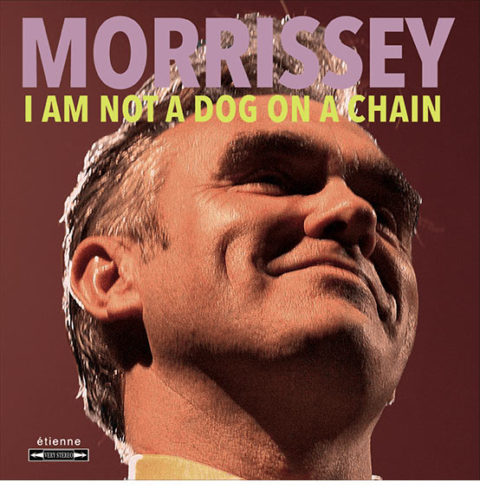
Morrissey will release a new album, “I Am Not A Dog On A Chain”, in March.
His 13th studio long-player follows last year’s covers album California Son and like that record I Am Not A Dog On A Chain has been produced by Joe Chicarelli.
The producer describes the forthcoming album as “his boldest and most adventurous album yet. He has pushed the boundaries yet again – both musically and lyrically”. Chicarelli has now produced the last four Morrissey albums, beating the three album run of Steve Lillywhite in the 1990s when he worked on Vauxhall and I, Southpaw Grammar and Maladjusted.
via BMG Records. The official audio for ‘Bobby, Don’t You Think They Know?’ by Morrissey, taken from the new album ‘I Am Not A Dog on a Chain’ out 20th March.
Frances Quinlan has among one of the most instantly recognizable voices in indie rock. As the lead singer of Philadelphia band Hop Along, she’s been at the front of two of this decade’s best rock albums, 2014’s Painted Shut, and 2018’s Bark Your Head Off, Dog, one of our favorite albums of that year. Her voice is a raspy force that touches on everything from punk to freak-folk. Hop Along originally began as Quinlan’s solo project, but now she’s releasing her first-ever solo album under her own name. The first single, “Rare Thing,” is a real stunner and surely a harbinger of things to come. Quinlan recorded the album with her Hop Along bandmate Joe Reinhart, who encouraged her to explore new sounds, at The Headroom studio in Philly. “Working with Joe on this made me able to better see that the guitar is just one vehicle … there are so many others to explore,” Quinlan said in a statement.
Frances Quinlan – Rare Thing from the album Likewise out January 31st, 2020
Frances Quinlan: vocals, synthesizer in verses, Rhodes, tambourine Joe Reinhart: electric guitar, synthesizer in choruses, synthetic percussion arrangements, drums up until 1:44Tyler Long: bass guitar Mark Quinlan: Drums after 1:44 (as well as additions to 1st chorus) Mary Lattimore: harp
Frances Quinlan – Now That I’m Back from the album Likewise out January 31st, 2020
Frances Quinlan: vocals, electric and acoustic guitar, synthesizer (with friendly addition from Mark in 2nd verse) Joe Reinhart: Rhodes, synthetic bass