Indie pop darlings Sylvan Esso have revealed they will drop their third album “Free Love” on September. 25th. Sylvan Esso is Amelia Randall Meath and Nick Sanborn. What started out in LA with Jon Hill and was finished back in North Carolina at Sylvan Esso’s home studio, Free Love asks major questions about self-image, self-righteousness, friendship, romance, and environmental calamity with enough warmth, playfulness, and magnetism to make you consider an alternate reality. These are Sylvan Esso’s most nuanced and undeniable songs—bold enough to say how they feel, big enough to make you join in that feeling.
“It’s a record about being increasingly terrified of the world around you and looking inward to remember all the times when loving other people seemed so easy, so that you can find your way back to that place,” the duo explained of the new LP in a press statement. This week, electronic duo Sylvan Esso announced their third studio album Free Love, out September. 25th via Loma Vista Recordings. Lead single “Ferris Wheel” is lush and bouncy—with synths keeping the song at a fun pace.
To give fans a taste of what to come, Sylvan Esso shared the lead single “Ferris Wheel” with the heat-wave appropriate opening lines, “August in the heat/ Sweaty in the street.”
Fans of the Throwing Muses have found themselves having to wait quite a bit longer for the trio’s new pandemic-delayed album “Sun Racket”, but they at least were are now rewarded with another new track off the album, the grinding rocker “Bo Diddley Bridge.”
Fire Records have delayed the release of the first new Throwing Muses album in seven years because of record industry complications due to the coronavirus. The 10-song album, will be the band’s 10th record overall, It had been due out May 22nd but now is scheduled to be released September 4th.
The band’s — singer/guitarist Kristin Hersh, drummer David Narcizo and bassist Bernard Georges — were in the studio last year when they played their first shows in five years, a handful of concerts and a slot handpicked by Robert Smith at The Cure’s Pasadena Daydream Festival outside the Rose Bowl.
“My little boy, Bo, used to fish off Bo Diddley Bridge down the street before it collapsed, around the time our life collapsed. But we lived; we swam in a life sunshine somehow. And both bridges — the Bo Diddley one and the life one — were rebuilt around us.”
“Bo Diddley Bridge.” available through Fire Records
Features the band’s last live performance, held at UCLA’s Pavley Pavilion in Los Angeles
– Includes the entire KSCR-FM radio broadcast
– 32pp hand-numbered hardback book with 10” black LP
– Full colour A3 poster
– Professionally re-mastered with background liners and many rare and unseen photographs.
Blind Faith, live from UCLA’s Pavley Pavilion, Los Angeles on August 26th 1969.
The short-lived Blind Faith were running out of steam by August 1969, weighed down by expectations and a gruelling US tour they were ill-prepared for. This remarkable performance at UCLA’sPavley Pavilion, LA on the 26th August, was one of their last gigs, and finds them in superb form on a variety of material including a remarkable rendition of Crossroads (finding Eric Clapton on especially outstanding form).
Remastered original KSCR-FM radio broadcast, presented here in its entirety,
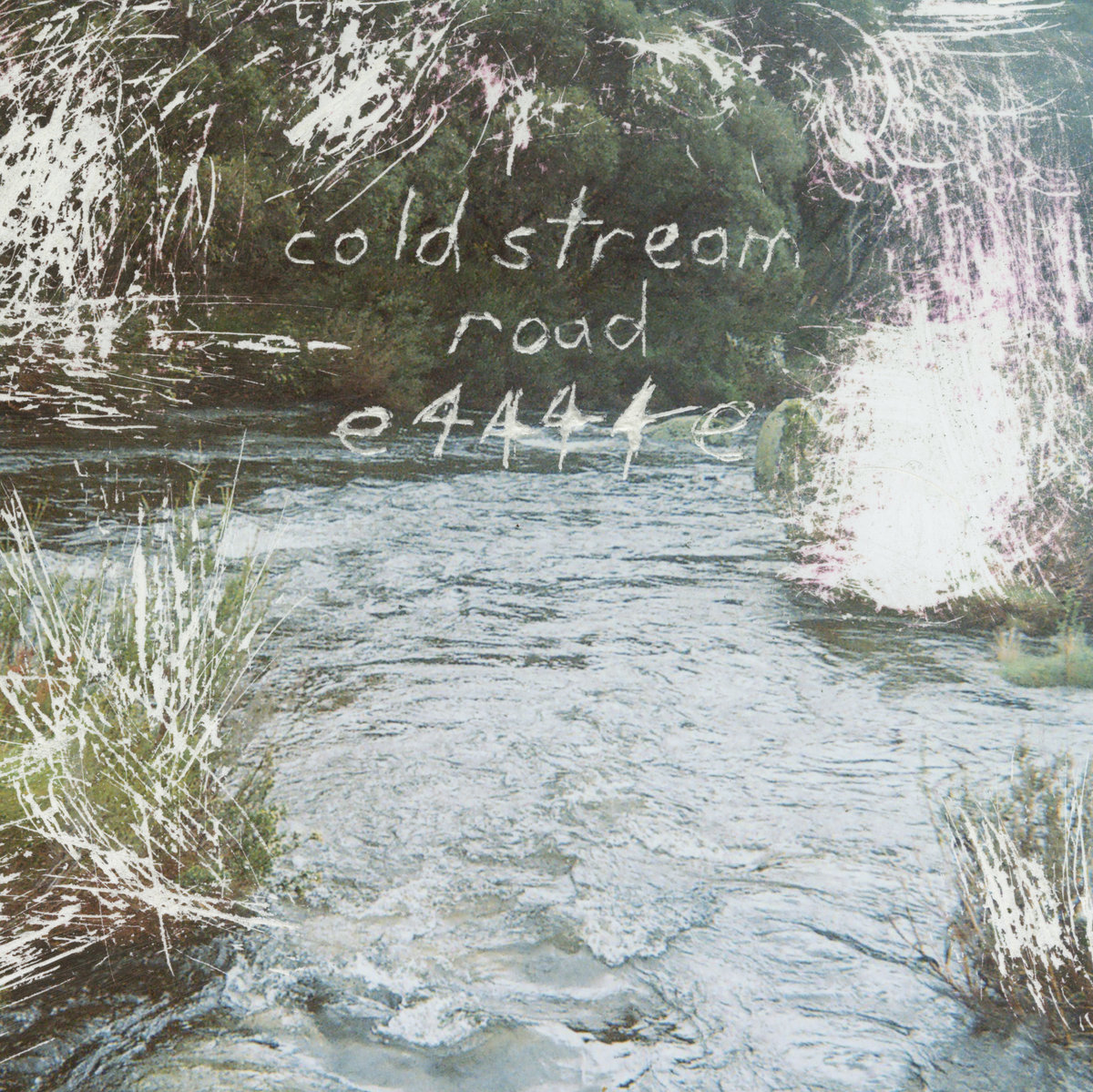
e4444e has just released his long-awaited debut album, “Coldstream Road” Written, performed and produced entirely by the 22-year-old Australian from Newcastle artist Romy Church, “Coldstream Road” is a stunning showcase of the artist’s refined grasp of melodic, affecting songwriting. The 48-minute sojourn that is Coldstream Road snakes its way through cyclic chord changes and bucolic melodies to invoke a world that is both elemental and full of curiosity. “It’s the sound of me relating to instruments, to melodies, to lyrics. It has a very natural, earthy, wet green feeling to me,” says Church.
With his electro-acoustic musings – influenced by Pavement, Buck Meek and Michael Hurley and previously compared to the likes of (Sandy) Alex G and Animal Collective – e4444ecreates a soundscape that is as celestial as it is grounded in the earth. On Coldstream Road, Church casts aside his samplers and drum machines in favour of acoustic instruments like guitar, piano and drum kits. As writer, performer and producer, opting for a simpler and more traditional approach provided him with an avenue to sound more exciting and unique than ever.
And yet Coldstream Road almost never came to fruition. After having finished most of the tracking and mixing, the hard-drive containing the album’s project files was left on the roof of Church’s car before driving into the night. Along with his phone and wallet, the hard-drive was found a few days later, smashed to pieces by the side of the road. Everything was lost save from the bare acoustic and vocal takes. Rather than wallowing in loss, Church was spurred into action and re-recorded the majority of the album at home in just four days. “I was working pretty much as soon as I got up till about six in the afternoon.”
Channelling Jack Kerouac, a-la his mythical three-week writing binge for On the Road, Church set to re-creating the album with a dogged determination and Zen-like calm. “It didn’t feel rushed, I just knew exactly what I wanted to do and did it. I think it kind of needed to happen. It made the album what I wanted it to be, just me letting the songs dress themselves.”
Coldstream Road, Romy’s debut album. Released in mid-June, it’s a spiralling fifty minutes of transcendent song-writing and forward-thinking creativeness; an adventure through highs and lows – mountains and valleys – that pluck the beauty out of avant-garde minimalism and amplify them ten-fold. It’s something accomplished to the degree you’d expect from someone like Nicholas Jaar – a mastermind of a more electronic-rooted sound – but e4444e, despite being a Newcastle-based musician only just releasing his debut album, is ready to give it a shot.
In many ways, Coldstream Road was a long time coming. It’s less the follow-up to his 2018 EP Mr Dover and The Endless Rovers– which almost feels like an album in itself – but an extension of it, taking the foundations of the past record and pushing it further. “I almost wish I made Mr Doverlonger and built it into an album,” Romy admits, spending 20 minutes on the phone after running off to a Newcastle record store to drop prints of the album, before returning to a nearby pub to soundcheck for a socially-distanced launch. “I had a lot of ideas and I knew what I needed to build the album in a sense, but didn’t do it until this time around.”
Such dedication to his craft has seen the young artist self-release 4 x EPs and a handful of well-received singles, cut his teeth supporting acts like Jens Lekman, GUM, Body Type and Hatchie and garner a loyal following.
Sydney band The Buoys have one last little treat for fans before the release of their new EP All This Talking Gets Us Nowhere, on July 10th. The band have now shared some brand new visuals for their latest single ‘Linda’, which is an anthem for anyone who has ever had a gutful of their boss.
The Buoys deliver no-frills rock with ‘Linda’, pairing relatable songwriting with powerful, blistering guitars and thundering drums to get straight down to business. They aren’t messing around, and they have no time for your bullshit. Keeping things simple dressed entirely in white with a sparse background, the band do what they do best in this clip and simply perform the hell out of their song. Letting their music do the talking for them, they hold nothing back and just let ‘er rip, allowing the viewer to experience all that The Buoys have to offer. Considering they were nominated for Best Live Act at this year’s FBi SMAC Awards, they certainly live up to this hype here.
Speaking about the single, Zoe Catterall (guitar and vocals) said of the song, “Linda is for anyone who’s had a shit boss. After being yelled at and begrudgingly working somewhere just so I could afford rent, I wrote Linda and quit.” All This Talking Gets Us Nowhere is the second EP from The Buoys, following 2017’s self-released Soft Boy.
In making the EP, Zoe stresses the importance of working with a diverse crew of people. “There are so many talented women/non-binary/trans people in the arts and we really wanted to do our best to showcase this,” she says. “We recorded the body of work with Antonia Gauci, a music mastermind, and continue to work with an amazing photographer April Josie who even pieces together the clip for ‘WAH’. Speaking of clips we‘ve worked extensively with Director Clover Ryan who always puts together a diverse team, she worked on ‘Inside Outside’ and ‘Gold’. The glue that keeps it all together is our amazing manager Nat Day.”
The four piece have gone from strength to strength lately, with pre-COVID support slots for the likes of Violent Soho and Rolling Blackouts Coastal Fever, as well as sets at Farmer & The Owl and Grampians Festival. Now, with All This Talking Gets Us Nowhere about to be released into the world, the band are making waves for all the right reasons and we cannot get enough. Let’s hear it for The Buoys!
“All This Talk Is Getting Us Nowhere” is out July 10th Released Through Spunk Records.
Grabbing guitars this time around, although “The Fight” sees The Overcoats with a slightly rockier and grittier sound, its anchor is still the amazing harmonies that Hana Elion and JJ Mitchell produce. The album is a battle cry; a rallying call as the band forged a new identity. Released at the start of March, it’s almost like they released the perfect album to get us through this pandemic without even knowing it.
Tempering punk energy with vulnerable vitality and irresistible catchiness, The Fight is a ten-song battle-cry. It’s the kind of record that might inspire you to quit your job, run a marathon, divorce your husband, change your life in the way you always wanted to, but needed an extra push for. The Fight is the push. “The idea you have to fight for who you are, what you want, and what you hope to see in the world became poignant for us,” says Overcoats. “We realized the thing to do is not to wait for life to get easier, but to start fighting harder.”
Case in point – the soaring Fire & Fury thanks to its ascending refrain, “We’ll get through it.” If that doesn’t give you the motivation to get through whatever it may be, you’re ice cold. New album The Fight, released March 6th, 2020 Loma Vista Recordings
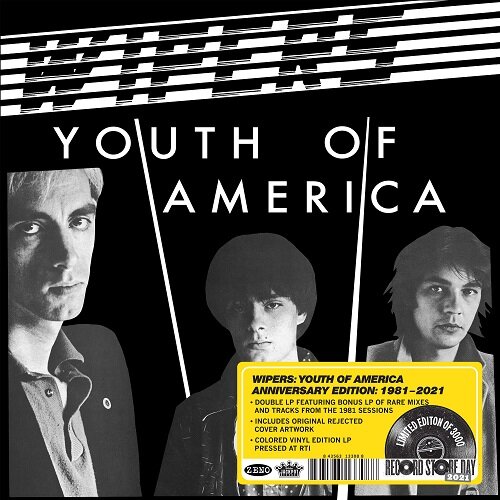
To mark the 40th anniversary of Wipers’ second album, “Youth of America”, the group has put together a commemorative vinyl reissue with Jackpot Records that features several previously unreleased tracks.
When Greg Sage roars “it’s no fair” midway through Youth of America, the vowels long and colicky, it’s not exactly a noble moment. Complaining about unfairness rarely is, because even if it’s accurate, it’s still a badge of comfort. “No fair” are petulant words, stagnant words, the conclusion of people who have set up camp in their perceived burdens. “No fair” is not a phrase of a revolution, because fairness is built on shifting sands; it’s not as steely a protest as “unjust” or “wrong.” And the people to whom life truly has been cruellest don’t have the time to complain about it; they’re too busy trying to out manoeuver the system that failed them. Now that’s not fair.
When Portland’s Wipers released their second album in May 1981, the shadow of Reagan’s conservatism was only beginning to spread. But the writing was on the wall: He’d spent his first 100 days shoving through so many revisions to tax policy and restrictions on federal power, he was accused of effectively squashing the concept of an activist government full stop. The sense of selfishness was demoralizing. An anticipatory static filled the air; the spectre of “no future,” that familiar credo of punk, wore a Windsor knot.
By this time, also, the “youth” in question had already heard plenty of punk—enough for its most stinging, mutinous qualities to have calcified into a formula. Punk, while still radical in its political messaging, was moving decisively in one direction: shorter, faster. Not everyone was pushing out 21 songs in 35 minutes, like the overachievers in Wire, but bands were doggedly dispatching songs quicker than the punk class before them; this included Wipers’ 1980 debut, “Is This Real?”, which followed all the spiny punk tropes and, upon release, sank without a ripple. Down in Los Angeles, a movement was brewing around Black Flag, who were about to shift the median with their debut album, Damaged, and its songs barely over the 3-minute mark.
It didn’t take a Rimbaud scholar to see that gloomy, 10-minute, Krautrock-inspired songs would be a tough sell in the early-’80s punk economy. But Sage, a scientific-minded contrarian—he’d started building recording equipment and playing guitar in the third grade after seeing a movie about Thomas Edison—tested his hypothesis anyway. And on “Youth of America”, The Wipers all but acknowledge the absurdity of their approach. You hear every roll of the dice, and the slight inhale of disbelief after they land; it builds the train while it’s already in motion, laying each link of track just before derailment.
Punk had never quite shown its seams like this before, its questioning of itself and its construction; it had never felt like such a righteous search for answers that was more concerned with asking the questions. The simultaneously thriving post-punk and no wave scenes had also taken mallets to the conventions of punk, but they’d had no problem casting aside the politics and guitars, as well. In Youth of America’s six grim, unhurried songs, Sage is weighed by his own dilemmas and asks them overtly: How can he change? What of this world is worth saving, and what possible advice can be wrung from that stone for the next generation? What can be said of this violent country as it enters a new era of turning that contempt inward? Why did he take on this role, anyway, and when will he finally cross the rubicon where his listeners need to save themselves by rebelling against him, already a geriatric punk at 29 years old?
Mirroring Sage’s outlier status: Portland itself. Far removed from the switchboards of American punk—New York, D.C., L.A.—the Pacific Northwest wouldn’t become a rock destination for another decade. Until a Wipers superfan named Kurt Cobain threw a baby into a swimming pool (and copied Sage’s penchant for flannel), the scene was off the grid; it was filled with D.I.Y. savants like Sage who disdained conformity and showed it with clever, cutting music they had no intention to scale. (When the Seattle scene exploded in the early ’90s, and A&R execs descended on seemingly every band in a 200-mile radius, Sage still refused to follow the “grunge” slipstream, famously turning down an opening tour slot for Nirvana.) It was truly a place of creativity for purpose, not product.
To understand “Youth of America”, it’s best to start at the conclusion. “When It’s Over”—a clear mission statement on the album across six minutes—is, in many ways, the most insurrectionist track on the album: It opens with over three minutes of an anxious, abrasive instrumental. Sage’s guitar wields full narrative reign—his chords open brashly, in the type of rapid churn that Buzzcocks and Stiff Little Fingers mastered. But then, in a surprising upheaval, he adds longer, musing tones that challenge the air over Dave Koupal’s bass and Brad Naish’s drums; soon the guitar has its own wandering spirit, its own melodic refrain, building its power in a direct nod to motorik momentum. The instrument is a clearly defined character, demanding its own experience.
Minutes into “When It’s Over,” when the guitar cedes to Sage’s voice, the transition is abrupt enough to almost feel bashful, a second-guessing of the kind of ego that allowed that irreverent open; piano supports his low, Bauhaus-worthy gothic grumble, so deep the ear must strain to make out his laments. “In the land of dreams, I find myself sober/Wonder when it’ll all be over,” he moans. When the guitar skitters back in, it’s at first noisy yet deferential to the words, clanging back on its first motif with tinny, sinister restraint; it feels like a dramatic battle between instrument and vocalist, a battle for the soul of the track—and perhaps the listener’s, too. The stakes rise and never resolve; Naish adds a clawing, claustrophobic pulse. The guitar ultimately regains its full audacity—mirroring Sage’s voice while it also gains intensity, screaming, “Will you be laughing when it’s over?”—and the song ends on its miserable questions, asked at a fever pitch. .
His words on the comparatively poppy “Taking Too Long” offer more of a quiet, paternal disappointment than a scolding. “What was coming from the sky?” Sage demands. Missile or omen, the result is immutable: “You never, ever change your mind.” It’s almost graceful at times in its sour melody, a pinch of sugar dissolving into acid.
Sage seems to acknowledge this on “Pushing the Extreme,” which has a taunting, declaratory quality absent from much of Youth of America. It’s macabre in a slightly cartoonish way, and makes its most obvious overtures to fully igniting a class war. “Through your mirror there is such vanity/Through the light, it broke to me,” Sage sings, scolding some Patrick Bateman wannabe over ghostly percussive mixing that shoots cymbals around like shrapnel. The sentiment is mirrored with even more gothic intonation in the unapologetically bratty “No Fair,” in which Sage mutters at the rising ruling class—“Take a piece of our lives, didn’t think we’d care?”—over Koupal’s bleeding basslines. In 1981,
In Youth of America’s title track, Sage yells to a generation, his voice raw and unaltered, “The walls are coming down/The walls are crumbling down on you.” It’s somehow simultaneously modest and hubristic to suggest his most useful role is at a lectern, that he is the one who must awaken that fury in others. Amid the deep, convulsing distortion of bass and guitar, he adds a stark political science lesson: “They attack you from the right side/Down the left side.” But that distance quickly collapses: “It is time we rectify this now/ We’ve got to heal it now.”
Sage stomps back to the mic to intone more civics: “The rich get richer and the poorer get poorer. Now there’s no place to go,” he mutters dourly. The track’s remaining five minutes are an inversion of the kraut- and psych-rock leanings from earlier in the record, when repetition bred power. “Youth of America” defends every moment of its 10 minutes and 27 seconds, maintaining its fearsome intensity and leaving an ominous chill in its wake.
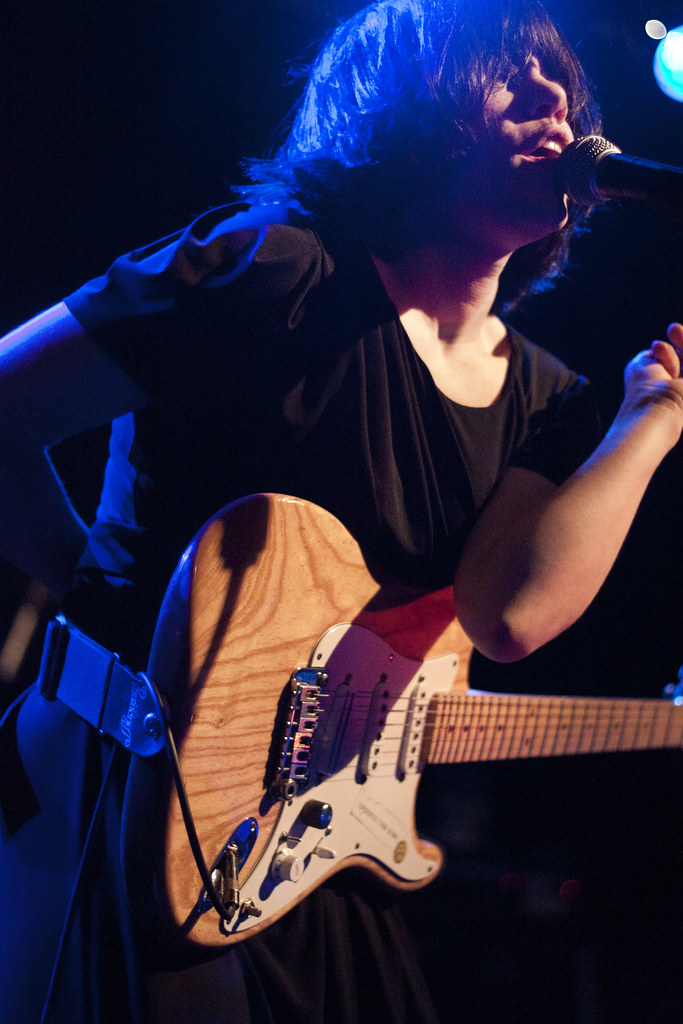
Last month, Don Giovanni Records announced that for the first time ever, we’d be issuing a vinyl release of the 2013 long out of print cassette-only recording “Chalk Tape” by Screaming Females. This one-time vinyl pressing would only be made available to order for the limited period of one month. After this Sunday July 26th, the pre-order period will be over, and the vinyl will no longer be available.
Initially released in a limited run of just 100 cassette copies, “Chalk Tape” was available and sold at only one show (at which it sold out immediately) in 2013, which was the first show back for the band after a six-month hiatus from touring and performing. It has not been available in any physical format since then. Pitchfork called the EP “some of the hookiest, most melodic songs Screaming Females have ever recorded” in their original review of the EP.
The EP’s genesis came after an extended period of touring inactivity while guitarist/vocalist Marissa Paternoster was recovering from a severe illness. The band worked on the seven songs that would make up Chalk Tape as a writing and collaboration exercise to keep creative energy fresh, following up 2012’s Steve Albini produced 2xLP Ugly.
Chalk Tape has existed outside the official canon of Screaming Females’ catalogue since its release, though it is a unique document of a band concurrently writing, recording, and performing in real-time and capturing of their songs as they were being created.
This vinyl run of Chalk Tape is exclusively available for a limited pre-order, and in the spirit of the EP’s initial limited release, will only be available via this pre-order until Sunday July 26th. Vinyl pressing time is unpredictable these days but these are projected to ship in late October/early November.
Screaming Females is a three piece rock band from New Brunswick, New Jersey. We have been writing, recording, and touringwith one another for 13 years.
In his demos collection, Graham Nash opens with a stripped-down “Marrakesh Express,” recorded in his London apartment in the fall of 1968, and this is just one sample on a disc comprised mostly of never-before-released material which will be available on Graham Nash’s’ ‘Over The Years…The Demos’
The set was previously available on the second disc of the ‘Over the Years’ and will now be available on a 180g heavy weight vinyl. Featured demos include “Teach Your Children”, “Chicago”, and “Marrakesh Express”.
A good number of the demos included on Graham Nash’s upcoming compilation Over The Years... demonstrate just how much was done on their journey to finished tracks — whether for himself, for Crosby, Stills & Nash or for Crosby, Stills, Nash & Young. But the solo piano version of CSNY’s “Our House,” recorded in San Francisco during 1969, is one for which Nash was right on the money from the get-go.
“I had a definite idea of what form the song would take, and what we did was do our version of my arrangement,” Nash says, “When we made the record of ‘Our House,’ Stephen talked about a guitar solo, but it didn’t feel like a guitar solo song, and that’s how we ended up singing ‘la, la, lalalala…’ and like that, like a sing-song.”
Nash adds that the key to any demo was not so much how he felt about a particular song but rather how those he’d be recording it with reacted. “I knew it was a song that would interest my partners,” he recalls. “We had what we laughingly refer to as The Reality Rule, which is this — if I sit down and play you a song and you don’t react, you’ll probably never hear that song again. But if I play a song to David (Crosby) and Stephen (Stills) and David knows what he’s already going to do in the chorus and Stephen’s thinking of a guitar intro, now we’re talking. So it’s only the songs that all three of us loved that got recorded.”
It was 1999 and Ryan Adams, the man who formed alt.country pioneers Whiskeytown and led them for close to five years through series of beloved live shows and three studio albums – the last of which, Pneumonia, was only just in the can – was ready to move on. Having already jettisoned his first musical incarnation, The Patty Duke Syndrome (a short-lived punk outfit formed just outside of his hometown, Jacksonville, North Carolina), it was time for him to go solo and leave another band, another persona behind.
Since their much-lauded second album, Strangers Almanac, Whiskeytown had become the torch-bearers for the new breed of alt.country. It’s not difficult to imagine a young Sturgill Simpson nodding along to the slow rambles and dreaming lyricism of its frontman.
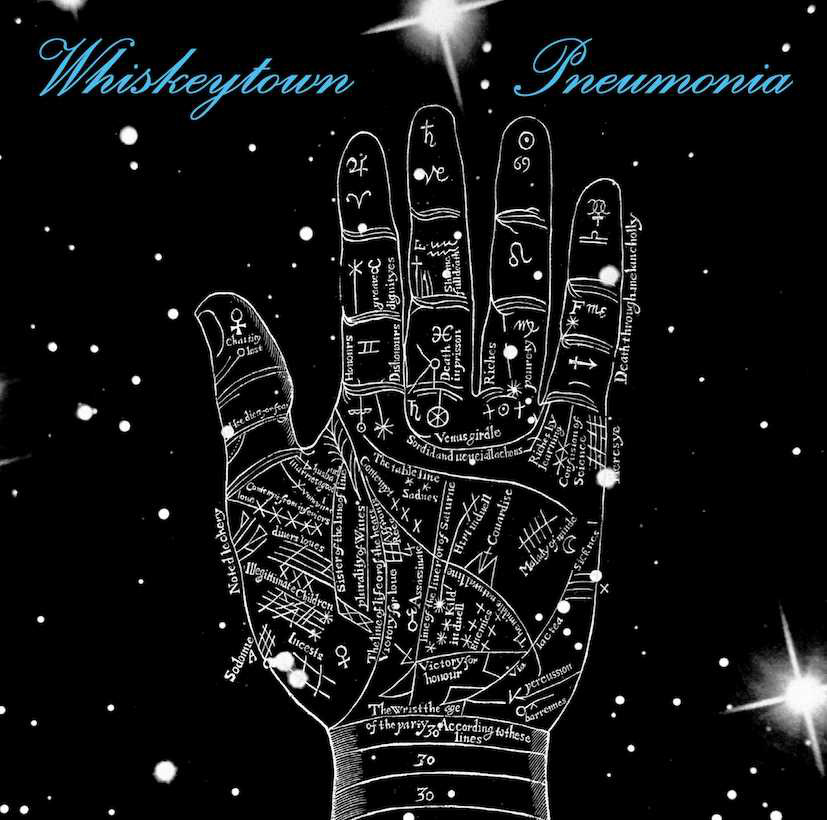
But it would be on their final, “lost” album, Pneumonia, that Adams finally stopped limiting himself to people’s perceptions of what Whiskeytown should be, and followed his own intuitions and influences.
Pneumonia was borne amid of a series of record industry mergers and a tumultuous tour in support of Strangers Almanac, during which the band cycled through line-ups, with just Adams and violinist Caitlin Cary as its constants. With the record being shelved for two years, Adams and company had amassed a great number of tracks to choose from, resulting in a folk- and country-influenced pop/rock creation that refused to be pigeonholed. At the time, fans of Whiskeytown were surprised by this musical departure, but it when it came to their shape-shifting frontman, Pneumonia would serve as a harbinger to Ryan Adams’ future solo efforts.
Adams had always insisted he never wanted to be the “frontman” of Whiskeytown, thinking of it as more of a collective that shared the spotlight and song-writing duties. But on Pneumonia, the prolific songwriter took the lead. When it came to developing the sound, however, it would be producer Ethan Johns (son of legendary producer/engineer Glyn Johns) who would take the reins. Their creative collaboration would continue on Adams’ solo debut, Heartbreaker, and subsequent albums.
Pneumonia is an open and honest album about loss and moving on from what pains you. Adams has described it as “the euphoria you get when you’re sick”, and there’s certainly a bittersweet sense to proceedings. The album opens with a lover’s farewell, ‘The Ballad Of Carol Lynn’, a song of strained appreciation for a troubled soul who’s too much for the singer to deal with any longer. It’s one of seven songs written with multi-instrumentalist Mike Daly and features Adams’ passionate vocals over a simple piano arrangement and harmonic interludes.
The following track, ‘Don’t Wanna Know Why’, is more upbeat rhythmically, but still stuck in the mud of a difficult parting of ways. The lyrics “Breathe in, breathe out” signify an attempt at the patience a lover seeks to find while in the middle of reconciling the end of something.
On ‘Jacksonville Skyline’, Adams goes into storyteller mode, recalling a small-town tale that feels like a homesick ode to his childhood home. At first the song seems like a simple vignette about day-to-day life in the south, but through the lens of Pneumonia as a whole, it takes on another meaning. Is its narrator longing for more simple days before the complications that clearly burden him, overwhelmed him? Over a decade after its recording, the song continued to resonate with Adams, who performed solo versions of it on his stunning solo 2011 acoustic tour, collected on the 15LP box set Live After Deaf.
The next four entries play like stages of a dissolving of a relationship. Even the song titles refer to those tense conversations one must have to explain, comfort, blame and finally accept. ‘Reasons To Lie’, ‘Don’t Be Sad’, ‘Sit And Listen To The Rain’ and ‘Under Your Breath’ are the heavy lifting of the sorrow this album dramatises.
‘Mirror, Mirror’ is the first hopeful song on the album. Almost out of place with its jaunty horn section and cheery backing vocals, it has more in common with a Ben Folds Five cut than anything anyone had heard from Whiskeytown. Nonetheless, upon re-examination, it feels fuelled by the freedom of a recently emancipated person who’s ready for what life has in store. ‘Paper Moon’, meanwhile, evokes a warm evening under the stars. Featuring orchestral arrangements by Glyn Johns, it lifts you up and carries you down cobblestone streets with its lilting melody and mandolins.
By the time the languid and sultry ‘What The Devil Wanted’ hits you, it’s clear we are now in the soft embrace of a new relationship. The past is gone and a new romance has blossomed. “All my time is wasteful now,” is not just a lyric, it’s a belief system for the man singing it. While most of Pneumonia takes on a first-person point of view, it’s not without some wonderful harmonising between Adams and Cary, especially on the penultimate track, ‘Easy Hearts’.
For a band remembered as alt.country pioneers, Pneumonia is full of welcome experimentation, each track bearing its own sonic feeling and diverse vocal delivery while still telling a cohesive story. It comes to a close with ‘Bar Lights’ and the hidden track, ‘To Be Evil’, an imperfect recording that ends with Adams laughing at his own mistakes. It’s as close to Springsteen as there Pneumonia gets, and – whether consciously or unconsciously – if Adams is leaning on The Boss here, it doesn’t matter. The results are a fitting farewell for a band that many would have liked to have seen stick around.