With “McCartney III,” the Ex-Beatle makes a spectacular return to form, produces one of his most compelling albums in decades, and reminds us that at age 78, his musical chops are as exquisite and profound as virtually anyone’s. Ever.
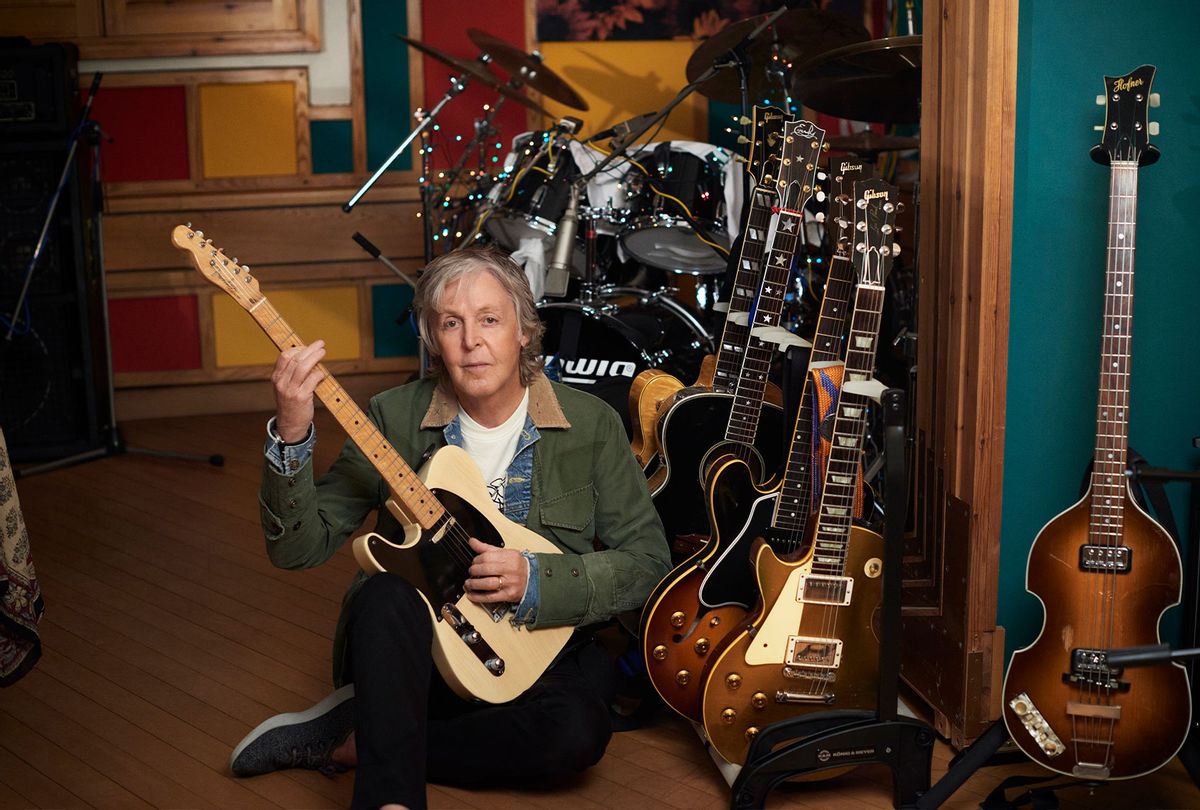
Working at his Sussex studio, Paul McCartney recorded nearly the entirety of “McCartney III” during the pandemic. A one-man band production in the spirit of his eponymous debut solo album in 1970, “McCartney III” arrives more than 40 years after the release of its predecessor, “McCartney II,” in 1980. That summer, the album topped the UK charts and yielded a chart-topping single Stateside in “Coming Up.”
In its own fashion, “McCartney III” functions as the logical extension of its precursors, each acting as lodestones of sorts for signal moments across his long career. As with the first two LPs, McCartney took a carefree, homespun approach to his efforts, allowing his imagination to guide the way. As he remarked in the album’s press notes about his process during its production, “Each day, I’d start recording with the instrument I wrote the song on and then gradually layer it all up; it was a lot of fun. It was about making music for yourself rather than making music that has to do a job. So, I just did stuff I fancied doing. I had no idea this would end up as an album.”
McCartney’s whimsical approach pays dividends from beginning to end, with the songwriter charting the emotional experience of not only surviving, but thriving in his eighth decade on earth. And he has the road miles to prove it. In many ways, McCartney himself is the “Long Tailed Winter Bird” who soars above the opening track, a spirited, largely instrumental number that is highlighted by one of the musician’s niftiest acoustic guitar licks in years.
In short order, McCartney rips off one musical confection after another, including Beatlesque pop ditties such as “Find My Way” and “Seize the Day.” And then there’s “Lavatory Lil,” a composition that, in a very different time and place, might have found a home in the Abbey Road medley nestled alongside “Mean Mr. Mustard” and “Polythene Pam.”
McCartney absolutely sizzles on such bone-crunching electric numbers as “Slidin'” and “Deep Down,” with hard-driving guitar licks that might find some listeners hearkening back to the “Band on the Run” track “Let Me Roll It.” Even still, his guitar work on “McCartney III” sounds equally fresh and urgent, as he wrestles with the endlessly fecund muse that has served him well since at least the mid-1950s, when he penned his first song as a paean for his mother Mary.
In the LP’s latter stages, McCartney offers up a pair of memorable acoustic tunes in “The Kiss of Venus” and “When Winter Comes.” He reportedly composed “The Kiss of Venus” after reading an astrological book about the balletic movements and synchronicity of the planets. It was “a fascinating book,” the songwriter recalled, about the ways in which our solar system structures itself as a “trippy” lotus shape.
Capitol Records will release “McCartney III” on digital platforms, CD and LP manufactured by Third Man Pressing on December 11th, 2020,
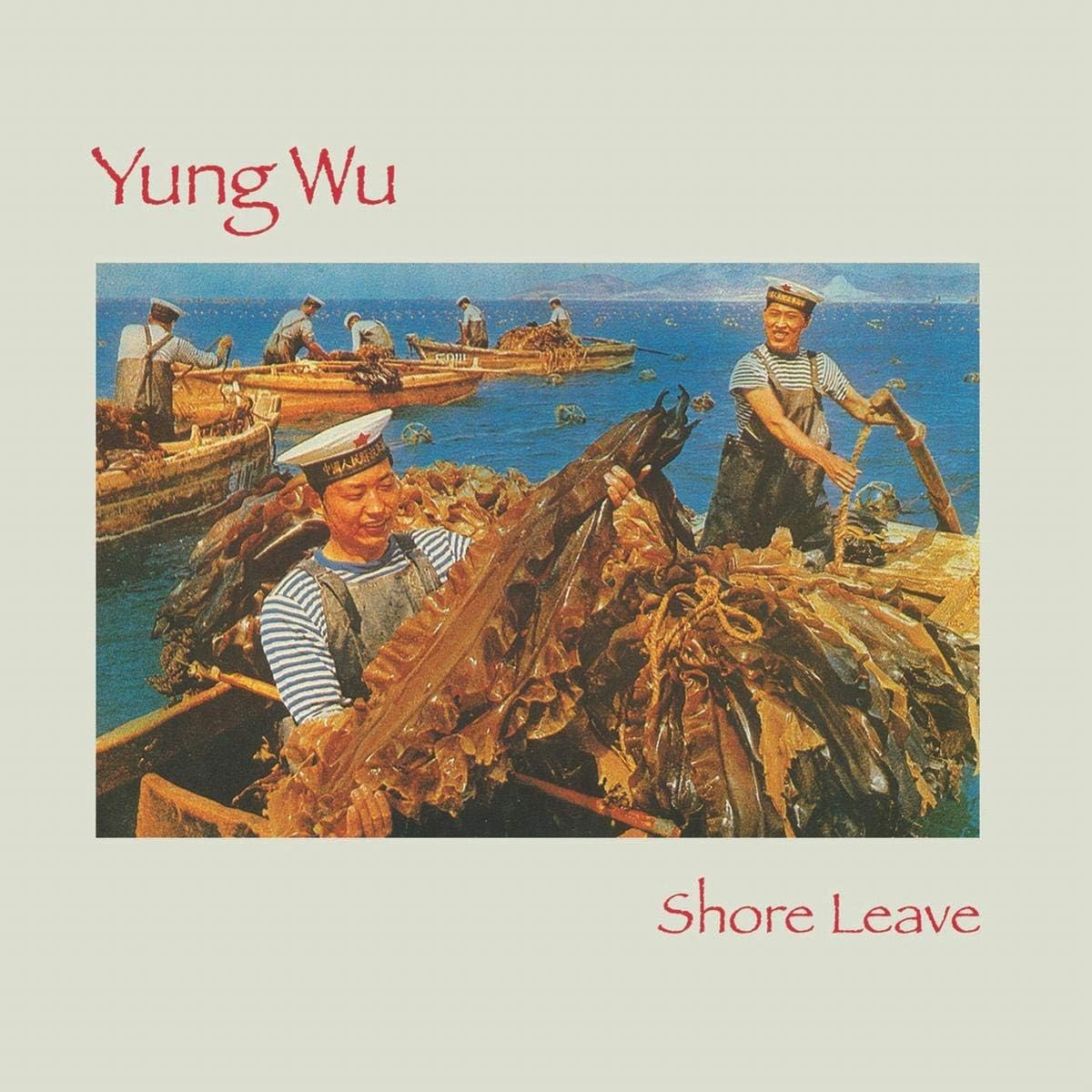
One of the most overlooked and underrated albums to emerge from the Feelies universe, side project Yung Wu’s “Shore Leave” ranks highly in the group’s oeuvre, at least the equal of and in some ways superior to the three albums the Feelies released under their own name between 1985 and 1991. Yung Wu was led by singer/songwriter Dave Weckerman, who had been the drummer in the Feelies’ first lineup before being replaced by Anton Fier. Backed by Glenn Mercer and Bill Million on guitars (they also produced the album), John Baumgartner on keyboards, Brenda Sauter on bass, and Stanley Demeski on drums, Weckerman finds a midway point between the mellow, twangy rootiness of contemporaneous Feelies records like Only Life and the more tightly wound jangle of 1980’s Crazy Rhythms. Resulting songs like the title track, “Spinning,” and the quietly tense “Return to Zion” are archetypal examples of the Hoboken sound that was a mainstay of late-’80s college radio.
The album’s three covers — Neil Young’s “Powderfinger,” the Rolling Stones’ “Child of the Moon,” and “Big Day,” a Brian Eno song that originally appeared on Phil Manzanera’s solo album Diamond Head — were proudly uncool by 1987 terms, which of course only makes them cooler. Shore Leave was largely ignored at the time, selling fewer than 5,000 copies all told, but it’s a minor classic of ’80s jangle pop ripe for rediscovery.
When you’ve made one perfect record, why make another? “Shore Leave”, originally released in 1987, is Yung Wu’s sole long-player (though a covers album has circulated privately). It’s a jangle rock gem, filled with sparkling song writing, infectious rhythms and hook-laden melodies. But even though the band’s discography is brief, you know the sound: Yung Wu is basically the Feelies with percussionist Dave Weckerman stepping into the frontman role (and keyboardist John Baumgartner contributing as well). But it’s much more than just a Feelies footnote; freshly reissued this year with stellar remastering, Shore Leave is a necessary listen.
Although never released on CD at the time (in 1987, a lot of indies were still sticking exclusively to vinyl and cassettes), Shore Leave is one of many classic out of print albums on the Twin/Tone and Coyote labels now available on custom-burned CDs through the Twin/Tone website.
Nation of Language returned to share a new song “A Different Kind Of Life,” the first new music since their debut album Introduction, Presence, which dropped earlier this year. “This song first started to come together in the early days of the Trump administration, but was never quite finished and got a bit lost as time went by,” says frontman Ian Devaney. “When the demo resurfaced during the pandemic, the song struck a chord not just in its intended political context but in the context of so many people losing family members, jobs, or any semblance of normality—whatever might be left of it after the past few years.”
Working Class Synth-Pop. Debut album Introduction Presence is out now in all formats. Nation of Language are also releasing an exclusive, translucent pressing of their debut album through Rough Trade Records,
released November 12th, 2020 Written by Nation of Language
Van’s third solo album, November 1970’s His Band and the Street Choir, will never be considered one of Van’s grand statements, but it holds its place as a necessary piece of the Van Morrison puzzle. And is cherished by many Van the Man fans, who should enjoy this remastered and expanded near gem.
The songs on Street Choir are relatively compact and seemingly quite well-adjusted. Any allusions to being a “stranger in this world” appear to have been quelled by the band who achieve a perfect groove. “Domino” so immediately announces its ease of execution that Van can’t help but glide over the backing band with a sense of freedom so contagious that every listener floats on its merry wave. This sense of camaraderie among the players – enforced by the album’s photos taken at a birthday party for Peter, the son of Van Morrison’s then-wife Janet Planet – enabled Van to nail down several songs that had previously eluded him, including “Domino,” that hailed from the Astral Weeks-era of November 1968, according to Cory Frye’s informative liner notes.
The album itself was meant to capitalize on Van’s current hot streak withMoondance, whose single “Come Running” peaked at #39. His manager, Mary Martin, convinced him to return to New York’s A&R Studios, only a month after that album’s release. Working with the stellar core group of guitarist John Plantania, saxophonist Jack Schroer, bassist John Klingberg and the addition of keyboardist Alan Hand, trumpeter/organist Keith Johnson, and tour drummer Dahaud Elias Shaar (aka Daoud Shaw and David Shaw). Van rehearsed in an old church in Woodstock, NY, before laying down the official tracks in the studio. Martin’s instincts proved correct, as the album’s first single, “Domino,” went to No#9, Van’s highest charting pop hit in the U.S., passing “Brown Eyed Girl” (#10) by a notch.
His Band and the Street Choir is another beautiful phase in the continuing development of one of the few originals left in rock. In his own mysterious way. Van Morrison continues to shake his head, strum his guitar and to sing his songs. He knows it’s too late to stop now and he quit trying to a long, long time ago. Meanwhile, the song he is singing keeps getting better and better.”- John Landau,
The Album also called “Street Choir” was the fourth solo album by Northern Irish singer-songwriter Van Morrison. It was released on 15th November 1970 by Warner Bros. Records. Originally titled “Virgo’s Fool” but was renamed by Warner Bros. without Morrison’s consent. Recording began in early 1970 with a demo session in a small church in Woodstock, New York. Morrison booked the A&R Studios on 46th Street in New York City in the second quarter of 1970 to produce two sessions of songs that were released on His Band and the Street Choir. Reviewers praised the music of both sessions for its free, relaxed sound, but the lyrics were considered to be simple compared with those of his previous work. Morrison had intended to record the album a cappella with only vocal backing by a vocal group he called the Street Choir, but the songs released on the album that included the choir also featured a backing band. Morrison was dissatisfied with additional vocalists to the original quintet that made up the choir,
Compared to the meditative beast that is Saint Dominic’s Preview (1972), with its twin 10-minute-plus epics, “Listen to the Lion” and “Almost Independence Day,” or the complete return-to-Ireland masterpiece that is Veedon Fleece (1974), Street Choir feels less ambitious. However, one should never discount Van’s handling of more succinct material. The Fats Domino homages are obvious (“Domino,” “Blue Money”) and slightly under the radar (“Give Me a Kiss”) and occasionally come across as workmanlike. But considering the Belfast fireplug’s impulsive phrasings and his behind-the-beat inclinations are always just an Irish Heartbeat away from creating an alternative Ulster R&B universe, it’s worth giving him his genre exercises. Besides, pianist Alan Hand works double-time to ensure everything rolls as it should.
Anyone versed in Van’s career knows he doesn’t stay in one place for long and no amount of Fats Domino love is going to contain him. Street Choir’s best moments –besides the ease of “Domino,” the Curtis Mayfield sweetness of “Gypsy Queen,” and the meditative acoustic revelry of “I’ll Be Your Lover, Too” – come from the full-band blast-off of “Call Me Up in Dreamland,” where all is pure locomotion with Van on tenor sax, “Virgo Clowns,” where loosely doubled vocals create a rare-but-effective moment of joy from the legendary crank, and the closing duo of “If I Ever Needed Someone” and “Street Choir,” where Van teases out a George Harrison sentiment to the breaking point and Keith Johnson’s organ takes the title track to the next astral plane.
Essentially, it’s A-minus Van Morrison, which is still light years beyond all but ‘A’ list artists like the Stones, Kinks, Dylan, Miles Davis, John Coltrane, Ornette Coleman, Thelonious Monk, Sonics and Stooges. The original album packed 12 songs with no room for the improvisational sidetracking that makes his A-plus discs impossible to beat. At the same time, the album came just eight months after its predecessor and 11 months before its followup, Tupelo Honey. It wasn’t like Springsteen or Paul Simon who took lifetimes between releases. Despite Van’s masterful reach, he’s never treated any of his work as so precious that it had to be shined a thousand ways before final release. If something isn’t working, he moves on to something else and saves the idea for another day. Van’s genius is rarely in the writing. As a lyricist, he’s often lazy and as a songwriter he rarely ventures beyond the usual chords. Though he’s done more with two chords than most musicians do with a full arsenal. Van’s genius is in the execution.
The bonus tracks – alternate takes of “Call Me Up in Dreamland,” “Give Me a Kiss” and “Gypsy Queen” and alternate ‘versions’ of “I’ve Been Working” and “I’ll Be Your Lover, Too” (distinctions between ’takes’ and ‘versions’ not apparent) – mostly offer unvarnished, simpler takes that since not chosen were not subjected to overdubs.
Regarding these bonuses, all are welcomed, though none shock the system. (Inexplicably, the seventeen-minute instrumental “Caledonia Soul Music” was eliminated from the final product.) The alternate version of “I’ve Been Working” is mildly quicker and looser with an extended sax solo in its mid-section. “I’ll Be Your Lover, Too,” the album’s most meditative and heartfelt cut, puts Van’s vocal right in your ear, without the mild studio reverb of the official track and with yet another superlative performance. “Gypsy Queen,” the first cousin to Moondance’s “Crazy Love,” begins with several false starts before aiming for – and landing in – the heavens. It’s another fine alternate take that illustrates how Van had these songs where he wanted them at this point and could at any moment out-sing just about anyone not named Stevie Wonder or Al Green.
Aarhus four-piece Yung have announced their second LP is due out on January 22 on vinyl and digitally via PNKSLM Recordings. The long-awaited follow-up to the post-punks’ 2016 debut, ‘A Youthful Dream’, is preceded by a visual for opening single ‘Above Water’.
Speaking about the track the band, led by Mikkel Holm Silkjær, say:
“For a long time we referred to this song as ‘The Yo La Tengo Song’. Finishing Above Water helped spark a curiosity towards a less obvious approach to songwriting. Originally, the song had a different ending but our friend and producer Neil R. Young swept in with a slick outro, which concluded the song in a big way. Lyrically, the song is an ode to individuals taking a stand against injustice and structures in society which oppose equality. These people often become the voice and the talisman of movements and generations, something that might come at a personal cost, but nonetheless something that makes way for dialog, discussions and hopefully positive change.”
Video by Tobias Holmbeck. Lead single from Yung’s second album Ongoing Dispute, due on January 22 2021 via PNKSLM Recordings on vinyl
Ali John Meredith-Lacey, better known under the moniker Novo Amor, is a Welsh multi-instrumentalist, singer, songwriter, sound designer and producer. The past three years have been a burst of creativity from Aberystwyth-born singer/songwriter Novo Amor (AKA Ali Lacey). In 2017, he dropped debut album ‘Heiress’ which first introduced us to his unique pop/folk infusion followed a year late by second record ‘Birthplace’ – and now he drops stunning third instalment ‘Cannot Be, Whatsoever’.
Bright yet contemplative, Lacey describes his latest LP as “a shift towards the light” across the ten tracks which he self-produced. The optimism shines through as he deeply reflects upon the most important moments in his life and their meaning. When Ali Lacey was 20 years old, he had his heart broken. “As clichéd as it sounds, I wrote love songs about the whole situation,” he recalls. “You’re in those formative years when everything just feels more emotionally charged. But looking back, I kind of cringe about the way I acted.” He grimaces. “I was writing the songs as soon as things happened and then I would send them to her. Argh, I wish I didn’t. The lyrics are just so obvious.
Novo Amor will be playing headline dates during Spring 2021 to show off his new material, Official video for ‘I Feel Better’ by Novo Amor Lifted from the album ‘Cannot Be, Whatsoever’, out now.
“Whether it’s the reminder that aloneness isn’t singular or a simplistic jolt of motivation that is far from cheesy, Novo Amor delivers an album with complexity and subtlety all at once. At a time when chaos and pain seem next to impossible to look away from, Novo Amor gently reminds us of all the possibilities and ways of being true.” – Clash
Quarter-Life Crisis is a collaboration between Ryan Hemsworth and various artists who’ve come to prominence over the past couple of years, many of whom got their start playing scrappy DIY shows. The self-titled debut EP released on December 4th, 2020 features contributions from Frances Quinlan (Hop Along), Meg Duffy (Hand Habits), Charlie Martin (Hovvdy), Yohuna, and Claud. It showcases Hemsworth in a new phase of his career, one that is perhaps a bit less indebted to the nightclub dance floor. “It’s always been a goal to mix, like, 25% electronic sounds and 75% live indie rock sounds,” he says. Collaboration is paramount to Hemsworth’s process, and though he produced all of the instrumentation on the album, he left the lyrics and intention of the song up to the contributors. The resulting collection shapeshifts from track-to-track, taking on new personalities as it moves between artists.
Quarter-Life Crisis, Ryan Hemsworth’s shared another new track from their self-titled EP: “Comfortable” featuring Meg Duffy of Hand Habits. Quarter-Life Crisis‘ debut EP also features collaborations with Frances Quinlan (Hop Along), Of the track Duffy said “When I was asked to do a writing session with Ryan, I had no idea who he was or what his music sounded like or what his life may be like. I completely showed up to this weird little studio completely blind to predisposition, a little embarrassed because the first time Ryan and I tried to connect I accidentally no-showed him after writing in the date on my analogue calendar wrong. I had never done any sort of co-writing session before and was a little nervous, but since I had no investment I went in with the intention of having fun and being open to whatever spirits wanted to move. We threw autotune on as a joke (half-joke because I can be pretty pitchy especially in the writing process) and it sounded kind of cool. I started thinking about AI and cyborgs and people/souls disassociating from bodies and identity and kind of just freestyled until a mildly understandable common theme started to swim up. It was really fun!!”
The collaboration is paramount to Hemsworth’s process, and though he produced all of the live instrumentation on the album, he left the lyrics and intention of the song up to the contributors. The resulting collection shape-shifts from track-to-track, taking on new personalities as it moves between artists. Quarter-Life Crisis announced the EP with “Postcard From Spain” feat. Frances Quinlan, which Stereogum, Paste and Under The Radar hailed as one of the best songs of the week upon its release. This was the followed by “Waterfall” feat. Charlie Martin of Hovvdy, which was highlighted by NPR, Under the Radar, and others.
The genesis of Ryan Hemsworth’s new project, Quarter-Life Crisis, can be traced all the way back to his childhood bedroom in Nova Scotia, where the producer spent the bulk of his high school years listening to emerging indie acts and playing guitar. Not loving the sound of his own voice and without a band, he eventually started making music on his laptop, which earned him accolades as he stepped out into electronic and club music scenes. His prolific output, paired with a voracious appetite for a wide range of genres and creation of his own label Secret Songs, has made Hemsworth a fixture since he released his debut solo album, Guilt Trips, in 2013.
But now, Hemsworth’s trying his hand at something unexpected that is nonetheless close to his heart and origin story as a musician. Quarter-Life Crisis is a collaboration with various artists who’ve come to prominence over the past couple of years, many of whom got their start playing scrappy DIY shows. “This project has me in the process of going back to when I was a kid when I’d sit down and play guitar for hours and come up with melodies and chords by just messing around,” Hemsworth says. “It’s something I’ve been wanting to do for ages. Quarter-Life Crisis is just another way for me to work with artists whose music I really enjoy and listen to all the time.”
Working with musicians who largely fall into the category of “indie” gave Hemsworth the opportunity to revisit some of the artists who inspired him to become a musician in the first place. He cites bands like the Cardigans, Grandaddy, Bright Eyes, and Sparklehorse as being foundational to his writing process this time around. Quarter-Life Crisis a sharp turn away from his last project, 2019’s CIRCUS CIRCUS, which he made alongside the Japanese rap duo Yurufuwa Gang, but for Hemsworth, working in a wide array of genres and modes keeps him on his toes, and ultimately, keeps his career interesting. “Getting out of my comfort zone and bringing others into that process has always led to something really unique,” Hemsworth says. “As a producer, I really respond to other people’s ideas and whatever they can bring to a song. Being in a room with someone with a different outlook, or working remotely with them, I hopefully help facilitate something that feels new and exciting for both of us.”
Quarter-Life Crisis – from the Quarter-Life Crisis EP out December 4th, 2020 on Saddle Creek Records.
The War on Drugs have announced The Super High Quality Podcast, premiering November 23rd, a few days after the release of their forthcoming live album. That’s not it, though—they’re also sharing a live cover of Warren Zevon’s “Accidentally Like a Martyr.”
This cover is the second single from the forthcoming live album, which is titled “Live Drugs”. It, according to the press release, collects “over 40 hard drives of recorded live shows.” That’s a lot of hard drives. The podcast will feature the band discussing those live performances and why they decided to make the live album. According to the announcement, “The Super High Quality Podcast” is a four-episode series, airing weekly beginning on the album’s release day. Throughout, guitar tech and band confidant Dominic East listens as the band talks casually about how they arrived at the performances and the decision to release their new live album.
“Live Drugs” is a collection culled from over 40 hard drives of recorded live shows spread out across years of touring behind multiple albums, according to the announcement — and anyone who’s seen the band live knows that someone heard an awful lot of soloing on those 40 hard drives. Sequenced to reflect how a typical 70-minute show would flow, it’s the first volume to capture the band’s live interpretations and a document showcasing the evolution of The War on Drugs’ live show over the years.
“Live Drugs” is not your typical live album. Rather than recording a board feed from a specific night at a specific venue in a specific city, this is a collection of live recordings from multiple live shows that the band feel best represents what they’ve done on stage. “Even though this recording is from a year of tours, this is really how these six guys evolved as a band from 2014 to 2019,” frontman Adam Granduciel says. In essence, even though these are all different recordings stitched and mastered into Live Drugs, the album is sequenced like how a live set would feel. And damn it if anything remotely resembling a real live concert ain’t exactly what we’re all craving right now. So if we can’t be at a live show just yet, we’ll gladly take the mind trip that Granduciel and company are so graciously handing us.
The group recently debuted a brand new single, “Ocean of Darkness,” on “The Tonight Show Starring Jimmy Fallon.” The song is the first release of any new material by the band since the release of 2017’s Grammy-winning “A Deeper Understanding,” and a taste of what they have been working on in the studio these last many months. “Ocean of Darkness” does not appear on “Live Drugs.”
“Live Drugs” arrives November 20 via Super High Quality Records.
Working Men’s Club release their highly anticipated self-titled debut record! Following the early October release of their excellent self-titled debut album, “Working Men’s Club” have today shared the video to the latest track to be taken from the album, “John Cooper Clarke”. Directed by Warmduscher frontman Clams Baker, Working Men’s Club share new video for ‘John Cooper Clarke’.
Taken from the band’s just-released self-titled debut album, the track is an homage to the Northern poet.
“I think John Cooper Clarke is a Northern icon,” says Sydney Minsky-Sargeant. “One of the last survivors of that era, going back into that period of time where he lived with Nico and lived in Hebden Bridge, which is down the road from me. He’s just a proper punk, and one of the last remaining punks there is. Now Andrew Weatherall’s dead, and people like that have fallen, he’s still going. He just does it how he wants to do it, and I think that’s quite admirable, as a creative.”
“My idea behind this video was to show three different generations and situations of celebrating with as little to do with JCC as possible and if I said anymore I’d be lying,” adds Baker. “I just wanted to make something fun in these hard times and visually tell all the screwballs to relax and keep your peckers up.”
“Britain’s most urgent new young band… Covid era’s first rave classic” – MOJO ★★★★ “Outstanding debut” – The Guardian ★★★★ “Completely unforgettable” – DORK ★★★★★ “Pulsating rave anthems on attention-demanding debut” – NME ★★★★★ “A scintillating debut” – Uncut 9/10Working Men’s Club overcome change to create a debut more than worth the wait.” – The Line of Best Fit 8/10Working Men’s Club are this unholy brew, this broad, immersive elixir.” – Clash
Working Men’s Club is the thrilling, energising, bracing sound of a reformed indie kid who side-lined the guitars and amped up the post-industrial synths, glacial beats and a bored-but-impassioned vocal style pitched somewhere between Ian Curtis and Mark E. Smith.” – The Face
“An explosive cocktail of emaciated rock with post-industrial ambiences, funk and electro beats designed for dark and feverish nights.”…”From this intense album we come out washed out but powerfully invigorated.” – Télérama 4 ffff
Upon its release in 2009, I Had The Blues But I Shook Them Loose cemented a barely-out-of-school Bombay Bicycle Club as key players in a thriving indie music scene; an unpredictable new act and a rapidly rising one, too. Its second single, ‘Always Like This’ is still an undeniable live favourite and has slotted seamlessly into their sets throughout those ten short years. If you’ve seen the band headline a festival or play one of their many notoriously-stellar live gigs, you’ll have seen first hand just how beautifully this track translates on to a live stage. We can’t wait to see similar ingenuity from the other eleven tracks that make up the album, and how the sometimes criminally underplayed tunes are brought rightly back into the limelight.
The album’s youthful vitality and thoughtful takes on life as an ’00s teenager have continued to enchant new audiences as the band’s career has flourished, and stayed with day one fans as they’ve grown up alongside the band. Therefore, I Had The Blues But I Shook Them Loose seems the perfect album to remind us once more of live gigs; of the shows we went to and sang along at not too many months ago.
The exciting news of the live album follows the release of the band’s fifth studio album, “Everything Else Has Gone Wrong” earlier this year. The album peaked at #4 on the UK album chart and garnered widespread acclaim from fans and critics alike. The release was due to be followed by an extensive European and North American headline tour and numerous festival headline appearances, which would undoubtedly have been brilliantly received and long-remembered. The new live album acts as a timely gift to their fans and a fine celebration of the power and togetherness of live music.
Speaking about the release, the band say, “This time last year – in the good old days when live music was possible – we played a handful of shows around the UK to celebrate the 10th anniversary of our debut album, ‘I Had The Blues But I Shook Them Loose.’ This tour finished on a Friday night at Brixton Academy in London, and we took the decision to record the show that evening.”
“This was a particularly special night for us in any case – seriously a show that we’ll all remember forever – and especially considering what’s happened since, we’re grateful we have a memory like this to keep us all going until live music can resume.”
I Had The Blues But I Shook Them Loose – Live At Brixton will be available digitally, on vinyl and CD and as a double LP, which includes the original studio album as well as the live recording.
The album was recorded on 8th November 2019 at the band’s sold out Brixton Academy show, celebrating the 10th anniversary of their debut album. It will be released on 11th December via Mmm… Records + Caroline International.







 The Fat Angel Sings