Posts Tagged ‘Warren Zevon’

Image result for warren zevon

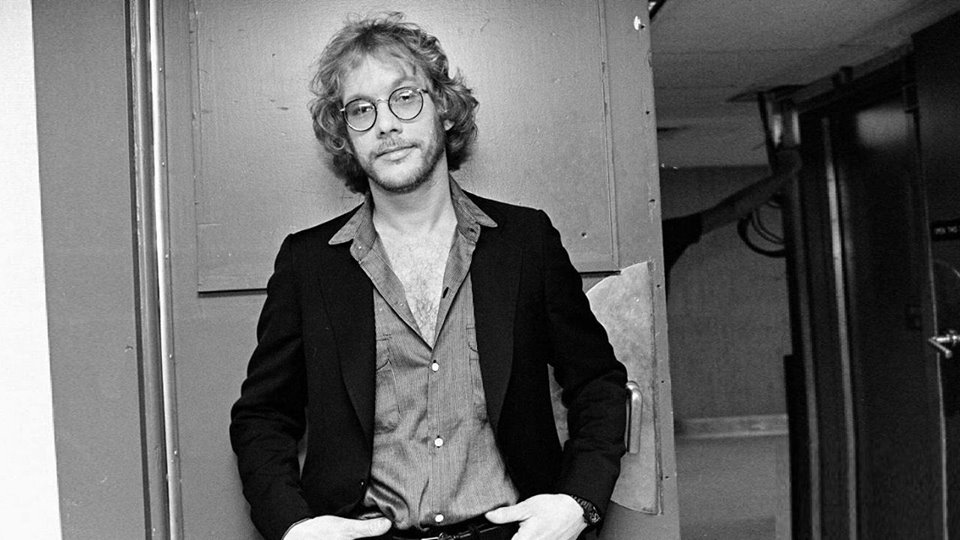
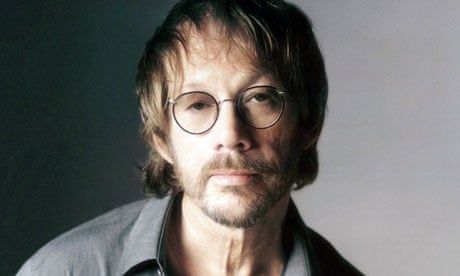
Warren Zevon would have been 70 years old today. A songwriter’s songwriter, he never found the same fame as his contemporaries–the Eagles and Jackson Browne among them–but he had plenty of fans, including Bruce Springsteen, Bob Dylan, Hunter S. Thompson, Stephen King and especially David Letterman, who hosted Zevon’s last public appearance on The Late Show Zevon’s first tour in 1977 included guest appearances in the middle of Jackson Browne concerts, one of which is documented on a widely circulated bootleg recording of a Dutch radio program under the title The Offender meets the Pretender.

But, as he wrote in 2000, Life’ll Kill Ya, and the man who famously sang “I’ll Sleep When I’m Dead” who died September. 7th, 2003 from pleural mesothelioma, a lung cancer caused by exposure to asbestos. And though he left us too early, he left behind a comparatively small but genius catalogue far beyond the hit “Werewolves of London.”

Nothing indicates that a person is well-read and clever like finding out that they have some well-loved Zevon records in their collection. These five albums are essential for any collection, and though they don’t cover his whole discography, they’re enough to get any listener started on a journey .

Excitable Boy (1978)

Yes, this is the one that has “Werewolves of London,” “Excitable Boy” and “Roland The Headless Thompson Gunner,” three of Warren Zevon’s best-known songs, produced by Jackson Browne and guitarist Waddy Wachtel  to critical acclaim and popular success. The title tune (about a juvenile sociopath’s murderous prom night) name-checked “Little Susie”, the heroine of his former employers the Everly Brothers, tune .

Zevon used deadpan humor to wed geopolitical subtexts to hard-boiled narratives. But it also has so much more. From the warmly exuberant opening licks of “Johnny Strikes Up The Band” to the sublime melancholy “Accidentally Like a Martyr,” to the slick ‘n’ dirty funk influence on “Nighttime in the Switching Yard,” and the just-shy-of-Lite-FM ballad “Tenderness on the Block,” Zevon here crafted an album that not only defines the sounds of sleezy 1970s Los Angeles, but takes the listener far beyond Mulholland. Many would imitate to much success, but you can’t beat the original, especially not with lyrics like “He dug up her grave/and built a cage with her bones.” Awwooo, indeed.

Sentimental Hygiene (1987)

There comes a time when nearly every singer-songwriter feels compelled to write about how terrible fame is. Hell, Billy Joel, a fellow 70s piano man with has dedicated a sizable proportion of his career to bitching about how much his job sucks. But Sentimental Hygiene is a simple and sober musing on LA life, written after Zevon went to rehab to battle alcoholism in 1984. But drying out didn’t dry Zevon’s wry sensibilities, still strong on “Detox Mansion” and “Even the Dog Can Shake Hands.” Nor did it dull his storytelling talents, with a ballad about legendary boxer Ray “Boom Boom” Mancini and another funky history foray, “Leave My Monkey Alone.” It’s catchy, clever, heartfelt and intimate in the way only Zevon could be.

Members of R.E.M  Bill Berry, Peter Buck and Mike Mills served as the core of Zevon’s next studio band when he re-emerged in 1987 by signing with Virgin Records for the recording this album. The release, hailed as his best since Excitable Boy, featured a thicker rock sound and taut, often humorous songs  “Bad Karma” (which featured the R.E.M. lead singer Micheal Stipe on backup vocals), and “Reconsider Me”. Included were contributions from Neil Young, Bob Dylan, Flea, Brian Setzer, George Clinton,

During the Sentimental Hygiene sessions, Zevon also participated in an all-night jam session with Berry, Buck and Mills, as they worked their way through rock and blues covers . Though the sessions were not initially intended for release, they eventually saw the light of day as a Hindu Love Gods. 

Warren Zevon (1976)

His Asylum Records debut opens with the deceptively simple melody for “Frank & Jesse James” before bringing in the rest of the band for the sort of narrative ballads that would win him fans in the literary community, including Carl Haissan and Mitch Albom. But in-between the high-end folk songs like “Mama Couldn’t Be Persuaded” (inspired by his own parents, a ruthless mobster and a fragile Mormon) are the kind of rollicking bad-decisions-set-to-song, including “Poor Poor Pitiful Me” and “I’ll Sleep When I’m Dead.” And then there are the dark characters who populate every Zevon album, from the heroin addicts of “Carmelita” to the sad gold digger in “The French Inhaler” to a raw and intimate portrait of Zevon’s own despair in “Desperados Under The Eaves.” a chronicle of Zevon’s increasing alcoholism.   The Warren Zevon debut album produced by Jackson Browne was only a modest commercial success, but it was later termed a masterpiece often cited as Zevon’s most realized work. Representative tracks include the junkie’s lament “Carmelita”  and “The French Inhaler”, a scathing insider’s look at life and lust in the L.A. music business (which was, in fact, about his long-time girlfriend and mother to his son Jordan).  a chronicle of Zevon’s increasing alcoholism.

Bad Luck Streak in Dancing School (1980)

With grinding guitar on tracks like “Jungle Work” and “Play It All Night Long,” even the sardonic title track has a series of handclaps reportedly made by dry-firing a Smith & Wesson into a garbage can full of gravel to make an album that alternates between the brutal and the silly. Though the album is most famous for utilizing the word “brucellosis” in what might be Zevon’s darkest song, “Play It All Night Long,” there are some light-hearted tunes as well, including “Gorilla You’re a Desperado,” a catchy little ditty about a gorilla who steals the narrator’s BMW and woman, only to discover life outside the cage might be more than he bargained for. How can you not love a song that includes the line, “Most of all, I’m sorry I made you blue/I’m bettin’ the gorilla will too.”

It also contained a collaboration with Bruce Springsteen called “Jeannie Needs a Shooter”, and the ballad “Empty-Handed Heart” featuring a descant sung by Linda Ronstadt, which dealt with Zevon’s divorce from wife Crystal

The Envoy (1982)

Zevon’s last album with Asylum Records before the drug-and-booze binge that landed him in a rehab stay that gave us Sentimental Hygiene, The Envoy is smart, ugly and hopeful all at once. Opening with an eponymous track inspired by US diplomat Philip Habib would be a dangerous choice for a lesser artist, but for a master storyteller like Zevon, it’s practically a James Bond movie, all in three minutes and 12 seconds. “Ain’t That Pretty At All” is a hellish carnival ride, and followed by “Charlie’s Medicine,” a minor-key melody about a murdered drug dealer paints the album in a bleak light, but it wouldn’t be Zevon without a little levity, including “The Hula Hula Boys,” about a man who loses his wife to the Hawaiian dancers on vacation, and the resigned-but-hopeful “Looking For The Next Best Thing.”
Transverse City, Stand in the Fire, The Wind (his incredible last album) and Wanted: Dead or Alive are also available on vinyl, and hopefully, one day we’ll get vinyl re-issues of Mutineer, Mr. Bad Example, Life’ll Kill Ya, and My Ride’s Here, some of which came out in super limited pressings in Europe that now sell for an arm and a leg.

dawes

Dawes with a special performance of the Warren Zevon song for David Letterman. What A special band Dawes are surely one of the best American bands around. Warren Zevon Cover. This performance never aired. It was a web exclusive.

Warren Zevon was one of the most underappreciated artists in his time, at least by the general public. Sure, “Werewolves of London” gets heavy rotation between “The Monster Mash” and “Ghostbusters” on radio stations at Halloween time in October, but the rest of his catalog goes mostly unnoticed.

David Letterman did his best to make Zevon a household name though.  Warren filled in for Paul Shaffer over 20 times, plus made numerous visits to the show to promote his albums.  In fact, he referred to Dave as “the best friend my music has ever had”.

Zevon passed away from cancer in 2003, but that hasn’t stopped Dave from promoting his music on The Late Show. Recently, the L.A. band Dawes was asked to perform Zevon’s song, “Desperados Under the Eaves”.  The following video contains an intro from Letterman explaining the reasoning behind this request.  If you’re not already a fan of Dawes  or Zevon – you probably should after this.

https://www.youtube.com/watch?v=9A6MtHz-g4k

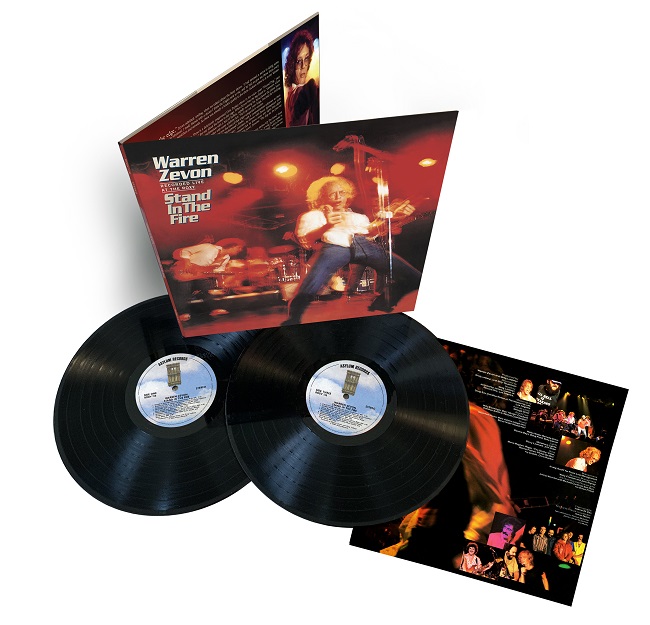
Get ready to howl!  Run Out Groove has announced its latest fan-voted release, and it’s from the late singer-songwriter Warren Zevon.  The label will press a limited and numbered Deluxe Edition of Zevon’s live album “Stand in the Fire – Recorded Live at The Roxy” in a generously expanded format.  The original LP was originally released at the tail end of 1980 and was recorded over a five-night stand in August of that year at the famed West Hollywood venue.  It boasted ten tracks – including mordant favourites “Werewolves of London,” “Poor, Poor Pitiful Me,” “Lawyers, Guns, and Money” and “Excitable Boy” – and the 2007 CD reissue added four more including “Hasten Down the Wind.”  Now, RUG will not only carry over those four additional cuts in their vinyl debut but will also add six previously unreleased bonus tracks including “Roland, The Headless Thompson Gunner,” “Bad Luck Streak in Dancing School,” “Gorilla, You’re a Desperado,” “Night Time in the Switching Yard,” an alternate version of “The Sin,” and a cover of Allen Toussaint’s “A Certain Girl.”

The double-vinyl set will be cut to lacquer and will feature previously unseen photos and deluxe packaging in the Run Out Groove tradition; it will be pressed on 180-gram heavyweight black vinyl.  Stand in the Fire is available for pre-order until October 8th, at which time it will be pressed to the quantity ordered.  Members of the band Boulder (signed to Elektra Records, sister imprint of Zevon’s home of Asylum Records) supported the iconoclastic, much-missed songwriter on a strong setlist (which boasted new songs “The Sin” and the title track).  Stand in the Fire has always been an integral part of the Zevon discography; with these six new cuts, this release should prove definitive.

As always, with the announcement of a new ROG title comes the opportunity to vote for the next one.  These are your choices, and voting is open now at Run Out Groove’s website.  All descriptions below have been provided by the label.

For much of his career, Warren Zevon particular brand of genius relied on A-list Los Angeles session pros and friends like Jackson Browne Linda Rondstadt and Neil Young to help out on his records. But for his first live album, 1980’s “Stand in the Fire”, he called in a group comprised mostly of comparative amateurs.

He enlisted Boulder, a Colorado bar band that had been signed to Zevon’s record label, Elektra Records, and whose debut included a cover of his “Join Me in L.A.” Boulder—who already did some of his songs. After auditioning them solely by running them through Chuck Berry’s classic “Johnny B. Goode,” Zevon hired them and brought along studio ace David Landau to play lead guitar. They then hit the road together for the Dog Ate the Part We Didn’t Like tour.

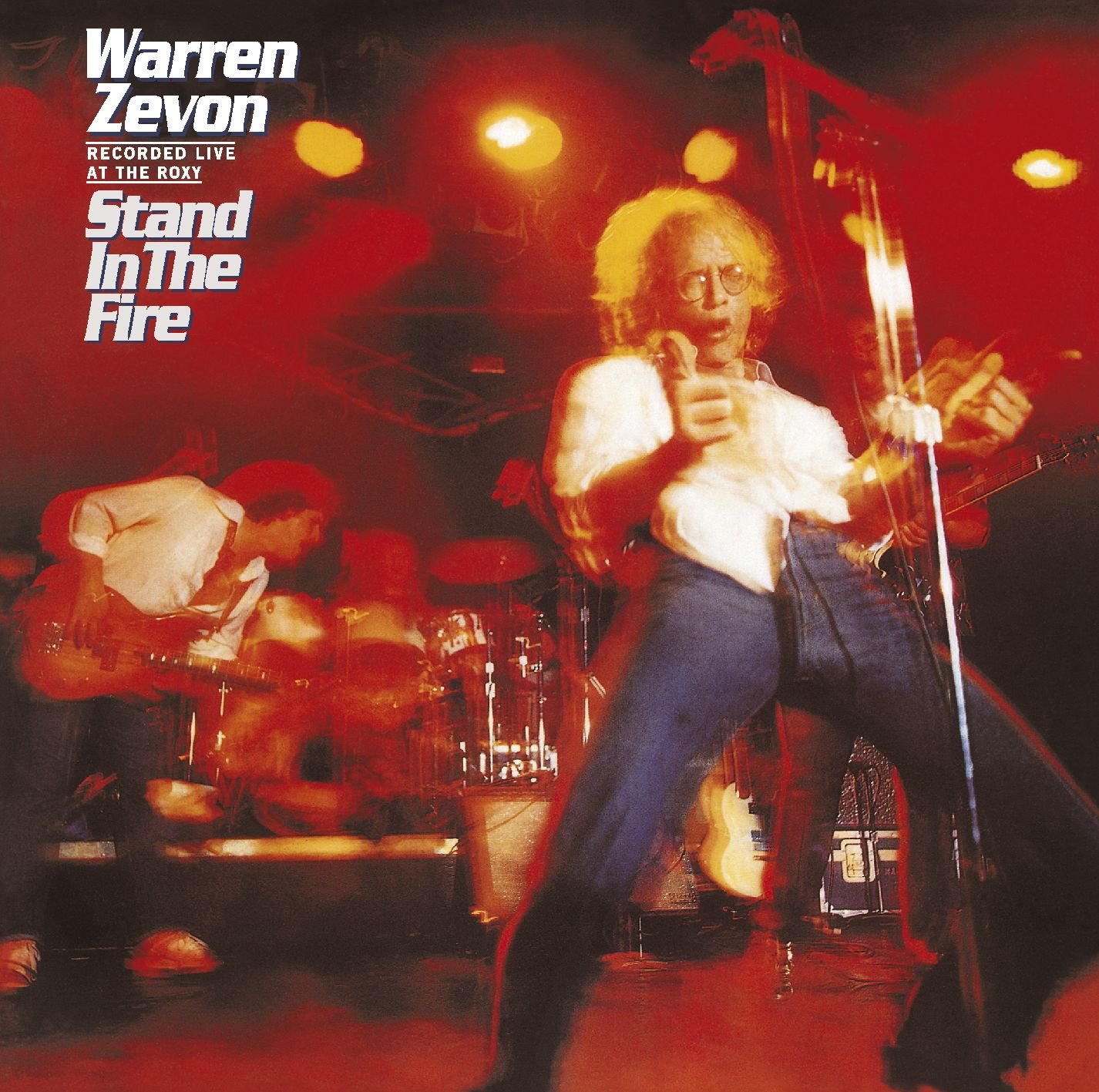
Released on December. 26th, 1980, Stand in the Fire was culled from performances recorded during a multi-night stand at Los Angeles’ Roxy in West Hollywood. It’s the most full-blooded rock ‘n’ roll Zevon ever released fully capturing the bar-band flavor of the performances, with two strong new songs “Stand In The Fire” and “The Sin” joining Zevon’s mix of sentimental and sardonic tunes . His earlier albums — great as they are — suffer from the genteel production techniques of the day, but he’s positively unleashed here. The whole thing threatens to come apart on a few occasions, but Zevon manages to hold it all together. “Excitable Boy, Werewolves Of London”  with an aside about Brian DePalma, and a powerful version of “Mohammed Radio”. It helps that he’s egged on by Boulder, who bring out the savage wit of such Zevon favorites as “Excitable Boy,” “Poor Poor Pitiful Me” and, especially, “Lawyers, Guns and Money.” with a rewritten verse to reflect the Iranian hostage situation — is particularly powerful, and “Jeannie Needs a Shooter” and “I’ll Sleep When I’m Dead” are beautifully bludgeoned within an inch of their lives.

 Must-hear tracks are the medley of Bo Diddleys A Gunslinger and Bo Diddley , which closed the original vinyl version, let Zevon get downright guttural in his homage to a rock ‘n’ roll hero.

Zevon throws no small degree of spontaneity into the equation. He ad libs some new lyrics in “Werewolves of London” to take jabs at friends (“And he’s looking for James Taylor,” “I saw Jackson Browne walking slow down the avenue / You know, his heart is perfect”) and, at the end of “Poor Poor Pitiful Me,” calls out his road manager and best friend George “Gorilla” Gruel: “Gorilla, get up and dance. Get up and dance or I’ll kill you. And I got the means!”

Despite its standing among Zevon fans, Stand in the Fire wasn’t released on CD when the rest of his catalog hit the format. Instead, it was delayed until 2007. But it was worth the wait: Four additional songs from the shows (“Johnny Strikes Up the Band,” “Play It All Night Long” and solo piano renditions of “Frank and Jesse James” and “Hasten Down the Wind”) were added to the mix.

The album was originally dedicated to Martin Scorsese, and it’s a bit ironic considering the live record basically disappeared but around half a decade later Scorsese’s use of the original studio version of “Werewolves of London” in The Color of Money (one of the masters all-time great music in film moments) added some needed bite to Zevon’s name .

Warren Zevon - Stand In The Fire Artwork

warren zevon

Warren William Zevon (January 24, 1947 – September 7, 2003) was an American rock singer-songwriter and musician. He was known for the dark and somewhat bizarre sense of humor in his lyrics.
He sang about Werewolfs, Lawyers and other humorous topics. We are talking about Warren Zevon who, if he were still with us, would have turned 68 years old today.
Warren was born in Chicago, Illinois, the son of Beverly Cope (née Simmons) and William Zevon. His father was a Jewish immigrant from Russia, and his original surname was Zivotovsky. William was a bookie who handled volume bets and dice games for notorious Los Angeles mobster Mickey Cohen. William worked for years in Cohen’s Combination, where he was known as Stumpy Zevon, and was best man at Cohen’s first marriage.
In interviews, Zevon described a lifelong phobia of doctors and said he seldom received medical assessment. Shortly before playing at the Edmonton Folk Music Festival in 2002, he started feeling dizzy and developed a chronic cough. After a period of suffering with pain and shortness of breath, Zevon was encouraged by his dentist to see a physician; he was diagnosed with inoperable peritoneal mesothelioma (cancer of the abdominal lining that is associated with exposure to asbestos). Refusing treatments he believed might incapacitate him, Zevon instead began recording his final album, “The Wind,” which includes guest appearances by close friends including Bruce Springsteen, Don Henley, Jackson Browne, Timothy B. Schmit, Joe Walsh, David Lindley, Billy Bob Thornton, Emmylou Harris, Tom Petty, Dwight Yoakam, and others. At the request of the VH1, documentarian Nick Read was given access to the sessions; his cameras documented a man who retained his mordant sense of humor, even as his health was deteriorating over time.

Warren passed away on September. 7th, 2003. He was 56 years old.
Zevon’s work has often been praised by well-known musicians, including Jackson Browne, Bruce Springsteen, Bob Dylan, and Neil Young. His best-known compositions include “Werewolves of London”, “Lawyers, Guns and Money”, “Roland the Headless Thompson Gunner” and “Johnny Strikes Up the Band”, all of which are featured on his third album, Excitable Boy (1978). Other well-known songs written by Zevon have been recorded by other artists, including “Poor Poor Pitiful Me” (a top 40 hit by Linda Ronstadt), “Accidentally Like a Martyr”, “Mohammed’s Radio”, “Carmelita”, and “Hasten Down the Wind”.

Along with his own compositions, Zevon recorded or performed occasional covers, including Allen Toussaint’s A Certain Girl, Bob Dylan’s “Knockin’ on Heaven’s Door” and Leonard Cohen’s “First We Take Manhattan”. He was a frequent guest on Late Night with David Letterman and the Late Show with David Letterman. Letterman later performed guest vocals on “Hit Somebody! (The Hockey Song)” with Paul Shaffer and members of the CBS Orchestra on Warren Zevon’s My Ride’s Here album.