Based in San Francisco, and active in the mid-to-late 1960s. The band gained interest after one of the Nuggets Vol 12, compilations in the 1980s, Their music was strongly influenced by Yardbirds and Rolling Stones. The Other Half were at their peak when the music scene was at its height in San Francisco and the Flower Power movement in full swing in Haight Ashbury. Their style changed from an earlier vocal based garage band, to the loudest big stage band sound of the time, taken in that direction by former Sons of Adam guitarist Randy Holden. Their sound has been compared to The Yardbirds, and contained elements of blues, hard rock, and Eastern melodic influences
‘Famous’ for their now legendary garage punk killer 45 ‘Mr. Pharmacist’, later covered by The Fall, this album came a couple of years later in ’68 and shows the move towards psychedelia. Recorded ‘live’ in the studio to sound like a gig, the album showcases some tasty guitarwork from Randy Holden, soon to join heavy duty rockers Blue Cheer.
Also interesting on this mainly self-written album is their lone cover, namely ‘Feathered Fish’, written by Love kingpin Arthur Lee but rather bizarrely credited to Country Joe McDonald!
A collection of their recordings, titled Mr. Pharmacist was issued in 1982. This included their entire 1968 album and several tracks from singles.Two songs, “Bad Day” and “Oz Lee Eaves Drops” appear in the 1968 pilot episode of The Mod Squad.
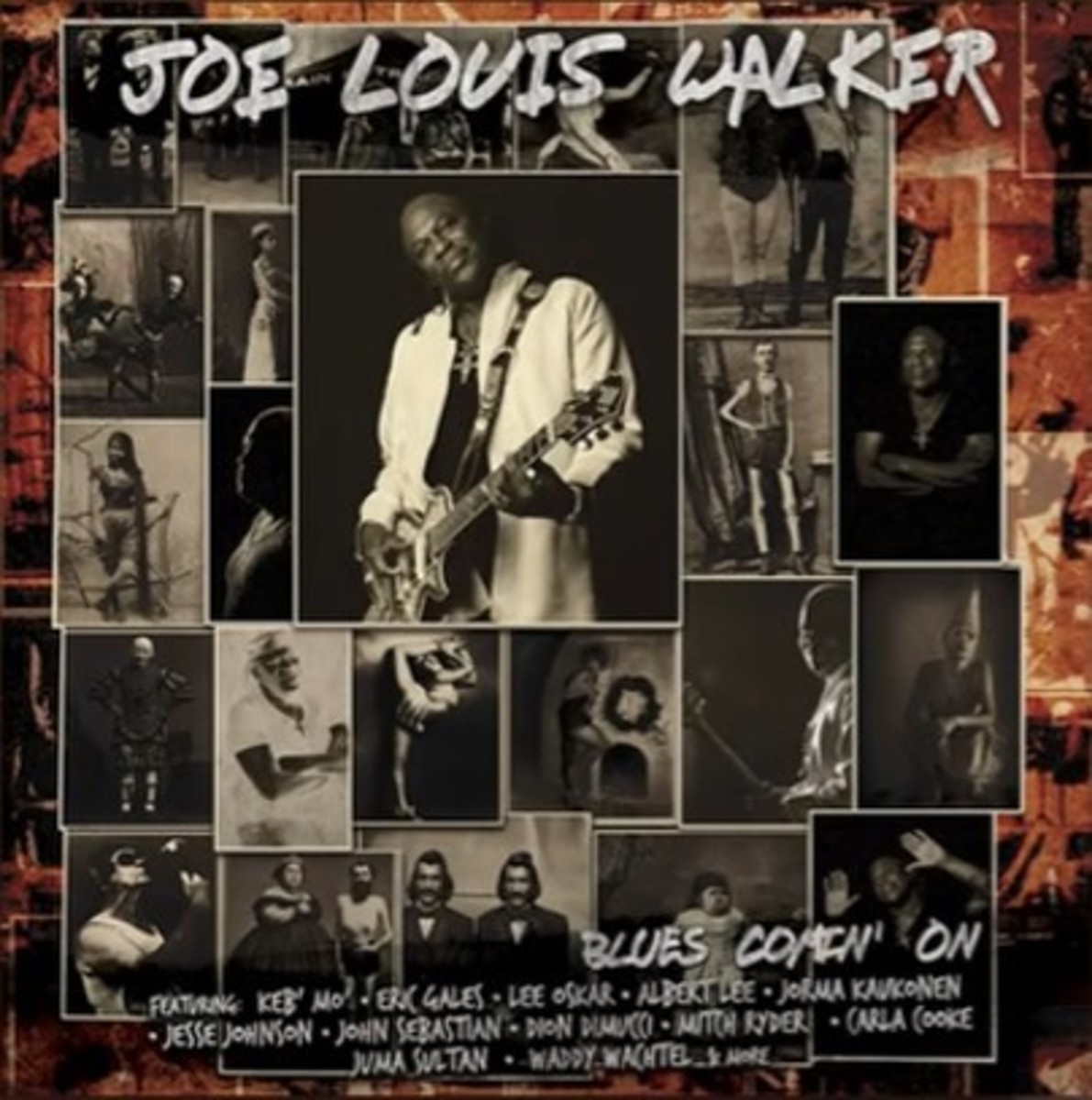
Blues favorite Joe Louis Walker releases the single “Old Time Used to Be” featuring Keb’ Mo, with John Sebastian on harmonica, ahead of his upcoming guest-filled album “Blues Comin’ On,” to be released June 5th on Cleopatra Blues.
Joe Louis Walker’s new Cleopatra Blues album “Blues Comin” On features Keb’ Mo’, John Sebastian, Jorma Kaukonen, Mitch Ryker, Lee Oskar, Albert Lee, Waddy Wachtel, Eric Gales and more special guests.
Blues Comin’ On features guest performances by fellow blues icons Keb’ Mo’, Eric Gales, and Albert Lee, plus Detroit hit singer Mitch Ryder, John Sebastian, formerly of The Lovin’ Spoonful, harmonica virtuoso Lee Oskar, known for his work with War, Jorma Kaukonen of Jefferson Airplane and Hot Tuna fame, punk rock vocalist Charlie Harper, legendary session guitar player Waddy Wachtel, and many more. The album explodes with the passionate playing and soulful melodies that have made Joe Louis Walker a favorite among true blues aficionados including The Rolling Stones.
Originally from San Francisco, Joe, a Blues Hall of Fame inductee and four-time Blues Music Award-winner, celebrates a career that exceeds a half century. His musical legacy as a prolific torchbearer for the blues is proven by his 26 albums. A true powerhouse guitar virtuoso, unique singer, and prolific songwriter, he has toured extensively throughout his career, performed at the world’s most renowned music festivals, and earned a legion of dedicated fans.
Joe says, “From the opening track to the final note, the guests and fellow musicians on this album made this one of the best musical journeys I’ve ever had, and I hope it is the same for you.”
“Blues Comin” Released on: 22nd April on the Cleopatra Blues label,
The mix dates for my upcoming solo record were among the many, too many cancellations of this unimaginable spring we’re sharing. But I wanted to go ahead and release one of the songs in progress—just case it could help to raise some funds for meals, shelter and support for some of my most vulnerable neighbors. This song is a mash of abstractions. But one verse was written back in 2016 to thank a friend who checked in on me when I was stuck alone at home, staying up all night watching Lifeboat and freaking out about the Brexit leave vote. I was afraid that it was a terrible sign that the old agreements and already inadequate standards about how we take care of each other each were up for grabs. It really helped to talk about it.
If, understandably, you’d rather see support stay closer to home, or you’re in a better position to help a friend, neighbor, yourself…it would all mean so much. Or maybe you’d just enjoy spacing out on some animation loops I made this weekend using a kid’s stop-motion program, subconsciously inspired by early Sesame Street and created while lying on the living room floor with all the blankets and pillows out.
Two veterans of those only-slightly-demeaning Best Albums of the year You May Have Missed lists, Field Medic and Great Grandpa vocalist Al Menne teamed up this month for a Run for Cover–released single that feels like a victory lap in the wake of their pair of Generally Best Albums released in 2019. The underproduced track is reduced to Kevin Patrick’s ramshackle guitar and distinct vocals, occasionally harmonizing with those of Menne.
“talkin johnny & june (your arms around me)” by Field Medic featuring Al from Great Grandpa out now via Run For Cover Records
“Deerhoof is a weapon loaded with the future.” – Agustín Fernández Mallo, Spanish physicist and writer
Normal is never coming back. Whether by a collective dismantling or sheer collapse, our old illusions are being hollowed out. Over the past couple of years, Deerhoof has been asking themselves if there was any music they could create that expressed how the rapidly changing future might actually feel. The finished product, Future Teenage Cave Artists, finds Deerhoof in a revolutionary mood, but also haunted by memories of a lost world and every failed attempt to save it. People already cut loose from the system, already surviving with new ways of life—these hopeful heroes are Deerhoof’s inspiration. These are the Future Teenage Cave Artists.
Faithful listeners will recognize a certain alienated but transformational figure who shows up in Deerhoof songs going back to their earliest days. Take the narrator of “The Perfect Me” from 2007’s Friend Opportunity: an orphaned but eager soul attempting to entice other wounded wanderers who might lack a home, a clan, a family, a history. But on Future Teenage Cave Artists our protagonist is threatened by terror lurking around every corner. Add to that the fact that our “cast-off queen,” our “maniac,” our “terrible daughter” are watching themselves get orphaned in real time by an older generation in power that would rather see life on Earth destroyed than give up archaic systems of capital.
Like a lot of the inimitable music they have released over the last quarter-century, the Deerhoof of Future Teenage Cave Artists, Satomi Matsuzaki on bass and vocals, Ed Rodriguez and John Dieterich on guitars, and Greg Saunier on drums, vocals and piano) stitches together fragments of R&B and classic rock and transforms them into a new language of revolution, forgoing verse-chorus structures for dream logic and blind intuition. But what makes this album different is its intimacy—the blues riffs and slide guitars are joined by soft, rickety pianos and whispered three-part harmonies.
In this sense, FTCA inverts the formula of Deerhoof’s last album, Mountain Moves, which invited a wide community of collaborators to band together in an open celebration of solidarity. The new one, on the other hand, is borne of self-isolation and deprivation. It’s the sound of a sparkling, manic musical intelligence being disconnected from a nourishing public and devouring itself inside its own cocoon: a desperate lunge at metamorphosis.
At times FTCA indeed sounds as if the band has retreated to the caves, recording with unreliable electricity and insecure food supplies. Guitar pedals malfunction mid-take, reverbs chop off mid-tail, drum fills collapse mid-phrase. Some musical moments, as gorgeous and touching as anything Deerhoof has ever written, stop short for no apparent reason, giving way to queasy smudges of sound. Many of the instruments and voices were recorded with nothing more than the built-in mic of a laptop. Harsh splices make no effort to hide the seams. Hard panning leaves many of these imperfections weirdly naked in the mix.
In this way FTCA joins a storied lineage of pop records that expose the insular and reclusive nature of recording itself. Like Let It Be, There’s a Riot Goin’ On, or Sister Lovers, this record is its own “making-of.” Absence is a central character in the drama. For every heartwarming melody or pile-up of parade drums or shard of loopy guitar noise, there is musical acknowledgement of the toll that a constant threat of cataclysm takes on mental health. This is a sonic and lyric funeral for a way of life that is never coming back—an afterparty, back when the doomsday clock hit midnight. There are raucous toasts to the departed in high style, as sassy and spasmodic as anything they’ve done—see Side A; there are moments of profound sadness, maximally small, descending into madness, shrieking with loss—see Side B. All funerals remind us that life goes on, somehow.
In that time after the end times, it’s not only the food systems, energy systems, and political systems that will have to be rebuilt. Myths, stories, and rituals we use to make sense of the world are up for revision, too. Might not agile networks of mutual aid be our best example of civilization, and our makeshift DIY basement shows be the real high art? One answer might be found in the two-and-a-half decades that this improbable combination of personalities and backgrounds we call Deerhoof has spent on stage, cultivating quick-wittedness and improvisation. This is a record about resilience and the persistence of hope in a future beyond any reasonable justification for it. Like so many young people today, Deerhoof seems to be already living in that future.
San Francisco’s own It’s a Beautiful Day’s self-titled debut album in 1969 included its masterpiece “White Bird,” (written by David LaFlamme with his wife Linda) with the sublime vocal combination of LaFlamme and Pattie Santos. The song is emblematic of the era with it’s repeated refrain “White bird must fly/Or she will die.” Or as Jimi Hendrix sang: “Freedom, that’s what I want now/Freedom, that’s what I need now/Freedom to live/Freedom so I can give.” Or even earlier, Elvis put it very simply: “I want to be free/Like a bird in a tree.” It’s a Beautiful Day was active for seven years initially and enjoyed five hit albums, yet the band never attained the popularity of other San Francisco groups. Unfortunately it came under the management of Matthew Katz for the first few years who most people know hindered the career of Moby Grape. The band nearly made an appearance at Woodstock, but an unlucky flip of a coin to decide which of two groups got an invitation resulted in Santana making the trip instead. Nevertheless It’s a Beautiful Day is beloved in the Bay Area for “White Bird,” and their unique meld of many styles: Rock, Jazz, Classical, and Folk.
David and Linda wrote the song in Seattle, where they were living. Said David: “The song describes the picture Linda and I saw as we looked out this little window in this attic. We had a little Wurlitzer portable piano sitting right in the well of this window, and I’d sit and work on songs. When you hear lines like, ‘the leaves blow across the long black road to the darkened sky and its rage,’ it’s describing what I was seeing out the window. Where the ‘white bird’ thing came from: We were like caged birds in that attic. We had no money, no transportation, the weather was miserable. We were just barely getting by on a very small food allowance provided to us. It was quite an experience, but it was very creative in a way.”
David LaFlamme, was a former soloist with the Utah Symphony Orchestra, had previously been in the band Orkustra, and unusually, played a five-string violin. The other members were LindaLaFlamme (keyboards), Pattie Santos (vocals), Hal Wagenet (guitar), Mitchell Holman (bass) and Val Fuentes (drums). Although they were one of the earliest and most important San Francisco bands to emerge from 1967’s social phenomenon Summer of Love, the band never quite achieved the success of contemporaries such as Grateful Dead, Jefferson Airplane and Santana, with whom they had connections. The band created a unique blend of rock, jazz, folk, classical
Pattie Santos, the lead singer for It’s A Beautiful Day, died December 14th, 1989 in an automobile accident on Hwy. 128 in Mendocino County, California, White Bird? was the biggest hit from the groups first album, It’s A Beautiful Day, released in 1969. The album cover became famous. It depicted a bonneted girl in a long dress standing on a hill top and gazing into the blue sky with white clouds all around.
Even though lots of people sell as many or more records as he does, Sly Stone is probably the most influential musician over the years. He changed the face of soul, and co-authored, with Jimi Hendrix, black psychedelic music, It is not only Sly’s string of hit singles, and the remarkable achievement of ‘Riot’, which confirms his musical genius.
Born in Texas, raised in the Bay Area, Sylvester Stewart was the second child of a religious family whose church encouraged music as a way to proclaim the Lord’s glory. No big surprise, then, that like so many other soul stars Sly started singing in church.
When he was eight, he cut his first record, with three of his siblings—all of whom would later start bands and then be members of the Family Stone. All of them were talented. But Sly was a prodigy, mastering keyboards, guitar, drums, and bass by the time he turned eleven.
It is sometimes difficult to see the extent of Sly’s genius. In June 1967, San Francisco’s counterculture dreams were peaking when a local music scenemaker named Sylvester ‘Sly’ Stewart led a motley-looking interracial, mixed-gender crew, half of whom were from his own family, into a recording session for Epic Records.
Over a few scattered hours, the group that became known as Sly and the Family Stone cut their debut in 1967, ‘A Whole New Thing” live in the four-track studio. Led by singer-songwriter, producer, and multi-instrumentalist Sly Stone, and included Stone’s brother and singer/guitarist Freddie Stone, sister and singer/keyboardist Rose Stone, trumpeter Cynthia Robinson, drummer Greg Errico, saxophonist Jerry Martini, and bassist Larry Graham. It was the first major American rock group to have a racially integrated, male and female lineup
In high school, though, he kept mostly to the guitar as he joined local groups. A doo-wop outfit called the Viscaynes featured him and a Filipino pal in a then-unusual interracial lineup. They even cut a few singles for the local market, like “Yellow Moon”. Studying at Vallejo Junior College, Sly honed his skills, picked up the trumpet, and mastered composition and theory. The opening and closing of “Underdog” on ‘A Whole New Thing’ archly reflects that: recasting the “Frère Jacques” melody as a horn riff in a minor key, Sly tips his hat to Gustav Mahler, whose First Symphony did the same thing repurposing the kids’ tune as…wait for it…a funeral march.
Around him, the San Francisco scene was already percolating to multicultural visions inherited from the largely white Beats and mostly black jazzers who’d made the City by the Bay their west coast capital. The eager young wannabe soon found a way in. A local radio station called KSOL was rapidly growing its predominantly black audience by playing rhythm and blues. When Sly started as a DJ there in the early 1960s, he commuted each day from his parents’ home all the way across town to Merchandise Mart on Market Street, where KSOL’s offices and studios and 250-watt transmitter were.
Young Sly had the patter and the fire to succeed as one of the DJs who redubbed their station K-SOUL. He stirred popular white bands into the mix he thought would fit because of their obvious R&B influences, like the Animals, the Stones, and the early Beatles. It’s almost like he was on a mission to enact the musical equivalent of racial integration, mutual acceptance and interplay. And it apparently worked: He upped white audience numbers without losing black listeners, Later, Sly would aim to emulate their feat with his own music and succeed brilliantly… for a while.
Meanwhile, the local rock scene was probing exciting new shapes and sounds, the first waves of psychedelia. It was largely white kids, but that didn’t bother Sly, who was voraciously absorbing everything he heard and encountered.
In retrospect, it looks like Sylvester Stewart was training himself in nearly every aspect of the music business. Besides DJing, he produced records, wrote songs, and backed up touring stars. A tiny San Francisco label called Autumn Records, run by another local DJ and concert promoter named Tom “Big Daddy” Donahue (he’d coin the term “underground radio”), hired the young man with big ears as its principal producer.
Donahue, an ambitious giant of a man, first heard the teen at a Vallejo sock hop, then hired him to ramrod the house band at his big concerts, like the 1962 Chubby Checker “Twist Party” that landed at the humongous Cow Palace, usually the venue for (what else) livestock shows. That night it held 17,000 fans, making it the first big-time rock concert in Bay Area history.
Sly was quickly slotted in as Donahue’s go-to guy on stage and in the studio. He was getting a musical education that filled his toolbox with versatile skills he’d soon use for himself. Since the music biz’s earliest days, songs pushing new dances had been a reliable way for black artists to get to mainstream white audiences. No doubt young Mr. Stewart filed that knowledge to tap into for “Dance to the Music”
But he also produced an eclectic batch of Bay Area faves. like The Great Society which features Grace Slick unspooling an obbligato line of raga-ish vocalese; he also apparently ran the sessions for “Someone to Love” Both cuts make clear why Slick would jump ship and join Jefferson Airplane; as she once put it, “They had a real rhythm section.” Sly watched drummer/singer Jan Errico with real interest: there were very few females playing instruments in rock bands, never mind drums, and singing too. As it happened, she had a brother-drummer named Gregg, who would join the Family Stone.
In keyboard player Billy Preston, Sly found a soul brother. Another Texas-born child prodigy, Preston started backing gospel and soul stars from Mahalia Jackson to Sam Cooke when he was ten. The keyboard wizard was barely 20 when he and Sly co-wrote three tunes. that appear on 1966’s Billy’s album ‘Wildest Organ in Town!. Sly arranged. The album also boasted songs by the Beatles, Stones, James Brown, and Wilson Pickett—an integrated music love fest very like Sly’s playlists had been at KSOL.
Preston’s year-long gig on the TV show Shindig!, which introduced him to a huge audience, had just ended when the record was released on a major label. It didn’t exactly burn up the charts, but the pair continued to collaborate, For years they’d grace each other’s records with guest shots, refusing to be hemmed in by musical styles and expectations,
Once Sly merged his band (Sly and the Stoners) with his brother Freddie’s (Freddie and the Stone Souls), the Family Stone was born.
They found a home base to hone their music in Redwood City, a club called (nudge-nudge-wink-wink) Winchester Cathedral. A few months of that, and they’d forged a unique sound and a phenomenal stage show. Not surprisingly, Sly used down time at Autumn’s studios to record the band. And so the 24 cuts compiled on ‘Sly and the Family Stone offer tantalizing insights into how the band evolved.
A rousing early iteration of “Dance to the Music” pumped by Graham’s already-distinctive bass and a blistering guitar solo. But the hard-driving soul of “I Ain’t Got Nobody” their first official single, got them the ear of an Epic employee, who tipped Dave Kapralik, head of A&R. They were so engulfing and powerful onstage that he signed them immediately, then became their manager. And into Epic’s studio they went. The album flopped. But their manager and label head pressed Sly to write hit singles—the ingredient they were sure was lacking on their first album. So he did: ‘Dance to the Music” and ever since, ‘A Whole New Thing’ has been dissed or ignored.
“A Whole New Thing’ (1967)
It’s ear-opening to check out how far they’d developed their winning combo of musical sophistication, wry humor, and gutsy immediacy on ‘A Whole New Thing’. It may have been a four-track recording done live, but the stereo image bursts at the seams with richly layered sonics, showcasing Sly’s adept production skills as well.
It kicks things off with a protest song that doesn’t just nod toward Mahler but pumps its anti-racism message up with Larry Graham’s burbling bass and Greg Errico’s funky drumming, sharp-creased horns, and vocals worthy of Motown—which duly took lessons from it. The album heralds the sound of the Family Stone’s future funk with Graham’s near-solo spot and the ba-boom-boom scatting following the tongue-in-cheek TV Indian theme from the horns. “Run, Run, Run” opening with surprising melodica and xylophone, finds Sly refracting the hippie vs square world through his black eyes and inventive twists: the middle vocal section riffs off the Turtles, and listen for the Mothers of Invention touches.
The track has an astounding horn opening, with a sour horn flourish cuing you that something’s gonna go wrong in this deep Stax-style soul ballad about honesty between lovers. But even here there’s playfulness: write me a letter to tell me if you’re cheating, the singer pleads. Really?! The odd-meter tumbling horn riff that opens and punctuates boldfaces the experimental mindset underlying so much of this underappreciated disc’s twists and turns. The quavery group YAAHHH will become a Family Stone hallmark, and that deep tremolo keyboard solo still sounds unique. The foregrounds the unexpected twists of psychedelicized soul, as does the angular spaciness and wit of “I Hate to Love Her” Its is rife with swampy guitars and Staples-inflected vocals.
The killer track , though, is “Only One Way Out of This Mess” with its off-kilter, almost snarky horns, rumbling bass, and driving beat. It was the band’s tour-de-force onstage; between its inventive sound and anthemic lyrics, it’s clearly of a piece with their future hits. But it was cut a few weeks after the other tracks, and for some reason—probably the usual rush during that frenetic time to put the album out—Epic didn’t release it until 1995.
It’s worth wondering how music history might’ve changed if they’d tried it as a single. After all, “Like a Rolling Stone’ had busted AM radio open two-plus years earlier. Then came smart, successful, but uneven albums like ‘Life and ‘Stand! ‘ that finessed their modern funk, influencing giants like James Brown, Herbie Hancock, Miles Davis, George Clinton, and Prince. Of course, by then hard drugs, changing racial politics, and his own boundless drive to do and have it all had turned Sly into a withdrawn, toxic version of his former self. In fact, ‘A Whole New Thing’ has successfully refracted the wildly disparate elements of Sylvester Stewart’s musical experience into a psychedelic blend of soul, rock, jazz, and funk that’s seriously adventurous fun full of vibrant playfulness and open-eared inventions. And at least it could be Sylvester Stewart’s best and most underrated album. Here’s the incredible story of how that undersung album came to be.
Looking back now, after all these years, it seems to me that ‘A Whole New Thing’, an entire album stuffed with brazenly cutting-edge music, was arguably Sly and the Family Stone’s most seminal, soulful, and sustained achievement.
“Dance to the Music’ (1968)
“Dance to the Music’ made Sly and the Family Stone stars. And it created the rush toward psychedelic soul by Motown acts from the Temptations to the Jackson 5. But it’s worth remembering that, compared to ‘A Whole New Thing’, the band saw the hit and most of the second album as a necessary compromise, using formulas that Sly worked out to showcase individual band members and make them more audience-friendly.
What makes Sly different is the consistency of his growth, and his ability to consolidate that growth into a sort of power which few rock stars have ever approached. Hendrix, however great his genius, was erratic in a way that Sly’s self-consciousness would never allow, a primitive savage to Sly’s urban sophisticate. Nor was Jimi ever quite so arrogant as Sly. At least, he didn’t flaunt the fact of his arrogance so broadly,
Sly was able to get away not only with the arrogance of the no-show performer but also with the knife-twisting viciousness of parts of ‘Riot’ . Hendrix couldn’t have gotten away with it, because he was playing music which, in form, was white rock. Sly and the Family Stone are a soul band. When Hendrix put together an all black band, and put together an album the live Band of Gypsys set he was attacked not much for putting out a bad record — he made worse — as for the audacity of the conception.
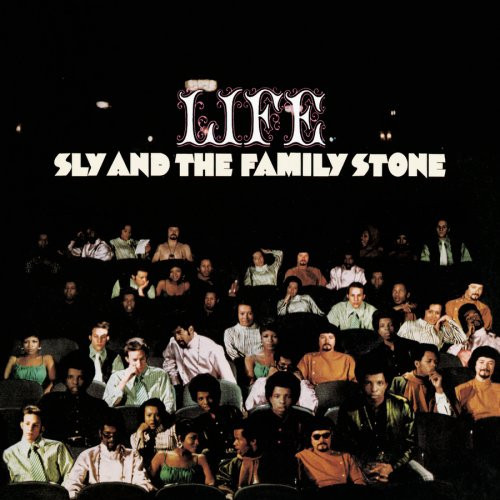
“Life” (1968)
Unlike its predecessor, Dance to the Music, Life was not a commercial success, although it has received mostly positive reviews from music critics over the years. Many of its songs, including “M’Lady”, “Fun”, “Love City”, as well as the title track, became popular staples in The Family Stone’s live show. A middle ground between the fiery A Whole New Thing and the more commercial Dance to the Music, “Life” features very little use of studio effects, and is instead more driven by frontman Sly Stone’s compositions. Topics for the album’s songs include the dating scene “Dynamite!”, “Chicken”, “M’Lady”, groupies “Jane is a Groupee”, and “plastic” or “fake” people on the Beatlesque “Plastic Jim”. Of particular note is that the Family Stone’s main themes of unity and integration are explored here in several songs “Fun”, “Harmony”, “Life”, and “Love City”. The next Family Stone LP, Stand!, would focus almost exclusively on these topics.
Much of Life has been heavily sampled for hip hop and electronica recordings, particularly Gregg Errico’s drum solo on “Love City”. The opening riff on “Into My Own Thing” was sampled for Fatboy Slim’s 2001 hit “Weapon of Choice”.
“Stand” (1969)
The 50th anniversary reissue of ‘Stand!’ by Sly & The Family Stone. The group’s fourth album is undeniably one of their best, with unforgettable jams.
In late 1968, Sly and the Family Stone released the single “Everyday People”, which became their first No. 1 hit.“Everyday People” was a protest against prejudice of all kinds Sly and the Family Stone and popularized the catchphrase “different strokes for different folks”. With its B-side “Sing a Simple Song”, it served as the lead single for the band’s fourth album, “Stand!”, which was released on May 3rd, 1969. “The Stand!” album eventually sold more than three million copies; its title track peaked at No. 22 in the U.S.
“Stand!” is considered one of the artistic high points of the band’s career. It contained the above three tracks as well as the songs “I Want to Take You Higher” (which was the B-side of the “Stand!” single), “Don’t Call Me Nigger,Whitey”, “Sex Machine”, and “You Can Make It If You Try”.
The success of Stand! secured Sly and the Family Stone a performance slot at the landmark Woodstock Music and Art Festival. They performed their set during the early-morning hours of August 17th, 1969; their performance was said to be one of the highlights show of the festival.
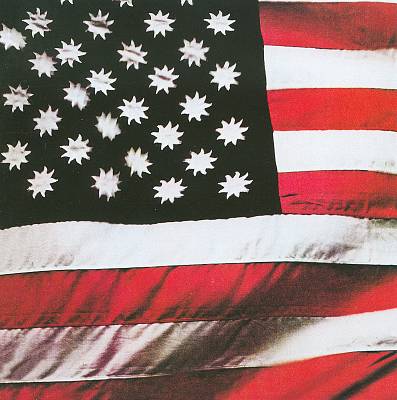
There’s a Riot Goin’ On (1971)
In 1971, Sly and the Family Stone returned with a new single, “Family Affair”, which became a number-one single on the Billboard Hot 100. “Family Affair” was the lead single from the band’s long-awaited There’s a Riot Goin’On.
Instead of the optimistic, rock-laced soul that had characterized the Family Stone’s 1960s output, There’s a Riot Goin’ On was pure urban blues, filled with dark instrumentation, filtered drum machine tracks, and plaintive vocals representing the hopelessness Sly and many other people were feeling in the early 1970s. The album is characterized by a significant amount of tape hiss – the result of Sly’s extensive re-recording and overdubbing during production. Allegedly, most of the album’s instrumentation is performed by Sly alone, who enlisted the Family Stone for some of the additional instrumental parts and friends such as Billy Preston, Ike Turner, and Bobby Womack for others. “(You Caught Me) Smilin'” and “Runnin’ Away” were also released as singles, and performed well on the charts.
After the release of Riot, additional lineup changes took place. In early 1972, reacting to Jerry Martini’s probing about his share of the band’s earnings, Sly hired saxophonist Pat Rizzo as a potential replacement though both ended up remaining in the band. Later that year, the tension between Sly Stone and Larry Graham reached its peak. A post-concert brawl broke out between the Graham and Sly entourages; Bubba Banks and Eddie Chin, having heard that Larry had hired a hit man to kill Sly, Sly assaulted Graham’s associates. Graham and his wife climbed out of a hotel window to escape, and Pat Rizzo gave them a ride to safety. Unable to continue working with Sly, Graham immediately quit TheFamily Stone and went on to start Graham Central Station, a successful band in the same vein as Sly and the Family Stone. Graham was replaced in the interim by Bobby Womack, and then by nineteen-year-old Rusty Allen.
I think it is fairly self-evident that ‘There’s A Riot Goin’ On’ was a semi-deliberate attempt to alienate Sly’s white audience. That isn’t all it was, nor did Sly really want to alienate his audience, but the idea of such a record could not help but be interpreted as a threat to the white audience. Sly must have known this but ‘Riot’ went gold, anyway, pushed along by a great single, “Family Affair” .
Pop Matters called “There’s a Riot Goin’ On” a challenging listen, at times rambling, incoherent, dissonant, and just plain uncomfortable” with “some episodic moments of pop greatness to be found” and viewed it as a radical departure from the band’s previous work:
“Fresh” (1973)
Sly doesn’t really want to lose that audience. He had to justify, to himself and perhaps to others, the ease with which he had been accepted in the white marketplace, and ‘Riot’ did that. In one sense, then, Fresh is an attempt to regain portions of the audience which have been lost, and in another, it is an explanation of the weirdness which produced ‘Riot’.
Had Sly not done ‘Riot’, he might seem to us now to be little more than a younger, hipper version of the Staple Singers. There is a certain point at which songs like Everyday People, as great as they are, begin to seem frivolous and frustratingly naive. With the Higher! craze which the Woodstock movie inspired, There have been few albums as rich as this one released in 1973, if there have been any, but that doesn’t mean that ‘Fresh’ will automatically make it. At any rate, when Sly Stone, as opposed to almost any other rock star, assures me that he will try, I want to believe him. If he’s earned our trust, and I think that he has, the weight of his stardom may begin to lessen, at least a little. Let’s hope so, for his sake, and ultimately, our own.
‘Fresh’ is Sly coming to terms with himself as a rock star. It asks the same question Sly has always asked—”who cares?”—but the tone with which the question is asked turns the problem around. Initially, this group’s answer to “who cares” was, “We care.” On ‘Riot’, the reply was “I don’t know if anyone does.”
‘Fresh’ stands between. Sly is confident enough to say “I do,” quite straightforwardly in If It Were Left Up to Me. But in other places, he doesn’t seem so certain. The inclusion of Que Sera Sera, which is at one level a joke, is also a trap for the unwary listener. “Que sera sera/Whatever will be will be/The future’s not ours, to see/Que sera sera,” is one way of stating the Woodstock philosophy. Because the song has such a fey history, it is hard to see how anyone could get to that, but Sly has done it.
Sly almost nods in agreement when he sings “Whatever will be, will be” but the growl in his voice, and the rumble in the music raises a larger question. If the future’s not ours, then whose is it? .
Sly doesn’t, probably because he can’t. It is not surprising that the only song on ‘Fresh’ which reflects an attitude of acceptance is called Skin I’m In. Still, even though he has accepted the terms of his blackness, Sly has not accepted his role as a star. Not completely, anyway.
“Now I know what to do,” he sings, “No more selling me to you. Buyin’—that’s a no no no.”
Sly’s dilemma is as old as rock, the problem of the artist in the marketplace. How much of yourself can you sell, even on record, and retain your sanity, your sensibility, and, finally, your ability to produce? Every rock artist has had to deal with this problem, and there are a maze of methodologies within which one can work. Elvis chose to ignore the problem altogether, though when the pinch came, in the late ’60s, he threw his hand in once more, if only for an hour on television and a couple of live shows. Dylan retired, then, when people started to forget about him, decided he was really just a session-man like everyone else. Paul Simon stretches himself thin, trying to become bland enough to satisfy all eight million purchasers of Bridge Over Troubled Water once more.
Sly’s answer could only come from Sly. My terms, he says, or forget it. only to be dragged back down by ‘Riot’. It’s Sly’s personal Catch-22.
The transition isn’t accomplished awkwardly, however. The catch is in the voice, often as not, or perhaps the rhythm section remembers, and sometimes it is just a realization on the part of the listener that what he is hearing sung is not altogether what it sounds like.
“Live At The Fillmore East”
“Live At The Fillmore East”, October 4th and 5th, 1968′ is the first official live album from Sly & The Family Stone, and a reminder of how they still make us dance to the music. “These sets are the epitome of what Sly & The Family Stone was about,” says drummer Greg Errico. “When we lift off, we’re like a 747 and you ain’t pulling us down. That’s what I remember. “Live At The Fillmore East 1968’ features four never-before-released live concerts. This four-disc set captures several shows by Sly and the Family Stone at New York’s Fillmore East. It is the document we’ve been missing of the onstage Family Stone of legend: the tightly knit extended family that sang and played together, the group that magically united black and white audiences.
“St. James Infirmary,” heard on ‘Live At The Fillmore East, October 4th and 5th, 1968,’ is an English folk-based blues song, covered by Louis Armstrong, Duke Ellington and The White Stripes. This relaxed rendition of (Louis Armstrong’s version of) “St. James Infirmary”, a show-ending flourish called “The Riffs”, a version of “M’Lady” that detours into a long, spectacular vocal breakdown. It’s fun to hear how different the band’s performances could be from show to show
When Sly and the Family Stone recorded these gigs at the Fillmore East in New York City, they were one of America’s best live bands, but they were also a one-hit wonder. They’d had a Top 10 single in 1967 with “Dance to the Music”, but their follow-up, “Life”, and the album of the same title, had both stiffed. The plan, apparently, was to release an album of the Fillmore gigs to show off what the Family Stone could do on stage—and, perhaps, get some traction with the free-form FM radio stations that were popping up all over.
A few months after the shows, “Everyday People” became the massive hit the band needed—a song that echoed their own racial and sexual integration—and the live album was set aside. Stand!, released in May, 1969, didn’t include any of the new songs played at the Fillmore East gigs.) Somehow, the Fillmore tapes were never edited down to an album until a vinyl-only double-LP, sequenced by the Roots’ “Captain” Kirk Douglas, appeared .
This wider-scale release, though, isn’t that selection: it’s a four-disc set of all four Fillmore sets in their entirety. That means we get multiple renditions of the long, jammy pieces that would have been the spine of a late-’60s Fillmore East album: “Are You Ready” and “Music Lover” (both, in their way, prototypes of “I Want to Take You Higher”), a cover of “Won’t Be Long” (from Aretha Franklin’s second album) sung by keyboardist Rose Stone, an extended version of the Dance to the Music album’s “Color Me True”, and a frenetic medley of A Whole New Thing’s “Turn Me Loose” with Otis Redding’s “I Can’t Turn You Loose”.
With a timeless sound that blends heavy soul and psych-rock, Monophonics have built a reputation over the past decade as one of the best live bands in the country. Led by singer Kelly Finnigan, the band of has drawn on their colourful history — both their experiences as veteran touring performers and as individuals growing up in the Bay Area to create It’s Only Us, their fourth release since 2012.
A reflection of what they see as the current state of the world, the record touches on difficult subjects such as broken relationships, mental health issues, gun violence and power struggles, all with an underlying message of unity, resilience and acceptance. The band’s signature style of arrangement has been expanded with top-notch production and creative instrumentation to round out the Monophonics’ trademark soul sound, while Finnigan’s vocals are more powerful than ever. At times these tracks can feel classic, as familiar as an old song you grew up with, while simultaneously raising questions about the state of music in 2020 and what the future might hold.
It’s Only Us is the sound of a group continuing to grow as songwriters, musicians, performers and people — reflecting on where they’ve been, and pushing the boundaries of what’s possible in the years to come.
it is no doubt strange days right now, but regardless of everything we woke up feeling a major sense of joy and pride today. We are so excited to present our new album “It’s Only Us” on Colemine Records to the world! We put our heart and soul into it as we do with everything and we feel like it’s a genuinely soulful blend that is psychedelic, cinematic and instantly classic. Enjoy the songs, the moods and the vibes which saturate this record
This San Francisco band blends shoegaze guitars with jangling power-pop accents. Standouts like “Time is Weird,”“Pillbox” and “Lollipop Crush” should earn them comparisons to everyone from Velocity Girl to Alvvays. Of course, Lush and My Bloody Valentine also come to mind. When the distortion gets reduced on the driving and atmospheric, “There Were Only Shadows,” a lot more moodic textures are left to explore. This is one of 2019’s biggest word-of-mouth wins.
There’s a delightful layer of guitar fuzz over all 11 of the pretty, peppy songs on the debut album from this San Francisco-based quartet Seablite. Their music is shoegazer-y, but with a forward propulsion that’s pure pop, not about to drift too far off into the ether.
The album’s packed with melodies and harmonies, of the perfectly formed sunshine-pop sort; the music’s noisy atmosphere is a countervailing force of weight, adding texture and depth of feeling to songs that could lift off into the sky if allowed to. In the middle songs like “(He’s a) Vacuum Chamber” unexpectedly slow things down, pulling us into a more foreboding sort of loneliness.
Band Members
lauren , galine, jen, andy
“There Were Only Shadows” from Seablite’s debut LP “Grass Stains and Novocaine” out now on Emotional Response!
The Grateful Dead and a group of other rock bands of the times including the Jefferson Airplane, took a lease out on the old Carousel Ballroom on Market Street in San Francisco (formerly the El Patio) back in 1968 which only lasted for several short months. During that time however there were many great shows and dance/concerts that took place. Moby Grape: They could have been the biggest and best band in the world, some contended back in the ‘60s, but something happened. The series of bad luck, misfortunes and critical misfires that derailed most of their career.
It was a Saturday night 47 years ago on this day back in 1968 that Moby Grape, along with It’s a Beautiful Day and Sweet Rush finished up their two night engagement there at the Carousel Ballroom. Back in 1966, amid the ferment of San Francisco’s active music scene, five disparate musicians were brought together in a new band. Heavily laden with talent, the group cut a 1967 debut album, that is still ranked among the finest, most assured bows in rock history. Almost instantly, they were tabbed as the act to beat. Moby Grape’s name is synonymous among rock connoisseurs with tragedy, failure, unfulfilled promise, and chaos. The story of how what appeared to be rock’s Perfect Beast became a rolling catastrophe is one of the all-time cautionary tales in the annals of music and the music business.
Looking back at Moby Grape and wonders, “How could they fail?” Among performing units of their era, they were seemingly rivaled solely by their Los Angeles contemporaries Buffalo Springfield, whose glittering lineup included the mighty singer-songwriter-guitarist triumvirate of Neil Young, Stephen Stills, and Richie Furay.
Moby Grape trumped the Springfield’s three-pronged attack. All five members of the group sang, and they forged a deftly blended choral attack unique among bands of the day. All five musicians also wrote, with consistent brilliance and economy. Their three-guitar front line could blow any outfit unlucky enough to share a stage with them right off the boards, and their powerful rhythm section was unmatched by any on the Haight-Ashbury scene.
The seeds of the band’s disorder may have been sown in its founding. In late 1966, its five members were brought together by an ambitious manager seeking a new act to work, as major label A&R men began poking around for acts that were playing in San Francisco’s burgeoning rock ballroom scene. The magnetic linchpin of the new band was singer-songwriter-guitarist Skip Spence. The Canadian musician had served as the drummer for Jefferson Airplane and had played on the group’s debut album, Jefferson Airplane Takes Off.. However, feeling marginalized creatively in the Airplane, he abruptly quit the band for a sojourn in Mexico. On his return to the Bay Area, he linked up with the Airplane’s erstwhile manager to make a fresh start.
Spence’s band mates were all well-traveled journeyman rockers who landed in San Francisco to flex their considerable chops. One arrived with a Hollywood pedigree: singer-guitarist Peter Lewis was the son of movie star Loretta Young, and a veteran of the surf band the Cornells and his own outfit Peter and the Wolves. Bassist-vocalist Bob Mosley, a white soul man to the bone, had recorded with San Diego’s Misfits. Lead guitarist-singer Jerry Miller—who had served for a time in Texas band‘ Bobby Fuller Four—and drummer Don Stevenson had both performed in the Frantics, part of Seattle’s vibrant ’60s scene.
The resultant quintet, while it keyed off Spence’s formidable onstage energy, was the most cooperative unit imaginable, with each member contributing notable songs to the Moby Grape repertoire. Their layered singing and instrumental puissance immediately made them a force to be reckoned with in the SF ballrooms, and they were rewarded with a contract from Columbia Records in early 1967.
Helmed by staff producer David Rubinson, ‘Moby Grape’ could scarcely have been bettered as a debut album. Released at the height of the Summer of Love in June 1967, it was everything one could ask for in a rock record. Its songs were exciting and tightly constructed, blending elements of hard rock, blues, soul, folk, and country into its alternately stormy and lilting mix. The playing, sparked by Miller’s fiery guitar work, was equally focused, and eschewed the indulgences that would soon overwhelm rock record-makers. Plus the band’s massed harmonies presented a sound matched only by the Byrds‘ contemporaneous work.
The remainder of the band’s story can be told through a series of horrific bullet points. What brought down this almost impossibly gifted and commercially alluring group? Well, for starters there was…
On June 6th, 1967, Moby Grape celebrated the release of their self-titled album with a splashy party and performance at San Francisco’s Avalon Ballroom . Early the next morning, Miller, Spence, and Lewis were popped in Marin County after police discovered them cavorting with three underage girls. The three men were charged with contributing to the delinquency of minors, and Miller was also charged with possession of marijuana.
All charges were later dropped, but the incident could not have added any luster to Moby Grape’s rep in the eyes of the Columbia executives who had just spent a small fortune launching their brand-new act. And that launch would itself become problematic for the band, who were instantly the victims of…Moby Grape’s Avalon appearance was a record-company saturnalia of the first magnitude. Janis Joplin with her own star on the rise as a member of Big Brother & the Holding Company made a guest appearance with the group; orchid petals were dropped from the ceiling of the venue during the band’s set; and invitees were presented with a velvet-covered box that included press materials, glossy photos of the band, and copies of ‘Moby Grape”s first five singles.
That’s right: five singles. In their infinite wisdom, Columbia’s marketing executives had decided to issue 10 of the 13 tracks on ‘Moby Grape’ simultaneously on 45s with identical picture sleeves. If there was ever a tactic guaranteed to put the noses of suspicious music critics, over-burdened radio programmers, and confused retailers out of joint, that was it.
Somewhat miraculously, ‘Moby Grape’ managed to perform decently in spite of Columbia’s miscalculations. The LP reached number 24 on Billboard’s album chart, where it spent six months; it reportedly sold 200,000 copies. The damage done by the label’s strategy at radio was apparently irreversible, however: Spence’s “Omaha” became the band’s only chart single, peaking at number 88 during a two-week stay. The writing was on the wall, and the next step in Moby Grape’s career witnessed…
By the time the band entered the studio with Rubinson in the fall of 1967 to begin work on a new record, Sgt. Pepper’s Lonely Hearts Club Band had just been released, and every musician on the planet was cocking an ear to the Beatles’ opulently recorded collection. The members of Moby Grape were in that number, and they were demonstrably led astray by the Fab Four’s example during the making of their second album, Wow.
Wow lacks the rev-it-up spirit of Moby Grape’s masterpiece, but Peter Lewis, Jerry Miller, and Skip Spence’s guitar work is just as impressive and richly layered, and the group’s harmonies and songwriting chops are still in solid shape. While the unobtrusive production on Moby Grape showcased the group’s many virtues, those attributes are visible on Wow despite the layers of studio excess, which sapped the momentum and charm of this band without snuffing them out altogether.
The band seemed to misunderstand its own strengths. In contrast to the lean, diamond-hard originals on ‘Moby Grape’, the second album bore unfocused tunes that were not enhanced by the overbearing and needless presence of strings and horns. Even a tuff little rocker like “Can’t Be So Bad” was dressed up with 20 reed and brass pieces. The album reached its nadir with “Just Like Gene Autry: A Fox Trot,” a trivial spoof of ’20s crooning introduced by ex-vaudevillian Arthur Godfrey; that track was pressed at 78 rpm, and owners of the original LP will recall the annoyance of getting up to change turntable speeds to listen to the number—an event that likely occurred only once in most cases.
Compounding the irritation, Columbia marketed ‘Wow’ with a “bonus album,” ‘Grape Jam’, which featured four listless improvisations with guest stars Mike Bloomfield (inexplicably abandoning his guitar for piano) and Al Kooper, both soon to ring up sales with their own similarly styled Super Session, Hawked at a two-for-one-price, the two-LP package rose to number 20 nationally. For many, the bloom was off the rose, but the group was already being wracked by larger problems, including…
Moby Grape also probably the only band to ever boast two diagnosed paranoid schizophrenics among its members. Skip Spence, was never a stable character to begin with, became an early LSD casualty; by 1967 he was, in the words of writer Jeff Tamarkin, “gobbling tabs of acid like Pez.” During the band’s stay in New York to record ‘Wow’, Spence attempted to attack Don Stevenson with a fire axe, and was committed to Bellevue Hospital. On his release, he hopped on a motorcycle and rode to Nashville; there, without the assistance of sidemen, he recorded the self-penned, self-produced solo classic album “Oar” under his given name, Alexander Spence. This disquieting, sometimes beautiful record has become a cherished classic of underground psycho-rock.
Spence, whose material was later recorded by his erstwhile band in his absence, returned sporadically to the Grape fold during a long period of homelessness and institutionalization; thanks to medication, his life stabilized to some extent before his death from cancer in 1999.
With Spence’s precipitous exit, Moby Grape carried on, recording Moby Grape ’69 as a foursome. The album was a solid return to form, and it was highlighted by three exceptionally strong Bob Mosley contributions, the ballad It’s a Beautiful Day Today and the hard rockers Hoochie and Trucking Man. Despite good reviews in the rock press, ”69′ sustained a meager chart peak of number 133. By the time the set was released, Mosley had one foot out the door: He suddenly bolted for a stint in the U.S. Marines, leaving Moby Grape to wrap its obligations to Columbia as a trio; late 1969’s thoroughly lackluster Truly Fine Citizen was cut with session man Bob Moore standing in for Mosley. Moby Grape ’69 is concise enough — most of the songs are under three minutes and the whole thing clocks in at a shade under a half-hour — and the high points come close to recapturing the electric magic of the group’s nearly flawless debut, especially the gritty groove of “Hoochie,” the doo wop influenced boogie of “Ooh Mama Ooh,” the beatific joy of “It’s a Beautiful Day Today,” the raucous celebration of one “Trucking Man,” and the folk-tinged wisdom of “If You Can’t Learn from My Mistakes.” However, even though these sessions found guitarists Peter Lewis and Jerry Miller, bassist Bob Mosley and drummer Don Stevensonplaying and singing at the top of their game and writing fine songs, the absence of Skip Spence, who left the band after Wow, robs Moby Grape ’69 of a significant share of the energy and drive that was the hallmark of their finest studio work.
It’s significant that the album’s most striking cut, the closer “Seeing,” was written by Spence during the Wow sessions. Mosley ultimately returned to Moby Grape for a lone effort for Reprise Records, 1971’s sadly overlooked and underrated ’20 Granite Creek’ (which also featured an instrumental contribution from the largely sidelined Spence) and a well-written self-titled 1972 solo album that was marred by uncertain playing and production. But he was not a well man: He too was intermittently hospitalized and homeless through the ’90s. He returned to play, quite magnificently, with latter-day incarnations of the band,
Given the fondness of Moby Grape’s onetime manager for launching combative litigation, K. handled Moby Grape from its 1966 founding, which he midwifed, through August 1967, when he was dismissed by the band. Prior to that time, he had managed Jefferson Airplane; after he was fired in 1966, his dispute with the Airplane’s members over their contract dragged through the courts for nearly 20 years, tying up $2 million in royalties and interest, most of which were ultimately awarded to the band. A similar contract conflict with another San Francisco bandIt’s a Beautiful Day, of “White Bird” fame, effectively put the group in deep freeze for two decades.
In 1968, K. sued Moby Grape, claiming his contracts gave him ownership of the band’s name and music publishing. This action remained on the docket for 38 years. During that time, K. assembled various groups to perform under the Moby Grape handle, and released CD editions of ‘Moby Grape’ and ‘Wow’ on his own label, using needle-drops off vinyl pressings of the original LPs as his “masters.” In 2003, K. sued the band again after they issued an excellent album, first released on cassette in 1989 by “the Melvilles,” on CD under the handle ‘Legendary Grape’.
Finally, in 2006, a California appellate court ruled that the members of Moby Grape owned their name and their songs. For most litigants, this would be the end of things. However, in 2007, after an independent label licensed the band’s Columbia catalog from Sony for classily packaged and augmented editions, another suit landed at the band’s feet; this time, K. claimed he owned the artwork for ‘Moby Grape’, ‘Wow’, and ‘Grape Jam’.
Realizing that it would be pointless and impossibly expensive to fight this vindictive new action for miniscule returns, Sony asked that the albums be taken off the market. Thus, to date, nearly half of Moby Grape’s studio work, including its classic debut, is unavailable in fully authorized form. Few rock bands in history have been served a platter of misfortune piled as high as the one placed before Moby Grape. The group’s music—at its best the equal of any made in its time—remains elusive to this day, but it’s worth hunting for.







 The Fat Angel Sings