

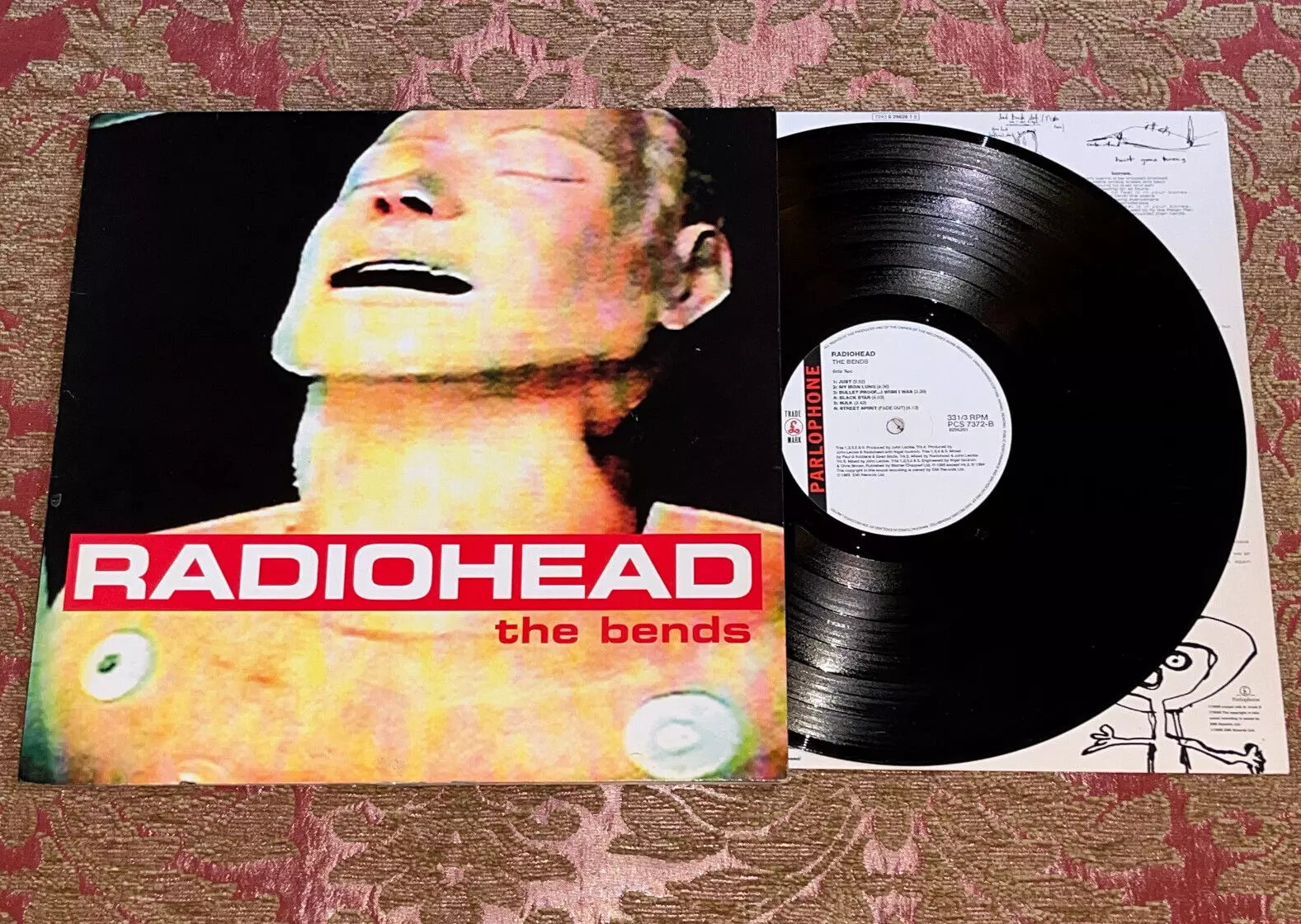
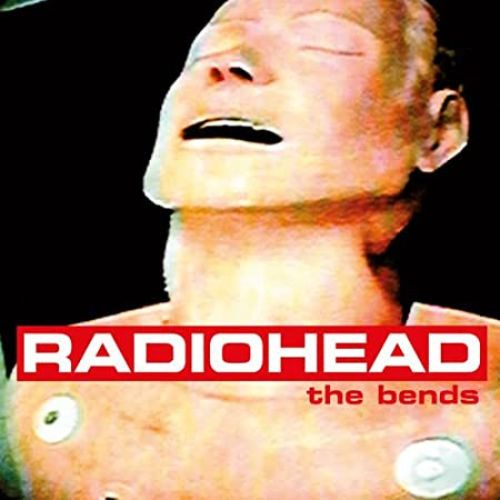
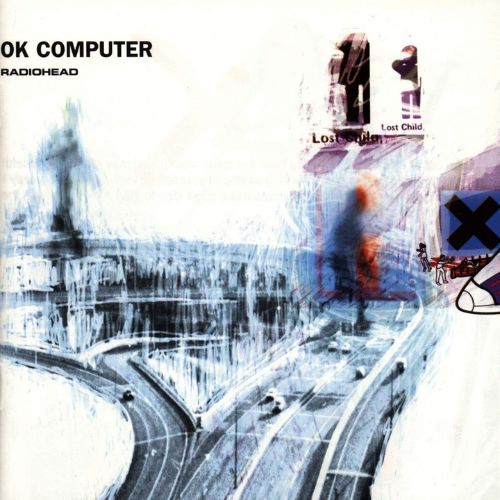
Having already demonstrated that Radiohead were capable of commercial success with the ’90s staple “Creep,” singer Thom Yorke steered the entire band in an entirely new direction. It all began with, of all things, him collaborating on the cover of this ground breaking LP with Stanley Donwood. But Yorke took it so far beyond the artwork, striding away from grunge into a considerably more experimental direction, from lyrics to introducing keyboards. Six charting singles sprang forth, with “My Iron Lung,” “Fake Plastic Trees” and the title track among them. This is yet another record on this list that demands to be listened to straight through not because every single song is so good but because it’s a total damn experience.
“The Bends” was different. The chem trails of grunge were still raining down on us. It sounds like a panic-addled diary typed out on a computer screen. It demands your attention and killed Radiohead’s early “Britpop” labels. It was everything for a middle schooler. “The Bends” still holds up after thirty years.
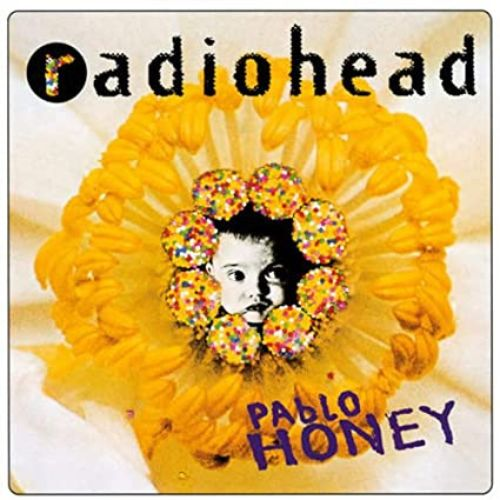
Radiohead was determined not to be just another Britpop or grunge group. “The Bends” was their first line of code to fill up an ominous blank screen after 1993’s “Pablo Honey” and the runaway “Creep” single that haunted them. Radiohead’s black mirror needed something colourful and brash to help them from falling into an endless abyss of narcissism and anxiety. “The Bends” filled that need.
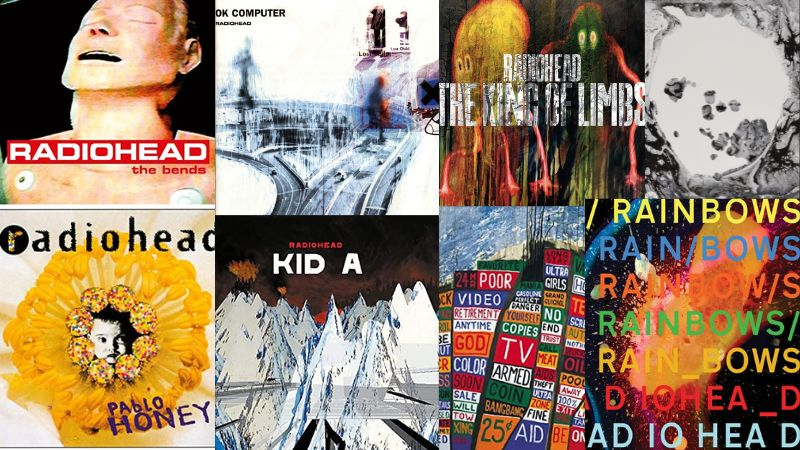
This week marks the 30th anniversary of Radiohead’s sophomore-slump-dodger “The Bends”, which arrived March 13th, 1995. After three decades, the jury’s been in on “The Bends”. A hook-heavy album big enough to save the band from the cut-out bins of one-hit-wonderness, and arty enough to tee up its dystopian post-rock opus “OK Computer”, which followed in 1997, “The Bends” obliterated the band’s good-not-great 1993 debut “Pablo Honey” and its cursed hit “Creep.” And in the process, the album mastered the craft of angsty Britpop anthemia followers like Coldplay and Muse would use to fill stadiums for decades to come.
Suffice to say; “The Bends” has aged pretty well. The reviews it received upon its release, not so much. critic Kevin McKeough forecasted the future Rock Hall of Famers’ inevitable one-hit-wonder status, He chalked up his one-star review of “The Bends” to elements such as “Seattle wanna-be guitar parts,” calling the “clumsy, unpleasant guitar scorch” of “Bones” and the shimmering bad-trip psychedelia of “My Iron Lung” “particularly cringe-inducing.” Thom Yorke‘s ethereal vocals and woebegone melodies are tuneful enough but too self-absorbed to be catchy,”
Spin magazine’s Chuck Eddy was a little more redeeming, awarding “The Bends” a 5/10score with a review that put the album in league with contemporary sophomore efforts by the likes of Spin Doctors, Counting Crows and The Offspring, calling it “one of those follow-up albums [that] proves the band is afraid to be pigeonholed into the only style it’s very good at.”
Meanwhile, legendarily cantankerous Village Voice music critic Robert Christgau writing of Yorke’s lyrical angst and their accompanying three-guitar assault: “the words achieve precisely the same pitch of aesthetic necessity as the music, which is none at all.” None? At all? Has a take ever resonated so hot?
How did these scribes manage to miss the genius squalls of guitarist Johnny Greenwood generations then, now and in between found in alt-rock bangers like opener “Planet Telex” and “Just.” How could they be so cold to the visceral transcendence of ballads like “High and Dry” and “Fake Plastic Trees” — the album’s two biggest singles, and songs that took the melancholy loneliness and misfit despair of “Creep” to deeper levels? How was it not obvious to them that this band of Oxfordshire sonic architects were, this early on, well-studied and able enough to elevate their equally obvious college-rock influences like R.E.M., U2, The Smiths, Pixies and Pink Floyd with a devastating set of Britpop classics-on-arrival like “Bones,” “Black Star” and “Street Spirit (Fade Out)” — anthems that offered as much in the arena of head-haunting moods and melodies as they did spacious experimentation?
“Sulk”
“Sometimes you sulk / sometimes you burn / God rest your soul / When the loving comes and we’ve already gone / Just like your dad, you’ll never change.”
“Sulk” taps into Yorke’s early fascination with violent news headlines. The careening stadium rock song was inspired by a killing spree by a solitary shooter in Hungerford, England in 1987. As a teenager, I naturally glommed onto the defeatist lyrics above. They exalt the physical act of sulking into some type of odd narrative of a superhero battling themselves. Although this track is sitting in the basement of my personal ranking for “The Bends”, it epitomizes the internal wrestling between Britpop histrionics and post-rock composure that Radiohead embodied before diving headlong into studio experimentalism on future records. Trivia note: Yorke self-edited the concluding lyric “just shoot your gun” when “Sulk” was recorded in late 1994, since Kurt Cobain’s death was still casting a long shadow in the music world. He didn’t want anyone to mistake the lyrics as being about the late Nirvana leader.
“Bones”
“I don’t want to be crippled and cracked / Shoulders, wrists, knees, and back / Ground to dust and ash / Crawling on all fours.”
Yorke has a lot of songs that highlight an almost unhealthy obsession with being incapacitated during this period in his life, as he inched closer to his thirties. Though he seems almost jovial in interviews these days after having children, “Bones” is the high watermark example of the old Thom. I listened to this song a lot when I was laid up last summer after breaking my left ankle ice skating. It’s a good song when you just feel deflated and want to connect with the raw energy of running away from our deepest fears: death and dismemberment. The lyrics always reminded me of Lot’s wife, when she turned into a pillar of salt after looking back at Sodom. That was always a stark image in my mind. Yorke might just be talking about the physical toll of touring, but he relays the sentiment at an almost Biblical scale.
“High and Dry”
“Drying up in conversation / You’ll be the one who cannot talk / All your insides fall to pieces / You just sit there wishing you could still make love.”
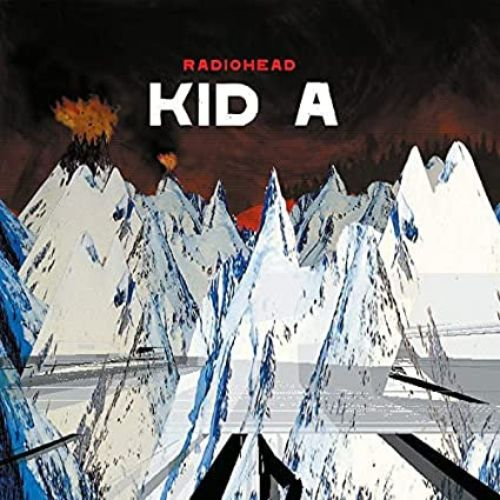
In a interview Yorke remembered his journey as a songwriter: “To begin with, writing songs was my way of dealing with shit. Early on it was all, ‘come inside my head and look at me.’ But that sort of thing doesn’t seem appropriate now. Tortured often seems the only way to do things early on, but that in itself becomes tired. By the time we were doing “Kid A” [their fourth album, released in 2000] I didn’t feel I was writing about myself at all. I was chopping up lines and pulling them out of a hat. They were emotional, but they weren’t anything to do with me.”
This song makes a good first impression solely from the vocal performance. “High and Dry,” which is a remix of an original demo from the “Pablo Honey” days, is often cheekily dedicated by Yorke to “older people, who don’t like loud music.” I’ve always been an old soul.
“Bullet Proof…I Wish I Was”
“Wax me, mold me / Heat the pins and stab them in / You have turned me into this.”
Critics looking to psychoanalyze Thom Yorke’s depressive moods were initially attracted to this song’s tone of desperation like bugs to a porchlight. An acoustic version of “Bullet Proof” is an excellent companion piece to the “Fake Plastic Trees” single. It’s also beautiful, even without the guitar noise from Jonny Greenwood and Ed O’Brien. “Bullet Proof” resonated with me more during college after romantic heartbreaks, or times of yearning for romance. The gaping valleys surrounding the ellipsis in the middle of the track title in particular is tailormade for the text messaging age, when there are no words to communicate your knotted ball of feelings for the opposite sex. Periods become bullets in this track, and Radiohead knows how to drift within the spaces.
“Fake Plastic Trees”
“She looks like the real thing / She tastes like the real thing / My fake plastic love.”
You can get cheap and downplay the importance of “Fake Plastic Trees.” It’s a widely popular Radiohead song, after all. Sure, it may have been everywhere in the late ’90s and 2000s, a go-to school talent show staple for teenagers learning to play guitar. Remember when Thom Yorke had bleached blond hair? All of that doesn’t discount it being an incredible earworm that builds on itself like a musical Jacob’s Ladder. According to rock lore, Yorke went back to the studio after the band went to a Jeff Buckley concert and recorded the vocals in two takes. He then broke down and cried. “Fake Plastic Trees” casts a dirty light on the crass world of mass marketing and consumption. I’ve always loved the slow buildup as it grows from an acoustic dirge to a fully orchestrated menace.
“Black Star”
“Blame it on the black star / Blame it on the falling sky / Blame it on the satellite that beams me home.”
Jonny Greenwood’s influence becomes readily apparent on this track. R.E.M.’s Michael Stipe took Thom Yorke under his wing when the band toured with Radiohead and Alanis Morisette and gave him a bit of advice about life in the public eye. The R.E.M. guitar jangle from Greenwood presages that early career connection between the bands, and is downright infectious. “The Bends” also saw the momentous entrance of Nigel Godrich’s influence, the band’s long time producer and de facto sixth member. He engineered “The Bends” and produced “Black Star.”
This is the beginning of a long time partnership that was only just starting up between the core group and Godrich. I’ve often inserted “Black Star” into my morning commute playlists—it had a hazy wake-up vibe, and I later discovered that Yorke joked that the song is about “getting back at 7 o’clock in the morning and gettin’ sexy.” I thought it was the most nihilistic song on the album.
“(Nice Dream)”
“I call up my friend, the good angel / But she’s out with her answerphone / She says that she’d love to come out but / The sea would electrocute us all.”
The swirling atmosphere for “(Nice Dream)” paves the way for Radiohead songs from the “Kid A” and Amnesiac” era. In a Matrix-like swap, the imaginary world turns into just a “nice dream” here, as the scales on the listeners’ eyes fall off. It smacks of the current online world, putting up a facade via TikTok or Instagram stories, when the reality is not nearly so rosy.
I found solitude in realizing that even when reality hits with an electric jolt, we can be strong enough to persevere, especially with family by our side.
“Just”
“Don’t get my sympathy / Hanging out the 15th floor / You’ve changed the locks three times / He still comes reeling through the door.”
Greenwood’s guitar playing is at its most intricate and commanding here, showing his love for the ever-ascending octatonic scale. Yorke challenged Greenwood in the studio to put as many chords into a song as possible, and this is the result. The music video for “Just” always fascinated me too, especially its cliffhanger ending where the camera zooms in on a middle-aged man’s mouth as he lies down in the middle of the road. What he ultimately says is up to the viewer, since the subtitles abruptly drop out.
“Planet Telex”
“You can force it but it will stay stung / You can crush it as dry as a bone / You can walk it home straight from school / You can kiss, you can break all the rules.”
This is one of my favourite opening tracks, It starts with the buzzing surge of the Roland Space Echo and reverb-heavy piano chords, and quickly veers into the shoegaze rock lane more than any other track on “The Bends”. It kickstarts the album so damn well. It’s a daydreaming song for sure, and helped define Radiohead’s purpose on the record and shake off early naysayers.
“The Bends”
“Where do we go from here? The planet is a gunboat in a sea of fear / And where are you?”
If you would have asked me to rank “The Bends” songs thirty years ago when I first listened to it, I would have easily put the title track at the top of my list. I was obsessed with its incredibly dark vibe, and thought a lot about hyperbaric chambers and saturation diving.
Saturation divers use a technique that allows them to reduce the risk of decompression sickness (“the bends”) when they work at great ocean depths for long periods of time. The concept still freaks me out, but there are people with claustrophilia who actually desire the confinement of small spaces. This song reminds me of all of that, and my latent anxiety about the bottom of the ocean. I still haven’t learned how to scuba dive. Maybe someday I’ll face my fears.
“Street Spirit (Fade Out)”
“This machine will, will not communicate / These thoughts and the strain I am under / be a world child, form a circle / before we all go under / and fade out again and fade out again.”
Yorke has often referred to the impact of Spotify on musicians and the industry as “the last desperate fart of a dying corpse.” When I first read that quote I laughed, as I occasionally do during Thom’s interviews. There’s an impishness to Yorke that I enjoy in live settings—and in his interactions with the press, there’s a side of him that I also see in myself. He delights in watching the establishment and industries we love straying away from old ideals and burning themselves down over and over, only to rise like the phoenix. “Street Spirit (Fade Out)” speaks to that intriguing conflict. Ed O’Brien’s arpeggiated guitar part uses an instrument created by the band’s guitar tech, Plank.
Yorke once called it the band’s “purest, saddest song.” It’s a spirit track for the downtrodden and brokenhearted, and it got me through multiple recessions and layoffs. “Street Spirit” was musically inspired by R.E.M. and Ben Okri’s 1991 novel The Famished Road. The book follows an abiku (“predestined to death”) spirit child living in an unnamed Nigerian city. This song always felt like that heavy weight of a straining culture above you, and the spirit fading out afterwards.
“My Iron Lung”
“We scratch our eternal itch / Our twentieth century bitch / and we are grateful for our iron lung.”
One of my all-time favourite stories from the making of “The Bends” centres on the sophomoric origins of the eerie album artwork. It’s actually just a grainy photograph taken from VHS footage of a CPR mannequin discovered at the University of Exeter. Radiohead were post-university twentysomethings at this point, fooling around while they created the artwork for the single “My Iron Lung.” A photograph of an actual iron lung wasn’t too appealing, so Stanley Donwood captured the now-iconic image by snapping a photo of a video playback with the CPR doll front and centre, looking toward the heavens.
Despite being lo-fi, it worked out—and Dorwood upped the ante with every Radiohead album cover after that.
“My Iron Lung” is the best song on the album for a variety of reasons, but for me it demarcates my transition into adulthood. I often turned it on to psych myself up before job interviews. It was Radiohead’s forceful reaction to 1993’s “Creep,” the young group’s hugely successful debut single off their debut LP, “Pablo Honey”. The cutting lyrics are self-referential and use an actual iron lung as a metaphor for the way “Creep” kept the band alive, but also crushed their true spirits as artists yearning for more adventurous sonic territories (“This is our new song / just like the last one / a total waste of time / my iron lung”).
This was a miniaturized detonation of an old song, whereas “Kid A”, years later, was an orchestrated dismantling of their discography thus far. The latter move opened a pathway to true reinvention every time they released something new. Radiohead will always be among the most cherished bands, “The Bends” was the beginning of that relationship.
Radiohead are:
- Thom Yorke – lead vocals, guitars, piano; string arrangements
- Jonny Greenwood – guitar, organ, recorder, synthesizer, piano; string arrangements
- Ed O’Brien – guitar, backing vocals
- Colin Greenwood – bass
- Phil Selway – drums




.png)


 The Fat Angel Sings