
This spring sees the release of PJ Harvey’s ninth studio album, The Hope Six Demolition Project.
The Hope Six Demolition Project draws from several journeys undertaken by Harvey, who spent time in Kosovo, Afghanistan and Washington, D.C. over a four-year period. “When I’m writing a song I visualise the entire scene. I can see the colours, I can tell the time of day, I can sense the mood, I can see the light changing, the shadows moving, everything in that picture. Gathering information from secondary sources felt too far removed for what I was trying to write about. I wanted to smell the air, feel the soil and meet the people of the countries I was fascinated with”, says Harvey.
The album was recorded last year in residency at London’s Somerset House. The exhibition, entitled ‘Recording in Progress’ saw Harvey, her band, producers Flood and John Parish, and engineers working within a purpose-built recording studio behind one-way glass, observed throughout by public audiences.

The second album from Minneapolis-based band Night Moves, ‘Pennied Days’ on Domino. Written and recorded by principle band members John Pelant and Micky Alfano, and produced by John Angello (Kurt Vile, Sonic Youth, The Walkmen), the album feels warm with feeling, tinged with a deep appreciation for rock and roll’s most storied songwriters. Ranging from traditionalist heroes like Leon Russell and The Band to r’n’b originators Curtis Mayfield and Sly Stone to pre-punk experimentalists Suicide. It’s distinctly modern and a great leap forward from 2012’s Colored Emotions. ‘Pennied Days’ was recorded following tours with Father John Misty, Lord Huron, Django Django, and Polica, in support of the previous album.
LP – Heavyweight LP with Download.
LP+ – Deluxe Heavyweight LP with a limited edition 10 inch with three bonus tracks and Download.

When The Coathangers started up in 2006, their aspirations were humble. “I think all bands in their early twenties start for fun,” says guitarist / vocalist Julia Kugel when talking about their early years of cheeky no-wave and irreverent garage rock. But Julia and her bandmates Meredith Franco (bass / vocals) and Stephanie Luke (drums / vocals) were serious about their craft, and that combination of modest outside expectations and absolute dedication to their music made for exhilarating live shows and contagious records. Ten years later, The Coathangers are still going strong, and while their palette has expanded over the years to touch upon hip-shakin’ classic rock, soulful country ballads, and golden oldies pop, their primary attack strategy still relies heavily on the jagged hooks and boisterous choruses of their formative years. Their fifth album ‘Nosebleed Weekend’ retains all the devil-may-care magnetism and serrated instrumentation of their debut, but it flourishes with a decade’s worth of songwriting discipline and chemistry. ‘Nosebleed Weekend’ kicks off with ‘Perfume’, a song that marries sultry pop vocals with toothy guitar riffs in a manner that would make Ann and Nancy Wilson proud. It’s hard to imagine The Coathangers writing a song this accessible in their early years, but in 2016 it fits perfectly into their canon. From there the band launches into ‘Dumb Baby’, which harkens back to the gritty neo-garage rock of Murder City Devils. Longtime fans who still clamor for their brash post-punk angle will be immediately satiated by ‘Squeeki Tiki’. And after hearing the noisy loud-quiet-loud bombast of ‘Excuse Me?’ it’s no wonder that Kim Gordon has become an outspoken fan of the band. It’s an eclectic album inspired by life on the road, lost loved ones, and Kugel’s recent move to Southern California. “We always say that each record is a snapshot of our life at the time,” Kugel says. “As far as style… it’s just what came out of us at that point.” So whether it’s the foreboding garage rock of the title track, the post-punk groove of ‘Burn Me’, the stripped-down pop of ‘I Don’t Think So’, or the dynamic grunge of ‘Down Down’, The Coathangers command their songs with passion and authority.
LP – Housed in Gatefold Sleeve with Download. Initial copies are pressed on coloured vinyl.
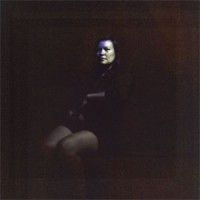
Hold/Still, the third studio album from Suuns, is an enigmatic thing: an eerily beautiful, meticulously played suite of music that embraces opposites and makes a virtue of cognitive dissonance. It is a record that does not give up its secrets easily. The 11 songs within are simultaneously psychedelic, but austere; sensual, but cold; organic, but electronic; tense sometimes to the brink of mania, but always retaining perfect poise and control. “There’s an element of this album that resists you as a listener, and I think that’s because of these constantly opposing forces,” says drummer Liam O’Neill. “Listen to the song ‘Brainwash’, for instance, “It’s a very soft, lyrical guitar song, existing alongside extremely aggressive and sparse drum textures. It inhabits these two worlds at the same time.”
From the beginning, Suuns (you pronounce it “soons”, and it translates as “zeroes” in Thai) have sought to do things differently. They formed in Montreal 2007, when singer/guitarist Ben Shemie and guitarist Joe Yarmush got together to work on some demos, soon to be joined by Liam, Ben’s old schoolfriend, on drums and Max Henry on synth. Their group’s first two records, 2010’s Zeroes QC and 2012’s Polaris Prize-nominated Images Du Futur – both released on Secretly Canadian – were immediate critical hits, and Suuns soon found themselves part of a late ’00s musical renaissance in the city, alongside fellow groups like The Besnard Lakes, Islands and Land Of Talk. Still, at the same time, Suuns feel remote from the big, baroque ensembles and apocalyptic orchestras that typify the Montreal scene. “We write quite minimal music,” thinks Ben. “They’re not traditional song forms, sometimes they don’t really go anywhere – but they have their own kind of logic.” Or as Joe puts it: “It’s pop music, but sitting in this evil space.”
After two records produced by their friend Jace Lasek of The Besnard Lakes at his Montreal studio Breakglass, Suuns decided Hold/Still demanded a different approach. In May 2015, they decamped to Dallas, Texas to work with Grammy- winning producer John Congleton (St Vincent, The War On Drugs, Sleater- Kinney). For three intense weeks, the four recorded in Congleton’s studio by day, the producer driving them to capture perfect live takes with virtually no overdubbing. At night, they returned to their cramped apartment and stewed. “Recording in Montreal, it’s more of a party atmosphere,” says Joe. “Here it felt like we were on a mission. We were looking for something to take us out of our element, or that might seep into our music.” Luckily, the effect was galvanizing. Under Congleton’s instruction, ‘Translate’ and ‘Infinity’, songs the group had been reworking for years, suddenly found their form.
The result is undoubtedly Suuns’ most focused album to date, the sound of a band working in mental lockstep, crafting a guitar music that feels unbeholden to clear traditions or genre brackets. From the haunted electronic blues of ‘Nobody Can Save Me Now’ to throbbing seven-minute centrepiece ‘Careful’, Hold/Still foregrounds the work of Max, a synthesizer obsessive who builds hisown patches and confesses to using cranky or budget equipment as well as top-of-the-range kit because “[good gear] does all the work for you, and that’s not always fun”. Certainly, this is a band as inspired by the dark groove textures of Andy Stott, the flourishing arpeggios of James Holden or the serrated productions of Death Grips as anything familiarly rock. “Things don’t feel right until they’ve been touched or cast over in an electronic light,” elaborates Liam. “It’s rare that acoustic drum kit, guitar, and bass comprise a finished product for us. For a song to be Suuns, it has to be coloured by electronics”.
Certainly this remains a band in love with the aesthetic of obscurity. The album cover is an image of Ben’s former workmate Nahka, who was captured by photographer Caroline Desilets using a pinhole camera with a four-minute exposure time – Hold/Still, indeed.
In another contradiction, this record finds Ben’s vocals far more enunciated and upfront than before. If there are themes that tie Hold/Still together, says Ben, they might be investigations “about sex… perhaps not the act specifically, just [themes] of a sexual nature. But there’s also a spiritual undertone that points to another kind of searching.” The sexual is illustrated in the dark romance of ‘Careful’, while longing becomes both sexual and spiritual in the thirsty pleas of ‘Instrument’: “I wanna believe/I wanna receive…” The spiritual takes over on the back half of the record. ‘Nobody Can Save Me Now’ evokes artist Tracey Emin’s ghostly invocation For You at the Liverpool Cathedral: “I felt you / and I knew that you loved me”, while side B opener ‘Brainwash’ wonders: “Do you see, all seeing? / Do you know, all knowing?”
In a cultural centre like Montreal, bands can get too comfortable playing to their peers. Suuns, though, feel like a band always looking to the nearest border. They found early audiences in France and in Belgium, where they curated the Sonic City Festival in 2012, booking acts as diverse as Swans, Tim Hecker and Demdike Stare. Meanwhile, the last couple of years have seen them tour as far afield as Mexico, Morocco, Beirut, Taiwan and Istanbul – sometimes with friend Radwan Moumneh of the multimedia project Jerusalem In My Heart, with whom they released a brilliant collaborative record, Suuns And Jerusalem In My Heart last year.
“We tour a lot as a band and we’ve been all over the map at this point,” says Ben. “There is a concerted effort on our part, when the opportunity arises, to do that. It’s like, this time, let’s try to go further east, let’s try to go further south. You find yourself playing in front of people who don’t get bands playing in front of them often, and that can be really fun.” In short, good things happen when you venture outside of your comfort zone – a truth that you could equally apply to Hold/Still itself: an album which derives its eerie power from simmering tensions and strange, stark juxtapositions, and in doing so, directs rock music down a new, unventured path.

This is a single disc version on 180grm Green vinyl. The ORIGINAL VERSION of this vinyl of this brand new EP was work of art collaboration between Anton Newcombe & Icelandic artist Jon Semundur Auoarson the double 12″ EP consists of 5 new tracks by the Brian Jonestown Massacre & double sided etched disc by Jon Semundur Auoarson & was strictly limited to 1,000 Units worldwide This VERSION is a single 5 track EP but with the same superb cover art as the original release . This was recorded after the extensive tour of Europe ,Australia , New Zealand & a few select dates in New York State (especially ATP supporting My Bloody Valentine et al ) in 2008 , Anton went to Berlin to focus on his next album ., 4 weeks before hitting the US tour in April 2009 ,Anton was bursting with ideas & went to Iceland where this 5 track EP was recorded . This album brings the traditional Brian Jonestown Massacre sound mixed with eastern influences & bringing it up to date with the benefit of all the additional weirdness that’s been discovered in the past 40 years.

Singing Saw is a record written simply and realized orchestrally. In it, Kevin Morby faces the reality that true beauty – deep and earned – demands a whole-world balance that includes our darker sides. It is a record of duality, one that marks another stage of growth for this young, gifted songwriter with a kind face and a complicated mind.
In the Autumn of 2014, Kevin Morby moved to the small Los Angeles neighborhood of Mount Washington. The move would shape Singing Saw, Morby’s first album for new label Dead Oceans. Previous tenants at Morby’s new home happened to leave an upright piano behind, with a few mysterious pieces of sheet music and an introductory book of common chords stacked on top. Thankful to finally be in one place for an extended spell, Morby, a beginner at the piano, immediately sat at the new instrument and began composing the songs that would form Singing Saw.
Alongside, he began taking long walks through the winding hills and side streets of the neighborhood each night, glimpsing views of both the skyline’s sweeping lights and the dark, dried out underbrush of the LA flora. The duality of the city itself began to shape a set of lyrical ideas that he would refine with the sparse accompaniment of piano and acoustic guitar.
What is a singing saw? It is an instrument that creates ethereal sounds, but it is also a tool: basic and practical while also being fearsome, even destructive. Morby watches the singing saw in its eponymous song; that instrument of eerie soft beauty cuts down the flowers in its path and chases after him, while his surroundings mock and dwarf him, Alice in Wonderland style. And in a singing saw, we can understand music as something more powerful than its inviting, delicate sound. No wonder Morby talks about a “songbook” in his head as something he needs to take up the hills so he can “get rid of it.” Heavy themes are nothing new for Morby, whose previous records (2013’s Harlem River and 2014’s Still Life, both released on the Woodsist label) dealt with their own eerie visions and damning prophecies.
Morby opens Singing Saw with “Cut Me Down”, a song of tears, debts and a prescient vision of being reduced to nothing. “I Have Been to the Mountain”, “Destroyer” and “Black Flowers” continue to explore beauty and freedom, seizing upon the rot that seeps into even the supposedly safest of realms; peace, family and romantic love. By the end of the record on “Water”, Morby is literally begging to be put out once and for all, like a fire that might burn all the visions away.
Travels beyond his mountain walks inform songs like “Dorothy”, which recounts a trip to Portugal, witnessing a fishing ritual and luxuriating in the aura of a bar light-tinged reunion with old friends The touching innocence of “Ferris Wheel” stands alone in stark simplicity amidst the lush sonic textures of the album. Here, the album is balanced by Morby’s signature sweetness and joie de vivre.
The arrangements of Singing Saw trace back to Morby’s experience playing in The Complete Last Waltz, a live recreation of The Band’s legendary last performance. There, Morby developed a fast friendship with producer/bandleader Sam Cohen (Apollo Sunshine, Yellow Birds), which led Morby to forgo recording in Los Angeles and take the nascent songs of Singing Saw to Isokon Studios in Woodstock, New York. There, in a converted A-frame house, they set about creating a record that would bring a sonic balance, intricacy and depth to match these songs and all that inspired them.
Sam Cohen added a multitude of instrumentation to the record (guitar, bass, drums and keyboard), and were joined by fellow Complete Last Waltz alum Marco Benevento on piano and keyboard, fleshing out Morby’s original compositions and upholding the vision for a cohesive piano sound that serves as a touchstone for the entire album. Backup vocalists Hannah Cohen, Lauren Balthrop and Alecia Chakor contribute soaring harmonies; Nick Kinsey (Elvis Perkins) adds drums and percussion; Justin Sullivan, a longtime Morby collaborator and staple of his live band, contributes drums; Oliver Hill and Eliza Bag lift numerous songs with string accompaniments, and Alec Spiegelman on saxophone and flute and Cole Kamen-Green on trumpet bring dramatic swells. Finally, John Andrews (Quilt) adds the eerie lilt of the album’s promise, providing saw on the “Cut Me Down” and “Singing Saw”.
In the end, Morby fulfills the promise many heard on his first two albums, bringing his most realized effort of songwriting and lyricism to fruition. The songs of Singing Saw reflect the clarity that comes from welcoming change and embracing duality, and the distillation of those elements into an entirely new vision.

After the critically acclaimed release ‘Deep Fantasy’ (2014), White Lung return with their fourth album ‘Paradise’. Vocalist Mish Barber-Way, guitarist Kenneth William and drummer Anne-Marie Vassiliou, reconnected in Los Angeles to work with engineer and producer Lars Stalfors (Health, Cold War Kids, Alice Glass). Mixed by Stalfors and later mastered by Joe LaPorta, ‘Paradise’ is their smartest, brightest songwriting yet. Coming in at 28 minutes, the album simmers with desire and pain, love and beauty, and a seething urgency, hurtling towards the album closer and title track Paradise at signature breakneck speed.
LP+ – Pressed on pale blue vinyl limited quantity worldwide includes printed inner sleeve and MP3 download card.
Tape – Limited edition cassette version of the album in a silver / blue / red tri-glitter shell, limited to 300 worldwide, includes MP3 download card.
CD – Digipack.
LP – Black Vinyl with printed inner sleeve and MP3 download card.

Love Letter for Fire is a collaboration between Sam Beam (aka Iron and Wine) and singer-songwriter Jesca Hoop. The thirteen-track album features the singles “Every Songbird Says” and “Valley Clouds,” and was written throughout 2014. Love Letter for Fire features Beam and Hoop on vocals and guitar along with Robert Burger (keys), Eyvind Kang (violin, viola), Glenn Kotche (drums, percussion), Sebastian Steinberg (bass) and Edward Rankin-Parker (cello). The album also features a cover photo by Sam Beam.
As Iron and Wine, Sam Beam recorded for Sub Pop from 2002-2007, releasing a number of highly-acclaimed albums, singles, and EP’s, including The Creek Drank The Cradle (2002), Our Endless Numbered Days (2004), Woman King (2005) and The Shepherd’s Dog (2007). He went on to record for Warner Brothers, Nonesuch, and 4AD. Recent releases include a covers album with Ben Bridwell from Band of Horses, and the two-volume Archive Series, which features material that preceded Sam’s Sub Pop-era recordings.
Jesca Hoop is an American singer-songwriter and guitarist. She is an incredible live performer, known for her wonderfully-eclectic take on folk, rock, and electronic music. Hoop has released five albums and two EPs, including the critic favorites Hunting My Dress and The House That Jack Built. Jesca has toured and collaborated with the likes of Shearwater, Willy Mason, Blake Mills, Andrew Bird, The Ditty Bops, Guy Garvey, and Elbow, and has recorded for Bella Union and Vanguard. Love Letter for Fire was produced, recorded and mixed by Tucker Martine (Modest Mouse, Decemberists, Neko Case) at Flora Recording & Playback in Portland, OR and mastered by Richard Dodd in Nashville, TN.

Late last year, Destroyer released ‘Poison Season’ – a treasure trove of mid-’70s Bowie-esque thumpers, string-laden laments and E Street horns – to universal acclaim. Recorded in the same sessions as ‘Poison Season’, the song ‘My Mystery’ was a huge favourite yet somehow felt like it didn’t quite fit on the album. Now it gets released as a stand alone 12″ backed by ‘My Mystery (DJ johnedwardcollins@gmail.com remix)’.

Tanya Donelly is a singer-songwriter and founding member of three of the most successful bands of the post-punk era. At the age of 16, she and stepsister Kristin Hersh formed Throwing Muses, which became the first American band ever signed to the influential British label 4AD. Not only did the Muses’ dreamy, swirling guitar sound prove highly influential on many of the alternative acts to emerge in their wake, but they also made any number of unprecedented advances into the male-dominated world of underground rock. Donelly later sidelined with Pixies bassist Kim Deal to form the Breeders, appearing on the debut LP, Pod. She later exited both the Breeders and Throwing Muses to form her own band, Belly. After issuing a pair of well-received EPs, Belly released their full-length debut, Star — a superb collection of luminous, fairy tale-like guitar pop songs — and for the first time in her career, Donelly earned commercial success commensurate to her usual critical accolades. Not only did the record go gold on the strength of the hit single ‘Feed the Tree’ but the band even garnered a Grammy nomination for Best New Artist. Donelly would eventually disband Belly to raise her two daughters. She still found time to write and record music as a solo artist — Beautysleep, Whiskey Tango Ghosts and This Hungry Life were all exceptional albums and enjoyed critical success. The Swan Song Series is a collection of songs in which Donelly collaborated with friends, musicians and authors such as Rick Moody, Robyn Hitchcock, John Wesley Harding, Damon Krukowski and Naomi Yang (Damon + Naomi/Galaxie 500), Bill Janovitz (Buffalo Tom), Tom Gorman (Belly), and Claudia Gonson (Magnetic Fields), and explored an impressive range that wasn’t always captured on previous albums. This exclusive collection includes the first 5 self-released digital EP’s + 7 brand new, previously unreleased, tracks on a 31 song set.

The first new music from Lush for 20 years, and the first the band have released since their single 500 (Shake Baby Shake), taken from their last album Lovelife, in July 1996.
The four tracks were recorded in the summer of 2015 with Daniel Hunt (Ladytron) and Jim Abbiss (Adele, Kasabian, Arctic Monkeys)
Talking about the recording of the EP, Miki Berenyi commented:
“It certainly took sometime to come together, but once we were in the studio, everything came together incredibly quickly. It was great fun!
It’s been a long time since I’ve written Lush lyrics, and I realised early on with this EP that what I wrote about then is not what I feel comfortable writing about now. My perspective, and what is close to my heart, has changed, and I think that’s conveyed in the songs.”
Bassist Phil King added:”I know I’m biased, but I work for a music magazine and so much of the music I hear played in the office sounds non-descript or derivative. Emma has this way of writing unusual chord changes and manages to weave lovely melodies over the top, and it immediately sounds distinctive, like Lush.”
Signed to 4AD in 1989, over the course of 3 full-length albums, an early mini-album and a number of EPs and singles, they went on to sharpen their pop sound, outliving and outgrowing the ‘scene’ with which they were initially associated.
4AD recently released, to much acclaim, both a vinyl reissue of Lush’s ‘best of’ compilation Ciao! and a limited edition five-disc box set titled Chorus.

Serving up a combination of Southern musicality and garage rock ferocity, Shreveport, Louisiana natives Seratones announce their debut album ‘Get Gone,’ released via Fat Possum Records. Led by powerhouse frontwoman A.J. Haynes whose thunderous vocals recall the grit of Janis Joplin and gospel of Mavis Staples, Seratones make a strong case with ‘Get Gone’ to be your new favourite alt-rock band of 2016. Recorded at Dial Back Sound studios in Mississippi, ‘Get Gone’ is all live takes, a portrait of Seratones in their element. Add the soul and swagger of a juke joint with the electricity coursing through a basement DIY show, and you’d begin to approach the experience of seeing this foursome live. Haynes’ powerful singing voice, first honed at Brownsville Baptist Church in Columbia, Louisiana at age 6, rings across every track. ‘Don’t Need It,’ which opens with a muscular swing and tight guitar lines, builds into a monster finish with a nasty corkscrew of a guitar line. ‘Sun,’ a brawny thrasher, courses with huge, raw voltage riffs. ‘Chandelier,’ a mid-tempo burner and vocal workout by Haynes, goes from croon to a crescendo that would shake any crystals hanging from the rafters. Shared history in Shreveport’s music scene brought the Seratones together a few years ago. All four had played together with one or another in various local punk bands, bonding through all-ages basement shows, gigs at skate parks and BBQ joints, and late nights listening to jazz and blues records. In a city of multiple genres, no fixed musical identity and a flood of cover bands, these adventurous musicians carved out their own path, personifying the do-it-yourself ethos. The band’s unwavering dedication to staying true to themselves is echoed throughout their debut; however you try to describe it, ‘Get Gone’ is unexpected and unbowed, a head-snapping showcase of the twin pillars of Southern music, restlessness and resourcefulness.
LP – Black Vinyl With Download.
LP+ – Limited Yellow Coloured Vinyl with Download.

Limited 7″ (200 copies) with CD (CD contains Stereo, Mono & Instrumental mixes), and digital download. We have 50 copies only !!! Alt pop super-group FIR combines the songwriting genius of Brent Rademaker from Beachwood Sparks and Matt Piucci from Rain Parade, with the extraordinary talents of Rob Campanella from The Brian Jonestown Massacre and Nelson Bragg from the Brian Wilson Band. On this record, the bittersweet combo is made complete by the smooth harmony vocals of the Allah-Las. Sounding something like a sugary, drugged out Beatles, FIR’s first 7″


 The Fat Angel Sings