


A Chronicle of Fleetwood Mac, Volume One: 1967–1974 by Mick Fleetwood
“I have dreamt of one day working to present a documentation of the early story of Fleetwood Mac. This moment has arrived! And I’m thrilled to be in the safe hands of Genesis Publications.” – Mick Fleetwood In 1967 Fleetwood Mac debuted at the Windsor Blues and Jazz Festival. 50 years later one of its founding members Mick Fleetwood documents the rocky beginnings of a band that emerged from what is now referred to as the British Blues Boom.
“The Windsor Jazz & Blues Festival was Fleetwood Mac’s first official gig. It was such a significant musical gathering, like Paris was for artists in the 1920s.” – Mick Fleetwood
Mick Fleetwood is a self-taught drummer and a founding member of one of the most successful bands of the last 50 years, Fleetwood Mac. Released in 1968, their first album Peter Green’s Fleetwood Mac came in at no.4 in the UK charts and brought the band overnight success. They went on to release the no.1 hit ‘Albatross’ and a series of critically acclaimed albums, with further hit singles including ‘Black Magic Woman’ and ‘Need Your Love So Bad’.
A constant in Fleetwood Mac’s frequently changing line-up, Mick Fleetwood took over management of the band two years before they released Rumours which – having sold over 40 million copies worldwide – remains one of the best-selling albums of all time.
“Fleetwood Mac got famous so quickly; we were still playing small clubs even as we were becoming pop stars.” – Mick Fleetwood
This official limited edition chronicle, “LOVE THAT BURNS”, contains over 400 rare images and an original manuscript of over 20,000 words with exclusive contributions from early Fleetwood Mac band members including John and Christine McVie, Jeremy Spencer and the legendary Peter Green.
“The line ‘Please don’t leave me with a love that burns’ applies to a lot in the Fleetwood Mac journey. When Peter Green left the band, that’s how I felt – that the love would be irreplaceable, and in many ways it was.” – Mick Fleetwood
Love That Burns contains original manuscript from Mick Fleetwood recounting his childhood, early bands, Fleetwood Mac’s debut performance, first international tours, live gig antics, playing with blues legends at Chess Studios, the genius of Peter Green and the many talented members that formed Fleetwood Mac in the years before 1975.
Love That Burns features text commentaries by Peter Green, Christine McVie, John McVie, Jeremy Spencer, John Mayall, Mike Vernon, Sandra (Vigon) Elsdon and Jenny Boyd and is narrated with more than 20,000 words.
“Every page turned in this precious book reflects the efforts and life force of each band member that was part of this early journey that Fleetwood Mac took.” – Mick Fleetwood
Love That Burns features images from the Mick Fleetwood archives and various contributions from friends of the band including rare unpublished images, unseen archival material, and original illustrations by Jeremy Spencer.
Top photographers include Clive Arrowsmith, Henry Diltz, Bruno Ducourant, Bob Gruen, Jeff Lowenthal, Barry Plummer, Michael Putland, Dominique Tarle, Amalie Rothschild and Daniel Sullivan.
I have dreamt of one day working with Genesis to present a documentation of the early story of Fleetwood Mac – This moment has arrived! And I’m thrilled to be in the safe hands of Genesis Publications.” – Mick Fleetwood
Love That Burns is published in a numbered, limited edition of only 2,000 copies worldwide. Every hand bound book is individually signed by the author, Mick Fleetwood. Handcrafted in Milan, Italy, the limited edition is quarter bound in leather with foil blocking, yellow sprayed page edging and a padded cover featuring the Fleetwood Mac artwork of Sixties graphic artist, Günther Kieser.
An exclusive 7″ vinyl picture disc includes ‘Love That Burns’ from the 1968 album Mr Wonderful, and a rare instrumental track recorded in June 1967, entitled ‘Fleetwood Mac’, from which the band took it’s name.

FLEETWOOD MAC – ” Tango In The Night “
Posted: March 23, 2018 in MUSICTags: Christine McVie, Fleetwood Mac, John McVie, Lindsey Buckingham, Mick Fleetwood, Record Store Day, Stevie Nicks, Tango In The Night
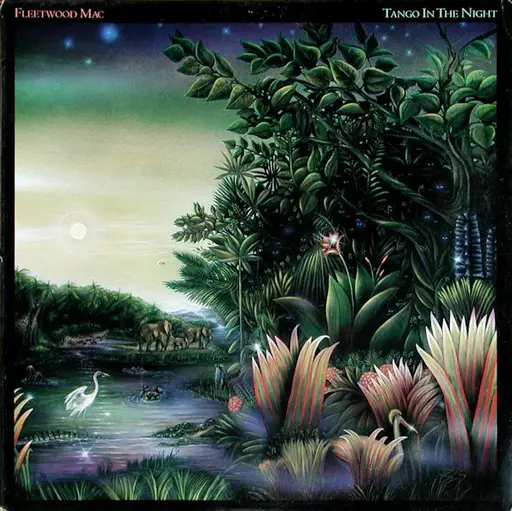
In December 2012, three members of Fleetwood Mac cried together, in public, at the memory of something that had happened all of 25 years previously. Singer Stevie Nicks, guitarist Lindsey Buckingham and drummer Mick Fleetwood were doing a round of media interviews to announce the band’s 2013 tour when they were asked about the events of 1987, when Buckingham quit the band following the release of the album “Tango In The Night.”
Tango In The Night was released on April 13th, 1987. The first single from the album, “Big Love“, was already a Top 10 hit on both sides of the Atlantic, It was their fourteenth studio album,
Buckingham did not respond directly to the interviewer. Instead he turned to Nicks and Fleetwood and reiterated his reasons for leaving the group at a critical stage of their career: foremost among them, his sense that Nicks and Fleetwood had lost their minds and souls to drugs.
“What Lindsey said in that interview was very moving,” Fleetwood says. “He told us: ‘I just couldn’t stand to see you doing what you were doing to yourselves. You were so out of control that it made me incredibly sad, and I couldn’t take it any more.’ It was really powerful stuff. This was someone saying: ‘I love you.’ It hit Stevie and me like a ton of bricks. And we all cried, right there in the interview.”
It was a moment that Mick Fleetwood still describes as “profound”. But even after all these years, his memories of that time in 1987 are still raw. For when Lindsey Buckingham walked out on Fleetwood Mac, he did not go quietly. When Buckingham told the band he was leaving, it led to a blazing argument that rapidly escalated into a physical altercation between him and former lover Nicks, in which she claimed she feared for her life.
“It is,” Fleetwood says, “a pretty wild story. It was a dangerous period, and not a happy time.” And yet, for all the drama that came with it, “Tango In The Night” was a hugely important album for Fleetwood Mac. It became the second biggest-selling album of their career, after 1977’s 45-million-selling “Rumours“.
In 1985, Lindsey Buckingham was writing and recording songs for what was planned as his third solo album. Fleetwood Mac had been on indefinite hiatus since 1982, following a world tour in support of their album “Mirage“. In that time there had been solo albums from all three singers: Nicks’ The Wild Heart sold a million copies; Christine McVie’s eponymous album yielded a US Top 10 hit with Got A Hold On Me; but, to Buckingham’s chagrin, his album Go Insane had not made the Top 40.
There had also been problems for them over these years. Nicks had been treated for drug addiction. More surprisingly, Mick Fleetwood had been declared bankrupt following a string of disastrous property investments. “At that time,” Buckingham later admitted, “the group had become a bit fragmented.”
By the end of ’85, Buckingham – working alone at his home studio in Los Angeles – had three songs finished: Big Love, Family Man and Caroline. But while he was busy making music, Mick Fleetwood was busy making plans to get the band back on track.
The wheels had been set in motion when Christine McVie recorded a version of the Elvis Presley hit Can’t Help Falling In Love for the film A Fine Mess – backed by Mick Fleetwood and the band’s other remaining founding member, her ex-husband John McVie. She invited Buckingham to produce, alongside engineer Richard Dashut.
“It was the first time for nearly five years that we’d all been in a working environment together,” Christine said. “We had such a good time in the studio and realised that we still had something to give each other in musical terms after all.” Mick Fleetwood was more forthright. “The reality,” he says, “is that Fleetwood Mac were intending to make an album. And Lindsey was in many ways pressured into it. ‘Hey, we’re making an album – let’s go!’”
Buckingham relented, partly out of a sense of duty. “I had a choice,” he said, “of either continuing on to make the solo record, or to sort of surrender to the situation and try and make it more of a family thing. I chose the latter.” What Fleetwood didn’t know is that Buckingham’s agreement was conditional. “I had the idea,” Buckingham said, “that that was going to be the last work with the group.”
The biggest problem for Lindsey Buckingham was, of course, Stevie Nicks. “I’ve known Stevie since I was 16 years old,” he said. “I was completely devastated when she took off. And yet I had to make hits for her, So on one level I was a complete professional in rising above that, but there was a lot of pent-up frustration and anger towards Stevie in me for many years.”
“He got very angry with me,” Nicks has said. “He tossed a Les Paul across the stage at me once and I ducked and it missed me. A lot of things happened because he was so angry at me.” Buckingham’s frame of mind was not helped by the not inconsiderable success that Nicks enjoyed in her solo career. In 1981, her solo debut, “Bella Donna“, went to No.1 in US. Other hit albums and singles followed. Buckingham’s solo records sold next to nothing.
For all that, Buckingham threw himself into the album. He either wrote or co-wrote seven of the 12 tracks that made the finished album. He also acted as co-producer with Richard Dashut. And it was at his home studio that most of the recording was done.
What was unusual about the recording of Tango In The Night was the absence of Stevie Nicks for much of the process. Nicks actually contributed three songs to the album, but was in the studio for only two to three weeks.
One trick of Buckingham’s, in Big Love, was especially brilliant. For the song’s climax, he used variable speed oscillators on his voice to create the effect of a male and female in a state of sexual excitement – the “love grunts”, as he called them.
“It was odd that so many people wondered if it was Stevie on there with me,” he said, a little disingenuously. Although there were other great songs on the album – slick pop rock tunes in the classic Fleetwood Mac style, such as Christine’s “Little Lies” and “Everywhere”, and Stevie’s “Seven Wonders” Fleetwood calls Tango In The Night “Lindsey’s album”. But for Buckingham himself, there was a sense that in the transition from solo album to band album, something had been lost. A perfectionist, intensely analytical, he felt that Tango In The Night was too predictable, too safe.
“She was not hugely present,” Fleetwood says. “I don’t remember why. And I don’t think we would remember. Fleetwood says that he and Nicks were doing more cocaine during the making of “Tango” than when they were recording “Rumours” an album on which they seriously considered thanking their drug dealer in the credits.
“Certainly, I smoked a lot of pot. But I was never a big user of coke,” Buckingham adds.
“Actually,” he admits, “it was way worse on “Tango In The Night.” For sure.”
While Tango was being recorded at his home, he found a way of keeping the two cokeheads – plus assorted hangers-on – at a safe distance.
“Lindsey had a Winnebago put in his driveway,” Fleetwood says. “And that’s where Stevie and I would go with our wrecking crew. With me, the party never stopped. It wasn’t until years later that I asked him: ‘What was all that about?’ And he said: ‘I couldn’t stand having you punks in the house. You’d turn up at the studio with people that you’d met from the night before, and you’d start gooning around. You were too fucking crazy.’ Lindsey was never a drama queen, enjoying the 80s drug culture like Stevie and me. It wasn’t his scene.
The drug taking was only one part of the problem. There were other things eating away at Buckingham.
Just as Rumours had done in the 70s, so Tango In The Night defined the soft rock era of the 80s. Perhaps most significant of all, it marked the third coming of the Mac, following the successes of the Peter Green-led blues rock Mac of the late 60s and the Buckingham/Nicks-fronted AOR The the Mac of the 70s. And for Mick Fleetwood, it represented a personal triumph. Mick Fleetwood is not sure it is simple coincidence that Fleetwood’s two biggest-selling albums, “Rumours” and “Tango In The Night”, were made when the band was at its most dysfunctional. “Also,” he says, “I’m not sure I should be so proud of it.”
While he freely admits that his own drug-fuelled insanity was instrumental in Lindsey Buckingham’s exit, it was Fleetwood who kept the band together once Buckingham had gone. And this was key to the success of “Tango In The Night“. In the 90s, Buckingham re-joined Fleetwood Mac, and, more importantly, made his peace with Stevie Nicks. They have both come a long way since that dark day in 1987: Buckingham now married and a father of three, Nicks happily drug-free. All that remains between them is what Mick Fleetwood calls “the good stuff”.
“My motto” Fleetwood says, “was ‘the show must go on’. It was almost an obsessive-compulsive desire to not give up. And it worked.”
FLEETWOOD MAC – ” Bare Trees ” Classic Albums Released March 1972
Posted: January 14, 2018 in CLASSIC ALBUMS, MUSICTags: Bare Trees, Bob Welch, Christine McVie, Danny Kirwan, Fleetwood Mac, John McVie, Mick Fleetwood
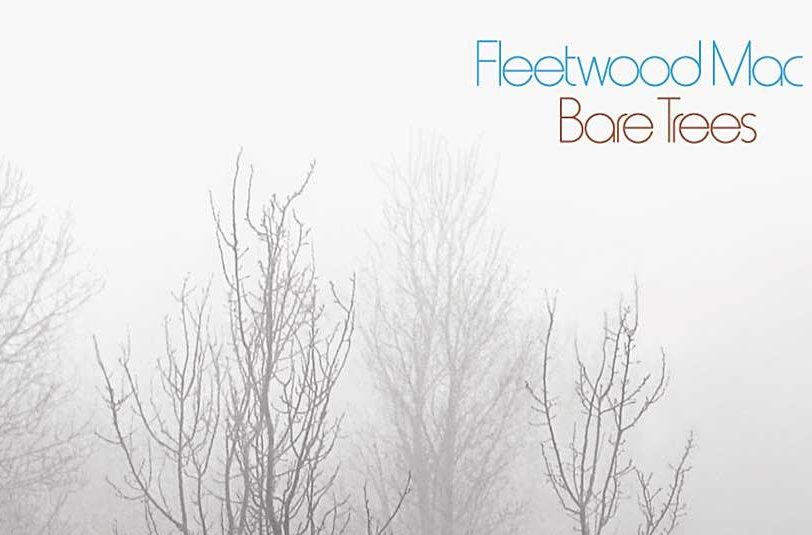
“Bare Trees” is the sixth studio album by British-American rock band Fleetwood Mac, released in March 1972. This is their last album to feature guitarist Danny Kirwan, who was fired during the album’s supporting tour.
One of the most intriguing is: what if Danny Kirwan had stayed with them after the release of 1972’s “Bare Trees?” The group’s sixth album saw the guitarist – just 21 years old at the time of its release – cementing his position as the central creative force behind Fleetwood Mac, writing five of the album’s nine songs (not counting the final, spoken-word track) and putting his musical stamp on the rest of the group’s contributions.
And yet Kirwan was fired during the August 1972 US tour the group undertook to promote the record. His increasingly difficult behaviour had come to a head when an argument with fellow guitarist Bob Welch about tunings led to violence and a dressing-room demolition. Still, Bare Trees is an underappreciated gem in the early Fleetwood Mac catalogue, emphasising what a talent Kirwan was as well as giving listeners notice of the emerging songwriting prowess of Welch and Christine McVie.
To showcase “Bare Trees”, Fleetwood Mac went on tour with Savoy Brown and Long John Baldry during the Spring and Summer of ’72. The tour, billed as “The British are Coming” turned out to be a traumatic affair. On the road, Kirwan “just got more and more intense,” Fleetwood said. “He wouldn’t talk to anyone. He was going inside himself which we put down to an emotional problem that we had no idea about. We thought he was just being awkward. I had no idea he was struggling to that level.”
At one pivotal gig, Kirwan and Welch fought over tuning, to the point where the troubled guitarist refused to go on-stage. “That’s the cardinal thing you just don’t do,” Fleetwood said. “In essence, he had a breakdown.” Kirwan smashed his guitar, then let the band struggle through their performance without him. Afterwards, he launched into a critique of their playing. “It was the straw that broke the camel’s back,” said Fleetwood. “That particular pain and story needed to stop.” the guitarist’s volatile temperament meant that, despite their musical chemistry, he began to clash with Green, as he told Guitar magazine in 1997: “We just didn’t get on too well basically… We played some good stuff together, we played well together, but we didn’t get on.” Green left Fleetwood Mac in May 1970, leaving Kirwan and guitarist Jeremy Spencer stepping in to fill his formidable shoes on Kiln House. But they looked to be on the verge of collapse until keyboard player Christine McVie joined them on tour, providing the musical glue that would hold them together.
In the years before Fleetwood Mac became a household name, the British/American band spotlighted a succession of blues-inspired guitar aces, and on “Bare Trees”, that slot is held down by Danny Kirwan. “It’s a well-rounded album,” noted drummer Mick Fleetwood of the 1972 Reprise set. “Like Lindsey [Buckingham], Danny had the chops with layering techniques, and the ability to know what’s right and wrong in the studio.” Kirwan also penned half of the 10 songs here, including the terrific “Dust,” His “Sunny Side of Heaven” was an instrumental, which, at the time, was mixed in with some radio station sign-offs. “Danny’s Chant” features the use of wah-wah guitars, while the lyrics for Kirwan’s composition “Dust” were taken from a poem by Rupert Brooke.”Trinity”, another Kirwan song, was an outtake from the album that was subsequently released in 1992 on the 25 Years – The Chain box set.
It’s astonishing that Bare Trees – recorded in just a few days at De Lane Lea Studios in Soho, London, in March 1972 – not only holds up so well, but suggests an unrealised future in which Kirwan became Fleetwood Mac’s long-term leader. The cover art of spindly trees cloaked in fog might have prepared the listener for an austere, wintry listen, but any such ideas are quickly rebuked by the good-time boogie rock of the opener, Kirwan’s Child Of Mine, given extra heft by some winningly gritty guitar work.
The two Welch-penned songs, the slow-burning, jazzy groove of The Ghost and the schmaltz-heavy Sentimental Lady, suggest a leap forward in the guitarist’s songwriting prowess (though the latter comes on strong, it works well in the context of the album). Meanwhile, McVie’s two numbers, the road-weary blues-rocker Homeward Bound (“I want to sit at home in my rocking chair/I don’t want to travel the world”) and the soft-rock bliss of Spare Me A Little Of Your Love, give notice of the writer she’d become.
Bare Trees is the sound of a band coming together, growing in confidence and establishing an identity. It’s also worth celebrating on its own merits.
Christine McVie and fellow guitarist Bob Welch also contribute winners in “Spare Me a Little of Your Love” and “Sentimental Lady,” respectively. If you have any interest in exploring the music of the Mac before the Buckingham-Nicks era, make Bare Trees your first stop.
Fleetwood Mac
- Danny Kirwan – guitar, vocals
- Bob Welch – guitar, vocals
- Christine McVie – keyboards, vocals
- John McVie – bass guitar
- Mick Fleetwood – drums, percussion
FLEETWOOD MAC – ” Fleetwood Mac ” Box Set
Posted: November 18, 2017 in CLASSIC ALBUMS, MUSICTags: Christine McVie, Fleetwood Mac, John McVie, Lindsey Buckingham, Mick Fleetwood, Stevie Nicks

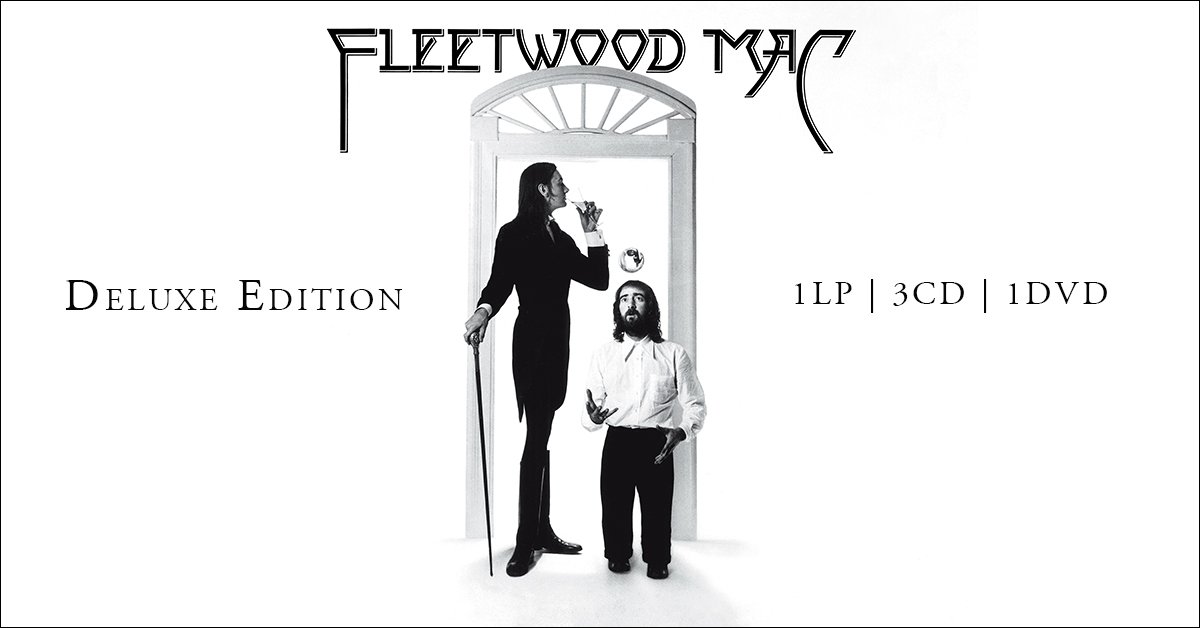
The 1975 eponymous album by Fleetwood Mac (that features the current line-up) will be reissued as a five-disc super deluxe edition in January 2018. The original album is newly remastered and features on CD and vinyl LP in the box set. The CD also includes the original single mixes of Over My Head, Rhiannon, Say You Love Me and Blue Letter. Like the previous Fleetwood Mac sets there’s plenty of unreleased outtakes, the super deluxe features a completely alternate version of the album (none of it ever released before), along with a handful of live tracks and a couple of jam/instrumentals. Released in 1975, Fleetwood Mac will be given a special reissue treatment . The album — the first to feature the quintet Lindsey Buckingham, Mick Fleetwood,Christine McVie, John McVie, and Stevie Nicks — featured the hits and live staples “Landslide” (Nicks), “Rhiannon” (Nicks), “Monday Morning” (Buckingham), and “Over My Head” (Christine McVie).

The third CD features 14 live tracks (all previously unreleased) while disc four is a DVD which features a 5.1 surround sound mix of Fleetwood Mac, a hi-res stereo version of the album and those four single versions.
Completing the set is the LP version of the original album pressed on 180-gram vinyl. The packaging sounds consistent with what was issued for previous albums (Rumours, Tusk, Mirage and Tango In The Night) since this comes in a 12″ x 12″ embossed sleeve with in-depth sleeve notes and new interviews with all the band members.
This five-disc Fleetwood Mac box set will be released on 19th January from Warner Bros. Records. A two-CD expanded edition featuring the first two discs in the box will also be issued.
LINDSEY BUCKINGHAM and CHRISTINE McVIE – ” In My World “
Posted: April 15, 2017 in CLASSIC ALBUMS, MUSICTags: Atlantic Records, Christine McVie, Fleetwood Mac, John McVie, Lindsey Buckingham, Mick Fleetwood

Lindsey Buckingham and Christine McVie are just about ready to unveil their forthcoming album starting with the impending release of the set’s first single, “In My World,” this week.
Due April 14th, the “In My World” single officially starts the long-awaited lead up to Lindsey Buckingham/Christine McVie, the duo project led by the Fleetwood Mac bandmates who rediscovered their creative bond after McVie had rejoined the band’s lineup in 2014. Scheduled for a June 9th release, the album offers what both partners see as the sensible and long-overdue culmination of a long-term partnership.
“We were exploring a creative process, and the identity of the project took on a life organically,” explained Buckingham in a press release. “The body of work felt like it was meant to be a duet album. We acknowledged that to each other on many occasions, and said to ourselves, ‘what took us so long?’”
“We’ve always written well together, Lindsey and I,” added McVie. “This has just spiraled into something really amazing that we’ve done between us.”
Tracked in Los Angeles, Lindsey Buckingham/Christine McVie serves as a Fleetwood Mac album of sorts; although singer Stevie Nicks was not involved, the duo worked with Mac rhythm section of Mick Fleetwood and John McVie , adding their distinctive “dynamic rhythmic engine” to the 10-song set.
The album’s release will be followed by a spate of what are being referred to as “special U.S. concerts.” they’re scheduled to begin June 21st and continue through July 27th Whether they’ll be performing with Fleetwood and John McVie is unknown, although it’s probably worth noting that Fleetwood Mac are booked to appear at festivals this summer.

The album was recorded at The Village Studios in Los Angeles (where Tusk was made) and Buckingham and McVie were “joined in the studio by fellow bandmates Mick Fleetwood and John McVie” which sounds very promising!
Speaking about the project, Lindsey had this to say: “We were exploring a creative process, and the identity of the project took on a life organically. The body of work felt like it was meant to be a duet album. We acknowledged that to each other on many occasions, and said to ourselves, ‘what took us so long?!!‘” Christine McVie describes the results of the collaboration as “really amazing”.
Lindsey Buckingham/Christine McVie will be issued on Atlantic Records on 9th June 2017.
FLEETWOOD MAC – ” Rumours ” Happy 40th Anniversary Released this day back in 1977
Posted: February 4, 2017 in CLASSIC ALBUMS, MUSICTags: Christine McVie, John McVie, Lindsay Buckingham, Mick Fleetwood, Rumours, Stevie Nicks. Fleetwood Mac

Just lately I often look at albums and songs I adored growing up as a teenager and cannot believe how long ago that is . I remember listening to Rumours following it through all of my life. It is an album that was blighted by drama as we all know, Christine McVie defined the recording sessions as nothing but drama and arguments and it is a surprise it got finished at all. Given that the band’s two couples Christine McVie and her husband John; Lindsey Buckingham and Stevie Nicks ,were embroiled in fights and conflict would have been enough to derail the recording process. As it was, the album Was made and stands as one of history’s greatest classic albums. Before looking at the background and its songs; Steve Nicks wrote Dreams in Sly Stone’s bed whilst credits his dyslexia for Go Your Own Way’s unusual drumming rhythm – there are a lot of other little-known facts you might not know about Rumours. Lindsey Buckingham’s sonic perfectionism meant his guitar was restrung every twenty minutes during Never Going Back Again; The Chain the legendary epic and only song credited to all five band members – has Christine McVie’s song “Keep Me There” is at the core and was the foundations before other members of the band piled in and added their ideas to the song. John McVie’s ten-note bass passage tees the song whilst Mick Fleetwood’s impassioned percussion gives it its drive and fervency. Aside from the music, the infamous extra-marital affairs threatened to split Fleetwood Mac for good. Not only did some of the songs blatantly put these affairs at their heart – Christine McVie’s “You Make Loving Fun” about the lighting technician she was in a relationship with; Lindsey Buckingham’s “Go Your Own Way” a kiss-off and screw-you to Stevie Nicks. “Dreams” perhaps the centrepiece and most astonishing song on the album – struggled to get made and studio time was hard to come by as Buckingham’s iron first ruled the production.

The drama in Fleetwood Mac heightened shortly after the release of “Rumours”, rehearsal time became even more sacred; they weren’t just running through songs they could play in their sleep, they were reinforcing a bond that only comes with watching songs come to life and remembering how to work together despite their turbulent relationships.
The fact it did get made (with doubts from the band and a lack of enthusiasm) gives Rumours pristine beauty and haunting etherealness – plenty of hopefulness and intricate beauty. Affairs and cocaine were as prevalent and in-demand as was musical impetus and dedication to the music. We all know about the splits, rifts and Mick – quite often the fifth wheel who had to ensure the coldness and immense friction; although his marriage was on the rocks and he had an affair with Nicks around this time. Even before the album started recording, there were problems and press intrusion.
In spite of this, with speculations the original band members would return to the fold, the band came into the studio with plenty of stigma in their blood. Keith Olsen was fired as producer ,who put percussion and rhythm low in the mix – and the McVies formed Seedy Management: a company that put the band’s interest first and ensured recording sessions would begin on a good footing (sound-wise at least). Soon enough Buckingham stepped in and took control of the recording sessions. He wanted to make a ‘Pop’ album which was at odds with other members of the band – who came from a Blues-Rock background and favoured a looser and less disciplined style of recording. Buckingham’s discipline, vision and ultra-precise methodology and studio set-up were unique and inspired. Buckingham and McVie crafted the guitar-and-piano combinations together whilst John McVie played his bass facing Mick Fleetwood’s drums. Buckingham’s configurations and dynamics meant the band members were focused: instruments arranged to create the best sound.
Recording at the Record Plant, there was not a lot of after-recording socialising. Cocaine binges and frosty relationships meant the individual members were isolated throughout much of Rumours and lead to sleepless nights. “Rumours” music was astonishingly focused and inspiring in spite of all the problems. If you did not know about Fleetwood Mac’s backstory in 1977, you would assume Rumours was the product of a happy and together band in inspired form. Aside from “The Chain” all members coming together in an anthem for unity and holding on the remaining tracks were written alone by songwriters Christine McVie, Lindsey Buckingham and Stevie Nicks.
If Nicks’ Dreams seems like a message to keep focused and do not give in it has a breakup and heartbreak at its centre. The members of Fleetwood Mac were oblivious to the true nature of their (wracked and pain-stricken) songs until hindsight provided clarity. Try and make an album like Rumours today and it would simply not work. For a start, musicians are not as enigmatic and fascinating as the American-British alliance in this band . Despite Nicks’ hostility towards Buckingham – or his towards her more accurately – he still had a knack of making Nicks’ songs sumptuous and beautiful. Yes, there was enormous self-indulgence and excess during the recording that threatened to threaten productivity.
The open-ended budget meant late-night parties would last to the wee hours and sleep was an elusive construct. The band would finish drinking and snorting vast quantities of cocaine, being in a desperate, zombie-like state, and get straight down to recording. It became apparent the most productive results occurred under these conditions.
Talk all you like about legend, folklore and technical specifications: it is the music, pure and simple, the final product is what matters and damned to the petty squabbles around it. The music is near-perfect. You talk about albums that are beyond criticism and should be preserved forever: Rumours is on top of a very elite list.
The interplay between the three vocalists Christine McVie, Stevie Nicks and Lindsey Buckingham – is stunning and the affection between them heartwarming. They were, and still are, brothers and sisters. Even at their most tense and uncertain, the respect they had for one another as musicians outranked any personal beefs. Buckingham’s crisp, clean and assured production makes songs like “Don’t Stop” infectious, luminous and endlessly catchy.
“Go Your Own Way” is, in my view, the best song on the album and benefits from a truly astonishing vocal turn. Dreams is that divine Nicks hymn; whilst McVie talked about Mick Fleetwood in “Oh Daddy” . ‘Big Daddy’ was the band’s nickname for the drummer – with Nicks providing the final line: “And I can’t walk away from you, baby/If I tried”. Perhaps a shot (from McVie) at the direction Fleetwood was taking the band, or a subtle illusion to their impending affair (Nicks’ line). “Gold Dust Woman” documents the struggles (Nicks) faced in L.A. Christine McVie came into her own as a writer and penned the hair-raising, transcendent “Songbird” – a little prayer from the keyboardist and a song about nobody and everyone. If the band’s two female writers were at their peak Lindsey Buckingham was stealing the limelight. Not only was his leadership and production a major factor in the Rumours’ success but his bittersweet songs were scene-stealing. Go Your Own Way and Never Going Back Again are obvious in their derivation but, mythology and cynicism aside, are incredible works of music. Second Hand News is the acoustic opener that starts things off wonderful; Buckingham’s hand in The Chain cannot be understated. The songwriting credits Buckingham had three solo credits from eleven; Nicks; McVie four makes the album a democracy and collaborative thing.

In the footage you’re about to hear, there’s an actual Fleetwood Mac rehearsal taking place just before the band embarked on their critically acclaimed Rumours tour in early 1977.
Caught on tape, we can hear Christine McVie, John McVie and Stevie Nicks delivering entertaining commentary on their roadies, but as soon as Lindsey Buckingham brings “Go Your Own Way” to life, it’s all work from there as the band joins in, treating this sacred rehearsal time as seriously as they would an actual live show.
This is a live version of Lindsey’s legendary song “Go Your Own Way”(One of my favorite songs of all-time)!! This is from Fleetwood Mac’s GREAT (February 1977) Rumours Tour Rehearsals. Whay a great musician Lindsey is, but this song is his masterpiece. This song is what started it all for me over those years ago.
Check out his breathtaking guitar solo towards the end.
Lindsey wrote Go Your Own Way (about Stevie) while on the road Fleeywood Mac’s 1975 concert tour. Although the second verse ~ Tell me why everything turned around, Packing up, shacking up is all you wanna do ~ wasn’t added to it until later ~1976. Stevie had asked him to remove the ~ Packing up, shacking up part, but he refused to do so. (I’m glad he kept it in.)
The Rumours world tour saw Fleetwood Mac on the road from February 24th, 1977 through to December 10th of that year, hitting North America, Europe, Japan and Oceania.
What makes this clip so great is hearing the teamwork that goes into making a song like “Go Your Own Way” happen – you never realize how intricate the guitar work actually is, and this rehearsal audio is sure to make you appreciate Fleetwood Mac’s attention to detail and out of this world live performances even more!.

There are few albums as enduring and as mysterious as Rumours. It is a fascinating album in terms of its production and behind-the-scenes revelations but even more so from a musical perspective. The rumours and explosions might have salivated the mouths of the press but the band were keen to bridge the divided and come together to create a truly wonderful album. That is exactly what they did in 1976. When the album was released a year later, contemporary critics were raving. They noted how the music was directly propelled by inner-turmoils and romantic entanglements. As I said, most bands would be unable to separate life from art whereas Fleetwood Mac were all too aware of the reality of their situations but used it to create some of the finest music of the 1970s. It is radio-friendly and shiny; it has gloss and immaculate production but plenty of emotions and contradictions. The vocals, especially from Stevie Nicks, range from wailing and harrowed to sensual and alluring, whereas the compositions and song structures are immaculate. There is not a song immune from high praise and the album is an extraordinary testament to a group of musicians who found love and common ground in the middle of divorced relations and drug-filled chaos. I don’t understand why as yet why has nobody made a film/drama about Fleetwood Mac’s astonishing story?! Magazines, websites and music fans constantly place Rumours near the (or at) the top of their greatest albums polls. Musicians around the world have been inspired by the music and continue to source it forty years down the line. There are few albums as long-lasting as Fleetwood Mac’s masterpiece. It is a wonderful record .
thanks musicmusingsandsuch for the words
FLEETWOOD MAC – ” Tango In The Night ” 30th Anniversary Edition
Posted: January 26, 2017 in CLASSIC ALBUMS, MUSICTags: Christine McVie, Fleetwood Mac, John McVie, Lindsey Buckingham, Mick Fleetwood, Stevie Nicks, Tango In The Night

Fleetwood Mac will release an expansive, 30th anniversary edition of their 14th studio album, 1987’s Tango in the Night, on March 10th via Warner Bros. Records. The reissue is packaged in three formats: a one-CD set featuring remastered audio, an expanded two-CD version with rare and unreleased recordings and a deluxe version featuring three CDs, a 180-gram LP and a DVD with music videos and a high-resolution version of the album.
Christine McVie Singer-songwriter looks back on heady days at Château d’Hérouville, discusses band’s future plans
With Tango in the Night, Fleetwood Mac fully immersed themselves in the decade’s glossy production style. Showcasing the diverse styles of primary songwriters Lindsey Buckingham, Stevie Nicks and Christine McVie, the 12-track LP spawned a quartet of hit singles: “Big Love,” “Seven Wonders,” “Everywhere” and “Little Lies.” Their second highest-selling album behind 1977 masterwork Rumours, it remains the group’s final studio project with the classic quintet line-up of Buckingham, Nicks, McVie, John McVie and Mick Fleetwood.
The deluxe and expanded reissues features a disc of 13 previously unheard recordings, including an alternate version of shimmering Christine McVie ballad “Mystified,” a demo of Buckingham’s epic, percussion-heavy title-track and rare B-sides “Down Endless Street” and “Ricky.” The deluxe edition offers a third disc with 14 12-inch mixes – including dub versions of “Seven Wonders and “Everywhere” – and a DVD with videos of “Big Love,” “Seven Wonders,” “Little Lies,” “Family Man” and “Everywhere.”
Buckingham and Christine McVie recently announced an album of duets tentatively titled Buckingham McVie. The set, which features contributions from John McVie and Fleetwood, is loosely slated for a May release.

Fleetwood Mac have spent the past few years reissuing their peerless back catalogue in the obligatory remastered, expanded, deluxe editions. Last year brought us the 1982 album “Mirage” which somehow managed to make an album already slathered in cocaine sound even more cokey, all sheen and shine.
Next up is Tango in the Night, coming out on Warner on 10th March, They’ve got this early, unreleased version of the Stevie Nicks track Seven Wonders for you. It’s longer but also a little harsher than the album version, drawing out the fatalism of the chorus and de-emphasising the keyboard hook.
Tango in the Night came out five years after Mirage, and had originally been planned as a Lindsay Buckingham solo record – Nicks spent only two weeks in the studio with the band because she was concentrating on her solo career. Be thankful that it became a full-band record, because the album became defined not by his songs but by the contributions of the other writers; without the two singles from Christine McVie – “Everywhere” and “Little Lies” – it would be a very different record. While many Mac fans might have their favourite writer in the group, it takes all three of Buckingham, Nicks and McVie to balance the group.
That balance is what makes Tango in the Night so great. For all that the music is of a piece – sophisticated, slick, without ever being over-complicated – it manages to shift through moods effortlessly. Buckingham is on edge throughout and has explained that Big Love, his single from the album, gets misinterpreted: when he sings that he is “looking out for love”, he doesn’t mean he is looking for love, he is putting himself on guard for it. In the title track, he’s restless, discomfited (“Try to sleep, sleep won’t come”); Caroline upbraids a woman who is crazy and lazy; Family Man seems to be a hymn to domestic stability, but even then he can’t help observing that “the road gets tough”.
McVie’s songs appear much more straightforward. “Everywhere” is a simple, gorgeous statement of love; “Little Lies” its counterpart, the realisation that the feelings of Everywhere depend on self-deception. Nicks’s are neither straightforward, nor angry: Welcome to the Room … Sara was written after treatment at the Betty Ford clinic, and uncertainty echoes throughout her contributions (“If I see you again / Will it be the same?” she asks on When I See You Again. “If I see you again / Will it be over?”), and “Seven Wonders” exemplifies that, with Nicks confronting the notion that even living to see the seven wonders will never match what she has lost.
Fleetwood Mac – Tango in the Night
Reissue Track List (Deluxe Edition)
Disc One: Original Album – 2017 Remaster
1. “Big Love”
2. “Seven Wonders”
3. “Everywhere”
4. “Caroline”
5. “Tango In The Night”
6. “Mystified”
7. “Little Lies”
8. “Family Man”
9. “Welcome To The Room… Sara”
10. “Isn’t It Midnight”
11. “When I See You Again”
12. “You And I, Part II”
Disc Two: B-Sides, Outtakes, Sessions
1. “Down Endless Street”
2. “Special Kind Of Love” (Demo)*
3. “Seven Wonders” (Early Version)*
4. “Tango In The Night” (Demo)*
5. “Mystified” (Alternate Version)*
6. “Book Of Miracles” (Instrumental)
7. “Where We Belong” (Demo)*
8. “Ricky”
9. “Juliet” (Run-Through)*
10. “Isn’t It Midnight” (Alternate Mix)*
11. “Ooh My Love” (Demo)*
12. “Mystified” (Instrumental Demo)*
13. “You And I, Part I & II” (Full Version)*
*Previously Unissued
Disc Three: The 12″ Mixes
1. “Big Love” (Extended Remix)
2. “Big Love” (House On The Hill Dub)
3. “Big Love” (Piano Dub)
4. “Big Love” (Remix/Edit)
5. “Seven Wonders” (Extended Version)
6. “Seven Wonders” (Dub)
7. “Little Lies” (Extended Version)
8. “Little Lies” (Dub)
9. “Family Man” (Extended Vocal Remix)
10. “Family Man” (I’m A Jazz Man Dub)
11. “Family Man” (Extended Guitar Version)
12. “Family Party” (Bonus Beats)
13. “Everywhere” (12″ Version)
14. “Everywhere” (Dub)
Disc Four: The Videos (DVD)
1. “Big Love”
2. “Seven Wonders”
3. “Little Lies”
4. “Family Man”
5. “Everywhere”
(Plus a High-Resolution Stereo Mix of the Original Album)
JOHN MAYALL BLUES BREAKERS WITH ERIC CLAPTON – ” The Beano Album ” Classic Album Released 22nd July 1966
Posted: July 23, 2016 in CLASSIC ALBUMS, MUSICTags: Bluesbreakers, CLASSIC ALBUMS, Eric Clapton, Hugh Flint, John Mayall, John McVie
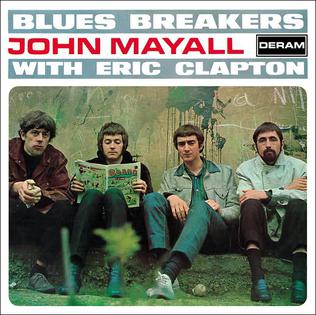
July 22nd 1966 saw the release of what has become the greatest British blues albums of them all, John Mayall Blues Breakers with Eric Clapton. It was the first studio album and the second overall credited to John Mayall, who teamed up for the first time in a studio release with the ex- Yardbirds Eric Clapton.
It is also known as The Beano Album because of its cover photograph showing Clapton reading The Beano a British children’s comic. Clapton stated in his autobiography that he was reading The Beano on the cover because he felt like being “uncooperative” during the photo shoot
The album set the benchmark for all blues albums that followed, cemented by Clapton’s explosive guitar tone thanks to the majestic bonding between a Gibson guitar and a Marshall amplifier. Not only is it the greatest British blues album but it’s also one of the great albums of all time, period. Recorded April 1966 at Decca Studios West Hampstead, London.
The guitar that Eric Clapton used during these sessions was a sunburst 1960 Gibson Les Paul Standard with two PAF humbucking Pickups . This guitar (which was stolen in 1966; its whereabouts remain unknown) is also called the “Blues Breaker” or “Beano” Les Paul and a replica of which was reissued by Gibson in 2012.
The band on this album includes Mayall on piano, Hammond organ, harmonica and most vocals; bassist John McVie drummer Hughie Flint and Clapton. Augmenting the band on this album was a horn section added during post-production.
The album opens with the Otis Rush number “All Your Love”, a cracking way to begin. The song manages to capture everything great about the Bluesbreakers from John Mayall’s unique vocals, Clapton’s explosive guitar, McVie’s pounding bass and Flint’s driving rhythm that is the back bone of the entire song. It’s followed by “Hideaway” which has arguably become the standard version of the song, the original of course being by the late great Freddie King who Clapton was hugely influenced by at the time. Even though it’s a song largely dominated by Clapton’s guitar, the entire band shine brightly and showcase their abilities as Britain’s premier and best British blues band. The first Mayall penned track comes next in “Little Girl”. Apart from Mayall’s vocals, Clapton again takes centre stage with a blistering guitar solo over the ruthless rhythm section of John McVie and Hugh Flint, both of which really take this song to another level. “Another Man” is pure Mayall drenched with some of the best harmonica playing you’ll ever hear.
Things then slow down a tad with “Double Crossing Time”, a fantastic number written by Mayall and Clapton. It’s a wonderful slow blues which clocks in at just over three minutes in length which is the only downside as you feel it deserves to go on for at least another few minutes. The opening riff of “What’d I Say”, originally by Ray Charles, is next and this particular version remains one of the most exciting ever recorded. Mayall gives one of his best vocal performances and it’s the first time on the album so far where you’re able to bask in the magnificence of Hugh Flint’s drumming, as he plays a superb solo section halfway through the song. The rest of the band then return with a Day Tripper-esque riff to bring the song to a close. Next up is “Key To Love” which is another Mayall original. Flint is an abs0lute force of nature with some of the best drumming you’ll ever hear, and Clapton returns for another ear drum attacking guitar solo.
Released: July 1966 (mono) / December 1969 (stereo)
John Mayall: Lead vocals, piano, organ, harmonica
Eric Clapton: Guitar, lead vocals on “Ramblin’ on My Mind”, John McVie: Bass guitar, Hughie Flint: Drums, Plus: Alan Skidmore: Tenor saxophone, Johnny Almond: Baritone saxophone, Derek Healey: Trumpet
The great “Parchman Farm” comes next which was originally recorded by Bukka White in 1940 and then covered by a host of musicians including Mose Allison, Johnny Winter, Bobbie Gentry and Hot Tuna to name just a few. Mayall is a man possessed on harmonica here, arguably giving his finest musical performance of the entire album. The slow blues number “Have You Heard” then takes things in a slower direction, at least at first. When it comes to electric guitar solos this song certainly contains one of the finest ever recorded with Clapton showing exactly why the nickname “God” was so fitting. The things he managed to do with a guitar during this song are second to none in my opinion, firmly placing him as the greatest British blues guitarist of all time.
“Ramblin’ On My Mind” remains to this day as one of Robert Johnson’s most well known songs, helped by the legendary status of this version featuring Clapton on lead vocals. And it’s the fact that Clapton took lead vocal duties on this song that made it so legendary, after all this is the first time he ever sang lead on a song. Even though he used to sing backing vocals with The Yardbirds it’s a strong vocal performance with guitar accompaniment including a tasty solo, backed up by Mayall on piano. It’s probably the most pure blues song of the whole album and a song that opened up Clapton both vocally and musically, as he would go on to call Robert Johnson one of his main influences and as a eventually record Me & Mr. Johnson, a tribute album to his idol, in 2004. “Steppin’ Out” is the second guitar lead instrumental after Hideaway and a song Clapton would continue playing with Cream up until their final active year in 1968. It’s a superb number with Clapton yet again showcasing his guitar abilities fantastically. The final song is “It Ain’t Right” which sees the album end on a wonderful note. Originally recorded by Little Walter, Mayall lays down some fine harmonica while the rest of the band hit hard like a freight train. A perfect way to end the album.
Original album
Side one
- “All Your Love” (Otis Rush) – 3:38
- “Hideaway” (Freddie King/Sonny Thompson) – 3:17
- “Little Girl” (Mayall) – 2:36
- “Another Man” (Mayall) – 1:47
- “Double Crossing Time” (Clapton/Mayall) – 3:04
- “What’d I Say” (Ray Charles) – 4:28
-
Side two
- “Key to Love” (Mayall) – 2:08
- “Parchman Farm” (Mose Allison) – 2:22
- “Have You Heard” (Mayall) – 5:56
- “Ramblin’ on My Mind” (Robert Johnson) – 3:08
- “Steppin’ Out” (L. C. Frazier) – 2:30
- “It Ain’t Right” (Little Walter) – 2:45
Overall it’s a faultless album, A considerd Classic album. Not only do you get to witness the evolution of Eric Clapton but you get to listen to British blues at it’s very finest. The band as a whole were fantastic. John Mayall, Eric Clapton, John McVie, Hugh Flint.
FLEETWOOD MAC – ” Tusk Live “
Posted: February 14, 2016 in CLASSIC ALBUMS, MUSICTags: Christine McVie, Fleetwood Mac, John McVie, Lindsey Buckingham, Live, Mick Fleetwood, Stevie Nicks, Tusk

FLEETWOOD MAC: IN CONCERT
Vinyl debut, Triple-LP Collection Features 22 Live Recordings From The Band’s 1979-80 Tour, That Were Previously Available Only As Part Of The Tusk: Deluxe Edition, Available On March 4th From Warner Bros. Records
Fleetwood Mac unveiled a massive Deluxe Edition of its revered double album Tusk late last year that featured 22 previously unreleased live performances selected from the band’s 1979-80 tour. Until now, those concert recordings have only been available as part of the set and only on CD and digitally. That will change soon with the release of FLEETWOOD MAC: IN CONCERT.
All of the live music from the 2015 reissue of Tusk will be available on March 4th from Warner Bros. Records as a three-LP set. Pressed on 180-gram vinyl, the albums will be presented in a tri-fold jacket.
Mick Fleetwood, John McVie, Christine McVie, Lindsey Buckingham and Stevie Nicks originally released Tusk in October of 1979. The Grammy® Award-nominated, double-album went onto sell more than four million copies worldwide and introduced fans to hits like “Sara,” “Think About Me,” and the title track.
The music heard on In Concert was recorded at four stops during the band’s 111-show world tour promoting Tusk. This new collection serves as a worthy companion to the classic 1980 album Live. Although a few songs are duplicated from that album, including “Say You Love Me,” “Landslide” and “Go Your Own Way,” each performance on In Concert is unique and taken from a different show.
In Concert boasts 10 songs not heard on Live, including “World Turning” from the Fleetwood Mac’s 1975 self-titled release, and “The Chain” from the band’s best-selling album Rumours (1977), a Grammy-award winning juggernaut that has sold more than 40 million copies.
Several songs from IN CONCERT were recorded at the Checkerdome in St. Louis just a month after the release of Tusk, and only seven shows into the tour. Those performances capture the band already in top form on songs like “Angel,” “Save Me A Place” and “What Makes You Think You’re The One.”
The rest of the performances were recorded several months later, including 11 songs from the band’s six-night stand at Wembley Arena in London in June 1980. Among the highlights are “That’s Enough For Me,” “Sisters Of The Moon,” and the Top 10 smash from Rumours, “You Making Loving Fun.”
FLEETWOOD MAC: IN CONCERT
LP Track Listing
Side One
1.Intro (Wembley, 06/26/80),2.“Say You Love Me”(Wembley, 06/26/80), 3.“The Chain” (Wembley, 06/20/80) 4.“Don’t Stop” (Wembley, 06/27/80), 5.“Dreams” (Wembley, 06/20/80)
Side Two
1.“Oh Well” (Wembley, 06/20/80), 2.“Rhiannon” (Tucson, 08/28/80), 3.“Over And Over” (St. Louis, 11/05/79), 4.“That’s Enough For Me” (Wembley, 06/21/80),
Side Three
1.“Sara” (Tucson, 08/28/80), 2.“Not That Funny” (St. Louis, 11/05/79), 3.“Tusk” (St. Louis, 11/05/79), 4.“Save Me A Place” (St. Louis, 11/05/79)
Side Four
1.“Landslide” (Omaha, 08/21/80), 2.“What Makes You Think You’re The One” (St. Louis, 11/05/79), 3.“Angel” (St. Louis, 11/05/79), 4.“You Make Loving Fun” (Wembley, 06/20/80)
Side Five
1.“I’m So Afraid” (St. Louis, 11/05/79), 2.“World Turning” (Wembley, 06/22/80)
Side Six
1.“Go Your Own Way” (Wembley, 06/22/80), 2.“Sisters Of The Moon” (Wembley, 06/22/80), 3.“Songbird” (Wembley, 06/27/80)
 The Fat Angel Sings