Posts Tagged ‘Jimi Hendrix’

jimi-hendrix-performing-fillmore-east copy 2

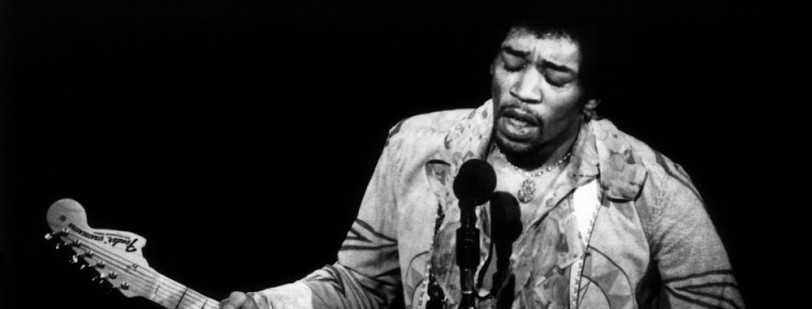
The four shows that Band Of Gypsys played at Fillmore East to bring in the New Year have rightly gone down as some of the best shows of all time, especially those on New Year’s Day itself. There were moments on New Year’s Eve where the band seemed to be lacking energy for whatever reason but on the whole every show was fantastic, as stated by the lucky devils I interviewed who were there to witness the shows for themselves. The music was funkier than that of the Hendrix Experience and while the drums may seem simple at times especially compared to Mitch Mitchell, the drums are a pivotal piece to the music that Hendrix was playing at this particular time. The Band Of Gypsys wouldn’t last for much longer with their final show coming less then a month later at Madison Square Garden in New York (Hendrix would leave the stage after just two songs and Miles would be fired backstage) but the music the band played at these four shows was and continues to be nothing short of exceptional.

There are certain artists who played certain shows with certain performances that will always be remembered, and that is certainly the case with the Band Of Gypsys at Fillmore East.

BAND OF GYPSYS AT FILLMORE EAST: NEW YEAR’S 1970
SECOND SHOW Setlist:

Auld Lang Syne
Who Knows
Stepping Stone
Burning Desire
Fire
Ezy Rider
Machine Gun
Power Of Soul
Stone Free/Sunshine Of Your Love
Them Changes
Message To Love
Stop
Foxy Lady
Voodoo Child (Slight Return)
Purple Haze

https://www.youtube.com/watch?v=eBynJX6RBuI
The second show was considerably longer in length than the first, as was standard at Fillmore East during this time. Before the band start playing, concert music is played through the speakers to bring in the New Year before the band run through Auld Lang Syne. The ending of this song is simply sublime as Hendrix creates a musical landscape consisting of nothing but feedback before launching into the next track, Who Knows. This is without a doubt one of the best performances from all four shows as the fuzz feedback from Auld Lang Syne goes straight into Who Knows. The riff from this song is exceptional. Funky, bluesy, perfect. Essentially a jam song based around the initial riff that opened the song, it’s one of the most enjoyable moments from the second set. Stepping Stone follows in what would be the first of only two live performances, the second being during the early show the following day. It’s a great song but after an electric performance of Who Knows it sounds a little sounded, almost as if the band members are holding back a little. This could have been because it hadn’t been played live before but Machine Gun hadn’t either until the previous show and that sounded fantastic. Buddy Miles on drums wears a little thin at times with the exact same beat with no changes going on for the entirety of the song. Mercifully, the Band Of Gypsys move on to Burning Desire. The opening jazz like rhythm hypnotises you a little before the main riff explodes in your face, however, at two and a half minutes long this version dwarfs in comparison to the near ten minute version which ended the previous set. “Ok, we’re going to play something else,” says Hendrix as the band bring the song to a halt.

Fire comes next and you can instantly hear how drastically different the energy level is on this song compared to the previous two, especially when Hendrix plays the famous Sunshine Of Your Love riff midway through the song. Even though Cream had broken up over a year earlier (26th November 1968), their influence on him remained. Ezy Rider follows before the band launch into Machine Gun once again which ignites the venue. The band play this for nearly fourteen minutes and you can only imagine what those seated right in front of the stage are going through in their paralysed states. It’s more of a laid back version compared to the early show but that doesn’t mean any of the explosiveness if taken away, it’s just being projected in a different way. Hendrix’s wah-wah blows the cobwebs away and before you know it, it’s all over. Power Of Soul opened the early show but finds itself deep in the mix here with that funky riff sounding oh so good. Out of all the songs the band played at Fillmore East during these two days, the funky songs definitely sounded the best due to Buddy Miles and his funk abilities.

11011034_10153397202112369_7591171807529885638_n.jpg

Stone Free is a classic example of Buddy Miles just not sounding as good as Mitch Mitchell. If you listen to any version of Stone Free with Mitch Mitchell on drums he sounds effortless, but Buddy Miles sounds too plodding here, too heavy footed. This is evident at the seven minute mark where Miles embarks on a drum solo you wish would end sooner rather than later but four minutes later it finally does with Hendrix and Cox returning for a full Sunshine Of Your Love segment which sounds fantastic. But one of the finest moments of the New Year residency is Them Changes, a Buddy Miles song which continues one of the funkiest riffs you’ll ever hear. Miles sounds great on lead vocals which lets Hendrix sit back and do his thing with the wah-wah which only adds to the funk magic being produced. Message To Love continues the funk theme with Buddy Miles and Billy Cox on backing vocals being a particularly enjoyable highlight. Stop follows

FME691231X-PG.jpg

Bob Feldman (Fillmore East Usher)

“I was working as an usher in the first balcony, a great vantage point for sight and sound. We had special t-shirts that said something like Happy Fillmore New Year. This was the first and only time I had heard Hendrix. I remember his version of “Auld Lang Syne” which was given the “Star Spangled Banner” treatment ala Woodstock. I also remember Buddy Miles bombastic (not in a good way) drumming which was very loud and busy. I remember the Cold Duck that was on the stage after the show. It was not for the ushers but we were able to score a few bottles. Most of what happened after the Cold Duck was a blur.”

Roy Forest (Audience Member)

“At that time I was 22. Jimi was a god and I had Row M center! I remember the six Marshall amps he played through and the unbelievable power they produced. He had me pinned against the back of my seat for the entire show. In regards to that show, Jimi was Jimi: a genius at work! I left in silence due to the raw power that that show produced and I didn’t want to speak.”

Jerry Wilder (Audience Member)

“The shows were all sold out. An artist relative of mine forged me a ticket to a nonexistent seat number, so I had no seat. I stayed in the balcony and managed to not get thrown out!”

One of Hendrix’s finest ever moment on guitar was when he played Foxy Lady at the Monterey Pop Festival in 1967, and he dusts it off here for by far the best performance of the second set. The song is one of three classic Hendrix Experience songs that they would play to end the show and as soon as that riff takes off after the fretboard feedback Hendrix creates, mayhem ensues. It’s nothing but classic Hendrix without any restrictions and this one performances makes everything that came before it seem irrelevant in terms of any lack of energy the band may have been feeling. When the song ends the band leaves the stage before shouts of “more” can be heard from the extremely excited audience. When the Gypsys return, a second Hendrix Experience song awaits the eager crowd in the form of Voodoo Child (Slight Return). To my ear it sounds like Hendrix is using a lot more fuzz on the Hendrix Experience songs than he had been doing in every other song during this late show. It couldn’t be anyone else but Hendrix playing the guitar at this very moment. Even when you listen to a recording of this performance you can feel the power coming at you through the speakers. If that wasn’t enough, the band go straight into Purple Haze which is the final song of this set. None of the energy of Voodoo Child (Slight Return) is lost and if anything they pick up more energy along the way. An exceptional end to the show.

Yes, there were moments during this show (from the recording at least) where the band seemed to be lacking in energy and the Buddy Miles solo during Stone Free wasn’t his finest moment, but the set ends with members of the crowd shouting “oh my God” and “he left us totally destroyed.
FME691231-PG.jpg


jimi-hendrix-performing-fillmore-east copy 2

The four shows that Band Of Gypsys played at Fillmore East to bring in the New Year have rightly gone down as some of the best shows of all time, especially those on New Year’s Day itself. There were moments on New Year’s Eve where the band seemed to be lacking energy for whatever reason but on the whole every show was fantastic, as stated by the lucky devils I interviewed who were there to witness the shows for themselves. The music was funkier than that of the Hendrix Experience and while the drums may seem simple at times especially compared to Mitch Mitchell, the drums are a pivotal piece to the music that Hendrix was playing at this particular time. The Band Of Gypsys wouldn’t last for much longer with their final show coming less then a month later at Madison Square Garden in New York (Hendrix would leave the stage after just two songs and Miles would be fired backstage) but the music the band played at these four shows was and continues to be nothing short of exceptional.

There are certain artists who played certain shows with certain performances that will always be remembered, and that is certainly the case with the Band Of Gypsys at Fillmore East.

JANUARY 1ST 1970: SECOND NIGHT (THURSDAY)

FIRST SHOW: Setlist:

Who Knows
Machine Gun
Them Changes
Power Of Soul
Stepping Stone
Foxy Lady
Stop
Earth Blues
Burning Desire
The two shows from New Year’s Day 1970 are considered to be the finest shows the Band Of Gypsys ever played together. The band open the early show with the funky Who Knows which was debuted the night before at the late show. This version would end up on the self titled live album released later in 1970 with a call and response from Hendrix and Miles. The riff from Who Knows is definitely one of the most infectious Hendrix riffs of all time and it’s one hell of a way to open a show. Not a bad introduction. Machine Gun follows and this exact performance is what people today consider one of the finest moments in rock history and you can’t help but share that view when you listen for yourself. What Hendrix managed to do with the guitar in his lifetime was exceptional and in a live setting he was even more on his game than he was in the studio, and that’s saying something. But this performance of Machine Gun is musical perfection in every sense of the term. You can only imagine how incredible it was to witness this performance in person and thankfully we have a recording to re-live it as best as we can over and over again. Buddy Miles returns on lead vocals for Them Changes with Hendrix playing that funky riff whilst being able to take a back seat and focus on his playing. The solo that he plays is gorgeous with splashes of wah-wah once again to create that Band Of Gypsys tone that so many guitarists long for even today. Halfway through the song things slow down as Miles takes over on lead vocals. Hendrix and Cox remain composed in the background waiting for the moment where the song will take off once again. Before that happens, Miles begins to quick things on drums before everyone else comes in on that funky riff once again.

1934896_10208717300436885_8877177797296801879_n.jpg

Power Of Soul makes it’s third appeared in three shows and any of the energy present the previous evening hasn’t diminished one bit. Hendrix is in fine form and brings in the wah-wah once again for a second solo near the end of the song, having playing a solo without it to begin with. It’s a great mixture of tone to say the least. Stepping Stone during this early show is the complete opposite to how it was played the day before where it appeared to lack energy, at least if the recording has anything to go by. But this performance is fantastic with Buddy Miles driving the song forward and coming across as far more laid back and relaxed than he had the previous night. Hendrix on vocals comes across as confident and in control and the guitar playing is as you’d expect it would be. Incredible. It’s followed by Foxy Lady which, once more, would prove to be one of the finest moments from not only this particular show but the entire Fillmore East run.

FME691231X-PG.jpg

Mark Waldrop (Fillmore East Usher – Present At All Four Shows)

“The thing I remember most was that he didn’t look stoned like he often did and he was clearly enjoying himself more than I’d ever seen. His hair was shorter and it seemed like a different Jimi in a good way. I do recall that the 1st show was unspectacular, but that’s well documented. The other three shows were outstanding.”

Tony Fradkin (Audience Member)

“I’m pretty sure I wasn’t there on the 31st. I do recall that we were really disappointed that he was just standing there and not moving much, but when the LP came out later, we realized that he was playing his ass off. I think he did do Foxy Lady and moved around a bit on that one. I’m always amazed at folks that remember all of these details, I certainly don’t!”

Stop is a song which, as you can hear from the New Year’s Day early show, sounded so much better than it did the previous night. The band appear to be on top of things and Miles really impresses on lead vocal duties with Hendrix supplying some tasteful backing vocals when needed. Hendrix goes on to take a short solo before Miles takes control of the song once more with another vocal verse. It’s quickly followed by Earth Blues although sadly the start of this song is cut from the recording, but what you’re able to hear is Hendrix (yet again) at the top of his game. Something he’s always been known and admired for was his ability to have the music flow from his fingertips and this performance is a really good example of that. Paired with the incredible tone he produces, you feel like you’ve been hit by a freight train once the song ends. Burning Desire then returns to close the set just like it did at the early show the previous evening.

When you listen to a recording of this show from start to finish you’ll realise at the end how fast it went by. There were only nine songs played but with the first two clocking in at twenty two minutes combined, it was anything but short. The fact that it goes by so fast is a testament to how great these three guys played, after all, time flies when you’re enjoying yourself.

FME691231-PG.jpg

thanks to Tom Caswell for this article

jimi-hendrix-performing-fillmore-east copy 2

On the 31st December 1969, a new Hendrix group would take to the stage for the first time at the legendary Fillmore East venue in New York City. Often referred to as Band Of Gypsys, the band consisted of Billy Cox on bass, Buddy Miles on drums and Jimi Hendrix on guitar. It had been over six months since the end of The Jimi Hendrix Experience and the Band Of Gypsys took Hendrix’s music in a new direction, mainly down to the different musical techniques of his two new band mates. The songs were funky and contained grooves that roamed around the auditorium. New songs were debuted with one in particular leaving a lasting impression that remains to this day. It could only happen at Fillmore East and it could only have been Hendrix.

“ON BASS, MR BILLY COX. ON DRUMS, MR BUDDY MILES. ON LEAD GUITAR, MR JIMI HENDRIX. THE FILLMORE IS PROUD TO WELCOME BACK SOME VERY OLD FRIENDS WITH A BRAND NEW NAME. JIMI HENDRIX AND A BAND OF GYPSYS!”

DECEMBER 31ST 1969: FIRST NIGHT (WEDNESDAY)

FIRST SHOW Setlist:

  1. Power Of Soul
  2. Lover Man
  3. Hear My Train A Comin’
  4. Them Changes
  5. Izabella
  6. Machine Gun
  7. Stop
  8. Ezy Rider
  9. Bleeding Heart
  10. Earth Blues
  11. Burning Desire

After the band is introduced to the audience they launch into Power Of Soul which gives those listening the first taste of the new direction that Hendrix was heading in at this point. The drums are effortlessly simple yet it’s the bass and guitar which really drive the song forward and the same can be said for the second song, Lover Man. Both opening songs are fast paced and you can only imagine what it would have been like in the venue when these two were performed live. Very much a “hold on to your hats” experience. The Gypsys then slow things down with a fantastic rendition of Hear My Train A Comin but if you think slow means laid back then you are mistaken because Hendrix really takes off in the solo sections with enough feedback and power to last any music fan a lifetime. Next up is the Buddy Miles song, Them Changes, which is often considered one of the highlights from the Fillmore East shows. Miles takes charge of lead vocal duties which enables Hendrix to sit back into the groove and supply some tasty wah-wah licks from start to finish. Absolutely divine!

https://www.youtube.com/watch?v=eBynJX6RBuI

Izabella is the fifth song and ended up being the shortest song performed during this early set at Fillmore East. The song opens with that beautiful and now famous riff before drums and then the bass come in for the main riff. Exquisite playing by Hendrix on this particular number with the band as tight as a ducks arse from the very start. Definitely a highlight from the entire set although it pales in comparison to what would come next, Machine Gun, which is arguably one of Hendrix’s most famous live songs. The version that featured on the live album is taken from the third Fillmore East show (New Years Day, early show) but it was played at each show during the New Year run. Machine Gun itself debuted in September 1969 when Hendrix, along with Mitch Mitchell and Billy Cox, played it on The Dick Cavett Show. This version is available to view online although it contains none of the explosiveness of the live performance played at Fillmore East and even though this version played during the early set on New Year’s Eve isn’t the definitive version everyone knows, it still packs one hell of a punch. The feedback that Hendrix creates while he roams the fretboard is astronomical as if he’s deliberately trying to reach into outer space. Fantastic, plus, it’s the first time the song was performed in concert.

Stop follows (or at least tries to) and features Buddy Miles on lead vocals, while Hendrix is allowed to do his thing with a tasty solo midway through the performance. Sadly the solo is probably the most notable moment of an otherwise forgettable song, not that it wasn’t enjoyable to listen to. But any song immediately after Machine Gun is going to struggle to gain attention unless it’s equally as fantastic, which sadly it isn’t. Thankfully the band then turn to Ezy Rider which is a song Hendrix debuted earlier in the year at Olympic Studios but this performance, like Machine Gun, is the first time he ever played it live. The energy level returns to what you’d expect a Hendrix concert to be after Stop, with all three guys on fine form. There are certain songs you listen to and know instantly the band had fun playing them and this is certainly one example of that, without a doubt. The song builds and builds until it cuts out with the audience roaring their appreciation from the rocking auditorium.


FME691231X-PG.jpg

Steven Newman (Audience Member)

“What I remember was that at the time Jimi was catching a lot of flack for being a flashy guitarist with no substance. This truly drove him nuts at the time and what I remember the most about that show was Jimi standing in one place the entire concert. Not moving a muscle except to play the guitar. He was getting sounds out of that guitar that were mind boggling. And the entire show he just stood there and played the guitar. He only played new stuff at the early show and didn’t play one song anyone heard at the time. The late show he did some old tunes. I remember leaving the theatre with my jaw agape.”

John Koons (Audience Member)

“Beside my personal recollection which is somewhat unique it was an amazing show. The only other unique thing I can remember is that Buddy Miles’ drumsticks resembled those souvenir bats they used to give kids at Shea.”

Martin Kahn (Audience Member)

“To be honest I (as were many others) was under the influence of hallucinogens. I do not recall which night I went. I can hear the music and I can feel the bass. I am a musician and I was concentrated on the music and between listening intently and being impaired (or ENLIGHTENED) I do not recall the visual portion.”

Bleeding Heart, an Elmore James cover, lights up the auditorium but in a different way. The slow blues radiates from Hendrix’s Stratocaster, drawing the audience in from the very reaches of the venue. From a personal point of view this is probably my favourite song of the set, you cannot beat a slow blues performed by Jimi Hendrix and this one is no exception. It’s quickly followed by Earth Blues which continues in the same vein as the majority of songs before it, fantastic guitar playing and wonderful musicianship between the three guys gracing the stage at Fillmore East. The next, and sadly final song, is Burning Desire. As far as bringing an end to a set goes this is pretty incredible and loose, encapsulating everything great about each song that came before it. Loose playing, roaring solo sections, groovy riffs, tempo changes. Jimi Hendrix at his finest and an excellent end to what would be the first of four incredible shows at Fillmore East.

FME691231-PG.jpg

About 100 miles south of Atlanta, next to a field just outside the town of Byron stands a plaque erected by the Georgia Historical Society marking the location of the Second Atlanta International Pop Festival, where Jimi Hendrix played to the largest American audience of his career, on 4th July 1970, a mere 10 weeks before his untimely passing.

Despite the overwhelming attendance (estimated to be 300,000-400,000) the festival has been eclipsed by Woodstock in the history books, and has not received its due in terms of historic importance and impact until now.

‘Jimi Hendrix: Electric Church’ is a new documentary film about Hendrix’s Atlanta Pop Festival set. The film presents the story of how rock music’s burgeoning festival culture descended en masse to the tiny rural village of Byron, Georgia and shows how Hendrix was the critical component that promoter, Alex Cooley, needed to elevate the three day festival to a major cultural event.

The film contains interviews with Hendrix’s Experience band mates Billy Cox and the late Mitch Mitchell as well as Paul McCartney, Steve Winwood, Rich Robinson, Kirk Hammett, Derek Trucks, Susan Tedeschi, festival organizer Alex Cooley and many others, including local residents of the time. The Atlanta festival footage in Electric Church was shot by Steve Rash, later known for directing such Hollywood films as The Buddy Holly Story and Can’t Buy Me Love.

The audio release ‘Freedom: Atlanta Pop Festival,’ which includes six performances not seen in the documentary is also available as a 2CD set, and a 180-gram 2LP vinyl set.

https://www.youtube.com/watch?t=5&v=wpgkRYeBoKw

Jimi Hendrix’s death announcement, September 18th, 1970 on ABC News.
Some inaccuracies of the clip.. Its an incredible clip – from WABC-TV Channel 7 Eyewitness News, in New York City — announcing Jimi’s death in September of 1970. While reported with some of the bewilderment and detachment you’d expect from the mainstream media of the era, when speaking of rock and roll and the youth culture in general, the report is surprisingly respectful; describing Jimi as an “astonishing” performer, and speaking highly of his talent.


“he didnt die of an overdose either…the official cause was “inhalation of vommit… he took 20 sleeping pills with wine, threw up in his sleep, inhaled it and died…and he was 27 not 28”

“You have to understand during that time there was a huge generation gap. The reporter’s attitude were normal at that time. Rock music was viewed in a non flattering way and associated with over extended drug use by society.

I particularly like that the reporter says “During his short career Hendrix Flailed his -clears throat to read his notes/written material?- Some of the most unusual sounds of an unusual music” to describe his music.

He Invented the Intense-Space-Exploring Guitar Solo. listen to Voodoo Child off of Electric Ladyland.  Listen to the Live recording of Stone free off of Live at the Fillmore East. Regarding getting the classic Hendrix tone for guitar players.
Firstly, many people disregard the fact that 50% of the fact he used Fender amps in the studio. Hey Joe was on a Fender Blackface Twin Reverb, Voodoo Chile/Voodoo Child (Slight Return) were on a Fender Tweed Bassman, The Wind Cries Mary was again on a Twin Reverb, etc. He even used Bassman stacks, or Dual Showman stacks for his a good part of his live performances.

Now, to the Wah pedal. Hendrix (to my ears) had 4 Wah pedals. Vox V848 Clyde Mccoy Script Wah (1967) – Burning of The Midnight Lamp, Voodoo Child (Slight Return). Vox V846 Wah (1968-1969) – Used in live performances.

Thomas Organ Jen Crybaby (1967) – Still Raining, Still Dreaming, Come on (Let The Good Times Roll). Roger Mayer Modded Vox V846 Wah (1967) – Up From The Skies.

Hendrix’s 2 Marshall stacks were both 1959 100 Watts Superleads.

Hendrix’s fuzzes were:Dallas Arbiter Germanium Red Fuzz Face (1966) – Are You Experienced – Electric Ladyland Dallas Arbiter Silicon Fuzz Face (1969) – Used on various live performances, and studio works.

Mystery Roger Mayer Modded Silicon Fuzz Face (1969?) – Rumoured to be the Octavia circuit without the octave up.
Used in Woodstock (1969), Band of Gypsies (1970), Live at Berkley (1970).

Jimi Hendrix with his 12 string acoustic guitar. Filmed in widescreen. A very clear image of Jimi and his guitar work.If you didn’t know this was Jimi Hendrix, you’d be certain it was a recording by one of the legendary blues players from the Mississippi Delta. Perhaps Lead Belly, Son House or Bukka White, especially Lead Belly as he was a 12 string master.
This is pure unadulterated Delta Blues. Jimi is channeling those roots and those masters he heard growing up and sucked in like the musical sponge he was. And remember: he’s improvising this. It is the Deep Blues of The Delta, as deep as Robert Johnson, Skip James and Muddy Waters. Hendrix was a Bluesman at heart.

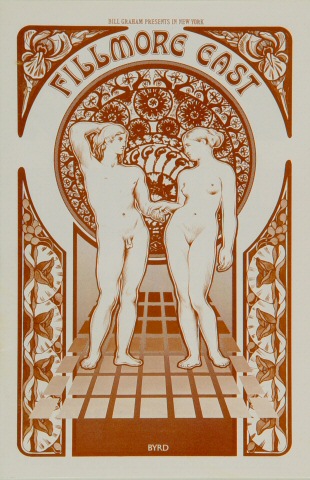
This beautiful poster dates from May 1968 and was designed by David Byrd. Hendrix was at the height of his career at the time of this show and he performed two shows this night. Although not listed on the poster, Sly & The Family Stone opened for Jimi Hendrix. The band was relatively unknown at that point and the crowd heckled it. David Byrd did a masterful job designing this poster and it is considered by many to be his finest work. This poster is also featured in The Art of Rock as Plate Number 2.90. We recently sold one of these in our November 2013 auction, where it realized $10,780. While this piece is not quite of that quality, it is very close and should be of great interest.
Condition: Superb; the only “flaw” is a very slight lightness in the inking on the lower right corner that can be seen in the high-resolution scan.
Grade: Near Mint
Size: 14⅛” x 22″

Estimate: $7,500–$12,500

Jimi Hendrix, 'Jimi Plays Monterey' (1986)

These nine songs from the iconic, guitar-charring 1967 show have appeared in many editions, first as the incomplete Historic Performances Recorded at the Monterey International Pop Festival, a wonderfully strange split album which contained about half of the Jimi Hendrix Experience’s set and all of Otis Redding’s. The complete 1986 edition marked the first full performance, wherein Hendrix updates the blues “Killing Floor”, shouts out his hero Bob Dylan (“Like a Rolling Stone”), turns one garage rock standard into electric mourning “Hey Joe” and soaks another one in feedback before soaking it in lighter fluid and creating the most important free noise coda ever caught on tape

Monterey Festival helped launch the careers of many performers, catapulting them from local, or relative obscurity, into the forefront of American and worldwide awareness. Today it’s easy to forget that before Monterey Jimi Hendrix had not had a hit record in America. Neither had The Who managed to get a record into the Billboard Top 20 and only one of their four minor hits had got higher than No.51; nor was Otis Redding very well known among white audiences. Rolling Stone, Brian Jones was there according to one report he was, “In a mind shattering gold lame coat festooned with beads, crystal swastika & lace, looked like a kind of unofficial King of the Festival” Brian Jones was the king of Hippie-chic

https://www.youtube.com/watch?v=WaQBz3yvEq0

Back in 1967 Jimi Hendrix made his US live debut with The Experience at the Monterey Pop Festival. .
Please check out the DVD “ Hendrix Live at Montery “
The DVD has been digitally remastered and mixed in 5.1 Surround Sound by Jimi’s original sound recording engineer, Eddie Kramer. The picture quality is sharp as a razor, almost impeccable. The original analogue recording mixed in 5.1 is raw, punchy, dangerous and exciting.
The film footage is crystal clear, almost three dimensional. There is no no sign of grain. It’s like you are watching a rock’n’roll hologram.
Live at Monterey, continues to celebrate the genius that is Jimi Hendrix.
It’s Hendrix at his most exciting; a raw, untamed, sexually explicit and pulsating guitar performance from one of the greatest guitarists known to man.
What really gives this release the ultimate rush, are the extras. The DVD is steeped with several documentaries including the brand new film American Landing.
48 years ago. Live at Monterey is a masterpiece.

No automatic alt text available.

Jimi Hendrix and Arthur Lee met in 1964 or 1965 at the Gold Star Studios in Los Angeles, where singer Rosa Lee Brooks was recording Lee’s song “My Diary”
the session was Jimi Hendrix’s first time in a recording studio, though it seems likely Hendrix had already cut “Testify” with the Isley Brothers.

The two men remained friends, and on St. Patrick’s Day 1970, after Love had finished a European tour, Hendrix had joined the band at London’s Olympic Studios. There, Lee says Jimi and the band all ate mescaline (or “Huxley’s hooch,” as we used to call it in the San Fernando Valley).

Lee’s recollections of the Olympic session: Boy, did we have fun at the Olympic recording studio. The band and Jimi all took mescaline. Although they didn’t know it, I was as straight as Cochise’s arrow. Somebody had to steer the ship One of the ways I got Jimi to do the session in the first place—or how I got his attention, anyway—happened one night at the Speakeasy. He and I arrived together. The guy at the front door told me I could come in but Jimi couldn’t. When I asked him why, he said that Jimi had been fighting in the club on an earlier occasion and they didn’t want that happening again. So I told him that Jimi was cool, the entourage that was with us was cool, and I didn’t think any fighting would be going on that night. He finally agreed. I said to Jimi, “Look, man, neither one of us is going to be around much longer, anyway; so while we’re here, we might as well do something together.” When I said that, whatever we were talking about, or he was thinking about, just seemed to stop and I had his full attention. He really went into some deep thought as he looked at me from across the table. He was looking into my eyes and I knew he could only be thinking about our early deaths.

The session went completely differently from the way I was used to recording. I thought it was to be a private session. I don’t remember telling anyone to come, except the band; but, to my surprise, there were people all over the place. There were girls I’d never seen before and faces popping out from where you would least expect a person to be. I was in a state of shock, but Jimi said, “It’s OK, let them stay.” More than once, Jimi thought we were done and went to pack everything up. Then he would come back into the studio while we were playing and say, “What key?” Once, when we were learning a song I wrote, called “Ride That Vibration,” Jimi came walking back in during the middle of it. He asked me, “What did you just say in that song?” I said, “Ride the vibration down like a six foot grave / Don’t let it get you down.” Then he said, “I gotta go; it’s getting too heavy.” He called a cab, took [drummer George Suranovich’s] girlfriend, and was out the door. George just looked at me as if to say, “That’s Jimi.” After a while, Jimi came back and suggested that everyone jam, and were my band members ever happy!

On that session in London, we managed to lay down a few tracks, among them “E-Z Rider,” “The Everlasting First,” and a jam that I would later add lyrics to. Jimi sang on “E-Z Rider.” I gave the master reel to [Blue Thumb Records president] Bob Krasnow. He never gave it back. At the time, I wondered if someone was filming us, although I never saw a camera. I found out, in the early 90s, they had been.

Back in the studio, it was almost daylight, so I signaled to H to start wrapping it up. I don’t think Jimi was ready to quit, but it had been a long night for me. The tour we were doing was over with; I just wanted to get back to Studio City in California. As we were walking out of the building, Jimi asked, “Where are you going?” I said, “Man, I gotta get back to LA; to my woman, dogs, and pigeons.” Jimi said, “Come here, I want to show you something.” We walked back inside the studio. He pointed to his guitar case on the floor. Then he opened it up. I thought he had a stash in there, but as he stood up, he pointed to it again and said, “This is all I have.” I couldn’t figure it out at first, but then it hit me. He was telling me that the white Stratocaster guitar in the case were his only possessions. I felt kind of sad for him.
Of the three songs Hendrix cut with Love at Olympic, only “The Everlasting First”—the single from Love’s False Start

https://www.youtube.com/watch?v=QvqDs6lIUrY

Jimi Hendrix wasn’t one to play by the rules, and on Jan. 4, 1969, during a guest appearance on the Lulu Show, the guitar legend was up to the task. While Lulu was a great pop singer, she and Hendrix were pretty much worlds apart in the public eye,. Still, the producers of her BBC TV Show booked the Jimi Hendrix Experience and approached Hendrix about singing a duet with Lulu on her big hit, ‘To Sir with Love,’ which was not first and foremost on Hendrix’ mind, to say the least.

The band were scheduled to perform two songs, one from their latest LP, ‘Electric Ladyland,’ and later in the show, they were to do their first U.K. hit, ‘Hey Joe.’ According to Noel Redding in his autobiography, ‘Are You Experienced?,’ Lulu would join the band to finish up ‘Hey Joe’ before a segue into her signature song. To deal with the stress of the situation, Redding said the band were “so straight it was only natural that we would try to combat that atmosphere by having a smoke in our dressing room. In our haste, the lump of hash got away and slipped down the sink drainpipe,” he continued. “I found a maintenance man and begged tools from him with the story of a lost ring. He was too helpful, offering to dismantle the drain for us. It took ages to dissuade him, but we succeeded in our task and had a great smoke.”

The band went on and performed ‘Voodoo Child’ as scheduled, but once Lulu introduced the band for their classic take on ‘Hey Joe,’ the Experience veered loudly off script. A raucous freeform feedback-drenched jam eventually gave way to ‘Hey Joe,’ but then midway through, Hendrix stopped the band, announcing, “We’d like to stop playing this rubbish and dedicate a song to the Cream, regardless of what kind of group they may be in. We dedicate this to Eric Clapton, Ginger Baker and Jack Bruce.”

At that moment, the band plowed through an instrumental version of the Cream classic Sunshine Of Your Love.’ Cream had just announced their breakup, hence the tribute. “We played past the point where Lulu might have joined us,” said Redding. “Played through the time for talking at the end, played through [producer] Stanley [Dorfman] tearing his hair, pointing to his watch and silently screaming at us.”

This stunt, which led to a ban on Hendrix by the BBC, would be imitated eight years later by Elvis Costello during an appearance on ‘Saturday Night Live.’ Costello and the Attractions started off playing ‘Less Than Zero,’ before he stopped the song and the band kicked into ‘Radio Radio.’ NBC banned Costello for 12 years. He later admitted that it was indeed an homage to Hendrix on the Lulu show.

Read More: 46 Years Ago: Jimi Hendrix Experience Banned From BBC | http://ultimateclassicrock.com/44-years-ago-jimi-hendrix-experience-banned-from-bbc/?utm_source=sailthru&utm_medium=referral&utm_campaign=newsletter_4572276&trackback=tsmclip