Posts Tagged ‘Fleetwood Mac’

No photo description available.

“Tango in the Night” is the final album the band would record as an infamous quintet. It’s a pop and production masterpiece, yet remains this monolithic, lucrative idea of a Fleetwood Mac record. In reality it’s this brilliant album that is really the first Buckingham/McVie Record.

Made at a time of complete turmoil in the band. If you were a Fleetwood Mac fan in 1987 this album definitely caught you off guard because at that time no one expected the most successful line-up of Fleetwood Mac to reunite again.
Not only that but the band members themselves at that time were really in no position to record a Fleetwood Mac record. Stevie Nicks, coming off a successful solo career, was dealing with her cocaine abuse. John McVie was a full blown alcoholic, and Mick Fleetwood also was dealing with his personal demons, still addicted to cocaine and actually broke, having to file for bankruptcy.
if it wasn’t for Christine McVie and especially Lindsey Buckingham, this album never could’ve been made.
Taking a painstaking 18 months to record, both Lindsey and especially Christine had arrived to the sessions (which took place at Lindsey’s home) with some of their strongest songs to date.

It started with “Sara.” The first two Fleetwood Mac albums to feature Lindsey Buckingham and Stevie Nicks—the self-titled album and then “Rumours” featured production typical of the pop-rock generated in Los Angeles in the ’70s. They were professional and pristine, exhibiting an instrumental and emotional warmth that was, in terms of the actual recording technique and the cerebral atmosphere of the people making the records, a product of isolation. On their next record, “Tusk”, Buckingham shifted the balance of Fleetwood Mac’s studio pop. He deliberately produced his songs so that they sounded trebly and makeshift as if they were translated from brain to tape as quickly as possible—and produced Nicks’ and Christine McVie’s songs with a lush and carefully-sculpted dimensionality. “Sara,” a song Nicks wrote to a daughter she never had, is so gently shaped that every instrumental and vocal materializes in the song like vapor in the atmosphere. Nicks said that when she writes songs, she tries to “make little worlds” for the listener. Whether intentional or not, this sensibility invaded Buckingham’s production of the song; “Sara,” as it appears on “Tusk”, is its own world.

The follow-up to “Tusk”, 1982’s “Mirage”, was a kind reflexive scaling back; both Warner Bros. and Buckingham wanted to regenerate the success and the coherent atmosphere of “Rumours”. It didn’t take.

After a brief tour, the band went on hiatus. Nicks released two successful solo albums; McVie and Buckingham put out one each. In 1985, Buckingham had begun work on an additional solo album, when Mick Fleetwood suggested Buckingham fold his new songs into the more monolithic, more lucrative idea of a Fleetwood Mac record.

The resulting album, “Tango in the Night”, is exactly that: a monolithic, lucrative idea of a Fleetwood Mac record. It was recorded over eighteen months between 1986 and 1987, mostly at Buckingham’s home studio in L.A. Buckingham devoted himself to the record, labouring intensely over its songs, its sounds, and the integrity of its design. Recording technology had advanced substantially since the early ’80s, and Buckingham found the methods by which he could determine the shape and temperature of a Fleetwood Mac song had expanded.

“Most of the vocal parts were recorded track by track,” . “The voices used in the textured vocal choirs were mostly mine. I used a Fairlight machine that samples real sounds and blends them orchestrally.” Out of these newly available materials, he could practically build an entire band, which was useful at the time. Mick Fleetwood was almost entirely consumed by his cocaine habit at the time, and the band had been experiencing an internal drift for years. “Constructing such elaborate layering is a lot like painting a canvas and is best done in solitude,” Buckingham added.

Out of these 18 months recording Stevie Nicks participated in the sessions for only two weeks and when she did show up most of the time she seemed either uninterested, high, or drunk. It’s not surprising that Lindsey had to cut/splice many of her recorded tracks to make them listenable.

The album’s artwork, “Homage a Henri Rousseau” by Brett-Livingstone Strong, is so lush and romantic that it walks a fine line between formal elegance and kitsch, blending the terrestrial with the celestial. It’s an accurate illustration of “Tango in the Night’s” sound design, of the glitterings and humid shimmers that Buckingham placed in the songs. He made each track on “Tango” just as he produced “Sara”: less an arrangement of bass, guitar, drums, and vocals than a complete world, a living panorama. There’s a phenomenal wholeness to the recordings on “Tango” that seems like a superficial compensation for how deeply fragmented the band was at the time.

After Nicks resurfaced from her cocaine addiction at the Betty Ford Clinic, she visited Buckingham’s studio for a few weeks. Three of her recordings figure into the finished “Tango”, only two of which were written by her. Her voice, invariably hoarse after years of cocaine abuse, often warps or fails the already incomplete material. She howls her way through “Seven Wonders,” a song written mostly by Sandy Stewart. (Nicks receives credit because she misheard “All the way down you held the line” as “All the way down to Emmiline”; For all of its bluster, the song is not only enhanced by the incidents of its arrangement but is the incidents of its arrangement; try to imagine the song without its synth hook and hear the rest of it evaporate. On “When I See You Again,” Nicks’ voice almost crumbles and shatters into atoms. “Stevie was the worst she’s ever been,” Buckingham has said 2013. “I didn’t recognize her…I had to pull performances out of words and lines and make parts that sounded like her that weren’t her.” Fittingly, each verse and chorus that Nicks sings sounds generated by a different uncanny assemblage of Stevie, among them one who sings in a kind of mutilated whisper. After the bridge, Nicks completely disappears. Buckingham finishes the song.

Buckingham’s songs on “Tango” are less knotted than they were on “Tusk” and “Mirage”, newly permissive of space. The first single, Buckingham’s “Big Love,” is a song that inadvertently simulates the essential failure of the album. It is devoted to a totally abstracted and imaginary form of love, while “Tango in the Night” is devoted to a totally abstracted and imaginary form of Fleetwood Mac (neither of which could be assembled in reality). The song’s arrangement feels austere and detached, a by product of the narrator’s alienation, but it’s also decorated with overlapping, pointillist guitar phrases. Even the empty spaces on “Tango” feel like deliberately-wrought emptinesses—for instance, the airy synths that hover over the verses of McVie’s “Everywhere,” or Buckingham’s title track, which through its sense of space imparts the feeling of rowing through fog and mystery.

Still, it’s McVie whose work is most realized by Buckingham’s impressionism. Her “Everywhere” is the best song on the record. Like “Big Love” it too is about encountering an idea too big to contain within oneself (love, again). But where “Big Love” apprehends it with icy suspicion, “Everywhere” responds with warmth, empathy, and buoyancy, describing a kind of devotion so deeply felt that it produces weightlessness in a person. Its incandescent texture is felt in almost any music that could be reasonably described as balearic. Elsewhere, “Isn’t It Midnight,” McVie’s co-write with Buckingham and her then-husband Eddy Quintela, seems an inversion of the values of “Everywhere,” a severe ’80s guitar rock song that gets consumed by a greater, more unnerving force by its chorus, as if it’s succumbing to a conspiratorial dread. “Do you remember the face of a pretty girl?” McVie sings, and Buckingham echoes her in an unfeeling monotone (“the face of a pretty girl”) while behind him synths chime in a moving constellation, UFOs pulsing in the dark.

Christine’s songs, (co-written with her new husband at the time Eddy Quintela,) like “Everywhere”, Mystified”, “Little Lies”, and “Isn’t It Midnight”, have became radio staples all over the world.

Lindsey’s album tracks like “Caroline”, “You And I (Part II)”, (the excellent Part 1 Of The song is now included on the expanded 30th Anniversary edition,) the killer title track which has some of his most ferocious guitar playing, to “Family Man”-a song that also should’ve been a huge hit yet many radio stations thought he was saying “Mother F**ker” instead of “Mother/Father” which made program directors hesitant to play the song.

This is the essence of “Tango in the Night”: something falling apart but held together by an unearthly glow. More of a mirage than “Mirage”, it is an immaculate study in denial (its most enduring hit revolves around McVie asking someone to tell her “sweet little lies”). It’s a form of dreaming where you could touch the petals of a flower and feel something softer than the idea of softness. In this way, “Tango” seems to emerge less from Buckingham’s pure will and imagination than from a question that haunts art in general: How can one make the unreal real, and the real unreal?

The remaster of “Tango in the Night” isn’t as topographically startling as  “Mirage”, where new details seemed to rise out of the mix as if in a relief sculpture; it sounded good on CD in 1987. The reissue does sound warmer and brighter, and the instruments feel less digitally combined, which lifts background elements to the surface, like the seasick drift of the bass notes in “Caroline” and the coordinated staccato harmonies in the title track. The reissue also includes two discs of b-sides, demos, and extended remixes, several of which were previously unreleased. “Special Kind of Love” is described as a demo but sounds like a completely developed Buckingham song, gentle and simple, with every edge expressively filigreed; it could’ve been a potential second sequel to “You and I.” “Seven Wonders” appears in an earlier, more relaxed arrangement, with Lindsey’s guitar warmly swanning between the notes that would eventually be reconstructed in perfect digital isolation by a synthesizer.

The demos also reveal the ways in which the songs could fold into and out of each other. On the “Tango in the Night” demo you can hear Buckingham, at the edge of every chorus, begin to invent the trembling choral part that opens “Caroline.” Nicks’ eventual solo track “Juliet” is present in two of its primordial forms—as the instrumental “Book of Miracles” (credited to both Buckingham and Nicks) and as a five-minute “run-through.” The run-through is especially curious, reducing “Book of Miracles” to a formulaic blues-rock over which Nicks’ voice produces a just-barely musical static, full of wobbles and distortions and exclamations. After the take she says, ecstatically, “I thought that was wonderful! I didn’t play! I did not play because I am so smart!”

Nicks exhibits a strange, dissonant giddiness in this moment that isn’t present in any of the band member’s memories of the recording process. At the time, in his interview with the Times, Buckingham imaginatively described “Tango in the Night” as a restorative process. “This album is as much about healing our relationships as “Rumours” was about dissension and pain within the group,” he said. “The songs look back over a period of time that in retrospect seems almost dreamlike.” Twenty-six years later, Buckingham summarized the experience to Uncut magazine in more severe terms:“When I was done with the record, I said, ‘Oh my God. That was the worst recording experience of my life.’”

The jealousy and resentment he felt toward Nicks for the success she experienced in her solo career, and the prevailing feeling that his architectural work on the band’s records went unnoticed and unappreciated, had built to a flashpoint. Later in 1987, the band met up in anticipation of the promotional tour for “Tango”, for which they had already secured dates and signed contracts. At the meeting, Buckingham announced he was quitting the band. “I flew off of the couch and across the room to seriously attack him,” Nicks said in 2013. “…I’m not real scary but I grabbed him which almost got me killed.” They spilled out of McVie’s house and into the street. Buckingham ran after Nicks and threw her up against a car. She “screamed horrible obscenities” at him, and he walked away, from the moment and the band. What’s left, after these harsh fragments of reality are swept away, is Tango in the Night”: a remarkably complete album, Just a dream.

Once “Tango In The Night” became a huge commercial success the band, including Stevie Nicks, was eager to go on the road only to be shot down by Lindsey.
After a very bad meeting gone wrong at Christine’s home, Lindsey would end up quitting the band, only to be replaced by two musicians (sound familiar?) And even though the tour would become successful without Lindsey the magic just wasn’t there. (Once again. Sound familiar?) In the end the music from “Tango In The Night” deserved better.
Hard to believe that even through all of that turmoil and botched world tour, that today it’s the second most successful Fleetwood Mac album after  “Rumours”.
In retrospect it’s been proven that “Tango In The Night” is Lindsey’s baby. He recorded, produced, and did all of the arrangements at the sessions. It shouldn’t be surprising that by the time the record was finished he was emotionally and physically drained.
It’s ironic that the 31st Anniversary of this album occurred when we all received the news that Lindsey had left Fleetwood Mac again for a “ tour disagreement” (yeah right) except this time he was supposedly fired. (I still don’t know how Lindsey can be justifiably fired from the band that he,more than any other member, is responsible for their success.)
It’s also a shame that as of today it’s the last album recorded by the “classic five” lineup of the band.
For years fan had hoped for one more studio album, but now with the recent death of Christine McVie that will never happen.

The reissue of Fleetwood Mac’s studio album featuring the quintet of Lindsey Buckingham, Mick Fleetwood, Christine McVie, John McVie and Stevie Nicks. It contains several hit singles including “Big Love,” “Seven Wonders,” “Everywhere,” and “Little Lies.” [Available in Regular, Deluxe and Super Deluxe editions. Deluxe adds a disc of rare recordings and non-album tracks. Super Deluxe adds a third CD featuring 12” remixes and more, a DVD containing five music videos, and the 180gm vinyl repress.

“Tango In The Night” continues to impress. What we know now with all of the excellent outtakes that have come to light that it easily could’ve been a double album. After 18 months of drama though, one can understand why it wasn’t.

Fleetwood Mac
* Lindsey Buckingham – guitars, keyboards, Fairlight CMI, lap harp, percussion and drum programming, vocals
* Stevie Nicks – vocals
* Christine McVie– keyboards, synthesizers, vocals
* John McVie – bass guitar
* Mick Fleetwood – drums, percussion

See the source image

How prolific of a songwriter was Stevie Nicks in the ’70s and early ’80s? Not only did she pen multiple Fleetwood Mac hits – “Rhiannon,” “Dreams,” “Sara” and “Gypsy,” to name a few – but she also found time to write and record a hit solo album, 1981’s “Bella Donna”.

Stevie Nicks’ first two solo albums  “Bella Donna” and “The Wild Heart” reissued via Rhino Records. Each deluxe release will feature not only the original LP but rarities and bonus tracks, like the previously unreleased demo of her solo debut’s title track, streaming below. Stripped of its backing vocals as well as the raucous live band and synthesizers featured on the original album version, Nicks’ demo is a tender, intimate take on the song. She sings softly above just the piano track, nearly whispering “Bella donna, my soul” and barely reaching the full-throated belt she unleashes on the 1981 recording.

The Legendary Fleetwood Mac singer-songwriter Stevie Nicks joined producer Jimmy Iovine to begin recording her solo debut, “Bella Donna”, following the release of the Mac’s TUSK and its subsequent tour. Nicks’ 1981 collection was quickly certified platinum thanks to singles like “Stop Draggin’ My Heart Around” (with Tom Petty and the Heartbreakers), “Leather And Lace” (with Don Henley) and “Edge Of Seventeen.” Rhino’s triple-disc deluxe edition of the collection uncovers unreleased versions of the latter two classics as well as soundtrack rarities and a concert from 1981 that features performances of songs from the album along with several Fleetwood Mac favourites.

Ahead of Best Of “24 Karat Gold” solo tour, singer-songwriter talks set lists, “sex, rock & roll and drugs” songs, and more
Later this month and just before releasing the reissues, Nicks will embark on a solo tour with opening act the Pretenders. Nicks‘ tour is in support of her 2014 album 24K Gold, a collection of songs she had cut from her prior solo releases for various reasons. “These are the glory songs,” she told of her reason to follow a multi-year world tour with Fleetwood Mac with the solo dates. “These are the sex, rock & roll and drugs songs that I’m actually not really writing right now, and these are the songs I could never write again.”

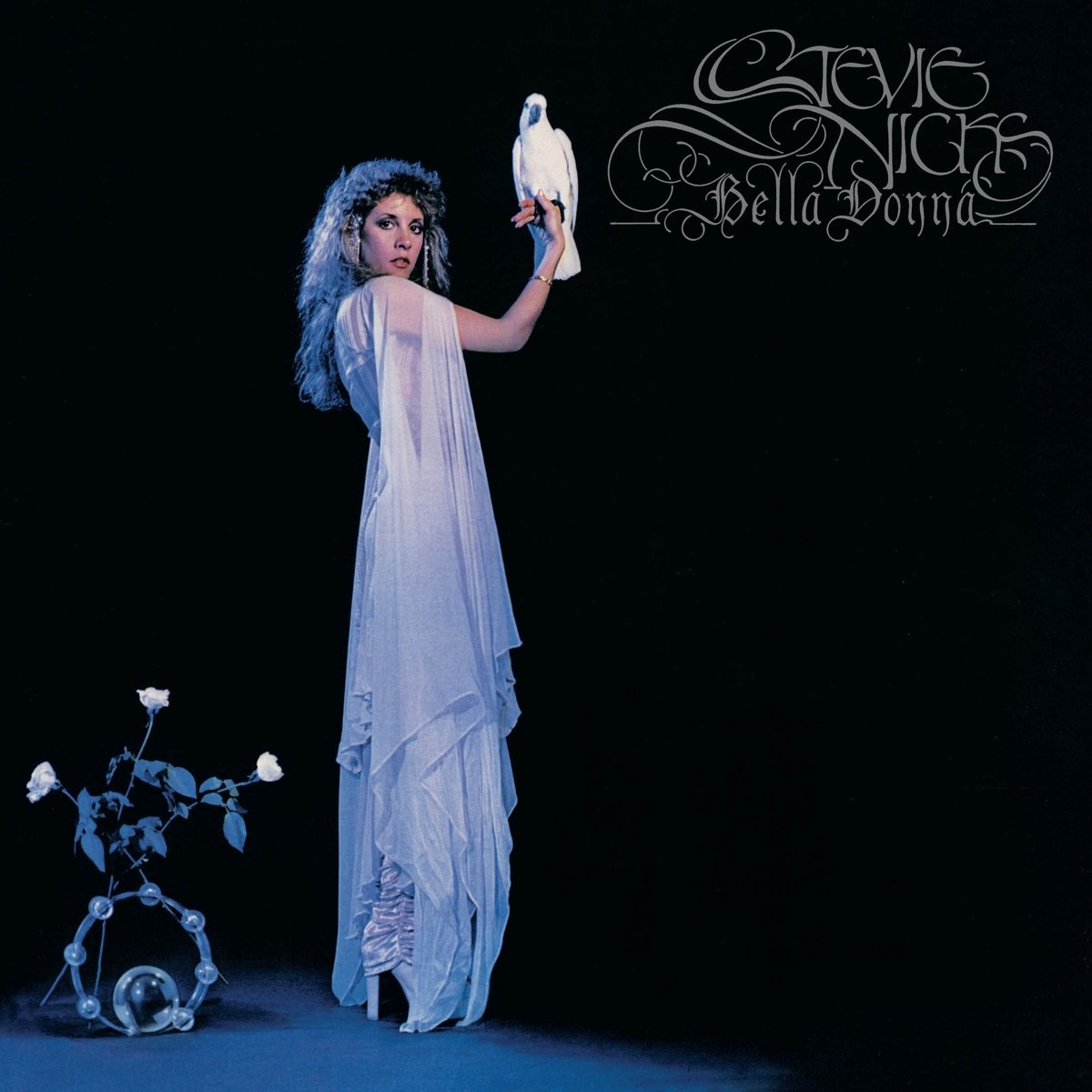
The cover of “Bella Donna,” Stevie Nicks’s first solo album, shows the artist looking slender and wide-eyed, wearing a white gown, a gold bracelet, and a pair of ruched, knee-high platform boots. One arm is bent at an improbable angle; a sizable cockatoo sits on her hand. Behind her, next to a small crystal ball, is a tambourine threaded with three long-stemmed white roses. Nicks did not invent this storefront-psychic aesthetic—it is indebted, in varying degrees, to Hans Christian Andersen’s Thumbelina, de Troyes’s Guinevere, and Cher—but, beginning in the mid-nineteen-seventies, she came to embody it. The image was girlish and delicate, yet inscrutable, as if Nicks were suggesting that the world might not know everything she’s capable of.

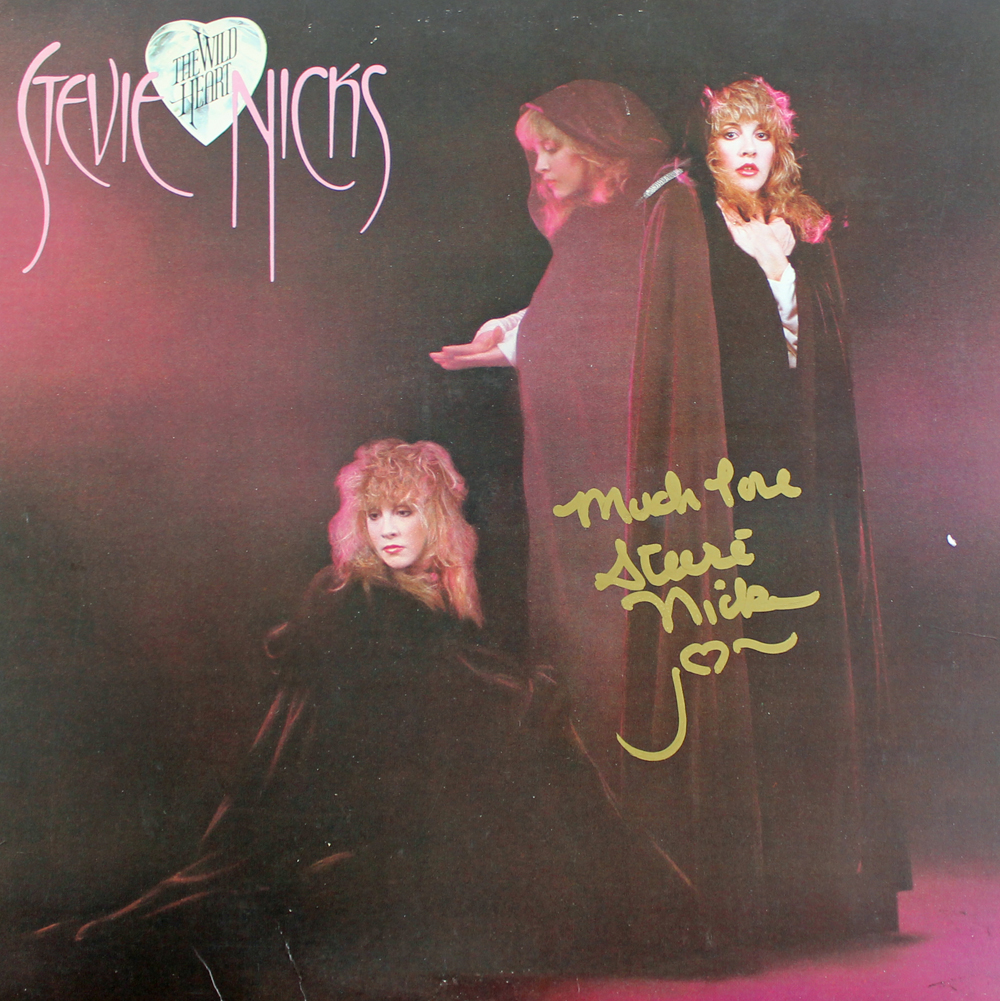
While Nicks’s sartorial choices have been widely mimicked, it’s rare to hear echoes of her magnanimity in modern pop songs, which are frequently defensive and embattled, preaching self-sufficiency at any cost.  “Bella Donna,” from 1981, and Nicks’s second solo album, “The Wild Heart,” from 1983, are being reissued. Nicks was thirty-three when “Bella Donna” was released. Though its cover might not suggest an excess of reason, in its songs she is a sagacious and measured presence. Her acknowledgment of the heart’s capriciousness is gentle, if not grandmotherly. There’s surely no kinder summation of love’s petulance than the chorus of “Think About It,” a jangling folk song about taking a breath before hurling yourself off a metaphorical cliff. “And the heart says, ‘Danger!’ Nicks sings. She pauses briefly. “And the heart says, ‘Whatever.’ ” For anyone busy self-flagellating over an error in judgment, this can feel like a rope ladder thrown from above—an invitation to scramble up and out of despair. It is generous and knowing, and offers a clear-eyed conclusion: some things can’t be helped.

What does it mean to be Stevie Nicks? To understand loss and longing as being merely the cost of doing business? To acknowledge the bottomless nature of certain aches, yet to know, in some instinctive way, that you’ll keep going? Nicks evokes Byron, in spirit and in certitude: “The heart will break, but broken live on.”

Nicks was born in 1948, in Phoenix. Her paternal grandfather, A. J. Nicks, Sr., was a struggling country musician, and he taught Nicks how to sing when she was four years old. She was given an acoustic guitar for her sixteenth birthday, and immediately wrote a song called “I’ve Loved and I’ve Lost and I’m Sad but Not Blue.” The title is a surprisingly succinct encapsulation of Nicks’s lyrical alchemy: a combination of acceptance (I am hurting) and perspective (I will not hurt forever).

In 1966, when Nicks was in her senior year of high school and living in Atherton, California—her father, an executive at a meatpacking company, had been relocated there—she met the guitarist Lindsey Buckingham at a party. He was sitting cross-legged on the floor—bearded, curly-haired, and strumming the Mamas and the Papas’ “California Dreamin’.” Uninvited, she joined him in harmony. (“How brazen!” she later said.) Buckingham asked Nicks to join his band, Fritz. By 1971, the two were romantically involved. They eventually took off for Los Angeles, where they tried to make it as a duo, called Buckingham Nicks, releasing one album, in 1973, to very little acclaim. Not long afterward, Buckingham was asked to join Fleetwood Mac, a British blues band featuring the singer and keyboard player Christine McVie, the bassist John McVie, and the drummer Mick Fleetwood; the group was being rebooted as an American soft-rock act. Buckingham insisted that Nicks be invited, too. She ended up writing two of the band’s biggest early hits, “Landslide” and “Rhiannon.”

Extraordinary success often leads to spiritual dissolution, and Fleetwood Mac had its share of psychic turmoil. In 1975, Fleetwood divorced his wife, the model Jenny Boyd, after she had an affair with one of his former bandmates. Nicks and Buckingham broke up the following year. Around the same time, John and Christine McVie’s marriage collapsed. There was an ungodly amount of brandy and cocaine on hand to help nullify the despair. Still, in 1977, Fleetwood Mac now five wild-eyed, newly single people—released “Rumours,” a collection of yearning songs about love and devotion. The record spent thirty-one weeks at the top of the charts, and is one of the best-selling albums in American history.

Nicks’s debt is to Laurel Canyon, and to the sentimental, silky-voiced artists who emerged from L.A. in the late sixties and early seventies. Some of those acts—James Taylor, the Eagles—are now considered, fairly or not, irrelevant to the Zeitgeist: too mellow, too affluent, too sexless, too white. Candles and incense and macramé plant hangers; wistful thoughts about weather. Nicks’s lyrics often worry over domestic or earthly concerns—gardens, mountains, flowers, the seasons—and how they might affect the whims of her heart. “It makes no difference at all / ’Cause I wear boots all summer long,” she sings in “Nightbird.” When compared with the dissonant and provocative music coming out of downtown New York, the California sound could seem limp. But the scene in Laurel Canyon was tumultuous. Many of its artists—including, at various times, Nicks—were wrecked by drug addiction. Nicks’s voice, a strange, quivering contralto, gives her songs unexpected weight.

“Bella Donna” was produced by Jimmy Iovine, a Brooklyn-born audio engineer who worked on Bruce Springsteen’s “Born to Run” and produced the Patti Smith Group’s “Easter” and Tom Petty and the Heartbreakers’ “Damn the Torpedoes.” Iovine spent time in California, but his sensibility was tougher and more plainly that of the East Coast. He later became a co-founder of Interscope Records, where he helped to establish the career of the rapper Tupac Shakur, and, for a period, he oversaw the hip-hop label Death Row Records.

“Bella Donna” reached No. 1 on the Billboard chart, and produced four hit singles: “Stop Draggin’ My Heart Around,” a duet with Petty; “Leather and Lace,” with Don Henley; “Edge of Seventeen”; and “After the Glitter Fades.” The last, a country song about the travails of stardom—Nicks wrote it just after she and Buckingham moved to Los Angeles, long before she had a record deal, showing either hubris or prescience—contains organ, pedal steel, and reassurances. “The dream keeps coming even when you forget to feel,” she sings.

Nicks, like most artists, culls inspiration from disparate sources. She is prone to saying things like “ ‘Edge of Seventeen’ was about Tom Petty and his wife, Jane, my uncle dying, and the assassination of John Lennon.” But her personal life—a tangle of love affairs, often with her collaborators—informs her work in explicit ways. “Heartbreak of the moment isn’t endless,” she sings, in “Think About It.” This might seem like a billowy platitude, but if you are someone who does not think that every flubbed decision is fodder for personal growth, it is comforting to hear someone assert that nearly all mistakes can be neutralized, if not conquered. If “Bella Donna” contains a single directive, it’s to love freely, love fully, and hang on. The songs Stevie Nicks left off her debut solo LP “Bella Donna”, You can hear why “Blue Lamp” didn’t end up on “Bella Donna” The song has a darker, rock-oriented vibe that’s quite different from the rest of the album. However, it’s one of Nicks’ finest solo songs, based on a “dark blue Tiffany lamp” from her mom that “symbolized to me the light that shines through the night,” as she told The Source in 1981.

“When Fleetwood Mac  we found them or they found us or whatever you know – it was a definite light at the end of the tunnel for both Lindsey Buckingham and I.” However, Nicks also saw the song represent new beginnings in her solo career. “It was very important that it found a place for itself,”.”I love that song. It was really the beginning of Bella Donna, because it was the first thing I’d ever recorded with other musicians, and it was the first time I’d ever recorded by standing in a room singing at the same time that five guys were playing. Fleetwood Mac doesn’t record that way. They record from a more technical standpoint.”
It seemed inevitable Nicks would have had a song on the “Fast Times At Ridgemont High” soundtrack – after all, her manager, Irving Azoff, co-produced the movie. However, “Sleeping Angel” was certainly no tossed-off leftover; in fact, it’s one of Nicks’ most gorgeous and emotional songs from the era.

Driven by elegiac piano from E.Streeter Roy Bittan and lush backing vocals from Lori Perry and Sharon Celani, Nicks defines the respect she needs in and from a relationship: “I need you because you let me breathe / Well, you’ve taken me away / But never take me lightly / Or I could never stay.”

Incredibly enough, Nicks never actually recorded “Gold and Braid” in the studio, although she played it live on early ’80s solo tours. In concert, it’s a barn-burning rocker that serves as a perfect contrast to Bella Donna’s folkier songs and hints at what it might have sounded like had Nicks followed through on her desire to join Tom Petty and the Heartbreakers.

Nicks’ original demo for “24 Karat Gold” is piano-heavy and meditative, with almost stream-of-conscious vocals. The version that surfaced later on “24 Karat Gold” maintains the bones of her demo, the piano especially, but turns into a compact cautionary tale about ill-fated fame and love.

“‘Belle Fleur’ was about not being able to have a relationship because you were a rock ‘n’ roll star,” she said in 2015. Fittingly, one demo for the song is just piano and voice, featuring Nicks and her backing singers – a sisterhood of support that’s always been a through-line in Nicks’ work. “The [lyric] ‘When you come to the door of the long black car’ ,that’s the limousine that’s coming to take you away. Then your boyfriend is standing on the porch waving at you, like, ‘When are you going to be back?’ And you’re like, ‘I don’t know, maybe three months?’ But then we would add shows to a tour, and I could end up not being back for six months. It was difficult for the men in my life. I lived that song so many times.”

See the source imageIn 1981, Iovine flew with Nicks to the Château d’Hérouville, in northern France, where Fleetwood Mac was recording its next album, “Mirage.” Iovine left almost immediately, to escape the interpersonal conflicts that roiled the band. Iovine and Nicks’s relationship foundered. The following fall, while Fleetwood Mac was on tour, Nicks’s childhood friend Robin Anderson died, of leukemia, at the age of thirty-three. “What was left over was just a big, horrible, empty world,” Nicks has said. Days before her death, Anderson had prematurely given birth to a son. Nicks, operating under the savage logic of grief, married her friend’s widower, Kim Anderson, thinking that she would help raise the child. They divorced three months later.
By 1983, Nicks was ready to make another record. Her relationship with Iovine was strained, but Nicks asked him to produce the record anyway. “The Wild Heart” is inspired in part by the unravelling of that relationship, and in part by her mourning for Anderson. Nicks frequently cites as a guiding influence for the recording sessions the 1939 film adaptation of Emily Brontë’s “Wuthering Heights,” which depicts an undying, almost fiendish love. Mostly, the songs are about bucking against the circumstances that separate us from the people we need.

The artist Justin Vernon, of the band Bon Iver, uses a brief sample of “Wild Heart” (a track from “The Wild Heart”) on the group’s new album, “22, A Million.” Nicks’s voice is sped up, pitch-altered, and barely discernible as human—just a high, grousing “wah-wah,” deployed intermittently. Vernon pinched it from a popular YouTube video of Nicks, in which she sits on a stool having her makeup done, wearing a white dress with spaghetti straps. She begins to sing. Soon, someone is messing with a piano; one of her backup singers joins in with a harmony. The makeup artist gamely tries to continue with her work, before giving up. While the studio recording of “Wild Heart” is saturated, almost wet, this version is all air, all joy.

What affects me most about the video is how profoundly Nicks appears to love singing. Her voice has an undulating, galloping quality. It is as if, once it’s started up, there’s no slowing down, no stopping; the car is careering down a mountain, with no brakes. You can see on her face how good it feels just to let go.

“Stand Back,” the first single from “The Wild Heart,” was inspired by Prince’s “Little Red Corvette,” which Nicks heard on the radio while driving with Kim Anderson to San Ysidro Ranch, in Santa Barbara, for their honeymoon. (Prince played keyboards on the track, though he’s not credited in the album’s liner notes.) The song was produced in accordance with the style of the era, with lots of synthesizer and rubbery, overdubbed percussion. The lyrics describe a deliberate seduction followed by an acute betrayal. “First he took my heart, then he ran,” Nicks sings. The chorus is appropriately punchy: “Stand back, stand back,” she warns. Nicks is capable of going fully feral before a microphone, perhaps most famously at the end of “Silver Springs,” a song intended for “Rumours” and one of several that she wrote about Buckingham. (It ends with Nicks hollering, “Was I just a fool?”) On “Stand Back,” she erupts briefly, on the middle verses, but for the rest of the song she is more characteristically sanguine. “It’s all right, it’s all right,” she concedes. “I did not hear from you, it’s all right.”

Nicks has gone on to make six more solo albums, and three more with Fleetwood Mac. Following her divorce from Kim Anderson, she never married again, or had any children, though a rich maternal instinct runs through all her songs. This, more than anything else, may be the reason that Nicks’s work has endured.

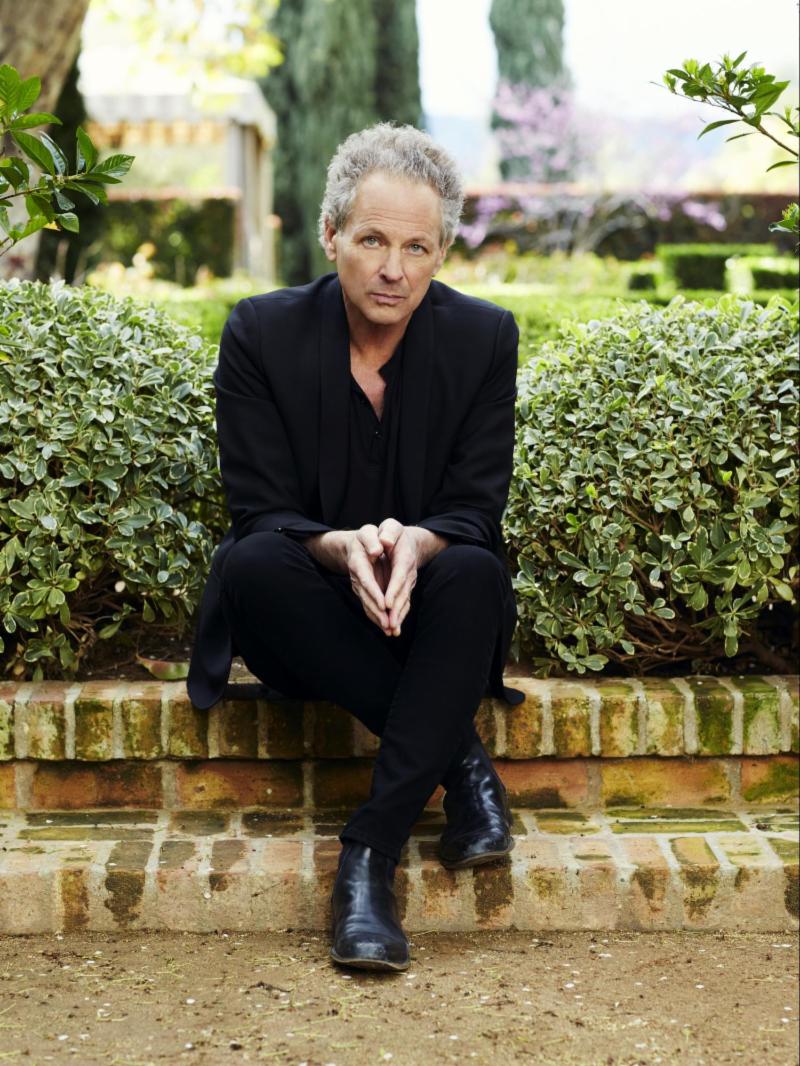
Lindsey Buckingham has released a second track from his forthcoming self-titled album, due out September 17th, 2021, on Reprise Records. He says “On the Wrong Side” is about the peaks and valleys of life on the road with Fleetwood Mac.

The song follows the first single, “I Don’t Mind.” Lindsey Buckingham is his first solo release since 2011’s “Seeds We Sow” and follows his departure from Fleetwood Mac. As with the seven studio and three live albums he has released as a solo artist, beginning with 1981’s Law and Order, the new project, says a press release, “showcases Buckingham’s instinct for melody and his singular fingerpicking guitar style, reaffirming his status as one of the most inventive and electrifying musicians of his generation.”

“On the Wrong Side” sports one of the album’s most thought-provoking lyrics: “We were young, now we’re old / Who can tell me which is worse?” Buckingham says the song evokes “Go Your Own Way,” in that it’s “not a happy song, subject-matter wise, but it was an ebullient song musically. This was sort of the same idea.”

Buckingham will be returning to the stage with a 30-city 2021 U.S. tour, marking his first in-person shows since a life-saving open heart surgey in 2019. He’ll kick off the extensive run of shows on September 1st.

Written, produced and recorded by Buckingham at his home studio in Los Angeles, the album will be released via vinyl, CD and on all digital services. A limited-edition blue vinyl version is also available for pre-order via http://www.lindseybuckingham.com.

Says Buckingham of the meaning of the single, “‘I Don’t Mind,’ like many of the songs on my new album, is about the challenges couples face in long-term relationships.” He continues, in the June 8 announcement, “Over time, two people inevitably find the need to augment their initial dynamic with one of flexibility, an acceptance of each other’s flaws and a willingness to continually work on issues; it is the essence of a good long term relationship. This song celebrates that spirit and discipline.”

[The same day as the announcement of the new album and tour, it has also been reported that Buckingham and his wife of 21 years, Kristen Messner, are heading for a divorce. The couple have three children.]

The new album, the release continues, “is a welcome display of Buckingham’s instantly recognizable guitar work and vocal layering, particularly on songs such as ‘Power Down,’ ‘Scream’ and ‘Swan Song.’” Elsewhere, Buckingham pays homage to ’60s folk group the Pozo-Seco Singers’ hit single “Time,” a song he’s admired since he was as a teenager and has long intended to cover. “I wanted to make a pop album, but I also wanted to make stops along the way with songs that resemble art more than pop,” he says. “As you age, hopefully you keep getting a little more grounded in the craft of what you’re doing. For me, getting older has probably helped to reinforce the innocence and the idealism that hopefully was always there.”

fleetwood mac live reissue

Fleetwood Mac have unveiled a Super Deluxe reissue of their 1980 live album, “Fleetwood Mac Live”The LP captured the iconic line-up in top form at tour stops along their global trek in support of their 1979 studio album, “Tusk”.

Three songs from Tusk are featured on “Live!”, including “Sara,” “Over and Over” and “Not That Funny” – while the rest of the track listing included a selection of highlights from throughout the band’s storied career, including massive hits like “Dreams,” “Go Your Own Way,” “Don’t Stop” and “Rhiannon.”

The upcoming 3-CD/2-LP expanded reissue features a newly remastered version of the original 1980 release, plus more than an hour of unreleased live versions of classic Fleetwood Mac tracks, recorded between 1977 and 1982. The 14 live tracks that debut on the Super Deluxe Edition  include “Tusk,” “Gold Dust Woman,” “Songbird” and “The Green Manalishi (With the Two-Pronged Crown).” The set also includes a bonus 7-inch single featuring previously unreleased demos for “Fireflies” and “One More Night” 

An unreleased live performance of “The Chain” recorded in Cleveland in 1980 is available now as a digital download/streaming services.

The Fleetwood Mac Live: Super Deluxe Edition is presented in a 12 x 12 rigid slipcase and comes with a booklet filled with rare photos, a full itinerary for the “Tusk” Tour, plus a history of the live album by writer David Wild. He writes: “Then and now, Fleetwood Mac Live artfully marks a fascinating time period for a group that, in one form or another, has been on the global stage for more than half a century… It’s a wildly entertaining rock ’n’ roll circus in full swing under a big tent of the band’s own creation as they leave audiences dazzled in locales from Paris, France, to Passaic, New Jersey.”

The majority of the original album was recorded live between 1979 and 1980, save for a few exceptions:  “Don’t Let Me Down Again,” was recorded in 1975 during the tour for Fleetwood Mac; Dreams” and “Don’t Stop” are from the band’s soundcheck in Paris; while “Fireflies,” “One More Night,” and a cover of the Beach Boys’ “Farmer’s Daughter” were all recorded in California during a special show for the band’s crew, family, and friends.

In addition to the Super Deluxe set, a special limited Tour Edition will also be available. With only 1,000 copies being released, this set adds a replica ticket, backstage pass, ad, button, sticker and iron-on patch from the era to the collection.

fleetwood
Fleetwood Mac: Fleetwood Mac 1973-1974: Quadruple LP + 7

‘FLEETWOOD MAC 1973-1974’ follows on from 2013’s 1969-1972 vinyl boxset that continues to bring the band’s early albums back into print. The vinyl collection includes three remastered studio albums: ‘Penguin’ (1973), ‘Mystery To Me’ (1973), and ‘Heroes Are Hard To Find’ (1974). The box set concludes with an unreleased recording of the band’s December 15th, 1974 concert at The Record Plant in Sausalito, California. The performance captures the band – Fleetwood, Welch and the McVies – on tour supporting their latest album, ‘Heroes Are Hard To Find’.

Originally, the show was simulcast on the legendary rock radio station KSAN-FM in San Francisco. For the vinyl version of this release, to ensure superb sound quality, Chris Bellman at Bernie Grundman Mastering cut the lacquers for all the albums from the original analogue masters, which are pressed on 140-gram vinyl and presented in replica sleeves made to look like the original pressings. As a final touch, the set also includes a 7” single with “For Your Love” (Mono Promo Edit) on one side, and the previously unreleased “Good Things (Come To Those Who Wait)” on the flipside.

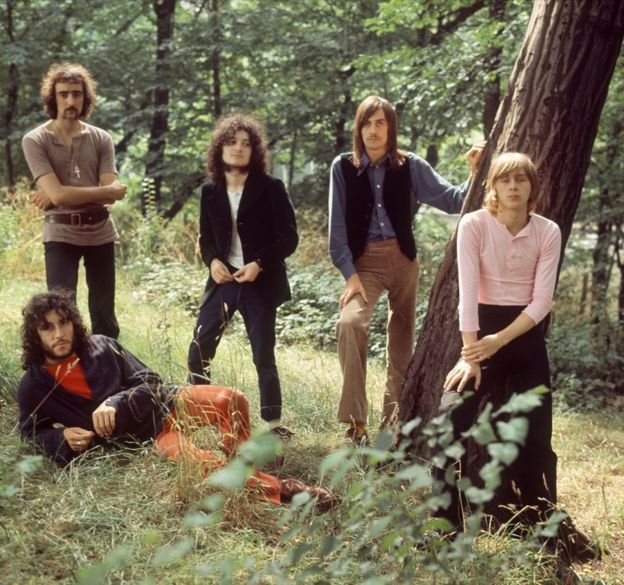
The collection covers a five-year timeframe that encompasses several different band line-ups, from founding members Mick Fleetwood, Peter Green, John McVie and Jeremy Spencer; to later additions like Danny Kirwan, Christine McVie, Dave Walker, Bob Welch, and Bob Weston.

Singer songwriter and Fleetwood Mac’s Stevie Nicks has announced a new concert film set to screen in movie theatres for two nights only in October.

Filmed in 2017 during Stevie Nicks’ 24 Karat Gold Tour, “24 Karat Gold The Concert” sees the iconic singer delivering beloved hits and rare gems from throughout her storied career as both a solo artist and member of Fleetwood Mac. The film’s set list includes classic songs like “Rhiannon,” “Stop Draggin’ My Heart Around,” “Edge of Seventeen,” “Stand Back” and “Landslide.”

The singer also provides rare insight to her music throughout the movie, discussing the inspiration behind many of her legendary songs. “The 24 Karat Gold Tour was my all-time favourite tour,” Nicks has proclaimed in a press release. “I not only got to sing my songs, but I was able to tell their stories for the first time. I love having the opportunity to share this concert with my fans.”

The film will be released theatrically worldwide for two nights only on October. 21st and 25th, screening at select movie theaters, drive-ins and exhibition spaces. Tickets go on sale September. 23rd at StevieNicksFilm.com. The website also provides the most up-to-date information regarding participating theaters. Filmed at the Indianapolis and Pittsburgh stops of her 2016/2017 tour with The Pretenders.

You can watch the trailer for 24 Karat Gold The Concert,

In addition to the movie, a companion live double album will be released October. 30th. The two-CD version will be available exclusively at Target stores, while the digital version will be released on most major streaming platforms the same day. It will also be available on vinyl, with a limited-edition “Crystal-Clear” version sold exclusively at Barnes & Noble.

In anticipation of the album, Nicks also released a new live version of the Fleetwood Mac favourite “Gypsy,” Stevie was recently one of many people to pay tribute to Fleetwood Mac co-founder Peter Green. “My biggest regret is that I never got to share the stage with him,” she said. “I always hoped in my heart of hearts that that would happen. When I first listened to all the Fleetwood Mac records, I was very taken with his guitar playing. It was one of the reasons I was excited to join the band.”

Stevie Nicks BMG Rights Management Bass: Al Ortiz Guitar: Carlos Rios Keyboards: Darrell Smith Drums: Drew Hester Background Vocals: Marilyn Martin Keyboards: Ricky Peterson Background Vocals: Sharon Celani  Guitar: Waddy Wachtel .

Buy Online Fleetwood Mac - Stranger Blues Live 5LP White Vinyl

As well as founding Fleetwood Mac, the late Peter Green was arguably the finest British blues guitarist, singer and songwriter of his generation. This 4-CD boxed set showcases his dazzling talent across numerous broadcasts, spanning studio performances for the BBC and live sets in San Francisco, Finland and Sweden. Capturing him at the peak of his powers between early 1968 and late 1969, it comes complete with a booklet containing background notes and rare images, making it an essential purchase for his army of admirers. Collection of Fleetwood Mac performances led by the late great Peter Green
  • Includes performances captured for broadcast on British, American and Scandinavian radio stations

Original Live Broadcasts 1968 BBC includes Top Gear, January 21st 1968: Top Gear, March 24th 1968: Saturday Club, April 13th 1968, Top Gear, June 2nd 1968: Top Gear, July 7th 1968:

Radio One O’clock, August 26th 1968: Top Gear, October 13th 1968: Top Gear, November 24th 1968: Live At The Carousel Ballroom, San Francsico,
8th June 1968, KSAN-FM,  Live In Kulttuuritalo, Helsinki, Finland, 24th September 1969, Yleisradio Oy (Yle),  Live At The Cue Club, Gothenburg, Sweden, 2nd November 1969, Sveriges Radio

Fleetwood Mac

Solicitors acting on behalf of his family said in a statement: “It is with great sadness that the family of Peter Green announce his death this weekend, peacefully in his sleep. “A further statement will be provided in the coming days.”

Blues rock guitarist Green, originally from Bethnal Green in east London, formed Fleetwood Mac with drummer Mick Fleetwood in 1967. Green left the band after a last performance in 1970, as he struggled with his mental health. He was eventually diagnosed with schizophrenia and spent time in hospital in the mid-70s.

He was among the eight members of the band – along with Fleetwood, Stevie Nicks, Lindsey Buckingham, John McVie, Christine McVie, Danny Kirwan and Jeremy Spencer – who were inducted into the Rock & Roll Hall of Fame in 1998. he band was originally called Peter Green’s Fleetwood Mac featuring Jeremy Spencer.

https://www.youtube.com/watch?v=OJWOtL-PZiE

In February this year, artists including Fleetwood, Pink Floyd’s David Gilmour, ZZ Top’s Billy Gibbons and guitarists Jonny Lang and Andy Fairweather Low performed at the London Palladium in a gig celebrating the early years of Fleetwood Mac and its founder, Green. He wrote the huge hit Fleetwood Mac song “Albatross”.

Before forming Fleetwood Mac Green and Fleetwood previously played together in John Mayall & the Bluesbreakers.

He went on to form the Peter Green Splinter Group in the late 1990s.

See the source image

Time for another journey through the past with David Conway. In June 1970 I bought the new Fleetwood Mac 45 . Both sides of it! featured some wonderous guitar  We didn’t know it at the time but this would be the last Peter Green recording with the band . It was Top Ten in the UK a total of four weeks.

The song was written during Green’s final months with the band, at a time when he was struggling with LSD and had withdrawn from other members of the band. While there are several theories about the meaning of the title “Green Manalishi”, Green has always maintained that the song is about money, as represented by the devil. Green was reportedly angered by the other band members’ refusal to share their financial gains.

Green has explained that he wrote the song after experiencing a drug-induced dream in which he was visited by a green dog which barked at him. He understood that the dog represented money. “It scared me because I knew the dog had been dead a long time. It was a stray and I was looking after it. But I was dead and had to fight to get back into my body, which I eventually did. When I woke up, the room was really black and I found myself writing the song.”

Producer Martin Birch recalled that Green was initially frustrated that he could not get the sound he wanted, but Danny Kirwan reassured him that they would stay in the studio all night until the band got it right. Peter Green said later that although the session left him exhausted, “Green Manalishi” was still one of his best music memories.. “Lots of drums, bass guitars … Danny Kirwan and me playing those shrieking guitars together …A 13-minute live version of “The Green Manalishi” was recorded in February 1970, prior to the single’s release in May, but it remained unreleased until 1985 when it was unofficially released on a number of records, such as Shanghai Records’ Cerulean and Rattlesnake Shake. In 1998 it was issued with along with the entire set of recordings on the Live in Boston: Remastered three-CD boxed set.

The song was played live by subsequent versions of Fleetwood Mac on tour with Bob Welch and then Lindsey Buckingham singing the vocal and taking on the song’s guitar parts.

The B-side of the single was an instrumental written by Green and Danny Kirwan, titled “World In Harmony”. The two tracks were recorded at the same session in Warner/Reprise Studios, in Hollywood, California. The only track bearing a Kirwan/Green writing credit, the two had plans to collaborate further on a guitar-driven album, but the project never materialised.

There is a different 13 minutes live version of the song part of the Fleetwood Mac: live in Boston album . This song has been versioned by famous bands like Corrosion of Conformity, Arthur Brown, The Melvins and The Need, being the most famous of them the Judas Priest’s version at the point it’s been mistaken as a Judas Priest original song.