Courtney Marie Andrews spent over nine months of 2017 on the road, with multiple trips across the US, Canada, Europe, Australia and New Zealand. That’s nothing new for Andrews, though. She’s been touring relentlessly since leaving her Arizona hometown at 16. It’s a life that inspired much of her 2016 breakthrough album, Honest Life. While that album’s themes spoke to the isolation and rootlessness inherent in a life on the road, most of its songs were actually written during an intentional, extended break. The success that followed its release, however, didn’t afford her the same break to write the material for her new album.
Courtney Marie Andrews performing live in the KEXP studio. Recorded September 7th, 2016.
Songs: How Quickly Your Heart Mends, Irene, Table For One, Rookie Dreaming,
Life out on the lonely road… It’s a tale that many musicians sing about, longing for a day they can actually come home from touring around the world, meeting faceless fans and playing show after show. It can get lonesome on tour, and yet, somehow, they can’t shed their vagabond ways.
But that’s not the case for Courtney Marie Andrews, who had toured in other people’s bands for a decade before taking a break to bartend in a small Washington town these past few years. Pushing pause on non-stop touring allowed her to sit back and re-evaluate, sparking the thesis for the album “Honest Life” via Fat Possum Records, with a pressing of the deluxe edition. At 16, Andrews left her Arizona home to become transient, playing and busking in bars and cafes around the country. She continued on as a session singer and touring musician for nearly 40 artists, from Jimmy Eat World to Damien Jurado.Her work took her all around the world, but at some point, she realized she’d lost touch with reality.“You can start to just stop calling people or stop keeping up with the people that you know and love,” Andrews said, calling from an unseasonably warm Seattle. “All of a sudden it’s been three years and you haven’t seen them.”In Washington, Andrews made connections again, getting to know people at the bar and laying down tracks for Honest Life with a trusted group of musicians. Together, the band sounds like home. Drums chug away at moderate paces, piano glitters organically over top and the guitars are cozy. In the final track, she even added a somber arrangement of strings, gifted by her friend Andrew Joslyn.Over the majority of the album, a pedal steel guitar drifts lazily under the melody, tangling with Andrews’ voice. With her Emmylou Harris-like pipes and the pedal steel, the album is what some people have called “country.”“When I went in to make Honest Life, I didn’t think, ‘Oh, I’m making a country record,’” Andrews said. “It’s more about creating a timeless sound. Something that can be released now or in the ’60s or whenever… I take pleasure in being a songwriter and creating a record that’s hard to place where it’s from.”
Honest Life is technically her sixth album, although she’s kept the first three for herself. It’s her first LP on a label. The album has made several best-of-lists, The accolades couldn’t have come at a better time, she said, when she was wiser about the industry and had gotten some time to grow.
Some people get lucky and their first record is just like a masterpiece fully formed, but that was definitely not me,” Andrews said. “I feel like I’ve really come into my own as a songwriter in the past few years. … I’m glad [the recognition] happened now when I’m a good songwriter, rather than when I was young.”To improve her craft, Andrews studied up on the greats—Neil Young, Bob Dylan, etc.—and in turn, she gained notice from other impressive songwriters, like Ryan Adams and Jurado. With practice and careful observation of legends and her contemporaries, she perfected the “tasteful way of revealing things” in her music.“When I was younger, I would write a song and I would reveal things in every single line, and that was the problem,” Andrews said. “We don’t need to know all that. The listener is overwhelmed. It’s like when you’re at a bar and somebody’s telling you their life story and you’re like, ‘Whoa, calm down.’”
Andrews’ songwriting is more subtle now, but not cryptic. The first track, “Rookie Dreaming,” reflects on her troubadour life and the missteps of what Andrews calls “blind youth.”
“I was moving too fast to see / All the paintings in Paris or sunrise in Barcelona / I was too broke too shallow to dive deep / Too busy carrying the weight of everything,” Andrews sings, her voice rife with mild vibrato, swooping with a twang that’s not Southern, but something unique altogether. She punches syllables that condemn her apathetic lifestyle—“TOO broke, TOO shallow”— while letting other verses flow freely, warm with harmony.
While she criticizes herself in “Rookie Dreaming,” she turns her perspective to address a meek friend in “Irene.” She sings directly to the title character, a pseudonym for the real-life subject, delivering the type of constructive criticism you might not have the guts to give to a friend’s face.
“Gain some confidence, Irene / If you speak let your voice ring out / But keep your grace, Irene / Don’t go falling in love with yourself,” she sings. An organ warbles as Andrews delivers her sermon.
“‘Irene’ was originally written for a friend, but I feel like probably every growing, youthful woman has felt like Irene at one point or the other,” Andrews said. “Every woman who’s amazing but doesn’t really know it yet. We feel like all these magazines and articles that are saying, ‘No, we’re not good enough’ … It’s sort of realizing that that’s total bullshit and you are awesome and you just have to know it.”
Not only did Andrews take care of all the songwriting on Honest Life, but she was the sole producer on the album—essential for keeping control in the studio.
“With this record, I knew so clearly what I wanted that I didn’t want distractions or arguments,” Andrews said. “One person sees it one way, one person sees it another way. Sometimes it makes a great record, but for Honest Life, I just wanted the sort of clear, easy, raw and realness. And that’s what we did.”
As for settling down and slinging drinks, Andrews knew that wouldn’t last forever. She said she’s always going to travel in the name of music. But this time, she’s not going to be singing anyone else’s songs. She’s at center stage now, and she’s ready to brave the lonely road once more.
“A lot of Honest Life was realizing that I didn’t want to tour as a backup singer anymore,” Andrews said. “If was going to be on the road, it was going to be for me, for my songs, for the dreams that I’ve always had as a teenager and as a young adult. Bartending is not my career path. Music is everything.”
At just 16 years old, Courtney Marie Andrews left home in Arizona for her first tour. She traveled up and down the West Coast, busking and playing any bars or cafés that would have her. Soon after, she took a Greyhound bus four nights straight from Phoenix to New York to do the same on the East Coast. For a decade or so since, Courtney’s been a session and backup singer and guitarist for nearly 40 artists, from Jimmy Eat World to Damien Jurado. She never stopped writing her own material, though. Picking up admirers like Jurado and Ryan Adams along the way, she has quietly earned a reputation as a songwriter’s songwriter.
With plans to settle down for a bit and focus on her own songs, Courtney moved to the Northwest in 2011 to record her last full-length record On My Page. However, the record had hardly been released before she was on the road again performing other artists’ songs, eventually leading her overseas to play guitar and sing with Belgian star Milow. At the tour’s end, though, the other session players joined her to record her 2014 EP Leuven Letters in one take.
It was during this time that Courtney also wrote many of the songs on Honest Life. She found herself realizing the impact of growing up on the road and this constant reconciling between her and other’s art and identity. Courtney will take it from there:
While in Belgium for four months, I was going through a major heartbreak. I started growing homesick for America and the comfort of family and friends, and life in the states. That’s where I wrote the first songs for Honest Life. It was a giant hurdle in my life. My first true growing pains as a woman. That’s why in a sense, I feel this record is a coming of age album. A common thread that runs through the songs, is a great desire to fit somewhere, when nowhere fits. And wanting to get back home to the people I know and love. Once I got back to the states, I started to bartend at a small town tavern. I was home for awhile, and needed to post up while rehearsing with the band for the record. At the tavern, I felt I could truly empathize with the stories and lives of the people there. I wrote the other half of the songs about coming home and feeling a sense of belonging again. A lot of the stories at that tavern definitely ran parallel with my own, even though our lives were so different. I was the “musician girl.” They were farmers, construction workers, plumbers, waitresses, and cashiers. But, no matter how different, I felt we were all trying to live our most honest life.
Courtney produced the entire record herself at Litho Studios in Seattle with recording engineer Floyd Reitsma. Honest Life is available now on LP, CD from Mama Bird Recording Co. / Fat Possum Records (USA/World) and Loose Music (Europe).
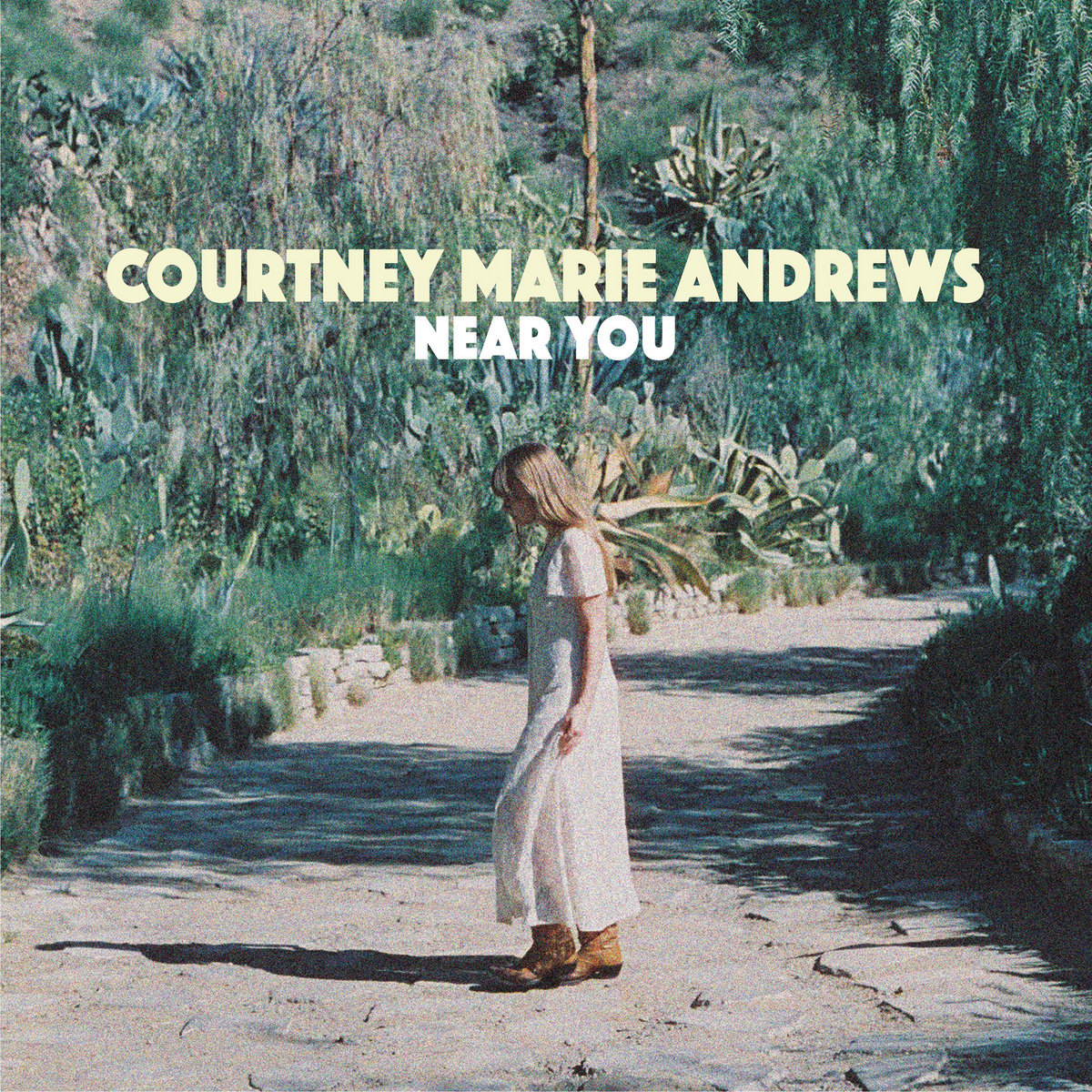
Look for ‘Honest Life’ in independent record stores on September 15th An exclusive colour LP with a bonus 7″ that includes “Near You”.
‘Irene’ from the album Honest Life. Available now from Mama Bird Recording Co. / Fat Possum Records:
It’s a miracle that the Gin Blossoms breakthrough album, “New Miserable Experience”, exists at all.
When the band left Tempe, Arizona, in 1992, headed for Memphis’ famed Ardent Studios to record their first album for A&M Records, the mood was far from optimistic. A first attempt at cutting the record in 1991 in Los Angeles was a $100,000 disaster. The group teetered on the edge of being dropped, and, most alarmingly, their founder and chief songwriter, guitarist Doug Hopkins, was in the throes of mental illness and alcoholism.
“We were a fragile mess. We were all just treading water trying to make the record. We knew this was our last chance,” says singer Robin Wilson of the album that was just re-released in a vinyl edition. “It was an intense experience on every level.”
Produced by the late John Hampton, who engineered albums by Alex Chilton and the Replacements,”New Miserable Experience” took its cues from Alex Chilton’s Big Star and Paul Westerberg’s alt-rock progenitors, who also both recorded at Ardent.
Like those groups, the Gin Blossoms excelled at marrying world-weary lyrics with ebullient melodies. “We were always about that. The name of the band says it all,” Wilson says. “It sounds really happy, but it represents something dark.”
Superficially, the songs on “New Miserable Experience” were windows-down, carefree anthems, but underneath they exposed heartache, longing and despair. Particularly those written by the tortured Hopkins, who provided the band with its breakout hit, “Hey Jealousy,” .
“One day we get a call from the label that they were going to try ‘Jealousy’ again and make another video for it,” says Wilson, who recalls filming three different clips for the song. “The budget for the first was five grand; the second was 10 grand; and the third was 40 grand. That’s when I was like, ‘Holy shit, they’re serious.’ At that point we had been in the van for six months, just a blur of college cafeterias, interviews and opening for whoever we can.”
Hopkins, however, wasn’t on tour. Or, at that point, even in the band. As the guitarist disintegrated before their eyes during recording, Wilson, guitarist Jesse Valenzuela, drummer Phillip Rhodes and bassist Bill Leen made the decision to fire him or risk becoming a liability for the label. They finished the album without Hopkins, and Scott Johnson stepped in as his replacement.
“There was nothing easy about it,” says Valenzuela. “You’re concerned and you want to help, but we didn’t have the knowledge we have today, so we were kind of guessing and trying to do our best. We didn’t have the understanding of bipolar disease and we were ill-equipped to deal with that.” Wilson remembers an incident that illustrates just how checked-out Hopkins was.
“I came into the studio and Doug was in there with John, and I heard John say, ‘Well, someone is going to have to do these solos.’ Doug said, ‘I guess I’d rather Jesse do my solos.’ I was just floored. I could not believe that was something that Doug was considering. He was giving up. I left the room and almost threw up,” says Wilson.
One solo Hopkins did manage to put to tape was for “Hey Jealousy,” a slashing, frantic yet commanding performance that Wilson says was a scratch take fired off during initial tracking sessions. “New Miserable Experience” began moving units, Hopkins was at home in Tempe. On December 5th of that year, he committed suicide.
“Doug had so much talent. I liken him to a Noel Gallagher. He could have been this bandleader that would have really had a huge impact on the music of the day,” said Wilson . “I think he knew that was right there for him, and instead of stepping up and taking a real leadership role, he fell in the other direction. … It still is heart-wrenching to think about what could have been.”
While Hopkins’ presence is all over New Miserable Experience – he wrote several cornerstone tracks, including autobiographical opener “Lost Horizons,” the Byrds-like “Pieces of the Night” and the Modern Rock Number One “Found Out About You” – Wilson and Valenzuela provided their own songs that further cemented the album as a Nineties alt-rock favorite.
This band seemed to be ungooglable, which is no easy feat these days. I seriously could’nt an’t even find out where they are from or how many people are involved, they are from Phoenix Arizona. All I could find out if that their drummer ‘won’t stop talking about ABBA’, which I fully back. This is the first single from their upcoming EP, Instant Star, out January 17th, 2017, and it reminds me of The Strokes before they got really famous and became ineffectual.
Linda Ronstadt is as close as Americans get to genuine royalty, blue jean queen, our ageless, evergreen desert rose. Throughout five tumultuous decades, she weathered every trend, fad, and fashion, dipping her toes into whatever genre she pleased, and nailing it every single time with a heartbreaking wail and the kind of undeniable rock star sparkle that would, in any other five-foot-tall, moon-eyed, barefoot folkie, seem thoroughly impossible.
For decades, she was, essentially, the female voice of American radio, her country-flecked laments and sweet agonies thrumming through the airwaves from coast to coast, keeping lonely hearts company and selling millions upon millions of records. One of Ronstadt’s most remarkable achievements was her ability to float effortlessly from one style of music to the next, transforming from sundress-twirling hippie goddess to denim-clad rock’n’roll vixen seemingly in the blink of an eye. From barn dances to Broadway, Ronstadt owned whatever musical passion she chased, and with each successive decade, her legend loomed larger. Her natural, breathtaking beauty and easy charm matched her formidable pipes, and throughout the 70s, she sold nearly as many posters as she did records.
There is no easy category to place Ronstadt. Since bursting onto the late 60s folk-rock scene with the Stone Poneys, her music has encompassed rock, jazz, country, pop, even classical. It’s almost as if she makes these classifications seem trivial, like music is just one vast playground for her to romp around in. Still, she is probably most well-known for three distinct styles.
Growing up in Tuscon Arizona, raised on 60s-era radio and Hank Williams records, Linda Ronstadt’s first foray into music was a three-piece coffeehouse folk act with her brother and sister. Thoroughly bit by the performing bug, 17 year old Ronstadt moved to LA, where she joined The Stone Poneys, a folk-rock band with whom she recorded three albums in a busy 15 month period. Their second album, 1967’s Evergreen, Vol 2, spawned one of Ronstadt’s most enduring hits, Different Drum. Written by Monkee Mike Nesmith, the sad but defiant kiss-off of Ronstadt’s gender-tweaked lyrics and her uniquely “torchy” vocal style not only sealed the Poney’s doom, but launched her career as a solo artist.
By the mid 70s, LindaRonstadt was the highest paid woman in rock, her musical style eventually morphing from a proto-alt country to a sophisticated style of rock-inflected pop, as evidenced by chart burners like You’re No Good, When Will I Be Loved, It’s So Easy and Blue Bayou, She interpreted songs by everyone from the Everly Brothers to Warren Zevon, making every composition her own.
In 1978, she released the double-platinum Living In The USA, known as much for her cover of Chuck Berry’s Back In The USA as for the album’s cover photo, of Ronstadt in silk shorts, on roller skates. The album is a perfect snapshot of the era, a gleeful celebration of life, love, and rock n’ roll, and remains her most iconic.
Nearly ten years later, she returned to her roots with the Trio album, a collaboration with Dolly Parton and Emmylou Harris, proving once again that when it comes to alternative country, Ronstadt practically invented the stuff. As the decades wore on, Ronstadt traveled down less raucous musical avenues. Rock’n’roll was a constant battle for her. One of the few women in an industry dominated by swaggering bull-gods, she held her own for decades but found solace and even more success in the jazz world, where she largely remained – along with the occasional foray into country and pop – for the remainder of her career.
In 2011, Ronstadt announced her retirement, and in 2013, revealed that she has Parkinson’s Disease and can no longer sing. A tragic end to a remarkable career, surely, but she leaves us with a huge body of work encompassing over two dozen albums. They’ll never be another singer quite like Linda. She made everything she touched cool. Even folk music. And of course roller skates.
Arizona seems to have a particular quality that creates inspired rock bands with slightly fried edges or more, whether it’s long-running stalwarts like the Meat Puppets or underground psych legends like the Black Sun Ensemble. Call it the harsh environment—or the fact that it’s better to practice inside away from the heat and dust, even while feeling it through the walls.
The Myrrors are a strong young Arizona band keeping that tradition alive on their third album Entranced Earth, which will be released on Beyond Beyond is Beyond come May 27th. It places them with other equally powerful acts in psych/drone’s newest generation, such as Japan’s Kikagaku Moyo, Canada’s Shooting Guns and the UK’s Cult of Dom Keller and Haikai No Ku—all with their own sounds and aesthetics, but all dedicated to being enthralled by head-nodding waves of feedback and general zoning out.
Originally formed by drummer Grant Beyschau and guitarist Nik Rayne in 2007, the Myrrors self-released their debut, Burning Circles in the Sky, before its original members had even graduated from high school. The reputation of the band grew strong enough that eventually Beyschau and Rayne reactivated the group with newer lineups some years later, resulting in last year’s Arena Negra, their first album for Beyond Beyond is Beyond.
With tracks ranging from shorter meditations like “Liberty is in the Streets” to the lengthy “Invitation Mantra,”Entranced Earth shows the Myrrors on a roll, following touring and higher profile shows like last year’s Austin Psych Fest.
Stevie Nicks born on 26th May 1948, Known for her time with the rock band Fleetwood Mac for the songs and vocals she bought to the band possibly their greatest track “RHIANNON”. Stevie is a singer songwriter, musician with amazing ability, Inducted into the Hall of Fame as a member of Fleetwood Mac. She joined the Mac in 1974 along with her then partner Lindsay Buckingham the album they produced “RUMOURS” released in 1974 has become the eighth best selling album of all time with Stevie’s Song “Dreams” being the only Number one hit single in the USA, previously in the band Buckingham Nicks they released one album. She also started a solo career in 1981 with her first of seven solo albums released to date the first titled “BELLA DONNA”. Stevie has always had a mythical image with her stage wear of black billowing skirts, floating scarves layers of lace and with her long blonde hair she would also decorate her microphone stand with ribbons, crystals, beads and scarves and Roses.Stevie also has her own charity “Band of Soldiers” for wounded military personal.




 The Fat Angel Sings