Billie Marten once said her youth was the worst thing about her. Society’s obsession with age, especially in the context of art, can be something of a poisoned chalice. Early articles about the singer-songwriter focused her supposedly ‘precocious’ talent, and in a statement accompanying this album, she speaks about having previously concealed herself in her music and being “obsessed with what people thought of me”. Confidence and clarity has come with age – and with it her biggest, boldest music.
Marten’s third album ‘Flora Fauna’ is a collection of songs that acknowledge the need to weed-out toxic behaviours, using metaphors in nature to nod to both her imperfections and personal growth or humankind’s precariousness. All this is sound tracked, largely, by a departure from the pretty but safe acoustic sound of her 2016 debut ‘Writing Of Blues And Yellows’ and its 2019 follow-up ‘Feeding Seahorses By Hand’. Marten learned bass and listened to lots of Krautrock around this record; the melodies here are her most moreish, her stories are her most open and experimentation is at its broadest.
‘Ruin’ sees Marten ruminate on her tendency to self-destruct (“Got a war with my body”). She illustrates the conflict of being cognisant of that but proceeding anyway (“I’ve been committing a crime”) by shifting from springy beats and bass on the verses to sharp, darting guitars and kinetic drums on the chorus. These beat switches course through the album elsewhere. It’s a welcome refresh of her song writing.
On ‘Garden Of Eden’, Marten sings about nature as a tonic to modern-day overwork (“Eat the sun, and water up”), while ‘Ruin’’s chorus houses looser beats and more joyful tones, unfurling like a flower in a garden where she’s ready to “feel alive” again.
As with the sitar-spun knots of ‘Heaven’, ‘Human Replacement’ sees Marten push for more curious sounds amid themes of women’s safety and religious faith. A noodling bassline, paired with kitchen pot percussion and Marten’s unnerving, spoken word-esque delivery introduces ‘Human Replacement’’s tale of feeling “not safe in the evening” because “you could be taken”. Jabbing piano chords and screeching strings make for an explosive chorus: a clarion call for every woman’s right to be left alone when out at night.
On ‘Flora Fauna’, Marten navigates a newfound confidence while examining what it takes to survive and thrive. It’s her most mature, vivid work yet – and would be impressive from an artist of any age.
This amphetamine-paced double-LP served as a Ramones career retrospective, smack at their peak, and shows the Queens crew almost stumbling across hardcore around the same time California was inventing it. Over four nights in 1977 at London’s Rainbow Theatre, the punk pioneers blasted through 28 songs from their first three albums. (Thanks to their tidily short length, they squeezed in nearly all of ’em.) The final LP version came mostly from the last night, charged with an energy so electric that fans are said to have ripped seats from the floor and thrown them at the stage in enthusiasm. It’s no surprise, as the entire record pulses with American punk’s promise, a spittle-spewing Joey Ramone barely pausing between “Pinhead,” “Do You Wanna Dance?” and “Chain Saw.” He even barely pauses long enough to get out all the lyrics, the band buzzing away behind him like they’re in a machine shop. During post-production, the speed was something with which even the band itself struggled to keep up. In his book, Hey Ho, Let’s Go: The Story of the Ramones, Everett True writes that Dee Dee needed extra fuel to record bass overdubs: an extra-heavy helping of black coffee.
It was Sire Records’ head, Seymour Stein who longed for a live recording of the Ramones. “Their records were great,” he said, “but there was nothing like a live Ramones show. England was a perfect place to do it, because the British audiences loved them and the Ramones loved to play there.” This may have been true the majority of the time, but, ironically, the Ramones were not loving England at Christmas time in 1977.
Legendary producer Ed Stasium recorded The Ramones “It’s Alive” 41 years ago at the Rainbow Theatre in London – a recording that many regard as one of the best live albums ever.
There was nothing to do but hang out in the room; I think that’s when Joey wrote ‘I Wanna Be Sedated.’ It was just so boring there; they literally close everything down for, like, two weeks. It was just weird! It was freezing and it was depressing.”
This was the third trek of the U.K. for the Ramones, the first being July 1976, for two very successful shows at the Roundhouse and Dingwalls (both in London), which were played to enthusiastic crowds and introduced the band to the country. The second was a gruelling month-and-a-half tour from April -June 6, 1977, which included most of Europe and the U.K., with the Talking Heads as the opening act.
Ramones lighting director Arturo Vega stated, “By December of 1977, it was the second time we were in the U.K. in seven months, and that year turned out to be the busiest touring year ever for the Ramones.” This visit was a short jaunt of ten shows that started in Carlisle in mid December and culminated on New Year’s Eve at the Rainbow Theatre in London. “The Ramones were the hottest band in the world and everybody wanted to see them live. Everybody was there,” Arturo adds. “The show was a perfect fast-and-furious punk attack. The party after the show was over-the-top and everybody was in a festive mood, feeling this was only the beginning of the punk revolution. The Ramones were at their prime and the album that came out of that night captured a cultural phenomenon at its peak.”
The plan was to record four consecutive shows at the end of the tour, December 28th-31st: Birmingham, Stoke on Trent, Aylesbury, and The Rainbow Theatre. The facility that I utilized for the recording was the Basing Street Mobile Truck (Island Records), which had a Helios console, fantastic outboard gear, and a great reputation.
Ed travelled with the band and road manager Monte A. Melnick on the “tour” bus, which was not anything like the luxury liners that one sees today. This bus was more of a coach with large windows and rows of seats. Monte would always be busy with paperwork, figuring out every logistic of the trip. Former co-manager Danny Fields (with the late Linda Stein) informed me that at every U.K. venue the Ramones played, An Indian curry was served at soundcheck to ever-complaining band members. Monte, I’m sure, was trying to alleviate this and other hazards of the road; he was the real Fifth member an unsung hero, the glue that kept the band together.
The first three dates we recorded were in clubs. Nothing special. The Ramones, the Basing Street Mobile crew, and myself looked at these shows as a run-through for the recording of the New Year’s Eve gig. The band was performing virtually the same set every night, honing the tunes and playing tighter and tighter, As with the other shows that we’d recorded over the past three days, we arrived early at the venue to set up. This was the show, and we needed to make certain that all of the microphones were placed and functioning properly, the multi-track tape machines were aligned, and that there was no hum or radio stations being picked up by the thousands of feet of microphone cable that connected the stage to the mobile truck.
When Joey, Johnny, Dee Dee, and Tommy arrived for sound check, they looked around in amazement, a big wow written all over their faces. According to Monte, they had never played in such a large hall before. This was a beautiful theatre with a capacity of approximately 3,000 and a foyer with a dang fountain in it! At this juncture, the group had played only small clubs and theatres; this evening, the Rainbow would be filled with several thousand Ramones fans.
The night’s set list would consist of songs from their first three albums, arguably the best LPs of their career; in other words, it was basically a greatest-hits set list. Which was fitting, considering that the Ramones’ original incarnation (with Tommy on drums) was about to play the most important show of its existence— the culmination of being on the road and honing their craft since the group’s inception in March of 1974. “This show was a big deal,” Tommy says. “We were at our peak. We were still young, and with all those years of playing together, we were in top form. It was the last show of the tour and it was New Year’s Eve.”
The Rezillos and Generation X (featuring a young Billy Idol) were the Ramones’ opening acts. “I was also mixing for Generation X, and they sucked!” my pal Frank Gallagher says. “Although, my mix was great. But the one thing I do recall about the Ramones’ gig was that I had seen the band in America and in Europe, and the fact is that the English audiences were way more receptive and into them than anybody in America was at that time.”
In the truck, I could hear the chant, “Hey-Ho-Lets-Go!” between the songs and sets of the opening acts. As the last chords of The Rezillos’ final song faded into the ether, the crowd sensed that the Ramones were about to perform and the chant grew louder, from just the front few rows to the entire theatre rallying in unison.
In the cold London night outside of the truck, you could practically feel the electricity in the air as the Ramones were about to claim their throne.
The chant developed into a tremendous roar as the band arrived onstage. Johnny strummed an E-chord, Dee Dee tested the limits of his microphone with a healthy German “Eins,” and Tommy did some final adjustments on his drum kit. And then, heeeeeere came Joey . . . “Hey, we’re the Ramones. This one’s called ‘Rockaway Beach.’” Dee Dee belted out the infamous . . . “ONE-TWO-THREE-FOUR!”.
The Ramones’ machine was in top gear, driving on full velocity until a short pause after the second song, “Teenage Lobotomy,” when Joey declared, “Well, it’s good to be back in England, and it’s good to see all ya again. Take it Dee Dee!”
“ONE-TWO-THREE-FOUR!”
And they busted into their anthem “Blitzkrieg Bop.” The punters were basking in the glory of their heroes. After “Blitzkrieg,” Joey mentioned that he didn’t feel well after ingesting some Chicken Vindaloo.
The gig concluded after 53 minutes, 48 seconds of simply the best punk rock there ever was or ever will be. It was New Year’s ’77-78 and the Ramones had played an unparalleled show, which, fortunately, had been recorded for all to enjoy for centuries to come.
On a technical note, I would like to say that, back in the summer of ’78, Tommy and I spent quite a while with the mixing, paying microscopic attention to this recording’s sound and balance. The mixing took place at the great Mediasound in New York City, at the same time that we were working on “Road To Ruin”. For reasons unknown, the LP was never released on vinyl in the United States, and the U.K. and European versions continue to be desirable collector’s items to this day. Those LPs and the subsequent 1995 CD release were made from second-generation copies, and never has there been a release from the master tapes.
Cindytalk is the mercurial, expressionist outlet of Scottish artist Cinder. An evolution of her early 1980’s Edinburgh-based punk band The Freeze, she launched the project upon moving to London, inspired by the crossroads of exploratory UK post-punk and early European industrial. Her work thrives on chance and transformation, collaging elements of noise, balladry, soundtrack, catharsis, and improvisation. After a series of celebrated albums for the Midnight Music label as well as collaborations with This Mortal Coil and Cocteau Twins, Cinder migrated to the United States, becoming involved with various underground techno collectives around the Midwest and West Coast. Subsequent relocations to Hong Kong and Japan further expanded Cindytalk’s horizons, resulting in a fruitful partnership with Viennese experimental institution Editions Mego, for whom she released five full-lengths of swooning, granular atmosphere. 2021 finds her as engaged as ever, at the precipice of long-awaited back catalogue reissues alongside multiple new works, guided by her lasting love of discovery and deviation: “new pathways always being uncovered.”
The lead single “A Song of Changes”, celebrating the official reissue of Cindytalk’s fourth album: the ethereal post-punk masterpiece “Wappinschaw“, out July 30th, along with their beautiful minimal ambient album “The Wind is Strong..”
Across decades of activity Cinder’s body of work has forever followed its own elusive muse but nowhere is this restless spirit more apparent and ambitious than the 4th Cindytalk LP, Wappinschaw. Conceived as “a call to arms” inspired by Scotland and its struggle for independence, the title refers to an archaic Scottish battle inspection during which clan chieftains surveyed their group’s weapons to ensure they were combat ready. A mindset of reflective preparation threads throughout the record, manifested in forms both naked and noisy, ancient and anguished.
Opening with an aching solo vocal rendition of the British folk standard “The First Time Ever (I Saw Your Face),” the album then surges into the Cindytalk classic, “A Song Of Changes,” sparkling and spiralling in strange waves of sorrow and joy. From there the mood fragments, tracing asymmetrical paths of feverish dirge, pensive spirituals, noir abstraction, spoken word (landmark Glaswegian writer Alasdair Gray guests on “Wheesht”), bagpipe drone, and apocalyptic post-punk. Given its aggressive eclecticism, it’s not surprising that Cinder describes the creation of Wappinschaw as a “precarious” process, composed from “scraps” with abruptly shifting personnel – a situation only compounded by the impending dissolution of their label at the time, Midnight Music.
Despite, or perhaps because of, these factors, the collection stands as a testament to Cinder’s belief that “so-called experimental can only remain so if you keep challenging yourself.” This is singular and challenging music, texturally jagged and emotionally conflicted, swimming through shivering darkness into fragile pockets of light. At the time of its recording, Cinder was attempting to leave London after many years in the city, dreaming of an ancestral return. But as much as “ideas of homecoming were percolating,” there remained unfinished business, old ghosts to exorcise, culminating in Wappinschaw’s heady, harrowing voyage: “An invocation of spirits of resistance – as much a declaration of war as a declaration of love.”
The 3rd album “The Wind Is Strong…” by Cindytalk began life as the soundtrack to an experimental film by English director Ivan Unnwin entitled Eclipse (The Amateur Enthusiast’s Guide To Virus Deployment), and was originally slated for release via Factory Records‘ video division, Ikon. Inspired heavily by Alan Splet’s eerily disembodied sound design in David Lynch’s Eraserhead, the collection’s 15 pieces seethe between field recordings, wistful piano vignettes, and lurking metallic haze – a hybrid palette Cinder characterized at the time as “ambi-dustrial.” Unfortunately Ikon collapsed on the eve of the project’s completion so the film was never distributed, but the Midnight Music imprint repackaged Cindytalk’s score as an LP in 1990.
The lead single “On Snowmoor”, celebrating the official reissue of Cindytalk’s third album: the beautiful minimal masterpiece The Wind is Strong…, out July 30th, along with their third album of ethereal post-punk Wappinschaw.
Four years following “The Wind Is Strong…”, Cinder’s body of work followed its own elusive muse but nowhere is this restless spirit more apparent and ambitious than the 4th Cindytalk LP, Wappinschaw.
Fleeting and intimate and profound, Marina Allen’s new song sounds like dusk.
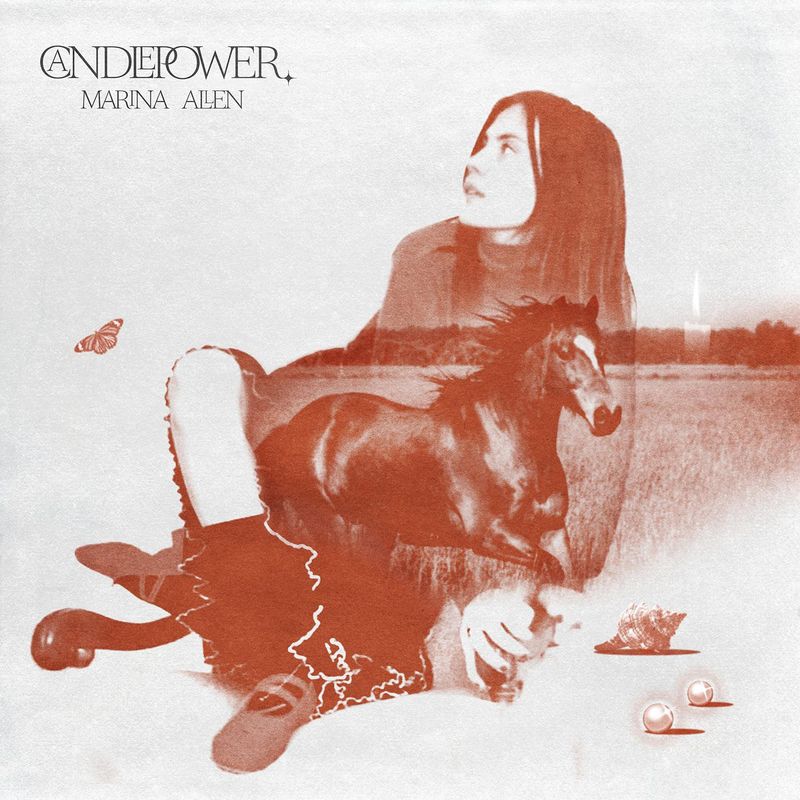
“Original Goodness” is the third single off the Los Angeles based singer-songwriter’s forthcoming debut album on Fire Records “Candlepower” and it’s a spare, staggeringly beautiful folk number, the type of song that might make you cry without you even realizing it.
“There’s no hiding from this one,” Allen says of the track. “The lyrics and melody flooded out one long afternoon. I didn’t think I would end up revealing it but I couldn’t resist its hold on me.” “Sometimes I hear you / but it’s my voice, out of my head,” Allen sings in an early verse, her vocals flickering over soft acoustic guitar. “I saw you mouth something from a mountain / How do we go through hell and then just go to bed?”
The song also arrives with a meandering, meditative video — edited by Jonny Sanders, a.k.a.Prehuman that shows Allen staring out her window and walking her dog.
“The video’s making had different iterations, each one getting closer to the source of the inspiration behind the song,” Allen says . “Part filmed by a friend in mythical Louisiana, part filmed in my bedroom, part filmed through the neighbourhood streets I wander when I’m bored, lonely, or both, this song is about how accepting the distance from someone or something gets you closer, even if you’re not sure what you’re getting closer to.”
For Allen, “Original Goodness” is ultimately about finding hope in that liminal space. “The song explores the understanding that resurrection or self-renewal can begin wherever there is hope, no matter the width or depth of the chasm,” she says. “It’s in exploring the space between, the often stagnant stillness, that movement happens.”
That theme is especially prominent in the last verse. “And I will tell you / how to close a chasm with a clothespin / how it can come undone for good reason / how to renew without a season,” Allen sings as the instrumentation fades.
“Through the writing of this song, along with the rest of the album, I was able to start finding things I thought were lost forever,” Allen shares. “It just became more and more clear as I continued writing: you want hope, you make hope. You want understanding, you make understanding. You want light, you make light. Expressing impressions, visions, illusions, and heavily armed feelings, I was able to start remembering myself, which got me closer to something I call original goodness, my candlepower.”
“Original Goodness” comes after Allen’s previous singles “Oh, Louise” and “Sleeper Train.” All three will appear on Candlepower, which arrives June 4 via Fire Records.
Yep Roc Records has unearthed a piece of history from Berkeley, California’s power-pop heroes The Rubinoos. On November 3rd, 1976, co-founders Jon Rubin (vocals) and Tommy Dunbar (guitar) entered CBS Studios in San Francisco with drummer Donn Spindt and bassist Royse Ader to get a feel for the studio prior to the recording of their first album. Now, that session is being released on June 25th as “The CBS Tapes”.
Although they hadn’t yet recorded their debut record for Berkeley indie label Beserkley Records, The Rubinoos had already been performing for more than six years. Dunbar and Rubin started the group to play a school dance when they were both just thirteen; Spindt joined the band in 1971 and Ader followed in 1974. Tommy’s brother Robbie was affiliated with Beserkley as a member of popular Bay Area band Earth Quake, the label’s first signee. Through Robbie, The Rubinoos were introduced to the label. The Rubinoos’ cover of Canadian pop group The DeFranco Family’s “Gorilla” appeared on the 1975 BeserkleyChartbusters compilation .
At CBS, the quartet was greeted by engineer Glen Kolotkin (Janis Joplin, Jimi Hendrix) who brought his experience in capturing the band’s sound in the studio. In the press release, Jon Rubin remembers that the session was a “‘set up and get comfortable in the studio’ kind of affair.” Dunbar recalls that the situation was “something like, ‘okay, the tape is going to run, just go ahead and play anything you want’.” And they did. The previously unreleased 11 tracks on The CBS Tapes run the gamut of R&B (King Curtis’ “Memphis Soul Stew,” The Meters’ “Cissy Strut”), pop (The Archies’ “Sugar, Sugar”), and rock-and-roll (The Beatles’ “She Loves You” and “I Want to Hold Your Hand”).
The Rubinoos tapped the DeFranco Family songbook again for “Heartbeat, It’s a Love Beat” and tore into the surf classic “Walk Don’t Run,” best known via The Ventures’ seminal 1960 recording. They also paid tribute to Bay Area pal Jonathan Richman with The Modern Lovers’ “Government Center” (which they had previously performed with Richman) and played three original songs: “All Excited,” “I Want Her So Bad,” and “Nooshna Kavolta.”
The press release makes clear what The CBS Tapes is, and isn’t: “This isn’t a lo-fi sloppy rehearsal tape, a stripped-down demo, or a polished finished product. Done without second takes and overdubs, the band’s loose, unencumbered live performances exude a joyful energy that embodies the band’s spirit.” Before long, The Rubinoos would return to CBS Studios to begin sessions in earnest for their 1977 self-titled LP featuring ten unique tracks including the cover of Tommy James and The Shondells’ evergreen “I Think We’re Alone Now” that would earn them a moderate chart hit.
Today, The Rubinoos remain active with their two founding members as well as Donn Spindt (who returned in 1999 after a 14-year hiatus) and Al Chan (bassist since 1980). The CBS Tapes promises to be an illuminating look at the band’s roots.
It’s due June 25th from Yep RocRecords in CD, LP, and digital formats.
“There’s life and there’s death. We were still alive, so we thought we’d carry on,” said drummer Stephen Morris, explaining Joy Division’s response to Ian Curtis’ suicide on May 19th, 1980. The still nameless three-piece (The Khmer Rouge? The Witch Doctors Of Zimbabwe? Temple Of Venus?) visited Cabaret Voltaire’s Sheffield studio, Western Works, on September 7th, 1980, where they recorded six tracks. These circulated in murky lo-fi until 2009 when a 1/4” reel of tape reportedly appeared for auction on eBay containing a copy of the studio sessions – in pristine clarity.
Early runs through “Dreams Never End”, “Truth” and “Ceremony” (with Morris on vocals) are accompanied by “Are You Ready Are You Ready Are You Ready For This?” a New Order-Cabs jam fronted by NO manager Rob Gretton. However, it is “Homage” that dazzles. Curtis’ absence is everywhere in Bernard Albrecht-cum-Sumner’s bleak reflection on death and suffering (“A life that is so scared”). Such intimacy may explain why it remains unreleased. “I will never be able to cope,” the usually summery Sumner said in 1981. “Ian’s death will affect me for now, and forever.”
These are the very first New Order demos recorded less than 2 months after the death of both their front man Ian Curtis, and their previous group Joy Division. The intensity on these tracks is unparalleled. Included are two mixes of “Dreams Never End”, “Truth”, “Ceremony”, and two never before released tracks – “Homage” and “Are You Ready”(a great collaboration track with label mates Cabaret Voltaire). The quality of these demos is remarkable(tracked at Western Works Studios in Sheffield) and the feel of the songs is quite different from their famous 12″ versions. A landmark session in the history of post punk that is finally available on vinyl. Limited pressing.
Sound quality: Unnervingly good; a bootleg or a strategic leak?
Hannah Georgas has a seemingly endless capacity for crafting textured pop songs. Since her debut, the Toronto-based musician has won numerous awards and racked up multiple nominations, including four JUNO nods, for everything from Best New Artist to Songwriter of the Year.
In early September, Hannah Georgas released her new album “All That Emotion“. It was preceded by several singles, but today she’s back with something else: A reimagining of album cut “Pray It Away,” now transformed into a duet with Matt Berninger.
The collaboration makes sense. Georgas toured as part of the National’s expanded line-up on the I Am Easy To Find tour. Aaron Dessner produced All That Emotion, and Berninger was always hopefully going to be involved given the friendship he and Georgas struck up on the road. Here’s what Georgas had to say about it:
In a lot of ways, All That Emotion is a personal record, but “Pray It Away” ended up being very collaborative. I co-wrote the song with my producer Aaron Dessner, who sent me an instrumental during the time I was writing and demoing.
A close friend of mine inspired the lyrics. She told me over dinner one night that a family member didn’t want to attend her wedding because she was marrying a woman. I wrote the song the next day using the chord progression from Aaron’s demo. It was upsetting to see my friend go through what she was dealing with at a time where she should have been celebrating.
While Aaron and I were recording this song together, he mentioned it could be really great to ask Matt Berninger to sing on it. Ironically, it wasn’t until the pandemic hit when we were actually able to follow through with this idea, together. It’s so lovely it all worked out and we were able to make it happen in the end.
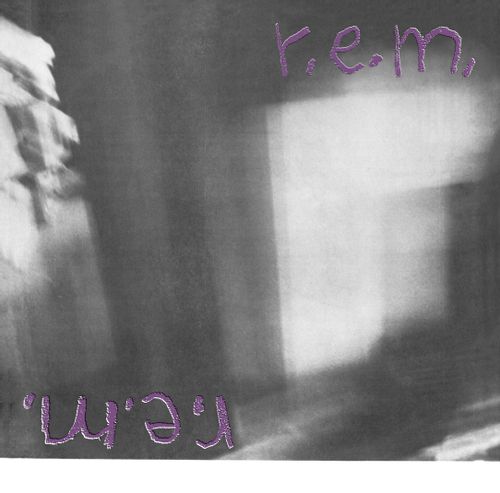
R.E.M. will reissue their classic 1981 debut single, “Radio Free Europe” this summer, making it available in its original form for the first time in 40 years. “Radio Free Europe (Original Hib-Tone Single)” will be available as a 45-rpm seven-inch on July 23rd, pressed in Athens, Georgia, with the original sleeve artwork featuring Michael Stipe’s photography. The release kicks off the birthday celebrations for the Southern college-town bar band who turned the world upside down.
It’s the ultimate rock & roll origin story: Four guys walk into a garage to bang out a record. But when R.E.M. made “Radio Free Europe,” they also made history. They recorded it with rookie producer Mitch Easter, at his new Drive-In Studio (i.e. his folks’ garage) in Winston, North Carolina. The single came out on the tiny Hib-Tone label, with “Sitting Still” on the flip side, and went on to blow minds around the world.
“We were all just kind of finger-painting,” Easter says. “They weren’t super-deliberate about anything. I loved that about the sessions. Even when we did the LPs, nobody was really taking any orders from anybody. There might have been people advising R.E.M. on the business end of things, to do this, that, or the other. But they pretty much ignored all of them.”
As part of their 40th anniversary plans, R.E.M. will also release their 1981 demo tape, “Cassette Set”, which has never been commercially available before. It will be sold as a bundle with the single, in a limited edition of 1,500 copies, exclusively through the bands official website store. This release reproduces the original homemade cassette packaging, with Stipe’s hand-written labels and early versions of “Radio Free Europe,” “Sitting Still,” and “White Tornado.” R.E.M. will also issue a limited-edition custom cassette player, produced by Recording the Masters.
R.E.M. re-recorded “Radio Free Europe” for their 1983 debut album, Murmur, produced by Easter and Don Dixon. The new version of the single actually cracked the U.S. Hot 100, peaking at Number 78 — an unthinkable feat for a band like this. The 1983 “Radio Free Europe” is the famous one that everybody knows. But the original indie single has a raw, feverish rush of its own. For years, fans treasured it and passed it hand-to-hand on mix tapes. The 1988 collection Eponymous included Easter’s mix of the single — but the original Hib-Tone mix hasn’t been reissued until now.
Easter had never even heard the band before they walked into his garage. “I met them through a mutual friend — Peter Holsapple of the dBs,” he recalls. “He was living in New York, and the guys were playing their first shows up there, and they stayed at his place. They were talking about when they went home, they wanted to record something. Peter told them about my place, which had just started. I had seen a poster for them in a club in Raleigh, North Carolina, and the poster led me to believe they were going to be some sort of electronic band. But when they came in, they stayed at my house before the session, and we sat around playing records, and it was apparent they were notgoing to be an electronic band.”
Everything about the April 15th session was quick and cheap. It was only Easter’s third recording job. (As he quips, “It wasn’t like I’d just been working with Pablo Cruise.”) They emerged with a three-song demo. The“Cassette Set” tape captured their playful side, with a brief polka version of “Sitting Still.” The band came back a few weeks later to add a few overdubs to “Radio Free Europe” for the July single. The initial pressing was a thousand copies, which seemed ambitious at first but the song won them an intense cult following. Just last year, it made the top ten of Rolling Stone’s list of the greatest debut singles of all time.
Radio Free Europe” defied all the corporate-rock rules. For one thing, R.E.M. came from Athens, Georgia, off the media radar. “Everything had moved back to L.A. and New York,” Easter says. “At least it felt like it. So we were starting all over again with the garage-studio notion. Engineering-wise, it could’ve sounded more posh. But in terms of what they did, it was perfect. A few months later, we did the “Chronic Town” sessions, then we did the “Murmur” record, but they always kept getting better.”
Posh it wasn’t, but the band’s DIY energy came across loud and clear in the garage. Easter didn’t try to change a thing. “I had this band-centric idea: ‘What is it that you do, and what is it that you want to do? Okay, let’s maximize that.’ I didn’t come into it like, ‘Well, my sound is all about the organ.’ It was hard for bands in those days to find studios that they enjoyed working in. Because the guy that ran the studio — and I say ‘guy’ because it was 95 percent guys — he was some older person, set in his ways. If you’re a struggling band, you can’t afford to go to the Record Plant or the Power Station or whatever. For the first several years of me doing this, at least half the bands came in with some horror story about this terrible time they had someplace.”
He could sense some related apprehension when he joined R.E.M. at the Reflection studio in Charlotte, N.C. later to record Murmur: “There were people around that scene, other bands, looking at R.E.M. like, ‘Who are these guys? I don’t know about all this.’ There was this sense in the air that something was changing, and the old guard didn’t like it.”
But for artists around the world, “Radio Free Europe” was the start of a new era. “They were putting energy back into things,” Easter says. “I played enough shows with people standing at the back by the bar with their arms folded, but all of a sudden, something happened so that bands like R.E.M. had audiences right up at the stage, digging it. And I just thought, [it’s] about time. Because this is supposed to be fun, you know?”
Easter had success with his own acclaimed band Let’s Active — start with Afoot andCypress. He also produced classic albums for other art-pop eccentrics in the years to come, ranging from Pavement (Brighten the Corners) to Game Theory (Lolita Nation) to Helium (The Magic City). But there’s something special about “Radio Free Europe.” “Those guys just hit the right note,” Easter says. “There’s a lot of good stuff that falls through the cracks, or it’s discovered later and enjoyed briefly, then it goes away again. But this stuff, it just stayed alive.”
Singer Michael Stipe, guitarist Peter Buck, bassist Mike Mills and drummer Bill Berry helped originate college rock during the post-punk scene of the 80s. the Athens, GA-based group toured relentlessly for the first decade of their career, refining their idiosyncratic blend of brash tunefulness, poetic lyrics, chiming guitars and evocative vocals. by the early 90s, R.E.M. had become one of the most popular and critically-acclaimed bands in the world. with an extraordinary three-decade-long run of creative vitality, R.E.M. have established a powerful legacy as one of the most enduring and essential rock bands in popular music history. The 1981 limited pressing 45rpm single, which is now a coveted collector’s item, packaged in a black and white sleeve featuring original photography by Michael Stipe.
“Radio Free Europe” was later re-recorded for the band’s first album release on major record label I.R.S. records and went on to land the band their chart debut, peaking at number 78 in the billboard pop chart. that album, Murmur, went on to reach number 36 in the album charts, and set the band steadfastly on the path to college radio domination and critical acclaim. the band’s 1988 compilation album, eponymous, included what was called the original hib-tone single, but what was in fact Easter’s original mix, not Hibbert’s. this limited edition 7” pressing represents the first-ever re-release of the original hib-tone recording of “radio free europe,” and comes housed in a replica sleeve
Lukas Nelson & Promise of the Real returned on Friday with a new track “Leave ‘Em Behind”, It’s the second single off the band’s upcoming album. “A Few Stars Apart”, The Dave Cobb-produced album is due out on June 11th via Fantasy Records.
In “Leave ‘Em Behind”, Nelson sings of letting go of trauma and severing toxic relationships in the interest of self-preservation. A profoundly progressive song packaged in an accessible alt-country style, “Leave ‘Em Behind” is a paradigm of the rising generation of country revivalist artists. Alongside fellow songwriters like Jason Isbell, Amanda Shires, Sturgill Simpson, and many others, the spawn of country icon Willie Nelson is working to bring the genre into the modern era and destigmatize “country” from being a dirty word in the contemporary musical zeitgeist.
Already one of “54 Most Anticipated Albums of 2021,” A Few Stars Apart is a testament to finding a human connection: between close family and friends, as well as one’s own heart. Produced by Grammy Award winning producer Dave Cobb, the album was inspired by the stillness Nelson found while riding out the beginning of the pandemic with his family in Texas and was recorded with the full band live on eight-track tape over three weeks at Nashville’s historic RCA Studio A. The eleven songs reveal what it means to come home again, to be still, and to find community—and yourself.
“Leave ’em Behind” is off of Lukas Nelson & Promise of the Real’s new album, “A Few Stars Apart”,
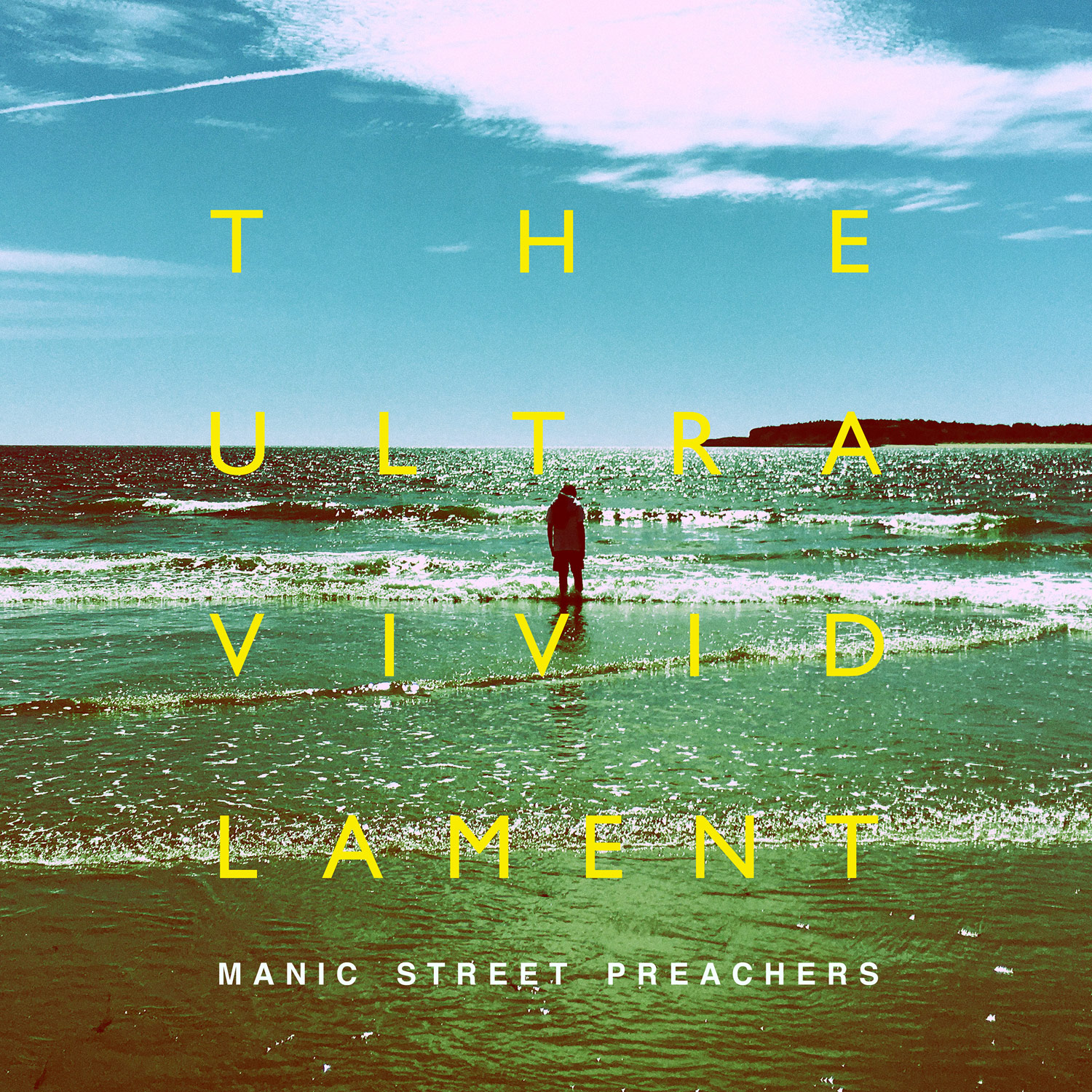
The Manic Street Preachers will release a new album called The Ultra Vivid Lament, in the autumn.
Their 14th studio long-player is described as “a record that gazes in isolation across a cluttered room, fogged by often painful memories, to focus on an open window framing a gleaming vista of land melting into sea and endless sky”.
The band are offering signed product from their store, although there’s an indies-only black vinyl LP that comes with an exclusive seven-inch of Orwellian, with a remix on the B-side that isn’t available on the Manics site. The SDE shop has a limited quantity. Amazon also have an exclusive yellow vinyl edition.
The Ultra Vivid Lament is the 14th studio album from Manic Street Preachers. It is both reflection and reaction – a record that gazes in isolation across a cluttered room, fogged by often painful memories, to focus on an open window framing a gleaming vista of land melting into sea and endless sky.
Musically The Ultra Vivid Lament is inspired by a formative years record box (ABBA, post-Eno Roxy, the Bunnymen, Fables-era REM, Lodger) though the end result could only be the unique union of James Dean Bradfield, Nicky Wire and Sean Moore, collectively one of the UK’s most consistently brilliant rock’n’roll bands for over three decades.
The Ultra Vivid Lament will be released on 3rd September 2021.



:format(jpeg):mode_rgb():quality(90)/discogs-images/R-12871493-1543572415-2900.jpeg.jpg)