VERTIGO RECORDS Labels We Love

Posted: June 6, 2021 in MUSIC
See the source image

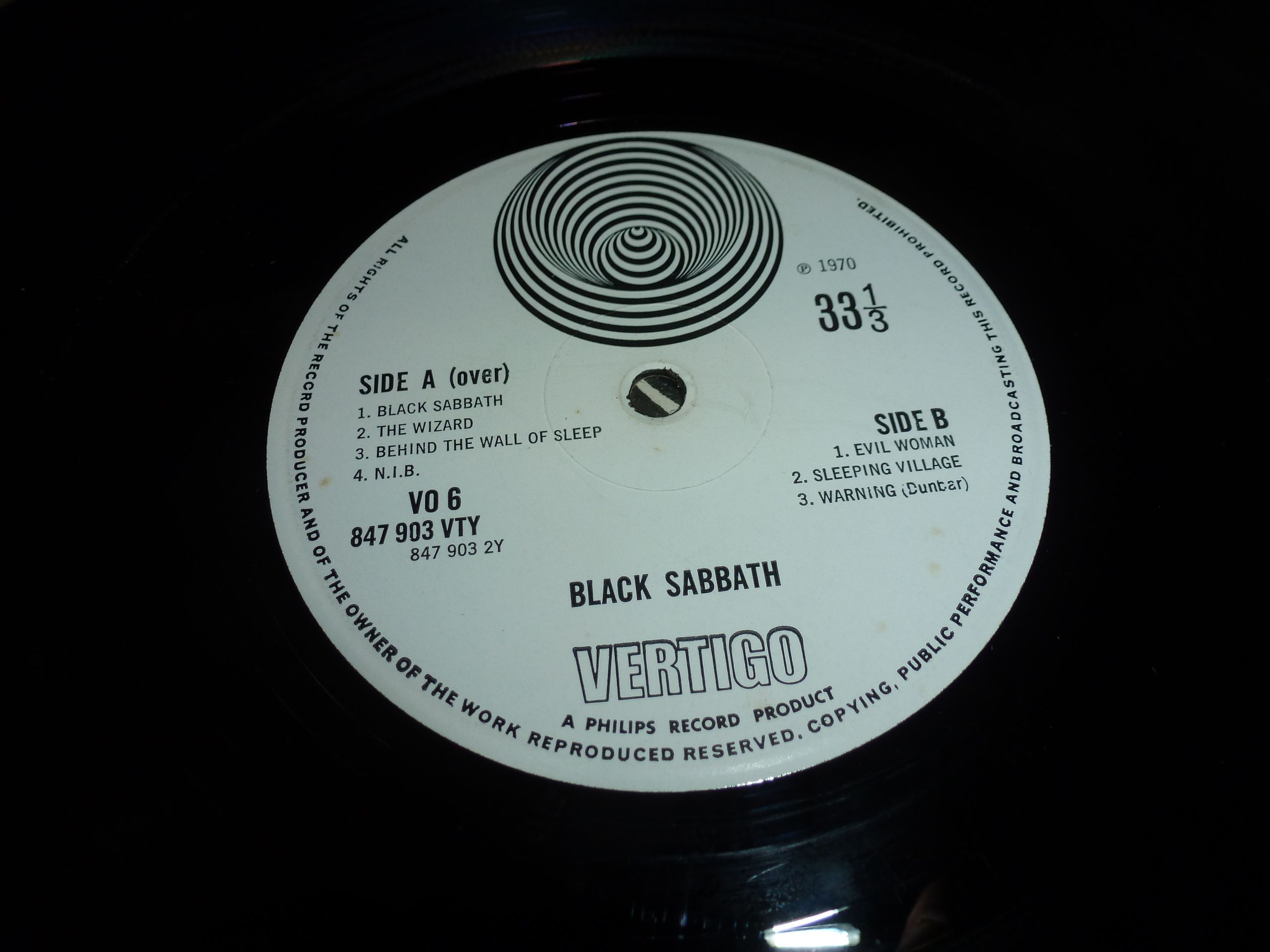
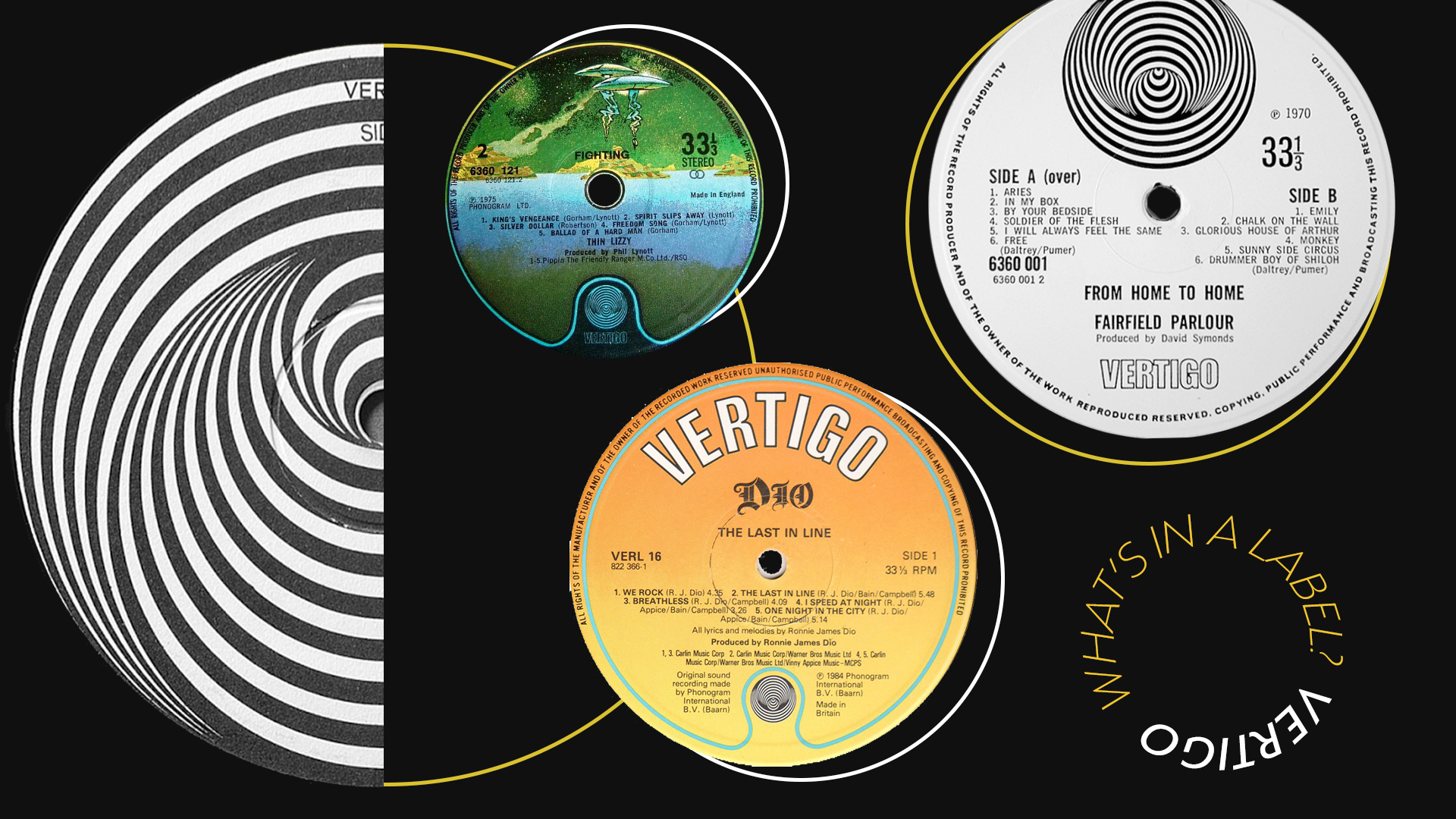
As the 70s dawned, so did a brand new sound – progressive rock. And at the centre of it all was influential British label Vertigo Records, home of Gentle Giant, Magna Carta, Black Sabbath and more, home also to bands such as Colosseum, Jade Warrior and Affinity. Ben and other bands from ‘the “cutting edge” of the early-’70s British prog-folk-post-psych circuit’. The first Vertigo releases came with a black and white spiral label, which was replaced with the Roger Dean designed spaceship in 1973.

The spiral logo. The eclectic bands and classic rock albums… Vertigo Records represented the vibrancy and expectation of progressive rock in its infancy. But if the heritage left behind by the imprint has inspired and impressed for the past 40 years, then its birth was far more prosaic. In fact, it happened simply because of the impotency of its parent company, Philips.

“You have to understand where things were when I joined Philips,” recalls Olav Wyper, the man who created the Vertigo concept. “I’d started off in the music business with EMI, before spending three years at CBS from 1966, as head of marketing and sales. Then I took over running Philips’ UK operation in 1969. And the company I inherited had lost its way. They had two separate A&R departments, each following their own policies. There was nothing at all unifying everyone.”

Wyper’s first task was to get the whole of the label working on the David Bowie single Space Oddity, ensuring that this was a massive hit, thereby giving the whole of Philips a much needed boost. However, such was the complete lack of credibility at the label that Wyper determined a new subsidiary had to be introduced, which could actively pursue hot young bands.

“I already had an interest in progressive music through my time at CBS. When I joined, we had a lot of progressively-inclined names – from Laura Nyro to Big Brother & The Holding Company – who enjoyed considerable media coverage in Britain, but couldn’t sell anything. So, I came up with the idea of the sample albums like “The Rock Machine” and “The Rock Machine Moves On”, which showcased all these acts including Simon and Garfunkel and Blood, Sweat and Tears with lesser known bands including Spirit, The Peanut Butter Conspiracy and others., and gave them the chance to get noticed. As a result, we sold loads of records.

“What I wanted from Vertigo was to create a progressive music label. I already had the name in my mind – as a former advertising copywriter and journalist, I was always good at coming up with that sort of thing – so now we just needed the bands to go with it.”

The Phillips company that up to that point focused on classical recordings and easy listening music, started producing psychedelic and rock albums since the mid-1960s. However they needed to compete with other major labels such as Decca and EMI who created subsidiaries (Deram, Harvest) to focus on progressive music. Olav Wyper was quickly flown in a private jet to Eindhoven, Netherlands, to meet with the suits at Phillips’ headquarters. He quickly signed a deal to have full control over a new label, supervising its A&R, marketing and art direction. The Vertigo label was born.

Working together with young A&R executives Mike Everett and Dick Leahy, Wyper went out in active search of talent: “In those days, no label would think of signing anyone who wasn’t already working with a solid fan base, so we saw loads of gigs, looking for the sort of acts who fitted in with our vision.”

Colosseum ValentyneSuite.jpg

The first signing to Vertigo were Colosseum, who were already working on their second album. “Valentyne Suite” was the second album released by the band. It was Vertigo Records‘ first album release, and reached number 15 in the UK albums chart in 1969. The group consisted of excellent musicians who could play long instrumental pieces and lengthy solos. They had eclectic tastes in music, the reason for the varied styles that you can hear on this album. Keyboardist Dave Greenslade, who will later form the progressive rock outfit Greenslade with Colosseum’s bass player Tony Reeves, talks about his background: “We would listen to Vaughan Williams, Stravinsky, Richard Strauss, and all these other wonderful composers. I don’t suggest that I’m anywhere near these artists, but it opened my mind to another way of writing; something different to rock and roll in the 1950s which was great fun but limited. With Jon Hiseman and Tony Reeves, I used to go to Ronnie Scott’s quite a lot and listen to Bill Evans. 

“Gerry Bron, who was a manager and booking agent at the time, was producing the new album from Colosseum, “Valentyne Suite“. And, as the first record (Those Who Are About To Die Salute You) had been on Philips, we met up to discuss things. That’s how they became the first band to sign to the new label. I was a fan of theirs anyway; I loved the band’s jazz-rock approach, and also knew many of the band personally. Through Gerry I also picked up Juicy Lucy, Uriah Heep and Manfred Mann Chapter Three, which was the new, progressive project from Manfred Mann.”

Juicy Lucy (album).jpeg

Wyper also momentously signed Black Sabbath – almost by accident. Perhaps the two best-known releases for Vertigo in 1970 were by the same band. Time to introduce Black Sabbath, one of the first bands to join Vertigo’s roster. Olav Wyper ended up one night in Birmingham, arriving a day too early for a meeting. Always on the lookout for new talent, he asked a hotel worker for a recommendation.

“I’d gone up to Birmingham for a meeting, but gone a day too early. So, I ended up in my hotel that evening with nothing to do.”

On the advice of a young hotel worker, he ended up seeing Black Sabbath play a local pub. He was so impressed that…What he saw in that pub is likely a set that was later recorded for the band’s debut album. His experience was similar to that of other listeners in the audience. Guitarist Tony Iommi remembers Black Sabbath’s early performances: “They just stopped and stared in disbelief: ‘What IS that? We knew then we had something special. That’s what sealed our future direction, when we saw the look on their faces. We arrived at the height of the Vietnam War and on the other side of the hippie era, so there was a mood of doom and aggression.”
See the source image

“I took them and their manager Jim Simpson out for a meal at a Chinese restaurant three doors down from the venue. And we ended up signing a heads of agreement [a tentative contact] on the tablecloth.”

Like many other early albums on the Vertigo label, Black Sabbath’s debut was essentially a recording of the band’s live set, completed in a single day. Olav Wyper on the label’s recording technique: “The reason these records sound good is because these bands didn’t need to do much overdubbing. They could all play in the studio as they played ‘live.’ So that’s the reason it sounds less processed and more lifelike

Black Sabbath’s debut album was released on 13th February 1970 and it opens with a song called, what else… Black Sabbath. If the beginning of the song sends shivers down your spine, you are not alone and you can come out from under the bed. Iommi remembers the recording of the song: “When I first played the riff to ‘Black Sabbath,’ that set the standard for the rest of the album. When you heard those doomy guitar notes behind Ozzy, the hairs on your arms prickled. We knew it was good and different. The special effects like the chiming bell and the thunderstorm were put afterwards. I think it was Rodger’s idea.”

Producer Rodger Bain worked with the band on their first three albums, and later continued to work with hard rock bands including Budgie and Judas Priest.

Black Sabbath quickly followed up with a second album in September of 1970, an album that sealed their place in the pantheon of hard rock/metal. We are talking about “Paranoid“, a record that produced three of the band’s most acclaimed songs: War Pigs, Paranoid and Iron Man. The title track got to #4 in the UK charts and earned the band a performance at Top of the Pops. Tony Iommi remembers: “It was like – oh no – we don’t really want this. We are not a pop group – We’re heavy underground. We were on the same show as Cliff Richard and Engelbert Humperdinck and must have stuck out like a sore thumb.”

My favourite song on the album is one that features no heavy guitar riffs, no satanic messages and no pounding bass and drums. Ozzy Osbourne’s voice is fed into a rotating Leslie speaker in this atmospheric track called Planet Caravan. Bassist Geezer Butler: “We didn’t want to come up with the usual love crap, so it is about floating through the universe with your loved one.” And about that jazzy guitar solo: “Tony, he used to love Django Reinhardt, Joe pass, and he used to play that a lot which didn’t really fit in with the heavier stuff. But it gave him a chance to show where his roots were.”

One more heavy rock band to release a debut album on Vertigo in 1970 is Uriah Heep, named after the manipulative character from David Copperfield, written by Charles Dickens in 1850. The band’s line up was formed when organist Ken Hensley joined the ranks of the band Spice late in 1969. This boosted the band’s sound significantly, as guitarist Mick Box remembers: “We’d actually recorded half the first album when we decided that keyboards would be good for our sound.

Their debut album …Very ‘Eavy …Very ‘Umble (Very ‘Umble was Uriah Heep’s catch phrase in the book) starts with “Gypsy”, a track which was also released as a single. One minute into the song Mick Box unleashes one of heavy rock’s best-known guitar riffs, backed up by Ken Hensley’s fantastic Hammond work. The song became the band’s anthem for many years. The album hit the racks in a striking sleeve that featured a cobweb-covered human being screaming as if in torment. Look very closely and you’ll see the subject is none other than David Byron. Bron had set up a photo session at which a cobweb machine had been hired to create the olde-world effect. Box wasn’t too enthusiastic about the results so went off to the pub and upon returning in a ‘suitably refreshed’ state decided it might be amusing to spray the contents of the device all over his singer.

I tapped him on the shoulder and I went ‘Ssshhssssshhh!’ with this glue all over his face,” guffaws Mick at the memory. “I found it absolutely hilarious and the photographer was quick enough to pick up his camera and snap away. And of course they were the pictures that we used. The cover looked fantastic, it really caught the eye.”

With this first batch of signees, Wyper set the tone for the next two years, a period which would also see the likes of Jade Warrior, Magna Carta, Dr. Strangely Strange, Nirvana (the original one), Warhorse and Gentle Giant sign to Vertigo.

“Our attitude was, obviously, that anything we signed had to be good. But it should also broadly fit into the progressive style, whether it was folk, jazz or rock. We did pick up a surprising range of acts, but they were all characterised by being ‘progressive’ in nature.”

However, what made the label stand apart was its attention to detail, and the fact that each release was presented as a work of art.

“I was determined that the packaging would be fresh and innovative, that every record would be seen as totally artistic. So, we put out our records in gatefold sleeves. Back then, this rarely happened, and only for big names. The idea of having new acts treated in this way was unheard of.”

Of all the albums the label released in 1970, about 30 albums in total

On top of this, Wyper also hired an aspiring young photographer to design most of those initial sleeves, giving them a coherence that helped to create a label style.

See the source image

As you may have noticed from the album covers for Colosseum’s “Valentyne Suite” and Black Sabbath’s debut, the striking photographs are very unique and bear similar artistic style.

“The first British pop promo was for Fleetwood Mac and their big suprising hit “Albatross” and I’d gone down to the shoot, when I was at CBS. I got talking to the young guy who was the focus puller, and he’d told me that he was studying photography at the Royal College Of Art. In the end, he invited me down to an exhibition he was mounting there at the end of term. It was stunning. His work and ideas were just incredible. So, I hired him on the spot. His name was Keith MacMillan, who did a lot of those early Vertigo covers under the name of Keef; that helped us to have an identity.”

Equally as vital was the famed spiral logo, which has become so much a part of the Vertigo lore. The initial idea was created by Wyper himself.

“I wanted something on the A-side of a record that drew you in. So that when the record spun you felt as if everything was pulling you towards the record. I did the rough designs, and then a lady – Maggie – in our art department came up with the final version. What we did was use this to take up the whole of the label on the first side of a record, so it really stood out. For collectors, it was these releases that are especially sought-after today. After I left, the powers-that-be reduced the size and the impact, which was such a shame.”

The Vertigo imprint enjoyed considerable artistic and commercial success in its infancy, fuelled by Wyper’s desire to drag Philips as a whole into a fresh era.

Like Uriah Heep, Cressida also took its name from a literary giant: William Shakespeare, and his tragic play Troilus and Cressida. Bass player Kevin McCarthy remembers them becoming one of the first bands to sign with the label: “We had never heard of Vertigo and of course had no idea how iconic the label would become. But it didn’t matter. We just thought it meant we were on our way to achieving some success.”

Label head Olav Wyper said of the album: “That first Cressida album is as good as it gets – those guys were entitled to the crown of ultimate ‘progressive’ bands as much as King Crimson, but unless you are into Vertigo or deeply into progressive music from the era, my bet is you never heard of the band.”

Affinity and their self-titled debut album included a number of great interpretations of well-known songs, including a long jam on Bob Dylan’s All Along the Watchtower, made famous by Jimi Hendrix’s timeless cover. This is a treasure for lovers of the Hammond organ (the band bought the Hammond that was previously used by Brian Auger).

Although the album received great reviews and the band was touring, they did not last long and remaining recordings with a modified lineup were released only many years later.

The album’s cover resembles Black Sabbath’s debut in style, again the distinct colouring created by photographer Marcus Keef.

“An Old Raincoat Won’t Ever Let You Down” was the debut solo studio album from still then Faces frontman Rod Stewart, Several other members of the Faces also appear on the album, as well as keyboard player Keith Emerson and Jeff Beck drummer Micky Waller released in the United Kingdom in February 1970 it was the fourth release on the label.

“I changed so much about the company. Even the reception area, which I completely overhauled, and made sure that it was staffed by young people who were music fans. Before there had been a very unwelcoming concierge.”

After releasing their debut album on Fontana in 1969, Magna Carta signed with Vertigo, starting a brilliant streak of three albums over the next few years. The first was “Seasons“, an excellent progressive folk album made even better due to the involvement of Gus Dudgeon, Tony Visconti and Rick Wakeman. The three collaborated on David Bowie’s single “Space Oddity” the previous year. The album features the acoustic guitars of Chris Simpson and Lyell Tranter and heavenly vocal harmonies.

Rick Wakeman plays as a session musician on a number of songs on the album, including a nice organ accompaniment and short solo on Ring of Stones. Magna Carta remained a favourite of Wakeman. After they released their milestone album “Lord of the Ages” in 1973, he hailed it as “arguably one of the greatest albums of its kind ever made.”

Excellent work by guitarist Davey Johnstone before he joined Elton John’s band.

From the opposite end of the folk spectrum comes Dr. Strangely Strange, a wonderfully wonderful band that sadly released just one album with the label, and even sadder, their last one.  Heavy Petting they were joined by guitarist Gary Moore of Thin Lizzy. Joe Boyd: “I think I remember discussing using Gary Moore with them. The mix of acoustic and electric was in the water in those days. The LP package featured an elaborate cut-out designed by Roger Dean. This was one of his first hand-drawn fonts, for which he became world-famous with album covers for Yes and other artists. Dean on the cut-out sleeve: “You had to treat it very gently – you can’t really slide it on a shelf next to other record covers without damaging the flaps – it’s a real pain – though it’s not like Sticky Fingers, which will do damage to other covers!” 

However, Wyper’s tenure at Philips and Vertigo lasted only two years. In 1971, he was headhunted by RCA and their boss Keith Glancey. Once more inheriting a label in total disarray, Wyper tried the same trick as he’d pulled off with Vertigo, by establishing Neon Records, and signing the likes of Quintessence, Centipede (Canterbury band led by pianist Keith Tippett) and Fair Weather (with Andy Fairweather Low). However, this time it didn’t quite work as well.

“We had a few successes, but couldn’t do it again. I think everything about Vertigo was just aligned so well…the people at the label, the artists we signed, the way we packaged and marketed the albums. It was a special time.”

See the source image

Some have suggested that Vertigo was Philips’ direct response to the fact that EMI had launched the Harvest label so successfully. But Wyper sees things a little differently.

“To my way of thinking, if you look at where Harvest were in 1969, they really had lost their way artistically. So yes, they were the first to do this sort of thing – create a special label for young progressive acts who reflected the times – but they’d gone past their best by the time we arrived on the scene.”

Vertigo, too, suffered from a loss of focus once Wyper left. He himself attributes this to the way the parent Dutch company took control of things, to the detriment of the original vision.

“When I first joined Philips, the UK office was regarded as a lame duck by the rest of the European companies. Anything we released they automatically rejected. So, when the first batch of releases was ready for Vertigo, I personally went round to every managing director of Philips at each office round the continent, to get them on our side. The German company, in particular, was very enthusiastic about it all.
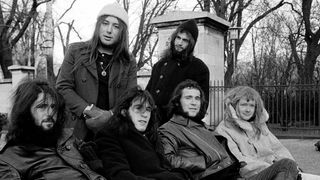
Gentle Giant sitting on a bench

“But it was always a constant struggle to convince the Dutch that it was worthwhile putting records out on Vertigo. They were always badgering me to put them on Philips releases instead, and could never understand the advantages which Vertigo offered. They hadn’t fully appreciated the battle I had to wage because of Philips’ bad reputation when I joined. So, there were a succession of arguments between me and them, which I won, but it was a battle.”

So, when Wyper left, Philips began to impose their own ideas…

“The people who took over from me suddenly found themselves under intense pressure. Philips decided to dump a load of inappropriate bands onto the label. For instance they put Status Quo onto Vertigo – which to my mind was just crass lunacy.”

There’s little doubt that the glory years for Vertigo were those early times, when Wyper and his team proved than an innovative, imaginative and quality-fuelled approach to a label could reap dividends. It’s for this reason that Vertigo has remained among the most acclaimed of labels.

“There was a long period of time, when Vertigo’s stock fell dramatically, mainly because of the way it was handled by the parent company – which is now Universal. But in the past few years, the early releases – with the original logo – have become collectible again, and I am quite proud of the way there is now a real respect for what we tried to do – and for the most part delivered. There was even a three-CD box set a few years ago (Time Machine, 2005), which helped to underline what we achieved.

“My philosophy with Vertigo was always to involve everyone. Even the head of classical music for Philips at the time, Jack Boyce, came up with ideas for the label. At its height, the whole of Philips became a hive of activity, centred around Vertigo.”

Therein lies the secret to why Vertigo was such a considerable success. It was a specialist label that was inclusive, rather than exclusive. A unique vision from a record company visionary. A one-off that’s left a legacy so dynamic and enormous that, when the label was activated a few years ago, even the likes of Metallica deemed it an honour to have the famous spiral logo swirling on their releases.
See the source image
Image description

North London’s Sorry have today shared their brand new EP “Twixtustwain” alongside the official digital release of their two 2017 mixtapes Home Demo/ns Vol I. and Home Demo/ns Vol. II, reworked and available across streaming platforms for the very first time. Sorry have also shared the videos for EP tracks ‘Don’t Be Scared’, ‘Things To Hold Onto’, and ‘Favourite’ created by Flasha Prod. (Sorry’s own Asha Lorenz and longtime collaborator Flo Webb) completing a full audio-visual compliment which also includes the previously released ‘Cigarette Packet’ and ‘Separate’. Their first new project since the release of sensational debut album “925” on Domino Recording’s last year, the “Twixtustwain” EP finds the band delving back into a more experimental, cut-and-paste electronic palette all the while still coursing with their signature gnarled sensitivity. 

Home Demo/ns Vol. I + II are the band’s beloved early mixtapes, being made available digitally in full for the first time since their original AV release. 

Containing some of Sorry’s cult fan favourites and original versions of songs that would come to full form on their debut album “925“, Home Demo/ns Vols. I+II provide a snapshot of deep cuts that have proved a foundation of the band’s beloved, genre-defying catalogue to date. 

All music and production by Asha Lorenz & Louis O’Bryen

Image description

Home Demo/ns Vol. I + II are the band’s beloved early mixtapes, being made available digitally in full for the first time since their original AV release. 

Containing some of Sorry’s cult fan favourites and original versions of songs that would come to full form on their debut album 925, Home Demo/ns Vols. I+II provide a snapshot of deep cuts that have proved a foundation of the band’s beloved, genre-defying catalogue to date.

Earlier this year Sorry released their live LP “A Night At the Windmill” – captured during their socially distanced show at the venue last year – as a Bandcamp exclusive limited to 500 pressings, with all proceeds going to The Windmill in Brixton. 

Half a Human is a collection of six songs created between two different worlds. While the architecture of each was constructed during sessions for 2020’s “The Main Thing”, the tracks came to life when the band began trading the material back and forth remotely throughout the pandemic. They found new ways of working together as they further explored the emotional landscapes they’ve been perfecting for more than a decade, and in taking stock of themselves and the uncertainty of their future, “Half a Human” helped them arrive at a new thesis statement for the band.

Real Estate have also released six new visual’s, one for each song on the EP, directed by FISK. Inspired by old winamp visualizers, each video was created through radical editing of candid footage from each band member. 

Another home run from Real Estate! Classic Real Estate sound and vibe throughout the EP. In the Garden is as beautiful a tune as they have crafted recently. Nobody elicits a bliss chill like this band consistently does. There isn’t a weak spot on this EP and the band seems to have really hit an extremely interesting and beautiful sound with this and the Main Thing that I can’t wait to hear them continue and progress. The addition of Julian to this band years ago cannot be understated – I love the change in direction the band has taken since him coming on board. The song writing all around here is just beautiful from start to finish!.

This collection of six new songs that were started and finished in two very different places. As Real Estate’s first EP in more than a decade, singer/guitarist Martin Courtney admits that when writing this music, he was feeling weird about being in a band, wondering how the group was still going strong after so many years. But while the architecture of Half a Human was constructed during sessions for their 2020 album. 

Though the past year might be the longest time Real Estate has spent off the road and away from each other, Half a Human showcases some of their most intuitive and interpersonal arrangements to date. “Half a Human” has long been one of Real Estate’s favourite songs to play live, while “In the Garden” builds a bridge between The Main Thing highlights like “Paper Cup” and the sound of the band’s next era. Throughout the rest of the EP they tackle thorny subjects of aging, connection and loss of innocence with lush instrumentation, even as lyrics evoke images of complicated emotion, 

Our new “Half A Human” is out now! Listen everywhere + order the 12” vinyl 

Released March 26th, 2021

2021, Domino Recording Co Ltd

HARD FEELINGS sign to Domino with debut single "Holding On Too Long"

2021 sees the birth of Hard Feelings, the brand new collaborative project between New York City’s singer/ songwriting powerhouse, Amy Douglas and Joe Goddard of Hot Chip.

After Joe having heard Amy’s work, the Hard Feelings project was birthed with one message from Joe reaching out publicly via Twitter; “Amy, can we make a thing?”. That “thing” became Hard Feelings, the ultimate immersive cinematic experience for your feet and ears, seated fluidly at the intersections of New Wave and Synthpop inspired Pop Music and full-on Dance majesty.

The band share their first single, “Holding On Too Long”. The track is drama in its purest form, Amy’s lyrics explore the pain and devastation from the demise of a romantic relationship, whilst the words are juxtaposed with Joe’s euphoric, driving bass and addictive piano hook. The video, starring Amy herself was directed by Katie Paul.

Amy notes: ”Holding On Too Long” is the common denominator of the entire musical union of Amy and Joe. In this “opera of sad bangers” here is its key aria, its “Un Bel Di” from Madame Butterfly or the “Mad Scene” from Lucia Di Lammermour, the unforgettable moment of the story wherein our heroine stands up defiantly and has her moment to wail, scream and cry her pain and fury centre stage to the world.”

“Holding On Too Long”, out now on Domino Record Co.

MATTHEW E. WHITE – ” K Bay “

Posted: June 5, 2021 in MUSIC
Image description

On the heels of releasing a staggering collaboration with the legendary Lonnie Holley, Matthew E. White has announced his new, long-awaited solo album, “K Bay”, will be released on September 10th 2021 via Domino Records. The kaleidoscopic first single “Genuine Hesitation” is out today alongside a new video and K Bay is now available for pre order at Domino’s webpage.

The single’s visual counterpart is a Super 8-shot album trailer directed by White and Shawn Brackbill, which previews the LP and introduces the friends and collaborators across Richmond, Virginia that played key roles in its creation: Spacebomb’s trusted house band (bassist Cameron Ralston, drummer Pinson Chanselle, and orchestral arranger Trey Pollard), along with multi-instrumentalist Alan Parker, keyboardists Devonne Harris and Daniel Clarke, and engineer/mixer Adrian Olsen.

The LP was produced by White and recorded between his beloved Kensington Avenue home studio (and album namesake) K Bay, Richmond’s Montrose Recording and his own local institution, Spacebomb Studio. K Bay finds the singer/songwriter, bandleader, and musical polymath expanding every facet of his creative process and harnessing the full power of his community, culminating in the best record of his career.

“For me, one of the most exciting production techniques from this record was this idea where I’d record the song twice,” explains White of K Bay and “Genuine Hesitation.” “First, in a more traditional, band-in-the-room, work out the parts and sounds, nail it, kind of way. Secondly, I would distill the concept of the song one way or another into an instrumental composition. I had a much larger band (based off of Miles Davis’s On The Corner bands) play this kind of new-music/improvisational piece at the same tempo as I had recorded the first, more ‘normal’ take. The goal was to be able to cut across between the two pieces, and/or layer them and have them fit together in wild ways. To a large degree it worked, which was pretty exciting for me. The intro to ‘Genuine Hesitation’ is an excerpt from the much longer improvisation based instrumental.”

K Bay, White’s first solo album in six years, is the astounding record he has forever aspired to make. A bold reclamation of independence and identity, K Bay establishes White as one of his era’s most imaginative artists. These 11 pieces are retro-futurist magic tricks that feel instantly classic and contemporary, the product of a musical mind that has internalized the lessons of his idols and used them to build a brilliant world of his own. 

After his solo introduction Big Inner became a surprise hit and his 2015 debut for Domino, Fresh Blood, ascended him to late night TV performances and further critical acclaim, career demands nearly overwhelmed White. His record label/studio Spacebomb, for instance, ballooned into a bevy of obligations and expectations. White followed Fresh Blood with 2017’s Gentlewoman, Ruby Man, a set of duets with Flo Morrissey, and continued to produce records for the likes of Natalie Prass, Bedouine, and more—doubtless privileges that sometimes crowded out his ability to work on his own music. So he began building K Bay, a home studio where he could sequester himself with his thoughts. Newly married and starting to talk about children as he inched toward 40, White funnelled a lifetime of experiences, enthusiasms, and obsessions into these new songs.

More than love, romance, or self-reliance, this is the animating ideal of K Bay—that we can forever strive for something better, no matter how flawed or blessed we have already been. A decade ago, Matthew E. White made a classic beauty no one expected; on K Bay, he has made a masterpiece by harnessing what he’s learned from that community and life itself in entirely unexpected, electrifying, and reaffirming ways.

Matthew E. White new album ‘K Bay’, out Sept 10th

CLINIC – ” Fine Dining “

Posted: June 5, 2021 in MUSIC
Clinic Tickets | Hare And Hounds Birmingham  | Mon 6th September 2021 Lineup

Liverpool post-punks Clinic shared a new song, “Fine Dining”  via a video for the song. The band have also announced some new UK tour dates, which are their first dates in nine years .

Clinic seem like a band well suited for the pandemic, only in that they have long worn hospital facemasks in their press photos and live performances. But it seems as though things have changed a bit over the course of COVID-19 and the quartet is now a duo, with Ade Blackburn and Jonathan Hartley listed as members in the press release, but no mention of Brian Campbell or Carl Turney. The line-up had remained the same since the band’s 1997 formation, until now. And in the new press photo, only one member is wearing a facemask, with the other in a gasmask.

The single is out now via Domino Recordings. Emily Evans directed the “Fine Dining” video.

Amidst pulsing synths and a disco drum, Clinic’s new track folds in a sense of 1970’s American Fantasy Drama that adds a poppier element to their distinctive sound.

In the press release, Clinic collectively had this to say about the new song: “Fine Dining is a slice of dancefloor fun, combining the band’s love of the exotic and having a good time.”

Clinic’s last album was 2019’s “Wheeltappers and Shunters”, which was their first new album in seven years

May be an image of one or more people, people playing musical instruments and people standing

Brooklyn-based synth-pop trio Nation Of Language have announced a new album, “A Way Forward”, and shared its first single, “Across That Fine Line” via a lyric video for it. They also announced some tour dates. A Way Forward is not out until November 5th.

Nation of Language consists of Ian Devaney (vocals, guitar, and percussion), Aidan Noell (synth and vocals), and Michael Sue-Poi (bass). A Way Forward is the band’s sophomore album and the follow-up to 2020’s debut album, “Introduction Please”. That album came out in last May, as the pandemic was really taking off. “We’ve always been real believers in our live show as the best way to reach new people,” Devaney says in a press release. “When it became clear there wouldn’t be any touring, we were sure it was a death knell for the album.” Instead, the album received much acclaim .

In a press release, Devaney had this to say about the new single: “‘Across That Fine Line’ is a reflection on that moment when a non-romantic relationship flips into something different. When the air in the room suddenly feels like it changes in an undefinable way. It’s a kind of celebration of that certain joyous panic, and the uncertainty that surfaces right after it. Sonically, it’s meant to feel like running down a hill, just out of control. I had been listening to a lot of Thee Oh Sees at the time of writing it and admiring the way they supercharge Krautrock rhythms and imbue them with a kind of mania, which felt like an appropriate vibe to work with and make our own.”

Abe Seiferth (who worked on Introduction, Presence) and Nick Milhiser of Holy Ghost both produced “A Way Forward“.

Devaney describes the album’s intent and sound in more detail: “A Way Forward” is an exploration of the band’s relationship to the music of the ’70s, through the lenses of Krautrock and early electronic music. We aimed to more deeply trace the roots of our sound, hoping to learn something from the early influences of our early influences. Experimenting with how they might be reinterpreted in our modern context—looking further backward to find a way forward.

“We drew a lot from the steady locomotive rhythms of bands like Kraftwerk and Neu!, while also looking to less-propulsive electronic artists like Laurie Spiegel and Cluster. The goal was to have a record that felt like a journey, like being on a train that gets lost in a colorful fog, and then suddenly bursts through into different landscapes.

“Thematically, some of those landscapes are familiar in their melancholy, but we also wanted to introduce celebration and joy in a way that hadn’t really been present in our previous album. Having these bursts of positivity felt like it gave the emotional low points more resonance, giving a stronger sense of emotional reality to the album overall.”

“Across That Fine Line” from the album “A Way Forward“, out November 5th 2021

Wolf Alice: Blue Weekend (Lenticular Edition)

Wolf Alice follow their Mercury Prize winning ‘Visions Of A Life’ with this exclusive Blood Records lenticular blue-marble edition of their third studio album ‘Blue Weekend’. Featuring a shape-shifting cover that changes when moved, the record comes hand-numbered on a first-come-first-served basis.

“Whereas in the past [Ellie] Rowsell has hidden her feelings behind metaphors and ambiguity, Blue Weekend sees her penning some of her most direct and personal lyrics to date. And perhaps this has given her a sense of release because vocally throughout the album she soars and produces a stunning performance ranging from dreamy half-spoken internal monologues to towering celestial beauty. On the gorgeous ‘Delicious Things’ she muses on the seductive promise of fame, with tales of unsuitable suitors and blaggers in Hollywood where she ends up bored with the thin veneer of glamour and phoning her mother. ‘How Can I Make It OK?’ is bittersweet dream-pop perfection, as Rowsell tries to salvage a relationship that is going awry, giving herself ‘a moment to change it all’ while she laments ‘how can I make it OK? I just want you to be happy.’ It’s a moment of shimmering beauty on an album that demonstrates how far Wolf Alice has come, and indeed how much more they have to give.”

Wolf Alice had previously shared a video for Blue Weekend’s first single, “The Last Man On Earth”, Then they shared the album’s second single, the bass-heavy version in “Smile”. They performed “Smile” on The Late Late Show with James Corden, where they were also interviewed. The album’s third single was the dreamy and understated “No Hard Feelings”, The band also shared one last pre-release single from the album, “How Can I Make It OK”. 

The first glimpse of the band’s new work came in the form of lead single “The Last Man On Earth”, premiered recently as Annie Mac’s Hottest Record in the World on BBC Radio 1, and blurs the lines between classic song writing, graceful atmosphere and their signature pin-sharp choruses. The band played a massive 187 shows on the Visions Of A Life world tour – including a sold out Alexandra Palace, 2 sold out dates at Brixton Academy, and a set on the Pyramid Stage at Glastonbury.  

Britain’s Wolf Alice released a new album, “Blue Weekend” last week via Dirty Hit/RCA. Since then they have shared new videos for the album’s “Delicious Things” and “The Beach.” They have also shared a live video for recent single “How Can I Make It OK?”

Jordan Hemingway directed the videos for “Delicious Things” and “The Beach.” The former features frontwoman Ellie Rowsell sharing a black taxicab with various couples (some of them other members of the band) and the latter features her in her bedroom and in the bath.

The band decamped to an Airbnb in Somerset, and it was here that they reconfigured who they were together, far away from festival stages, tour buses, awards shows, and fans. They cemented their friendship and set to work on some fledgling demos in a converted church. These demos evolved into Blue Weekend, a record produced by Markus Dravs (Arcade Fire, Björk, Brian Eno, Florence + The Machine) who has aided the band in refining their sound to an even sharper point. Rowsell’s personal storytelling is at the core of Blue Weekend, an album that sees Wolf Alice embrace a newfound boldness and vulnerability in equal measure. 

The band’s full line-up is Ellie Rowsell (vocals, guitar), Joff Oddie (guitar, vocals), Theo Ellis (bass), and Joel Amey (drums, vocals). The band stayed in an Airbnb in Somerset, England and worked on some demos in a converted church. Markus Dravs (Arcade Fire, Björk, Brian Eno, Florence + The Machine) then produced the final album.

Please note that Blood Records is a pre-ordering platform and this record is due for release on June 11th, 2021.

Blue Weekend is the band’s third album and the follow-up to 2017’s “Visions Of A Life” which won them the coveted Mercury Prize. Wolf Alice released their debut album “My Love Is Cool” back in 2015.

The band’s full line-up is Ellie Rowsell (vocals, guitar), Joff Oddie (guitar, vocals), Theo Ellis (bass), and Joel Amey (drums, vocals). The band stayed in an Airbnb in Somerset, England and worked on some demos in a converted church. Markus Dravs (Arcade Fire, Björk, Brian Eno, Florence + The Machine) then produced the final album.

May be an image of 2 people and text

Really happy to be able to share this live video we made for “In the Stone” a few months back. Given the events of the last year or so it felt really important to us to still document the live element of the album and our band in this moment. We ended up making a few videos like this which we’ll keep sharing.

Once we started rehearsing a set again we realised In the Stone is probably the hardest song off our album to replicate live because it requires simple things to be done so counterintuitively – the tune to which hairs were pulled! When we recorded the album version in Bristol we’d intended to play to a drum machine but the song felt better loose, changing pace a bit, so we ended up doing it with live drums and then triggered the drum machine from Riley’s hits.

This version in turn is us playing along with that drum machine track, triggered from the drum take Riley did in Bristol last year lol. The tempo is very emotional so playing it right doesn’t mean playing metrically in time, or getting over excited and ahead. I ended up really enjoying that this song forced us more so than ever to tune into the rhythm of our past selves – or more specifically Riley’s self last year – not to fight it, but…feel it! So yeah, this is that!

Also an enormous thank you to the amazing team both here in Brisbane and in London who helped us put this lil vid together: Marly Lüske for recording and mixing,Tom Carroll (DOP) and Hugo Nobay (1st AC) Madeline Randall for SFX Marisa Gesualdi for editing and James Caswell for producing the whole damn thing. And to our sweet sweet Al of course whose on lead guitar here, we love you!.

“In the Stone” is taken from the upcoming album ‘Mirror II,’ out on Matador Records

Delta 5 were formed in Leeds, Yorkshire, England, UK 1979.

There was a Leeds music scene at the time that revolved around the Leeds University Art Department, and local bands The Gang of Four and The Mekons were doing well. Kelvin had briefly replaced Hugo in The Gang of Four and was recommended to Delta 5 as a drummer. Kelvin and I played in a band in York together so I went along to audition and joined in May 1979.

First release “Mind Your Own Business” / “Now That You’ve Gone” – 1979. The Gang of Four were recording their album, Entertainment, in the WorkHouse in the Old Kent Road and they decided that they could help us out at the same time. We stayed with them on a houseboat on the Thames at Cheney Walk, Chelsea and their manager Rob Warr arranged for us to go in and record whilst they were out at a Madness/Specials gig in Camden.

“You” was supposed to be the first recording but it wasn’t happening so we changed tack and recorded both songs in about 8 to 10 hours. We had only been together a few months and done about 3 or 4 gigs by this time. Rob took the tapes to EMI who were paying for the studio but they passed – no surprise there – so Rob went to Geoff Travis at Rough Trade. Geoff came to see us at The Global Village (later Heaven) and we met him afterwards and agreed to a deal on a handshake.

The single came out in December.

John Peel was given a pre-release copy and he decided to play it twice that night. The next day we got a call asking if we’d like to do a session for him – yes please!! Then, we were off and running.

See the source image

“Delta 5” and “Make Up” included on this CD are from that session of February 1980. We recorded a follow-up, “Anticipation” / “You” in February 1980. We were gigging more often at this point and “You” turned out pretty well. More gigging in Europe and the UK; around 1980 – 81, we played quite a bit at The Lyceum in London and shared the bill with The Gang of Four a few times, Echo and the Bunnymen, B52s, Specials, Teardrop Explodes and U2 to name a few. We toured with The Gang of Four and Pere Ubu in 1980.

In September 1980 we did our second Peel session, which included “Triangle,” which is included on this CD. Later in September 1980 we went to the USA.

We played New York and all along the East Coast. Then we went West, and “Shadow,” “Circuit,” and “Journey” are all from a show we did at the Berkeley Square in Berkeley, CA. Back to England in October and we recorded “Try”/ “Colour” with the Bad Manners horn section who we had met at a festival In Finland. In February 1981 we toured Holland and Belgium. In March 81 we signed with the Pre record label in April we went into Rak Studios in St John’s Wood to record an album. Rak was Mickie Most’s studios and The Animals, Hot Chocolate and Sweet had recorded there.

We experimented quite a bit on the album and perhaps we should have just recorded the songs as they were – the session versions included here are more a reflection of how we were live as they were all recorded quickly in one or two takes.

None of us really liked the title of the album but it was a compromise – I think we argued quite a lot back then. We did a UK tour culminating in a headline gig at The Venue London. We even had a horn section including Rico on trombone.

We went back to the USA for a few shows on the East Coast in May and came back to England in June. We recorded “Innocenti,” “Train Song,” “Final Scene” and “Singing The Praises” for a Richard Skinner session in July 1981.

The album came out somtime late in 1981 and we went to Holland in October – I decided it was time to leave when we got back – I think Julz and then Kelvin left and Bethan & Ros made one more single with new personnel before calling it a day in 1982.

The early days were the best and although we did argue a lot, (what band doesn’t!), we also had a lot of laughs – for a couple of years we got to play live and make some records, and then that was enough. Alan Delta 5